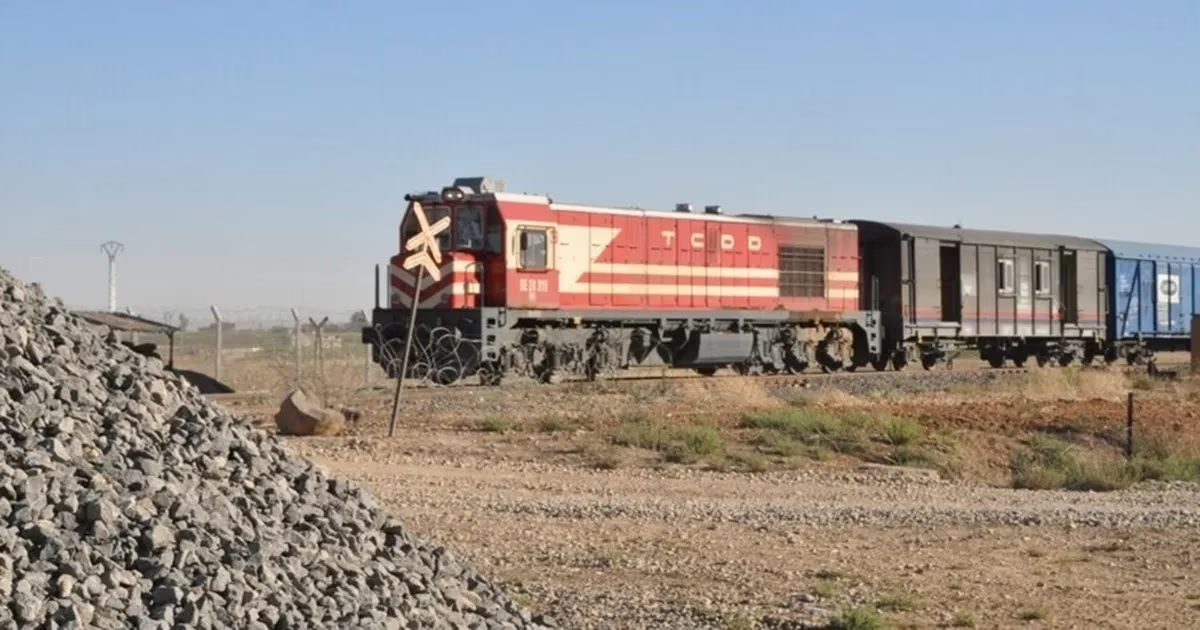







The railway project connecting Istanbul to Damascus and extending to the Hejaz is once again at the forefront of the region's strategic landscape, reviving Sultan Abdul Hamid II's vision aimed at strengthening ties between the center of the Caliphate and the Arab world. This project, which was aborted during World War I, now emerges as a geopolitical necessity that transcends mere commercial transport to forge strong regional alliances.
International and regional powers recognize that connecting Anatolia to the heart of the Arabian Peninsula represents a strategic step to bridge political and economic distances. Previous attempts to disrupt this line primarily aimed to deepen the division between Arab and Turkish components, which the new Saudi-Turkish initiative currently seeks to overcome.
This move has raised serious concerns among Israeli circles, with Hebrew press reports describing the agreement as laying stakes in a new regional system that will dominate the Middle East over the next decade. These circles view the Turkish-Saudi move as circumventing connectivity projects that Israel had hoped to be central to.
'Yedioth Ahronoth' newspaper considered that Turkish President Recep Tayyip Erdogan succeeded in transforming successive regional crises into strategic opportunities that enabled him to break international isolation. The newspaper indicated that Turkey is no longer merely a player on the scene, but has become the scene itself where major interests intersect due to this diplomatic acumen.
While military powers in the region were depleting their forces on multiple fronts, Ankara focused on strengthening its presence through cross-border infrastructure projects. This approach ensures that Turkey will not be an excluded party in any future arrangements of the regional order, but rather an active element and a driver of events.
The benefits of this railway line are not limited to the Turkish side alone, but extend to all countries through which it passes, foremost among them the Kingdom of Saudi Arabia. The project gives Riyadh a golden opportunity to diversify its oil and product export routes away from the routes that Israel is trying to impose via the port of Haifa.
This approach represents a liberation for the Kingdom from economic and political pressures it has faced for many years, especially in light of the major transformations the region is witnessing. This cooperation comes to reinforce the positive stances Saudi Arabia has recently taken towards central Arab and Islamic issues.
Turkish foreign policy has demonstrated a remarkable ability to balance bearing the repercussions of international crises and seizing opportunities to achieve massive national interests. This approach has enabled the Turkish leadership to regain its popular momentum and overcome internal challenges by commanding the respect of international powers for its country's regional standing.
Success in strengthening regional presence requires more than just internal military power; it needs an economic vision that connects the common interests of peoples. And Turkey, despite the historical upheavals it has experienced, is still treated based on its heritage, which dictates a leading role in its surroundings.
The railway project is viewed from a broad perspective as a tool to reshape the geopolitical and social map of the region's peoples. Historically, the railway was a lifeline connecting the periphery to the center, which the current project aims to achieve again.
Calls are increasing for the necessity of protecting this project from attempts at obstruction or abortion that may be led by parties that do not want stability or renaissance for this nation. The challenges that faced the project a century ago still exist in different forms and shapes in the modern era.
Perhaps the completion of this railway connection will open the door to a comprehensive economic renaissance that will lift the peoples of the region out of their state of distress and dependence on external forces. Economic integration is the only way to confront the successive crises that have plagued the Arab world in recent years.
Arab peoples have suffered from repeated cycles of setbacks, and whenever a glimmer of hope appeared on the horizon, external factors intervened to thwart it. The train project represents a real test of the will of the region's countries to shape their future away from interventions aimed at maintaining dependency.
Amidst the bleak landscape surrounding many regional issues, the Istanbul-Jeddah railway project stands out as a potential new chapter. Will the shared political will succeed in transforming this historical dream into a tangible reality that changes the face of the Middle East?
Erdogan has not only returned to the scene, but has become the scene itself by transforming regional disasters into strategic gains.
שתף את דעתך
Istanbul-Jeddah Train: Revival of a Historic Project and Reshaping Regional Influence