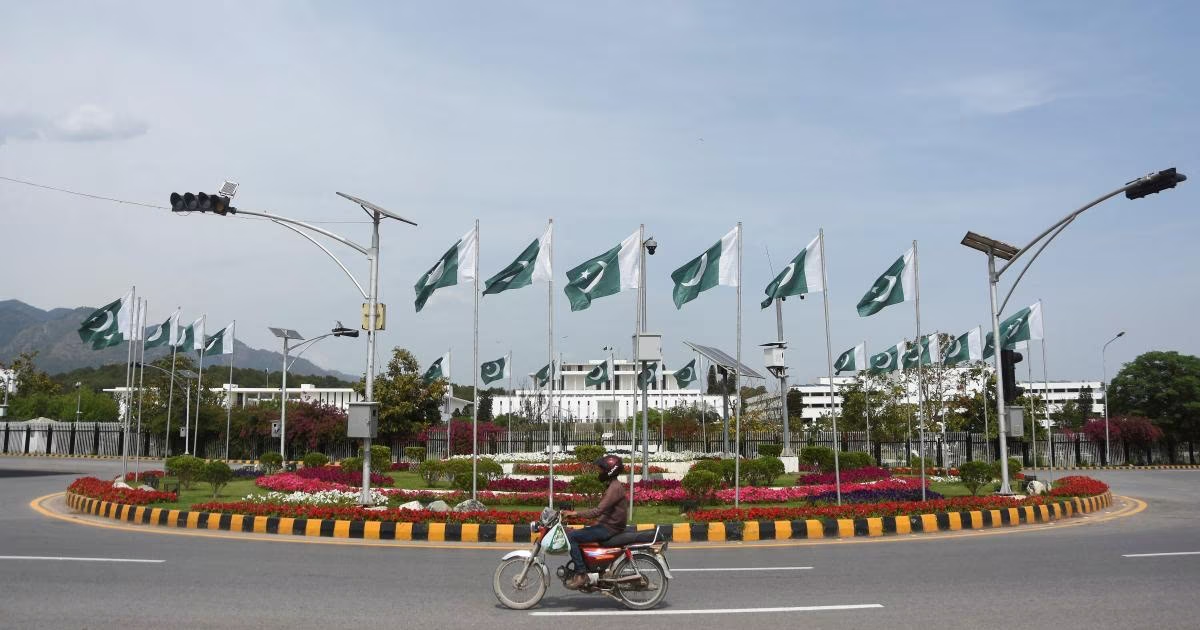







The Pakistani capital, Islamabad, is witnessing intense diplomatic activity to ensure the resumption of the anticipated negotiations between the United States and Iran, amidst an atmosphere charged with tension and distrust between the two parties. Pakistani authorities are working through high-level contacts to overcome the obstacles that have recently emerged, coinciding with the approaching end of a two-week truce between the two sides.
Informed sources reported that the Pakistani capital and a number of major cities have been placed on high security alert, in anticipation of the arrival of negotiating delegations tomorrow, Tuesday. Despite no final official announcement from the Pakistani government, field and logistical movements indicate extensive preparations to host this crucial round of talks.
For its part, Tehran has shown firm stances regarding the issues on the table, with sources quoting a senior Iranian official as saying that the country's defensive capabilities are not part of any political bargaining. The source clarified that Iran's missile program represents a sovereign, non-negotiable pillar, stressing that any attempt to link it to the nuclear file will lead to a dead end.
Tehran accused Washington of continuing to impose a blockade on the Strait of Hormuz, considering these military moves undermine any real opportunities for achieving peace or building trust. Iranian political circles believe that the continuation of American economic and military pressure contradicts statements from the White House regarding the desire for a diplomatic solution.
In a related context, the spokesperson for the Iranian Foreign Ministry, Ismail Baqaei, escalated his criticism of the American administration, describing its behavior as 'unserious' in the negotiation process. Baqaei indicated that Washington had committed clear violations of the ceasefire terms, stressing that no final decision has yet been made regarding participation in the second round.
At the political leadership level, Iranian President Masoud Pezeshkian called for the necessity of adopting 'rational means' in managing the current crisis to reduce the escalation with the United States. However, Pezeshkian stressed that the principle of 'distrust' in dealing with the American side remains a strategic necessity that cannot be abandoned in light of past experiences.
Internationally, Beijing entered the crisis, with the Chinese Foreign Ministry describing the current phase as 'critical' and requiring restraint from all concerned parties. China expressed its deep concern over the recent detention of an Iranian cargo ship, considering that such actions further complicate the diplomatic scene and hinder de-escalation efforts.
Chinese diplomatic sources affirmed Beijing's readiness to play a constructive role in supporting the talks in Islamabad, calling for strict adherence to the ceasefire agreement. China believes that regional stability fundamentally depends on the success of major powers in reaching understandings that end the state of anticipation and continuous field tension.
Reports from Islamabad indicate that the gaps between Washington's and Tehran's positions remain wide, especially regarding the mechanism for lifting sanctions and nuclear guarantees. Despite strenuous Pakistani efforts, observers believe that mutual distrust represents the biggest obstacle to achieving any real breakthrough in the upcoming round of negotiations.
Amidst these developments, the diplomatic path remains suspended between the desire to avoid comprehensive confrontation and adherence to the national constants of each party. All eyes turn to Islamabad tomorrow to see whether international pressure and Pakistani mediation will succeed in bringing the two parties to the table once again.
Iran's defensive capabilities, including its missile program, are a red line and non-negotiable in any diplomatic process.
שתף את דעתך
Intense Pakistani Mediation to Save Iranian-American Negotiations Amidst Exchange of Accusations