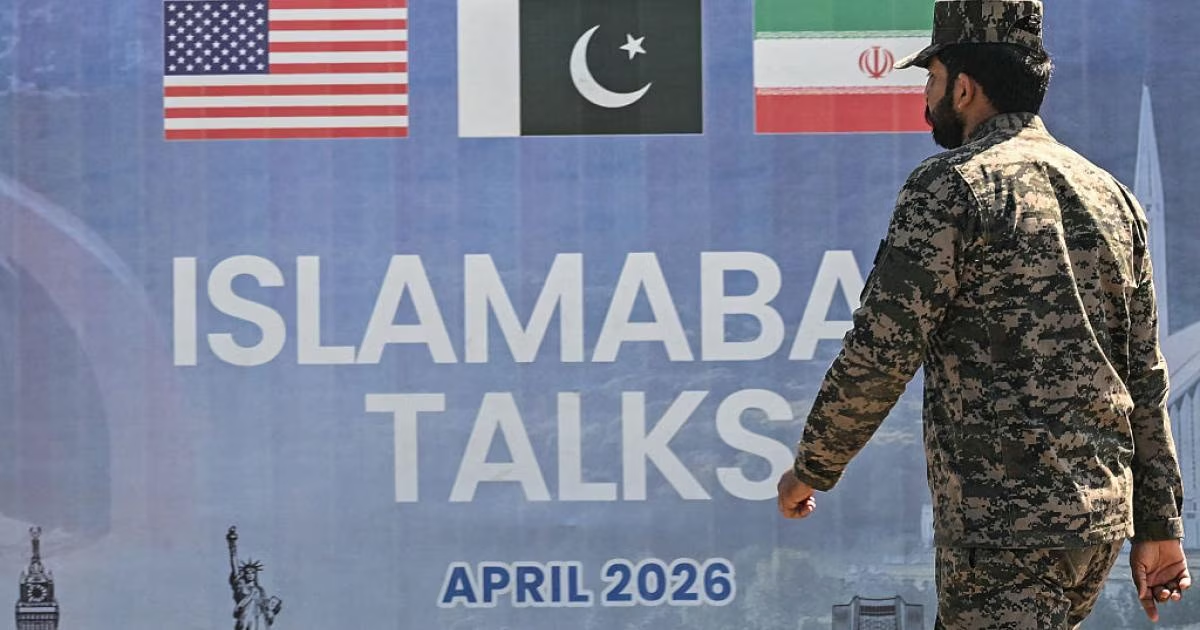







The Pakistani capital, Islamabad, and the neighboring city of Rawalpindi witnessed an unprecedented security alert, coinciding with ongoing preparations to host the second round of diplomatic negotiations between the United States and Iran. These moves come as part of intensive Pakistani efforts to revive channels of dialogue between the two parties and avoid any potential military escalation in the region.
Field sources reported that the comprehensive security plan included the deployment of thousands of police and security forces, with the establishment of more than 600 fixed and mobile checkpoints throughout the two cities. These strict measures aim to secure the arrival and departure routes of diplomatic delegations participating in this sensitive round of talks.
Pakistani authorities decided to completely close vital areas surrounding Nur Khan Air Base and Islamabad International Airport starting from midnight on Sunday. The decisions also included imposing an absolute ban on drone flights over the capital and its suburbs, to ensure the highest levels of aerial protection during the meeting period.
The measures extended to include a widespread closure of public and private facilities in the New Town, Siddiqueabad, and Chaklala areas, where services in restaurants, markets, banks, bakeries, and even fitness clubs were suspended. Instructions were also issued to evacuate university residences and suspend studies and public activities in those areas until further notice.
In a move reflecting the scale of the security challenge, the Deputy Commissioner of Rawalpindi announced a comprehensive suspension of all public and private transportation and cargo operations, leading to a complete paralysis of traffic. Security agency leaders were observed supervising the implementation of these restrictions on the ground, using precise geographical data to secure the diplomatic quarter.
To enhance field readiness, the Pakistani government summoned more than 18,000 soldiers from the armed forces to support security agencies in controlling major entry and exit points. These military reinforcements are part of a security protocol that Islamabad usually implements when hosting high-level international meetings affecting regional security.
This round of negotiations primarily focuses on attempting to extend the existing truce between Washington and Tehran, which is scheduled to expire next Tuesday. Although the first round witnessed some initial understandings, the failure to resolve fundamental issues makes the Islamabad meeting a last chance to prevent a slide towards confrontation.
At this sensitive stage, Pakistan seeks to focus on extending the truce between Washington and Tehran and working to prevent a return to the path of escalation.
שתף את דעתך
Islamabad turns into a military barracks in preparation for crucial US-Iranian negotiations