





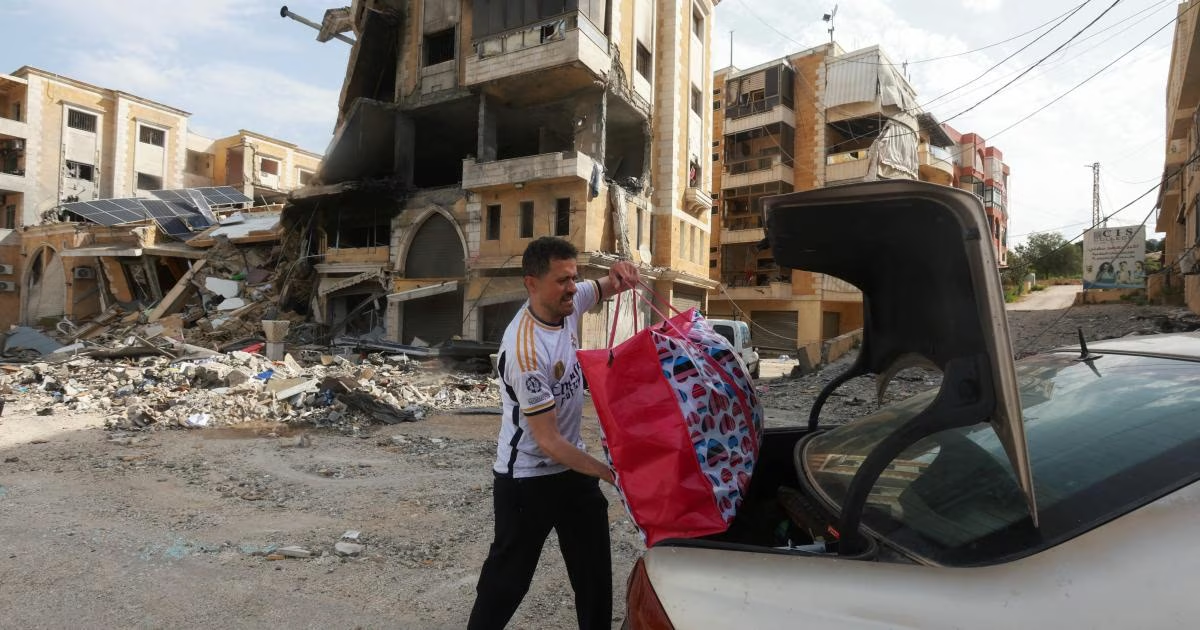
Lebanese citizen Khader Sahmarani stood stunned amidst the rubble of his home in the city of Nabatieh in southern Lebanon, watching what remained of his family's memories, crushed by a treacherous Israeli raid. The white bandage on his forehead was a testament to his miraculous survival, while his brother, nephew, and neighbors were not so lucky, martyred under the debris.\n\nThe violent raid occurred on Thursday afternoon, leading to the complete collapse of the residential building, turning it into a massive pile of rubble and iron. Sahmarani, 57, recounts the moments of terror, saying he suddenly found himself under the rubble, screaming for his loved ones without receiving any response.\n\nSearch and rescue operations continued for long hours at the targeted site, where paramedics managed to pull Sahmarani out alive from the wreckage. Medical and field sources confirmed that rescue teams recovered one body on Thursday evening, before completing the recovery of three more bodies the following morning.\n\nToday, the city of Nabatieh is considered a disaster-stricken area in every sense of the word, after being subjected to intensive and systematic Israeli shelling for more than forty days. The destruction affected the historic city center and its residential neighborhoods, making it look like a ghost town despite the ceasefire agreement coming into effect.\n\nThe truce agreement came into force at midnight on Thursday-Friday, after US President Donald Trump announced an understanding to end the current round of violence. Despite the cessation of shelling, the bitterness of loss continued to dominate the scene in southern Lebanon, which paid heavy prices in the blood of its people.\n\nStatistics from the Lebanese Ministry of Health indicate that continuous Israeli raids have led to the martyrdom of approximately 2,300 people since the outbreak of confrontations. These figures reflect the scale of the humanitarian catastrophe caused by the aggression in various Lebanese regions, especially in the South, Bekaa, and the southern suburbs.\n\nThe streets of Nabatieh, which used to be bustling with life, remained almost deserted on the first day of the truce, with signs of devastation evident in every corner. Partially or completely destroyed buildings became the dominant feature of the city that withstood the Israeli war machine throughout the past weeks.\n\nOn the outskirts of the city, convoys of cars flying yellow flags were seen, with returnees expressing their support for the resistance despite the extent of the sacrifices. These displaced people, who gradually began to return, faced a bitter reality of losing their homes and livelihoods in the border villages and towns.\n\nSahmarani expresses his deep pain that the fatal blow came in the last hours before the truce, considering that its timing magnified the tragedy. With suppressed tears, he wondered about his fate and the fate of his remaining family after losing everything he owned in one moment.\n\nFor his part, Fadl Zuhairi, one of Sahmarani's neighbors, affirmed that the deceased were lifelong companions, noting that among them were elderly men who had no military role. Zuhairi stressed his categorical rejection of any form of normalization with the occupation, emphasizing that dignity is more precious than homes and possessions.\n\nAmidst talks of upcoming political negotiations, the street in Nabatieh appears divided between the desire for stability and adherence to national principles. Sahmarani concludes his speech by affirming that he will remain on the rubble of his home, bitterly wondering who will undertake the reconstruction of what the war destroyed and compensate them for their human and material losses.\n\n"I was upstairs, then I found myself downstairs, and I started screaming: Where are you? And no one answered."

ש 18 אפר 2026 10:02 am - שעון ירושלים
Nabatieh Tragedy.. Israeli Raid Precedes Truce by Hours, Destroys Lebanese Family's Life
שתף את דעתך
Nabatieh Tragedy.. Israeli Raid Precedes Truce by Hours, Destroys Lebanese Family's Life