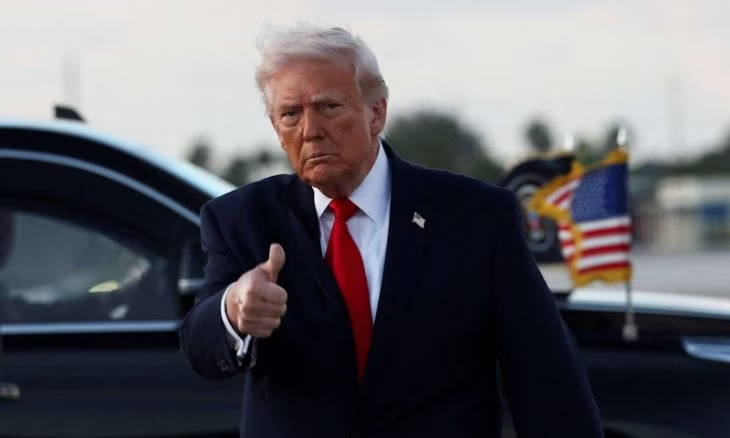







The New York Times painted a grim picture of the outcomes of the military confrontation led by President Donald Trump against Iran, considering that it weakened American global power and caused a series of strategic setbacks. The editorial explained that the decision made last February was reckless, as it lacked congressional cover and allied support, and was based on contradictory justifications that failed to provide a clear vision for the future of the region.
The newspaper indicated that the weeks following the attack revealed an absence of precise military planning, as Trump acted based on his personal whims, ignoring intelligence warnings. Despite predictions by regional allies that the attacks would spark an internal uprising in Tehran, reality proved these estimates false; instead, it increased the cohesion of the Iranian regime in the face of external pressures.
The first and most serious setback is Iran's newfound control over the global economy through the closure of the Strait of Hormuz, the passage through which one-fifth of the world's energy supplies flow. While Tehran's leaders previously feared the consequences of closing the strait, the war emboldened them to disrupt navigation, giving them diplomatic and economic leverage they did not have before the confrontation.
Media sources reported that the Iranian strategy in the strait proved effective at low cost, as it relied on threats from drones and small missiles to intimidate international tankers. In contrast, Washington found itself unable to reopen the waterway without engaging in a massive and prolonged ground military operation, an option that the current administration does not seem to have the ability or desire to implement.
On the military front, the war revealed a severe depletion of American strategic weapons stockpiles, with estimates indicating that the Pentagon consumed more than 25% of its 'Tomahawk' missiles in this confrontation alone. This severe shortage prompted military leadership to withdraw missile defense systems from vital areas such as South Korea, weakening the American presence on other global fronts.
The field confrontations also showed a worrying technological gap, as the United States used billions of dollars worth of smart munitions to destroy traditional targets, while Tehran succeeded in paralyzing navigation using cheap technologies. This disparity in the cost of war raised serious questions about the readiness of the American army to confront the methods of modern asymmetric warfare in which regional powers excel.
The third setback was in the arena of international alliances, where major powers such as Japan, Canada, and most Western European countries refused to engage in the American adventure. This collective rejection reflects the erosion of trust in Washington as a reliable ally, prompting these countries to seek independent security and political arrangements away from the traditional American umbrella.
In the Middle East, the scene appears more complex, as Gulf states feel that the ceasefire suddenly announced by Trump represents an abandonment of their national security. Although Iranian threats may push some capitals to rapprochement with Washington, doubts about the wisdom of the current American leadership have come to dominate decision-making circles in the region.
The newspaper touched upon the erosion of the United States' 'moral authority,' especially after Trump's threats to wipe out Iranian civilization and target civilians. These statements, which the newspaper described as amounting to war crimes, contradict the democratic values and human rights that Washington has long claimed to defend and lead the world through.
The editorial considered that the approach of Defense Secretary Pete Hegseth, who called for showing no mercy to enemies, represents an adoption of brutal methods rejected by international laws since World War II. This shift in official American discourse weakens Washington's ability to criticize authoritarian regimes in Russia and China, and strips it of its competitive advantage as a beacon of freedom.
The failure to secure enriched uranium or prevent Iran from rebuilding its nuclear program represents an additional failure in the declared war objectives. Instead of curbing Tehran's nuclear ambitions, military chaos led to giving the Iranians additional justifications to accelerate the pace of their activities and challenge international oversight in the absence of a coherent American strategy.
The 'New York Times' believes that the only solution to this dilemma requires building a broad international coalition to reopen the Strait of Hormuz and ensure freedom of navigation, which requires quiet diplomacy. However, the nature of the current administration, which prefers unilateral and confrontational action, makes building such a coalition almost impossible in the foreseeable future, leaving American interests hostage to escalation.
The past six weeks have proven that relying on 'intuition' in managing major international conflicts leads to catastrophic results for strategic influence. While Washington sought to demonstrate its strength, it ended up suffering from a shortage of ammunition and a crack in alliances, while Tehran emerged with diplomatic influence it had not dreamed of before the crisis erupted.
In conclusion, the newspaper affirms that this war was not just a tactical error, but an earthquake that shook the foundations of the international system led by America for decades. Restoring lost prestige will require years of serious diplomatic work and rebuilding trust with allies, which does not seem possible under current policies that prioritize threat over wisdom.
Trump's indifference left the United States on the brink of a humiliating strategic defeat and undermined the foundations of America's global leadership.
שתף את דעתך
New York Times: Trump's adventure against Iran undermined American leadership and strengthened Tehran's influence