






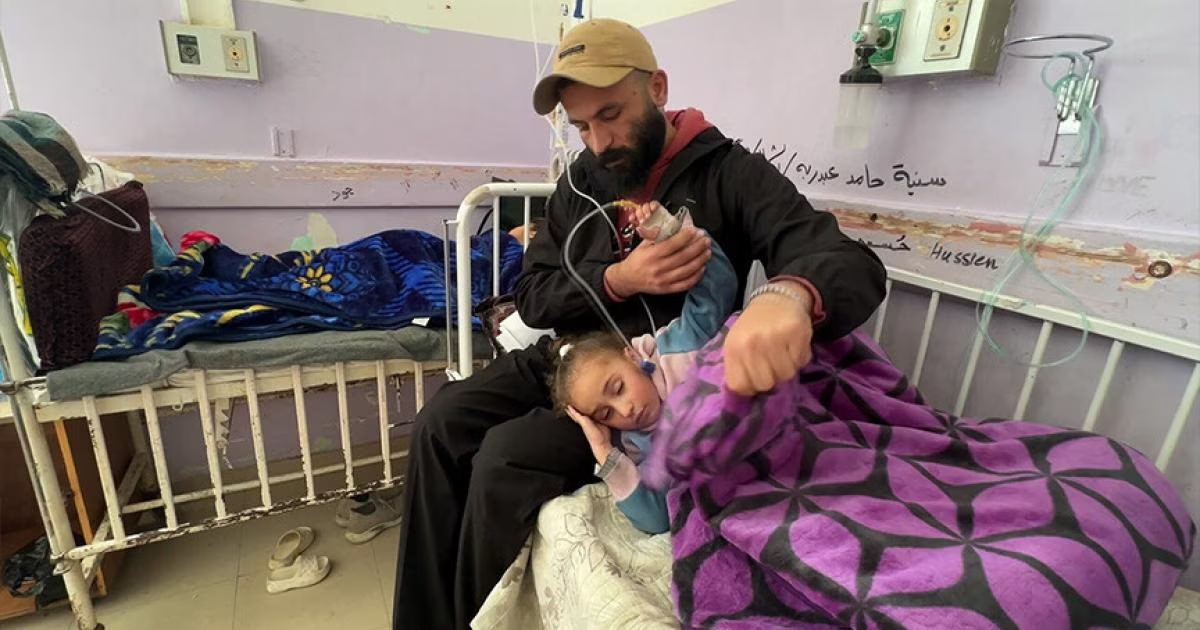
The humanitarian suffering in the Gaza Strip is escalating with the emergence of painful stories of patients afflicted by both disease and siege, as young Masa Al-Khatib and her two sisters face a daily struggle with a rare genetic autoimmune disease that threatens their lives. Their father, Ahmed Al-Khatib, reported that his three daughters have suffered since birth from a severe immune system disorder, leading to chronic infections and significant failure in physical development.
Al-Khatib explained that his daughters' health condition does not respond to any of the treatment protocols available in the Strip's exhausted hospitals, noting that the family has made strenuous efforts to secure a medical exit. Despite obtaining an official referral for treatment abroad through the World Health Organization since early 2024, the continued closure of crossings has prevented them from reaching specialized centers.
For his part, Dr. Iyad Abu Muailaq diagnosed young Masa's condition as suffering from a rare genetic defect that leads to severe weight loss and constant exposure to bacterial and viral infections. Abu Muailaq confirmed that the current medical capabilities in Gaza do not extend beyond providing temporary immune supplements, which are insufficient to stop the continuous deterioration of vital body functions.
Medical specialists stressed that saving the sisters' lives requires precise surgical intervention in the form of a bone marrow transplant, a procedure not technically available in Gaza due to the siege and lack of equipment. Doctors warned that any further delay in performing this operation outside the Strip could lead to uncontrollable complications, putting the girls' lives at risk.
Under these harsh circumstances, the girls' mother spoke about the living challenges that exacerbate the bitterness of the disease, as the family finds it extremely difficult to provide healthy food and essential medicines. She pointed out that her daughters' special health requirements need a sterile environment and intensive care, which is becoming increasingly difficult amid the successive crises experienced by the residents of the Strip.
The family appealed to the international community, human rights organizations, and the World Health Organization for urgent intervention and pressure to open a humanitarian corridor that allows critical cases to travel. These appeals come at a time when medical reports indicate that thousands of patients, including those with cancer and kidney failure, are waiting for their turn on travel lists that remain stalled due to imposed restrictions.
It is worth noting that the health sector in Gaza is under unprecedented pressure due to the severe shortage of essential medicines and medical consumables, making it impossible to deal with rare or chronic diseases. The hopes of the Al-Khatib family remain pinned on an international response that ends their daughters' suffering, in a bitter reality that links the right to life with the opening of closed crossings.
The radical solution is to perform a bone marrow transplant in specialized centers outside the Gaza Strip, and not performing this intervention poses a direct threat to their lives.
שתף את דעתך
Rare Disease Threatens Lives of Three Sisters in Gaza Amid Continued Closure of Crossings