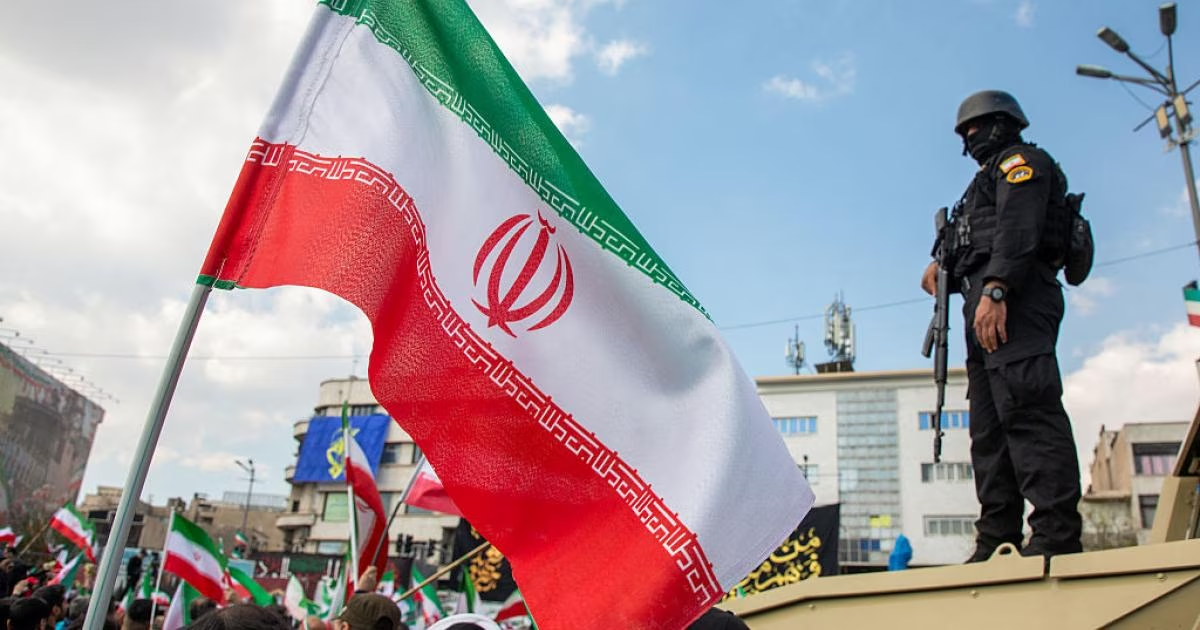







Responsible sources revealed intensive diplomatic efforts led by Pakistan to reach a formula that ends the current military confrontation, as Tehran received a two-phase proposal for a ceasefire. A senior Iranian official confirmed that his country is carefully studying the offer, while emphasizing the Islamic Republic's rejection of reopening the Strait of Hormuz in exchange for only a temporary truce, given Tehran's lack of conviction in Washington's seriousness for a permanent cessation of hostilities.
The Pakistani proposal, which represents the only channel of communication between the two parties, relies on a gradual approach that begins with an immediate and comprehensive ceasefire as a first step to build trust. This step is supposed to be followed by the signing of an initial memorandum of understanding that establishes a final and comprehensive agreement to be completed within a period ranging from 15 to 20 days, ensuring an end to the state of tension in international waterways.
Leaked information indicates that the initiative includes essential provisions related to the Iranian nuclear file, where the option of Tehran abandoning its program in exchange for a full lifting of economic sanctions imposed on it is proposed. The proposal also includes the release of all frozen Iranian assets abroad, points that are still subject to extensive deliberations within decision-making circles in Iran and no final agreement has been reached on them yet.
On the diplomatic front, sources reported that the Iranian capital witnessed extensive activity in recent hours, as Foreign Minister Abbas Araghchi held a series of contacts with his counterparts in the region and the world. These moves aim to explain the Iranian position and clarify the conditions Tehran sets for accepting any political settlement that guarantees its sovereign rights and ends the ongoing state of hostility.
The sources clarified that the official Iranian position is based on the premise that the other party initiated the military escalation, and therefore Tehran rejects any formula that appears to be a surrender or a retreat from national constants. The Iranian leadership affirms that any American attempt to achieve political gains that it failed to extract on the battlefield will be met with outright rejection, considering that time pressures will not affect the quality of the decision made.
Tehran stipulates in its vision for a final solution that the cessation of war must be comprehensive for all fronts related to the conflict, to ensure that confrontations do not resume in other areas in the future. Iran also demands the inclusion of a clear clause regarding the payment of financial and in-kind compensation for the enormous losses inflicted on its infrastructure and facilities as a result of the military operations launched by hostile forces during the past period.
Despite the momentum surrounding the Pakistani proposal, Tehran has not yet issued any official statement confirming receipt of the draft or setting a date for a final response. Extreme caution prevails in Iranian political circles, where observers believe that the devil is in the details, especially regarding the mechanisms for verifying the lifting of sanctions and guarantees that Washington will not withdraw from any future agreement.
If the proposal is accepted, the Strait of Hormuz is expected to witness an immediate resumption of international navigation, which will alleviate the global energy crisis caused by the war. Regional and international powers are awaiting the results of this mediation, which could constitute a historic turning point in the course of Iranian-American relations, or lead to further escalation if the parties fail to bridge their views on outstanding issues.
Iran will not succumb to pressure to set deadlines or make decisions under duress, and what Washington failed to achieve on the ground it will not gain through politics.
שתף את דעתך
Diplomatic Movement to End the War: A Two-Phase Pakistani Proposal on Tehran's Table