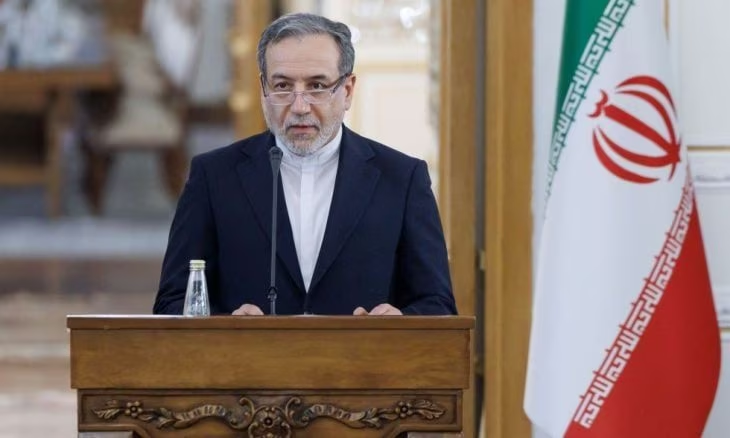







Media sources revealed the Islamic Republic of Iran's rejection of a proposal put forward by the United States through a third party, which called for a temporary 48-hour ceasefire. This offer comes at a time when Washington is facing increasing field and political complexities in the region, prompting it to seek a temporary de-escalation solution that was not accepted by the leadership in Tehran.
A high-ranking Iranian official affirmed that his country's official position has been clearly expressed through field escalation and the continuation of military operations against hostile targets. The official clarified that Tehran does not intend to enter into partial agreements or temporary truces, considering that the real response lies in the field to impose new equations that end the ongoing aggression.
For his part, US President Donald Trump downplayed the repercussions of recent military incidents on the course of the negotiation process sought by his administration. Trump indicated in press statements that the loss of an American fighter jet would not change Washington's strategy aimed at reaching an agreement that ends the military confrontation that has been raging for more than a month in the region.
Regarding diplomatic efforts, press reports stated that regional mediation led by Pakistan and other countries has hit a dead end due to the wide divergence in viewpoints. Tehran categorically refused to hold any meetings with American delegations in the capital, Islamabad, describing the conditions and demands set by the US administration as unacceptable and unfair.
In a notable development, Qatar expressed reservations about taking on the role of the main mediator in the current crisis, which further complicated the diplomatic scene and the chances of reaching an early settlement. This Qatari stance comes amid the continued widespread military operations launched by Israeli and American forces against Iranian targets since late February, which have resulted in significant human and material losses.
On the ground, the US military admitted that one of its F-15 fighter jets was shot down by Iranian fire, which represents a qualitative escalation in the direct confrontation between the two sides. Press sources also reported news of a second A-10 attack aircraft crashing in the strategic Strait of Hormuz region, despite the absence of official confirmations from the Pentagon regarding the second incident so far.
The region has been experiencing military turmoil since February 28, with the parties exchanging missile strikes and drone attacks. While the joint forces continue their operations, Tehran responds by targeting military installations and bases, leading to casualties and widespread damage, amid mutual international condemnations and warnings of the region sliding into a comprehensive war.
The Iranian response to the American proposal came on the ground with continued attacks, with a categorical rejection of any temporary agreements that do not meet national demands.
שתף את דעתך
Tehran Rejects US Proposal for Temporary Truce, Insists on Field Response Amid Stalled Mediations