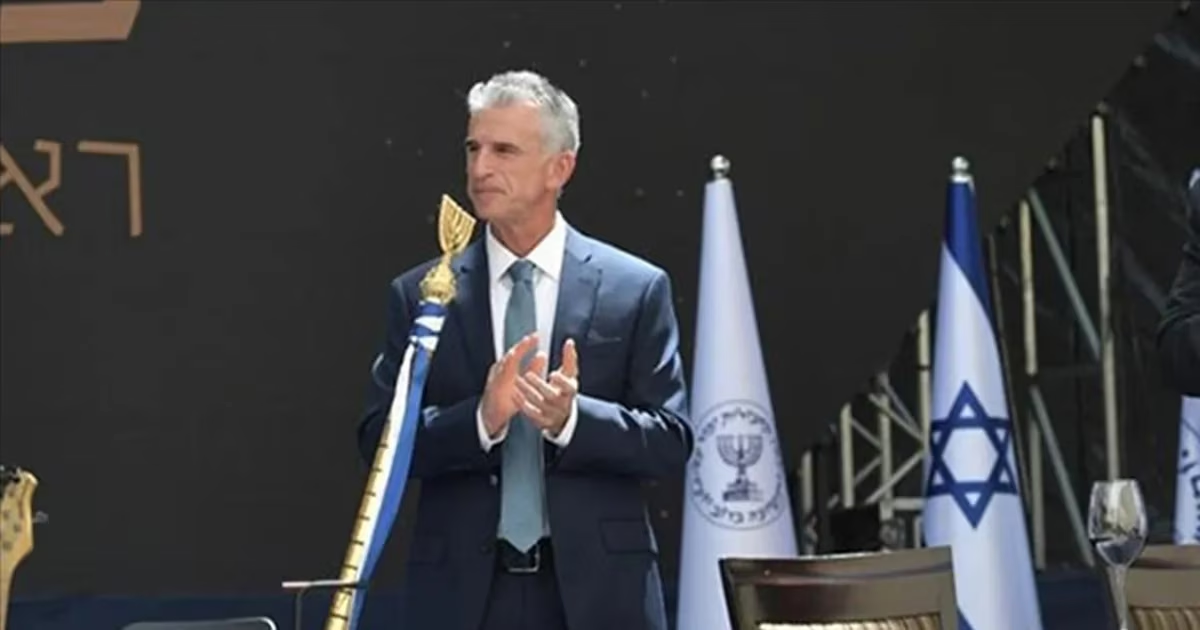







Hebrew press reports revealed the behind-the-scenes security discussions within the Israeli occupation, where the head of the 'Mossad' agency, David Barnea, estimated that the process of regime change in Iran could take a full year. These estimates came on the eve of escalating military tensions, sparking widespread debate in political circles about the feasibility and realism of these predictions.
Sources reported that Barnea presented several time-based scenarios to the cabinet for dealing with the Iranian file, ranging from a few months to a full year. Despite the varying probabilities, the head of the Mossad favored the longer-term scenario, considering that radical transformations in Tehran require a long breath and intensive intelligence work.
In contrast, Barnea faced a wave of indirect attacks through leaks from anonymous sources accusing him of misleading the Israeli and American leaderships. These leaks claimed that the head of the Mossad presented an overly optimistic picture regarding the chances of toppling the Iranian regime, leading to the construction of strategies based on inaccurate foundations.
International reports indicated that this campaign against Barnea might be driven by attempts to tarnish his reputation, especially with the increasing likelihood of failure in efforts to achieve a quick breakthrough. Sources suggested that circles close to Benjamin Netanyahu or the American administration might be behind these leaks to justify the lack of tangible results.
Political leadership offices in Tel Aviv and Washington face daily questions from the public about the reasons for the stalled progress in regime change in Iran. It appears there is an attempt to hold the security establishment, particularly the Mossad, responsible for raising expectations without real guarantees on the ground.
David Barnea is known for his tendency to provide cautious and conditional estimates, usually avoiding presenting inevitable scenarios of imminent collapse. Those close to him describe him as an 'establishment man' who adheres to the political leadership's directives and formulates intelligence briefings based directly on the Prime Minister's requests and orientations.
In the context of coordination with Washington, sources confirmed that the briefings presented by Barnea to Trump administration officials were under direct supervision from Netanyahu. These moves were not independent initiatives from the agency but rather part of a comprehensive political vision aimed at mobilizing American support for the military and security option.
Press investigations reported that Barnea had previously informed Netanyahu of the possibility of motivating the Iranian opposition to cause widespread unrest. The bet was that these disturbances would lead to the collapse of the regime from within within days of any direct military confrontation, which did not materialize.
Some reports held Netanyahu and Trump responsible for adopting an 'overly optimistic' approach to the Iranian file, ignoring warnings from other intelligence agencies. Leaked documents showed that Netanyahu expressed impatience with the slow pace of achieving results, especially with his concerns about the decline of international momentum supporting his operations.
On the other hand, there is no concrete evidence that the Mossad presented estimates fundamentally different from the Israeli army's position. The army believes that military force can only create suitable conditions for political change, but it does not automatically guarantee the fall of the ruling regime in Tehran without supporting internal factors.
The leaked Mossad plans included support for the movements of opposing Kurdish groups from northern Iraq to destabilize internal stability in Iran. However, these plans faced skepticism from the previous American administration, which downplayed the effectiveness of relying on armed factions with limited influence in changing the balance of power.
Barnea's name is associated with the 'death by a thousand cuts' strategy, which aims to exhaust the Iranian regime through qualitative operations and non-military tools. This strategy, developed during the previous government's tenure, relies on striking Iranian interests on several fronts simultaneously to gradually weaken the regime's structure.
Observers criticized the current debate's disregard for crucial factors, such as the lack of international intervention to protect Iranian protesters during previous waves of demonstrations. They believe that betting on the Iranian internal situation without providing effective international cover was one of the reasons for the failure of the Israeli intelligence strategy.
In conclusion of the leaked data, silence remains the master of the situation in the Prime Minister's office and the Mossad agency, as both parties refrained from commenting. This state of confusion reflects the depth of the crisis within the decision-making institutions of the occupation regarding how to deal with the complex Iranian file.
Regime change in Tehran could take about a full year, and cautious estimates are a characteristic of responsible intelligence work.
שתף את דעתך
Mossad's Estimates Behind the Scenes: A Year to Topple the Tehran Regime and Accusations of Misleading Barnea