







Washington - Said Arikat - 20/3/2026
News Analysis
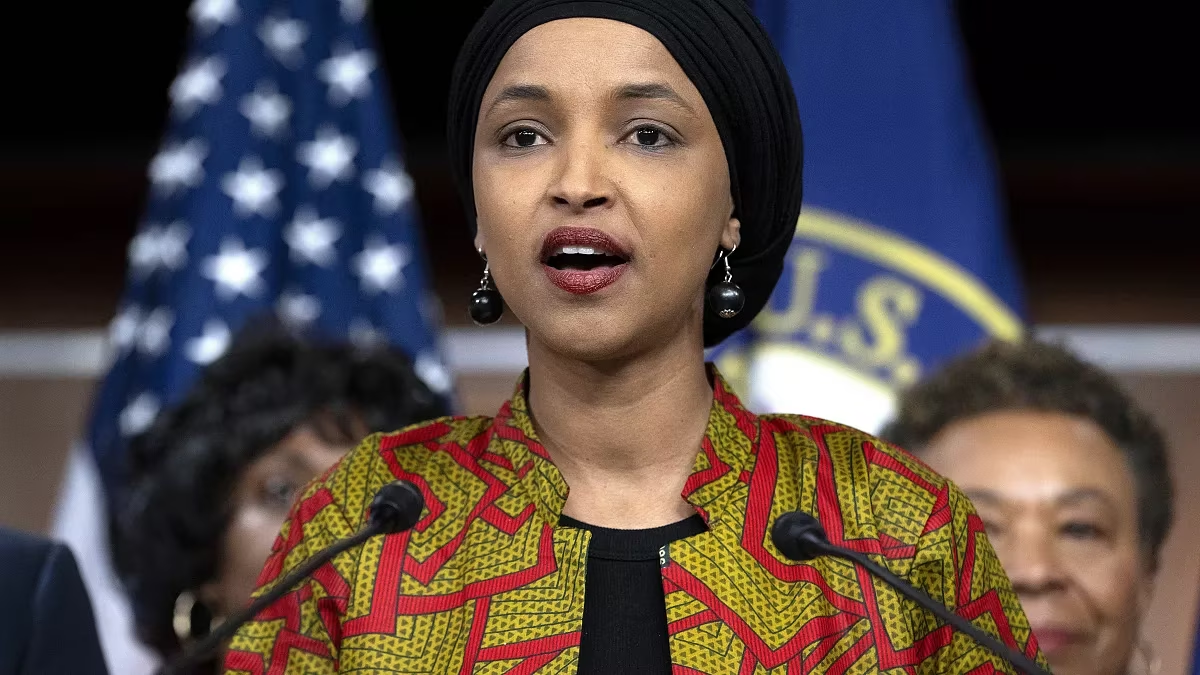
In a move that could redraw the balance of power between Congress and the executive branch, Congresswoman Ilhan Omar (from Minnesota) announced that any American funding for a war on Iran would not pass easily. These statements come as President Donald Trump prepares to request an additional $200 billion to support military operations, but Omar and her Democratic allies in the House of Representatives, if not all of them, have collectively declared their refusal to provide a blank check for war, considering that continued conflict would multiply human and economic losses without achieving any strategic gains.
Omar believes that the funds intended for weapons and airstrikes could serve more pressing priorities within the United States, such as healthcare, education, and food aid for vulnerable communities. In her public statements, she emphasized that "bombs do not build peace," and that relying solely on force would only lead to more regional tensions. Her stance is not new; rather, it is part of a long trajectory to strengthen Congress's role in overseeing presidential military actions, based on the War Powers Act, which grants Parliament the right to determine foreign policy priorities and monitor the use of military force.
The rejection by Omar and Democratic members of Congress is not limited to the legal dimension but extends to the economic and social repercussions of war. Spending hundreds of billions on an ongoing conflict will increase the fiscal deficit and place a heavy burden on taxpayers, at a time when citizens need vital social programs that enhance internal stability. Omar's call to redirect funds towards health, education, and food aid reflects a long-term economic vision, prioritizing the interests of the American people, and raising serious questions about the priorities of American policy, especially in light of an endless war and escalating risks on the regional stage.
The war on Iran also carries serious humanitarian dimensions. Joint airstrikes between the United States and Israel have resulted in civilian casualties and infrastructure destruction, complicating future diplomatic solutions. Omar and her allies assert that resorting to military options instead of negotiation fosters hostility and reduces opportunities for long-term peaceful settlements, emphasizing that American foreign policy cannot be based on force alone, and that effective conflict management requires integrating diplomacy and adherence to humanitarian laws to avoid creating crises that extend for years, increasing regional instability, and placing the United States in the face of growing internal and international criticism.
American domestic politics also play a significant role in the opposition to funding. Democrats in the House of Representatives feel that continued war could lead to widespread public discontent and might affect the party's credibility, especially with increasing questions about the utility of the war and whether it serves national security or narrow partisan interests. Omar believes that Congress must put an end to ill-considered military policies and send a clear message to the administration that funding is not an absolute right, and that democratic oversight is not just a slogan but a constitutional duty that protects the nation and ensures the wise use of public resources.
The rejection of war funding by the majority of Democrats also reflects a growing conviction that "eternal wars" do not achieve security, and that diplomatic solutions and investment in economic and social development are more effective in the long run. Omar's stance is not merely a partisan position but a call to rethink American policy priorities at all levels, and an affirmation that Congress's role in overseeing military operations must be decisive, and that the American people have the right to know how their money is used, and to ensure that resources are not wasted on endless conflicts.
In conclusion, it appears that the confrontation between the executive branch and Congress will continue against the backdrop of military funding requests, and that Congresswoman Ilhan Omar and her Democratic allies are prepared to exert all means of pressure to prevent millions of dollars from being transferred from the American people's treasury to ongoing, endless wars. This legal, political, and humanitarian battle at the same time may be an indicator of a broader shift in American policy, where Congress seeks to reclaim its constitutional role in overseeing the executive branch, and to affirm that protecting civilian lives and citizens' interests must come before any military agenda.
שתף את דעתך
Ilhan Omar and Democrats Reject Funding for War on Iran