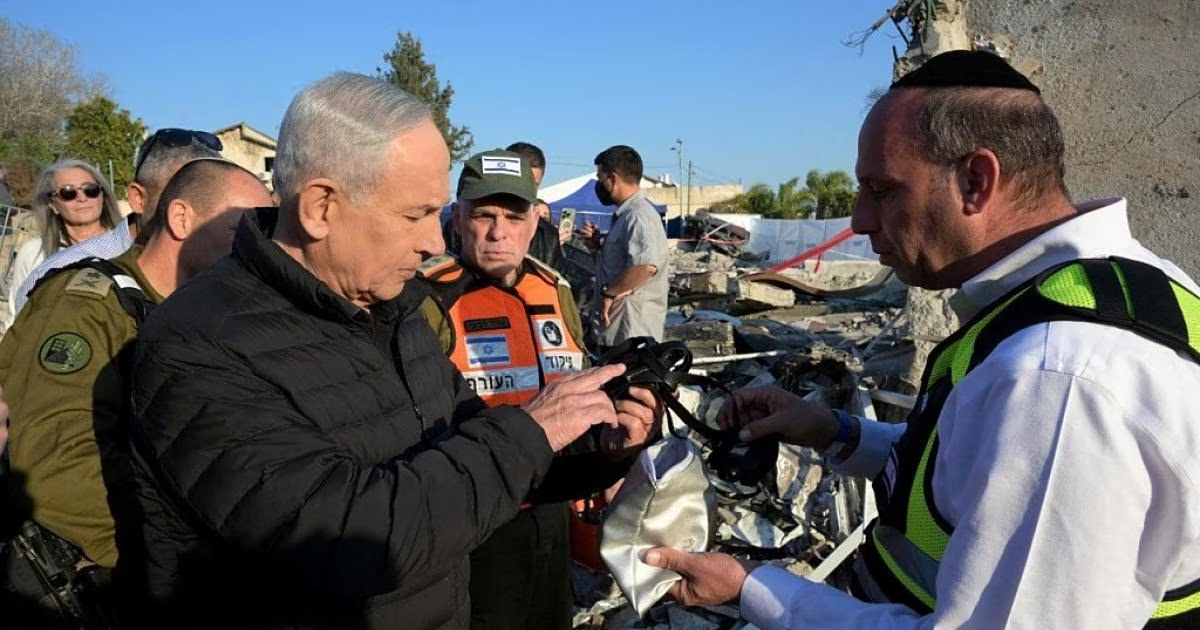







Israeli Prime Minister Benjamin Netanyahu considered the ongoing military confrontation with Iran a decisive stage, which he described as the 'War of Armageddon'. In a televised speech, he affirmed that this war primarily aims to reshape the geopolitical reality in the Middle East, emphasizing that his government possesses a strategic and organized plan aimed at undermining the Iranian regime and ending its threats.
Netanyahu touched upon what he described as a 'historic victory', indicating that the current operations will lead to results that serve Israel's security for generations and decades to come. This verbal escalation comes at a time when the region is witnessing unprecedented tension, as Tel Aviv seeks to rally broader international support for its military stances towards Tehran and its armament programs.
In contrast, media sources observed a clear contradiction in Netanyahu's discourse, as he had announced only eight months prior that Israel had achieved a victory that would last for decades. However, the return to a comprehensive confrontation with Iran, in coordination with the United States, raises questions about the accuracy of the security and political assessments previously presented by the Israeli Prime Minister.
Sources reported that the official Israeli narrative has undergone a remarkable shift; after claims of eliminating the Iranian ballistic missile program last year, Israeli agencies have returned to warning of an existential threat. Israel now claims that these missiles not only threaten its security but also extend their risks to include the European continent and the United States within the next few years.
Domestically, this contradiction in the official discourse is being ignored by Israeli media preoccupied with the state of general mobilization. A widespread consensus currently prevails in Israeli society supporting the continuation of military operations, as a broad segment of Israelis sees the necessity of military decisive action in this critical phase.
Remarkable in the current political scene is the supportive stance shown by the Israeli opposition towards the war on Iran, a position similar to the alignment that occurred after the events of October 7th. This support stems from the opposition leaders' feeling that they are true partners in the field achievements made by the Israeli army on various fronts.
This cohesion between the government and the opposition is linked to the social composition of the armed forces, especially in the air force and technical intelligence units such as '8200'. Opposition leaders boast that their constituents' sons are carrying out qualitative operations deep inside Iran, despite Netanyahu's continuous attempts to attribute these military successes to himself and his unilateral political decisions.
Israel has an organized plan to eliminate the Iranian regime, and this confrontation is the War of Armageddon that will redraw the features of the Middle East.
שתף את דעתך
Netanyahu describes confrontation with Iran as 'War of Armageddon' amidst questions about contradictions in his discourse