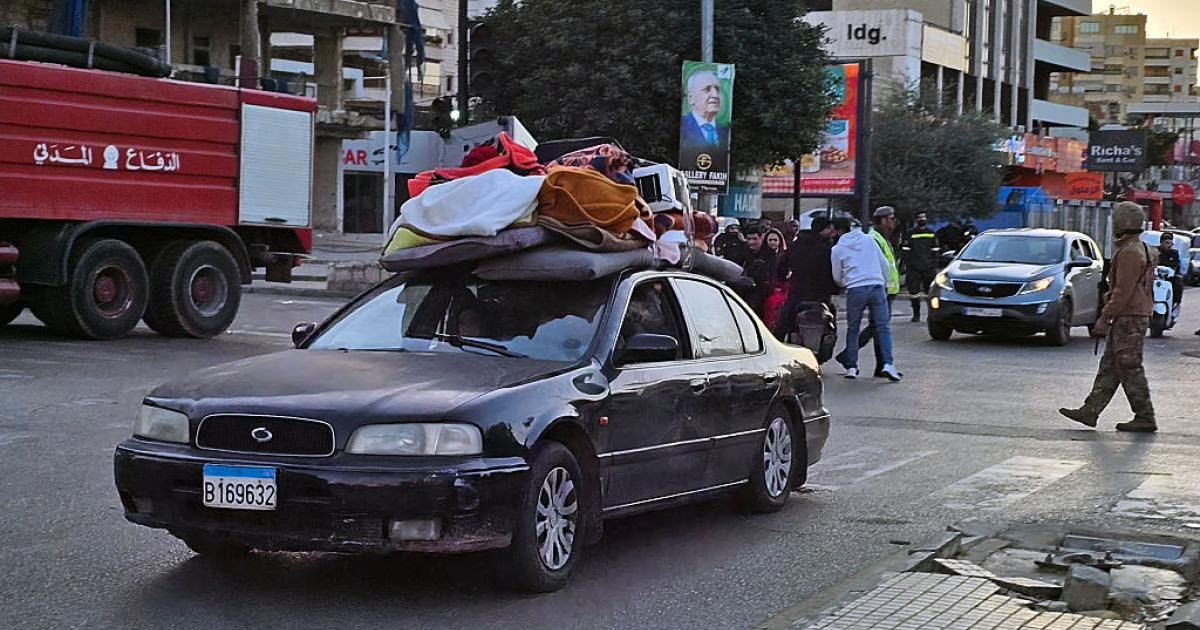







A profound silence has fallen over the streets of Beirut's southern suburb, which has transformed into what resembles a 'ghost town' after unprecedented waves of mass displacement. Field sources reported that lights were turned off in most residential neighborhoods following the departure of hundreds of thousands of residents from their homes, in response to immediate evacuation warnings issued by the Israeli Army on Thursday, March 5, 2026.
The evacuation operations were not limited to security squares or the four neighborhoods identified by Israeli threat maps, but extended to cover all parts of the southern suburb. A state of panic prevailed among families who rushed to leave the area, leading to the complete closure of entrances and exits due to heavy traffic congestion and confusion in identifying safe destinations.
In the heart of the capital, Beirut, thousands of displaced families spread out on roads, public squares, and parks, while others resorted to schools that opened their doors to accommodate the increasing numbers. Hundreds of citizens were seen walking or riding motorcycles, fleeing the imminent shelling threatened by Israeli forces in their warning statements.
Lebanese state institutions are experiencing a state of shock and helplessness in the face of this escalating humanitarian reality, as official administrations lack the capacity to absorb these massive numbers of displaced people. Fears are growing of the crisis worsening amid the difficult economic conditions plaguing the country, with expectations of evacuation orders expanding to include other areas in the northern Bekaa.
Observers believe that the current threats bring back memories of the July 2006 war, when the suburb was subjected to systematic destruction that lasted for more than a month. There is a general feeling among the political class and residents that the suburb is now under direct existential threat, especially with Israeli hints at implementing what is known as the 'Dahiya doctrine,' based on the comprehensive destruction of buildings and infrastructure.
The displaced people who abandoned their homes today, most of them hail from southern Lebanon, which has witnessed previous conflicts since 1978, which exacerbates their humanitarian tragedy as displaced persons for the second or third time. Warnings are increasing that the scene in Beirut could turn into a repeat of the 'Gaza scenario,' where excessive force is used as a tool for collective punishment against popular strongholds.
On the ground, sources reported that the northern entrances to Beirut witnessed suffocating congestion with the influx of displaced people who tried to reach safer areas in Mount Lebanon and the North. Hundreds of cars remained stuck for long hours, while some preferred to stay inside their vehicles in the streets due to the lack of alternative shelter or sufficient relief centers.
These rapid developments come amid continued tension on the Lebanese front, which opened in October 2023 under the banner of supporting the Gaza Strip. With the conflict entering a new phase of direct escalation, the fate of the southern suburb remains suspended between military threats and faltering diplomatic efforts to contain the situation and prevent a slide into an all-out war.
The most dangerous scenario feared by all is shelling that leads to the destruction of entire neighborhoods, or what is known in Israel as the 'Dahiya doctrine'.
שתף את דעתך
Beirut's Southern Suburb Turns into a 'Ghost Town' Amidst Unprecedented Displacement Wave