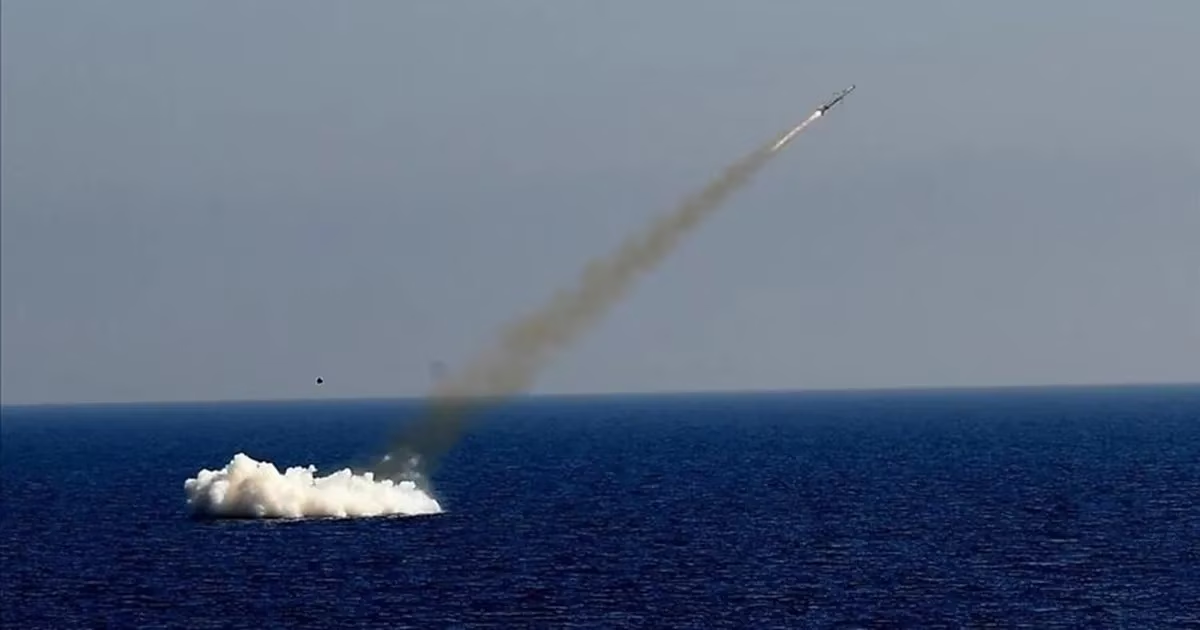







Israeli circles have expressed increasing concern over rapid Turkish movements in the energy sector, with Hebrew reports considering Ankara's expansion of its naval and military presence to have strategic dimensions that go beyond immediate economic interests. Sources indicated that the announcement by Turkish Energy Minister, Alparslan Bayraktar, about the exploration vessel 'Çagri Bey' beginning its operations in Somalia, represents a turning point in Turkish foreign influence.
The Turkish exploration vessel is scheduled to take a long route starting from Mersin port, passing through the Strait of Gibraltar and circumnavigating the African continent to reach Somali territorial waters. This step comes within a Turkish vision aimed at making 2026 a year full of major oil and gas discoveries, which will enhance Ankara's position as a regional player in the global energy market.
To secure these sensitive operations, the Turkish command has assigned advanced naval units, including the ships (TCG Sancaktar, TCG Gokova, and TCG Bafra), to escort the drilling vessel and provide the necessary logistical support. These forces will be deployed in strategic areas including the Gulf of Aden and the Arabian Sea until the end of February, to ensure the protection of seismic surveys and drilling operations from any potential threats.
In a related context, Minister Bayraktar affirmed that his country's top priority remains achieving complete energy self-sufficiency to end dependence on foreign sources. Turkey plans to double its natural gas production in the Black Sea fields this year, while expanding exploration to include the Rize, Giresun, Ordu, and Samsun regions, in search of new energy reserves.
Regarding nuclear energy, sources revealed that the 'Akkuyu' power plant project has reached its final stages, with the first reactor's completion rate reaching 99 percent. Electricity generation from this reactor is expected to begin this year, with the other three reactors gradually coming online to cover about 10 percent of Turkey's total electricity needs.
Turkey currently possesses the fourth-largest deep-water drilling fleet globally, after the addition of the seventh-generation vessels 'Çagri Bey' and 'Yildirim'. Current activity in Somalia relies on accurate data collected by the research vessel 'Oruç Reis' last year, which covered vast areas of Somali territorial waters through 3D surveys.
Turkish ambition is not limited to Somalia but extends to participating in international tenders in Libya and planning to start seismic surveys in Pakistan. Ankara has also strengthened its international partnerships by signing agreements with major global companies such as Exxon and Chevron, reflecting its desire to diversify its sources and expand its investment footprint in the global hydrocarbon sector.
On the military front, informed sources reported Turkey's deployment of three fighter jets in the Somali capital Mogadishu, following extensive logistical preparations including the construction of advanced aircraft hangars. This aerial presence aims to protect offshore drilling platforms and secure future plans for establishing a spaceport, in addition to supporting counter-terrorism efforts in the region.
Observers believe that the Turkish escalation in the Horn of Africa comes in response to regional and international moves, including Israel's recognition of the 'Somaliland' republic and Emirati activity in the Puntland and Jubaland regions. Ankara considers Somalia an indispensable strategic asset, having invested billions of dollars in infrastructure and training security forces to consolidate its influence in this vital region.
The goal set by President Recep Tayyip Erdoğan is to achieve complete energy self-sufficiency for Turkey to boost the national economy.
שתף את דעתך
Israeli concern over Turkish expansion in the energy sector and military deployment in Somalia