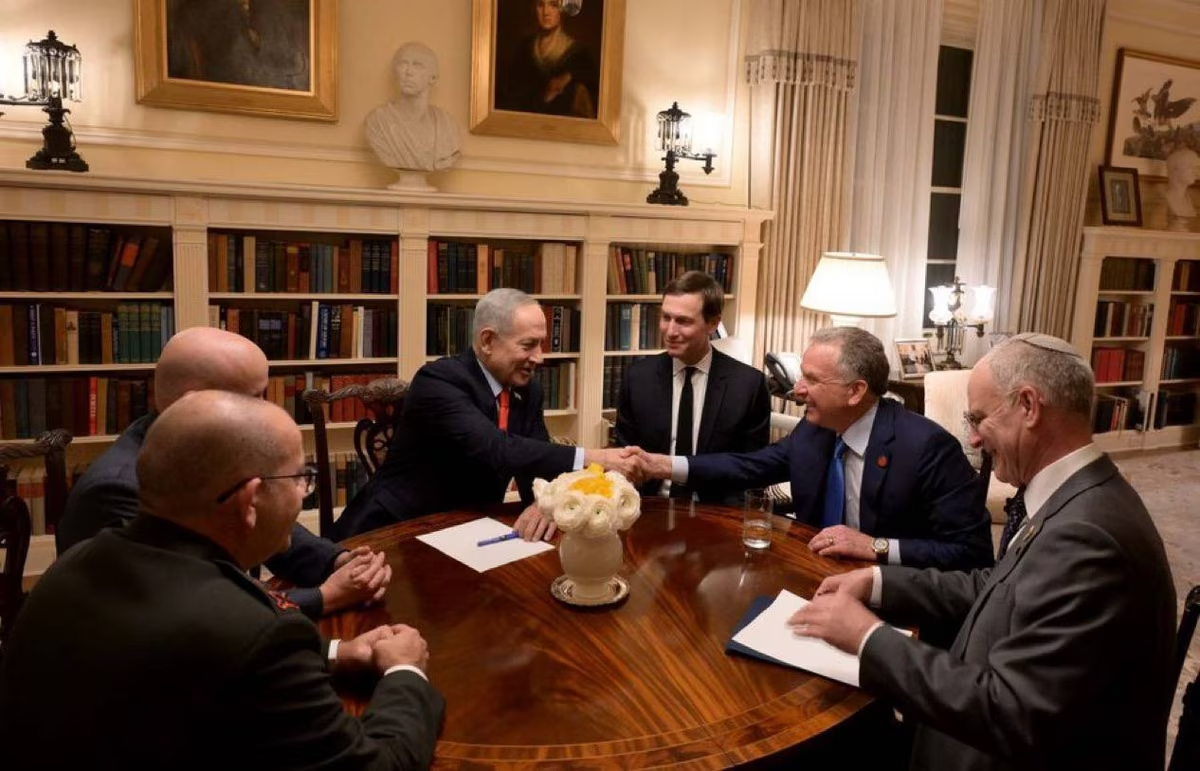







Israeli Prime Minister Benjamin Netanyahu began his intensive diplomatic moves immediately upon his arrival in the American capital, Washington, where he held a closed meeting at his residence at Blair House, the presidential guesthouse. The meeting included both US Special Envoy Steve Witkoff and former advisor Jared Kushner, as part of joint coordination ahead of the anticipated summit with President Donald Trump.
The discussions primarily focused on the indirect negotiations between Washington and Tehran, as Netanyahu seeks to understand the precise details of recent American moves. Witkoff and Kushner provided a comprehensive security and political briefing to Netanyahu and his security team on the results of the first round of these talks, in which they participated a few days ago.
Informed sources confirmed that Tel Aviv attaches utmost importance to the current negotiation process and is trying to influence the drafting of any potential agreement concerning the Iranian nuclear program. This visit, Netanyahu's seventh since Trump assumed his new term, reflects the deep coordination between the Israeli government and the current US administration on Middle East issues.
For his part, the Israeli Ambassador to Washington, Yehiel Leiter, published a photo documenting the meeting, indicating that work began from the first moments of the Israeli delegation's arrival. Leiter explained that the discussions included rapid regional developments, reflecting the desire of both parties to unify visions regarding Iranian threats in the region.
Coinciding with these diplomatic moves, the Israeli military leadership escalated its rhetoric towards Tehran, with Defense Minister Yisrael Katz announcing the Air Force's readiness to act. Katz indicated that 'F-35' aircraft are ready to carry out precise strikes against Iranian targets if security necessity demands it.
In a related context, Iranian advisors warned Washington against being drawn into what they described as Netanyahu's 'sabotage' statements aimed at undermining opportunities for de-escalation. Tehran affirmed that it is closely monitoring Israeli moves in Washington, stressing that any aggression will be met with a decisive and strong response that exceeds expectations.
On another front, attention is turning to the Gaza Strip amid reports of international plans to send peacekeeping forces to end the ongoing war. Media sources revealed that Indonesia has expressed its readiness to send about 8,000 soldiers to participate in this mission, becoming the first country to officially announce the size of its potential military contribution.
On the ground, Israeli raids continued on various areas of the Gaza Strip, with sources reporting casualties and injuries in a targeting of a residential apartment west of the city. These developments coincide with protests within Tel Aviv demanding the government stop the escalating violence in the Arab community within Israel.
In the West Bank, Israeli forces continued demolition operations, with their bulldozers targeting a house in Ramallah that a young Palestinian man had built in preparation for marriage. These measures come at a time when the region is witnessing increasing tension and international calls for restraint and an end to field escalation.
On the international stage, new European moves towards the Ukrainian crisis emerged, with French President Emmanuel Macron announcing the restoration of communication channels with Moscow. Macron urged European leaders to engage in dialogue with Russia to reach a political settlement that ends the conflict that has been ongoing for years.
In contrast, the Russian Ministry of Defense announced the success of its air defenses in shooting down 48 Ukrainian drones that attempted to target facilities within Russian territory and over the Sea of Azov. Moscow affirmed that these attempts reflect the failure of Ukrainian forces to achieve any tangible progress on the battlefield fronts.
In Washington, media reports indicate that the US administration intends to call for a new round of talks on the Ukrainian conflict in Miami next week. This round aims to discuss the possibilities of a ceasefire and the deployment of international monitoring forces, despite Russian doubts about the seriousness of Western intentions.
The Arab arena also witnessed active diplomatic moves, as UAE President Sheikh Mohamed bin Zayed received Egyptian President Abdel Fattah El-Sisi in Abu Dhabi. The bilateral summit discussed ways to enhance joint cooperation and address urgent regional issues, especially the situations in Gaza and Lebanon.
In conclusion, the anticipated meeting between Netanyahu and Trump remains the main driver of events in the coming hours, as it is expected to draw a roadmap for dealing with the Iranian file. Regional capitals are awaiting the results of this meeting due to its direct implications for the security and stability of the entire Middle East region.
Work has already begun within the first hour of the Prime Minister's arrival in Washington to discuss regional developments.
שתף את דעתך
Netanyahu discusses Iran file with Kushner and Witkoff ahead of his summit with Trump in Washington