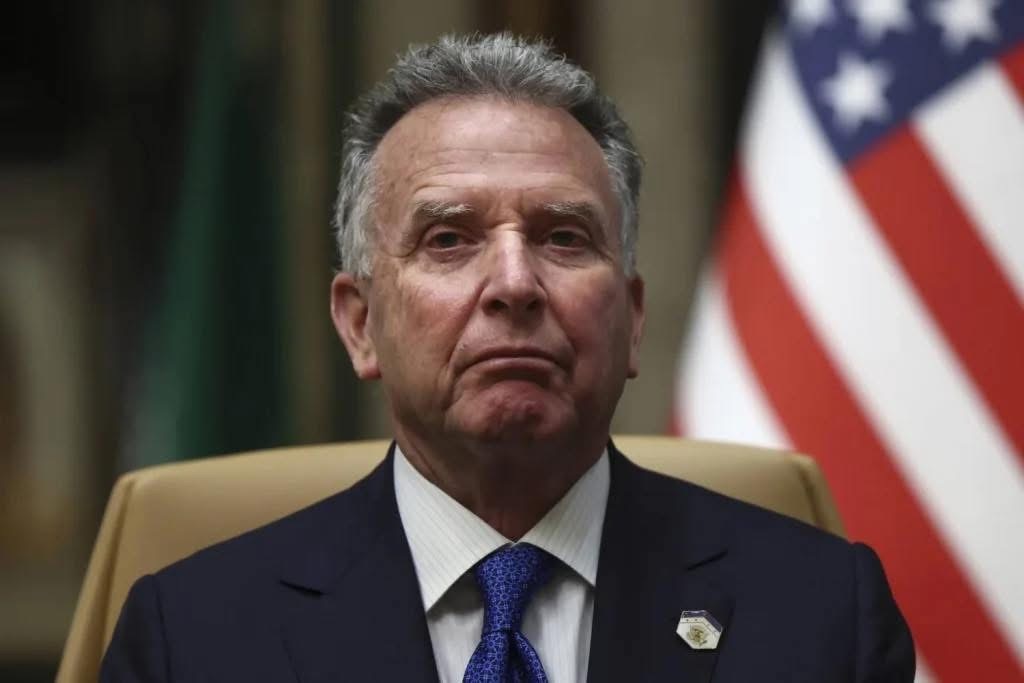







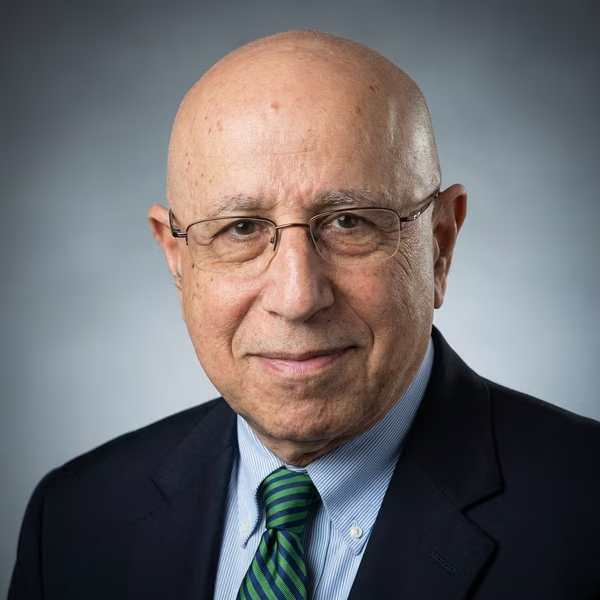
In a regional moment saturated with escalation and conflicting messages, US Special Envoy Steve Witkoff is heading to Israel, where he is expected to hold high-level meetings on Tuesday with Israeli Prime Minister Benjamin Netanyahu and Israeli Chief of Staff Eyal Zamir. The visit, according to Israeli officials, is not merely protocol, but comes in a highly sensitive political-security context, whose central theme is: Iran, and the limits of what confrontation or diplomacy with it can achieve.
Witkoff's visit to Tel Aviv is preceded by a notable visit by the Israeli Chief of Staff to Washington over the weekend, where he held a series of discussions with American defense officials regarding the Iranian nuclear program and the repercussions of any potential military action in the region. This temporal synchronicity clearly reflects the extent of US-Israeli coordination, but at the same time reveals unspoken discrepancies regarding the timing and form of confrontation, or the possibility of containing it through a negotiated path.
According to an American official, the Israel stop is only part of a broader tour, as Witkoff is scheduled to meet with Iranian Foreign Minister Abbas Araqchi on Friday in Istanbul after leaving Tel Aviv, in a meeting arranged with Turkish, Qatari, and Egyptian support, as reported by the American website "Axios". The stated goal is to discuss the possibility of reaching a nuclear agreement, or at least to test Tehran's intentions at this tense stage.
In Washington, President Donald Trump continues his policy of "dual pressure": military threat on one hand, and opening the door to diplomacy on the other. Following the widespread protests in Iran last month, and the violent security response to them, Trump hinted at the possibility of military action and ordered the deployment of an aircraft carrier group to the Middle East. In contrast, he expressed optimism about the possibility of reaching an agreement that would spare the region a comprehensive war.
Tehran was quick to respond. It warned that any American strike would be met with direct targeting of Israel and American bases and interests in the region. The Israeli Prime Minister, in turn, capitalized on this atmosphere in a speech to the Knesset, asserting that Israel is "prepared for all scenarios," and issuing a stern warning that "whoever attacks us will face unbearable consequences."
But behind this public escalation, back channels are advancing. Iranian media reported that President Masoud Pezeshkian issued a directive to begin nuclear talks with the United States, a development reflecting an Iranian awareness of the sensitivity of the stage. Iranian Foreign Ministry spokesman Ismail Baqaei confirmed that regional countries are playing a mediating role in exchanging messages, noting that the diplomatic process is being discussed in terms of "methodology and framework," with hope for its completion within days.
It is worth noting that Iranian Foreign Minister Abbas Araqchi said, in an interview with CNN, that he believes an agreement with Washington is possible, indicating Tehran's desire to avoid an open confrontation scenario, without abandoning its deterrent cards.
Regionally, a clear Jordanian stance emerged, as Foreign Minister Ayman Safadi, in a call with his Iranian counterpart, stressed that Jordan will not be a battlefield or a platform for any military action against Iran, affirming Amman's rejection of violating its airspace or endangering its internal security. This stance reflects growing Arab concern about the repercussions of any widespread clash.
As for Russia, the Kremlin reiterated its readiness to play a role in de-escalating tensions, including a proposal to process or store enriched Iranian uranium, a file that Moscow says has been on the table for a long time and constitutes one of the tools for de-escalation.
All of this is taking place against the backdrop of last year's war, during which Israel targeted Iranian nuclear and missile sites, and Tehran responded by launching hundreds of ballistic missiles and drones, resulting in casualties and injuries within Israel. While Iran denies seeking to possess nuclear weapons, international and Israeli reports indicate high enrichment levels, restrictions on inspectors' work, and an expansion of the missile program, keeping the specter of confrontation strongly present.
Witkoff's visit reveals that American diplomacy is not operating in a vacuum, but under the umbrella of intense military pressure. Washington is not negotiating from a position of retreat, but from a position of dictating the pace. However, this approach, which has previously proven limited with Iran, may lead Tehran to buy time instead of making fundamental concessions. The real question is not whether both parties want an agreement, but what kind of agreement, and at what internal political cost for each.
Israel appears to be more of a pressuring player than a negotiating party. Netanyahu's escalatory rhetoric serves deterrence, but carries the risk of entanglement, as Tel Aviv may find itself in the midst of a confrontation whose pace it cannot control if diplomatic efforts fail. The irony is that the most Israel wants is to prevent a nuclear Iran, but the least it wants is a long-term regional war that drains its military and economic capabilities.
The positions of Jordan, Turkey, Qatar, and Egypt reflect a regional understanding that any US-Iranian clash will not be contained. The entire region will be an arena for security and economic repercussions. Therefore, these countries are acting not out of a love for mediation, but out of fear of an explosion. However, their ability to influence remains limited unless there is a genuine will from Washington and Tehran to break the logic of the brink.
שתף את דעתך
Witkoff in Israel before Istanbul: Diplomacy Race on the Brink of War with Iran