







News Analysis
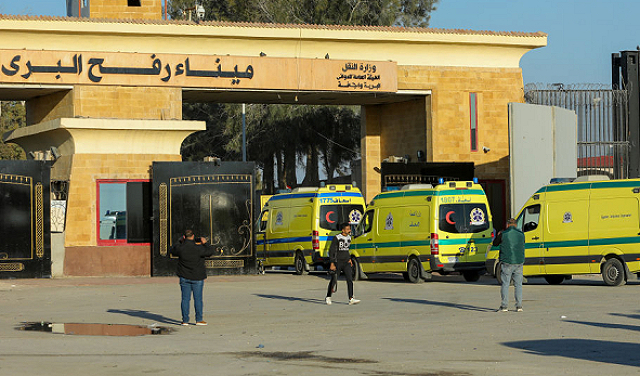
The Israeli occupation authorities, through the Coordinator of Government Activities, announced an agreement to reopen the Rafah border crossing starting Monday morning. This move initially appeared to be a response to accumulated humanitarian pressures, but upon closer inspection, it quickly revealed a familiar Israeli pattern of granting facilities with one hand and withdrawing their essence with the other. The announced reopening is nothing more than a partial and restricted opening, limited to the movement of people only, and subject to direct Israeli security oversight, which empties the measure of its sovereign and humanitarian content.
According to the announcement, entry and exit operations will be carried out according to a precise coordination mechanism with the Egyptian side, with the tasks of field supervision assigned to a European party. However, this "international" cover does not change the fact that the final decision remains in the hands of the occupation, which stipulated prior security approval for each crossing. Thus, the crossing transforms from a sovereign Palestinian-Egyptian gateway into an advanced security checkpoint subject to Israeli military will, even if mediated by third parties.
While the arrangements allow Palestinians to return from Egypt to the Gaza Strip, especially those who left during the war, this return is conditional on a series of strict "Israeli scrutiny" procedures. These procedures are presented, as usual, under the pretext of "preventing security threats," a vague pretext historically used by the occupation to perpetuate the policy of collective punishment, maintain control over the movement of residents, and transform the natural right to movement into a security privilege that can be granted or denied.
This step comes in the context of diplomatic pressures led by the US administration, where President Donald Trump's administration seeks to market what it calls "logistical solutions" to alleviate the humanitarian catastrophe in Gaza, without addressing the roots of the crisis or compromising the occupation's security superiority. What is required by the US is not an end to the siege, but its reorganization in a less blatant and more politically and media-marketable way.
Trump believes that subjecting Gaza's crossings to international, especially European, supervision is part of a broader deal aimed at reducing the influence of Palestinian factions and strengthening the monitoring system for the movement of individuals, thereby transforming the crossings into tools of security control rather than lifelines. In this context, Egyptian-American coordination is presented as a crucial factor in "extracting" the decision, but in essence, it reflects complex pressures exerted on Cairo to manage the file in a way that prioritizes Washington's and Tel Aviv's interests more than it responds to Palestinian rights.
In this context, the following five points must be highlighted:
1. Israeli Evasion in a Humanitarian Guise: The limited reopening of the Rafah crossing reflects a recurring Israeli pattern of circumventing international pressure through superficial steps. The occupation does not openly reject facilities, but redefines them in a way that keeps control in its hands. The use of humanitarian titles to conceal a security-military essence is part of this evasion, where the measure is marketed as a breakthrough, while practically it is established as a new tool for controlling the population and their movement.
2. Is European Supervision a Cover or a Partnership?: The involvement of a European party in field supervision does not mean a real internationalization of the crossing, as much as it provides political and moral cover for Israeli arrangements. Past experiences indicate that this role is often technical and supervisory, without the ability to challenge Israeli decisions. Instead of European supervision serving as a guarantee for Palestinians, it may turn into a silent partner in managing the siege in a "soft" manner.
3. Security Scrutiny as a Political Weapon: What is called "Israeli scrutiny" is not a neutral security measure, but a political tool par excellence. Through it, the occupation retains the right of veto over the return of individuals, and reclassifies Palestinians according to vague security criteria. This approach does not aim at security as much as it aims to re-engineer Palestinian society, control its demographic composition, and collectively punish Gaza under the banner of prevention.
4. The American Role: Crisis Management, Not Resolution: The American approach, as reflected in the pressures of the Trump administration, stems from the principle of managing the crisis instead of resolving it. What is required is to mitigate the humanitarian explosion to prevent political embarrassment, not to end the siege or address its structural causes. Thus, "logistical solutions" become temporary painkillers, keeping the essence of Israeli control intact, and postponing the explosion instead of addressing it.
5. Rafah Crossing Between Sovereignty and Security Function: The core issue is not opening or closing the crossing, but the question: who owns sovereignty over it? The proposed formula empties the Rafah crossing of its meaning as a sovereign outlet, and transforms it into a security function within a regional-international system for managing Gaza. Unless this link is broken, every opening will remain temporary, every breakthrough conditional, and every hope susceptible to setback.
The reopening of the Rafah crossing, in its current form, is not a breaking of the siege as much as it is a reorganization of it. Between American pressures, Israeli evasion, and limited international supervision, the Palestinian remains the weakest link, granted his natural right conditionally, and asked to be grateful for what is supposed to be a right, not a favor.
שתף את דעתך
Reopening of Rafah Crossing: Conditional Humanitarian Breakthrough or Reproduction of Israeli Control?!