






Nazmi Al-Salman: The occupation continues to establish an unprecedented settlement reality within systematic strategic policies to impose new facts on the ground and change the face of the West Bank
Muhammad Abu Allan Daraghmeh: Despite its unofficial disapproval, the American administration does not oppose annexation, by turning a blind eye to the unlimited settlement expansion in the West Bank
Anas Abu Arqub: Israel relies on the "settlement belts" strategy, which aims to create a network of interconnected settlements around Palestinian cities and villages to isolate them from their surroundings
Mazen Al-Ja'bari: Area "C" constitutes about 60% of the West Bank's area, and if it is emptied of the possibilities of life and sovereignty, nothing will remain of the idea of a state except a political title over isolated population islands
Amir Makhoul: The Israeli right is currently going through a difficult and critical stage and will seek to strengthen its control geographically, but it is unable to strengthen it demographically, as the migration balance to the settlements is not positive
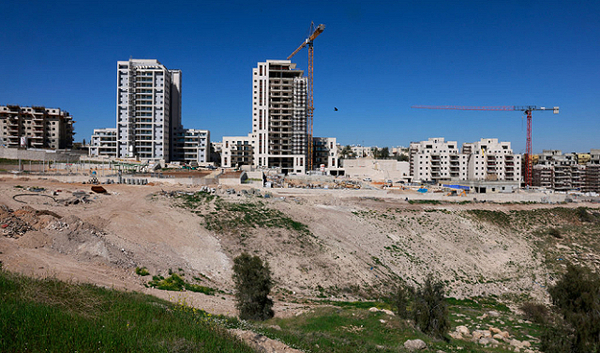
Within systematic policies to impose new realities on the ground to change the geographical and demographic realities in the West Bank, the occupation is establishing an unprecedented settlement reality in the occupied Palestinian territories to control them, through decisions issued by various occupation institutions such as the army, the so-called "Civil Administration" and nature protection, in conjunction with settler violence, and what has become known as pastoral settlement, which controls vast areas of land throughout the West Bank, and has begun to form points for the launch of settler violence and their organized terrorism.
Writers and specialists warn in interviews with "Y" that the facts on the ground indicate an unprecedented increase in the pace of aggression by the occupation and its settlers, which is being carried out by organized groups of settlers trained to practice all forms of violence against citizens, including physical assaults, shooting, burning vehicles and property, stealing livelihoods, depriving citizens of water springs, and displacing them from their lands, noting that the issue of settlement encroachment in the West Bank is no longer limited to Area "C", but has extended to Area "B", and is even trying to reach Area "A", by imposing Israeli control over some sites on the pretext that they are archaeological, historical and religious sites, as is the case in Joseph's Tomb in Nablus.
Unprecedented increase in the pace of aggression and settlement
Nazmi Al-Salman, a specialist in settlement affairs, says: The Israeli occupation continues to establish an unprecedented settlement reality on the occupied Palestinian territories in all governorates of the West Bank, from Masafer Yatta in the south of Hebron, through Ramallah, Nablus, the northern and central Jordan Valley, and the north of the West Bank, specifically in Jenin, pointing to several systematic strategic policies of the occupation to impose new facts on the ground and change the face of the West Bank.
Al-Salman explained that the occupation aims to control Palestinian lands through decisions issued by various occupation departments such as the army, the so-called "Civil Administration" and nature protection, in conjunction with settler violence, which has become known as pastoral settlement, which controls vast areas of land throughout the West Bank, noting that the pastoral settlement outposts have begun to form points for the launch of organized settler violence and terrorism against the Palestinian people.
Al-Salman stressed that the facts on the ground and the extent of the attacks indicate an unprecedented increase in the pace of aggression against our people, which is being carried out by organized groups of settlers trained to practice all forms of violence against citizens, including physical assaults, shooting, burning vehicles and property, stealing livelihoods, depriving Palestinian citizens of water springs, and displacing them from their lands.
He explained that "in the face of this organized violence and terrorism, as indicated by the facts, it is done with the consent and protection of the occupation army, and dozens of Palestinian Bedouin communities have been forced to leave their homes and forced migration," stressing that this terrorism and fierce attack on citizens coincides with many decisions issued by various occupation departments, in a policy of sharing roles to achieve the main goal, which is to displace Palestinian citizens from their land and annex lands, through decisions that establish what is to come, most notably allowing settlers to buy land directly from the West Bank and allocating vast areas for pastoral outposts, and allocating huge budgets for new settlement construction projects and developing existing settlements, legitimizing pastoral outposts, and approving structural plans.
Al-Salman stressed that all these measures have led to the creation of an expelling environment, and forced many Bedouin communities to leave under continuous pressure from settler violence.
He said: In a clear continuation of the occupation's policy of expansion and annexation of Palestinian lands, the occupation's decision first comes to the return of settlers to settlements that were evacuated in 2005, especially in the northern West Bank, and the offering of tenders for the construction of thousands of housing units, and the occupation's approval of the establishment of 19 new settlements.
Al-Salman believes that these measures change the face of the West Bank and reshape Palestinian geography, as tenders for the construction of housing units have been offered in the vicinity of Jerusalem in what is known as E1, and another settlement project has been announced that separates the Qalqilya and Salfit governorates, and shows Palestinian towns and villages as isolated enclaves, while changes are taking place on the ground in favor of the settlers, such as: road construction, the establishment of bridges and sewage services, and communication and surveillance towers to serve the settlement project.
He added: These measures serve the occupation project that the Minister of Finance in the occupation government, Bezalel Smotrich, boasts about, which aims to bury the idea of an independent, geographically contiguous Palestinian state, and destroys the Palestinian dream of freedom, independence, and imposing sovereignty.
Al-Salman pointed out that "in the face of this unprecedented settlement encroachment that has swallowed vast areas of land classified as "C", and now has moved to the outskirts of Palestinian towns and villages in areas classified as "B", the Palestinian citizen stands unarmed and peaceful in the face of this occupying displacement project, and that it is necessary to support and strengthen the steadfastness of citizens through practical measures on the ground that citizens can feel, especially the land guardians who live in isolated farms and communities, with simple living necessities," adding that it is necessary to unify and integrate official and popular efforts to support the steadfastness of citizens, and to thwart the annexation and displacement project, and it is necessary to revive popular efforts, and to develop programs and plans to share citizens' concerns, and to emulate previous successful experiences, and to expose the occupation's policies at the international level through networking with many international organizations and human rights bodies.
Settlement encroachment is no longer limited to Area "C"
Muhammad Abu Allan Daraghmeh, a specialist in Israeli affairs, believes that "the issue of Israeli settlement encroachment in the West Bank is no longer limited to Area "C", but has extended to Area "B" and is even trying to reach Area "A", by imposing Israeli control over some sites on the pretext that they are archaeological, historical and religious sites, as is the case in Joseph's Tomb.
He confirmed that settlers have been allowed for some time to storm the city of Nablus, even in broad daylight, to perform their biblical rituals, which confirms that this falls within the framework of a systematic encroachment policy, which can be placed within three main contexts.
Daraghmeh believes that the first context is the endeavor to completely eliminate the two-state solution, which is actually being implemented on the ground. He referred to Smotrich's statements, who said that his life's dream is to end the idea of the two-state solution, stressing that "there will be no state between the sea and the river, but only the State of Israel," as he put it.
As for the second context, it lies in imposing new realities on the ground, which facilitates the official annexation process later. The current practices represent actual annexation, and what delays the official announcement is the lack of explicit American approval.
Daraghmeh explained that the American administration, despite its unofficial disapproval, does not oppose actual annexation, by turning a blind eye to the unlimited settlement expansion in the West Bank, which is clearly consistent with Smotrich's policy, who calls for the annexation of about 82% of the West Bank's area, and leaving 18% as cantons for Palestinians, without forming a real Palestinian entity or national gathering.
As for the third context, according to Daraghmeh, it relates to imposing new borders within the West Bank, pointing out that one of the most prominent evidences of this is the eastern wall of the Tubas Governorate and the northern Jordan Valley, which extends from the Ein Shibli area to the Tayasir checkpoint for about 22 kilometers. This wall comes within a broader project implemented by the occupation to completely isolate the Tubas Governorate from the Jordan Valley area.
He explained that what delays the annexation process is America's approval, which does not oppose actual annexation in the West Bank, noting that the separation wall being implemented from Ein Shibli to the Tayasir checkpoint, 22 kilometers long, and paralleled by a road extending along the area, forms part of a larger wall, two phases of which have not yet been announced by the Israeli occupation army.
Abu Allan Daraghmeh explained that this wall aims to impose new borders for the Tubas Governorate, by separating urban communities from agricultural lands in the Jordan Valley, which means isolating hundreds of thousands of dunams behind the wall. When completed, the governorate will be surrounded by a wall from the eastern side, which practically constitutes its final borders, despite its primary reliance on agriculture in the Jordan Valley area, which is besieged by the occupation army.
Abu Allan pointed out that after the war on the Gaza Strip, and during the past two years, about 33 pastoral communities were completely displaced, in addition to the partial displacement of about 12 pastoral communities, in the area extending from the northern Jordan Valley to the south of Mount Hebron, explaining that this displacement is carried out by the civilian arms of the occupying state, i.e., the settlers, who implement plans to control lands and attack Palestinians, under the patronage and protection of the Israeli occupation army.
Daraghmeh added: These attacks have now extended to various governorates of the West Bank, not only to areas classified as C, but also to areas classified as B, with the same approach continuing and settlers approaching city centers, if the pace of attacks remains the same.
Ways to confront settlement and occupation policy
Regarding ways of confrontation, Daraghmeh said: Palestinians no longer have effective tools to stop settler attacks, in light of the urgent need to unify the Palestinian political ranks, and to develop a national program to confront settlement and occupation policies.
Daraghmeh stressed that the continuation of the division, and the division of the Palestinian reality between the West Bank and the Gaza Strip, in addition to the projects proposed for Gaza, such as the so-called Peace Council, contributes to deepening the existing division. He stressed that the solution remains dependent on serious international and Arab action to stop the policies of the Israeli occupation state.
Focus on decisive action in desert areas
For his part, journalist and researcher specializing in Israeli affairs, Anas Abu Arqub, said: "Field readings indicate that the current stage of the settlement project in the West Bank focuses on decisive action in desert areas, especially the Jordan Valley and rural areas."
He stressed that settlement is no longer gradually creeping, but is advancing at a rapid pace that exceeds the expectations of the leaders of the Israeli settlement project. He added that in these areas, expansion is accompanied by the displacement of Bedouins to ensure exclusive control for settlers and to deprive local residents of pastures, while efforts continue to impose influence and expropriate agricultural lands in mountainous rural areas.
Abu Arqub pointed out that Israel relies in this context on the "settlement belts" strategy, which aims to create a network of interconnected settlements around Palestinian cities and villages to isolate them from their natural surroundings, stop their urban expansion, and impose demographic and geographical control.
He noted that internally interconnected settlements and settlements within the Green Line transform the surrounding lands into a continuous settlement extension, making Palestinian cities besieged islands with limited growth and development, as part of a long-term plan to reshape demographic and geographical maps to serve the Israeli presence.
Strategy of isolated settlement enclaves
Abu Arqub added that in addition to this, Israel adopts the "strategy of isolated settlement enclaves," based on expanding existing settlements and establishing geographically separate communities, supported by a network of bypass roads, checkpoints, and industrial zones, through confiscating private Palestinian lands and declaring them "state lands," explaining that this approach leads to tearing apart the Palestinian geographical space and undermining communication between villages and agricultural lands, and is accompanied by the destruction of agricultural lands that have been cultivated for decades and their transformation into settlement projects under the protection of the army and police, which reflects the goal of systematic control over the land, its fragmentation, and the imposition of new colonial realities that exclude Palestinians from their lands.
Abu Arqub warned that these policies have direct repercussions on Palestinian society, including weakening the agricultural sector, hindering access to land, distorting the environment and water resources, and creating increasing geographical and social isolation between communities, noting that experts confirm that generalizing this model in other areas, especially in Hebron, will increase fragmentation and undermine opportunities for sustainable development.
Abu Arqub stressed that the settlement project, whether as an Israeli government plan or a series of deliberate attacks carried out by settlers, enjoys actual international support through donations for arming settlers, political cover, or providing human resources for settlements, as a large part of the settlers hold European, American, and Canadian nationalities.
Abu Arqub believes that the ability of Palestinians to confront the settlement project by self-means, whether as individuals or as a political system, remains very limited, and cannot bring about change without a decision from the European Union or the United States to stop settlement, and to begin dismantling it and actually considering it illegal, otherwise the end of the Palestinian presence in specific areas is very near.
Area "C".. the actual decisive arena
Mazen Al-Ja'bari, a specialist in Israeli affairs, stressed that in the heart of the West Bank, Area "C" is the actual decisive arena for embodying the colonial project in Palestine.
He said: It is not just an administrative classification, but the space where land is managed as policy, through planning, licensing, road construction, resource control, and connecting settlement blocs to each other.
Al-Ja'bari added: For this very reason, Area "C", which constitutes about 60% of the West Bank's area, is the backbone of any future Palestinian entity; if it is emptied of the possibilities of life and sovereignty, nothing will remain of the idea of a state except a political title over isolated population islands.
A well-orchestrated colonial path reshaping the map
Al-Ja'bari believes that settlement encroachment in Area "C" can no longer be read as isolated events, but as a well-orchestrated colonial path that reshapes the map and transforms temporary control into actual annexation on the ground.
He pointed out that the figures for 2025 reveal the extent of this path, with structural plans for a total of 29,311 settlement units in the West Bank (excluding East Jerusalem) being pushed forward, which are not just paper projects, but official planning paths that pave the way for construction and consolidating facts.
Al-Ja'bari added: At the same time, part of this push moved to a more direct stage through record construction tenders totaling 9,629 units during the same year, meaning that the project is not content with expanding maps, but is moving towards establishing a permanent physical presence.
He stressed that "with the beginning of 2026, no slowdown appeared; as the pattern of pushing plans continued, and early indicators emerged such as advancing new plans for more than thousands of settlement units at the end of 2025 and early 2026, indicating an escalating pace to consolidate annexation and change the demographic and geopolitical features of Area "C".
He asked: Why is the battle focused specifically on Area "C"? He said: Because it is the area through which Palestinian cities and towns can be suffocated without directly invading them. When population blocs are surrounded by settlements, bypass roads, military zones, and planning restrictions, the Palestinian becomes a resident within a closed enclave, and the land around him becomes an open space for settlement expansion alone. Here lies the essence of encroachment, not just land confiscation, but future confiscation; by preventing urban expansion, suffocating the local economy, fragmenting communication between villages, and turning freedom of movement into daily hardship and continuous humiliation.
Al-Ja'bari explained that this policy gains its weight from a huge settlement demographic bloc; at the end of 2024, the number of settlers reached 503,732 in the West Bank and 233,600 in East Jerusalem, a total of 737,332 settlers. This figure is not just a population count, but a political, economic, and security pressure force that fuels annexation demands and transforms settlement into a system of governance over the land. The gradually forming result is a scene of scattered Palestinian "islands," surrounded by settlement blocs, road networks, and military checkpoints, turning Palestinians into residents of isolated cantons within a fragmented homeland.
He also asked: What will remain in Area "C" if the encroachment continues? He believed that there will remain an existence without space: Palestinian communities managed as a demographic issue, not a sovereignty issue, cities without depth, besieged villages, a disconnected economy, and a map that changes day by day to serve actual annexation and close the horizon of a state.
Al-Ja'bari believes that the way to stop this encroachment begins by returning Area "C" to the center of political and field engagement, not as a postponed file but as a title for the ongoing decisive action, and consolidating presence on the ground by protecting threatened communities and supporting agriculture, housing, and services to prevent slow displacement, and accumulating an organized legal and media battle that exposes the engineering of isolation and fragmentation and transforms settlement into a cost, not a gain, adding: The most important thing is to impose an effective political and economic price on the annexation project, because settlement advances when it is confident of the absence of deterrence. Only then can the equation of occupation without cost be broken, and the transformation of Area C into a permanent reality that ends the possibility of a state and leaves Palestine as isolated islands on a gradually swallowed land be prevented.
The dream of the Israeli right has reached its peak
For his part, Amir Makhoul, a specialist in Israeli affairs and director of the Progress Center for Policies, stressed that the dream of the Israeli right has reached its peak, and although the right seems to be living its golden age and best moments, fundamentally and deeply it is going through its deepest crises. The Israeli right is breaking; it broke in Gaza, where no actual settlement or displacement ultimately occurred. It also broke in Lebanon when it thought it was capable of sending archaeologists to search for synagogues and other things, in preparation for settlement and gaining a foothold, and the same is true in southern Syria.
Makhoul explained that the right was practically unable to legislate the annexation law due to Arab and international pressures, in addition to the American position, including the position of the American ambassador who may agree with the right ideologically, but in the end represents American policy. This policy fears the position of Arab countries, especially those that have diplomatic relations with Israel.
He pointed out that the right is currently going through a difficult and critical stage; it rules almost absolutely, but it is unable to implement its promised projects, whether the decisive plan or others.
Makhoul suggested that Israel is heading for an election year, which will be reflected in a very significant escalation against Palestinians in the West Bank, Jerusalem, and within the 1948 territories, especially in the Negev and coastal cities. He noted that indicators of this escalation have begun to appear with unprecedented clarity.
Makhoul added that the state of extremist right-wing lawlessness, supported by the army and state institutions, represents an attempt to save what can be saved of the right-wing project, and at the same time represents the peak of this project, specifically in the West Bank.
Makhoul explained that the right will strive with all its might to strengthen its control geographically, but it is unable to strengthen it demographically, as the migration balance to the settlements is not positive, neither for the settlers nor for Israel. At the same time, there are plans to build about one hundred thousand housing units, without actual settlers to live in them yet, which worries the right. It may try to push the Haredim to these areas, but that is not guaranteed.
The battle today is over land, not demography
Makhoul stressed that the right is in deep crisis, and therefore seeks to control the largest possible area of land, even through practices such as seizing livestock from Syria and transferring it to farms established for settler families, allowing each family to control thousands of dunams. The battle today is a battle over land, not demography, as the right is unable to displace or expel Palestinians, nor to bring enough Israelis to live in these areas.
Makhoul explained that control over land is linked to the plan to end what is known as Area "C", which is not only Smotrich's or Ben Gvir's project, but primarily Netanyahu's plan, with the aim of preventing the establishment of a Palestinian state, while intersecting with Smotrich's decisive plan, and Ben Gvir's plans for displacement and ethnic cleansing.
He considered that how to repel this project requires, as in Gaza, an Arab incubator, and he said in the absence of an organized or authoritative Palestinian capacity capable of actually protecting the population and preventing control.
He stressed the need for an effective Arab role, which makes pressure on Washington more effective than pressure on Tel Aviv, provided that this pressure is collective Arab pressure.
Makhoul stressed that organizing people and farmers within the framework of self-protection is important, but not sufficient, because it is about an occupying power, a state, an army, and armed settlers who possess all the tools of repression. He pointed out that the targeting is currently focused on remote areas, but it may later extend to cities, as is happening in Hebron, which seems more likely for this escalation, in the context of seeking to tighten control over the Jordan Valley.
Makhoul stressed that this does not necessarily mean Israel's success, emphasizing the existence of possibilities for diplomatic action through mobilizing Arab weight and the Arab bloc in the United Nations and at regional and European levels.
שתף את דעתך
Settlement encroachment... a systematic policy to impose new realities and pass annexation