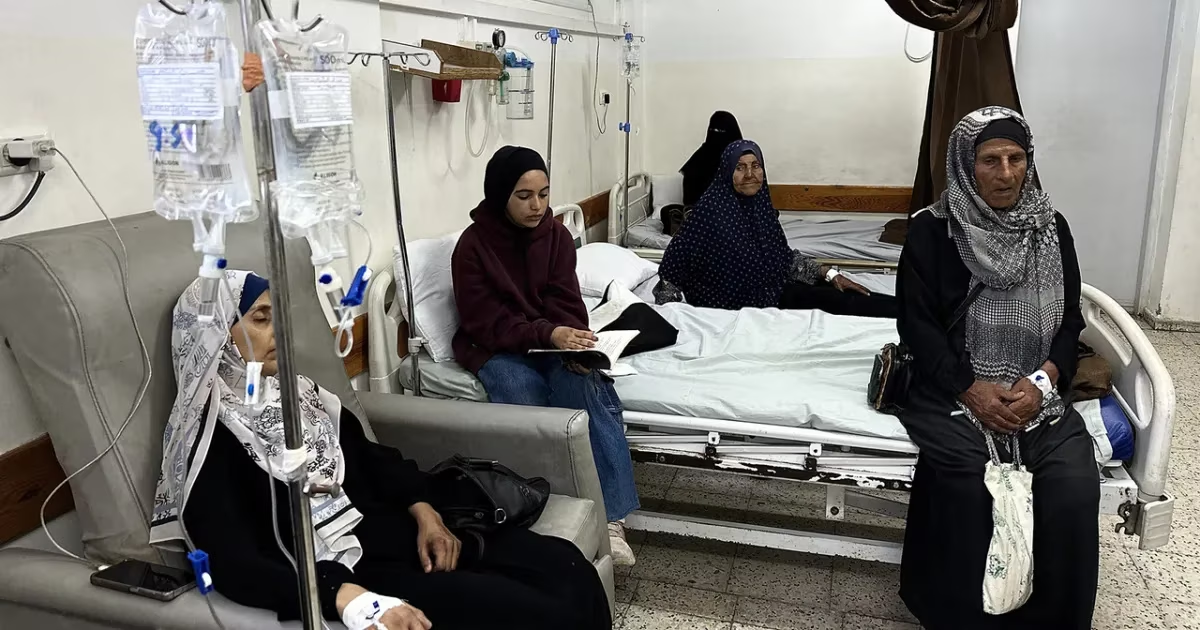







Dr. Muhammad Abu Nada, director of the Gaza Cancer Center, said that cancer patients in the sector suffer greatly.
Dr. Abu Nada added that approximately 70% of cancer drugs are unavailable inside the Gaza Strip, and there is no chemotherapy either, while the Israeli occupation prevents patients from traveling outside the sector to receive the necessary treatment.
He explained that doctors face immense difficulties in diagnosing patients due to the acute shortage of necessary materials and equipment, noting that the occupation destroyed the "Turkish-Palestinian Friendship Hospital," which was the main hospital for diagnosing the disease in the sector.
Dr. Abu Nada said there are about 11,000 cancer patients in the Gaza Strip, of whom about 3,000 have referrals to travel outside the Gaza Strip for diagnosis and to obtain the necessary treatment.
He pointed out that there is an increase in mortality rates among cancer patients due to the deterioration of their psychological condition and lack of treatment.
Dr. Abu Nada warned that if a cancer patient is not treated as early as possible, the disease will spread throughout the body, and thus the natural result that the whole world expects is that cancer patients in the Gaza Strip will die either from the disease or from despair over what is happening to them.
He called on mediators and guarantors of the ceasefire agreement to pressure the occupation to allow cancer patients to travel outside the Gaza Strip to receive treatment and then return to the sector to resume their lives again.
He explained that a cancer patient's body needs a strong immune system, but after two years of war, starvation, and living in tents, it has greatly contributed to the deterioration of patients' conditions, especially since most of them are poor people who cannot obtain proper nutrition, let alone buy the available expensive drugs.
Dr. Abu Nada pointed to the catastrophic results of the deteriorating health situation in the Gaza Strip and the acute shortage of cancer treatment drugs, as there are not enough places in the remaining operational hospitals to treat them from infections, for example, or from dehydration, which forces doctors not to admit them to hospitals due to lack of space and to treat them at home.
He added, "Of course, there is no treatment at home, which means that the inevitable result awaiting these patients is a quick death, not a slow death as before."
He also referred to breast cancer patients, saying that the usual procedure was to remove the tumor only in hopes of giving the patient radiation therapy, but now doctors perform a complete mastectomy.
He explained that the reason they perform a complete removal of the breast is that the patients will not be able to travel abroad to receive the necessary treatment, saying that it is extremely cruel psychologically on the patient and on the family.
Cancer patients in the sector suffer greatly, and approximately 70% of cancer drugs are unavailable.
שתף את דעתך
Director of Gaza Cancer Center: 70% of Cancer Drugs Unavailable in the Sector