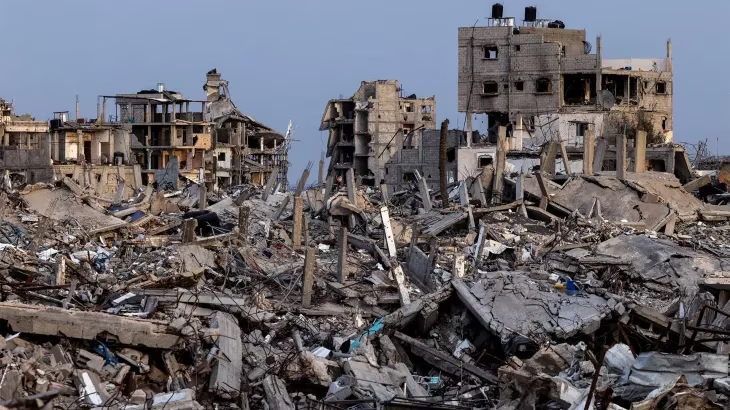







World newspapers and websites covered the harsh humanitarian conditions in the Gaza Strip following the Israeli war, shedding light on individual stories that reflect the scale of destruction and suffering, from the destruction of homes to torture in prisons, in a scene that goes beyond material loss to the disintegration of life itself.
The Washington Post conveyed a painful image of the suffering of the Palestinian Diana Shams and her family, focusing on their repeated displacement experience during the war, before colliding upon her return with an even harsher reality, after their family home was turned into rubble by Israeli bombing.
The targeting of the home occurred in the final hours before the ceasefire came into effect, which doubled the sense of loss. Diana says the house was not just a shelter, but a family heritage lost in an instant, which prompted her to consider emigration after a long insistence on staying in Gaza.
As for The New York Times, it highlighted the tragedy of Haitham Salem, described as the harshest, as his loss was not limited to the house, but extended to the loss of his wife and three children, in one of the most painful stories left by the war.
The Israeli army arrested Haitham, aged 31, at a military checkpoint while trying to flee, and detained him for 11 months in Sde Teiman and Ofer prisons, in addition to the Negev detention center, without any formal charges.
During the detention period, Haitham says he was subjected to harsh forms of physical and psychological torture, which made him wish for death, and after his release as part of a prisoner exchange deal, he discovered that his family had perished in Israeli bombing, leaving him with only photos saved on his phone.
In a related context, The Guardian published an article by the writer Aya Al-Hatab from Gaza, in which she saw that the repeated international talk of peace after the ceasefire does not reflect on the daily lives of Palestinians, which remain immersed in fear, siege, and lack of living essentials.
The writer explained that Gaza residents live without potable water, electricity, or internet, amid a sharp economic collapse and absence of a sense of security, while families are forced to reside in destroyed or collapse-threatened homes, some of which are actually submerged in floods and mud.
Away from Gaza, Foreign Policy magazine warned of the worsening humanitarian crisis in Sudan, considering it the worst globally, especially after the fall of the city of El Fasher in Darfur, amid accusations against the Rapid Support Forces of committing violations amounting to genocide.
In another file, Time magazine addressed the debate between Nigeria and the United States regarding the file of religious freedoms, noting the denial by Nigerian President Bola Tinubu of the American accusations, despite experts acknowledging the existence of security threats from extremist groups, the majority of whose victims are Muslims.
The British Times newspaper revealed an active role for the royal family in strengthening relations with the administration of US President Donald Trump, predicting an upcoming visit by King Charles III to Washington, the first for a British monarch in two decades, within precise arrangements.
In the economic affairs, Financial Times highlighted the sharp decline in Iran's handmade carpet industry, as a result of sanctions and financial restrictions, leading to the loss of traditional markets and the entry of regional and international competitors to fill the void left by Iran's absence.
The repeated international talk of peace after the ceasefire does not reflect on the daily lives of Palestinians, which remain immersed in fear, siege, and lack of living essentials.
שתף את דעתך
World Newspapers: Gaza.. Individual Stories Reflecting the Scale of Destruction and Suffering