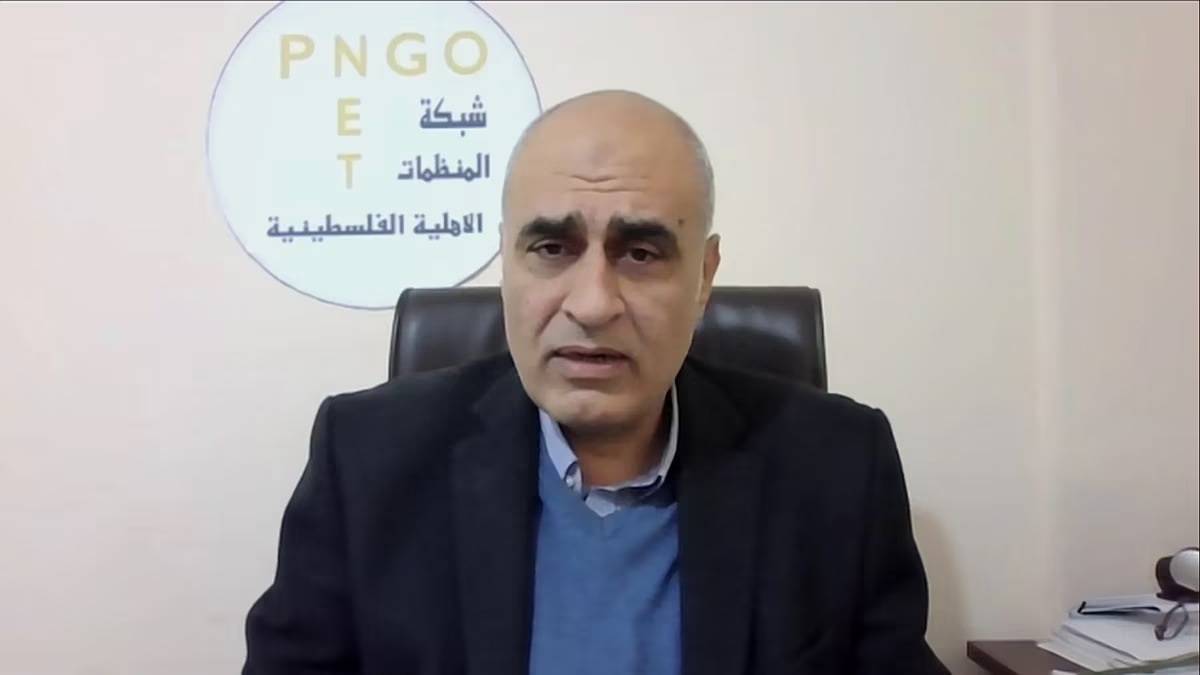







The humanitarian situation continues to become more complicated in the Gaza Strip after two months of the ceasefire taking effect, where forced displacement persists and living conditions worsen, according to Amjad Al-Shawa, director of the Palestinian Civil Society Network in Gaza.
The occupation has confined hundreds of thousands of Palestinians to 41% of the sector's area (less than 100 kilometers) under harsher conditions, and more than half a million people have lost their homes, while thousands of residents live in the ruins of their destroyed homes, as confirmed by Al-Shawa in an interview.
Due to the shortage of materials, rising prices, and loss of livelihoods, 90% of the population has become unable to afford their basic needs, while the health crisis worsens due to the spread of waste and the destruction of water and sewage networks, according to Al-Shawa.
The limited aid allowed by the occupation to enter has not led to a tangible improvement in the residents' conditions, due to strict restrictions on the types of materials being imported, which deepen -according to the spokesperson- the gap in basic needs and prevent an improvement in the deteriorating humanitarian situation.
Israel allows the entry of very small quantities of the required basic materials, especially food, hygiene, and sanitation, according to Al-Shawa.
At the same time, displacement and the nature of shelters exacerbate the deteriorating health situation of the residents, specifically malnutrition, which Al-Shawa says is partly related to declining hygiene levels.
Merchants receive up to 20% of the fresh fruits, vegetables, and proteins needed for the population, but they are subject to high entry fees and coordination that cause their prices to rise beyond the capabilities of the vast majority of people.
Israel refuses, until now, to include basic protein materials, eggs, and fresh materials in the free aid, according to Al-Shawa, who confirmed the impact of this policy on the health of children and pregnant women in particular.
A catastrophic scene
No improvement has occurred, until now, in the aid reaching Gaza, which the United Nations has confirmed may face a catastrophic scene due to this policy within a few months, due to the occupation allowing a larger number of trucks while continuing to refuse to improve the quality of the aid being imported, according to Al-Shawa.
United Nations reports confirm that 77% of Palestinians in Gaza live in a continuous cycle of hunger, while 90% of them spend a full day without regular access to food.
Due to these strict restrictions on basic needs, 70% of children are born underweight, and about 100,000 children and thousands of pregnant women face potential malnutrition, according to UN reports.
There are only 9 hospitals in the sector out of 36 that were operating before the war, according to reports from the World Health Organization.
The humanitarian situation continues to become more complicated in the Gaza Strip after two months of the ceasefire taking effect, where forced displacement persists and living conditions worsen.
שתף את דעתך
The humanitarian situation in Gaza is becoming more complicated after two months of the ceasefire taking effect