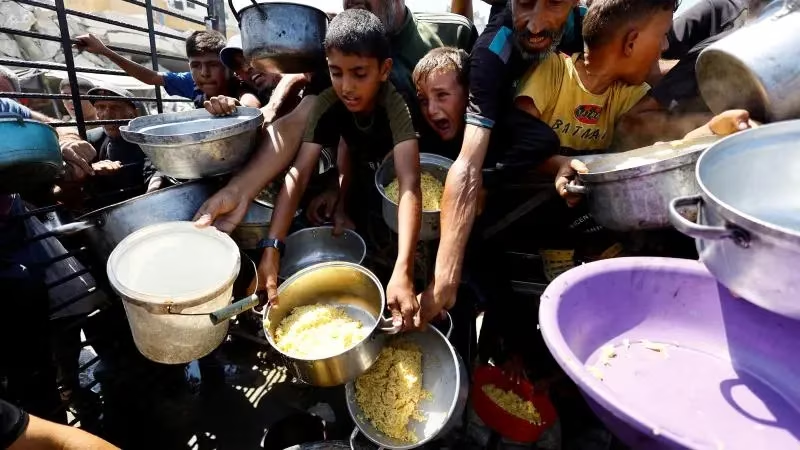







The Israeli occupation army continues its violations of the ceasefire agreement, with renewed aerial and artillery bombardment on various parts of the Gaza Strip, amid international warnings that the specter of famine is looming over the sector again.
Abdullah Muqdad reported from Deir al-Balah that the occupation aircraft carried out a raid in the east of Deir al-Balah city in the central Gaza Strip, targeting a residential area in the east of what is known as the yellow line, which are areas controlled by the occupation army and turned into a security zone.
He pointed out that the occupation vehicles opened fire on the eastern area of Gaza City and the Tuffah neighborhood, while carrying out large demolition operations of residential buildings east of Khan Yunis in the south of the Strip.
Expanding the Yellow Line
He explained that the most prominent development is the expansion of the area of the yellow line zone in the Jabalia camp in the north of the Gaza Strip, where the Israeli military vehicles advanced and strengthened some elevated military positions in that area, thus forcing the residents who live in tents or among the ruins of their destroyed homes to displace towards the western areas.
And he explained that the occupation aims thereby to turn these areas into points for launching Israeli aggressions and targeting Palestinians, whether through small marches or even through the vehicles and elevated military positions that oversee and control the largest part of the population concentrations in the Gaza Strip.
Famine threatens Gaza again
On the humanitarian front, international organizations warned that the specter of famine is looming over the Gaza Strip again, amid the restrictions imposed by the occupation on the entry of humanitarian aid.
In this context, the United Nations Relief and Works Agency for Palestine Refugees in the Near East "UNRWA" confirmed that the situation in Gaza is still tragic, making its humanitarian needs enormous.
The UN agency indicated that about one million six hundred thousand Gazans are facing a severe shortage in food.
Adnan Abu Hasna, the media advisor to the agency, said in a statement that the humanitarian situation in the Gaza Strip remains tragic amid food insecurity, confirming that about one million Palestinians in the Gaza Strip suffer from food insecurity.
For its part, the International Rescue Committee said that hunger in the Gaza Strip is still at catastrophic levels, as nearly one hundred thousand Gazans live in conditions similar to famine.
The committee indicated that hundreds of thousands of Gaza children suffer from severe malnutrition, which threatens serious health consequences for children, weakens the immune system, and harms brain development.
In the context, the media official at the "Save the Children" organization in Gaza, Shuruq Al-Ayla, said that the humanitarian catastrophe in the sector has not ended despite the ceasefire agreement, stressing in a statement the urgent need to introduce mobile homes and winter clothes, especially for children amid the bitter cold.
Serious health complications
"Doctors Without Borders" also warned that the new Israeli decisions to register international non-governmental organizations may deprive hundreds of thousands in the Gaza Strip of life-saving healthcare by next year.
As for the Palestinian Medical Relief Society, it warned of many health complications for chronic disease patients in the Gaza Strip due to the unavailability of their medications and Israel's prevention of their travel abroad for treatment.
Mohammed Abu Afash, director of the society, said in a statement that 1200 Palestinian patients died due to the unavailability of treatment for them in the Gaza Strip and their prevention from traveling to complete treatment, without specifying the time period.
The director of the World Health Organization, Tedros Adhanom Ghebreyesus, said on Friday that 1092 patients in the Gaza Strip died while waiting for medical evacuation between July 2024 and November 2025.
The medical evacuation process for patients from the Gaza Strip is still proceeding at a slow pace, as Israel continues to impose its strict restrictions on the exit of patients from the sector, despite the great shortage in medical supplies in the sector's hospitals.
On Sunday, the Ministry of Health in Gaza warned of a serious deterioration in drug stocks in the sector's hospitals due to shortages reaching 52 percent in medicines and 71 percent in medical consumables.
It explained that Israel continues to reduce the entry of medical trucks into the sector to less than 30 percent of the monthly need, shirking its commitments stipulated in the ceasefire that came into effect on October 10 last year.
International organizations warned that the specter of famine is looming over the Gaza Strip again, amid the restrictions imposed by the occupation on the entry of humanitarian aid.
שתף את דעתך
The occupation army continues its violations of the ceasefire agreement.. and famine threatens Gaza again