






The United States continues to treat the ceasefire in Gaza as a means to achieve Israeli war objectives, while Benjamin Netanyahu's government continues to revert matters to square one, analysts say.
While the occupying forces carry out continuous bombing and destruction in several areas of the sector under the pretext of destroying military infrastructure belonging to the resistance or responding to attacks from it, Washington shows no position to compel Tel Aviv to respect the agreement.
Netanyahu - wanted by the International Criminal Court - has even spoken about Israel's impatience regarding violations by the Islamic Resistance Movement (Hamas) of the agreement, stating that the delivery of the remaining bodies of prisoners and disarmament "must be done with an iron fist."
Netanyahu has also decided to form a new small security council to oversee the second phase of the agreement, which includes ministers of security Itamar Ben Gvir, finance Bezalel Smotrich, and foreign affairs Gideon Sa'ar, who are among the staunchest opponents of the ceasefire.
After this formation, Sa'ar stated that Israel had given President Donald Trump's peace plan for Gaza a real opportunity through diplomacy, and that the failure to continue implementing the agreement "would allow Israel to act militarily with much broader international legitimacy."
In contrast, Hamas has called on mediators and guarantors, especially the United States, to compel Israel to stop its violations, at a time when Israeli Minister of Strategic Affairs Ron Dermer requested the United States to "grant Israel broader freedom to operate in the sector even if the second phase of the agreement is implemented."
These moves by Israel reflect the dangerous reality in the sector and the fragility of the peace plan at present, according to former U.S. National Security Advisor Mark Feivel, who holds Hamas responsible for Israeli actions due to what he described as military skirmishes occurring between the two sides, and also due to the movement's refusal to disarm and its public insistence on that.
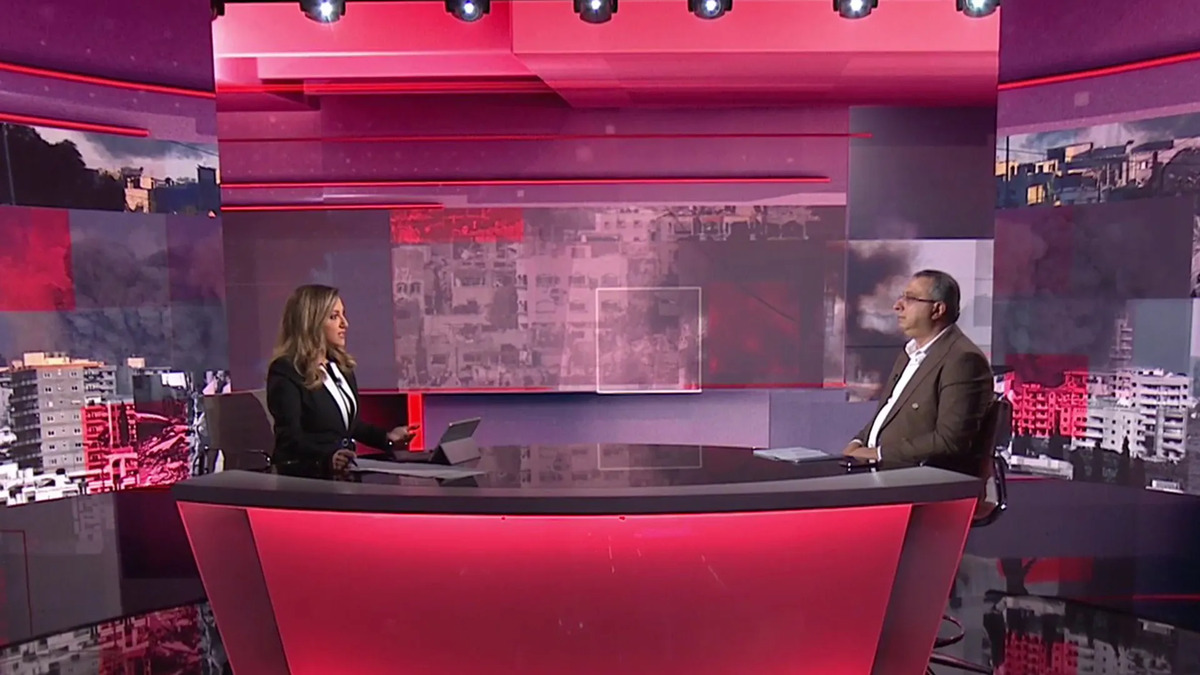
According to Feivel on the program "Event Path," the only solution to get out of this situation is to expedite the formation of an international peacekeeping force and work on the immediate disarmament of Hamas, as Israel's expansion of its operations poses a significant risk to the agreement.
However, Feivel believes that the Israelis are counting on Trump's ability and his son-in-law Jared Kushner to convince Netanyahu's government to reach a certain level of peace.
But Palestinian political analyst Ahmad Al-Tanani believes that this talk merely indicates the continued U.S. perspective of viewing matters through an Israeli lens, and the pursuit of achieving war objectives through a ceasefire agreement, as the Israelis seek to normalize the current reality and turn violations into a routine matter.
Washington - as Al-Tanani states - treats Israeli violations as if they are normal, while viewing all the allegations thrown by Tel Aviv at the resistance as facts, in addition to its strong desire to dismantle the resistance's weapons and the Palestinian national system and impose guardianship over the sector.
This approach is likely to lead to a return of confrontations between the two sides, as the resistance wants to continue the agreement as a Palestinian interest, but at the same time will not allow Israel to continue killing and seizing land without a political or field price, as Al-Tanani says.
The expert on Israeli affairs, Dr. Muhannad Mustafa, shares the previous opinion, stating that Netanyahu not only wants to normalize violations but is also trying to return to a policy of extremism, whether in Gaza or the West Bank, after failing to achieve what he had planned from this agreement.
Netanyahu - according to Mustafa - believed that this agreement would provide more normalization with countries in the region and achieve a comprehensive amnesty within Israel, which did not happen, prompting him to expand settlement in the West Bank and seize land in Gaza to prove that he is working independently to achieve war objectives.
Dr. Dalia Arikat, a professor of diplomacy and conflict resolution at the American University of Beirut, believes that Israel is engaging in its usual behavior of diverting attention from the basic rights of Palestinians by delving into details and buying time with fabricated excuses, emphasizing that the war has not stopped in Gaza, nor has killing and annexation in the West Bank.
The members of the new small security council speak openly about settlement and Greater Israel and do not even recognize the West Bank at all, as Arikat states, pointing out that settlement expansion "has killed every dream of a two-state solution."
At the same time, the United States remains more interested in discussing its future investments in Gaza than in stopping killing and destruction, to the extent that the new base it established to monitor the agreement has become in service of Israeli operations,
שתף את דעתך
Netanyahu continues the war while Trump seeks investment.. Is the Gaza agreement collapsing?