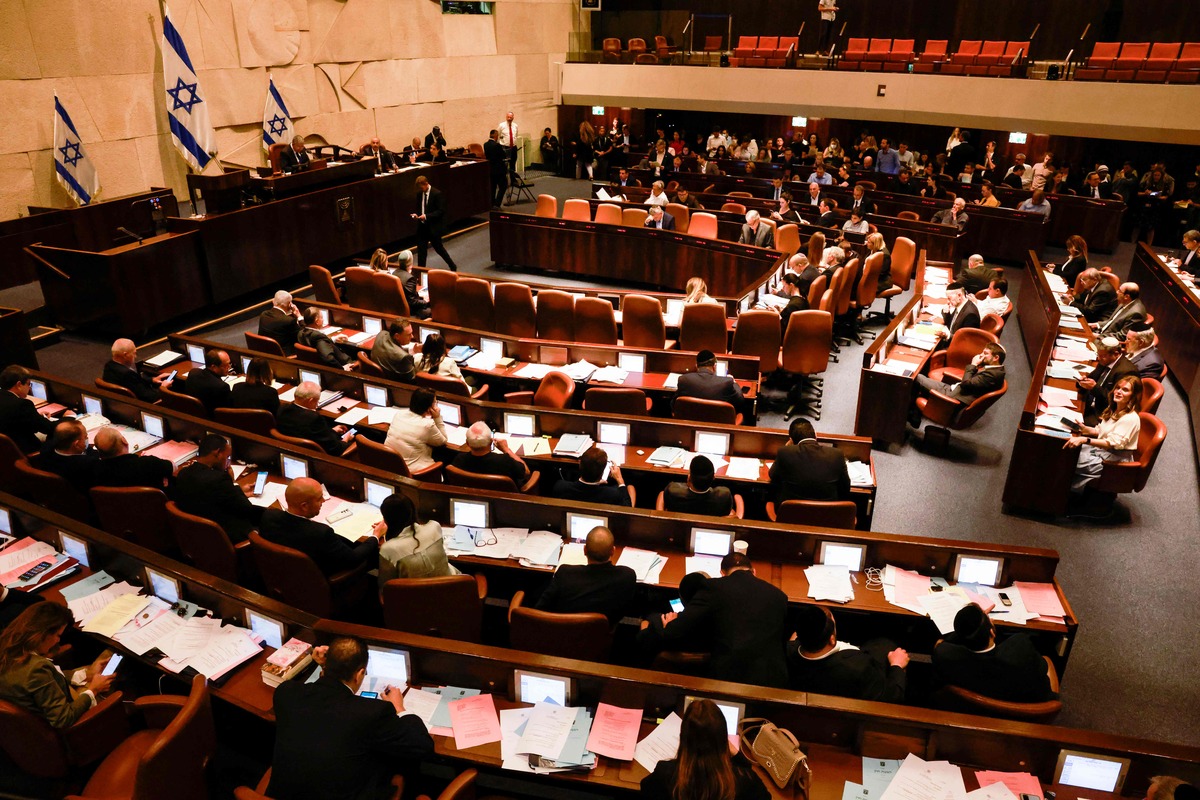







Israel is witnessing an unprecedented moment of anxiety and confusion, which seems much deeper than the repercussions of a war or a transient political crisis. The Israeli scene today reflects the beginning of a structural transformation in the international environment that accompanied the birth of the Hebrew state in 1948 and protected it for the past seven decades. This environment—characterized by American hegemony, absolute Western support, and the absence of international balances—has begun to recede, placing Israel before existential questions it has not faced since its establishment.
From the very moment of its establishment, Israel benefited from a colonial-type international system and a Cold War that made it a strategic tool in the hands of the West. International recognition of it was not merely a political legitimacy but part of an international system that granted it a permanent superiority in weaponry, financial support, and diplomatic cover. With the collapse of the Soviet Union, this superiority doubled in a unipolar world led by Washington, which viewed Israel as a strategic extension of its interests in the Middle East.
However, this global system is currently undergoing dramatic transformations. Multipolarity is expanding, emerging countries are asserting an independent presence, and the West is no longer able to unify its positions or impose its vision on the world as it did throughout the last century. This transformation directly impacts Israel, which has found itself in recent years facing an international environment less willing to grant it unconditional privileges. Even as the United States continues its military and political support, its ability to protect Israel from political and legal pressures is diminishing, both in international institutions and at the level of global public opinion.
The most dangerous transformation is the deterioration of Israel's international legitimacy. The narrative on which it built its political presence—being the "only democracy" and the "perpetual victim"—has lost much of its influence, especially after the scenes of destruction and killing in Gaza since 2023. For the first time, Israel faces a global discourse that openly describes it as an apartheid regime, while millions have taken to the streets in major capitals in rejection of the war and in support of the Palestinians, reflecting a deep rift in the relationship between Western peoples and their governments that support Tel Aviv. This collapse in soft power is a source of deep concern for the Israeli political establishment, which has always considered itself insulated in the international moral arena.
Internally, Israel today appears governed by sharp contradictions that reveal the fragility of the settlement project itself. The army—which historically represented a symbol of strength and national consensus—has entered into an unprecedented crisis of confidence due to significant intelligence failures and the inability to decisively conclude the Gaza war despite absolute military superiority. Alongside this, the internal political crisis deepens with the rise of extreme religious right, and the society is divided over the identity of the state between those who want it to be a secular national state and those who seek to institutionalize it according to biblical visions. This structural division weakens Israel's ability to build internal consensus at a moment when it needs the highest levels of stability.
Economically, Israel is experiencing one of its toughest phases in decades, with investments fleeing the biotech sector, declining market confidence, and the rising costs of war threatening the state's ability to finance its military and social operations. This is accompanied by the erosion of the image of the "prosperous state" that Israel has carried as part of its global narrative.
On the international front, the decline of American hegemony coincides with the rise of the Global South as an influential political actor. Countries that have been marginalized for decades now possess the ability to shape an alternative global discourse. South Africa has led legal actions against Israel before the International Court of Justice on charges of genocide, while European countries have recognized the State of Palestine despite American pressures. This has been accompanied by a growing global boycott movement that impacts the Israeli economy and weakens its industrial and academic presence.
In light of these transformations, the current Israeli anxiety appears as a fear of time rather than of adversaries. The Hebrew state realizes that the project born in a colonial moment and nurtured under a unipolar international system is losing one of its most important sources of strength: the international protection network. Therefore, the Israeli political discourse seems more agitated, more inclined towards excessive violence, and more directed at attacking human rights and media institutions, in an attempt to halt the deterioration of its global legitimacy.
It can be said that Israel is experiencing a moment of historical exposure. The international environment that has supported it for decades is disintegrating, the legitimacy it once considered a given is eroding, and American capacity to provide an absolute protective umbrella is declining. Amid the rise of new international powers, the expansion of global solidarity movements with the Palestinians, and the internal Israeli tremors, it seems that the project established in 1948 is entering a phase of structural decline that cannot be concealed, no matter how much military power attempts to compensate for it.
שתף את דעתך
Israeli anxiety and the decline of the international system established in 1948