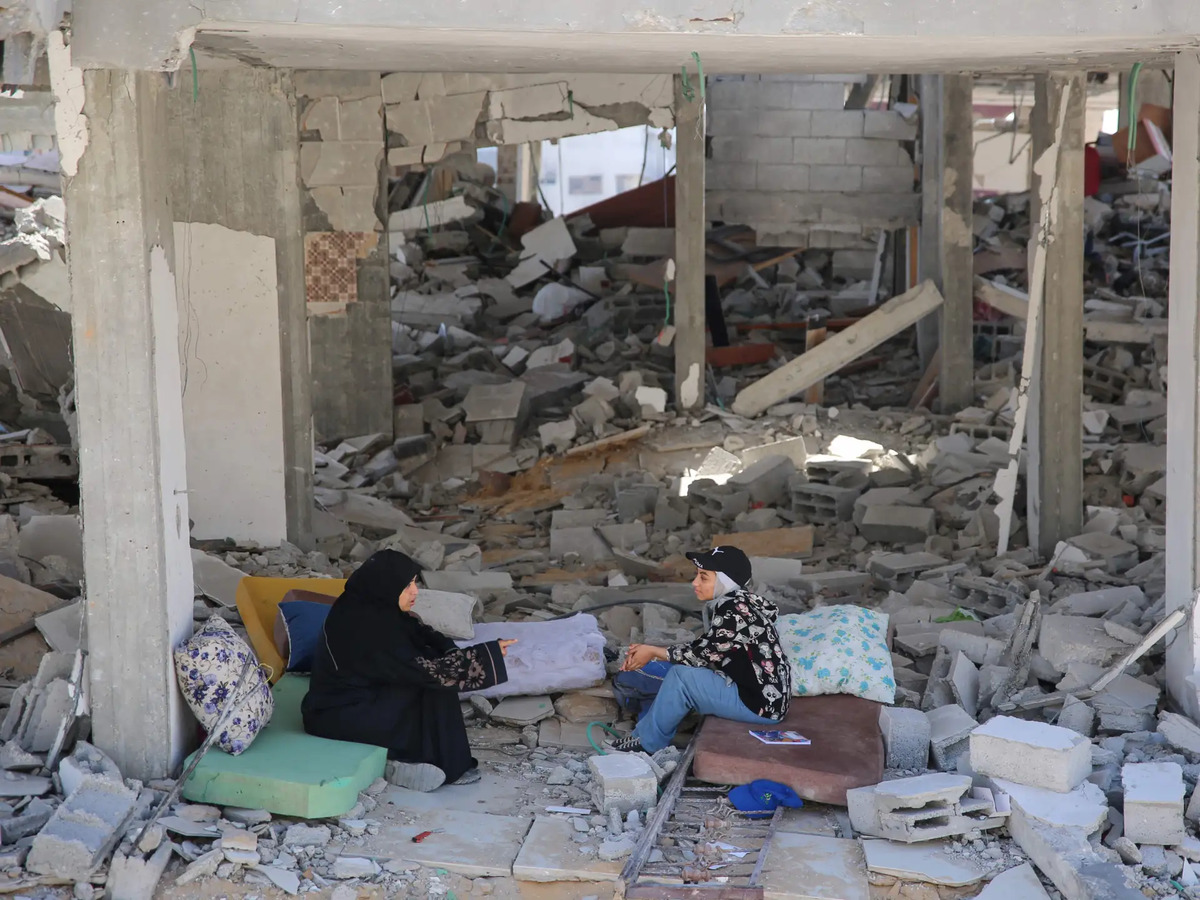







The Gaza Strip is witnessing a silent humanitarian tragedy today, as patients and the injured slowly die amid a near-total collapse of the healthcare system, the ongoing Israeli blockade, and the international community's slow response in evacuating critical cases for treatment abroad.
Le Monde reported that more than 18,000 people are waiting to be transferred to foreign hospitals, while statistics confirm the death of around a thousand patients, including dozens of children, due to delays in their evacuation.
Among the painful stories that encapsulate the suffering of Gazans - as reported by the newspaper in a piece by Marie Jo Sader - is the story of twin sisters Rawan and Razan Barbak, who are suffering from leukemia. Razan was about to leave the Strip for treatment, but the Israeli bombardment destroyed her home and severely injured her, forcing doctors to amputate her legs.
The child died after a month of pain and disability at Nasser Hospital in Khan Younis - the newspaper states - while her sister Rawan was later transferred to the UAE to continue her treatment, but the procedure was halted due to the lack of a donor and because their father is banned from traveling.
This story embodies the tragedy of thousands of patients who have been left to their fate after 94% of healthcare facilities in Gaza were destroyed and 1,700 medical personnel were killed during the two-year war, described as genocide, according to the newspaper.
Like Razan, around a thousand patients who were waiting for evacuation for treatment have died, including 154 children.
Dr. Mohammed Abu Nida, director of the cancer center at Nasser Hospital, says: "There is no biological or radiotherapy treatment for cancer patients. For an entire year, we have not conducted a single chemotherapy session."
Endless waiting lists, and doctors confirm that nearly half of the 12,500 cancer patients are not receiving any treatment, as most chemotherapy and radiotherapy procedures have stopped after the destruction of the Turkish Friendship Hospital and Al-Rantisi Hospital.
Despite a fragile ceasefire coming into effect in October, hundreds continue to die silently due to a lack of medicine and equipment, with estimates suggesting that the number of indirect deaths resulting from the collapse of the healthcare system, hunger, and water shortages could exceed 345,000, a figure that far surpasses the toll from direct bombardment, according to the newspaper.
The newspaper mentioned that humanitarian aid remains insufficient, as only the Karam Abu Salem and Kissofim crossings have been opened, and in a limited manner. Dr. Mohammed Abu Salmiya, director of Al-Shifa Hospital in Gaza, states that "only 10% of the sector's needs have entered, and they do not meet our priorities. Every day, patients who could have been saved die."
Hospitals - as the doctor says - lack vital diagnostic equipment, as all MRI machines have been destroyed, along with most CT scanners and laboratories, and major surgeries have stopped due to a lack of fuel and equipment.
Thus, the lives of thousands of patients are reduced to sitting on endless waiting lists - as the newspaper states - where kidney failure patients lose their lives due to the destruction of dialysis centers and fuel shortages, while doctors remain powerless in front of young cases dying before their eyes.
An unprecedented humanitarian tragedy, and although the agreement brokered by U.S. President Donald Trump stipulates reopening the Rafah crossing and allowing patients to exit without restrictions, the crossing has remained closed by Israeli order since May 2024, as the French newspaper clarifies.
Of the more than 18,000 patients on the evacuation list, only more than 146 people have been allowed to leave since the truce, averaging less than 5 patients daily, most of them to Egypt, the UAE, and Qatar.
International organizations, including UNICEF and the World Health Organization, hold both Israel and Western countries responsible due to weak political pressure and humanitarian will. UNICEF Palestine spokesperson Rosalia Polin states that "the problem now is not only in Israel, but also in Western countries that do not show sufficient willingness to receive patients."
Le Monde concluded that the reality in Gaza encapsulates an unprecedented humanitarian tragedy, as every new medical diagnosis is considered a death sentence for its holder, and people have no choice but to wait amid crowded lists of names and suspended hopes, while patients die silently between the walls of the destroyed hospitals in Gaza.
Every new medical diagnosis is considered a death sentence for its holder, and people have no choice but to wait.
שתף את דעתך
Le Monde: Silent death stalks patients and the injured in Gaza