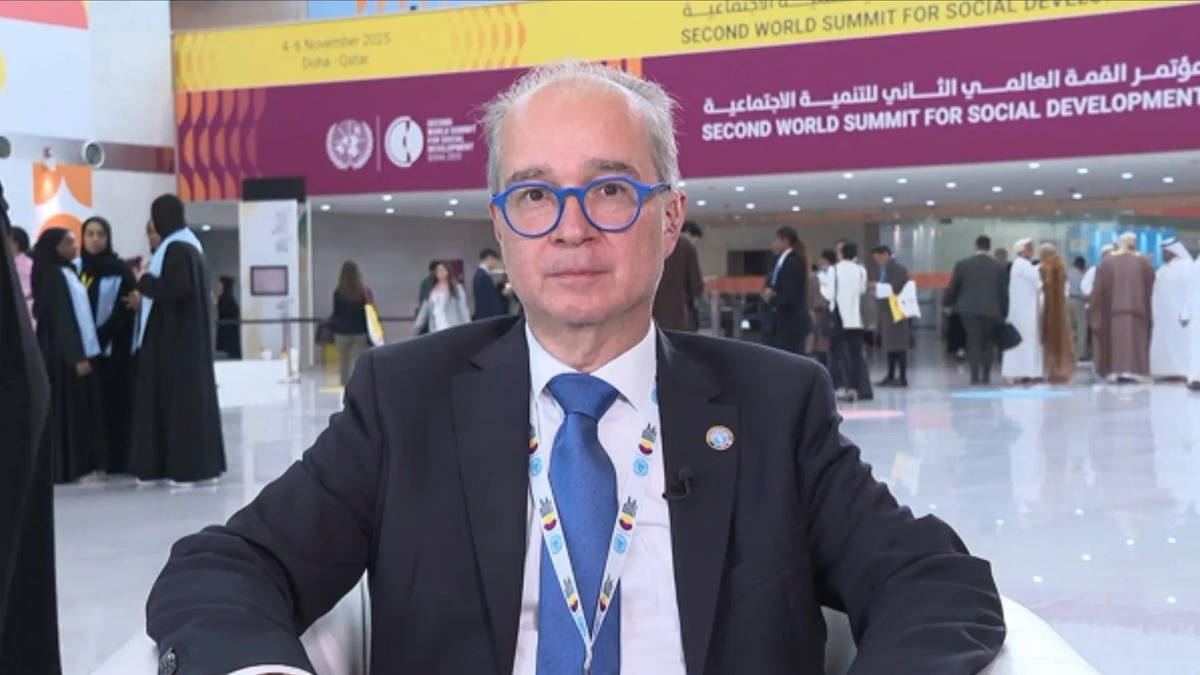







Stefanos Foushio, the director of the Food Systems Coordination Center at the United Nations, stated that the food system in the Gaza Strip is facing unprecedented damage, noting that between 78% and 91% of agricultural land, farms, and greenhouses have been affected by the war, leading to a sharp decline in local agricultural production, which was a fundamental pillar of food security in the region.
Foushio added, in an interview with Al Jazeera on the sidelines of the World Social Development Summit in Doha, that recent estimates indicate that about 37% of the affected agricultural land could be rehabilitated, providing an opportunity to launch urgent efforts to rebuild the local food system and ensure the sustainability of food supply chains within Gaza.
He emphasized that the continued flow of humanitarian, food, and fuel assistance to the region is a top priority, stressing the need to fully open the crossings and provide suitable conditions to ensure the regular arrival of supplies, so that humanitarian organizations can carry out their operations without interruption.
He explained that what is currently entering Gaza does not meet the needs or the agreed quantities and types, as assistance is limited to carbohydrates and processed materials, while the entry of animal proteins such as meat and fish is prohibited, exacerbating the malnutrition crisis and threatening the health of the population, especially children and the sick.
Foushio pointed out that the United Nations, represented by the Food and Agriculture Organization (FAO), is working with its international partners to prepare a plan for rehabilitating the food system in Gaza in the post-war phase, but these efforts face a significant funding gap.
He indicated that the FAO has issued an international appeal for $75 million to support its plan in 2025, but what has been secured so far does not exceed 10% of this amount, hindering the implementation of rehabilitation programs, enhancing local production, and supporting the livelihoods of farmers.
The UN official confirmed that closing this funding gap is a fundamental condition for launching a new phase of agricultural recovery in Gaza, noting that doubling resources would allow for the acceleration of relief and reconstruction projects, and ensure the sustainability of the food system in one of the most affected regions in the world by humanitarian crises.
Closing this funding gap is a fundamental condition for launching a new phase of agricultural recovery in Gaza.
שתף את דעתך
UN official: Efforts to rehabilitate the food sector in Gaza face a huge funding gap.