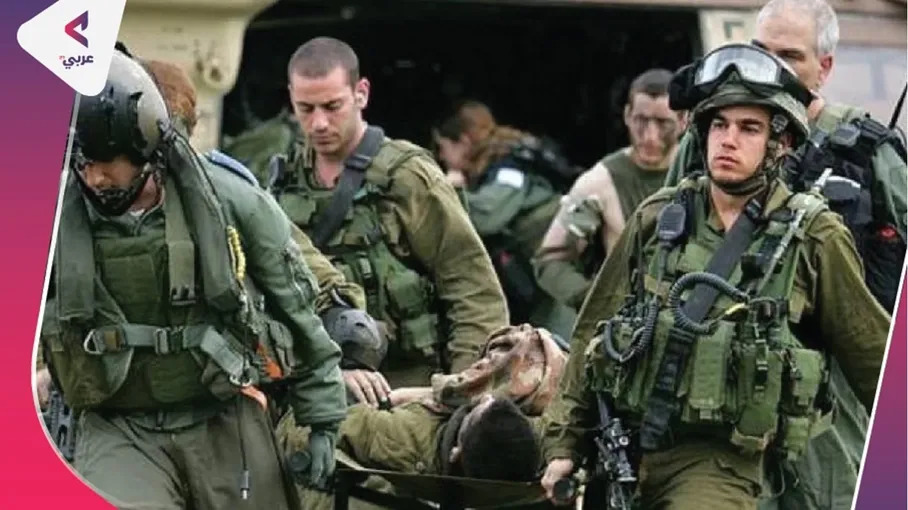







A report by the French newspaper "Le Monde" highlighted the psychological effects of the war on the Gaza Strip after 7 on the Israeli army and society, particularly the increasing psychological pressure on reserve soldiers and civil society.
After the ceasefire came into effect on October 10, attention in Israel is turning to the psychological consequences of the conflict, as Israeli reserve soldiers are showing significant signs of what resembles a widespread wave of depression.
On July 30, Roy Vaserstein, a 24-year-old nurse in a unit of the Israeli army deployed in Gaza during the war, was preparing to take electronic engineering exams two months after returning home to Netanya in northern Israel.
His older brother Tom (36 years old) was quoted saying, "He was always calm, but he seemed more withdrawn than usual. Our parents would ask him if he wanted to talk, and he would respond that he was fine."
He continued, "On that day, when his father went up to his room, he found him a lifeless body, a huge young man, 1.95 meters tall and weighing 120 kilograms, while Tom sadly says: We did not see his fragility even though he was not fighting directly, but he witnessed horrors, smelled death, and collected bodies, sometimes the bodies of his comrades in the unit, and ultimately paid the price."
The newspaper reported that the number of veterans undergoing treatment for post-traumatic stress disorder or other mental illnesses reached 18,900 people, including 65 percent of reserve soldiers and 7 percent of women in September, according to official data.
Defense Ministry forecasts, which only began to officially recognize post-traumatic stress disorder in 2018, indicate that the number could reach 50,000 cases by 2028.
For Amir Krivoy, director of the "Gihah" mental health center, the future looks extremely concerning.
Based on a database containing the mental health status of nearly five million people, or about half of Israel's population, Krivoy confirms that Israeli society is threatened by a wave of depression.
Krivoy says the country is living in a state of chronic tension, especially among soldiers, but they are not the only ones.
Diagnoses of post-traumatic stress disorder have increased by more than 70% since October 7, and collective mourning necessary to transition to recovery and healing has not yet begun, and we are still far from measuring the psychological impact of these attacks and the war in Gaza.
He adds that the mental state of society cannot be assessed solely through post-traumatic stress disorder, but must also consider the increasing prevalence of depression, anxiety, and insomnia over the past two years.
He explained, "Our studies indicate that we are on the brink of a turning point, where questions arise about the type of society and future we want.
The Israeli people, despite their history filled with crises, no longer want to suffer; we are at a crossroads that will determine what we will be in the coming years."
When asked about the moral cost of the war on Gaza, which a United Nations inquiry committee described as genocide, Krivoy emphasizes that Israeli soldiers witnessed a horrific humanitarian and material disaster, leaving a collective psychological impact that could turn into widespread depression.
Shlomi Dimari, 34 years old, says, "I knew exactly why I was in Gaza; I lost my brother on October 7, 2023, and my close friend Nir committed suicide four months after we returned from our first mission in Gaza.
Shlomi and Nir were not inside Gaza during the first weeks; their unit was tasked with collecting the dismembered bodies of Israelis on the roads.
Dimari added, "These images affected Nir, but in the army, no one complains; we have to be men.
It took a whole year for him to be recognized as a war victim.
We saw nothing, but his wife later told us that he could no longer sleep and was constantly vomiting."
Despite being a historical pillar in Israeli society, the army is not immune to doubts.
Eli Meiri, 47 years old, the second commander of a tank brigade and a reserve soldier, believes that "the Israeli army was not prepared for this war in Gaza, and the price will be high.
The newspaper added that some soldiers are suffering from a crisis of confidence in leadership choices; Eli Meiri says, "In Israel, when you lose confidence in military leaders, your confidence in life as a whole is affected."
According to him, a quarter of the men in his brigade show
שתף את דעתך
After the Gaza war.. the "Israeli" society and army on the brink of a "psychological tsunami"