






Benjamin Netanyahu was realistic in his first statement after announcing his acceptance of a ceasefire under the plan of his partner Donald Trump, saying: "We have succeeded in the matter of recovering the hostages (prisoners), but Hamas has not been defeated." The truth is that Hamas has not only survived but has also withstood, along with its allies, two years of genocidal war, retaining enemy prisoners and preventing them from forcibly liberating any of them, and revitalizing and activating resistance in three Arab countries, participating in the jihad against the Zionist enemy for the first time since the Nakba of 1948.
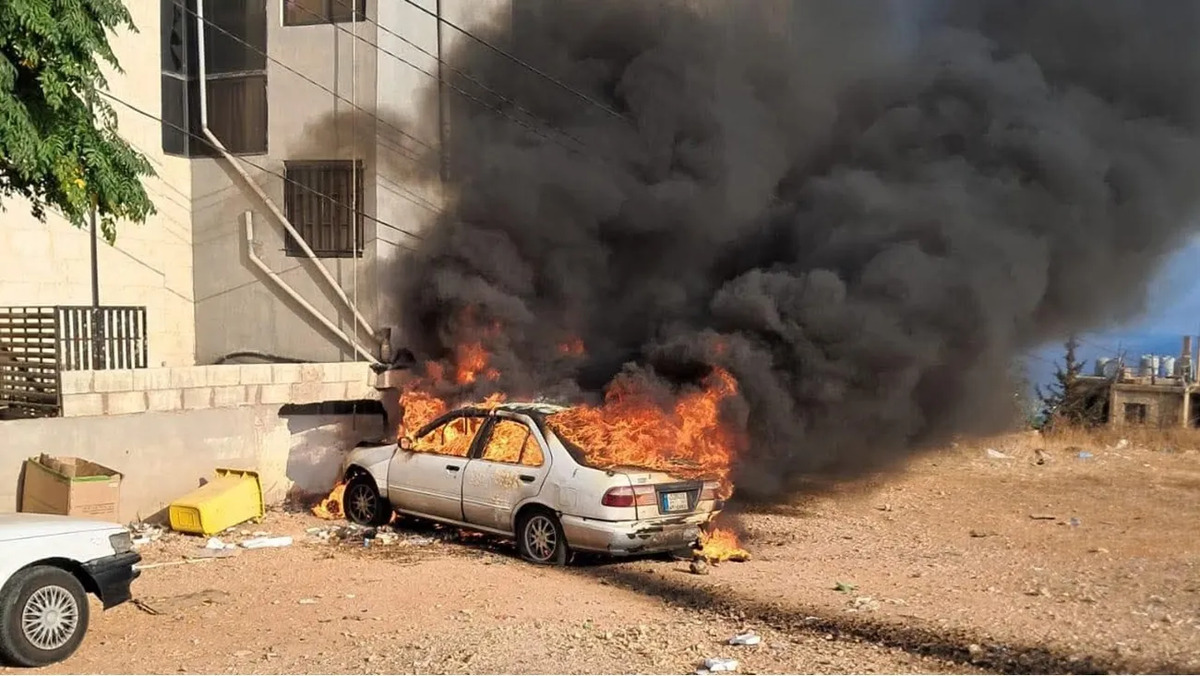
Less than 24 hours after the ceasefire began in the Gaza Strip, the Israeli Air Force launched intense airstrikes on the Musailah area north of the Litani River mouth, near the home of Lebanese Parliament Speaker Nabih Berri, targeting vehicles, bulldozers, and reconstruction equipment, also injuring their owners and civilian neighbors, both Muslims and Christians, which confirmed to both close and distant observers that all Lebanese, without distinction, are in the crosshairs of the Zionist enemy.
Notably, the statement from President Joseph Aoun was not limited to strong condemnation but also included a stern denunciation of the occupying entity, which deliberately sought "to compensate for its failure in the Gaza Strip with an attack on Lebanon." The important thing is that the repercussions of this attack, Netanyahu's maneuvers regarding Hamas's weapons, the lists of Palestinian prisoners whose release is demanded, and the withdrawal of occupying forces from all areas of the Gaza Strip do not disrupt Hamas's steadfast position regarding the fundamental issues related to managing the sector and protecting the Palestinians' right to liberation and the establishment of an independent state.
It has become clear that the ceasefire in the Gaza Strip will not be an acknowledgment of a sustainable truce between the warring parties; it is merely a temporary respite for the exhausted Zionist fighters and a calming incentive for the Palestinian and Arab resistors. The occupying entity has exhausted its army and economy significantly with the longest war it has waged since it was planted in the heart of the Arab East in 1948, not to mention the twelve-day war it waged against Iran last June.
In both wars, the United States was its partner, providing ample funding, heavy weaponry, and explicit political support in its first war, and direct military intervention against Iran in its second war. It is no secret that Trump was the "maestro" in both wars. He encouraged Netanyahu to attempt to uproot Hamas, which is a glaring sign of awakening for the Arab resistance forces against the occupying entity on one hand, and on the other, a troubling threat to American and Atlantic Western interests in the region of West Asia, extending from the shores of the Mediterranean Sea in the south to the shores of the Caspian Sea in the north.
Hamas and its allies achieved legendary resilience in the face of the occupying army and inflicted heavy human losses on it, which reflected on tens of thousands of its reserve soldiers, who openly expressed their dissatisfaction and many of whom refrained from joining military service, causing a severe shortage in the human resources needed to continue the aggression. Additionally, resistance led by Hezbollah in Lebanon, another led by Ansar Allah in Yemen, and a third carried out by the Popular Mobilization Forces in Iraq contributed to distracting and weakening the pace of the occupying army's attacks, exhausting its entity both humanly and materially.
As both sides of the existential confrontation stand on the threshold of a prisoner exchange these days, they know that the existing truce is not sustainable, for the Zionist enemy is deeply rooted in its lies, hypocrisy, and deliberate violations of agreements and treaties, and its strong adherence to its biblical expansionist dreams, which extended the territory of "Greater Israel" from occupied Palestine in the heart of the Levant to the north of the Arabian Peninsula in the east, and then to all of Mesopotamia and eastern Turkey in the north, and to part of eastern Nile Valley in the south.
In contrast, the resistors and Arab revivalists cling to their homelands, land, people, heritage, resources, interests, and promising industrial projects, and to a significant civilizational role. All of this constitutes effective incentives for Arabs in their societies aspiring for revival and progress. So what comes next? I see that a comprehensive reading and broad foresight into the motives, incentives, desires, and aspirations of the Palestinian and Arab resistors and revivalists in their various countries and places of existence in the world will likely lead to the following recommendations:
First: There is a firm belief and conviction that the resistors and Arab revivalists have the right and duty to remain and rise in order to continue the struggle and work to achieve four high goals: (A)
שתף את דעתך
The enemy compensates for its failure in Gaza by attacking Lebanon.