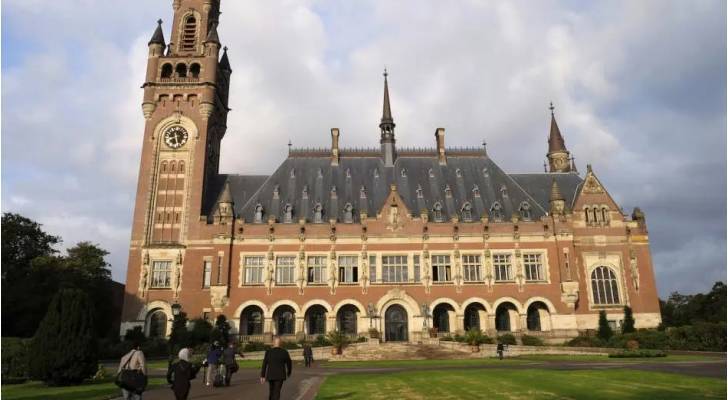







In a new and pivotal international legal station, the world's eyes are on The Hague, where the International Court of Justice, the highest judicial body in the United Nations, is set to issue its decisive advisory opinion on October 22 of this month.
This opinion will address the legal obligations of the Israeli occupying entity regarding the presence and activities of the United Nations and its various organizations in the occupied Palestinian territories.
This anticipated decision comes at a time when the work of UN and humanitarian organizations, led by the United Nations Relief and Works Agency for Palestine Refugees (UNRWA), is facing systematic targeting and unprecedented obstruction, which gives this advisory opinion exceptional political and legal significance.
The court's move came at the direct request of the United Nations General Assembly, which adopted a historic resolution at the end of last year requesting a legal opinion (advisory opinion) from the International Court of Justice.
The resolution received overwhelming support from the international community, with 137 countries voting in favor, compared to only 12 opposing, and 22 abstaining from voting.
This broad voting reflects the extent of international consensus on the necessity of holding the occupying entity accountable for its practices and rejecting its policies aimed at undermining the work of international organizations in the occupied Palestinian territories.
The advisory opinion aims to determine the legal nature of the obligations of the occupying entity, as an occupying power, towards the United Nations and its specialized agencies (such as UNRWA, the World Food Programme, and the World Health Organization), in addition to other international organizations and third countries that provide assistance to the Palestinian people.
Although the advisory opinions issued by the International Court of Justice are not legally binding in a direct manner, they carry significant legal and moral weight and establish a binding interpretation of international law.
This opinion is expected to provide a strong legal tool for countries and organizations to demand an end to the blockade and restrictions imposed by the occupation on their work, such as preventing the entry of aid, targeting their headquarters and staff, and imposing restrictions on the movement of humanitarian workers.
This decision does not come in a vacuum; rather, it builds on another historic advisory opinion that the court issued earlier, which ruled that the Israeli occupation of the Palestinian territories is illegal and called for its termination within one year.
This new opinion is considered an additional and complementary step; after the court determined the illegality of the occupation itself, it is now in the process of defining the legal consequences of this illegal occupation's practices, specifically its obstruction of the work of organizations that represent the international will.
As the date for the issuance of the decision approaches, anticipation grows for the potential political and diplomatic repercussions it may carry, which could increase the isolation of the occupying entity and place additional pressure on the supporting countries to review their policies.
This advisory opinion carries significant legal and moral weight and establishes a binding interpretation of international law.
שתף את דעתך
The International Court of Justice is preparing to issue a decisive ruling regarding "Israel's" obstruction of the United Nations' work in Palestine.