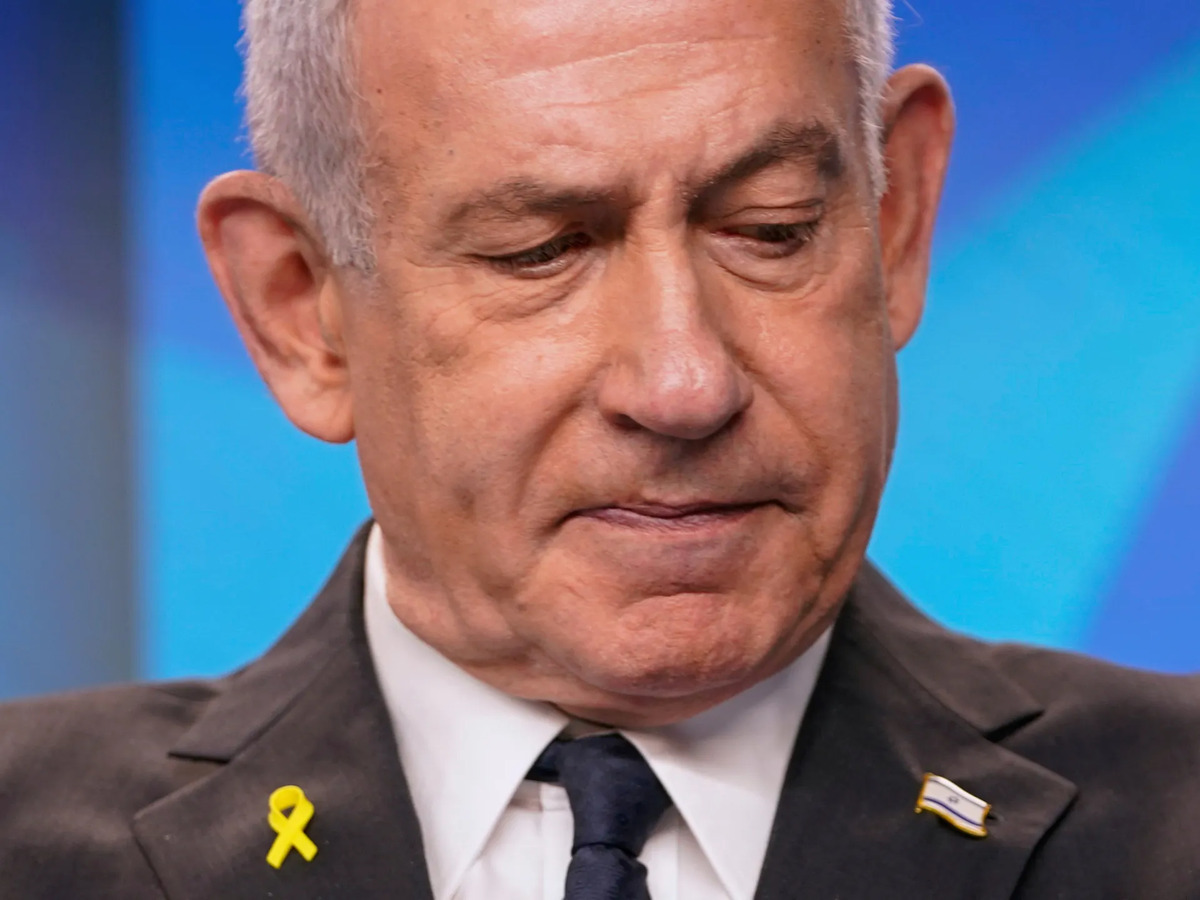







U.S. President Donald Trump's announcement of the agreement between Israel and Hamas sparked a wave of conflicting reactions in the Israeli political arena. The Zionist right was divided between supporters and opponents of the agreement, while opponents of the coalition rushed to declare their unconditional support for it.
It was clear from the nature of the political reactions that some support the agreement based on the fact that it signifies the end of the right-wing messianic vision after colliding with reality, while others oppose the agreement in rejection of this premise. Perhaps for this reason, all parties in the Israeli political arena viewed the agreement as a historic moment that establishes a direction different from the situation prior to the agreement.
This matter is not only related to the nature of the war and the release of Israeli prisoners after more than two years of captivity, but also to what the agreement could lead to in terms of a comprehensive change in the political vision. It is no coincidence that as the war developed and extended over time, ideas emerged that sought to compensate for the shock of October 7 by enhancing the push not only towards annexing more land in the West Bank and Gaza and displacing its residents, but also by presenting support for the idea of Greater Israel from the Prime Minister, wanted by the International Criminal Court, Benjamin Netanyahu.
Netanyahu and his far-right partners, such as Bezalel Smotrich, Itamar Ben Gvir, and Israel Katz, have developed the concept of perpetual war, which has caused all chances of reaching an agreement to crash against the rock of their rejection. Therefore, regardless of the many reasons for the Trump administration's rush, which provided unlimited support to the right-wing government in its war, its president was forced to announce that with his plan to end the war, he is saving Israel from the world's wrath.
If Trump's words have any meaning, he personally, based on the recordings of his decisive call with Netanyahu, intended to convey that Israel cannot continue to confront a world that has grown weary of its arrogant behavior. In an interview with "Fox News" after the announcement of the agreement, Trump referred to a conversation he had with Netanyahu: "I told him that Israel cannot fight the whole world. The whole world has united."
In other words, he said that despite his support for Israel, he cannot continue to defend it against the entire world. This aligns largely with what several Israeli political and military commentators are trying to emphasize in their articles and statements, which see that Israel may have achieved significant military accomplishments but has suffered a clear political defeat.
In general, after Trump's announcement of the agreement, Netanyahu hurried to declare that "this is a great day for Israel. I will hold a government meeting tomorrow to approve the agreement and bring all our dear hostages back home. I thank the heroic soldiers of the Israeli army and all security forces who brought us to this day with their courage and sacrifices."
However, the government meeting was delayed by more than 4 hours due to disagreements that arose not only between Netanyahu and the opponents of the agreement from the far-right parties of Smotrich and Ben Gvir, but also from within his own Likud party. Trump had to enlist American envoys Steve Witkoff and Jared Kushner to convince the ministers that what had been reached is the best possible outcome and that it spares Israel a greater danger.
Nevertheless, the disagreement continued with the Religious Zionism and Otzma Yehudit parties, which voted against the agreement and set "red lines," even threatening to withdraw from the government. Netanyahu knows that the threats from the far-right parties are not the problem because there is a safety net for the agreement from the opposition parties.
But the core issue is Netanyahu's personal conviction about the agreement and how he feels that this agreement guarantees his continued rule or leads to his downfall. He realizes that the agreement, if not undermined, will dismantle most of the foundations upon which the right-wing ideology he personally represents, based on expansion and annexation, is built.
Netanyahu feels compelled to exaggerate the advantages of the agreement and even start talking about aspirations for peace, but deep down he knows that this is not necessarily what others believe.
Long ago, wise men in Israel said that the positions of the right are the true expression of what is in people's hearts, but ending the war requires concessions on these positions, which only the center and left can afford, not the right.
The opposition welcomed the agreement, with opposition leader Yair Lapid stating: "In these two difficult years, this is a moment of great light in the darkness. May the angels of peace return safely."
Blue and White party leader Benny Gantz wrote: "A whole nation wakes up this morning with hope and anticipation for the near return of our brothers and
שתף את דעתך
Military victory and political defeat.. Netanyahu and the end of the Gaza war by Israeli standards