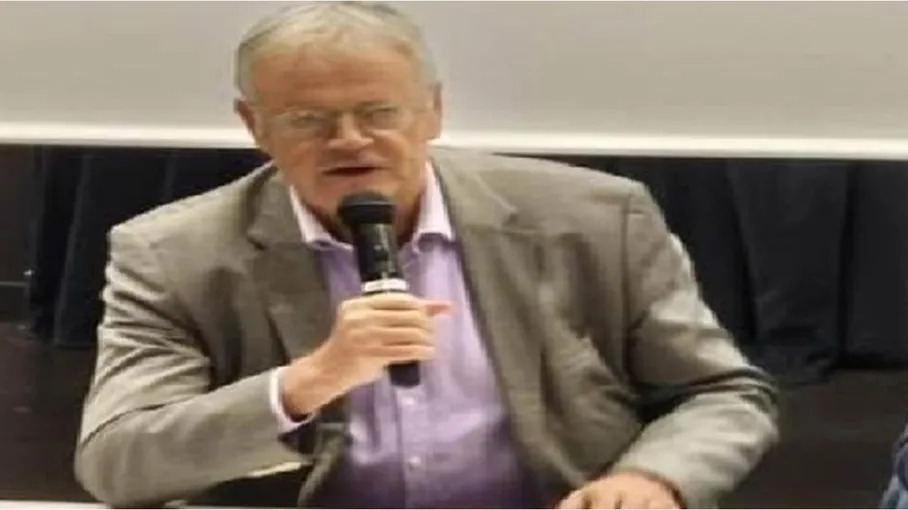







The French leftist thinker and international expert on geopolitical changes, Pascal Boniface, is considered one of the most prominent French and Western intellectuals and politicians who have been criticizing Israeli occupation policies and the bias of senior European media figures and government and security officials towards the Israeli colonial narrative for a quarter of a century.
Boniface published a book a quarter of a century ago that caused him many problems titled: "Can We Criticize Israel?".. Pascal Boniface has authored more than eighty books on international relations, American-Israeli and Atlantic wars, "hostility to Islam," "Islamophobia," and the confusion between Arab Islamic thought and the phenomena of "anti-Semitism" and "justifying war crimes" committed by the occupying authorities against the Palestinian people.
Pascal Boniface was forced to withdraw from the French Socialist Party and Parliament due to his opposition to the occupation policies during Ariel Sharon's era and his reservations about the campaigns targeting the Egyptian-European thinker Tariq Ramadan and all symbols of "political Islam" from religious and cultural racist and colonial perspectives.
On the occasion of the release of Boniface's new book on "Israel and Palestine," he visited Tunisia and gave lectures accompanied by discussions with a number of Arab and foreign intellectuals about his books and developments in occupied Palestine and the region, some at the cultural center affiliated with the French embassy in Tunisia and others at Tunisian universities and publishing houses.
The French leftist thinker Pascal Boniface announced that among the weaknesses in the current relations between France and Western countries on one side and Tunisia and the Arab Islamic world on the other is the "misjudgment" of decision-makers in Northern countries regarding the concerns of Southern countries in general and particularly Arab Islamic countries.
Boniface highlighted the dangers of the current expansionist projects of the Israeli occupying authorities, which he accused of being involved in a genocidal war and a horrific "live" massacre against the Palestinian people in general, especially in the occupied Gaza Strip.
The French thinker noted that a significant segment of the youth, intellectuals, and elites he met at Tunisian universities and several research centers, including the government French cultural center in Tunisia, expressed "dismay" at what they considered the confusion in French and Western media between Islam as thought, civilization, and peoples, and extremism and terrorism.
Alongside the confusion between the Jews of the world and the policies of the current Israeli government involved in killing tens of thousands of Palestinian civilians, starving them, and extending a comprehensive siege imposed on them for more than twenty years.
Pascal Boniface considered that this confusion deepens the crises in the region and the world and hinders Western capitals from taking "practical and immediate steps" to stop the war immediately in Gaza and the West Bank and the risks of its expansion.
The French thinker, who is an expert in several global geopolitical and military research centers, noted that "French and Western media have been biased against Arab and Muslim issues for decades."
He linked the failures of French and Western foreign policy in the Arab and Islamic world to the failure to reach a fair settlement for the liberation of Palestine.
He also explained these failures by the relationships of France and Western countries with Southern countries based on the preconceived positions of decision-makers towards Islam and national liberation movements and what is called "Jewish-Christian cultural and intellectual references" and "Western modernity."
The French thinker criticized the demonization of the intellectual and cultural background of all Palestinian national movements.
He warned against the exacerbation of the phenomenon of "confusion between secularism and hostility to Islam... between the right to criticize Israeli colonial policies and attacking all Jews and all Westerners."
Despite the participation of millions of young people and Western citizens and Jews in movements against the wars of the Israeli government and its partners in occupied Palestine and the entire region.
Boniface noted that "millions of Palestinians have been bombed and killed for a quarter of a century in public while they are in a 'large open prison'... and they cannot emigrate unlike the victims of other bloody wars.
The risks have escalated since October 2023 with the onset of an unprecedented genocidal war in the fiercely besieged Gaza Strip.
The situation has become more complicated and rotten during Donald Trump's era after years of the "duality" of Biden's administration policies, which faced "criticisms" of Netanyahu's government and its wars but continued to send it weapons and funding.
What are the geopolitical dimensions of the current war in occupied Palestine and the entire region?
And is it expected that the new global recognition of the Palestinian state will lead to a fundamental change in international relations and in the opportunities for war and peace in
שתף את דעתך
Boniface: Criticizing Israel does not mean being anti-Semitic, and the Gaza war reveals the failures of the West.