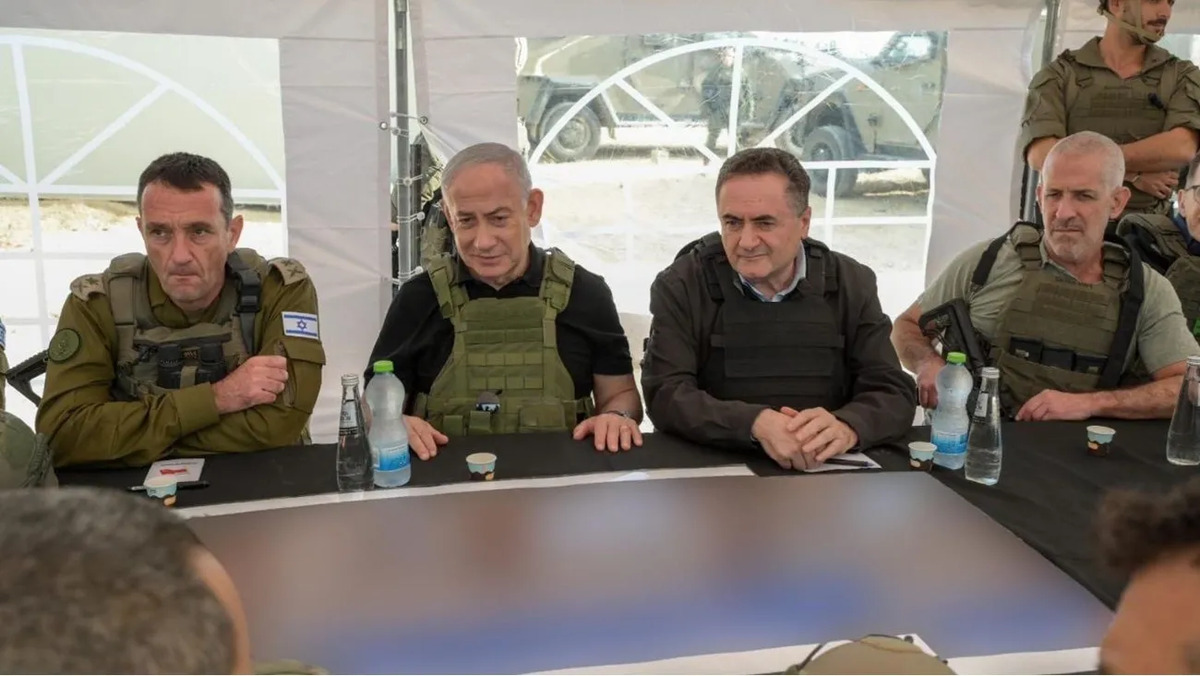







Benjamin Netanyahu is ruling today under unprecedented pressures, facing increasing protests, dwindling international support, legal scrutiny, and a government coalition that could collapse at any moment. Against this backdrop, the war in Gaza has become the cornerstone of his political survival.
Public discontent is now evident in the streets every week, as demonstrations involving hundreds of thousands of Israelis sweep through major cities. Families of the captives lead many of these marches, accusing the government of negligence and failure.
Although Netanyahu has dismissed the protests as detrimental to negotiations, the rising numbers indicate that public anger has reached a level not seen since the outbreak of the war in October 2023.
The diplomatic efforts add another layer of complexity. Hamas recently announced its acceptance of a proposal for a 60-day ceasefire, mediated by Egypt and Qatar and supported by the United States. The plan includes a partial release of captives, a prisoner exchange, a limited withdrawal of Israeli forces, and the entry of more aid into Gaza.
So far, Israel has shown caution, neither rejecting nor accepting the deal, but for Netanyahu, any move towards a ceasefire risks undermining his image as a hardliner and could lead to the internal collapse of his coalition.
The far-right partners in the government, led by Itamar Ben Gvir and Bezalel Smotrich, have already drawn their red lines; they reject any settlement that does not achieve the complete defeat of Hamas and threaten to topple the coalition if Netanyahu makes concessions.
Since Benny Gantz's resignation in June 2024, the government has shifted further to the right, making Netanyahu more dependent on these partners and their demands.
Meanwhile, humanitarian calls and international accountability are suffering; Gaza is experiencing devastating human losses, with the health ministry in the enclave reporting over 62,000 deaths since October 2023.
International agencies warn of famine, with alarming levels of child malnutrition. While Israel questions some of the figures, images of victims and famine dominate global media coverage, fueling accusations that Israel is committing genocide.
The International Court of Justice has yet to rule on the genocide charge itself, but it has issued binding orders demanding that Israel prevent acts of genocide and allow humanitarian aid access, which enhances international scrutiny on the government.
Legal pressures extend further, as the International Criminal Court has issued arrest warrants for Netanyahu and former Defense Minister Yoav Galant, accusing them of committing war crimes and crimes against humanity.
These warrants limit Netanyahu's freedom of movement abroad and intensify his reliance on internal control.
Political survival calculations Without a clear "victory" declaration, the end of the war will expose Netanyahu to increasing demands for accountability and possibly to elections.
At the same time, signs of fatigue are beginning to show from Israel's most important ally, the United States. American public opinion has sharply shifted, with support for the war dropping to historic lows, and Netanyahu's personal popularity in American polls is also negative.
For Israel, which heavily relies on American military and diplomatic support, this erosion of sympathy raises the cost of continuing the war.
Domestically, another crisis is unfolding; the Israeli Supreme Court has annulled the blanket exemptions from military service for the ultra-Orthodox community (Haredim).
Netanyahu needs the support of Haredi parties to remain politically viable, just as he relies on his far-right allies who demand the continuation of the war until Hamas is destroyed.
Any decisive ceasefire could spark conflicts on both fronts: disputes over conscription, budget priorities, and the unresolved question of Gaza's future, and by keeping the war "open," Netanyahu postpones these confrontations.
Within this framework, his survival relies on several pillars: First, the war suspends accountability: it becomes easier to delay investigations into the failures of October 7 or corruption allegations as long as fighting dominates the agenda.
Second, the war secures his coalition: Ben Gvir and Smotrich have tied their political fate to the demand for the destruction of Hamas, and Netanyahu cannot exclude them without risking the collapse of his government.
Third, the war distorts the legal narrative: as long as fighting continues, arrest warrants and international judicial orders can be portrayed as external attacks on Israel's sovereignty.
In peacetime, they would appear as personal responsibilities.
Fourth, the war divides the opposition: while some Israelis demand an immediate deal to return the captives, others insist on continuing the fight, and this division weakens efforts to unite against Netanyahu.
Fifth, the war marginalizes internal challenges: issues like rising living costs, the conscription crisis, and government disputes
שתף את דעתך
Gaza War: Netanyahu's Last Shield to Stay in Power