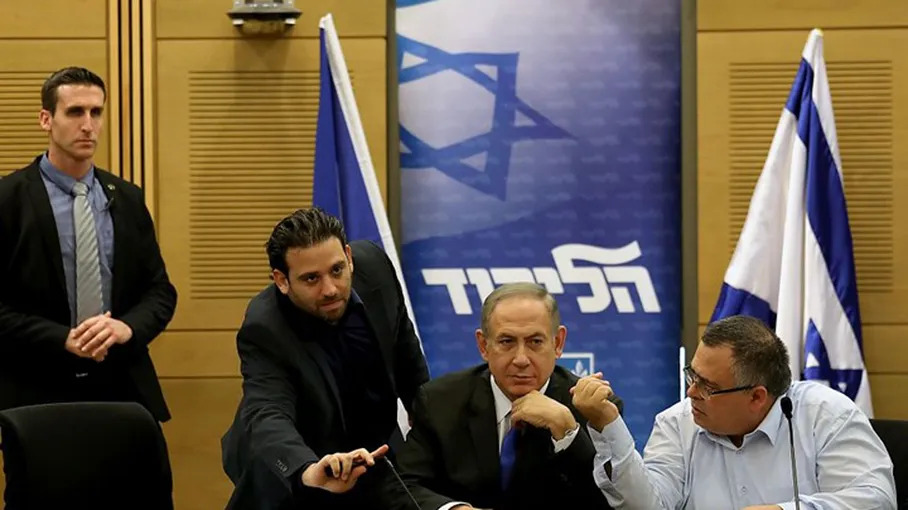







A poll conducted by the Hebrew channel "i24 News" showed that the Likud party, led by Israeli Prime Minister Benjamin Netanyahu, still dominates the political scene with 26 seats in the Knesset, followed by a new party led by Naftali Bennett, which secured 22 seats.
The Yisrael Beiteinu party, led by Avigdor Lieberman, received 10 seats, the Shas party got 9 seats, and the Democratic Party, led by Yair Golan, obtained 8 seats. The parties of Gadi Eisenkot and Yahadut HaTorah each received 7 seats.
The Yesh Atid party, led by Yair Lapid, the United Arab List, led by Mansour Abbas, and Otzma Yehudit, led by Itamar Ben Gvir, each secured 6 seats. The Hadash-Ta'al alliance garnered 5 seats, while both Blue and White, led by Benny Gantz, and the Religious Zionism party, led by Bezalel Smotrich, received 4 seats each.
The Balad party did not surpass the electoral threshold, reflecting changes in the Israeli political power map. The poll indicated that Netanyahu's camp would secure 52 seats, compared to 57 seats for the Bennett-Eisenkot camp.
The results show that the current coalition parties hold only 49 seats, against 61 seats for the center-left camp, while the Arab parties retain 10 seats without allying with any bloc.
Regarding Netanyahu's performance in managing the war on Gaza, 60% of respondents gave a negative evaluation, while only 31% viewed his performance positively. Additionally, 46% indicated that the continuation of the war is due to political considerations to maintain the coalition.
As for options to end the war, 54% supported a complete ceasefire, while 28% preferred to expand operations and occupy the city of Gaza. Only 3% supported a partial deal with Hamas remaining in power.
Concerning calls to disrupt the economy to pressure for the release of Israeli prisoners, 39% supported this step, while 43% opposed it. Moreover, 66% of respondents blamed Hamas for the failure of negotiations regarding the release of prisoners.
These results indicate a shift in the Israeli political power map with the rise of new faces like Bennett and Eisenkot, and a decline in public confidence in Netanyahu's performance amid the ongoing war and the stalled prisoner issue.
This reflects the intensifying political competition in light of the security and political crises plaguing the occupying state.
60% of respondents gave Netanyahu a negative evaluation in managing the war on Gaza.
שתף את דעתך
Poll: Netanyahu's popularity declines regarding the management of the Gaza war despite Likud's lead.