






The Humanitarian Crisis in Gaza Worsens as Aid Fails to Stabilize Markets
The weakness of aid and the lack of market organization exacerbate the suffering of the population and threaten to increase famine.
The humanitarian crisis in the Gaza Strip continues to escalate, as the limited aid recently allowed in by the Israeli occupation has failed to curb rising prices or alleviate the worsening famine. The sector needs about 600 trucks daily of food and supplies to meet the minimum needs of more than two million people, but the occupation allows an average of only 80 trucks to enter, most of which are humanitarian aid rather than commercial goods, according to the Government Media Office.
Despite the few trucks, drivers are forced to unload their cargo in remote areas, exposing it to looting by the hungry and some thieves, amid a lack of organization and oversight. This has led to an unprecedented rise in prices, with basic goods remaining high; flour is still between 42 and 45 shekels per kilo, sugar at 400 shekels, rice and pasta around 50 shekels per kilogram, and cooking oil at 50 shekels, making it difficult for the vast majority of Palestinians to purchase them.
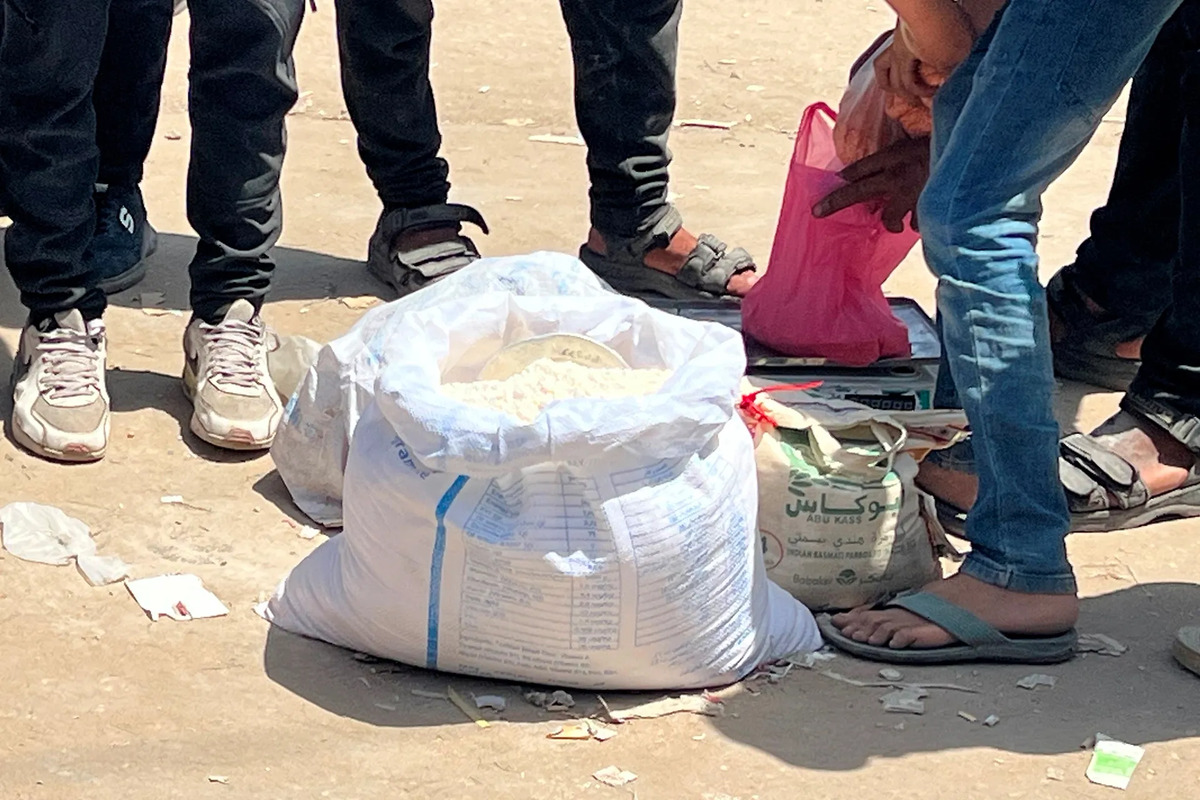
In the markets, traditional shops and professional vendors have disappeared, turning into a chaotic market displaying small quantities of goods on the sidewalks, with no clear system for selling or organization. Some buy goods from distribution centers affiliated with American institutions or from places where aid is stolen, selling them at market prices, often with little profit, or selling free aid to achieve limited income.
In explaining the continued rise in prices despite the influx of some aid, economists confirmed that the quantities entering do not exceed 10% of the daily need, and that the market suffers from distortions due to political and security interventions, as 95% of the population relies on aid, but 85% of them do not receive any assistance, with beneficiaries limited to a small group able to access distribution centers and bear security risks.
The black market is currently dominating the economy, where a number of traders monopolize the market and hold goods at high prices, especially basic materials like flour, gradually releasing them at elevated prices, prolonging the suffering of the population. Experts expect prices to gradually decrease with the continued influx of aid, but this may take weeks, with warnings of the occupation's intention to keep prices of some goods high by reducing aid.
On another front, citizens' suffering is exacerbated by the phenomenon of withdrawing money from banks through the black market at high commissions, reaching up to 50% of the amounts, which doubles economic injustice, drains savings, and increases the concentration of wealth in the hands of a very few, amid the absence of any effective government oversight on the market.
שתף את דעתך
The humanitarian crisis in Gaza is worsening as aid fails to stabilize the markets.