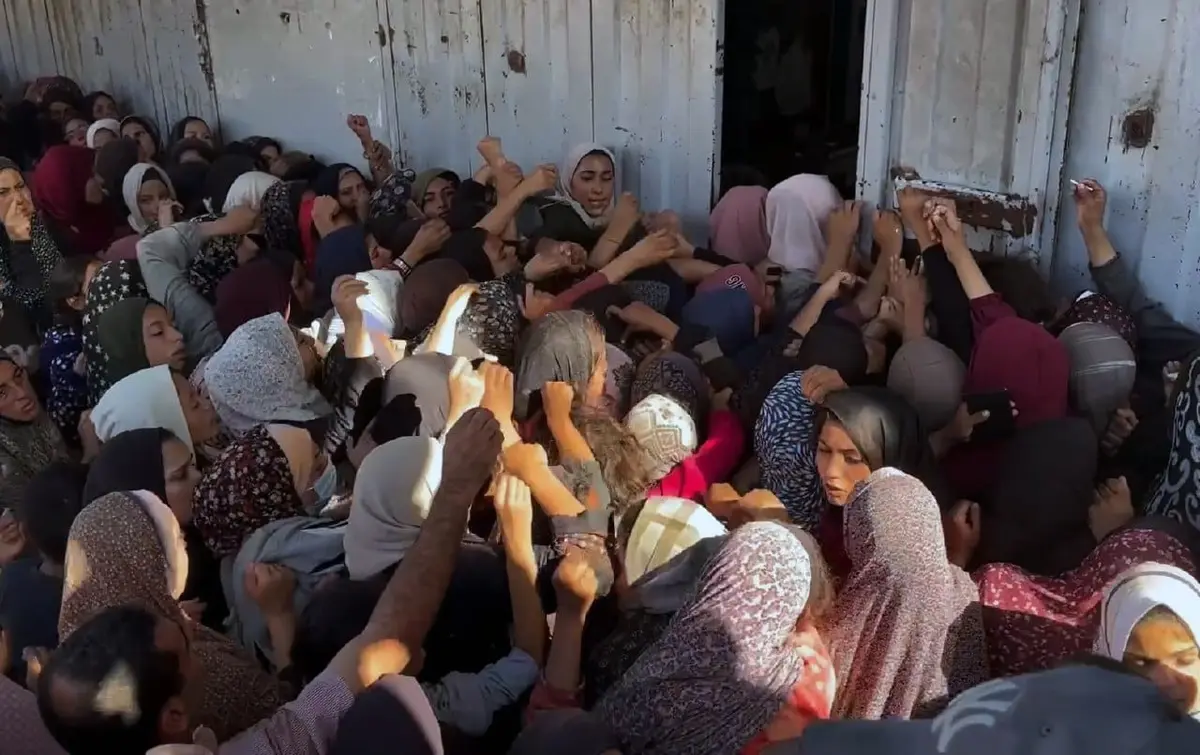







Amid growing international condemnation of the starvation of Palestinians in Gaza, the Israeli military announced on Saturday that it would begin a "humanitarian truce" in densely populated areas of the Strip and open corridors for UN aid convoys on Sunday. However, the military confirmed that its war would continue elsewhere.
Medical workers describe dire conditions on the ground, with hospitals overflowing with malnourished patients. Despite mounting evidence of widespread hunger, the Israeli military has repeatedly claimed that "there is no famine in the Gaza Strip," describing it as a "false campaign promoted by Hamas."
Israel has also said it has begun airdropping aid to Gaza, after stating earlier this week that it would allow foreign countries to do so. This method has been sharply criticized by humanitarian organizations as costly, ineffective, and dangerous to those on the ground. The Trump administration has yet to comment on Israel's decision and continues to insist that the current aid mechanism, through the Gaza Humanitarian Foundation (GHF), is sufficient to bring in aid, a claim disputed by all experts.
As international pressure mounts, Israeli Prime Minister Benjamin Netanyahu is also facing anti-war protests at home. Families of Israeli captives held a rally on Saturday to denounce the Netanyahu government's failure to secure the release of the Israeli hostages. The United States and Israel recalled their ceasefire negotiators this week, blaming Hamas for the collapse of the negotiations.
The occupation authorities announced a humanitarian truce in several population centers in the Gaza Strip, beginning Sunday morning and continuing until evening, according to what CNN reported, citing senior Israeli officials.
On Saturday night, the Israeli Air Force carried out airdrops of food aid to Gaza. Israeli authorities have announced that additional airdrops are expected in the coming days, including from Jordan and the United Arab Emirates.
According to the Axios news website, this truce is part of a broader set of measures approved by Israeli Prime Minister Benjamin Netanyahu on Saturday in response to growing international criticism over the catastrophic humanitarian crisis in Gaza.
This truce also marks the first time Israel has halted military operations in parts of Gaza since March, when it unilaterally resumed the war and halted the delivery of humanitarian aid, according to Axios.
During these pauses, the IDF will allow safe access for the United Nations and other relief organizations to population centers. The pauses will be repeated from time to time as needed, according to senior Israeli officials.
"In accordance with the directives of the political leadership, and following a situational assessment held this evening, the IDF has initiated a series of measures to improve the humanitarian response in the Gaza Strip," the IDF said in a statement on Saturday. "The IDF is prepared for humanitarian pauses in densely populated areas and will continue its operations against terrorists in the operational areas at the same time," it added.
The Israeli military also announced that Israel had reconnected an electricity line to operate the desalination plant in southern Gaza. This move is expected to increase water production from 2,000 to 20,000 cubic meters per day—enough to serve approximately 900,000 people. On Friday, the Ministry of Health in Gaza announced the deaths of nine more people from hunger-related complications in the past 24 hours. The ministry added that 122 Palestinians have died in recent days from similar symptoms, including 83 children.
Israel denied the existence of a famine in Gaza, describing it as "Hamas propaganda." However, an Israeli official acknowledged that the humanitarian situation was catastrophic.
The leaders of the United Kingdom, Germany, and France held an "emergency" phone call on Friday to discuss the crisis and issued a joint statement calling on "all parties to end the conflict by reaching an immediate ceasefire." They described the situation as a "humanitarian catastrophe" that "must end now," and urged Israel to lift restrictions on the flow of aid and allow the United Nations and humanitarian NGOs to operate freely to combat hunger. The leaders emphasized that "Israel must uphold its obligations under international humanitarian law."
Amid mounting international pressure, Netanyahu held a meeting on Friday to discuss the humanitarian situation in Gaza. Israeli Foreign Minister Gideon Sa'ar urged immediate steps to address the crisis—including a humanitarian ceasefire—but Defense Minister Israel Katz objected, and the meeting ended without a decision, according to Axios, which reported that Netanyahu held another conference call with Sa'ar, Katz, and other senior ministers. This time, Katz dropped his opposition, and a decision was made to implement a ceasefire starting Sunday morning.
Netanyahu also did not invite far-right ministers Bezalel Smotrich and Itamar Ben-Gvir—both of whom are vocal opponents of a ceasefire on humanitarian grounds—and did not inform them of the decision until after it was finalized, according to Axios.
Powered by Froala Editor
שתף את דעתך
Israel announces opening of humanitarian corridors as anger grows over Gaza famine