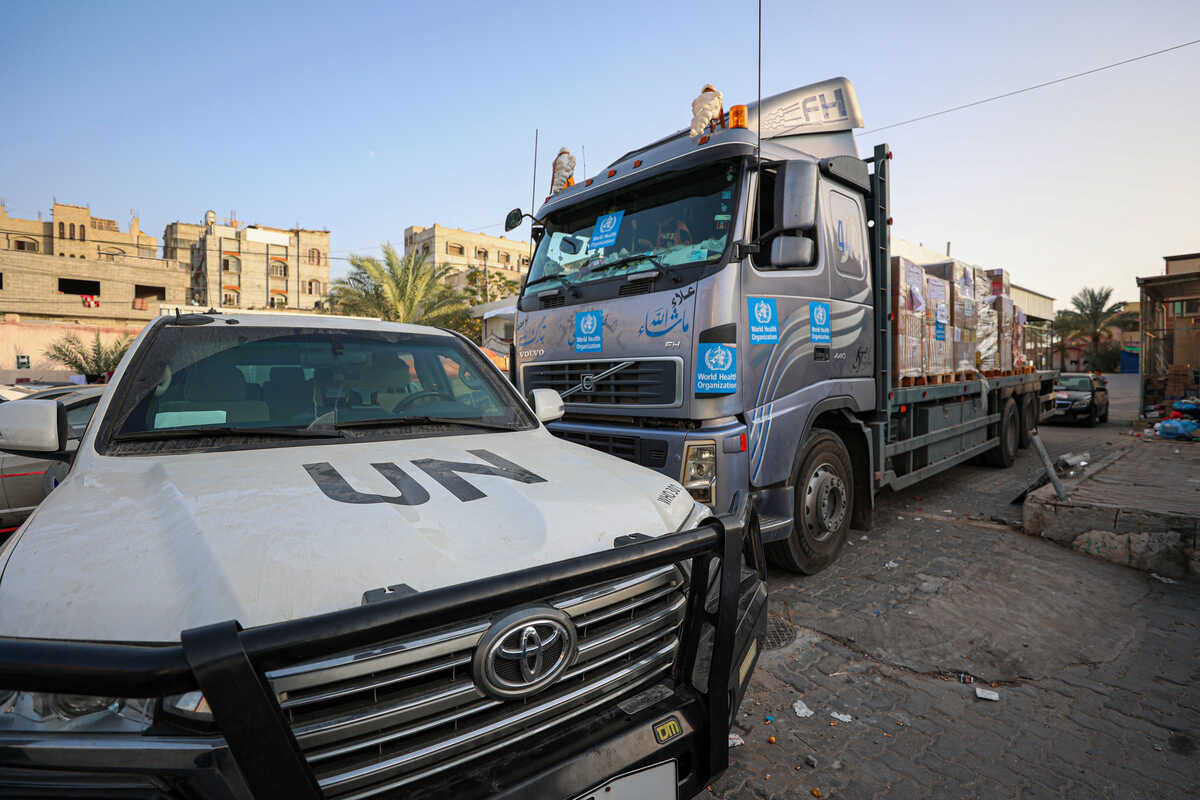







The Wall Street Journal reported that Arab mediators in the negotiations stated that control of food aid has become a bone of contention between Israel and Hamas, as ceasefire negotiations have stalled over who will distribute humanitarian aid in the Gaza Strip once the agreement goes into effect.
The mediators emphasized that Hamas insists that the United Nations and the Palestinian Red Crescent control all aid arriving in Gaza. The US proposal stipulates that these organizations participate in distribution, but do not control it. The mediators added that Hamas, which the United States designates as a terrorist organization, is also demanding that the Gaza Humanitarian Foundation (GHF), an Israeli-American relief organization, be completely excluded from aid distribution.
US State Department spokeswoman Tammy Bruce said on Tuesday that White House Middle East envoy Steve Witkoff plans to travel to the Middle East this week to revive efforts to reach a ceasefire in Gaza and establish an aid corridor into Gaza. Bruce did not specify his destination.
It's worth noting that Israel refuses to allow the United Nations to control the aid because it is distributed through a vast network run by the United Nations Relief and Works Agency for Palestine Refugees (UNRWA), which is responsible for Palestinian refugees, according to Arab mediators. Israel claims that UNRWA has close ties to Hamas and said that some of its members participated in the Hamas-led attack on Israel on October 7, 2023. The agency fired nine of its employees over these allegations, and some countries have since restored funding they had previously withheld from the agency.
The Israeli-backed food distribution program descended into chaos and violence after soldiers opened fire on Gazans trying to reach fortified aid centers. More than 1,000 Gazans seeking aid were killed by the Israeli military and a group of American mercenaries contracted with the organization.
Aid has become a key tool for both sides in the war. Israel claims that Hamas uses aid to finance its war effort, although it has provided no evidence. Israel has supported the GHF to control aid distribution away from the UN and other humanitarian organizations, saying these organizations enable or turn a blind eye when Hamas steals, hoards, and sells aid, or gives it to young people as payment for fighting Israel.
For Hamas, resuming the previous aid distribution system, largely controlled by the UN, is essential to calming anger over the widespread destruction and suffering caused by the war. Some Palestinians have taken to the streets demanding an end to the war.
The newspaper quotes Nahed al-Fakhouri, the Hamas official responsible for managing prisoner affairs, as saying: "The primary source of pressure on Hamas is civilians due to the killing, starvation, and siege."
Since the beginning of the war on Gaza in October 2023, Israel has killed more than 58,000 civilians, most of them women and children, and wounded more than 130,000, also most of them women and children, and reduced much of the Strip to rubble.
Israeli and Hamas officials are currently in Doha, Qatar, negotiating an agreement brokered by Egypt, Qatar, and the United States that would lead to a 60-day ceasefire. As part of the agreement, Hamas will release 10 Israeli hostages and 18 bodies in exchange for Palestinian prisoners held in Israeli jails. Arab mediators said some disagreements, including the start date for negotiations to end the war, have largely been resolved in recent weeks. Other issues remaining unresolved, the mediators said, include the extent of the buffer zone Israel will retain in the so-called Philadelphi Corridor, a strip of land between the Gaza-Egypt border.
שתף את דעתך
Food aid has become a sticking point in Gaza ceasefire talks.