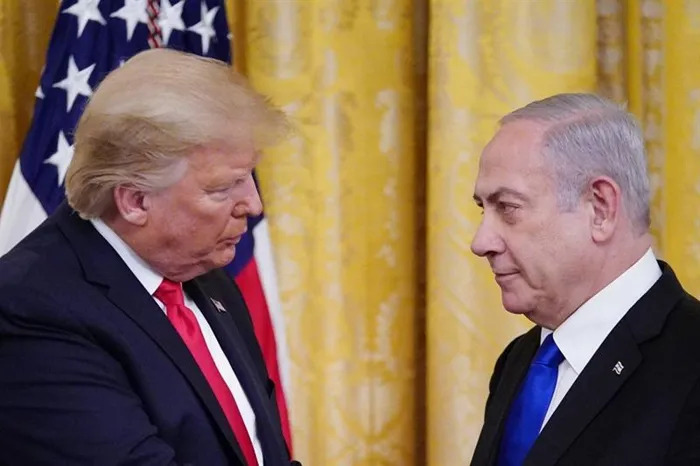







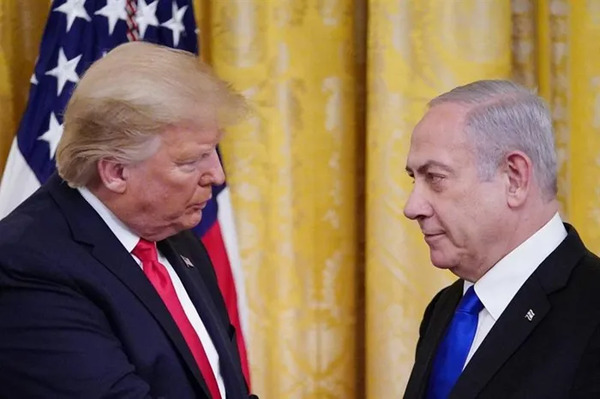
The New York Times reported that when US President Donald Trump hosted Israeli Prime Minister Benjamin Netanyahu at the White House on April 7, a reporter reminded him that his 2024 campaign promise to end the war in Gaza had not been fulfilled.
Israel recently violated a fragile ceasefire in its 18-month war on the besieged Gaza Strip on March 18 and resumed its brutal bombardment, but Trump expressed optimism, replying: "I would like to see this war stop. And I think it will stop at some point, not in the distant future."
But a month later, the chances of Israel stopping its war on Gaza have diminished significantly.
Netanyahu threatened on Monday that the world would see an "intensified" Israeli escalation against the devastated and starving Palestinian enclave after his security cabinet approved plans to call up tens of thousands of reservists for a new offensive there.
Israeli hardliners insist that force alone will force Hamas to release the remaining detainees, while many analysts believe that a major Israeli escalation could extinguish any remaining hope for a ceasefire.
While some now wonder how Trump will react to this new reality, analysts say that after an early wave of diplomacy to free the hostages and reach a long-term settlement, Trump and his top officials have been distracted by the conflict, "which has created a kind of free hand for Netanyahu, who appears ready to exploit it," according to the newspaper.
The New York Times quotes Ilan Goldenberg, a Middle East specialist in the Obama and Biden administrations: "At the beginning of the administration, all the promises were focused on Gaza. But when the ceasefire collapsed, Trump gave the Israelis a green light to do whatever they wanted."
"I feel like he's not as engaged (in the Gaza crisis) as he should be; he's kind of bored," added Goldenberg, who is now a senior vice president at J Street, a centrist American Jewish organization that advocates for a two-state solution.
It's worth noting that US President Trump intends to travel to the Middle East next week, visiting Saudi Arabia, Qatar, and the United Arab Emirates.
The violent escalation in Gaza may be frustrating for President Trump, a stark reminder that he has failed to deliver the peace he promised.
However, Trump may have lost patience and is welcoming talk in Israel of delivering a final, crushing blow to Hamas, while Netanyahu said his military officials told him that his anticipated massive offensive would be the "final steps" of the war.
Trump may also have a high tolerance for Israel's use of excessive force. He has warned Hamas that "all hell will break loose" if the group does not release the remaining hostages.
Michael Makovsky, president and CEO of the ultra-Orthodox Jewish Institute for National Security of America, agreed that Trump was less engaged with Israel on the Gaza issue than the Biden administration. President Joe Biden and his senior officials spent a significant amount of time after the Hamas attacks of October 7, 2023, trying to manage the Israeli campaign in Gaza. Their goal was to limit civilian suffering in Gaza and spare Israel from international condemnation, even if critics described them as overly tolerant of Israel's use of force.
Trump has shown signs of concern for the people of Gaza, saying on Monday that he would help Gazans "get some food" amid the Israeli blockade, but placing the blame squarely on Hamas. But his attention to the tragedy has been sporadic.
"It's like night and day with the Biden administration, which has been trying to control the details of Israeli operations," Makovsky said.
He added that Israeli officials "are not receiving phone calls." "I don't think they are under pressure about the number of aid trucks arriving."
Axios reported on Monday that Israel would launch a new ground operation in Gaza if no agreement was reached with Hamas by the time Trump returned from his trip to the region. Makovsky, who recently attended meetings with senior Israeli officials, said the report was consistent with his understanding.
He added that when it comes to the Middle East, Trump has been more focused on emerging diplomacy aimed at preventing Iran from developing a nuclear bomb. In a statement issued Monday, Brian Hughes, spokesman for the US National Security Council, said that Trump "remains committed to securing the immediate release of the hostages and ending Hamas's rule in Gaza." He added that "Hamas bears sole responsibility for this conflict and the resumption of hostilities."
One indication of this shift in focus is the appointment of Steve Witkoff as President Trump's special envoy to the Middle East. In the early days of the Trump presidency, Witkoff engaged in diplomacy with Israel and Hamas, seeking to extend the temporary ceasefire agreement reached on January 15, 2025.
But Witkoff has since become a super-envoy, juggling multiple assignments. The former real estate developer and longtime Trump friend (Steve Witkoff himself) has also taken on the Iran file and met with Russian President Vladimir Putin four times to discuss Ukraine. But there's no indication that Secretary of State Marco Rubio has been involved. Rubio, whom Trump appointed National Security Advisor last week, has shown no interest in Israel's war on Gaza and has yet to visit Israel.
שתף את דעתך
Trump's hope for a Gaza deal fades as Israel plans a major escalation