





David Aaron Miller is one of two Jewish experts whose work continued for twenty years under four presidents, as envoys to resolve all the conflict between Israel and the Palestinians. The second is Dennis Ross, meaning that each of them spent all those years entrusted with the same mission without their efforts advancing a single step.
This is why Miller's views in particular, and what he has come out of his long experience in charge of solving the Palestinian problem as a representative of American presidents, are gaining appeal among political think tanks.
There have been many meetings with him over the years, until the present time in 2023. Questions are asked to him, and he answers, drawing from his experience, vision, and advice.
Miller now combines membership in a number of centers specialized in political research, such as the Carnegie Center for International Peace, in addition to being director of the Middle East Program at the Woodrow Wilson Center in Washington, in addition to resorting to issues of specialized newspapers to poll his opinion on the subject of Israeli policy and its apparent and hidden intentions.
One of the titles of the meetings with him was “Progress in the Arab-Israeli conflict seems impossible.”
The questions asked to him varied, including: Are we on the verge of a mass expulsion of the Arab population from their lands? And a question about whether what we have seen in recent years is a limited diplomatic role for America to the point that America seemed to be absent, and other questions to which Miller’s answer was as follows: The two-state solution is heading towards a dead end, and it seems as if they are pushing the situation towards disintegration of the issue. Palestinian, meaning more like independence, and not real independence for Gaza under the administration of Hamas, and a Palestinian authority that administers the remaining 40% of the West Bank, and is dependent on Israel, while Israel occupies the remaining 60%, and imposes its control over Jerusalem.
Then he says: In the face of this situation, President Biden must respond boldly to the Netanyahu government, which is controlled by a determination to place the West Bank and Jerusalem under Israeli sovereignty.
Then Miller says: It seems that the Biden government is trying to avoid involvement in this chaotic situation, although Biden must make it clear to Israel that his government will not deal with the policies of its minister Ben Gvir if he continues his racist policy.
In one of his answers to another question, he said: What we are seeing recently of Israeli politicians and ministers going to the Holy Mosque in Al-Aqsa Mosque is done in a way that indicates that the Israeli Ministry of National Security and its Minister Ben Gvir are determined to change the current situation and create a permanent Jewish presence in its place.
American writer Malcolm Kerr quotes Aaron Miller as believing that a diplomatic solution has become unattainable, under the title “My Eyes Don’t Lie.” In this regard, Kerr refers to an article previously published by Miller under the title “The End of Greatness: Why There Are No Great Presidents in America.” He published it in Foreign Policy magazine in 2014. Miller said this while answering a question: You participated in the Arab-Israeli peace negotiations in the governments of George H.W. Bush, Bill Clinton, and George W. Bush. Do you consider that these negotiations are dead? ?
His response was: I left that mission in 2003 in charge of American governments, and my analysis of the negotiations taking place today leads me to describe them with the phrase “they have died.” Since I left these negotiations, I have noticed that they have become negative and will not lead to any result.
In order to put the mission that David Miller carried out for twenty years in its complete and objective framework, what happened from the beginning when he was used, and with him Dennis Ross, took place after the closing of the page of the mediators who took responsibility for that case and they were members of the Ministry of Foreign Affairs, and they were known as Arabists, which is a term given to them. Because of their experience in the Arab region, their knowledge of the culture and traditions of its people, and all dimensions of the conflict between Israel and the Palestinians, and their endeavor to adhere to a neutral position. It is true that their page was closed after the assistance of Aaron Miller and Dennis Ross, but despite being Jewish, they made efforts to try to find a loophole in the impasse in front of the Palestinian solution, and their bias towards Israel was not exaggerated, unlike others who played this role after that, even if Miller was the most objective. Towards this thorny issue of Ross. In agreement with the Gulf

OPINIONS
Sun 01 Oct 2023 9:33 am - Jerusalem Time
Aaron Miller's vision of the two-state solution

Atef Al-Ghamri
Opinion Writer

OPINIONS
Sun 01 Oct 2023 9:31 am - Jerusalem Time
American politics… chaos and imbalances

James Zogby
Opinion Writer

American politics is unmistakably chaotic and dysfunctional — even though the United States never tires of berating other countries for their lack of democratic institutions or failure to protect democratic values.
This was clearly demonstrated last week when President Joseph Biden, in his speech to the United Nations General Assembly, urged other countries to join the United States in defending democracy in Ukraine. Then, during his meeting with Prime Minister Benjamin Netanyahu, Biden mildly criticized the Israeli leader’s efforts to weaken that country’s judiciary.
As we continue to call on other countries to stand up for democracy and its values, a recent study by the Pew Research Center shows that Americans’ trust in our political system has fallen to dangerously low levels — and for good reason. Congress is paralyzed by hyperpartisanship, stubborn ideologues, and complex and arcane rules that permit and encourage obstructive behavior. In the House of Representatives, the Republican Speaker has become a hostage of a handful of hard-liners who have pledged to abstain from voting in favor of passing a very “Republican” budget unless he responds to demands for deeper cuts in domestic spending and foreign aid.
As a result, the United States is once again facing the specter of a federal government shutdown. The “Democrats” have only nominal control (51-49) of the US Senate, but they face problems from two self-described “independent” senators, whose votes can never be guaranteed, as well as from the rules that allow a senator to “ “Obstruct” presidential nominations regardless of the candidates’ qualifications.
It is mentioned here that a senator blocked 200 military promotions and appointments due to a disagreement with the Pentagon’s abortion policy. What is certain is that after Republicans blocked consideration of President Obama’s Supreme Court nominee — later approving President Trump’s nominee — and were given the opportunity for another position because an elderly judge refused to resign before it was too late for Obama to fill his seat, the court took conservative positions on… Separation of church and state, abortion, and environmental laws.
Although approximately two-thirds of voters express their dissatisfaction with the possibility of renewed competition between Biden and Trump, both parties appear to be heading towards renomination in 2024. However, the problems do not end there. With the complete collapse of campaign finance systems, our elections and the entire political process are increasingly controlled by the billions raised by parties, political action committees and corporate interest groups to pay consultants and massive negative campaign advertising expenses that fuel polarization and pollute the political waters.
Add to this the similar problems faced by state and local governments, and a biased major media that no longer reports news but shapes it according to their own political agendas — and you have a toxic cocktail of dysfunction resulting from increasing polarization. In fact, what we mentioned above only describes some of the problems facing the major institutions that worked in the past to secure democracy in the United States. Therefore, it is not surprising that the recent Pew Center study found that Americans have lost confidence in the country’s policies and institutions. The center’s findings include the following:
• Only 4% of respondents say that the American political system is working well, while 63% express little or no confidence in the future of American politics.
• 56% are unwilling or unable to identify any strengths in the American political system.
• 65% always or often feel exhausted when they think about politics, and 78% are rarely or not at all enthusiastic about politics, while the majority seems not optimistic.
• When asked to define their feelings about our political system, only 2% used a positive term, while 79% used negative terms such as “divisive,” “corrupt,” “chaotic,” or “chaos.”
• More than 80% say the cost of political campaigns is so high that they prevent good people from running and give big donors and lobbyists too much power. Pew concludes its study by asking voters to evaluate a number of ideas that would reform policy. Among the proposals that enjoy a great deal of support among them are imposing a maximum on the number of terms for members of Congress, imposing a maximum age for elected officials and Supreme Court justices, imposing a maximum on the amount of spending on election campaigns, whether by individuals or groups, and requiring an identification document bearing A copy issued by the government for voting.
But the chances of success and passage of these proposals remain slim, given the necessity of their approval by Congress, the president’s signature on them, and their constitutional approval by the Supreme Court. Therefore, the dysfunction of our political system will continue, leaving voters disengaged from politics, disillusioned and vulnerable to exploitation by demagogues like Trump, and others hoping for change, difficult as it may be, but unsure how it will happen and whether it will be for the better or worse. For the worse.
*President of the Arab-American Institute, Washington
OPINIONS
Sun 01 Oct 2023 9:29 am - Jerusalem Time
Congressman Menendez and the influence of money and Egypt in America

Dr.. Amani Al Qurm
Opinion Writer

The pages of American magazines, newspapers and media outlets these days are filled with news and repercussions of the bribery scandal in which Cuban-born American Congressman Bob Menendez and his wife Nadia (of Lebanese origin) are accused. Menendez, according to the federal indictment, is accused of receiving bribes from three businessmen of Egyptian origin, consisting of money, gold bullion, and a Mercedes car, in exchange for exploiting his position for the benefit of the Egyptian government, specifically with regard to providing information and facilitations on the issue of American aid and military sales to Egypt. It is known that Egypt receives annual financial aid. From America, it is often used as a pressure tool on the Egyptian state to adopt certain policies, and large parts of it have been blocked since 2013 for issues allegedly related to the human rights file in Egypt.
Menendez pleads his innocence in the face of these accusations and refuses to appear at the request of half of the Democratic senators who are demanding that he resign from his position as a senator, even though he stepped down as chairman of the Senate Foreign Relations Committee due to the scandal, which is the same position that Joe Biden held before he became vice president and then president of the states. United..
The truth is that this is not the first time that Menendez has faced accusations of this kind. In 2015, the Democratic senator faced 14 charges of corruption, including bribery of about a million dollars in the form of gifts and trips from one of his friends. All charges were dropped after he proved his innocence.
The Menendez case reconsidered the influence of money power in the American political system. Money alone in America decides who the candidate is, what are his chances of winning, and what are his programs and priorities. The course of the electoral process in Congress can be summarized by saying to one of its members: “If you have a good idea and ten thousand dollars, and I have an idea that is not worth anything but I have a million dollars, then I will succeed in convincing people that my idea is the good one.”
American law is full of loopholes that can be accessed to justify the money received by candidates and members of Congress. As Menendez did the first time the charges were dropped against him, he defended himself in a press conference by saying that the money they found in his home was withdrawn from his savings account. But the problem he must solve this time lies in the presence of fingerprints on the envelopes filled with money that were seized in his house belonging to the businessmen accused of bribing him.
The repercussions of the resounding case will not stop at accusing a member of Congress of receiving a bribe, but rather will affect Egyptian-American relations and voting trends in Congress regarding Egypt in the coming days.. Egypt has many enemies inside Washington who took advantage of the issue and began to demand that it be a case of national treason and espionage, and the voices calling for stopping aid increased. American aid to Egypt or withholding large parts of it, the latest of which was stated by the senior Democrat on the Foreign Affairs Committee of the US House of Representatives, who called for the suspension of $230 million in American aid to the Egyptian state due to the human rights file. Even Menendez himself called in his latest press statement to focus on human rights in Egypt.
In 2009, the US government dropped spying charges against two members of AIPAC, the most powerful Israeli lobby organization responsible for collecting donations for members of Congress, because they provided major security secrets to the Israeli embassy related to US policy towards Iran. In the same case, the investigation was closed against Congresswoman Jane Harman, who told an Israeli agent in a recorded phone call that she would pressure the Department of Justice to reduce espionage charges against Israel. In return, the Israeli agent promised her to obtain a wealthy donor in the campaign of Nancy Pelosi, the leader of the Democrats in Congress, to pressure her to appoint Harman to the Intelligence Committee in the House of Representatives!
The story of Bob Menendez is not the first and will not be the last in a Congress whose electoral battles are not fought in the arena of voters, but rather through the power of exploiting money, suspicious deals, and secret settlements. There is no one more brilliant than the Israeli lobby in this matter. Robert Kennedy was right when he once said: It is the best Congress that money can buy. The question is: Who is accused, Egypt or Menendez?
PALESTINE
Sun 01 Oct 2023 8:52 am - Jerusalem Time
Bad faith, duplicity and cynicism: Britain’s Palestine Mandate, 100 years ago

Another speech fest at the UN General Assembly has come to a close. “Debates,” the week-long session is called. One by one, leaders of the UN’s 193 member states deliver high-minded declarations about what the world’s supreme governing body should or shouldn’t do.
As it happens, this year’s round of jaw-wagging coincides with the hundredth anniversary of the birth of an unfortunate situation the UN continues to bear responsibility for and has the ability to resolve — a situation one of its founding members created; arguably the oldest unresolved item on the UN’s 78-year-old decolonization agenda: the Palestinian people’s thwarted right to self-determination, as provided for by the UN’s predecessor, the League of Nations.
A hundred years ago today, on September 29, 1923, the League of Nations formally assigned Britain the role of Mandatory Power in Palestine. Its mission: to guide Palestine’s people out of colonialism, into independence.Bottom of Form
Instead, in one of modern history’s most egregious acts of bad faith, duplicity, and cynicism, the world’s preeminent colonial power handed Palestine over to European colonists, dispossessing Palestine’s native people and sowing the seeds for a hundred years of bloody conflict and grief.
Britain’s fiduciary duty had been set forth in the 1919 Covenant of the League of the Nations. Article 22 of the Covenant stated:
“Certain communities formerly belonging to the Turkish Empire have reached a stage of development where their existence as independent nations can be provisionally recognized subject to the rendering of administrative advice and assistance by a Mandatory until such time as they are able to stand alone. The wishes of these communities must be a principal consideration in the selection of the Mandatory.” [emphasis added]
And:
“To those colonies and territories which as a consequence of the late war have ceased to be under the sovereignty of the States which formerly governed them and which are inhabited by peoples not yet able to stand by themselves under the strenuous conditions of the modern world, there should be applied the principle that the well-being and development of such peoples form a sacred trust of civilization.”
Who were these “peoples” whose “wellbeing and development” Britain was instructed to hold in “sacred trust”? According to a 1917 British census, 92% of them were ‘Arabs’ (Muslim, Christian, and other non-Jewish minorities) and 8% Jewish (half of them indigenous Arab Jews).
Five years later, in October 1922 – poised to take up its Mandatory position – Britain completed another census. The results: 78% Muslim, 10% Christian and 11% Jewish.
Fully aware of these numbers, Britain tossed its fiduciary duty to decolonize Palestine and liberate its people out the window. Its rationale is well known – the Balfour Declaration.
In November 1917, in a single, sixty-seven-word sentence, Britain had already declared its intention to turn Palestine into a “national home” for 10% of its people and the rest of the world’s Jews, while referring to 90% of Palestine’s population as what they were not:
“His Majesty’s Government view with favor the establishment in Palestine of a national home for the Jewish people, and will use their best endeavors to facilitate the achievement of this object, it being clearly understood that nothing shall be done which may prejudice the civil and religious rights of existing non-Jewish communities in Palestine, or the rights and political status enjoyed by Jews in any other country.”
But Britain had other reasons to violate its Covenant duties.
“Britain had decided long before World War One — long before Weizmann and the Zionists came along and sold their project to the British War cabinet — that they needed to control Palestine,” Palestinian scholar Rashid Khalidi told Mondoweiss. “Palestine is the land terminus of the shortest route between the Gulf and the Mediterranean, and therefore the route to India. So it was absolutely vital strategically to the British Empire that they control Palestine.”
Of course, Balfour and his colleagues were also antisemites. Britain’s 1905 Alien Act – drafted by Balfour himself — was designed to keep European Jews out. What better place to send them than Palestine, where they could be put to good use?
Mondoweiss spoke about this with Israeli historian Avi Shlaim. British Prime Minister Lloyd George “had a perception of the Jews as being uniquely powerful worldwide; the Jews as having covert power; the Jews having control over international finance,” says Shlaim. “[By] aligning Britain, the British Empire, with the Zionists in the Middle East, Lloyd George was acting on a misperception; the misperception of Jewish power.”
So, Balfour, George, Churchill, and other British leaders needed no convincing when Chaim Weizmann came knocking. Still, between the inking of the Covenant and the drafting of Britain’s Palestine Mandate — in London, Paris, and San Remo, Italy — Weizmann moved heaven and earth to get Balfour incorporated into the Mandate, conferring legal status on the Zionist project.
He succeeded. Under the terms of the Mandate, in force on September 29, 1923, Britain would ensure Jewish immigration, the acquisition of citizenship by European Jews, “intensive” Jewish cultivation and “self-governing” Zionist institutions.
Palestine’s native people got tossed a few bones — “civil and religious rights” [not political], and a judicial system to “assure to foreigners, as well as to natives, a complete guarantee of their rights.”
“They didn’t ask for a Jewish state because that would have been asking for too much and it would have immediately alienated all the Arabs. So, they moderated the claim to a national home. And the British went along with it.” Avi Shlaim
What was Britain’s true aim – the creation of a Jewish “national home” (whatever that meant), or an actual Jewish state? And how did the Zionists see themselves – as colonists, or Palestine’s true native people?
“[A] national home was a newfangled concept,” Avi Shlaim told Mondoweiss. “So, no one knew quite what it meant.”
“But the Zionist leaders had a very clear idea what they meant; they meant a state. They didn’t ask for a Jewish state because that would have been asking for too much and it would have immediately alienated all the Arabs. So, they moderated the claim to a national home. And the British went along with it.”
Hypocrisy and duplicity
“But there is a lot of hypocrisy on the British side in all of this,” says Shlaim. “The Zionists and the British knew from the beginning what they were doing; that they were enabling the systematic Zionist takeover of Palestine at the expense of the Palestinians.”
Hypocrisy indeed, and duplicity. “Balfour, Churchill and Lloyd George told Weizmann at a private dinner a few years [after the start of the Mandate] that what they meant by this obfuscating and opaque language was a Jewish state,” Palestinian historian Rashid Khalidi told Mondoweiss.
“There was no shame in the 20s and 30s about being a colonist. [They] understand perfectly that they were European settlers engaged in the colonial enterprise.”
Rashid Khalidi
As for the Zionists, settler-colonialism was in vogue back then. “There was no shame in the 20s and 30s about being a colonist,” Rashid Khalidi told Mondoweiss. “[They] understand perfectly that they were European settlers engaged in the colonial enterprise. The agency that’s purchasing a lot of this land is called the Jewish Colonization Agency!”
Palestinian legal scholar Noura Erekat puts it differently. “[The] Zionist project never envisioned Jews as being part of the Middle East,” Erekat told Mondoweiss. “Israel was seen by its founders very much as an extension of Europe and a site of Jewish settlement as a satellite state, but not part of the Middle East, culturally, ethnically, linguistically, politically.”
As always, the Zionists played the game both ways.
“Ussishkin and others who openly kind of talked about colonialism — and in fact thought that Britain would see them as settlers similar to the white settlers in Rhodesia — Ben-Gurion didn’t like that comparison,” Israeli historian and writer Ilan Pappe told Mondoweiss. “He said no, no, we are not the same. We are the indigenous people who came back home, a home usurped by the aliens, the foreigners.”
As for Britain, it knew perfectly well who Palestine’s indigenous people were, says Ilan Pappe. Junior members of the British government were even bothered by Whitehall’s duplicity. In the end, Britain was free to do as it pleased.
“The League of Nations was the body overseeing the Mandatory charters,” Pappe told Mondoweiss. “This international body was dominated by Britain and France and therefore they were the ones who actually would decide whether there was a violation or not.”
Why look back?
So, what are the practical implications of bad British faith and duplicity a century ago? Can British wrongs be set right?
“I think it’s important to check every chapter in that history of elimination with two realizations,” Ilan Pappe told Mondoweiss. “One is that Zionism – from its very inceptions until today – has not given up the idea of having as much of historical Palestine as possible with as few Palestinians as possible … Even liberal Zionism is not averse to that goal. It just has different ideas of how to do it. So that’s one realization. And that’s why we need to study that history. And secondly, the international Western coalition that enabled the beginning of the project … that international coalition is still today providing immunity for a state that Amnesty International has already defined as an apartheid state.”
“A hundred years ago is not that long. Acknowledging 100 years since the Palestine Mandate is placing that context front and center … It places responsibility where it belongs, primarily at the footsteps of Britain, but also at the footsteps of the international community.”
Noura Erekat
“Well, if we don’t look back at this and other aspects of history, we are liable to be prone to the kinds of myths and disinformation and falsehoods that have dominated the way people have seen this part of the world,” Rashid Khalidi told Mondoweiss. “Obviously, Zionists prefer to pretend that they did it all themselves; that it was just the hard work and the sweat of the pioneers and their sacrifice … But without the might of the British Empire, all of this would either have come to naught or would have been a much, much more difficult process.”
“A hundred years ago is not that long,” Noura Erekat told Mondoweiss. “Acknowledging 100 years since the Palestine Mandate is placing that context front and center … It places responsibility where it belongs, primarily at the footsteps of Britain, but also at the footsteps of the international community, because the Balfour Declaration was incorporated almost verbatim into the [1923] Palestine Mandate in the preambular text, where it thereafter becomes a central part of international law and therefore is no longer just British prerogative, but now becomes obligations of the international community to adhere to.”
International legal obligation
In legal jargon, the international community’s obligations are ‘live’.
According to Article 80 of the UN Charter, “nothing shall be construed in or of itself to alter in any manner the rights whatsoever of any states or any peoples or the terms of existing international instruments to which Members of the United Nations may respectively be parties.”
Put simply, says Canadian law expert Ardi Imseis, the international community’s obligation to decolonize Palestine and liberate its people, set forth in Article 22 of the Covenant, has not lapsed. That obligation has been inherited by today’s UN. In support of this view, Imseis cites the International Court of Justice’s 1971 ruling, Legal Consequences for States of the Continued Presence of South Africa in Namibia.
Para. 55 of Namibia stated: “[To] the question whether the continuance of a mandate was inseparably linked with the existence of the League, the answer must be that an institution established for the fulfillment of a sacred trust cannot be presumed to lapse before the achievement of its purpose.”
Will the international community finally fulfill its sacred trust to the Palestinian people? Not if Israel’s allies have a say. Resolution of the ‘conflict’ must be achieved through direct negotiation between the ‘parties’, they insist, untethered from international law.
In line with this stance, the U.S., Canada, and Britain, among others, are now urging the ICJ not to render an Advisory Opinion on the legal dimensions of Israel’s ‘prolonged’ occupation of the West Bank and East Jerusalem (strikingly parallel to South Africa in Namibia), as requested by the UN General Assembly last December. ICJ involvement would make ‘peacemaking’ harder, if not impossible, they argue – and the ‘peace process’ is the purview of the UN Security Council, not the General Assembly.
Cynics that they are, Israel’s allies know this isn’t so. They’re familiar with Article 80. So is the ICJ. Its ruling, sometime in 2025, will likely provide grist for another round of jaw-wagging on the floor of the UN General Assembly – many of its members former British colonies, incensed by the survival of British-Israeli settler-colonialism, a hundred years after it began.
PALESTINE
Sun 01 Oct 2023 8:52 am - Jerusalem Time
Israeli Repression units storm Section 5 of Raymond prison and transfer all the prisoners

On Sunday, the repression units of the Israeli Occupation Prisons Administration stormed Section 5 of Raymond Prison and transferred all the prisoners held there to Nafha Prison.
It is noteworthy that the repression units of the occupation prison administration include soldiers with strong bodies and experience who served in various military units in the occupation army, and their members received special training to suppress and abuse prisoners, using various weapons, including bladed weapons, batons, tear gas, and electrical devices that lead to To burns on the body, weapons that fire incendiary bullets, internationally banned “dum-dum” bullets, and strange bullets that cause severe pain.
PALESTINE
Sun 01 Oct 2023 8:00 am - Jerusalem Time
Hebrew newspaper: Netanyahu's government begins providing major economic facilities to Palestinian Authority

The Hebrew newspaper Israel Hayom reported on Sunday that Israel began providing economic facilities to the Palestinian Authority after it recently reduced taxes imposed on fuel by 50%.
According to the Hebrew newspaper, the tax is now 1.5%, instead of 3%, as was the case since the signing of the economic agreements annexed to the Oslo Accords.
According to the Hebrew newspaper, this leads to saving an amount of 80 million shekels annually from the Palestinian Authority’s budget.
The newspaper indicated that the additional economic concessions and facilities provided by Israel to the Palestinian Authority since the beginning of the current year 2023 amounted to 270 million shekels, which represents an increase in tax payments collected for the Authority, amounting to 730 million shekels per month on average, compared to about half One million shekels 3 years ago.
It pointed out that funds were transferred to the Palestinian Authority on the basis of “accounts” in “increasing transparency by paying the value-added tax” in general, which is an additional budget amounting to 350 million shekels, which Israel has transferred, for the benefit of the Authority, since the formation of the current right-wing government.
Israeli Prime Minister Benjamin Netanyahu took a decision to reduce the fuel tax on the Palestinian Authority a few months ago, and it was approved by the far-right Finance Minister Bezalel Smotrich, under the pretext of Netanyahu’s commitment to the American government, as the Hebrew newspaper says.
According to the newspaper, the administration of US President Joe Biden is putting strong pressure on the Israeli government to improve the economic situation of the Palestinian Authority, under the pretext that it is on the verge of economic collapse.
PALESTINE
Sun 01 Oct 2023 7:54 am - Jerusalem Time
Israeli Settlers storm Jilbun to protest shootings

On Sunday morning, settlers stormed the village of Jalboun, east of Jenin, under heavy protection from the Israeli army.
According to the Hebrew Kan Radio, dozens of settlers who live in the neighboring Kibbutz Merav, inside the Green Line, crossed through a gap in the security fence and stormed the village.
She pointed out that the kibbutz residents who participated in the storming operation protested the recent recurrence of shooting operations towards the kibbutz, especially on Friday and Saturday during Sukkot, which caused the home of a settler to be hit by a bullet.
PALESTINE
Sun 01 Oct 2023 7:51 am - Jerusalem Time
A Palestinian fisherman injured by Israeli gunboats off Gaza Strip coast

On Sunday morning, a fisherman was injured with a rubber bullet, after Israeli gunboats targeted Sayadiyah boats off the coast of the city of Rafah in the southern Gaza Strip.
According to the Union of Fishermen's Committees, the fisherman injured his hand and was taken for treatment.
The occupation boats deliberately target fishermen's boats on an almost daily basis and harass them to deprive them of their livelihood.
PALESTINE
Sun 01 Oct 2023 7:43 am - Jerusalem Time
Israeli special force kidnaps a young Palestinian from Nablus

On Sunday morning, an Israeli special force kidnapped a young man from inside the Hasbah Central Vegetable Market, east of Nablus.
According to local sources, the detainee is the young man Iyad Rawajba, a resident of Askar al-Balad.
PALESTINE
Sun 01 Oct 2023 7:41 am - Jerusalem Time
Massive incursions by Israeli extremist settlers into Al-Aqsa Mosque

On Sunday morning, settlers stormed Al-Aqsa Mosque in successive groups, amid calls to intensify the storming to commemorate the so-called “Throne Day.”
A group of settlers were seen performing “epic prostration” inside the courtyards of Al-Aqsa, dressed as priests.
Previously, large forces of the occupation police stormed the courtyards of the mosque to secure the settlers’ incursions, as some members of those forces were seen removing some of the stationed people from inside it.
The occupation forces deployed heavily inside the Old City since the early hours of dawn in preparation for securing the settlers’ incursions, as they obstructed worshipers’ access to the mosque.
In recent days, various factions, forces, and activities have launched calls to gather in Al-Aqsa and Rabat inside it, coinciding with calls for settlers to participate forcefully in the raids.
PALESTINE
Sat 30 Sep 2023 10:25 pm - Jerusalem Time
Israeli army arrests a young Palestinian from Tulkarm camp

On Saturday evening, the Israeli occupation forces arrested a young man from Tulkarm camp at the Enab military checkpoint, east of the city.
Local sources reported that the occupation forces arrested the young man, Muhammad Fathi Ghanem (29 years old), while he was passing through the Annab military checkpoint.
ARAB AND WORLD
Sat 30 Sep 2023 10:08 pm - Jerusalem Time
US House of Representatives adopts emergency funding measure avoiding shutdown
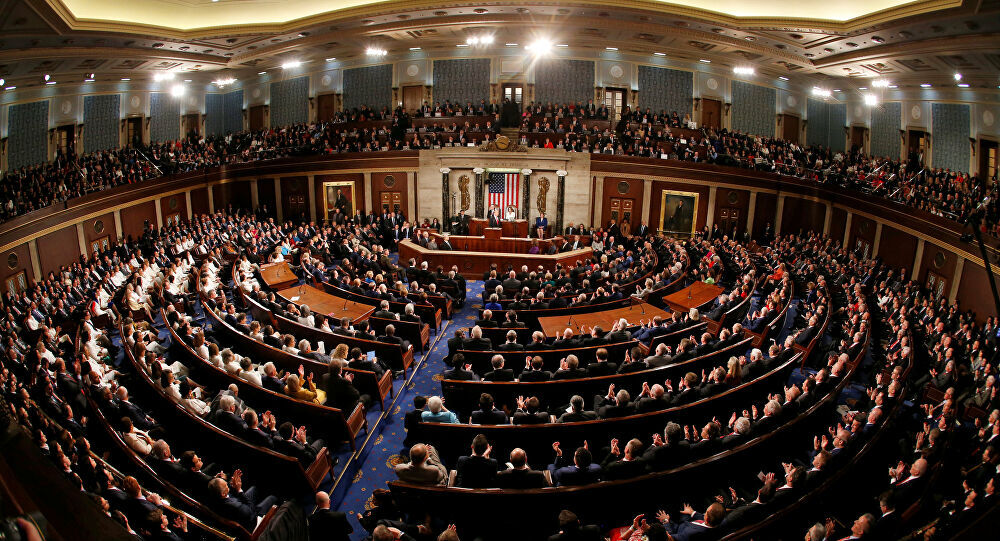
On Saturday, the US House of Representatives adopted an emergency funding measure that constitutes an essential stage to avoid paralysis of the federal administration a few hours before the shutdown is due.
The text, which was supported by 335 representatives and opposed by 91, was referred to the Senate. This came after Republican House Speaker Kevin McCarthy earlier offered a last-ditch attempt to avoid paralysis, which Democrats supported.
PALESTINE
Sat 30 Sep 2023 10:01 pm - Jerusalem Time
Suffocation injuries of Palestinians during Israeli army' storming of town of Burqa, northwest of Nablus
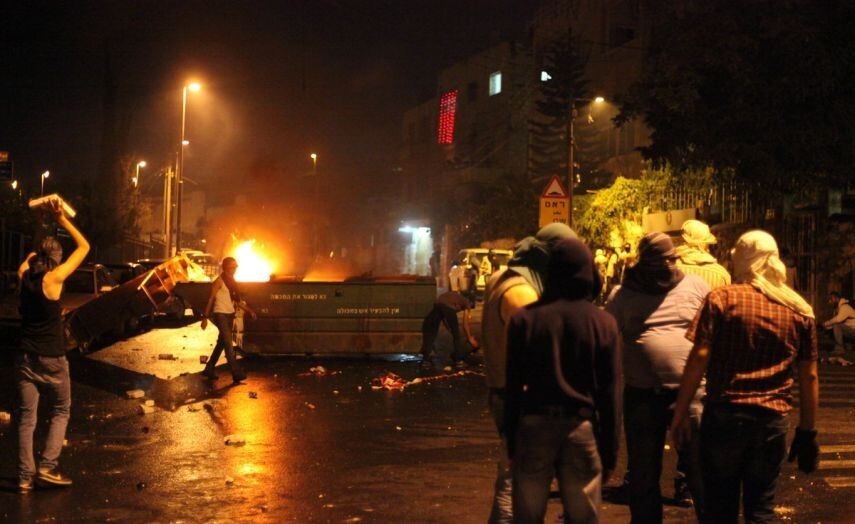
Dozens of citizens suffocated on Saturday evening during the Israeli occupation forces’ storming of the town of Burqa, northwest of Nablus.
Local sources reported that the occupation forces stormed the town of Burqa amidst firing bullets and poisonous tear gas bombs, which led to the outbreak of confrontations in the area, and dozens of people suffered from suffocation due to inhaling poisonous gas.
He stated that the occupation forces closed the entrance to the town and prevented anyone from leaving or entering it.
ARAB AND WORLD
Sat 30 Sep 2023 8:46 pm - Jerusalem Time
Renewed Israeli judicial reform protests against Netanyahu government for the 39th week

Demonstrators against the Netanyahu government and the plan to weaken the judiciary closed the lanes of Ayalon Street in Tel Aviv, as protests continued for the 39th week in a row.
Demonstrators set up a "tent" coinciding with the so-called "Sukkot Festival", and tied themselves up in it in the middle of the street in the "Ayalon" lanes towards the north, before Israeli police dispersed them and reopened the street to traffic.
Tens of thousands are participating in the central demonstration on Kaplan Street in Tel Aviv, in addition to thousands in dozens of major locations, towns and intersections.
The protests are scheduled to take place throughout the coming week and on a daily basis in front of the homes of ministers and elected officials, in order to demand that they cancel the plan to weaken the judiciary.
It is planned that the protests will take place throughout the coming week and on a daily basis in front of the homes of ministers and elected officials, in order to demand that they cancel the plan to weaken the judiciary.
ARAB AND WORLD
Sat 30 Sep 2023 8:08 pm - Jerusalem Time
US government is on the verge of closing federal institutions, no agreement in sight
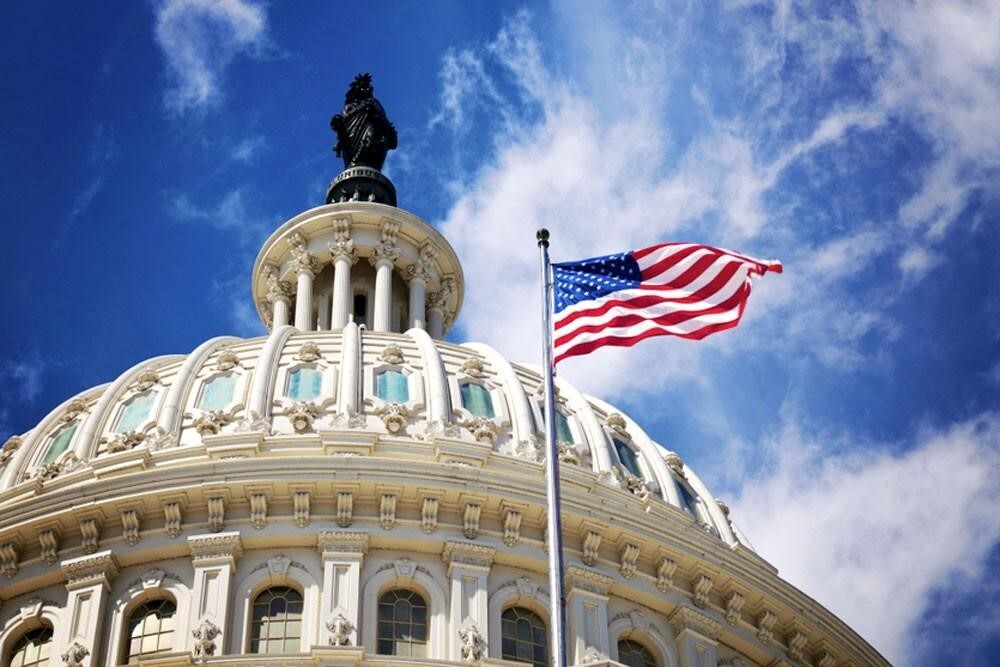
On Saturday, the United States was just hours away from closing federal institutions, as Republicans and Democrats put forward various temporary measures to prevent a closure that would affect issues ranging from access to national parks to Washington's massive support for Ukraine.
All government services except vital ones will be halted at midnight on Saturday (04:00 GMT Sunday) if lawmakers fail to reach an agreement, which will be the first since 2019 - and the salaries of millions of federal and military employees will be postponed.
A state of uncertainty prevails over the two chambers of Congress (Representatives and Senate), as a small group of hard-line Republican representatives reject any temporary measure that would avoid closure.
Republican House Speaker Kevin McCarthy said there would be a vote Saturday on a new measure that would keep government services available for another 45 days at current spending levels but without any aid to Ukraine.
Passing the bill will require broad support from Democratic representatives.
McCarthy said that if President Joe Biden wants to put pressure on the project, "the shutdown is on him."
The White House insists that the real negotiations must be between McCarthy and the Republican hardliners who scuttled a temporary funding measure on Friday, sparking growing chaos within the Republican Party ahead of next year's presidential election.
Biden said on Saturday morning on the X platform, “There are those in Congress now who are sowing many seeds of division, and they are ready to shut down the government tonight,” adding, “It is unacceptable.”
The Democratic-controlled Senate is expected to vote on a separate temporary bill later Saturday, which includes continuing funding for support for Ukraine.
Asked if he was concerned about hawkish Republican threats to remove him from office if a bill passes the House with Democratic support, McCarthy replied, "If someone wants to fire me because I want to be the adult in the room, go ahead and try."
While all vital government services will continue, the closure starting Sunday will affect the majority of national parks - from the famous Yosemite Park and Yellowstone Park in the west to the Everglades in Florida.
As student loan payments resume in October, officials also said Friday that major activities at the federal Office of Student Aid will continue for a few weeks.
But continuing the closure for a long period may cause greater disruptions.
Lael Brainard, director of the National Economic Council at the White House, said that the closure puts the world's largest economy at "unnecessary" risk.
According to Brainard, the risks include flight delays, as air traffic controllers will be required to work without salaries, and families may be deprived of some benefits.
Treasury Secretary Janet Yellen warned that the closure could delay infrastructure modernization work.
The Center for Strategic and International Studies said in a report issued on Friday that “in the near term, the government closure will only reduce the gross domestic product by 0.2 percentage points for each week it continues.”
“However, cutting off vital US trade functions would also undermine the United States’ overall credibility as a trading partner, impede ongoing negotiations and hamper export control enforcement capabilities,” the report added.
This crisis casts a shadow over Biden's policy of arming and financing Ukraine in the face of the Russian invasion. Hard-line Republicans who are blocking the budget are demanding that aid to Ukraine be halted.
While a majority of Republicans in Congress continue to stand behind US support for Ukraine, the shutdown will at least raise questions about the political feasibility of renewing the flow of billions of dollars in aid.
PALESTINE
Sat 30 Sep 2023 7:16 pm - Jerusalem Time
USAID Provides an Additional $47 Million to the East Jerusalem Hospital Network
The United States, through the United States Agency for International Development, (USAID) is providing an additional $47 million to the East Jerusalem Hospital Network (EJHN) as it continues to provide necessary and life-saving treatment to tens of thousands of Palestinians.
This is in addition to the previous disbursement of $14.5 million in July 2022 – all part of the up to $100 million commitment announced by President Joseph R. Biden during his visit to the region last year.
This funding will ensure continued access to critical care by providing $25.5 million in direct debt relief, and another $21.5 million to bolster long-term sustainability of member hospitals through rehabilitation and renovation of healthcare facilities, capital investments, equipment purchases, capacity building, and technical assistance support. USAID will support hospitals within the network to diversify income streams and improve the service provision for patients from the West Bank, Gaza and East Jerusalem.
With this assistance, USAID supports continued and uninterrupted advanced health care services to Palestinians that are not available through other institutions. These services include highly specialized medical services, such as pediatric cardiac surgery, nephrology, ophthalmology, neurosurgery and cancer treatment.
This delivery of assistance builds on USAID’s historic levels of support to EJHN, amounting to over $156.5 million since 2014.
PALESTINE
Sat 30 Sep 2023 7:09 pm - Jerusalem Time
Three Palestinians injured in Israeli settler attack southeast of Bethlehem

Three Palestinians were injured, Saturday evening, in a settler attack in the Tuqua Wilderness, southeast of Bethlehem.
The director of the municipality of Teqou’, Tayseer Abu Mufarreh, said that the municipal staff and a number of the town’s residents went to the wilderness area to observe the orgy of settlers who set up a checkpoint and prevented citizens from reaching their lands. When they approached the checkpoint, they were attacked by the settlers who sprayed pepper gas at them and beat them. As a result, three citizens suffered burns and suffocation.
It is noteworthy that Israeli settlers, under the protection of Israeli forces, escalated their violations against citizens in the Tuqu’ wilderness area, including setting up tents, assaulting citizens, and preventing them from reaching their lands.
ARAB AND WORLD
Sat 30 Sep 2023 7:01 pm - Jerusalem Time
Massive fire in an oil pipeline in western Ukraine
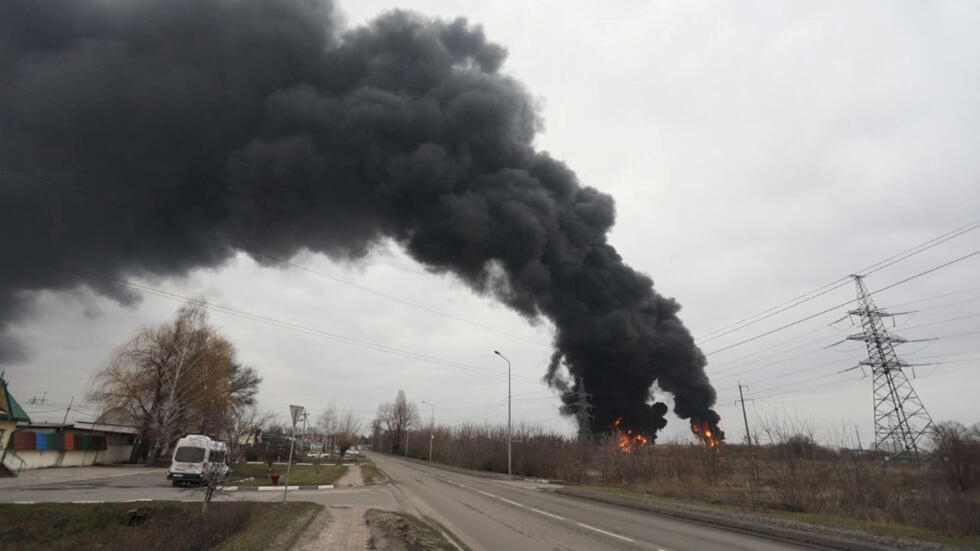
A massive fire broke out in an oil pipeline in the Ivano-Frankivsk region of western Ukraine, injuring three people, emergency services said Saturday.
Unverified footage circulated on social media showed clouds of thick black smoke rising above what appeared to be a village.
The Ukrainian emergency service said, "At five o'clock in the evening (14:00 GMT), an oil pipeline (150 mm diameter) exploded near the village of Stremba in the Nadverna region."
She added that the accident led to an oil spill over an area of 100 square metres.
The cause of the fire was not immediately clear, but local media reported that a strong explosion had occurred.
Emergency services continued, "Ambulance teams are working at the scene."
OPINIONS
Sat 30 Sep 2023 6:45 pm - Jerusalem Time
An Iranian foothold in the Gaza Strip is unacceptable to the public

Mounir Al-Ghoul
Opinion Writer

In light of the continuing and rising tension in the Gaza Strip, the most densely populated region in the world, and in light of recent regional developments and the increasing influence of the Hamas movement and its control over the Strip and its penetration into the West Bank, as part of the resistance program against the occupation, the phenomenon of openness by Hamas and expanding its relations in most parts of the Middle East, especially with its largest strategic ally, Iran.
Hamas took advantage of the recent Saudi-Iranian rapprochement, so its delegation visited Tehran and then Riyadh. The Hamas leadership succeeded in opening offices in Turkey, Lebanon, and Qatar previously, and restored its relations with Syria after a long freeze, in a way that demonstrated the ability of the Hamas movement to attract most of the political forces in the region and draw closer to them. But the most important strategic element in this new equation remains Iran, which Israel accuses of clearly supporting the Palestinian resistance in order to continue operations towards the occupying entity by supplying it with bombs, explosive devices and military equipment through bold smuggling attempts across the Palestinian-Jordanian border in a war that is still behind the scenes against the occupying entity. .
It was noted in the recent confrontations in the blessed Al-Aqsa Mosque that the missile response from the north through Syria and Lebanon was supported by Hamas, with clear Iranian support. This equation is worrying the Israeli side more than ever before, especially since the Iranian role and actions emanate from areas close to the entity, most notably Syria and Lebanon, where the strategic ally is Hezbollah.
But what about the foothold that Iran might establish in the Gaza Strip and the West Bank?
A very deep question, and its answer must stop when analyzing the Iranian position. Is there an interest for Tehran in opening fronts of attrition with the occupation from several locations, including the Gaza Strip?
There is no doubt that the recent developments on the scene lead us to the reasonableness of this option in relation to what Tehran is planning. Especially since the American role in the region is diminishing and the scene is changing. Hence, it is very possible for Iran to put its foot forward in the Gaza Strip, at least by employing elements of the resistance to form an army concerned with responding to the practices of the occupation, and which Iran supports consistently. This is something that would destabilize the entire region, especially within the Gaza Strip, which is searching for peace and security, protecting citizens, overcoming economic difficulties and poor living conditions, developing infrastructure, and seeking to open border crossings and move toward the outside world. But these hopes, which are always placed on the shoulders of war and confrontations in order to pressure Israel, are in vain, and today, for the second week in a row, the Beit Hanoun (Erez) crossing remains closed, thus preventing thousands of Gazan workers from the opportunity to obtain their livelihood.
The changing and volatile regional scene gives Iran today greater freedom and a wider space to continue disturbing the occupying entity and escalate the fuse of a possible military confrontation. Especially since it succeeded in strengthening Hamas’s relations with its first ally, Hezbollah, on the northern front, towards encircling Israel from various sides.
The presence of Iran in the region and its getting closer and closer to the Gaza Strip will have disastrous and difficult effects on the Strip that will destroy everything. The Hamas leadership must realize the reality of this danger, which will lead to great destruction.
It is clear that the people of Gaza will not accept this dangerous Iranian role because it will cause great harm to everything. It is in his interest for calm and peace to prevail in a region that is exposed at every moment to an open and comprehensive military confrontation. Even in light of the small battles, the Gaza Strip remains the weakest link, and therefore we expect that the people of Gaza will reject any possible change in the equation at a time when they are thinking about restoring what was destroyed by previous Israeli wars, healing their wounds, and catching their breath...
PALESTINE
Sat 30 Sep 2023 5:51 pm - Jerusalem Time
German Jewish leader expressed concern about “right-wing extremists with criminal records in Israeli cabinet.”
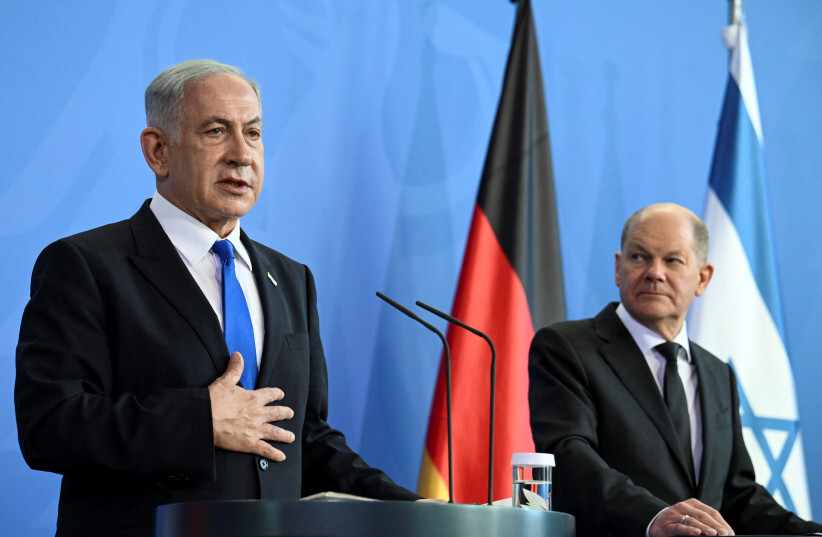
President of the Central Council of Jews: The 'problematic judicial reform is dividing Israeli society as the only democracy in the Middle East.'
As reported by Jerusalem Post, Germany's Jewish community leader called for a change of government in Israel in an exclusive interview with German outlet Web.de published on Friday, in a direct attack on Prime Minister Benjamin Netanyahu and his government's judicial reform.
President of the Central Council of Jews Josef Schuster, a vocal proponent of the government since its inception late last year, also expressed his concern about Israel's democracy as the "problematic judicial reform is dividing Israeli society as the only democracy in the Middle East.
"The broad protest movement in Israel speaks for a consolidated democratic understanding in the country," Schuster told Web.de.
Josef Schuster: We hope to see another election in Israel soon
Schuster joked about recent political crises in Israel, which involved holding five rounds of elections to the Knesset since 2019, saying that having repetitive elections is "not the most positive characteristic" of the state.
However, the German-Jewish leader noted, "in this case, I hope that we will experience a situation like this again soon and that a different coalition will then form the government."
According to Schuster, Jewish communities in the Diaspora are entitled to comment on internal political affairs in Israel as it is "relevant" to them.
"Israel is life insurance for Jews in the diaspora, and in Germany, this is particularly important in view of history," he explained. Criticism of Israel from abroad is legitimate, he said, adding: "I am not one of those who bash Israel."
Schuster called on those who criticize the judicial reform to refrain from bashing Israel, stating unequivocally that "Israel's right to exist 'should not be shaken.'"
Schuster's recent attacks on Netanyahu, Israeli government
The Central Council of Jews in Germany head was one of the first to publish Jewish figures to criticize Netanyahu's government, which he claimed was creating “provocations” and promoting nationalistic ideals in a January opinion piece penned for the Tagesspiegel news site.
“I reject many things in the new Israeli government,” Schuster wrote, adding that “it will be necessary to continue to critically examine it and its work.” He shared that he is uncomfortable with “right-wing extremists with criminal records [that have a seat] in the cabinet” or “making changes in the law so that corrupt politicians can become ministers.” He said that this situation caused “a low point in Israeli political history.”
PALESTINE
Sat 30 Sep 2023 5:40 pm - Jerusalem Time
Confrontations with Israeli forces in Al-Ram, north Jerusalem
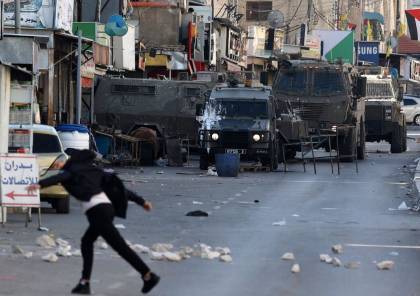
- On Saturday evening, confrontations broke out with the Israeli occupation forces that stormed the town of Al-Ram, north of occupied Jerusalem.
- Local sources in the town reported that the occupation forces fired tear gas bombs at Palestinian citizens, their homes, and their vehicles at the northern entrance to the town, causing a number of Palestinians to suffocate. The occupation also closed the entrance to the town.
ARAB AND WORLD
Sat 30 Sep 2023 3:12 pm - Jerusalem Time
US State Department stresses importance global approach to combating anti-Semitism
The US State Department stressed the importance of a more effective policy in combating anti-Semitism in the world, in a new report from the office of Deborah Lipstadt, the US State Department's Special Envoy for Monitoring and Combating Anti-Semitism.
In its report, the US State Department referred to its National Strategy to Combat Anti-Semitism, which outlines more than 40 multilateral activities, including programs for cities and municipalities, civil society leadership, law enforcement and education resources around the world.
The statement notes that anti-Semitism “today represents a growing local danger and a growing global threat – an ancient form of intolerance that has been unrestrained by municipal or national borders throughout its sordid history. Therefore, steps to confront it today cannot be limited to a particular country or region. They must "This should be a comprehensive and broad international issue."
The statement says: “Last May, the Biden administration issued the first-ever US national strategy to combat anti-Semitism. This strategy represents the most comprehensive and ambitious effort by the US government to combat anti-Semitism in American history. It includes more than 100 actions taken by the Biden-Harris administration.” To address the rise of anti-Semitism in the United States.
The statement describes: “Addressing anti-Semitism at home means appreciating how to address this hatred around the world. It requires a shared understanding of the urgent need to combat this scourge with partners everywhere. It requires that we draw on ideas from successful programs beyond our shores on How best to educate the public about the realities of anti-Semitism; deploy law enforcement resources; build diverse coalitions against interconnected forms of hate; denounce and counter online vitriol; and protect places of worship."
In the report, the Office of the Special Envoy to Monitor and Combat Anti-Semitism detailed policies, programs and actions around the world aimed at combating anti-Semitism.
The State Department statement indicated that by studying best practices at the international and local levels, the United States can learn how to combat this hatred more effectively. .
The strategy supports the International Holocaust Remembrance Alliance (IHRA) anti-Semitism, which is controversial for conflating criticism of Israel with anti-Semitism.
PALESTINE
Sat 30 Sep 2023 3:02 pm - Jerusalem Time
Prisoner's Club: Medical examinations of prisoner Ali Al-Haroub revealed the appearance of new tumors in his body
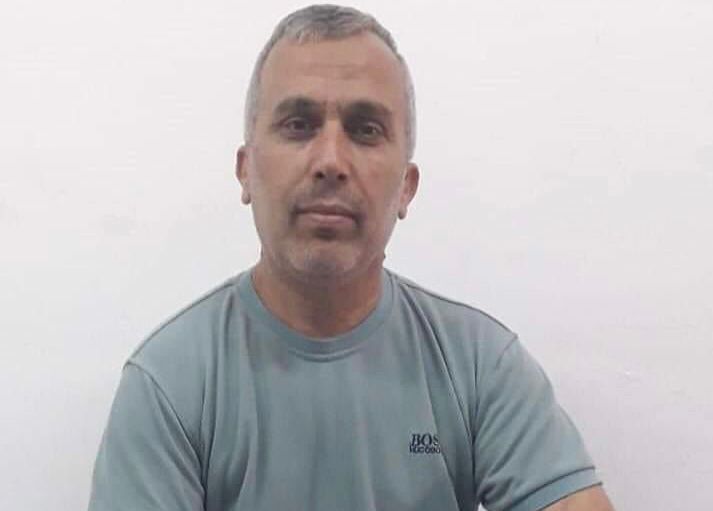
The Palestinian Prisoners' Club said today, Saturday, that the recent medical examinations of prisoner Ali Al-Haroub (50 years old) from the city of Dura in Hebron showed the appearance of new tumors in his body, after they were initially diagnosed under the armpit and chest, more than two years ago.
The Prisoner's Club continued in its statement that the prisoner of war who is currently in the "Naqab" prison is one of at least (24) prisoners who suffer from cancer and tumors of varying degrees in the occupation prisons, and are facing the crime of medical negligence.
PALESTINE
Sat 30 Sep 2023 2:37 pm - Jerusalem Time
Trump Wanted to Condition Aid to Israel on Peace Deal With Palestinians, New Book Claims
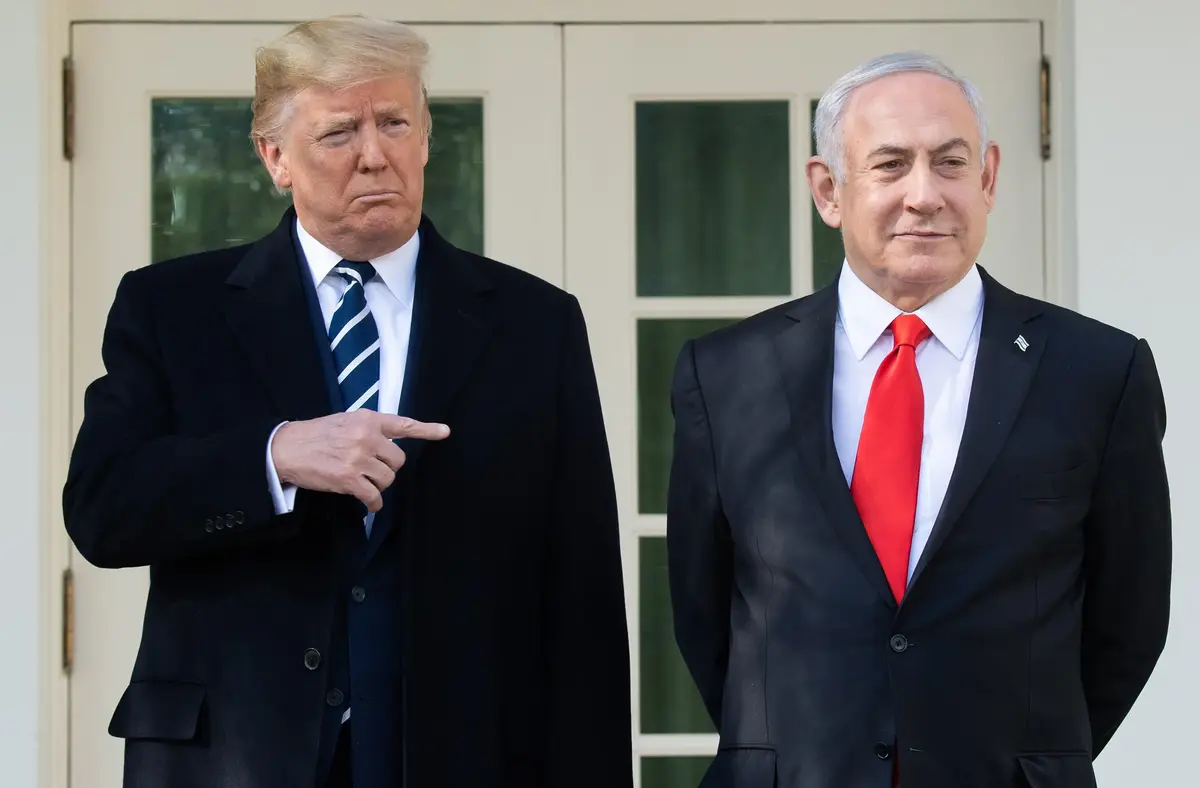
The former U.S. president expressed annoyance when told he couldn’t leverage U.S. military aid to Israel to encourage Netanyahu to broker a peace deal with the Palestinians, a new book claims.
Conditioning U.S. aid to Israel is a non-starter for the many Republicans and Democrats who require an ironclad guarantee for the U.S.-Israel alliance. But former President Donald Trump, fresh off a trip to Israel in 2017, expressed annoyance when told he couldn’t leverage U.S. military aid to Israel to broker a peace deal with the Palestinians, a new book claims.
“I was told ‘there’s no connection,’” Trump told a group of journalists during a dinner at the White House, according to Collision of Power: Trump, Bezos, and The Washington Post, which is scheduled for release on Tuesday.
“No connection?” Trump added in disbelief.
The book’s author, Martin Baron, was executive editor of The Washington Post at the time of the dinner, which he attended with other journalists from the newspaper.
Top of Form
Trump’s inquiry about conditioning the annual $3.8 billion in U.S. assistance to Israel came after he met with both Israeli Prime Minister Benjamin Netanyahu and Palestinian Authority President Mahmoud Abbas on that June 2017 trip.
According to a recent book by Israeli journalist Barak Ravid, Trump was more impressed with the Palestinian leader. “I thought he was terrific,” Trump said of Abbas in an interview with the author. “I thought he wanted to make a deal more than Netanyahu.”

Trump also complained to then-Israeli President Reuven Rivlin that “Bibi doesn’t want peace,” according to Netanyahu’s recent memoir.
Trump repeatedly groused about Netanyahu’s refusal to go along with his idea for an “ultimate deal” with the Palestinians. He expressed frustration that he had to postpone the rollout of his Middle East peace plan, blaming Netanyahu’s failure to form a government after several rounds of elections. When the plan was unveiled at the White House on Jan. 28, 2020, Netanyahu caused an uproar by suggesting the U.S. initiative was a green light for the annexation of the occupied West Bank.
Despite his suggestion to condition military aid, and the sometimes-rocky relationship between the two leaders, Trump was hailed by Netanyahu as “the greatest friend that Israel has ever had in the White House.” During his tenure, the U.S. embassy was relocated from Tel Aviv to Jerusalem, the U.S. formally recognized Israel’s control over the Golan Heights and withdrew from the Iran deal, and four Arab countries signed normalization deals with Israel.
A 2019 Pew Research Center poll showed 71 percent of Israelis had faith in Trump’s leadership and 55 percent approved of his policies.
Trump is the frontrunner for the Republican Party’s presidential nominee in 2024 and is in a statistical tie with President Joe Biden, according to recent polls. GOP presidential candidate Vivek Ramaswamy recently came under fire for pledging to end Israel’s dependence on U.S. assistance.
PALESTINE
Sat 30 Sep 2023 2:18 pm - Jerusalem Time
Specialists called for using “X” platform to publish violations of Israeli occupation
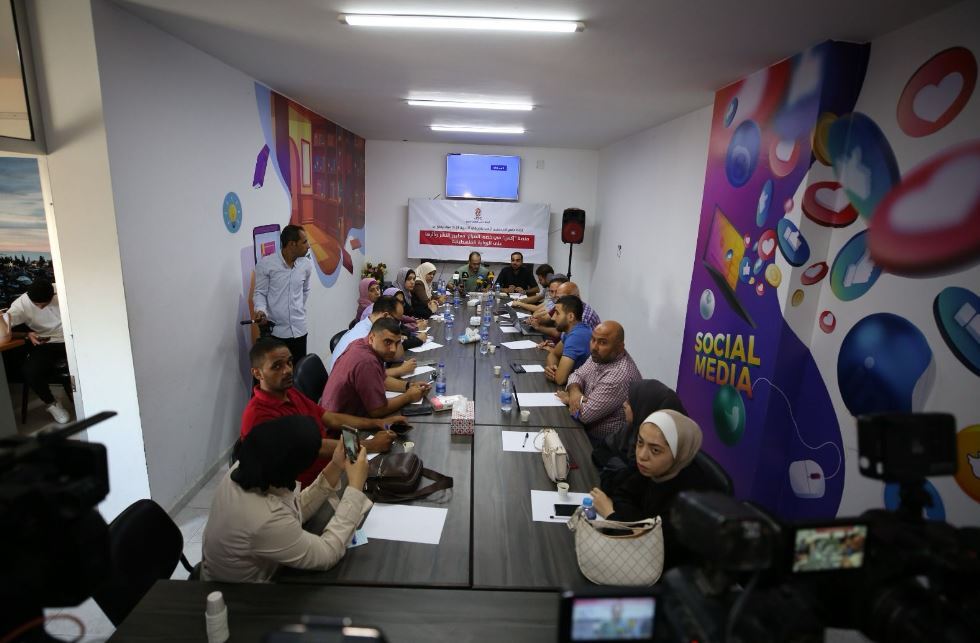
Human rights activists and digital media specialists called for the necessity of directing Palestinian activists and journalists to create accounts on the “X” platform, (formerly Twitter), and publish all current events in a way that serves the Palestinian cause so that the idea reaches the world faster and more widely, and to publish through unified “hashtags” about the Jerusalem issue Al-Aqsa and the prisoners.
During a blog post organized by the Journalists Support Committee on Saturday, entitled: The “X” Platform in the Midst of Conflict: Publishing Standards and Their Impact on the Palestinian Narrative, specialists and jurists called for investing in the “X” Platform to address all the peoples of the world in all languages and publish violations related to Palestinian civilians, including murder and genocide. And bombing homes, as happened in all the wars launched against the Gaza Strip.
They confirmed that the “X” platform committed hundreds of violations against Palestinian content, including banning, deleting, and restricting access to Palestinian pages during the last three years, at the request of successive occupation governments, to block the Zionist narrative from reaching the world.
The speakers agreed that the occupation leaders have an important role in censoring, deleting and restricting Palestinian accounts, to restrict the reach of the Palestinian narrative.
They pointed out that Israel stands behind deleting Palestinian content from the Twitter platform, to prevent the Palestinian narrative from reaching the Arab and international world, especially during events and escalation, as happened during the aggression of May 2021, and elsewhere.
They unanimously agreed that the “X” platform deals with double standards, as it provides a large space for the dissemination of Israeli propaganda, while limiting the reach of the Palestinian narrative, claiming that it does not agree with the standards set for the social site.
They recommended that the publishing process should not include scenes of killing or blood, which are classified according to “X” as violent, which would prompt the platform’s management to delete the publisher’s account immediately and retroactively.
They pointed out that the occupation is investing in the “X” platform to publish on it in all languages of the world, and it also uses fake Arab and foreign accounts, so that its “propaganda” narrative reaches all parts of the world, which reflects negatively on the Palestinian narrative, which the platform works to restrict its access through deletion.
PALESTINE
Sat 30 Sep 2023 2:18 pm - Jerusalem Time
Israeli forces storms Palestinian town, Jalboun, near Jenin

Today, Saturday, Israeli occupation forces stormed the village of Jalboun, northeast of Jenin.
According to local sources, the occupation forces stormed the village, raided a number of shops, destroyed a surveillance camera in one of them belonging to a citizen, damaged a vehicle’s tires, and caused damage to it.
The sources added that the village is exposed almost daily to raids, raids, and searches of homes and shops, in addition to seizing rooftops and turning them into military points.
PALESTINE
Sat 30 Sep 2023 1:53 pm - Jerusalem Time
Water: A matter of cooperation or conflict among Jordan, Israel, and Palestine

A study published recently by Stimson Centre located in USA and prepared by Asma Shabab on water issues between the most affected countries in Middle east and the potential of cooperation or conflict between them.
The Middle East and North Africa region is one of the most water-stressed in the world. The Levant area, comprising Israel, Lebanon, Jordan, Syria, and Palestine, was once part of the fertile crescent, known as the cradle of civilization. But water scarcity compounded by climate change has caused enormous stress and contributed to social and political turmoil. Tensions have risen between neighbors over shared water resources, but conflict can be avoided and there is an opportunity for more cooperation.
According to a UNICEF report in 2022, Jordan is one of the most water-scarce countries, with less than 100 cubic meters available per person, well below the 500 cubic meters threshold for “absolute water scarcity.” Jordan is forecast to hit critical water insecurity by 2100, as indicated by a 2021 study estimating that around “90 percent of Jordan’s low-income population will endure water insecurity by the end of the century.” These households are expected to receive less than 40 liters per capita per day, significantly falling short of the World Health Organization’s recommended threshold of 100 liters per day, essential for meeting basic human needs.
Jordan’s limited water supply and influx of refugees escaping turmoil and poverty in neighboring countries has exacerbated the crisis. Climate change has only made matters worse by causing record low levels of rainfall, increased rates of evaporation due to high temperatures, and sudden extreme weather events such as flash floods and droughts.
Israel also lies in an arid climate with limited access to freshwater reserves, but its situation is very different from that of Jordan. With direct access to the sea, around 75 percent of Israel’s drinking water is desalinated from the Mediterranean. Israel also repurposes nearly 90 percent of its wastewater for agricultural purposes, an impressive feat.
That does not mean that Israel is immune from the impact of climate change. Indeed, this past winter was the driest in over 60 years according to data collected from the Israel Meteorological Service. With water scarcity likely to continue, Israel has taken precautionary measures and constructed the National Carrier Flow Reversal Project. Completed in December 2022, this pipeline brings desalinated water from Israel’s Mediterranean shores to the Sea of Galilee, the country’s largest freshwater lake and historic primary source of water.
The water situation in Israeli-occupied Palestinian territories is much worse than in pre-1967 Israel. With limited access to river water and reduced groundwater due to decades-long Israeli exploitation, Palestinians have been left in a desperate situation.
In 1967, Israeli authorities issued Military Order 158 which states that Palestinians are not allowed to construct any new water infrastructure without obtaining a permit from the Israeli Army. Such permits are nearly impossible to obtain, and Palestinians are also denied access to the Jordan River and freshwater springs. As a result, Palestinians consume an average of 73 liters of water a day per person, well below the World Health Organization’s minimum recommendation of 100 liters per day. This is in sharp contrast to 300 liters of water used daily by an average Israeli.
In Gaza, the situation is even more desperate. Water is drawn from a coastal aquifer which has been severely depleted and contaminated with seawater as well as raw sewage that is dumped in the ocean. In fact, 90 to 95 percent of Gaza’s water supply is considered unfit for human consumption. Israel restricts water movements from the West Bank to Gaza and continues its siege of the city.
Opportunities for Cooperation
The Levant has a history of water-related tensions among neighbors, often driven by military and political objectives. Yet, agreements on water sharing have been signed. The 1994 peace treaty between Israel and Jordan allocated 50 million cubic meters to Jordan from the Sea of Galilee and assigned Jordan 75 percent of the water from the Yarmouk River. However, the treaty excluded other potential beneficiaries of the Jordan River including Lebanon, Syria, and the Palestinian territories.
In recent years, Israel has doubled the amount of water it sends annually to Jordan from 50 million cubic meters to 100 million. This amount is expected to rise due to the Israeli National Carrier Flow Reversal Project.
The introduction of a so-called Green Blue Deal in 2020 by the NGO EcoPeace Middle East, a group of Palestinian, Jordanian and Israeli environmentalists, provides a more optimistic outlook for cooperation on water and renewable energy. The deal aims to generate trust and equitable distribution of water and energy between Israel, Jordan, and the occupied Palestinian Territories. It envisions the construction of a 600-megawatt solar park in Jordan which would trade energy with Israel in exchange for 200 million cubic meters of potable water. The project also aims to improve water management, biodiversity preservation, and public awareness and education.
The Green Blue Deal has gained traction. A Memorandum of Understanding was formalized during COP27, and the plan is expected to be a major topic of discussion during COP28 in the United Arab Emirates this fall. However, Palestinians have been excluded from high-level regional agreements, prompting efforts by EcoPeace and other groups to ensure equitable water access in the Occupied Territories.
One way to provide unbiased information is through the use of remote sensing. Addressing the water data gap in the Levant can empower local communities and NGOs to raise awareness and potentially facilitate transboundary water negotiations to allow for a more equitable distribution of water among all parties.
In conclusion, while progress has been made in cooperation between Israel and Jordan on water issues, challenges persist for Palestinians. The political landscape, particularly with the current right-wing Israeli government, adds complexity. Continued efforts are needed to address water disparities and promote equitable solutions, emphasizing the importance of shared environmental interests in achieving sustainable peace in the Middle East.
ARAB AND WORLD
Sat 30 Sep 2023 1:22 pm - Jerusalem Time
What is a federal shutdown in the United States?
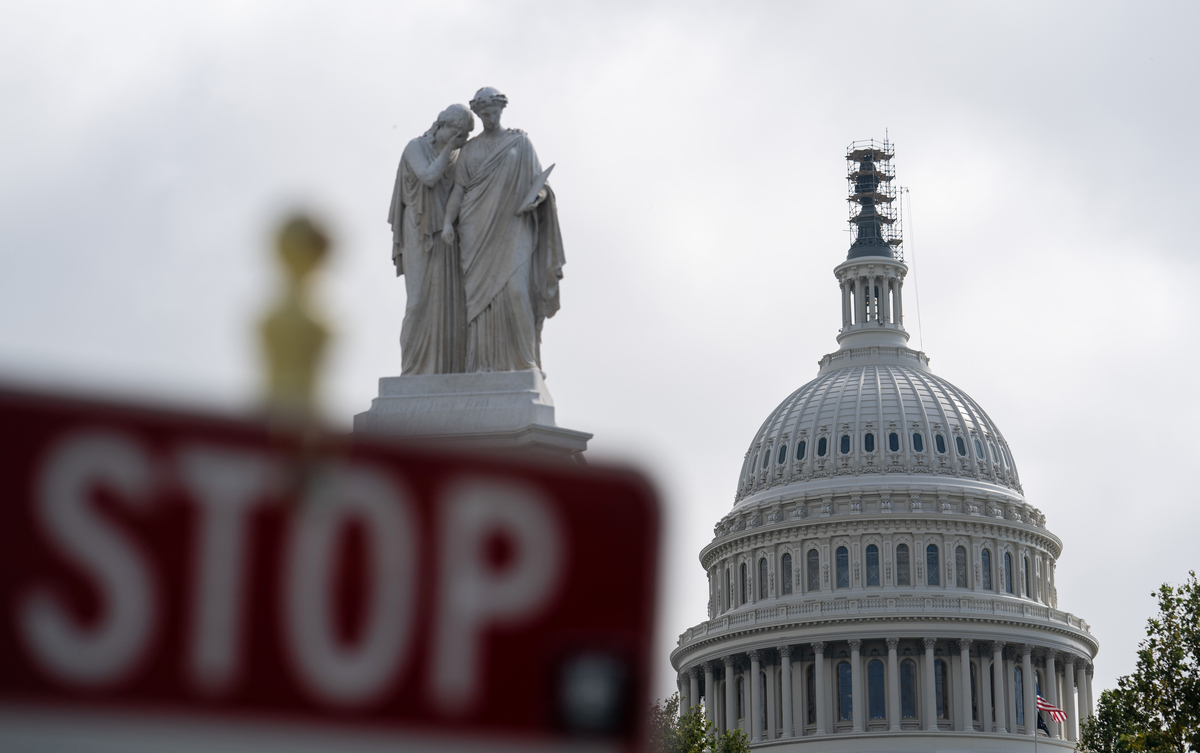
The United States is approaching the closure of federal institutions at the end of the week, with the chances of avoiding it diminishing as lawmakers reach an impasse in terms of agreeing on a short-term spending bill.
The US fiscal year begins on October 1, but sharp disagreements among Republicans over the size of the federal debt have prevented the passage of bills needed to keep the government funded and open.
Credit rating agency Moody's warned this week that the closure would be "negative" for US sovereign debt, threatening its top-tier rating and raising the possibility of higher borrowing costs.
Here's what will happen if a federal shutdown occurs in the United States.
Hundreds of thousands of federal employees will be on unpaid leave, while military personnel and other employees deemed “essential” will continue to work but without pay.
The American Federation of Government Employees estimates that the complete shutdown will deprive about 1.8 million federal employees of their salaries throughout its duration.
Nearly 850,000 non-essential employees will be placed on leave without pay, according to the Committee for a Responsible Public Budget, an independent organization.
When a financing agreement is reached, these restrictions will be lifted and salaries will be paid to all employees retroactively, according to the union.
Only services classified as essential will continue to operate.
During previous closures, welfare checks continued to be paid, and air traffic controllers, border guards and hospital staff remained on the job.
But many services are likely to be affected, including new applications for Social Security and Medicare, food and environmental site inspections, as well as national parks.
The impact will be greater the longer the closure period.
Economists at Goldman Sachs estimate that the shutdown will hurt economic growth in the fourth quarter by 0.2 percentage points for each week it lasts.
It may take two or three weeks to lift the closure, according to a note by Goldman Sachs economists in which they ruled out “that either party will make immediate concessions.”
According to the memo, “While the funding cuts were quickly lifted, the political environment leading up to the (current) deadline is more reminiscent of the situation that preceded previous long-term closures.”
Assuming the end of the closure before the end of this year, Goldman Sachs estimated that the growth rate at the beginning of next year would be similar to the decline in the fourth quarter, while researchers at Oxford Economics expected it to compensate for half the loss.
Oxford Economics estimated that the loss of government employee production would irreparably cost annual economic growth about 0.1 percentage point per week.
The shutdown may also indirectly affect the economy as federal workers who are not receiving salaries will cut back on their spending.
The potential shutdown is beginning to impact Wall Street, with major stock indexes falling as the deadline approaches.
Economists fear that the closure will also stop the publication of federal government data.
This constitutes a source of concern for the Federal Reserve, which said that it will be guided by this data to approve possible adjustments to interest rates. The Federal Reserve has recently slowed the pace of raising interest rates as it addresses inflation.
In the absence of new data, the Central Bank will be forced to make decisions with repercussions affecting the American economy, without having a clear picture of the situation.
While the impact of a short-term closure will be limited in the long term, it could become a major problem if representatives fail to reach an agreement quickly.
PALESTINE
Sat 30 Sep 2023 11:48 am - Jerusalem Time
Two Palestinian fishermen injured by Israeli gunboats off the coast of Gaza
Two fishermen were injured, on Saturday, as the Israeli occupation forces fired rubber bullets at them off the coast of the Sudaniya area, northwest of the Gaza Strip.
According to the Union of Fishermen's Committees, the injured are Atef Muhammad Bakr and Mahmoud Saed Bakr, and they were transferred to Al-Shifa Hospital to receive treatment.
The Israeli Navy deliberately targets fishermen on an almost daily basis.
ARAB AND WORLD
Sat 30 Sep 2023 11:37 am - Jerusalem Time
Washington calls on Serbia to withdraw forces from border with Kosovo

The United States called on Serbia to withdraw forces deployed on the border with Kosovo, including tanks and artillery, stressing work to strengthen the presence of NATO forces in the former Serbian region with an Albanian majority, in light of the tension that is among the most severe in recent years.
The White House revealed on Friday that Serbia, which still refuses to recognize the independence declared in 2008 for the region, deployed infantry forces and armored vehicles at the border, after an armed clash in northern Kosovo on September 24, which led to the killing of a Kosovo police officer and three Serb gunmen.
White House National Security Council spokesman John Kirby said on Friday, “We see a large Serbian military deployment along the border with Kosovo,” explaining that it includes an “unprecedented” deployment of artillery batteries, tanks, and infantry units.
While Kirby considered this a "very destabilizing development," he did not want to address the risk of a new invasion of Kosovo in light of the tension that has prevailed for days.
The spokesman explained that US Secretary of State Anthony Blinken called Serbian President Aleksandar Vucic on Friday and informed him of his country's "concern" and the need for "an immediate reduction in tension with a return to dialogue."
Vucic did not explicitly deny the recent military deployment at the border, but he confirmed that his country's forces were not on alert.
He said, "I denied the false allegations that talk about placing our forces at the highest level of combat readiness, because I simply did not order that and this is not accurate," stressing that the number of forces deployed on the border currently "does not even reach half of what it was two or three months ago." ".
Serbia announced on Wednesday that its Defense Minister and the Commander of its Armed Forces had inspected a “deployment area,” without additional details.
In addition, US National Security Advisor Jake Sullivan consulted with Kosovo Prime Minister Albin Kurti.
Washington confirmed that Sullivan expressed his "concern about Serbian military movements" and discussed with Kurti "the dialogue between Kosovo and Serbia facilitated by the European Union," considering it "the only long-term solution to ensure stability in Kosovo."
Serbia refuses to recognize the independence of its former southern province with an Albanian majority, which was declared in 2008 after a decade of bloody war between Kosovar separatists and Serbian forces.
News of a military deployment comes after a Kosovar policeman was killed on Sunday in an ambush in northern Kosovo, where Serbs constitute a majority, followed by gunfire between police special forces and an armed Serb group. The clash claimed three members of the group, who took refuge in an Orthodox monastery in the village of Bangska, near the border.
Kirby stressed that "due to recent developments", the NATO force deployed in Kosovo (KFOR) "will enhance its deployment" in the north of the former province.
He did not specify whether the matter was related only to the repositioning towards northern Kosovo, or to an increase in the number of military personnel in KFOR.
NATO also expressed its readiness to strengthen the number of this force with the aim of "confronting the situation."
NATO Secretary-General Jens Stoltenberg said in a statement on Friday, “Yesterday (Thursday), the North Atlantic Council (the political decision-making body in the alliance) approved the deployment of additional forces to confront the situation,” without specifying what forces could be deployed if necessary.
But the British Ministry of Defense stated that a battalion of between 500 and 650 members had been placed at KFOR's disposal when necessary, adding that it had "finally arrived in the region" to conduct training exercises scheduled earlier.
Stoltenberg stressed that the alliance will take "all necessary measures to maintain a safe environment, as well as freedom of movement for all those living in Kosovo."
A NATO official, who requested to remain anonymous, explained that KFOR had already strengthened its presence in Kosovo in May by deploying about 500 Turkish soldiers, who were later replaced by elements from Bulgaria and Greece.
He pointed out that the force is ready to make "additional adjustments" if necessary, to enable it to carry out the mandated tasks given to it to maintain peace in Kosovo.
The Kosovo government accused Belgrade of supporting the attack that killed the policeman.
For his part, Milan Radojicic, one of the Kosovo Serb political leaders, confirmed that an armed group he formed without Serbia's knowledge was behind the killing of the policeman.
Kosovo police arrested three people involved in the clash, which lasted about an hour and involved dozens of gunmen.
Kirby believed that the attack was "highly complex" and involved about 20 vehicles, in addition to equipment, weapons and expertise "at a military level."
"It is worrying," he added.
Pristina declared its independence from Serbia in 2008, a decade after NATO helped expel Serbian forces from the former province in a bloody war that left about 13,000 people dead, most of them of Albanian origin.
Serbia, with the support of its allies Russia and China, refuses to recognize the independence of Kosovo, where a Serbian community numbering about 120,000 people lives mainly in the north, and some of them refuse allegiance to Pristina.
On Monday, Russia held the Kosovo government responsible for the clash, warning that "bloodshed" could get out of control.