OPINIONS

Fri 06 Oct 2023 9:19 am - Jerusalem Time

Ben Gvir justifies attacks on Christians...and the world is silent!!

Hadith of Jerusalem

Hadith of Jerusalem

Opinion Writer

Someone known as the Israeli Minister of National Security, Itamar Ben Gvir, said that attacking Christians is a normal tradition to be practiced and does not violate any laws or concepts. This is an extremely irresponsible or even personal statement, because it justifies and encourages these attacks, which were carried out and are being carried out by a number of extremist Jewish extremists. After these statements, we do not rule out the multiplication of attacks of this kind and the feeling of the aggressors that they are doing something natural and normal that does not violate any concepts.


These statements of Ben Gvir must not pass without accountability, not only from Christians but from the international community and global institutions, which are many and constantly call for not harming any rights of any sect or different parties, but they remain silent regarding statements like this coming from a responsible person in a position. How long will this crazy silence that encourages aggression and contempt for others last?!

What is Blinken carrying?!
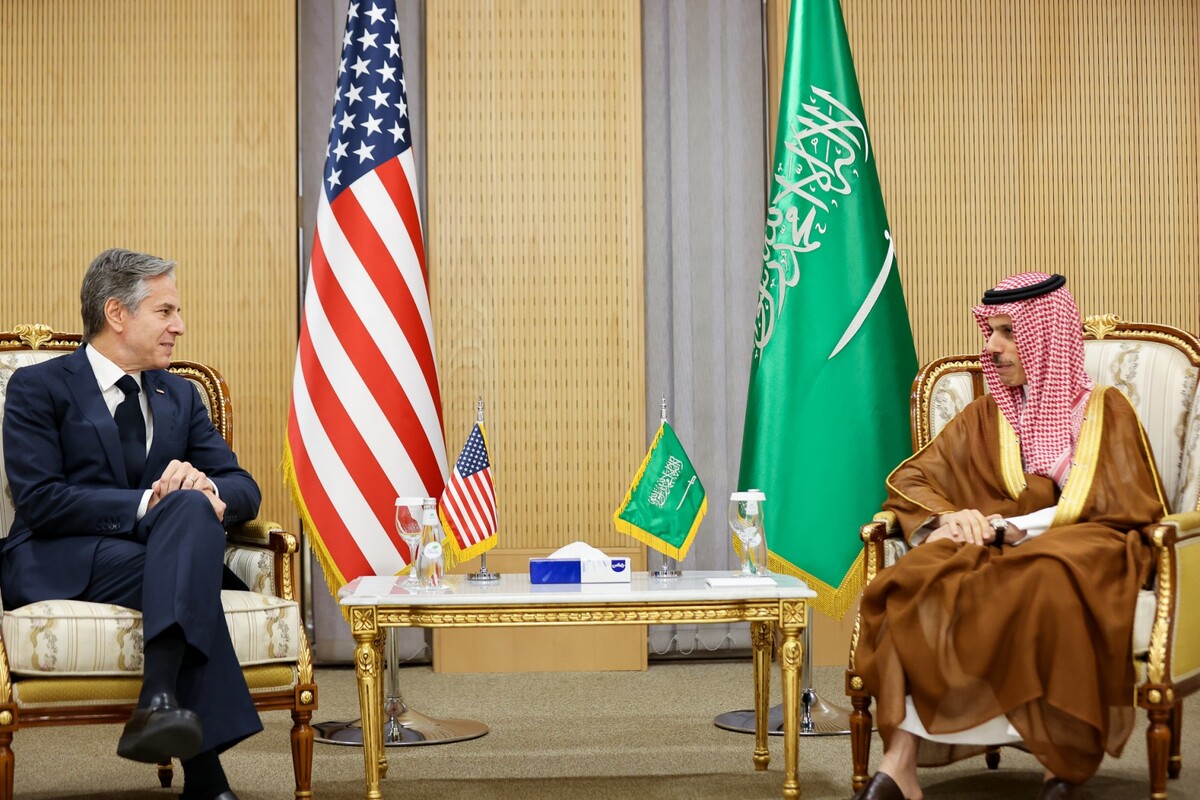
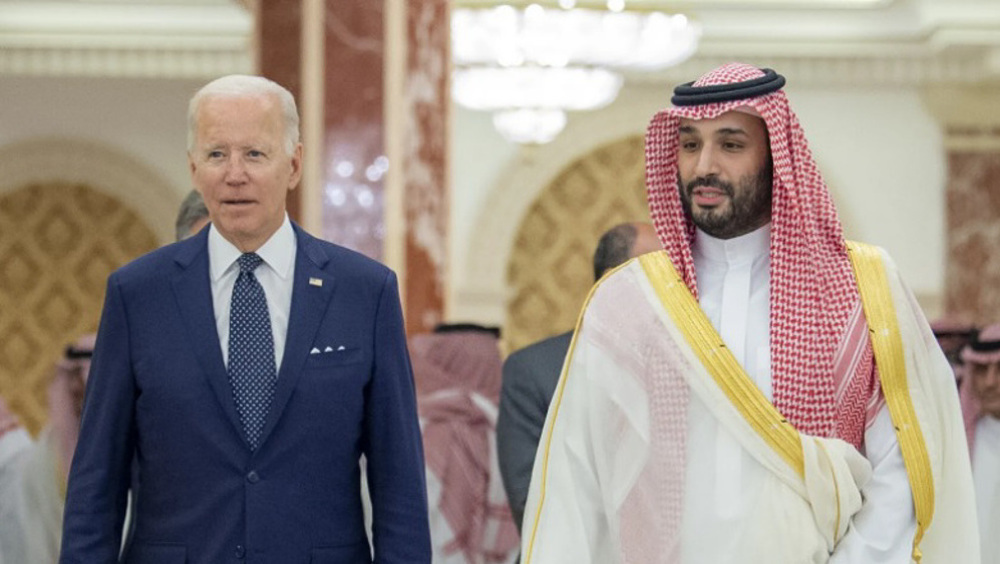
US Secretary of State Anthony Blinken will visit Israel and the West Bank within a short period, and according to various news reports, his talks on the Israeli side will revolve around the normalization agreement with Saudi Arabia and its requirements, first and foremost American-Israeli coordination on the steps that Israel must implement, first and foremost providing facilities for the benefit of the Palestinians and Israel’s approval of Saudi Arabia’s request for Uranium enrichment on its territory.


According to the same sources, the American administration informed Israel that without implementing important steps for the Palestinians, it will be difficult for the Senate to approve the security-military deal with Saudi Arabia, which includes normalization, while the Israeli government continues to underestimate Palestinian demands.


Washington did not demand Israel’s withdrawal from the West Bank, starting from Jerusalem, nor the establishment of a Palestinian state, but rather the provision of facilities, which are just talk in the air, because what our people are asking for is not merely the provision of facilities, but a complete Israeli withdrawal from the West Bank and considering East Jerusalem as the capital of our promised state and the removal of the settlements that fill the West Bank and devouring the land and working to displace our people and make the establishment of a state impossible.


Blinken is coming to facilitate the path to normalization between Israel and Saudi Arabia, but our people, who bear all the aggressions of the occupation and its expansionist plans and resist them with all their capabilities, will not accept what Blinken is planning nor the attacks carried out by Israel, and will remain steadfast, patient and strong, defending their right to establish a state and live in peace and stability. No matter how long or short the time is, the future is ours, no matter the challenges and obstacles.

OPINIONS

Fri 06 Oct 2023 9:17 am - Jerusalem Time

Al-Aqsa Mosque: A religious and national symbol

Dr. Walid Al Shomali

Dr. Walid Al Shomali

Opinion Writer

The importance of Al-Aqsa Mosque as a symbol of Palestinian resistance against the fierce Israeli occupation and its connection to Palestinian identity is highlighted in light of Israeli attempts to Judaize the natural and cultural landscape of the city of Jerusalem. It may seem at first glance that the defense of Al-Aqsa is of a purely religious nature, but in reality it represents a national symbol for all groups of the Palestinian people, Muslims and Christians. As soon as the Palestinian senses any upcoming danger, Christians and Muslims uprise as one man to defend him.


Michel Foucault believes that resistance exists when there is an authority that possesses power and dominance and engages in hidden and apparent conflicts, and therefore resistance is a natural reaction to the dominance of authority. As for the Palestinian situation, it is characterized by the fact that the dominant and controlling authority is a foreign authority and occupier of land, people, natural resources, water, holy places, and others. Therefore, it is natural that the form, nature and goal of the Palestinian resistance is to defeat the occupation and extend Palestinian national sovereignty, at least over the Palestinian territories occupied by Israel in 1967, which are represented by the West Bank, the eastern part of the city of Jerusalem, and the Gaza Strip.

We can say that the battle against the Israeli occupation is a battle against settler colonialism and that it is not a religious war over holy sites and holy places. Rather, Christian and Islamic holy places constitute national, cultural and religious symbols as well as a cultural heritage and part of the Palestinian identity.


The thinker Azmi Bishara described the Al-Aqsa Intifada in 2000 by saying: “The Palestinian national liberation battle is not a religious war, nor is the Jerusalem and Al-Aqsa uprising an ideological war, despite its religious dimension and religious symbols... There is almost no liberation war without a religious or symbolic dimension added to the motivations of the mujahideen.” The fighters and the symbols of homeland and patriotism... The battle of the Palestinians is a battle of colonized against colonizer. The Al-Aqsa Intifada is not a religious uprising, but rather a comprehensive national uprising that took the Noble Sanctuary as its symbol. Al-Aqsa is sacred to religious and non-religious people as a Palestinian national symbol, and the dispute with Israel is not over its sanctity for Muslims, but rather on its occupation by Israel.”

As for the Israeli plans to Judaize Jerusalem, they are based on two paths: The first path consists of obliterating the traces of Arab landmarks in Jerusalem and attacking the Christian and Islamic holy places in the city by various means. For example, some time ago Israel attempted to impose a property tax on Christian churches, while this tax had not been imposed on properties belonging to religious endowments since the time of the Ottoman occupation of the city. As for the fierce attack on Al-Aqsa Mosque, the whole world is witnessing the frenzied and repeated attacks of settlers, their storming of its courtyards, and their attempts to assault it, which are always met with confrontation by the people making sit-ins, who are ready to sacrifice what is dear and precious in defending Al-Aqsa Mosque and the Dome of the Rock.


Israel is always trying to escalate its repeated incursions into Al-Aqsa Mosque, in order to change the status quo so that Jewish settlers can pray there. The Israeli authorities are also obstructing the work of the Islamic Endowments Department in Jerusalem, affiliated with the Jordanian Ministry of Endowments, and disrupting maintenance and restoration projects for the Bab al-Rahma chapel, as well as the rest of the chapels and the southern western wall, from which stones fell some time ago. The Islamic Endowments Department also pointed out that there is Israeli targeting of the Bab al-Rahma area and the eastern region, as that area constitutes the main element and the spearhead in dividing the place so that the Israeli settlers have a stable and permanent foothold to hold their Talmudic prayers collectively and publicly under the protection of the occupation forces.


As for archaeological excavations, the large excavations carried out by the occupation authorities pose a danger to the buildings of Al-Aqsa Mosque, especially in digging tunnels underneath it under the pretext of searching for traces of the alleged Temple of Solomon. It is worth noting that Israel has embarked, especially since 1996, on a project called the “Holy Basin” Judaization project, which begins in the Sheikh Jarrah neighborhood in the north, passing through the Old City and arriving at the town of Silwan, where they claim that the City of David was built, and ending at the foot of Mount Mukaber, with the aim of giving the city a Jewish character. Therefore, this project will lead to erasing the traces of the city’s Arab and Islamic landmarks and suffocating the old city with paths and buildings of a Jewish character to obliterate the identity of the city and its holy places, the most important of which is Al-Aqsa Mosque. The Holy Basin Project also aims to make the Old City of Jerusalem similar in its details to the alleged Biblical description of ancient Jerusalem according to Jewish beliefs, noting that the proposed buildings of a Jewish character will be built on the ruins of Jebusite, Greek, Roman, Byzantine and Arab antiquities, as the area of that basin will be about 15 thousand square meters 
and contains buildings containing a Talmudic museum containing antiquities stolen from the excavations surrounding Al-Aqsa in order to promote the Jewish narrative. 


Israel also follows a systematic policy of changing the names of places in the city to give it a biblical, Talmudic character. We will not forget how the youth of Jerusalem scored a victory over the occupation when the latter submitted to their heroic stand of steadfastness by not using the electronic gates that the occupation authorities had installed a period of time ago in front of Al-Aqsa Mosque to force worshipers to enter the mosque through them. The occupation authorities were finally forced to remove those gates, which constituted a major victory not only for the people of Jerusalem, but for all the Palestinian people.


The second path is represented by these Israeli plans towards Jerusalem specifically to obliterate national identity and culture by Judaizing education and imposing Israeli curricula in Arab schools in the city in an attempt to distort Palestinian history in general and the history of the Holy City in particular, and impose the Jewish narrative on Arab students. In this regard, we cannot help but stand in reverence and respect for the teachers with the blue identity who renounced the financial temptations of teaching the Israeli curriculum and adhered to teaching the Palestinian curriculum.


Finally, we can summarize the characteristics of the Jerusalemite movement and the steadfastness of the resistance of youth in Jerusalem against the Israeli occupation measures in Jerusalem and Al-Aqsa Mosque as being spontaneous and not belonging to a specific political faction, which gives it a comprehensive character and gives it the character of a social movement that expresses the conscience and conscience of every Jerusalemite and Palestinian. This resistance has become a daily lifestyle to which Jerusalemites have become accustomed, especially those stationed in Al-Aqsa Mosque, who daily confront all forms of movements and incursions against Al-Aqsa Mosque, whether by settlers or by the official Israeli institution. Not to mention the legendary steadfastness of the residents of the Old City of Jerusalem against the emptying and displacement policies carried out by the Israeli authorities against them.
In summary, the battle to defend Jerusalem and its religious sanctities, including Al-Aqsa Mosque, is becoming more fierce day after day in light of the raging Zionist attack to erase history and geography, in addition to American support, which was recently represented by the deal of the century and the legalization of settlements, which made the battle in Jerusalem an issue of existence or annihilation. .

OPINIONS

Fri 06 Oct 2023 9:16 am - Jerusalem Time

Intimidation...and disgust: two Israeli weapons for ethnic cleansing

Dr. Asaad Abdel Rahman

Dr. Asaad Abdel Rahman

Opinion Writer

The Palestinian people, whether in the areas of 1967 or 1948, who suffer from Zionist atrocities, have proven that they cling to their soil, just as their number on their land is increasing. The new Palestinian generation, which the Israelis bet on “forgetting or despairing,” embodies multiple resistances from time to time that surprise the Israelis, such that the youth of this generation have become able to find a kind of mutual balance of power, even if it is unequal, in the face of the Israeli occupation practices. This steadfastness is achieved despite the continued killing, persecution, starvation, and siege, whether in the West Bank or the Gaza Strip, and whether with the spread of organized crime in Palestine 1948, where the Zionist state adopted a policy of continuing ethnic cleansing, behind which it “hopes” to force the Palestinians to leave, whether through intimidation or disgust as weapons of ethnic cleansing.

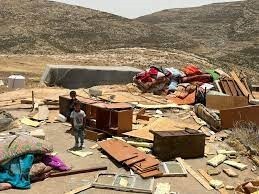
In the West Bank, the monster of colonialism/settlement continues to dispossess lands with the intensification of settler attacks with clear support from the occupation army and security services. According to the report issued by the United Nations Office for the Coordination of Humanitarian Affairs in the Palestinian Territories (OCHA): “More than 1,100 Palestinians have been displaced from their residential areas in the West Bank due to Israeli settler attacks since 2022, in light of the increase in settler violence throughout the West Bank over the past years.” “There were three settler-related incidents per day on average during the first eight months of 2023, compared to an average of two incidents per day in 2022 and one per day in the previous year.” The report stated that this is the highest daily rate of settler-related incidents affecting Palestinians since the United Nations began recording this data in 2006.

As for the Gaza Strip, there is no problem! The severe sea, land and air blockade that has continued since 2007, which has turned the Gaza Strip into “the largest prison in the world,” has made the situation in it a place unfit for living. The Gaza Strip, according to several parties, is likely to witness an increase in the number of young people wishing to immigrate despite the risks of travel and the lack of clarity about the future in the country of immigration, insisting on leaving, in search of better opportunities that they did not find in the Gaza Strip. Indeed, the sea swallowed dozens of them, not to mention the continuous bombardment of every stray and incoming person, which made life in the entire Strip almost impossible.

In Palestine 1948, the Zionist state facilitates organized crime in Arab society, which is an old/new policy towards the Arabs, whom it deals with as a hostile community. The catastrophe of violence and weapons chaos is caused by the Israeli president and his facilities, his spread of mafias and drugs, and the ease of obtaining weapons, leaving the line open to further bleeding of Palestinian blood without following up on these crimes or arresting their perpetrators. It is noticeable the large quantity of weapons in Arab society, which, according to the Israeli press, are of the type available to the occupation army and Israeli security forces, which are difficult (close to impossible) to obtain.

Intimidation... and disgust... are two Israeli weapons for ethnic cleansing in historic Palestine, leading to “more Jews and fewer Arabs”! However, awareness and resistance are, at the same time, Palestinian weapons for survival and steadfastness.

OPINIONS

Fri 06 Oct 2023 9:13 am - Jerusalem Time

Jabotinsky doctrine?! And the Palestinian doctrine!!

Wassef Erekat/military expert and analyst

Wassef Erekat/military expert and analyst

Opinion Writer

Jabotinsky's doctrine was called the "Iron Wall" after Ze'ev Jabotinsky, the Ukrainian Zionist, leader of the Zionist Etzel gangs and one of the most important founders of the Jewish National Fund and the Jewish Legion, who participated in the First World War alongside Britain. He is one of the opponents of the East Africa project as a solution to the Jewish question, and an advocate of not limiting Israel's borders on Palestine but to go beyond it.


This doctrine emerged when Jabotinsky wrote an article and published it in Russian in November 1923 under the title “The Iron Wall.” It later became a law. Some people think that the wall means dividing borders, but it is not so. Rather, it is much deeper and represents the ideology of the military and political doctrine of the extreme Zionist right that is now applied on the ground. It means Jewish immigration and a settlement majority, building a state allied with a superpower, and pushing the Arabs and Palestinians to lose hope of defeating Israel and subjecting them to Israel’s acceptance. Since there is no room for the Palestinians to accept the presence of the Zionists on their land, Jabotinsky said that we will not seek to reach an agreement with the Palestinians as long as they have a glimmer of hope to get rid of us. Therefore, it is necessary to use all means of self-military, material, and international force to subjugate the Palestinians. If military and material force does not succeed, more force will succeed until the Palestinians lose any hope of the ability to confront. Jabotinsky continues: “Zionism must gain approval, not from the Arabs of Palestine, because that is impossible, but from the rest of the Arab world, from Syria, Mesopotamia (Iraq), the Hijaz, and perhaps Egypt, if this is possible... All of this is not enough, if we are able to convince the Arabs of Mecca and Iraq that Palestine is not their land, and that it is not important to them. However, for the Arabs of Palestine, it remains their country and their only homeland, the center of their lives and their national self-existence. Therefore, colonization cannot be practiced except by force against the will of the Palestinians. The military force that Jabotinsky talks about is not exclusively a Jewish force, but rather “the military force of a foreign country like Britain.” ".


Israeli leaders adopted this doctrine, just as the Polish Zionist David Ben-Gurion's security doctrine in the 1950s and 1960s was based on it, and he added methods of trickery and deception to it, even though Ben-Gurion considered Jabotinsky his opponent. Accordingly, Israel fought its wars against the Arab armies to force them to abandon their war ambitions under the slogan that wars do not end with good intentions but with victory. With the establishment of the Zionist entity in 1948, the United States of America (which was the first to recognize it and its largest supporter with money and weapons) became a strategic ally, which was translated into reality by supporting Israel in the tripartite aggression of 1956, the 1967 aggression, 1973, and 1982. It also supports all of its steps, including non-recognition of a Palestinian state.


There were successive military campaigns and plans based on Jabotinsky's doctrine, including the Breaking Bones, Breaking Waves, and Lawn Mowing Campaigns, the Gideon Plan of former Israeli Chief of Staff Ghazi Eisenkot, the Tnuva Plan of Aviv Kochavi, and the Ma'alot Plan of current Chief of Staff Herzi Halevy, which stipulates superiority over enemies by possessing Modern weapons and combat means, and climbing step by step to new heights, and its four items: the first is taking care of individuals and the army, then Iran and the multiplicity of fronts, then maneuvering and defending the borders, and the fourth is improving the military and organizational culture.


All Zionists competed to see who would kill the most Palestinians and commit the most horrific massacres and crimes. They used their destructive capabilities, along with the American capabilities of military equipment, which led to the rise of more than 100,000 martyrs since the Nakba in 1948. Israel still holds hundreds of their bodies in Israeli cemeteries and refrigerators.


Data indicate that the prisoner movement presented 233 martyrs, including 79 who were martyred under Israeli torture, 74 who died due to deliberate medical negligence, and 7 who were assassinated by direct live bullets.


Despite all these sacrifices and despite all the atrocities, the Palestinian people remained steadfast on their land and dedicated themselves to defending it and themselves. Their resistance developed and established a new reality that Israel cannot deny or ignore, which is that every aggression has a price and pain is matched by pain.


The Palestinian people always affirm their determination to persevere and confront with their modest capabilities, no matter how great they are. Sacrifices, which thwarted the doctrine of Jabotinsky and his iron wall, and its secrets of military and combat plans. On the other hand, spontaneous military and combat plans emerged in response to their crimes, and despite their modest nature, they were creative, painful, and fulfilled their purpose. We mention, for example, a memorandum of protest from the notables of Jerusalem against Jewish immigration that was presented to the Grand Vizier in Istanbul in 1891, demanding that he intervenes to prevent immigration, this was followed by an armed attack by the people of the village of Hadera and the town of Petah Tikva on the emerging Jewish settlements. After the issuance of the Balfour Declaration in 1917, in which the British government pledged to work to establish a national homeland for the Jews in Palestine, a revolution was launched that began in Jerusalem in 1920, and in 1929 another revolution was launched to protect Al-Aqsa Mosque from Zionist incursions, and in 1935 Izz cells emerged. The Qassam religion and the armed Green Palm, then came the war of the Arab armies in 1948, the launch of the Palestinian revolution and guerrilla operations from the border in 1965, the Samu mine in 1966, the war of the Arab armies in 1967, the Battle of Karama in 1968, the invasion of the Litani in 1978, the siege of Beirut in 1982 to expel the Palestinian resistance, then the first and second intifadas. 


Between them is the uprising of the tunnel inside occupied Palestine, the confrontations between Jerusalem and the Al-Murabitun in Al-Aqsa Mosque, and the Gaza wars (2008-2023), and every time Israel escalated its attacks, the resistance took more comprehensive and more violent forms. The manifestations of Palestinian resistance and individual operations in the depths of occupied Palestine diversified, and resistance brigades were formed for a generation. The youth, and the Palestinian people united in the trenches of resistance, and the absolute conviction of the ability to continue confronting Zionist projects and defeating Israel was firmly established, and that it was a matter of time.


On the other hand, Israeli society is in a state of anxiety about its fate and lacks confidence in the capabilities of its army, and internal disputes threaten to disintegrate their social fabric, which could lead to civil war. The bottom line is that Jabotinsky's doctrine is fleeting, while the Palestinian's doctrine remains.

PALESTINE

Fri 06 Oct 2023 2:16 am - Jerusalem Time

Damage caused by gunfire towards a settlement near Jenin

After midnight, at least one settler's house was damaged as a result of gunfire from Jenin towards the Ram On settlement adjacent to the border.


According to the Hebrew website Ynet, at least one bullet penetrated the window of the settler's house following the shooting, but no injuries were reported.


It pointed out that large forces from the Israeli army are conducting combing operations in the area.


PALESTINE

Fri 06 Oct 2023 1:36 am - Jerusalem Time

A Palestinian youth killed by Israeli settlers in Huwwara, south of Nablus

A young Palestinian was killed, after midnight, by settlers' bullets who stormed the town of Huwwara, south of Nablus.


According to the Ministry of Health, the martyr is Labib Muhammad Dhamidi (19 years old). He died as a result of being shot in the heart after gunfire from settlers.


Meanwhile, Israeli sources claimed that he was shot by the Israeli army following confrontations between Palestinians on the one hand and settlers who stormed the town on the other hand.


It indicated that a settler was injured by stones thrown by Palestinian youths.


Previously, an unidentified young Palestinian was killed after the occupation forces chased him under the pretext that he opened fire on a settlers’ vehicle, causing damage to it but no casualties.


PALESTINE

Thu 05 Oct 2023 11:31 pm - Jerusalem Time

Netanyahu orders to accelerate opening of the new Hawara road

On Thursday evening, Israeli Prime Minister Benjamin Netanyahu instructed to accelerate the opening of the new Hawara bypass road.


According to Israeli Army Radio, Netanyahu held a quick security assessment session, with the participation of his Defense Minister Yoav Galant, his Forces Chief of Staff Herzi Halevy, and senior officers, and demanded accelerating the opening of the new road that will isolate the Palestinians from the Israeli settlers.


This project aims to try to limit Palestinian operations, including stone throwing.


Hawara is an important road that both sides pass through and serves as a target for those carrying out operations.


On Sunday, Netanyahu will hold a special security session to discuss developments in the situation in the West Bank.

PALESTINE

Thu 05 Oct 2023 11:24 pm - Jerusalem Time

Israeli settlers' bus came under fire in Jordan Valley


A settler bus was damaged on Thursday evening as a result of gunfire near the Jordan Valley.


According to the Hebrew website Ynet, the shooting led to the bus's windows being shattered, but no injuries were reported.

PALESTINE

Thu 05 Oct 2023 11:19 pm - Jerusalem Time

Israeli army arrests two young Palestinians on the Gaza border

On Thursday evening, an Israeli force arrested two young Palestinians who attempted to infiltrate from the borders of the southern Strip towards the cover settlements.


According to an Israeli military spokesman, the detainees were transferred for investigation, and no weapons were found in their possession.

PALESTINE

Thu 05 Oct 2023 10:26 pm - Jerusalem Time

Israeli army arrests two young Palestinians from Bethlehem

On Thursday evening, a special unit of the Israeli occupation army arrested two young Palestinians from the city of Bethlehem.


According to local sources, a special unit of the occupation army raided a sweets shop on Al-Mahd Street in the city center, and arrested the two young Palestinians , Ahmed Youssef and Abdel Hamid Ayesh.

PALESTINE

Thu 05 Oct 2023 9:59 pm - Jerusalem Time

Israeli Experts weigh advantages and risks of Saudi normalization deal

The Israeli Forces launched a study this week to analyze the security implications of a normalization deal between Israel and the Kingdom of Saudi Arabia. The study is being administered by a number of army branches, including intelligence, strategic planning, the Iran department and the air force. It seeks to clearly outline the advantages of the deal, including possible opportunities for partnership, along with the security risks of potential concessions that may be required of Israel to secure such an agreement. 


The findings will be presented to army Chief of Staff Herzi Halevi and Israeli Defense Minister Yoav Galant before being examined by the Cabinet. There is currently no confirmed timeframe for the study. The long-touted normalization deal has received the full backing of the United States and is a central campaign promise of the current Israeli government under the leadership of Prime Minister Benjamin Netanyahu. 


The Saudi deal is seen as the logical continuation of the Abraham Accords, which tripled the number of Israeli-Arab peace deals in the span of four months in 2020. Netanyahu has on many occasions praised the advantages of such a deal, and has stated that it would lead to a “quantum leap” in regional stability and peace. However, experts say that there are multiple nuances to such a deal which may present both great security advantages as well as potential dangers.


According to experts, a central security advantage of Saudi-Israel normalization would be the potential cooperation between the two countries on a litany of defense issues. “A deal between us will allow us to cooperate on intelligence, share techniques and strategies and work together in any way that helps defend both countries,” former Israeli National Security Adviser Maj. Gen. (res.) Yaakov Amidror told JNS. “Both countries already exist under the umbrella of U.S. Central Command, and share many common threats; there is a natural place for partnership and cooperation,” said Amidror, who is currently a fellow at the Jewish Institute for National Security of America (JINSA).Avi Melamed, a former Israeli intelligence official, author and Middle East analyst and educator, further expanded on this point, telling JNS that some of the central threats that can be partnered on include Iran and “the complex operations in southern Syria which smuggle drugs and weapons into Jordan that then flow into the Gulf state, as well as sometimes Israel and Egypt. ”According to Melamed, the current political reality has made “Israel’s physical borders secondary when Israel looks at its big interests. 


When Israel looks at the overall big picture, Yemen and the Indian Ocean emerge as the southern geostrategic border. ”In this context, Saudi Arabia’s outsized influence in places like the Red Sea and the Bab al-Mandab Strait makes it “enormously important in stabilizing and strengthening Israel’s southern geostrategic border,” he said. Melamed further explained that “all along Israel’s borders, including Jordan, Egypt and the Red Sea, there are domestic players that are attuned to the Saudis’ interests, and incorporating these players into a mutual partnership of give and take could greatly benefit Israel’s security. ”Beyond the direct defense implications of a normalization agreement, such a deal is also expected to cause major changes in Israel’s international standing and have a positive effect on its economy. 


Both of these factors can indirectly impact Israel’s broader security paradigm, said Amidror. “Having an agreement with Saudi Arabia will automatically enhance Israel’s international standing, possibly open the door for future agreements with other Muslim states and remove Israel from its isolated status facing a hostile and threatening Muslim world,” said Amidror. “The essence of Israel’s position will be totally different,” he added. From the economic side, “The combination of the technological giant, Israel, and the economic giant, Saudi Arabia, has huge potential for increasing the stability and richness of the Middle East,” said Amidror.


Despite the numerous potential security advantages of a normalization deal, there are also several risk factors. One of Saudi Arabia’s central negotiation demands has been the establishment of a nuclear program, including a uranium enrichment operation. 


This request has raised concern in Jerusalem, with the Israeli Prime Minister’s Office stating that “Israel never agreed to a nuclear program for any of its neighboring countries, this was and remains Israel’s policy.” Israeli political leaders have on multiple occasions said that they are uncomfortable with the idea of a Saudi nuclear program, which they believe will open the door to other Middle Eastern countries making similar requests. Despite these concerns, many believe there is room to negotiate with Riyadh, and that a consensus can be reached that doesn’t threaten Israel’s security. “The nuclear question does not need to be a problem. 


I think [the United States]can deliver many concessions, including mining uranium, milling uranium, exporting uranium and setting up fuel banks in Saudi Arabia, as long as [Saudi Arabia] is willing to move on the enrichment question,” Richard Goldberg, a senior adviser for the Foundation for Defense of Democracies, told JNS.Amidror emphasized the necessity of proper oversight to ensure that red lines are not crossed, however he agreed that a deal was possible.  “We need strict oversight to make sure that the Saudis do not develop nuclear military capabilities, without that the risk is not worth it. 


If Israeli security experts are comfortable with the oversight guarantees so that the deal will not be violated, then we can move forward,” said Amidror. Regarding the general threat of nuclear proliferation throughout the Middle East, Melamed presented a pessimistic picture. “It’s not about prevention anymore—if Turkey or Egypt decide tomorrow that they want a nuclear program for civilian purposes, who’s going to stop them?” said Melamed. “Today it has to be looked at from a different perspective. We have to separate the players we can play ball with and negotiate with, like Saudi Arabia, Turkey and Egypt, and the problematic players like the mullah regime [of Iran]who are a real threat,” he added. A further security concern surrounding normalization efforts with Riyadh is the dilution of Israel’s “qualitative military edge” compared to its Middle Eastern neighbors. 


As part of the Abraham Accords Israel conceded the sale by the United States of F-35 fighter jets to the United Arab Emirates. Similar concessions to Saudi Arabia are expected as part of a future normalization deal. However, experts say that there are ways of getting around these concerns. “We have a lot of experience with the United States in solving similar problems. It has been decades since the United States made its commitment to keep Israel’s qualitative edge, and all that is needed are some discussions between Israel and the United States about how we adjust our partnership to allow for Saudi demands,” said Amidror. “This is a question of technical detail,” he added. Melamed went even further, saying that “today, the military reality is completely different, and the significance and meaning of Israel’s qualitative edge is completely different. Israel will need to be compensated for major changes in Saudi Arabia’s military technology, but the calculation of what exactly keeps Israel’s qualitative edge is not as simple as [it was]40 years ago, when any major weapon sales to Saudi Arabia fundamentally threatened Israel’s security. ”The final factor in the U.S.-Israel-Saudi negotiations that may have a destabilizing effect on Israel’s security is potential concessions to the Palestinians. 


Although no official concessions have yet been articulated, multiple sources confirm that certain concessions are almost guaranteed to be part of the framework of a deal. In a recent interview with Fox News, Saudi Crown Prince Mohammad bin Salman notably did not mention a two-state solution as a prerequisite for normalization, however, at a minimum the deal is expected to include a large influx of money to the Palestinian Authority.  


The security implications of a normalization deal from the Palestinian perspective remain unclear. “Nobody knows how the Palestinians will react. It might ignite the Palestinian territories … or it may lead to no reaction. There are a lot of moving parts and a lot of factions in a very volatile situation. It is impossible to tell,” said Melamed.


PALESTINE

Thu 05 Oct 2023 9:24 pm - Jerusalem Time

A young Palestinian killed by Israeli bullets south of Nablus

A Palestinian was killed this evening, Thursday, as a result of the occupation forces shooting at him in the town of Huwwara, south of Nablus. His identity has not yet been known.


The occupation army claimed that the young Palestinian opened fire on a settlers' vehicle in the town, causing damage to it but no injuries.

ARAB AND WORLD

Thu 05 Oct 2023 9:05 pm - Jerusalem Time

President of the UAE receives the Speaker of Iranian Shura Council

On Thursday, Sheikh Mohammed bin Zayed Al Nahyan, President of the UAE, received Mohammed Baqir Qalibaf, Speaker of the Iranian Shura Council, in the presence of Ghobash, Chairman of the Federal National Council.


During the meeting that took place at the Beach Palace in Abu Dhabi, Sheikh Mohammed bin Zayed welcomed the Speaker of the Iranian Shura Council.


The two sides discussed the relations of the two countries and ways to enhance them, especially at the parliamentary level, in addition to a number of issues and topics of common interest and exchanged views on them.


The meeting discussed the importance of the role of parliaments in strengthening relations between peoples and consolidating the values of coexistence, understanding, cooperation and rapprochement between them.


The meeting was attended by Sheikh Mohammed bin Hamad bin Tahnoun Al Nahyan, Special Affairs Advisor at the Presidential Office, Ali bin Hammad Al Shamsi, Secretary-General of the Supreme National Security Council, Anwar Gargash, Diplomatic Advisor to the President of the State, Khalifa Shaheen Al-Marar, Minister of State, and a number of members of the Federal National Council and officials.


It was also attended by the delegation accompanying the Speaker of the Iranian Shura Council.


PALESTINE

Thu 05 Oct 2023 7:12 pm - Jerusalem Time

British FM kept quiet after Israel barred him from entering West Bank village

Israeli authorities in September barred UK Foreign Secretary James Cleverly from visiting a West Bank village whose entire Palestinian population had been expelled by Israeli settlers, according to Middle East Eye (MEE).

Cleverly intended to visit the town of Ein Samia while on a three-day trip to the occupied Palestinian territories in September, with Norwegian Foreign Minister Anniken Huitfeldt and Irish Foreign Minister Micheal Martin also prevented from entering the village in Area C of the West Bank.


"The decision was made in consultation with security figures, and it was decided not to permit them to arrive at these points,” an Israeli foreign ministry spokesman told MEE.  


The natives of Ein Samia, a community of about 200, were forced to leave the town after Israeli settlers made their lives unbearable.  


Between violence at the hands of the Israeli army, settler violence, and restrictions on building homes and infrastructure, Israel left the residences of Ein Samia with no choice but to leave. 


Cleverly made no mention of his travel restrictions during his three-day trip despite funding sent from the UK to the West Bank. These funds include an elementary school in Ein Samia that was demolished in mid-August after 170 residents fled following heightened settler attacks.  


"Cleverly should have spoken out,”  director of the Council for Arab-British Understanding, Chris Doyle, said. “To remain silent in the face of such injustice is inexcusable. It has happened all too often." 


B’Tselem’s international advocacy lead, Sarit Michaeli, called the security concerns mentioned by Israel a farce.  

“We got there easily; it's not a problem," Michaeli said. "There's plenty of options to guarantee to safeguard the ability of internationals to visit these places.”  


Area C covers over 60 percent of the West Bank and is home to about 300,000 Palestinians who live in 532 residential areas.  

PALESTINE

Thu 05 Oct 2023 7:02 pm - Jerusalem Time

Israeli former officials: Israel-Saudi peace can't happen without Palestinian progress

Over 500 former high-ranking officials from the army, Mossad, Shin Bet (Israel Security Agency), Foreign Ministry and others on Thursday endorsed a call by 20 US Senators for any normalization between Israel and the Saudis to be conditioned on progress with the Palestinians.

The NGO, Commanders for Israel's Security (CIS), said they support "Senators Van Hollen, Murphy, Welch and Majority Whip Durbin, as well the other co-signatories, for their insistence that the Saudi-Israeli normalization process serves to change dynamics on the Israeli-Palestinian track as well."

In a statement, they said that "the possibility of normalizing Saudi-Israel relations holds the promise of contributing to Israel’s security, prosperity and regional integration, as it enhances regional stability and opens the door to further breakthroughs with other Arab and Muslim countries."


'No normalization with changes to West Bank policy'

However, the statement also said, "no normalization and no regional integration is likely to be sustainable and reach its full potency absent major changes in Israel’s West Bank policy and Palestinian Authority’s conduct. As such changes are vital for Israel’s national security, incorporating them into the normalization process serves both objectives."

Next, they said, "continued Israeli annexation and settlement expansion, settler violence, extremists’ provocations at holy sites, all spell more violence en route to an ever-conflicted one-state reality. Concurrently, Palestinian resolve to fight terrorism is essential in stemming the endless cycle of violence, and PA avoidance of futile provocative gestures at international forums could help restore a measure of confidence."


"CIS has long advocated – and presented specific plans for – an Israeli government initiative to reduce friction between the two peoples. Our plan calls for civil separation while maintaining continued overall Israeli security responsibility until a political agreement is reached," said CIS.

Moreover, "Such measures, coupled with steps to strengthen and reform the PA as well as to enhance the role of the USSC in solidifying anti-terror security coordination between the Palestinian security agencies and Israel’s, are essential for short term stability and for keeping the door ope


ARAB AND WORLD

Thu 05 Oct 2023 6:51 pm - Jerusalem Time

Biden delivers 'important speech' on aid to Ukraine

US President Joe Biden said on Wednesday that he will deliver an "important speech" about his country's support for Kiev. This comes in light of sharp political divisions within Congress that prevented Washington from allocating new funds to help Kiev. Ukrainians and US allies fear that US aid to Ukraine will be temporarily cut off due to the murky political scene in Washington. A small group of conservative MPs also oppose providing more money to Ukraine.


While Washington is witnessing sharp political disagreements that are reflected in its aid to Ukraine, US President Joe Biden revealed on Wednesday that he will soon deliver an “important speech” about his country’s support for Kiev. At the same time, Ukrainian President Volodymyr Zelensky confirmed that his country is doing “everything in its power” to obtain more air defense systems in the next few months. Biden is facing pressure to allay the fears of allies after Congress reached a budget agreement that does not include allocating new funds to Ukraine.


Biden told reporters at the White House, "I will very soon give an important speech in which I will address this issue and why it is so important for the United States and our allies that we maintain our commitment."


On Tuesday, the US House of Representatives removed its Republican Speaker, Kevin McCarthy, in a precedent in US history that reflects the severity of the divisions plaguing the Republican Party.


For the first time in its 234-year history, the House of Representatives voted by 216 votes to 210 in favor of a memorandum proposed by the hard-line wing of the Republican Party stating that “the position of Speaker of the House of Representatives is considered vacant.”


“This concerns me, but I know that there are a majority of officials in the House and Senate in both parties who have said they support funding aid to Ukraine,” Biden said, adding that he is “always concerned about any dysfunction.”


He stressed that "it is in (the United States') interest for Ukraine to prevail" over Russia, stressing that "it is very important for the United States and our allies that we fulfill our promises."


"Other ways to save money"

The Democratic President did not want to specify how long the United States would continue to provide military and financial aid to Ukraine if Congress did not adopt a new aid package requested by the White House.


He merely indicated that Washington has the necessary means to finance the “next tranche” of aid, noting that there are “other ways” to provide funds, that is, without going through parliamentary procedures.


The federal government faces the risk of closing again by November 17 if Congress does not adopt the annual budget.


Even before McCarthy's impeachment Tuesday, budget discussions had been stalled over the issue of aid to Ukraine, which some lawmakers who are supporters of former President Donald Trump want to end.


In this regard, Biden said, "We have brought together more than 50 countries (...) to support Ukraine. We are the ones who organized this."


He spoke on Tuesday with the leaders of a number of countries allied with the United States to try to reassure them, including German Chancellor Olaf Scholz, who said Thursday that he was “convinced” that US support would continue.


Biden added, "I don't think we should allow petty political tricks to get in the way" of US commitment to Ukraine.


The Kiel Institute for the World Economy, a German institute that tracks aid to Ukraine, estimates that the United States has so far spent just under $75 billion supporting Ukraine, including more than $42 billion in military aid.


This makes Washington the world's largest shareholder in absolute terms.


Zelensky: "We are doing everything we can"

Ukrainian President Volodymyr Zelensky announced on Wednesday that his country, which is witnessing a devastating conflict, is doing "everything in its power" to obtain more air defense systems in the next few months.


“We are doing everything we can to ensure that Ukraine is equipped with more air defense systems before winter,” he said in his usual evening speech, adding, “We are now awaiting some decisions from our partners.”

He believed that the Ukrainian regions must protect vital facilities and carry out the necessary reconstruction work “as soon as possible.”


Kiev had said that Moscow was resuming a campaign of air attacks on energy infrastructure facilities that last year deprived millions of people of heat and water for long periods.

This week, German Foreign Minister Annalena Baerbock called for developing a strategy to protect Ukraine from the repercussions of a Russian bombing campaign on its energy system.

PALESTINE

Thu 05 Oct 2023 6:46 pm - Jerusalem Time

Hebrew Newspaper: Religion has outsized role in Israel, yet most of its Jews aren’t really observant

Israel is a nation perennially swept up in religious fervor and conflict. And yet, strikingly, a large portion of its population is secular, and even its insular ultra-Orthodox community loses a steady stream of members who tire of its strict religious rules.

The country is home to about 7 million Jews, almost half of the global Jewish population. But Jewish identity is a complex blend of religious and ethnonational identity; most Israeli Jews are not diligent observers of Judaism.

An Israeli Central Bureau of Statistics survey published in 2021 found that among Israeli Jews over the age of 20, about 45 percent identified as secular or not religious, while 33% said they practiced “traditional” religious worship. Ultra-Orthodox Jews, known as Haredim in Hebrew, made up 10%.

For Naor Narkis and many other secular Israelis, their Jewish identity is cultural — defined by the Hebrew tongue and historical experience — rather than governed by traditional religious worship.

Narkis, a Tel Aviv native, founded Enlightened Israel after last year’s parliamentary elections when ultra-Orthodox and religious ultranationalists helped bring Prime Minister Benjamin Netanyahu back into office. Narkis says the organization aims to champion liberal values and educate ultra-Orthodox Israelis about them, and advocates for a clear separation of religion and state, including allowing public transit on the Sabbath.

 “I don’t think there’s a big difference between a secular Jew living in Tel Aviv and a person living in New York whose parents are Christian but isn’t religious,” Narkis said. “What defines us is our language, and our heritage, but doesn’t involve faith in a god.”

He cited Ahad Ha’am, a pioneer of modern Hebrew literature in the late 19th century, who depicted Jewish identity as a cultural heritage rather than religion.

Narkis’ group gives out free smartphones to Haredim who want them — since January, it’s distributed 3,000 smartphones.

The ultra-Orthodox adhere to a strict interpretation of Jewish law and a code of conduct that governs everything from what to eat to which socks to wear. The community often eschews smartphones and the internet, which they see as a gateway to inappropriate ideas.

Yet each year, around 4,000 people in Israel — one of every seven students graduating from the Haredi education system — leave the ultra-Orthodox community, according to Out for Change, an organization that helps former Haredi Israelis integrate into society and the workforce. That figure is growing each year, even as the ultra-Orthodox birthrate is 6.5 children per woman.


PALESTINE

Thu 05 Oct 2023 6:25 pm - Jerusalem Time

Israeli settler's vehicle came under fire south of Nablus

An Israeli settler's vehicle was damaged, on Thursday evening, as a result of gunfire in the town of Huwwara, south of Nablus.


According to the Hebrew website Ynet, the shooting was carried out by a Palestinian who fled the scene.


It pointed out that there were no casualties, while the Israeli army began chasing the perpetrator.

PALESTINE

Thu 05 Oct 2023 6:22 pm - Jerusalem Time

President Abbas approves a program granting BHDs to Palestinian prisoners in Israeli jails

President Mahmoud Abbas instructed all competent authorities, institutions, and governmental and national bodies to approve grants for a doctoral program specifically for prisoners in Israeli occupation prisons.


President Abbas’s directive came after his response to the message of the Supreme National Committee for the Prisoner Movement, which represents all the national and Islamic factions in the occupation prisons, for this program to be the first of its kind for prisoners inside prisons, thus forming a lever for the prisoner movement in its ongoing struggle against the prison guard, and within the framework of the cognitive battle that It was imposed by prisoners over many decades.


The President gave instructions to all competent authorities to facilitate procedures that enable prisoners to enroll in programs approved for doctoral degrees through Palestinian universities, according to standards that are appropriate to their conditions inside prisons and meet their needs (through distance education).


In a letter sent by the National Committee to President Abbas, it expressed its thanks and appreciation for the great role that the President gives to the prisoners in supporting and assisting them, in their confrontation and ongoing battle against the prison guard and his procedures.


She stressed that this step represents a new window of hope for the prisoners, to achieve their ambitions and their educational journey, as the education process constituted an essential front in confronting the occupation and its plans aimed at undermining the awareness of the Palestinian people.

PALESTINE

Thu 05 Oct 2023 5:25 pm - Jerusalem Time

Haaretz: Israel poisoned Palestinian land, as revealed newly-released Israeli state archives

Israel poisoned Palestinian land in order to build West Bank settlements in the 1970s, documents released from the state archives have revealed. Details of the poisoning reported in Haaretz expose the cruel lengths to which Israel has gone to dispossess Palestinians from their land. The release of files from the Israel State Archives has granted public access to over a million documents, revealing some of the most horrific practices of the Zionist state. Each step in the establishment of a West Bank settlement is catalogued in the newly released documents.


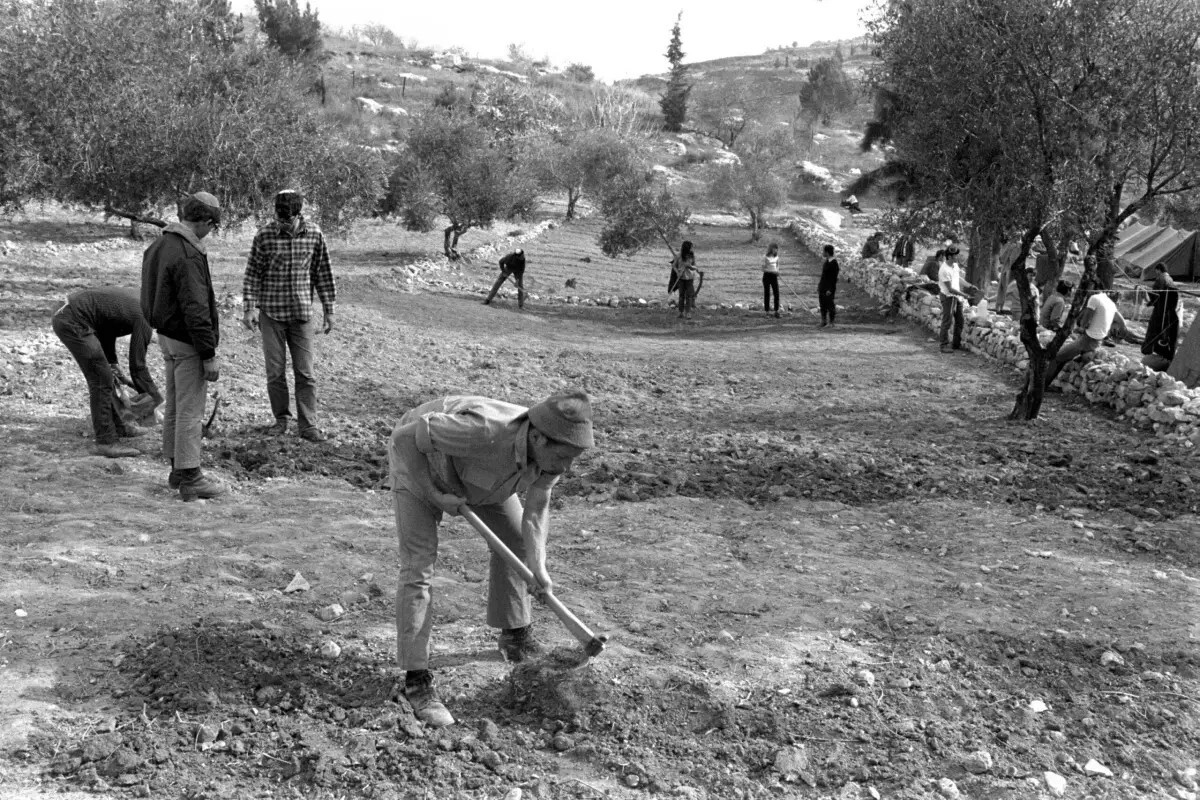
The first step, according to the Haaretz report, was to dispossess residents of the nearby Palestinian village of their land under the false pretext of making it a military training zone. When the Palestinians insisted on cultivating the land, Israeli soldiers sabotaged their tools. Soldiers were later ordered to use their vehicles to destroy the crops. 


A radical solution was employed when this failed: a crop duster was used to spread a toxic chemical on the land. The substance was lethal for animals and dangerous for humans. Details released by the state archives uncovers Israel’s takeover and colonisation of the Palestinian village of Aqraba, for example, about three miles from Huwara in the northern West Bank. Huwara has come under attack recently by Israeli settlers. As was the case in Huwara, the Israeli state and illegal settlers worked hand in hand. 


The poisoning of the crops around Aqraba in 1972 was not a vigilante act; it involved various state agencies. The poisoning of Palestinian land took place under Prime Minister Golda Meir, who is often depicted as a left-wing leader unlike far-right figures like Benjamin Netanyahu, Itamar Ben-Gvir and Bezalel Smotrich. 


The archive materials show that when it comes to taking over Palestinian land and the dispossession of the indigenous community, there is very little separating Israeli politicians, no matter which end of the political spectrum they stand on. Meir was also Prime Minister when, under the cover of a “national park”, Israel annexed Muslim and Christian sites. The full details of the poisoning have been uncovered 51 years later thanks to a new project by the Taub Centre for Israel Studies at New York University. 


The project is said to map and catalogue all available historical data dealing with Israeli settlements. For the first time, thousands of sealed files from the Israel State Archives and other libraries have been opened for public inspection; they shed light on one of the most significant movements in Israeli history.


All of Israel’s settlements, and the settlers who live in them, are illegal under international law.

UNCATEGORIZED

Thu 05 Oct 2023 5:06 pm - Jerusalem Time

Hebrew Channel: Jordan seeks to assert authority on Palestinian issue amid Israel-Saudi normalization talks

The Jordanian king warns Saudi Arabia against being too lax regarding the concessions to Palestinians that are expected to be part of the deal

In the midst of ongoing talks surrounding a potential normalization agreement between Israel and Saudi Arabia, one regional player has stepped forward to make its position known: Jordan. 

King Abdullah II, speaking at an event in New York last month, conveyed a clear stance on the matter, emphasizing the importance of recognizing Jordan's role when it comes to the Palestinian issue. 

The discussions regarding a prospective US-Saudi deal, which could include a normalization agreement with Israel, have raised concerns that critical elements of the Palestinian question are being sidelined. 

King Abdullah II, traditionally regarded as a sponsor of the Palestinians, expressed deep apprehension regarding this development.

"I think that part of the challenge is with the Israeli government, this belief by some in the region, that you can parachute over Palestine, deal with the Arabs and work your way back. That does not work. And even those countries that have Abraham Accords with Israel have difficulty moving publicly on those issues when Israelis and Palestinians are dying. So unless we solve this problem, there will never be a true peace," stated King Abdullah II.

At a Middle East conference held on the sidelines of the United Nations General Assembly in New York last month, the Jordanian king warned that Saudi Arabia may be too lax when it comes to Israeli concessions to the Palestinians as part of the deal. Palestinian Authority President Mahmoud Abbas echoed similar sentiments at the UN, emphasizing the importance of the Palestinian people enjoying their full legitimate and national rights for lasting peace in the Middle East.

King Abdullah II has been candid about his grievances with Israel, particularly Prime Minister Netanyahu, with whom relations have been minimal. However, his primary concern revolves around a more significant issue – the future status of Muslim sites.

The Saudi Crown Prince, Mohammed bin Salman (MBS), has expressed interest in expanding his custodianship to include all Muslim holy sites, beyond those located within the kingdom, to encompass the Al-Aqsa Mosque on the Temple Mount in Jerusalem. This ambition has raised concerns in Jordan, as it would diminish the Hashemite kingdom's historical role and reinforce Riyadh's position as the leader of the Muslim world.

"There is something that Saudi Arabia wants, there is something that the Israelis want, and there is something that the Americans want. What you have to add to that component is what do the Palestinians get out of it and actually what does the region get out of it because we are all invested in this together," explained King Abdullah II.

With the memory of remaining on the sidelines during the 2020 Abraham Accords still fresh, King Abdullah II is determined to assert Jordan's authority and status, particularly concerning the Palestinian issue, as a means to remain relevant in a rapidly changing regional landscape.


PALESTINE

Thu 05 Oct 2023 4:56 pm - Jerusalem Time

Israeli forces storm the Al-Balou' neighborhood in Al-Bireh

On Thursday evening, Israeli occupation forces stormed the Al-Balou neighborhood in the city of Al-Bireh.


According to local sources, large forces from the occupation army stormed the Al-Balou’ neighborhood and were stationed in the vicinity of “Al-Huda Roundabout,” and the forces raided an exchange shop in the area.

ARAB AND WORLD

Thu 05 Oct 2023 4:51 pm - Jerusalem Time

60 killed in Syrian military college hit in drone attack in Homs, Syria

Syrian state television reported, on Thursday, that an attack with marches on a military college after the end of an officers’ graduation ceremony in Homs Governorate caused a number of military and civilian deaths, which a Russian agency reported at least 54.


A statement issued by the Syrian Ministry of Defense said, "In furtherance of their criminal approach and their continuation of shedding Syrian blood, armed terrorist organizations supported by well-known international parties this afternoon targeted the graduation ceremony of military college officer students in Homs with drones carrying explosive ammunition, immediately after the ceremony ended."


She explained that the attack resulted in the killing of a number of civilians and soldiers and the injury of dozens of others, including critical injuries among the invited families, including women and children, in addition to a number of college students participating in the graduation.


While the Syrian Ministry of Defense did not give a specific number, the Russian "TASS" agency reported that the death toll from the attack that targeted the Military College was 54.


The Syrian Defense Forces explained: “The General Command of the Army and Armed Forces considers this cowardly terrorist act an unprecedented criminal act, and affirms that it will respond with full force and decisiveness to these terrorist organizations wherever they are found, and stresses holding accountable the planners and executors of this criminal act, for which they will pay dearly.”


The statement did not mention the identity of the officers killed in the attack. Local sources had previously said that ambulances transported the injured from the Military College in Homs to the military hospital after they were targeted by a march during the graduation ceremony for student officers.


The Syrian Observatory for Human Rights said that information indicated that Defense Minister Ali Mahmoud Abbas attended the ceremony, while there was no confirmation from an official source.


Sources of the Syrian Observatory for Human Rights confirmed that 7 were killed and more than 20 Syrian officers were injured in a violent explosion in the vicinity of the Military College in Homs, resulting from a drone attack, during the Military College’s graduation parade, while ambulances rushed to transport the wounded to the military hospital.


ARAB AND WORLD

Thu 05 Oct 2023 4:32 pm - Jerusalem Time

Washington confirms commitments to continue aid it provides to Egypt

The US State Department confirmed, on Wednesday, that the administration of US President Joe Biden will work with the US Congress on military aid and arms sales to Egypt, after the head of the US Senate Foreign Relations Committee said that he would block the aid due to human rights concerns.


"We will continue to work closely not only with the Egyptian government but also with Congress on how to use these funds, consistent with our commitment to the strategic partnership between the United States and Egypt that advances our shared vision for the region," Vedant Patel, the US State Department's alternate spokesman, said in a press conference on Wednesday. Safe and prosperous.”


Patel added, “It is a step that allows for tangible and sustainable progress on human rights issues,” noting that “US Secretary of State Anthony Blinken adheres to his decision that it is in the interest of US national security to waive some conditions related to foreign military financial assistance to Egypt in the fiscal year 2022, which is an amount.” 235 million, stressing that “We have committed to a total of $1.215 billion in foreign military financing that Egypt will receive for the fiscal year 2022. We are continuing to work to resolve these issues with Congress and our partners in Egypt, and this will remain the case; "I will not move forward with this process."


US State Department officials explained that this decision “reflects the role of Egypt, which provides a specific and ongoing contribution to US national security priorities and as a strategic partner of the United States, as it has a decisive voice and efforts to promote regional peace and security, starting with advancing a just and lasting peace in Ukraine and calming Israeli-Palestinian tensions to In addition to strengthening the ceasefire in Sudan and supporting the Libyan elections, this decision in no way diminishes the United States’ commitment to promoting human rights in Egypt and throughout the world.


US Democratic Senator Ben Cardin said on Tuesday that “the seizure of existing funds will remain in place” until Egypt makes progress on human rights issues, including pre-trial detention practices and the thousands of political prisoners detained in the country.


Senator Ben Cardin, the new chairman of the US Senate Foreign Affairs Committee, justified his decision to withhold the part related to the country's human rights record by the presence of "violations."


The Democratic Senator said in a statement that he informed US Secretary of State, Anthony Blinken, that he would not release these funds unless Cairo made “tangible progress in the field of human rights.”


Cardin stressed, "It is necessary that we continue to hold the Egyptian government and all governments accountable for their human rights violations," which means depriving Cairo of military aid worth $235 million.


He added that aid will remain withheld from Egypt "if it does not take concrete, purposeful and sustainable steps to improve the human rights situation in the country."

PALESTINE

Thu 05 Oct 2023 4:22 pm - Jerusalem Time

Washington stresses necessity of allowing foreign diplomats to enter Palestinian villages

The US State Department stressed, on Wednesday, the need for visiting diplomats to be able to enter occupied Palestinian villages and towns to investigate what is happening in these sites due to settlers’ attacks on these towns and villages.


In response to a reporter's question regarding the Israeli occupation forces, British Foreign Secretary James Cleverly, and others visiting the Palestinian village of Ain Samiya, Vedant Patel, the official alternate spokesman at the Foreign Ministry, said in response to a reporter's question: "Let me say that in general, we acknowledge that Israel is making decisions regarding... “With its security, and we understand that this was a security decision, so the Government of Israel and of course our partners in the United Kingdom can speak more specifically about the Secretary of State’s tours and anything related to that.”


Patel added, explaining: “But what I will also say is that the United States remains committed to discussing this issue with the Israeli leadership, and on issues of settler violence, and we continue to be strongly engaged, including on the ground to visit and deal with these affected communities.”


The Israeli authorities prevented British Foreign Secretary James Cleverly from visiting the Palestinian village of Ain Samia, which was recently emptied of its residents after years of violence by Israeli settlers, according to what press reports revealed.


Cleverly had planned to visit the village of Ein Samia in the occupied West Bank during his three-day tour to Israel and the occupied Palestinian territories last September.


The occupation authorities had also prevented Irish Foreign Minister Michael Martin from visiting the village earlier.

PALESTINE

Thu 05 Oct 2023 4:16 pm - Jerusalem Time

Hebrew newspapers: Israel looking to limit scope of Palestinian component of Saudi normalization deal

A pair of US President Joe Biden’s top advisers paid another visit to Riyadh last week to advance negotiations toward a normalization agreement between Israel and Saudi Arabia, as Prime Minister Benjamin Netanyahu worked to limit the scope of the Palestinian component of the deal.


White House Middle East czar Brett McGurk and energy adviser Amos Hochstein met with Crown Prince Mohammed bin Salman, also known as MBS, and other Saudi officials, the Axios news site reported Wednesday. The White House confirmed the trip but insisted that it was part of McGurk’s and Hochstein’s routine travel and that they discussed a host of issues in addition to a potential normalization deal.


However, it was McGurk’s second visit to Riyadh in September — a month that saw Biden and Netanyahu discuss the potential deal on the UN General Assembly sidelines and MBS tell Fox News that the high-stakes agreement was getting closer every day.


A number of sticking points remain, as the US defense guarantees and support for a civilian nuclear program sought by Saudi Arabia are sure to roil Democrats in Congress given Riyadh’s human rights record. The Biden administration is hoping that a significant Palestinian component that advances a two-state solution will be enough to placate progressives to back the deal, which could well require the approval of two-thirds of the Senate.


But that component has become a point of tension between the US and Israel, whose hardline government is overwhelmingly made up of lawmakers ideologically opposed to Palestinian statehood.


The Haaretz daily reported Wednesday that a senior Israeli official close to Netanyahu has been telling Biden administration officials that the “mayor of Ramallah won’t determine the details” of a normalization deal — a scornful reference to Palestinian Authority President Mahmoud Abbas.


Israeli officials have argued that MBS is not seeking to boost the Palestinians’ political sovereignty, pointing to the Saudi crown prince’s comments to Fox News in which he said he was aiming to “ease the life of the Palestinians.” Three officials also told The Times of Israel last week that Riyadh is quietly setting aside the Arab Peace Initiative that it sponsored more than 20 years ago and is readying for the possibility of normalizing relations with Israel without first securing the establishment of a Palestinian state.


But MBS also said in the Fox News interview that “the Palestinian issue is very important. We need to solve that part.” Saudi officials have also assured their Palestinian counterparts that they won’t abandon them in the normalization effort. Riyadh has also appointed an ambassador to Palestine and is co-chairing an initiative with the European Union aimed at reviving the peace process.


Netanyahu has said publicly that the Palestinians should be part of an agreement but that they should not have veto power over the deal.

Privately, Netanyahu and top adviser Strategic Affairs Minister Ron Dermer are aiming to limit the Palestinian component to financial aid for the cash-strapped PA, according to officials familiar with the matter.


Palestinian officials told The Times of Israel last month that they’re merely pushing for a mutual cessation of unilateral actions in the context of the normalization negotiations, in addition to other “irreversible steps” that can help create a “diplomatic horizon” for a future deal. Those steps include the Israeli transfer of West Bank territory to the PA’s control, razing illegal outposts in the West Bank, limiting strategic settlement activity and a general commitment to a two-state solution.


Any of those steps alone could well be too much for Netanyahu, as National Security Minister Itamar Ben Gvir warned that the coalition’s two far-right parties would bolt if any concessions are made to the Palestinians. US Secretary of State Antony Blinken is slated to visit Israel, the West Bank and Saudi Arabia in two weeks in hopes of advancing the issue further, but US officials have reiterated that a deal is still far from being signed.

A general framework has been outlined for what each side will have to give but exact details still need to be hammered out, administration officials have said.


Talks are expected to continue through December, with the White House hoping to have a deal ready to present to Congress by January, according to officials familiar with the matter.


On Wednesday, 20 Democratic senators penned a letter to Biden in which they expressed their general support for the normalization effort but stressed their concern over Saudi security and nuclear demands while urging the Biden administration to use the deal to advance a two-state solution.


PALESTINE

Thu 05 Oct 2023 4:10 pm - Jerusalem Time

Israeli occupation army arrests three Palestinians in Jerusalem

On Thursday evening, the Israeli occupation forces arrested three citizens from the Old City of occupied Jerusalem.


According to local sources, the occupation forces arrested: Rami Al-Baytouni, Abdel-Rahman Shaher Al-Salaymeh, and Awad Al-Baytouni.

OPINIONS

Thu 05 Oct 2023 3:37 pm - Jerusalem Time

Ending Military Aid to Israel: The Death of a Taboo?

Yousef Munayyer

Yousef Munayyer

Opinion Writer

If there is one thing that characterizes American-Israeli relations more than any other it is US military aid to Israel, which currently amounts to nearly $4 billion dollars a year. Few things in Washington have seemed more guaranteed than this US aid, as well as congressional approval for it. This support has been so sacrosanct that any critical conversation around it has long been considered taboo. In the last several weeks, however, no less than two dozen articles have been authored, from various perspectives and political leanings, arguing over the utility of US Military aid to Israel, or rather the lack thereof. This likely foreshadows a coming change in policy and, at minimum, indicates that the taboo around discussing this facet of the US-Israel relationship may now be dead.

US Military Aid to Israel: What It Is and How It Works


US Military aid to Israel, or more precisely US military financing for Israel, functions through the United States’ Foreign Military Financing (FMF) program. Israel is the single largest recipient of US military financing through this program, at $3.8 billion a year. Egypt comes in second at $1.3 billion. Together they make up the majority of the nearly $10 billion annually allotted for this purpose. Egypt’s military financing itself was a product of negotiations to bring the country under American influence as part of the Camp David Accords in the late 1970s. The peace accords, sealed with financing for the Egyptian military and economy, brought an end to hostilities and recognition of Israel by Egypt. In other words, the majority of the FMF program serves Israeli interests.

Over the last several decades, different memorandums of understanding (MoU) between Israel and the United States have been negotiated to set expectations around military aid over time. The long-term aid provides a framework for congressional approval on an annual basis while affording military budget planners in Israel longer-term clarity around which to plan. The last MoU was agreed to in 2016 by the Obama administration and covers fiscal years 2019 through 2028, amounting to $38 billion in military aid ($3.8 billion per year) over a ten-year period. The agreement succeeded the previous MoU, signed in 2007 by the George W. Bush administration and totaling $30 billion. The United States has separately approved funding for Israel’s Iron Dome missile system, in addition to the yearly allocation of military aid.


Over the years, US foreign aid for Israel has evolved, not just growing in amount but also evolving in structure. Historically, elements of the package have been added, removed, increased, or decreased over time for various reasons. For example, one mainstay of US foreign aid to Israel over the decades was economic assistance aimed at supporting a struggling Israeli economy. This assistance lasted from 1971 until being phased out in 2007 as the Israel economy grew stronger over time. An important factor in Israel’s economic growth over this period was the evolution of its tech sector, which itself was boosted by its military industries. In this too, US assistance played a key role.


Israel received an exemption allowing it to spend a portion of its annual FMF allotment in its own domestic arms industry.

Although according to US law FMF dollars are supposed to be spent to purchase defense articles from US manufacturers, Israel received an exemption from this rule that allowed it to spend a portion of its annual FMF allotment in its own domestic arms industry. This exception, which began in the late 1980s, saw Israel injecting some 26 percent of its US FMF allotment into its own domestic arms industry annually. The impact of this over time was the creation of an Israeli defense industry that not only became strong enough to meet most domestic needs but also became a major player in the global arms market, and in fact the largest per capita arms exporter in the world. As with economic assistance before it, this “offshore procurement” (OSP) element of the FMF package for Israel is being phased out under the current MoU and will go down to zero by the end of the agreement. It is probably no coincidence that as this arrangement winds down, a bigger conversation around US military aid for Israel is beginning to take shape.


A New Conversation

Many have recently questioned the utility and benefits of US military aid to Israel. “Does it really make sense for the United States to provide an enormous sum of $3.8 billion annually to another wealthy country?,” asked Nicholas Kristoff in the New York Times. Right-wingers Liel Liebowitz and Jacob Siegel wrote in Tablet magazine, in a piece that provoked numerous responses: “Cut the stranglehold of aid. Let America pursue its interests. Let Israel, too, follow its own interests, which sometimes align with those of Washington and sometimes don’t.” And Ivan Eland chimed in at the National Interest on the large sum given to Israel, adding, “Ending that largesse is long overdue.”

What is perhaps most notable about the slew of articles making arguments for ending US military financing to Israel is the range of voices writing them. From liberal writers in major mainstream publications to right-wingers in niche Zionist publications, and everyone in between, calls for ending US military aid are being made. Importantly, different voices call for ending aid for different reasons. While progressives have pressed for ending US military aid to Israel over its human rights abuses against Palestinians, others are focusing on the fact that Israel does not need US aid to support its economic growth—and still others argue that US aid to Israel actually hurts Israel strategically.

The death of a longstanding taboo of any sort, let alone one so long held that has seemingly evaporated overnight, begs the question: Why this is happening now? There are a range of factors that likely provide insight into this question.


New MoU Negotiations Are Approaching

While the last MoU between Israel and the United States was announced in 2016, the negotiations around its terms began as early as 2013 before intensifying in the 18 months prior to the agreement. Based on the previous MoU timeline, initial conversations around the parameters of a new MoU may well be starting this year. The discussion around possible changes is already taking place in the media and in policy circles now, and will set the stage for when the next negotiations begin in earnest between Israel and the US.


Offshore Procurement Is Expiring

Another proximate factor likely has to do with the phasing out of the offshore procurement element of the FMF package. The percentage of FMF money that Israel could use in its own domestic military industry has been phased out gradually, and is set to go from about 26 percent of the total to zero over its ten-year period. However, the steepest drops begin in the second half of the term of the MoU, between the years 2024 and 2025 where it drops from about 22 percent to 14 percent in one year. In other words, while the coming end of this perk for Israel has been known for some time, the biggest material impacts on financing for its domestic military industry are only now about to start kicking in.


No “Aid” Is Needed

US Military Aid to Israel was born in a very different geopolitical and economic moment than the one that exists in Israel today. When it was first instituted, Israel was still dealing with Arab nations on its borders who were in states of war with it, including several who were backed by the superpower of the Soviet Union. Today, the Cold War is a historic relic, Israel has peace agreements with Egypt and Jordan (who are both American client states), and Syria and Lebanon are both deterred and debilitated by their own internal crises. Today, more Arab states (the United Arab Emirates, Bahrain, Morocco, and Sudan) have normalized relations with Israel, making its surrounding region less bellicose than ever before. At a time when Israel, with its small population and weak economy, needed to be on a constant war footing against much larger Soviet-backed states, the argument for American aid was far easier to make. Today, Israel has a robust economy with a GDP that is greater than half a trillion dollars, and it is a global arms exporter. In fact, Israel sells arms representing about three times the value of US military aid annually. That is not a country that needs a handout.


The Growing Progressive Drumbeat Against Aid

Over the last decade and a half a Palestinian rights discourse has begun to permeate Democratic Party politics in the United States, pushed forward by progressive activists and lawmakers who have been calling for a shift in US policy toward Israel. In recent years, for the first time legislation was introduced in Congress that would put restrictions on US military aid to Israel over its treatment of child prisoners, and numerous progressive lawmakers have backed the bill or called for similar forms of accountability. As recently as a few weeks ago, Senator Bernie Sanders introduced an amendment to the National Defense Authorization Act that would condition US military aid to Israel. Over time it is likely that these calls will grow given continuous trends in public opinion, especially among Democrats.


Israel’s Political Upheaval

There is little doubt that in addition to all of the above, the tumultuous protests which have rocked Israeli politics over this past year, along with the far-right Israeli government’s attack on the judicial system, have contributed to a broader conversation around reassessing the US-Israel relationship. Supporters of Israel have sold the idea that the US and Israel are like-minded democracies and that those “shared values” are at the center of the relationship. Whatever one thinks of this argument, it becomes harder to sustain when an extremist government attacks the nation’s judicial system over the objections of hundreds of thousands of protesters in the streets.


All these reasons have come together in this moment to make greater space for a conversation around reassessing military aid possible. The next big question is when and how does this conversation translate to policy shifts, and what direction will those shifts take?


Even if one ignores Israel’s human rights abuses against Palestinians, as US policymakers too often do, the policy of providing billions of FMF dollars to Israel makes less sense today than ever. Israel does not need the handout, has a robust military industry that the US helped subsidize for years, and is increasingly becoming hard to defend due to its right-wing, theocratic leanings. Historically, US policy has phased out types of assistance to Israel as it no longer was necessary, as with economic aid and offshore procurement. Could the US actually end military aid to Israel in the years to come?

We have yet to see public opinion shifts on Israel create more significant change on the national political level.

As a policy decision this is a no-brainer. Human rights reasons should be first on the list, but even beyond them there are many more. Politically, however, this is another matter. Each president who has announced an MoU around US military aid to Israel has made a point of noting that their aid package was larger than any before, precisely because they understood it to be good politics.


US dollars for Israeli war machines is the retail politics that tickles the soul of pro-Israel interest groups in the United States, and the talking points around this have become as routine as shaking hands and kissing babies at the county fair. While public opinion is clearly changing, and while pro-Israel interest groups are clearly shaken by these trends, we have yet to see those shifts create more significant change on the national political level. For any American politician to end military aid to Israel, it would likely have to be sold to the public as a pro-Israel policy step and not as a step to hold Israel accountable for any of its behavior. That will not be an easy task, especially in the politically charged climate of American politics.


Any US administration taking such a step would likely seek to pair it with other steps that would be seen as a clear boost in support to Israel so as not to allow an end to the military aid to be perceived as a blow to the relationship. What that could be is not exactly clear, especially given how much support the US already gives to Israel, but managing the optics of the end of military aid would surely be a major part of the conversation. For now, the big news is that a conversation long thought to be impossible has finally begun.




ARAB AND WORLD

Thu 05 Oct 2023 3:31 pm - Jerusalem Time

Permanent base for the Russian fleet on the coast of Abkhazia

The Russian Navy intends to establish a base on the Black Sea coast in the breakaway region of Abkhazia in Georgia, the region's leader told Russian media on Thursday, as Ukraine intensifies its attacks on the Russian fleet in Crimea.


President of Abkhazia Aslan Bezhania said that a new permanent base for the Russian Navy will appear on the Black Sea coast of this republic.


Bezhania noted that an agreement in this regard had been signed between Russia and Abkhazia.


He added: "We have signed an agreement on this. In the near future, a permanent base for the Russian Navy will appear in the Ochamchira region of Abkhazia."


The President of Abkhazia stated that he personally inspected one of the small Russian missile ships.


Currently, the city of Ochamchira has a base for patrol ships of the Russian Coast Guard. This base has been operating since 2017.


Plans to establish a base for Black Sea Fleet ships in the Abkhaz port of Ochamchira were discussed in early 2009.


From August 21 to September 1 of this year, joint tactical and special military air exercises with Russia took place in four regions of Abkhazia.


PALESTINE

Thu 05 Oct 2023 3:16 pm - Jerusalem Time

Bin Gvir seeks to 'legitimize' killing of Palestinians in new rules of engagement

Israeli authorities are seeking to allow the use of live fire by police to disperse mass protests held by Palestinian citizens, the country's national security minister has said. 


A report by Israeli broadcaster Kan 11 on Tuesday revealed that police and the national security ministry are working to relax rules of engagement in some scenarios at time of "emergencies". 

An example of this would be the potential blocking of roads by Palestinians that could prevent military convoys from reaching their destination.


The rule change has been discussed in recent months as part of lessons Israeli authorities say they are drawing from the events of May 2021, in which inter-communal violence gripped binational cities.
The new measure would further disregard recommendations made by the 2003 Or Commission, which found "the use of live ammunition is not a means for dispersing a crowd" and that Israeli authorities were discriminating against Palestinian citizens. 


Itamar Ben Gvir, Israel's national security minister, voiced his support for the move on Wednesday. 

“It is very important to change the instructions so that our policemen and soldiers can fill their role without risking their lives,” the far-right minister told Kan 11.

“It is imperative that police officers find it easier to respond with force to those who pose a threat to their lives,” he added. 


'This new measure is designed to legitimize the killing of Palestinians even when they clearly do not pose any danger'- Hassan Jabreen, Adalah

He also clarified that this change is not intended for use on Jewish Israeli protesters in Tel Aviv, but rather for a potential scenario similar to the events of May 2021. 

Adalah, an independent human rights organization and legal Centre, condemned the move.

The general director of the Haifa-based group, Hassan Jabreen, said: "Police officers already systematically violate the existing police regulations that authorize the use of live ammunition in cases of imminent threat with blanket impunity."

This new measure, he added, is "designed to legitimize the killing of Palestinians even when they clearly do not pose any danger".