PALESTINE

Mon 25 May 2026 6:58 pm - Jerusalem Time

Martyr and injuries in Gaza, UNRWA warns of health catastrophe due to supply shortages

Medical sources reported the martyrdom of a Palestinian and the injury of two others early Monday morning, following a series of airstrikes and artillery shelling carried out by Israeli occupation forces on various areas in the Gaza Strip. One of the raids targeted a home belonging to the Al-Bashiti family in the Al-Maghazi refugee camp in the central Strip, resulting in injuries, one of which was described as serious. The injured were transferred to Al-Aqsa Martyrs Hospital in Deir al-Balah.

In Khan Yunis city, south of the Strip, Nasser Hospital announced the martyrdom of young Ahmed Samir Farahat, who succumbed to his wounds sustained days earlier due to an Israeli shelling that targeted him in the western area of the city. These developments come amid ongoing field aggressions targeting civilians in various governorates despite existing understandings.

The Ministry of Health in the Gaza Strip announced the casualty toll over the past twenty-four hours, confirming that 6 martyrs and 8 injured individuals arrived at hospitals. The ministry clarified that among the martyrs were cases affected by previous wounds, noting that there are other victims still under the rubble and in rugged areas that ambulance crews find difficult to reach.

On the ground, Israeli artillery launched intense shelling targeting the eastern areas of Khan Yunis city, coinciding with heavy gunfire from vehicles stationed behind what is known as the 'Yellow Line'. This line is a field strip separating areas of army withdrawal and areas where it is still present in the eastern part of the Strip, as defined by ceasefire understandings.

The aggressions were not limited to the southern and central areas; artillery shelling also extended to the eastern neighborhoods of Gaza City, in addition to targeting the eastern and northern outskirts of Beit Lahia town. These shells caused panic among residents who are trying to return to check on their properties in those border areas.

At sea, Israeli warships continued to pursue Palestinian fishermen, firing their machine guns and shells towards boats off the coast of Gaza City. Although no injuries were reported among fishermen during this attack, the continuous pursuits prevent them from carrying out their work and securing their daily livelihood amidst the suffocating blockade.

For its part, the United Nations Relief and Works Agency for Palestine Refugees (UNRWA) warned of a serious deterioration in health conditions within the Strip. The agency confirmed that the severe shortage of fuel, pesticides, and medicines significantly hinders efforts to respond to the crisis of spreading skin infections resulting from the proliferation of rodents and insects among displaced persons' tents.

UNRWA stressed the urgent need for unrestricted flow of medical and environmental supplies to save thousands suffering from skin diseases. It explained that the overcrowding of displaced persons in shelters, coupled with the absence of hygiene and sterilization tools, creates a fertile environment for the spread of epidemics that now threaten the lives of children and the elderly in particular.

In a related context, the Government Media Office revealed shocking figures regarding the movement of aid and travelers through the Rafah crossing last week. The office clarified that the percentage of travelers did not exceed 28% of the targeted number, as only 403 people were allowed to leave out of 2400 cases that urgently needed to travel for treatment or humanitarian reasons.

Regarding relief supplies, only 2287 trucks entered the Strip during the same period, representing a deficit exceeding 70% compared to the actual needs, estimated at more than 4200 trucks per week. This severe shortage deepens the humanitarian crisis and increases rates of hunger and malnutrition among the besieged population.

The Ministry of Health's data indicates that continuous Israeli violations of the ceasefire agreement signed on October 10, 2025, have so far resulted in the martyrdom of 890 Palestinians and the injury of 2677 others. These figures confirm the fragility of Israeli commitment to signed agreements and the continued targeting of civilians by various means.

The Gaza Strip is experiencing widespread destruction affecting about 90% of civilian infrastructure as a result of the war of extermination that began in October 2023. The United Nations estimates the cost of rebuilding what was destroyed by the Israeli military machine at about 70 billion dollars, amid an almost complete disruption of vital facilities and basic services in all governorates.

International organizations from Geneva continue to issue urgent appeals to the international community to intervene and stop the comprehensive humanitarian collapse in Gaza. These organizations demand the opening of all crossings and ensuring unimpeded access for aid, warning that the continuation of the current situation will lead to an uncontainable catastrophe in the near future.

There is an urgent need for an unrestricted flow of environmental health supplies and medical supplies into Gaza to combat the spread of skin infections.

PALESTINE

Mon 25 May 2026 6:58 pm - Jerusalem Time

Martyr and wounded in a series of Israeli targeting operations in various areas of the Gaza Strip

Palestinian medical sources announced early Monday that a young man succumbed to his wounds and other citizens were injured, due to renewed artillery shelling and gunfire by Israeli occupation forces in various areas of the Gaza Strip. These field developments come amid a state of severe tension, as these attacks constitute a direct violation of international understandings and the ceasefire agreement reached in October of last year.

Regarding the details of the targeting operations, medical teams confirmed the martyrdom of young Ahmed Samir Farhat, who had been seriously injured two days earlier as a result of a raid targeting the Al-Mawasi area in Khan Yunis, an area crowded with thousands of displaced people who sought refuge there in search of safety. In the central Gaza Strip, Al-Aqsa Martyrs Hospital received two injured people who fell as a result of direct artillery shelling targeting a house belonging to the Al-Bashiti family located behind the Grand Mosque in Al-Maghazi refugee camp.

In addition, the eastern areas of Khan Yunis city witnessed a field escalation represented by intermittent gunfire from military vehicles stationed on the border, coinciding with artillery shelling focused on Sheikh Nasser neighborhood. Eyewitnesses reported that shells fell in the vicinity of citizens' homes, causing panic among residents and leading to material damage to properties, amid warnings of the expansion of shelling to include other neighborhoods.

Observers believe that this military escalation threatens to collapse the fragile stability that has recently prevailed in the Strip, as occupation forces continue their field operations despite international warnings. Local sources continue to monitor ongoing violations targeting civilians in border areas and displacement camps, which raises the death toll and further complicates the already deteriorating humanitarian conditions in various governorates of Gaza.

Young Ahmed Samir Farhat was martyred after succumbing to severe wounds he sustained as a result of a previous shelling that targeted the Al-Mawasi area, which is crowded with displaced people.

PALESTINE

Mon 25 May 2026 6:58 pm - Jerusalem Time

Moves to unify Arab lists raise Netanyahu's concerns, legal efforts to ban 'Ra'am'

The political arena in the occupied Palestinian interior is witnessing intensive efforts to unify the ranks of Arab parties ahead of the upcoming general elections next fall. These moves aim to re-form the Joint List with its four components to confront the rise of the far-right and increase the political influence of Palestinians, who constitute one-fifth of the population.

Informed sources reported that intensive meetings were held between the leaders of the Democratic Front for Peace and Equality, the National Democratic Assembly, the Arab Movement for Change, and the United Arab List (Ra'am). These forces are seeking to overcome previous differences that led to the disintegration of the Joint List, amidst a collective awareness of the seriousness of the current stage.

In contrast, media reports revealed a state of concern prevailing in the corridors of the occupation government, as Benjamin Netanyahu seeks to obstruct this unity by all means. Sources stated that circles close to the Prime Minister are studying legal and security avenues aimed at declaring the United Arab List (Ra'am) a banned organization before the election date.

Israeli allegations against Ra'am, headed by Mansour Abbas, are based on humanitarian activities and donations transferred to the Gaza Strip during the ongoing war of extermination. Observers believe that this step comes within Netanyahu's attempts to reduce Arab representation and ensure the superiority of his right-wing camp in the next Knesset.

Recent opinion polls indicate that the fragmentation of Arab votes may prevent them from passing the electoral threshold, giving far-right parties like Smotrich's party a greater chance to remain. While unity in one list would raise the number of Arab seats to about 15, making them the kingmakers in any future government formation.

For his part, the leader of the opposition 'Democrats' party, Yair Golan, launched a scathing attack on Netanyahu, describing attempts to ban Arab parties as political hypocrisy. Golan stressed that Netanyahu, who accuses 'Ra'am' of terrorism today, is the same one who previously begged Mansour Abbas to support him in forming a government to save his political future.

Golan considered these moves a blatant assault on democratic rules and an attempt to strip Arab citizens of their political legitimacy. He added that Netanyahu feels his political end is near, especially in light of his prosecution before the International Criminal Court on charges of committing war crimes and crimes against humanity in Gaza.

On the ground, the three Arab parties (Hadash, Balad, Ta'al) announced in a joint statement their readiness to sign a 'technical list' agreement with Ra'am. The statement affirmed that the goal is to raise the voting percentage and bring down the fascist right-wing project that threatens the Palestinian presence in the interior and the diaspora.

The United Arab List (Ra'am) welcomed this approach, considering that the multi-party technical list model preserves each party's specificity and political discourse while ensuring that votes are not lost. Ra'am indicated that this agreement represents a real step towards success and overcoming the stumbling blocks of previous elections that weakened Arab representation.

MP Ahmad Tibi affirmed that the positive reactions among the parties reflect respect for the specificity of each party without imposing a single approach on everyone. Tibi stressed that unity is the optimal response to the continuous threats of striking down Arab parties and outlawing them by the far-right government.

These developments come at a time when the occupation state is suffering from successive internal crises due to the ongoing wars on Gaza and Lebanon. These wars have caused massive destruction to the infrastructure in the Strip, with the United Nations estimating reconstruction costs at about $70 billion amid the continued suffocating blockade.

Despite fragile ceasefire agreements, occupation forces continue daily shelling operations and restrict the entry of essential humanitarian aid. These aggressions have resulted in thousands of martyrs and wounded, most of them women and children, increasing international and legal pressure on the occupation leaders.

Political analysts believe that the upcoming elections, expected in September or October, will be crucial in determining the course of the internal conflict in Israel. Either Netanyahu succeeds in fortifying himself through far-right alliances, or the opposition, supported by a strong Arab bloc, succeeds in ending his political era.

The biggest bet remains on the awareness of the Palestinian voter in the occupied interior and their ability to overcome frustration and participate heavily in the ballot boxes. Increasing Arab representation does not only mean influencing the identity of the government but also constitutes a first line of defense against the policies of displacement and racial discrimination pursued by religious Zionism.

Netanyahu fully realizes that he is on the verge of losing the elections, and in a desperate attempt to maintain his rule, he seeks to exclude the United Arab List (Ra'am), with whom he previously negotiated.

ARAB AND WORLD

Mon 25 May 2026 6:58 pm - Jerusalem Time

Difficult Labor for Washington-Tehran Understanding: 14 Clauses to End the War and Deep Differences over Nuclear and Navigation Issues

News is escalating about the imminent conclusion of initial understandings between the United States and Iran, aimed at ending the conflict that has ravaged the Middle East and disrupted global energy markets. In this context, US President Donald Trump issued decisive statements, emphasizing that the anticipated agreement must be highly effective, stressing that he would not accept half-solutions in this thorny issue.

For its part, Tehran expressed cautious optimism through its Foreign Ministry spokesman, Ismail Baqaei, who indicated tangible progress in the course of talks. However, Baqaei clarified that reaching a final formula still requires intensive diplomatic effort to overcome remaining obstacles between the two parties, affirming that the current priority is to halt military operations.

Leaked information suggests that the Iranian side is drafting a memorandum of understanding consisting of 14 basic clauses, primarily focused on ending what Tehran described as the 'imposed war'. It is proposed that this draft be followed by a period of one to two months for discussing precise technical details before signing a final and comprehensive agreement.

The nuclear file remains the cornerstone of existing disputes, as Iran insists on separating it from the initial understanding related to a ceasefire, considering that it requires an independent negotiation path. In contrast, international press reports quoted American officials stating that Washington is pressing for an explicit Iranian commitment to dispose of its highly enriched uranium stockpile as a fundamental condition for moving forward.

Israel entered the crisis forcefully, with its Prime Minister Benjamin Netanyahu making a phone call to Trump to coordinate on Israeli security demands. Netanyahu affirmed that he reached an agreement with the US administration on the necessity for any agreement to include the complete dismantling of Iranian enrichment facilities and the removal of nuclear materials from its territory to ensure regional security.

As for international navigation, the Strait of Hormuz stands out as one of the most complex negotiation points, as Tehran refuses to relinquish its military control imposed during the war. The United States and its regional allies demand a return to the freedom of navigation protocols that prevailed before the outbreak of confrontations last February, to ensure the flow of oil supplies.

Iranian media sources indicate that Tehran insists on managing the strategic waterway, considering that the field situation has changed and cannot return to pre-war conditions. In contrast, Trump believes that opening the strait to global trade is one of the main gains that the agreement must achieve to alleviate pressure on global economies.

On the economic front, Iran sets a prerequisite for the release of its frozen financial assets in foreign banks as a gesture of goodwill from Washington. Reports confirm that Iranian negotiators refuse to sign any document unless a portion of these funds is released in the first phase of implementing the understanding, with a mechanism to ensure continued flows.

Iranian demands also include a temporary lifting of sanctions imposed on the oil, gas, and petrochemical sectors throughout the detailed negotiation period. This step aims to revive the ailing Iranian economy and provide a suitable environment for completing political discussions without suffocating economic pressures, which is still under discussion in the White House corridors.

Regarding the Lebanese arena, Tehran insists that any ceasefire must include all ignited regional fronts, including military operations in Lebanon. Sources reported that the draft understanding stipulates a simultaneous cessation of hostilities, which requires an Israeli commitment to halt its airstrikes and ground operations against Hezbollah.

Despite these efforts, Israel continues its intensive military operations in southern Lebanon, affirming its targeting of Hezbollah's infrastructure. Netanyahu stated that Israel reserves its full right to defend itself against any border threats, noting that Trump understands this position despite diplomatic efforts made for de-escalation.

The border areas in Lebanon are witnessing widespread destruction due to ongoing Israeli operations, further complicating the humanitarian and political scene. Iran, for its part, affirms its continued support for its allies in the region, considering that Lebanon's stability is an integral part of any comprehensive regional settlement that Washington seeks to achieve under Trump's administration.

Observers believe that the coming days will be crucial in determining the fate of this understanding, especially with internal pressures in both countries towards making substantial concessions. While Trump seeks a quick diplomatic victory, the Iranian leadership faces the challenge of balancing the lifting of sanctions with maintaining its nuclear and regional gains.

In conclusion, anticipation remains the master of the situation in international decision-making capitals, as the success or failure of these talks will draw a new roadmap for the Middle East. Either diplomacy succeeds in defusing the major explosion, or the region returns to the square of military escalation, whose repercussions could affect the entire global economy.

An agreement with Tehran will either be great and worthwhile, or there will be no agreement at all.

ARAB AND WORLD

Mon 25 May 2026 6:58 pm - Jerusalem Time

Tehran rejects swapping its frozen assets for the nuclear enrichment file

Responsible sources in Tehran revealed a firm Iranian stance rejecting proposals aimed at linking the file of frozen financial assets abroad to the progress in the enriched nuclear materials file. The sources clarified that the Iranian side insists on the necessity of releasing a portion of these funds as a gesture of goodwill and an initial step preceding any official announcement of potential understandings between the negotiating parties.

In a related context, the sources indicated that Tehran has not, at this moment, made any technical or detailed commitments regarding its nuclear program during this stage of the talks. This position reflects an Iranian desire to separate the economic and legal path of the detained funds from the political and technical path of the nuclear file, which is overseen by the International Atomic Energy Agency.

Regarding the negotiation track with Washington, the sources confirmed that the two parties have not yet reached a final formula for understanding, noting the existence of fundamental points of contention that are still pending in some clauses. The sources stressed that any future progress depends primarily on responding to Iranian demands related to financial and sovereign guarantees.

Iran does not accept linking the issue of releasing its frozen assets to the issue of enriched nuclear materials.

PALESTINE

Mon 25 May 2026 6:58 pm - Jerusalem Time

'Livestock' War.. Settlers Cut Off the Second Lifeline for Palestinian Farmers

The effects of the heinous crime committed by extremist settlers in the town of As-Samu' south of Hebron are still vivid in the minds of the residents. An incendiary substance thrown inside farmer Khalil Abu Ghannam's barn caused 75 goats to be burned to death. This incident, documented by surveillance cameras, was not just a fleeting assault, but reflects a policy of intimidation aimed at striking the backbone of the Palestinian rural economy.

The town of As-Samu', home to about 26,000 people, relies primarily on agriculture and livestock farming as its sole source of income. Experts believe that targeting animals ranks second in terms of danger after land confiscation, as it leads to forced economic and social transformations that push farmers towards displacement and the loss of their means of steadfastness.

Local sources reported that the material losses resulting from the burning of Abu Ghannam's barn exceeded 200,000 shekels, as part of what is known as the 'price tag' policy. The settlers were not content with the crime; they also issued direct threats to the farmer by phone, asserting that future attacks would be more violent and destructive to his property.

In a related context, Khirbet al-Tawil, southeast of Nablus, witnessed another type of assault, where groups of settlers used four-wheel-drive vehicles to deliberately run over flocks of sheep. Activists documented settlers driving their vehicles through the flock, resulting in the death and injury of several sheep under the vehicle wheels.

In recent times, livestock theft has transformed from individual incidents into an organized phenomenon enjoying full protection from the Israeli occupation army. Human rights reports, including data from the 'B'Tselem' organization, confirm that these operations occur in plain sight and broad daylight, and farmers' complaints are often ignored by the Israeli police.

Data from the human rights organization 'Al-Baydar' indicates shocking figures, with settlers stealing more than 12,000 head of livestock last year. With the beginning of 2026, the upward trend continued, recording the theft of approximately 1,500 additional head, threatening the collapse of the livestock sector in Bedouin and rural communities.

Abbas Melhem, head of the Farmers' Associations Union, affirmed that what is happening is a 'systematic torment' operation aimed at uprooting the farmer from his land. He explained that depriving a farmer of his animals means destroying his second source of livelihood, turning his life into hell and stripping him of the means to survive in areas targeted by settlement.

Melhem revealed a sharp decline in the number of livestock in Palestine, which decreased from 1.75 million sheep to only about 480,000 head. This decline, estimated at about 72%, represents a direct threat to Palestinian food security, especially in the meat and dairy sectors, which previously achieved self-sufficiency.

Settler groups exploit the vacuum left by displaced Palestinian farmers to begin their own livestock farming operations, using stolen or government-supported purchased animals. Observers warn that the continuation of this approach may force Palestinians in the future to buy their sacrificial animals from settlers who have seized their pastures and animals.

The current right-wing government implements a policy of silent annexation by entrusting field tasks to armed settlers who practice 'law enforcement' in a gang-like manner. These groups often enjoy authority that exceeds that of the army in the field, facilitating silent ethnic cleansing operations in 'Area C' classified areas.

The techniques used by settlers to displace farming families vary, from night attacks aimed at intimidation to sabotaging irrigation networks and stealing fodder. These repeated assaults make it impossible to continue in the livestock farming profession in the absence of international and local protection.

The settlements of 'Asa'el' and 'Shama' are among the most prominent hotspots from which attacks are launched against the residents of As-Samu' town and neighboring villages. The geographical proximity to these settlement blocs poses a constant danger to farmers who find themselves trapped between the hammer of settler attacks and the anvil of military restrictions.

Activists believe that documenting these crimes on video is no longer sufficient to deter settlers who appear with uncovered faces without fear of prosecution. The occupation's legal system provides full cover for thieves, and victims are often informed that their stolen property 'does not belong to them' when attempting to legally reclaim it.

Targeting livestock represents a new chapter in the conflict over land, as the occupation seeks to empty pastoral areas of their original owners. The Palestinian farmer remains alone in confronting a destructive machine that targets all aspects of his life, from olive trees to flocks of sheep.

Targeting livestock resources is like cutting off the Palestinian farmer's second hand after targeting the land.

PALESTINE

Mon 25 May 2026 6:57 pm - Jerusalem Time

Shocking Testimonies from Australian Activists About Sexual and Physical Assaults in Occupation Prisons

Australian activists participating in the "Global Freedom Flotilla" to break the siege on the Gaza Strip revealed that they were subjected to a series of serious violations during their detention by the Israeli occupation authorities. These activists, in testimonies given to international media, confirmed that they faced physical violence and systematic sexual assaults aimed at intimidating them and deterring them from their humanitarian activities.

Activist Violet Coco recounted harsh details about her detention conditions, noting that the occupation forces used various methods of physical and psychological torture against the flotilla participants. Coco explained that she was taken to dark, isolated rooms, where she was severely beaten and repeatedly sexually harassed by Israeli interrogators and soldiers.

The violations did not stop at direct assault but extended to include deliberate medical neglect against activists suffering from chronic diseases. Testimonies indicated that the occupation authorities deprived a number of detainees of essential insulin doses and blood pressure medications, putting their lives at real risk during their detention.

For her part, activist Gemma O'Toole expressed her deep shock at the humiliating treatment she received, confirming that she suffers from severe psychological effects as a result of what she witnessed and experienced behind bars. O'Toole mentioned that comprehending the extent of the violence and sexual assaults that the activists were subjected to will take a long time to overcome its painful psychological repercussions.

In a related context, activist Soraya MacEwan spoke about her bitter experience during 80 hours of detention, describing it as full of intimidation and physical assault. MacEwan noted that Israeli soldiers repeatedly beat him inside the detention rooms, while chanting the Israeli national anthem in a scene reflecting the sadism of dealing with international solidarity activists.

MacEwan explained that what he went through made him feel the suffering of thousands of Palestinians whom Israel detains in similar or worse conditions without any legal justification. He pointed out that occupation prisons hold hundreds of children and civilians who face the same abuse that international activists were subjected to, but away from the eyes of cameras and international scrutiny.

The details of the incident date back to May 18, when the Israeli occupation navy attacked the "Freedom Flotilla" boats in the Mediterranean Sea. The flotilla included about 50 boats carrying 428 activists representing 44 countries around the world, in a symbolic and practical attempt to deliver humanitarian aid to the besieged residents of the Gaza Strip.

Despite the peaceful and humanitarian nature of the mission, the occupation forces treated it as a military operation, arresting all participants and confiscating the boats and the aid they carried. The flotilla's primary goal was to highlight the unjust Israeli siege imposed on the Gaza Strip since 2007, which has caused a complete paralysis of all aspects of life.

These testimonies come at a time when about 2.4 million Palestinians in the Gaza Strip are living in catastrophic and unprecedented living and health conditions. These conditions have worsened as a result of the ongoing Israeli war, which has led to the death and injury of tens of thousands, the vast majority of whom are women and children, amid a complete international silence.

Australian activists affirm that these assaults will not prevent them from continuing their support for the Palestinian cause, stressing the need to hold Israel accountable for its crimes against international solidarity activists and the Palestinian people alike. These new testimonies put additional pressure on the international community to investigate the occupation's practices within detention and interrogation centers.

I was taken to a dark room, where I was repeatedly beaten and harassed, and my colleagues were deprived of essential medicines such as insulin.

PALESTINE

Mon 25 May 2026 6:57 pm - Jerusalem Time

Martyrs and wounded in a new massacre targeting displaced persons' tents in Mawasi Khan Yunis

Israeli occupation forces committed a new massacre against displaced persons in the Gaza Strip, where a child and a woman were martyred and about 20 others were injured with varying degrees of severity, as a result of an aerial bombardment that targeted shelter tents in the Mawasi area, west of Khan Yunis city. Field sources reported that two helicopter aircraft launched their missiles towards 'Ghayth' camp, which is crowded with thousands of families displaced from their homes, causing a state of panic and widespread destruction in the area.

Medical teams confirmed the arrival of the bodies of the martyred child Menna Allah Abu Labda, six years old, and citizen Hanan Mahmoud (31 years old) at the hospital, in addition to dozens of injuries, most of whom were women and children. Eyewitnesses described the bombing as direct and targeting an area that was supposed to be 'safe' according to previous classifications, where the displaced persons' tents were torn apart and their simple belongings were scattered under the rubble.

In a related context, medical sources at Nasser Hospital in Khan Yunis announced the martyrdom of a young Palestinian who succumbed to serious injuries he sustained days ago as a result of an Israeli bombing that targeted him in the western area of the city. Medical staff at Al-Shifa Hospital in Gaza City also recorded the martyrdom of another Palestinian who had been injured in a raid targeting a police site north of the Strip two days ago, raising the death toll in recent hours.

The attacks did not stop there, as warplanes launched a raid at dawn today targeting a house belonging to the Al-Bashiti family in Al-Maghazi camp in the central Gaza Strip, resulting in two injuries among citizens. These rapid field developments come amid the continued systematic Israeli violations of the ceasefire agreement that came into effect on October 10, 2025.

Official data issued by the Ministry of Health in Gaza indicates that the pace of Israeli attacks since the agreement came into force has led to the martyrdom of 904 Palestinians and the injury of 2713 others until Monday. These figures reflect the extent of the ongoing violations of the fragile truce, as the occupation army continues to target residential areas and shelter centers in various governorates of the Strip without international deterrence.

This escalation comes two years after the comprehensive genocide war launched by Israel on the Gaza Strip since October 8, 2023, which left a heavy legacy of death and destruction. According to documented statistics, the number of martyrs has exceeded 72,000, while the number of injured has surpassed 172,000, in one of the most horrific humanitarian disasters witnessed in the current century.

Regarding infrastructure, the war caused the destruction of nearly 90% of civilian facilities and vital installations in the Strip, making life there almost impossible. Reports issued by the United Nations estimated the cost of rebuilding what was destroyed by the Israeli war machine at about 70 billion dollars, amid a complete disruption of basic services such as water, electricity, and sanitation.

In the current situation, Israel imposes its military control over more than half of the Gaza Strip, including strategic areas and main separation axes. In contrast, Palestinian control is limited to a narrow, densely populated coastal strip, where hundreds of thousands of displaced persons suffer harsh living conditions awaiting a political solution to end their ongoing suffering.

The Israeli airstrike on the camp, which houses displaced families, resulted in the martyrdom of the child Menna Allah Abu Labda and Ms. Hanan Mahmoud.

OPINIONS

Mon 25 May 2026 7:43 am - Jerusalem Time

Lindsey Graham’s Delusional Middle East Crusade


By: Said Arikat


May 25, 2026


News analysis


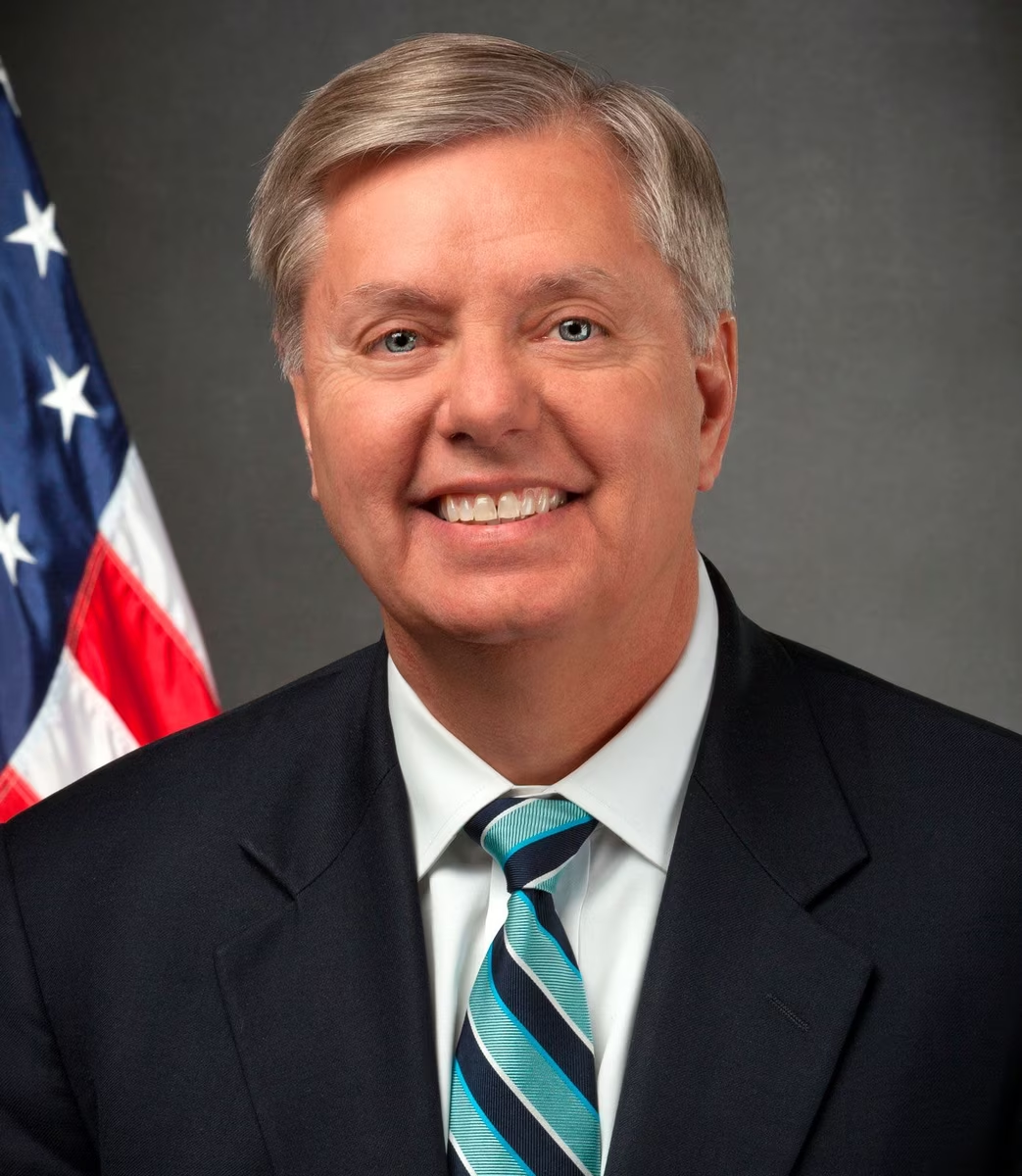
Washington, D.C-Republican Senator Lindsey Graham appeared almost beside himself after President Donald Trump announced on Saturday that the United States was nearing a deal with Iran to end the war, prompting Graham to launch into a frantic defense of Israel and an aggressive push to force Arab and Muslim countries into the Abraham Accords as compensation for what hardline pro-Israel circles increasingly view as an unacceptable diplomatic compromise.


Graham has long ceased behaving like an American senator concerned primarily with the needs of his constituents. Instead, he increasingly resembles an unofficial spokesman for Israel and, more specifically, for the political agenda of Benjamin Netanyahu. His latest comments praising Trump for allegedly pressuring Arab and Muslim countries into the Abraham Accords are not merely detached from reality. They expose the intellectual bankruptcy of a political class that still believes the Middle East can be bullied, bribed, and manipulated into accepting permanent Israeli domination while Palestinians are erased from history.


Graham’s statement drips with the arrogance that has defined decades of failed American policy in the region. He praises the possibility that Saudi Arabia, Qatar, and even Pakistan might normalize relations with Israel, describing it as “beyond transformative” and claiming it would effectively end the Arab-Israeli conflict. He then openly threatens countries reluctant to comply, warning of “severe repercussions” if they refuse Washington’s demands.


The language is revealing. This is not diplomacy. It is imperial entitlement masquerading as peace-making.


For Graham, sovereign nations are expected to align themselves with Israeli strategic interests or face punishment from Washington. Their domestic public opinion, political realities, moral concerns, and historical commitments are treated as irrelevant obstacles to American-Israeli geopolitical ambitions. The senator speaks as though the Middle East were still an American protectorate where regimes can be ordered into submission by politicians in Washington.


But the world Graham imagines no longer exists.


His comments expose a profound inability to grasp how dramatically the political landscape has changed since the launch of the Abraham Accords. Those agreements were always less about peace than about restructuring the region around Israeli supremacy. They aimed to normalize Israel’s occupation, marginalize the Palestinian struggle, and integrate Arab states into a US-led security architecture designed largely around Israeli interests and confrontation with Iran.


The underlying assumption was simple: Palestinians could be abandoned without consequence.


That fantasy has now collided with reality.


The destruction of Gaza has shattered the illusion that the Palestinian issue can simply be buried under trade agreements, intelligence cooperation, and arms deals. Across the Arab and Muslim worlds, public anger toward Israel has exploded to levels unseen in decades. Millions watched entire neighborhoods flattened, civilians massacred, children starved, and humanitarian catastrophe unfold in real time. In that environment, Graham’s insistence that normalization with Israel represents the path to regional peace sounds not only detached, but grotesque.


He speaks of Israel as though it were an admired regional anchor bringing stability and progress to the Middle East. Increasingly, however, Israel is viewed globally as a deeply isolated state whose conduct has generated outrage across much of the world. International human rights organizations, legal scholars, UN officials, student movements, and growing sectors of global public opinion now openly accuse Israel of apartheid, ethnic cleansing, collective punishment, and systematic violations of international law.


Whether Graham accepts this reality is irrelevant. The perception exists, and it is growing.


Yet Graham continues speaking in the language of the 1990s and early 2000s, when American politicians could still present unconditional support for Israel as morally uncomplicated and politically cost-free. He appears incapable of understanding that younger generations around the world — including many Americans — increasingly reject that framework altogether.


Even more striking is Graham’s fantasy that forcing Arab states into normalization would “end the Arab-Israeli conflict.” This reflects either astonishing ignorance or deliberate denial. The conflict was never merely about diplomatic recognition between governments. Its core has always been the dispossession of Palestinians, military occupation, denial of statehood, and systematic inequality. No agreement signed by Gulf monarchies can erase Palestinian national identity or extinguish demands for freedom and justice.


Indeed, the Abraham Accords themselves arguably helped intensify regional cynicism by confirming what many Palestinians already believed: that parts of the Arab political elite were prepared to sacrifice Palestine for strategic and economic gain. Graham’s vision demands precisely that outcome — total regional acceptance of Israeli hegemony while Palestinians remain stateless, fragmented, and politically crushed.


What makes his comments especially jarring is the near-total absence of moral reflection. There is no acknowledgment of Palestinian suffering, no recognition of the devastation in Gaza, no concern for civilian deaths, displacement, or collective trauma. Palestinians appear in Graham’s worldview only as an obstacle to be bypassed in pursuit of a larger strategic order favorable to Israel and Washington.


That moral emptiness increasingly defines much of the American political establishment’s discourse on the Middle East.


There is also something profoundly revealing about Graham himself. He represents South Carolina, a state struggling with entrenched poverty, weak healthcare outcomes, educational deficiencies, and deep economic inequality. Yet Graham devotes extraordinary political energy to defending Israel, visiting it constantly, and promoting its regional ambitions while many of his own constituents continue facing chronic hardship.


Critics therefore increasingly view him not as a senator advancing American national interests, but as part of a Washington political culture whose loyalty to Israeli priorities often appears stronger than its commitment to addressing America’s own crises.


Most importantly, Graham fundamentally misunderstands the emerging global order. He still believes Washington can dictate political outcomes across the Middle East through pressure and intimidation. But countries like Saudi Arabia and Qatar now operate in a far more multipolar environment, balancing ties with the United States alongside expanding relations with China, Russia, and other rising powers. The era when American senators could casually threaten entire regions into obedience is fading.


Graham’s statement ultimately reads less like strategic analysis than ideological desperation — the desperate insistence that a collapsing regional project can still be salvaged through coercion and bravado.


But history is moving in the opposite direction.


The Palestinian issue has not disappeared. Israel’s legitimacy crisis is deepening. Global opinion is shifting. American dominance is weakening. And millions across the world increasingly reject the notion that peace can be built upon permanent occupation, inequality, and the political erasure of an entire people.


That is what Lindsey Graham fails to understand. His worldview belongs to a fading era — one sustained by military power, diplomatic intimidation, and unquestioning allegiance to Israel, but increasingly detached from both regional reality and global moral sentiment.

ARAB AND WORLD

Sun 24 May 2026 9:06 pm - Jerusalem Time

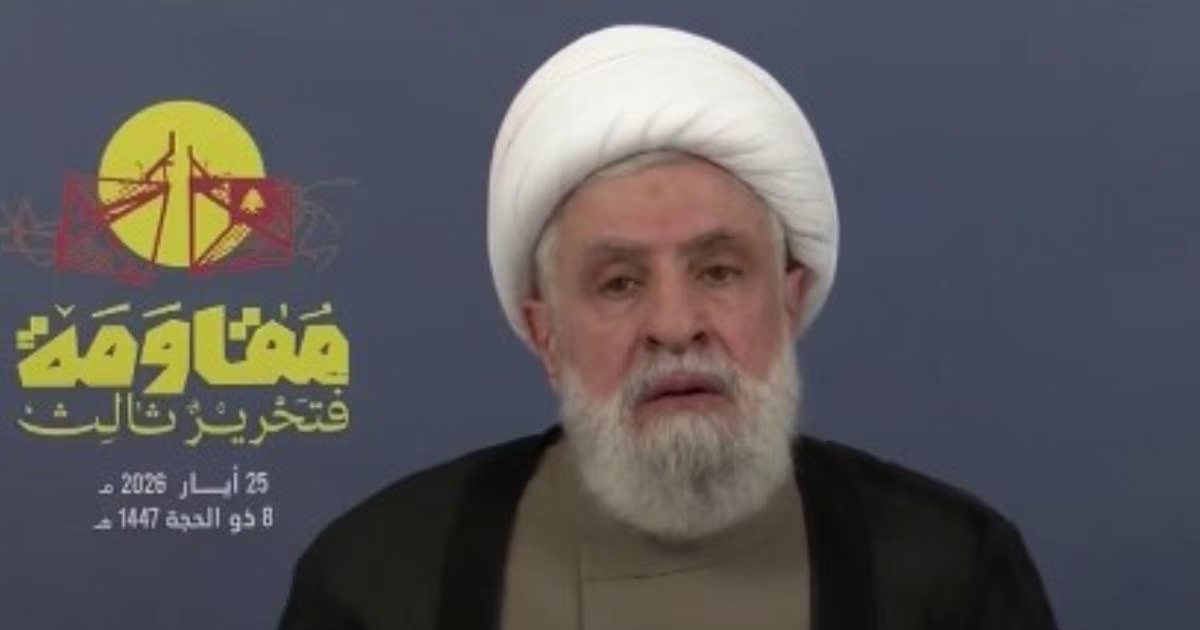
Qassem Rejects Disarmament and Direct Negotiations: A Project Paving the Way for Genocide and Serving the Occupation

The Secretary-General of Hezbollah, Naim Qassem, reiterated the party's adherence to its weaponry as a fundamental element in the Lebanese deterrence equation, calling on the Lebanese government to review its policies regarding confining arms to the state. Qassem considered that the executive authority is required to stand by the people in confronting existential threats, instead of adopting options that weaken national power elements and leave the country exposed to aggressions.

Qassem pointed out in a televised speech on the occasion of the Resistance and Liberation anniversary that official Lebanese concessions have been unjustified during the past period. He noted that these concessions reached the point of attempting to criminalize the resistance, which the party sees as a reflection of internal and external pressures aimed at changing Lebanon's security and defense doctrine at a sensitive time.

Regarding international pressures, the Secretary-General stressed that American sanctions will not succeed in weakening the party's structure or deterring it from its strategic choices. He affirmed that the escalating calls for disarmament are merely an attempt to strip the country of its defensive capabilities, describing this path as a prelude to acts of genocide that Lebanon might face amidst continuous Israeli ambitions and escalating regional tensions.

Qassem linked any discussion about the defense strategy and the future of weaponry to first stopping the comprehensive aggression on Lebanese territories. He clarified that the top priority currently is the liberation of prisoners and ensuring the dignified return of displaced persons to their villages and cities, indicating that talks about internal security arrangements cannot take place under fire or political pressures directed from abroad.

Qassem described the project of exclusive weaponry at the present time as directly serving the Israeli agenda, considering that weakening the resistance is a strategic goal for the occupation. He sharply criticized the performance of the Lebanese authorities, asserting that if the government is incapable of protecting national sovereignty and securing the country, then its departure becomes a national necessity to make way for stronger options.

On the ground, the Secretary-General vowed that the resistance's drone weaponry would continue to pursue Israeli occupation soldiers in all locations. He affirmed that documenting these operations through aerial photography is what forces the Israeli side to acknowledge its heavy losses, which it tries to cover up by targeting civilians and safe homes in the steadfast southern villages.

On the political front, Qassem announced the party's absolute rejection of any form of direct negotiations with Israel, considering them a free gain for the enemy. He clarified that any negotiation path must preserve Lebanon's full rights without making concessions that affect sovereignty or grant the occupation legitimacy it does not deserve, especially in light of its continued aggression in the region.

On an internal matter related to economic pressures, Qassem defended the Al-Qard Al-Hasan institution, affirming that it is a legal institution licensed by the Lebanese state. He revealed that the institution provided its services to about 300,000 subscribers last year through a gold collateral system, which helped a wide segment of citizens cope with the suffocating living crises the country is experiencing.

The Secretary-General stressed that the sacrifices made by the people and the resistance will not be in vain, affirming that the extent of destruction and killing will not break the party's will. He said that the battlefield is the decider, and that the coming days will prove the resistance's ability to steadfastness and achieve what he described as the third liberation, despite all the military and political challenges surrounding the Lebanese arena.

Qassem concluded his speech by expressing hope that regional understandings, specifically between the United States and Iran, would lead to an end to the state of war in the Middle East. He emphasized the necessity for any major settlement to include the protection of Lebanon and the guarantee of its stability, announcing the party's commitment to rebuilding all that the occupation destroyed and ensuring the return of residents to their homes immediately after the aggression ceases.

Disarmament practically means stripping Lebanon of its defensive capability, which is a prelude to genocide amidst continued Israeli aggressions.

PALESTINE

Sun 24 May 2026 9:05 pm - Jerusalem Time

Horrific Testimonies from 'Freedom Flotilla' Activists: Rape and Torture in Occupation Prisons

Recent testimonies from volunteers and activists who participated in the 'Freedom Flotilla' initiatives heading to the Gaza Strip have revealed shocking details about the torture, physical, and sexual abuses they endured inside Israeli detention centers. These accounts come at a time when international demands are escalating for accountability from the occupation authorities for their crimes committed against unarmed solidarity activists who sought to break the siege imposed on the Strip.

Activists who participated in these sea voyages confirmed that the abuse they faced reflects a small part of the daily suffering endured by Palestinian prisoners in occupation prisons. Despite the flotillas' failure to reach Gaza's shores, they succeeded in conveying a vivid picture to the world of the brutality of Israeli treatment of dissenting voices against its siege policies, especially towards foreign activists.

In the details of the testimonies, media sources reported accounts from French activists Yasmine Scola and Adrien Berthel, who described the various forms of violence they were subjected to from the moment their ships were intercepted. The activists pointed to clear racial discrimination in treatment, where individuals of non-European descent were subjected to more severe and brutal acts of abuse and physical violence than others.

For her part, Australian activist Juliet Lamont recounted a bitter experience during which she was tightly bound with plastic ties and severely beaten by occupation soldiers. Lamont explained that the soldiers poured water under her for nearly an hour to make her believe she was drowning, confirming that she and 12 other activists were subjected to sexual assaults she described as horrific and systematic during their detention.

The testimonies were not limited to direct physical violence but also included inhumane detention conditions in Ashdod port and 'Ktzi'ot' prison, as confirmed by Brazilian activist Thiago Avila. Italian doctor Javier Thundry, who was among the participating medical teams, described Israeli detention centers as reminiscent of the Nazi 'Gestapo' methods of intimidating and torturing detainees.

Dr. Thundry explained that the health and psychological condition of some detainees was severely deteriorated, to the extent that their colleagues could not confirm whether some of them were still alive. These testimonies reinforce previous reports by German journalist Analytica, who documented that female activists were subjected to rape after refusing to undergo forced and humiliating naked searches.

In the context of legal action, the 'International Freedom Flotilla Coalition' announced the immediate commencement of an independent and comprehensive documentation process for all recorded testimonies. This process includes conducting thorough medical and psychological examinations of the affected individuals, with the aim of preparing a comprehensive legal file to be submitted to international courts and judicial bodies to prosecute Israeli officials for these crimes.

Available data indicates that the scale of Israeli targeting of solidarity activists was extensive, with approximately 1500 activists participating in a series of flotillas, including the ship 'Madeleine' and a flotilla comprising 40 other ships. The vast majority of these participants were subjected to arbitrary arrest or physical and psychological abuse during their attempts to reach Gaza before and after 2023.

On the diplomatic front, the Turkish Foreign Ministry announced that it had received 422 activists who were detained as part of the last flotilla, while reports still indicate complex cases of detainees holding dual nationalities. Human rights organizations are pressuring Western governments to take firm stances that go beyond traditional statements of concern and condemnation regarding what their citizens are subjected to.

In conclusion, the 'European Union for Freedom' stressed that what the international activists endured, despite its cruelty, cannot be compared to the scale of crimes committed against thousands of Palestinian prisoners. The Union called on the international community to consider these testimonies as additional evidence of the necessity to end the siege and stop the systematic violations practiced by Israel away from international oversight.

The Israeli detention center resembles the Gestapo era, and some detainees were in extremely difficult health and psychological conditions.

PALESTINE

Sun 24 May 2026 9:05 pm - Jerusalem Time

Education Under Rubble.. Gaza Resists 'Cognitive Genocide' with Displacement Tents and Field Schools

In the heart of the devastated Tel al-Hawa neighborhood west of Gaza City, children's voices echo the national anthem from inside dilapidated tents, declaring the continuation of the battle for awareness and education despite the surrounding rubble. The 'Al-Awda' field school has become a model for this resilience, housing over 1600 students crowded into nine plastic tents, each no larger than twenty square meters.

This school was established at the peak of the war in April 2024 and suffered the hardships of forced displacement twice; first from Rafah and then from the central part of the Strip, before settling in Gaza. Each time, the teaching staff dismantled the tents and carried them on their shoulders, preferring to save simple educational materials over personal belongings to ensure the continuity of teaching.

Students in these field schools endure harsh conditions, sitting on sand shoulder-to-shoulder under the scorching sun, intensified by the plastic covers. Teachers confirm that severe overcrowding sometimes leads to suffocation, in addition to the distraction of children burdened with arduous tasks such as fetching water and collecting firewood after school hours.

Officially, the Ministry of Education has adopted an alternative emergency plan that includes 'remedial promotion' to address the deep educational gap left by the war. These intensive courses aim to enable students to move between grade levels after undergoing assessments that determine their academic achievement level in the absence of stable formal education.

Official data indicates the presence of about 820 field schools and educational points distributed throughout the Strip, accommodating nearly 400,000 students from various stages. These efforts overlap between schools supervised by the Ministry, those managed by UNICEF, and learning centers affiliated with UNRWA that operate unofficially.

The extent of losses in the education sector appears catastrophic, with statistics indicating the martyrdom of over 19,000 male and female students, and the injury of more than 28,000 others since the beginning of the aggression. The educational system also lost 801 of its teaching staff, creating a significant void in the educational and academic expertise needed to manage the crisis.

The damage was not limited to lives but systematically targeted infrastructure, with 179 government schools and 105 UNRWA schools suffering total or partial destruction. This targeting has made returning to traditional school buildings impossible in the foreseeable future, prompting families to seek costly and exhausting educational alternatives.

Higher education in Gaza faced a similar fate, as 95% of university campuses were damaged, and 195 university buildings were completely out of service. International organizations such as UNESCO estimate that restarting a minimum level of university education requires urgent funding exceeding 110 million dollars to repair what the war machine destroyed.

Economically, education has become an additional burden on families suffering from extreme poverty, as the prices of simple stationery have risen to unprecedented levels. Testimonies from parents confirm that the price of a single notebook has reached about two dollars, an amount beyond the means of families struggling to secure basic livelihoods in the absence of income.

Educational sources speak of the phenomenon of 'cognitive genocide' practiced by the occupation through targeting academic institutions and killing scholars and researchers. International law specialists believe that this behavior goes beyond material destruction to an attempt to dismantle national identity and deprive future generations of their fundamental right to knowledge and development.

Psychologically, children in Gaza face complex traumas resulting from loss and repeated displacement, which has severely affected their mental abilities and concentration. Psychologists point out that the absence of a safe school environment has driven many children into the streets, exposing them to behaviors charged with tension and suppressed violence due to continuous pressure.

Despite this bleakness, students insist on their dreams; the child Kinan, who spent months in water queues, dreams of becoming a lawyer to defend the rights of his people. And Karim, who sees his school tent as the first step towards his dream of becoming a doctor, reflecting a solid will that defies systematic attempts at ignorance.

Popular education experiences that emerged during the First Intifada are returning to the forefront in Gaza today, where education transforms from a mere institutional service into an act of sovereign resistance. These community initiatives aim to preserve collective consciousness and protect it from collapse, emphasizing that books and pens are tools no less important than any other means of resilience.

The reality of education in the Gaza Strip remains suspended between the rubble of schools and the aspirations of a generation that refuses to surrender to ignorance, amidst international calls for urgent intervention to save what remains. The continuation of the educational process under fire represents a clear message of defiance, but it requires real support to rebuild what the war destroyed and ensure children's right to a safe future.

The displaced rushed to save what remained of their household furniture, but the school administration only thought of saving what keeps education alive.

PALESTINE

Sun 24 May 2026 9:03 pm - Jerusalem Time

Widespread Condemnation: 15 Arab and Islamic Countries Reject 'Somaliland' Embassy Opening in Jerusalem

Fifteen Arab and Islamic countries have expressed their categorical and unified rejection of the separatist 'Somaliland' region's intention to open a representative office, acting as an embassy, with the Israeli occupation authorities in the occupied city of Jerusalem. In a joint statement, these countries considered this move a blatant departure from international consensus and a challenge to United Nations resolutions concerning the legal status of the Holy City.

The list of countries that signed the statement included Egypt, Turkey, Saudi Arabia, Qatar, Jordan, Pakistan, Indonesia, Djibouti, Somalia, Palestine, Oman, Sudan, Yemen, Lebanon, in addition to Mauritania, which later joined the list. These countries affirmed that the move led by the separatist region lacks any legal or political legitimacy given its lack of international recognition.

Sources reported that the foreign ministers of the 15 countries condemned in the strongest terms this 'alleged' step, pointing out that it directly affects the historical rights of the Palestinian people. The statement emphasized that any attempts to grant legitimacy to unrecognized entities through the gateway of occupied Jerusalem are doomed to fail and will not change the reality of the city.

The ministers affirmed in their statement that East Jerusalem is occupied Palestinian territory according to the 1967 borders, and no entity has the right to change its character or legal status. They clarified that all unilateral measures taken by the occupation authorities or any other parties to establish a new reality in the city are null and void and have no binding legal effect.

The statement was not limited to the issue of Jerusalem; the 15 countries reiterated their full and absolute support for the unity and sovereignty of the Federal Republic of Somalia over all its national territory. The signatories rejected any unilateral measures that would undermine Somalia's sovereignty or threaten its territorial integrity, in a clear reference to rejecting the region's separatist moves.

The 'Somaliland' region had announced on May 19 its intention to establish an embassy in occupied Jerusalem, a step that was immediately welcomed by the occupation government. Mohamed Haji, who presents himself as the region's ambassador to Israel, stated that this step comes within the framework of strengthening mutual strategic cooperation between the two parties, which sparked widespread anger in Arab and Islamic circles.

It is worth noting that the Israeli occupation authorities had announced their official recognition of the 'Somaliland' region as an independent state in December 2025, a move observers considered an attempt to destabilize the Horn of Africa region. This recognition was met with strong rejection at the time by the Somali government in Mogadishu, which considers the region an integral part of its territory.

The 'Somaliland' region has operated as an administratively and security-independent entity since its unilateral declaration of secession in 1991, but it has not received any official international recognition throughout the past decades. Its recent attempts to approach Israel and open an embassy in Jerusalem are part of its efforts to gain diplomatic recognition in exchange for compromising on the constants related to the Palestinian issue.

The Islamic and Arab countries warned of the repercussions of this step on security and stability in the region, stressing that adherence to international law is the only way to resolve disputes. The statement called on the international community to confront these transgressions aimed at undermining the two-state solution and circumventing international legitimacy resolutions that guarantee the rights of Palestinians in their capital, Jerusalem.

In conclusion, the signatory countries emphasized the necessity of respecting the sovereignty of states and non-interference in their internal affairs, considering that alliances built at the expense of peoples' rights and national sovereignty will only lead to further tension. Sources confirmed that coordination will continue between these countries to confront any similar moves that may aim to undermine the historical status of Jerusalem or the unity of Somali territories.

Opening an embassy for the internationally unrecognized region is an illegal step that represents a blatant violation of international law and international legitimacy resolutions.

OPINIONS

Sun 24 May 2026 6:14 pm - Jerusalem Time

Israel Pushes Lebanon Towards Disintegration: The Battle for Sovereignty Against Occupation and American Hegemony

Washington's Message

Washington – Said Arikat – 24/5/2026

News Analysis

Once again, Lebanon finds itself hostage to regional and international understandings crafted far from the will of its people, after President Trump announced that an agreement with Iran was on the horizon, potentially opening the door to de-escalation across several fronts in the Middle East, including Lebanon. However, Lebanon's long experience with foreign interventions makes many view these promises with suspicion, especially since the United States and Israel have historically not treated Lebanon as an independent, sovereign state, but rather as a pressure point and a field for settling scores that serves their strategic interests in the region.

The recent war clearly revealed the extent of this external exploitation of Lebanon. After Hezbollah fired towards Israel in solidarity with Tehran, the country turned into an open confrontation zone, with southern villages and Lebanese civilians paying the price, while international powers continued to manage the conflict according to their own calculations. The widespread Israeli shelling did not only target the party's military infrastructure but also civilian infrastructure and the livelihoods of residents, in a clear attempt to plunge Lebanon further into chaos and collapse, thereby preventing the establishment of a strong state capable of asserting its independent national decision.

Despite talks of a ceasefire brokered by Washington last April, Israel continued its attacks inside Lebanese territory on an almost daily basis, relying on full American political and military cover. This reality confirmed that Washington does not treat Lebanon as an independent partner, but rather as a security file exclusively linked to Israel's security. Therefore, the American administration did not exert any real pressure to compel Israel to respect the truce, but rather left the door open for continued strikes and military attrition.

According to what the New York Times reported from Iranian officials, the potential agreement between Washington and Tehran may include a cessation of fighting on various fronts, including Lebanon. But these leaks do not dispel fears, because previous experiences have proven that any American-Iranian understanding is often used to manage crises, not to resolve them, while Lebanon remains the weakest link left to its fate amidst international tug-of-war.

Israeli policy towards Lebanon has never been based on seeking genuine peace, but rather on keeping the country weak, divided, and incapable of building a strong, independent state. From repeated invasions to the ongoing occupation of parts of the South, Israel has treated Lebanon as an arena that should be politically and sectarianly dismantled so that it does not become a source of Arab strength on its northern border. The United States, instead of playing the role of an impartial mediator, provided full cover for this strategy through open military, political, and diplomatic support. Therefore, American talk of stability seems contradictory to the actual policies that have continuously and intentionally contributed over the years to deepening Lebanese division and weakening central state institutions.

In this context, recent statements by the Israeli government appear highly significant, as it stressed that it would not relinquish its "freedom of action" inside Lebanon even if a broader regional agreement were reached. This practically means that Israel wants to impose a permanent equation that allows it to intervene militarily whenever it wishes, without any actual respect for Lebanese sovereignty or international law.

Despite the losses suffered by Hezbollah, the party still represents a fundamental force in the Lebanese and regional equation, whether Lebanese agree or disagree with it politically. But the real danger lies in the continued internal division over how to confront the Israeli project, as Tel Aviv always benefits from Lebanese divisions to justify its interventions and expand its security and military influence.

The current Lebanese reality compels all political forces, including Hezbollah and its opponents, to realize that continued internal division serves Israel first and foremost. A divided state and warring factions give Tel Aviv a permanent opportunity to intervene and impose new realities on the ground, especially in the South and border areas. Therefore, any serious national project must start from dialogue among the Lebanese themselves, not from relying on foreign capitals. Moreover, confronting Israeli ambitions does not necessarily mean adopting a completely unified political vision, but rather agreeing on a national minimum that protects Lebanese sovereignty and prevents the country from becoming an open arena for future continuous and dangerous regional wars and international conflicts.

Lebanese fears are increasing with the continued Israeli occupation of a border strip inside Lebanese territory, where Israeli forces maintain positions extending several miles into the South. This military presence does not appear temporary in the eyes of many Lebanese, but rather part of a long-term strategy aimed at imposing new realities on the ground and linking any future withdrawal to political and security conditions that primarily serve Israeli interests.

Lebanon today stands at a fateful moment that transcends a mere temporary ceasefire or a fleeting regional understanding. The real battle concerns preserving the country's unity and preventing its transformation into conflicting spheres of influence that serve external projects. If Israel seeks to impose a new border and security reality by force, then the most effective Lebanese response must be to build a unified national stance that rejects both occupation and division. Moreover, Hezbollah's responsibility, as a major force, is not limited to military confrontation only, but also includes engaging in an inclusive national project that reassures the rest of the Lebanese and restores the state and its institutions as the ultimate authority for everyone without actual exception.

Amidst economic collapse, mass emigration, and declining Lebanese trust in their institutions, the need to redefine national priorities away from sharp alignments seems more urgent. Lebanon will not be able to confront Israeli and American pressures if it remains mired in internal divisions and narrow sectarian calculations. Furthermore, any real stability will not be achieved through international understandings alone, but through the consensus of the Lebanese on a project for a just and strong state capable of protecting its borders and its independent political decision. Without that, Lebanon will remain exposed to repeated cycles of wars and fragile truces, while external powers continue to use its crises to achieve their strategic interests at the expense of the Lebanese people and the future of the entire region.

PALESTINE

Sun 24 May 2026 6:13 pm - Jerusalem Time

Government reviews its most prominent developmental and reform interventions last week

The Government Communication Center issued a report highlighting the most important developmental and reform interventions implemented by the Palestinian government during the past week (2026/05/17 – 2026/05/23), which are as follows:⭕ Prime Minister, Dr. Mohammad Mustafa, discussed in his office in Ramallah with the United Nations, the World Bank, and the European Union, the results of the updated damage and needs assessment report in the Gaza Strip, and ways to enhance humanitarian and developmental interventions, affirming the government's readiness to work with partners to ensure the implementation of recovery and reconstruction programs. He also discussed with the International Finance Corporation the expansion of support for the Palestinian private sector and renewable energy projects, and with another German official delegation the political, economic, and humanitarian developments, warning of the catastrophic situation in the Gaza Strip, and calling for intensified international efforts to relieve the Palestinian people.⭕ The Ministry of Public Works and Housing continued to implement its interventions in the West Bank and Gaza Strip; a tender was issued for the construction of the Baqa Al-Sharqiya Basic Boys' School in Tulkarm Governorate, funded by the Arab Monetary Fund and the Islamic Development Bank, in addition to awarding a tender for the finishing of the Beit Dajan Secondary Girls' School building in Beit Dajan village, Nablus Governorate, funded by the Arab Bank for Economic Development in Africa, managed by the Islamic Development Bank as manager of the Al-Aqsa Fund, along with opening a tender for the rehabilitation of the arrivals hall at the Jericho rest stop, funded by the World Bank. In the Gaza Strip, the Abdul Aal Land Shelter Center was implemented, covering an area of 3800 square meters to shelter 41 families in the North and Gaza governorates, and the implementation of the Nasr Land Shelter Center in Jabalia began with a capacity of 135 shelter units over an area of approximately 11.5 dunams, with work underway to replace worn-out tents with "RHU" units in the Shaath Land Shelter Center as part of a plan to improve shelter conditions. Damage assessment work also continued, in addition to collecting, transporting, and processing more than 343 thousand tons of rubble within projects funded by the United Nations Development Programme, the Japanese Fund, and the Norwegian Fund, bringing the total processed rubble in partnership with various entities to more than 680 thousand tons.⭕ The Ministry of Education and Higher Education began expansion work at Deir Abu Da'if Secondary Girls' School in Jenin by adding 4 classrooms, administrative and service rooms worth $500,000, and began maintenance and rehabilitation work at two schools in Hebron (Al-Aqsa Basic Girls' and Abdul Hay Shahin Basic Boys') worth $300,000, in addition to awarding a tender for the finishing of Beit Dajan Secondary Girls' School in Nablus worth $800,000. Regarding educational programs, the Minister met with his British counterpart and organized a virtual visit to Yasser Amro Girls' School in Old Hebron. The Ministry also launched a number of initiatives including the "We Read and Liberate" competition, a training program for standard operating procedures in partnership with the National School of Administration, the "STEM" Palestine 2026 Olympiad, and a cybersecurity program for communication coordinators, in addition to signing the annual plan for the education sector with UNICEF 2026–2027, launching the "TIMSS 2027" application in 25 schools, and concluding the National Innovation and Robotics Competition at Palestine Polytechnic University. In the field of higher education, the Ministry announced scholarships in Italy, Malta, and Malaysia, nominated students for advanced medicine in Jordan 2026–2027, concluded the Minister's participation in the Global Education Forum in London, held workshops on the National Qualifications Framework to enhance the alignment of education with the labor market, implemented first aid and psychological support training in Nablus, and launched the "Human Rights and Gender" initiative in partnership with An-Najah University to promote a safe digital university environment.⭕ The Ministry of Social Development implemented a comprehensive package of field interventions in the West Bank and Gaza Strip in partnership with local and international institutions, where 3,016 families in the West Bank benefited from food and non-food parcels and shopping vouchers worth 341,260 shekels, while the Jericho and Al-Aghwar Directorate distributed 178 food parcels worth 44,500 shekels to displaced and affected families. In Gaza, 15,693 beneficiaries received food aid including supplements, meals, parcels, 7,000 loaves of bread, and 100 cups of water, in addition to 2,960 beneficiaries of non-food aid including hygiene parcels, mattresses, school bags, and clothing vouchers. In the field of social protection, 148 interventions were implemented for women's protection in the West Bank, while 5,877 beneficiaries in Gaza benefited from psychological support services, consultations, and follow-up on violence cases. In child and juvenile protection, 215 interventions for children and 68 for juveniles were implemented in the West Bank, with awareness workshops held in Nablus on bullying and the dangers of drugs, in addition to 80 children in Gaza benefiting from protection interventions. In the orphan file, 1,505 orphans in the West Bank and 766 in Gaza benefited from food parcels, diapers, recreational activities, and data updates. Also, 70 interventions were implemented for people with disabilities in the West Bank and one intervention in Gaza, in addition to a meeting in Nablus to discuss the rights of children with "Down syndrome" and enhance the services provided to them. For the elderly, 78 interventions were implemented in the West Bank and two in Gaza, while 189 new and renewed health insurance services were provided. Also, 53 interventions were implemented in the nurseries file, including a workshop in Bethlehem in cooperation with the Civil Defense to enhance emergency preparedness, in addition to 27 interventions in the field of economic empowerment, along with community and supportive interventions for charities in the West Bank and Gaza to enhance social protection for vulnerable groups.⭕ The Ministry of Agriculture continues to implement a package of field and developmental interventions in partnership with local and international institutions, in parallel with efforts with the Civil Defense to enhance field readiness with a joint plan to protect agricultural lands and forests from fires during the summer. The Minister conducted a field tour in Bethlehem and Hebron governorates, which included a direct meeting with farmers affected by occupation attacks and the distribution of olive seedlings as part of the emergency response program. In northern Ramallah, the Ministry distributed 90 bales of straw (450 kg per bale) to affected livestock breeders, in addition to visiting the displaced community in Al-Ma'arajat "Arab Al-Malihat". The Ministry, in partnership with FAO and the European Union, implemented a training program for female livestock breeders that included 4 activities in Tulkarm, Hebron, Halhul, and Jinsafut with the participation of 73 women, in addition to training in Bazzariya with the participation of 15 female farmers. In Jerusalem, grape farms in Beit Anan, Biddu, Beit Ijza, and Beit Duqqu were rehabilitated as part of a project targeting 47 farmers over an area of 130 dunams, while in Salfit, training was conducted on the manufacture of oil ointments and soap with the participation of 15 female farmers, in addition to evaluating 27 olive presses, and similar training in Deir Jarir, Ramallah. The Ministry also supported "Montana" company in Deir Al-Ghusun with a molokhia production line worth 55 thousand shekels in partnership with Agricultural Relief and Oxfam and with support from (DGD), as part of a project to empower women and youth in the agricultural value chain. In Gaza, under the supervision of the Higher Agricultural Emergency Committee, Agricultural Relief implemented a project to rehabilitate and operate agricultural wells and install water lines in Sheikh Ajlin funded by Oxfam for 60 farmers.⭕ The Water Authority announced the completion of solving the sewage problem in the Hamad City area resulting from significant damage to the main water pipeline, funded by the German government and implemented by the United Nations Development Programme. The Water Authority also signed a memorandum of understanding with the Arab American University to enhance innovation and scientific research in the water and sanitation sectors, by directing university studies to address national challenges, developing university laboratories to become specialized centers for water testing, in addition to implementing training and qualification programs for technical and research staff. In the Gaza Strip, in cooperation with Doctors Without Borders, 15 desalination plants with a total capacity of 2538 cubic meters per day were installed and operated, to serve displaced persons' camps and a number of health facilities, with continued coordination to establish additional stations in the most needy areas.⭕ The Minister of Interior chaired the meeting of the Supreme Council for Civil Defense to discuss national readiness to face summer challenges and enhance coordination among partner entities, emphasizing the importance of teamwork to protect citizens and their property in exceptional circumstances that include natural hazards and attacks on national assets, which requires a comprehensive vision based on readiness and effective response. In the context of field work, security and civil agencies carried out extensive tasks, including the police arresting 1149 wanted individuals, including 7 dangerous ones, executing 2598 judicial warrants, and 55 anti-drug missions, in addition to following up on 244 criminal incidents. The Civil Defense carried out 339 firefighting missions and 93 rescue missions, issued 512 permits for establishments, inspected and licensed 251 elevators, and carried out 870 public safety tours. The Customs Police initiated 58 cases of tax and customs evasion and market monitoring, and destroyed 19.47 tons of unfit and non-compliant goods.⭕ The Ministry of National Economy carried out 87 inspection tours, resulting in the seizure of half a ton and the destruction of 120 tons of damaged products, and the referral of an offender to the public prosecution for price manipulation, in addition to issuing 25 pledges and legal notices, handling 20 consumer protection complaints, and withdrawing 32 samples for laboratory testing. The steering committee for the "Turathi" center for empowering women and youth discussed the progress of project implementation and its operational and sustainability phases, while the Ministry and the Monetary Authority held a specialized course on e-commerce and electronic payment. The Ministry registered 75 companies and provided 886 services in the field of companies, in addition to registering 43 new traders and providing 44 services in the commercial register, issuing 281 import licenses and 15 foreign trade transaction cards, in addition to issuing 38 certificates of origin and completing 49 commercial transactions with Turkey, registering 13 trademarks, and providing 92 services in the field of intellectual property.⭕ The Minister of Foreign Affairs and Expatriates met with representatives of Brazil, Mexico, Uruguay, Canada, Spain, and Germany accredited to the State of Palestine to discuss the results and implications of the "Defending Democracy" meeting. The Ministry condemned the interception and hijacking of the "Global Resilience Fleet" ships, considering it a war crime that warrants immediate legal sanctions and a unified international stance. It also condemned the occupation's approval of seizing UNRWA headquarters and Palestinian properties in Jerusalem and converting them into military installations, considering this a serious violation and a colonial escalation that threatens the international legal system and entrenches ethnic cleansing. The Ministry issued a press statement on the occasion of the 78th anniversary of the Nakba titled: "The Nakba is an ongoing tragedy, and genocide is one of its forms."⭕ The Minister of Jerusalem Affairs discussed with the Secretary-General of the League of Arab States at the League of Arab States headquarters in Cairo the latest developments in the city of Jerusalem and ways to enhance Arab action to confront the escalating and continuous Israeli measures. The Ministry also participated in a specialized workshop on the legal consequences of the (E1) plan and the targeting of Khan al-Ahmar and mechanisms to confront it, affirming its continued efforts to support Palestinian Bedouin communities and document Israeli violations. In this context, the Undersecretary of the Ministry participated in the handover ceremony for the new village council in Jaba' and the new municipal council in Al-Ram, emphasizing the Ministry's priority to support local authorities in Jerusalem Governorate.⭕ The Ministry of Labor launched modern vocational training programs in Aida Camp, Bethlehem, in the fields of renewable energy, artificial intelligence, and technologies, as part of an effort to link training with labor market needs. The Minister of Labor visited the "SOS" Children's Village in Bethlehem to learn about the services provided to children without care and discuss enhancing cooperation in the areas of protection, training, and employment. In support of employment, the Palestinian Employment Fund implemented 378 employment contracts under the "Path to Economic Resilience" project, conducted job interviews in various sectors, in addition to implementing temporary employment projects, solid waste management, and enhancing social cohesion programs, and completing training and initiatives to support graduates in education, health, industry, and entrepreneurship. Inspection teams also carried out 63 visits, benefiting 825 workers, handling 15 complaints, providing 20 legal consultations, and taking action against violating establishments, while occupational safety and health activities targeted 5 establishments and 40 workers, with high compliance with prevention standards and requirements, and achieving accreditation fees of 750 dinars.⭕ The Ministry of Transport and Communications launched the "Your Safety Matters to Us" initiative and the School Bus Safety Guide, and implemented awareness activities in partnership with the KOICA Alumni Association and with support from the Korea International Cooperation Agency (KOICA), aiming to enhance traffic safety culture and reduce accidents. The Ministry participated in meetings with transport companies and the private sector to develop public transport services and improve systems and procedures, in addition to supporting digital transformation by launching new electronic services in cooperation with the Palestinian Standards Institution, while continuing to implement specialized training programs in traffic safety management and qualifying driving instructors, and conducting field tours to learn about citizens' needs and enhance direct communication with them. The Ministry also handled 28 complaints submitted by citizens, while traffic departments recorded 594 initial vehicle registrations, 15 engineering equipment transactions, 1656 vehicle ownership transfers, 455 operating licenses, 33 transport company transactions, 665 new driver licenses, 26 special numbers, and 928 vehicle plates last week, in addition to 16541 vehicle movements, 10873 driver movements, 1366 practical tests, 1308 theoretical tests, and 1248 renewal or re-operation transactions for outstanding payments, and 1066 driver license renewals for outstanding payments.⭕ The Energy and Natural Resources Authority launched a joint national initiative to support farmers and enhance sustainability in the agricultural sector by providing them with mobile solar energy systems equipped with storage, and connecting agricultural directorates with integrated energy systems, contributing to reducing operating burdens, lowering electricity bills, integrating renewable energy into vital agricultural wells and facilities, and enhancing farmers' resilience and sustainable agricultural development. The Energy Authority also participated in the conclusion of environmental and health awareness programs with Ramallah Municipality for the year 2025–2026, which included activities and lectures on rationalizing energy consumption and renewable energy, enhancing environmental culture among students, and honoring schools and environmental activists, thus promoting concepts of sustainability and social responsibility. Solar energy projects with a capacity of approximately 500 kW peak were implemented in a number of government buildings, producing more than 196 thousand kWh annually and contributing to reducing electricity bills, in addition to preparing to install a 450 kW system at Jericho Government Hospital to enhance energy stability in the health sector, along with reviewing the "Revolving Fund" and "Shamsi" programs to expand solar energy and support the transition towards sustainable energy and energy independence.⭕ The General Authority for Civil Affairs coordinated the maintenance and repair of electricity and water networks in Salfit, Bethlehem, and Hebron governorates, and followed up on the extension of water lines to the villages west of Dura, in addition to coordinating the harvesting of agricultural lands adjacent to settlements. In Hebron Governorate, the Authority followed up on the detention of the director of Amnizal school and two teachers until their release, and also coordinated the entry of telecommunications company crews into the closed area of Hebron city to carry out service work. In Qalqilya Governorate, the Authority, after following up with the Israeli side, succeeded in reopening the Jayyus – Nabi Ilyas gate, which had been closed for a month, in addition to implementing a series of coordinations to support farmers behind the wall, including the entry of equipment, machinery, water lines, sheep, and workers for the maintenance of agricultural lands and greenhouses.⭕ The Minister of Health conducted field tours in Jenin, Tulkarm, and Nablus governorates, which included meeting with governors and visiting government hospitals to follow up on the health situation and urgent needs and enhance the continuity of medical services. On the international level, the Minister warned during a seminar in Geneva on the sidelines of the World Health Assembly of the comprehensive collapse of the Palestinian health system due to the targeting of health facilities in the Gaza Strip and the challenges in the West Bank and Jerusalem, calling for urgent and sustainable support, strengthening UNRWA's role, and protecting medical teams. Support for Palestine also topped the resolutions of the Council of Arab Health Ministers in Geneva. The Ministry participated in the Cosmetic Dentistry in the Age of Artificial Intelligence conference, emphasizing the importance of employing modern technologies in diagnosis and treatment, and implemented advanced training for dealing with mass casualties in Hebron, Beit Jala, and Jericho hospitals with support from the World Health Organization, in addition to continuing its daily awareness campaigns to enhance health awareness and prevention among citizens.⭕ The Minister of Local Government, during his participation in the 13th World Urban Forum in Azerbaijan, affirmed Palestine's commitment to implementing the global urban agenda despite the occupation's violations and depriving Palestinians of the right to housing. He also discussed with the Minister of Urban Planning in Azerbaijan enhancing cooperation in urban planning and sustainable development. In the context of developing local services, the project to establish a public services center in the town of Kober in Ramallah and Al-Bireh Governorate was completed at a cost of 44,000 euros, while the Ministry's teams and local government directorates continue to follow up on handover procedures in a number of local authorities in the northern governorates, according to legal procedures after approving the results of local elections, in preparation for completing the process in the remaining local authorities in the coming days.⭕ The Ministry of Women's Affairs completed the first phase of the Culture and Creative Industries project within the societal transformation axis, by implementing training workshops and capacity building targeting 36 government cadres from partner institutions to enhance gender concepts, societal change, and the employment of culture and creative industries in comprehensive development and supporting the Palestinian narrative. The Ministry also held meetings with the Palestinian NGO Network (NDC), Oxfam, and the Environmental Quality Authority to mobilize resources for implementing the cross-sectoral gender strategy and developing gender-sensitive environmental interventions, in addition to preparing economic empowerment interventions in cooperation with Spanish Development Cooperation. The Minister discussed with the Sawasiya program mechanisms to strengthen the women's protection system, develop national legislation and policies, and support the National Observatory for Monitoring Violence Against Women and responding to the needs of women and girls in light of the aggression.⭕ The Minister of Culture, along with the Minister of Tourism and Palestine's representative to UNESCO, visited the towns of Sebastia and Sinjil, emphasizing the importance of internationalizing the issue of Sebastia, preserving the Palestinian narrative, and supporting the residents in confronting settler attacks. The Minister of Culture also participated in commemorating the 40th anniversary of the late Khawla Amayreh, opened an art exhibition for artist Youssef Katlo in Dura, in addition to opening a conference on prisoner literature and launching a book by educational supervisor Mohammed Al-Sharawneh, discussed cultural media cooperation with the Palestinian Network for Media Development, and visited plastic artist Suleiman Mansour to check on his health. The Ministry organized various cultural and awareness activities, including workshops and activities on the Nakba and the Palestinian narrative in Salfit, events during Reading Week in Qalqilya, awareness activities on vocational training in Bethlehem, commemorating the 78th anniversary of the Nakba in Tubas and the Northern Jordan Valley, in addition to sponsoring the Palestinian Cultural Day in Al-Samou, participating in community and educational initiatives in Hebron, and launching the novel "Mined Paradises" as part of the "Culture for All" project.⭕ The Environmental Quality Authority teams carried out 24 inspection tours of industrial establishments, followed up on 5 environmental complaints, including one related to an illegal landfill, and granted 8 approvals for industrial and agricultural projects and one approval for a cellular broadcasting station, and issued 5 permits for importing chemical materials. In the framework of developing environmental work, the head of the Environmental Quality Authority, Eng. Zaghloul Samhan, discussed with general managers and branch offices the latest developments in digital transformation, international environmental cooperation, and enhancing work in the field of biodiversity. A specialized workshop was held within the European twinning program to develop mechanisms for granting environmental approvals, monitoring, and inspecting projects. The Authority also affirmed, in a statement on the occasion of the International Day for Biological Diversity, that protecting biodiversity and natural resources in Palestine represents a national priority in the face of systematic targeting of the Palestinian environment.⭕ The Ministry of Tourism and Antiquities carried out more than 29 field tours targeting 41 heritage and tourist sites, monitored 10 attacks on cultural heritage sites, in addition to inspecting 40 confiscated archaeological pieces. It also received 163 building permit applications, of which 112 permits were completed, with a completion rate of nearly 90%. In the framework of protecting historical sites, the Minister affirmed during a visit to Sebastia the continuation of efforts to include it on the UNESCO World Heritage List, while the Ministry opened the "Journey in Memory" exhibition in Al-Bireh and carried out activities to restore and protect the Al-Burj Castle site in Hebron. It also organized programs and routes for domestic tourism in various governorates, and Hebron received more than 73 tourist buses from Palestinians from inside during one day, in parallel with intensifying supervisory tours of tourist facilities and archaeological sites.


PALESTINE

Sun 24 May 2026 6:13 pm - Jerusalem Time

The passing of the linguistic thinker Khaled Fahmy.. Guardian of identity and custodian of the Arabic language

The academic and cultural circles in Egypt and the Arab world lost the great linguist and thinker Dr. Khaled Fahmy, Professor of Linguistics at Menoufia University and an expert at the Academy of the Arabic Language in Cairo. The deceased is considered a model of the organic intellectual who never separated himself from the issues of his nation, but remained steadfast in the sanctuary of knowledge, defending the Arabic language.

Dr. Fahmy held prominent cultural positions, most notably his work as a cultural advisor to the National Library and Archives, through which he realized the value of manuscripts and documents in preserving collective memory. The deceased left a clear mark in every institution he worked for, transforming routine academic work into a renaissance project for building awareness.

His philosophy was embodied in considering the Arabic language a matter of national security par excellence, and not merely a tool for artistic or literary communication. He believed that cultural and linguistic defeat always precedes military and economic defeats, which led him to dedicate his research to linking linguistic structure with the value and social context of the nation.

Dr. Khaled Fahmy stood as an impenetrable barrier against attempts at cultural Westernization that aimed to marginalize the Arabic language in educational curricula and public life. He repeatedly warned that replacing the Arabic tongue with foreign languages in the early stages of upbringing leads to distorting the awareness of generations and separating them from their historical roots.

He believed that true renaissance cannot be achieved except by localizing knowledge, which made him one of the biggest supporters of the translation and Arabization movement. He stressed that a nation that does not produce its knowledge in its own language remains dependent on others, and loses its ability for independent creativity and civilizational competition.

Fahmy's passing caused a widespread shock in intellectual circles, as social media platforms and cultural magazines were filled with heartfelt eulogies from his colleagues and students. Many described him as a 'scholar of the frontiers' who did not retreat to ivory towers, but remained close to the pulse of the street and the concerns of young researchers.

The deceased was distinguished by an exceptional ability to simplify complex linguistic knowledge and make it accessible to new generations without compromising its depth. The Academy of the Arabic Language and intellectual institutions mourned him as a unique bridge connecting authentic Arab heritage with the requirements of modernity and modern methodologies.

Dr. Khaled Fahmy left a huge scientific legacy exceeding sixty books, addressing issues of investigation, linguistics, and the creation of civilizational awareness. He always emphasized that heritage investigation is not an intellectual luxury, but rather a summoning of the elements of strength and authenticity necessary to establish the renaissance of the present and the future.

On a human level, the deceased was known for his great humility and his profound appreciation for his students, whom he treated as friends and aspiring scholars. He never withheld his time or his personal library from any researcher, believing that the zakat of knowledge lies in giving and spreading it without bureaucratic restrictions.

Dr. Fahmy expressed his scientific and intellectual opinion with all politeness and courage, rising above trivialities and positions that might restrict his freedom. His career was characterized by ethical integrity and steadfastness to principles, which made him an ethical and scientific authority respected by various intellectual currents.

In one of his central statements, the deceased considered the creation of awareness to be the 'greatest jihad' in the modern era to confront attempts at falsification. He believed that a nation that squanders its book, language, and history, is voluntarily handing over the keys to its fortress to its enemies with little resistance.

His students, in their farewell, indicated that he lived a free and honorable life and died with dignity and respect, without selling his knowledge or chivalry for worldly gain. He instilled in an entire generation the spirit of pride and honor in belonging to the Islamic and Arab identity, fighting silently for the issues of his nation.

The absence of this encyclopedic scholar places a grave responsibility on researchers to continue his project of protecting cultural frontiers. The ideas he planted need continuous nurturing to grow and face the challenges of globalization and cultural erosion that threaten Arab societies.

In conclusion, Dr. Khaled Fahmy's project remains alive in his books and his students who learned from him that knowledge is a mission and a continuous struggle. Although his passing is a tremendous loss, the impact he left will remain a beacon guiding generations aspiring to restore civilizational and linguistic sovereignty.

Arabic is not merely a vessel for vocabulary; it is a system of thought, a worldview, and a protective wall that shields the nation from dissolution.

OPINIONS

Sun 24 May 2026 5:18 pm - Jerusalem Time

From Stability to Fragility: Missing Salaries as a Psychosocial Wound

The interruption or reduction of salaries does not only reveal a financial crisis, but also one of the most severe psychosocial crises in the Palestinian context, because it affects a segment that constitutes one of the pillars of stability within Palestinian society: the civil servant.Reduced and delayed salaries have become a chronic condition, not a temporary exception; employees have been receiving varying percentages of their salaries for years. In January 2026, the Ministry of Finance announced the disbursement of only 2000 shekels to each employee, indicating a escalating deterioration. The news of salary disbursement dates has turned into "breaking news" that society follows with daily anxiety, which in itself is a profound symbolic indication of the depth of the crisis.Bandura, in his theory of self-efficacy, believes that for a person to maintain balanced mental health, they need a deep sense that their efforts produce tangible results, and that the energy and time they expend have real value in the world around them. An employee who goes to work daily, then ultimately does not find enough to cover their family's needs, experiences a gradual breakdown of this efficacy.It is not merely a financial hardship; rather, it is a systematic dismantling of the "effort = result" equation that forms the backbone of human motivation. When this experience is repeated month after month and year after year, the employee moves from transient frustration to what is known as "learned professional helplessness," a state in which they stop emotional investment in their work and lose the essential motivation to perform their tasks, because the mind has built a firm conviction that effort will not be fruitful.On the family level, salary interruption constitutes an earthquake that threatens internal balance, as the impact of salary interruption extends beyond the individual to strike the family at its core. Salary is not just income; it is a daily guarantee of parents' sense of their ability to protect, provide for, and support. In Palestinian culture, it is also a symbol associated with social status and a regulating factor for the parental role in the family. Low income is not just an absence of income; it is a systematic dismantling of professional identity and the social role of a person. When a person stands unable to feed their children, a gradual erosion of their sense of competence, ability, and dignity occurs deep within them. What complicates matters further are the figures on informal employment, which is synonymous with fragility and fluctuation that deprives a person of a sense of stability and planning for the future. How can a person dream if they don't know if they will work tomorrow? How can they raise their children with optimism in a future besieged by occupation, fences, checkpoints, doubt, and uncertainty?When the father or mother returns from the ministry, school, or hospital with reduced or no salaries, a series of psychological transformations begin within the family space, where tensions escalate between spouses over the distribution of scarce resources, the margin of tolerance and understanding erodes, and the sense of threat magnifies. Research on economic pressures and their impact on family dynamics has shown that chronic financial stress doubles the rates of marital conflicts, lowers the quality of emotional communication, and weakens effective parental involvement in raising children.As for children, who are the most affected, they read the scene accurately, because they are not passive recipients; they observe anxiety, helplessness, and brokenness in their parents' faces. Studies indicate that children who witness severe financial stress in their families develop higher levels of anxiety, suffer from a decline in academic achievement, and develop a less confident and competent self-image. What increases the risks is that the child does not possess the cognitive tools to process what they see, and because what is formed in early childhood forms the basis for future personality, one of the deepest effects may be what is known as "attachment disorder"; when a parent is psychologically shattered before their child's eyes, the basic attachment system suffers a wound that may leave its marks throughout life. A child who does not find a safe haven, and whose role model collapses before them when they see them helpless, may develop disturbed attachment strategies that reflect on their social relationships, their trust in others, and their ability to build healthy bonds later. The family is the first circle of psychological protection for the individual in any society, and it is the first reservoir of belonging and security. In the current Palestinian context, the family structure is subjected to accumulating pressures that almost negate its primary function of protection.The impact does not stop at the individual and their family, but extends to the societal impact, where civil servants and their families constitute a broad social segment that connects vital sectors of society: the teacher, university professor, doctor, engineer, and security officer. When this segment is afflicted with chronic frustration and its motivation declines, the quality of public services declines with it in a cumulative manner that is difficult to measure in the short term but burdens society in the long term.Salary interruption also leads to the erosion of institutional trust, as a discourse of despair seeps from institutions and spreads throughout the social fabric, feeding what is known as "learned helplessness at the collective level." The feeling that the system cannot, and that individual effort will not make a difference, is one of the most dangerous collective psychological states and the most harmful to paths of recovery and change in societies.The current Palestinian context poses a deep psychological problem: how do we continue to adopt a cohesive identity in a reality that threatens the continuity of existence itself?Erikson refers to "identity diffusion" as a state that arises when a person fails to build consistent links between their past, present, and future. In the Palestinian context, and under an extended colonial reality, the citizen experiences a kind of this diffusion: their past is displaced, their present is restricted, and their future is suspended on checkpoints, promises, and settlements in which they have no will.However, the picture is not without another important dimension, which is Palestinian steadfastness, documented by studies as an exceptional psychosocial phenomenon formed in the face of a long reality of oppression and displacement. Research on collective identity has observed how Palestinians develop "social resilience" as a collective defense system, based on daily interaction and adherence to land and memory, to produce an identity resistant to erasure, removal, and displacement.Steadfastness does not mean the absence of pain; it is the ability to continue despite pain, and it does not mean absolute mental health; many who appear steadfast carry unhealed wounds deep within them. It is important for us to distinguish between positive steadfastness (based on meaning, connection, and belonging) and defensive steadfastness (based on emotional repression and denial). It is also necessary to point to "future alienation," which is formed when a person loses their ability to imagine their future, and when they lose one of the most important psychological pillars, which is hope.Steadfastness in the Palestinian context is the product of an integrated system, reflecting the depth of belonging to the land and place, the strength of family and community ties, faith in justice, religious faith that gives meaning to suffering, and collective memory that connects the present to a long history of challenges, struggle, and survival.The degree of steadfastness is formed based on factors that can be built and strengthened, the most important of which are: the ability to satisfy biological and psychological needs, the existence of a social support network, a sense of individual and collective efficacy, and the possession of narratives capable of absorbing and overcoming suffering. In the Palestinian case, these factors constitute real fuel that prevents complete collapse in the face of pressures described by international reports as "unprecedented."Trauma psychologists believe that recovery is possible, but it requires time, safety, and resources. A person does not recover in the midst of a fire; rather, when the fire is extinguished. What distinguishes the Palestinian wound is that its fires have not yet been extinguished, and what happens under it of steadfastness, cohesion, and continuity is, in itself, a testament to an unbreakable character.Steadfastness does not mean the absence of pain, nor does it mean the absence of the need for healing, but it is a description of an unprecedented humanitarian crisis that requires serious and urgent responses, local, regional, and international, to save a people suffering under occupation and siege for decades, but its current siege may be the most dangerous and impactful on the individual, society, and the cause.

OPINIONS

Sun 24 May 2026 5:18 pm - Jerusalem Time

First organizational rank.. President of the Republic!

Dr. Ibrahim Melhem

Editor-in-Chief

Less talk, without gradual ascent or sequence in tasks and responsibilities, Trump ascended to power, even settling on the throne of the great nation, unburdened by any historical legacy or institutional progression, while files, some apparent and others hidden, were closed, and obstacles were removed to pave the way for his ambiguous escalation, driven by a tendency to dismantle the international legal system, and replace laws, charters, and human rights that governed the world for decades with chaos.His actions contradict his words, and his deadlines reflect his hesitation. If he talks about diplomacy, know that stealth aircraft are flying over their targets, and aircraft carriers are plowing the sea, preparing to load their cannons for a new campaign of destruction in the vast Persian plateau.The coming hours are crucial, holding breaths in anticipation of where the fickle man will go in the skies of global crises. If mediators fail to avert the specter of war by reaching a declaration of intent that saves his face, he will be faced with a forced choice to direct limited strikes at selected Iranian sites, without anticipating the repercussions that may get out of control in a region suffering from excessive fluidity.

PALESTINE

Sun 24 May 2026 5:17 pm - Jerusalem Time

Entry of 15 New Emirati Aid Trucks into Gaza Strip as Part of Operation 'Gallant Knight 3'

Field sources reported the arrival of a new Emirati humanitarian aid convoy in the Gaza Strip, consisting of 15 large trucks loaded with over 195 tons of essential food parcels. This step comes as part of Operation 'Gallant Knight 3,' which aims to enhance urgent humanitarian response, and as a continuation of the 'Hamid Air Bridge' initiative dedicated to supporting Palestinian families affected by the current situation.

These relief efforts were carried out in implementation of the directives of Sheikh Humaid bin Rashid Al Nuaimi, Supreme Council Member and Ruler of Ajman, reflecting the UAE's continuous commitment to supporting the steadfastness of the Palestinian people. Humanitarian teams are working to ensure a regular flow of supplies through the crossings, as this support embodies the state's established humanitarian approach in providing aid and assistance during major crises and disasters facing the region.

Over the past two months, the campaign has successfully shipped over 600 tons of food and medical aid to the Egyptian city of Al-Arish, in preparation for its entry into the Strip. A specialized team of Emirati volunteers and officials in Al-Arish is responsible for receiving air and land shipments, then sorting and preparing them in advanced logistical centers to ensure they reach their beneficiaries in Gaza in the best possible condition to meet urgent needs.

The 'Hamid Air Bridge' operation witnessed integration between several Emirati charitable organizations, including the Humaid bin Rashid Al Nuaimi Charitable Foundation and the International Charity Organization, in addition to the UAE Red Crescent and the Al-Ihsan and Al-Ittihad associations. These institutional efforts have combined to mobilize resources and prepare relief convoys, enhancing the efficiency of comprehensive humanitarian operations that also include medical and developmental initiatives aimed at alleviating the suffering of the population in the Gaza Strip.

This campaign reaffirms the steadfast position of the United Arab Emirates in supporting the Palestinian people, and embodies its authentic humanitarian approach in aiding those affected.

PALESTINE

Sun 24 May 2026 5:17 pm - Jerusalem Time

Spain: Arrests and Clashes at Bilbao Airport During Reception of Freedom Flotilla Activists

Security authorities in the Spanish Basque Country announced the arrest of four people at Bilbao Airport, following clashes that erupted on Saturday in the arrivals hall. These confrontations coincided with the arrival of a group of activists participating in the 'Freedom Flotilla' which was heading to break the siege on the Gaza Strip.

Field sources reported that the incident began when a large crowd of supporters and families gathered to welcome six activists returning from Turkey, after a period of detention by Israeli forces. An atmosphere of tension prevailed at the airport immediately upon the arrival of the flight carrying the participants in the humanitarian initiative.

Events dramatically escalated when a relative of one of the returning activists tried to approach them for a hug, but a police officer intervened to prevent them, using physical force. This action led to a hand-to-hand fight and a widespread scuffle between security forces and the greeters, who condemned the security's handling of the situation.

Video clips broadcast through local media documented police officers using batons to strike protesters and violently pinning several of them to the ground. Cries of disapproval rose from passengers and passersby at the airport who were shocked by the scene of the assault on activists and their families in a public place.

For its part, the Basque Country police issued a statement confirming that the four detainees face charges related to serious disobedience, resisting authorities, and assaulting public officials. The police indicated that the Internal Affairs Department has launched an official investigation to ascertain the circumstances of the incident and ensure the officers' adherence to established protocols.

In an angry reaction, the leadership of the 'Freedom Flotilla' issued a statement expressing its strong indignation at what it described as a brutal assault by the 'Ertzaintza' police. The statement considered this behavior to represent the ugly face of systematic violence practiced against human rights activists with implicit support from major international powers.

These developments once again highlight the challenges faced by those in solidarity with the Palestinian cause in Europe, even after their return to their home countries. Human rights advocates demand accountability for those responsible for the unjustified violence used against the activists' families at Bilbao Airport to ensure that such violations are not repeated.

This is the true face of the spread of violence; it is the product of rampant aggression that has been given a green light by global powers.

PALESTINE

Sun 24 May 2026 5:17 pm - Jerusalem Time

Ben Gvir's Folly Burns Millions of Israeli Propaganda: The Freedom Flotilla Triumphs in the Battle of Image

Last week witnessed a new Israeli escalation at sea, as naval forces intercepted about fifty ships forming an international flotilla to break the siege on the Gaza Strip. The flotilla, carrying 430 activists from forty countries, was raided in international waters before reaching its humanitarian destination laden with aid.

The incident did not stop at military interception but turned into a major political scandal after the Minister of National Security, Itamar Ben Gvir, published a video documenting moments of humiliation of the activists in Ashdod port. The activists appeared in the clip blindfolded and handcuffed in humiliating positions, which sparked a widespread global outcry.

Cameras documented aggressive behavior by security personnel towards foreign female activists, where one of them was pushed for merely shouting for the freedom of Palestine. Meanwhile, Ben Gvir was raising the occupation flag and addressing his soldiers in an arrogant tone, demanding them not to be affected by the cries of the detainees, claiming ownership of the land.

This theatrical behavior put the Israeli government in an embarrassing position before the international community, prompting Benjamin Netanyahu to try to disavow his minister's actions. Netanyahu stated that what happened does not represent the values of the state, in a desperate attempt to contain the diplomatic anger that swept European capitals.

For his part, the Israeli Foreign Minister directed harsh criticism at Ben Gvir, considering that his actions caused deliberate strategic damage to Israel's foreign interests. This damage was evident in the summoning of ten European countries' ambassadors of the occupation to protest the humiliating treatment their citizens, the activists, were subjected to.

In an unprecedented escalation, both Spain and Italy demanded that the European Union impose official sanctions on Ben Gvir for violating international laws. Even traditional allies, such as US Ambassador Mike Huckabee, found no alternative but to condemn these actions, which they described as outside the diplomatic context.

Observers believe that Ben Gvir succeeded in squandering a huge budget allocated by the occupation authorities for propaganda and image improvement, estimated at about 730 million dollars. With a single post on social media platforms, the extremist minister revealed the true face of the occupation that the media machine tries to hide behind slogans of democracy.

Despite the flotilla's failure to physically reach the shores of Gaza, analysts confirm that it achieved a moral and political victory that exceeded expectations. News of the activists topped the front pages of international newspapers, and the issue of the Gaza siege became a rich topic for discussion in international decision-making circles.

This shift in official and popular attitudes in Europe indicates a crack in the wall of silence that had surrounded the occupation's practices for many years. Voices within the entity itself, including former intelligence officers, now acknowledge that the follies of the far-right serve the Palestinian cause more than they serve the goals of the occupation.

Ben Gvir has proven to be the true face of Israeli society, unconcerned with narratives or political calculations, exercising his rudeness without regard for allies.

PALESTINE

Sun 24 May 2026 5:17 pm - Jerusalem Time

Ten Martyrs in Continuous Raids and Expansion of Israeli Demolition Operations West of Gaza

The death toll in the Gaza Strip has risen to ten citizens, including a child, as a result of a series of Israeli airstrikes and artillery shelling that targeted various areas over the past twenty-four hours. Field sources reported that the attacks were accompanied by an escalation in the demolition of residential blocks and the expansion of the so-called 'Yellow Line' in the western part of the Strip, where military vehicles continue to raze vast areas of land.

In field details, three Palestinians were martyred in the Nuseirat refugee camp in the central Strip due to a direct targeting, while six others were killed in a raid that targeted a Palestinian police site. Among the victims of the police targeting was a child who happened to be passing near the location, which also resulted in injuries of varying severity among civilians present in the area.

Ambulance and civil defense crews were also able to recover the body of a martyr from the 'Netzarim' area in the central Gaza Strip, raising the total number of victims in less than one day. Reports from hospitals confirm that the number of victims has seen a significant escalation over the past two months, with the daily average of martyrs being no less than five individuals due to continuous targeting.

Sources indicate that the occupation army is pursuing a policy of 'western creep' by daily seizing new areas within the Strip and annexing them to military operation zones. These operations are carried out through the systematic demolition of residential homes and razing of agricultural lands, leading to a change in the features of border and internal areas and the displacement of more Palestinian families from their homes.

On the humanitarian front, the living crisis is acutely worsening due to the strict restrictions imposed by the occupation authorities on the flow of essential supplies through commercial crossings. Despite previous agreements stipulating the entry of at least 600 trucks daily, the reality indicates the entry of only about 200 trucks, which does not meet the minimum needs of the besieged population.

Regarding the health sector, thousands of injured and sick people still face a real threat to their lives due to the continued closure or restriction of travel through the Rafah land crossing. Medical data reveals that there are more than 20,000 registered cases on waiting lists in urgent need of treatment abroad, amidst the collapse of the local health system and the shortage of essential medicines and medical supplies.

These developments come at a time when Palestinian resistance and popular activities continue to warn against the consequences of this escalation, which is described as a reversal of humanitarian understandings. Sources confirm that targeting police elements and service leaders aims to spread chaos and deepen human suffering, amidst international silence regarding forced displacement operations and the destruction of infrastructure.

The occupation army continues its operations of demolishing homes and razing lands in areas within the Yellow Line, which is gradually creeping westward.

PALESTINE

Sun 24 May 2026 5:17 pm - Jerusalem Time

A report by the National Popular Conference for Jerusalem warns of the seriousness of ongoing violations in the Holy City

Jerusalem - "Al-Quds" dot com - The Media Department of the National Popular Conference for Jerusalem issued a detailed report on the continuous Israeli violations in the city of Jerusalem and its surroundings, including demolition and settlement operations, incursions into the blessed Al-Aqsa Mosque, Judaization in the Old City, seizure of UNRWA headquarters, Israelization of the Palestinian curriculum, and other unprecedented aggression against the eternal capital of the independent Palestinian state. The report stated that occupied Jerusalem has been witnessing an unprecedented escalation in Israeli policies and measures aimed at imposing a new demographic and geographical reality for years, through intensifying settlement, expanding Judaization operations, and restricting Palestinian residents in various aspects of life. These policies have escalated remarkably during the last two years, to include the Old City, various neighborhoods of Jerusalem, the vicinity of Qalandia and Airport Road, in addition to Bedouin communities in the eastern region of Jerusalem, in parallel with continuous attacks on the blessed Al-Aqsa Mosque, demolition and forced displacement operations, and violations at military checkpoints, as well as the serious economic deterioration resulting from the siege, closure, and decline in foreign religious tourism. In this context, field data confirm that the Israeli occupation authorities seek to impose final facts on the ground, by accelerating settlement projects and linking major settlements to West Jerusalem, which leads to isolating Jerusalem from its Palestinian surroundings, and undermining the possibility of establishing an independent Palestinian state with East Jerusalem as its capital. Settlement and Judaization The report indicated that the occupation government continues to implement large-scale settlement plans in occupied Jerusalem, targeting the Old City and its surrounding Palestinian neighborhoods, as well as strategic areas such as Jabal Al-Mukaber, Silwan, Sheikh Jarrah, Issawiya, Umm Tuba, Beit Hanina, Qalandia, and Airport Road. Human rights reports indicate that the occupation authorities have recently approved thousands of new settlement units, as part of a plan aimed at strengthening the Jewish majority in occupied Jerusalem, and linking the settlements surrounding the city within an integrated settlement belt. Work also continues on the "E1" settlement project east of Jerusalem, which threatens to separate the northern West Bank from its south, and effectively eliminates the possibility of geographical contiguity for the future Palestinian state. In the Old City, the seizure of Palestinian properties by settlement associations is escalating, especially in the neighborhoods of Silwan, Batn al-Hawa, and Wadi Hilweh, where Israeli courts are used to displace Palestinian families in favor of settlers. Excavations also continue beneath Al-Aqsa Mosque and its surroundings, as part of attempts to change the historical and religious character of the city. As for the Qalandia area and Airport Road, the report stated that the occupation authorities are working to implement huge settlement projects aimed at establishing thousands of settlement units on the lands of the historic airport, which leads to separating Jerusalem from Ramallah, and closing any possibility of Palestinian urban expansion in the northern part of the city. The report of the National Popular Conference for Jerusalem added: In the Bedouin communities east of Jerusalem, especially the areas of Jahalin, Khan al-Ahmar, and the vicinity of "Ma'ale Adumim," residents face the constant threat of forced displacement. International reports indicate that about 80 Bedouin families are threatened with eviction in favor of settlement expansion, as part of a project aimed at linking the "Ma'ale Adumim" settlement to West Jerusalem. Incursions into the Blessed Al-Aqsa Mosque During the last year, Al-Aqsa Mosque witnessed a serious escalation in the number of extremist settlers who stormed it, under direct protection from the Israeli occupation forces. According to documented reports, more than 30,000 settlers stormed Al-Aqsa Mosque by the end of September 2025, amidst performing public religious rituals within its courtyards, raising provocative slogans, and repeated attempts to impose temporal and spatial division of the blessed mosque. In October alone, more than 10,822 settlers stormed Al-Aqsa Mosque, which is one of the highest numbers recorded in recent years. In December 2025, 6,260 settlers stormed Al-Aqsa Mosque in one month, including 2,805 during the "Hanukkah" holiday, where the mosque's courtyards witnessed public religious rituals and lighting of candles inside Al-Aqsa, in a blatant violation of the existing historical and legal status quo. The report of the National Popular Conference for Jerusalem indicated that these incursions are accompanied by repressive measures against worshipers and those stationed there, including expulsion from Al-Aqsa Mosque, arrests, physical assaults, and preventing thousands of Palestinians from accessing the mosque through military checkpoints. Arrests, Martyrs, and Injuries The occupation authorities continue to carry out daily arrest campaigns in occupied Jerusalem, targeting youth, children, women, and activists, in addition to imposing house arrest and expulsion from Al-Aqsa and the Old City. According to documented data, 434 arrests were recorded in Jerusalem by the end of September 2025, including 85 administrative arrests, in addition to 133 expulsion orders from Al-Aqsa Mosque. In October alone, the occupation forces arrested 87 Jerusalemites, and injured 40 others during daily incursions and confrontations. A number of Jerusalemite martyrs also fell during field killings and direct shooting, amidst an escalating policy of field executions against Palestinians, especially at military checkpoints and friction areas. Military Checkpoints and Abuse of Citizens Jerusalemites suffer daily from the policy of closure and restriction through military checkpoints spread around Jerusalem and its entrances, especially the Qalandia, Za'ayyem, Hizma, and Container checkpoints. The occupation forces deliberately obstruct the movement of citizens, and humiliate workers, students, and patients, through humiliating searches and detention for long hours, and sudden closure of checkpoints, which disrupts economic, social, and educational life. Physical and verbal assaults on citizens are also repeated, in light of tightening restrictions on the entry of Palestinians into Jerusalem, and preventing thousands of citizens from accessing Al-Aqsa Mosque, especially during Ramadan and holidays. Demolition Policy and Self-Demolition The occupation authorities continue to use the policy of demolishing homes and facilities as a tool of pressure and forced displacement against Palestinians in Jerusalem. In recent months, demolition operations have escalated significantly, as reports documented dozens of demolition operations in various neighborhoods of Jerusalem, including forced self-demolition operations that forced Palestinian families to demolish their homes with their own hands to avoid exorbitant fines. In August 2025, 30 demolition operations were recorded, including 15 cases of forced self-demolition. December 2025 also recorded the demolition of 46 facilities in Jerusalem Governorate, including 6 self-demolition operations. According to monitoring reports, the number of property demolition operations reached about 116 by the end of September 2025, in addition to dozens of eviction orders and land seizures. This policy aims to force Palestinians to forcibly leave the city, as part of a plan to reduce the Palestinian presence and strengthen settlement expansion. Education in Jerusalem The education sector in Jerusalem faces serious challenges as a result of Israeli policies aimed at obliterating the Palestinian national identity and imposing the Israeli curriculum on Jerusalemite schools. The occupation authorities continue to restrict Palestinian schools by reducing budgets, preventing licenses, and imposing distorted curricula, in addition to storming schools and arresting students. Schools also suffer from a severe shortage of classrooms and infrastructure, in light of severe overcrowding and high dropout rates. In Christian schools, Jerusalemite educational institutions warned of a worsening crisis due to preventing the issuance of permits for teachers coming from the West Bank, which threatens the continuity of the educational process in a number of historical schools in the city. Economic Conditions and Decline in Tourism Occupied Jerusalem is witnessing a suffocating economic crisis as a result of the siege, closure, and strict Israeli restrictions, in addition to an unprecedented decline in commercial and tourist movement. The report indicated that Jerusalemite markets, especially in the Old City, were affected by the decline in the number of visitors and Christian and Muslim pilgrims coming from abroad, in light of the ongoing war and strict security measures. It added that the cessation of foreign religious tourism caused huge losses for merchants, hotel and restaurant owners, and artisans, as large sectors of the Jerusalemite economy depend on religious and tourist seasons. Jerusalemite workers also suffer from increasing difficulties in reaching their workplaces due to checkpoints and closures, in addition to rising unemployment and poverty rates, and a decline in the purchasing power of residents. Jerusalemite economists confirm that the occupation uses economic tools as a means of pressure to weaken the steadfastness of Jerusalemites and push them to emigrate outside the city. A Reading of the General Scene The report considered that all these policies reveal a comprehensive Israeli strategy aimed at changing the Arab, Islamic, and Christian identity of Jerusalem, and imposing new demographic and political realities through settlement, displacement, and repression. It added: Settlement is expanding at an accelerated pace, Al-Aqsa is subjected to unprecedented incursions, and the Jerusalemite economy is gradually collapsing, while Palestinians face daily arrests, demolitions, and restrictions at checkpoints. In contrast, Jerusalemites continue to adhere to their land and national identity, despite the harsh conditions and continuous violations. Targeting UNRWA and Palestinian Institutions in Jerusalem As part of a systematic policy aimed at undermining the official and national Palestinian presence in occupied Jerusalem, the Israeli occupation authorities have recently escalated their measures against the institutions of the United Nations Relief and Works Agency for Palestine Refugees (UNRWA), in addition to continuing to close national and historical Palestinian institutions in the city. The occupation's decision to ban UNRWA's work in East Jerusalem came into effect at the beginning of 2025, after forcing the agency to evacuate its headquarters and facilities, and ending the work of its international staff within the city. The occupation authorities also closed a number of the agency's schools in Shuafat refugee camp and other areas of Jerusalem, in a move that threatens the right of thousands of Palestinian students to education and basic services. Data indicate that the occupation seeks to end UNRWA's historical, political, and humanitarian role in Jerusalem, as an international witness to the Palestinian refugee issue, and an attempt to erase the refugee issue and the right of return from any future settlement. The Israeli government has also begun allocating alternative budgets and programs to control the education, health, and service sectors that the agency used to provide in occupied East Jerusalem. In a related context, the policy of closing official and national Palestinian institutions in Jerusalem has continued for years, as the occupation authorities continue to extend closure decisions against prominent institutions such as "Orient House," the "Chamber of Commerce," the "Supreme Council for Tourism," the "Prisoner's Club," the "Palestinian Center for Studies," the Office of Social and Statistical Studies, and other institutions that have for decades been a symbol of the Palestinian national presence in the city. "Orient House" is considered one of the most prominent Palestinian institutions targeted by the occupation, due to its political and historical role as a Palestinian national headquarters in Jerusalem, while the closure of other institutions has weakened Palestinian social, cultural, human rights, and economic work within the occupied city. Observers believe that the occupation aims through these policies to empty Jerusalem of any Palestinian national authority, and impose full control over its political, cultural, and social life, in parallel with Judaization and settlement projects and restrictions on Palestinian residents. Major General Bilal Al-Natsha: An open war targeting humans, land, holy sites, and national identity In his comment on these violations, the Secretary-General of the National Popular Conference for Jerusalem, Bilal Al-Natsha, affirmed that what is happening in Jerusalem represents "an open war targeting humans, land, holy sites, and Palestinian national identity," stressing that the occupation seeks to impose a fait accompli by force through settlement, displacement, and economic restrictions. Al-Natsha added that "Jerusalem is facing the most dangerous stages of Judaization since its occupation in 1967, in light of the escalation of incursions into Al-Aqsa Mosque, the acceleration of settlement projects, and demolition and displacement operations affecting Palestinian neighborhoods and Bedouin communities." He pointed out that the continued international silence encourages the occupation to continue its violations, calling for urgent Arab, Islamic, and international action to protect Jerusalem and its holy sites, and support the steadfastness of its people economically, politically, and legally. Al-Natsha affirmed that the Palestinian people will continue to defend Jerusalem no matter the sacrifices, and that the city will remain the symbol of Palestinian national identity and the capital of the independent Palestinian state.
PALESTINE

Sun 24 May 2026 5:16 pm - Jerusalem Time

Abuse of Flotilla Activists.. A New Deterrent Policy to Market "Strength and Decisiveness"

Abdullah Al-Zaghari: What the flotilla activists were subjected to is a limited part of the violations that Palestinian prisoners are subjected to daily inside Israeli prisons. Hilmi Al-Araj: This behavior expresses unprecedented public sadism that challenges humanity and public opinion and amounts to a war crime that calls for international prosecution and accountability. Dr. Hussein Al-Deek: The way the solidarity activists were dealt with and what accompanied it constitutes a blow to Israel's image and reveals an exclusionary tendency that does not distinguish between Palestinians and foreigners. Yasser Manna: These practices summarize the nature of what Israel is going through in the aftermath of its war on Gaza, revealing the image of a state that relies on the logic of force and violence. Nizar Nazzal: The media and psychological dimensions are present in the scene, as Israel realizes the importance of its image among global public opinion to market "strength and decisiveness." Dr. Tamara Haddad: What happened with the "Fleet of Steadfastness" activists reveals Israel's endeavor to establish a new equation based on "psychological and media deterrence" for solidarity activists. Ramallah - Exclusive to "Al-Quds" - The repercussions of the abuse of the "Fleet of Steadfastness" activists, who were in solidarity with the Gaza Strip, continue, after their ships were intercepted days ago in international waters and they were detained by Israeli occupation forces, in a scene documented in the presence of Israeli National Security Minister Itamar Ben Gvir, which brought renewed attention to the nature of Israeli policy towards international solidarity activists with the Gaza Strip, and to the underlying motives behind this behavior, which observers link to an attempt to impose a new deterrence equation that goes beyond the security dimension to the media and political dimensions. Officials, human rights activists, specialists, writers, political analysts, and university professors explain in separate interviews with "Al-Quds" that this Israeli behavior is based on multi-directional messages, most notably deterring any future attempts to break the siege imposed on Gaza, strengthening the internal Israeli discourse based on showing strength and rigidity, in addition to employing scenes of humiliation as a tool to influence public opinion, in the context of a escalating conflict over image and narrative before the international community. According to officials, human rights activists, specialists, writers, analysts, and university professors, these scenes, published by Ben Gvir on his "X" account, contributed to expanding the wave of official and popular criticism of Israel, and prompted a number of countries to take protest stances, including summoning ambassadors, in addition to increasing pressure within human rights and academic circles. They confirm that the continuation of these policies may lead to counterproductive results, represented by strengthening solidarity campaigns with Palestinians, expanding the scope of boycott and political pressure, as well as opening the door to potential legal avenues at the international level, which deepens Israel's isolation and increases the cost of its political and security practices. Challenging Human, Ethical, and Legal Values The head of the Prisoners' Club, Abdullah Al-Zaghari, explains that what the "Fleet of Steadfastness" activists were subjected to, including arrest and control of their ships in international waters, and then their abuse in the presence and participation of Israeli National Security Minister Itamar Ben Gvir, reflects the nature of the policies pursued by the Israeli occupation system towards anyone who supports the Palestinian cause or seeks to break the siege imposed on the Gaza Strip, considering that what happened represents a continuation of the occupation's challenge to all human, ethical, and legal values. Al-Zaghari believes that targeting international solidarity activists cannot be read as individual behavior or an isolated transgression, but rather comes within the framework of a political approach adopted by an extremist right-wing government that seeks to break the will of anyone who raises their voice in solidarity with Palestinians or demands an end to the war on Gaza. Al-Zaghari considers that Ben Gvir's presence and direct supervision of scenes of humiliation and abuse of solidarity activists carry clear political implications, and reflect the level of degradation that the Israeli system has reached in its dealings with voices supporting Palestinian rights. A Limited Part of What Palestinian Prisoners Are Subjected To Al-Zaghari confirms that what the "Fleet of Steadfastness" activists were subjected to represents only a limited part of the violations that Palestinian prisoners are subjected to daily inside Israeli prisons, pointing out that detainees live tragic conditions, including physical assaults, severe beatings, electric shocks, starvation policies, and deprivation of treatment, in addition to solitary confinement, sexual violence, and continuous violations against prisoners. Al-Zaghari points out that these policies have resulted in the martyrdom of more than 100 Palestinian detainees over more than two and a half years, considering that the absence of effective international measures has encouraged the occupation to continue its policies against detainees, and given it wider scope to challenge international laws and the global human rights system without real accountability. Issuing Statements Is No Longer Enough Al-Zaghari believes that the wave of protests against Ben Gvir's actions expresses an important moral stance and a growing rejection of Israeli practices, but it does not rise to the level of the required political action. Al-Zaghari stresses that merely summoning Israeli ambassadors or issuing condemnation statements is no longer enough, calling on countries that believe in international law, justice, and human rights to take practical steps on the ground, including withdrawing ambassadors, halting trade and military relations, and imposing various forms of boycott and political pressure. Al-Zaghari confirms that continuing to rely on verbal rejection will keep international positions "ink on paper," and will give the occupation more ability to continue its policies towards Palestinians and those in solidarity with them, as well as prisoners who face some of the harshest forms of suffering inside Israeli detention centers, amid international silence that is still below the required level of responsibility. Violation of International Law and the Law of the Sea Hilmi Al-Araj, Director General of the Freedoms and Civil Rights Defense Center "Hurriyat," considers that what the "Fleet of Steadfastness" activists, in solidarity with the Gaza Strip, were subjected to, including detention and abuse by Israeli occupation forces, and in the presence of Israeli National Security Minister Itamar Ben Gvir, constitutes a complex violation of international law, starting from a "piracy operation" in international waters, leading to arbitrary detention and cruel and degrading treatment that the solidarity activists were subjected to after their ships were seized. Al-Araj explains that intercepting ships in international waters and kidnapping activists who were on a solidarity mission to break the siege on the Gaza Strip represents, from a legal point of view, a blatant violation of international law and the law of the sea, pointing out that the Israeli occupation forces did not only detain them, but also subjected them to humiliating treatment characterized by cruelty and degradation, by painfully tying them up and publishing group photos of them handcuffed, their hands behind their backs and their heads bowed, in scenes that carry clear indications of intentional psychological and physical harm. Systematic Torture as a War Crime That Does Not Prescribe Al-Araj points out that this behavior, according to his legal interpretation, amounts to systematic torture classified as a war crime that does not prescribe, explaining that those who were subjected to these violations have the legal right to prosecute those responsible for them before international justice. Al-Araj stresses that this behavior expresses unprecedented public sadism that challenges humanity and public opinion, and elevates the act of torture to a war crime that calls for prosecution and accountability before international justice. Arrogance and Sadism within the Occupation System Al-Araj considers that what happened reflects "arrogance and sadism" within the occupation system, and a disregard for international humanitarian law, human rights, or even the positions of the countries whose nationalities the activists hold, especially European countries. Al-Araj points out that documenting scenes of abuse and publishing them publicly, including Ben Gvir appearing holding the Israeli flag during the "humiliation party" that took place to the tune of the official Israeli anthem, and then publishing video clips via the "X" platform accompanied by the phrase "Welcome to Israel," reflects a mentality based on challenging the international community and global public opinion, and sending a direct message to all those in solidarity with Palestinians that any attempt to break the siege will be met with humiliation and repression. Shedding Light on What Is Happening to Palestinian Prisoners Al-Araj believes that what foreign activists were subjected to sheds light on the extent of violations that Palestinian prisoners are subjected to daily inside Israeli prisons, asking: If this is the fate of solidarity activists who hold the nationalities of major countries capable of influencing, then what does the suffering of Palestinian prisoners inside detention centers look like? In his comment on international reactions, Al-Araj describes the condemnation statements and the summoning of Israeli ambassadors by some countries, as happened in a number of Western countries, as an important but insufficient step, warning that the absence of deterrent measures will encourage Israel to repeat these practices. Al-Araj calls for more decisive stances that include real pressure measures to ensure the protection of foreign citizens and human rights, and put an end to sadistic behavior and continuous encroachment on human dignity and international law. Accumulated Strategic Loss for Israel Dr. Hussein Al-Deek, Professor of Political Science and specialist in American affairs and international relations, explains that what happened to the "Fleet of Steadfastness" activists constitutes, in its essence, an accumulated strategic loss for Israel at the near, medium, and long levels, pointing out that the scenes published through social media, especially those in which Israeli National Security Minister Itamar Ben Gvir appeared, reflect a fascist mind and sadistic behavior in dealing with unarmed civilian solidarity activists. Al-Deek points out that the way the activists were dealt with, and the accompanying publication and documentation of scenes of humiliation, do not limit their repercussions to the humanitarian or human rights dimension, but extend to constitute a blow to Israel's international image, and reveal an exclusionary tendency that does not distinguish between Palestinians and foreign solidarity activists, even if they are from allied Western countries. Triggering Angry International Reactions Al-Deek points out that the widespread global spread of these videos triggered popular and official reactions, represented by the summoning of Israeli ambassadors in a number of European countries, including Belgium, Portugal, Spain, and Italy, in addition to protest stances that also emerged in European political circles. Al-Deek believes that these developments reflect a diplomatic explosion in Israel's foreign relations, especially with Western Europe and Canada, which historically formed essential pillars of its political and diplomatic support since 1948. Al-Deek considers that what is happening today represents a gradual shift in the European political mood, placing Israel before a new stage of redefining its position in the international system, after it had presented itself as a "liberal democratic oasis" in the Middle East. Al-Deek explains that these practices reinforce the image of a state that practices violence and racial discrimination against unarmed civilian activists, some of whom hold European nationalities, which means that the attacks extend to their countries as well. Al-Deek believes that the attempts of the Israeli Ministry of Foreign Affairs and Israeli political leaders to contain the repercussions of the crisis will not achieve tangible results, in light of the escalating international anger and the widening scope of criticism. The Crisis of Division within Israeli Society Al-Deek points out that what is happening reflects the depth of division within Israeli society about the nature and identity of the state, between a nationalist religious right-wing current that seeks to transform Israel into a theocratic state based on discrimination and separation, led by Itamar Ben Gvir and Bezalel Smotrich, and other currents that still adhere to the secular liberal model established by David Ben-Gurion. Al-Deek confirms that recent developments may push towards more escalating international positions than mere condemnation or summoning ambassadors, to include broader legal possibilities, such as international arrest warrants, and filing cases before the International Criminal Court and the European Court of Human Rights, based on the European nationalities of the affected parties, which may open the door to an unprecedented stage of international pressure on Israel, far exceeding the limits of traditional symbolic measures. Repression as a Public and Intentional Political Message Writer and researcher specializing in Israeli affairs, Yasser Manna, confirms that the scenes of abuse that the "Fleet of Steadfastness" activists were subjected to in the presence of Israeli National Security Minister Itamar Ben Gvir reflect a rapid transformation within the Israeli establishment, represented by the transition from using repression as a security measure to employing it as a public and intentional political message, targeting both the Israeli interior and abroad. Manna explains that Ben Gvir's presence during the abuse operations was not a protocol detail or a fleeting measure, but rather carried clear political implications, as it gave the scene a "showy and vengeful" character aimed at addressing extremist right-wing circles within Israel, by conveying a message that any attempt to show solidarity with the Gaza Strip or break the siege will be met with humiliation and punishment, and not merely detention or traditional security measures. Israel's Reliance on the Logic of Force and Violence Manna points out that these practices summarize, in an intensive way, the nature of the stage Israel is going through in the aftermath of the war on Gaza, which has become more clearly revealing the image of a state that relies on the logic of force and violence in dealing with civilians and solidarity activists, and seeks to prosecute anyone who tries to expose violations or challenge the siege imposed on the Strip. Manna believes that the escalating global wave of protests against Israel expresses the widening gap between the official Israeli narrative and what the world sees directly through images and scenes coming from Gaza, stressing that dealing with the "Fleet of Steadfastness" activists was not the only cause of global anger, but rather added a new link to an accumulated scene of killing, starvation, siege, and destruction. Manna points out that this is reflected in the erosion of Israel's moral and political image, the escalation of pressure on Western governments, and the expansion of boycott campaigns and protests within universities, unions, and the international community. Consolidating Internal and External Israeli Messages Nizar Nazzal, a researcher specializing in Israeli affairs and conflict issues, believes that the scenes of abuse that the "Fleet of Steadfastness" activists were subjected to by Israeli occupation forces, in the presence of Israeli National Security Minister Itamar Ben Gvir, reflect multiple political and media dimensions, going beyond direct security dealings with civilian solidarity activists, to reveal internal and external messages that the current Israeli government seeks to consolidate, but which have clashed with counterproductive repercussions that may deepen Israel's isolation and increase international pressure on it. Nazzal points out that reading the scene begins with the internal Israeli dimension, where Ben Gvir seeks to establish his image before his extremist right-wing audience as the person most capable of imposing what he wants and showing firmness inside and outside Israeli prisons, in light of the ongoing competition within the right-wing camp. Ben Gvir Tries to Strengthen His Image on the Right Nazzal believes that Itamar Ben Gvir's public appearance and his support for such scenes are inseparable from attempts to strengthen his position as one of the symbols of the far-right, especially with the shifts that have occurred in the nature of Israeli discourse and policies towards Palestinians and prisoners. An Israeli Deterrent Message Not to Allow the Breaking of the Siege on Gaza At the Palestinian, Arab, and international levels, Nazzal points out that the violent treatment of activists who have a solidarity and humanitarian character aims to send a clear deterrent message that Israel will not allow any attempt to break the siege or challenge its policies, even if it is within a symbolic or media framework. Nazzal believes that these policies may have counterproductive results, as the activists, due to the scenes of abuse, have become a humanitarian and media issue that attracts increasing international sympathy, thus exacerbating criticism directed at Israel. The Image of "Strength and Decisiveness" Nazzal confirms that the media and psychological dimensions are strongly present in the scene, as Israel realizes the importance of its image in the battle for global public opinion, which explains Ben Gvir's presence in such contexts with the aim of marketing an image of "strength and decisiveness." However, the harsh scenes, according to Nazzal, especially those that include insults or violence, place Israel in the face of increasing accusations of violating human rights and democratic values, which accelerates the erosion of its image, especially among Western youth, union, and academic sectors. Nazzal points out that these developments may lead to the expansion of boycott campaigns and the escalation of European and Western popular pressure, as well as strengthening the global movement in support of Palestinians, and opening the door to more legal claims in international forums, including before the International Criminal Court. Despite this, Nazzal believes that the Israeli government is betting that waves of popular protest in countries around the world, despite their expansion, will not quickly turn into actual political sanctions from major powers, which drives it to continue its hardline approach. Clear Political Dimensions Political writer and researcher Dr. Tamara Haddad believes that the scenes of abuse that the "Fleet of Steadfastness" activists were subjected to by Israeli occupation forces, and in the presence of Israeli National Security Minister Itamar Ben Gvir, not only caused a wave of international anger due to the nature of the violence used against civilian solidarity activists, but also revealed political and security messages that the current Israeli government seeks to convey in the context of its dealings with any international movement in solidarity with Palestinians or seeking to break the siege imposed on the Gaza Strip. According to Haddad, Ben Gvir's presence in the scene of abuse was not a protocol measure or a fleeting presence, but rather carried clear political dimensions, as he sought to show rigidity and strengthen his image before his extremist right-wing base, especially in light of internal political calculations and preparations related to the upcoming electoral competition within Israel. Haddad confirms that this step came within Ben Gvir's attempts to consolidate his influence within the Israeli political scene, by openly boasting about policies of strength and rigidity, alongside other right-wing figures such as Israeli Finance Minister Bezalel Smotrich and Israeli Prime Minister Benjamin Netanyahu. The Equation of Psychological and Media Deterrence for Solidarity Activists Haddad explains that what happened with the "Fleet of Steadfastness" activists reveals an Israeli endeavor to establish a new equation based on "psychological and media deterrence" for solidarity activists, aimed at sending a direct message to international solidarity movements that any attempt to reach Gaza or break the siege will come at a high cost, whether through detention, abuse, or media defamation. The Stage of Boasting about Violations Haddad considers that this shift reflects the transition of official Israeli discourse from the stage of justifying violations to the stage of openly boasting about them. Haddad points out that these practices, in turn, express increasing Israeli concern about the growing global popular solidarity with Palestinians, especially in light of the escalation of boycott campaigns, protests in Western universities, and growing criticism of the Israeli government within European and American societies. Haddad points out that international reactions, whether through demonstrations or condemnations issued by human rights and political institutions, reflected a remarkable shift in the international mood, as the Israeli narrative no longer enjoys the same acceptance it previously enjoyed in a number of Western capitals. Israel Faces Increasing Moral and Political Pressure Haddad believes that these developments place Israel before increasing moral and political pressure, especially with the escalation of criticism of figures such as Ben Gvir, who have begun to be presented in international media as a symbol of extremism and racism within the Israeli government, which may negatively affect Israel's political and economic relations with some Western countries, and open the door to demands for reviewing cooperation with it or imposing sanctions on it. Haddad believes that the "Fleet of Steadfastness" incident went beyond being a limited field confrontation, and turned into a battle over Israel's image in the world, suggesting that these scenes may lead to counterproductive results for the Israeli government, by expanding the circle of sympathy with Palestinians, and giving solidarity movements greater momentum, especially among youth, universities, and human rights organizations, which may lead to the repetition of similar experiences to break the siege in the future, even from countries that were traditionally classified as friendly to Israel.

PALESTINE

Sun 24 May 2026 5:16 pm - Jerusalem Time

Two sisters from Gaza win international award with innovation to recycle debris

From the heart of suffering and destruction left by the war in the Gaza Strip, an inspiring success story emerged for sisters Tala and Farah Moussa, who managed to turn the rubble of their bombed home into an opportunity for creativity. Their team, named 'Building Hope', succeeded in winning first place in the 2026 Earth Prize at the Middle East level, a prestigious international competition concerned with sustainability and entrepreneurship for school students and youth.

This achievement is a historical precedent, as the team of the displaced sisters in Nuseirat camp became the first Palestinian team to reach this global level in the competition's history. This victory came after fierce competition with more than 6,000 teams from various countries around the world, reflecting the ability of the Palestinian mind to innovate even in the harshest living conditions and under the weight of the siege and continuous aggression.

The project idea relies on innovating a decentralized and simple system for recycling household waste and educational facilities destroyed by the occupation. Tala Moussa explained in statements to press sources that the primary goal is to benefit from the accumulated rubble in the reconstruction process of the Strip, especially in light of the severe shortage of basic construction materials and the prevention of their entry through closed crossings.

Regarding the technical mechanism of the innovation, Tala explains that the process begins with collecting rubble from destroyed sites, then finely grinding it, after which available local environmental components such as clay, glass, and straw are added. This innovative mixture is poured into special molds and left to dry for a full week, resulting in a building block ready for use in embankments and non-load-bearing walls.

For their part, the sisters emphasized that the motive behind this project was the enormous scale of destruction that affected about 90% of Gaza's facilities, leaving approximately 60 million tons of rubble according to UN estimates. Farah Moussa pointed out that this innovation represents a practical response to the occupation's policies that hinder the entry of cement and building materials, making the rubble itself a raw material for rebuilding.

The sisters expressed their pride in this global recognition, describing the moment the results were announced as a historic moment that will not be erased from their memory. They affirmed that their ambition will not stop at the prize, but they seek to transfer this experience to the rest of the youth in the Gaza Strip by organizing training workshops aimed at generalizing the idea and enabling citizens to self-repair their homes temporarily.

This innovation comes at a time when the Gaza Strip is suffering from successive humanitarian and environmental crises due to the ongoing war that has left tens of thousands of martyrs and wounded. The 'Building Hope' project represents a glimmer of hope for thousands of displaced families, as it offers sustainable environmental solutions that contribute to alleviating the housing crisis and recycling solid waste resulting from the systematic Israeli shelling of residential areas.

Our project has found a temporary alternative solution for reconstruction in light of the occupation's closure of crossings and its prevention of the entry of necessary building materials.

ARAB AND WORLD

Sun 24 May 2026 5:16 pm - Jerusalem Time

Intensive Qatari moves to support mediation between Washington and Tehran amid warnings of a 'temporary truce'

The diplomatic arena is witnessing accelerated Qatari moves aimed at strengthening the mediation efforts led by Pakistan between the United States of America and the Islamic Republic of Iran. These efforts come within the framework of broad international coordination seeking to contain escalating tensions in the region and ensure they do not slide into a comprehensive confrontation that threatens international peace and security.

In this context, Sheikh Tamim bin Hamad Al Thani, the Emir of Qatar, engaged in extensive telephone consultations that included US President Donald Trump and a group of Arab and regional leaders, among them the King of Bahrain, the King of Jordan, the President of the UAE, the Saudi Crown Prince, the Egyptian and Turkish Presidents, in addition to the Pakistani Army Chief.

The telephone discussions focused on reviewing current developments in thorny regional issues, where leaders exchanged views on mechanisms for de-escalation and preventing the expansion of conflicts. Participants expressed their appreciation for the continuous coordination with the American side, while also commending the pivotal role played by Pakistan in bringing together the viewpoints of Washington and Tehran.

During the call, the Emir of Qatar stressed the necessity of intensifying joint diplomatic work among active countries to confront security and political challenges. He affirmed that dialogue and negotiation remain the only path capable of sparing the region the repercussions of military escalation and its dangerous effects on the stability and resources of peoples.

In a related context, Sheikh Mohammed bin Abdulrahman bin Jassim Al Thani, the Qatari Prime Minister and Minister of Foreign Affairs, held a call with his Kuwaiti counterpart to discuss ways to support the ongoing mediation. The meeting addressed strengthening bilateral cooperation and coordinating Gulf positions aimed at finding common ground for a sustainable peace agreement that ends the state of permanent tension.

For his part, Dr. Khalid Al-Jaber, Director General of the Middle East Council on Global Affairs, provided an analytical reading of the anticipated agreement, describing it as a 'temporary freeze' rather than a final settlement. He explained that the trust gap between the American and Iranian sides remains deep, especially concerning the nuclear program and roles of influence in the Middle East.

Al-Jaber indicated in his statements that what is currently happening is a process of reordering political priorities for each party; Washington seeks to avoid an uncalculated regional explosion, while Tehran is looking for a breather to alleviate suffocating economic pressures. The analyst believes that this de-escalation carries within it the seeds of future crises that may erupt when political circumstances change.

Analysis pointed out that the current truce might be linked to a specific timeline, such as the end of major international events like the World Cup, making it a 'situational truce'. He considered that American policy historically relies on the principle of managing escalation according to temporary interests, without reaching radical solutions that completely end the conflict with the Iranian regime.

Al-Jaber warned that American pressure tools, whether economic sanctions or political moves, might strongly return to the forefront once the current phase ends. In contrast, he believes that Iran will not easily give up the regional power cards it possesses, meaning that the possibilities of direct or indirect friction remain in the near future.

The political analyst praised the role played by Gulf countries, specifically Qatar and Saudi Arabia, in keeping communication channels open and preventing the collapse of the negotiation process. He affirmed that Gulf capitals fully realize that any military clash between Washington and Tehran would cost the region dearly on economic and security levels.

Despite the success in postponing the explosion, there is a Gulf understanding that the current agreement may not provide sufficient guarantees to prevent the return of tension. Therefore, Gulf countries are working to invest the current period of calm to strengthen their internal fronts and boost investment and economic sectors, while keeping all possibilities open to deal with any sudden escalation.

Al-Jaber described the next phase as a period of 'cautious calm' rather than permanent stability, as the region remains in anticipation of what the upcoming rounds will yield. The historical relationship between Washington and Tehran is characterized by recurring cycles that begin with de-escalation and end with a return to confrontation, leaving the region in a state of continuous waiting.

Sources reported that the recent Qatari moves come as a continuation of Doha's traditional role as a center for international mediation and resolving complex disputes. Through these efforts, Qatar seeks to create a balance that preserves the interests of all parties and prevents the region from sliding into security chaos that may not be controllable under current international circumstances.

In conclusion, the bet remains on the extent of the commitment of the concerned parties to the terms of the initial understandings and the ability of mediators to transform the 'temporary freeze' into a long-term political path. Nevertheless, the structural challenges in the American-Iranian relationship remain the biggest obstacle to achieving true and comprehensive peace that ends decades of mutual hostility.

The current agreement does not reflect a real end to the conflict as much as it reflects a temporary freeze of it, as the fundamental differences between Washington and Tehran still exist.

PALESTINE

Sun 24 May 2026 5:16 pm - Jerusalem Time

Hebron: Settler attacks and financial crisis plague Eid al-Adha season

Just a few days before the blessed Eid al-Adha, an unprecedented state of stagnation hangs over the sheep market in Hebron, south of the West Bank. Commercial activity has significantly declined in one of the most important livestock markets, where traders spend long hours waiting for a few customers, a scene that reflects the depth of the economic crisis hitting the Palestinian territories.

Inside the market, hundreds of sheep stand in pens without buyers, while traders struggle to complete limited deals amidst complaints of insane price hikes. Observers believe that this season is one of the most difficult the sector has faced in many years, due to the intertwining political, field, and economic factors.

Traders' testimonies indicate that prices have doubled significantly, with the price of a kilogram of lamb jumping from five dinars in past years to more than ten and a half dinars currently. This increase has made the cost of a single sacrificial animal reach about 700 Jordanian dinars, an amount that exceeds the financial capacity of the majority of Palestinian families.

The financial crisis plaguing the Palestinian Authority has cast a heavy shadow over the market, especially with the irregular payment of government employees' salaries and accumulating debts. Sources reported that the decline in purchasing power has made citizens prioritize basic living necessities over the ritual of sacrifice, which has become very expensive under the current circumstances.

In addition to the financial crisis, settler attacks stand out as a major factor in destroying the livestock sector, especially in the Bedouin areas and Masafer Yatta. Sheep herders are subjected to almost daily attacks, including livestock theft and physical assault, leading to a severe shortage in supply and increased production and breeding costs.

In an incident that occurred on Thursday dawn, groups of settlers stole a flock of about 50 sheep after infiltrating a Palestinian residence in Masafer Yatta. These systematic thefts aim to pressure Palestinian herders and force them to leave their lands, which directly impacts the stability of meat prices in local markets.

Trader Mohammed Ahmed Al-Labib, who has been in this profession for five decades, described the current situation as "almost halted," noting a decline in his sales from 50 sheep in previous seasons to only 5 this year. Al-Labib sadly wondered how people could afford to buy sacrificial animals when they are struggling to secure daily sustenance amidst a lack of job opportunities.

Official data from the Palestinian Central Bureau of Statistics indicates an alarming rise in unemployment rates in the West Bank, reaching 28%. This economic deterioration resulted from the ongoing war on the Gaza Strip and the tightening of Israeli military restrictions, which led to thousands of workers losing their jobs inside the Green Line and in local sectors.

Livestock breeders in Area C face double challenges, as they are prevented from accessing natural pastures under threat of arms from settlers and occupation forces. This field siege forces breeders to buy fodder at high prices, which raises the final cost for the Palestinian consumer who is already suffering from financial hardship.

In a related context, the Wall and Settlement Resistance Commission documented more than 1600 attacks carried out by settlers in April alone, including property damage and livestock theft. These attacks are often carried out under the protection of the occupation army and directly target the backbone of the pastoral economy in rural Hebron and the West Bank.

Trader Riyad Al-Jabarin, who lives in Masafer Yatta, confirmed that purchasing demand does not exceed 20% compared to previous years, attributing this to the lack of cash liquidity among citizens. He explained that an employee who receives a small portion of his salary cannot allocate a large sum to buy a sacrificial animal given other living commitments.

The Palestinian Authority has been suffering from a suffocating financial crisis since 2019, which has sharply worsened this year due to Israel's withholding of clearance funds. Unpaid dues and the financial deficit reached about $4.26 billion, rendering the government unable to meet its obligations to employees, suppliers, and vital sectors.

Farmers complain about the lack of sufficient governmental and institutional support to cope with their losses resulting from settler attacks, as the breeder finds himself alone in facing systematic theft and killing of his livestock. This lack of support reinforces the state of frustration and pushes some to abandon the profession of livestock breeding they inherited from their fathers.

In conclusion, it seems that this year's Eid al-Adha will lack many of its usual manifestations in Hebron, as economic and security concerns overshadow the festive atmosphere. The Palestinian trader and citizen remain in a constant struggle between preserving religious rituals and a bitter living reality imposed by occupation policies and settler attacks.

People have no money, and some cannot find food and drink, so how will they buy sacrificial animals under these harsh conditions?

PALESTINE

Sun 24 May 2026 5:16 pm - Jerusalem Time

Settlers attack citizens' lands in Beit Einun under the protection of the occupation forces

Groups of settlers, today, attacked the lands of Palestinian citizens in the Beit Einun area, located north of the city of Hebron in the occupied West Bank, in a new escalatory step targeting the properties of residents in the area.

Local sources and eyewitnesses reported that the assault took place under security cover directly provided by the occupation forces to the settlers, as they secured their presence in the area and facilitated acts of sabotage and violations that affected agricultural lands and private properties.

In the same context, the occupation forces imposed a security cordon, preventing landowners and citizens from approaching the area or attempting to repel settler attacks, which prevented them from being able to defend their properties that are under constant threat of seizure and destruction.

Occupation forces provided support to the settlers to carry out their violations against lands and properties, and prevented citizens from accessing them.

PALESTINE

Sun 24 May 2026 5:15 pm - Jerusalem Time

Warnings of a health catastrophe.. Scabies invades occupation prisons as a systematic torture tool

The Palestinian Prisoner's Club issued a warning cry about a new and dangerous wave of scabies (scabies) spreading among detainees in Israeli occupation prisons. The club confirmed that the pace of the disease's spread has escalated alarmingly recently, as a result of what it described as the deliberate collapse of the health system within detention and interrogation centers.

The club based its report, issued today, Sunday, on dozens of legal visits carried out by the lawyers' team during April and May of this year. Field testimonies revealed catastrophic humanitarian and health conditions, where prisoners are systematically deprived of basic medical treatment and care, which has led to sections becoming infested hotspots.

Legal testimonies indicate that severe overcrowding plays a major role in transmitting the infection, as each cell contains at least eight prisoners, with an average of three of them contracting the skin disease. These rooms lack the minimum conditions for hygiene and sterilization, which has made the disease a tool of physical and psychological torture used against detainees to break their will.

The human rights report monitored the occupation authorities' deliberate cancellation of a number of scheduled legal visits recently, citing that the prisoners targeted for the visit were infected. The Prisoner's Club considered this step an attempt to cover up the extent of the health catastrophe inside the prisons, and to prevent lawyers from documenting the serious medical violations to which the infected are exposed.

The highest rates of infection were concentrated in Ofer, Megiddo, and Naqab prisons, where detainees in Megiddo prison, in particular, suffer from severe symptoms beyond skin itching. These symptoms included severe abdominal and head pains and general body aches, raising real fears of the spread of other epidemics in the absence of effective medical supervision.

The statement clarified that many prisoners entered a cycle of recurrent infections, where the detainee partially recovers and then returns to square one due to the continued deteriorating environmental conditions. Continuous infection cases exceeding five months were recorded without receiving any effective therapeutic dose, which led to an unprecedented worsening of the health conditions of the infected.

Lawyers documented the appearance of serious complications including boils, deep skin ulcers, and acute infections that exhaust the bodies of prisoners. Severe itching and continuous pain caused a state of permanent sleep deprivation, and some cases even reached the point of losing the ability to move normally as a result of health deterioration and general weakness.

On the psychological level, prisoners live in a state of prolonged exhaustion, where their highest aspirations have become limited to obtaining a therapeutic ointment or an opportunity to shower. The club confirmed that the daily suffering with the disease overshadowed other political and human rights demands, which reflects the immense psychological pressure exerted by the occupation through the policy of medical negligence.

The club accused the prison administration of implementing policies aimed at accelerating the spread of infection, by confiscating personal cleaning materials and preventing prisoners from exposure to sunlight or ventilation of cells. Detainees are also forced to wear wet or dirty clothes for long periods due to the lack of clothes and blankets, in conditions lacking human dignity.

According to official statistics, 89 prisoners have been martyred inside prisons since the beginning of the last war, and medical negligence and the spread of diseases were among the main factors in these deaths. Currently, more than 9,400 Palestinians are held in occupation prisons, including hundreds of children and women, all facing the risk of slow death amid complete international silence.

Detention sections have turned into infested hotspots, where at least 8 prisoners are held in a single cell, and at least 3 of them are infected with scabies.

PALESTINE

Sun 24 May 2026 5:15 pm - Jerusalem Time

Widespread Israeli Escalation in the West Bank: Demolitions in Ramallah and Settler Attacks in Salfit

Israeli occupation forces escalated their military operations today, Sunday, in various governorates of the West Bank, carrying out a series of incursions, demolitions, and arrests. Local sources reported that occupation bulldozers demolished a house in the village of Shaqba, west of Ramallah, after storming it with intensive military reinforcements, displacing its residents.

In the Hebron governorate, the occupation authorities issued 21 new notices for the demolition of Palestinian structures and homes in various areas, in a move aimed at restricting the Palestinian presence. Israeli forces also stormed the Beit Awwa municipality headquarters south of the city, and surveillance cameras documented soldiers spreading inside the public building's corridors.

According to official data issued by the Wall and Settlement Resistance Commission, last April witnessed 37 demolition operations targeting 78 Palestinian structures. These structures were distributed among 37 inhabited homes and 34 agricultural structures, with most of these operations concentrated in the governorates of Jerusalem, Ramallah, and Bethlehem.

In the northern Jordan Valley, occupation forces closed a dirt road and destroyed vital water networks in the Atouf plain, located east of Tammun. Moataz Bisharat, head of the settlement file in Tubas, explained that these measures come within a plan to construct a 22-kilometer settlement road at the expense of citizens' lands.

Regarding arrests, occupation forces launched a raid campaign in Jerusalem and Hebron, targeting a number of citizens, including children and the elderly. In the town of Beit Anan, northwest of Jerusalem, a child was arrested after his family's home was searched and its contents tampered with, amidst a state of tension that prevailed in the area.

In the town of Beit Ummar, north of Hebron, local sources reported that occupation forces arrested the elderly citizen Youssef Hassan Ikhlil, aged 72. The arrest operation also included four children aged between 15 and 16, after their homes in the town were stormed and they were taken to interrogation centers.

In the context of settler attacks, the town of Kifl Haris in the Salfit governorate witnessed a violent attack carried out by dozens of settlers under the protection of the occupation army. The attackers attempted to burn the town's mosque and throw stones at citizens' homes, resulting in extensive material damage to public and private property.

Munir Abu Yaqoub, head of the Kifl Haris Municipal Council, confirmed that about 30 settlers participated in the attack, which also targeted Palestinian vehicles, with six of them being smashed. He pointed out that the residents confronted the settlers and prevented them from reaching the mosque, stressing that the town suffers from almost daily attacks.

Settler attacks in Salfit were not limited to residential properties but also extended to the agricultural sector in the Wadi Al-Shaer area. Sources reported that a group of settlers uprooted and cut down a number of ancient olive trees, in an attempt to intimidate farmers and prevent them from accessing their lands.

These developments come amid a continuous escalation of the demolition and displacement policy pursued by the occupation authorities in the West Bank. These measures coincide with a significant increase in organized settler attacks targeting Palestinian villages and towns, exacerbating the humanitarian and security situation in the region.

Occupation forces closed the road with earth mounds and began destroying water networks, as part of bulldozing operations aimed at constructing a settlement road extending for about 22 kilometers.