PALESTINE

Tue 17 Oct 2023 7:47 am - Jerusalem Time

Israel and Washington agree to develop a plan to deliver aid to Gaza

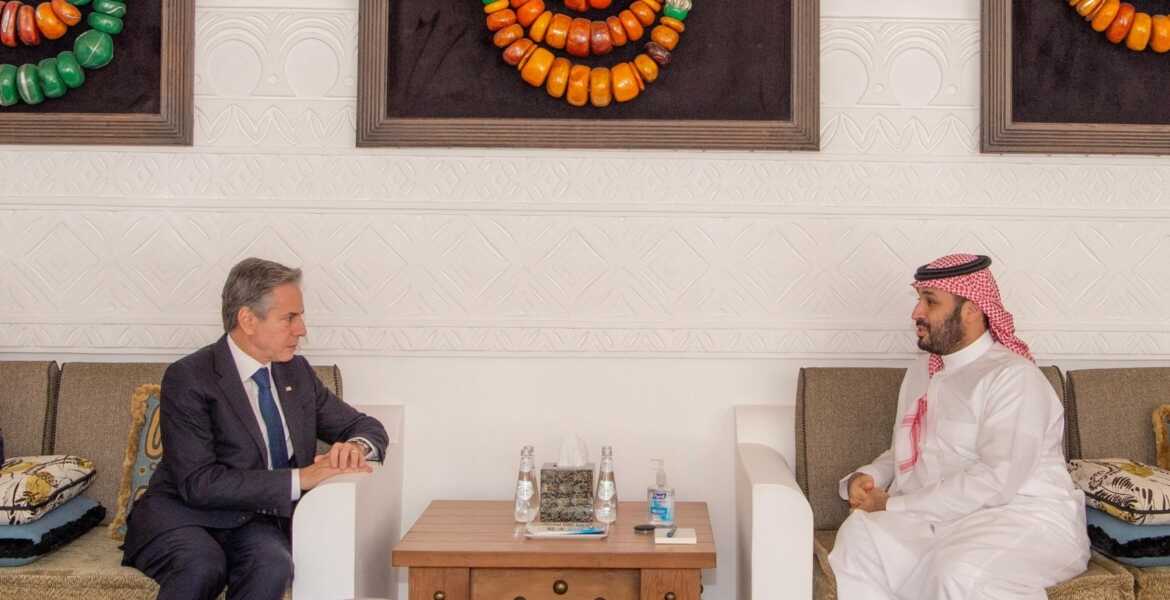
US Secretary of State, Anthony Blinken, announced at dawn on Tuesday that the United States and Israel had agreed on a plan that would allow aid to reach civilians in Gaza.


Blinken said, "It is necessary for aid to begin flowing to Gaza as soon as possible."


Blinken also announced that President Joe Biden will visit Israel, on Wednesday, to show solidarity in the wake of the unprecedented attack launched against it by the Islamic Resistance Movement “Hamas” on October 7.


US President Biden is expected to visit the Jordanian capital, Amman, to meet with the Jordanian King, Abdullah II, the Egyptian President, Abdel Fattah El-Sisi, and the Palestinian President, Mahmoud Abbas, on Thursday.


According to Reuters, Blinken told reporters at the conclusion of marathon talks he held in Tel Aviv with Israeli Prime Minister Benjamin Netanyahu, “The president will affirm the solidarity of the United States with Israel and our strict commitment to its security.”


He added that Biden will continue close coordination with Israeli partners to release hostages held by Hamas.


Pinken explained that Biden "will confirm our message to any party that tries to exploit this crisis to attack Israel."


Reuters quoted a witness on Monday as saying that trucks carrying aid to the Gaza Strip were heading from Al-Arish in the Egyptian Sinai Peninsula towards the Rafah crossing. It is not clear when or if the crossing will open.


It is noteworthy that Israel launched a raid on the vicinity of the crossing, on Monday, according to press reports.


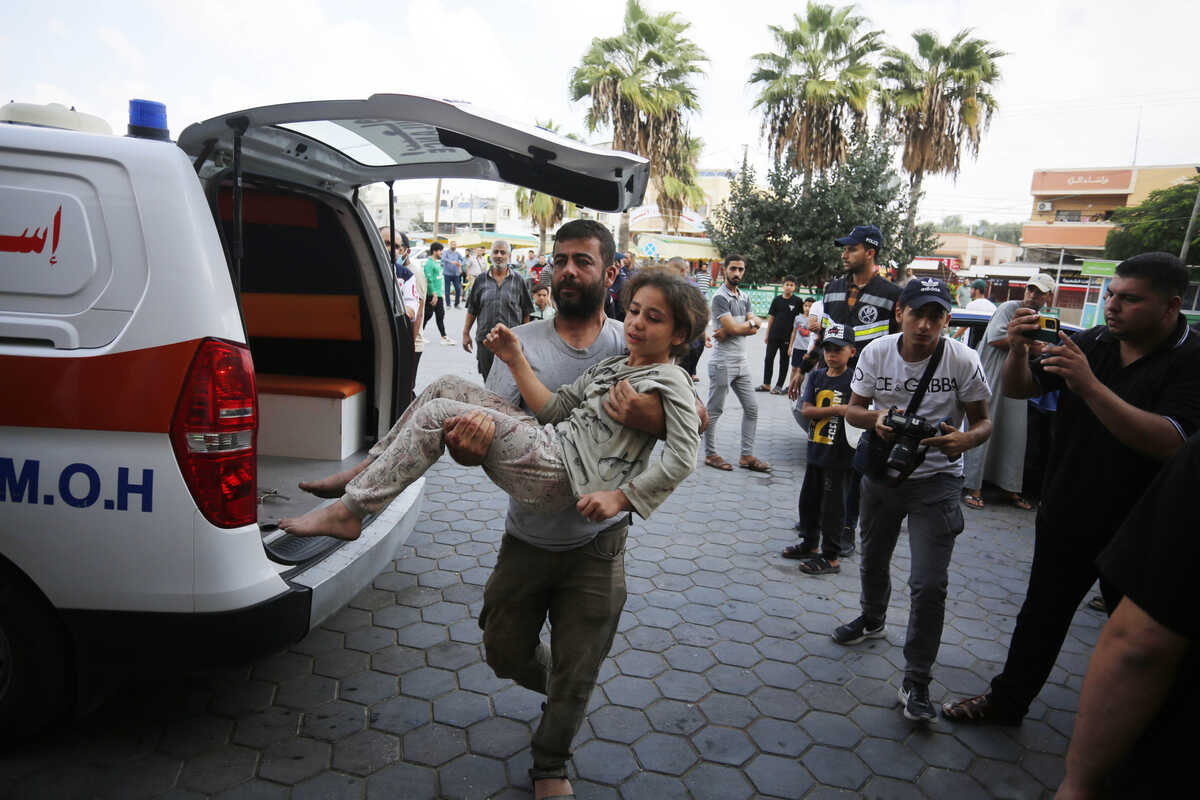
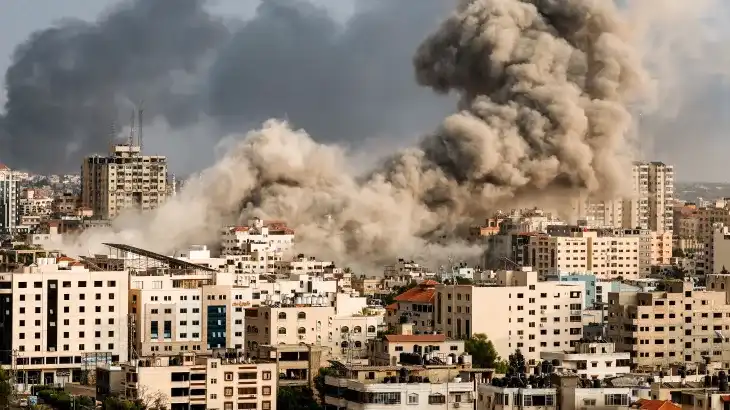
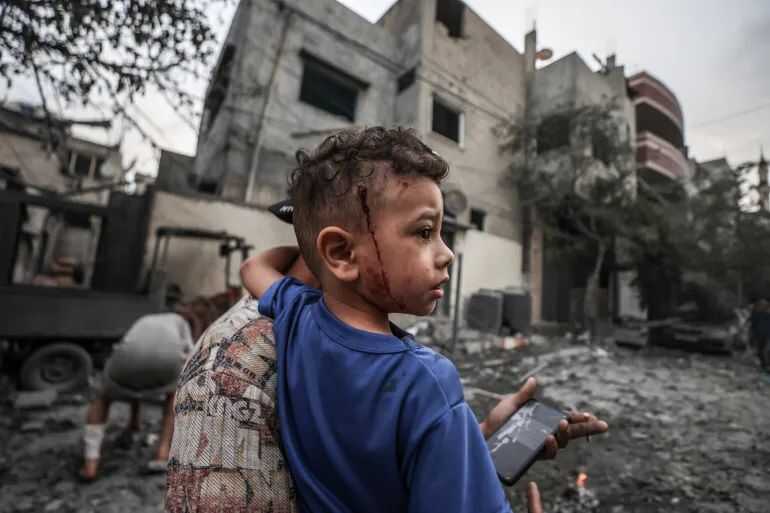
These developments come amid intense preparations by the Israeli army to launch a large-scale attack in Gaza, following the November 7 attack launched by the Islamic Resistance Movement - Hamas, in which the movement’s fighters were able to storm Israeli military headquarters and multiple towns, killing more than 1,400. One person, according to Israeli reports, while the fierce Israeli bombing of the besieged Gaza Strip led to the death of 2,670 Palestinian citizens, a quarter of whom were children, and more than 9,600 were injured, most of them civilians, amid estimates that there were hundreds under the rubble, according to officials.

PALESTINE

Tue 17 Oct 2023 7:42 am - Jerusalem Time

Israel - Gaza war...continuous bombing of Gaza and Biden visits the region

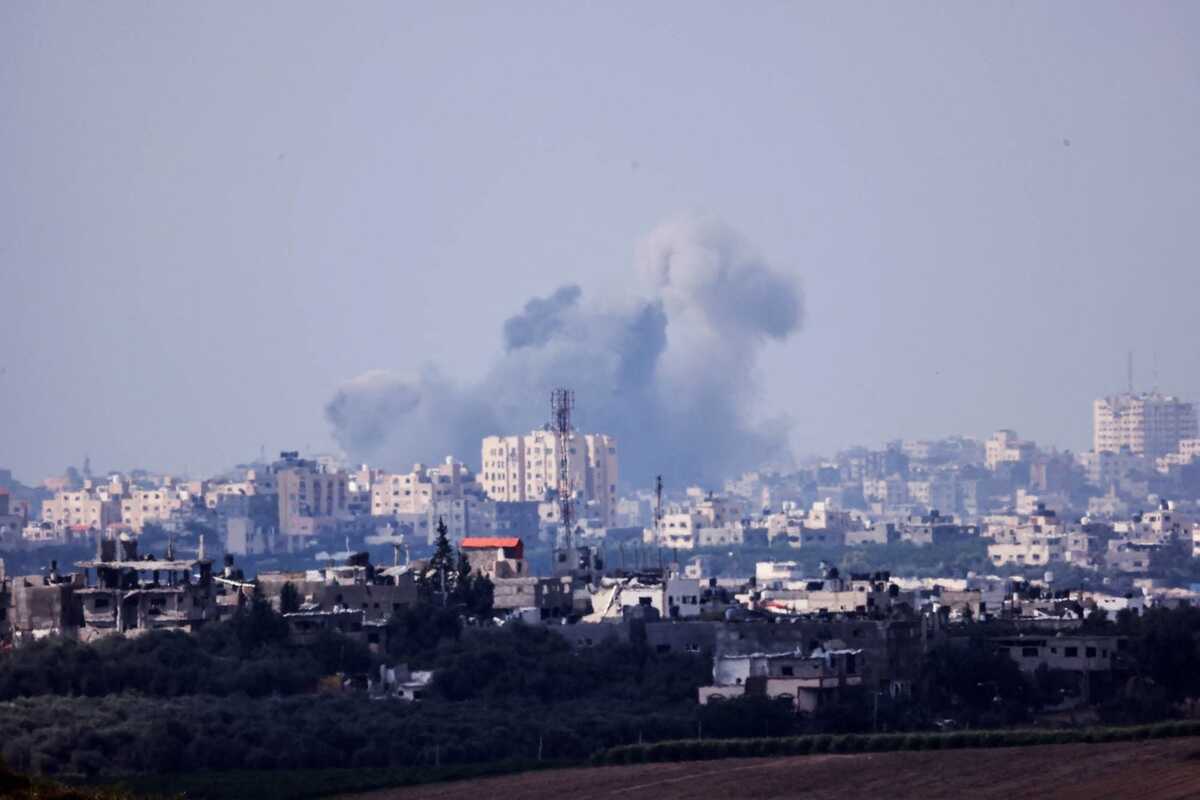
The Israeli army continues its intense bombing of the Gaza Strip for the 11th day, which has so far left more than 2,800 martyrs, the majority of whom are children and women, at a time when the Palestinian resistance is bombing Israeli cities and towns as part of its Operation Al-Aqsa Flood.


-28 martyrs in a new Israeli massacre that targeted a 5-storey house for the Zorob family in Rafah, south of the Gaza Strip.


71 martyrs were the result of Israeli raids tonight on Khan Yunis and Rafah in the southern Gaza Strip.


71 Palestinians were martyred and hundreds were injured - including women and children - as a result of Israeli raids that targeted a number of homes in the cities of Rafah and Khan Yunis in the southern Gaza Strip.


Israeli occupation aircraft bombed homes in the two cities without warning.


Local sources reported that Israeli army artillery continued to intensively bombard areas in the northern Gaza Strip.


The Israeli Army: We attacked more than 200 Hamas military sites


The Israeli occupation army said that last night it attacked more than 200 military sites belonging to the Islamic Resistance Movement (Hamas) throughout the Gaza Strip.

PALESTINE

Mon 16 Oct 2023 10:50 pm - Jerusalem Time

Al-Qassam spokesman: We have between 200 and 250 prisoners, ground invasion not intimidating us

Abu Ubaida, spokesman for the Martyr Izz al-Din al-Qassam Brigades - the military wing of the Islamic Resistance Movement (Hamas) - said that the number of Israeli prisoners held by the Palestinian resistance is between 200 and 250 prisoners. Al-Qassam has about 200 prisoners and the rest are distributed among other components of the resistance.


Abu Ubaida added in a video recording that 22 prisoners have so far lost their lives due to the violent Israeli bombing of the Gaza Strip, and the last of the Israeli prisoners to be killed as a result of the bombing is the artist Guy Olives.


He added, "We assure the whole world and everyone who wants to intervene in the prisoners' issue, and to our prisoners and their families, that we are determined to bring joy, God willing, to every Palestinian home, and this is a promise we made to ourselves."


He acknowledged the presence of detainees of other nationalities - whose identities are difficult to verify in the battle - stressing that they are guests of the Palestinian people.


He continued, "Foreign prisoners will be released when field conditions permit, and we call on all countries of the world to warn holders of their nationalities against fighting in the enemy's army."


Al-Qassam spokesman said that the Israeli occupation, which is accustomed to violating the sanctities of countries and peoples without accountability or oversight, did not expect that an Arab force besieged in Gaza would deal it the harshest blow in its history.


Abu Ubaida stressed that the occupation army, from the first day of this battle, resorted to barbaric and brutal aggression against the Palestinian people instead of confronting the fighters in the field.


He stressed that "the occupation's threat to engage in a ground aggression against our people does not intimidate us, and will be a new opportunity to hold it harshly accountable for the crimes it commits against us."


Abu Ubaida saluted the Palestinian people everywhere they are, their mujahideen in all squares, and the masses rising up to reject the Israeli aggression in all parts of the earth.


Source: Al Jazeera


PALESTINE

Mon 16 Oct 2023 9:38 pm - Jerusalem Time

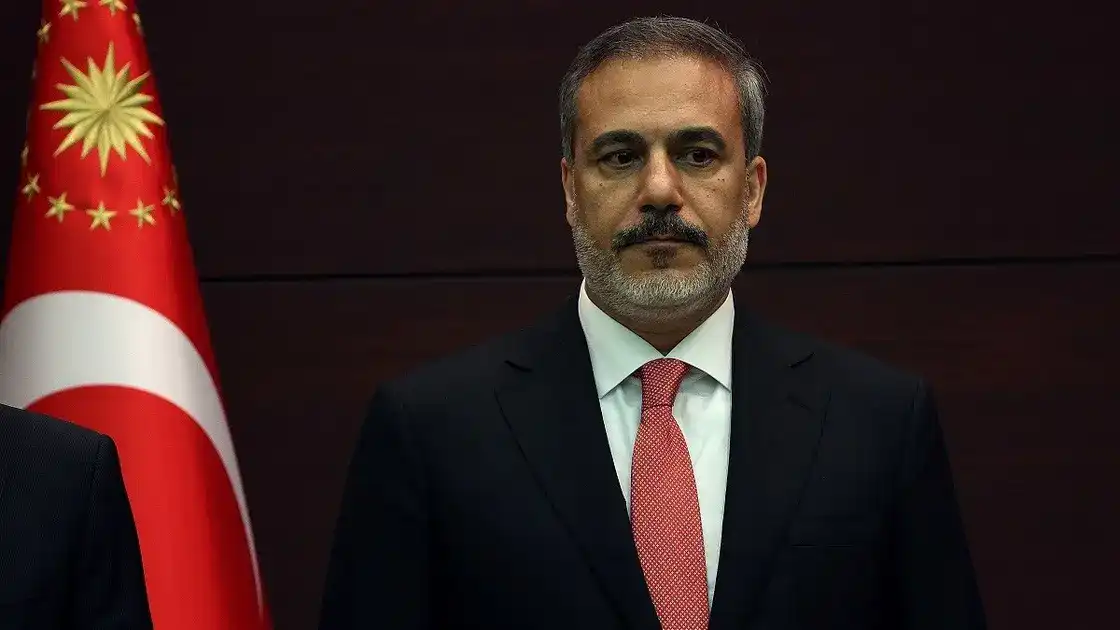
Turkish F.M. speaks with Hamas leader over release of prisoners

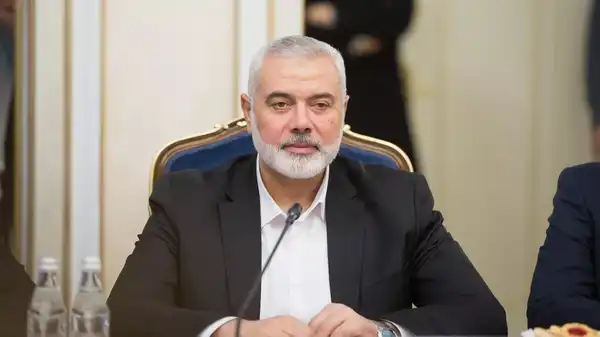
Turkey’s top diplomat on Monday discussed the possibility of the release of hostages during a phone call with Hamas chief Ismail Haniyeh, his office said.


During the phone call, Foreign Minister Hakan Fidan discussed “the latest developments in Palestine and the possibility of release of civilians” with the exiled Haniyeh, the foreign ministry said in a readout.


Scores of people were taken hostage during Hamas’ unprecedented attack on Israel on October 7, when militants shot, stabbed and mutilated people in a surprise onslaught that shocked the nation.

The attack and fighting since have killed more than 1,400 in Israel, mainly civilians.


Israel has vowed to destroy Hamas and responded with a heavy bombing campaign on Gaza that has killed around 2,750 people.

Ankara confirmed Friday that a Turkish-Israeli citizen, who had moved to Israel with his family in 1972, had been killed. Another person was missing.


Turkish President Recep Tayyip Erdogan, a vocal advocate of the Palestinian cause, has stepped up diplomacy with Western and regional powers after he offered to mediate to restore peace.

ARAB AND WORLD

Mon 16 Oct 2023 9:29 pm - Jerusalem Time

Colombian FM asks the Israeli ambassador in Bogota to "leave" the country

Colombian Foreign Minister Alvaro Leva on Monday asked the Israeli ambassador in Bogota to "apologize and leave," after Israeli diplomacy responded to statements by President Gustavo Petro in which he addressed the war between Israel and Hamas.


On his account on the X platform, Leyva described Ambassador Gali Dagan’s statements in response to Petro as “crazy impudence.” The Colombian president likened the ongoing Israeli attacks on the Gaza Strip to the Nazis' persecution of Jews during World War II.


On Sunday, Israel, which is one of the largest suppliers of weapons to the Colombian army, announced “the cessation of security-related exports” to the Latin American country.


In a post on the X platform in response to Israeli Defense Minister Yoav Gallant’s announcement of a “total siege” on Gaza in the battle against what he described as “animals,” Petro said, “This is what the Nazis said about the Jews.”


He stressed that "democratic peoples cannot allow Nazism to re-establish itself in international politics."


On Sunday, Israeli Foreign Ministry spokesman Lior Hayat reported that Colombia's ambassador to Israel, Margarita Manarez, had been summoned against the backdrop of Petro's "hostile and anti-Semitic" statements.


He added that these statements raised "astonishment" and accused Petro of "expressing his support for the atrocities committed by Hamas terrorists, fueling anti-Semitism, influencing representatives of the State of Israel, and threatening the safety of the Jewish community in Colombia."

PALESTINE

Mon 16 Oct 2023 9:13 pm - Jerusalem Time

American worries about Israel's plan after the ground invasion of the Gaza Strip

Israeli Prime Minister Benjamin Netanyahu said, in his conversation last Saturday evening with US President Joe Biden, that Israel has no choice but to implement the plan to invade Gaza.


Despite the strict American support for Israel, which President Biden has reiterated on several occasions, the American administration is concerned about the potential repercussions of the imminent ground invasion of the Gaza Strip, and the size of the potential civilian losses, especially since there are American questions about Israel’s post-ground invasion plan. Washington fears the scope of the war will expand with the threats of the Lebanese Hezbollah, which has its finger on the trigger and will open fire if Israel does not stop its attacks against Gaza.


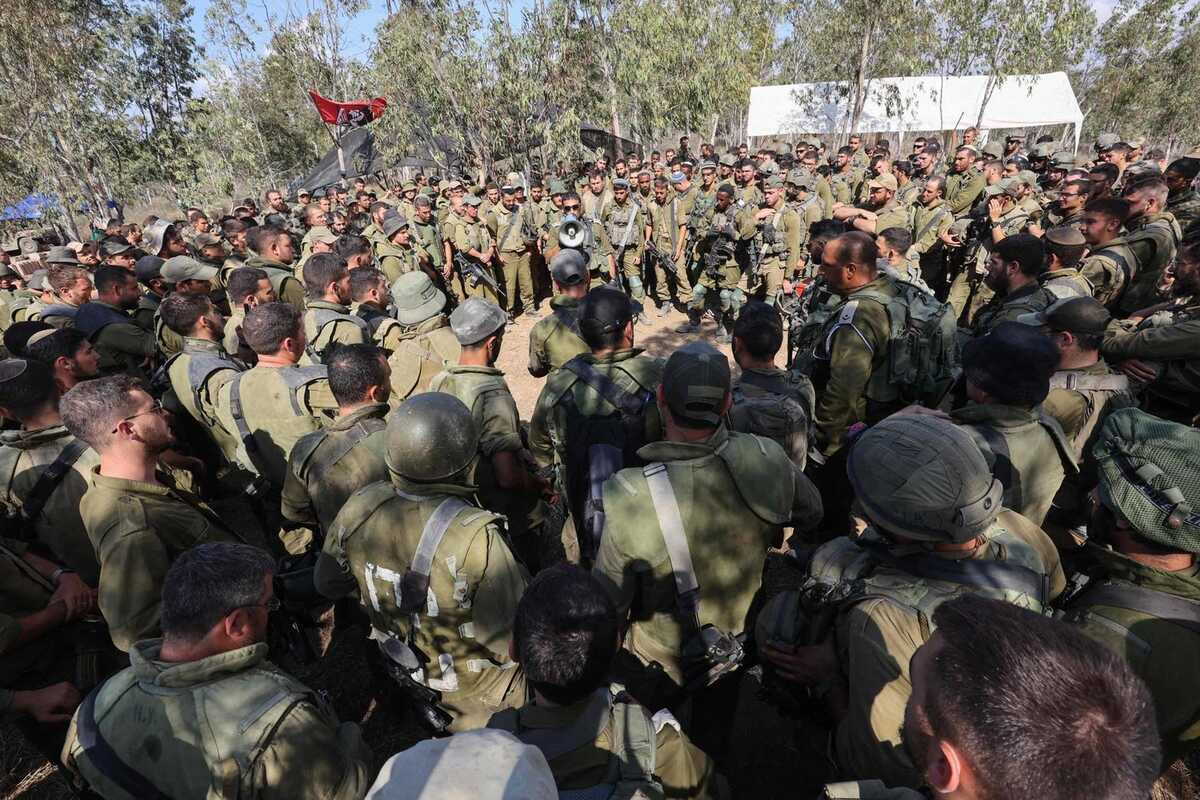
Israel is mobilizing its forces to launch the ground operation, which may begin within hours. The Israeli army did not officially announce its intention to invade Gaza, but it confirmed that it was making extensive preparations for a ground war, and placing hundreds of thousands of reserve unit members in the vicinity of Gaza. The American CNN network also quoted Israeli army sources as saying that major military operations would begin as soon as it was confirmed that Gaza had left. Civilians.


Israeli Defense Minister Yoav Galant indicated in his talks with his American counterpart, Austin Lloyd, that he has a plan on how to enter Gaza with the least possible number of casualties, and that the Israeli forces benefited and learned the lesson from the previous ground invasion in 2014, admitting that it would be a guerrilla war against the regular army. Israeli.


How will Israel carry out a ground invasion?


Israeli military officials admitted to the New York Times that the ground invasion of the Gaza Strip would depend on infantry force and tanks that constitute the Israeli strike force, in addition to commando forces and explosives experts. Officials explained that the ground forces will be protected by aircraft, military helicopters, drones and artillery launched from land and sea. According to some reports, Israel plans to use bombs known as “Bunker Busters” that aim to destroy fortified underground targets. These bombs penetrate the ground when they fall and aim to strike fortifications and tunnels.


The Israeli army announced that its goal is to eliminate the political and military leaders of the Hamas movement, which carried out the surprise attack last Saturday. Israeli army spokesman Daniel Hagari said on Saturday that Hamas leaders will bear responsibility for the atrocities committed against Israelis, and the goal is to defeat Hamas and eliminate its leaders.


The New York Times quoted Nimrod Novik, an Israeli diplomat and security advisor to the Israeli government, as saying that military leaders want Israeli soldiers to carry out house-to-house arrest operations for 18 months, which include removing rocket launchers, destroying tunnels, and all military equipment that Hamas possesses. . Israeli officials say they are planning months of fighting inside the Gaza Strip, whether above ground or in tunnels built by Hamas.


Threats from Iran and Hezbollah


The Axios website reported the threats of Hezbollah, which is supported by Iran and allied with Hamas, to open a second front with Israel on the Lebanese border. The website quoted Iranian Foreign Minister Hossein Amir Abdollahian as saying that Iran will intervene if Israel continues its attacks against Gaza. Abdullahian told reporters in Beirut that he is aware of the scenarios developed by Hezbollah, which he described as causing a major earthquake in the Zionist entity. Hezbollah has a wide range of tens of thousands of precision-guided missiles and ground forces.


Destroying Hamas or saving the hostages?


But experts and analysts say that the Israeli Prime Minister has an impossible choice: either destroy Hamas or rescue the hostages, and it is not possible to do both. Experts warned that the "Al-Qassam Brigades" (the military wing of the Hamas movement) would kill the hostages it holds, or use Palestinian civilians as human shields in the face of the Israeli invasion of the Gaza Strip, which would lead to heavy human losses, would constitute a moral and operational dilemma for Israel, and would push the international community to To put pressure on Tel Aviv to stop the bloodshed and stop the killing of innocent civilians.


Experts expressed their fears about the repercussions of any ground invasion by Israeli forces into the Gaza Strip, risking the lives of hostages held by Hamas, in addition to the complexities of the battle. Assuming that the Israeli army controls Gaza, managing the Strip after Hamas is fraught with great risks for Israel to regain control of the region as it did from 1967 to 2005.


Corey Schack, director of foreign policy studies at the American Enterprise Institute, says that the US administration’s fears that Israel will carry out a collective punishment campaign that will result in massive civilian casualties will be the problem that will loom on the horizon as Israeli operations to destroy Hamas progress. She added, “Despite these fears, the United States The United States will not place any restrictions on its material and military support for Israel given the horrific nature of the Hamas attack.”


Complex guerrilla warfare


Colin Clark, a specialist in security and terrorism issues at the Soufan Group, an independent research center, says that the ground invasion and invasion of the Gaza Strip will be very difficult, as it will be more like a street war or a guerrilla war, and it is the most challenging type of battle for regular armies, and the Israeli forces will have to face challenges. Many of them include booby-trapped tunnels, if a ground operation was launched in Gaza, especially since Hamas spent years building a vast network of underground tunnels in Gaza, using them to store and transport weapons, carry out operations against Israel, and then hide from Israeli air strikes.


Clark says, "The Israeli forces' dealings with Hamas's tunnel network will make the operation complicated, because Hamas will have prepared for the Israeli ground attack and will booby-trap the tunnels." He added, "It will require extensive intelligence information about these tunnels, and the biggest problem will be about the conditions of the hostages whom Hamas has threatened to slaughter, and so it will become... It's very dangerous.


Hostage recovery


Reports say that Hamas is holding more than 150 people, including women, children, and foreign nationals. In order to recover the hostages, John McLaughlin, former deputy director of the CIA and professor of international studies at Johns Hopkins University, says that there are two options to free the hostages. The first is to resort to operational forces. American private; However, the density of the population in the Gaza Strip in the midst of a violent military operation will make the task of freeing the hostages almost impossible and more complicated than any other operations that took place to rescue the hostages, especially since Hamas can hold the prisoners in multiple places, which makes rescue efforts more difficult.


McLaughlin added that Israel's continuous bombing of the Strip may mean that there are hostages among those killed as a result of the air strikes. Assuming that intelligence officials examine satellite images of the area for signs of movement, Hamas could use tunnels to hide hostages. It would therefore require the use of other techniques to map areas where prisoners could be held, but it would be a slow process. He said, "It took years for American intelligence to find out the whereabouts of only one person, Osama bin Laden." He stressed that the second option to secure the release of the hostages is diplomatic efforts, but in light of the current situation, Hamas will cling to the hostages as tools for bargaining and incitement of terror or to use them as human shields.


Gershon Baskin, former director of the Israel Palestine Research Center, a think tank that served as a mediator in negotiations to release Israeli prisoner Gilad Shalit, noted that Israel must make deals to release hostages held by Hamas, and suggested that it announce that any Gazan citizen who brings hostages to the border will be arrested. He was granted amnesty and passage to the West Bank. Baskin suggested that countries such as Egypt, Qatar, and Turkey make efforts to pressure Hamas to release the hostages, and that Qatar expel Hamas leaders from Doha if they do not respond to calls to release the hostages.


Source: Ashaq Al-Awsat

PALESTINE

Mon 16 Oct 2023 9:00 pm - Jerusalem Time

Biden: Hamas must be eliminated, but there must be a Palestinian authority and a path to Palestinian state

US President Joe Biden told CBS, early Monday, that Israel would make a big mistake if it occupied Gaza, indicating that he saw no reason for the participation of American forces in the current conflict between Israel and the Palestinians.


Biden confirmed during an interview with the CBS program “60 Minutes” that Israel has one of the best forces, stressing that his country will provide it with “everything it needs.” He added, "We will do everything in our power to find those still alive" of the prisoners held by Hamas in Gaza and release them.


The US President said, "Hamas must be completely eliminated, but there must be a Palestinian authority and a path to a Palestinian state." He added, "Eliminating Hezbollah in the north and Hamas in the south is a necessity." Biden warned Iran and Hezbollah against escalating the war or crossing the border into northern Israel.


Regarding the establishment of a humanitarian corridor in Gaza, Biden said, “Our team is talking with the Israelis about establishing a humanitarian corridor in Gaza, bringing humanitarian supplies into it, and whether a safe zone can be created.” The US President indicated that his country is talking with the Egyptian side about whether there is a way to remove children and women from Gaza, but he said that "it is difficult."


Biden accused Hamas of "hiding behind civilians," expressing his confidence that the Israelis will do everything in their power to avoid killing civilians and that "Israel will act according to the rules of war." The US President said that the two-state solution had been US policy for decades and “would create an independent state for the Palestinians alongside Israel.”


Biden noted that "the threat of terrorism has increased in the United States due to events in the Middle East."

PALESTINE

Mon 16 Oct 2023 8:59 pm - Jerusalem Time

2,000 American soldiers to support Israeli ground incursion into Gaza

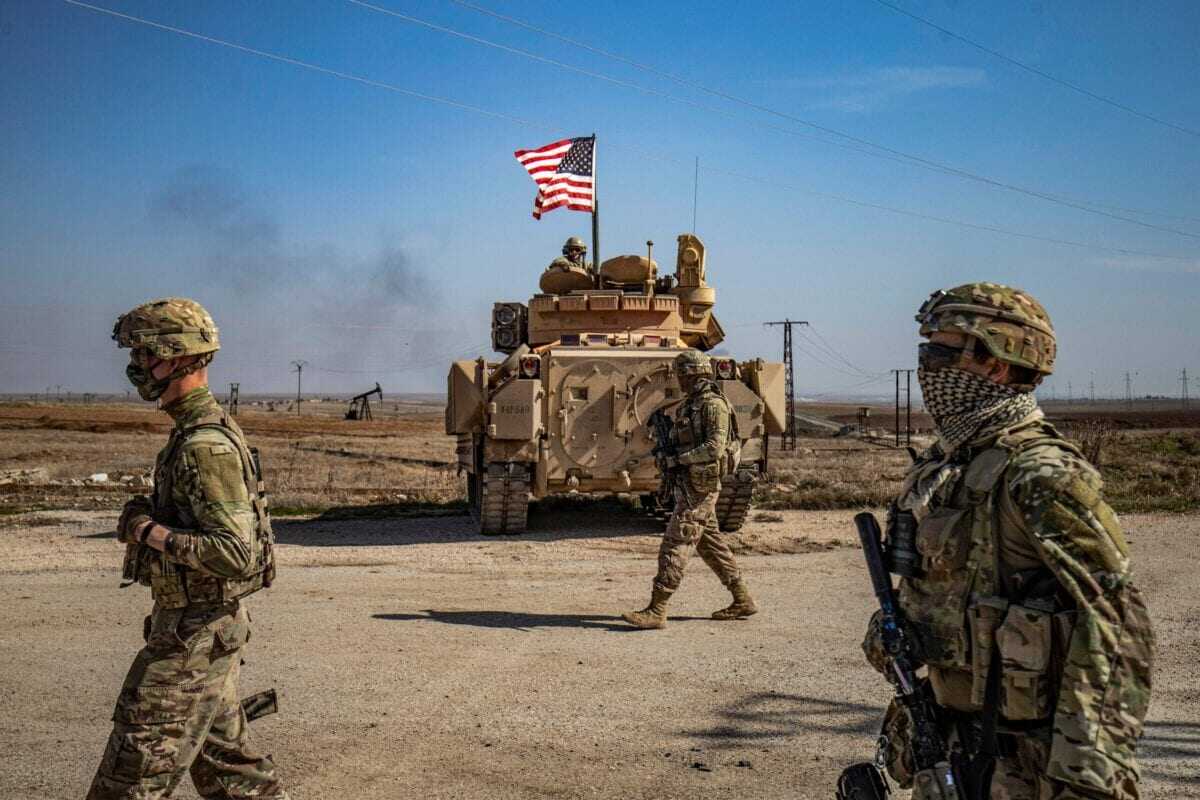
American defense officials said that the US military has selected about 2,000 soldiers to prepare for any possible incursion in support of Israel, according to the Wall Street Journal.


The officials said the forces are assigned tasks such as providing advice and medical support, and they are from across the US Armed Forces. Officials said they are not supposed to serve in a combat role, and no infantrymen have been placed on readiness for deployment.


Officials said troops are currently stationed inside and outside the Middle East, including Europe. It is not clear under what circumstances the United States could deploy forces or where, but the Pentagon's decision indicated that it is preparing to support Israeli forces in the event that Israel launches a ground incursion into Gaza.


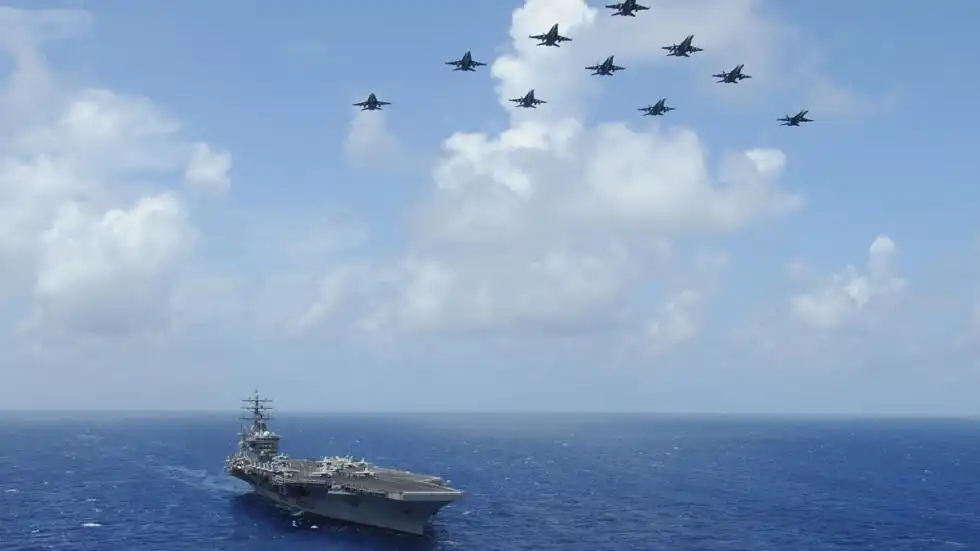
The largest American aircraft carrier, the USS Ford, and its group of 12 other naval ships are anchored off the shores of Gaza, and the aircraft carrier USS Eisenhower will join it on Tuesday, to “deter” any regional attempts to support Gaza.

PALESTINE

Mon 16 Oct 2023 8:54 pm - Jerusalem Time

France: Israeli siege of Gaza Strip violates international and humanitarian law

French Foreign Minister Catherine Colonna said on Monday that the Israeli siege of the Gaza Strip is a “violation of international and humanitarian law,” calling for opening the crossings and allowing aid to enter.


She explained in a press conference in Cairo that the situation in the Palestinian territories is dangerous, stressing the necessity of aid entering the Gaza Strip and delivering it to the affected Palestinian people.


She said: “The United Nations is making an effort to pass humanitarian aid to the Gaza Strip along with all countries seeking to find a solution, and humanitarian aid must be allowed to pass to the civilians of the Gaza Strip.”


The French Foreign Minister added that more than 100 French nationals are still in the Gaza Strip.

PALESTINE

Mon 16 Oct 2023 8:47 pm - Jerusalem Time

EU Chief: European Union will open a humanitarian air corridor to Gaza via Egypt

European Commission President Ursula von der Leyen announced on Monday that the European Union will open a humanitarian air corridor towards the Gaza Strip via Egypt.


“The Palestinians in Gaza need humanitarian aid,” von der Leyen said in the Albanian capital, Tirana, “so we are launching a humanitarian corridor through Egypt,” adding, “The first two flights will take off this week and will carry humanitarian supplies to Gaza.”

PALESTINE

Mon 16 Oct 2023 7:55 pm - Jerusalem Time

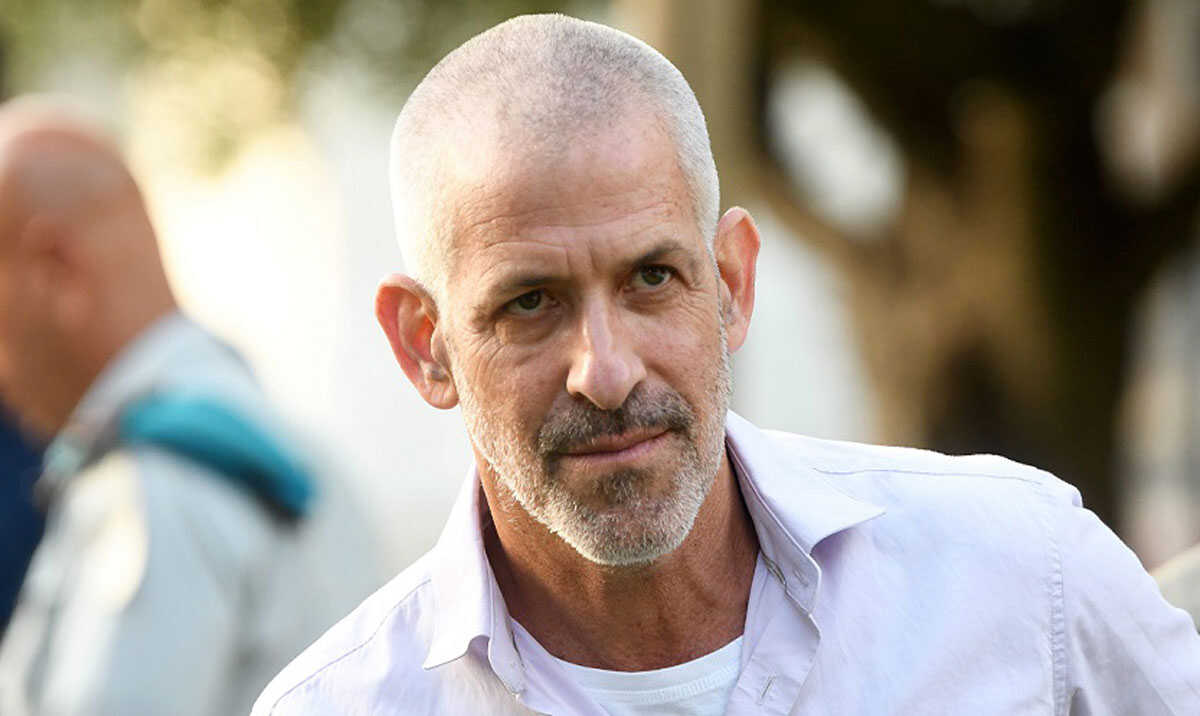
Shin Bet chief: I bear responsibility... We failed to give sufficient warning

The head of the Israeli General Security Agency (Shin Bet), Ronen Bar, said that he bears responsibility for the surprise attack launched by the Hamas movement on October 7, pointing out that the agency failed to “give sufficient warning.”


A letter sent by Bar last night to Shin Bet members and their families, written on the eighth day of the “Al-Aqsa Flood,” stated that “despite the series of measures we took, unfortunately, on Saturday, we were unable to issue sufficient warning to thwart the attack.” ".


Barr added: “We are not on a tour, but in a war... and the war ends with decisiveness and a change in the situation.”


He continued: "As the person who heads (the agency), the responsibility falls on me," noting that "there will be time to conduct investigations, and now we are fighting."


"There is no limit, there is no time limit. Until the end," Barr said.


PALESTINE

Mon 16 Oct 2023 7:36 pm - Jerusalem Time

A young Palestinian killed by Israeli soldiers west of Jenin

On Monday evening, a young man was killed by Israeli occupation bullets west of Jenin.


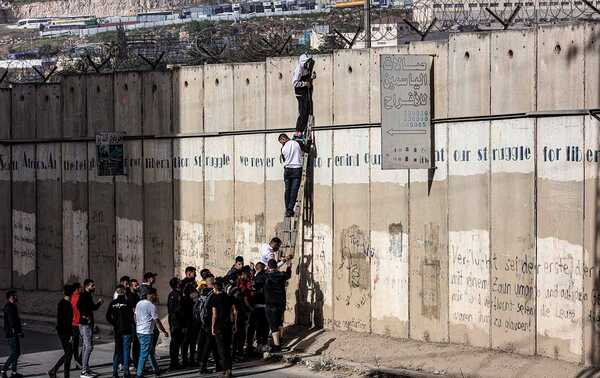
The Ministry of Health reported that the young man, Anas Raed Manasra (19 years old), from the town of Qabatiya, south of Jenin, was killed after being hit by occupation bullets near the apartheid wall, west of Jenin.

PALESTINE

Mon 16 Oct 2023 6:39 pm - Jerusalem Time

An international summit in Egypt on the Palestinian issue on Saturday

Official Gulf news agencies reported (Monday) that an international summit will be held in Egypt to discuss “developments in the Palestinian issue” next Saturday.


The Kuwaiti and Qatari news agencies reported the invitation sent by Egyptian President Abdel Fattah Al-Sisi to Sheikh Tamim bin Hamad Al Thani, Emir of Qatar, and Sheikh Nawaf Al-Ahmad Al-Jaber Al-Sabah, Emir of Kuwait, “to participate in a summit to discuss developments and the future of the Palestinian issue and the peace process, scheduled to be held in Cairo on the 21st.” This October.


On Sunday, Egypt called for holding a regional and international summit on “the Palestinian issue,” according to a statement published by the Egyptian presidency. This call was issued at the conclusion of a meeting held by the Egyptian National Security Council, headed by President Abdel Fattah El-Sisi.

PALESTINE

Mon 16 Oct 2023 5:50 pm - Jerusalem Time

Israel, Lebanon: Clashes and exchanges of fire across shared border

Lebanese Hezbollah said, on Monday, that it targeted 5 Israeli sites, in light of ongoing tensions that have been witnessing the Lebanese-Israeli border for days.


Local media said that Hezbollah targeted the sites of Misgav Am, Khirbet Al-Manara, Harmon, Risha, and Ramiya.


A Sky News Arabia correspondent in Lebanon reported hearing sounds of clashes on the Lebanese-Israeli border in the town of Al-Dhahira, southern Lebanon.


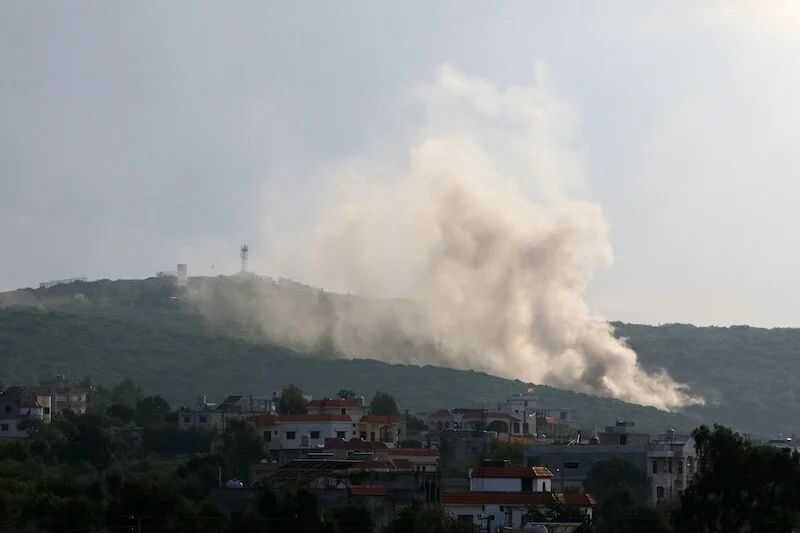
On Monday afternoon, Israeli forces bombed the outskirts of the town of Al-Dhahira and the town of Yarin on the Lebanese-Palestinian border.


On Sunday, the Israeli occupation army declared the border with Lebanon a closed military zone, with repeated clashes and mutual shelling with Palestinian factions and Lebanese Hezbollah, the most recent wave of which hours ago resulted in the death of an Israeli.


According to a Sky News Arabia correspondent, the Israeli occupation army considers a 4-kilometre-wide strip inside Israel on the border with Lebanon a closed military zone.


This decision means that civilians are prohibited from entering the area.


He added that Israel asked residents of areas in the Galilee adjacent to the border with Lebanon to go to shelters.


Since the outbreak of war between Israel and the Al-Qassam Brigades in the Gaza Strip, last Saturday, the northern front has been on fire, with the pace of bombing and clashes becoming daily, in addition to repeated infiltration attempts into Israel.

PALESTINE

Mon 16 Oct 2023 5:27 pm - Jerusalem Time

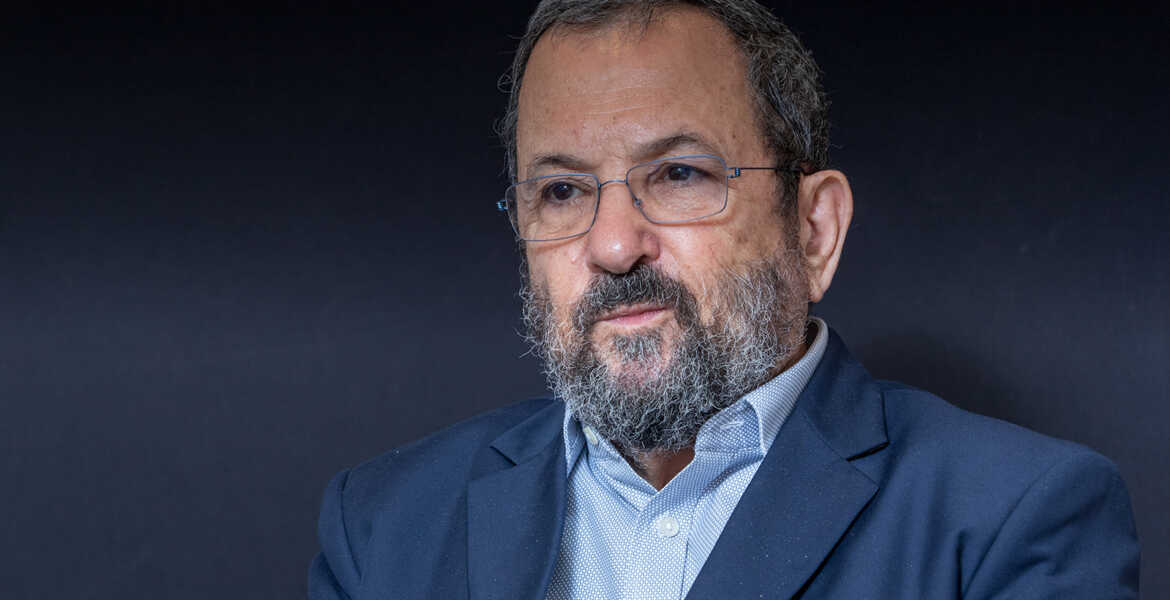
“Destroying Hamas is unrealistic.” What does Ehud Barak see that Netanyahu does not see in the invasion of Gaza?

Few Israelis have anything close to former Israeli Prime Minister Ehud Barak's experience working in Gaza. In 2000, Barak was Prime Minister and Minister of Defense when the second intifada broke out in Gaza, the occupied West Bank, and the rest of the occupied territories. Before that, he was commander of the Israel Defense Forces when Israel carried out its first major withdrawal from Gaza Strip cities as part of the first Oslo Accords signed in 1993.

Then in his second term as defense minister, in 2009, Barak oversaw Israel's largest ground operation against Hamas in Gaza to date. Now the Israeli army is preparing for what is expected to be a much larger ground operation in Gaza. Its goal is to “destroy Hamas,” as Benjamin Netanyahu says, which attacked Israeli military concentrations and bases along the border on October 7, 2023, killing more than 1,400 Israelis.


What does Ehud Barak see that Netanyahu does not see in the invasion of Gaza?


Barak says that what happened in the Gaza Strip represents "the biggest failure in Israel's history." Barak adds, according to the British Economist magazine, that the army he previously commanded faces great difficulties in pursuing a determined and well-armed enemy holed up in a small coastal enclave crowded with more than two million people. He is aware of the consequences of the heavy losses that this operation will inflict on both parties. In the first nine days following the Hamas attack, Israel killed more than 2,400 Gazan civilians in insane raids, which Israel claims were against “Hamas targets.”


Barak advises the Netanyahu government not to rush into a ground operation. He says, according to The Economist: “We do not face an existential threat from Hamas. Israel will win this.” Once all the called-up reservists undergo refresher training, Israel can control most of the Gaza Strip and destroy Hamas' power centers and military capabilities "within two to six weeks," he said.


Unlike the major ground operations in 2009 and 2014, when Israel simultaneously entered different areas of the Gaza Strip, Barak believes that the attack this time can be carried out in stages, to reduce the risks, as he put it.

Despite his confidence in the army's ability to "deal a devastating blow" to Hamas in Gaza, the Israeli army will face many restrictions and challenges, according to Barak. Israel admitted that Hamas succeeded in capturing dozens and perhaps hundreds of Israelis. Barak believes that the ground operation should be postponed as much as possible until an agreement is reached to release some of them in a deal.


At the same time, Park argues, Israel must ensure that its actions are legitimate by the wider world. Following the attack by Hamas, most Western governments offered Israel their full support. But Barak warns, "This support also comes with the expectation that we abide by international law in our operations." Adding: "Western support for us will be greatly eroded when footage emerges of destroyed homes in Gaza with the bodies of children and crying old women."


“Hezbollah may have 150,000 missiles directed at Israel.”

Barak sees the US naval presence - on October 14, Washington deployed a second aircraft carrier group to the eastern Mediterranean - partly designed to deter external actors from entering or escalating the conflict. But it "also emphasizes the need for Israel to act in accordance with international law."


Israel will have to closely monitor Hezbollah's movements on the northern front. He may have 150,000 missiles directed at Israel. Israel sent troops and tanks to the border in the hope of deterring any attack. Barak says the Hamas attack from Gaza was based on similar plans by Hezbollah to control settlements in the north, but Hezbollah has now lost the element of surprise and Israel is prepared.


He adds: “Israel has no interest in the conflict with Hezbollah at the present time, and I do not think that they will attack now that we have deployed a lot of forces in the north... One of the American aircraft carriers is now looming off the coast of Lebanon, sending a signal to Hezbollah and to its sponsor, Iran.” ".


“Destroying Hamas is unrealistic.”

The Economist says that although Barak strongly supports a ground campaign in Gaza, he criticizes talk of "destroying Hamas" by Benjamin Netanyahu, Israel's prime minister, as well as ministers in his government and some generals. “What does that even mean? Destroying Hamas is unrealistic.” He added: "This is not a believable war goal. Israel's goal must now be clearer. Hamas must be deprived of its military capabilities."


After the October 7 attack, Barak said in press statements: “It is difficult to compare Hamas to any organization we have known in the past, which is like ISIS. Some of them have a better level than they had in the past. It also raised the price and made this attack a success.” "It goes beyond all our failures, we have to take them seriously. They have surprised people with their success."


Barak believes that the ideal outcome that the Israeli government wants, once Hamas's military capabilities gradually and sufficiently deteriorate, is to re-establish the Palestinian Authority in Gaza. The Authority, which was established under the Oslo Accords and runs autonomous parts of the West Bank, was expelled from Gaza by Hamas in 2007. However, he warns that Mahmoud Abbas, the Palestinian president, “cannot be seen as returning on the back of Israeli tanks.”


Therefore, a transitional period will be needed during which Israel surrenders to international pressure and hands Gaza over to a peacekeeping force, which could include members such as Egypt, Morocco and the United Arab Emirates. They will secure the area until the Palestinian Authority can control it. However, for now “It seems that other countries in the region do not have the desire to contribute forces to such a force,” Barak says.


Netanyahu will be held accountable

Then there is the great reckoning that will happen in Israel once the war is over. Investigations will be launched into who is responsible for the failures in intelligence and planning that allowed Hamas to take Israel by surprise and then gain access to military bases, civilian communities and more.

“There will have to be a much deeper assessment later,” says Barak, and when that happens, he is convinced that the blame will fall on Netanyahu. “It will be clear, above all, that Netanyahu had a flawed strategy of dealing with Hamas, so that he could use it to weaken the Palestinian Authority, so that no one in the world could ask us to hold negotiations with the Palestinians.”


The Economist says that few people know that Netanyahu, who 55 years ago was a commando in the secret reconnaissance unit of the General Staff, was under Barak, who led the unit. Another of the unit's leaders was his older brother, Yoni Netanyahu, who was killed while rescuing hostages at Entebbe Airport in 1976 in Uganda. Yoni was one of Barak's closest friends. But Benjamin was one of Barak's fiercest opponents.


Netanyahu caused the Israeli army to be torn apart

In 1999, Barak led the Labor Party to electoral victory, ending Netanyahu's first term as prime minister. But when Netanyahu returned to office in 2009, Barak served as defense minister for four years. But since he left parliamentary politics in 2013, he has become increasingly disconnected from Netanyahu.

Now 81 years old, Barak is active in the protest movement that has taken to the streets over the past nine months, trying to prevent Netanyahu's government from making constitutional changes to limit the powers of the Supreme Court.


Barak says that Netanyahu ignored repeated warnings from military commanders that the divisions caused by Netanyahu were also tearing apart the army. During the protests, thousands of reserve soldiers and officers said they would refuse to serve or volunteer in the Israeli army if the constitutional changes were passed.

Barak believes that Netanyahu is directly responsible for the worsening crisis, as the Israeli strategy towards the Palestinians has backfired. Because the state abandoned its basic obligation to its citizens, which is to keep them alive, and this was the worst type of neglect caused by Netanyahu in the history of Israel, Barak says.


Source: The Economist


PALESTINE

Mon 16 Oct 2023 5:13 pm - Jerusalem Time

Wall Street Journal: U.S. presses Arab leaders to prevent escalation if Israel invades Gaza

The United States is pressing Arab leaders to take steps to prevent or contain any escalation resulting from the potential Israeli occupation of Gaza, while Arab officials fear that their silence on Israel’s invasion of Gaza may spark street protests, according to The Wall newspaper. American Street Journal.


The American newspaper explained in a report, Saturday, October 14, 2023, that some Arab officials fear that images of the violent bombing in Gaza and its buildings that were leveled will push their country’s citizens to protest in the streets. Increasing support for Hamas in a way that makes it the legitimate leadership of the Palestinian people; And strengthening Hezbollah and the Iran-backed Houthi militia in Yemen.

During the past week, American officials sought to convey these fears of Israel’s invasion of Gaza to their counterparts in Tel Aviv.


Framing the Arab response to Israel's invasion of Gaza

One of the Arab diplomats said that the goal of US Secretary of State Anthony Blinken's tour of Arab capitals is to seek to frame the expected response from those countries to Israel's invasion of Gaza, which may be extremely destructive to Gaza.


In the meetings he held in Tel Aviv and in the countries he visited in the region, Blinken sought to urge Arab countries to put aside mistrust of Israel and cooperate to isolate Hamas, and to stand firmly in the face of the threats of Hezbollah in Lebanon and its strong supporter, Iran.

American pressure in the region relies on a long-term American effort to normalize stable relations between the Israeli occupation and Arab countries, and the ability of these efforts to overcome the complications arising from the recent violence and the deteriorating humanitarian situation in Gaza, according to what the Wall Street Journal reported.


Blinken said before his meeting with Saudi Foreign Minister Prince Faisal bin Farhan: “Hamas does not represent the Palestinian people nor their legitimate aspirations for the future,” but rather, “Hamas is a terrorist group. Its only program is to destroy the State of Israel and kill the Jews. It is important for the whole world to see this.” Grammar.

Meanwhile, the White House said that US President Joe Biden, on Saturday, October 14, made a phone call with Israeli Prime Minister Benjamin Netanyahu and Palestinian Authority President Mahmoud Abbas.


Biden also told Netanyahu that Israel has the “firm” support of the United States, and discussed American coordination with the United Nations, Egypt, Jordan, and Israel, “to ensure that innocent civilians have access to water, food, and medical care.” He told Abbas that he would offer his "full support" to the Palestinian Authority's efforts to seek to provide humanitarian assistance in Gaza.


The American mission will not be easy

However, cutting off Hamas - nor reassuring Arab allies who have little confidence in Israel - was not easy. The ruling family in Qatar wanted to continue hosting the political office of Hamas on its territory to enable communications regarding prisoners held by Hamas in the occupied Palestinian territories.


Sheikh Mohammed bin Abdul Rahman Al Thani, the Qatari Prime Minister and Foreign Minister, said in the press conference he held with Blinken, Friday, October 13, that the Hamas office will remain open “as long as communications remain open at the present time, and work is underway to put an end to for this conflict.


Meanwhile, American officials realize that there are restrictions on Arab leaders that prevent them from speaking out against Hamas, for fear that they would thereby violate popular support in their countries for the Palestinian struggle against Israel. Evidence of this is that Saudi Arabia criticized Israel in its comment on the Hamas attack and the subsequent Israeli attacks on the Gaza Strip.


On Saturday, October 14, the Saudi Foreign Minister said: “It is important that we all condemn the targeting of civilians in any form, at any time, and by anyone.”

In Egypt, US officials pressured their Egyptian counterparts to negotiate the exit of foreign residents in Gaza and the entry of humanitarian aid.


American and Arab officials also said that discussions between the two countries focused on securing the safe exit of an estimated 500 to 600 Americans in Gaza. The Egyptian President's government has held similar talks with several countries looking to remove their nationals from Gaza after the outbreak of war.

However, these talks did not address the fate of Palestinians who may wish to leave the Gaza Strip before the expected Israeli ground invasion. An Arab official said: “The idea of opening the Rafah crossing to [all] civilians was not discussed.” Rather, “the Americans only talked about safe passage for those holding American citizenship.”


Biden's support for Israel

On the other hand, the strong support provided by the Biden administration to Israel is one of the factors that adds difficulties to Blinken’s mission to pressure Arab countries.


However, the United States believes that strong military support for Israel is critical to deter Lebanese Hezbollah from opening a second front in northern Israel, and to prevent violence from spreading to the West Bank.

Moreover, any reluctance to support Israel would strengthen the political attacks of Republican Party supporters seeking to regain the presidency in the White House.


Despite this, American officials claim that they do not seek to shape the Israeli military campaign against Hamas, but rather only support it, and stress that they want to rely on the Israeli occupation to reduce the repercussions on civilians, which is a major demand of Arab countries.


PALESTINE

Mon 16 Oct 2023 5:00 pm - Jerusalem Time

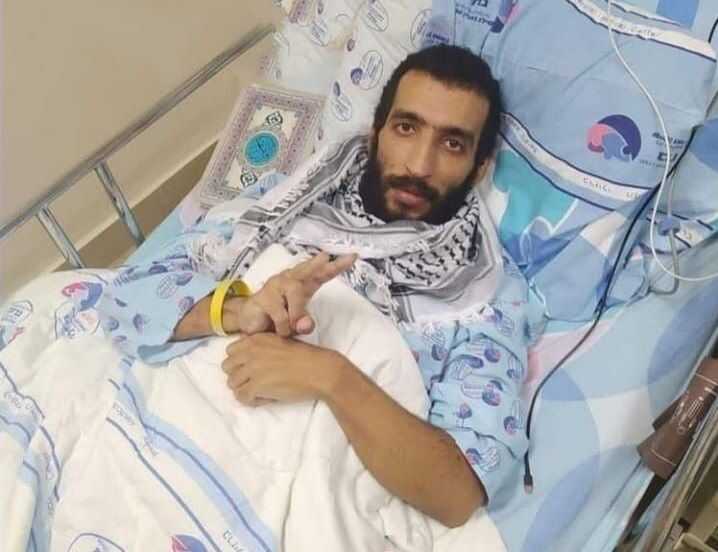
Administrative detainee Kayed Al-Fafsous suspends hunger strike

The Prisoners' Affairs Authority and the Palestinian Prisoners' Club announced that the administrative detainee, Kayed Al-Fafsous, decided to suspend his open hunger strike, which lasted for (75) days, against his administrative detention.


According to a statement issued by them, today, Monday, the suspension of the strike came after a call and letter sent to him by his family, as well as the competent institutions through the lawyer of the Prisoners’ Authority, who was able to visit him today in “Ramla Prison”, after (12) days had passed since the competent institutions’ requests to allow him to visit him. .


The call from his family and institutions came out of great fear that the occupation would single him out and assassinate him, in light of the comprehensive aggression launched by the occupation against our people and fellow prisoners in all prisons who are facing the collective retaliatory measures that have been imposed on them since the seventh of this month.


The Prisoners' Authority and the Prisoners' Club confirmed that the detainee Kayed Al-Fasfous, who waged an empty struggle against the crime of administrative detention, had been in complete isolation from the outside world over the past period, and had no knowledge of what was going on outside, due to the harsh conditions of isolation.


A court session will be held for him the day after tomorrow in the Supreme Court of the Occupation in Jerusalem, to consider the petition submitted by the lawyer of the Prisoners’ Authority.


.

OPINIONS

Mon 16 Oct 2023 4:51 pm - Jerusalem Time

Hamas’s double-or-nothing strategy

Translation for "Al-Quds" dot com

Translation for "Al-Quds" dot com

Opinion Writer

By SOPHIE POMMIER


On October 7, 2023, Ismaïl Haniyeh appeared on the screens of the Qatari channel Al-Jazeera in his office in Doha. He gave a twenty-minute speech explaining the causes and objectives of the “Al-Aqsa Flood” operation, launched from Gaza the same day. This text deserves to be studied closely. It is indeed very instructive on a political level and ultimately rather measured. Prior to the massacres of civilians in Gaza, the speech, first broadcast on YouTube, was then censored.

The head of the Hamas Political Bureau appeared soberly dressed as usual in a white shirt and a jacket adorned with a pin in the shape of the Palestinian flag. He expressed himself in a controlled manner, far from the vociferations of certain preachers or war leaders, even if the tone became harsher towards the end. He also varied the language register used, moving from classical Arabic which dominates the discourse to Palestinian dialect when it comes to evoking the suffering of the people of Gaza, or the fate of the prisoners which takes on an emotional and affective value. particular. In the background, a view of Jerusalem with the Dome of the Rock illustrates the double dimension of the conflict, national and religious.


WE WARNED THEM...

The speech returns several times to the origin of the current escalation, attributed both to Israel's aggressive attitude and the indifference of the international community to the tragedy of the Palestinians. Hamas did not want this war but was forced into it. The text evokes the imminence of danger and the risks jeopardizing the very survival of Palestine. It is this context which would have forced Hamas to act, Israel remaining deaf to its repeated warnings. Hamas explicitly places responsibility for the attack on Israel, on the international community, and more indirectly on the Arab regimes in the region.

To show that patience is running out and that “enough is enough” the formula “How many times…” comes up several times to punctuate the speech.


FEAR OF ISOLATION

By exposing the weakness and failures of the Israelis, the operation launched by Hamas shows the limits of an alliance with Tel Aviv. The reference is clear: it is the Abraham Accords, signed by the United Arab Emirates and Bahrain on September 15, 2020, under American sponsorship. Milestones were then laid to extend this alliance to Morocco and Sudan, attracted on this path by other considerations.


Incapable of ensuring its own protection, Israel will be even less able to guarantee that of its new allies. Haniyeh points out – and he is not the only one – the failure of Israeli intelligence and security apparatus:

You must know that this entity which is incapable of protecting itself against our fighters is incapable of providing you with security or protection. The whole process of normalization and recognition, all the agreements that have been signed [with Israel] can never end this battle.


The danger against which Arab countries seek to protect themselves by moving closer to Israel is obviously Iran. The message from the Hamas leader is particularly aimed at Saudi Arabia, which recently seemed to be making great strides on the path to normalization. It is clear in fact that the rallying of the new heavyweight of the regional scene to the Abraham Accords would deal a fatal blow to the already very measured support of the Arabs for the Palestinian cause. The tone against this abandonment becomes accusatory: “Today, Gaza is erasing from the Arab-Muslim Community the shame of defeats, the shame of acceptance and inaction.”


This question of normalization between Israel and certain Arab states arises very quickly in the course of the argument. The speaker returns to it again at the end of his speech, which testifies to the importance of this point. This insistence can actually lead one to question the degree of involvement of the Iranians in the launch of the operation, as an article in the Wall Street Journal dated October 8, 20231 does. It is obvious that the rapprochement between Riyadh and Tel Aviv would deal a very heavy blow to the Iranians and reinforce their isolation.


AN APPEAL TO THE ARAB-MUSLIM COMMUNITY

In his speech, Haniyeh returns to the unsustainable blockade imposed on the population of Gaza:


Gaza which has suffered this blockade for almost twenty years2 during which there have been four or five wars3 which have caused tens of thousands of martyrs and wounded, houses destroyed, Gaza which is experiencing this humanitarian tragedy, this giant prison which locks up more of 2 million of our people and our families.


He evokes the deterioration of the situation of the Palestinians in recent months: Israeli raids in the West Bank, the deaths of innocent civilians, the desecration of holy sites, the limitations imposed on Palestinians in the exercise of their worship at al-Aqsa in Jerusalem, and at the Tomb of the Patriarchs (Ibrahim Mosque) in Hebron, as well as the abuses of the settlers. He reports serious threats weighing on the West Bank, where “two million” settlers are ready to settle, and on the Muslim holy sites of which the Israelis are preparing to take control.


Islamist movement obliges: the speech opens with the usual religious formulas. The general tone is that generally used by Islamic fighting organizations, with recourse to hyperbole and high-sounding, triumphalist rhetoric. It is peppered with eight Koranic references. The question of holy places is raised several times, to evoke their desecration or the risk of seeing Muslims dispossessed of their places of worship. It sheds light on the name of the operation launched against Israel, with a double religious connotation: “Al-Aqsa Flood”. The choice of the background image is part of the same register.


Haniyeh encourages Arab-Muslim people to support the Palestinians:

Gaza is the spearhead of the Resistance and started this battle, but as it is a battle that concerns the land of Palestine and Jerusalem and Al-Aqsa, it is the battle of the entire Ummah. This is why I call on all the children of this Umma, wherever they are in the world, to join, each in their own way, in this battle, without delay or turning away.

By this injunction, he of course intends to strengthen the scope of the offensive. It is also about putting Arab leaders at odds with their populations, showing that rapprochement with Israel is massively rejected.


THE FATE OF THE PRISONERS

The text is also intended to be universal in scope: it calls for solidarity with the Palestinians and general mobilization. The Palestinians are of course concerned, all Palestinians wherever they are (in Palestine, in Israel, in the diaspora), who must defend their land. Part of the al-Qassam Brigades, extended to other factions of the Resistance and then to all Palestinians, the current war is not exclusively that of Hamas, even if it leads it. The emphasis here is on unity. The operation is part of the cycle of intifadas and completes their cycle. It also concerns, beyond the Arab and Muslim peoples, all men of good will who want to fight injustice.


The fate of the prisoners, whose number the Hamas leader estimates at 6,000, and the blockage of negotiations for their release take on particular importance in his speech. For the Palestinian population, this is a crucial point and therefore an element of legitimacy for Hamas. Haniyeh names the Minister of National Security Itamar Ben Gvir as the major architect of the tension on this issue, with the tightening of detention conditions. He is also the only Israeli official cited in the text. The Israeli supremacist was also implicated in the fiasco of the Israeli security forces on the edge of Gaza, for having weakened and exposed them by moving troops towards the West Bank, in order to support the settlers. But these crossed accusations will not necessarily end his political career.


The Israeli refusal to accept requests for release justifies the capture of Israeli prisoners and hostages to force them to resume discussions. On this point too, warnings had been issued on several occasions.


THE POSSIBILITY OF A POLITICAL SETTLEMENT

Listening carefully to the speech, we will see that Ismaïl Haniyeh does not close the door to a possible political settlement. First of all, the enemy is not stigmatized as a non-Muslim, he is not identified as a “Jew” but rather as an “Israeli”. The existence of Israel is therefore not called into question, which reflects the evolution of Hamas in relation to the text of its 1988 charter which called for replacing Israel with an Islamic state, and advocated jihad against the Jews. A new text published in 2017 already adopted a more realistic position.


Haniyeh does not call for the destruction of Israel as, for example, Iranian President Mahmoud Ahmadinejad did in 2005. While he himself declared in 2012 in Tehran that Hamas would never recognize Israel, he is content here to demand the departure of Israelis from Palestinian lands, the counterpart of the fate that they had reserved for the Palestinians. But he remains quite vague on his vision of Palestine, effectively leaving the door open to the two-state solution. The time has passed when the movement aimed to reestablish Palestine “from the Mediterranean to the Jordan”. When the leader of Hamas mentions the territories occupied in 1948, it is above all to denounce the discrimination suffered by internal Palestinians: “How many times have we warned you about what you are committing and perpetrating in the occupied territories in 1948, and your attempts to isolate our people there? »


Likewise, the Qur'anic verses chosen are not those which call for fighting “the infidels”, but rather for standing up against injustice and testifying to the courage and dignity of believers. Allusion is even made to the three holy books: the Torah, the Gospel and the Qor'an. The theme of dignity is very present and comes up numerous times. It’s about erasing shame, speaking out against the “culture of helplessness and despair”.


Some will object that this relatively moderate speech is nothing but duplicity and that it certainly in no way reflects the positions of Mohamed Deif, the leader of the Ezzedine al-Qassam Brigades, with whom Haniyeh affirms its solidarity. Deif, in charge of operations on the ground, is undoubtedly partly responsible for the abuses against civilians, although he called in his own speech to spare the elderly and children. However, by including Hamas on the list of terrorist organizations in the same way as its armed branch which previously appeared there, part of the international community has rejected all these actors in the same category of unacceptable. In 2003, when the question arose, France was reluctant and believed that it was necessary to maintain dialogue with Hamas. But in the complicated context of the second intifada, it ended up complying and giving in to pressure from its European partners.


REOPEN NEGOTIATIONS?

Analysis of this speech reveals two essential points. The first is the desire to dissuade Arab states, and particularly Saudi Arabia, from pursuing rapprochement with Israel. The choice of medium is not insignificant: Al-Jazeera has made a specialty of supporting the Palestinian cause. While Qatar paid with several years of isolation for its proximity to the Muslim Brotherhood – an allegiance to which Hamas is attached – and its enthusiasm for the “Arab Spring”, it was more or less reintegrated in 2021 into “the family golfer”. By relaying the words of Haniyeh who installed Hamas offices in Doha in 2016, the small emirate persists and signs, relaying the voice of the Arab people to their leaders. A commitment which should be seen as irritating, particularly by the Saudis. In any case, the latter clearly perceived the challenge: Crown Prince Mohamed Ben Salman reacted to recent events by affirming that the Kingdom “stands alongside the Palestinian people to assert their legitimate right to a dignified life, to realization of their hopes and aspirations and the finalization of a just and lasting peace”. The Saudi foreign affairs statement again calls – albeit rather weakly – for a two-state solution. An almost obligatory reminder to which the United Arab Emirates also paid lip service at the time of the launch of the Abraham Accords. However, it is not certain that after the crisis, Riyadh will not return to Tel Aviv.


Paradoxically, and this is the second point, the offensive launched by Hamas perhaps aims to reopen negotiations. It is not insignificant that it was launched the day after the celebration of the 1973 war. Haniyeh also draws the parallel by speaking of a “crossing” (“oubour”) to describe the breakthrough of the Israeli lines, following the terminology used at the time, regarding the crossing of Egyptian troops through the Suez Canal. By taking the initiative for the attack, President Sadat had then re-established a form of balance with the enemy allowing him to initiate negotiations and a process of normalization with Israel, without being in a position of too great inferiority and without lose face. The Islamist leader says it explicitly: the Israelis underestimated the Palestinians. These remain important interlocutors, which cannot be avoided, the establishment of a future settlement of the Palestinian question remaining the essential prerequisite for the establishment of regional peace and the end of the cycle of violence and bereavement.


Contrary to what was expected, the unfolding events - in particular the massacres of Israeli civilians - have seriously undermined support for the Palestinian cause in the Western world. It remains to be seen whether the current war will set the region ablaze and put people on the streets or if, once the emotion has subsided and the victims have been counted, History will resume its course, further marginalizing the Palestinian question. Hamas would then have lost its bet.


By SOPHIE POMMIER

Arabized, with a degree in history and political science, she taught at Sciences Po Paris and held diplomatic positions in the Near and Middle East region, particularly in Iraq and Egypt. 


Source: Orient XXI



OPINIONS

Mon 16 Oct 2023 4:23 pm - Jerusalem Time

Gaza-Palestine: The Right to Resist Oppression

ALAIN GRESH

ALAIN GRESH

Opinion Writer

It was also in the month of October, exactly 50 years ago, in 1973. The Egyptian and Syrian armies crossed the cease-fire lines ad inflicted heavy losses on the Israeli army. What a dreadful commotion in Tel Aviv! While their intelligence services had information that an attack was imminent, the political leadership remained cloaked in its arrogance: defeated in 1967, the Arabs could not fight any more; the occupation of Arab lands could go on unchecked and ad infinitum.


‘IS TRYING TO GO HOME AN AGGRESSION?’

At the time, many commentators in Europe and the United States denounced ‘an Egypto-Syrian aggression, unjustifiable, immoral and unprovoked’ – a term which Israel’s leaders are especially fond of since it makes it possible to obfuscate the root of these conflicts: the occupation. Michel Jobert, then French foreign minister displayed a clear-sightedness which honored his country: ‘Does trying to set foot on one’s home territory necessarily constitute an aggression?’1 It is true that in those years the voice of Paris soared a thousand leagues above the occidental chorus and proclaimed that the recognition of the Palestinians’ national rights and the evacuation of the Arab territories occupied in 1967 were the keys to peace.


If, in 1973 the hope of putting an end to the occupation of Egypt’s Sinai and Syria’s Golan Heights was legitimate, fifty years later is the determination of the Palestinians to rid themselves of the Israeli occupation illegitimate? Tel Aviv, just as in October 1973, was caught short by the Palestinian action and suffered an exceptionally heavy military defeat. This time too, the occupiers’ arrogance, their contempt for the Palestinians, the conviction of this Jewish supremacist government that God is on its side, all contributed to its self-deception.


The attack, launched by a joint military command regrouping most of the Palestinian organisations under the leadership of the Ezzedine Al-Qassam Brigades (military wing of Hamas) was a surprise not only because of the moment chosen but also by its magnitude, its degree of organisation and the military capacities exhibited which made possible, among other feats, to overrun Israel’s military bases. It united all Palestinians and gained widespread support throughout the Arab world, even though its leaders are trying to come to terms with Israel on the backs of the Palestinians. Even Mahmoud Abbas, President of a largely demonetised Palestinian Authority whose main reason for being is its security cooperation with the Israeli army, felt obliged to declare that his people ‘had the right to defend themselves against the colonists’ and occupation troops’ reign of terror’ and that ‘we must protect our people.


ALL TERRORISTS!

Each time the Palestinians rebel, the West, – so prompt to glorify the resistance of the Ukrainians – speaks of terrorism. Thus, President Emmanuel Macron ‘firmly condemned the ongoing terrorist attacks against Israel’ without a word about the continuing occupation which is the source of the violence. The resilience of the Palestinians, tenacious, irrepressible, stubborn always amazes the occupiers and appears shocking in the eyes of many Westerners. As at the time of the first Intifada in 1987, or the second in 2000, at the time of the armed actions on the West Bank or the mobilization in favor of Jerusalem or the clashes around Gaza, under siege since 2007 and which has suffered six wars in 17 years (400 dead in 2006, 300 in 2008–2009, 160 in 2012, 2,100 in 2014, nearly 300 in 2021 and several dozen in the spring of 2023). The Israeli rulers accuse their enemies of ‘barbarity’, of disrespect for human life, in a word, of ‘terrorism.’

The accusation allows the accusers to wrap themselves in the cloak of righteousness and a clear conscience, camouflaging the apartheid system of an unbelievable brutality which oppresses the Palestinians every single day of their lives.

Let me remind readers once again that many terrorist organizations, pilloried as such in the course of recent history, have ceased to be pariahs and become legitimate interlocutors. The Irish Republican Army (IRA), the Algerian National Liberation Front, the African National Congress (ANC) and many others have been by turns described as ‘terrorists’, a word which serves to depoliticise their struggle, to present it as a confrontation between Good and Evil.

In the end the power structures had to negotiate with them. In 1967, following the Israeli aggression, General de Gaulle spoke these premonitory words: ‘Now Israel is organizing, on the territories it has conquered, an occupation which will necessarily involve oppression, repression, and expulsions. If they encounter any resistance, they will call it terrorism…


THIS IS NOT AN ‘UNPROVOKED’ ATTACK


As Israeli journalist Haggai Matar has observed:

Contrary to what many Israelis claim (…) this is not a ‘unilateral’ and ‘unprovoked’ attack. The fright which Israelis are experiencing just now, me included, is only a tiny fraction of what the Palestinians experience every day under the military regime which has raged for decades on the West Bank and under the siege and repeated assaults against Gaza. The responses we hear from many Israelis – calling for the military to ‘level’ Gaza, who say ‘they are savages, not people we can negotiate with, ‘they assassinate whole families,’ ‘there is no way to talk to those people’ – are exactly the words I have heard countless times in the mouths of Palestinians describing the Israelis.4

As in every war, one can only deplore the civilian casualties, but are there ‘good civilians’ for whom to shed a tear and‘bad civilians’ like the Palestinians who are killed every day on the West Bank and whose death elicits so little indignation?


The political and geopolitical context in the region will be completely turned around in a way which it is difficult to predict at this point. But what the current events lend credence to, once again, is the fact that an occupation always unleashes a resistance for which the occupiers alone are responsible


As article 2 of the Declaration of the Rights of Man and the Citizen dating from 26 August 1789 proclaims: resistance to oppression is a fundamental right, one to which the Palestinians can justifiably lay claim.


Alain Cresh Publication director of Orient XXI. A specialist in the Near East, he is the author of several books


Source: Orient XXI
OPINIONS

Mon 16 Oct 2023 4:00 pm - Jerusalem Time

Why Israel Must Reconsider Its Gaza Evacuation Order

Antonio Guterres Antonio Guterres is the Secretary-General of the United Nations

Antonio Guterres Antonio Guterres is the Secretary-General of the United Nations

Opinion Writer


Thursday night’s order by the Israel Defense Forces to Palestinians in Gaza to evacuate their homes within 24 hours was dangerous and deeply troubling. Any demand for a mass evacuation on extremely short notice could have devastating humanitarian consequences.The evacuation order applies to approximately 1.1 million people. 


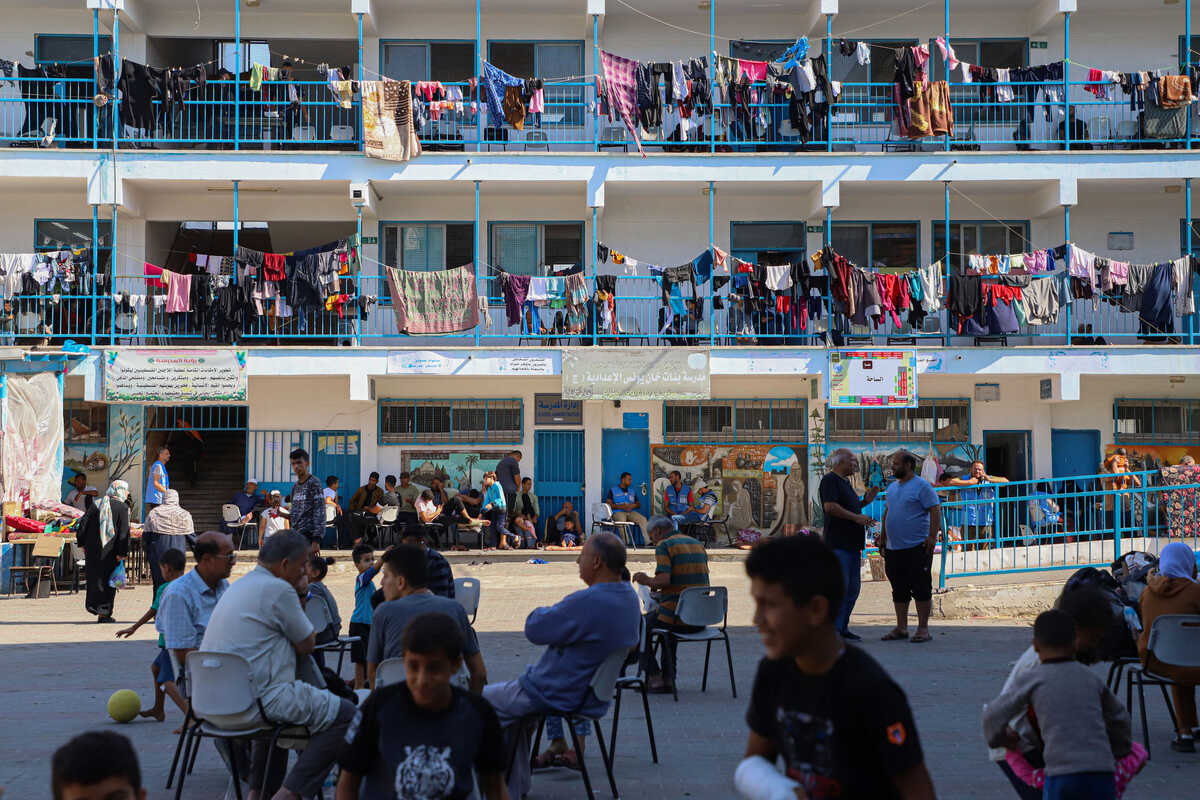
It applies to a territory that is already besieged, under aerial bombardment and without fuel, electricity, water and food. It applies to a territory that has suffered critical damage to roads and infrastructure in the past week, making the act of evacuating nearly impossible in the first place. It applies to United Nations staff members and more than 200,000 people sheltering in UN facilities, including schools, health centers and clinics. It applies to hundreds of thousands of children: Nearly half of Gaza is under the age of 18.As secretary general of the United Nations, I appeal to Israeli authorities to reconsider.We have approached a moment of calamitous escalation, and find ourselves at a critical crossroads. 

It is imperative that all parties — and those with influence over them — do everything possible to avoid fresh violence or spillover of the conflict to the West Bank and the wider region. We urgently need a way out of this disastrous dead end before more lives are lost. There are several key priorities to focus on right now in order to pull the world back from this abyss. 


The United Nations and our partners need rapid and unimpeded humanitarian access now throughout Gaza. Humanitarian aid including fuel, food and water must be allowed to enter.All hostages in Gaza must be released. Civilians must not be used as human shields.International humanitarian law — including the Geneva Conventions — must be respected and upheld. Civilians on both sides must be protected at all times. Hospitals, schools, clinics and United Nations premises must never be targeted. 


I mourn my colleagues in Gaza who have already lost their lives in the last week. And still, United Nations personnel are working nonstop to support the people of Gaza. We will continue to do so.I have been in constant contact with leaders in the region. It is clear that the ongoing upheaval in the Middle East is polarizing communities around the world, widening divides, and spreading and amplifying hate. If truth is the first casualty of war, reason is not far behind.I am horrified to hear the language of genocide entering the public discourse. People are losing sight of each other’s humanity. Brutality and violence cannot be allowed to obscure a fundamental truth: We are all the product of our lived realities and collective history.


The Spanish philosopher José Ortega y Gasset put it this way: “Yo soy yo y mi circunstancia” — “I am myself and my circumstances.” And sometimes, those circumstances are unbearable. When I put myself in the shoes of an Israeli Jew, I experience the recent horrors in the context of two millenniums of discrimination, expulsion, exile and extermination, leading to the Holocaust. 


During the 15th century, my own country of Portugal expelled or forcibly converted its Jewish community and after a period of discrimination, they were forced to leave. As an Israeli Jew, I would be painfully aware that some in our neighborhood do not recognize Israel’s right to exist. And if today, as an Israeli Jew, I see young people massacred at a concert, grandmothers shot in their homes in cold blood, and scores of civilians, including children, brutally abducted and held at gunpoint, it is only natural for me to feel enormous pain, insecurity and, yes, blind fury.


Then I try to consider the circumstances across the divide: if I were a Palestinian living in Gaza. 

My community has been marginalized and forgotten for generations. My grandparents may have been forced to leave their villages and homes. If I’m lucky, my children have already survived several wars that flattened their neighborhoods and killed their friends.As a Palestinian, I have nowhere to go and no political solution in sight. I see the peace process essentially ignored by the international community, with ever more settlements, ever more evictions, and endless occupation. It is only natural for me to feel an enormous sense of pain, insecurity and again, blind fury. Clearly, the grievances felt by the Palestinian people do not justify the terror that was unleashed against civilians in Israel. 


I once again utterly condemn the abhorrent attacks by Hamas and others that terrorized Israel. And clearly, the horrific acts by Hamas do not justify responding with collective punishment of the Palestinian people. But any solution to this tragic, decades-long ordeal of death and destruction requires full recognition of the circumstances of both Israelis and Palestinians, of both their realities and both their perspectives. We cannot ignore the power and the pull of collective memory; the circumstances that shape and define our identity and our very essence.


Israel must see its legitimate needs for security materialized, and Palestinians must see a clear perspective for the establishment of their own state realized, in line with United Nations resolutions, international law and previous agreements. If the international community truly believes in these two objectives, we need to find a way to work together to find real, lasting solutions — solutions that are based on our common humanity and that recognize the need for people to live together, despite histories and circumstances that tear them apart.Ortega y Gasset’s quotation concludes: “Y si no la salvo a ella, no me salvo yo.” (“If I don’t save my circumstances, I cannot save myself.”) This horrifying cycle of ever-escalating violence and bloodshed must end. 


It is clear that the two sides in this conflict cannot achieve a solution without concerted action and strong support from us, the international community. That is the only way to save any chance of security and opportunity for both Israelis and Palestinians.

PALESTINE

Mon 16 Oct 2023 3:38 pm - Jerusalem Time

Security Council votes today on draft resolutions regarding Israel and Gaza

Diplomats said that the United Nations Security Council will vote, later today, Monday, on draft resolutions from various parties regarding Israel and Gaza, according to the Reuters news agency.


The continuous bombing since October 7 led to the leveling of neighborhoods to the ground and the killing of at least 2,800 people in the Gaza Strip and the West Bank, according to the latest toll from the Ministry of Health in the Strip.


The ministry explained, in a statement, that about 2,750 of the deaths were in the Gaza Strip, in addition to 58 in the West Bank. The statement indicated that the number of injured Palestinians exceeded 10,950, including more than 9,700 in the Gaza Strip.


According to an Agence France-Presse count confirmed by the authorities of the various countries concerned, about 160 foreign citizens were killed, a number of whom also held Israeli citizenship. The Israeli army said on Monday that it had confirmed the presence of 199 hostages held by Hamas.

UNCATEGORIZED

Mon 16 Oct 2023 3:21 pm - Jerusalem Time

Christians in Gaza hold church services to urge end to Israeli agression

Prayers have been offered during services at two churches in the blockaded Gaza Strip, appealing to end Israel's ongoing 9-day attacks.

Amid Israel's ongoing attacks on Gaza, Christian Palestinians conducted religious services at the Saint Porphyrius Greek Orthodox Church and the Holy Family Catholic Church, according to the official Palestinian news agency WAFA.

As a result of Israel's ongoing attacks since Oct. 7, some Christian families whose homes were destroyed sought refuge in the Holy Family Church and its affiliated school.


Isa Muslih, the Jerusalem Greek Orthodox Church spokesman, said, "The world must take immediate action to stop the genocide committed against innocent Palestinians."


Muslih called for ending this war, pressure on the occupying Israeli government, and establishing safe corridors for delivering food, baby formula, and medical aid to vulnerable civilians in Gaza.


It is estimated that around 1,000 Palestinian Christians live in Gaza. Some Palestinian Christians have also been displaced and turned into refugees due to the Israeli occupation, forcing them to leave their homes.

Israel-Palestine conflict


PALESTINE

Mon 16 Oct 2023 3:15 pm - Jerusalem Time

Palestinian mission in Geneva demands ending transfer of any weapons to Israel

The State of Palestine called on all states parties to the Arms Trade Treaty and its signatory states to end the transfer of any weapons or ammunition to the Israeli occupying state.


This came in a letter sent by the mission of the State of Palestine to the United Nations in Geneva, calling for an immediate end to any current transfers and prohibiting any future transfers of conventional weapons, ammunition, parts and components referred to in Articles 2 (1), 3 or 4 of the Arms Trade Treaty to Israel, The occupying Power, in particular during its genocidal aggression against Gaza, until it ends its illegal occupation of Palestine and fully complies with its obligations under international law. Pending the imposition of this embargo, all countries must immediately suspend all transfers of military equipment, aid, and ammunition to Israel.


The mission explained that Gaza, an occupied and besieged enclave of Palestinian territory, is one of the most densely populated places on Earth. There are 2.3 million people living there, 50% of whom are children, and 70% of whom are refugees. Bombing Gaza is essentially equivalent to bombing children and refugees who have nowhere to run.


The mission stated, “Over the past six days, after issuing public calls for genocide - with Israeli Prime Minister Benjamin Netanyahu vowing to turn Gaza into a deserted island, Israel, the occupying power, began dropping 6,000 bombs weighing 4,000 tons on Gaza. It closed all exits to Gaza, It cut off food, water, fuel, gas, and electricity from the civilian population. It killed more than 2,700 Palestinians, most of them children and women. At least 11 United Nations employees, 5 members of the International Committee of the Red Cross, 16 medical workers, and 10 journalists were killed. Entire families have been wiped from the population registry in Gaza - from grandparents to grandchildren - they have been wiped out. Residential areas have been destroyed, including refugee camps, residential buildings, hospitals, schools and historical monuments. Ambulances and medical facilities have been deliberately targeted. 18 ambulances were destroyed and 8 medical facilities were severely damaged.


The mission said that the effects of the use of explosive weapons on hospitals, schools, food security, water, electricity and shelter affect millions, and that the deadly military operation launched by the occupying authority against the Palestinian population in Gaza is the sixth since 2008. In each of these operations, war crimes were committed, It was also confirmed by countless reports issued by civil society organizations around the world, United Nations bodies and investigative committees.


It stressed, "States parties to the Arms Trade Treaty have legal obligations to put an end to the irresponsible trade in conventional arms that undermines international peace and security, facilitates the commission of atrocity crimes, and threatens the international legal order."


Under Article 6 (3), States Parties undertook not to permit any transfer of conventional arms if they had knowledge at the time of declaration that the arms or items would be used to commit crimes of genocide, crimes against humanity, grave breaches of the 1949 Geneva Conventions, and attacks directed against objects. civilians or civilians protected as such, or other war crimes as defined in international conventions to which they are a party.


Under Articles 7 and 11, it pledged not to permit any export of conventional arms, ammunition, parts and components that would, inter alia, undermine peace and security or be used to commit serious violations of international humanitarian and human rights law.


The mission indicated that it is clear that arms exports to Israel are not consistent with these obligations. Despite the declared support of the Arms Trade Treaty and its support for international law, a group of European countries that are parties to the Arms Trade Treaty decided to send military aid to Israel or approved Israel's use of its weapons while the occupying authority bombed Gaza and pledged to abide by it. The United States of America, a signatory, also sent large amounts of military aid to Israel.


The mission stressed that “States parties to the Arms Trade Treaty and signatory states must immediately end any action and prohibit any future transfers of conventional weapons, ammunition, parts and components referred to in Articles 2 (1), 3 or 4 of the Arms Trade Treaty to Israel.” "the occupying power."


The mission said that failure to take these measures would mean more deaths and more suffering, as thousands of civilians continue to endure the brutality of the occupying power, and discredit the Arms Trade Treaty itself. It also makes States parties and signatories vulnerable to complicity in internationally wrongful acts through assistance. Or incitement to commit international crimes.


The mission concluded that the Arms Trade Treaty could make a difference in the lives of many countries, and that it had the potential, if implemented in good faith, to spare countless potentially protected persons, including women and children, from needless suffering, if ignored. Our call to stop leaving the Palestinian people behind when it comes to implementing the Arms Trade Treaty will destroy the raison d'être of the Arms Trade Treaty.

PALESTINE

Mon 16 Oct 2023 2:58 pm - Jerusalem Time

Blinken returns to Israel and news of upcoming visit by Biden

US Secretary of State Anthony Blinken returned - today, Monday - to Israel on a visit, the second of its kind within days, after an Arab tour during which he sought to rally support against the Islamic Resistance Movement (Hamas).


Blinken's plane landed at Ben Gurion Airport near Tel Aviv, and he is scheduled to meet with the head of the emergency government, Benjamin Netanyahu, and other officials, as part of what Washington says are efforts to reduce tensions and prevent further escalation in Gaza.


This is Blinken's second visit, while Hebrew media reported that US President Joe Biden may visit Israel on Wednesday or Thursday.


An informed source also reported yesterday that American and Israeli officials are discussing the possibility of Biden visiting Israel soon at the invitation of the Prime Minister.


Netanyahu invited Biden to visit Israel, praising his support for responding to the Al-Aqsa Flood operation launched by the Palestinian resistance on October 7.


Source: Al Jazeera

PALESTINE

Mon 16 Oct 2023 2:55 pm - Jerusalem Time

Netanyahu told 1.1 million Palestinians to evacuate. What is that if not ethnic cleansing?

The Israeli government’s demand that more than one million Palestinians leave their homes in northern Gaza and flee south has horrific echoes of the past.


I worked as a journalist in the region in the 1990s, and in recent years I have spent a great deal of time in Gaza and Israel, researching the history of Gaza’s 2.3 million refugees. Almost everyone in Gaza is a refugee from one of 200 Arab villages, then in southern Palestine, that were destroyed by Israeli forces in 1948 when the Jewish state came into being. What remains of some of these villages lies within 10 miles of the Gaza boundary. Some refugees can even see their land through the fence.


The first phase of Israel’s revenge for Hamas’s atrocities – the intense aerial bombardment of the past few days – was easy to predict. Every innocent Palestinian in Gaza was bound to pay the appalling price, and thousands already have.


However, I did not predict that this time the west would not only let it happen – as it has several times before – but cheer Israel on, sending arms and effectively promising impunity from international law, abandoning the Palestinians to their plight.


With the green light from Israel’s allies, prime minister Benjamin Netanyahu declared on Friday that 1.1 million Gazans were to be “evacuated” from the north to the south of Gaza. Netanyahu wants us to believe his prime concern is to keep civilians out of danger during the expected ground invasion from the north, which is presumably how he plans to finally “crush” Hamas. Such empty claims – at the time of writing, 1,800 Palestinians have already been killed – are made in the hope of immunizing Israel against accusations of war crimes. Driving one million people south will cause ever more horror, and we all know by now that there is no safe place for civilians to flee to or to shelter.


When Israeli forces “cleansed” the nearby villages in 1948, the process started with the same psychological warfare we see today, warnings to flee, the dropping of leaflets, and threats of what might happen if they didn’t. Villages were generally shelled before ground troops went in; many civilians were killed, and there were massacres. The village was usually surrounded, with one exit left open for Palestinians to flee through. 

Survivors eventually went to the Gaza Strip, as it was deemed a safe area. United Nations Resolution 194, passed in December 1948, granted them a right to return. Israel refused.


If Netanyahu continues with his “evacuation” plan, history and events on the ground tell us that after the warnings and bombings we are already seeing, the refugees will flee, as they did in 1948. The one potential exit for them is into Egypt. Although Egypt is strongly opposed to accepting refugees, knowing it would be collaborating in permanent ethnic cleansing, this could change if the humanitarian crisis at its borders escalates. If Gazans do indeed flood over into the Sinai, they may not be allowed back.


The risks for Netanyahu are huge, not least because of the Israeli hostages inside Gaza. But given that his political future looks almost certainly over anyway, he may calculate that he has nothing to lose. And the Israeli right has long pressed for expelling Gaza’s population into the Sinai.


In other words, should the west and other influential actors not move to halt this “evacuation”, a process of ethnic cleansing could be under way, bringing with it the risks of a regional conflagration.


As with Israel’s expulsions in 1948, today’s leadership will then project a narrative saying that there is no safe future for Israel unless the entire population of Gaza is permanently expelled. Negotiation will then begin about whether the refugees have a right to return to Gaza, which was already a place of exile.


This scenario may sound overly apocalyptic, but as Palestinian refugees know only too well, it is not. Israel has long hoped that the story of its ethnic cleansing of Palestinian villages of 1948 would be forgotten. From the first days of the 1948 flight, Israel devised its own narrative of those events, claiming the Palestinians fled under orders of the Arab leadership. When they tried to return to their villages after the war, they were labeled “infiltrators” and then “terrorists”.

Since Israel and Egypt blockaded Gaza in 2006-7, cutting it off from the world, Israel has seen reason to hope that the story of 1948 would remain hidden, too. Archives have been blocked, and the last remains of villages destroyed. But many Gazans today not only remember 1948, but feel as if they are back in it.


I have spoken to friends inside the strip who say they are determined not to be uprooted a second time, and that they would rather stay put in their houses and die there.

“I will not move. I will be killed in my house with my family,” one mother, Adalah, who lives in central Gaza, told me. Their house sits on the beach with a view out to sea, where Israeli gunboats patrol. Adalah told me she had gathered all her family in the house so they could die together.


Source: The Guardian

Sarah Helm is a former Middle East correspondent and diplomatic editor of the Independent

OPINIONS

Mon 16 Oct 2023 2:31 pm - Jerusalem Time

How do American mental health associations justify the Israeli genocidal attack on Gaza!

 Dr.. Samah Jabr

Dr.. Samah Jabr

Opinion Writer

This week, the American Psychiatric Association (APA) issued a statement on “terrorist attacks in Israel” and the American Academy of Child and Adolescent Psychiatry (AACAP) followed suit with a similar statement. These are disappointingly one-eyed condemnations, as they make no reference to the 75-year-old Israeli occupation of Palestine. years and many atrocities committed against Palestinians throughout this period.


While the American Psychiatric Association portrays Palestinian resistance as “anti-Semitism and terrorism,” the right of the occupied people to resist is legal under international law and, like mental health itself, a fundamental human right.


The horrific imbalance in the declared positions of the two associations reflects a serious lack of awareness or willful neglect of the physical and psychological health effects of the occupation, especially the impact of the prolonged siege of Gaza, on Palestinians.


By failing to address the long-term suffering of Palestinians and standing unequivocally with the Israeli occupier, the two associations violated their principles of neutrality and revealed their lack of commitment to meeting the mental health needs of all people equally.


The statements of the most prominent psychiatric associations in the world ignore the historical context, the besieged population of Gaza, half of which is children, and do not mention the horrific bombing of the small Strip or what many rights groups now call genocide against the Palestinians.


In the same vein, the statements completely ignore the psychological impact and trauma even though human rights organizations have documented inhumane conditions for many years, including reports by Physicians for Human Rights, Amnesty International, Save the Children, and others.


In its brutal campaign of collective punishment, Israel has cut off food, fuel, electricity, water and medical supplies, displacing hundreds of thousands of Palestinians who have been forced to flee their homes.


A third of the more than 2,400 Palestinians killed and nearly 12,000 injured so far in Gaza are children, yet their lives are apparently not worthy of being mentioned by the Society for Children and Adolescents.


Even in its tepid statement on the current “crisis” in Gaza, the association cannot express “mourning” for the children who were killed, and only faint concern about the traumatic “images” to which children may be exposed, despite the young teenagers being forced to It endures five Israeli wars on Gaza, which resulted in huge numbers of civilian deaths, during the past decade and a half.


Aside from the horrific violence, Gaza has been exhausted by the crippling 16-year blockade, which has turned Gaza into an open-air prison with the highest population density. In the past few days, Israel has ordered more than a million people to evacuate without providing them anywhere to go.


The concerns of mental health professionals must include all people equally. Who better than mental health professionals to understand the importance of freedom for all human beings? Otherwise, the only explanation for such apparent double standards is that the American Psychiatric Association and the American Child and Adolescent Psychiatric Association have fully embraced the official Israeli narrative and cannot see Palestinians as human beings.

These statements further dehumanize Palestinians by ignoring the ongoing mental health challenges and collective trauma resulting from decades of oppression, ongoing violence, humiliation, and injustice imposed by the occupation. The bombing of Palestinian schools, ambulances and hospitals – including Gaza’s only psychiatric hospital – which took place on Friday morning, as I learned from its director and colleague Dr Abdullah Al-Jamal, is just one example of these recurring harms.


Such statements by medical organizations - which are allegedly not a political lobby - further inflame public sentiment and promote dangerous propaganda supporting Israel's acts of genocide against Palestinians in Gaza. Instead, the two associations could have done better in the face of the vicious lies spread by the US government and the media, including the vicious slander of “headless children” that has since been debunked. If these organizations were truly concerned with the well-being of civilians or children, they could have objected to the massive arsenal of US military aid to Israel, which helps Israel implement its genocidal plans against the Palestinians.


The American Psychiatric Association and the American Child and Adolescent Psychiatric Association could have served the people of Israel better by helping them to make sense of what happened, internalizing it in their experience as occupiers, and helping them to shed their arrogant attitudes and sense of entitlement. They can also help stop future violence by recognizing the legitimate struggle of Palestinians to live in freedom and dignity and recognizing that where there is oppression, there will be resistance.


A more balanced and compassionate approach is necessary – one that acknowledges mental health struggles on both sides and calls for a fair solution for both people. Initial decisions must be based on human rights and international law.


Mental health as a basic human right was the theme of the recent World Mental Health Day on October 10. Working for global mental health requires a holistic, inclusive perspective that truly supports all those affected by this long and ongoing crisis.


Palestinian psychiatrists and mental health workers call on all colleagues and health organizations, both physical and mental, around the world, to adhere to the ethics of our professional role and not to corrupt it with political ideology.


We must resist the two associations and any other professional organizations that contribute to the hateful and negative portrayal of the Palestinian people. Such dangerous statements make them complicit in the bleeding of Palestinians.

PALESTINE

Mon 16 Oct 2023 2:12 pm - Jerusalem Time

Imminence of human catastrophe: More than thousand bodies of Palestinian under the rubble in Gaza

On Monday, the Ministry of Interior in Gaza warned of a humanitarian and environmental catastrophe in the Strip, due to the presence of the bodies of more than a thousand martyrs under the rubble of destroyed homes, as a result of the ongoing Israeli aggression for the tenth day in a row.


The Interior Ministry said in a statement, "On the tenth day of the ongoing barbaric Israeli aggression against our people in the Gaza Strip, we warn of a humanitarian and environmental catastrophe due to the presence of the bodies of more than a thousand martyrs under the rubble of destroyed homes."


Today, Monday, the Palestinian Ministry of Health announced that the death toll from the Israeli bombing of the Gaza Strip since October 7 has risen to 2,750 martyrs and more than 9,700 injured in the Strip.


Ministry added - in a statement - that the number of Palestinian martyrs in the West Bank has reached 58, in addition to more than 1,250 wounded, since the seventh of this October.

PALESTINE

Mon 16 Oct 2023 1:18 pm - Jerusalem Time

Borrell: United Nations must be given unhindered access to Gaza

European Union foreign policy chief Josep Borrell said that the United Nations must be able to access Gaza in all its areas without hindrance, to provide humanitarian aid, including water and basic supplies.


Borrell stressed that human suffering cannot be a bargaining chip.

PALESTINE

Mon 16 Oct 2023 1:17 pm - Jerusalem Time

United Nations: 50,000 pregnant women in Gaza are without services

The United Nations Population Fund in Palestine revealed that there are 50,000 pregnant women in the Gaza Strip who cannot obtain basic health services.


The Fund added in a statement on the “X” platform: “50,000 pregnant women in the Gaza Strip cannot obtain health services. 5,500 of them will give birth during the month of October.”


The Fund stressed that these women “need urgent health care and protection,” and urged all parties to “abide by their obligations under international humanitarian law and international human rights law.”


The fund's director, Dominic Allen, said in an interview with the American network "CNN", and published on the "X" platform, "The health care system itself in Gaza is in a sensitive situation. It is under attack, and is on the verge of collapse."


He added, "These pregnant women, whom we are extremely concerned about, have nowhere to go," stressing that they face "unimaginable" challenges.


He continued: "Imagine going through this process in those final stages and the last three months of pregnancy before giving birth, with possible complications, without clothes, without hygiene and support, without knowing what will happen to them the next day, the next hour, and the next minute."


He stressed that "the stories coming from the hospitals were horrific, and that one of the midwives in the maternity hospital in Gaza told him that since the beginning of the aggression, some midwives were not even able to reach the maternity ward to provide assistance due to the unsafe environment."


Allen stressed the need to "allow aid and humanitarian supplies to pass into Gaza," stressing that "a humanitarian corridor must be opened, and humanitarian law must be adhered to. Therefore, pregnant women must receive these life-saving health services."


ARAB AND WORLD

Mon 16 Oct 2023 1:13 pm - Jerusalem Time

Facts about two aircraft carriers that America deployed to support Israel


In light of the continuing escalation between Hamas and Israel, Washington announced that it had decided to deploy two aircraft carriers in the eastern Mediterranean to ensure Israel's security and not expand the escalation. There are 10,000 sailors on board the two carriers. One of them is the largest in the world, and the newest in the United States.


The United States announced the deployment of two aircraft carriers in the eastern Mediterranean as part of “Washington’s firm commitment to Israel’s security and our determination to deter any state or non-governmental entity that seeks to escalate this war.” The United States seeks to prevent further escalation between the Palestinian Hamas movement and Israel. Washington has repeatedly stressed Israel's right to defend itself, stressing that it stands with Tel Aviv.


Ford aircraft carrier

This giant carrier and its supporting ships arrived in the eastern Mediterranean last week. The Ford, which was commissioned in 2017, is the newest aircraft carrier in the United States and the largest in the world, with more than 5,000 sailors on board.


The carrier, which includes a nuclear reactor, can accommodate more than 75 military combat aircraft, including the F-18 Super Hornet and A-2 Hawkeye, which can be used as an early warning system.


It also carries an arsenal of missiles, including the Evolved Sea Sparrow missile, which is a medium-range surface-to-air missile used to confront aircraft, including drones.


Another rotary-frame missile aboard the Ford is used to target anti-ship missiles along with the MK-15 Phalanx Close-In weapon system, which is used to fire armour-piercing bullets.


The Ford carrier is also equipped with advanced radar systems that can assist in air traffic control and navigation.


Ships supporting Ford include the Ticonderoga-class guided-missile cruiser Normandy and the Arleigh Burke-class guided-missile destroyers Thomas Hudner, Ramage, Carney, and Roosevelt. The ships are equipped with surface-to-air, surface-to-surface and anti-submarine warfare capabilities.


The aircraft carrier Eisenhower

The Pentagon directed the Eisenhower Carrier Strike Group to move to the eastern Mediterranean. It will take between a week and a week and a half for it to arrive in the area. The nuclear-powered aircraft carrier, which was commissioned in 1977, carried out its first operations during Iraq's invasion of Kuwait.


The carrier has 5,000 sailors on board and can carry up to nine squadrons of aircraft, including fighters, helicopters and reconnaissance.


As with the aircraft carrier Ford, the Eisenhower is accompanied by other ships such as the guided-missile cruiser Philippine Sea and the guided-missile destroyers Greeley and Mason.


These ships focus on protecting themselves and the aircraft carrier. While it can carry out offensive operations, it is not suitable to serve as a missile defense system for Israel, which already has advanced systems.


France 24/Reuters