PALESTINE

Thu 19 Oct 2023 12:54 pm - Jerusalem Time

Israeli army seizes a Palestinian house in Jenin and turns its roof into a military position

Today, Thursday, the Israeli occupation forces turned a citizen’s house in the village of Jalboun, east of Jenin, into a military observation point.


The head of the Jalboun Village Council, Ibrahim Abu Al-Rub, stated that the occupation forces stormed the village at dawn today, raided commercial stores, and the two-story house of citizen Maher Naji Abu Al-Rub, seized the second floor, which houses 10 people, and turned its roof into an observation point.


It is noteworthy that a month ago, the occupation forces seized the rooftops of four homes of the Abu Al-Rub family, and turned them into military observation points.


PALESTINE

Thu 19 Oct 2023 12:11 pm - Jerusalem Time

3 hospitals in Gaza are completely out of service

The Palestinian Ministry of Health announced, on Thursday, October 19, 2023, that 3 hospitals were completely out of service in the Gaza Strip, noting that 25 hospitals were partially damaged in the Strip, at a time when the director of the “Martyrs of Al-Aqsa” Hospital in the city of Deir Al-Balah in the Gaza Strip, Iyad Al-Jaabari, the hospital's strategic stock of medicines and medical supplies ran out.


Al-Jabari said, “The health situation in the hospital is very dangerous, and the lives of thousands of patients and wounded are threatened,” and added: “The strategic stock of medicines and medical supplies has run out” due to the tight closure imposed by the occupation authorities on the Gaza Strip, since October 7 of this year.

Al-Jaabari also pointed out that the hospital "provides medical service to thousands of Palestinians in the middle of the Gaza Strip," and appealed to international and human rights bodies "to intervene to force Israel to allow the entry of medical supplies and medicines into Gaza."


Earlier, the Director-General of the World Health Organization, Tedros Adhanom Ghebreyesus, said that the health sector situation in Gaza is “out of control,” and Ghebreyesus added: “Losses (of lives) are recorded for every second delay in delivering medical aid to Gaza.”


He also pointed out that the medical supplies sent by the World Health Organization to Gaza have been waiting at the border (on the Egyptian side) for days, and Ghebreyesus pointed out the urgent need to begin delivering medical supplies to Gaza, calling for an end to the violence between the two sides.


PALESTINE

Thu 19 Oct 2023 11:36 am - Jerusalem Time

Updated| 6 young Palestinians killed during the storming of Nour Shams camp in Tulkarm

Six Palestinian citizens were killed today, Thursday, after they were targeted by drones launched by the Israeli occupation army in Nour Shams camp in Tulkarm.


According to local sources, the occupation forces launched a drone towards a group of young men inside the camp, killing four of them and wounding dozens of people with various injuries. They were transferred to Thabet Thabet Hospital.


She added that the occupation forces stormed the camp and fired live bullets and poisonous gas at the citizens, leading to the outbreak of confrontations that are still continuing to this day.


The occupation forces also arrested a young man after sustaining a head injury, prevented ambulances from reaching him, and cut off electricity and water supply to the camp.


The Israeli occupation forces imposed a tight military cordon on Nour Shams camp, prohibited movement around it, and deployed their vehicles and bulldozers at its entrances and surroundings.


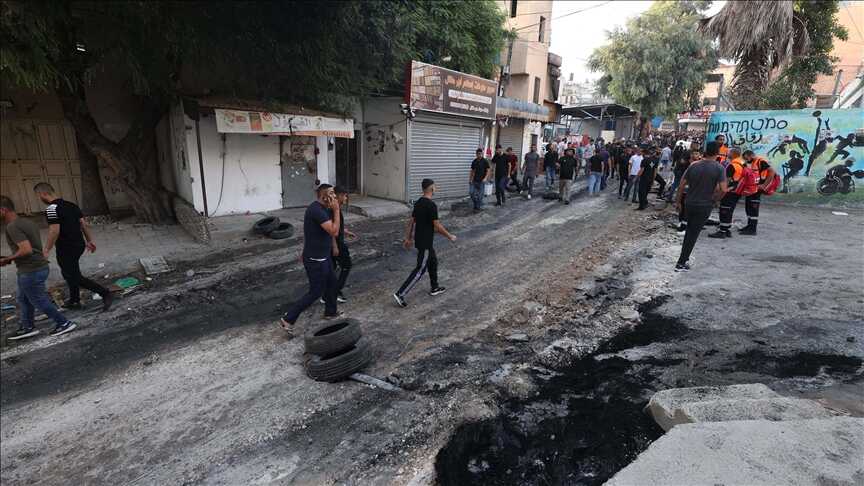
Local sources reported that large forces of the occupation army, accompanied by military bulldozers, stormed the camp from various sides, and deployed in its streets and neighborhoods, especially in the Al-Mahjar and Jabal Al-Nasr areas, while they raided dozens of citizens’ homes, wreaking destruction and vandalism, and taking them as places for their snipers.


The sources added that the occupation bulldozers destroyed sections of the main street of the camp known as Nablus Street, Cemetery Street, the monument of the martyr Saif Abu Libdeh at the entrance to the camp, and many streets branching between the houses.


The occupation forces destroyed citizens' vehicles parked in front of their owners' homes, wreaked havoc on public and private property in the camp's streets, blew up the walls of many of them, and occupied bulldozers closed the entrance to the camp with earth mounds.


The occupation forces arrested a number of citizens, known as: the two freed prisoners, the brothers Baraa and Abd al-Rahman Fathi Qaraawi, Izz al-Din Abu Dayyeh, Samer Jaber, Ali Jaber, Mahmoud Jaber, and Imad Jaber, after raiding their homes.


Violent confrontations broke out between young men and the occupation soldiers, who fired heavy bullets, hitting the facades and windows of houses and shops. The teenager Taha Mahameed (16 years old) was dead, and three other citizens were injured in the lower extremities and were transferred to the Martyr Thabet Thabet Governmental Hospital.


The occupation forces set up military checkpoints at the main intersections of the city, and prevented the movement of citizens and their vehicles, especially on Shweika Street north of Tulkarm, the Western Neighborhood, and Pharaoh Street to the south.


PALESTINE

Thu 19 Oct 2023 11:25 am - Jerusalem Time

The Logic Behind Biden’s Israel Visit

By Aaron David Miller


Caught off guard like most of the world, U.S. President Joe Biden and his administration are scrambling to find ways to reassure and restrain Israel, ameliorate a catastrophic humanitarian crisis in Gaza, deter the involvement of Hezbollah and Iran, and find opportunities to free approximately 200 hostages held by Hamas, including many Americans.


Unfortunately, Washington lacks real on-the-ground leverage and is more an observer to events than a shaper of them. This is especially true for the looming, unprecedented Israeli ground campaign in Gaza to destroy Hamas as a military organization and to create a so-called post-Hamas reality there. If there is a central role for the United States to play, it may well come in trying to shape the scenario certain to emerge in the wake of Israel’s military operations.


The tone of the administration’s reaction to the horrific Hamas attack was set by Biden’s October 10 address. The clear impression he left was that his administration would give the Israelis the time, space, and support to deal with Hamas in the way they saw fit. The administration has also proposed a $2 billion assistance package, including interceptors for Iron Dome, precision-guided munitions, and ammunition, with a possible supplemental to follow.


But as Palestinian deaths have mounted due to Israeli airstrikes and the humanitarian crisis in Gaza has worsened, the administration’s tone toughened somewhat, with an emphasis on the need for the Israelis to avoid civilian casualties and adhere to international laws of war. It has also cautioned Israel on occupying Gaza and pressured it to allow humanitarian aid into the strip. Still, Biden—whose love for Israel and high sensitivity to its security is deeply imprinted on his emotional and political DNA—remains determined to stand by the country.


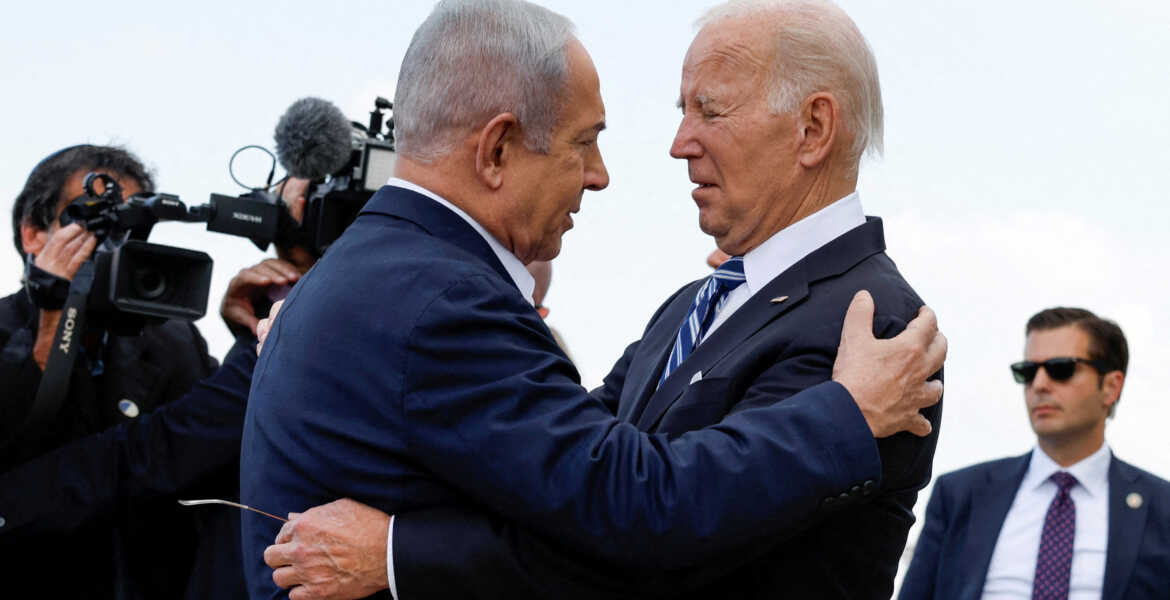
The logic of the administration’s policy seems to be to bind the United States closely to Israel now to maximize trust and confidence so that it would have currency in the bank for tougher conversations and even pressure later. Biden’s visit to Israel on Wednesday will likely further support this logic.


Biden has three objectives on his trip. First, he’ll want to press Israeli Prime Minister Benjamin Netanyahu to open up a reliable, stable humanitarian corridor to allow assistance to surge into southern Gaza.* Second, he’ll aim to reassure an Israeli public that has lost faith in its own leadership with a message of support and hope from America. Third, he’ll want to have a tough, frank conversation with Israeli leaders about their looming ground campaign—the objectives and complexities, with an eye toward getting them to think even harder about the depth, scope, and dangers of disproportionality, along with reoccupation of Gaza and civilian deaths.


As for the challenge of the humanitarian crisis in Gaza, the administration’s efforts are being hampered by time, space, and politics. Israel has been extending a twenty-four-hour deadline for the evacuation of Gaza City, which has an estimated population of 1.1 million, to move to southern Gaza, where there are not enough social services or basic necessities to care for them. Meanwhile, Hamas is discouraging Palestinians from leaving, Egypt is refusing to accept them, and Israeli airstrikes and blockades have made movement difficult and dangerous.


Gaza, which has a population density of approximately 21,000 human per square mile, was already stressed to provide services to its more than 2 million residents—half of whom are under the age of fifteen—during normal times. And the Israeli ground campaign hasn’t yet begun. It seems hard to imagine that anything more than ameliorating the current humanitarian crisis will be possible.


The administration’s other major challenge is trying to deter and contain the conflict from escalating. The West Bank front has already heated up, with more than fifty Palestinians killed in confrontations with Israeli settlers and the Israel Defense Forces. Jerusalem has remained relatively calm. But the real concern is the Israeli-Lebanese border, where confrontations between Israel and Hezbollah have occurred almost daily.


The administration has deployed two carrier strike groups to the Eastern Mediterranean, clearly signaling to Hezbollah and Iran that there will be consequences should they push for a major escalation. It’s unclear what Iran’s and Hezbollah’s calculations are. Iran clearly does not want to get involved in a major clash with Israel, let alone the United States. And one can wonder, with Hamas doing its work for Hezbollah in striking Israel, why the Shia group would want to risk its fortunes and military assets on behalf of the Palestinians. Much may come to turn on the breadth and depth of Israel’s ground war in Gaza and on any miscalculations by Israel or Hezbollah along the Israeli-Lebanese border.


It’s impossible to predict how the Gaza crisis will play out. Depending on how it does, there may well be a role for the U.S. administration—among others, including the Arab states, the UN, and the EU—in picking up the pieces and stabilizing Gaza. Alone among modern American presidents, Biden views himself as part of Israel’s story and is in a unique position to help moderate this crisis and pick up the pieces. 


At the risk of finding any silver linings in this otherwise dark tragedy, it could help to build a better future for Palestinians and more peaceful relations with Israel. The whole situation underscores how badly a comprehensive Israeli-Palestinian peace is needed—but anyone, including Biden, would be hard-pressed now, in the middle of this crisis, to divine how, if, and when that might play out


Aaron David Miller is a senior fellow at the Carnegie Endowment for International Peace, focusing on U.S. foreign policy.


Source: Carnegie Endowment

PALESTINE

Thu 19 Oct 2023 11:16 am - Jerusalem Time

Israeli Settlers storm Al-Aqsa Mosque

Today, Thursday, settlers stormed the blessed Al-Aqsa Mosque, under heavy protection from the Israeli occupation police.


Local sources reported that dozens of settlers stormed Al-Aqsa from the direction of the Mughariba Gate, and carried out provocative rounds in its courtyards.


Settlers carry out provocative daily raids on the Al-Aqsa Mosque, except for Friday and Saturday, in an attempt to control it and impose temporal and spatial division.

OPINIONS

Thu 19 Oct 2023 11:02 am - Jerusalem Time

Al-Ahli hospital massacre: deconstructing the Israeli lie

Translation for "Al-Quds" dot com

Translation for "Al-Quds" dot com

Opinion Writer

By Jonathan Cook


It is not only improbable that a Palestinian rocket destroyed the Gaza hospital. It's simply impossible. The media knows this, but they are terrified to say it.


Let’s say it again: the biggest fake news comes from establishment media. When the stakes are high, they care little about hiding their role as mouthpieces for Western propaganda.


This is a repeat of the Iraqi weapons of mass destruction affair. We're getting smoked. Believe your eyes, your ears and the laws of physics, not the lies peddled by our leaders and media about last night's missile strike on the Baptist Hospital in Gaza:


No Palestinian group has a rocket capable of crushing a hospital. What they have are often paltry glorified devices that can cause minor damage and occasionally result in a death or two. If Hamas or Islamic Jihad could blow up a building, killing hundreds of people, as happened last night, we would hear about it in Tel Aviv or Ashkelon too. You don't hear about it because it's not within their scope of possibility.


Israel apologists (and there are many of them) share all sorts of videos that have nothing to do with the hospital bombing. But video of the strike itself shows that an incredibly large and powerful weapon was used. Listen to the noise the missile makes just before hitting: this noise is due to its phenomenal speed as it cuts through the air. It is not the sound of a Palestinian rocket falling.


If you watch videos of Palestinian rocket fire, you will notice how slowly they move. Almost at a snail's pace. If they fail, they fall at the speed of free fall, not the near-supersonic speed of the missile that hit the hospital.

To think otherwise is simply to ignore the laws of physics.


Israel apologists are attempting to further muddy the waters by suggesting that a Palestinian rocket fell or was intercepted, and that the rocket or fragments of it hit a very large munitions depot in the hospital.

Let us accept the racist premise that hundreds of families were happy to take shelter next to a huge stockpile of explosives in the midst of a relentless Israeli bombing campaign.


Let's also accept the fanciful idea that a falling homemade rocket or homemade rocket fragment could penetrate the solid walls of the hospital and trigger such an explosion... If all this were true, we would still see a series of secondary explosions when the weapons were detonated by the initial explosion. This is not the case, because there is only one explosion, that of a huge missile!


Israel therefore released a recording of two Hamas militants discussing after the missile strike whether it was they or Islamic Jihad who did it. This is the same Israel that failed to detect the months of Hamas planning necessary to organize its sudden exit from Gaza ten days ago. But Israel got lucky this time, it seems, and happened to be listening when Huey and Louie decided to go on their own. -incriminate.


Remember, Israel has an entire unit of “mistaravim,” Israeli Jewish secret agents trained to pose as Palestinians and operate covertly among Palestinians.


Israel produced a very popular television series about these people in Gaza, called Fauda. You have to be extremely gullible to think that Israel could not, and would not, make a call of this type to deceive us, just as it regularly deceives the Palestinians in Gaza.


Most of the people who spread these lies know that they are lies, including the media, especially Middle East and defense correspondents.


At least a few, like the BBC's Jeremy Bowen and Jon Donnison, are cautiously trying to suggest that it is unlikely that a Hamas rocket could cause such widespread damage to the Gaza hospital.


But it's not improbable. It's impossible ! and they know it… But they don’t dare say it.


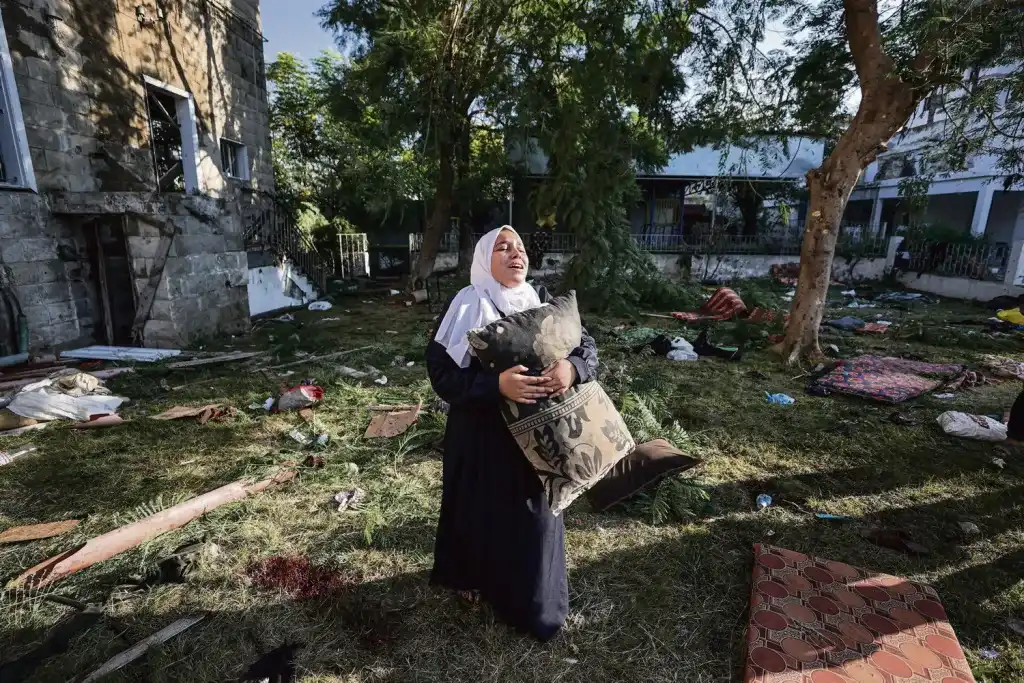
October 17, 2023 - Palestinians rush to help the injured after an Israeli airstrike on the Az Zaitoun neighborhood of Gaza City. Many dig through the rubble of destroyed homes to try to save survivors. Israeli settler forces continue to bombard the besieged enclave, killing at least 3,000 Palestinians and injuring more than 10,000 over the past 11 days. Later in the day, another airstrike in the same area hit Al-Ahli al-Arabi hospital, which was crowded with wounded from previous Israeli strikes and families seeking shelter from the relentless bombardment. According to the Palestinian Health Ministry, the attack killed at least 500 people, mainly women and children. Hospitals and health centers lack water, fuel, medicine and beds and are on the brink of collapse since the Israeli colonial regime imposed a total siege on Gaza.


Source: chronique de palestine


OPINIONS

Thu 19 Oct 2023 10:47 am - Jerusalem Time

Ilan Pappe: “To my Israeli friends: This is why I support the Palestinians”

Translation for "Al-Quds" dot com

Translation for "Al-Quds" dot com

Opinion Writer

“It is difficult to maintain one's sense of morality when the society to which one belongs - both its leaders and its media - is in charge and is expected to share the same legitimate anger with which it reacted to the events of last Saturday, October 7.


There is only one way to resist the temptation to join them: if one has, at some point in one's life - even as a Jewish citizen of Israel - understood the colonial nature of Zionism, and if one has been horrified by its policies against the indigenous people of Palestine.


If he was aware of this, he would not hesitate, even if the poisonous messages described the Palestinians as animals or “human animals,” and the authors themselves insisted on describing what happened last Saturday as the “Holocaust,” exploiting the memory of a great tragedy.


These feelings are expressed, day and night, by the Israeli media and politicians.


It is this moral sense that prompted me and other members of our community to support the Palestinian people in every possible way, which allows us, at the same time, to express admiration for the courage of the Palestinian fighters who seized dozens of military bases, defeating the strongest army in the Middle East.


On the other hand, people like me cannot help but ask themselves questions about the moral or strategic value of some of the actions that accompanied this process. Because we had always supported the end of colonialism in Palestine, we knew that the longer Israeli oppression lasted, the less the chances of making the liberation struggle “purifying,” as happened with all the just liberation struggles the world had witnessed in the past.


However, this does not mean that we do not have to look at the bigger picture, even for a minute; This picture is that of a colonized people struggling to survive, at a time when their oppressors have elected a government determined to accelerate the destruction of the Palestinian people, or even their elimination, or their demand to be recognized as a people. Therefore, Hamas had to act quickly. 

These counterarguments are difficult to express, because the Western media and politicians have rallied behind Israeli rhetoric and its narrative, regardless of their problematic nature. I wonder how many of those who decided to dress the façade of the Parliament in London and the Eiffel Tower in Paris in the colors of the Israeli flag really understand How is this, ostensibly symbolic, gesture being received in Israel? 

The liberal Zionists themselves, with little tact, interpreted this act as a complete absolution for all the crimes committed by the Israelis against the Palestinian people since 1948, and thus as a carte blanche to continue the genocide that committed by Israel against the residents of Gaza. Fortunately, the events of recent days have provoked different reactions. As was the case in the past, large sectors of Western civil society cannot be easily fooled by this hypocrisy, which has already been demonstrated in the case of Ukraine. Many people know that Since June 1967, one million Palestinians have been imprisoned, at least once in their lives; With imprisonment comes violations, torture, and permanent detention without trial. 

These same people also know the horrific reality that Israel created in the Gaza Strip when it closed the area and imposed a tight siege, starting in 2007, accompanied by the continuous killing of children in the occupied West Bank. This violence is not a phenomenon. New, because it has been the permanent face of Zionism since the establishment of Israel in 1948. Thanks to this same civil society, dear Israeli friends, your government and your media will ultimately be wrong, because they will not be able to claim the role of victim, or receive unconditional support and escape from... Its crimes. 


The bigger picture will eventually emerge, despite the bias inherent in the Western media. But the big question is: Dear Israeli friends, will you be able to see this big picture clearly, despite years of widespread indoctrination and manipulation? And just as important, will you be able to learn the other important lesson: What can be concluded from recent events, which is that force alone is unable to find a balance between a just system on the one hand and an immoral political project on the other hand? However, there is an alternative in reality, and this alternative has always existed: it is represented by a de-Zionized, liberated and democratic Palestine. 


From the river to the sea; Palestine receives refugees and builds a society that does not discriminate between its members on the basis of culture, religion, or race. This new state will seek, as much as possible, to correct the evils of the past, in terms of economic inequality, theft of property, and the denial of rights. This could herald a new era for the entire Middle East. It is not always easy for one to hold on to one's moral compass, but if that compass points north—toward decolonization and liberation—it is likely to show one the way through the fog of toxic propaganda, hypocritical politics, and inhumanity. , often committed in the name of “our shared Western values.”


Author: Ilan Pappe is a professor at the University of Exeter. He was previously a lecturer in political science at the University of Haifa. He is the author of The Ethnic Cleansing of Palestine, The Modern Middle East, A History of Modern Palestine: One Land, Two Peoples, and Ten Myths about Israel.


Source: chroniquepalestine.com

PALESTINE

Thu 19 Oct 2023 10:33 am - Jerusalem Time

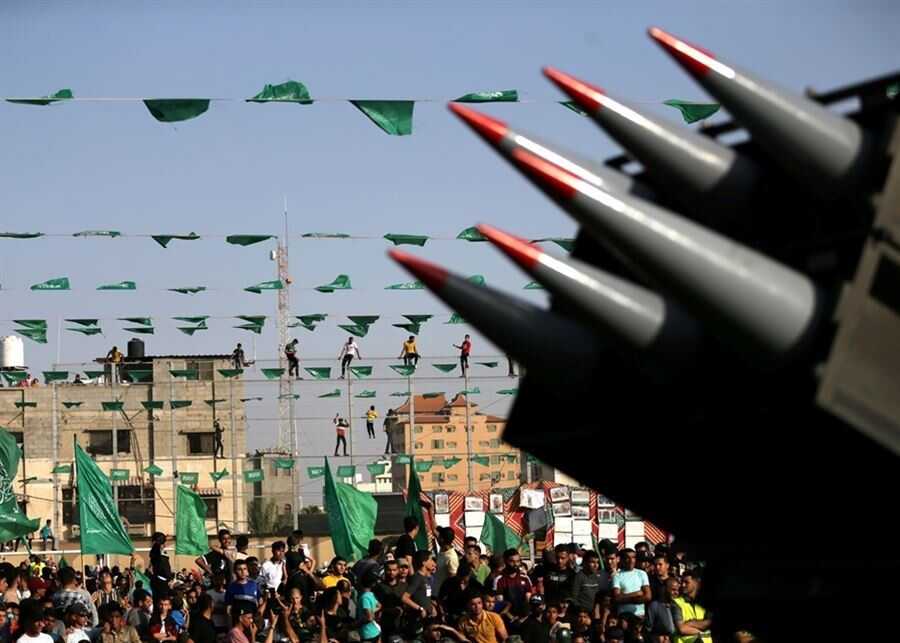
Does Hamas have this type of rocket with great destructive potential?

Al-Ahli Baptist Hospital massacre is horrific and words cannot describe the horror of the scenes in which Israel hastened to wash its hands of that blood and the claim that the Palestinian factions hit the hospital through a rocket that failed to reach the target.


The Israeli media in various media promote the statement of IDF spokesman Daniel Hagari, who claimed that "the analysis of the damage in the hospital through our aerial photographs shows that there was no direct hit to the hospital itself and the only damage is outside the hospital in the parking garage". Hagari claimed that the damage at the place of the explosion "is the opposite of the damage caused by any aerial ammunition, which would have been of a different nature". He added: "after a thorough investigation and study of all operational and intelligence systems (..) It was clearly confirmed that the IDF did not attack the Baptist Hospital in the Gaza Strip".


A security source excludes the Israeli theory, considering that this type of rocket with a large destructive capacity is not available to Hamas, which has "ordinary weapons", mostly Katyusha - type and mortars with a destructive capacity not exceeding twenty meters.


The source also points out that the type of rockets that hit the hospital are fired from the air through aviation, or through very large ground platforms, which in turn are not available to Hamas.


Pointing out that all Palestinian, Israeli and international reports talk about one missile and not a group of missiles, the source stresses the need to know its quality, which is done by studying the shrapnel and the remains at the crime site, the destructive area, and the amount of TNT, in addition to aerial photos that are supposed to come from a neutral party and not from Israel.


In addition, a source following up considered that the heavy shelling on Gazans will motivate them to fierce fighting against Israeli ground forces in the event of resorting to a ground operation, meaning that from now on there will be no safe zones for Israeli forces in Gaza, and therefore the Israeli army will have to use assault teams as the main force without an absolute advantage in artillery, armored technologies and aviation.


As for Hamas, it will fight on its territory with the support of the population, and the Palestinians will be able to maneuver and attack in unexpected places, especially through the use of underground tunnels.


Authoer: Rania Chakhtoura 

Source: Akhbar Al Yawm

PALESTINE

Thu 19 Oct 2023 10:19 am - Jerusalem Time

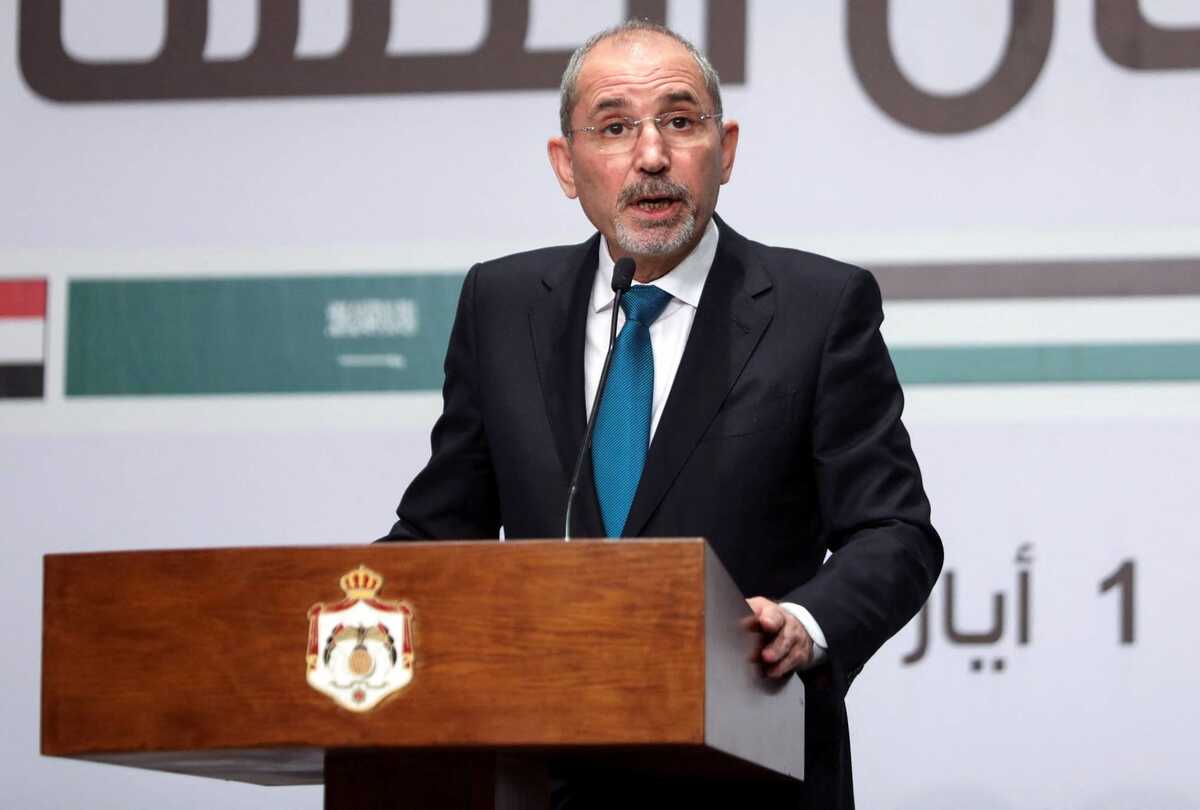
Jordan FM: Displacing Palestinians ‘act of war’

Jordan will not become complicit in another expulsion of Palestinians from their homes, Jordanian Foreign Minister Ayman Safadi said on Wednesday.

The Hashemite kingdom is doing all it can to stop the conflict but will treat any attempt to displace Palestinians as “a declaration of war,” Safadi vowed, as quoted by the Roya News outlet.


Amman will not allow “a new catastrophe” nor will it let Israel “shift the crisis created and exacerbated by the occupation to neighboring countries,” he added.

Catastrophe, or ‘Nakba’, is how the Palestinians refer to their 1948 exodus from territories claimed by Israel. Jordan ended up annexing the West Bank while Egypt took control of Gaza, but Israel seized both territories in 1967. Jordan signed a peace treaty with Israel in 1994, establishing an “administrative boundary” between the kingdom and the West Bank, without prejudicing the territory’s future status.


Displacing the Palestinians from Gaza to another country would be a war crime, Safadi said, accusing Israel of already engaging in war crimes against the Palestinians there.


“There is no justification for what Israel is doing in Gaza,” the Jordanian foreign minister said. “We demand for the war to be stopped, to allow humanitarian aid to enter Gaza Strip and to protect civilians.”


Prime Minister Benjamin Netanyahu’s government declared war on Gaza after October 7, when Hamas launched hundreds of rockets at Israel and sent militants into nearby Jewish villages. Over 1,300 Israelis were killed in the incursion, according to the government in West Jerusalem.


Israel has since demanded that all civilians leave Gaza City and the northern part of the territory, in order to allow the Israel Defense Force to target Hamas. Palestinians in Gaza have said they have nowhere to go, as Israel blockades them from the sea and Egypt has refused to open the border.


The government in Cairo has argued that admitting Palestinians would amount to helping Israel engage in “ethnic cleansing,” in which they want no part. Egypt has offered to send humanitarian aid to Gaza, but Israel has opposed that on grounds that some of it might end up in the hands of Hamas.


“All indications suggest that the worst is yet to come and that Tel Aviv is heading towards a ground invasion,” Safad said on Wednesday.


Source: globalvillagespace


PALESTINE

Thu 19 Oct 2023 10:12 am - Jerusalem Time

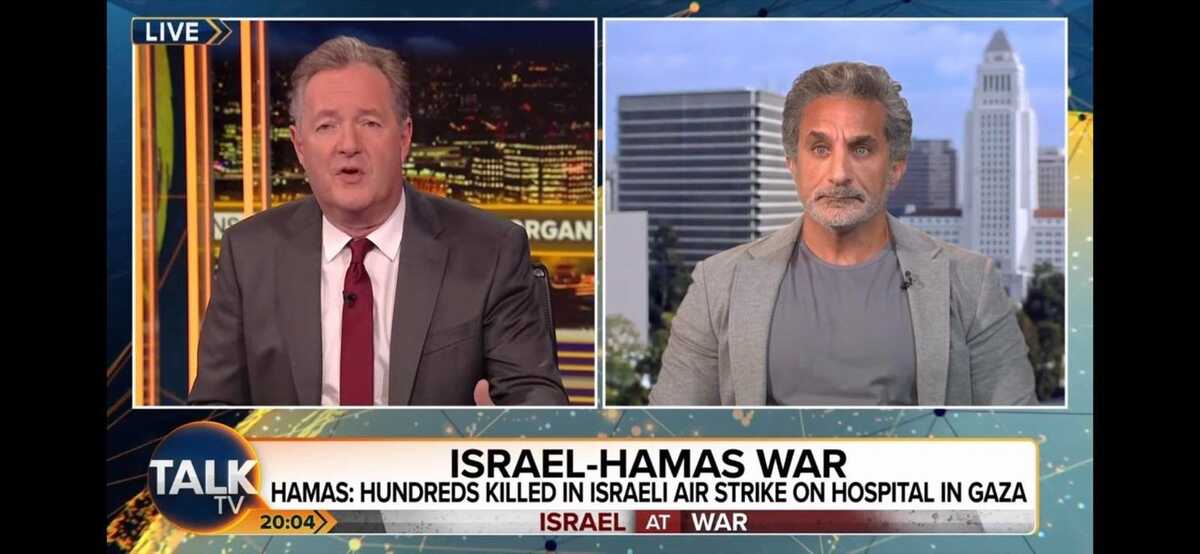
Bassem Youssef in spotlight again with an interview where he supported the Palestinians

Egyptian journalist Bassem Youssef returned to the spotlight again, through a television interview with the famous British broadcaster Piers Morgan, during which he supported the Palestinians, on Tuesday evening.


The intervention of Youssef, who has lived in America for years, achieved widespread interaction in Egypt and the Arab world, and because of it, it topped the most searched list on Google, in addition to the X website trend on Wednesday.


During the intervention, Youssef impersonated an Israeli citizen, addressing Prime Minister Benjamin Netanyahu, and asked him questions that observers considered “embarrassing,” including “When will you stop killing?”


Bassem mentioned during the interview that he “watched an interview with a former Israeli ambassador to the United States in which he said (the solution for these Palestinians is to go to the vast land of Sinai and live there temporarily), and here Bassem winked, as he used to do in his satirical program (The Program) after the January revolution ( January 2011, then Bassem continued with the ambassador’s words sarcastically... until we build Gaza and then we call on you again to return to it, before he followed with a popular Egyptian term (inappropriate).”


Youssef continued his intervention: “We have seen this movie before.” He referred to “the number of deaths that fall daily in the Gaza Strip, and compared them to those falling in Israel,” stressing that “he was unable to check on his wife’s family members in Gaza.”


Youssef's interview was admired by millions within a few hours, because he adopted the Egyptian and Arab point of view rejecting “the aggression against the Palestinians or their displacement from Gaza,” as many considered him to have “succeeded in conveying the voice of the Arabs to foreign media outlets biased toward Israel in a professional manner.”


Dr. Mohamed Shoman, Dean of the Faculty of Mass Communication at the British University in Egypt, described Bassem Youssef’s appearance as “positive,” and told Asharq Al-Awsat: “I consider Youssef a sane and professional voice, among the sane voices that have begun to appear in the Western media (biased toward Israel).”


But Schuman does not count on such voices to change established trends in Europe and America regarding support for Israel, although he is betting on the appearance of Youssef or some of the writings that have also begun to appear in the Western press to achieve more international sympathy with the Palestinian people and with civilians in the Gaza Strip.


According to Dr. Gamal Abdel Gawad, advisor to the Al-Ahram Center for Political and Strategic Studies, Bassem Youssef’s sarcastic method in his interviews has proven “effective in exposing the contradictions of Western positions that carry double standards.”


Abdel Jawad added in statements to Asharq Al-Awsat that “Youssef’s intervention revealed that there is underestimation of Arab and Palestinian rights in the West, and showed that Arab societies must develop tools for communicating with Western public opinion and follow unconventional methods.”


Dr. Sami Abdel Aziz, former dean of the Faculty of Mass Communication at Cairo University, commented on these praises, saying in statements to Asharq Al-Awsat: “Bassem Youssef came close to drawing a picture of the painful reality that the Palestinians live in in this intervention.”


Adding that “current events have made many masks fall,” which Bassem Youssef mentioned in his intervention: “There are heads of state whose language has become racist. They do not see the suffering of Palestinian children, but only look at what is happening to the Jews.”


Abdel Aziz downplayed the impact of the criticism directed at Bassem for using a word that was described as “inappropriate” in opposition to the displacement of Palestinians: “It constitutes nothing compared to the lack of humanity practiced by the other party,” explaining that the Arab world “needs intelligent arguments to expose the lies of the West, and these "Introductions and others like them can perform this function."


This is what Abdel-Jawad agrees with, saying: “We must invest in understanding the Western mind and Western media, and test different methods of communicating with them.”


Bassem Youssef is considered one of the most influential Arab media figures, according to media experts, despite the discontinuation of his famous satirical program “The Program” in 2014.


Shoman believes that “our problem in the Arab world lies in the lack of influential or powerful media outlets that address Western public opinion,” explaining that “sovereignty and control in most Western media outlets are biased toward the Jewish lobby,” as he put it.


Source: Al Sharq Al Awsat

OPINIONS

Thu 19 Oct 2023 10:08 am - Jerusalem Time

The question of the million Palestinians to Egypt

Abdul Rahman Al-Rashed

Abdul Rahman Al-Rashed

Opinion Writer

We are living through double events... the October 7 Hamas attack on Israel, the intense bombing of Gaza, the mass displacement, the targeting of hospitals, the cessation of electricity and water from Israel to Gaza, and the skirmishes with Hezbollah.


We expected that the kidnapped Westerners and Israelis would be a major card in the war, but instead of them, about a million Palestinians became an Israeli card.


Israel, which has threatened a major invasion, has so far chosen aerial bombardment, which causes major disasters for civilians and reduces casualties among the ranks of its forces. If the bombing continues, disasters and civilian casualties will increase. The bombing of the hospital was most likely the work of Israel, which had previously threatened to target it under the pretext that Hamas leaders were hiding there. Hamas' losses are relatively few, as relying on air attacks is less effective in wars against militias, unlike armies, such as Hamas and Islamic Jihad, as happened in the confrontations in Lebanon and Iraq before.


The most dangerous issue resulting from the crisis is the displacement of about a million people from the north of the Gaza Strip to its south, and perhaps their displacement from the south to the Egyptian Sinai. This will be the largest Palestinian migration since the 1967 war! Is expelling about a third of the Gaza Strip’s population to Egypt possible?


The first exodus from northern Gaza to its south is part of the battle with Hamas, and later it will be a large, wide buffer zone protecting its borders. While the displacement of one million Palestinians to Egypt is an issue that concerns all countries of the region. Is it a realistic proposition? It is unlikely to happen in the current circumstances for many reasons. Most notably, Egypt completely rejects it for political and security considerations. Egypt is an ally of the United States, and Israel itself will not sacrifice its diplomatic relationship with Egypt. Therefore, the displacement of the Palestinians will not take place without the approval of Egypt, which is sure to oppose. The situation is different, if the situation of clashes with Syria or Lebanon, Israel might push the residents of the adjacent areas, if any, towards the border.


As for “How did millions of Syrians end up?” They fled the battles in Turkey, which is a different topic and different circumstances. Damascus considered Turkey responsible for supporting the opposition, and Turkey was unable to intervene directly militarily, so it opened its borders to Syrian refugees in numbers considered unprecedented since World War II. Today, Turkey is suffering from the large number of refugees and the economic, social and political repercussions.


When Israel talks about displacing the population of Gaza to Egypt, it is as if it wants to punish Egypt for what it considers negligence at the crossings, tunnels, and borders. The displacement of hundreds of thousands of Palestinians, whether internally or externally, will be a reward for both Israel and Iran. Israel gets rid of a large number of Palestinians on its borders, and Iran has weakened and threatened Egypt's security, and strengthened Iran's negotiating position, along with Hezbollah and Syria.

PALESTINE

Thu 19 Oct 2023 10:05 am - Jerusalem Time

Saudi Crown Prince: Targeting civilians in Gaza is a heinous crime

Prince Mohammed bin Salman bin Abdulaziz, Crown Prince and Prime Minister of Saudi Arabia, confirmed on Wednesday that the Kingdom considers targeting civilians in Gaza a heinous crime and a brutal attack, stressing the necessity of working to provide protection for them. 


During two phone calls he received from the Prime Ministers of Japan, Fumio Kishida, and the Prime Ministers of Greece, Kyriakos Mitsotakis, the Saudi Crown Prince discussed the military escalation currently taking place in Gaza, stressing the importance of making all possible efforts to reduce the pace of the escalation to avoid its dangerous repercussions on security, peace, and stability in the region and the world. 


He pointed out the importance of creating conditions for the return of stability and restoring the path of peace to ensure that the Palestinian people obtain their legitimate rights.

PALESTINE

Thu 19 Oct 2023 9:54 am - Jerusalem Time

British Prime Minister arrives in Tel Aviv

British Prime Minister Rishi Sunak arrived in Israel on Thursday to demonstrate solidarity with a country reeling from an Oct. 7 rampage by Hamas gunmen and to hold talks with his Israeli counterpart Benjamin Netanyahu.

With Israel's counter-offensive against Hamas in Gaza spiraling, Sunak will share his condolences for the loss of life in Israel and in the Palestinian enclave and warn against further escalation, his office said.


"Above all, I'm here to express my solidarity with the Israeli people. You have suffered an unspeakable, horrific act of terrorism and I want you to know that the United Kingdom and I stand with you," Sunak told Israeli reporters after landing.


Sunak was due to visit other regional capitals after Israel.

In an early statement, he said a Gaza hospital blast on Tuesday that caused mass Palestinian casualties should be "a watershed moment for leaders in the region and across the world to come together to avoid further dangerous escalation of conflict", adding that Britain would be at "the forefront of this effort".


Sunak will also urge the opening up of a route to allow humanitarian aid into Gaza from Egypt as soon as possible, and to enable British nationals trapped in Gaza to leave.

PALESTINE

Thu 19 Oct 2023 9:52 am - Jerusalem Time

Hundreds of American Jews stage a sit-in at the Congress building in support for Gaza

Hundreds of progressive American Jews who called for a ceasefire were arrested in a massive act of peaceful civil disobedience at the Capitol (US Congress) building in Washington, DC, on Wednesday, while the Biden administration and leaders of the two parties (Democrat and Republican) insist on... Congress insists on the continuation of the killing,” according to a statement issued by the Jewish Voice for Peace organization. .


The US Capitol Police arrested more than 300 people who were protesting inside the rotunda of the “Cannon House Office” building in Congress, to demand that Congress pass a ceasefire resolution in the war between Israel and Gaza amid a worsening humanitarian crisis.


The arrests occurred after demonstrators gathered, including American Jews and their allies who are concerned about Palestinians in Gaza. The demonstrators raised a banner reading in red, “Our blood is of the same color,” waved Palestinian flags, and held banners reading, “My sadness is not your weapon,” “Massacres will never happen to anyone again,” and “Zionism is racist.” There were Jews wearing prayer shawls and kabats, young activists wearing tattoos and nose rings, and people wearing hijabs and the black-and-white-checkered Palestinian keffiyeh.


Inside the Parliament building, demonstrators wore black T-shirts with “Not in our name” written on the front and “Jews say stop shooting now” on the back, as they sang and chanted police warnings to disperse.


Sonia Meyerson Knox, spokeswoman for Jewish Voice for Peace, a national Jewish anti-Zionist organization, said that the crowd inside Cannon Hall included 400 American Jews and 25 rabbis who oppose the Israeli occupation and demand that Congress pass a ceasefire resolution.


“We warned the protesters to stop demonstrating, and when they did not comply, we began arresting them,” Capitol Police said in a statement. They added that preliminary information shows that about 300 people were arrested, including three people on charges of assaulting a police officer.


The demonstration comes amid protests across the Middle East after a raid on a hospital in Gaza City on Tuesday that killed 500 Palestinians and injured hundreds more.


US President Biden has expressed his full and unconditional support for Israel since the attack of the Islamic Resistance Movement “Hamas” on the areas surrounding Gaza in the Palestinian territories occupied in 1948 on October 7, when Hamas fighters penetrated Israel’s borders, killing more than 1,400 people. About 200 were captured and taken to Gaza.


Since then, the Israeli raids on the Gaza Strip have led to the killing of more than 3,500, the vast majority of whom are civilians, especially children, and the wounding of more than 12,500 others.


Protesters on Wednesday pointed to the worsening humanitarian crisis in Gaza, where more than two million people live, nearly half of whom are children. Israel has cut off access to food, water, electricity and fuel, and ordered up to a million people to flee south while Israeli forces focus their air strikes on northern Gaza. Without vital resources, people are forced to use “dirty water from wells, increasing the risk of waterborne diseases,” the United Nations Relief and Works Agency for Palestine Refugees said on Saturday.


Speakers at the rally on the west side of the Capitol called for a ceasefire as cars honked in support and the crowd chanted "Long live Gaza!" From the podium, Missouri Democratic Representative Cori Bush said that she and her colleagues were described as "disgraceful" for presenting the ceasefire resolution.


Bush said: "There is nothing hateful or disgraceful about saving lives... We are pushing for peace."


In turn, Representative Rashida Tlaib (Michigan), one of the Democrats in the House of Representatives who also presented the draft resolution and spoke at Wednesday’s rally, denounced the statements of US President Biden, who recently pledged during his meeting in Israel with Israeli Prime Minister Benjamin Netanyahu that the United States will continue to Relentless support for Israel.


Tlaib said about Biden: “Not all Americans are with you on this matter,” and added: “The Americans want a ceasefire.” They want it to stop."

PALESTINE

Thu 19 Oct 2023 9:42 am - Jerusalem Time

Israeli army committed to ground invasion, but changes tactics (Long war, Heavy losses)

Despite the internal discussions and disagreements with the American administration regarding the expansion of the war on the Gaza Strip, military and political sources in Israel confirmed their insistence on moving “at the appropriate time” to the ground invasion, but they talk about making changes in the tactics and planned operations, and preparing the atmosphere for the Israelis that the war will end. Unusually, “it will be long and fraught with great loss of life.” Therefore, it is planned to be gradual.


These sources say that the goal set by the government, which is “to annihilate the Hamas movement and its military capabilities and overthrow its rule,” can only be achieved by a ground invasion accompanied by continued air and sea bombardment, and it may become a house-to-house and tunnel-to-tunnel war.


In light of the development in the military capabilities demonstrated by Hamas fighters in their surprise attack on October 7, the type of bold plans they developed and rehearsed, and the surprising capabilities in collecting intelligence information about Israel, there is a need to carry out the invasion with greater caution. .

The new situation requires certain changes in old plans and the development of new plans, so that they reach all Hamas leaders. No matter how strong and precise the new plans are, in which new weapons are used, the goal of eliminating Hamas “will be a long and complex challenge,” and there is a clear assessment that it will also incur high prices and will not be free of failures and loopholes that make the price even higher.


Military experts point out that the invasion also faces political challenges and significant obstacles. On the political side, there is the American and European position, which opposes any operation that could lead to the widespread killing of civilians, and they consider that the invasion will also cause harm to Israel. Because Hamas says it is well prepared for it, and even hopes to expect the largest losses of Israeli deaths and prisoners.


Experts advise Israel to “take Hamas’ threats seriously,” and not as before. Underestimating the power of Hamas cost Israel a heavy price, the likes of which was only known in the October War of 1973.


For this purpose, US Secretary of State, Anthony Blinken, participated in a very long session of the war command, and stayed until three in the morning, asking many detailed questions about the war plan, and advised not to forget “the laws of war and the commitment of global democracies to human rights and the protection of the civilian population.”

According to a source close to one of the participants in that session, “The Americans seem to have clearly drawn the borders of the State of Israel in this war. And the broad, strong shoulder that President Biden provided to Israel by sending aircraft carriers to the region, and sending a large amount of weapons, including Iron Dome interceptor missiles, and no less important than that, “the legitimacy that the Americans provide in the international arena, and they are not free gifts.”


As for the military obstacles, they are represented by the response of Hamas and other Palestinian factions, which are holed up underground and possess weapons in huge quantities. There is a risk that Hezbollah will intervene, as well. Although France conveyed messages between Tel Aviv and Beirut that both sides are not interested in war, both are wary of violating this pledge and are exchanging missile exchanges “in a quiet fire.” Even if they do not want to, there is always a risk that they will slide into war as a result of an unintended lethal strike (for example, a shell falling on a gathering of soldiers), or of taking a step due to miscalculations.


Currently, the Israeli army is still focusing on Hamas, and prefers not to open a second front in the north. But on the other hand, about 130,000 reserve soldiers are mobilized on the borders with Lebanon and Syria, and spy planes are never absent from the air and respond to every missile directly from Hezbollah positions. According to Israeli sources, Hezbollah is also mobilizing its forces, and there is a tangible movement of armed militias affiliated with Iran in Syria, and it is noted that they are approaching the border to open a third front.


In this regard, the Israelis point to the great American support that was accompanied by a firm request: “Do not start the war with Hezbollah. If it attacks you, we will be together to confront it.”


Israel evacuated 28 towns located within 2 kilometers of this border (in the south, 15 Israeli towns located 3 kilometers from the border with Gaza were evacuated at the beginning of the war, and the evacuation was expanded to include towns located 7 kilometers away), this week.


Source: Al Sharq Al Awsat


PALESTINE

Thu 19 Oct 2023 9:41 am - Jerusalem Time

Israeli Army: We detected 9 missile launches from Lebanon within 12 hours

The Israeli army said today (Thursday) that it had monitored 9 missile launches from Lebanon at Israel during the past 12 hours, according to the Arab World News Agency.


He pointed out, via the “X” platform, that several anti-armor missiles were launched from Lebanon towards Israel during the same period.


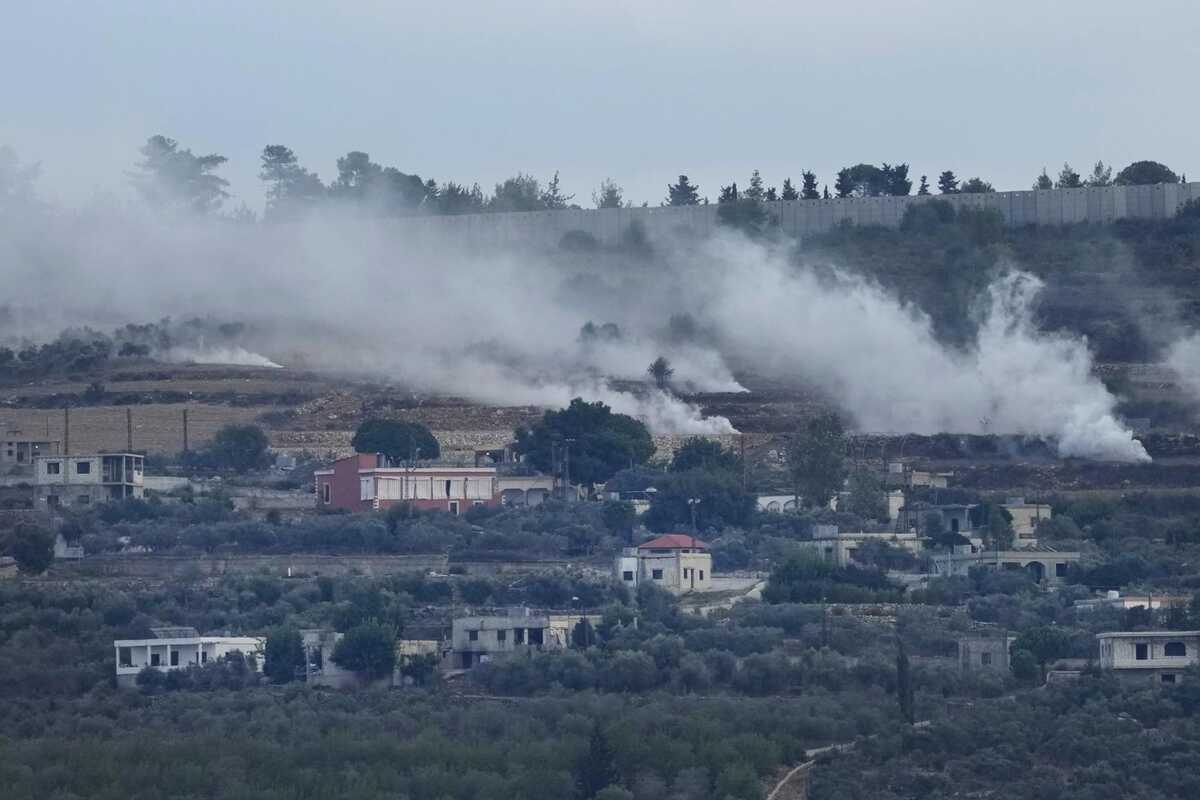
He said: “We responded to the sources of fire from Lebanese territory and neutralized a terrorist cell using a drone during the past hours.”


He added that he struck Hezbollah's infrastructure using tank fire.

PALESTINE

Thu 19 Oct 2023 9:40 am - Jerusalem Time

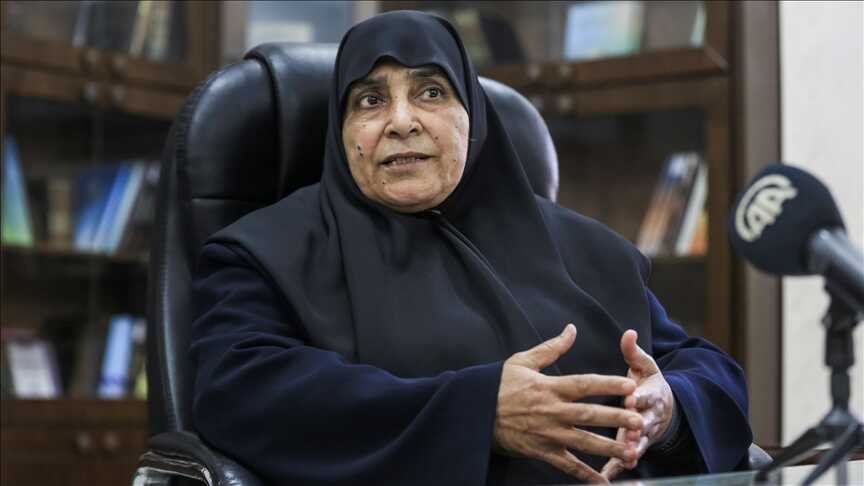
Assassination of Hamas Political Bureau member Jamila Al-Shanti

Jamila Al-Shanti, a member of the Hamas political bureau, was killed as a result of the ongoing aggression on the Gaza Strip for the 13th day in a row.


Palestinian sources in the Gaza Strip confirmed the death of the leader Al-Shanti, “Umm Abdullah,” the founder of the women’s movement of Hamas, and the first female member of a political bureau.


In 2006, Al-Shanti was elected as a member of the Legislative Council for the “Change and Reform” bloc, affiliated with the Hamas movement.


The Legislative Council issued a statement mourning Al-Shanti, in which it said: “The martyr Dr. Jamila Al-Shanti spent a life full of giving, giving, and sacrificing for the sake of advancing the Palestinian cause, and she had a major and notable role in parliamentary, academic, political, advocacy, and educational work.”


The statement continued: “As we mourn the death and fighter Dr. Jamila Al-Shanti, let us affirm that we are continuing on her path of all the righteous martyrs of our people until the occupation is defeated from our land, our sanctuaries, and our blessed lands, and this heinous crime and all crimes against humanity will remain a witness to the terrorism of the fascist occupation that kills children and women.” In front of the world's eyes."


PALESTINE

Thu 19 Oct 2023 9:37 am - Jerusalem Time

Axios: Israelis informed Biden that dismantling Hamas may take years

Yesterday, Wednesday, Axios quoted sources as saying that Israeli officials informed US President Joe Biden during his visit to Tel Aviv that the war in Gaza will take time and will test the allies’ support for Israel.


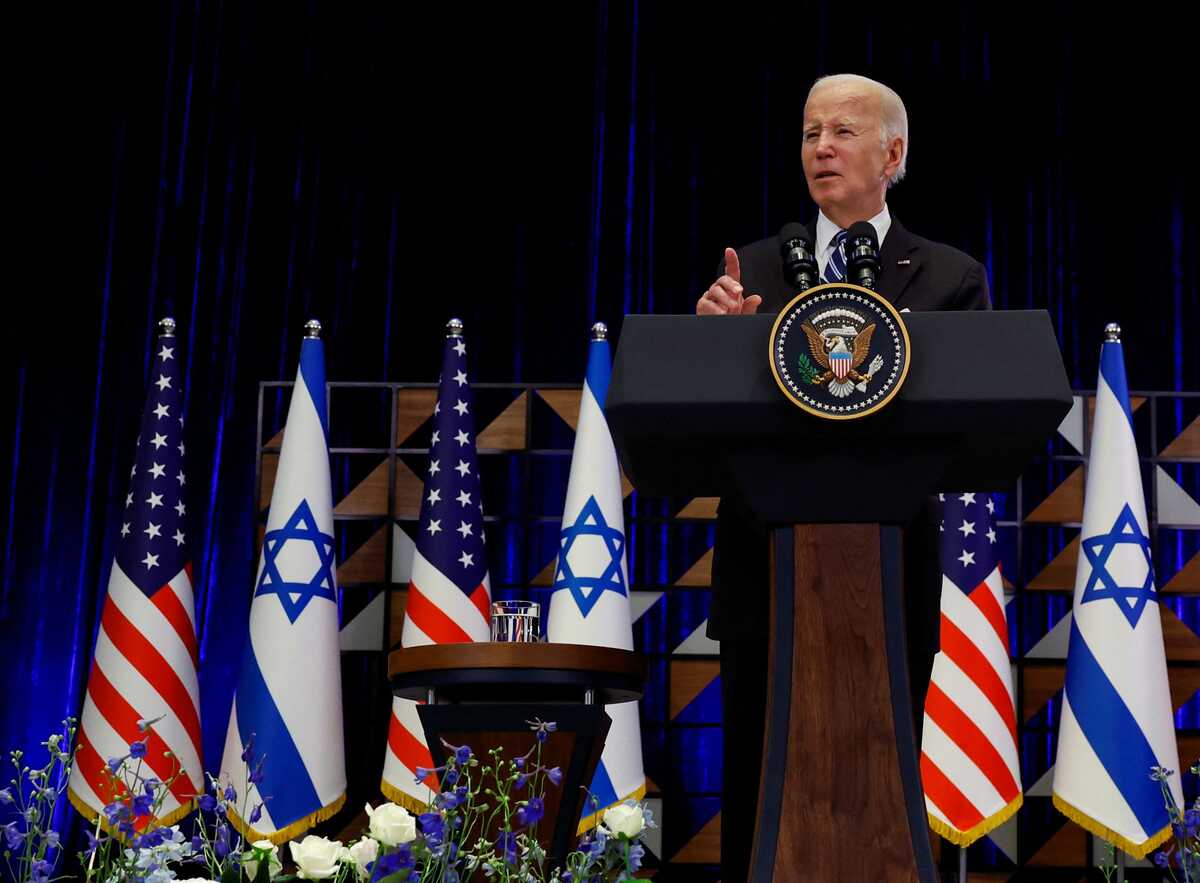
The website added, quoting American and Israeli officials, that during his meeting with Israeli Prime Minister Benjamin Netanyahu, Biden expressed his deep concern about the possibility of the Lebanese Hezbollah joining the war, which increases the possibility of a broader conflict in the Middle East. He continued that the US President told officials during his visit to Israel that it must address the humanitarian situation in Gaza if it wants to maintain international support.


Axios quoted an assistant to Israeli Defense Minister Yoav Gallant, whose name was not published, that the minister assured Biden that the war in Gaza will be long and difficult and that Israel will need support from the United States for a long time. The website quoted an Israeli official as saying that Gallant informed Biden that efforts to dismantle Hamas may take years.


PALESTINE

Thu 19 Oct 2023 9:31 am - Jerusalem Time

Israeli army abducts 88 Palestinian citizens in West Bank

The Israeli occupation forces continue to carry out arrest campaigns against citizens in the West Bank, as part of the comprehensive aggression against our people in the West Bank and Gaza.


The Prisoners' Club and the Prisoners' Affairs Authority said in a press statement that the occupation forces arrested at least 88 citizens from the West Bank, including Jerusalem, last night and at dawn on Thursday.


Local sources reported that the occupation forces stormed several neighborhoods in Hebron Governorate and arrested 41 citizens.


The Prisoners' Club published a list of the names of the prisoners:


1. Hamas leader, MP Sheikh Hassan Yousef - Beitunia, west of Ramallah

2. Representative in the Legislative Council, Sheikh Nayef Rajoub - Doura, south of Hebron

3. Leader Hamas, editor Sameh Afaneh - Qalqilya

4. Hamas leader, editor Mujahid Nofal - Qalqilya

5. Leader in Hamas, editor Sheikh Falah Nada - Ramallah

5. Journalist Alaa Al-Rimawi - Ramallah

6. Journalist Imad Abu Awad - Ramallah

7. Journalist Alaa Al-Rubaie - Hebron

8. Leader in Hamas. Editor: Shukri Al-Khawaja - Nilin, west of Ramallah

9. Liberated activist Najeeb Mafarja - Beit Liqya, west of Ramallah

10. Editor Bakr Mafarja - Beit Laqya

11. Editor Ghaleb Taha - Hebron

12. Editor Hani Abu Al-Sabaa - Hebron

13. Editor Alaa Al-Jaabari - Hebron

14. Editor, Muhammad Abu Hadid - Hebron

15. Editor Mahmoud Dweik - Hebron

16. Editor: Louay Ghaith - Hebron

17. Editor Farid Al-Salaimeh - Hebron

18. Editor Shadi Al-Qawasmi - Hebron

19. Editor: Youssef Al-Sarsour - Hebron

20. Editor, Muhammad Abu Fununa - Hebron

21. Editor: Dr. Ashraf Badr - Hebron

22. Editor: Youssef Qazzaz - Dura, south of Hebron

23. Editor Imad Jadallah - Dora

24. Editor Shadi Al-Nammoura - Dora

25. Press editor Alaa Al-Rubaie-Dora

26. Editor Jadallah Rajoub-Dora

27. Editor Osama Shaheen-Dora

28. Editor: Youssef Abu Ras-Dora

29. Editor: Monther Zouna - Dora

30. Editor: Muhammad Nader Abu Halil - Dora

31. Editor Tariq Ashour - Hebron

32. Editor Abdel Jalil Al-Shahatit - Dora

33. Editor Nabil Al-Awawda - Dora

34. Editor Montaser Shadid - Dora

35. Editor Zaid Al-Jaabari - Hebron

36. Editor: Ali Zuhair Skafi - Hebron

37. Editor Mahmoud Abu Wardeh - Al-Fawwar camp, south of Hebron

38. Editor, Uday Al-Awawda - Dora

39. Editor Antar Al-Nazer - Hebron

40. Editor Salim Rajoub-Dora

41. Editor Anas Hussein Amr-Dora

42. Editor Ezz El-Din Mustafa Abu Hussein - Dora

43. Editor Youssef Nassar-Dora

44. Editor Saeed Al-Alami - Beit Ummar, north of Hebron

45. Editor Muhannad Murshid Awad - Beit Ummar

46. Editor: Muhammad Murshid Awad - Beit Ummar

47. Editor: Mahdi Murshid Awad - Beit Ummar

48. Muhammad Nabil Awad - Beit Ummar

49. Rasem Akhil - Beit Ummar

50. Editor Ward Ibrahim Awad - Beit Ummar

51. Editor Hani Assi - Beit Laqya

52. Editor: Ahmed Najeeb Mafarja - Beit Laqya

53. Editor Fouad Assi - Beit Laqya

54. Editor Maan Mafarja - Beit Laqya

55. Editor: Muhammad Saleh Dar Musa - Beit Laqya

56. Editor: Islam Saleh Dar Musa - Beit Laqya

57. Editor Montaser Hamad - Beit Laqya

58. Editor: Muhammad Jamil Badr - Beit Laqya

59. Saleh Badr - Beit Laqya

60. Suleiman Al-Omari - Tubas

61. Editor Khalil Qasim Al-Sheikh - Marah Rabah, east of Bethlehem

62. Editor Hossam Al-Sheikh - Marah Rabah

63. Editor Moataz Al-Sheikh - Marah Rabah

64. Hamada Saduq - Dheisheh camp, south of Bethlehem

65. Yahya Jamal Al-Taweel - Al-Bireh

66. Nasrallah Jamal Al-Taweel - Al-Bireh

67. Editor: Riyad Nasser - Deir Qadis, west of Ramallah

68. Editor: Ahmed Ayed Sorour - Nilin

69. Abdul Rahman Ayed Sorour - Nilin

70. Muhammad Abdel Karim Sorour - Nilin

71. Tamim Muhammad Abdel Karim Surur - Nilin

72. Youssef Ali Al-Habazi - Nilin

73. Student Tayseer Nafi - Nilin

74. Suhaib Fahmy Sorour - Nilin

75. Musaab Muhammad Sorour - Nilin

76. Moatasem Muhammad Sorour - Nilin

77. Walid Nimr Nafi - Nilin

78. Nimr Najeh Nafi - Nilin

79. Editor Abdul Haq Khadraj - Qalqilya

80. The injured Hossam Al-Haj Hassan - Qalqilya

81. Ubadah Al-Amoudi - Nablus

82. Bashar Al-Amoudi - Nablus

83. Muayyad Maali - Beta, south of Nablus

84. Jarah Maali-Beta

85. Iyad Abdel Aziz Abu Sreis - Humsa in the Jordan Valley

86. Baraa Fathi Al-Qaraawi - Nour Shams Camp, Tulkarm

87. Abdul Rahman Qaraawi - Nour Shams camp

88. Ayoub Al-Alem - Aqabat Jabr camp in Jericho

PALESTINE

Thu 19 Oct 2023 8:07 am - Jerusalem Time

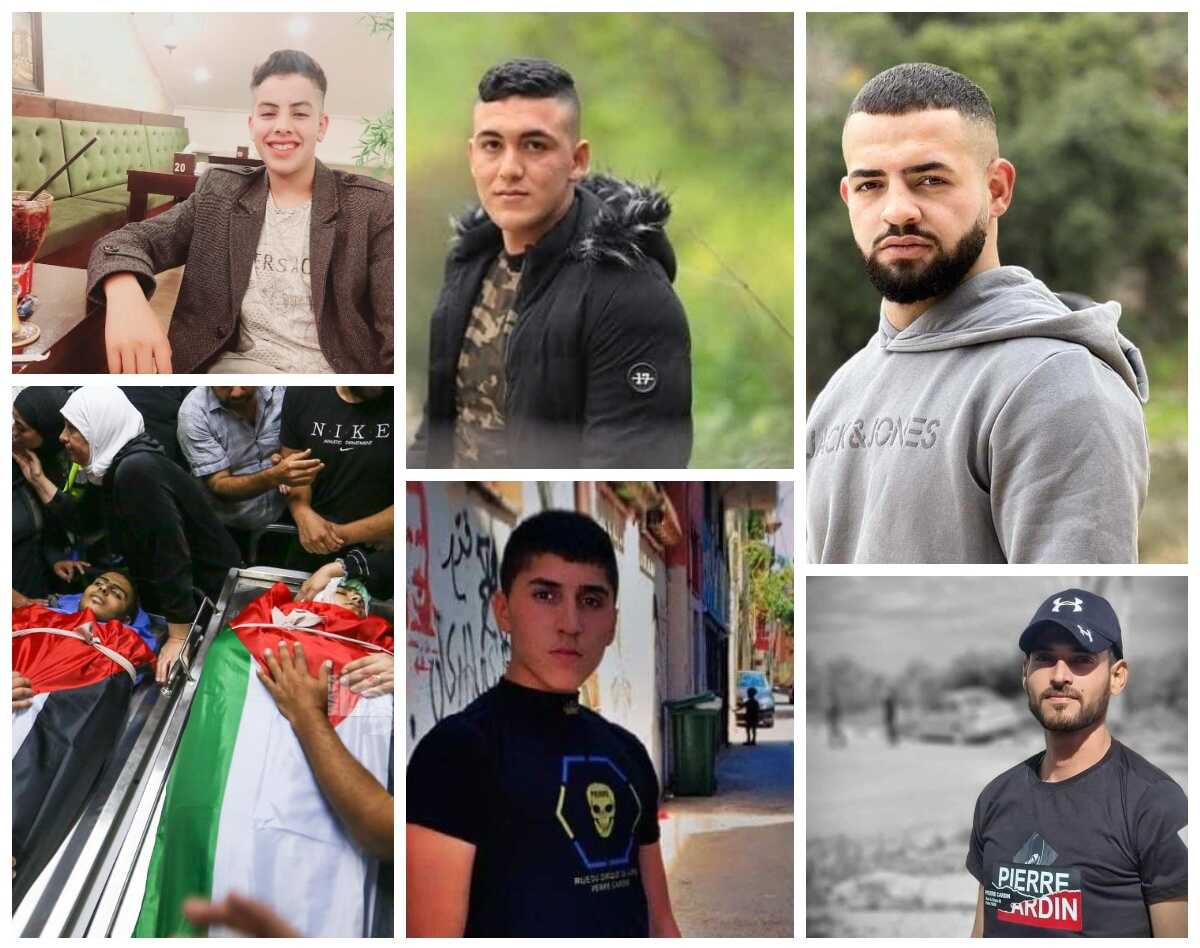
Within 12 hours.. Israel kills 7 Palestinians, including 4 teenagers in West Bank

7 citizens, including 4 children, were killed within 12 hours in the northern governorates, bringing the number of martyrs in the West Bank since October 7 to 69 martyrs.


In Ramallah and Al-Bireh Governorate, two children, Qais Tim Shalash (17 years old), and Khalil Muhammad Khalil (15 years old) were killed by live bullets, after the Israeli occupation forces targeted them, at the entrance to the village of Shuqba, west of Ramallah.


The young man, Muhammad Abd al-Rahman Hussein Fawaqa (21 years old), was also martyred by occupation bullets in the village of Dura al-Qara’, north of Ramallah, and the young man, Gabriel Awad, was martyred by the bullets of the occupation forces in the village of Budrus, west of Ramallah.


In Nablus Governorate, the young man Ibrahim Nazih Ibrahim al-Hajj Ali (24 years old) died from critical wounds he sustained by Israeli occupation bullets in the town of Jama’in, south of Nablus.


In the Bethlehem Governorate, the child Ahmed Munir Saduq (14 years old) from the Dheisheh camp was martyred at dawn today, Thursday, as a result of his serious injury by bullets from the Israeli occupation forces.


In Tulkarm Governorate, the child Taha Mahamid (16 years old) from Nour Shams camp, east of the city of Tulkarm, was martyred after the occupation forces left him lying on the ground bleeding for about an hour, and prevented ambulances from transporting him to the hospital.

PALESTINE

Thu 19 Oct 2023 8:07 am - Jerusalem Time

War on Gaza: 3,785 Palestinians killed in Israeli strikes since Oct.7

At least 3,785 Palestinians have been killed and 12,493 wounded in Israeli strikes on Gaza since Oct.7, the health ministry in Gaza said on Thursday.


Of the total death toll, 1,524 were children and 1,000 were women, ministry spokesman Ashraf Al-Qudra told a press conference.

Al-Qudra added that 44 health workers had been killed in Gaza while four hospitals were out of service and 14 basic healthcare services had stopped functioning.


"There are no medicine stocks in any of the hospitals in Gaza," Al-Qudra added, calling on the international community to expedite the delivery of aid to Gaza.


OPINIONS

Thu 19 Oct 2023 7:56 am - Jerusalem Time

America Needs to Prevent a Regional War in the Middle East

Ramallah - “Al-Quds” dot com

Ramallah - “Al-Quds” dot com

Opinion Writer

By Sam Heller and Thanassis Cambanis


Palestinian militant organization Hamas’s massacres on October 7 have provoked shock and horror around the world. But revulsion at the group’s atrocities should not lead America into a historic disaster.

The Biden administration’s almost unfettered support for Israeli retaliation in Gaza will not just implicate the United States in grave violations against Gaza’s civilians. It is also likely to embroil the United States in a broader regional war that will cost more American lives.

The administration must try to restrain Israel’s military campaign in Gaza, both for the sake of Palestinians in the crossfire and so that American forces are not caught in a deadly regional escalation.


The administration has deployed U.S. forces to the region to deter Iran and allied groups from attacking Israel. But if Israel goes all-in in Gaza, as Israeli officials have promised to do, America’s military presence is unlikely to prevent Iran-led “Axis of Resistance” factions from attacking. The United States will then be on the hook to intervene in support of Israel. That will, in turn, trigger attacks on U.S. targets across the Middle East.


There is still time for an alternative: the United States can press Israel to abandon its most maximalist retaliatory aims and help calibrate a response to Hamas’s attack that does not ignite a catastrophic regional war.

There is still time for an alternative: the United States can press Israel to abandon its most maximalist retaliatory aims and help calibrate a response to Hamas’s attack that does not ignite a catastrophic regional war. The United States needs to come to its senses, and push Israel to do the same. It’s not too late, even now—but soon it will be

Rapid Escalation.


On the morning of October 7, Hamas breached Israeli fortifications surrounding the Gaza Strip and attacked nearby Israeli security posts and civilian communities. In a day-long rampage, Hamas and other militants killed more than 1,300 Israelis, many of them civilians. Militants also seized more than 150 captives, whom they took back into the Gaza Strip. It took hours for Israel to mobilize forces to aid area residents, and days before they eliminated remaining militants still outside the Gaza perimeter. The Hamas operation was the single deadliest attack in Israel’s history.


Now, Israel has launched a massive retaliatory attack on Gaza. Already, Israel has imposed a total siege on Gaza and unleashed an unprecedented campaign of aerial bombing. Next, Israel is apparently preparing a ground invasion. The precise aims of this ground offensive are still unclear, but the Israeli defense minister has said that Israel “will wipe this thing called Hamas . . . off the face of the earth.”


Late on October 12, the Israeli military told local UN officials that the civilian population of the northern Gaza Strip—an estimated 1.1 million people, out of a total population of 2.3 million in the territory—had 24 hours to relocate to southern Gaza. International officials have warned this ultimatum will have “catastrophic humanitarian consequences,” and that it “defies the rules of war and basic humanity.” Even before Israel’s dictate, the UN estimated that 400,000 people had been displaced inside Gaza. According to local authorities, as of Monday at least 2,750 people have been killed in Gaza, and 9,700 wounded.


Fuller Israeli intervention in Gaza risks an escalation by Hamas’s allies in the so-called Axis of Resistance, an Iran-led regional alliance that also includes Lebanon’s Hezbollah, various Iraqi paramilitary factions, and the Houthi movement in Yemen.


Hezbollah signaled early on that it would not sit idly by as Israel retaliated against Hamas. After first hailing the Hamas operation and saying it was in contact with Palestinian militant leadership, the Lebanese group then bombed Israeli military positions in Israeli-occupied territory claimed by Lebanon. The choice of target was evidently meant to send a message to the Israelis while also, for now, limiting escalation. Hezbollah said it attacked “on the road to liberating what remains of occupied Lebanese territory and in solidarity with the triumphant Palestinian resistance and the righteous, steadfast Palestinian people.” Hezbollah’s subsequent involvement has been very deliberate, limited to tit-for-tat, reciprocal attacks with Israeli forces. The group has also apparently allowed Palestinian factions to launch attacks on Israeli forces from southern Lebanon.


Yet Hezbollah has indicated that it will intervene more actively if Israel goes too far in Gaza. Party officials have told foreign interlocutors that they will not allow Israel to wipe out Hamas. Iran’s foreign minister, during a visit to Lebanon on Thursday that itself emphasized the coordination among Iran’s network of regional partners, said that the broader Axis of Resistance was likewise prepared to act. “The continuation of war crimes against Palestine and Gaza will receive a response from the rest of the Axis,” he said. He reportedly conveyed a similar warning in private.

There is so far little concrete evidence that Iran and other Axis members helped plan Hamas’s attack, even as they have supported and capacitated Hamas more generally. But even if these “Resistance” factions were not directly involved in the Hamas operation, that does not mean they will not intervene if they believe Hamas is existentially threatened.


Threats by Hezbollah and other Axis of Resistance actors seem credible. Some assume that Hezbollah will not become involved because of its stake in Lebanese domestic politics and a desire to avoid overwhelming retaliation. But this analysis suffers from the same mistake that Israeli officials made about Hamas before October 7, when they wrongly assumed that Hamas had abandoned armed struggle in favor of local governance.


Hezbollah presumably recognizes the dangers of open war with Israel. Yet Hezbollah’s attack on Israeli positions on October 8 indicates that the group is prepared to chance a fuller confrontation with Israel. In these circumstances, analysts’ prior assumptions about Hezbollah’s appetite for risk likely do not hold.


Hezbollah is more than just a paramilitary organization. It is a political party, a network of linked civil organizations, and a social movement. But “resistance” is the party’s raison d’etre. Hezbollah has spent its entire history preparing for a battle like this one.


Deterrence Isn’t Working

The Biden administration has attempted to deter Hezbollah and Iran from joining the conflict and attacking Israel. Judging by the rhetoric and conduct of Hezbollah and its allies, the American administration’s deterrent message seems unlikely to work.

In addition to directly providing military assistance to Israel, the Biden administration has also deployed two U.S. carrier groups and additional aircraft to the region in an explicit deterrent signal to Iran and its allies. “We have moved a U.S. carrier fleet to the Eastern Mediterranean, and we’re sending more fighter jets there into that region and made it clear—made it clear to the Iranians, ‘Be careful,’” Biden said Wednesday. Other U.S. officials have likewise stressed that this military deployment is meant to discourage Iran and its allies from entering the conflict. These officials’ warnings imply a threat to militarily strike Hezbollah and allied factions if they attack Israel.


In parallel, U.S. and other Western diplomats have reportedly told Lebanese leaders that Hezbollah should not become involved. On Wednesday, Secretary of State Antony Blinken embarked on a regional tour meant in part to “engage regional partners on efforts to help prevent the conflict from spreading.”


Yet the Biden administration’s deterrent message is unlikely to work. Hezbollah appears unfazed, and continues to warn that it may enter the war. The group has said that the U.S. carrier deployment “will not frighten the peoples of our [Islamic] nation, nor the Resistance factions ready for confrontation.” “Hezbollah knows its responsibilities perfectly well,” Hezbollah’s deputy leader told a rally in Beirut Friday. “We are present and entirely ready, and we are following along moment to moment. These calls from international parties that have taken place behind the scenes to guarantee that we don’t intervene in this battle won’t have any effect.”


The Biden administration’s deterrent threat seems like a step down a disastrous path: an attempt at deterrence that likely won’t work and that, when it fails, commits the United States to intervene militarily on Israel’s behalf.

Americans are rightly disgusted at Hamas’s actions. In their desire to support Israel’s response, they may be tempted to view America’s promise to intervene as a necessary gamble. Yet it’s worth thinking through consequences if Hezbollah and its allies act anyway—as seems likely—and the Biden administration has to follow through on its threat.


The Biden administration’s deterrent threat seems like a step down a disastrous path: an attempt at deterrence that likely won’t work and that, when it fails, commits the United States to intervene militarily on Israel’s behalf.

If the United States directly intervened by, for example, bombing Hezbollah in Lebanon, that would likely trigger retaliatory attacks against U.S. targets across the region. Members of the Axis of Resistance in Iraq and Yemen have threatened to act if the United States enters the war. “If they intervene, we will intervene,” the head of Iraq’s Badr Organization told an audience Tuesday. “If America enters this battle directly, we’ll consider all American targets legitimate, and we won’t hesitate to target them.” Other Iraqi militant leaders have made similar threats. For his part, the leader of Yemen’s Houthi movement said, “If the Americans intervene directly, militarily . . . we are ready to participate, including with missile fire, drones, and whatever military options are available to us.”


What comes next could be deadly and impossible to control. Even as Hezbollah attacks both Israel and U.S. targets from Lebanon, Iraqi groups could attack U.S. forces in both Iraq and Syria. The Houthis may attack U.S. interests in Saudi Arabia and the United Arab Emirates, or just attack those U.S. partners directly. The escalating violence could even spiral into direct conflict with Iran.


Some constituencies in Washington have been spoiling for a war with Iran and its closest militia partners. They might welcome the opportunity to, finally, attack Iran and its allies head-on. The results, though, will be disastrous—chaos, destruction, and more dead Americans.


Another Way

At this point, it’s difficult to identify an off-ramp for this escalating conflict. If Israel invades Gaza and Hezbollah attacks, the Biden administration seemingly faces the choice of either intervening and igniting an open-ended, region-wide battle with Hezbollah and its Axis of Resistance allies; or choosing not to act, and rendering its deterrent threat hollow.


The Biden administration should do everything it can to avoid that no-win situation. It should not allow the situation in Gaza and the region to reach that crisis point.


President Biden and other administration officials have said they urged Israel to follow the laws of war and have discussed how to minimize civilian harm with Israeli counterparts. The administration’s overarching message, however, has been that it unconditionally backs Israeli action against Hamas. The State Department has reportedly directed U.S. diplomats to avoid using terms including “de-escalation” or “ceasefire.”


Whatever gentle, sotto voce encouragement the Biden administration is now giving the Israelis to act responsibly is not enough. The United States can declare solidarity with Israel and provide Israel with material support, as it has in past conflicts. But it can and should push for de-escalation—the State Department is wrong to advise against that term. And as Israel targets Hamas, the United States should press Israel to exercise restraint. It should do everything possible to avoid getting directly involved in Israel’s Gaza operation.


The United States should couple any support for Israel with an insistence that Israel identify its medium- and long-term war aims in Gaza, and not just pursue short-term revenge. Crucially, the United States should take a firm stand, in public and in private, on the necessity of adhering to the law of war and international law broadly. That means opposing Israel’s illegal mandate that more than a million Gazans evacuate northern Gaza. It also means insisting that all sides respect principles such as distinction and proportionality, and not suggesting that Israel is somehow exempt from international humanitarian law.


Revenge Makes for Poor Policy

Israel and the United States share an especially close relationship. That does not mean, however, that America should license Israel to commit war crimes in Gaza. Of course, the United States wants to help Israel respond to the massacre of Israeli citizens on October 7 and liberate hostages now in Hamas captivity. At least twenty-seven Americans were killed in Hamas’ attack, and more remain unaccounted for. 

Yet there are also hundreds of Palestinian-Americans in Gaza who are now in the line of fire. As of this writing, efforts to negotiate their safe passage to Egypt have been unsuccessful. The United States should lend any support within the bounds of international law, with an eye toward political next steps that can realize genuine, durable security for Israelis and Palestinians alike. And it should steer clear of a regional war that will kill many more people, including Americans.


Some of the leading progressives in Congress have called for the United States to minimize harm to innocent civilians as it assists Israel in pursuing Hamas. “The defense of innocent civilians on all sides is not an obstructive legal doctrine or battlefield annoyance but the entire purpose of a just war against an enemy that has set itself against humanity,” Rep. Jamie Raskin, a Maryland Democrat, said in a statement. “Contempt for civilian life is the hallmark of terrorist regimes and actors, not liberal democracies.”


The Biden administration ought to listen.

In Gaza, as elsewhere, there are no neat military solutions to intractable political problems. Many have compared Hamas’s October 7 attack to the September 11 attacks on the United States. There is indeed a lesson in this comparison, though perhaps not the one most commentators intend: The United States ought to have learned from its own military misadventures following 9/11 about the dangers of rash, ill-considered military interventions, and the limits of force in achieving political outcomes. The U.S. invasions of Afghanistan and Iraq did not end well for the United States, to say nothing of their horrendous toll on the Afghan and Iraqi peoples. The Biden administration should not enable Israel to make similar mistakes, for which civilians will pay the price, Palestinian and Israeli alike. And it should not allow the United States to be implicated in a deadly regional war.


This is a time for sound policy judgment and restraint—not revenge. As the U.S. supports Israel in pursuing Hamas, it needs to do so without abetting atrocities against Palestinian civilians, and without unleashing a broader war that will be a disaster for the United States and the Middle East.


Source: The Century Foundation

OPINIONS

Thu 19 Oct 2023 7:33 am - Jerusalem Time

How China and Russia can help avoid escalation in Middle East
Ramallah - “Al-Quds” dot com

Ramallah - “Al-Quds” dot com

Opinion Writer

By George Beebe and Anatole Lieven


The United States faces two preeminent threats flowing from Hamas’s attack on Israel and Israel’s response. The first is the lethal threat to Israel that would be posed by a combination of assaults by Hamas, Hezbollah, Iran (especially if helped by Russia), and a renewed Intifada. 
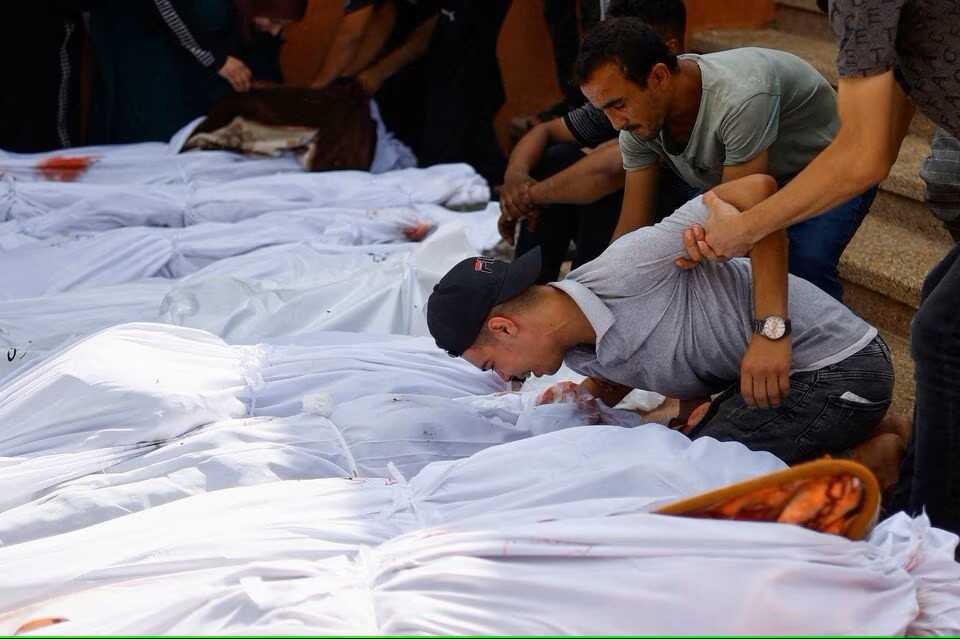

The second is the danger that such a regional conflagration would drag the United States and Russia reluctantly into the fighting on opposing sides, with China giving aid to Russia. Preventing both contingencies is critical both to America’s own security and to our commitments to Israel. And our ability to do so — or at least to minimize the regional repercussions of such an invasion — depends to a significant degree on help from China and Russia in restraining their partners in the region in return for Israeli restraint in Gaza. 
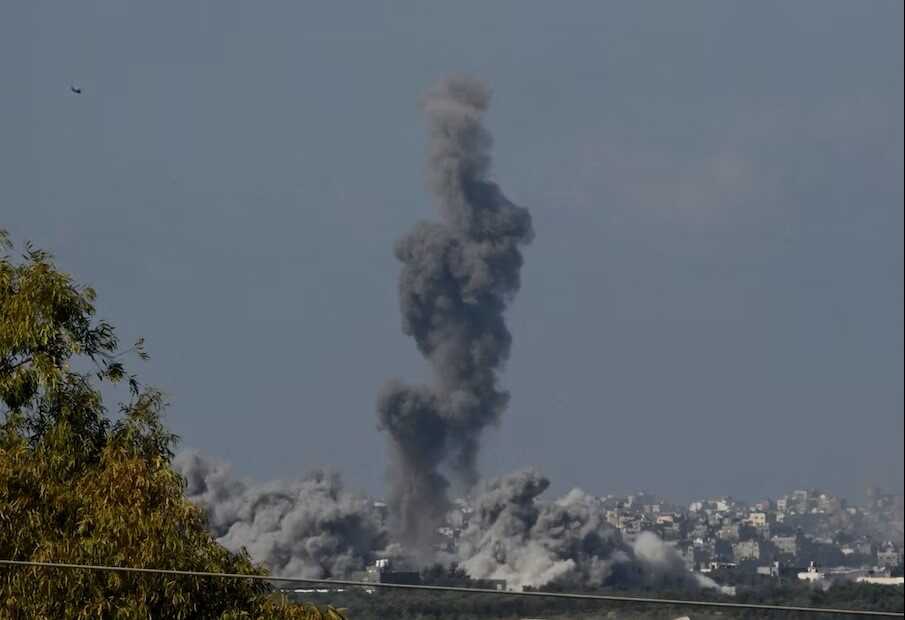
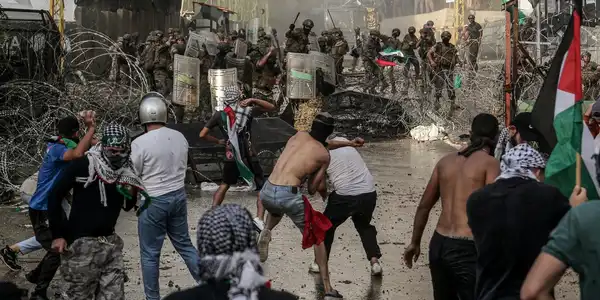
The most likely path toward these twin dangers would be a full-scale Israeli ground invasion of Gaza, for which Hamas is almost certainly prepared and which it may well have intended to provoke. Such an invasion would inevitably involve prolonged urban combat and massive civilian casualties.


This would lead to widespread outrage in the region that could compel a military response from Hezbollah, which in turn would create enormous pressures on Iran to support its Lebanese partner. 

A northern front between Israel and an Iran-backed Hezbollah could also quite possibly expand into Syria, which in turn could drag Russia and even Turkey directly into the fighting. None of these actors is seeking direct combat with Israel — the Hamas attacks reportedly took Iran by surprise, Russia already is completely consumed by its war in Ukraine, and Turkey would lose the leverage it enjoys through tacking between the United States, Europe, Russia, and regional players to its south. Nonetheless, circumstances could compel these states to face choices they would rather avoid. 

Between China and Russia, Beijing’s help will be easier to enlist. China has the most to lose from a wider conflict in the region, which could threaten access to the region’s oil supplies, drive up energy prices, and undermine the global commerce on which China’s economy depends. It also has much to gain from working with the United States to contain the crisis and stabilize the region, which would bolster Beijing’s prestige on the world stage and potentially mitigate America’s reflexive fears that China intends to destabilize the international order. 


For these reasons, Washington will be reluctant to bless a prominent role for China in the region; but China is already playing such a role regardless of U.S. wishes, as its facilitation of Saudi-Iranian rapprochement has demonstrated. Successful cooperation with China in the Middle East would mark a return to previous U.S. statements that Washington hopes that Beijing will become a “responsible stakeholder” and not an enemy on the world stage.

Russia is the more important, but also the more difficult nut to crack. More important, because Russia has good relations with both Israel and Iran and has fought beside Hezbollah in Syria; more difficult, because of the immense distrust and hostility that was building up between Washington and Moscow long before the Russian invasion of Ukraine plunged relations into the abyss. Given deep U.S.-Russian enmity over the war in Ukraine, there are obviously strong temptations for Russia to cause trouble for America and exploit international anger over Israeli retaliation in Gaza to bolster its ties to Iran, Arab states, and the wider Global South at U.S. expense.


Fortunately, Moscow also has reasons to worry about a deepening conflict in the region. Russia has since the end of the Cold War sought to maintain good relations with Israel, an important economic partner and the adoptive home of more than a million Russian emigres. It has not reacted when Israel has attacked Hezbollah forces or Syrian targets over the past several years, despite Russia’s key role as a partner of Hezbollah and the Baath state in Syria. A war between Israel and Iran would end Iranian supplies to Russia of drones that have come to play an important role in the Russian campaign in Ukraine.


Above all, Russia has long been concerned about the dangers of Sunni Islamic terrorism, the source of numerous attacks inside Russia, which is likely to flow from the burgeoning conflict in Gaza. In the wake of 9/11, there was a very strong sense in Moscow of common interests with the U.S. in the fight against terrorism. This perception of common threat meant that Western policy in Libya and Syria was greeted in Russia not just with fury but also with bewilderment.

Faced with the obvious danger of Islamist extremism and the dreadful example of the war in Iraq, Russian analysts could not understand how the West could embark on policies that were likely to destroy the Libyan and Syrian states (and did, in the case of Libya) and create great opportunities for the spread of jihadi forces.

A restoration of at least limited cooperation with Russia in counter-terrorism is both one path to an eventual wider settlement and urgently necessary for its own sake; because the present conflict is certain to increase the terrorist threat to the West. In Europe, terrorist attacks have already begun. The U.S. also needs to renew talks with Russia on the future of Syria, since the U.S. strategy of overthrowing the Baath regime has long since collapsed.


Channeling these conflicting impulses into Russian cooperation in containing the dangers of escalation over Gaza will be no easy task. It will require opening a high-level channel of communication between senior Biden administration officials and the Kremlin to discuss the crisis, coupled with an implicit signal that Washington is willing to address some concrete Russian concerns about the U.S. military’s role in Syria and about the need for rekindling Israel-Palestine diplomacy. Our chances of gaining Russian cooperation would improve if the United States and China begin serious talks about managing the Gaza crisis, as Putin will not want to cede the international stage to Beijing.


Neither Russia nor China have enough coercive leverage to prevent Hezbollah from opening a northern front with Israel — and precipitating a cascade of further escalation — should the Israeli Defense Forces mount a full-scale invasion of Gaza. But they probably have sufficient clout to ensure Hamas’s backers stay out of the fray in return for some measure of Israeli restraint, particularly if the United States is willing to back renewed Israel-Palestinian negotiations, open talks with Moscow about Syria, and share the international stage in managing the crisis.


By contrast, stiff-arming Chinese and Russian involvement would only incentivize their opposition to U.S. policies. And if there’s one thing Washington does not need in this crisis, it is yet more parties intent on exploiting instability.


Source: Responsible Statecraft

OPINIONS

Thu 19 Oct 2023 7:00 am - Jerusalem Time

The end of the Netanyahu doctrine

Ramallah - “Al-Quds” dot com

Ramallah - “Al-Quds” dot com

Opinion Writer

By Meron Rapoport

The events of recent days are unprecedented. The last time units of Jewish and Palestinian fighters — military or paramilitary — went to battle on such a broad front in Israel-Palestine was in 1948. There have, of course, been various battles over the years in Gaza as well as West Bank cities like Jenin, and Israeli and Palestinian units fought one another in Lebanon in 1982. But there is no parallel to the scope of what has taken place here since Saturday morning, and not since 1948 have Palestinian fighters occupied Jewish communities on this scale.


This fact is not just a historical anecdote; it has a direct political meaning. This murderous and inhumane attack by Hamas arrived just as it seemed Israeli Prime Minister Benjamin Netanyahu was about to complete his masterpiece: peace with the Arab world while completely ignoring the Palestinians. This attack has reminded Israelis and the world, for better or for worse, that the Palestinians are still here, and that the century-old conflict here involves them, not the Emiratis or the Saudis.  


In his speech at the UN General Assembly two weeks ago, Netanyahu presented a map of “The New Middle East,” depicting the State of Israel stretching from the Jordan River to the Mediterranean Sea and building a “corridor of peace and prosperity” with its neighbors across the region, including Saudi Arabia. A Palestinian state, or even the collection of shrunken enclaves that the Palestinian Authority ostensibly controls, does not appear on the map.


Since he was first elected prime minister in 1996, Netanyahu has tried to avoid any negotiations with the Palestinian leadership, instead choosing to bypass it and push it aside. Israel does not need peace with the Palestinians to prosper, Netanyahu repeatedly claimed; its military, economic, and political strength is sufficient without it. The fact that during the years of his rule, especially between 2009 and 2019, Israel experienced economic prosperity and its international status improved, was, in his eyes, proof that he is following the right path.

Israeli forces take cover from shelling in Sderot, October 9, 2023. (Oren Ziv)


The Abraham Accords signed with Bahrain and the United Arab Emirates, and later also Sudan and Morocco, reinforced this belief conclusively. “For the past 25 years, we have been told repeatedly that peace with other Arab countries will only come after we resolve the conflict with the Palestinians,” Netanyahu wrote in an article in Haaretz before the last election. “Contrary to the prevailing position,” he continued, “I believe that the road to peace does not go through Ramallah, but bypasses it: instead of the Palestinian tail wagging the Arab world, I argued that peace should begin with Arab countries, which would isolate Palestinian obstinacy.” A peace agreement with Saudi Arabia was supposed to be the icing on the “peace for peace” cake that Netanyahu has spent years preparing.


Netanyahu did not invent the policy of separation between Gaza and the West Bank, nor the use of Hamas as a tool to weaken the Palestine Liberation Organization and its national ambitions to establish a Palestinian state. Then-Prime Minister Ariel Sharon’s 2005 “disengagement” plan from Gaza was built on this logic. “This whole package called the Palestinian state has fallen off the agenda for an indefinite period of time,” said Dov Weissglas, Sharon’s advisor, explaining the political goal of disengagement at the time. “The plan provides the amount of formaldehyde required so that there will be no political process with the Palestinians.”


Netanyahu not only adopted this way of thinking, he also added to it the preservation of Hamas rule in Gaza as a tool for strengthening the separation between the strip and the West Bank. In 2018, for example, he agreed that Qatar would transfer millions of dollars a year to finance the Hamas government in Gaza, embodying the comments made in 2015 by Bezalel Smotrich (then a marginal Knesset member, and today the finance minister and de facto West Bank overlord) that “the Palestinian Authority is a burden and Hamas is an asset.”


“Netanyahu wants Hamas on its feet and is ready to pay an almost unimaginable price for it: half the country paralyzed, children and parents traumatized, houses bombed, people killed,” Israel’s current information minister, Galit Distel Atbaryan, wrote in May 2019, when she was yet to enter politics but was known as a prominent Netanyahu supporter. “And Netanyahu, in a kind of outrageous, almost unimaginable restraint, does not do the easiest thing: getting the IDF to overthrow the organization. 


“The question is, why?” Distel Atbaryan continued, before explaining: “If Hamas collapses, Abu Mazen [Mahmoud Abbas] may control the strip. If he controls it, there will be voices from the left that will encourage negotiations and a political solution and a Palestinian state, also in Judea and Samaria [the West Bank] … This is the real reason why Netanyahu does not eliminate the Hamas leader, everything else is bullshit.”


Indeed, Netanyahu himself had effectively admitted as much a couple of months before Distel Atbaryan made her comments, when he declared in a Likud meeting that “anyone who wants to thwart the establishment of a Palestinian state needs to support strengthening Hamas. This is part of our strategy, to isolate Palestinians in Gaza from Palestinians in Judea and Samaria.”


Strengthening the Gaza fence became another aspect of Netanyahu’s strategy. “The barrier will prevent terrorists from infiltrating our territory,” Netanyahu explained when he announced the start of work in 2019 to add an underground barrier that would end up costing more than NIS 3 billion. Two years later, Israeli journalist Ron Ben-Yishai wrote in Ynet that the ultimate goal of the fence, which was considered to be an impenetrable barrier for terrorists, is to “prevent a connection between Hamas in Gaza and the Palestinian Authority in Judea and Samaria.”

Israelis in Ashkelon look on at the damage caused by a rocket launched from Gaza, October 7, 2023. (Oren Ziv)


On Saturday morning, that fence was torn down, and with it the broader Netanyahu doctrine — adopted by the Americans and many Arab states — that it is possible to make peace in the Middle East without the Palestinians. As hundreds of militants crossed the border unhindered on their way to occupy army posts and infiltrate dozens of Israeli communities as far as 18 miles away, Hamas declared in the most clear, painful, and murderous way possible that the conflict that threatens Israelis’ lives is the conflict with the Palestinians, and the idea that they can be bypassed via Riyadh or Abu Dhabi, or that the 2 million Palestinians imprisoned in Gaza will disappear if Israel builds a sufficiently elaborate fence, is an illusion that is now being shattered at a terrible human cost.


This is not necessarily good news. It is impossible not to define the actions of Hamas as war crimes: the massacre of civilians, the murder of entire families in their homes, the kidnapping of civilians including the elderly and children into captivity in Gaza — all of these violate the laws of war, and if the International Criminal Court does exercise its jurisdiction over Israel-Palestine, then those responsible for these actions will have to be prosecuted. In other words, Hamas’ “declaration” that the Israeli-Palestinian conflict still exists came at the price of the blood of hundreds of innocent people. 

It is also not necessarily good news because it seems that the conclusion Israel is currently drawing from the understanding that the conflict is here in Israel-Palestine, and not in Saudi Arabia, is to “overthrow Hamas” or “flatten Gaza.” Likud MK Ariel Kellner and right-wing journalist Yinon Magal likely represent a significant portion of the Israeli public — and certainly the government — when they call for the response to be another Nakba.


And yet, beyond the moral judgments, the attack by Hamas has brought all of us — especially the Israelis — back to reality, reminding us that the conflict began here, in 1948, and that no magic cure can make it disappear. And since Hamas, as strong and capable of surprises as it may be, cannot murder 7 million Jews, and since Israel — I believe — is not capable of carrying out another Nakba (or even recapturing Gaza), it is possible that from the trauma of the past few days will grow the idea that the conflict must be resolved on the basis of freedom, national and civic equality, and the end of the siege and the occupation. 

After the trauma of the 1973 war, which many are comparing to what is happening today, it dawned on Israelis that peace could come at the expense of withdrawing from the Egyptian territory it had occupied. The same realization can happen after the trauma of 2023.


Source: 972 Magazine

OPINIONS

Thu 19 Oct 2023 6:52 am - Jerusalem Time

Danger for US deepens as Gaza crisis escalates

Ramallah - “Al-Quds” dot com

Ramallah - “Al-Quds” dot com

Opinion Writer

By PAUL R. PILLAR


Hamas’s attack on Israel last week was what any reasonable person would consider an atrocity deserving of moral outrage. Hundreds of innocent civilians were killed, and dozens more were taken into captivity. It thus is understandable that such an event would elicit intense emotion and a thirst for revenge.


Being understandable is not the same as being wise or effective, for Israel itself or for regional peace and security.

Israel has now embarked on a violent offensive against the Gaza Strip and its residents. However, as much as that offensive may be defended as intended to establish deterrence or to destroy a hostile military force, it is in large part an act of raw revenge. It is a national catharsis amid an atmosphere of intense grief and anger.


The casualty count from the Israeli bombardment of the Gaza Strip is rising too fast to venture an up-to-date figure, but Palestinian health authorities reported that as of Monday, 3.500 Palestinians had been killed and 12,000 wounded, with more than half of the dead being women and children. In addition, Israel — which already had maintained a blockade of Gaza — cut off all movement of food, fuel, water, and electricity to the territory.


This is quickly generating a humanitarian disaster of a proportion commensurate with the Strip’s population of more than two million, with specific consequences ranging from hospitals lacking the supplies and electric power needed to treat the wounded to families running short of food.


On top of all this, Israel, through a pre-invasion warning leaflet, has told the more than one million residents of Gaza City and the rest of the northern half of the Strip to head south. Given the lack of food, water, and housing wherever those people could go, such a movement, as U.N. Secretary General Antonio Guterres has stated, ranges between the “extremely dangerous” and the “impossible.” Evacuation does not even buy safety, as indicated by lethal Israeli attacks on convoys that were using what Israel had designated as a “safe route.”


The scale of physical human suffering in the Gaza Strip already exceeds what Hamas inflicted on Israel last week. And Israel is just getting started as the Israeli aerial assault is likely to transition to a ground offensive.

Given the extensive and careful planning that clearly went into the recent Hamas attack, it can be assumed that Hamas’s planning did not end there. The group surely anticipated a strong Israeli reprisal, has done all it can to prepare for that reprisal, and has calculated that when the whole episode is over it will have served Hamas’s interests more than Israel’s. Drawing Israel into an extremely difficult urban warfare campaign on Hamas’s own turf may have been one of the group’s objectives.


The hostages Hamas seized in southern Israel (as many as 150) vastly complicates any Israeli military operation. Hamas claims that Israeli airstrikes already have killed 13 of the hostages — an unconfirmed but plausible claim given the destruction from the airstrikes. The remaining hostages will be in grave danger from a ground assault, regardless of whether Hamas positions them to function as human shields.


Animosity across the region and much of the rest of the world will be substantial and will work against Israeli interests and Israeli security. Arab governments will be less inclined than before to expand relations with Israel.

In the occupied West Bank — where even before October 7, anger over Israeli policies and actions made the chance of a new popular uprising or intifada significant — heightened anger over more Israeli killing of Palestinian brethren in Gaza increases that chance. There already are signs of the current violence in Gaza spilling over into the West Bank, with at least 46 Palestinians killed and 700 injured in clashes with Israeli security forces and settlers since the Hamas attack.


In Gaza itself, an expansion of Israeli-inflicted bloodshed among the Palestinian residents will feed expanded anger against Israel among the remaining residents, with all the potential for new violence that such anger always has entailed. Destruction of Hamas’s military capability, even if that could be completely achieved, does not remove the problem. Hamas was never the whole story of violent Palestinian reaction to Israeli policies. Much of the recent rocket fire from Gaza has been carried out by the Palestine Islamic Jihad, a smaller and more radical Gaza-based group. The anger and the violence will find other channels — perhaps through groups and cells not yet formed — even if neither Hamas nor the PIJ were still functional.


The Israeli objective in a new ground invasion of Gaza may go beyond “mowing the lawn,” to use the Israelis’ term for their periodic surges in military attacks against Palestinians, and extend to destroying the ability of Hamas to function any more as Gaza’s de facto government. But even if that objective is achieved, then a big unanswered question is, who does govern the Gaza Strip? The Palestinian Authority is widely discredited among Palestinians and seems unable to rise above its residual role as a security auxiliary to the Israeli occupation of the West Bank. Direct Israeli rule of Gaza would be a prescription for even more resentment over occupation and more potential for violent Israeli-Palestinian clashes.


U.S. policy on the crisis shows signs of having been swept up in some of the same emotions and rage as most Israelis have. In this respect, the policy is tracking with a broader mood that the Hamas attack has generated in the American body politic, in which the safest public posture is expression of unflinching support for Israel. It is even more hazardous to one’s political health than it usually is to say anything that places the crisis within the context of longstanding Israeli policies toward the Palestinians. Related to this, the Biden policy of essentially going all in with Israel likely has domestic political calculations behind it.


The administration’s pronouncements have often reduced the crisis to an easy-to-emote-over tale of good versus evil, which ignores likely motivations for what was a carefully calculated attack undertaken in response to Israeli policies and actions.

Continuing this theme, administration officials have likened what Hamas did to the Islamic State or ISIS. The brutal tactics that Hamas used during its incursion into southern Israel can indeed be compared to some notorious actions by ISIS, but beyond that the comparison is meaningless. ISIS is not part of any longstanding situation comparable to the Israeli-Palestinian conflict and Israeli occupation of Palestinian territory. ISIS is an international terrorist group whose ideology and ambitions know no international boundaries.


Hamas is a nationalist group seeking political power in a Palestinian state and has no interest in international terrorism beyond that theater. ISIS has never spoken about observing an open-ended truce to live peacefully next to a state that is currently its adversary. Hamas has. ISIS has never competed in, much less won, a free and fair election. Hamas has. Why and how the tactics and objectives of Hamas have evolved into what it displayed this month have to do with peaceful avenues of competition being closed. To reduce the entire conflict into a matter of one set of outrageous tactics is to miss all the other dimensions of that conflict.


Meanwhile, Saudi Arabia has been calling for de-escalation. Russia and China have called for an immediate cease-fire, and Russia is proposing a U.N. Security Council resolution to that effect.

The Biden administration is moving in the opposite direction. Secretary of State Antony Blinken on social media endorsed Turkish efforts to secure a cease-fire, but later deleted the post. While President Biden said on Sunday that Israeli occupation of Gaza would be a “big mistake,” current administration policy is to otherwise endorse the escalation of the violence that Israel currently is conducting in the Gaza Strip.


The administration should think carefully about how U.S. interests differ from Israeli interests and objectives. Israel violently exacting revenge in this case is not a U.S. interest. Given that the foremost responsibility of a government is ensuring the safety and security of its own citizens, one of the important U.S. interests at stake concerns how some of those citizens may have become hostages in the Gaza Strip and will be greatly endangered by escalated Israeli military attacks.


In addition to Americans among the hostages Hamas seized, an estimated 500 to 600 other U.S. citizens — mostly Palestinian Americans — are in the Gaza Strip. They are hostages, too — trapped there after the Israeli shutdown of all movement in and out of the territory, and in serious danger of becoming casualties of Israeli air or ground operations. One of those Americans, a woman whose home is Salt Lake City and currently is stuck in Gaza with her family, said, “I feel like I’ve been abandoned by my country. We’re American citizens and we’re not being treated as American citizens.”


Another U.S. interest is preventing the current warfare to spread regionally. The more that the fighting involving Israelis and Gazans escalates, the greater is the danger of such spread, even though other actors in the region are not seeking a wider war. Those in the U.S. who habitually try to stir up conflict with Iran are using the current crisis to do more stirring. This is despite the fact that no evidence has emerged of any direct Iranian role in the Hamas attack — as attested to most convincingly by official Israeli spokespeople, given that the Israeli government usually is eager to implicate Iran in anything condemnable. Press reports citing sources within the U.S. government indicate that Iranian government officials were surprised by Hamas’s action.


The Biden administration nonetheless has foolishly picked this moment to draw Iran into the Gaza crisis in a way by reneging at least temporarily on its commitment, under a recent prisoner swap deal that freed five imprisoned Americans, to permit some frozen Iranian assets to be used for humanitarian purposes inside Iran. Accusations by opponents of the administration that this money had some connection, however indirect, with Hamas military operations are patently false, given that none of the money involved had yet been expensed. The administration’s move will further damage U.S. credibility regarding a willingness to make good on commitments, thereby making it more difficult for the U.S. to reach beneficial agreements with any other government, not just Iran.


The administration evidently wanted to make a critical statement about the longstanding and well-known supply relationship between Iran and Hamas. If a patron that has supplied arms or money to a client is to be punished — to the extent even of previous agreements being reneged upon — this raises a question about yet another U.S. interest at stake in the current crisis: avoiding opprobrium and repercussions stemming from some other state’s actions.

If Iran is to be condemned for any actions by Hamas, even actions Iran did not instigate or control, then what is the attitude to be taken toward the United States regarding destructive and anger-inducing actions in Gaza by its client Israel, the recipient of voluminous U.S. financial, military, and diplomatic support?


The world won’t likely remember gentle admonitions from President Biden about observing the rule of law. It will instead focus on the U.S. effectively giving a green light for — and materially assisting — an assault that not only flouts the laws of war but brings death and suffering to thousands of innocent persons.


There will be hostile reactions to all this, including from violent extremist groups. Revenge is an urge that is not unique to Israelis. Those who are quick to make comparisons with ISIS should reflect on the fact that probably the most consistent theme in the propaganda, interrogations, and claims of terrorists — including al-Qaida — who have attacked U.S. interests has been U.S. support for Israel and its treatment of the Palestinians.


Author: Paul R. Pillar is Non-resident Senior Fellow at the Center for Security Studies of Georgetown University 


Source: Responsible Statecraft


PALESTINE

Wed 18 Oct 2023 10:59 pm - Jerusalem Time

Yedioth Ahronoth: America conducts war on Gaza according to interests to counter Russia and Iran

Strategic analyst Yossi Yehoshua mentioned - in an article published yesterday by the Israeli newspaper Yedioth Ahronoth - that the arrival of the US aircraft carrier Gerald Ford and the statements of US President Joe Biden and his Secretary of State Anthony Blinken prove the amount of US support for Israel, but it will not come without return.


The writer explained that the Americans are conducting the war on Gaza according to their strategic interests in the region, adding that Biden’s visit to Tel Aviv could put controls on Israel’s movements as part of a broader war on the Iranian axis, which includes - in his opinion - Russia.


This comes at a time when Israeli army officers are demanding entry into Gaza, claiming that it is illogical that there is a time gap between the operation of the Palestinian resistance movement (Hamas) on October 7th and the response to it. The writer added that the recent American moves aim to deter Iran and Hezbollah. The Lebanese government announced the opening of another front in the north, stressing that the US President insists on the safety of the “kidnapped” US citizens, to the point of planning a separate deal in addition to asking Israel to make a humanitarian gesture in Gaza without compensation.


The writer believed that Biden is not concerned with effectively eliminating the Hezbollah threat to the northern regions of Israel, as much as he is concerned with avoiding a “humanitarian catastrophe and violation of international law” in Gaza.


The Israeli writer added that the White House is concerned with the interests of the United States first, then the Israeli soldiers.


He stressed that Israel's attachment to America will increase after Biden's visit to Tel Aviv, especially if the visit leads to a regional summit that would restrict their movement in the war, indicating that it is not known how events will develop after Israeli Prime Minister Benjamin Netanyahu's conversation with Russian President Vladimir Putin, which showed Quiet situation so far.


Source: Israeli press

PALESTINE

Wed 18 Oct 2023 9:01 pm - Jerusalem Time

Gaza Hospitals: We will not abandon our patients and wounded, no matter the circumstances

Directors and representatives of government and private hospitals in the Gaza Strip affirmed their commitment to fulfilling their health and humanitarian mission towards our people despite all the threats and warnings they receive, stressing, “We will not abandon our patients and wounded, no matter the circumstances.”


They pointed out during a press conference they held today, Wednesday, regarding the Israeli occupation’s threats to them to evacuate the hospitals, that “what happened with the Ahli Baptist Hospital is a massacre and a premeditated crime, and we warn the world that the occupier will continue with his threats if there is no one to restrain him.”


They added: "After demolishing homes on top of their residents and targeting the displaced to the south, ambulances, mosques and churches, the occupation today dares, with all brutality and in an unprecedented manner in the world, to target hospitals."


They pointed out that all hospitals in the Gaza Strip had received threatening messages from the Israeli occupation requiring evacuation, stressing that this order, in addition to being in violation of all international norms and laws, is operationally impossible to implement.


They explained that deliberately sending threatening messages repeatedly to health facilities means that the Israeli occupation is thirsty to shed more blood and inflict more massacres and victims.


They stressed that the hospitals of the Gaza Strip are no longer a place only for the sick, but rather have become a place of refuge for innocent and defenseless displaced civilians who are stranded and cannot find a safe place in the entire Gaza Strip.

PALESTINE

Wed 18 Oct 2023 8:55 pm - Jerusalem Time

Palestinian leadership takes decisions to confront the Israeli aggression

As part of its ongoing meetings, the Palestinian leadership held a meeting at the presidential headquarters this Wednesday evening, headed by the President of the State of Palestine, Mahmoud Abbas, to discuss the latest developments in the ongoing Israeli aggression and its crimes against our people in the Gaza Strip.


The attacks on our people in the West Bank, including East Jerusalem, continue.


The Palestinian leadership unanimously decided to adopt the following decisions:

▪ The leadership’s emphasis on adherence to all decisions taken on 7/3/2023 regarding the relationship with the occupying state, including the continued cessation of security coordination completely.


▪ The leadership affirms the legitimate right of our people to defend themselves, and that the mission of the Palestinian state institutions is to protect the Palestinian people, and everyone must bear their responsibilities while emphasizing commitment to international legitimacy and international law.


▪ Follow up on the cases brought, continue filing cases before international courts, and legally prosecute the occupation government at the international level for war crimes and crimes it has committed for which it bears full responsibility, in violation of international law and international humanitarian law.


▪ Emphasizing that our Palestinian people in Gaza are not alone, and we must stand with all our capabilities to protect our people in the Gaza Strip from the crimes of the occupation, and work with all concerned parties to lift the siege and provide medical and food relief materials, water and electricity.


▪ Emphasis on preventing the displacement of Palestinians from the Gaza Strip, and considering it a red line that we will not allow to be crossed, just as the displacement of Palestinians from their homes in Jerusalem or the West Bank should not be allowed.


▪ Emphasis on protecting our people in the West Bank and Jerusalem from invasions by the occupation forces, settler terrorism, and attacks on Christian and Islamic sanctities.


▪ Emphasis on continuing political and diplomatic action on the broadest scale and at the highest levels in order to stop the aggression, lift the siege on the Gaza Strip, bring in relief materials, prevent displacement, and pursue a political solution that ends the occupation through an international peace conference based on international legitimacy resolutions.


▪ Emphasis on providing international protection for our Palestinian people by implementing Resolution 2334, heading to the Security Council and moving with all parties and international forums.


▪ Preserving the unity of the Palestinian ranks, rejecting strife and being drawn into chaos, preserving the gains of our people and public and private property, and not diverting the compass from the desired goal.


▪ Adhering to national constants and the Palestine Liberation Organization as the sole legitimate representative of the Palestinian people, adhering to international legitimacy and continuing to work towards the State of Palestine gaining full membership in the United Nations and obtaining more international recognition, and embodying the sovereignty of the State of Palestine on the ground in accordance with Resolution 19/67.


▪ Emphasizing that security and peace will not be achieved unless the Palestinian people obtain their legitimate rights, ending the Israeli occupation of the land of the State of Palestine with East Jerusalem as its capital, and resolving the refugee issue in accordance with United Nations Resolution 194.


▪ The Palestinian leadership decided to keep its meetings in session permanently.

PALESTINE

Wed 18 Oct 2023 8:46 pm - Jerusalem Time

Israel approves restricted aid entry to Gaza at request of Biden... and an American veto against “humanitarian truce”

The office of Occupation Prime Minister Benjamin Netanyahu announced, on Wednesday, October 18, 2023, that it would allow restricted entry of humanitarian materials through Egypt into Gaza, at a time when America used its veto in the UN Security Council against a resolution calling for a humanitarian truce.


The Palestinian Ministry of Health announced that the death toll had risen to about 3,478 martyrs and more than 13,000 injured in the Gaza Strip since October 7.


Meanwhile, Netanyahu’s office said in a written statement: “At the request of President Biden, Israel will not thwart the provision of humanitarian aid from Egypt, as long as this aid contains food, water and medicine for the civilian population located in the southern Gaza Strip, or who are moving there, and so on.” As long as these supplies do not reach Hamas’ hands.”


Netanyahu's office indicated that "Israel will not allow any humanitarian aid to be provided through its territory to the Gaza Strip, unless our abductees are returned," and added: "Israel is demanding that Red Cross visits be arranged for our abductees, and it is working to mobilize broad international support for this demand."


Netanyahu's office announced that he had initiated these steps "in light of the widespread and vital American support for the Israeli war efforts, and based on President Biden's request to provide basic humanitarian aid."


Security Council

In this context, the United States used its veto in the UN Security Council against a resolution calling for a humanitarian truce in the conflict between Israel and the Palestinian Islamic Resistance Movement (Hamas) to allow aid to enter the Gaza Strip.


The vote was postponed twice over the past two days on the text drafted by Brazil, in light of the United States’ attempt to mediate the entry of aid into Gaza. 12 members voted in favor of the draft resolution today, while Russia and Britain abstained from voting.


Meanwhile, the Secretary-General of the United Nations, António Guterres, called for an immediate ceasefire on humanitarian grounds to allow the release of the hostages and the arrival of aid into Gaza.


The draft resolution also urges Israel, without naming it, to cancel its order for civilians and UN staff in Gaza to move to the southern Palestinian enclave, and denounces “the terrorist attacks launched by Hamas.”


Last week, Israel ordered about 1.1 million people in Gaza, or about half the population, to move south, as it prepares for a ground attack in response to the worst Hamas attack on civilians in Israel’s history, which dates back 75 years.


Israel imposed a comprehensive siege on the Gaza Strip and is targeting it with intense bombing. It vowed to eliminate Hamas after the armed Islamist group killed 1,400 people and took hostages in an attack on Israel on October 7.


The draft United Nations resolution condemned all acts of violence and hostilities against civilians, and all acts of terrorism, and called for the immediate and unconditional release of all hostages.


At dawn on October 7, Hamas and other Palestinian factions in Gaza launched Operation “Al-Aqsa Flood,” in response to “the continuing attacks by Israeli forces and settlers against the Palestinian people, their property, and their sanctities, especially Al-Aqsa Mosque in occupied East Jerusalem.”


During the operation, Hamas and gunmen from other Palestinian factions took “dozens of Israelis, including soldiers and officers,” during a large-scale infiltration of settlements around the Gaza Strip, according to what the movement announced at the time.


Source: arbipost

PALESTINE

Wed 18 Oct 2023 8:34 pm - Jerusalem Time

The attack will not be from Lebanon.. Qaani’s visit to Syria and Iraq reveals details of possible Iranian interference against Israel

As Arab Post learned from Iranian and Iraqi sources that the commander of the Quds Force of the Iranian Revolutionary Guard, General Ismail Qaani, was on an unannounced secret visit to Syria on October 15, and the visit lasted two days.


According to Arab Post, the sources said the goal of Ismail Qaani’s visit to Damascus was to raise the state of maximum alert for Iran’s allies in Syria, and to establish a joint operations room for Iran’s allies in both Syria and Iraq to monitor the current situation and coordinate the deployment of forces.


Iranian Foreign Minister Amir Abdollahian responded to a journalist's question about whether Iran would enter the war in Gaza, saying: "All possibilities are possible, and I confirm that no party can remain indifferent to the situation in Gaza."


Details of Qaani’s visit to Syria

An Iranian military expert close to the Iranian Revolutionary Guard, specifically the Quds Force, revealed to Arab Post that Qaani visited Syria two days after Hamas’ attack on Israel, and then returned to Tehran to prepare Khamenei’s report.


The same source added that Qaani returned to Syria again on October 15, 2023 and established an operations room to tighten coordination between the allies. This room would make decisions in difficult or dangerous times, because it is primarily under the management of officers from the Revolutionary Guard.


Arab Post source indicated that Qaani's second visit was aimed at ensuring the readiness of the allies in Syria in the event that the situation developed and Israel launched a ground invasion into Gaza. Qaani himself also supervised a number of training exercises for the Fatemiyoun and Zainabiyoun brigades, which were placed on maximum alert.


According to Iranian military sources who spoke to “Arabi Post” earlier, fighters from the “Fatemiyoun and Zainabiyoun” brigades are still present in Syria, since they were established by General Qassem Soleimani to fight alongside Assad’s forces.


Qaani's trip to Baghdad

The trip of Quds Force Commander Ismail Qaani was not limited to Syria only, but he traveled to Baghdad to meet with the leaders of the Iraqi Shiite armed factions allied with Iran, according to what a leader in the Iran-backed Shiite Sayyid al-Shuhada faction revealed.


Arab Post reported  that the spokesman said that Qaani arrived in Baghdad on October 16, late at night, and we were waiting for him. He informed us of the latest developments regarding the intervention of the resistance axis in the Gaza war, how to coordinate between groups within the axis, and many logistical matters.


Arab Post  added that the source added to “Arabi Post”: “At the beginning of the war, we asked Qaani to be patient, especially with a number of Popular Mobilization Forces factions announcing their intention to target American targets in the region, but in his last visit he was seriously talking about the possibility of all factions of the Axis of Resistance participating during the next few weeks.” .


Arab Post  continued that according to the source from the Sayyid al-Shuhada Brigades in Iraq, the latest plans for possible intervention by the Shiite and pro-Iranian factions in Iraq in the war on Gaza are still largely unprepared yet.


He told "Arabi Post": "We have some plans and their alternatives. The Iranians also informed us during Qaani's visit of their possible plans, but they said that there are alternative plans that will be discussed in Qaani's next visit to Iraq."


It is worth noting that Iran and its allies in Syria, Lebanon, Iraq, Yemen, and Palestine call themselves the “Axis of Resistance,” and Tehran has worked in the past decade to greatly strengthen the network of its allies from the Axis of Resistance.


The escalation will be on the Syrian front

For his part, an Iranian intelligence official close to the Revolutionary Guards and the senior leadership told “Arabi Post” that “in the event of escalation, it will be from the Syrian side and not from Lebanon, in order to protect Hezbollah.”


The spokesman added, "Escalation on the part of Hezbollah will drag all of Lebanon into war, and this is what neither Hezbollah nor Iran wants, because Tehran wants to preserve Hezbollah's military infrastructure for as long as possible."


The source adds, saying: “Hezbollah is the strongest and most important member of the axis of resistance, and sacrificing it will cost us a lot. At the same time, this does not mean that Hezbollah is a key player in any escalation with Israel at the present time, but the beginning of the escalation will not be on its part, only on its part.” Keeping Israel's northern front busy now."


A source close to the Quds Force confirmed the intelligence official’s statement, telling Arab Post, “Iran does not want to risk Hezbollah now, even though Hezbollah’s current military capabilities will be very effective in inflicting heavy losses on the Israelis.”


The spokesman added that Iran's senior leadership is very concerned about the losses that Hezbollah will suffer, especially since in recent years it has acquired strong military and intelligence capabilities, in addition to the improvement of its economic situation and its military spending.


From where...from Syria?

Sources revealed to "Arabi Post" that Ismail Qaani, during his recent visit to Damascus, told Bashar al-Assad directly and seriously about the desire of Iran and the rest of the factions of the axis of resistance to equip the Syrian front. Because it will be the beginning of escalation against Israel if this happens.


A high-ranking Iranian official close to decision-making circles in Tehran said: “We know that Assad has no serious intention of entering the Gaza war, and he told Qaani that the situation in Syria is difficult at all levels, and he cannot tolerate entering into a new war, but at the same time he does not "He could refuse a request from his allies."

According to an Arab Post source, the Iranian plan to start escalation against Israel will begin specifically from the Golan Heights with a limited ground operation at first, and preparations for this plan have already begun a few hours after General Ismail Qaani left Damascus.

According to an Iranian military commander now in Syria, “Iranian forces and Hezbollah forces have been redeployed and stationed near the occupied Syrian Golan Heights,” adding: “We are now a few meters away from the Israeli forces.”

The matter did not stop at the redeployment of Iranian and allied forces in Syria, but according to the military commander, Iran was able to introduce many weapons and drones into Syria in the past few days.


An Arab Post source said, "Everything is ready and waiting for a decisive decision. We have missiles, drones, jamming devices, and fighters to attack Israel."


Did Russia agree?

In 2018, Israel and Russia signed the Security Belt Agreement in the Golan Heights. To ensure that Iranian forces do not target the Israeli occupation forces, Russia guaranteed to Israel the removal of all Iranian factions and factions opposing Bashar al-Assad from the Golan Heights.


Therefore, the redeployment of Iranian and Hezbollah forces in this region of the Golan Heights primarily requires Russia’s approval. Has Moscow agreed to this matter?


An Iranian diplomat close to decision-making circles in Tehran answers this question, telling Arab Post: “Russia agreed to the redeployment, but has not yet agreed to start from the Golan Heights in the event of an escalation with Israel, but there are many calls and conversations between us and the Russians.” To resolve this point.


It is noteworthy that Russia did not describe Hamas's recent attack on the Israeli occupation as a terrorist act, and this is noteworthy, because during the second Palestinian intifada in 2014, Putin stated that "Israel faces terrorism, and that there should be no negotiations with terrorists."


Putin had linked the second Palestinian Intifada to the military campaign launched by Russia in the Second Chechen War, saying: “The militants in Chechnya want to send fighters to Palestine.”


This time, Russian President Vladimir Putin commented on the Islamic resistance’s attack on the Israeli occupation as an unprecedented attack in history.


Iranian political analyst close to the Iranian government, Ali Najafi, said, “Russia’s positions changed after the Russian-Ukrainian war, and Moscow’s political priorities in the region became close to Tehran, so it is not strange that Russia avoided describing Hamas as a terrorist after its conflict with the West.”


What about Iran's allies in Iraq and Yemen?

In the wake of the attack by the military wing of Hamas on the Israeli occupation, many statements were issued by the leaders of the Iraqi Shiite armed factions allied with Iran.


Abdul-Malik al-Houthi, the leader of the Ansar Allah group, known as the Houthis in Yemen, which is supported by Iran, threatened Israel and the United States with launching attacks on American interests if Washington provided support to Tel Aviv in its war against the Gaza Strip.


In this regard, a leader in an Iraqi Shiite armed faction told “Arabi Post”: “Iraqi factions will have a major role if the war on Gaza intensifies. We are in the process of redeploying and stationing fighters along the Iraqi-Syrian border.”


He added, "Our role in Iraq is to target American targets on Iraqi soil, and it will be no less important than the participation of the rest of the factions of the axis of resistance in Syria and Lebanon."


According to the same source, the resistance factions in Iraq have their own plan that has been discussed with the Iranian side, in the event of issuing orders to clash and intervene in the ongoing war between Israel and Hamas.


The source said: “We are on high alert and have our own military plans, which will be coordinated with Hezbollah, the Iranians, and the resistance factions in Syria and Yemen at the appropriate time.”


As for the Houthi group in Yemen, the Iranian source close to the Revolutionary Guards told Arab Post: “In the talks between the resistance factions, the Houthis announced that they are ready to target everyone who supports Israel in the current war.”


According to the same source, it is expected that officials from the Houthi group will travel to Iraq during the next few weeks to discuss ways of cooperation between them and the Iraqi factions in the event that the “axis of resistance”, led by Iran in the region, enters the line of confrontation.


Source: arabipost