ARAB AND WORLD

Fri 03 Nov 2023 5:53 pm - Jerusalem Time

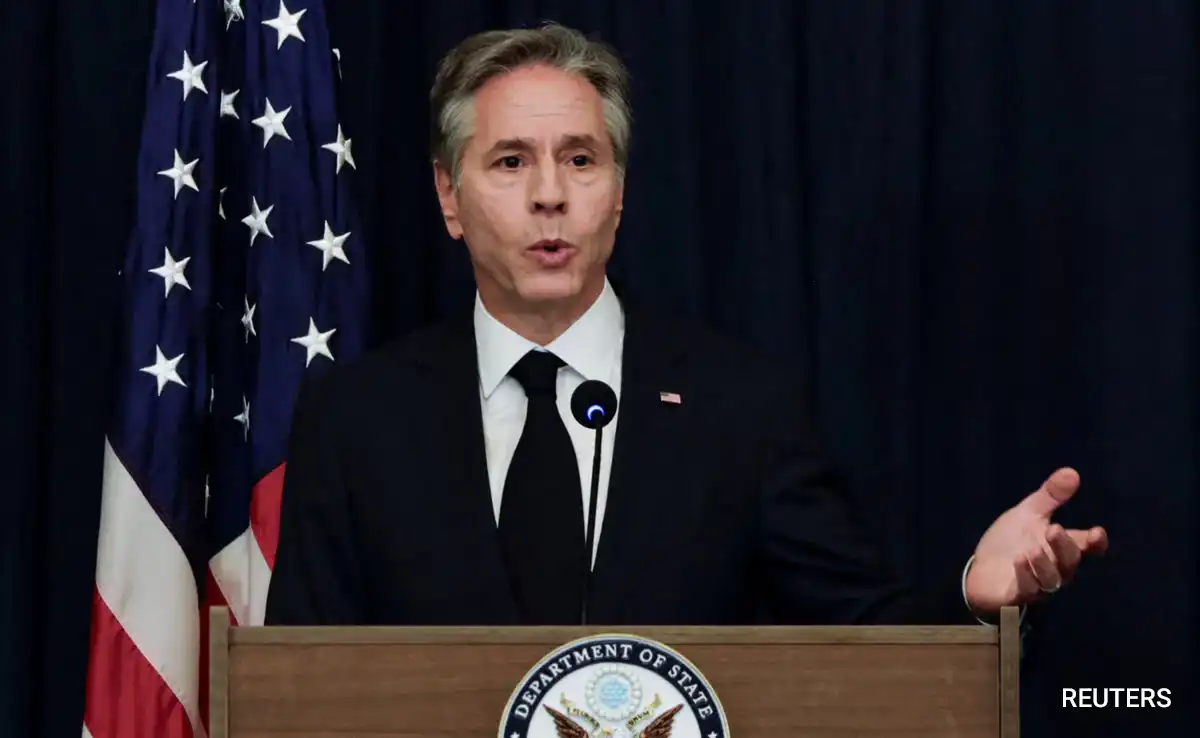
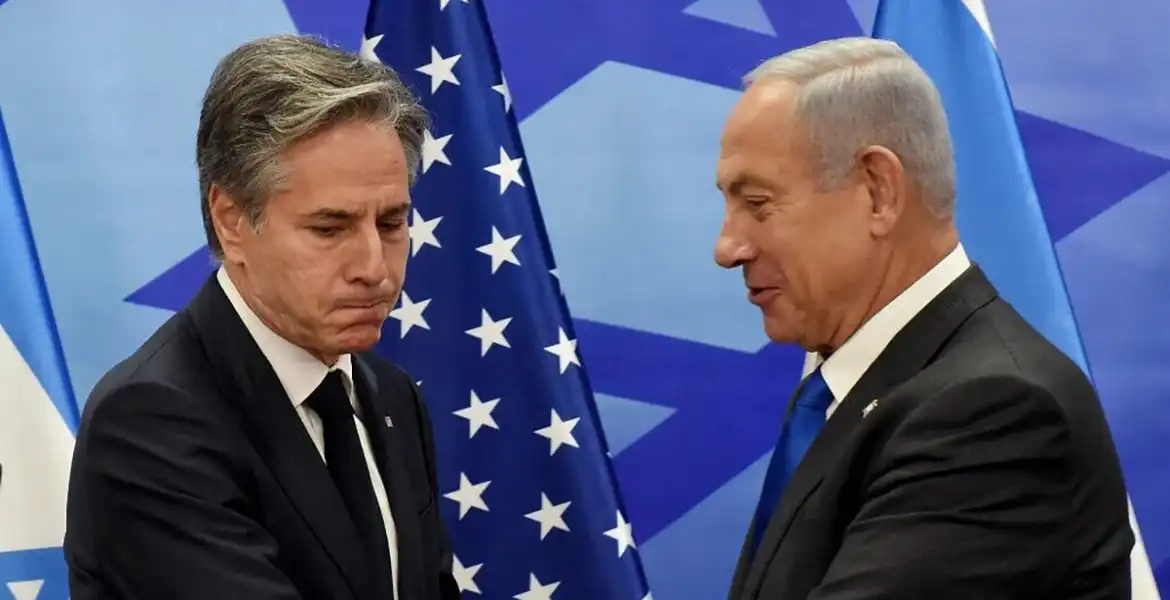
Blinken calls for enabling Israel to defeat Hamas

US Secretary of State Anthony Blinken stressed the need to enable the Israeli army to defeat the Islamic Resistance Movement "Hamas" in Gaza, stressing Israel's right to defend itself.


Blinken explained during a press conference in Tel Aviv today that the protection of civilians must not only be in the Gaza Strip, but also in the West Bank.


In light of the embargo imposed on the Gaza Strip and the prevention of electricity, water, food and fuel, Blinken said that mechanisms have been identified to enable fuel to reach hospitals in Gaza, noting that he spoke with Israeli leaders about concrete steps to increase the sustainable delivery of food, water and medicine.


He said that he discussed with Israeli officials the “humanitarian truce” in Gaza, considering that it “needs time,” pointing out that journalists need “protection” in Gaza.


The two-state solution

During his speech, the US Secretary of State stressed that the best and only path to resolving the Middle East crisis is the two-state solution, through peaceful negotiations. He said that his country will continue to hold discussions with partners in the region and outside it about what should follow the war in Gaza.


Regarding fears that the current conflict will expand to include other fronts, Blinken said that his country is keen that there will not be a second or third front in this conflict.


During his meeting earlier today with Israeli President Isaac Herzog in Tel Aviv, Blinken considered, "These days are difficult, but we are here as we were and are still in solidarity with Israel."


He added, "We strongly support the idea that Israel not only has the right to defend itself, but it is also obligatory for it."


Blinken's current visit to Israel is the third since Operation Al-Aqsa Flood, and the Americans say it aims to pressure Israeli leaders to take concrete steps to limit the damage to civilians in the Gaza Strip.


Shortly after his arrival, Blinken began a meeting with Israeli Prime Minister Benjamin Netanyahu, and participated in a meeting of the Israeli security government.


Release detainees

The American New York Times newspaper quoted White House officials as saying that Blinken would urge Israel to agree to a series of short and temporary cessation of military operations, in order to allow the release of detainees and the distribution of humanitarian aid in Gaza.


White House officials confirmed to the newspaper that the request for a temporary ceasefire is different from a comprehensive ceasefire, which the administration of US President Joe Biden rejects and believes will benefit the Palestinian resistance movement (Hamas) and prevent Israel from the necessary response to the Al-Aqsa flood operation.


Defense Department spokesman Pat Ryder said, "We do not support a ceasefire because it gives Hamas time to regroup and launch new attacks on Israeli citizens. We support a temporary humanitarian truce to enable humanitarian aid to enter as well as for the exit of hostages and detainees."


Blinken will head to Jordan after his visit to Israel, and will then begin a tour of Asian countries including Japan, South Korea, and India.

OPINIONS

Fri 03 Nov 2023 5:50 pm - Jerusalem Time

Hebrew press| If Israel loves life, not death, it must change the course of its relationship with the Palestinians

Haaretz- "Al-Quds" dot com

Haaretz- "Al-Quds" dot com

Opinion Writer

Jonathan Mandel

4 billion shekels were invested by Israel in the underground obstacle project that surrounds the Gaza Strip, from Kerem Shalom in the south to the Zikim area in the north. The construction work took 3 and a half years, during which the state invested in building the most important and largest engineering projects in its history, and in order to implement it, 6 cement factories were built along the border. More than two million cubic meters of cement were poured dozens of meters deep into the ground, reaching groundwater, in quantities sufficient to “pave a road from Israel to Bulgaria,” according to the Ministry of Defense.

Construction of the underground obstacle began at the end of 2017, in order to thwart Hamas' attack tunnels. In July 2014, Hamas used attack tunnels in the area of Kibbutz Sufa. According to the army’s message to the media at the time, “If it were not for the surveillance operation, we would have woken up to a killing campaign in the kibbutz, and there is no doubt that they are trying to carry out kidnappings.” Hamas's choice of tunnels resulted from Israel's success in preventing entry and exit from the Gaza Strip through two fences: "Fence A", which was erected after the Oslo Accords, and "Fence B", which was erected after the separation from Gaza, and another 6-metre-high fence, the work on which was completed with The underground obstacle in 2021.

These methods have been integrated into advanced “see and shoot” systems equipped with cameras and a machine gun that allows for remote shooting at the push of a button. Moreover, in 2019, Israel completed the construction of the sea barrier in the northern Gaza Strip. The goal of this project is to combat infiltration from the sea, and it included 3 layers - an underwater layer, another made of solid stones, and a third made of iron wire.

The obstacles that Israel placed around the Strip - on the ground, underground and under water - were accompanied by a defensive cover that it established against threats emanating from Gaza, from the air. The most famous is the Iron Dome system. Israel has invested a billion shekels in developing and producing systems, and the cost of each interception of these systems has reached 300 thousand shekels.

This system was not present in the winter of 2008 during Operation Cast Lead, but it has become very effective in all confrontations since then, especially in the fall of 2012 (“Pillar of Defense”), in the summer of 2014 (“Protective Edge”), and in the spring of 2019. (“Enclosed Garden”), in the fall of 2019 (“Black Belt”), in the spring of 2021 (“Keeper of the Walls”), in the summer of 2022 (“Dawn Breaking”), in the spring of 2023 (“House and Garden”), and in the current attack ("Iron Swords"). Another air threat that Israel has found a solution to is flaming balloons from the Gaza Strip. In February, a "Light Blade" system was put into use, according to the Israeli police, the first of its kind, which can detect a balloon in flight and hit it with a laser beam.

Until October 7, Israel succeeded in defending itself against the Gaza Strip. It continued to do so, performing hundreds of actions, detecting a threat from the sea, creating an obstacle, from land, establishing an obstacle, from the air, establishing an obstacle, and from under the ground, and establishing an obstacle. Within this logic, it imposed an ongoing siege for 16 years on 2.5 million Palestinians in the Gaza Strip.

As part of this blockade, ships were prohibited from docking in Gaza or sailing from it, and there were no aircraft. The only way out by land was limited to humanitarian cases, goods, and a few thousand lucky workers, a group that did not constitute one percent of the total population in Gaza.

During the past 16 years, Israel waged military operations, one after the other, used a policy of assassinations, and specified which goods were allowed to be entered and which were forbidden to enter, so that the Gaza Strip would not starve. It was surprised every time that Gaza was described as an “open prison” (as David Cameron did, who was Prime Minister of Britain), or when someone claims that “life for children in Gaza is hell on earth” (United Nations Secretary-General Antonio Guterres), or that “within years, Gaza will become unlivable” (United Nations report on the occupied Palestinian territories in 2017).

But whether out of punishing Hamas, or out of a desire to continue the policy of distinction between Gaza and the West Bank, and to maintain the division between Hamas and Fatah, and the political stalemate towards the Palestinians, Israel was never prepared to think about a new path regarding... With its strategy towards the sector.

Accordingly, the great blindness that led to October 7 is not due to the way Benjamin Netanyahu dealt with the specific warning that arrived from Egypt, or from the security system. The great blindness was in clinging to theory; And the need to maintain, year after year, the status quo of fragile and false “relative calm,” always on the brink of disaster, based on the belief that everything is fine, and that the interception systems, obstacles, and lasers will do their job, while next to Israel there is a human cage that is getting worse. . The one who promised the residents of the “Gaza envelope” empty hopes that their lives would be preserved thanks to millions of cubic meters of cement inside the ground, lied to them...

But Israel continued the siege on Gaza because it wanted to separate Gaza and the West Bank, and also because it really did not know what to do with Hamas. Israel preferred Hamas over other alternatives, and at the same time, it showed rigidity so as not to appear weak in confronting it, and preferred not to strengthen it directly.

At this time, Israel's relationship with the Palestinian Authority was similar. Israel did not want to appear weak in the face of Fatah, or directly strengthen the authority's power. Opposing negotiations with the Palestinians has been the policy of all recent Israeli governments, and it is what has led to political extremism and complete despair in the West Bank, and in Gaza as well.

The feeling of the Palestinians was (and still is) that no one takes them into account. Israel does whatever it wants, even in the holy sites of Jerusalem; It de facto annexes large parts of the West Bank, and forms a government with racist ministers who hate Arabs and call for the erasure of villages. Over the course of a decade and a half, many associations have emerged to encourage Jews to visit the Al-Aqsa Mosque and the Mosque itself... and the number of Jews who visit the Al-Aqsa Mosque every year has increased from 5,000 to approximately 50,000.

The Palestinians, whether in the West Bank or Gaza, saw how the Palestinian issue and all the basic issues (Jerusalem, the settlements, security, the state and refugees) began to dissipate in international public opinion, and how Israel succeeded in recording facts on the ground that conflict with the Palestinian national interest.

Palestinians also felt that the Arab world did not care about them, which led to a feeling of isolation and extremism. The leaders of Morocco, Bahrain and the Emirates, where the majority of people are sympathetic to the Palestinians, signed normalization agreements with Israel mediated by the American president who wanted to kill the Palestinian cause during his term, President Donald Trump, who moved the American embassy to Jerusalem, closed the Palestinian representation in Washington, and proposed the “deal of the century.” “Which is considered nothing less than a political joke, at the expense of the Palestinians. Recently, the Palestinians felt the ground shaking under their feet, when Saudi Arabia - custodian of the holy sites and regional leader - announced that “with every passing day, we are getting closer to normalization with Israel” (statement on September 20, 2023, two weeks before the events of “Black Saturday”). .

Hamas, as Adam Schatz pointed out in an article in LBR, had several motives for launching the attack against Israeli civilians and military targets on October 7. Among them is the desire to bring the siege of Gaza back into the international consciousness, thwart Israeli-Saudi normalization, gain popularity for the Palestinian struggle, challenge the rule of Palestinian Authority President Mahmoud Abbas, drag Israel into Gaza and try to subjugate it morally, and advance the liberation of Palestinian prisoners.

Hamas wanted to protest what was happening in the West Bank, settler violence and annexation as a fait accompli, and call for an end to changing the status quo in the holy sites in Jerusalem...

Although the attack against civilians and innocent women and children cannot be understood or explained, we must remember what is self-evident: the Hamas movement has become more extremist with the siege of Gaza. During the years of the siege, there was no political horizon, neither in the West Bank, nor in Gaza, neither for Fatah supporters, nor for Hamas supporters. In the last two decades, Israel has pushed forward the policy of distinguishing between the West Bank and the Gaza Strip, and during the 16 years of siege, the Gaza Strip’s general condition has deteriorated, including its health and psychological levels. In fact, it is very possible that whoever carried out the killing had never met an Israeli in his life, and most likely, he hates Israel and the Israelis with great hatred. It is also possible that this killing was his first in Israel. This is his first time leaving the Strip.

2.3 million Palestinians live in the Strip. 75% of them are refugees, and 50% of them are under the age of 18, and more than 8,000, according to figures from the Ministry of Health in Gaza, are mostly women and children, who were killed in the Israeli bombing, in response to the October 7 attack. In Israel, they want revenge on the Gazans. Taking revenge on them, and taking revenge on Hamas, as if Hamas were an organization with a beginning and an end, as if we had not taken revenge on Hamas over and over again, as if there was no open and bloody conflict, and we had not paid them a “heavy price” in the past...

Accordingly, if there is a promise to be made to those who lost what was most precious to them in Israel, especially the residents of the “Gaza envelope”, and also to all citizens of Israel who lost members of their families, friends and colleagues – it is not to continue pouring cement into the ground, And in producing more laser systems, but rather seeking a new status quo, stable, real, and looking forward to life. We must strive for a situation where the Palestinians do not think about digging an attack tunnel to Kibbutz Sufa, nor do they dream of launching flaming balloons in the direction of the Negev. This promise must be to reconsider the distorted policy that has been pursued in the West Bank since the outbreak of the second intifada, and in the Gaza Strip during the last 16 years. We must propose a political horizon and hope through a real willingness to settle on various issues with the Palestinian leadership in Ramallah, or with a leadership that truly represents the Palestinian people, and based on the realization that Hamas will not disappear.

Israel must come down from the high and useless tree to which it has climbed. If it desires to live, and not to die, it must change and change the cylinder of its relationship with the Palestinian issue, and even the explanations that it will have to provide in the future: This change occurred, not because we “surrendered” to “Hamas,” but because for the first time, we choose life.


PALESTINE

Fri 03 Nov 2023 5:38 pm - Jerusalem Time

Israel intends to establish a “historic” special court for Hamas members

The Israeli occupation state intends to establish a special court other than the courts in it today, concerned with trying resistance members of the Hamas movement, against the backdrop of the Al-Aqsa Flood operation that it carried out on the 7th of last October.


Reshet Bet Radio, affiliated with the Israeli Broadcasting Corporation, reported today, Friday, that the Israeli government’s judicial advisor, Gali Behrav-Meara, the Public Prosecution, the Court Administration, and the Public Defense, all believe that the ordinary criminal law, through an ordinary court, is not the correct procedure for enforcing it. The law applies to Hamas activists who participated in the operation.


According to the radio, discussions are being held these days to develop a plan to try Hamas members, and that the most likely solution in the Ministry of Justice is special legislation that would allow the establishment of a special court to consider the trial of resistance members.


The radio explained that the intention is to transform this trial into a procedure that not only discusses the cases of detained Hamas activists, but “in fact constitutes a historic trial against the Hamas movement in order to inform the world of the organization’s goals (..), its roots, its financiers and its activities.”


The Israeli Ministry of Justice commented, "For understandable reasons, it is not currently possible to publish about the investigative and judicial activities taking place these days."


PALESTINE

Fri 03 Nov 2023 5:30 pm - Jerusalem Time

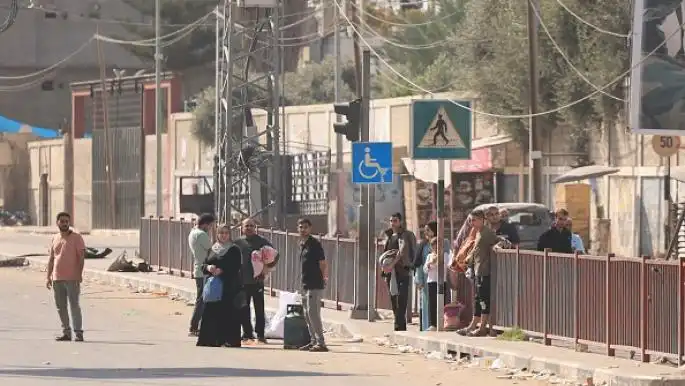
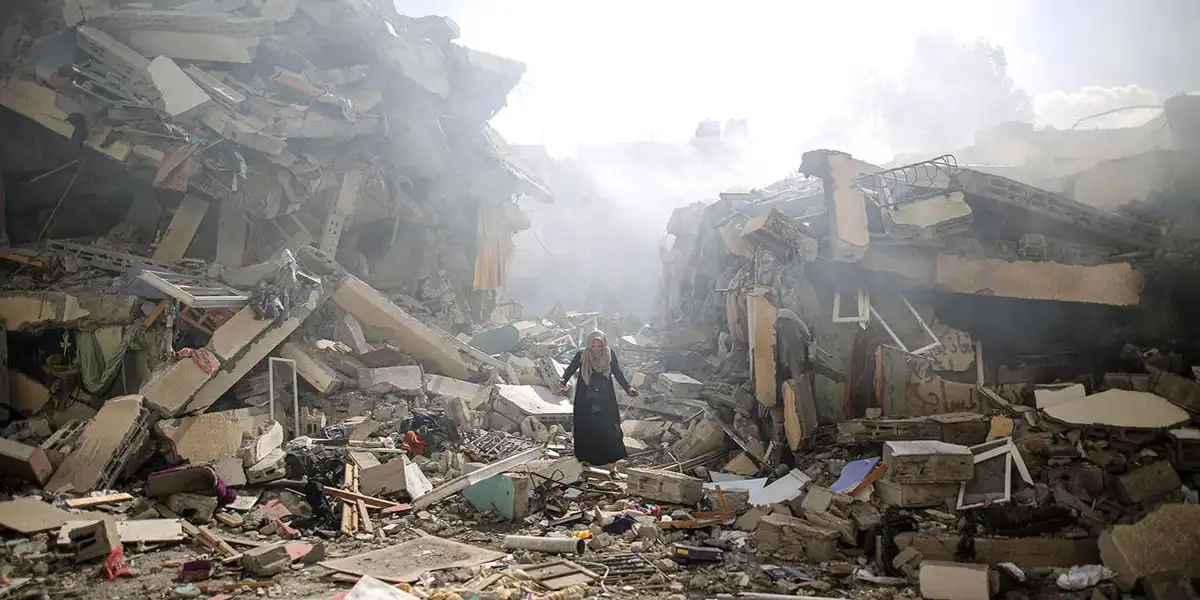
Israeli shelling of Al-Sahel in Gaza: 14 displaced people were turned into pieces in the middle of Al-Rashid Street

An Israeli bombing targeted a group of displaced people, today, Friday, as they were heading from the north to the south of the Gaza Strip, resulting in the death of 14 Palestinians, according to the Ministry of Health in the besieged Strip.


Ministry spokesman Ashraf Al-Qudra said in a statement to reporters: “The occupation is committing a new massacre against displaced civilians, and 14 citizens, including children and women, were martyred.”


A widely circulated video clip showed bodies scattered in the middle of Al-Rashid Coastal Street, which extends along the coast from the north of the Gaza Strip to its south.


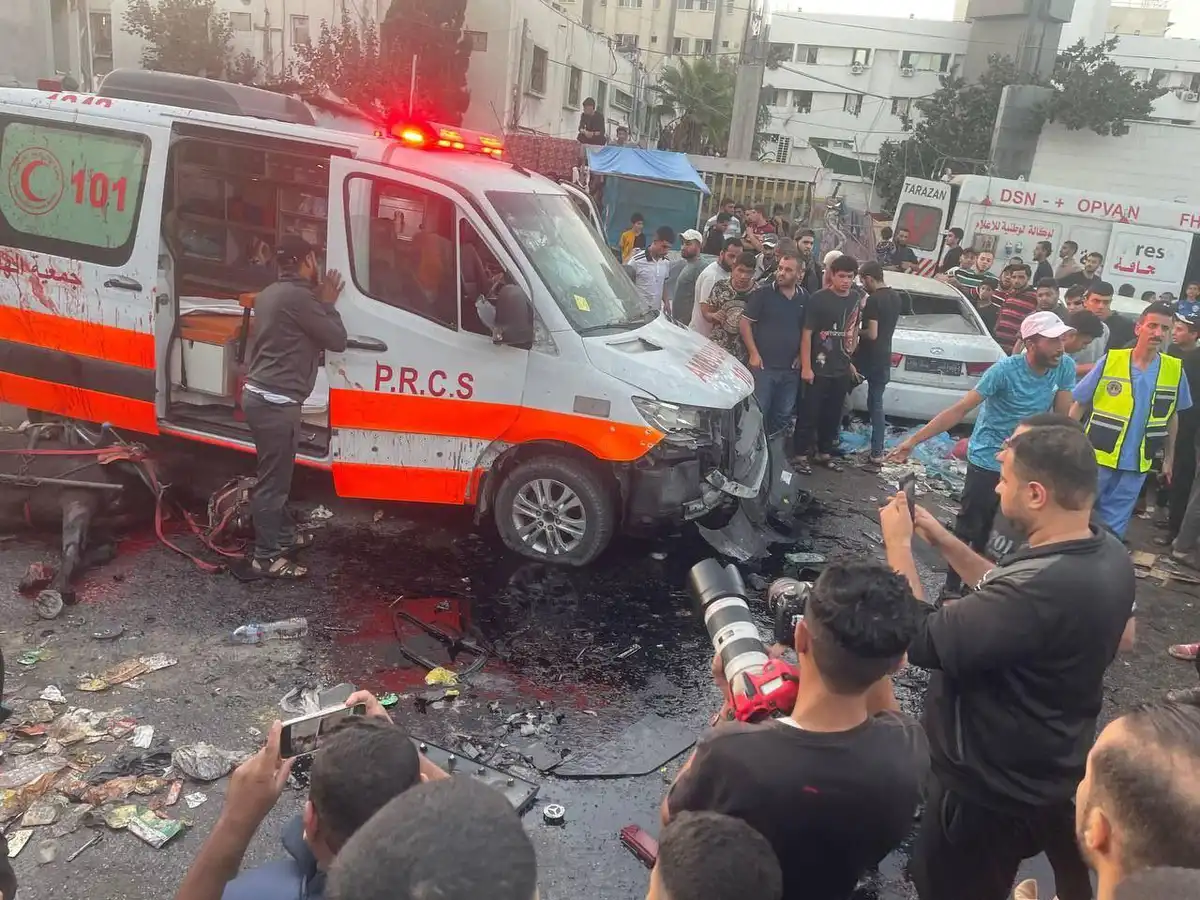
The Gaza war is on its 28th day The occupation bombed ambulances near Al-Shifa Complex

This massacre comes in light of the occupation's demand, more than once, of the residents of the northern Gaza Strip to leave towards the south, while the gatherings of displaced people from the south were subjected to repeated brutal bombardment, killing hundreds.


The Ministry of Health said that the occupation aircraft committed 16 massacres during the past hours, claiming the lives of 196 martyrs, which brings the number of massacres committed since the beginning of the war to 997 massacres.


She added that the toll of martyrs of the aggression reached 9,257 martyrs, including 3,826 children and 2,405 women, and 23,516 wounded.


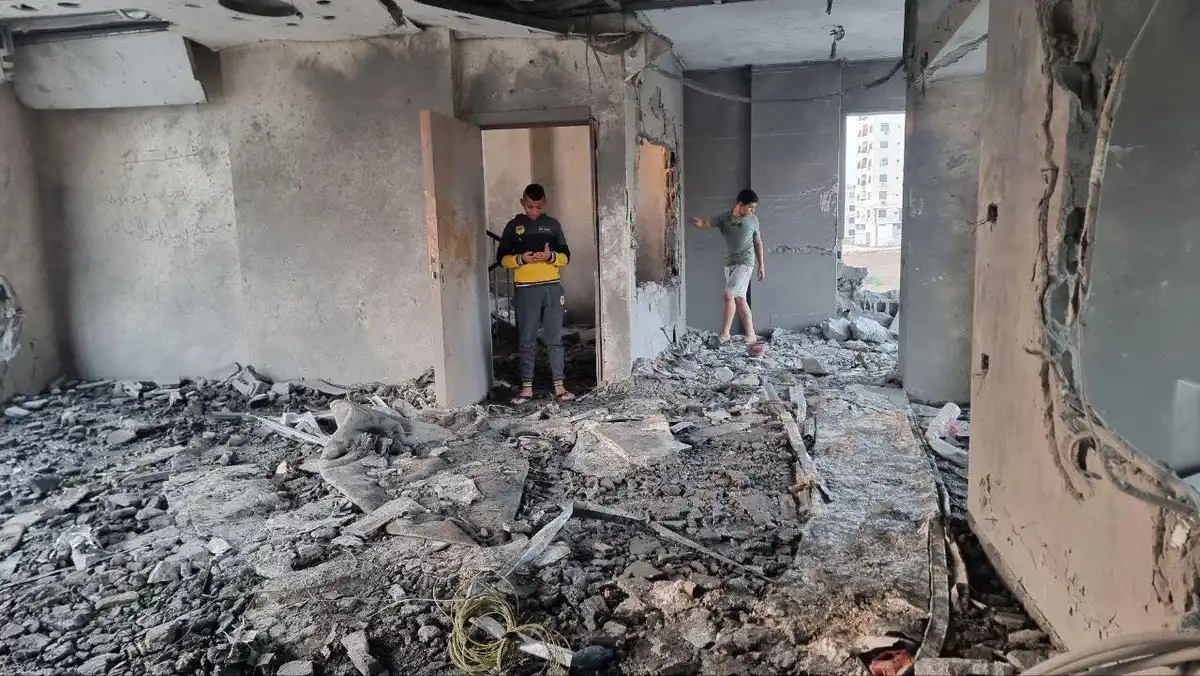
For nearly a month, the occupation has continued to cut off water, food, fuel, and electricity from Gazans, which has led the Strip to reach a stage close to famine in light of an unprecedented health deterioration.

ARAB AND WORLD

Fri 03 Nov 2023 4:45 pm - Jerusalem Time

CNN: Washington warned Israel of the erosion of support and the approaching turning point

The American CNN website reported that President Joe Biden and his senior advisors warned Israel that it would become difficult for it to achieve its “military goals” in Gaza as global anger over the targeting of civilians intensifies.


The website added in its report that Secretary of Defense Lloyd Austin and Secretary of State Anthony Blinken stressed this point during their conversation with the Israelis, assuring them that the “erosion of support” would have dire strategic consequences for Israel.


According to CNN, officials - behind the scenes - believe that the time available for Israel to try to achieve its goal of eliminating Hamas is “very limited” before reaching the “tipping point” with growing global discontent over the continuing human suffering in Gaza.


American recognition

The website adds, quoting American sources, that there is recognition within the US administration that this “tipping point” may come quickly, and the US government’s refusal to publicly call for a ceasefire will become “untenable.”


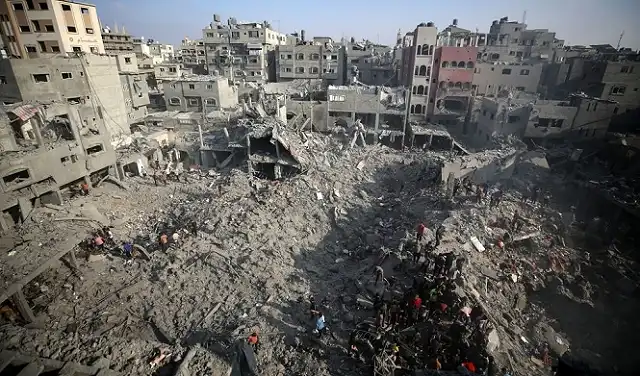
CNN quoted "informed sources" as saying that Biden and members of the national security team were "particularly upset" by the Israeli air attacks that targeted a refugee camp in northern Gaza (Jabalia camp), causing widespread destruction and deaths, which is " "What the president didn't like at all."


A senior US administration official said, "The problem now for Israel is that criticism has become stronger, not only from its critics, but within its circle of best friends."


Pressure

According to CNN, Biden “did not set any red lines before Israel,” and so far he has avoided publicly calling for a ceasefire, claiming that this will only help Hamas.


He added that Biden warned Israeli Prime Minister Benjamin Netanyahu that the international community would “ruthlessly judge” Israel if it did not take steps to “alleviate human suffering and reduce the death rate among Palestinians.” He also expressed his concern about “the escalation of violence by settlers in the West Bank.” He called for their attacks to stop.


The website continued that the limited ceasefire to remove the hostages and maintain the operation of the communication network and the Internet in the Strip in exchange for allowing limited aid to enter Gaza were among the matters that the American administration pressured Israel - and still is - to accept.


ARAB AND WORLD

Fri 03 Nov 2023 4:28 pm - Jerusalem Time

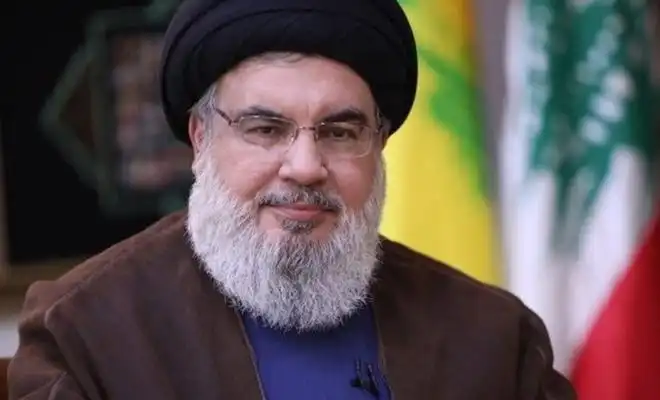
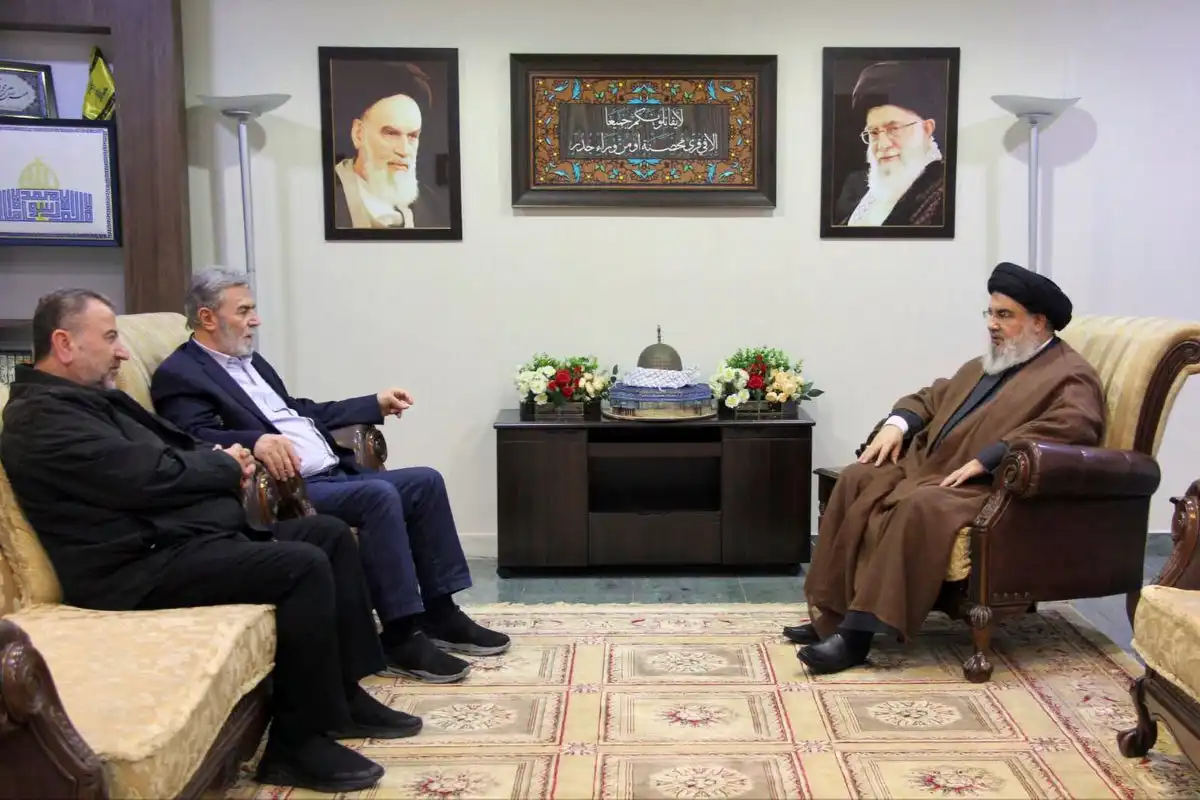
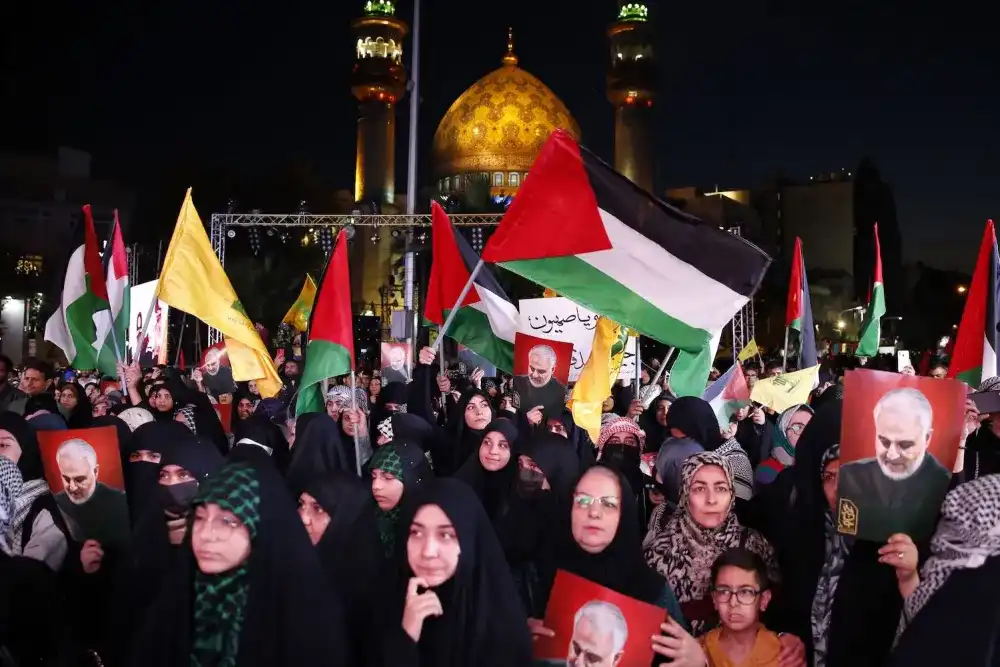
Nasrallah: The “Al-Aqsa Flood” battle has nothing to do with regional files... All possibilities on our front are open


Nasrallah stated that “the Al-Aqsa Flood Operation was 100 percent Palestinian in decision and implementation,” adding that “the Al-Aqsa Operation had strategic results that will leave its effects on the present and future of this entity.”


The Secretary-General of the Lebanese Hezbollah, Hassan Nasrallah, said today, Friday, November 3, 2023, that the battle of the Al-Aqsa flood has become extended on more than one front, and more than one arena.


Nasrallah added in his speech: “The Al-Aqsa Flood operation was decided and implemented 100 percent Palestinian,” noting that absolute secrecy was what ensured the brilliant success of the October 7 operation through the factor of surprise.


The following are the most prominent statements of Hassan Nasrallah:


- Many dangers threaten the West Bank in light of new settlement projects - More than two million people have been living for 20 years in a stifling siege in Gaza without anyone doing anything - The Palestinian issue and all related files were forgotten and at the forefront of the world’s concerns - What happened in Gaza It was necessary to re-present the Palestinian issue as the first issue in the world - Operation Al-Aqsa Flood was decided and implemented 100 percent Palestinian - absolute secrecy was what ensured the brilliant success of the October 7 operation through the factor of surprise.


- Concealing the October 7 operation has absolutely no effect on any of the other resistance fronts - The performance of the Hamas movement proved and confirmed the absolute Palestinian identity of the Al-Aqsa Flood operation - The Al-Aqsa Flood battle, through its Palestinian decision, proves that it is completely Palestinian.


- The decision made by the resistance movements is made by the leaders of the resistance movements, and Iran adopts, supports and assists.


- The Al-Aqsa flood is an entirely Palestinian battle and has nothing to do with any regional file.


- Everyone must understand that the real decision makers are the leaders of the resistance and the owners of the issue.


- Iran does not exercise any kind of guardianship over resistance movements in the region.


The Al-Aqsa Flood Battle caused a security, military, psychological and moral earthquake in the Israeli entity.


- The Al-Aqsa operation had strategic results that will leave their effects on the present and future of this entity.


- What the enemy government did will not be able to change the repercussions of the Al-Aqsa Flood Battle on the future of Israel.


- The Al-Aqsa flood revealed the weakness, weakness, and frailty of the entity, and that Israel is weaker than a spider’s web.


- Israelis have come to believe more than others that Israel is weaker than a spider’s web.


The American speed in embracing, supporting, and supporting Israel revealed the weakness and failure of this entity.


- Israel has asked America for weapons and money since the first day of the Al-Aqsa Flood Battle.


From the first day of the battle, the enemy government needed the Mediterranean and Red Seas for military support.


The sacrifices in Gaza established a new historical stage in the fate of the Palestinian people and the fate of the region and its peoples.


It was clear from the first hours of the Al-Aqsa Flood Battle that the enemy was lost and lost.


- When the occupation forces went to retake the settlements, they were the ones who committed massacres against the settlers.


- The world will discover that most of those who say they were civilians killed by Hamas were killed by the Israeli army.


One of the most important mistakes of the enemy government is setting high goals that it cannot achieve, such as eliminating Hamas.


- The enemy previously announced in 2006 that its goal was to eliminate #Hezbollah, which was not achieved.


- What is happening in Gaza reveals the stupidity, foolishness and impotence of the Israelis.


- There is no sanctity for anything, neither blood nor any institution in Gaza, and the occupation is destroying entire neighborhoods in front of the world.


- For an entire month, the enemy army was unable to achieve a single achievement in Gaza.


- The enemy was unable to provide a single military achievement after a month of the battle in Gaza.


- The enemy army has mastered nothing but hesitation, fear, weakness, and committing massacres for 75 years.


- The enemy was unable to achieve a result through the killing and massacres in Gaza.


- Everything that is happening in Gaza once again reveals the brutal nature of this usurping entity.


We tell the enemy that the end of the battle will be the victory of Gaza.


- The peoples of the region in #Egypt, Syria, Jordan, and Lebanon, the first of whom are the Palestinian people, were burned by the fire of Israel.


- The martyrs of Gaza reveal and drop all the false masks that deceive our people to push them towards normalization.


- 30 days of Gaza being crushed in front of the international community and the countries of the world without anyone doing anything.


We must know that America is entirely responsible for what is happening in Gaza and Israel is merely an executive tool.


America must be held accountable for its crimes and massacres against peoples.


- The United States is primarily responsible for what is happening in Gaza and is the one preventing the aggression from stopping.


- American bases in Iraq and Syria are being exposed to attacks by the resistance, and this is a wise and courageous decision.


It is the duty of every free and honorable person in the world to clarify these facts in the battle of public opinion.


- World public opinion began to turn against the tyrants.


Today, defending the people of Gaza is a requirement of human humanity.


The entity was established in 1948 when the world abandoned the Palestinian people.


- What is happening in Gaza is not a war like other previous wars, but rather a decisive, historical battle.


- Before the war in Gaza is not the same as after it.


The first goal that must be worked towards day and night is to stop the war and aggression against the Gaza Strip.


The goals of the war are to stop the aggression, for the resistance to be victorious, and for Hamas to be victorious in Gaza.


Victory in Gaza means victory for the Palestinian people, Jerusalem, Al-Aqsa, the West Bank, and the prisoners.


The victory in Gaza is a victory for all countries in the region and an Egyptian, Jordanian, Syrian and Lebanese national interest.


- The enemy threatens Lebanon and the people of Lebanon, even though they are drowning in the sands of Gaza.


The victory in Gaza is a victory for the Palestinian people and the peoples of the region, especially the neighboring countries.


- Arab and Islamic countries and governments must make every effort to stop the aggression against Gaza.


- Arab and Islamic countries and governments must cut ties and stop oil and gas going to Israel.


- The Islamic Resistance in #Iraq has begun to assume its responsibility and announced that it may enter a new phase.


- Yemeni missiles and marches will reach Eilat and Israeli military bases.


We have been in the battle since October 8th.


- If we look at what is happening on the border objectively, we will find it very important and significant.


- What is happening on our Lebanese front is unprecedented in the history of the Israeli entity.


- What is happening on the Israeli border will not be limited in any case.


- What is happening on our Lebanese front did not happen even in the July War.


- Our operations on the border target enemy vehicles, soldiers and equipment.


The Islamic Resistance in Lebanon has been waging a battle since October, and it is different from previous battles.


- Approximately 57 martyrs, including the Phalange Brigades, in addition to the martyrs of Al-Qassam and Al-Quds Brigades.


The Lebanese Front reduced a large portion of the forces that were to be used to attack Gaza.


The Lebanese Front was able to attract a third of the Israeli army to the border with Lebanon.


- The enemy’s behavior towards Lebanon is a determinant of our movements, and this will return us to the rule of civilian versus civilian.


- All possibilities on our Lebanese front are open.


- All options are on the table and we can go to them at any given time.


We must all be ready for all possibilities and options.


We received messages that America will bomb #Iran if we continue our operations in the south.


- These threats will not frighten us, and we tell you that we are ready for your fleets that threaten us with them.


- I tell the Americans that those who defeated you in the early 1980s are still alive.


- I tell the Americans that those who defeated you in the early 1980s are still alive.


- I say to the Americans that you can stop the aggression against Gaza because it is your aggression.


- Whoever wants to prevent the expansion of the fronts in the region must stop the aggression against the Gaza Strip.


- I say to the Americans that whoever wants to prevent a regional war must quickly stop the aggression against Gaza.


- Our battle did not reach the stage of victory by knockout, but we won by points.


The battle is a battle of steadfastness, patience, endurance, accumulation of achievements, and preventing the enemy from achieving his goals.


ARAB AND WORLD

Fri 03 Nov 2023 3:32 pm - Jerusalem Time

The Kremlin confirms that Russia will “overcome” the new US sanctions

The Kremlin confirmed on Friday that Russia will "overcome" the new US sanctions that Washington announced the previous day, after Russian companies became able to "adapt" to them, in the twenty-first month of Moscow's attack on Ukraine.

Russian presidential spokesman Dmitry Peskov said that the sanctions "certainly pose certain problems, but we have learned how to overcome them."


He added, "We have adapted to the sanctions, and we have learned to protect ourselves from the risks associated with them," at a time when Moscow is subject to many sanctions starting in 2014 and then starting in 2022.


He pointed out that all major Russian companies “have developed an action plan in case they are exposed to sanctions.”


On Thursday, the United States announced a set of new punitive measures targeting companies that help supply weapons to Russia.


The matter concerns 130 individuals and entities participating in trade exchanges with Russia, to enable the country to obtain “the necessary technologies and equipment” to continue its war in Ukraine.


These sanctions specifically affect about ten companies in Turkey, about twenty companies in the United Arab Emirates, and three companies in China.


Washington also targeted Russian entities and individuals involved in the trade of equipment and technology from abroad, as well as those involved in research and development.


The United States also strengthened existing sanctions on the Russian financial sector by adding seven institutions and the heads of a number of banks to its list.


PALESTINE

Fri 03 Nov 2023 3:17 pm - Jerusalem Time

United Nations: The situation in the West Bank is “worrying” and requires “urgent” action

The violence of the colonists, which had already reached record levels, increased dramatically

The situation in the occupied West Bank is “worrying” and calls for “urgent” action, the United Nations High Commissioner for Human Rights said, while stressing the violence committed by settlers against Palestinians.


High Commission spokeswoman Elizabeth Throssell explained, during a regular briefing in Geneva, that the situation in the occupied West Bank, including East Jerusalem, is “worrying and calls for urgent action in light of the continuing increasing violations.”


Today, Friday, 11 citizens in the West Bank were martyred, which raises the death toll since the seventh of last October to 145, and since the beginning of this year to 353 martyrs.


"The violence of the colonists, which had already reached record levels, has also increased significantly, reaching an average of seven attacks per day, and more than a third of them using firearms," Throssell said.


She stressed that the colonists often wear military uniforms and are often accompanied by members of the occupation forces, and that they act "with almost complete impunity."


She pointed out that entire Palestinian communities are being forced to leave their lands due to these acts of violence, considering that this “may amount to a forced transfer of the population in serious violation” of the Geneva Convention.


She continued, "During repeated incidents, the colonists issued warnings to Palestinian communities to leave their homes on pain of death," noting that the occupation forces "only arrested two colonists for attacking Palestinians and killing a Palestinian."


The Commission for Human Rights reported that the occupation forces arrested about two thousand Palestinians, while “credible and consistent information indicates a new increase in cases of ill-treatment of detainees, which in many cases may amount to torture.”


Two citizens were martyred inside the occupation prisons. The occupation forces had arrested them in the West Bank since October 7.


US State Department spokesman Matthew Miller said last Wednesday that settler violence in the West Bank is "deeply destabilizing. This is unacceptable. It must stop and those responsible must be held accountable."


ARAB AND WORLD

Fri 03 Nov 2023 2:27 pm - Jerusalem Time

Israel awaits Nasrallah’s speech: “If he wanted war, he would have entered it”

Estimates in the Israeli security apparatus are that Nasrallah will be the one who will make the decision regarding the war, after consultations with Iran, and that “Nasrallah fears that the scenes in Gaza will be repeated in Beirut, and he is deterred by the American forces that arrived in the region.”


Israel is awaiting the speech of Hezbollah Secretary General Hassan Nasrallah today, Friday, and is trying to anticipate his position on the war on Gaza and whether Hezbollah will join the war on a large scale.


The belief in the Israeli security apparatus, according to the newspaper "Haaretz", is that Nasrallah is the one who will make the final decision regarding the war with Israel, after consultations with Iran, which views Nasrallah as an expert in Israeli policies, and that "Tehran listens to his advice."


Israel believes that Nasrallah's dilemma is intensified by the picture of the situation on the Lebanese border. “In the first two weeks of the war, its fighters succeeded in targeting Israeli tanks along the border. After that, the Israeli army’s defensive performance improved, and its offensive response was focused. With the help of intelligence capabilities and fire bombardment (air and artillery), a number of cells were intensively targeted, which fired anti-armor shells and rockets. mortar" and suffered casualties of dozens of fighters, according to the newspaper.


The newspaper "Israel Hayom" reported, "The prevailing opinion in the security apparatus is that if Nasrallah wanted war with Israel, he would have entered it. Estimates are that Nasrallah fears that the scenes in Gaza will be repeated in Beirut, and he is deterred by the American forces that are... "I arrived in the area."


It added, "Despite this, and following the lessons of October 7, Israel is preparing according to Hezbollah's capabilities and not according to its intentions. Therefore, the Israeli army has greatly strengthened its forces along the border, and the Air Force is in a very high state of readiness and alert to confront possible developments in the north."


In anticipation of the expansion of the Gaza war: a large American and Western military deployment in the region

While the Houthis in Yemen opened a partial front against Israel, launching ballistic missiles and explosive drones, all of which Israel has so far intercepted, they are wondering in Israel whether the war on Gaza will expand into a regional war.


According to the Israeli media, an analysis of the considerations of the parties to the war seems to indicate that Iran and Hezbollah are wary, also due to the large American military presence in the region and the threats made by US President Joe Biden to Iran. Despite this, the bet remains high against the backdrop of the possibility of a greater escalation in the war on Gaza, which is already destroyed and afflicted.

PALESTINE

Fri 03 Nov 2023 2:21 pm - Jerusalem Time

Blinken requests a “temporary ceasefire” and Netanyahu agrees to a truce for a few hours

An Israeli political official: “Israel may agree to stop attacks for several hours.” The Biden administration warns the Israeli government that its “time is limited” to weeks, not months, in the war on Gaza and in trying to achieve the goals it announced.


Israeli Prime Minister Benjamin Netanyahu met with US Secretary of State Anthony Blinken, who arrived in Israel this morning, Friday, for the third time during the war on Gaza. Netanyahu and Blinken discussed an American request for a “temporary ceasefire” and the transfer of humanitarian aid to the Gaza Strip, and in parallel, an attempt to free Israeli prisoners in Gaza through the mediation of Arab countries. The families of the Israeli prisoners demonstrated in front of the headquarters of the Ministry of Security.


The Israeli public broadcaster, Kan, stated that Netanyahu is "inclined to respond" to the American request, and quoted an Israeli political official as saying that "Israel may agree to stop the attacks for several hours." Kan indicated that Blinken will participate in a meeting of the Israeli "war cabinet", and will meet with the Israeli President, Isaac Herzog, and the opposition leader, Yair Lapid. Sources in Netanyahu's office said that at the conclusion of Netanyahu's meeting with Blinken, the entry of fuel into the Gaza Strip was not approved.


Meanwhile, CNN reported. In recent days, US President Joe Biden and his senior advisors warned Israel that its “time is limited” to weeks, not months, in the war on Gaza and in trying to achieve the goals it announced, by eliminating the Hamas movement and its rule, before it demands a ceasefire. The report added that over time, achieving Israel's goals becomes more difficult due to the growing global outcry over the humanitarian catastrophe in the Gaza Strip.


The Haaretz newspaper website stated that it is expected that Blinken will ask during his meeting with Netanyahu about Israel's strategy for exiting the war. The newspaper reported, the day before yesterday, that the Biden administration is considering transferring control of the Gaza Strip at the end of the war to the Palestinian Authority, with the support of a coalition of Arab countries.


However, Blinken said before the US Senate that the success of such a plan is not certain. The Israeli government opposes such a plan, and Netanyahu's office issued a very brief statement saying, "The Prime Minister is not concerned about this issue."


Blinken wrote in his account on the “X” platform, “On my way to Tel Aviv for more diplomacy during a very difficult period. We will continue to work with regional leaders to protect civilians and prevent the spread of the conflict. We remain focused on the two-state solution and achieving broader peace and security in the region.” .


Despite the unlimited military and political support that the Biden administration provided to Israel during the war on Gaza, the administration has expressed its concern since the beginning of the war that Israel does not have a strategy regarding ending the war and withdrawing from the Gaza Strip.


The Biden administration expressed its concern about the escalation of settler terrorism against Palestinians in the West Bank, and the announcement by the Israeli Finance Minister, Bezalel Smotrich, of his refusal to transfer Palestinian financial dues, that is, the taxes and customs that Israel collects from the Palestinians, for the benefit of the Palestinian Authority. As a result, the Israeli Cabinet for Political and Security Affairs decided yesterday to transfer most of these dues. National Security Minister Itamar Ben Gvir opposed the resolution, while Smotrich abstained from voting.


OPINIONS

Fri 03 Nov 2023 2:12 pm - Jerusalem Time

The West bank must be prevented from igniting

Haaretz

Haaretz

Opinion Writer

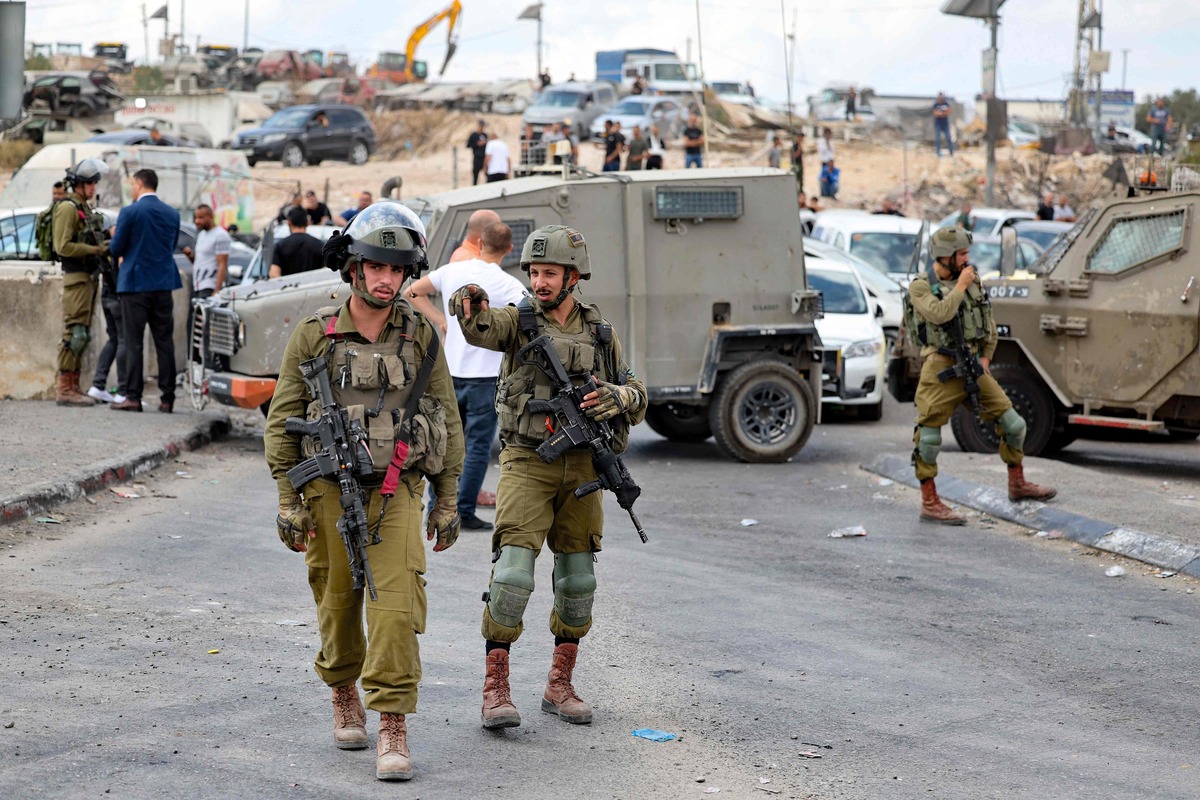
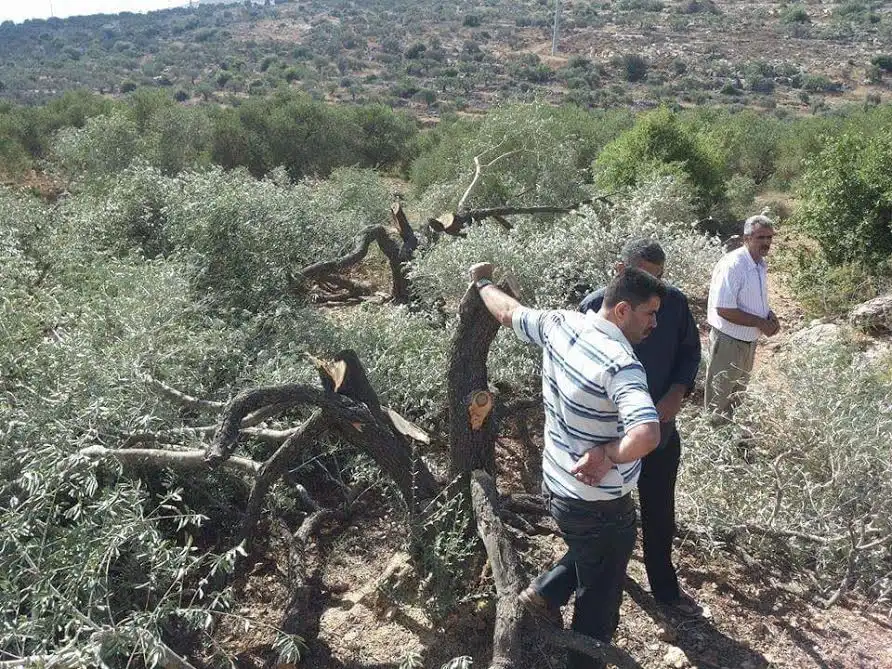
As the Israeli army expands the ground operation in Gaza, pushes back Hezbollah attacks in the north, and intercepts missiles launched by the Houthis from over Eilat, it turns out that there are Israelis who want to add another arena to the battle. Security officials closely follow what is happening in the West Bank, observing a planned effort by settlers to seize land and expel Palestinians (for example from the Susya area, south of Mount Hebron), and spread panic and fear, by uprooting hundreds of olive trees, burning property, beatings, and shooting... Fire (Amos Harel, Haaretz, 11/1/2023).


At a time when Israel's allies around the world are mobilizing and standing by its side, and the United States is sending aircraft carriers and arming Israel, in an attempt to prevent a complete conflagration, and to deter hostile parties in the region from attacking Israel, led by Iran; At a time when the entire Western world is trying to act responsibly to curb the deterioration into a regional war; Extremist parties operate in Israel in a way that could lead to war. The government does not restrain them, but rather pampers them with hundreds of millions of shekels - money that the government intends to transfer to Settlement Minister Orit Struck, which will be transferred to the Settlement and Settlements Unit.

Settlers take advantage of the war to establish new settlement outposts, build roads for the settlements and connect them to the relatively new outposts and pastoral farms. Part of these roads is being built by the Israeli army.

Responsible leadership would have ordered the army to immediately stop these actions, and to remove from the territories those trying to push Israel into an additional war, with all that this would mean in terms of diversion of resources and forces. But the word responsibility seems strange to this government composed of extremists. When the minister responsible for the Civil Administration, Bezalel Smotrich, is a settler and an apartheid, it is not surprising that the Civil Administration does not provide adequate reports on what is happening.

Any prime minister committed to the integrity of the State of Israel would have expelled the Kahanists and Messianic apartheid from his government, such as Smotrich, Itamar Ben Gvir and their companions, and made clear to the settlers that Israel would not tolerate them. But Benjamin Netanyahu's government chose to do the opposite, and yesterday appointed Knesset member Nesvi Skukhot, from the "Religious Zionism" party, as head of the subcommittee of the Security and Defense Committee, which is concerned with West Bank affairs. This is like appointing an arsonist as head of the fire department.

If the government does not immediately respond forcefully to the actions of settlers in the territories, it will have witnessed another catastrophe that will be added to its list of shortcomings.

OPINIONS

Fri 03 Nov 2023 1:26 pm - Jerusalem Time

Opinion| The Israel-Hamas war is a historic opportunity for breakthrough

Middle East Policy Council

Middle East Policy Council

Opinion Writer

Alon Ben-Meir


During more than four decades of occupation, Israeli-Palestinian relations have been replete with intense violence, mutual recrimination and revenge, bringing the two sides on more than one occasion close to the brink of all-out war. Oddly enough, these years have also been characterized by the transformation of the conflict whereby both sides have edged ever so slowly toward accommodation. 

But 40 years of occupation and its accompanying violence have created psychological and emotional hang-ups that continue to haunt both sides and hamper major progress on key security and territorial issues that each deems critical to finalizing an agreement. Moreover, while there is clear evidence that the vision of a two-state solution is gaining greater currency, entrenched extremist groups such as Hamas and radical settlers still continue to seek all of Palestine or greater Israel, respectively.

The recent war in Gaza between Israel and Hamas has made the issue of dealing seriously with violence and retribution more pressing than ever. Operation Cast Lead, provoked by Hamas’s endless rocket fire on Israel, resulted in the deaths of over 1,000 Palestinians, a majority of whom were civilians. If the new U.S. leadership — under the guidance of Middle East envoy George Mitchell — does not deal hastily and directly with the issue of violence, the next war could just as well generate another dismal outcome. If the war on Hamas has produced anything, it is a window of opportunity for Israel, its Arab neighbors and its international allies to confront directly the sources of violence and bring an end to the occupation while Israel still has neighbors willing to cooperate.

Nothing can justify a humiliating occupation in the minds of the Palestinians, and all moral arguments against occupation are readily dismissed in the face of existential threats in the minds of the Israelis. Even a cursory review of the occupation from the Israeli vantage point indicates that for many Israelis, and especially the religiously committed settlers, the occupation of the West Bank is a biblical fulfillment that no government has the right to alter and no resistance, however violent, can change. The settlements and their expansion during the 1970s and 1980s became central to government policy in the territories, and the settler movement developed a strong political constituency represented in all Israeli coalition governments. Successive Israeli governments have provided financial means and protection to the settlers with near total disregard for the profound impact on Israeli-Palestinian relations. As a result, any Israeli peace overture under these circumstances has been viewed by the Arab states as an empty slogan and a cynical attempt to sway public opinion. 

Contrary to the facts on the ground, as the occupation becomes less and less tenable, Israeli governments continue to justify it as indispensable to national security in an effort to justify further entrenchment.

Most Palestinians see the land on which they have lived for centuries as theirs, and no ruler or government can compromise this inherent right. From their perspective, regardless of what precipitated the Israeli occupation, Palestine is an Arab patrimony; thus, their right to the land is not only historical, but real and inalienable. Although the occupation may have needlessly been perpetuated by the Arab states and Palestinian leaders, who rejected Israel’s initial offer to exchange all the territories for peace immediately after the 1967 war, the occupation nonetheless has become central to Arab discourse. 

Everything from national dignity to daily struggle and physical survival are linked to the recovery of the land. More than seven out of 10 Palestinians have been born under occupation, creating two generations of Palestinians bent on ending it at whatever cost. Violent resistance to the occupation is only natural. As former Israeli president Moshe Katzav once said, regardless of who is right or wrong, the occupied have every right to resist. As a consequence, resistance to the occupation has created a vicious cycle of retaliation causing even more pain and suffering to the Palestinian community. The deplorable condition of the Palestinians languishing in refugee camps provided the environment for the birth of radical Islamist groups, including the creation in 1977 of the Islamic Resistance Movement (Hamas). Over time, Hamas has begun to mobilize its followers to rally violently against the occupation, linking national redemption to the liberation of the land.

While violent resistance to the occupation has further deepened the settlers’ resolve to fight back, both Israeli and Palestinian radicals see salvation in denying the existence of the other. Absorbed by illusions and false prophesies, these radicals still believe they can defy what history, political reality and changing circumstances have finally formulated. 


Trust hardly exists, and horrifying scenarios are constantly drawn about the other’s ultimate intentions, reinforcing the instinct to fight. The bloody conflict has hardly spared a single family the anguish and pain associated with the loss of a loved one or friend. The injuries and losses are more than physical. Every funeral procession for the many thousands who have died on both sides has engendered new vows of revenge, calls for reprisal and ever more painful retribution. 

A cycle of violence has become the natural order, consuming two generations of youth whose hopes and dreams are lost in a political abyss. The wanton killings, suicide bombings and sweeping retaliations throughout the second Intifada, following the collapse of the Camp David negotiations in the summer of 2000, have stripped away the last semblance of civility, leaving both sides scrambling for answers to one daunting question: Where do we go from here, when all roads seem to point to the precipice? After six agonizing years, the answer has gradually become clear to a majority of Israelis and Palestinians who believe that neither side can improve its position through the continuation of the conflict. 

There is no alternative but coexistence. Many Israelis admit that, after 40 years of occupation, neither territory nor military power has offered Israel the peace it yearns for, and the country is still facing the same three grim choices. First, the expulsion of Palestinians, which some Israeli radicals have advocated, has been largely rejected on moral grounds and for fear of international condemnation and potentially unimaginable consequences. Second, maintaining the occupation is clearly unsustainable because of the raging violence and the continuation of the state of war with the Arab world. Lastly, annexing the territories has presented Israel with two unacceptable choices: either to deny the Palestinians equal political rights and thereby render Israel an apartheid state, or to grant them equal rights and thereby lose the Jewish national identity of the state almost overnight. 

The second Intifada provided the Israelis a rude awakening and made the remaining option of a two-state solution the only sane choice. A majority of Palestinians, too, have gone through serious reflection and come to accept that the second Intifada was a tragic mistake, as Israel decimated the Palestinian security forces and left their infrastructure in ruins. The violent resistance to Israel’s existence has left most Palestinians despairing, with no prospect for better life. Today, the Israelis and Palestinians are between the mindset and the desire to reconcile. This is what the Obama administration will face as it embarks on its daunting Middle East mission.


The Changing Dynamic

Four dramatic developments have taken shape during the past several years that have changed both the conditions on the ground and the regional geopolitical environment. Those changes appear to have had profound influence on both the Israeli and Palestinian disposition, making the need for mutual accommodation based on a two-state solution central to their strategies.


First, most Israelis have finally come to the conclusion that occupation is not sustainable, if for no reason other than demographic reality. It took more than 35 years for prime minister and Likud party leader Ariel Sharon to concede that the number of Palestinians living in Israel proper, plus those living in the West Bank and Gaza, is already equal to, if not exceeding, the number of Israeli Jews living in Israel. This factor, in and of itself, forced the Israelis to conclude that, in order to prevent the erosion of a Jewish majority in Israel, the two-state solution remains the only viable way to insure the Jewish national identity of the state. Against the objection of many members of the Likud party, Sharon, as part of his plan to end the occupation, withdrew all Israeli settlers and military installations from Gaza. The rift with Likud forced Sharon a few months later, in 2005, to form the Kadima (forward) party. Central to the platform of the new party was Israeli unilateral withdrawal from the vast majority of Palestinian territories. The fact that Sharon, the father of the settlement movements, came to this conclusion represents a sea change in Israeli thinking and has set in motion a process that will continue, regardless of who leads the new Israeli government. Subsequent to the Israeli withdrawal from Gaza, Hamas used the territory as a staging ground for attacks against Israel. While this discredited the premise of unilateral withdrawal, it did not alter the principle of ending the occupation and establishing two states. Israel simply miscalculated Hamas’ strength and popularity in Gaza and the friction between the Palestinian Authority (PA), led by Mahmoud Abbas, and Hamas. The fact that Hamas is currently in control of Gaza did not stop the Israelis from continuing peace negotiations with the PA.


Second, after decades of violent resistance that has claimed the lives of thousands and left much of the Palestinian community in despair, a majority of Palestinians have reached the point of exhaustion. In fact, the actual political rapprochement between Israel and the Palestinians began as early as 1988, during the waning days of the Reagan administration. At that time, the late prime minister of Israel, Yitzhak Rabin, recognized the PLO under the chairmanship of Yasser Arafat as the sole representative of the Palestinian people. 

In return, Arafat recognized Israel’s right to exist, renounced terrorism and pledged to reach a peaceful solution through negotiations. The 1992 Madrid peace conference further promoted the concept of a two-state solution, and it was followed in 1993 with the Oslo accords. Although intermittent and often intense violence continued to blur the vision of the ultimate solution, even among extremist Palestinians the number of those who believed in Israel’s destruction has diminished substantially. A solid majority of Palestinians have concluded that Israel cannot be defeated militarily in the foreseeable future, and they must now find a way to live side by side with it.


Third, the Arab states, too, have come to the same conclusion. Peace with Israel is now viewed as a strategic option, especially in the wake of the Iraq War and reinforced by the Gaza war and Iran’s regional ambitions. The Arab League passed a historic resolution known as the Arab Peace Initiative in Beirut, Lebanon, in March 2002 and reintroduced it in Riyadh, Saudi Arabia, in March 2007, calling on Israel to return the territories captured in the 1967 War in exchange for a comprehensive peace with all 22 Arab states. Its significance is better understood by comparison with the Arab League resolution toward Israel adopted in 1967 in Khartoum, Sudan, which declared a policy of no peace, no recognition and no negotiation. Moreover, the fact that this initiative is Arab in origin and represents the collective Arab will embodies a major departure from past policies toward Israel. Although provisions affirming the Palestinian refugees’ right of return and designating East Jerusalem as the capital of a future Palestinian state prevented Israel from fully embracing it, the initiative remains far-reaching in its implications. It signaled to all Arab and Muslim extremists that the Arab-Israeli conflict is no longer an ideological or religious conflict but political and territorial in nature, and that it can, and must, be peacefully settled.


Fourth, the prospect of the Obama administration offers another momentous opportunity to change the geopolitical dynamics of the Middle East in a way that can accelerate regional peacemaking. As the United States turns to repair its reputation and its dangerously low esteem in the region, it must first make a determined effort to solve the Israeli-Palestinian conflict. Unlike the Bush administration, which largely left the Israelis and Palestinians to their own devices, the Obama team seems to be fully cognizant of the need for the United States to insert itself immediately into the peace process as George Mitchell is already preparing his second trip to the region. America is the only nation that has the influence with both sides to induce the Israeli and Palestinian concessions necessary for a peace agreement. To that end, there are a number of essential strategic steps and requirements that the United States must pursue simultaneously. 


A New Strategy

Unlike Presidents Clinton and Bush, who plunged into Israeli-Palestinian peacemaking only during the final years of their administrations, President Obama should tackle this conflict head-on during his first few months in office. Although no major breakthrough was achieved by the two previous administrations, significant progress on a peace framework based on a two-state solution has nevertheless occurred. 

The existence of Israeli and Palestinian rejectionist elements hard at work to undermine the peace process makes it doubly urgent not to allow a vacuum in the negotiations. Whether it is the Clinton-Barak parameters or the Road-map, the Obama administration is inheriting a clear way forward that can be pieced together, provided a determined effort is made and momentum is maintained. To succeed, the United States must become actively and directly involved and remain relentless in the pursuit of an agreement both Israelis and Palestinians can accept and build upon.


Appointing a Permanent Envoy

The one element that has constantly been missing in past U.S. mediation between Israel and the Arab states is the permanent presence of a Middle East envoy with the president’s confidence and a wide mandate to facilitate agreements. More than a dozen envoys or emissaries traveled to the Middle East during the Bush administration alone, including General Anthony Zinni, General James Jones, George Mitchell, George Tenet and William Burns as well as the secretaries of state. Yet none stayed long enough or remained sufficiently engaged and resilient to achieve a breakthrough.

President Obama’s appointment of George Mitchell, a trusted envoy with access and leverage, is a positive indicator for progress in this direction. His work in brokering the Good Friday Agreement proves he is a tough negotiator and a strong advocate of direct diplomacy. His 2001 report on the Israeli-Palestinian crisis ensures that he has the background and objectivity to take on such a task. It will require deep understanding of the region’s history and the roots of the conflict and an appreciation of the religious convictions and cultural orientations of the people involved. The envoy must be sensitive and fully cognizant of the idiosyncrasies of the conflicting parties and their psychological state after 60 years of violent conflict. Moreover, the envoy must be clear about the concessions that have to be made by both sides and demonstrate an iron will to follow through. 

Both the caliber and experience of the envoy will be significant in this case, as this person must carry out tough policymaking decisions. He should be accompanied by experienced and knowledgeable deputies who speak the local languages and are sensitive to the emotional divide. Both Israelis and Palestinians need direct and persistent American involvement and pressure to justify to their own publics the concessions they have to make to achieve a just peace.


Applying Tough Love with Israel


Although the U.S. commitment to Israel’s national security must remain unshakable, the Obama administration must be firm with Israel in addressing the conflict with the Palestinians. Blanket support of Israel by successive administrations, failing to push against the building and expansion of settlements, has done more harm to Israel than good. While Israel is a fellow democracy besieged by enemies, and a majority of Americans sympathize with its struggle, this affinity should be viewed in the context of what is truly in Israel’s best interest. This is not merely a question of evenhandedness in dealing with Israel and the Arab states, as Israel’s military needs and requirements for survival are entirely different from those of other nations in the region. It is a matter, rather, of reconciling Israel’s core requirements for peace with the emerging consensus on a two-state solution without compromising Israel’s national security. In this regard, it will be essential that the Obama administration not only endorse the Arab Peace Initiative but persuade Israel to embrace it as well. This must constitute a point of departure, as the only solution to Israel’s ultimate security lies in peace, not territory.


Prodding Both Sides


The United States should bring necessary pressure to bear on both Israelis and Palestinians to change the nature of their daily encounters and overall relationship. Washington must become very active and push hard to reduce their differences by focusing on building trust and confidence to both these ends. The Obama administration must insist that both sides begin with public diplomacy, which is sorely absent in the current atmosphere. To mobilize public opinion in favor of two states, the public must see, hear and feel the benefit of what might one day be realized. 

Israeli and Palestinian leaders must state and restate openly and unequivocally their commitment to a negotiated settlement under any circumstances. A growing majority in both camps will believe in the inevitability of peace only when their leaders are willing to stake their political futures on peacemaking. Government organs must not only refrain from attacking and condemning each other, they must promote, day in and day out, in print and electronic media, the prospect of coexistence in peace and prosperity. As both sides build the structure of peace, the public will develop a vested interest in the process itself and hold more of a stake in it. 

Moreover, they must learn to deal tactfully with the difficulties that will inevitably arise from acts of wanton or accidental violence by hard-core Hamas adherents or radical settlers. In the end, winning each other’s public opinion remains central to building a solid majority in support of peace. On that score, the United States must be relentless. This may not stop extremist groups from disrupting the calm, but it will substantially strengthen the camp that seeks a peaceful settlement and minimize the chances of another outbreak like the one in Gaza.

To be effective, all public diplomacy must be supported by irreversible confidence-building measures on the ground. This must include substantially reducing the number of road blocks, ending public incitement by the Palestinian media against Israel and enhancing civil relations. This should also include allowing humanitarian aid, medical supplies and building materials to pass through to aid the citizens of Gaza. To rebuild confidence, both sides must make it possible for a greater number of people-to-people interactions on a variety of levels, for example, including allowing an increasing number of Palestinian workers into Israel while Israelis undertake joint sustainable-development projects in the Palestinian territory. 

There will always be certain security risks involved when increasing the number of daily interactions. Such risks, however, must be weighed against the enormous advantages resulting from people-to-people bridge building. Another dramatic gesture that Israel must consider is the release of substantial numbers of Palestinian prisoners, in the range of 5,000 or more, to send a loud message that Israel is bent on reconciliation. Why hold more than 10,000 prisoners at a terrible cost, when all that Israel gets in return is more resentment and mistrust?


The one overriding requirement that would foster a real sense of confidence is an end to all settlement activity until an agreement on the final border has been established. The greatest impediment to a two-state solution is the building and expanding of settlements. 


Israel cannot talk in earnest about peace while continuing its settlement activity, especially around the old city of Jerusalem. To establish real trust in the peace negotiations, Israel must end its expansion of existing settlements, including those that will eventually be incorporated into Israel proper, by mutual agreement with the Palestinians. Since the need to expand some of these settlements to accommodate natural growth could be pressing, the focus in the negotiations must be on the final-status agreement. In order not to prejudice, however, either the Israeli or the Palestinian positions (Israel does not want to concede on the status of these settlements, and the Palestinians want to establish the 1967 border as the point of departure for negotiations on final borders), a time limit for the final-status negotiations will have to be established in advance.

From the Arab perspective the building and expanding of settlements around Jerusalem is intended to prevent the Palestinians from establishing their capital in East Jerusalem. This severely limits any prospect for peace. Most Arab states find it extremely difficult to reach out to Israel or put pressure on Arab extremists when illegal settlements are condoned on a daily basis. Moderate Arab states including Egypt, Saudi Arabia and Jordan, which have been cooperating and have stood up against extremism, are running out of patience. Israel must reach out to those allies by temporarily suspending settlement activity. This may be a small price to pay to maintain their support and keep radical elements at bay. The United States must be clear and unequivocal, as settlement activity has undermined every fragment of confidence-building in the past.


Maintaining Security

The key to maintaining steady progress in negotiations and confidence building is to make every effort to end all forms of violence. The Obama administration must pursue three sets of security arrangements: full cooperation between Israeli and Palestinian security forces, augmentation of the PA security forces, and establishment of an all-Arab peacekeeping force under U.S. auspices.

Cooperation between Israeli and Palestinian security forces is fundamental to any future progress in the peace process. Before Israel can relinquish territory in the West Bank, it must be assured that Israelis will not become targets and that the Palestinian security forces will be relentless in foiling plots of violence against Israelis. Israel must reciprocate by ending targeted killing and the practice of home demolition. 

Full collaboration between the two security forces will send a clear message that Israelis and Palestinians will act decisively in confronting violence. In this regard, Israel must apply and enforce laws against settlers who violate Palestinian rights or safety, a common phenomenon in the recent months. The full cooperation between the two security forces that has been demonstrated aptly in Jenin and Hebron and will be soon in Bethlehem, attests to future possibilities. Trust between the security forces is fundamental to progress on every other level of interaction. It demonstrates more vividly than anything else both sides’ commitment to reduce tension while providing the building blocks for a sustained relationship.

As a part of any future security arrangement, the United States must strengthen the PA security forces by providing the necessary military hardware and facilitating the training of new recruits on a regular basis. Although the United States has done some of this in the past, it will be necessary to augment such a program to ensure that the PA will be in a position to deter and prevail, should violent confrontation with extreme Palestinian elements erupt. 

The prospect of re-establishing a unity government between the PA and Hamas should not alter the principle of keeping moderate Palestinian forces robust. Although the Israelis remain deeply troubled by what happened during the second Intifada, when Palestinian security forces turned their guns against them, the PA has learned its lesson. They know full well that, while they can inflict serious loses, they can be destroyed in the process.

As a part of an overall arrangement, the Obama administration must also negotiate the establishment of an all-Arab peacekeeping force with the leading Arab states. Such a force should be drawn from Arab states including Egypt, Saudi Arabia, Jordan, Morocco and Syria and be stationed in Gaza and the West Bank. The United States may augment such a force by providing elements of command, control and monitoring. Under the best of circumstances, any Israeli-Palestinian peace accord will take a number of years to become entirely secure and would need the strong presence of other Arab states to stabilize it. Yet, other than its symbolic importance, the presence of such a force will have a tremendous effect on public behavior, as it sends a clear message that the entire Arab body stands behind the peace agreement. As a part of the Arab Peace Initiative, it reassures Israel that the Arab states take Israel’s national security seriously and will be prepared to confront any extremist group that attempts to undermine the peace process. Unlike peacekeeping from outside the region, an Arab peacekeeping force will enjoy far greater latitude in dealing with irredentist Islamic groups that are likely to resist, at least initially, any peace agreement with Israel.


Offering Arab Extremists a Choice

Many people will think that groups such as Hamas are irredeemable and that the only language they understand is the iron fist. President Obama stands a uniquely better chance than any of his predecessors to reach out to some of these groups and persuade them to join the Arab moderates and the peace process. Other than the very hard-core Islamists, given the opportunity and the prospect of living with dignity, the majority of extremists are not ideological and would join the Arab center. To be sure, if the Obama administration wants to change the political dynamic, it cannot exclude any player and must insure that everyone has a stake in the process. Hamas and others should be invited to join, but they will have to know that it is they, not Israel, who need recognition. They must also understand that they ultimately have to choose between political existence and marginalization, at best. This is why it is imperative that all Arab states be fully supportive of the Obama strategy and why these radical groups must also know that in any future confrontation with the Palestinian Authority they will be handily defeated.


Embracing the Arab Peace Initiative

The Obama administration must embrace the Arab Peace Initiative, as it offers a comprehensive approach and induces the Arab states to play a direct and active role in the process. Although the Roadmap was a useful instrument and has provided specific steps for both sides to undertake to reach an agreement, it has an inherent limitation: it represents another Western design rather than an indigenous Arab formula that might resonate more favorably in the Arab street. In any event, regardless of its shortcomings, the Roadmap and the Arab Peace Initiative are not mutually exclusive and can work well together to enhance a comprehensive peace plan with both the United States and all 22 Arab states. Embracing this initiative will also send a clear signal to the entire Arab and Muslim world that the United States is fully committed to dealing with the whole range of issues in the Arab-Israeli conflict, while signaling to the Islamic radicals that they must now face the collective Arab will.

It is important to note that Syria is one of the signatories to the Arab Peace Initiative. It can play a constructive role in the search for solutions to many of the conflicts in the region: in Lebanon, the Palestinian territories, Iraq and Iran. Syria is eager to demonstrate that it is worthy of engagement, and the Obama administration should take the initiative to put Damascus to the test. Ending Syria’s isolation may prove to be critical to Obama’s new Middle East strategy. 

The Obama administration’s overture toward Syria is an extremely positive move, and the negotiations between Israel and Syria with direct U.S. involvement must now be put on the fast track. Indeed, considering the complexity of the Israeli-Palestinian conflict, Israeli-Syrian negotiations may prove much easier to conclude. An Israeli-Syrian peace deal would provide numerous implications regarding the larger threat of Iran and will have a direct impact on radical Palestinian groups.


Early commitment of the Obama administration to an Israeli-Palestinian solution must be met by a renewed commitment on the part of the Arab states to translate the Arab Peace Initiative into real measures as well as symbolic gestures to reach out to Israel. In return for embracing the initiative, the United States should insist that many Arab leaders, especially from countries that have no formal relations with Israel, initiate public contact with their Israeli counterpart. Nothing will sway Israeli public opinion in favor of making the concessions for peace more than demonstrative public contact. Despite nearly 30 years of peace between Israel and Egypt, President Mubarak has never set foot in Israel, while his Israeli counterparts have visited Egypt numerous times. Imagine the impact of a visit by King Abdullah of Saudi Arabia to the Muslim holy shrines in Jerusalem and to the Israeli parliament or an interfaith conference in Jerusalem. 


President Obama will be better equipped than any of his predecessors to persuade Arab leaders in the spirit of the Arab Peace Initiative to make such gestures. He has created an aura of sincerity around himself, and Arab leaders are more likely to make gestures toward President Obama if he invests real political capital in the peace process.


The United States is in a position to insist that the process of normalization of relations between Israel and the Arab states not be postponed until the conclusion of Israeli-Palestinian peace. It must also demonstrate that it is prepared to exert similar pressure on Israel to exhibit its commitment to peace by ending all settlement activity. In March 2008, Foreign Minister Tzipi Livni was invited to speak in Doha, Qatar, although Israel and Qatar do not have formal diplomatic relations. That symbolic gesture was most welcome in Israel, precipitating a wave of positive commentary in the Israeli media about the prospect of real peace. The fact that Qatar was very critical of Israel’s war on Hamas and temporarily severed its relations with Israel does not change the fact that these are the kinds of gestures needed to create a momentum toward peace. In the end, the Arab Peace Initiative, historic in its scope and implications, must not be allowed to languish. The Obama administration must make it central to the search for a comprehensive Arab-Israeli peace.


Conclusion


Rarely has the Arab-Israeli conflict faced both the prospect of a major breakthrough and a new violent conflagration at the same time. Only an immediate and active role by the United States can tip the balance in favor of a peace. The main difficulty that has hampered progress in the past is that neither the United States nor the parties to the conflict have been able to ensure sustained progress. The Obama administration must be prepared to engage all players simultaneously with the objective of moving them in concert toward the intended goal. It is an awesome task that requires determined effort as well as a clear vision and leadership. For many obvious reasons, President Obama has a rare opportunity to change the narrative about the prospects for lasting peace in the Middle East. His fresh, untainted outlook and his determination might allow him to achieve a breakthrough in a place where, for too many years, breakdowns have been the norm.


PALESTINE

Fri 03 Nov 2023 1:10 pm - Jerusalem Time

Only 5,500 worshipers performed Friday prayers in Al-Aqsa Mosque

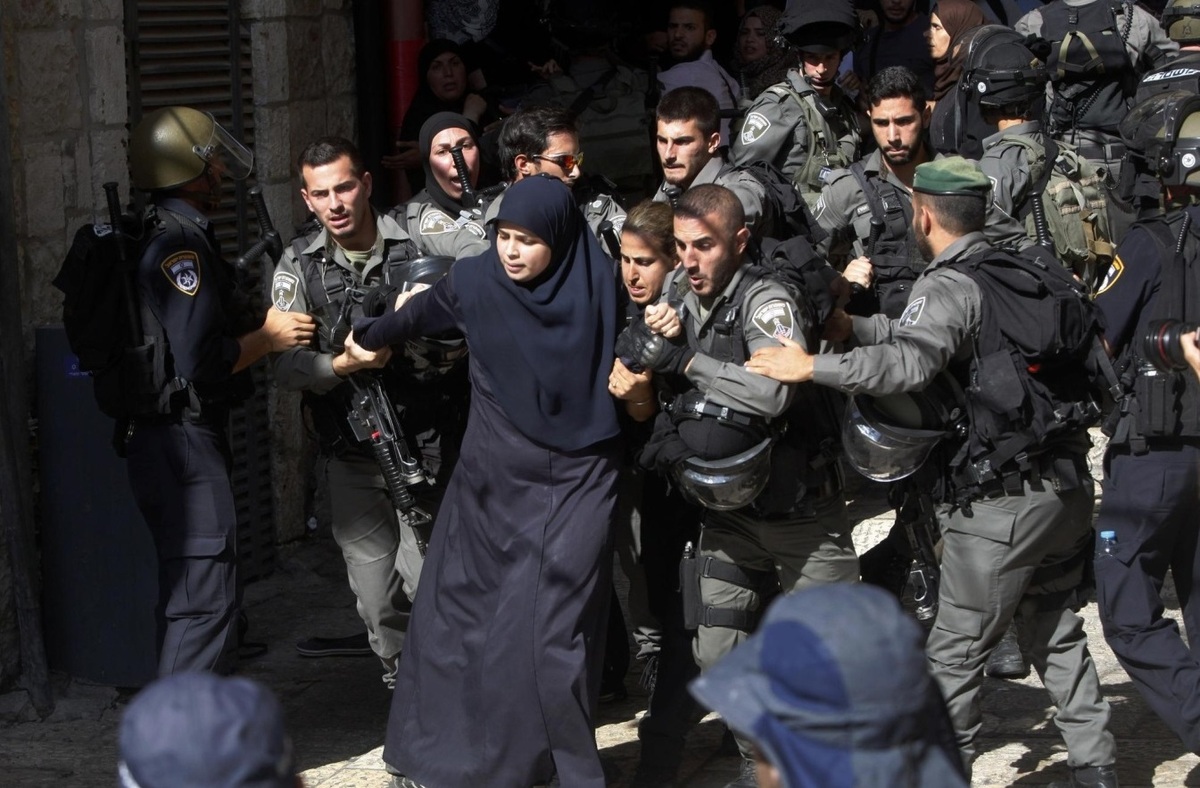
5,500 Jerusalemite citizens performed Friday prayers in the blessed Al-Aqsa Mosque, due to the strict Israeli occupation measures, at the entrances to the Old City of Jerusalem and the gates of the mosque.


The Islamic Endowments Department said in a statement that the occupation forces prevented worshipers from entering the blessed Al-Aqsa Mosque, which prevented thousands of people from being able to pray.


Citizens performed Friday prayers outside the Old City, specifically in the neighboring Wadi al-Joz, and the occupation forces suppressed them with bullets and poison gas, and beat them.


For the fourth Friday in a row, worshipers are unable to reach Al-Aqsa and pray there, due to strict military measures, while the number previously reached more than 50,000 citizens.


The Israeli occupation forces suppressed worshipers in the Wadi al-Jouz neighborhood in occupied Jerusalem, after preventing them from reaching the blessed Al-Aqsa Mosque, for the fourth Friday in a row.


Eyewitnesses reported that the occupation forces fired rubber-coated metal bullets and toxic tear gas and pursued the worshipers, beating a number of them.


A small number of citizens were able to reach the blessed Al-Aqsa Mosque to perform prayers, despite the strict military measures imposed by the occupation forces at the entrances to the town and the gates of the mosque, while others were forced to pray in the streets of the Wadi Al-Joz neighborhood adjacent to the town.


PALESTINE

Fri 03 Nov 2023 1:10 pm - Jerusalem Time

Palestinian Prisoners' Institutions: 2,070 arrests and 1,034 administrative detention orders in October

Prisoners' institutions reviewed the most prominent data about the arrest operations carried out by the Israeli occupation army, and the reality of the detainees in light of the comprehensive aggression and ongoing genocide against our people.


The institutions (the Prisoners’ Affairs Authority, the Prisoner’s Club, the Addameer Foundation for Prisoner Care and Human Rights, and the Wadi Hilweh Center - Jerusalem) said in a report, today, Friday, that they documented 2,070 cases of arrest in the West Bank, including Jerusalem, during the month of October. Among them are 145 children and more than 55 women.


They added that the most prominent change in the data of detainees is the significant escalation in the crime of administrative detention, as the occupation issued 1,034 administrative detention orders during October, including 904 new orders and 130 renewal orders.


The occupation escalated its arrest campaigns after the seventh of last October, and arrests cases reached 1,760 by the end of the month, including all categories, including 17 journalists, while the arrest campaigns were concentrated in Hebron Governorate and its towns, while arrests there reached 500, followed by Jerusalem. In which more than 400 arrests were recorded, the arrests in the West Bank that were carried out during the past month constitute the highest percentage since the years of the Al-Aqsa Intifada.


The prisoner institutions explained that the data on arrest cases included everyone who was arrested during this period, whether the occupation kept them detained and was transferred to detention centers later, or those who were released after a short period of arrest. It also includes those who were arrested in an organized manner from their homes. , or through military checkpoints, or after summonses, as well as those of the family who were arrested as hostages, to pressure one of its members to surrender himself.


According to data, the number of detainees in the occupation prisons by the end of October reached about 7,000 detainees, including 62 female detainees, while accurate numbers are not available for child detainees, while the number of detainees from the Gaza Strip reached 105.


OPINIONS

Fri 03 Nov 2023 12:57 pm - Jerusalem Time

The Israel-Hamas War Will Reshape Western Politics

The New York Times

The New York Times

Opinion Writer

By Ross Douthat

It’s been a long time since the conflict between Israel and the Palestinians occupied such a central place in Western political attention and debate — certainly not since the Israeli invasion of Gaza in 2009, arguably not since the second intifada ended in 2005.

In that fairly distant past, the politics of Israel-Palestine broke down into alignments that were familiar and decades-old. On the pro-Israel side in the U.S. were three broad factions: Zionist Democrats, centrist and liberal; neoconservative hawks; and evangelical Christians. 

As you moved leftward, sympathy for the Palestinians increased, with American progressives and European conventional wisdom finding common ground in their critiques of the Israeli occupation. Finally there was also a rightward form of anti-Israel sentiment, held by Arabist realists and Pat Buchananite populists and European reactionaries — but in the aftermath of 9/11, with neo-conservatism ascendant, this felt increasingly marginal.

These broad groupings still exist — evangelicals are still very pro-Israel, the Democratic president is a Zionist liberal, the progressive movement is pro-Palestinian — but in the current crisis you can see a more complex alignment taking shape, with implications that extend beyond the Israeli-Palestinian question alone. Here, very provisionally, are some ideological trends and tendencies worth watching.


The radicalization of progressivism. 

Nobody who has lived through the last decade’s Great Awakening should be surprised that Western progressivism now has a more radical line on Israel than it did 10 or 15 years ago, especially given Israel’s own rightward shift in that same time. But the extent to which the rhetoric of “decolonization” turns out to naturally extend — or, maybe, naturally circle back — from cultural and psychological projects to literal support for armed struggle and tacit apologia for antisemitic terror still feels like an important unveiling, a revelation of radicalization’s implications, a doorway into a future much more violently divided than our own.


The emergence of an “Arab street” inside the West

In the post-9/11 era, we were accustomed to think of popular discontent inside Arab and Muslim countries as an important geopolitical force in its own right. But 2023 may be remembered as the moment when Arab and Muslim discontent began to really matter inside Western countries as well.

The recent protests in European capitals, especially, are less an extension of a radicalized progressivism than a straightforward expression of ethnic and religious solidarity with the Palestinians on the part of Middle Eastern immigrants and their descendants. And the tacit alliance between this Diaspora and a secular, feminist, gay-affirming Western progressivism — “Islamo-gauchisme” in the French phrase — raises big questions for both progressives and conservative Muslims about who is using whom and how the Western left and Western Islam might ultimately co-evolve.


The unstable European relationship to Israel

 In one sense, the mass movements protesting on Palestine’s behalf in European streets would seem likely to ratify the pre-existing anti-Israel tilt of many European leaders. But if Europe is moving rightward overall, becoming more doubtful about mass immigration, more fearful of Islamification and terrorism and more protective of its native culture as it slides toward old age — well, then, you could easily imagine European sympathy for the Israeli position increasing, with fear of an Islamist enemy within driving identification with Israel abroad.

And indeed signs of this are visible already: The British writer Aris Roussinos recently observed that commentary in Britain now seems even a little more sympathetic to Israel than American commentary, while across the Channel, Emmanuel Macron’s attempts to rally a grand anti-Hamas coalition and his government’s ban on pro-Palestinian demonstrations belong to a very different landscape from the world of 2005.

The dilemmas of progressive Jews and Zionist Democrats


If the pressures on European elites come from multiple directions, the pressures on American Jews and Zionists inside the Democratic coalition push just one way: toward the right. Progressive Jews who thought of themselves as pro-peace, pro-Palestinian and anti-Likud are going to have a lot of trouble feeling at home inside a progressive movement that seems conflicted or paralyzed when it’s asked to condemn Hamas. Zionist liberals who are closer to the political center can take comfort that their worldview is still shared by most of the Democratic Party’s politicians, including the Democratic president. But the leftward ratchet in Democratic politics has been a powerful force, and generational turnover means that progressive activists may get a chance to reshape the party in their own image before long. At which point, where might Zionist Democrats go, if not toward actual conservatism?


A reconstituted neoconservatism, a resilient Christian Zionism

One thing that liberal supporters of Israel will find if they move rightward, indeed a thing that some are already helping to create, is a new variation on neo-conservatism. This isn’t the George W. Bush-era version, with its world-bestriding confidence in American power and its hawkish grand strategy. Rather, it’s a more inchoate alliance against whatever progressivism is becoming. Many of its members still feel uncomfortable associating with a Trumpist G.O.P., but they’re too intensely alienated from progressivism to belong to the left-of-center coalition any more. This makes it a movement more like 1970s-era neo-conservatism — a mugged-by-reality halfway house for intellectuals unhappy with their options but trending clearly to the right.


The other thing that rightward-moving Zionists will find is resilient evangelical support for Israel, which has persisted through all the disillusionments of the last two decades, all the anti-idealism of Trump-era foreign policy. This enduring affinity, embodied for instance in the pro-Israel statements of the new speaker of the House, reflects not just dispensationalist expectations of the apocalypse (though those certainly exist) but a widespread, very American-Protestant sense of the links between the American Republic and the Chosen People, the New World and the Hebrew Bible, that go back to the foundations of our country.


It’s also a worldview that many American Jews, secular Jews especially, find peculiar or suspicious. The question is whether that suspicion will diminish if the Democratic Party no longer seems like a safe harbor for their Zionism.


The uncertain attitudes of the alienated right

One thing that’s kept many Jews from moving rightward till now, of course, is a fear of right-wing antisemitism, the kind of xenophobia that Donald Trump’s campaign in 2016 seemed to consciously stir to life. Trump’s actual presidency was pro-Israel, indeed often more pro-Israel than those of his G.O.P. predecessors, but along extremely transactional lines — witness Trump’s own initial reaction to the Hamas attacks, which was to gripe about the various ways that Prime Minister Benjamin Netanyahu had let him down. And an “America First” mentality, along with other forms of right-wing politics quite distinct from both neo-conservatism and pro-Israel evangelicalism, clearly matters more to American conservatism today than 15 years ago.


Among my fellow conservative Catholics, for instance, there’s a longstanding anger at George W. Bush for invading Iraq and letting Middle Eastern Christianity be devastated by the ensuing wars and a sense that Israel was that foolhardy project’s accomplice. Among the would-be vitalists and Nietzscheans of the post-Christian right and certain other far-right influencers, there’s plenty of conspiracy theorizing and anti-Semitism. And then the Trump-era Republican coalition writ large includes a lot of nonreligious, disaffected, working-class Americans, for whom pro-Israel sentiments may come to feel, or feel already, like a luxury belief, a province of the elites whom they disdain.


My guess is that notwithstanding these specters on the right, over the long term you should bet on more rightward movement among American Jews, probably accelerated by the higher birthrates of the already more right-wing Orthodox. But mostly you should bet on unsettlement, on the right and left alike, as people come to terms with what the new debate about Israel and the Palestinians reveals about how much the Western world has changed already and how much more change lies ahead

OPINIONS

Fri 03 Nov 2023 12:48 pm - Jerusalem Time

The Futility of Evil

Project Syndicate - "Al-Quds" dot com

Project Syndicate - "Al-Quds" dot com

Opinion Writer

By Ian Buruma

Comparing the horrors of the Holocaust to Israel’s actions in Gaza or Hamas’s vicious October 7 attack is misguided and anti-Semitic. Despite the profound trauma of the past few weeks, the tendency of both Israelis and Palestinians to portray the conflict as an existential battle against absolute evil will make things worse.


In 2002, during a visit to Ramallah, Nobel Prize-winning Portuguese writer José Saramago compared the living conditions of Palestinians in the West Bank to the extermination of Jews in Auschwitz. This extraordinary remark triggered an international uproar, but Saramago asserted that as an intellectual, it was his duty to “make emotional comparisons that would shock people into understanding.”Economics3When More Financial Regulation Is Not Better

Saramago was by no means the first (and surely not the last) to invoke Nazi Germany’s attempted annihilation of the Jewish people to condemn the actions of the Jewish state. In the final volume of A Study of History, published in 1961, the British historian Arnold J. Toynbee posited that, through Zionism, “Western Jews have assimilated Gentile Western civilization in the most unfortunate possible form. 

They have assimilated the West’s nationalism and colonization.” In his view, “the seizure of houses and lands and property of the 900,000 Palestinian Arabs who are now refugees” was “on a moral level with the worst crimes and injustices committed, during the last four or five centuries, by gentile Western European conquerors and colonists overseas.” Every one of these assertions is absurd: the equation of Gentile Western crimes with “Gentile Western civilization”; the suggestion that most European Jews who migrated to Israel were nationalists, conquerors, and colonizers, rather than displaced refugees from pogroms and genocide; and the attempt to draw a moral equivalence between the seizure of Palestinian lands and property – however reprehensible – and the extreme violence against non-Western peoples by Western colonizers. One can only hope Toynbee was not including the crimes of Nazi Germany.

While history is rife with mass murders, the Nazis’ attempt to eradicate an entire people based on a grotesque racist ideology remains unparalleled. Comparing it to other forms of violence, whether out of malice or sheer ignorance, such as when US Congressman Warren Davidson likened COVID-19 vaccine mandates to the Holocaust, is not just wrong but also destructive. Such comparisons invariably trivialize the atrocities committed against the Jews during the 1930s and 1940s and distort our understanding of current events.

And yet, these Holocaust analogies are again being used to describe the tragic events unfolding in Gaza. In a joint press conference with German Chancellor Olaf Scholz, Israeli Prime Minister Binyamin Netanyahu labeled Hamas the “new Nazis.” He noted that “the savagery that we witnessed, perpetrated by the Hamas murderers coming out of Gaza, were the worst crimes committed against Jews since the Holocaust.” Netanyahu’s comments undoubtedly reflect the view of many Israelis. 


I heard an Israeli critic of Netanyahu say that the current situation is like 1940, and the war against Hamas is a “war against evil” that must be won through the “total elimination” of the enemy. But Hamas’s horrific slaughter of more than 1,400 Israelis on October 7 was more comparable in scale to a brutal pogrom than the near-total annihilation of European Jewry.

It is only natural that Israelis would be deeply shocked by Hamas’s vicious attack. The primary motivation behind Israel’s establishment was to create a safe haven for Jews and offer security to a minority that had faced centuries of persecution. Keeping Jews safe from slaughter has been at the core of Netanyahu’s appeal. Israel as the bastion against a second Holocaust has been invoked by several generations of Israeli leaders.


That Palestinians have had to suffer from the Jewish aspiration to feel safe in their own state is a tragedy that David Ben-Gurion, the founder of modern Israel, already saw coming in 1919. Just two years after the British government announced its support for “a national home for the Jewish people” in Palestine, Ben-Gurion observed, “There is no solution. We want Palestine to be ours as a nation. The Arabs want it to be theirs – as a nation. I don’t know what Arab would agree to Palestine belonging to the Jews.” Since then, there has been plenty of violence, miscalculation, and bad faith from both sides. 


Much like Ben-Gurion before him, Netanyahu believes that the conflict cannot be resolved, only managed. By sowing political divisions among the Palestinians, expanding Jewish settlements in the West Bank, and initiating periodic military offensives in Gaza, Netanyahu thought he could maintain control over the Palestinians and ensure Israel’s security. While this strategy has failed spectacularly, drawing parallels between the actions of the Israeli government and those of Nazi Germany is both spurious and almost invariably anti-Semitic.

At the same time, Israeli leaders’ insistence on framing the war against Hamas as an existential battle between good and evil will make things worse. Evil is a concept that belongs to metaphysics, not politics. As Ben-Gurion himself put it, the Israeli-Palestinian conflict is fundamentally about land and sovereignty. Such disputes require a political resolution.

But as long as Israeli leaders see the gates of Auschwitz behind every instance of Palestinian hostility, there can be no resolution. Only total domination will do. The same goes for Palestinians. 


As long as Israelis are seen as evil “settler-colonialists” and compared to Nazis, horrific terrorist attacks like the one on October 7 will be lauded as brave and necessary acts of resistance. As matters stand now, a political solution is a very long way off, given the traumatic cycle of terrorist violence and brutal revenge. But in a war against evil, it will be impossible.

OPINIONS

Fri 03 Nov 2023 12:35 pm - Jerusalem Time

The Global Consequences of the Israel-Hamas War

Project Syndicate - "Al-Quds" dot com

Project Syndicate - "Al-Quds" dot com

Opinion Writer

By Mark Leonard

The impact of the Israel-Hamas war will reverberate around the world, with consequences for the Middle East, Europe, China, and the United States. While the specific challenges vary, none has an interest in drawing out or widening the conflict.


War has returned to the Middle East. Nearly a month after Hamas militants carried out their brutal rampage, Israel’s military retaliation continues with an intensifying ground offensive in Hamas-controlled Gaza. For people living, or with family, in Israel – including me – this is a deeply personal crisis. At the same time, many people around the world identify with the thousands of Palestinians who have been killed by Israeli airstrikes. But, personal connections aside, this is also a geopolitical crisis, possibly even more profound and far-reaching in its global impact than the Ukraine war.


The most immediate consequences will be felt in the Middle East. For years, Israeli Prime Minister Binyamin Netanyahu operated under illusions that have now been shattered. The biggest was the expectation that Israel could normalize ties with the Arab world without addressing the Palestinian question, which he apparently believed could simply be wished away.


Now, that question has become impossible to ignore. Regardless of the outcome of its offensive in Gaza, Israel will have to do some serious soul-searching, possibly rethinking its strategy toward the moribund Middle East peace process entirely. Saudi Arabia, which was on the verge of normalizing relations with Israel, will now probably demand some concessions for the Palestinians before moving forward, lest it incur the ire of its population and the wider Muslim world.


Israel has an incontrovertible right to self-defense. But there is a risk that, in his desperation to regain control of the narrative and preserve his political position, Netanyahu will draw out the war or encourage a regional escalation. With his nominal allies in the Gulf on the fence, Netanyahu may be hoping to restore his preferred geopolitical constellation: Israel and the Sunni Arab states face off against Iran’s “axis of resistance,” with the Palestinians once again reduced to a sideshow in a much broader confrontation.


The conflict will also have grave consequences beyond the Middle East, with one of the biggest losers being Ukraine. The violence and suffering the country’s people are enduring do not appear nearly as exceptional as they once did. The images being broadcast from Gaza are as heartrending as anything that has come out of Kharkiv or Mariupol. Moreover, for many, the war in Gaza makes Ukraine look like a “local” European conflict.


Given that Ukraine’s survival depends on the international community’s continued support, anything that distracts from its struggle is bad news. Moreover, if the Israel-Hamas war escalates, with Iran entering the fray, the impact on oil prices could make it more expensive for the West to maintain its sanctions on Russian energy.


For Europe more broadly, the crisis in Gaza raises several challenges. For starters, it has exposed deep fault lines within France, Germany, and the United Kingdom. France, for one, has recorded more antisemitic incidents in the last three weeks than it had over the previous year. At the same time, the Israel-Hamas war has fueled fragmentation among other European Union member states.
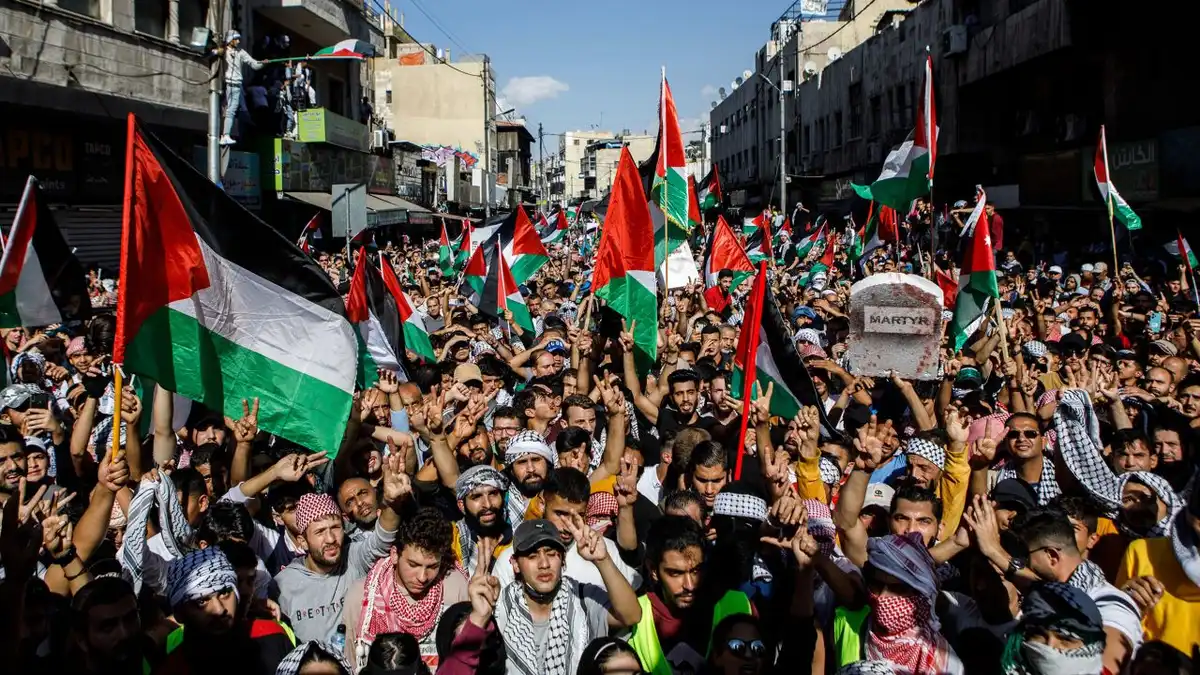

Following Russia’s full-scale invasion of Ukraine last year, European countries showed tremendous unity. But EU leaders are now splitting their focus among Ukraine, Nagorno-Karabakh (which Azerbaijan recently reclaimed after a 24-hour military offensive), and Gaza. In last week’s vote on a United Nations General Assembly resolution calling for a humanitarian ceasefire in Gaza, EU member states voted three different ways.


The EU’s shambolic response to the Israel-Hamas war has made China’s forceful reaction all the more notable. Unlike its effort to remain neutral after Russia’s invasion of Ukraine, China quickly expressed support for the Palestinians. China’s response has become part of its outreach to the Global South. And Chinese diplomats are undoubtedly chomping at the bit to highlight Western double standards – Israel versus Russia, the Palestinians versus the Ukrainians – over the coming weeks and months.

But choosing sides could cause complications for China. Most obviously, a broader regional confrontation could disrupt the fragile peace China managed to broker between Iran and Saudi Arabia.

As for the United States, it has become a cliché to describe its experience in the Middle East with a line from The Godfather Part III: “Just when I thought I was out, they pull me back in!” This is particularly apt today, since US President Joe Biden’s administration has shown far more discipline and determination in advancing a foreign-policy pivot from the Middle East to Asia than either of his predecessors, Barack Obama and Donald Trump. But now, the region is again at the top of US policymakers’ agenda.

So far, Biden has done well to balance support for Israel with calls for the Israelis to exercise more restraint in their response to the Hamas attack. And his decision to combine assistance for Ukraine with support for Israel in a single national-security package offers a chance of overcoming resistance by Republican lawmakers to supporting Ukraine.

Nonetheless, Biden is walking a tightrope. Ukraine already represented an unwelcome distraction from America’s top priority: the strategic competition with China. In this sense, greater engagement in the Middle East is the last thing the US needs.

Nobody – with the possible exceptions of Hamas and Netanyahu – has an interest in drawing out or widening the conflict now underway in Gaza. One hopes (against hope, perhaps) that relevant actors recognize their shared interests and work together to advance them. That means, most urgently, ending the conflict as quickly as possible, without further escalation. And, once Hamas’s military wing has been dismantled and its Israeli hostages freed, it means pushing for a political solution to the Israeli-Palestinian conflict. There is no other way to guarantee Israel’s long-term security.


PALESTINE

Fri 03 Nov 2023 12:06 pm - Jerusalem Time

338 soldiers and officers have been killed since October 7th

The Israeli occupation army spokesman said that the number of its forces killed in the war on Gaza since October 7 has risen to 338 soldiers, including soldiers and officers.


He said in a daily briefing that the families of 241 kidnapped people in the Gaza Strip had been informed, stressing that Israeli forces were “besieging Gaza, killing militants, and finding large weapons in Hamas strongholds.”


The occupation army spokesman published the names of four new dead soldiers who fell in the fierce battles in the northern Gaza Strip.


ARAB AND WORLD

Fri 03 Nov 2023 11:52 am - Jerusalem Time

Tlaib denounces the decision of US representatives to pass a aid bill to Israel

Palestinian-American Representative Rashida Tlaib (Democrat from Michigan) denounced the US House of Representatives’ approval to grant Israel $14.5 billion in immediate support, so that Israel can wage its war on the besieged Gaza Strip.


Tlaib said in a statement published by American media: “The American people do not support financing war crimes - such as the use of white phosphorus bombs - and call for a ceasefire.”


Tlaib adds, “While the Israeli government is carrying out ethnic cleansing in Gaza, we see President (US Joe) Biden supporting (Israeli Prime Minister Benjamin) Netanyahu, whose citizens are protesting his refusal to support a ceasefire.” “We must focus strongly on saving lives, regardless of Regardless of their religion or ethnicity, the number of children killed in Gaza in just three weeks has surpassed the annual number of children killed across the world's conflict zones since 2019 — but instead of helping to end this violence, President Biden is casting doubt on... Based on the number of Palestinian deaths.


Tlaib insists, “American funding of the Israeli army without humanitarian conditions will keep us away from ending violence and reaching peace. Achieving just and lasting peace requires lifting the siege, ending the occupation, and dismantling the inhuman apartheid system,” stressing that “some of my colleagues do not want to send more weapons.” Not only do they commit war crimes and violations of international law, they want to do so by offering tax breaks to billionaires and undermining critical investments in our societies. Instead of financing more bombs with American taxpayer money, our leaders should call a ceasefire now, before this kills us. Violence kills thousands of others.


On Thursday, members of the US House of Representatives voted in favor of passing a bill on urgent US aid to Israel amounting to $14.3 billion.


226 members voted in favor of passing the legislation, while 196 members opposed it.


The Republicans in the House had proposed a plan to provide aid to Israel, by reducing funding allocated to the Internal Revenue Service.


In one of the first major political actions after new House Speaker Mike Johnson took office, Republicans unveiled a separate additional spending bill just for Israel, despite Democratic President Joe Biden's request for a $106 billion package that includes aid to Israel, Ukraine and humanitarian aid. for Gaza and amounts allocated for border security.


Johnson said that "strengthening support for Israel must top the American national security agenda" in the wake of the October 7 attacks launched by Hamas militants, which Israel said killed more than 1,400 people, while Israel has been intensively bombing the Gaza Strip since then, which... It claimed the lives of more than 9,000 Palestinians, most of them children and women.


The House on Thursday approved $14.5 billion in military aid to Israel, a strong American response to the war with Hamas, but also a partisan approach by new House Speaker Mike Johnson that poses a direct challenge to Democrats and President Joe Biden.


In a departure from convention, Johnson's package required emergency aid to be offset by cuts in government spending elsewhere. This path established the new Republican Party's conservative leadership in the House, but it also transformed what had traditionally been a bipartisan vote into one that divided Democrats and Republicans. Biden said he would veto the bill, which was approved on a largely party-line vote.


Johnson, a Republican (from Louisiana), said that the Republican package will provide Israel with the assistance necessary to defend itself, free the hostages held by Hamas and eliminate it.


Democrats said this approach would only delay aid to Israel. Senate Majority Leader Chuck Schumer, D-N.Y., warned that the “astonishingly half-hearted” bill had no chance in the Senate.


The first major legislative effort in Congress to support Israel in the war falls far short of Biden's request for nearly $106 billion to support Ukraine in its fight against Russia, along with US efforts to confront China and address security on the border with Mexico.


It's also Johnson's first big test as House speaker as the Republican majority tries to get back to work after a month of turmoil since Rep. Kevin McCarthy, R-Calif., was ousted as House speaker. Johnson said he would then turn to helping Ukraine alongside US border security, preferring to process Biden's requests separately as GOP lawmakers increasingly oppose aid to Kiev.


The White House veto warning said Johnson's approach "fails to meet the urgency of this moment" and would set a dangerous precedent by demanding emergency funds that come from cuts elsewhere.

ARAB AND WORLD

Fri 03 Nov 2023 10:35 am - Jerusalem Time

Blinken arrives in Israel on his third visit since the start of the war on Gaza

US Secretary of State Anthony Blinken arrived in Israel today, Friday, seeking to pressure it to ensure the protection of Palestinian civilians, on his third visit to the region since the start of the war on the Gaza Strip on October 7.


This morning, Blinken will meet with Israeli Prime Minister Benjamin Netanyahu, and will attend a meeting of his security cabinet, according to what was reported by an Agence France-Presse journalist accompanying him.


On Thursday, Blinken told reporters at Andrews Air Force Base before heading to the region: “We will talk about concrete steps that can and should be taken to reduce the harm caused to men, women and children in Gaza,” in light of the devastating bombing campaign and the ground operation carried out by Israel in response to the operation. The unprecedented Al-Aqsa Flood carried out by the Al-Qassam Brigades, the military wing of the Hamas movement, on October 7.


The aggression against the Gaza Strip continues for the 28th day in a row, with the death toll rising as a result of the Israeli bombing, according to the Ministry of Health in Gaza, to 9,061, including 3,760 children.


Blinken visited Tel Aviv on October 12, on a visit to “express solidarity with Israel and coordinate the response.”


Following that visit, Blinken made shuttle diplomatic tours in the region, which led him to Jordan, Saudi Arabia, the Emirates, and Egypt, eventually returning to Israel.


The Secretary of State also accompanied US President Joe Biden, who met with Israeli government officials and Israeli victims during a visit to Tel Aviv on October 18.


(AFP, Al-Arabi Al-Jadeed)


PALESTINE

Fri 03 Nov 2023 10:33 am - Jerusalem Time

The funeral of the Palestine TV correspondent Muhammad Abu Hatab in Khan Yunis

This Friday morning, a group of journalists mourned the body of fellow journalist and Palestine TV correspondent, the martyr Muhammad Abu Hatab, in Khan Yunis, south of the Gaza Strip.


A group of journalists participated in the funeral, led by the Deputy Head of the Journalists Syndicate, Tahseen Al-Astal, the General Director of Palestine TV in the southern governorates, Raafat Al-Qudra, representatives of the Fatah movement, and a number of the martyr’s relatives.


In his memorial speech for the martyr Abu Hatab, Al-Astal stressed the importance of providing international protection to journalists as they work to expose the crimes of the occupation that target children and civilians.


He stressed the need for the international community to take action to stop the brutal massacres committed by the occupation forces against defenseless civilians in the Gaza Strip.


Al-Astal urged the international community to stop the crimes against journalists and the massacres committed against our people, which amount to war crimes, expressing his dissatisfaction with the international silence and the failure to take strict measures to curb this aggression and leave defenseless civilians to face a frightening fate.


For their part, the participants called on the entire international community to take immediate action to cease fire to protect civilians from the brutal attack they are being subjected to.


The participants performed the funeral prayer for the martyr Abu Hatab before his body was buried.


Yesterday, Israeli occupation aircraft bombed Abu Hatab's house, leading to his death along with a number of his family members.

According to the latest statistics, the number of martyred journalists since the start of the Israeli aggression on the Gaza Strip has reached 28 journalists.

PALESTINE

Fri 03 Nov 2023 9:23 am - Jerusalem Time

Gaza: Human Rights Watch warns of “imminent mass atrocities”

“There are clear warning signs that more mass atrocities are imminent,” a Human Rights Watch representative said at a press conference in Geneva, Switzerland, for the Permanent Observer Mission of Palestine to the United Nations.


Human Rights Watch International warned of “imminent mass atrocities” and urged the international community to enable the United Nations Human Rights Council to take action regarding what Israel is committing against the Palestinian people.


A Human Rights Watch representative said at a press conference in Geneva, Switzerland, for the Permanent Observer Mission of Palestine to the United Nations: “There are clear warning signs that more mass atrocities are imminent.”


She added: “The UN Human Rights Council has a role to play as part of its efforts to promote universal respect for human rights and address cases of human rights violations.”


Noting that the Council is often “polarized” on this issue amid allegations of “double standards,” the human rights official said that current developments in the conflict represent “a major regional and global concern.”


She explained: “We encourage all Council member states to work together across regional groups to enable the Council to take effective action to prevent further escalation in mass atrocities, and to ensure that vital aid reaches those who need it most as quickly as possible.”


She added that, “In the long term, Human Rights Watch also urged countries to take action to address “the underlying causes of the conflict and the grievances of the Palestinian people.”


For the 27th day, the Israeli army is waging a devastating war on Gaza. So far, more than 9,061 Palestinians have been martyred, including 3,760 children, and 32,000 wounded. 133 Palestinians were killed and about 1,900 were arrested in the West Bank, according to official Palestinian sources.


OPINIONS

Fri 03 Nov 2023 9:05 am - Jerusalem Time

Iran Can’t Afford a Regional War

Foreign Policy

Foreign Policy

Opinion Writer


Leaders in Tehran can either seize the diplomatic opportunity—or face a potential threat to their own power.

By Alex Vatanka


As the Israel-Hamas war rages on, Iran’s role will continue to be a pivotal question. While Tehran no doubt feels vindicated in its model of armed campaign against Israel, it will likely not seek escalation by confronting Israel and the United States militarily. Instead, Iranian officials seem to consider the war as a moment to elevate Tehran’s image in the Islamic world—and in the global south generally.

In this sense, Iran is faced with an opportunity. During the last decade, the Iran-led so-called Axis of Resistance took a major hit in the Islamic world as Tehran rescued the autocratic regime of Bashar al-Assad in Syria from a popular uprising. Now, by capitalizing on the Palestinian cause, Tehran is looking to rehabilitate its image among Muslims globally.

What Iran wants now is not a regional war but rather to undercut Israel—and more importantly, the United States—on the diplomatic front. Iran’s supreme leader, Ayatollah Ali Khamenei, has been blunt in conveying two key messages: that the United States is complicit in Israel’s war against Hamas and that Islamic countries should cut ties with Israel. To this end, Iranian Foreign Minister Hossein Amir-Abdollahian, on visit to Turkey this week, called for a Muslim economic boycott of Israel. If Tehran manages to come out of this latest round of conflict diplomatically stronger, then the regime might even have a better chance at solving its key foreign-policy challenge: namely, a final resolution of the decades-long nuclear standoff with the West and the lifting of the hugely costly sanctions regime put on Iran as a result.

The reason why Iran is far less certain to act kinetically is not only to do with its doubts, still significant, regarding its military preparedness to confront Israel and the United States. It is also because the concept of the Axis of Resistance—and with it, Tehran’s regional game plan—is resented by the Iranian public. If leaders in Tehran overplay their hands in this latest regional war, they face a potential threat to domestic political balance of power. Khamenei and the bosses in the Islamic Revolutionary Guard Corps (IRGC) have no choice but to factor public opinion into their calculations as Iran decides its next move in the Israel-Hamas war.

At the heart of Iran’s role in this latest crisis in the Middle East is its patronage of the Axis of Resistance. This slogan refers to Iran’s proxy warfare strategy, which has evolved since the early years of the 1980-88 Iran-Iraq War, of using regional nonstate militant groups to further the state’s aims. 

This project began with the Quds Force, the expeditionary branch of the IRGC. Under the leadership of Qassem Suleimani, the Quds Force would in time become the command center of a multibranch regional web of militant groups. What would make the Quds Force stand out was its use of Shiite Islamist rallying cries, but it always kept the door open to Sunni Islamist militants such as Hamas and Palestinian Islamic Jihad. To appeal to the latter group and expand its power base, Tehran’s core message was one of urging a unified front to combat the U.S. presence in the Islamic world and for an armed campaign against Israel.

The official narrative in Tehran is that Washington’s decision to assassinate Suleimani in January 2020 was designed to decapitate Iran’s strategy of proxy warfare against the United States and Israel in the Middle East and that the Americans failed in this mission while Iran stayed the course. Tehran is, after all, still the éminence grise in Lebanon, Syria, Iraq, and Yemen even as Suleimani’s successor, Esmail Qaani, is hardly a spellbinding figure. But Iran’s Axis of Resistance model has faced its own limitations, both as a concept and as a practical remedy to everyday problems.


On a conceptual level, the Abraham Accords and the idea of integrating Israel into the regional fabric as a path to peace has been a serious test for Tehran since the accords were first struck in 2020. Meanwhile, the fact that those countries in Iran’s zone of influence are all suffering from one form of political or economic malady suggests that Tehran’s capacity to turn security turmoil into sustained stability is, at best, a case yet to be proved. Just ask Lebanese, Syrians, Iraqis, or Yemenis.

In the midst of this regional introspection, Hamas attacked Israel on Oct. 7. Tehran’s fundamental stance has been hard to miss. Khamenei welcomed the attack, but he also strongly pressed the point that this was a Hamas operation and Iran had no involvement in it.

Given Tehran’s years of military and financial support for Hamas, Khamenei’s claim could at best be a half-truth: Iran had no direct hand in the Oct. 7 attack, as far as we know, but Tehran’s role as an enabler is beyond dispute. One just has to listen to Hamas’s repeated public thanks to Iran over the years.

For now, though, the Iranian regime is interested not in a military entanglement but scoring diplomatic points. Talk by Iranian officials of creating an “Islamic army” to confront Israel or an economic boycott of it are just catchy sound bites and nothing more. 


These are aimed at putting Tehran back in as a regional kingpin since its rescue of the Assad regime. The Iranians are elated that U.S. and Western support for Israel has gone down badly in the Islamic world and much of the global south. The Western stance is described as one-sided, which Tehran claims repudiates any future Western assertations about defending such novel ideals as human rights, rule of law, or a just international order. In this mission, Iran’s most important fellow travelers are China and Russia, which are equally excited about undermining Western powers in the Middle Eastern theater.


Khamenei has often predicted Israel’s end—as in 2015, when he pontificated that Israel will disappear in 25 years—but he has maintained that it will be at the hands of the Palestinians or the Israelis themselves, not Iranians. Besides, no one seriously thinks Israel is on the edge of collapse now. Is it any wonder that the 84-year-old Khamenei is not willing to risk the survival of his regime—which is at the cusp of a power transition—by taking a historic gamble and entering the war, even if it is unprecedented in terms of its magnitude? But while Khamenei’s basic choice is clear, there is still much trepidation in Tehran that hubris might get the better of him as the Israel-Hamas war endures. 


Both the so-called hard-liners and moderates in the regime welcome the Hamas attack as a major blow to Israel’s image of invincibility, but the moderates still fear that hard-liners can inadvertently drag the country to war. 


The Israeli press has reported that Qaani has spent much of his time in Beirut in the last three weeks consulting with Hezbollah leadership about the possibility of widening the war. Meanwhile, beside Hezbollah potshots from the north, Iran-backed Houthis have launched missile attacks on Israel from the south

OPINIONS

Fri 03 Nov 2023 8:56 am - Jerusalem Time

Pay Attention to the Arab Public Response to the Israel-Hamas war

Carnegie Endowment -"Al-Quds" dot com

Carnegie Endowment -"Al-Quds" dot com

Opinion Writer

Amr Hamzawy

The peaceful nature of the mass mobilization reflects a growing trend to renounce violence.

Once again, the Arab street is the epicenter of peaceful demands for change. Protests have swept across the region—including notable demonstrations in Casablanca, Algiers, Tunis, Cairo, Amman, Beirut, Damascus, Baghdad, and Manama—in support of the Palestinians in Gaza and their basic human rights in the face of an ongoing Israeli military assault and horrifying living conditions. The peaceful nature of this wave of Arab mass mobilization reflects a growing trend to renounce violence as a means of pursuing political objectives and a desire for stability following the turbulent years following the 2011 Arab Spring. 


The initial Arab public response to Hamas’s acts of terror set a secular and moderate tone. Hamas’s October 7 actions conflated the boundaries between legitimate resistance to the Israeli occupation and siege of the Palestinian territories, which categorically does not include targeting civilians, and crimes of terrorism. 

In response, Arab governments, civil society organizations, several media outlets, and some influential social media accounts were quick to condemn the violence and call for the protection of life on both sides. When governmental and nongovernmental voices ignored the targeting of Israeli civilians, their one-sided opinions were quickly marginalized. 

On October 26, as Israeli bombardment of Gaza intensified, nine Arab foreign ministers issued a statement reaffirming their opposition to violence and the killing of civilians.    Together, the mainstream Arab public space put forward pro-peace and pro-life values without any attempt to justify Hamas actions—neither with references to the ongoing occupation and siege of the Palestinian territories nor by evoking militant Islamist anti-Jewish rhetoric that has lost its popular appeal in recent years. Rather, many Arab commentators and influencers placed the occupation and siege as key facts in the persistent denial of the Palestinian right to self-determination. 

They also highlighted the daily struggles of Palestinians in the West Bank due to the aggressive expansion of the Jewish settlements, in East Jerusalem because of the forced displacement, and in Gaza as a result of the inhumane siege.

Despite a shocking trend to dehumanize Palestinians in Israeli media and policy circles, parallel narratives dehumanizing Israeli civilians have not gained in popularity among Arabs. In the first hours following the Hamas attack, mainstream Arab voices showed no appetite for condoning or justifying the violence.

This initial nonviolent and humanist response has held its ground with the emergence of pro-Palestine mass mobilization in several Arab countries. The Arab street has watched as the civilian population in Gaza falls victim to Israeli attacks and is left without international protection or aid amid a humanitarian catastrophe. As Arab citizens have taken to public spaces to protest the Israeli aggression, they have focused on the Tel Aviv war cabinet’s decision to launch a ground invasion of Gaza, to displace Palestinians within the strip, and to punish them collectively by cutting off water, electricity, and fuel. The demands that arose from these demonstrations have not called on Arab governments to attack Israel. 

They rather prioritized protecting the Palestinian people from Israeli aggression, ensuring that humanitarian aid gets into the strip, and denouncing plans to displace a population that has been displaced numerous times since 1948.These mass mobilizations have also aimed to expose and condemn Western double standards and complicity in the ongoing occupation and current onslaught on Gaza. 

Protesters have emphasized U.S. and others’ unconditional support for Israel—despite a Palestinian death toll in the thousands, the destruction of critical civilian infrastructure, the displacement of over 1 million Palestinians within Gaza, and the obstruction of access to humanitarian aid. Scenes of protesters burning the Israeli and the U.S. flags and expressing sympathies to Hamas militants have surfaced on social media, but they account for a tiny fraction of the Arab street movement. The overwhelming majority have stayed on the nonviolent course.

The trend toward renouncing violence in the mainstream Arab public space and the Arab street has been on the rise. Data from the Arab Barometer, a Princeton University–based public opinion surveying project, documents a decrease in popular acceptance of violence and its use for internal or external purposes. In recent years, an overwhelming majority of respondents— including those from Algeria, Egypt, Iraq, Jordan, Tunisia, and Libya—have stated their rejection of the use of force or violence for political causes. Additionally, Arab Barometer surveys have documented that the sheer majority of Arabs—on average over 90 percent— disapproves of extremist organizations and condemns their acts of terror. 

Although Hamas and other Palestinian groups are predominantly seen in the Arab world as resistance movements, their violence against Israeli civilians has been largely condemned. 

A clear preference for peace between Israelis and Palestinians on the basis of the two-state solution has been on the rise.

But this support for nonviolence can be fragile, especially if protesters’ demands aren’t addressed. I’ve witnessed these changes firsthand. I was a participant in the peaceful 2011 movement in Egypt, as nonviolent demonstrators took to the streets there—as well as in Tunisia and other Arab countries—to call for more rights and freedoms and to demand an orderly transition to democracy. I watched as demonstrators’ hopes and aspirations withered away, and some countries degenerated to violence and militant activism. Now, I fear that we may be observing a similar development in the making.


But in the current trend to renounce violence in the Arab street and the collective rejection of dehumanizing narratives in the mainstream public space, I see the launchpad for a possible revival of the peace process between Israelis and Palestinians, with wide Arab backing for the first time.


Will Israel play along? Will Arab majorities stick to nonviolence to put an end to the Israeli-Palestinian conflict? I truly hope. And I pray that this time our region can avoid the fate of failed transitions and lost peace.

PALESTINE

Fri 03 Nov 2023 8:48 am - Jerusalem Time

Israeli army blew up the house of Palestinian detainee Khaled Kharousha in Nablus

At dawn on Friday, Israeli occupation forces blew up a house in the popular housing neighborhood in Nablus.


Local sources reported that the occupation forces blew up a house on the second floor of the 4-storey “Al-Mubayed” building, in the popular housing neighbourhood, belonging to prisoner Khaled Kharousha, with an area of about 150 square metres.


It is noteworthy that the occupation forces arrested Kharousha during their storming of Askar camp last March.


The occupation forces had stormed the eastern area of Nablus, where confrontations took place, resulting in the injury of a citizen with live bullets in the foot, and another with shrapnel in the chest, in addition to the arrest of the imam of the Askar Mosque, Ghassan Badran.

OPINIONS

Fri 03 Nov 2023 8:28 am - Jerusalem Time

After Gaza, Recalibrated Prospects for a Geopolitical Europe

Washington  Institute for Near Eat affairs

Washington Institute for Near Eat affairs

Opinion Writer

by Selin Uysal

Much optimism attended the continental response to Russia’s Ukraine invasion, but the October 7 Hamas attacks and their aftermath could dampen aspirations for European unity on the international stage.

On October 26, the European Council adopted a new set of conclusions relating to the war in Gaza. Notably, these reiterated condemnation of Hamas, Israel’s right to defend itself in line with international law, calls to release all hostages, concern for all civilian lives, the need to ensure humanitarian access to Gaza, and a commitment to achieving a two-state solution to the Israeli-Palestinian conflict. Earlier European dissonance regarding the Gaza conflict thus appeared to be replaced by clearer communication. But European unity could soon be tested again, including on humanitarian messaging, which is less easily consented upon than meets the eye.

More broadly, whereas the war in Ukraine had given rise to optimism about the emergence of a “geopolitical Europe”—a European Union capable of defining common strategic international objectives and deploying concrete operational means to achieve them—events following the Hamas attacks have exposed divisions within European institutions and highlighted the absence of a clear strategic approach in the southern neighborhood, potentially undermining the ability to achieve such objectives.

Inconsistent EU Messaging

On October 9, Oliver Varhelyi, a Hungarian official serving as EU commissioner for neighborhood and enlargement negotiations, announced on X, formerly Twitter, that all development aid to the Palestinians—amounting to 691 million euros (US$729 million)—was under review and that all payments would be immediately suspended, causing significant confusion regarding the European response.

Germany, Austria, Denmark, and Sweden have decided to suspend funding in order to ascertain where the funds will end up, while Belgium, France, Italy, and Malta made clear they would not do so. Ireland, Luxembourg, and Portugal are unlikely to follow suit, given their statements criticizing Varhelyi. Spain even announced an increase in humanitarian aid and cooperation with the Palestinian Authority. Eventually, the European Commission had to disavow Varhelyi’s statement, but the damage to consistent EU messaging was done. The October 13 visit to Israel by European Commission president Ursula von der Leyen added to the malaise within European ranks, raising suspicions of political opportunism at a particularly grave moment.

After engaging in damage control to restore clarity to European positions, Josep Borrell, the European Community’s head of European diplomacy, pushed for the EU to take a less pro-Israel line, expressing concern about what he saw as the negative perception in Arab countries and the “Global South” of unconditional support for Israel, which he felt could ultimately benefit Russia.


Divergent National Perspectives on the Conflict

The communication chaos in Europe was all the more surprising given that on the whole, member states, despite holding very different positions and sensitivities, have expressed internally consistent messages. Namely, on October 8, Josep Borrell signed a declaration on behalf of the EU setting out the essential elements of a common line, confirmed at the European Commission on October 17:

  • A firm condemnation of Hamas and a call to release the hostages
  • Support for Israel’s right to defend itself in compliance with international humanitarian law
  • Continued contacts with regional and international partners to contain the risk of regional escalation
  • Provision of urgent humanitarian aid
  • Revival of the peace process leading to a two-state solution

The EU historically has belonged to the Quartet (along with the UN secretary-general, United States, and Russia), which was set up in 2002 to work toward a two-state solution to the Israeli-Palestinian conflict, on which there is consensus among member states. The Quartet even deployed a short-lived border assistance mission in Rafah working with the Palestinian Authority, which was suspended in 2007.


Still, reaching a common position on the October 7 attacks was anything but self-evident. What common ground does Sweden—which recognized Palestine as a state in 2014, even as the current government is critical of this decision—have with Hungary or the Czech Republic, which are regularly rumored to be moving their embassies to Jerusalem in the wake of the 2018 U.S. decision to do so?


Beyond the political differences between EU national governments, the recent history of European countries shapes their sometimes radically different perceptions of the conflict: can Germany’s position be reconciled with that of Ireland, where the Palestinian cause resonates because of the country’s national liberation struggle, and where the government announced in late September that it was preparing to recognize Palestine?


In addition, the domestic implications of the issue vary from one member state to the next. The risk of social fragmentation is taken very seriously in countries such as France, which has Europe’s largest Jewish community, including many dual French-Israeli citizens, and a significant number of Muslim citizens. These differing perspectives probably explain why France, Germany, and Italy issued statements with the United States and Britain, later joined by Canada, rather than limiting themselves to joint statements with the EU.


European Unity Likely to Be Tested

The EU has long been the largest donor to the Palestinian territories, and after initial uncertainties, on October 14, the European Commission announced a tripling of humanitarian aid to Gaza (75 million euros, or US$79 million). Access and delivery remain difficult, however, despite the opening of the Rafah crossing. As a result, the idea of a “humanitarian pause”—first floated by Brazil in a draft UN Security Council resolution that was rejected by the United States before Borrell actively endorsed it—has entered the European debate. The latest European Council conclusions allude to this pause by calling for “continued, rapid, safe and unhindered humanitarian access and aid to reach those in need through all necessary measures including humanitarian corridors and pauses for humanitarian needs.”


Still, Borrell’s optimism on “growing European support” for a truce may be unwarranted. On October 24, at the Security Council, French foreign minister Catherine Colonna called on the international community to “demand the establishment of a humanitarian truce that could eventually lead to a ceasefire.” Two days later, confirming the divide, a majority—including Germany—abstained at the UN General Assembly on a Jordanian resolution calling for such a truce, while a second group voted in favor (France, Belgium, Spain, Portugal, Malta, Ireland, Luxembourg) and a third voted against (Austria, Croatia, Czech Republic, Hungary).


The Bigger Picture

The current situation has several fairly long-term implications for the EU. Procedurally, the European elections scheduled for June will lead to renewal of several key institutions, including the European Commission. Responsibility and prudence in international affairs must be criteria in their own right in allocating positions and portfolios most directly involved with external EU action.

Indeed, regardless of their substance, divergences from EU institutions on international matters represent a dangerous departure from the framework that strictly defines EU foreign policy prerogatives. To be sure, European treaties have long formalized a common foreign and security policy, and talk has sometimes emerged about a “geopolitical EU Commission.” Yet the fact remains that there is no such thing as a European foreign policy since decision-making is limited to member states and voting subject to unanimity rule.

In the long run, it will be crucial for Europe to adopt a real strategy regarding its southern neighborhood. For now—it is worth noting—migration agreements have become a key area for Europe’s cooperation with its East Mediterranean and North African neighbors, but they are governed by short-term considerations.


For the foreseeable future, achieving a common geopolitical vision in the southern neighborhood does not seem likely. This should argue for a cautious approach to strengthening the institutional mechanisms of a geopolitical Europe, in particular by abandoning unanimity rule in favor of decision-making by a qualified majority in international matters, as advocated by Germany and like-minded countries. Indeed, institutional reforms that ignore political realities would only serve to deepen and aggravate divisions.


In the meantime, European action in the region will probably continue to unfold in limited formats, as in the case of Iran. In this respect, the post–October 7 phase could see positions of the E3 (France, Germany, and Italy) and United States converge on a tougher line on Iran, an approach Washington has not favored so far.


Selin Uysal is a 2023–2024 visiting fellow at The Washington Institute, in residence from the French Ministry for Europe and Foreign Affairs.

PALESTINE

Fri 03 Nov 2023 8:11 am - Jerusalem Time

Tel Aviv decides to return all Gaza workers in Israel and the West Bank to the Gaza Strip

Haaretz newspaper reported that the Israeli security cabinet decided to return all Gaza workers in Israel and the West Bank to the Strip.


The newspaper added that the Council also decided not to allow Gaza workers to enter Israeli territory anymore.


The Security Council also decided to transfer the frozen tax funds to the Palestinian Authority, deducting the funds allocated to the Gaza Strip.


Israeli Finance Minister Bezalel Smotrich recently sent a letter to Prime Minister Benjamin Netanyahu in which he told him that he would not transfer tax funds for the month of October to the Palestinian Authority.


Smotrich said in the letter that the Palestinian Authority supports Hamas and has supported the movement since the operations of last October 7. Israel, which controls the sea and land crossings and outlets, collects Palestinian taxes on behalf of the Authority and transfers them to it in exchange for a commission that Israel receives.


PALESTINE

Fri 03 Nov 2023 7:47 am - Jerusalem Time

Israel war on Gaza: Dozens killed and wounded in a bombing at the entrance to the Shifa Medical Complex in Gaza

Dozens of killed and wounded civilians in a new massacre by the occupation, on Friday evening, as a result of an Israeli bombing of the entrance to Al-Shifa Medical Hospital in Gaza, on the twenty-eighth day of the war on the Strip.


Palestinian media confirmed that there were dozens of dead and injuries as the occupation bombed the convoy of the wounded heading to the Rafah crossing as it was leaving Al-Shifa Hospital in Gaza.


On Friday, the Ministry of Health in Gaza announced that the death toll in the Gaza Strip had risen to 9,227 killed civilians since October 7, including 3,826 children and 2,405 women, and the number of injured had risen to 23,516.


On the 28th day of the Israeli war on Gaza, the Israeli army announced the killing of 4 officers during clashes with the resistance in the northern Gaza Strip, bringing the number of its deaths since the start of the ground incursion to 24.


Al-Qassam Brigades: We surprised an Israeli force and killed 4 soldiers


The Al-Qassam Brigades announced that its fighters surprised an Israeli force in the Al-Amiriya area, northwest of Beit Lahia (northern Gaza Strip), and killed 4 soldiers from zero range.


This comes after the Al-Qassam Brigades announced that yesterday, Thursday, they destroyed Israeli tanks and armored vehicles, and killed many soldiers in the battles taking place in several areas in the northern Gaza Strip and on the outskirts of Gaza City.


Deaths and injuries in Israeli bombing of several sites in the Gaza Strip


Palestinian media reported that one killed and several others were injured, at dawn on Friday, as a result of the Israeli occupation bombing of the Bureij camp in the central Gaza Strip.


One killed and several wounded arrived at Al-Aqsa Martyrs Hospital following the bombing of Al-Bureij camp.


At dawn on Friday, the Israeli occupation forces launched intensive raids on several sites in the Gaza Strip.


Palestinian media reported that the raids focused on the outskirts of Jabalia Camp in the northern Gaza Strip, Beit Lahia and Bureij Camp, in the center of the Gaza Strip, and the neighborhoods of Al-Zaytoun, Tal Al-Hawa and Al-Karama in Gaza City.


It is noteworthy that the toll of killed and wounded among our people as a result of the ongoing aggression against the Gaza Strip and the West Bank, until yesterday, Wednesday, rose to 9,163 killed and more than 24,000 wounded, including 9,025 killed who rose in the Gaza Strip, and more than 24,000 were injured, and in the West Bank. The number of killed civilian Palestinians has risen to 138 and the wounded to more than 2,100 since October 7th.


14 killed in an Israeli bombing targeting displaced people on the Al-Rashid coastal road in Gaza


At least 14 citizens, the majority of whom were women and children, were killed today, Friday, as a result of bombardment by tanks and occupation military boats, targeting citizens displaced from the north to the south of the Gaza Strip.

Eyewitnesses confirmed that the occupation forces bombed a group of citizens displaced from the north to the south of the Gaza Strip on the Al-Rashid coastal road west of Gaza, which led to the death of at least 14 of them, the majority of whom were children and women.


A video clip published by the media showed the bodies of the killed people lying on the road.

Eyewitnesses confirmed that ambulances were unable to reach the dead because the occupation tanks and boats targeted every moving object that passed on the aforementioned road.


Deaths and wounded in the bombing of a house east of Khan Yunis and the martyrdom of a child in the Bureij camp


At least 5 citizens were killed and others were injured, this Friday evening, in an Israeli occupation bombing that targeted a house in the town of Bani Suhaila, east of Khan Yunis. A child was also killed as a result of the occupation artillery shelling of the Bureij camp in the central Gaza Strip.


Our correspondent reported that the occupation targeted a house belonging to the Abu Omar family near the cultural center in the town of Bani Suhaila, which led to the death of at least 5 citizens and the injury of others.


He also reported the death of a child as a result of the occupation artillery shelling of Al-Bureij camp.


The Israeli occupation artillery had intensified its bombardment of the areas east of Khan Yunis, south of the Gaza Strip, and the Bureij camp in the central Strip in recent hours.

ARAB AND WORLD

Fri 03 Nov 2023 7:37 am - Jerusalem Time

Associated Press: Blinken's complex mission in the Middle East

The agency said that after a few weeks of a hectic trip to the Middle East, US Secretary of State Anthony Blinken returns to the region again, but this time with a somewhat more precise message than the one he presented in the wake of the Al-Aqsa Flood operation launched by the resistance in response to the repeated attacks by the Israeli occupation on... Palestinians and Islamic sanctities.


As he did last month, Blinken will confirm Washington’s support for Israel, and will try to prevent a broader war in the Middle East during his visit to Israel and Jordan starting Friday, but Blinken’s agenda this time is more crowded and complex in light of the intensification of the conflict and the Biden administration’s struggle with interests and feelings of anger at the local levels. And international.


Blinken's most prominent files

The US Secretary of State will push for the evacuation of more foreigners from Gaza and provide more humanitarian aid to the Strip. It will pressure Israel to curb Israeli settler violence against Palestinians in the occupied West Bank. He will stress the importance of protecting civilians, although the administration has not yet offered any criticism of Israel over the strikes that killed thousands of civilians in Gaza.


So while Blinken will call for a brief cessation of air strikes and fighting for humanitarian purposes, he will continue to oppose growing calls for a broader ceasefire.


Meanwhile, President Joe Biden, on Wednesday, November 1, expressed his belief that there must be a humanitarian “truce” in the war between Israel and Hamas in order to get the “prisoners” out.


Post-war Gaza

But Blinken will also introduce a new item to the list of American priorities; It is necessary for Israel and its neighbors to begin considering what Gaza will look like after the Israeli aggression, who will govern it, how it can be made safe and stable, and how to establish an independent Palestinian state.


US officials, including Biden and Blinken, have repeatedly said they do not believe Israel's reoccupation of Gaza is possible, which Israel agrees with.


But the next step has been little considered, other than brief comments made by Blinken on Tuesday, October 31, in testimony before Congress when he spoke of the possibility of revitalizing the Palestinian Authority and perhaps Arab countries and international organizations playing an important role in Gaza after the conflict.


State Department spokesman Matthew Miller said that Blinken will speak about “the United States’ commitment to working with partners to create the conditions for achieving a lasting and sustainable peace in the Middle East, including the establishment of a Palestinian state that reflects the aspirations of the Palestinian people in Gaza and the West Bank.”


Transforming the international perception of war


The change in messaging reflects a shift in international perception of the war, about which Blinken has heard a lot since his last trip to the region when he traveled to Israel and six Arab countries — multiple times — in a frenetic shuttle diplomacy mission that required several last-minute schedule changes.


His itinerary after Jordan remains uncertain, although he will attend the G7 foreign ministers' meeting in Japan next week, before traveling to South Korea and India for broader discussions, which will include the Russian war in Ukraine and China.


According to the American agency, the shift in public opinion was clear. After Israel received a wave of global sympathy following the October 7 attacks, it now faces widespread criticism for its massive military response, which many believe is fueling a global rise in anti-Semitic violence, in addition to incidents targeting Muslims.


As the situation in Gaza deteriorates, US officials are keenly aware that they risk serious damage to relations with the Arab world and beyond if the United States fails to use its influence with its close ally Israel to prevent an already existing humanitarian catastrophe from worsening.


Blinken will enter into a "diplomatic spiral"


What confirms these fears is that Blinken will enter into a diplomatic whirlpool between Israel and Jordan, which on Wednesday, November 1, summoned its ambassador to Israel and asked the Israeli envoy not to return to Amman. The Jordanian Foreign Minister said that the decision would not be reconsidered until the operation in Gaza was stopped.


Miller said Washington shares Jordan's concerns about the "dire humanitarian situation in Gaza," and Blinken will make that a priority in his trip. He added: "But ultimately, we believe that strengthening diplomatic efforts is important and that steps aimed at reducing diplomatic channels are not productive for our common goals of promoting a long-term solution to this crisis."


Jordan, Egypt and Turkey, along with Gulf Arab states, stand on alert as anger grows across the region over Israeli tactics, and Blinken's visit will be closely watched.


Before leaving Washington, Blinken met on Wednesday, November 1, with the Saudi Defense Minister, whose country has already suspended US-brokered normalization talks with Israel. But neither man spoke as they posed for about 10 seconds of photos at the US State Department.


Although some progress has been made in securing the evacuation of foreigners from Gaza, including a small number of Americans, to Egypt on Wednesday, November 1, there are still thousands more who want to leave. But even if a solution is found to this situation, more than 200 Israelis and others remain captive by Hamas.


As President Biden said on Wednesday, November 1: “I have personally spent a lot of time talking with Israeli Prime Minister Netanyahu and Egyptian President Sisi and others, to make sure that we can open this corridor for people to exit. I want to thank our partners, especially Qatar, who They worked closely with us to support negotiations to facilitate the departure of these citizens.”


Biden added that there is much work to be done to "significantly increase the flow of vital humanitarian assistance to Gaza."


PALESTINE

Fri 03 Nov 2023 7:14 am - Jerusalem Time

US Representatives approve $14.3 billion in aid to Israel


On Thursday, the Republican-controlled US House of Representatives approved a bill to provide aid worth $14.3 billion to Israel, despite Democrats confirming that it will not be approved in the Senate.

The vote was 226 to 196, which is largely in line with the partisan division of seats. US House of Representatives Speaker Mike Johnson said that the House voted tonight to send immediate aid to Israel.


Johnson confirmed on the X platform (formerly Twitter) that the aid package, which he described as complementary, “provides Israel with advanced weapons systems, the Iron Dome missile defense system, and replenishes domestic American defense stocks.” He added, "This aid is necessary and very important, as Israel defends its right to exist."


He continued, "With anti-Semitism growing, at home and abroad, it is necessary for the United States to send a message to the world that threats against Israel and the Jewish people will be met with strong opposition." He urged the Senate and the White House to approve this aid, saying they "cannot let this moment pass... as our Senate did today."