
OPINIONS

Wed 31 Jan 2024 4:44 pm - Jerusalem Time

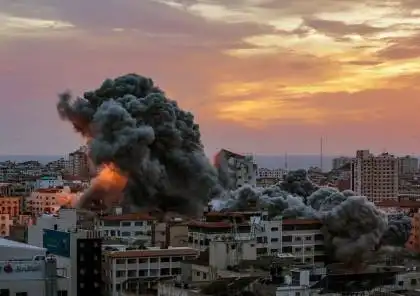
How Israeli settler terrorism set the stage for genocide in Gaza

Middle East Eye

Middle East Eye

Opinion Writer

By Eitay Mack

Attorney general Gali Baharav-Miara's failures started during the Huwwara pogrom in occupied Palestine with her silence and failure to enforce the law or any accountability

On Friday, the International Court of Justice (ICJ) issued a provisional measure order requiring that "the State of Israel shall take all measures within its power to prevent and punish the direct and public incitement to commit genocide in relation to members of the Palestinian group in the Gaza Strip". Even Israeli judge Aharon Barak, who issued a dissenting opinion in the ICJ Gaza genocide case, supported this measure.


After South Africa filed its petition to the ICJ, in which statements by Israeli officials were used to prove intent to commit genocide in Gaza, there was criticism within Israel of the attorney general, Gali Baharav-Miara, for her silence.


 Her failures, however, did not start in Gaza but in the West Bank village of Huwwara. On 26 February 2023, about 400 far-right Jewish extremists participated in the Huwwara pogrom, where they spent hours setting on fire dozens of houses, apartments, chicken coops, shops, and hundreds of cars.

Several Israeli politicians encouraged the perpetrators of the pogrom both during and after its occurrence. Many of us demanded that the attorney general open a criminal investigation into all those who incited genocide. And though there were clear cases in which the connection between the incitement and the acts of violence was visible, we were largely dismissed by Baharav-Miara and met with a terse response to contact the police directly.

Violent incitement

Among the many responsible for last year's violent incitement was David Ben Zion, the deputy head of the settlers' Samaria Regional Council, who tweeted: "The village of Huwwara should be wiped out today…There is no room for mercy."

The attorney general only initiated a criminal investigation against one politician who has not been charged after nearly a year

A few days later, Finance Minister Bezalel Smotrich, who had "liked" Ben Zion's tweet, reiterated his directive at a forum hosted by the Marker business newspaper.

Smotrich said: "I think the village of Huwwara should be wiped out." Another far-right politician and member of the Knesset, Limor Son Har-Melech, tweeted about two hours after the start of the pogrom that she had arrived in Huwwara "to support the righteous cry of the hundreds of Samaria residents who went out to protest."

During the pogrom, Daniella Weiss, who heads the Nachala Settlement Movement, said in an interview with the Public Broadcasting Corporation: "I should appeal to people to leave Huwwara? I must call on them to stop? Stop what? We are protecting Jewish lives." The next day, in an interview with the Israeli Ynet radio, Weiss defined the pogrom as a "legitimate protest action".

The day after the pogrom, Knesset member Zvika Fogel also encouraged the violence in an interview with the radio station, Waves of Israel. "Huwwara closed and burned, that's what I want to see...I want to restore security to the residents of the State of Israel. How do you do that? Stop with the word 'proportionality'. Stop with the reluctance to collective punishment because it is not suitable for all kinds of courts. I take off my gloves," he said

 Given the brazen incitement of violence against the roughly 7,000 Palestinians who live there, it is no wonder that the pogrom in Huwwara lasted for several hours and that it led to a series of pogroms in the West Bank villages Orif, Lubban ash-Sharqiya and Turmus Ayya.

Despite the complicity of several Israeli leaders in these terroristic acts, the attorney general only initiated a criminal investigation against Fogel, who has not been charged after nearly a year.

Total impunity

In Israel, the law and the procedural rules confer to the attorney general the exclusive authority to initiate criminal proceedings against individuals. This is primarily due to the sensitivity to freedom of expression and the fact that potential suspects might be elected politicians.

The far-right national security minister, Itamar Ben Gvir, was convicted of terrorist offences himself, and some of those who incited the attack on Huwwara are Israeli parliament members from his far-right, Otzma Yehudit party, and others related to it. Following his election, Ben Gvir took control of the police after the passage of the Ben Gvir law.

Not only did the attorney general not initiate a serious criminal investigation into the incitement against Huwwara, but she would not speak on the matter altogether. She only issued a warning on 9 January, just before the ICJ hearing. She claimed that law enforcement officials were examining statements and calls for intentional harm against civilians and warned that they might constitute criminal offences, including incitement.  In contrast to the attorney general, Yad Vashem, Israel's official memorial to the victims of the Holocaust, provided a more serious response to our letter. While it held that the rampage in Huwwara did not constitute incitement to genocide, the centre conceded that "any expression of violence, physical or verbal, is unacceptable, especially when it is directed in a sweeping and irrelevant way towards a certain group or community - as unfortunately happened in Huwwara".  It is also important to note that even if there were any legal obstacles to the attorney general initiating criminal charges on acts of incitement to genocide, her justification for not having done so, including in cases of violence and terrorism, is not clear.

To establish that incitement to violence and terrorism occurred, it is necessary to prove that a statement was made that either directly called for violence or, to a lesser extent, expressed praise, sympathy or encouragement for a violent act. The last requirement would be to prove that the statement led to the commission of an act of violence.

From incitement to genocide

In view of the attorney general's failure to enforce the law or any accountability in the Huwwara case, it is no surprise that Israeli officials and politicians took advantage of the climate, following the Hamas attack, in order to incite deadly harm against the entire civilian population in Gaza.

Not only did the attorney general not initiate a serious criminal investigation into the incitement against Huwwara, but she would not speak on the matter at all.  An example of this is the conduct of Knesset member Nissim Vaturi from the far-back benches of the Likud Party. Most Israelis likely have no idea what he has been doing in parliament since he was first elected in December 2020, except when he became a joke last summer after it was revealed that he invited Likud activists to join him on a cruise ship to the Greek islands at a discounted rate.

Not only did the attorney general not initiate a serious criminal investigation into the incitement against Huwwara, but she would not speak on the matter at all

Since November 2023, he has made headlines in Israel after calling for the burning of all of Gaza in interviews and posts on X, the social media platform formerly known as Twitter. With no fear of criminal prosecution, on the day after the attorney general issued her warning that she would take action against violent instigators, Vaturi said again in an interview with the Kol Barama radio channel that Gaza should be burned, adding that "whoever remains there should be eliminated period. I have no doubt at all."  What is the reason for the inaction by the attorney general? On 26 March, one month after the pogrom in Huwwara, Baharav-Miara submitted her response to petitions filed at the Israeli Supreme Court to invalidate the appointment of Ben Gvir as the minister of national security due to his racist statements and criminal convictions for terrorism.

The attorney general declared her belief that there was no legal impropriety in his appointment and that the court should dismiss the petitions. She even strangely wrote that "in recent years, the minister stated that he changed his ways and explained to his constituents on various occasions that racist ideas are not acceptable to him."  Given that senior members of Prime Minister Benjamin Netanyahu's government and those in the parliament have explicitly supported violence, terrorism and genocide against the Palestinians, any criminal proceedings initiated against them would be seen across the political spectrum in Israel as an attempt to overthrow a democratically elected government.  It seems therefore that the attorney general preferred politics to fulfilling her professional role. Only time will tell if the ICJ's order will change her priorities.


Eitay Mack

Eitay Mack is an Israeli lawyer and human rights activist located between Jerusalem and Oslo. He represents Palestinians who were harmed by Israel's security forces in the occupied West Bank, and led legal proceedings that failed to stop the training in Israel of Indian police officers serving in Kashmir and to reveal information about Israeli snipers' shooting of protesters in the Gaza Strip.


 

OPINIONS

Wed 31 Jan 2024 4:36 pm - Jerusalem Time

Bending Biden Towards a Cease-Fire in Gaza

Common Dreams

Common Dreams

Opinion Writer


By James Zogby

The push for an end to Israel's assault on the people of the Gaza Strip is coming from the grassroots of the president's own party and though Biden continues to resist, the needle is moving.

Despite the Biden administration’s refusal to back a cease-fire that would help end Israel’s genocidal assault on Gaza, momentum is growing across the US calling on the administration to reverse course. What is significant is that the opposition to the White House’s position is coming from within the president’s own party.

The administration’s stubborn aversion to even the use of the term cease-fire remains inexplicable. It may be recalled that just a few days after the Israeli bombings that followed the October 7th attacks, the State Department issued a statement calling for a cease-fire that was quickly taken down and followed by a guidance memo to diplomats saying the term was not to be used. As the number of civilian casualties continued to grow, administration officials repeatedly fell back on the line that Israel had the right to defend itself, that Hamas had to be eliminated, and that a cease-fire would only allow Hamas to rebuild its capacity. The administration attempted to absolve itself by coupling this rejection of a cease-fire with appeals to Israel to avoid civilian casualties and with support for humanitarian aid.

Those arguments have failed the test of time. The carpet bombing of residential areas of Gaza, the clear intent to demolish housing and infrastructure, the forced evacuation of millions, and more have led to Israel being charged with genocide. And leading analysts in the U.S. and Israel have noted that the “elimination of Hamas” is at best “a fool’s errand.”

As the dimensions of the human tragedy unfolding in Gaza became clearer, the U.S. has found itself virtually isolated in the world community in its rejection of a UAE-sponsored Security Council resolution calling for a ceasefire that would allow unimpeded humanitarian aid. Countering this proposal, the U.S. supported increased aid to Gaza but would not consider the reality that without an end to the bombing aid could not be delivered or reach those most in need.

Slowly but surely U.S. public opinion has changed with substantial majorities now wanting a cease-fire and voters indicating by a two-to-one margin that they are more inclined to support candidates who call for a cease-fire, with the margin of support for a cease-fire greater among Democrats and key Democratic constituencies (young voters and non-white voters). Still the administration resists.

This past week, a leading Democratic Senator, Chris Van Hollen, joined the chorus of legislators calling for a cease-fire, making him the 68th member of the Senate or House of Representatives to do so. This represents more than one-quarter of the Democrats in Congress and can be expected to grow.

More significant, and somewhat unexpected, are the numbers of City Councils who have taken up the call for a cease-fire. Led by grassroots mobilizations of Palestinian Americans, progressive Jewish groups, and Black activists, major cities like Atlanta, San Francisco, Minneapolis, Detroit, Seattle, St Louis, and three dozen other municipalities have passed strong cease-fire resolutions. And while a vote on a similar resolution has been delayed for a few days in Chicago, the nation's third largest city and home of this year’s Democratic National Convention, that city’s Mayor, Brandon Johnson, this week issued a strong call in support of a cease-fire.

Because the language used by Mayor Johnson was so evocative it warrants consideration. Echoing the sentiments of his voters, he not only expressed his horror at the loss of life, but also tied the liberation of Blacks with the justifiable need for Palestinian liberation. He said, “I’m not mayor of the city of Chicago if people weren’t pushing the government to recognize the value of liberation—what it means for people, groups, and nations. And, in this instance, people should be liberated.”

Just two weeks ago, an Emergency Summit on Gaza was convened in Chicago under the auspices of Rev. Jesse Jackson’s Rainbow Push Coalition. During those sessions, prominent Black clergymen similarly connected their struggle for justice with that of the Palestinians living under occupation. They were joined by progressive Jewish rabbis, Protestant church leaders, Arab Americans, and American Muslims—all united in the call for a cease-fire and committed to advancing this effort nationwide. The effort is advancing.

I am reminded of a debate I had two decades ago with a PLO representative. We were addressing the convention of a Palestinian American organization on strategies to advance the Palestinian cause. The representative spoke about their successes in securing overwhelming victories in the UN General Assembly and then lamenting their losses in the Security Council because of the U.S. veto. His solution was that they were going to bring yet another resolution before the Security Council the next fall.

In my response, I said that since that new resolution would also be vetoed by the U.S., the only vote that mattered was the U.S. vote and that could not be changed or swayed in the court of world opinion. It had to be changed in the U.S. and the only way to do it was to advance that change through grassroots political activism from the bottom up. Two decades later, that effort is underway.

Rev. Martin Luther King Jr. often said, “The arc of the moral universe is long, but it bends toward justice.” What King didn’t say, but understood, was that it didn’t bend by itself. It required the hands of many to push the arc in the right direction. That is what’s happening now. And it is to be celebrated.


ARAB AND WORLD

Wed 31 Jan 2024 4:26 pm - Jerusalem Time

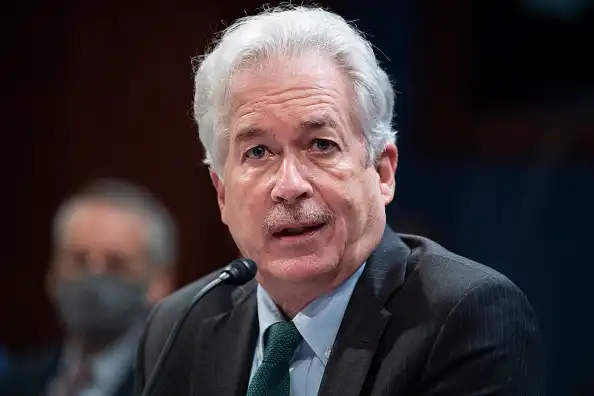
CIA Director: Gaza War reminded Washington of the complexities of its options in the Middle East

CIA Director William Burns said on Tuesday that the operation carried out by the Hamas movement on October 7, and the war that followed, was a “painful” reminder to the United States of the complexities of the options that the Middle East continues to present. on her.


In a long article published in Foreign Affairs magazine, issued by the American Council on Foreign Affairs, Burns reviewed the challenges facing the United States at the present time, and the history of dealing with them security-wise and diplomatically.


Speaking about the Israeli war on the Gaza Strip, the CIA director explained that during his work in the Middle East for four decades, he had never witnessed a complex and intertwined situation similar to what is happening now, adding that “Israel will end its ground operation in Gaza and meet the needs of Palestinian civilians.” "Those who are suffering, preventing the conflict from expanding to other fronts in the region, freeing Israeli detainees from the Gaza Strip, and discussions about the next day of the war, represent very difficult problems."


Burns stressed that reviving hope for a lasting peace that guarantees “the security of Israel and the establishment of a Palestinian state,” and benefiting from historical opportunities for normalization with Saudi Arabia and other Arab countries, are all issues that are difficult to imagine amid this complex situation.


In an attempt to develop a preliminary vision about ways to deal with this “complex crisis,” the director of the US Intelligence Agency stressed that “the key to the solution” is through dealing with Iran and searching for mechanisms to deal with its nuclear weapons.

Burns: The United States is no longer the only superpower in the world

In his article, Burns devoted a large section to talking about Russia and China, believing that the United States no longer represents the only superpower in the world, as before, saying that this represents “a horrific geopolitical challenge in a world of intense strategic competition,” adding that this currently places Washington in a situation similar to what was happening in the Cold War, or after the events of September 11.


In an attempt to explain this crisis facing the United States, Burns explained that the countries of the Global South no longer depend on unilateral relations with the United States or China, and see in this pattern “little benefit and many risks,” and that is why they are working to “adopt open geopolitical relations with everyone.” 


Regarding the work of his agency, the CIA director stressed that in a world in which China and Russia focus on working “within small circles of advisors,” insight into leaders’ intentions has become more important and more difficult than ever before.


He expressed his belief that "this year is likely to be the most difficult on the battlefield in Ukraine, and a test of its and its allies' endurance."


In a complex situation like this, Burns says there are “major challenges facing the CIA and the entire intelligence profession, especially with major technological shifts as well.”

Source: Alaraby Aljadeed

OPINIONS

Wed 31 Jan 2024 4:16 pm - Jerusalem Time

Israeli Writer| The internal arm of the Israeli power arm

Antoine Shalhat

Antoine Shalhat

Opinion Writer

This observation applies to the performance of the Israeli media in the current war, which marginalizes many implications loaded by the facts of the war, and is echoed by some analysts, including the indication of not underestimating the capabilities and abilities possessed by the Palestinian resistance.


Since October 7, Israel, as in all the wars it wages, appears to be immersed in the intoxication of power fueled by two arms: external, represented by the military war machine, and internal, represented by the propaganda and media machine. According to what a critical Israeli media expert confirms, the latter seeks to achieve two main goals: to mislead Israeli public opinion regarding everything related to what is happening in the Gaza Strip, including a comprehensive war of destruction and genocidal crimes against civilians.


Immediately framing any report regarding the killing of innocents in the Gaza Strip as an incident for which Hamas is solely responsible, by repeating the crisis of the movement’s use of the civilian population as human shields. This expert cited various quotes from media figures in which they clearly acknowledge that their role during wars is not to convey the truth, but rather to raise morale.


This behavior is not only a product of the current war, but it was the behavior of most Israeli media in previous wars, especially during the war on Lebanon in 2006, and the series of wars on Gaza that have not stopped since 2008.


I had attended a symposium at Tel Aviv University in late July 2007 entitled “The Second Lebanon War... The Media’s Self-Accounting,” on the sidelines of the launch of a special report entitled “The Israeli Media in the Second Lebanon War,” prepared by the Keshif Center for the Protection of Democracy in Israel” and was issued a year after the end of that war in 2006 (the most prominent findings of the report are that most of the Israeli media were among those who “fought the war until the last minute”).


In the context of the symposium, journalist Anat Saragusti, from the second Israeli television channel (currently Channel 12), who previously worked as an editor at the same channel, said that most Israeli journalists, during that war, chose to remain in areas flooded with light, and not to search for the hidden secrets that existed. In the dark. In its reading, the Israeli media were closed to one discourse, which is the war discourse, and were not prepared to hear other voices that contradicted this discourse, especially from women’s voices.


The performance of these media outlets was also characterized by the absence of the civilian side of the war, and in particular, the civilian side related to the other side, the Lebanese, as the stories of suffering among the Lebanese civilian population did not even find a foothold on the small screen, as well as within the reports of the written and broadcast press.


During the symposium, an internal document was revealed sent to the employees of Maariv newspaper, calling for support for the army, a stubborn stand by the state, and restraining criticism as long as the war continues.


The document acknowledges that this is, in a certain sense, tantamount to betraying the missions of journalism, but, at the same time, it stresses the necessity of doing so, because “we must take into account the national consideration, and because we have decided that in the event of this war we will be part of the state, and it is our duty to postpone disagreement and criticism, and we do not need to be ashamed or apologize for being supportive of the army and the government and providing them with cover.”


It was found, based on the report, that the Israeli media correspondents included in the research brought, throughout the days of that war, news and media material related to all aspects of the battles that were subjected to severe criticism, after the war had ended, as was reflected in the report of the official Israeli investigation committee. The facts of which were investigated by the Winograd Committee, but these materials were marginalized from the editorial office.


This observation applies to the performance of the Israeli media in the current war, which marginalizes many meanings loaded with the facts of the war, and is echoed by some analysts, including the significance of not underestimating the capabilities and capabilities possessed by the Palestinian resistance, the significance of changing the course of the Israeli-Palestinian conflict, and others that must be returned to due to their extreme importance.

ARAB AND WORLD

Wed 31 Jan 2024 4:02 pm - Jerusalem Time

Israeli Maariv reveals a secret plan formulated by those close to Netanyahu for the next day of war

Maariv indicated that the multi-stage plan formulated by a group of businessmen for the future of the Gaza Strip is a trial balloon for Prime Minister Benjamin Netanyahu.


Netanyahu had refrained from discussing plans for the “day after” the war, claiming that what was required of Israel was to focus on the war itself.


The newspaper said that the first phase requires the establishment of a full Israeli military administration in Gaza, which will manage the transfer of humanitarian aid and assume responsibility for caring for the civilian population in Gaza during the transitional phase.

It explained that in the second phase, which will occur at the same time, an international coalition of Arab countries will be established in which Saudi Arabia, Egypt, Morocco, the United Arab Emirates, Bahrain and other countries will participate.


While there was no immediate comment from the aforementioned Arab countries on what was reported by the Israeli newspaper.


Maariv pointed out that this alliance will be part of the regional normalization agreement that will be signed later, and will stand behind the establishment of a new body called the new Palestinian Authority.


It stated that the new Palestinian Authority will include officials who are not associated with the Islamic Resistance Movement (Hamas), nor directly associated with (Palestinian President Mahmoud Abbas) Abu Mazen, and they will take over responsibility for Gaza from Israel, and thus the military government will also be abolished.


The newspaper continued: “Israel will reserve the right to act at the security level in Gaza, in the same way it does in the West Bank, whenever needs arise to thwart operations.”


Regarding the third stage, the newspaper explained that it will not occur until the stability of the Gaza Strip and the success of the new body, that is, the new Palestinian Authority. A comprehensive reform will also be implemented in the work of the Palestinian Authority in the West Bank, including the curriculum of the Palestinian education system.


It added: If this stage also goes well, and within a timetable that will be determined in advance, from two to four years, Israel will agree to recognize a demilitarized Palestinian state in the territories of the Palestinian Authority, and will even discuss the possibility of transferring additional areas that do not require the evacuation of settlements to that country.


According to the newspaper, this plan was secretly formulated in Israel by a body in Israel that includes a group of businessmen, and it was also presented to official American officials.


It said that among these businessmen are some close to Netanyahu, one of whom is a real close friend.

The newspaper considered that this is Netanyahu's trial balloon that is compatible with the American initiative for a comprehensive settlement of the Middle East.


It added: Netanyahu does not make these contacts directly, but only through his close friend (Minister of Strategic Affairs) Ron Dermer, but he promotes ideas and manipulates them in a way that he can always deny a direct connection to them.


The newspaper pointed out that in addition to this plan, they are working in Israel at the same time on several other programs for the “day after” the war on Gaza.


It said: There is a work headquarters for the coordinator of Israeli army operations in the territories (the Palestinian territories), Colonel Ghassan Alian, and the Israeli army is working on its own plan, and the General Security Agency (Shin Bet) is preparing recommendations for a detailed plan for the next day.


Maariv added: “The businessmen’s plan is the real plan that Netanyahu is thinking about.”


The authorities in Tel Aviv did not issue an immediate official comment on what was reported in Maariv.


In recent weeks, the United States has repeatedly announced its rejection of Israel's reoccupation of the Gaza Strip, establishing settlements there, or displacing its residents.


Source: Israeli press + Anadolu Agency

ARAB AND WORLD

Wed 31 Jan 2024 3:58 pm - Jerusalem Time

Norwegian FM extends an invitation to countries that export weapons to Israel

On Wednesday, Norwegian Foreign Minister Espen Barth Edda invited countries that export weapons to Israel to conduct an evaluation of this step.


The minister said that "countries that export weapons to Israel must evaluate whether they are contributing to potential genocide."

The minister's statement comes days after he announced that his country decided to continue funding UNRWA, saying that it "represents a lifeline for millions of people suffering from tragic conditions in Gaza and in the entire region."


In a file prepared by the Mossad, Israel accused some employees of the United Nations Relief and Works Agency for Palestine Refugees (UNRWA) of participating in kidnapping and killing operations during the October 7 attack that sparked the war in Gaza.


The 6-page file claims that about 190 UNRWA employees, including teachers, belong to the Hamas or Islamic Jihad movement, and the file includes names and pictures of eleven of them.


The Palestinians accuse Israel of falsifying information to distort UNRWA, which says it has dismissed some of its employees on the basis of these accusations and is investigating them.

ARAB AND WORLD

Wed 31 Jan 2024 3:48 pm - Jerusalem Time

Israel does not support the immediate closure of UNRWA.. Netanyahu’s government fears a disaster in Gaza

An official in Tel Aviv said that the Netanyahu government does not support the immediate closure of the United Nations Relief and Works Agency for Palestinian Refugees (UNRWA), “for fear of disasters that would force it to stop the war,” as it described it.


This came at a time when Israel intensified its raids, targeting defenseless civilians and medical and relief teams in several areas in the Gaza Strip, creating an unprecedented humanitarian catastrophe.


For its part, the Hebrew Broadcasting Authority reported that a military delegation from Israeli side pressured to replace UNRWA, during meetings in Washington.


UN agencies confirmed, in a joint statement on Wednesday, that stopping funding for the United Nations Relief and Works Agency for Palestine Refugees (UNRWA) leads to far-reaching humanitarian and human rights consequences in the occupied Palestinian territories and throughout the region.


The UN agencies added that countries' disavowal of funding UNRWA is dangerous and may lead to the collapse of the humanitarian system in Gaza, describing the consequences as catastrophic.


UNRWA, which provides vital aid to Palestinians in Gaza, faces additional challenges as a result of accusations against 12 of its employees of involvement in a Hamas attack on settlements surrounding the Gaza Strip last October.

ARAB AND WORLD

Wed 31 Jan 2024 3:43 pm - Jerusalem Time

Zayed confirms to the UNRWA Commissioner the UAE’s support for the agency

During a phone call with Philippe Lazzarini, Commissioner-General of the United Nations Relief and Works Agency for Palestine Refugees in the Near East (UNRWA), UAE Foreign Minister Sheikh Abdullah bin Zayed Al Nahyan discussed current developments in the Middle East region and ways to support the agency in performing its tasks.


The Emirates News Agency said that the two sides discussed during the call "the necessity of ensuring that humanitarian, relief and medical aid reaches the brotherly Palestinian people in the Gaza Strip urgently, intensively, safely and without any obstacles, preventing further loss of life, and avoiding inflaming the situation in the occupied Palestinian territory."


Sheikh Abdullah bin Zayed stressed "the UAE's firm support for UNRWA and the importance of the role played by the agency in delivering humanitarian aid and supporting Palestinian refugees."


He stressed that "the role of UNRWA is vital in light of the current circumstances that the brotherly Palestinian people are going through, especially in the Gaza Strip, and that there are two million people in dire need of the assistance provided by UNRWA and other United Nations agencies."


He praised UNRWA's urgent move to investigate the allegations made against a number of individuals, pointing out the importance of this matter not having negative repercussions and effects on the course of the agency's humanitarian efforts and the vital and urgent services it provides to Palestinian refugees, especially since the agency has taken upon itself the responsibility of expediting the investigation.


Sheikh Abdullah bin Zayed called on donor countries that suspended their funding to the United Nations Relief and Works Agency for Palestine Refugees to urgently reconsider this decision and to continue providing support to the agency to perform its humanitarian tasks.

ARAB AND WORLD

Wed 31 Jan 2024 3:13 pm - Jerusalem Time

Netanyahu opposes the exchange deal, and the army cannot reject it

Israeli analysts' opinions varied - in their daily discussions - regarding the possibility of the Council of Ministers approving a new prisoner exchange deal with the Palestinian resistance, and the extent to which its position affects the fate of Benjamin Netanyahu's government.


Israeli media relied on reports that Israel had agreed to the mediators’ proposal for a deal that would include, in its first phase, the release of women, the elderly, and the sick, in exchange for the release of thousands of Palestinians, stressing that everyone was waiting for the Islamic Resistance Movement’s response.


The head of Hamas's political bureau, Ismail Haniyeh, said that the movement had received the Paris meeting's proposal for a ceasefire in the Gaza Strip, and would study it to respond to it, stressing that "the movement's priority is to end the Israeli military attack and the complete withdrawal of the occupation forces from Gaza."


Suleiman Maswad, a correspondent for the Israeli channel "Kan 11", said that the prisons in Israel will be almost emptied of Palestinian prisoners, but he revealed that senior officials have confirmed that the numbers regarding those released may change.


For his part, Avi Kalo (Head of the Prisoners and Missing Persons Department in Military Intelligence) spoke to Channel 12 about the complications that still exist regarding the deal.


Regarding the possibility of the Israeli government approving the deal, Channel 13 political analyst Raviv Drukor believed that “the prime minister offers, at the political level, a very long rope to the negotiators, and with his approval he will risk his political future,” especially in light of the opposing positions of the Ministers of Finance, Bezalel Smotrich, and Security Minister Itamar Ben Gvir.


The political analyst suggested that Smotrich and Ben Gvir would withdraw from the government coalition, but without causing early elections.


He adds that Netanyahu is betting on the other party's rejection of the deal (Hamas), and then he will go to the families of the prisoners and detainees and tell them that he did what he could, and that he must continue the war on Gaza to defeat his enemy, as the Israeli analyst explained.


Another political analyst working for Channel 14 (Yaakov Bardugo) rules out that the majority of the members of the War Council will pass the deal because, according to him, it is not acceptable to the majority.


As for Or Heller, a military affairs correspondent on Channel 13, it is likely that the Israeli army will accept the deal, and he said that the latter does not have the ability to reject it after the miserable failure on the seventh of last October.


ARAB AND WORLD

Wed 31 Jan 2024 1:39 pm - Jerusalem Time

Israeli right wing Minister called for starting a “pilot project” to encourage migration from Gaza

Hebrew media revealed that Israeli National Security Minister Itamar Ben Gvir called in recent days to start a "pilot project" to encourage the migration of hundreds of thousands of residents of the Gaza Strip.


Channel 13 said on Tuesday evening that Ben Gvir’s call came during a discussion of the Mini-Ministerial Council for Security and Political Affairs after the International Court of Justice’s decision last Friday regarding a “genocide” lawsuit filed by South Africa against Israel on December 29.


While the channel did not specify the day of the meeting, it quoted Ben Gvir as saying: “We need to promote a pilot project to encourage the migration of hundreds of thousands of Gazans.”


Ben Gvir claimed that "there are Gazans who will sell a kidney to get out of Gaza, and this matter must be used," he said.

The International Court of Justice, the highest judicial body in the United Nations, criticized the statements of senior Israeli officials regarding the war on the Gaza Strip.


On January 26, the International Court of Justice announced its rejection of Israel's demands to drop South Africa's lawsuit, and ordered it to take measures to "prevent acts of genocide against Palestinians" and improve the humanitarian conditions in Gaza, but it did not order a ceasefire.


Ministers from parties in the Israeli government coalition participated, on the evening of January 28, in a conference in West Jerusalem called by the extreme right-wing “Jewish Power” party, promoting the restoration of control over the Gaza Strip, settlement there, and encouraging its residents to immigrate, in light of controversy and opposition in Israeli political circles.


In recent weeks, the United States of America has repeatedly announced its rejection of Israel's reoccupation of the Gaza Strip, establishing settlements there, or displacing its residents.


In the June 1967 war, Israel occupied the Gaza Strip, then withdrew from it and dismantled its settlements there in 2005.

The United Nations considers settlement activity in the occupied territories “illegal,” and calls on Israel to stop it to no avail, warning that it undermines the chances of resolving the conflict in accordance with the principle of a Palestinian-Israeli two-state solution.

PALESTINE

Wed 31 Jan 2024 12:43 pm - Jerusalem Time

War on Gaza: Israeli army committed a field execution against 30 detainees in Beit Lahia

The Prisoners' Club confirmed the escalation of field executions and enforced disappearances against detainees, in light of the continuation of genocide in the Gaza Strip for the 117th day in a row.


It added, in a statement today, Wednesday, that in light of the crime that was revealed yesterday, Tuesday, in Beit Lahia, north of the Gaza Strip, which was the discovery of the bodies of 30 dead inside one of the schools that was besieged by Israeli forces, and it became clear through the observations of those who were present at the place that the killed were handcuffed and blindfolded, that is, they were under arrest, which is a clear indication that the Israel carried out a field execution against them.


It pointed to the increase in testimonies of detainees who were released over the past period about torture, abuse and humiliation, including testimonies from women and children.


It stressed that the Israeli insistence on keeping Gaza detainees under enforced disappearance has only one explanation, which is that there is a decision to single them out, with the aim of carrying out more crimes against them in secret, as Israel refuses to provide human rights institutions, including international and competent Palestinian ones, with any information regarding their fate and places of detention until today, including the dead detainees from Gaza.

PALESTINE

Wed 31 Jan 2024 11:57 am - Jerusalem Time

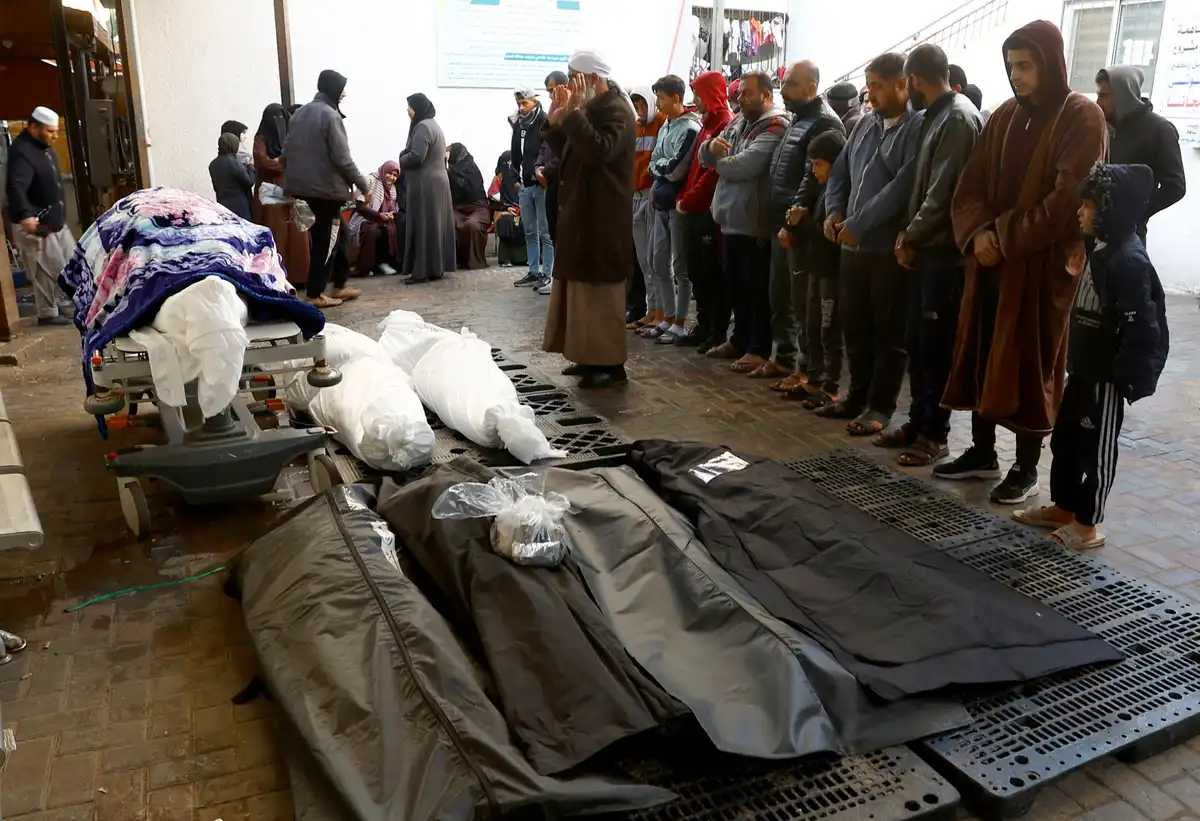
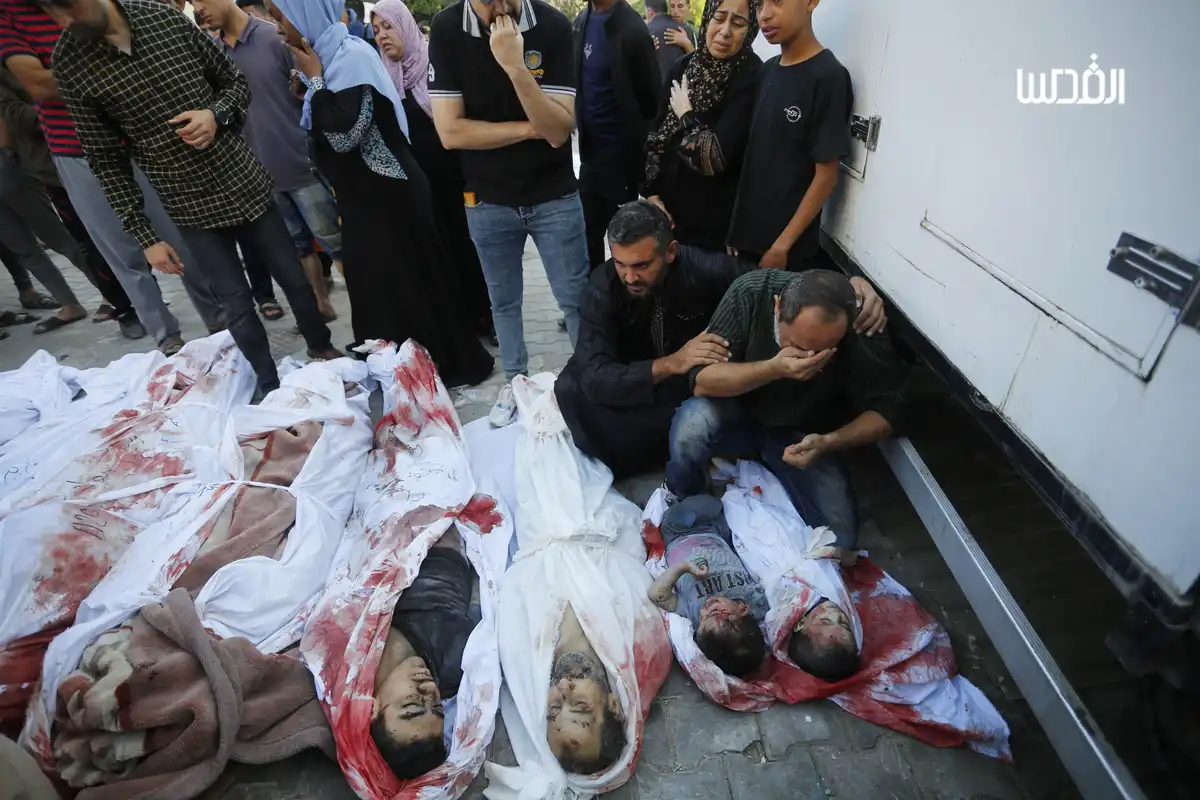
War on Gaza: Israel army committed 16 massacres in the Gaza Strip, killing 150 citizens

The Israeli forces committed 16 massacres against families in the Gaza Strip, claiming 150 killed and 313 wounded, during the past 24 hours.


According to the Ministry of Health in the Gaza Strip, the number of killed by Israeli aggression has risen to 26,900 citizens and 65,949 injured since the seventh of last October.


The Ministry explained that a number of victims are still under rubble and on the roads, as Israeli army prevents ambulance and civil defense crews from reaching them.

PALESTINE

Wed 31 Jan 2024 11:55 am - Jerusalem Time

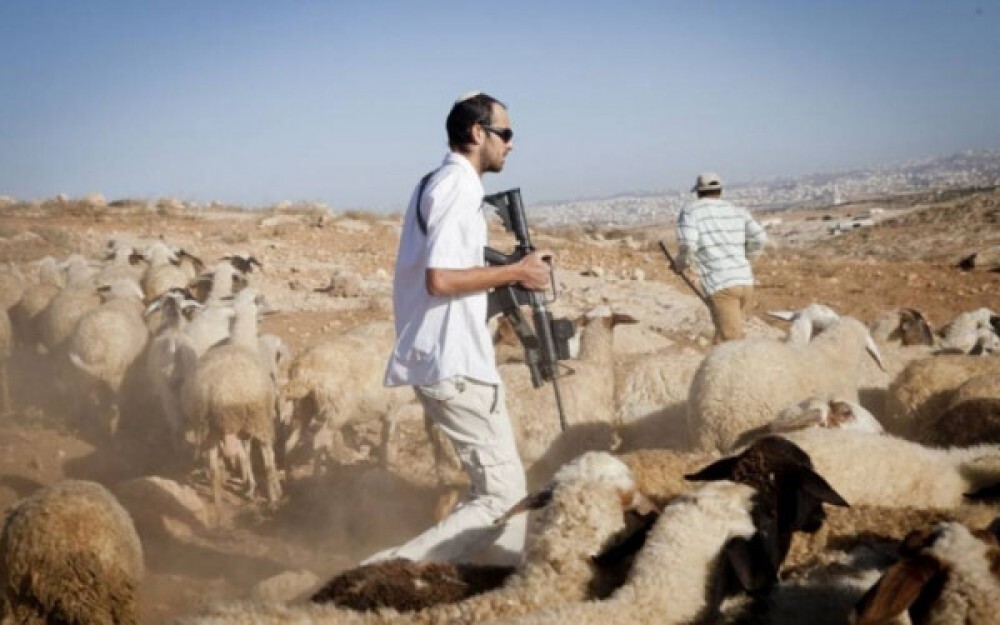
West Bank: Israeli settler tramples a flock of sheep and kills a number of them in Jericho

Today, Wednesday, a settler trampled a citizen’s flock of sheep in the Al-Ma’rajat area, west of Jericho.


According to local sources, the settler deliberately trampled on a herd of sheep belonging to Suleiman Malihat, causing the death of a number of them and stealing a number of others.

PALESTINE

Wed 31 Jan 2024 10:52 am - Jerusalem Time

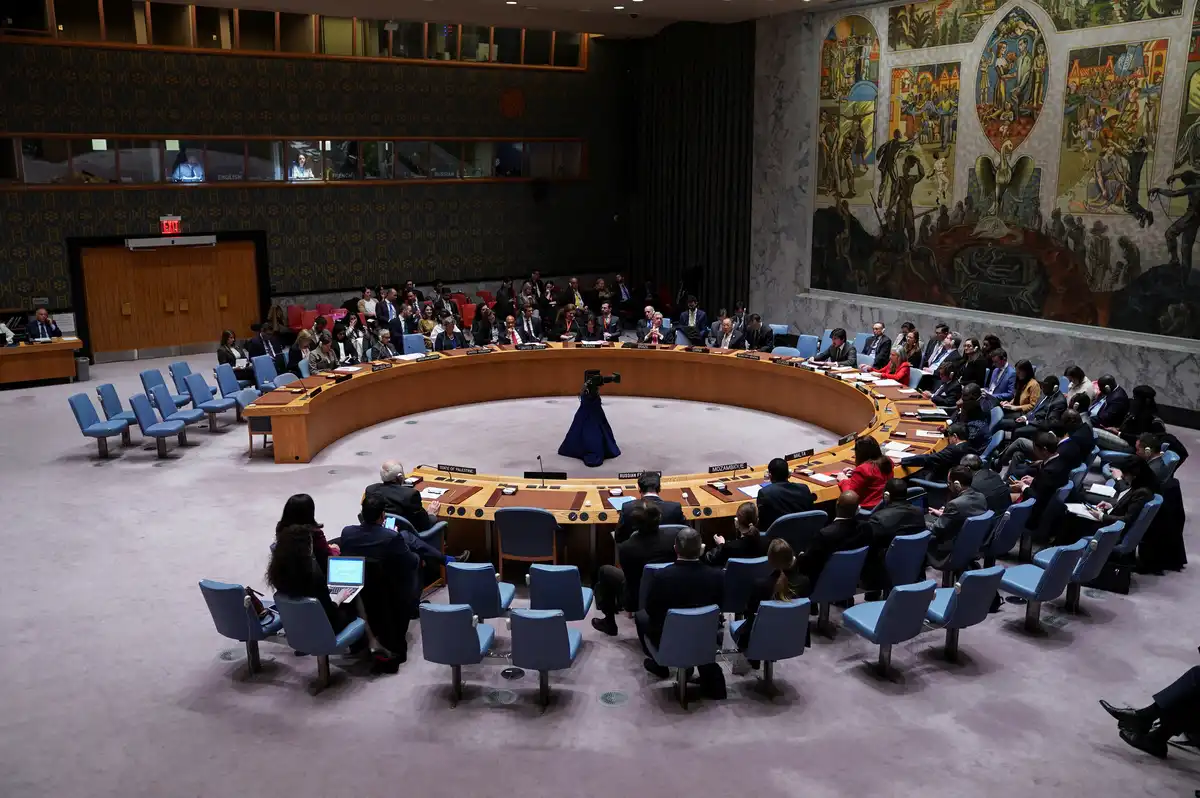
UN Security Council holds a session to discuss the “measures” of International Court of Justice

The Security Council is scheduled to hold a session this evening, Wednesday, to discuss the decision issued by the International Court of Justice to Israel, in order to prevent “genocide” in the Gaza Strip, at the request of Algeria.


The session aims to give binding force to the ruling of the International Court of Justice, regarding the temporary measures imposed on the Israeli occupation.


The Israeli occupation forces have continued their aggression against the Gaza Strip, by land, sea and air, since the seventh of last October, resulting in the death of 26,751 citizens, the majority of whom were women and children, and the injury of about 65,636 others, while more than 8,000 citizens are still missing under the rubble and on the roads.

PALESTINE

Wed 31 Jan 2024 10:48 am - Jerusalem Time

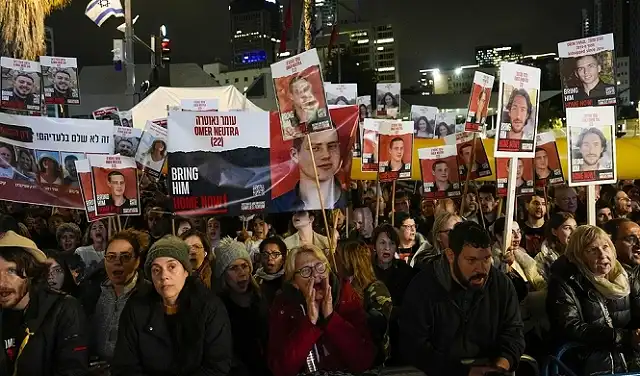
Israeli official: The chances of an exchange deal are high

An Israeli official said, “The possibilities of a prisoner exchange deal between Israel and Hamas are still high, because the US President, Joe Biden, wants to end the war on Gaza, and realizes that the only way to do so is a deal that leads to a long truce, and with the hope that it will become permanent” What Yedioth Ahronoth newspaper reported on Wednesday.


US Secretary of State, Anthony Blinken, will visit Israel, where he will arrive next Saturday evening, to discuss the details of the prisoner exchange deal and the truce, in addition to the issue of the “next day” after the war and the normalization of relations between Israel and Saudi Arabia.


The newspaper also quoted ministers in the political-security cabinet as saying that Israeli Prime Minister Benjamin Netanyahu is “seeking a deal,” but he is “very afraid” that the deal will lead to the withdrawal of the parties of extremist ministers Itamar Ben Gvir and Bezalel Smotrich. They added that Netanyahu does not want a government with the opposition leader, Yair Lapid.


After Ben Gvir threatened that he would topple the government if Israel agreed to the deal that was formulated during a meeting in Paris, last Sunday, which brought together the heads of the Mossad, the CIA, Egyptian intelligence, and the Prime Minister of Qatar, Netanyahu announced, “We will not liberate thousands of terrorists, and we will not withdraw the Israeli army from the sector.”


Ben Gvir wrote on the “X” platform that “a defeatist deal = dismantling the government.” According to the newspaper, although Ben Gvir has threatened to withdraw from the government more than once since the beginning of the war on Gaza, he is serious now, and told those close to him, “I mean every word. There is nothing I can do in a government that implements a defeatist deal. In my opinion, the government does not have a mandate to implement a defeatist deal with Hamas.


Those close to Ben Gvir said that he would withdraw from the government even if the deal included the liberation of a quarter or a third of the number of Palestinian prisoners who would be released, and that they believe that Netanyahu is paving the way for the possibility of liberating half the number of prisoners that are being talked about, and that he will consider this an achievement, according to what the newspaper quoted them as saying.


Meanwhile, the parties to the negotiations on the deal are awaiting Hamas’s response to it, after the head of its political bureau, Ismail Haniyeh, announced yesterday that the deal is being studied. The Hamas delegation visiting Cairo today may present the movement’s response to the proposed deal.


The deal stipulates Israel's release of thousands of prisoners and a truce in the war for a month and a half, in exchange for Hamas releasing a first batch of 35 Israeli hostages. According to the Haaretz newspaper, Netanyahu refuses to pledge to abide by this deal because of the opposition within his government.


The newspaper added that Israel agreed during the negotiators' meeting in Paris that the mediators would transfer their proposal to Hamas. “Israel thus linked itself to a large extent to the mediators’ proposal, even if it did not officially ratify the entire deal.”


The newspaper added that there is “concern” among the extreme right about a long-term ceasefire that will signify the end of the war on Gaza and the continuation of Hamas in power, “at least in the south of the Gaza Strip.” Also, "Netanyahu realizes that the return of a portion of the kidnapped, in exchange for thousands of prisoners, will be interpreted by large parts of the Israeli public as an admission of failure."


The newspaper indicated that Netanyahu is approaching a point where he will have to decide between the position of the extreme right, represented by Ben Gvir and Smotrich, who reject any deal, and accepting the deal. If Netanyahu agrees to the mediators’ proposal, “there is no hope for the government to survive in its current composition.”

OPINIONS

Wed 31 Jan 2024 8:28 am - Jerusalem Time

The Man Who Could Unseat Netanyahu

Anshel Pfeffer

Anshel Pfeffer

Opinion Writer

Just over 100 days ago, Benny Gantz was the leader of a small Israeli opposition party. Now, in a shared office inside a nondescript building within the Defense Ministry compound in Tel Aviv, “Mr.” Gantz is helping lead Israel’s war against Hamas in Gaza as a member of the war cabinet formed by Prime Minister Benjamin Netanyahu. Gantz spends his days poring over operational plans, not just of the ongoing campaign in Gaza but also of contingencies for a war that may erupt with Hezbollah, the Iranian-backed Lebanese Shiite organization, on Israel’s northern border. But the most complex challenge facing Gantz sits with him at the war cabinet table: Netanyahu. He has accused the prime minister numerous times in the past of dividing Israeli society. And since the war began, Gantz’s opinion of Netanyahu — and his estimation of the damage he is causing Israel — has sunk even lower, according to Gantz aides and political allies interviewed for this piece. Several security officials and foreign diplomats were also interviewed about Gantz. Gantz, 64, is in a unique and contradictory position. He is now, essentially, the grown-up in the room of the Israeli government. Many, if not most, Israelis, as well as Israel’s allies, look to him to prevent the radical moves being urged by the government’s far-right members. At the same time, according to polls, he is also the man most likely to replace Netanyahu and his disastrous government. To manage that transition and set the stage for a potential successful premiership will require political deftness, ruthlessness and, above all, an acute sense of timing. In his political career so far, he has yet to prove he has those qualities to the necessary degree. Practically from the moment he entered politics in 2018, Gantz found himself the target of a smear campaign orchestrated by a network of Netanyahu’s supporters. 

Despite this, he agreed to join an emergency government with Netanyahu to help Israel fight the Covid-19 pandemic in 2020. That decision split his party (at the time it was called Blue and White) and cost him a large chunk of voters, and the government fell apart within a few months. Three years later, Gantz is back with Netanyahu once more. 


By all appearances, the war left him no alternative. On Oct. 7, as the scale of Hamas’s devastating surprise attack became evident, Gantz told Netanyahu he was willing to join an emergency government. If he had any concern, it was apparently about the presence of far-right party leaders in the coalition. Judging by the polls, it was the right political move for Gantz. Netanyahu’s popularity has plummeted. If elections were held now, Gantz’s National Unity party would receive the most votes by far. He could form a ruling coalition with ease. Gantz has often told the story of a phone call with his mother, Malka, a survivor of the Bergen-Belsen concentration camp, after rockets from Gaza hit the yard of his childhood home during a previous war with Hamas. 

As he has recounted, she said, “‘If it doesn’t hurt you, then everything’s fine. If it hurts, then you don’t feel it anyway. I’m just asking you one thing: Don’t stop fighting, but also don’t stop providing them food.’ That has become my moral legacy.” It’s a story that positions him perfectly in the Israeli political center: a tough general with morals inherited from his Holocaust survivor parents. Nahum Gantz, Gantz’s father, was an active member of the Labor Party and at one point a possible Knesset candidate. But Gantz himself has tried hard not to be pinned down on either side of the spectrum. Indeed, if Gantz held any political views during his more than 37 years in uniform, he rarely showed them. The first half of his military career was spent largely in the celebrated Paratroopers Brigade, where he rose through the ranks to become brigade commander. Most of his combat experience was in fighting Palestinian militant organizations, and then Hezbollah in Lebanon. Soldiers under his command describe him as brave under fire but deliberate in his decision-making off the battlefield, favoring consensus. 

He even acquired the nickname Benihuta, a play on his name and an Aramaic-Hebrew word for “laid back.” To his superiors, he was the epitome of a paratrooper: respectful of authority, commanding through example without raising his voice. He was fast-tracked through a series of command postings. At 42, he was promoted to major general, and a year later, in 2002, put in charge of the Israeli army’s Northern Command. But after that his career appeared to falter, with two dead-end postings. He seemed to lack the burning ambition and political acumen needed to reach the very top of the greasy pole. He made it there anyway. A dispute in 2009 between Defense Minister Ehud Barak and the Israeli army chief of staff Gabi Ashkenazi over who should become the army’s deputy chief of staff resulted in a compromise candidate: Gantz. 

It was supposed to be his last posting, and he retired in November 2010. But a series of scandals tainted the leading candidates for the top job, and he was called back to serve as chief of staff. Once again, and not for the last time, it was Gantz’s even temperament that got him the job. Though many of the men who preceded him as commander of the armed forces ran for office after stepping away from the military, Gantz’s future in politics when his four-year term in that role ended was far from certain. Many thought he didn’t have the mettle. Though he apparently had reservations regarding Netanyahu and Barak’s plans for attacking Iran’s nuclear installations, as a cabinet minister has confirmed to me, his professional disagreements with his political masters remained hidden from the public. As the 2019 election neared, the absence of a candidate on the center-left capable of challenging Netanyahu led a group of political operatives to strongly encourage Gantz to run. As the former army chief of staff, he was already widely respected by the Israeli mainstream. 

He was such a textbook center-left candidate that, as the leader of the Resilience Party, he effectively forced the other centrist party, Yair Lapid’s Yesh Atid, to merge with his party, and formed Blue and White. The new party nearly drove the other Zionist-left parties, Labor and Meretz, into electoral extinction. Still, Gantz’s first years in politics hardly inspired confidence. He failed to instill a sense of unity in the camp opposing Netanyahu. Constant infighting among the senior factions of his new party and his own team of outside strategists made damning headlines.


The New York Times


ARAB AND WORLD

Wed 31 Jan 2024 8:24 am - Jerusalem Time

Netanyahu Rejects 2 Key Hamas Demands for Any Ceasefire

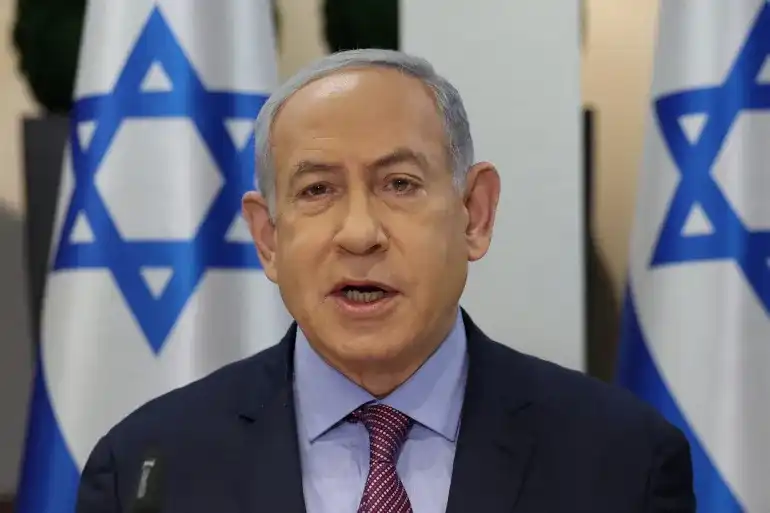
Israeli Prime Minister Benjamin Netanyahu has rejected two key demands Hamas has made during indirect ceasefire talks, saying Israel will not withdraw from the Gaza Strip or release thousands of jailed militants.

During an event Tuesday in the occupied West Bank, Netanyahu again vowed that the war would not end without Israel’s “absolute victory” over Hamas.

Meanwhile, Israeli forces working undercover killed three Palestinian militants in a raid on a hospital in the West Bank, where violence has surged since the outbreak of the war in Gaza.

The Israeli military said forces entered the Ibn Sina hospital in the northern city of Jenin early Tuesday and shot the three men, whom Hamas claimed as members. The military said the men were using the hospital as a hideout and that at least one was planning an attack.

The Palestinian Health Ministry said the Israeli forces opened fire inside the hospital’s wards and called on the international community to stop Israeli operations in hospitals.

Israel’s war against Hamas in Gaza has killed more than 26,000 Palestinians, most of them women and minors, according to the Health Ministry in the Hamas-ruled territory. The ministry does not differentiate between civilian and combatant deaths.

The Oct. 7 attack in southern Israel that sparked the war killed 1,200 people, mostly civilians, and about 250 people were taken hostage, according to Israeli authorities.


OPINIONS

Wed 31 Jan 2024 7:10 am - Jerusalem Time

The War in Gaza Postponed the Emerging US–Israel Crisis, but Intensified It

The Institute of National Security Studies

The Institute of National Security Studies

Opinion Writer

By Chuck Freilich

While the events of October 7 led to a pause in the tensions between Jerusalem and Washington over the “judicial overhaul,” they did not entirely disappear. Now the gaps between the US government and Israel are again widening, mainly over the fighting in Gaza and especially the “day after”


For the past several years—and even more so since the start of the “judicial overhaul”—we have been warning about an impending crisis in relations between the United States and Israel. The war postponed these tensions, which had grown in the months before October 7, but now, following a period of unprecedented strategic cooperation, the gaps are widening around Israel’s handling of the war and “the day after.” The Biden administration is increasingly skeptical that the Israel Defense Forces (IDF) can achieve its military goals and is working to scale back the fighting and move onto the diplomatic stage—the centerpiece of which is an effort to advance the establishment of a Palestinian state as the key to reshaping a new regional order. Decades of frustration and pent-up anger over Israel’s ongoing rejection of fundamental US positions on the Palestinian issue are now erupting, along with a growing sense that Israel does not show gratitude for American support and that Prime Minister Benjamin Netanyahu is positioning himself in opposition to American policy for political gain. Congress is even intensifying efforts to condition military aid to Israel on a shift in Jerusalem’s policies toward the Palestinians. The war may have sidelined the crisis, but its scope and scale are likely to grow—especially after the November presidential election in the United States.


For the past several years—and even more so since the current Israeli government attempted to promote its “judicial overhaul”—the Institute for National Security Studies has been warning about an impending crisis in relations between Israel and the United States. Two primary processes form the backdrop for this assessment: changes in the demography of the United States in general, and its Jewish population in particular, of which are entirely unrelated to Israel; and the ever-increasing gap between the two countries on certain core issues, primarily their policies toward the Palestinians and Iran. The war between Israel and Hamas in the Gaza Strip sidelined the palpable tensions that had built up in the period leading up to the outbreak of the war—tensions that were expressed, inter alia, in harsh criticism by the US administration, which, for the first time, even expressed concern over Israel’s democratic future, not just reservations about some specific Israeli policy. Moreover, there was a prolonged period in which President Biden refrained from speaking with Prime Minister Netanyahu. Now, after three months of unprecedented strategic cooperation, the gaps are widening once again over Israel’s handling of the war and especially its lack of a strategy for “the day after.”


  • The war’s goals and achievements thus far: American intelligence estimates that the IDF has killed only between 20 and 30 percent of Hamas’s fighters, demonstrating the organization’s resilience and casting doubt on Israel’s ability to achieve the military goals it set out for the war. As a result, the United States has reportedly downgraded its expectations of the war, from toppling Hamas, to minimizing the military threat that it poses. Thus, US Secretary of State Anthony Blinken stated that the war’s goal is to “ensure that October 7 never happens again” and that “there is no military solution” to the Hamas problem.
  • The “day after”: Blinken stressed that the region is at an “inflection point . . . that opens up an entirely different future.” Arab countries, he said, including Saudi Arabia, are currently willing to change their policies toward Israel and to grant it “the kind of security assurances and commitments and guarantees that they never would have given in the past” in exchange for the establishment of a Palestinian state. During Blinken’s visit to Israel, unnamed administration officials expressed deep disappointment over Netanyahu’s rejection of US positions (apart from opposition to a possible military strike in Lebanon), including the need for a revitalized Palestinian Authority to take control over both the Gaza Strip and West Bank; the establishment of a Palestinian state; increased humanitarian aid for Gaza; minimal civilian causalities in Gaza; and scaling back the intensity of the fighting there. They also expressed especially harsh criticism over his rejection of Saudi Arabia’s promised willingness to normalize ties with Israel, as well as (according to some reports) the agreement of Saudi Arabia and four additional Arab states, to contribute to the reconstruction of Gaza, as part of a revitalized Palestinian Authority—in exchange for a “path” to Palestinian statehood.
  • A Palestinian state: Spokespersons for the Biden administration reiterated the importance that the United States attaches to the establishment of a Palestinian state, which it sees as the key to forging a new regional reality. In order to downplay disagreements with Israel, the president said that “there are a number of two-state solutions . . . There’s a number of countries that are members of the UN that are still—don’t have their own militaries. Number of states that have limitations.” Biden further rejected the claim that a two-state solution is not possible as long as the prime minister is in his position, adding that he believes an agreement is possible. National Security Adviser Jake Sullivan argued that regional normalization and the establishment of a Palestinian state are achievable in the not-too-distant future.
  • The Iranian context: Blinken stressed that regional normalization, including provision of security assurances by Arab states to Israel, in exchange for the establishment of a Palestinian state, “would create an entirely new region.” In so doing, Iran would be isolated and this would constitute a very strong response to the problems that the Islamic Republic poses for both Israel and the United States.
  • Growing frustration within the administration toward the prime minister and Israeli policy:
    • President Biden was reportedly angry with the Israeli prime minister for rejecting an American request to transfer tax revenue to the Palestinian Authority and consequently refrained from speaking to him for over a month, until January 20. Until then, their war time phone calls took place on average more than once a week.
    • Senior administration officials believe that US plans to reshape the region, which are predicated on the establishment of a Palestinian state, will have to wait for a new government to be elected in Israel. Nevertheless, they stressed that Netanyahu will not be in power forever and that they have even started preparing for “the day after Netanyahu.” Indeed, during his visits to Israel, Blinken met separately with members of the prime minister’s war cabinet, including Minister Benny Gantz, Head of the Opposition Yair Lapid, and figures from civil society.
    • In particularly pointed comments, Blinken said that a reversal had taken place in the attitudes of regional leaders. Whereas, in the past, whenever progress had taken place in the Israeli–Palestinian peace process, it was “Arab leaders, Palestinian leaders, [who] had not done enough to prepare their own people for this profound change. I think a challenge now, a question now: Is Israeli society is prepared to engage on these questions?”
  • Growing criticism in Congress: A proposal by Senator Bernie Sanders to condition US military aid to Israel on the administration’s assurances that that the IDF is not violating human rights or carrying out disproportionate attacks in Gaza, and that Israel is not preventing basic humanitarian aid from entering Gaza, was voted down by a sweeping majority of 72 senators versus 11 Democrats. Following the vote, 18 senators have already joined a new initiative that would condition US military aid to Israel on its adherence to international law, and more senators are expected to sign on. Another initiative, which would prevent the administration from bypassing Congress and approving aid to Israel on its own recognizance, is also underway. These initiatives are unlikely to garner a majority but the very fact that they have been raised at all, in a forum that was heretofore considered staunchly pro-Israel, indicates the deterioration in Israel’s standing. Senator Chris Van Hollen went so far as to say that the Israeli prime minister is more attentive to the extremist ministers in his coalition than to the president of the United States and that he has even “given Biden the finger.” Moreover, 15 Jewish members of Congress expressed joint support for the two-state solution.
  • The upside: Despite the increased criticism, senior American officials have emphasized that the president will not cease his efforts to persuade the prime minister by means of quiet diplomacy, without significant public confrontations. Officials also noted that Israel was paying heed to the administration’s positions regarding the war’s prosecution and had allowed shipments of flour into the Gaza Strip. The administration is continuing its efforts, in coordination with France and other countries, to prevent escalation on the northern border.

Assessment

At the end of three and half months of fighting, the level of discomfiture within the Biden administration over both Israel’s military accomplishments thus far and its diplomatic positions is clearly rising. The administration still remains committed, in principle, to the goal of eliminating Hamas, but is increasingly skeptical about the IDF’s ability to do so. In the absence of expectations for a decisive Israeli military victory, the administration has started to lower its expectations with regard to the war’s outcome and is trying to bring about a faster end to the combat, along with a transition to both focused military operations and the diplomatic stage.

The administration has focused its efforts on an attempt to bring about what has become its primary goal, the establishment of a Palestinian state. The administration is well aware of the difficulties it will undoubtedly face and knows that it will take long and arduous negotiations, but establishment of a Palestinian state has become a virtual panacea for the problem posed by Hamas, achievement of a broader agreement, the means of ensuring Israeli security, a platform for regional normalization, and establishment of a pro-American axis to counter the Iranian threat. Against this backdrop, the administration’s disappointment over the Israeli prime minister’s rejection of American proposals for resuming the peace process is especially pronounced.

Normalization between Israel and Saudi Arabia, and subsequently with other Muslim nations, as part of a comprehensive move to reshape the Middle East around a pro-American, anti-Iranian axis, is the main incentive that the administration is dangling before Israel, in an effort to move it toward an agreement. The administration, drawing on the experience gained from previous spats with Netanyahu, is keen to stave off a public crisis at least for the time being. Biden’s profound emotional commitment to Israel, along with political considerations ahead of the election in November, further contribute to this. Having said that, deliberate administration leaks about “the day after” are an expression of both the White House’s desire to pressure Netanyahu into making progress and an assessment that political change in Israel, which will greatly ease American efforts, may be on the horizon.

The war sidelined the tensions and growing collision course that have characterized US–Israel relations in recent years, primarily over the Palestinian issue and, more recently, over the “judicial overhaul.” After October 7, the administration rallied to Israel’s side admirably—both on the diplomatic and military fronts, in what may have been the most striking demonstration of the American commitment to Israel’s security ever.

Israel, which initially enjoyed sweeping American support in the aftermath of October 7, is increasingly seen in the United States as the party responsible for events in the Gaza Strip. Decades of frustration and pent-up anger at Israel’s ongoing rejection of fundamental American policy, first and foremost the need to advance the two-state solution, are now reaching new heights, especially within the progressive flank of the Democratic Party, but not just there. There is also a growing sense within the administration that Israel does not show gratitude for the exceptional support that the United States has given it, and not only continues to reject American positions, but the prime minister even makes use of his opposition to the US policy for his own political advantage.

Fundamental changes are underway in American demography that are unrelated to Israel, but have a negative impact on the US relations with it—chiefly the rapid growth of population groups that have little affiliation with Israel. The Jewish population too, the vast majority of which is liberal, is moving away from Israel and is disagreeing with many of its policies—especially its young people. The Muslim population in the United States is also growing in size and is becoming increasingly organized politically, including in lobbying groups, and their supporters are increasingly found in positions of influence in the government and the media.

A real crisis in relations is unlikely before the US presidential election, but tensions remains high and the crisis could erupt any time during a second Biden term, or if Donald Trump, who bears a grudge toward Netanyahu and Israel in general, returns to the White House. The danger of American military aid to Israel being conditioned on a change in Israeli policy toward the Palestinians—a position that, until recently, was espoused only among the most radical fringes of American politics—is becoming a real and present threat. The IDF’s long-term force planning is predicated on the continuation of the current 10-year American aid package, which ends in 2028, and a further and even larger one thereafter. These basic assumptions can no longer be taken for granted, and the Israeli government would be well advised to treat this with the utmost seriousness it warrants and to alter its policies accordingly.


Chuck Freilich

Professor Chuck Freilich, a senior researcher at INSS, served for over 20 years in Israel’s national security establishment, as a senior analyst and finally as a deputy national security adviser. After leaving government, he was a long-time senior fellow at Harvard's Belfer Center and taught political science at Harvard College. He continues to teach political science at Tel Aviv University, Columbia and NYU and is the senior editor of the Israel Journal for Foreign Affairs. Freilich specializes in Israel’s national security strategy and policymaking processes, US Middle East policy and US-Israeli relations.


ARAB AND WORLD

Wed 31 Jan 2024 7:07 am - Jerusalem Time

Axios: Netanyahu's advisor in Washington... The day after the war includes normalization with Saudi Arabia

Israeli Minister of Strategic Affairs, Ron Dermer, intends to visit Washington, tomorrow, Wednesday, and meet with White House National Security Advisor Jake Sullivan and other senior officials in the Biden administration.


The American website "Axios" reported, citing two informed sources, that Dermer's visit aims to hold talks about the "war" on Gaza, and "Israel's" plans for the next day after the end of the fighting.

But the site also revealed that “the Biden administration’s post-war strategy is likely to be part of Dermer’s discussions in the White House,” noting that “the Biden administration hopes to use a potential historic peace agreement between Israel and Saudi Arabia as a means of pressure to convince Israel of its plan for Gaza after the war.”


Under the American strategy, “Netanyahu will ultimately have to decide what kind of political blow he will receive domestically, in order to obtain a historic normalization agreement,” according to the American website.


"Axios" stated that "Dermer is the closest and most trusted confidant of Israeli Prime Minister Benjamin Netanyahu, and that he has a key insight into Netanyahu's thinking, including the post-war US strategy to link possible normalization between Israel and Saudi Arabia to establishing a path to establishing a Palestinian state." ".


He stated, "Before the October 7 attack, Dermer was responsible for Israel's role in the talks that the Biden administration tried to reach with Riyadh with the aim of normalizing relations."


This comes in conjunction with US Secretary of State, Anthony Blinken, intending to visit the occupied Palestinian territories next Saturday, his sixth visit since October 7, “in order to discuss the situation in Gaza and the day following the war.”

ARAB AND WORLD

Wed 31 Jan 2024 6:58 am - Jerusalem Time

“Waiting for Hamas’ response.” A plan for a ceasefire in Gaza

Reuters quoted "informed sources" as saying that the Hamas movement is studying a three-stage plan for a ceasefire in the Gaza Strip that will secure the release of most Israeli prisoners, but it does not obligate Israel to end its war with Hamas.


The success of the plan depends on whether or not Hamas will agree to the first phase without agreeing to end the war permanently, which has been a core demand of Hamas so far. The plan was prepared by the heads of the intelligence services in the United States, Israel, and Egypt, as well as the Qatari Prime Minister, according to Reuters.


Sheikh Mohammed bin Abdul Rahman Al Thani, Prime Minister of Qatar, said on Monday that they do not know Hamas' response and cannot predict it.

Hamas told Reuters in a statement on Tuesday that the proposal would include three stages, including the release of prisoners held by the movement and of Palestinian prisoners in Israel. The statement confirmed some details of a framework presented to Reuters by two sources familiar with the proposal.

The statement stated that women, children, the elderly and the injured would be released in the first phase and that the plan was sent to Gaza to obtain the opinion of Hamas leaders there. The statement added: "Then the Hamas leadership will meet to discuss the paper and express its final opinion on it."

More than 100 Israeli prisoners are still being held, after a similar number were released in a previous truce in November that included the release of dozens of Palestinians.


Versions of the ceasefire framework consisting of several stages have been under discussion since late December, but Israel did not sign the initial version until the meeting of David Barnea, director of the Israeli intelligence agency Mossad, with his American and Egyptian counterparts and the Prime Minister of Qatar in Paris on Sunday.


Egyptian sources said that Qatar, Egypt and Jordan will ensure that Hamas adheres to any agreement, while the United States and France will do the same with the Israeli side.


This comes as Ismail Haniyeh, head of Hamas' political bureau, announced on Tuesday that he will visit Cairo to discuss the plan. Haniyeh says that Hamas is open to all ideas that will lead to an end to Israel's attack on Gaza.


Women, children and the elderly

A source familiar with the Paris talks and another source with deep knowledge of the talks and their results said that the first phase of the plan will include temporarily stopping the fighting and releasing prisoners of old, civilians, and children. The two sources stated that sending large shipments of food and medicine to the Gaza Strip, which is facing a severe humanitarian crisis, will resume.


The two sources disagreed on the duration of the first phase of the ceasefire, but they said that it would be set for at least a month.


The two sources said that the second phase will witness the release of Israeli female soldiers and a further increase in the delivery of aid and the restoration of services and facilities to Gaza, and that the third phase will witness the release of the bodies of dead Israeli soldiers in exchange for the liberation of Palestinian prisoners.


The Hamas statement stated that the second phase would also include the release of Israeli recruits.


The statement stated: “Military operations on both sides will stop during the three stages.” The statement added: "The number of people required to be released from the Palestinian side has not been determined, and the matter is left to the negotiation process at every stage, with the Israeli side preparing to release those with high convictions."


The two sources said that although Israel has not committed to a permanent ceasefire, the desired goal of the phased approach is the fourth phase in which the war will end and Hamas will release all detained male Israeli army soldiers in exchange for Israel releasing more Palestinian prisoners.


An official familiar with the negotiations said: “There is agreement on the principle of the framework, but the precise details of each stage still need to be determined.”


The official added that if Hamas agrees to the framework proposal, it may take days or weeks to agree on the logistical details of the ceasefire and the release of prisoners and detainees.


A source familiar with the talks that preceded the truce in November said that during those talks, the chain of indirect communications between Hamas leaders in the Gaza tunnels and Israeli officials was interrupted several times due to a power outage amid the fierce fighting.


The current behind-the-scenes talks are taking place side by side with a public dispute in which both sides of the conflict appear to want to pressure the other by issuing statements that rule out many possible settlements.


Israeli Prime Minister Benjamin Netanyahu said on Tuesday that Israel will not leave Gaza or liberate thousands of Palestinian prisoners, while the Islamic Jihad movement stated that it will not participate in any understanding regarding the prisoners except by ensuring a comprehensive ceasefire and the withdrawal of Israeli forces from Gaza.


Itamar Ben Gvir, the far-right partner in Netanyahu's coalition, threatened on Tuesday to withdraw from the government if there was any attempt to enter into an "uncalculated" agreement with Hamas regarding the prisoners.


"What really matters"

It is not clear whether the declared positions reflect developments taking place behind closed doors.


The Prime Minister of Qatar said on Monday in a symposium organized by the Atlantic Council in Washington via the Internet that the framework agreed upon by the Paris parties depends on the terms of the first proposal presented by Israel and the corresponding proposal by Hamas.


He explained: "We tried to combine the proposals to reach a platform that all parties agree on."


For his part, the source with deep knowledge of the proposal noted that it could still be amended. He told Reuters: “The number of days or prisoners can be changed, but the current approach to negotiation allows achieving gains for all parties according to what interests them.”


The source with in-depth knowledge added that the discussions in Paris were “fruitful,” but an agreement could only be achieved if Hamas and Israel received strong guarantees from the mediators.

The source said that keeping the male captive Israeli soldiers until the end may give Hamas a feeling that it has some influence over the Israeli army.


Reuters

ARAB AND WORLD

Wed 31 Jan 2024 6:55 am - Jerusalem Time

Because of his refusal to open an investigation into the genocide in Gaza, Tunisian associations are suing Karim Khan

Representatives of Tunisian civil society organizations and figures announced the filing of a judicial complaint with the Tunisian courts against the Prosecutor of the International Criminal Court, Karim Ahmed Khan, due to his “refraining” from opening an investigation into the crime of genocide committed by the Israeli occupation forces in the Gaza Strip.


During a press conference on Tuesday in the capital, Tunisian national figures denounced “the refusal of the Prosecutor of the International Criminal Court to address, with the powers he possesses, the crime of genocide taking place before his eyes against the Palestinian people, the facts of which were documented by organizations, coordination and countries in files presented to him.”

Lawyer Adnan Al-Imam confirmed to Radio Mosaique that “this criminal lawsuit submitted is based on the fact that Karim Ahmed Khan has the authority to open an investigative investigation into the events of the crime of genocide, which he was fully aware was being committed against the Palestinian people in Gaza, and that Chapter 15 of the Rome Statute enables him to open “Investigation of purpose.”

He added, “Ahmed Khan was an eyewitness to this, given that he moved to Rafah and witnessed the denial of medicine, water, food, electricity, and all basic life facilities to the Palestinian people. He contented himself with general statements, while it was clear from the statements of senior Zionist officials that they intended to commit the crime of genocide against the people.” This was confirmed by the events that led to the killing of tens of thousands of civilians, most of them children and women, in addition to the destruction of more than 320,000 homes.”

The International Court of Justice ordered Israel to take measures to prevent genocide against Palestinians and improve the humanitarian situation in the Gaza Strip, but it did not call for a ceasefire in Gaza.

ARAB AND WORLD

Wed 31 Jan 2024 6:51 am - Jerusalem Time

The Intercept: American forces in Iraq were prepared to participate in the war on Gaza

Military documents revealed that the US military was prepared for the possibility of American forces stationed in Iraq participating in the Israeli ground war on Gaza despite President Joe Biden’s repeated promises not to send troops to the region, according to the “Intercept” website.


A memo issued by US Air Force personnel last January, obtained by The Intercept, describes military orders to remain “ready for forward deployment to support forces in the event that the United States becomes involved on the ground in the Gaza war.”


According to a separate personnel document, the reserve order relates to individuals who were deployed last year to Iraq.


While the documents do not indicate that US ground military intervention in the war is imminent, the January memo is the latest indication of the Pentagon’s preparations to support Israel in the wake of Operation Al-Aqsa Flood. Days after the attacks, the US military reportedly placed 2,000 soldiers on readiness orders for deployment to elicit possible support for Israel, albeit from neighboring countries – orders that were confirmed by a procurement document obtained by the site.


The Department of Defense did not respond to a request for comment on the staff memo on readiness for ground engagement, but the White House has stressed in the past that its support for Israel in the Gaza war will not include the deployment of ground forces.


White House national security spokesman John Kirby said: “There are no plans or intentions to deploy US troops on the ground in combat in Israel.” “But as we also said, we have significant national security interests in the region.”


Two days after Kirby's comments, the White House inadvertently shared a photo of President Joe Biden in Israel standing alongside members of secret US special operations units, before quickly deleting it.


The New York Times reported in late October that US special operations personnel were in Israel to assist in hostage rescue efforts.


The documents obtained provide a stark reminder of the pervasive US military presence in the Middle East, with personnel deployed to areas where many Americans believe the mission is long over - and how quickly such orders can be repurposed in new conflicts.


The records include, for example, individuals deployed to Iraq in support of Operation Inherent Resolve, the name the US military gives to the war against the Islamic State. Although ISIS was expelled from its last strongholds years ago, the war continues, providing the legal basis for the continued US military presence in Iraq and Syria.


Former President Donald Trump wrote on Twitter in December 2018, saying: “We defeated ISIS in Syria, which is the only reason we were there during the Trump presidency.”


Shortly thereafter, Trump announced that US forces in the country "will all be back," and Trump later announced that all US forces in Iraq would be withdrawn as well.


Despite these announcements, US forces remained in Syria as well as in Iraq, where they remain to this day. The White House said the deployments are “part of a comprehensive strategy to defeat ISIS.” “To reduce the potential resurgence of these groups and mitigate threats to the United States homeland.”

ARAB AND WORLD

Wed 31 Jan 2024 6:42 am - Jerusalem Time

What does the latest opinion poll in "Israel" say?

An Israeli public opinion poll, the results of which were published this evening, Tuesday, showed that a majority of Israelis support completely preventing aid from Gaza, until the return of the Israeli hostages held in the Strip.


The Israeli Channel 12 poll also showed the continued lead of the “National Camp” led by the minister in the war cabinet, Benny Gantz, and its lead by a large margin over the Likud led by Israeli Prime Minister Benjamin Netanyahu. It also indicated that the first, in addition to the member of the Israeli “war cabinet,” Gadi Eisenkot; they are ahead of Netanyahu in which of them is “best suited” to assume the position of prime minister.


The survey participants were asked about the extent of their approval of a prisoner exchange deal, which includes the release of 35 Israeli hostages held in Gaza, in exchange for the release of thousands of prisoners from occupation prisons, and a 45-day truce. 50% said they opposed this, while 35% said they supported it. 12% answered, “I don’t know.”


When survey participants were asked whether humanitarian aid to Gaza should be halted until the hostages held in the Strip are recovered; 72% of the survey participants confirmed their support for stopping it, while only 21% of the respondents said that it should not be stopped, while 7% answered, “I do not know.”


61% of the survey participants believed that an investigation committee should be formed into the Israeli failure, following the surprise attack launched by Hamas on the 7th of last October, during the war, while 32% said that it should be formed immediately, while 3% of the respondents believed there is no need to form such a committee. 4% said: “I don’t know.”


Gantz is getting stronger... Netanyahu is suffering

According to the results of the Channel 12 poll, the National Camp leads in the results of today’s elections, obtaining 37 seats out of 120, while Likud comes in second, obtaining 18 seats.


The poll showed that the "Yesh Aited" party, headed by the leader of the Israeli opposition, Yair Lapid, received 14 seats, and the ultra-Orthodox "Shas" party obtained 10 seats.


The poll also showed that the Yisrael Beytenu party, headed by Avigdor Lieberman, obtained 8 seats.


The "Otzma Yehudit" party, headed by extremist Itamar Ben Gvir, also gets 8 parliamentary seats, while the Haredi "United Torah Judaism" list gets 7 seats.


According to the results of the poll, the Front/Arab List for Change gets 5 seats, and the “Unified Arab List” gets the same number.


According to the poll, “Religious Zionism” gets 4 seats, and the “Meretz” movement also gets 4 seats.


The National Democratic Rally Party received 2.3% in the poll, after it had obtained 2% in a previous poll that the channel had conducted on the 11th of this month. The Labor Party obtained 1.6%.


Which of them is best suited to head the government?

Regarding which Israeli officials are more suitable for the position of prime minister, 41% of respondents said that Gantz is more suitable for the position than Netanyahu, while the current prime minister receives a comparison with him, with a rating of 23% of respondents.


In a comparison between Eisenkot and Netanyahu, the former leads and receives 36% of the votes of the survey participants, while Netanyahu receives 24% of the people who believe that he is most suitable for the position.


In a comparison between Netanyahu and Lapid, the former has a slight lead, as he receives 29% of the votes of the poll participants, while Lapid receives 27% of the people who believe that he is most suitable for the position.

PALESTINE

Tue 30 Jan 2024 10:46 pm - Jerusalem Time

The most prominent developments on the 116th day of the Israeli war on Gaza

On the 116th day of the ongoing Israeli aggression on the Gaza Strip, the occupation committed 13 new massacres, claiming the lives of more than 114 citizens, amid violent clashes between the resistance and the occupation forces near the Shifa Medical Complex.


Fighting in Gaza

The Israeli army said it used a mechanism to flood tunnels with water to destroy the tunnel network of the Islamic Resistance Movement (Hamas) in Gaza.


The army announced that 26 soldiers were injured during the past 24 hours, including 7 who were injured in the battles in the Gaza Strip. It also confirmed that the number of its wounded had risen to 2,797 since the beginning of the war, including 1,283 who had been injured since the start of the ground attack on October 27 last year.

For its part, the Civil Defense in Gaza confirmed that the occupation army blew up entire residential squares in the Tal al-Hawa neighborhood and areas west of Gaza City, and added that the occupation also bombed Jabalia, north of the Strip.


The Palestinian Red Crescent said that the Israeli occupation army stormed the association’s building and Al-Amal Hospital in Khan Yunis, and demanded their evacuation at gunpoint and the disruption of communications.


The Ministry of Health in Gaza reported that the number of victims of the Israeli war on the Gaza Strip had risen to 26,751 dead and 65,636 wounded.


Resistance

The Izz al-Din al-Qassam Brigades said that “its mujahideen targeted an Israeli Merkava tank with an Al-Yassin 105 shell, and clashed with soldiers who were around it, leaving them dead and wounded in the axis west of Gaza City.”


Al-Qassam added - in an independent statement - that it targeted an Israeli tank with an “Al-Yassin 105” shell in the axis northwest of Gaza City.


For its part, the Al-Quds Brigades - the military wing of the Islamic Jihad Movement - said that it "targeted 4 Zionist tanks with RPG shells in the Al-Arayshiyah and Jourat Al-Aqqad areas, west of the city of Khan Yunis, south of the Gaza Strip."


West Bank

The Palestinian Prisoners' Club reported that the occupation forces arrested 18 Palestinians since Monday evening in the occupied West Bank, bringing the number of detainees to 6,390 since last October 7. They also carried out a number of raids into areas and towns in the West Bank.


An Israeli special force from the undercover "Musta'ribin" unit assassinated 3 young Palestinians inside Ibn Sina Hospital in the city of Jenin. It explained that Israeli forces stormed the hospital located in the western area of the city in light of violent clashes.


Lebanon Front

Lebanese Hezbollah said that it targeted Israeli spy equipment opposite the southern village of Wazzani, and announced that it had targeted with missiles a gathering of Israeli army soldiers in the vicinity of the Hadab Yarin site.


Occupation Army Radio reported that Israeli artillery bombed sites in southern Lebanon, from which 3 shells were fired at Western Galilee, two of which fell near the Arab Aramsha area, while the last fell in an open area.


Israeli statements regarding the end of the war

Army Radio quoted the Israeli Minister of Immigration and Integration, Avir Sofer, as saying that the war on Gaza may continue until after 2024, and perhaps until 2025 and 2026.


Israeli Defense Minister Yoav Galant said that Israel would retain military control over the Gaza Strip after the war.


Exchange deal

Reuters quoted the head of the political bureau of the Islamic Resistance Movement (Hamas), Ismail Haniyeh, as saying that the movement had received a proposal from Paris for a ceasefire, and would study it to respond to it.


For his part, John Kirby, spokesman for the National Security Council at the White House, announced that progress had been made towards reaching a long truce and releasing the “hostages.”


He said that National Security Advisor Jake Sullivan met with Qatari officials today to discuss the issue of "hostages" held by Hamas.


In turn, US Secretary of State Anthony Blinken said that the talks regarding the detainees are important and give rise to hope, and that the proposed proposal regarding the detainees is strong and convincing, and there is great agreement among the countries concerned about its strength.


Israeli opposition leader Yair Lapid pledged to provide Benjamin Netanyahu's government with a safety net for any deal that would return Israeli prisoners held by the resistance in Gaza.


Gallant added, "After the end of the war, I think it is completely clear that Hamas will not control Gaza, and Israel will impose its control militarily, not civilianly," without details.


UNRWA

21 international non-governmental organizations expressed their "dissatisfaction" with the announcement by 12 countries of suspending their funding to the United Nations Relief and Works Agency for Palestine Refugees (UNRWA) at a time when Gaza is witnessing a "humanitarian catastrophe."


Response to the Al-Tanf attack: US President Joe Biden said that he decided how to respond to the attack that targeted American forces at the Al-Tanf military base in Jordan.


At the same time, Biden stated that he does not want a broader war in the Middle East. Three American soldiers were killed in a drone attack on an American base in Jordan two days ago.


On the other hand, Iranian sources told Al Jazeera that America sent more than one message to Tehran during the past two days via third parties, and that Washington’s messages confirmed that it did not want an open war, and warned that expanding the war would be met with American action. Those Iranian sources said that Tehran rejected Washington’s threats, and considered targeting its territory is a red line that will be met with an appropriate response.


Source: Al Jazeera

PALESTINE

Tue 30 Jan 2024 8:23 pm - Jerusalem Time

War on Gaza: 11 killed and several injuries in an Israeli bombing that targeted a house in Deir al-Balah

At least 11 citizens were killed and others were injured, Tuesday evening, after the Israeli occupation bombed a house in Deir al-Balah in the central Gaza Strip.


Israeli army also bombed a house in the Bureij camp in the middle of the Gaza Strip, resulting in a number of wounded, who were transferred to Al-Aqsa Martyrs Hospital. Three citizens were injured when Israeli forces targeted a group of citizens east of Al-Bureij camp.


The occupation warplanes also launched raids on the Nuseirat camp in the middle of the Gaza Strip, on the northern area of the town of Beit Lahia in the north of the Gaza Strip, and on the eastern area of Khan Yunis in the south of the Gaza Strip.
Israeli forces fired shells randomly at citizens' homes in the Al-Sina'a area, west of Gaza City.


Local sources reported that the bodies of dozens of killed were scattered in the streets west and southwest of Gaza City as a result of the continuous bombing and shooting from the occupation tanks and drones.

A child was killed by Israeli bullets near Al-Shifa Hospital, west of Gaza City.


Earlier this evening, Israeli vehicles stormed the courtyard of Al-Amal Hospital in Khan Yunis.


The Israeli army also bombed a house near the Nasser Medical Complex in Khan Yunis, resulting in a number of killed and wounded.


A female citizen was killed and others were injured in an Israeli raid that targeted a house in the vicinity of Sheikh Jaber School in Khan Yunis camp.


The Israeli forces have continued their aggression against the Gaza Strip, by land, sea and air, since the seventh of last October, resulting in the death of 26,751 citizens, the majority of whom were women and children, and the injury of about 65,636 others, while more than 8,000 citizens are still missing under the rubble and on the roads.

ARAB AND WORLD

Tue 30 Jan 2024 6:41 pm - Jerusalem Time

Hebrew News Paper: Who really decides Biden's policy toward Israel and Gaza?

The participation of senior American officials was initially aimed at providing expertise and direct experience, as well as what was often described as “asking difficult questions,” in the context of the “bear hug” strategy pursued by US President Joe Biden, using public support to take advantage of public pressure. But as the war continued unabated and the American point of view was ignored, these officials were tasked with managing relations as tensions rose.


With this introduction, Haaretz newspaper opened an article by Ben Samuels in which he tried to shed light on the narrow team that is managing the reality of Biden’s policy towards Israel and Gaza, whether it is related to negotiations to recover Israeli detainees in Gaza, or preventing the Gaza war from spreading to Lebanon and across the Middle East, or ensuring that it does not escalate. The humanitarian crisis in Gaza, or by maintaining Israel's diplomatic standing regionally and globally, or by trying to revitalize the Palestinian Authority on the path towards a two-state solution after the war, or perhaps by a growing list of concerns.


Narrow circle

It includes five officials, starting with Secretary of State Antony Blinken, who effectively serves as a barometer for the administration's response, and whose speeches during his many shuttle trips in the months following the attack provide the United States' view of the facts on the ground, and what they reflect of the steadily growing concern about the humanitarian crisis in Gaza. Israel failed to limit civilian casualties.


The “five nos” in his speech in Tokyo on November 8, 2023, summarized the American principles regarding the Gaza war and the future of the Israeli-Palestinian conflict, which are: “No forced displacement of Palestinians from Gaza now or after the war, no to using Gaza as a platform, no reoccupation.” Gaza after the end of the war, neither to siege or close Gaza, nor to reduce the area of Gaza, but it must also ensure that there are no terrorist threats from the West Bank.”


US National Security Advisor Jake Sullivan, especially through his top deputy John Viner and senior Middle East advisor Brett McGurk, is considered the closest voice to Biden's ear on all foreign policy matters.


They were among the strongest advocates for re-prioritizing Israeli regional integration before October 7, until the attack by the Islamic Resistance Movement (Hamas) turned this approach upside down.


Since then, they have intensified their efforts publicly and privately to stimulate Israeli-Saudi normalization as a path toward a two-state solution.


National Security Council spokesman John Kirby was the most prominent official to speak out on the war, and he won the praise of the pro-Israel American Jewish establishment for his steadfast defense of Israel's right to self-defense and rejection of accusations of genocide.


Senior officials

The newspaper pointed out that Kamala Harris, US Vice President, was deliberately exploited in foreign policy, and her speech at the 28th Climate Summit, in which she urged Israel to make more efforts to protect civilians, led many observers to believe that she was exposed to playing the “dirty” role, but Her Jewish husband, Doug Emhoff, served as the face of the administration to combat growing domestic anti-Semitism caused by the war.

As for the US Ambassador to the United Nations, Linda Thomas-Greenfield, she was increasingly isolated on the global stage, as the majority of countries in the world demanded that Israel change its course in Gaza to better protect civilians and significantly increase humanitarian aid, while the United States was using its veto power against the resolution. He calls for a ceasefire almost alone.


US Ambassador to Israel Jack Lew, who was urgently appointed within weeks after October 7, has served as a key interlocutor on the ground between the US and Israeli governments, particularly regarding the distribution of humanitarian aid in Gaza, as well as efforts to halt firing, keeping the Palestinian Authority solvent amid settler violence inside the West Bank, and the Israeli government continuing to withhold Palestinian tax revenues.


Detainee negotiations

Although McGurk is involved in every aspect of the conflict, his interest is increasingly focused on efforts to negotiate over detainees as a key to ending the war and the transition to normalization and efforts for a two-state solution, but it is CIA Director Bill Burns who is leading the negotiations over detainees.


Burns' efforts are supported by Roger Carstens, who works in the State Department as a special US presidential envoy for detainee affairs, and his deputy, Stephen Gillen, who traveled to Israel alongside Blinken immediately after October 7 and remained there to work with the families of the detainees.


US Secretary of Defense Lloyd Austin remained in constant contact with his Israeli counterparts, Defense Minister Yoav Gallant and IDF Chief of Staff Herzi Halevy, where he received tactical updates about Israeli military operations, presented his own experiences and lessons about urban warfare, and worked to strengthen the American military position as a potential deterrent to Iran and its proxies. Regionalists.

As the war developed and tensions increased on the Lebanese border and with the Houthis in the Red Sea, he was tasked with conveying US dissatisfaction with Israeli tactics due to the regional implications.

Biden's senior envoy to Lebanon, Amos Hockstein, has been tasked with finding a diplomatic solution to a potential agreement to create a de facto buffer zone, moving toward an eventual long-term border agreement.


Humanitarian crisis

Although Biden did not appoint a special envoy to supervise the Israeli war on Gaza, he appointed David Satterfield as a special envoy for the humanitarian crisis in Gaza days after the war.


Satterfield has worked with the Israeli government to expand humanitarian aid entering Gaza as the risks of famine and disease grow, and he has defended the freedom of movement of Palestinians in Gaza and the need for new mechanisms to prevent clashes, Haaretz says.


For her part, USAID Director Samantha Power played an important role in coordinating American efforts to provide humanitarian assistance to the Palestinians, as she traveled to Egypt and supervised the delivery of 500,000 pounds of food aid and tens of millions of dollars in supplementary aid, with the establishment of a field hospital and the expansion of aid to include goods. Commercial.


Despite the progress that has been made in transporting flour through the port of Ashdod, simplifying the process of delivering aid through the Kerem Shalom crossing, and allowing the United Nations mission to visit northern Gaza to assess the possibility of the return of displaced Palestinians, senior American officials realize that their efforts face major obstacles, the newspaper says.


Palestinians

Sullivan directly discussed the need for reforms within the Palestinian Authority during his meeting with Palestinian President Mahmoud Abbas, including steps to revitalize leadership, and the need for PA security forces to help maintain order in the West Bank and play a potential role in post-war Gaza.


At the same time, senior State Department officials are working to maintain relations with the Palestinian Authority, whose current and future role as a governing body for the Palestinians has become a point of contention between the United States and Israel.


Indeed, Hadi Amr, the US Special Representative for Palestinian Affairs, visited Ramallah to meet with Prime Minister Muhammad Shtayyeh, who stressed the need for an immediate ceasefire as well as the ongoing financial pressures facing the Palestinian Authority due to withheld tax revenues.

Other senior State Department officials, such as Principal Deputy Assistant Secretary Henry Wooster, Senior Middle East Diplomat Barbara Liff, Advisor Derek Chollet, US Security Coordinator Lt. Gen. Michael Fenzel, and Deputy Assistant Secretary of State for Israeli-Palestinian Affairs Andrew Miller, have played roles in Communicating with Israeli, Palestinian, and Jordanian officials, they spoke about the need for internal reform in the Palestinian Authority, as well as the dangers of settler violence.


Liv seeks to communicate with Arab allies regarding reconstruction plans, post-war administration, and normalization between Israel and Saudi Arabia, and is assisted in this by two of Harris’ senior advisors, Phil Gordon and Ilan Goldenberg.


Source: Haaretz

ARAB AND WORLD

Tue 30 Jan 2024 6:40 pm - Jerusalem Time

The Washington Post: The United States is pressuring Israel and Hamas to reach a truce

The Washington Post reported that the United States has increased its pressure on Israel and Hamas for fear of a further escalation of the conflict, and is trying to urge the two sides to reach a truce.


The newspaper, quoting unnamed American officials, said that the American administration has become increasingly concerned in recent weeks about the escalation of the situation in the Middle East. Washington began exerting diplomatic pressure on Israel and Hamas after the attacks launched by the Houthis in the Red Sea and the retaliatory strikes by the United States and its allies.


It indicated that the American authorities intend to reduce the intensity of hostilities in the region and focus again on diplomatic efforts to normalize relations between Israel and Saudi Arabia.


A source familiar with the negotiations held in Paris over the weekend told NBC that negotiators from Israel, the United States, Egypt and Qatar reached a new agreement for the gradual release of the hostages, which will be accompanied by periods of cessation of hostilities.


The head of the Hamas Political Bureau, Ismail Haniyeh, affirmed, “The movement is open to discussing any serious and practical initiatives or ideas, provided that they lead to a comprehensive cessation of aggression and securing the shelter process for our people and people.”


Israeli Prime Minister Benjamin Netanyahu stated that Israel "will not end this war without achieving all its goals," and "this means eliminating Hamas, returning all the hostages, and ensuring that Gaza no longer poses a threat to Israel."

ARAB AND WORLD

Tue 30 Jan 2024 6:36 pm - Jerusalem Time

Netanyahu: “We will not liberate thousands of terrorists, and we will not withdraw the Israeli army from the Gaza Strip.”

Israeli Prime Minister Benjamin Netanyahu announced that “we will not liberate thousands of terrorists and we will not withdraw the Israeli army from the Gaza Strip.” Netanyahu's statements come after National Security Minister Itamar Ben Gvir threatened to topple the government if a prisoner exchange deal with Hamas was approved.


Netanyahu said during a speech in the “Eli” settlement, a stronghold of extremist settlers in the West Bank, “I hear talk about types of deals, so I would like to make clear: We will not end this war with less than achieving all the goals. This means eliminating Hamas, returning our kidnappers, and ensuring “Does Gaza no longer pose a threat to Israel?”


Netanyahu added, "We will not withdraw the Israeli army from the Gaza Strip, and we will not liberate thousands of terrorists. All of this will not happen. What will happen? An absolute victory."


He continued, "This is not 'another round of combat,' and there will no longer be an exchange of blows, nor any more military operations. An absolute victory. And nothing less than this. I am committed to this, our soldiers are committed to this, and the overwhelming majority of the people are committed to this. We will not compromise." "No less than an absolute victory."


Before that, the head of the Israeli opposition, Yair Lapid, said that the Yesh Atid party he heads would support the government if it decided to ratify a prisoner exchange deal with Hamas. And later,

A statement issued by Lapid said, "We will give the government a safety net for any deal that returns the kidnapped people to their homes and families. This is our commitment to the kidnapped people and their families, and this is our duty."


Lapid added, “The first clause in the contract between the state and its citizens says that the state is responsible for their lives. This contract was violated on October 7. We cannot bring our dead back to life, but we must return the kidnapped people to their homes, otherwise something very essential will be destroyed.” “In our connection to others, in the relationship between a people and their land, and certainly in the basic trust between the citizen and the government. This must not happen.”


Lapid's statement comes in the wake of Ben Gvir's threat to topple the government if it agrees to a prisoner exchange deal, which was negotiated in Paris the day before yesterday. He wrote on the "X" platform that "a defeatist deal = dismantling the government."


Officials from Israel, Qatar, and the United States participated in a meeting held in Paris, including the head of the Mossad, the head of the CIA, the head of Egyptian intelligence, and the Prime Minister of Qatar.


The head of the Hamas political bureau, Ismail Haniyeh, announced that the movement is studying the deal.


The Ynet website quoted officials in Yesh Atid as saying that Lapid is ready to join the government in order to help pass a prisoner exchange deal, and to remain in the government for a limited period. They stressed that Lapid would not grant Netanyahu unlimited credit, but rather a temporary membership in the government in order to overcome Ben Gvir's threats.

OPINIONS

Tue 30 Jan 2024 6:28 pm - Jerusalem Time

The Biden-Netanyahu Clash

Gershon Baskin

Gershon Baskin

Opinion Writer

President Biden and Israeli Prime Minister Netanyahu are on a collision course, and that is a good development. President Biden has finally come to the understanding that Israel will never have security if the Palestinians do not have freedom and dignity. It seems that he has also come to the conclusion and has conveyed to the Palestinian leaders that they will never have freedom and dignity if the Israel does not have security. Security for Israel is not just having an unlimited supply of US bombs and other weapons, and a veto in the Security Council, it is also having the Palestinian people’s recognition of Israel’s right to exist. While perhaps no other country in the world demands its recognition of its right to exist and Israel did not request this from Egypt, Jordan, the UAE, Bahrain nor from Morocco, the Palestinian recognition of this is demanded by Israel. It has to do with the reality that none of the Arab states at peace with Israel have ever demanded to replace Israel. “From the River to the Sea Palestine will be Free” is a very clear announcement of intentions and with the Jewish peoples 2000-year history of persecution, this less than normal demand should be understandable. Personally, I would not demand it, but I am not representative of the Jewish people in Israel. 


The United States votes alone in the Security Council on Resolutions concerning Israel. There are very few countries that are standing with Israel as it wipes out the Gaza Strip turning 85% of his population into homeless and killing tens of thousands of non-combatants. The United States is seen complicit in what many in the world believe to be Israel committing war crimes with US supplied bombs flattening entire neighborhoods and towns in Gaza, burying thousands of women and children under the rubble.  It seems that President Biden has lost a significant amount of support from the young people within his own political party.  The US election time clock is ticking and it does not look good for President Biden. While most of those who reject Biden’s unwavering support of Israel’s war against Hamas will not vote for Donald Trump, they may simply not vote at all and that does not forbode well for the Biden campaign. 


Hillary Clinton as Secretary of State used to say quite often regarding the US led Israeli-Palestinian peace process “the parties themselves have to want it more than us”. That is no longer true. The Israeli-Palestinian conflict is stretching out beyond the Jordan River and the Mediterranean Sea. Attacks against American assets in Iraq, bombings in Syria, the Israel-Lebanon border under flame, and the Houthi attacks from Yemen against international shipping endangers the stability of the world. Iran’s proxies, supported by China and Russia provide the launching pad for a much wider global conflict putting US, NATO and other allies’ interests and assets at risk. The US must demonstrate a much firmer commitment and determination to bring the Israelis and the Palestinians back to the two-states solution, but this time for real! 


The Oslo Peace process started initially by the US with the Madrid Peace Conference in 1991 that was intended by the convenors and its supporters to conclude with the establishment of an independent Palestinian state next to Israel based on the June 4, 1967 borders. In 1988 the Palestinian national movement had agreed to accept a Palestinian state in the territories conquered by Israel in the six-days war of June 1967. This was perceived by the Palestinians themselves as an historic compromise to establish their state on 22% of the land of Palestine that they believed all of it belonged to them. They recognized Israel on 78% of the land with the signing of the Declaration of Principles, the first of six agreements in the Oslo Peace process on the White House law in September 1993. They never expected that 30 years later the State of Palestine would not exist and would not be recognized by the United States and most of the other OECD nations. For 30 years the underlying assumption of the Israeli-Palestinian peace process by all of its supporters was the two-states solution. Surprisingly, none of the six-agreement signed by the Government of the State of Israel and the Palestine Liberation Organization in the Oslo Peace Process ever stated explicitly that this was the solution. There is no mention of the establishment of the State of Palestine in any of the agreements. For thirty long years many of the countries of the world which support the two-states solution still only recognize one of the States – Israel. 


There will be no two-states solution under the Israeli leadership of Benjamin Netanyahu. He has spent his entire political career ensuring that the Palestinians will never be free from Israel’s occupation. Netanyahu has to go and that is the obligationof Israelis to get rid of the person who bears more responsibility in Israel than anyone else for the brutal Hamas atrocities of October 7. For most of the past 30 years the United States has been complicit in providing Israel with impunity over the occupation including limiting its own clear opposition to Israel’s settlement building policies by simply labeling it as “an obstacle to peace”.  In the waning days of the Obama Administration, the US abstained and did not veto Security Council Resolution (UNSCR 2234 December 2016) which stated: “Reaffirms that the establishment by Israel of settlements in the Palestinian territory occupied since 1967, including East Jerusalem, has no legal validity and constitutes a flagrant violation under international law and a major obstacle to the achievement of the two-State solution and a just, lasting and comprehensive peace.” The Trump Administration backtracked on this and now it is time for President Biden to reaffirm the commitment of the United States to international law and the illegality of Israeli settlements and the entire Israeli occupation over what should be the State of Palestine. 


On 29 November 2012 the State of Palestine was granted non-member observer State status in the UN and as of January 2024, 139 countries have recognized it. The United States is not one of them and in fact the US notified the Palestinians that it would use its veto power in the Security Council to prevent the admission of the State of Palestine as a member state of the United Nations. But now, as part of the US led post-Gaza war strategy, being developed now with Saudi Arabia and others, the State of Palestine must be fully recognized and admitted as a member state of the United Nations making it state number 194 of that international body of the community of nations. Israel’s victory over Hamas can never succeed if the idea of Hamas is not challenged by showing the people of Palestine that they will have freedom and dignity. This step will not resolve the conflict but it will shift the nature of future negotiations. The right of veto on Palestine statehood which has been held by Israel must be removed from the negotiations table and made into a fait accompli. Israel will become a United Nations member state occupying another United Nations member state. Future negotiations will continue to be on borders, border management, security arrangements, Jerusalem, refugees, economic relations, etc. The very asymmetric negotiating table will be slightly leveled and if the table is expanded to include the neighboring states Egypt, Jordan, the UAE, Bahrain, Morocco, and Saudi Arabia (which is essential) supported by the EU and the United States there will be a much better chance of success. There should no longer be a bilateral Israeli-Palestinian process. The stakes are too high and the Israelis and Palestinians alone should not be entrusted with the fate of the region or the world. The entire region needs more stability, security and a chance for economic prosperity. The United States can want it more than the Israelis and the Palestinians and now is the time to act.


PALESTINE

Tue 30 Jan 2024 5:22 pm - Jerusalem Time

War on Gaza: Bombings, raids, and the death toll rises to 26,751

Today, Tuesday, with the beginning of the 116th day of the war on Gaza, Israeli aviation continued its raids on various areas in the Gaza Strip, while Israeli artillery renewed its bombardment of residential squares in the central areas and Khan Yunis governorate.


The Israeli bombing targeted residential squares and shelter centers in Khan Yunis Governorate, and the vicinity of Al-Amal Hospital, which was besieged by Israeli forces, which also tightened their siege on Nasser Hospital and prevented the movement of ambulances to rescue the wounded.


This comes as the areas of incursion into the Khan Yunis area are witnessing intense battles, at a time when Palestinian resistance factions are engaged in fierce clashes with Israeli army forces in several areas in Khan Yunis and Gaza City.


During the past 24 hours, the Israeli army committed 13 massacres against families in the Gaza Strip, leaving 114 dead and 249 injured, while the total number of war victims reached 26,751 dead and 65,636 injured, since the seventh of last October, according to the latest statistics of the Ministry of Health in Gaza.