ARAB AND WORLD

Mon 12 Feb 2024 10:20 am - Jerusalem Time

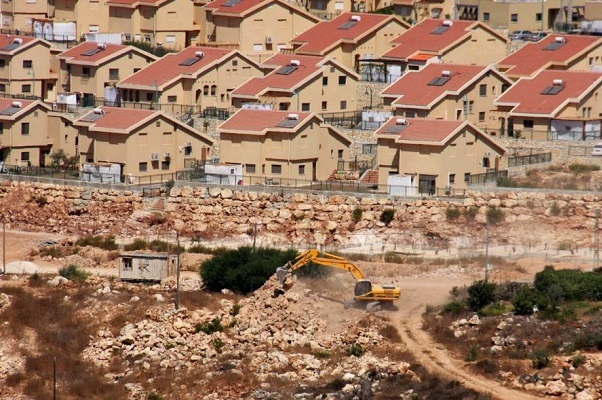
Report: The Biden administration is considering redefining settlements as “violating international law”

The administration of US President Joe Biden is considering “defining” settlements as a violation of international law, in light of the escalation of calls in Benjamin Netanyahu’s government for settlement in the Gaza Strip, or the displacement of its people, according to what was reported by the Israeli Public Broadcasting Corporation (“Kan 11”). ), Sunday evening.


In 2019, former US Secretary of State Mike Pompeo abolished the policy followed by Washington, known as the “Hansel Document,” which determined for 40 years that the settlements were in violation of international law, as far as the United States was concerned. The broadcasting corporation noted that the US administration is currently looking into how to “reverse its decision (the decision taken in 2019).”


Kan 11 quoted an American source as saying, “The United States does not support the Israeli occupation of areas in Gaza, or the establishment of new settlements in the Gaza Strip.”


She noted that the US State Department “did not deny” this, and said in its response that “the expansion of settlements harms the two-state solution, causes tensions, and harms trust between the two sides.”


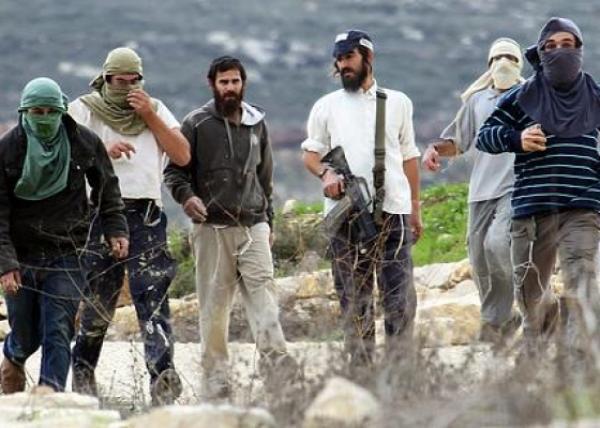
A press report in the Yedioth Ahronoth newspaper reported that extremist settler leaders in the West Bank were preparing a plan to return to settlement in the Gaza Strip. The plan was initiated by the head of the "Nihala" settlement movement, Daniela Weiss, who is leading the process of establishing random settlement outposts in the West Bank, along with the head of the "Samaria Council" of settlements in the northern West Bank, Yossi Dagan. The settlement plan in the Gaza Strip is being implemented by seeking to gain the support of parties and external parties for this plan, in addition to recruiting Israeli public opinion, and monitoring families who agree to move to settlement in the Strip.


In the meantime, before the end of the war on Gaza, the "Nahala" movement seeks to "normalize" the presence of settlements again in the Gaza Strip in Israeli public opinion. “While Dagan talks about settlement in the northern Gaza Strip only, Weiss stresses settlement in the entire Gaza Strip,” according to the newspaper.


The plan stipulates not transferring settlers from the West Bank to the Gaza Strip, but rather transferring residents from all parts of Israel, especially from its south, to settle in the Gaza Strip. To this end, meetings were held in Ashdod and Sderot, which included sailing boats off the shores of the Gaza Strip. Vice held "home circles" in a hotel in Jerusalem for residents evacuated from Sderot, at the beginning of the current war.


According to the plan, “the settlement cores are practically what bring this vision into effect. They must be prepared for the day of implementation and their members must arrive carrying their equipment and equipment to settle in the settlement points. A partisan, security or political event can push these families. Historical experience indicates that These things happen quickly, and sometimes very quickly, as happened in the case of the random settlement outpost of Eviatar,” according to the newspaper.


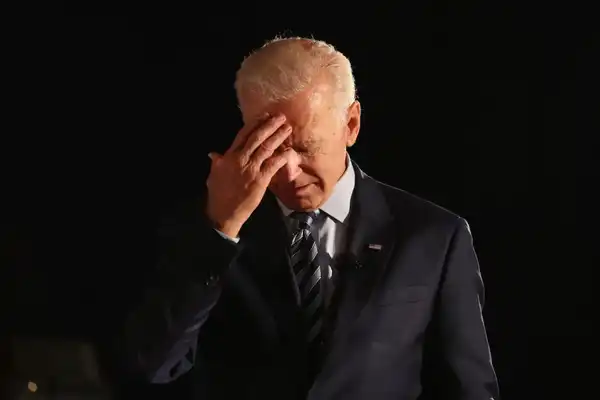
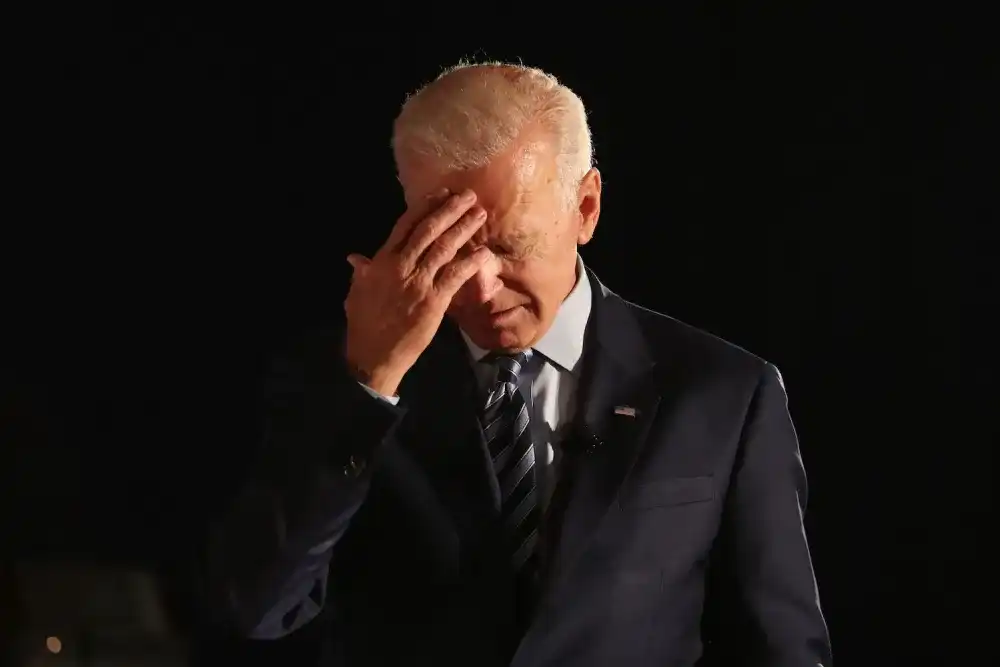
The Washington Post reported on Sunday that “Biden and his senior aides are closer to breaking with Netanyahu than at any time since the start of the war on Gaza.”


The newspaper quoted unnamed sources as saying, “The Biden administration no longer views Netanyahu as a partner who can be influenced, even in secret.”


OPINIONS

Mon 12 Feb 2024 8:59 am - Jerusalem Time

In waging war on the UN refugee agency, the West is openly siding with Israeli genocide

Jonathan Cook

Jonathan Cook

Opinion Writer

Israel has long plotted the downfall of UNRWA, aware that it is one of the biggest obstacles to eradicating the Palestinians as a people

There is an important background to the decision by the United States and other leading western states, the UK among them, to freeze funding to the United Nations’ Relief and Works Agency (UNRWA), the main channel by which the UN disseminates food and welfare services to the most desperate and destitute Palestinians.

The funding cut – which has been also adopted by Germany, France, Japan, Switzerland, Canada, Netherlands, Italy, Australia and Finland – was imposed even though the International Court of Justice (ICJ) ruled on Friday that Israel may be committing genocide in Gaza. The World Court judges quoted at length UN officials who warned that Israel’s actions had left almost all of the enclave’s 2.3 million inhabitants on the brink of a humanitarian catastrophe, including famine.

The West’s flimsy pretext for what amounts to a war on UNRWA is that Israel claims 12 local UN staff – out of 13,000 – are implicated in Hamas’ break-out from the open-air prison of Gaza on October 7. The sole evidence appears to be coerced confessions, likely extracted through torture, from Palestinian fighters captured by Israel that day.

The UN immediately sacked all the accused staff, seemingly without due process. We can assume that was because the refugee agency was afraid its already threadbare lifeline to the people of Gaza, as well as millions of other Palestinian refugees across the region – in the West Bank, Lebanon, Jordan and Syria – would be further threatened. It need not have worried. Western donor states cut their funding anyway, plunging Gaza deeper into calamity.

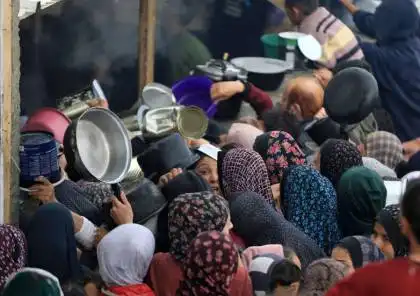
They did so without regard to the fact their decision amounts to collective punishment: some 2.3 million Palestinians in Gaza face starvation and the spread of lethal disease, while another 4 million Palestinian refugees across the region are at imminent risk of losing food, health care and schooling.

According to law professor Francis Boyle, who filed a genocide case for Bosnia at the World Court some two decades ago, that shifts most of these western states from their existing complicity with Israel’s genocide (by selling arms and providing aid and diplomatic cover) into direct and active participation in the genocide, by violating the 1948 Genocide Convention’s prohibition on “deliberately inflicting on the group [in this case, Palestinians] conditions of life calculated to bring about its physical destruction in whole or in part.”

The World Court is investigating Israel for genocide. But it could easily widen its investigation to include western states. The threat to UNRWA needs to be seen in that light.  Not only is Israel thumbing its nose at the World Court and international law, but states like the US and UK are doing so too, by cutting their funding to the refugee agency. They are slapping the court in the face, and indicating that they are four-square behind Israel’s crimes, even if they are shown to be genocidal in nature.

Israel’s creature

The following is the proper context for understanding what is really going on with this latest attack on UNRWA:

1. The agency was created in 1949 – decades before Israel’s current military slaughter in Gaza – to provide for the basic needs of Palestinian refugees, including essential food provision, health care and education. It has an outsize role in Gaza because most of the Palestinians living there lost, or are descended from families that lost, everything in 1948. That was when they were ethnically cleansed by the fledgling Israeli military from most of Palestine, in an event known to Palestinians as the Nakba, or Catastrophe. Their lands were turned into what Israel’s leaders described as an exclusively “Jewish state”. The Israeli army set about destroying the Palestinians’ towns and villages inside this new state so that they could never return.

2. UNRWA is separate from the UN’s main refugee agency, the UNHCR, and deals only with Palestinian refugees. Although Israel does not want you to know it, the reason for there being two UN refugee agencies is because Israel and its western backers insisted on the division back in 1948. Why? Because Israel was afraid of the Palestinians falling under the responsibility of the UNHCR’s forerunner, the International Refugee Organisation. The IRO was established in the immediate wake of the Second World War in large part to cope with the millions of European Jews fleeing Nazi atrocities.

Israel did not want the two cases treated as comparable, because it was pushing hard for Jewish refugees to be settled on lands from which it had just expelled Palestinians. Part of the IRO’s mission was to seek the repatriation of European Jews. Israel was worried that very principle might be used both to deny it the Jews it wanted to colonise Palestinian land and to force it to allow the Palestinian refugees to return to their former homes. So in a real sense, UNRWA is Israel’s creature: it was set up to keep the Palestinians a case apart, an anomaly.

Prison camp

3. Nonetheless, things did not go exactly to plan for Israel. Given its refusal to allow the refugees to return, and the reluctance of neighbouring Arab states to be complict in Israel’s original act of ethnic cleansing, the Palestinian population in UNRWA’s refugee camps ballooned. They became an especial problem in Gaza, where about two-thirds of the population are refugees or descended from refugees. The tiny coastal enclave did not have the land or resources to cope with the rapidly expanding numbers there. The fear in Israel was that, as the plight of the Palestinians of Gaza became more desperate, the international community would pressure Israel into a peace agreement, allowing for the refugees’ return to their former homes.

That had to be stopped at all costs. In the early 1990s, as the supposed Oslo “peace process” was being unveiled, Israel began penning the Palestinians of Gaza inside a steel cage, surrounded by gun towers. Some 17 years ago, Israel added a blockade that prevented the population’s movement in and out of Gaza, including via the strip’s coastal waters and its skies. The Palestinians became prisoners in a giant concentration camp, denied the most basic links to the outside world. Israel alone decided what was allowed in and out. An Israeli court later learnt that from 2008 onwards the Israeli military put Gaza on what amounted to a starvation diet by restricting food supplies.

There was a strategy here that involved making Gaza uninhabitable, something the UN started warning about in 2015. Israel’s game plan appears to have gone something like this:

By making Palestinians in Gaza ever more desperate, it was certain that militant groups like Hamas willing to fight to liberate the enclave would gain in popularity. In turn, that would provide Israel with the excuse both to further tighten restrictions on Gaza to deal with a “terrorism threat”, and to intermittently wreck Gaza in “retaliation” for those attacks – or what Israeli military commanders variously called “mowing the grass” and “returning Gaza to the Stone Age”. The assumption was that Gaza’s militant groups would exhaust their energies managing the constant “humanitarian crises” Israel had engineered.

At the same time, Israel could promote twin narratives. It could say publicly that it was impossible for it to take responsibility for the people of Gaza, given that they were so clearly invested both in Jew hatred and terrorism. Meanwhile, it would privately tell the international community that, given how uninhabitable Gaza was becoming, they urgently needed to find a solution that did not involve Israel. The hope was that Washington would be able to arm-twist or bribe neighbouring Egypt into taking most of Gaza’s destitute population.

Mask ripped off

4. On October 7, Hamas and other militant groups achieved what Israel had assumed was impossible. They broke out of their concentration camp. The Israeli leadership’s shock is not just over the bloody nature of the break-out. It is that on that day Hamas smashed Israel’s entire security concept – one designed to keep the Palestinians crushed, and Arab states and the region’s other resistance groups hopeless. Last week, in a knockout blow, the World Court agreed to put Israel on trial for genocide in Gaza, collapsing the moral case for an exclusive Jewish state built on the ruins of the Palestinians’ homeland.


The judges’ near-unanimous conclusion that South Africa has made a plausible case for Israel committing genocide should force a reassessment of everything that went before. Genocides don’t just emerge out of thin air. They happen after long periods in which the oppressor group dehumanises another group, incites against it and abuses it. The World Court has implicitly conceded that the Palestinians were right when they insisted that the Nakba – Israel’s mass dispossession and ethnic cleansing operation of 1948 – never ended. It just took on different forms. Israel became better at concealing those crimes, until the mask was ripped off after the October 7 break-out.

5. Israel’s efforts to get rid of UNRWA are not new. They date back many years. For a number of reasons, the UN refugee agency is a thorn in Israel’s side – and all the more so in Gaza. Not least, it has provided a lifeline to Palestinians there, keeping them fed and cared for, and providing jobs to many thousands of local people in a place where unemployment rates are among the highest in the world. It has invested in infrastructure like hospitals and schools that make life in Gaza more bearable, when Israel’s goal has long been to make the enclave uninhabitable. UNRWA’s well-run schools, staffed by local Palestinians, teach the children their own history, about where their grandparents once lived, and of Israel’s campaign of dispossession and ethnic cleansing against them. That runs directly counter to the infamous Zionist slogan about the Palestinians’ identity-less future: “The old will die and the young forget.”

Divide and rule

But UNRWA’s role is bigger than that. Uniquely, it is the sole agency unifying Palestinians wherever they live, even when they are separated by national borders and Israel’s fragmentation of the territory it controls. UNRWA brings Palestinians together even when their own political leaders have been manipulated into endless factionalism by Israel’s divide and rule policies: Hamas is nominally in charge in Gaza, while Mahmoud Abbas’ Fatah pretends to run the West Bank.

In addition, UNRWA keeps alive the moral case for a Palestinian right of return – a principle recognised in international law but long ago abandoned by western states.

Even before October 7, UNRWA had become an obstable that needed removing if Israel was ever to ethnically cleanse Gaza. That is why Israel has repeatedly lobbied to stop the biggest donors, especially the US, funding UNRWA. Back in 2018, for example, the refugee agency was plunged into an existential crisis when President Donald Trump acquiesced to Israeli pressure and cut all its funding. Even after the decision was reversed, the agency has been limping along financially.

6. Now Israel is in full attack mode against the World Court, and has even more to gain from destroying UNRWA than it did before. The freeze in funding, and the further weakening of the refugee agency, will undermine the support structures for Palestinians generally. But in Gaza’s case, the move will specifically accelerate famine and disease, making the enclave uninhabitable faster.

But it will do more. It will also serve as a stick with which to beat the World Court as Israel tries to fight off the genocide investigation. Israel’s barely veiled claim is that 15 of the International Court of Justice’s 17 judges fell for South Africa’s supposedly antisemitic argument that Israel is committing genocide. The court quoted extensively from UN officials, including the head of UNRWA, that Israel was actively engineering an unprecedented humanitarian crisis in Gaza. Now, as former UK ambassador Craig Murray notes, the coerced confessions against 12 UNRWA staff serve to “provide a propaganda counter-narrative to the ICJ judgment, and to reduce the credibility of UNRWA’s evidence before the court”.

ARAB AND WORLD

Mon 12 Feb 2024 8:51 am - Jerusalem Time

UNICEF wonders: How many children in Gaza will die before the nightmare ends?

The Executive Director of the United Nations Children's Fund (UNICEF), Catherine Russell, asked on Sunday: "How many children in the Gaza Strip will die before the nightmare ends?"


Russell's words came as she commented on the killing of the six-year-old girl, Hind Rajab, in Gaza City, located in the northern Gaza Strip.


UNICEF has confirmed, on more than one occasion, what it previously announced last November that the ongoing Israeli aggression against Gaza since October 7 is a “war on children.”


Russell wrote, in a blog post published on the UNICEF account, via the “X” platform, that there was “tragic news that the body of the little girl was found with her relatives and the two rescue workers who tried to return her safely to her mother.”


Yesterday, Saturday, the spokeswoman for the Palestinian Red Crescent Society, Nibal Farsakh, told Anadolu Agency: “Sources from the family informed us that they found the child Hind murdered inside a vehicle containing six bodies of her family members, including the child Layan, while several bodies were decomposing,” after 12 days have passed since everyone was lost.


In a related statement, the association announced that its ambulance, “which went out to rescue the child Hind 12 days ago, was found bombed in the Tal al-Hawa area (west of Gaza City) with the crew inside it killed.”


It is noteworthy that during the past two weeks, Israeli forces made a significant re-incursion into several areas of the Gaza Governorate in the north, and this coincided with the implementation of military operations and intense air and artillery bombardment, while ordering the evacuation of a number of residential neighborhoods.


Yesterday morning, Saturday, it withdrew from several areas west of Gaza City (in the Gaza Governorate), which allowed the fate of the child Hind and her family to be revealed, as well as the Palestinian Red Crescent paramedics Youssef Zeno and Ahmed Al-Madhoun, who had gone to rescue the little girl.


Today, Sunday, the government media office in Gaza published new statistics for the genocidal war waged by the Israeli occupation on the Strip since October 7, indicating 28,176 killed who arrived in hospitals, including 12,300 children and 8,400 women martyrs.


The people displaced from Gaza to Rafah must be protected

In another post she published on the “X” platform, Russell called for the protection of about 1.3 million Palestinians in Rafah, located in the far south of the Gaza Strip. She added that this border city with Egypt has turned into "one of the most densely populated places on Earth" amid the ongoing Israeli war on the Gaza Strip.


The Executive Director of UNICEF explained that “Rafah is full of children and families,” noting that “among them are those who have been displaced several times due to the war on Gaza.”


While Russell stressed that “1.3 million civilians have been pushed into a corner and are living on the streets or in shelters,” she stressed that “they must be protected.” She added that they do not have "a safe place to go."

It is noteworthy that since the first days of the war on the Gaza Strip, more than one official at the United Nations or in humanitarian and human rights organizations stated that “there is no safe place in Gaza,” as no area was spared from the bombing by the Israeli occupation forces, whether by air strikes, tank shells, or bullets. Sniping.

PALESTINE

Mon 12 Feb 2024 8:38 am - Jerusalem Time

Israeli army announces the killing of two soldiers in battles in southern Gaza

The Israeli Broadcasting Authority said on Monday morning that two Israeli army soldiers were killed in the battles taking place in the southern Gaza Strip.


The Israeli army said that two soldiers from the Magellan unit were killed yesterday during fighting in the southern Gaza Strip.


It added that the two dead were soldier Adi Eldor, 21 years old, a resident of Haifa, and soldier Alon Kleinman, also 21 years old, a resident of Tel Aviv.


This comes a few hours after the Israeli army announced the release of two detainees held by Hamas since October 7.


Yesterday, Sunday, the Israeli army announced that two officers and a soldier were wounded in battles in the southern Gaza Strip.


PALESTINE

Mon 12 Feb 2024 8:35 am - Jerusalem Time

War on Gaza: Nearly 100 killed...new massacres in Rafah

The Israeli  army continues its war of extermination on the Gaza Strip for the 129th day in a row, with the worsening humanitarian crisis in the Strip, which has become on the brink of famine and most of its hospitals are out of service amid a severe shortage of medicines and the continuation of the occupation’s war on medical institutions and personnel.


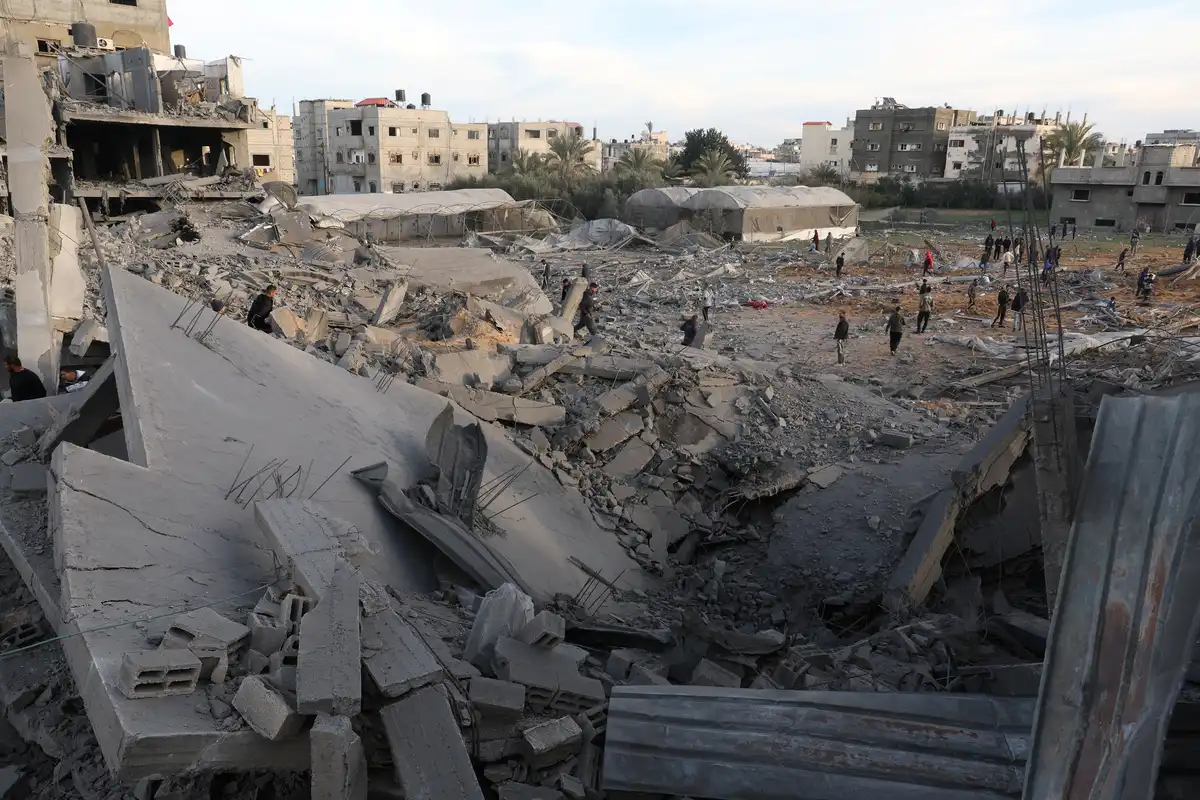
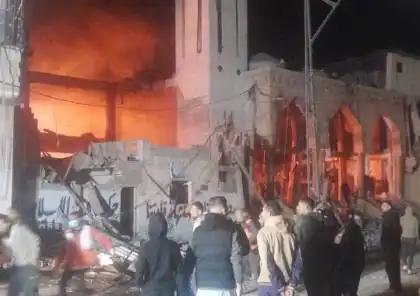
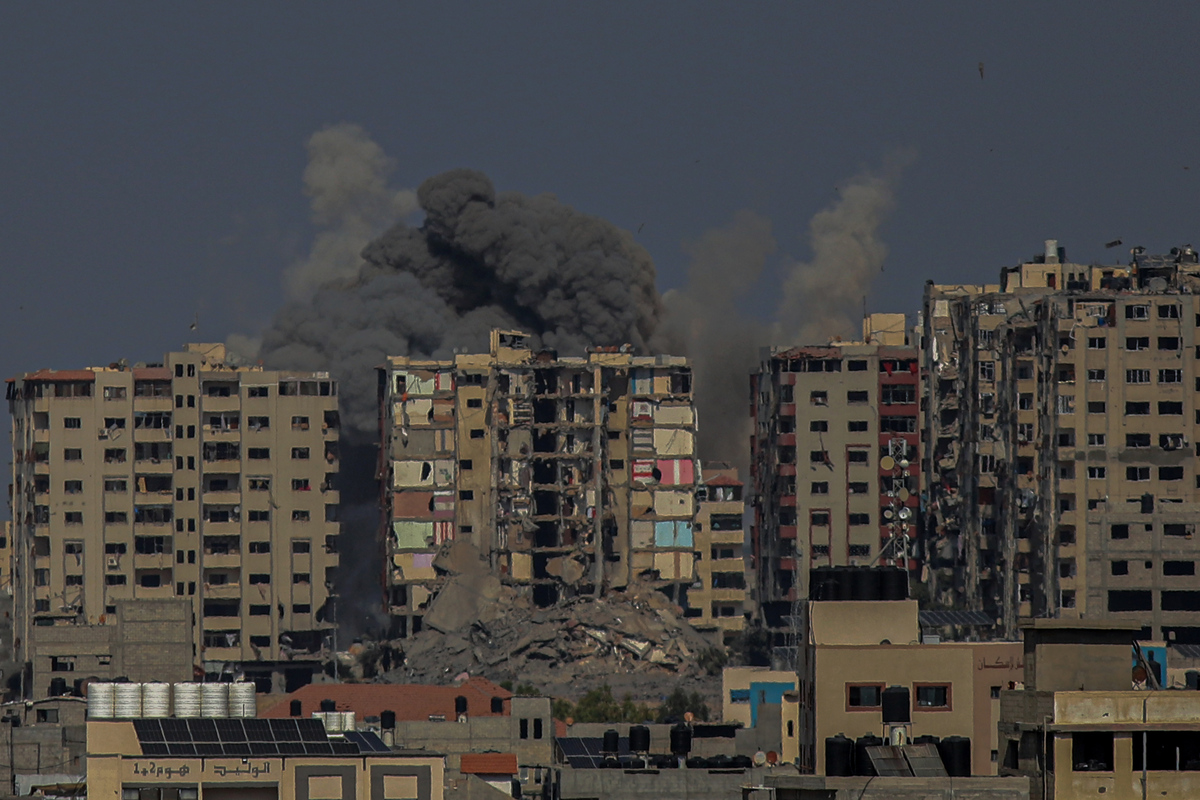
More than 100 Palestinians were killed and dozens were injured, most of them women and children, in a violent Israeli bombardment on homes and mosques in Rafah, south of the Gaza Strip. The Islamic Resistance Movement (Hamas) considered the attack a continuation of the genocidal war against the Palestinian people, and called for urgent international action to stop the aggression.


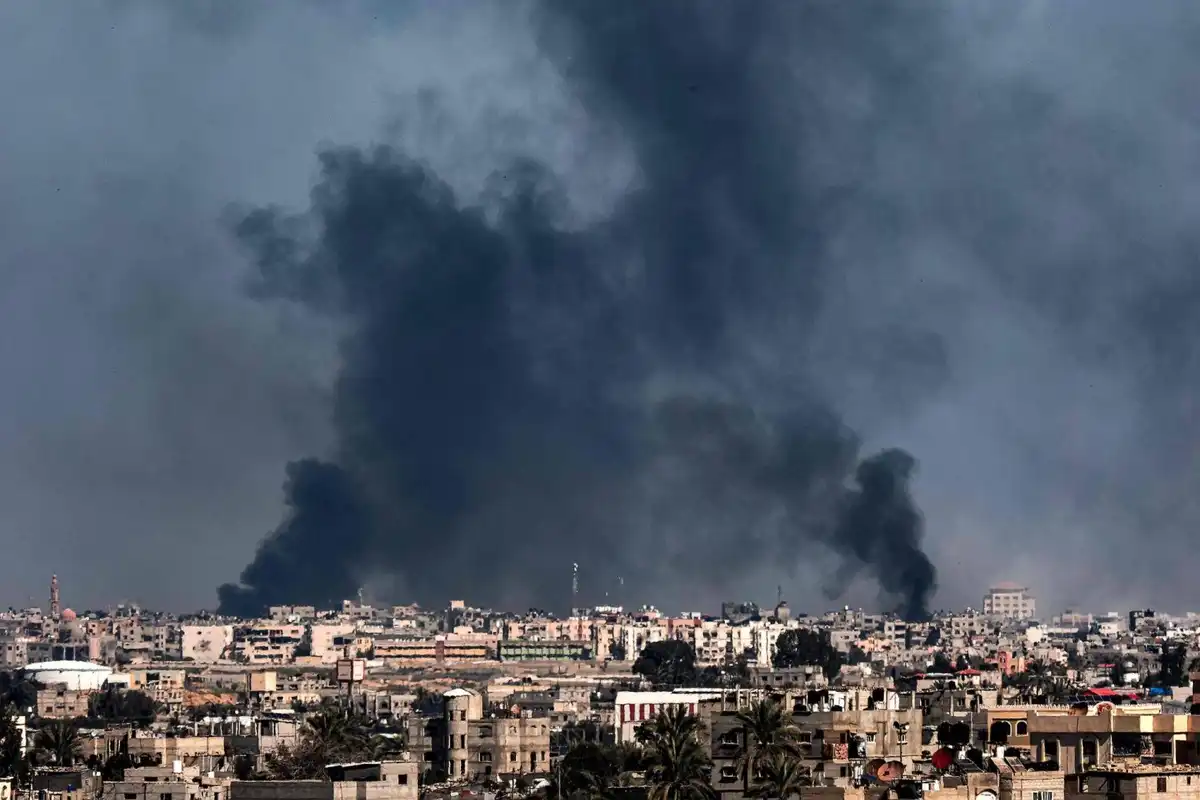
The remains of the killed were scattered in the targeted areas due to the intensity of the bombing, and clouds of thick smoke filled the air of the city, coinciding with an intense flight of reconnaissance planes and helicopters.


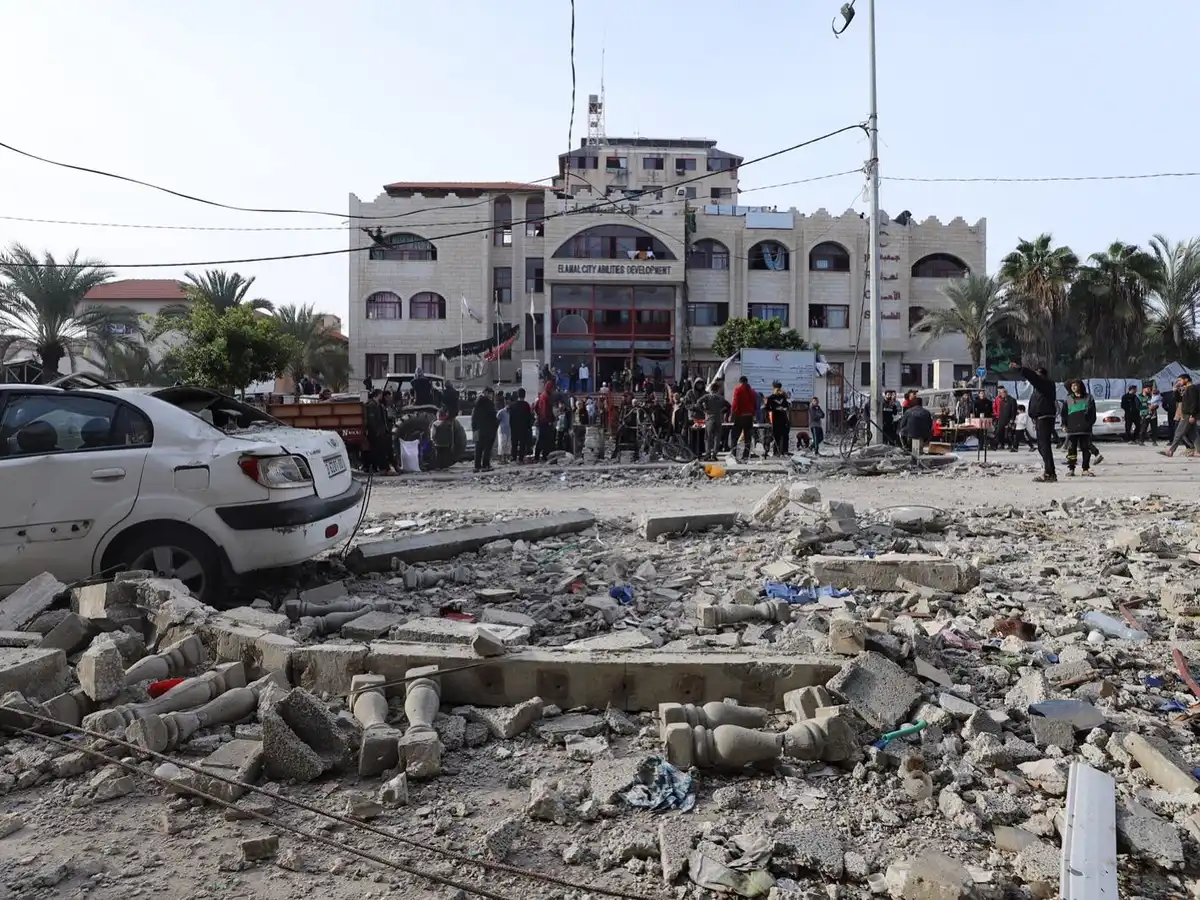
According to Al Jazeera, the raids destroyed the Al-Huda Mosque in the Yabna camp, the Al-Rahma Mosque in the Al-Shaboura camp, and 14 residential homes for the families of Al-Mughair, Al-Masry, Abu Jazar, Abu Al-Husayn, Abu Rizq and others in the areas of Yabna, Khirbet Al-Adas, Al-Shaboura, Tal Al-Sultan, Mirage, the Musabah area, and Badr camp.


The Hamas movement said, in a statement, that the Israeli army’s attack on the city of Rafah led to the death of more than 100 citizens, considering this attack “a continuation of the genocidal war and the forced displacement attempts it is waging against our Palestinian people.”


The statement considered that the attack "is a combined crime, a continuation of the genocidal war, and an expansion of the scope of massacres committed against our people, given the tragic conditions this city is experiencing due to the concentration of nearly 1.4 million citizens there."


The movement held the US administration and President Joe Biden "fully responsible with the Israeli government for this massacre, because of the green light they gave to Netanyahu yesterday, and the open support they provide him with money, weapons, and political cover to continue the war of genocide and massacres."


In its statement, Hamas called on the Arab League, the Organization of Islamic Cooperation and the UN Security Council to take “urgent and serious action to stop the Zionist aggression and the ongoing crimes of genocide against defenseless civilians in the Gaza Strip.”


PALESTINE

Mon 12 Feb 2024 8:32 am - Jerusalem Time

War on Gaza: Israeli army announced the release of two prisoners in a night operation in Rafah

The Israeli army announced the liberation of two Israeli prisoners held by the Palestinian resistance in Rafah - south of the Gaza Strip - in a night military operation, coinciding with a violent bombardment on the city that resulted in the death of at least 63 Palestinians, including a girl, and the injury of dozens of others.


Israeli Defense Minister Yoav Gallant said that the operation was carried out with the participation of the army, police special forces, and the General Security Service (Shin Bet), and with the follow-up of Prime Minister Benjamin Netanyahu, and succeeded in returning the two captives, Fernando Simon Marman (60 years old) and Louis Haar (70 years old).


Gallant confirmed that the two prisoners are in good health, and were transferred for a medical examination to Sheba Tel Hashomer Hospital.


For his part, Israeli army spokesman Daniel Hagari said that the forces carried out a complex operation inside a building, where clashes took place with Hamas fighters during the liberation operation.


At the same time, the Air Force launched an intense wave of raids targeting the Hamas Shaboura Brigade, in order to enable the force to move to the site. There has been no response yet from the Palestinian resistance to the Israeli announcement.


Hagari stressed that the army had prepared for the operation to liberate the two captives for a long time based on intelligence information, stressing that the executing forces arrived at the place under cover, and then received great support from other forces from the Air Force.


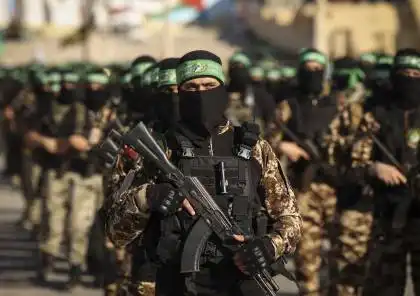
Yesterday, Monday, the Al-Qassam Brigades said that the continuous Israeli bombing of the Gaza Strip over the past four days claimed the lives of two Israeli prisoners in the Strip and led to the serious injury of 8 others.


The Al-Qassam Brigades explained that the conditions of the wounded are becoming more dangerous, in light of the inability to provide them with appropriate treatment.


The Al-Qassam Brigades held the Israeli army fully responsible for the lives of the injured prisoners, in light of the continued bombing and aggression.


ARAB AND WORLD

Mon 12 Feb 2024 7:18 am - Jerusalem Time

Biden: Israel Shouldn't Press Into Rafah Without 'Credible' Plan to Protect Civilians

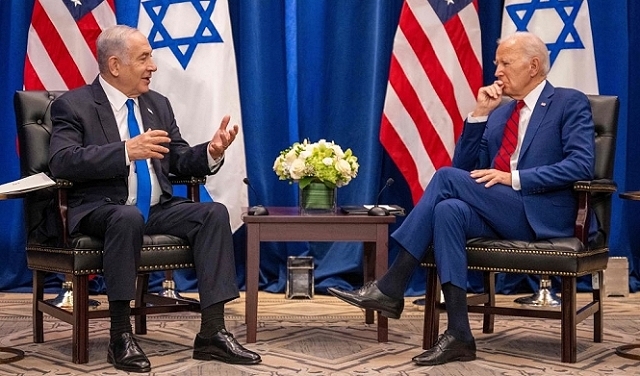
Israel shouldn’t go ahead with a military operation in the densely populated Gaza border town of Rafah without a “credible” plan to protect civilians, President Joe Biden told Prime Minister Benjamin Netanyahu on Sunday, the White House said.

Biden's call with Netanyahu came days after the US leader told reporters that Israel's response in the Palestinian enclave of Gaza was "over the top."

The call also focused on ongoing efforts to secure the release of hostages taken by Hamas in its Oct. 7 attack on Israel, the White House said.

Aid agencies say an assault on Rafah would be catastrophic.

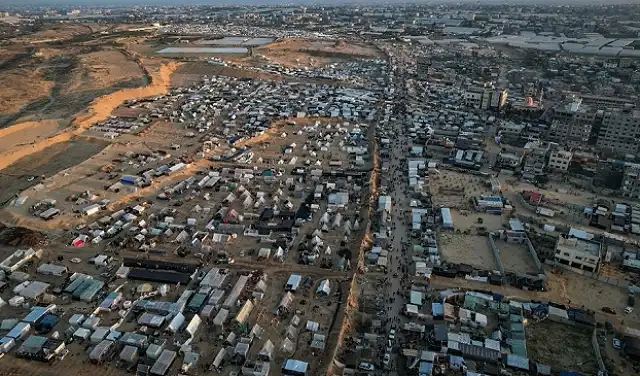
Over half of Gaza's population of 2.3 million have fled to Rafah to escape fighting in other areas, and they are packed into sprawling tent camps and UN-run shelters near the border.

Netanyahu told “Fox News Sunday” that there’s “plenty of room north of Rafah for them to go to” after Israel’s offensive elsewhere in Gaza, and said Israel would direct evacuees with “flyers, with cellphones and with safe corridors and other things.”


PALESTINE

Mon 12 Feb 2024 4:25 am - Jerusalem Time

War on Gaza: About 100 killed in an Israeli massacre in Rafah

Hundreds of citizens were killed and injured, at dawn on Monday, including a large number of children and women, in intense Israeli bombardment and fire belts targeting various areas of Rafah in the southern Gaza Strip, on the 129th day of the ongoing Israeli aggression on the Gaza Strip.


Health sources in Rafah reported that more than 100 citizens, including children and women, were killed and hundreds of others were injured. They arrived at Rafah hospitals following heavy Israeli raids on the city in the southern Gaza Strip.


The Palestinian Red Crescent said that the city of Rafah is witnessing violent Israeli raids concentrated in the center of the city, targeting inhabited homes opposite the headquarters of the Crescent Society.


Director of Kuwait Hospital, Suhaib Al-Hams, said: The hospital is full of wounded people in a very dangerous situation, and there is not enough medicine and serums.


Local sources added that warplanes launched a series of violent raids estimated at about 40 raids, targeting in particular many homes and mosques housing displaced people, in conjunction with intense artillery bombardment by warships on the city of Rafah.


The sources indicated that civilian vehicles carrying killed and wounded arrived at the Kuwaiti Hospital in Rafah, amid hundreds of people fleeing to the hospital to escape the bombing of the city.


Among the targeted mosques were the Al-Rahma mosques in Al-Shaboura and Al-Huda mosques in the Yabna camp, which shelter dozens of displaced people in Rafah, in addition to more than 14 inhabited homes.


Israeli bombing and raids also targeted areas close to the border with Egypt.

ARAB AND WORLD

Sun 11 Feb 2024 6:24 pm - Jerusalem Time

The conversation between Netanyahu and Biden is the first in 3 weeks

Israeli Prime Minister Benjamin Netanyahu spoke this evening, Sunday, with US President Joe Biden, in light of an imminent attack on Rafah in the southern Gaza Strip, where about 1.5 million residents of the Strip who were displaced from the north and center of the Strip are concentrated in this area.


This came in their first conversation about 3 weeks ago, when they spoke on January 19, after Biden described the Israeli military response in Gaza as “exaggerated.”


The Washington Post reported today that “Biden and his senior aides are closer to breaking with Netanyahu than at any time since the start of the war on Gaza.”


The newspaper quoted unnamed sources as saying, “The Biden administration no longer views Netanyahu as a partner who can be influenced, even in secret.”


A leadership source in Hamas warned today that “any attack by the occupation army on the city of Rafah means torpedoing the exchange negotiations.”


He stressed that "Netanyahu is trying to evade the entitlements of the exchange deal by committing genocide and a new humanitarian disaster in Rafah."


Earlier today, Netanyahu touched on Israel's expansion of its attack on Rafah, and claimed during an interview with the American network ABC, "Victory is imminent. We will reach the last Hamas brigades present in Rafah, and we will implement this order."


Regarding the international warnings about the consequences of the attack on Rafah, Netanyahu considered that, “Whoever tells us that under all circumstances we are prohibited from entering Rafah, is practically telling us to lose the war and keep Hamas there. We are about to reach the last Hamas brigades in Rafah, which constitute "The last stronghold."


Against the backdrop of American warnings against attacking Rafah due to the presence of the huge number of displaced people there, Netanyahu said: “I agree with them on that,” and claimed that Israel is “working on a detailed plan, through which we will ensure safe passage for the civilian population.”


The Israeli Broadcasting Authority (“Kan 11”) reported yesterday evening that the US administration sent a message to Israel during the past few days, warning it against launching a military operation in Rafah during the month of Ramadan, considering that this would not only lead to “escalation in Gaza” but To a comprehensive escalation in the region.


The channel indicated that Arab countries also issued similar warnings to Israel. This comes as the American CNN network reported, citing an unnamed Israeli official, that Netanyahu informed the “war cabinet” on Thursday that the Israeli forces’ operation in Rafah “must be completed by the beginning of the month of Ramadan on the tenth of next March.” ".


The Israeli government is preparing to send a high-level security delegation to the Egyptian capital, Cairo, next week, to participate in an American-Egyptian-Qatari meeting regarding deal negotiations between Hamas and Israel.


Israel conditions its participation in the American-Egyptian-Qatari meetings in Cairo on “softening” the position of the Hamas movement, in reference to its response to the Paris proposal that was held about two weeks ago.


Israeli officials said, “If Hamas does not express a softer position, Israel will not send a delegation to the talks” in Cairo, according to what Israeli Channel 13 reported on Friday evening, and made it clear that the cabinet had taken a decision in this regard.

ARAB AND WORLD

Sun 11 Feb 2024 6:07 pm - Jerusalem Time

Report: US Deputy National Security Advisor: I have no confidence in the current Israeli government regarding everything related to intentions to establish a Palestinian state.

The New York Times revealed last night that US Deputy National Security Advisor John Feiner confirmed that he has no confidence in the current Israeli government regarding intentions to take steps aimed at establishing a Palestinian state.


The newspaper reported that it quoted Viner's assertion from a recording of a meeting he had with Arab-American leaders in the city of Dearborn in the US state of Michigan, during his visit last Thursday to this city, which includes a large Arab-American community. Feiner visited the city, accompanied by other officials in the administration of President Joe Biden, including the former ambassador to the United Nations, Samantha Power, to support the president’s efforts to win a second term in the 2024 elections before an electoral district that is considered decisive, but which is angry with him because of his support for Israel during its war with the Hamas movement. In the Gaza Strip.


Michigan is a crucial state in the US presidential elections that will be held in November 2024. Arab Americans constitute about 2% of the state’s population. Dearborn, which has the highest percentage of Arab-American residents in the United States per capita, is represented in Congress by Representative Rashida Tlaib, the first Palestinian-American elected to this position, and she was at the forefront of those calling for a ceasefire in the Democratic Party.


According to the newspaper, Viner spoke to attendees during the meeting about the Biden administration’s efforts to end the war in Gaza and build diplomatic relations with the Kingdom of Saudi Arabia, which he said was a necessary step towards establishing a Palestinian state, and would require concessions from all parties.


The newspaper quoted Viner as saying: “We will have to do things to Saudi Arabia that will not be very popular in this country and in Congress. Will Israel be prepared to do the difficult thing required of it, which is meaningful steps for the Palestinians regarding the two-state issue? I do not know if the answer is "That is yes. I have no confidence in the current Israeli government."


Weiner also described some unnamed Israeli officials as abhorrent, and said the administration in Washington should have taken a stronger stance against those who likened Gaza Strip residents to animals.


“I have to say that out of our desire to focus more on solving the problem and not engage in rhetorical debate with people that I think we find, in many cases, to be somewhat obnoxious, we haven't communicated enough that we completely reject that kind of thing,” Feiner said. Of opinions and we do not agree with him.”


Viner also expressed his regret over mistakes made by the Biden administration in its handling of the war, especially regarding what is perceived as a lack of concern about civilian casualties, as the administration refused to support calls for a ceasefire.


“We are fully aware that we have made mistakes in dealing with this crisis since last October 7, and we have left a very harmful impression due to the failure of the president, the administration, and the country to attach the required value to the lives of Palestinians,” Viner said. He expressed his regret that Biden's speech on the occasion of the 100th day of the war did not mention the Palestinians who were killed in Gaza, and said: “There is no justification for that, and it should not have happened, and I believe it will not happen again. But we know that it caused a lot of damage.” "


Weiner declined the New York Times' request to comment on the report.

The Associated Press later said the White House National Security Council spokesman's office confirmed the veracity of the statements in the report, but sought to downplay their significance, saying the president and Viner were commenting on concerns the United States has had for some time. As the Israeli war continues, the loss of Palestinian lives and the need to limit harm to civilians will continue.

ARAB AND WORLD

Sun 11 Feb 2024 6:03 pm - Jerusalem Time

Israeli Writer: I beg you: do not enter Rafah

All that remains is for me to ask, plead, and scream: “Do not enter Rafah.” The Israeli invasion of Rafah will be an attack on the largest camp for displaced people in the world, and will push the Israeli army to commit a grave crime of genocide that it has previously committed. Rafah cannot be stormed today without committing a war crime, and if the Israeli army storms it, it will turn into a slaughterhouse.

About 1.4 million displaced people now live there, finding refuge in plastic tents. The American administration, the protector of Israeli law and conscience, stipulated an evacuation plan to storm Rafah, but there is no such plan, and it cannot be done, even if Israel finds some solution. It is not possible to move a million people who lack everything, most of whom are displaced, for the second or third time, from a “safe” place to another place that always turns into a killing field, and they cannot be transported like herds being led to the slaughterhouse, as even herds are not transported with such brutality, not to mention that there is not even Now there is a place for these people to move to, and in devastated Gaza there is nowhere to escape or take refuge. So, if the displaced people of Rafah are evacuated to Mawasi, as the Israeli army proposes in its humanitarian plan, Mawasi will turn into a humanitarian disaster the likes of which we have never seen in Gaza before.

Correspondents Yardan Michaeli and Avi Sharaf wrote that Gaza's entire population of 2.3 million people would be crammed into 16 square kilometers. Amira Hass estimated that if about a million people were evacuated to Mawasi, the population density there would reach 62,000 people per square meter. As is known, there is nothing in Al-Mawasi; No infrastructure, no water, no electricity, no homes, just sand and sand, blood, epidemics, and sewage. The mere thought of that not only freezes the blood in the veins, but also indicates the extent to which Israel's inhumanity has reached in its plans.

The bloodshed will continue in Mawasi, as happened in Rafah in recent days, which until now was the last resort proposed by Israel. The Shin Bet will find a Hamas policeman who will have to be eliminated with a one-ton bomb on the new plastic camps, and 20 passers-by will be killed, most of them children, and our military correspondents will talk about the excellent job the army did in assassinating the high-ranking chain of command in Hamas. Absolute victory is on the way, and Israel will be defeated again.

Public opinion in Israel and the American administration must wake up. These are emergency times the likes of which we have not witnessed in this war. The Americans must prevent the storming of Rafah by actions and not by words, as they alone are able to restrain Israel. The left wing of the Israeli public must find other sources of information for itself, other than our news channels. Look at the pictures of Rafah on all the world's channels. They are pictures you do not see in Israel, and you will understand why it is impossible to evacuate Rafah. When you imagine consoling two million displaced people, you will realize what war crime we are heading towards.

Yesterday, the body of Hind Hamada, a 5-year-old daughter, was found, whose photos spread throughout the world after the moments of terror her family experienced in a confrontation with an Israeli tank on January 29. These terrifying moments were recorded via a call to the Red Crescent, until Hind’s aunt’s screams of terror fell silent, and 7 family members were killed, and little Hind remained a survivor, and since then, her fate has been unknown.

Yesterday, Hind's body was found in her aunt's burned car at a gas station in Khan Yunis. She was wounded, and there were 7 bodies of her family members on top of her. She did not succeed in getting out of the car, and thus, she bled until she breathed her last. Hind and her family responded to Israel's "humanitarian" call to leave Khan Yunis. Who wants thousands of Indians to fall during the evacuation of Rafah to Al-Mawasi?

ARAB AND WORLD

Sun 11 Feb 2024 5:45 pm - Jerusalem Time

Washington Post: Netanyahu directs public insults to Washington, and Biden is close to breaking with him

The Washington Post said that US President Joe Biden and his senior aides are closer to “wiping off their hands” with Israeli Prime Minister Benjamin Netanyahu than at any time since the start of the Israeli war on Gaza, citing informed sources that the US administration no longer considers Netanyahu “ “A positive partner” and they can influence his positions even during secret meetings.


The American newspaper quoted six informed sources, who preferred not to mention their names, confirming that the growing resentment towards Netanyahu prompted Biden’s aides to ask him to direct more public criticism of the Israeli Prime Minister regarding the war he has been leading in Gaza since the seventh of last October.


The newspaper added that Biden, who absolutely supports the Israeli occupation and has known Netanyahu for more than 40 years, and publicly acknowledges that he is a Zionist, was previously reluctant to publicly express what he feels in secret regarding what is happening in Gaza. She explained that the idea has become acceptable to him, especially in light of Netanyahu continuing to anger Biden’s aides by directing public insults to them, and his immediate rejection of “obvious American demands.”


The Washington Post noted that despite all this, the White House refused to exert real pressure by stopping military support for the Israeli occupation or at least subjecting it to conditions, under the pretext that this would “strengthen Israel’s enemies.” Citing the same sources, she added that Biden's aides believe that criticizing Netanyahu will allow the American president to "distance himself from an unpopular leader who adopts scorched earth policies, while continuing to express his permanent support for Israel."


The newspaper said that the point that brought the “Cup of Anger” to fruition was the Israeli intentions to launch a ground military operation in the city of Rafah in the southern Gaza Strip, where hundreds of thousands of Palestinians fleeing the Israeli bombing took refuge.


Regarding this, an external advisor to the White House told the newspaper: “They live in tents and do not get enough water and food, and they are asked to go somewhere else,” asking: “Where? And how can they get to that place?”


Despite its great importance in the Biden administration's calculations and its connection to the war on Gaza, the Washington Post only touched on the 2024 US presidential election file, and merely pointed out that Biden is "paying a political price that grows every day because of his unconditional support" for the Israel. It explained that this is happening even though Netanyahu seems more interested in scoring political points in his favor by strongly rebuking Biden for everything that appeared in public meetings.


The Washington Post added that while Biden is leading a difficult election campaign to remain in his position in the White House for a second term, the results of opinion polls show that young voters, people of African descent, and members of the Arab and Muslim communities, strongly oppose his way of dealing with the war in Gaza.


"Netanyahu challenges Biden"

For its part, the Wall Street Journal devoted an article to the American-Israeli disputes, in which it stated that Netanyahu challenges Biden through his military plan to attack Rafah, adding, quoting experts who said that the Israeli Prime Minister is trying to prolong the war on Gaza, after the results of opinion polls showed a decline. Popular support for him in exchange for internal Israeli support to "continue pursuing the Hamas movement."


The newspaper revealed that Netanyahu chose to direct his message directly to the Americans, through an interview with ABC News on Sunday night. According to leaks of the interview obtained by the Wall Street Journal, Netanyahu claimed that “victory is near,” and that “we will reach what remains of the Hamas brigades (...) in Rafah, their last stronghold.” He also claimed that the Israeli army not entering Rafah would be tantamount to losing the war against Hamas, and would allow it to remain in existence.


In this regard, Netanyahu said today, Sunday, that he had not spoken to the US President since the latter’s statements regarding the Israeli military response to the October 7 operation being “exaggerated,” in an interview with the “Fox News Sunday” program.


In reference to these statements, Netanyahu also said during his interview with ABC: “I appreciate President Biden’s support for Israel since the beginning of the war. I do not know exactly what he meant by that.”


On Thursday, the US President considered that the Israeli military response in the Gaza Strip had “exceeded the limit,” explaining: “I see, as you know, that the behavior of the response in the Gaza Strip has exceeded the limit.”

Netanyahu had announced, on Friday, that he had instructed the security level and the Israeli army to prepare a plan to carry out a military operation in Rafah, while the Yedioth Ahronoth newspaper explained that the army had practically approved the plan it had prepared for the military operation in Rafah, which also includes the evacuation of residents from there. 


Netanyahu's insistence on launching a military operation in Rafah comes despite international criticism and the fear of a large number of casualties in the area, which the Israeli army had previously ordered the civilian population to migrate towards, as it intensified the bombing in the center and north of the Gaza Strip.

ARAB AND WORLD

Sun 11 Feb 2024 5:32 pm - Jerusalem Time

Le Monde: The Israeli army has little hope of liberating the prisoners by force

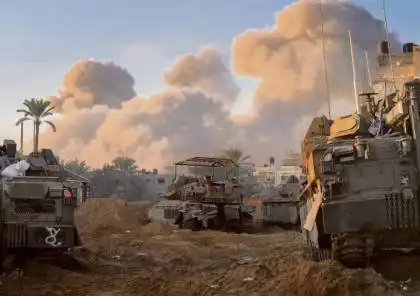
Le Monde newspaper, which accompanied the Israeli soldiers for a few hours in the town of Khan Yunis, south of the Gaza Strip, said that the Israeli army is slowly diving, for the first time, into a dense network of tunnels from the Islamic Resistance Movement (Hamas) under a city that has turned into rubble.


The newspaper explained - in a report written by Louis Imper - that the Israeli army, which maintains a large number of bulldozers and armored excavators alongside its tanks, is digging underground in search of Hamas tunnels, without any regard for Palestinian buildings, leaving behind only a pile of rubble.


Last Sunday, the newspaper’s correspondent crossed in an armored car to the town of Khan Yunis, south of the Gaza Strip, through one of the gaps created by Hamas on October 7, 2023 in the fence, which was only allowed to enter a small number of Palestinian farmers before the war. Israel destroyed buildings. There is an intention to establish a “buffer zone” one kilometer deep in the Strip.


Military censorship

The car passes between dams of rubble that have been removed on both sides of the track, several meters high. The passengers can only be seen through the narrow openings and surveillance screens in the armored vehicle, and thus - the writer says - “we will not see hospitals surrounded by the army nearby, and we will not see hundreds of Residents of the city who were arrested by the army and about whom there is no news, and we will not see the vicinity of the refugee camp in which thousands of desperate Palestinians gather west of the city.”


On that day, General Dan Goldfus was guided by 6 European and American media outlets, including a journalist from an evangelical Christian television channel committed to the Israeli cause, enthusiastically repeating every word of the officer in front of his camera.


The military censor asked to read our article, but did not request any changes, knowing that the army prevents the press from going to the Gaza Strip without accompaniment, as dozens of colleagues in the Strip were killed.


In the center of the city of Khan Yunis, Dan Goldfus points to a dirt slope that passes under a group of destroyed houses to the entrance to a tunnel, where the general believes he has reached the heart of the secret military installations belonging to Hamas, with their enormous size making their destruction imaginary, but the army is pursuing those responsible there, and claims Part of these facilities will not be usable for a certain period.


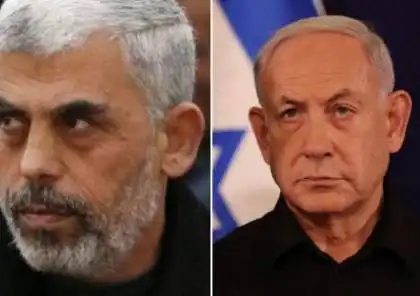
The officer says, "You do not have to destroy all the tunnels. The important thing is to reach the heart of the network, and today we are in the most important of them. We are now working where Sinwar and his friends were," noting that this tunnel was intended to house officers, then it was remodeled into a prison, and it has been identified. The DNA of at least 12 detainees there, he claimed.


Concerns of the prisoners' families

After describing a section of the tunnel a little less than a kilometer long, the writer says that Goldfus refuses to specify how long it took his men to control such a tunnel. An unnamed officer said that most of the resistance they faced in Khan Yunis was small groups of two to five men. They come out of a tunnel or pass in civilian clothes, from one weapons cache to another, and they live in apartments.


Goldfus expressed little hope of liberating the detainees, saying, "We will take them back directly or indirectly. But we have given our leaders room to maneuver in order to return the detainees."


Indeed, the reporter says, General Gadi Eisenkot, the member of the military cabinet running the operations, had said some time ago that it was an “illusion” to hope to free the detainees before their captors shot them dead.


The Israeli government says that military pressure on Hamas leaders will convince them to release the detainees, but the families fear that these operations will lead to their execution. The army admitted that it informed the relatives of 31 detainees of their deaths, without specifying whether they were killed on or after last October 7, or in Army bombing and raids.


Source: Le Monde

ARAB AND WORLD

Sun 11 Feb 2024 5:26 pm - Jerusalem Time

Netanyahu: I have not spoken with Biden since his statements regarding Israel’s “exaggerated” response

Israeli Prime Minister Benjamin Netanyahu said on Sunday that he had not spoken to US President Joe Biden since the latter’s statements regarding the Israeli military response to the attack by the Islamic Resistance Movement (Hamas) being “exaggerated.”


Netanyahu's statements came in an interview with Fox News Sunday.

Netanyahu said in an interview broadcast on ABC on Sunday that “a sufficient number of 132 Israeli hostages” are alive in Gaza to justify the continuation of the Israeli war in the region.


In this context, the Washington Post newspaper quoted informed sources as saying, “The growing frustration with the Israeli Prime Minister prompted some aides to US President Joe Biden to urge him to be more publicly critical of Netanyahu regarding the military operation in Gaza.”


According to the newspaper, “Biden and his senior aides have become closer to breaking with Netanyahu than ever before since the start of the Gaza war, and they no longer view him as a productive partner who can be influenced even in secret.”


It stated, “At the present time, the White House rejects calls to stop military aid to Israel, or impose conditions on it, considering that this will only encourage Israel’s enemies.” But some Biden aides say that “criticizing Netanyahu will allow the president to distance himself from... "An unpopular leader who adopts scorched earth policies."


American and Israeli newspapers and media outlets discussed the deteriorating relationship between Biden and Netanyahu, against the backdrop of the aggression against Gaza, and spoke of the existence of hostility between them.


According to the Israeli media, Biden described Netanyahu as a “bad boy,” but these differences did not affect the nature of American support for Israel.


The Israeli media reported that sources in Biden's circle say that "the feeling is growing that Netanyahu is procrastinating the war, due to personal reasons, and that he does not place the release of prisoners as a top priority."


Last month, Israeli media revealed that Biden hung up the phone on Netanyahu during their last call on December 23.

ARAB AND WORLD

Sun 11 Feb 2024 5:13 pm - Jerusalem Time

Hamas: Any Israeli attack on Rafah means "torpedoing the negotiations."

A leading source in the Hamas movement said on Sunday that any attack by the Israeli army on the city of Rafah would undermine the exchange negotiations, at a time when discussions continue in Qatar and Egypt in order to reach a deal to exchange prisoners and detainees.


The Israeli Prime Minister Benjamin Netanyahu, announced on Friday that he had instructed the security level and the Israeli army to prepare a plan to carry out a military operation in Rafah, while the newspaper “Yedioth Ahronoth” explained that the army had practically approved the plan it had prepared for the military operation in Rafah, which includes Also evacuate the population from there.


Netanyahu said, "The goal of the war, which is to destroy Hamas, cannot be achieved while 4 Hamas-affiliated brigades are maintained in Rafah."


On Saturday, the official Israeli Broadcasting Authority quoted an unnamed senior Israeli official as saying, “Prime Minister Benjamin Netanyahu informed the cabinet and the war council that the ground military operation in Rafah must end with the advent of the month of Ramadan, on the tenth of next March.” 


Netanyahu's insistence on launching a military operation in Rafah comes despite international criticism and fears of a large number of casualties in the area to which Israeli army had previously ordered the civilian population to migrate, as it intensified the bombing in the center and north of the Gaza Strip.


According to what the source told the movement’s Al-Aqsa Channel, the head of Israeli government, Benjamin Netanyahu, “is trying to evade the entitlements of the exchange deal, by committing genocide and a new humanitarian catastrophe in Rafah,” noting that “what Netanyahu and his "Nazy" army did not achieve in more than four months, will not happen.” He will achieve it no matter how long the war lasts.”


Negotiations are underway aimed at reaching a deal between Hamas and Israel, after the movement delivered its response to the Paris proposal to the states of Egypt and Qatar, and Israel also delivered its response to Hamas’ proposals.


The delegation of the Islamic Resistance Movement "Hamas" left the Egyptian capital, Cairo, late on Friday evening, heading to the Qatari capital, Doha, after a series of discussions with officials and mediators from Egypt and Qatar.


According to what a source in the movement said in a statement to Al-Araby Al-Jadeed earlier, the delegation is scheduled to return to Cairo again within several days, after consulting with the movement’s political office regarding what was discussed in Cairo regarding the offer made to stop fire and prisoner exchange with the Israeli army.


Tel Aviv is preparing to send a delegation to Cairo next week, to hold discussions with Egypt, Qatar and the United States regarding the prisoner deal in the Gaza Strip, according to what the Walla website said.


Hamas had proposed a three-stage plan, each lasting 45 days, that included the release of the remaining detainees, the start of the reconstruction of Gaza, the complete withdrawal of Israeli forces, and the exchange of bodies and remains.


On the other hand, Israel informed the mediators on Friday evening that it rejects most of the demands presented by Hamas, but is ready for negotiations on the basis of the Paris Agreement, according to what the Walla website quoted an Israeli official.


The official confirmed that Israel informed the mediators of its refusal to discuss the issue of lifting the siege on Gaza during the prisoner exchange negotiations, and the withdrawal of the Israeli army from the corridor that divides the Gaza Strip into two parts early in the first phase of the talks.


The official also confirmed that Israel rejects the return of residents to the northern Gaza Strip, but is examining the possibility of preparing for the army’s withdrawal from city centers in the Strip.


The Hamas leader said, "Netanyahu is trying to evade the entitlements of the exchange deal by committing genocide and a new humanitarian disaster in Rafah."

ARAB AND WORLD

Sun 11 Feb 2024 4:36 pm - Jerusalem Time

Ben Gvir calls on the army to shoot Gazan children and women

A debate took place between the Chief of Staff of the Israeli Army, Herzi Halevy, and the Minister of National Security, Itamar Ben Gvir, during the government meeting today, Sunday, and Ben Gvir demanded that the army shoot Palestinian women and children in the Gaza Strip, claiming fear for the Israeli forces.


Halevy said, "Firing orders in the border area are modified according to the instructions of officers in the field on a daily basis."


Ben Gvir responded, saying to him, "You know how our enemies work. They will test us, they will send women and children, and in the end they will prove to be saboteurs. If we continue like this, we will reach October 7 again."


Halevy replied, "This is the third time we have repeated this conversation. I take your statements seriously, and after the previous conversation I devoted an entire round to this topic. The soldiers know the complexities, and if we do not coordinate orders, we will witness harsh events with soldiers shooting at other soldiers."


Ben Gvir continued the debate, and said, “We will repeat the conversation for the fourth and fifth time as well. It is clear that we should pay attention to the latest shooting by our forces at our forces, but on the other hand, there must be clear instructions. There cannot be a situation in which children and women approach us.” From the wall. Anyone who approaches in order to harm security must receive a bullet, otherwise we will insist on October 7 again.”


During the government meeting held at the Golis military base in southern Israel, Ben Gvir protested against the army pushing the police to disperse demonstrators, many of whom were supporters of Ben Gvir and the far right, at the Kerem Shalom crossing with the aim of preventing the entry of trucks loaded with humanitarian aid into the Gaza strip.


Halevy responded that he was implementing the cabinet policy. Defense Minister Yoav Galant said, “The Chief of Staff implements the cabinet’s decisions and works within the scope of his powers.” Prime Minister Benjamin Netanyahu added, "There is a decision taken by the cabinet about this."


Regarding the expansion of Israeli military operations to the city of Rafah, Halevy continued, “I approved plans three times, and when you decide, I will approve again and implement them. You will say when. We will present to you all the indications regarding that.”

PALESTINE

Sun 11 Feb 2024 2:20 pm - Jerusalem Time

Hamas: Two Israeli prisoners were killed and 8 others were injured as a result of Israeli bombing

Al-Qassam Brigades, the military wing of the Hamas movement, announced on Sunday the killing of two Israeli prisoners and the injury of eight others as a result of Israeli bombing.

The Al-Qassam Brigades said in a statement, "The conditions of the prisoners are becoming more dangerous due to the difficulty of providing treatment to them."

The Al-Qassam Brigades held the Israeli army responsible for the lives of those injured in light of the continued bombing and aggression.

PALESTINE

Sun 11 Feb 2024 2:17 pm - Jerusalem Time

Hebrew News Paper: Netanyahu prefers hollow slogans of victory over the lives of prisoners held by Hamas

Haaretz said that all indications indicate that Israeli Prime Minister Benjamin Netanyahu does not intend to risk sacrificing his far-right coalition in order to reach a ceasefire agreement with the Islamic Resistance Movement (Hamas) because for him the detainees can wait.

The Israeli newspaper explained - in a column by its writer Amos Harel - that CIA Director William Burns will arrive in Cairo in an attempt to move forward the talks regarding the release of detainees, after Hamas presented high-level or almost impossible demands. The American administration believes that it has not closed the door, but Netanyahu has. He has a different impression or is restricted by political considerations related to his fear of concessions that might affect his relations with the extreme right wing of his coalition.


As part of an attempt to intimidate Hamas, Netanyahu announced that he had instructed the army to prepare to seize Rafah and to prepare to evacuate the civilian population from the area, because their evacuation is part of an American demand if Israel wants to follow through with this plan, as reports indicate that dozens of Egyptian tanks have moved to the northeastern part of Sinai Peninsula with the aim of preventing the escape of Gaza residents to Egypt.


Clear intentions

The writer pointed out that Netanyahu's intentions are clear in the way his mouthpieces behave, and in the pressure that his office is exerting on members of the Likud government to announce their opposition to the proposed detainees deal. Indeed, commentators on Channel 14 are preparing public opinion for the necessity of abandoning the idea of returning the detainees to the homeland, in order to Achieving final victory, and “the suspicious arms of the poison spewing apparatus are engaged in a campaign of slander against the families of detainees,” according to the Israeli watchdog organization.


It is no wonder in these circumstances that Americans are angry - as the writer says - and that not a day goes by without President Joe Biden or other senior officials directly attacking Netanyahu’s behavior, and this anger translates into more severe steps against extremist settlers in the West Bank.


The writer pointed out that Naomi Newman, who two years ago was a senior analyst in the Shin Bet security service, called - in an article on the website of the Washington Institute for Near East Policy - to focus on the return of detainees and on the neutralization of Hamas leaders in the Gaza Strip, led by Yahya Sinwar.


Newman believes that Hamas leaders inside the Gaza Strip have reservations about the idea of redistributing power in the Strip and sharing it with the Palestinian Authority, while leaders outside the Strip, led by Khaled Meshaal, are more open to this idea.


The burden is on the soldiers

Netanyahu's spokesmen insist on concealing or downplaying the heavy burden borne by Israel's soldiers, with reservists, most of whom have been discharged, complaining about the inept way in which the state is dealing with the damage to their families and businesses during their absence, and many in the army's conscript units are angry. regarding basic conditions such as food and hygiene, and the obtuseness of senior commanders regarding the need to give these soldiers periods of rest.


In the long term, and despite the prevailing belief in the “justice” of embarking on this war, a crisis is developing, at a time when Netanyahu is making promises of a long war that will lead to complete victory, especially since a feeling of bitterness is growing with the return of reserve soldiers to their homes in response to steps of the coalition and the army.


Despite these circumstances, the Israeli army plans - as the author says - for soldiers to remain in combat units in reserve service for at least 35 days annually, and to raise the age at which reserve service ends from 40 to 46 years, and there is also a coordinated move to ensure a comprehensive exemption from military service. For religious school students.


The writer wonders: Will this be the straw that breaks the camel's back and prompts a broader popular protest movement against Netanyahu? Especially since there is a new failure added to the questionable achievements of this government, after the credit rating agency Moody's lowered Israel's rating. However, the Prime Minister announced that the decision has nothing to do with the economic situation, while his Finance Minister Bezalel Smotrich is convinced that this is just a political and ani-Israel statement .

ARAB AND WORLD

Sun 11 Feb 2024 2:08 pm - Jerusalem Time

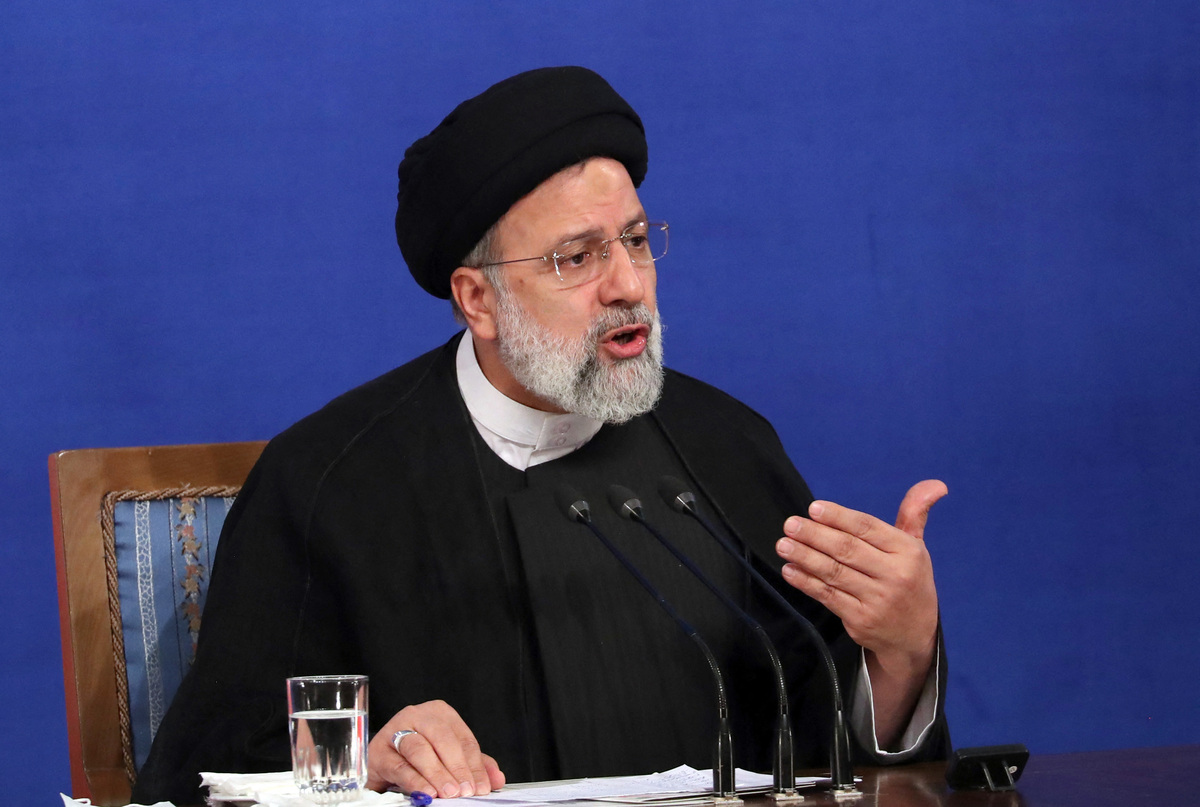
Iran calls for the "expulsion" of Israel from the United Nations

Iranian President Ibrahim Raisi called for Israel's expulsion from the United Nations, and said that "the war crimes being committed in Palestine are being carried out with the full support of the United States of America."


During celebrations of the 45th anniversary of the Islamic Revolution on Sunday, Raisi said, “We propose to expel the Israeli occupation from the United Nations, because it does not respect international resolutions and laws, and to prevent it from continuing its crimes against the Palestinians by cutting off all economic relations and dealings with it.”


He added during a speech he delivered before a crowd in Azadi (Freedom) Square in Tehran, "What is happening in Gaza today is a crime against humanity, and the defenders of these criminals are the American regime and some Western countries."


Raisi accused Israel of "violating 400 international resolutions, laws, and conventions" concluded within the framework of "international organizations," and considered that "the war crimes and massacres taking place in Gaza reveal the true nature of the Israeli occupation and Western countries."


He added, "We received many messages asking us to stop supporting Palestine, but we continue and Jerusalem must be liberated."


Iran recently reiterated its positions in support of the Islamic Resistance Movement (Hamas) and the Palestinians following the aggression targeting the Gaza Strip since October 7, which resulted in more than 28,000 martyrs and about 68,000 injured, most of whom are women and children.

ARAB AND WORLD

Sun 11 Feb 2024 12:58 pm - Jerusalem Time

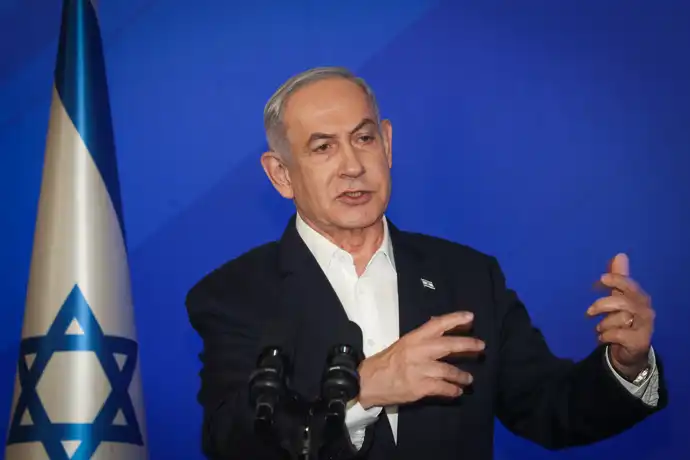
Netanyahu: Israel intends to reach the Hamas brigades in Rafah, otherwise we will lose the war

Prime Minister Benjamin Netanyahu says that Israel is preparing plans to remove civilians from the fighting areas in Rafah, in agreement with the American administration.


Prime Minister Benjamin Netanyahu stated that Israel intends to reach the Hamas brigades that remained in Rafah, stressing that this will be implemented with the establishment of a safe corridor for civilians to be able to leave the region, in agreement with the American administration. In an interview with the American ABC channel, Netanyahu explained that Israel is preparing plans in this regard and that removing civilians from combat zones is part of its war effort, unlike Hamas, which is trying to keep them there. He stressed that whoever tells us that we should never enter Rafah is actually telling us to lose the war and keep Hamas in power.


Minister Dichter: Egypt does not have an opinion on Rafah

In turn, Minister Avi Dichter, a member of the security political cabinet, said that Egypt does not have the final say and opinion regarding what is happening in Rafah because it refused to hand over the city in the peace treaty with Israel. Speaking to our radio station in Hebrew this morning, Minister Dichter, who was former head of the Shin Bet, refuted the warnings that military activity in Rafah during the month of Ramadan might lead to a flare-up of the situation. He said that the Egyptian side called the Yom Kippur War the Ramadan War because it occurred during this month. He added that the month of Ramadan is not free of wars and has never been so. He pointed out that during the holy month, warnings of terrorist operations increase, wondering: Can we commit attacks and say no to war during this month?


Borrell warns of military action in Rafah


For his part, European Union Foreign Minister Josep Borrell warned that a military operation in Rafah would lead to an indescribable humanitarian crisis and dangerous tension with Egypt, adding that several countries in the European Union shared this opinion. In his account on the X Network, Borrell wrote that resuming negotiations on the swap deal and stopping hostile activities are the only way to prevent bloodshed.

PALESTINE

Sun 11 Feb 2024 12:34 pm - Jerusalem Time

West Bank: Continuing Israeli attacks in Nablus and Salfit

This Sunday morning, settlers attacked citizens’ vehicles northwest of Nablus.


According to local sources, a group of settlers attacked citizens’ vehicles with stones at the intersection of the village of Bazaria, northwest of Nablus, which led to some of them being damaged.


It is noteworthy that settlers attacked vehicles on the same street more than once during the past week.


In Salfit, the Israeli forces seized construction equipment from the home of citizen Ayman Assi in the Al-Tall area, north of the town of Qarawat Bani Hassan.

OPINIONS

Sun 11 Feb 2024 12:32 pm - Jerusalem Time

Biden’s Unqualified Aid to Israel Could Hand Trump the Presidency

Common Dreams

Common Dreams

Opinion Writer

By MILES MOGULESCU

Nearly $10 billion more in unconditional military aid to Israel will only demonstrate America and Biden’s lack of concern for Palestinians and will threaten Biden’s reelection.

The unpopularity of President Joe Biden’s Israel-Gaza policy among Arab Americans, African Americans, and young people could well flip the electoral vote to hand former President Donald Trump the 2024 election. A few tens of thousands of these voters in a handful of swing states who likely would have voted for Biden but vote for Trump, a third party, or just stay home could well be enough for Trump to win the presidency legally.

As I recently wrote, the 2024 presidential election is likely to be decided by less than 100,000 voters in three of six swing states. Biden won the popular vote by more than 7 million votes in 2020, and Hillary Clinton won the popular vote by nearly 3 million votes in 2016. But in 2020 Biden only won the electoral vote and the presidency by an aggregate of 42,918 votes in Arizona, Wisconsin, and Georgia and in 2016 Trump won the electoral vote and the presidency by an aggregate of 77,744 votes in Wisconsin, Pennsylvania, and Wisconsin. The electoral vote in 2024 is likely to be similarly close.

Muslim-American Voters Rejecting Biden

A total of 64% of Muslim-American voters nationwide and 70% in Michigan picked Biden for president in 2020. A recent poll found that only 5.2% of Muslim American voters currently say they would vote for Biden in 2024.

Michigan went for Trump over Clinton by only 10,704 votes in 2016 and went for Biden over Trump by 154,185 votes in 2020. It had 206,050 registered Muslim voters in 2020, as well as about 300,000 people claiming Middle Eastern and North African ancestry. If only 5% vote for Biden in 2024 and the rest stay home, vote third party, or vote for Trump, that alone could hand Trump Michigan’s 16 electoral votes.

At a recent Detroit rally calling for a cease-fire, state Democratic legislative majority floor leader Abraham Aiyash said, “America, you promised the world that all men and women are created equal. Yet somehow you find billions of dollars to dehumanize Palestinians.”

Overall, in 2020 the Democratic Party held a 77%-11% advantage over Republicans. The latest Gallup poll shows that shrinking to 66%-19%.

Nasser Beydoun, who is running as a Democrat to replace retiring Michigan Democrat Debbie Stabenow in the U.S. Senate, told a Michigan TV station that he won’t vote for Biden in 2024: “He [Biden] has lost a constituency that voted overwhelmingly for him in Michigan. And if he wants to see reelection, he needs Michigan. And right now he doesn’t have it.”

In nearby Pennsylvania there are 167,618 registered Muslim-American voters. Trump defeated Clinton by 44,952 votes in 2016 and Biden defeated Trump by 80,855 votes in 2020. If only 5% of Pennsylvania Muslim voters pull the lever for Biden in 2024, that would be enough for Biden to lose Pennsylvania’s 20 electoral votes to Trump.

In Georgia, which Biden won by the infamous 11,779 votes that Trump asked Secretary of State Brad Raffensperger to “find,” there are 79,345 Muslim-American voters. If most Georgia Muslim Americans don’t vote for Biden, there go another 16 electoral votes.

African-American Voters Rejecting Biden Over Israel Policy

Speaking of Georgia, where the African-American vote is key, Biden’s stance on the Israel-Palestine war is one of the factors likely depressing the African American vote for Biden, as it is in the rest of the country. More than 1,000 African America pastors nationally (including 200 in Georgia) representing hundreds of thousand of congregants have demanded a cease-fire, through open letters and advertisements. One of the first signers was Rev. Timothy McDonald of the 1,500 member First Iconium Baptist Church in Atlanta, who stated, “It’s going to be very hard to persuade our people to go back to the polls and vote for Biden.”

Overall, in 2020 the Democratic Party held a 77%-11% advantage over Republicans. The latest Gallup poll shows that shrinking to 66%-19%. Similarly, Democrats’ lead among Hispanic adults has shrunk to 12% compared to 31% in 2021 and 36% in 2016. This drop isn’t caused solely by Biden’s stance on the Israel-Palestine war, but it sure ain’t helping.

Young Voters Rejecting Biden Over Israel Policy

Polls also show shifts of under 35-year-old voters away from Biden, with some polls even showing Trump defeating him among this group. In Pennsylvania, a recent Quinnipiac poll in Pennsylvania showed Biden up only 5% over Trump, compared to 16% in 2020. According to New York Times pollster Nate Cohn, “The young Biden [2020] voters with anti-Israel views are the likeliest to report switching to Mr. Trump… [O]pposition to the war itself is probably contributing to Mr. Biden’s unusual weakness among young voters.”

How Biden Can Both Do the Right Thing and Reclaim Lost Voters

Meanwhile, Biden and Senate Democrats, in the wake of Republicans killing the bipartisan border bill at Trump’s behest, are now pushing a foreign aid bill with $14.1 billion in military aid to Israel, $60 billion in aid to Ukraine, plus $10 billion in humanitarian aid for civilians. The Ukraine aid is probably necessary to help Ukraine have enough supplies to hold off Russian aggression. As Financial Times columnist Gideon Rachman reported, the ammunition shortage in Ukraine “has already led to an increase in Ukrainian casualties.” And the humanitarian aid is a good thing—if anything, it’s not large enough given the scale of the humanitarian crisis in Gaza.

But nearly $10 billion more in unconditional military aid to Israel will only demonstrate America and Biden’s lack of concern for Palestinians and will threaten Biden’s reelection, which right wing Israeli Prime Minister Benjamin Netanyahu is probably hoping for. U.S. military aid to Israel exceeded $3.8 billion in 2023, and the U.S. is already committed to providing at least $3.3 billion in military aid through 2028. Another $10 billion in military aid would constitute about two-thirds of Israel’s annual military budget. It’s completely unnecessary to enable Israel to combat Hamas for its horrendous attacks on Israeli civilians on October 7, which is essentially a guerilla war.

Words from Biden are not enough. He must use his power as the primary outside funder of the Israeli war machine to stop the slaughter of innocent Palestinian civilians in Gaza and to insist on an Israeli commitment to a pathway to a two-state solution which both recognizes Israel’s right to exist with security and the right of Palestinians to their own sovereignty.

Meanwhile, Netanyahu, whose political career has been dedicated to blocking any Palestinian sovereignty, has been thanking Biden for his support by giving him the middle finger. When Biden and Netanyahu spoke three weeks ago, Biden proposed a demilitarized Palestinian state for Gaza and the West Bank. Bibi immediately shot him down in public, issuing a statement that “after Hamas is destroyed Israel must retain security control over Gaza… a requirement that contradicts the demand for Palestinian sovereignty.” Egypt and Qatar, with behind the scenes U.S. help, have been working to try to negotiate a hostage exchange deal between Israel and Hamas and presented a Hamas offer to Israel a few days ago. Rather than offering to negotiate the terms of an exchange, Netanyahu shot it down as “crazy.”

In a press conference on Thursday, Biden mildly criticized Netanyahu’s policies, saying that Israel’s actions in Gaza are “over the top” and that he was seeking a sustained pause in fighting as diplomats seek to salvage cease-fire talks after Netanyahu rejected a Hamas proposal. “There are a lot of innocent people who are starving, in trouble, and dying. It’s got to stop.”

Words from Biden are not enough. He must use his power as the primary outside funder of the Israeli war machine to stop the slaughter of innocent Palestinian civilians in Gaza and to insist on an Israeli commitment to a pathway to a two-state solution which both recognizes Israel’s right to exist with security and the right of Palestinians to their own sovereignty.

At the very least, he must insist that Democratic Senators amend the stand-alone aid bill to condition all further aid to Israel on Israel:

  • Negotiating an extended cease-fire to obtain the return of the hostages, which could lead to a permanent cease-fire;
  • Facilitating massive humanitarian aid to Gaza;
  • Enacting zero tolerance for settler violence, ending all provocative actions on the West Bank and East Jerusalem;
  • Rejecting all plans for Israel to reoccupy Gaza; and
  • Accepting the principle of an independent Palestinian state.

This is the minimum right thing for the U.S. to do. It might also help Biden reclaim the votes of Muslim Americans, African Americans, and young people that threaten his reelection and make Trump’s election more likely.

Trump would certainly be worse for Palestinians than Biden. He has called for a ban on all Muslim immigration to the United States; moved the U.S. Embassy from Tel Aviv to Jerusalem, which Palestinians opposed; recognized Israel’s annexation of the Golan Heights into Israel; and has never shown any concern for Palestinian rights. Protesting Biden by voting for Trump, a third party, or staying home is self-sabotaging. But it is Biden who is providing military aid to Israel, which it is using in its war in Gaza where it has killed and injured so many Palestinian civilians, after Hamas’ horrendous attack killing, raping, and kidnapping Israeli civilians.

As progressive African American New York Times columnist Charles M. Blow wrote recently, “I believe Hamas is a terrorist organization committed to the eradication of Israel, that its Oct. 7 attack against Israel was ghastly, and that all the hostages taken in the attack must be returned. At the same time, I believe the carnage in Gaza—thousands of civilian deaths, including thousands of children—is unjustified and unacceptable… On those points, I adhere to a fundamental humanism. As the Guardian columnist Naomi Klein wrote in October, the progressive response to this war should be ‘rooted in values that side with the child over the gun every single time, no matter whose gun and no matter whose child.’”


PALESTINE

Sun 11 Feb 2024 12:24 pm - Jerusalem Time

Within 24 hours...Israel committed 14 massacres in the Gaza Strip, claiming 112 killed

The Israeli army committed 14 massacres against families in the Gaza Strip, claiming 112 killed and 173 injuries during the past 24 hours.


According to the Ministry of Health in the Gaza Strip, a number of victims are still under rubble and on the roads, and the Israeli forces are preventing ambulance and civil defense crews from reaching them.

The Ministry indicated that the toll of the Israeli aggression rose to 28,176 citizens and 67,784 injuries since the seventh of last October.

ARAB AND WORLD

Sun 11 Feb 2024 11:06 am - Jerusalem Time

New details about the truce negotiations.. This is what Hamas added to the French initiative, and these are Israel’s conditions

The Israeli website "Ynet" revealed the existence of negotiations between the mediators, the United States and Israel, in order to reduce the gap between Israel and the "Hamas" movement, allowing the launch of negotiations in Cairo.

According to the website, Israel requested that Hamas waive its basic conditions that it added to the Paris Initiative, and conditions not related to prisoners, such as stopping settlers’ raids on Al-Aqsa Mosque.


The website indicated that Israel refused to send a delegation to Cairo if Hamas’ conditions did not improve.

On Saturday, Israel delivered its response to Hamas’ plan regarding the deal to stop the war and exchange prisoners, to Qatar, Egypt, and the United States, according to the Israeli “Wala” website.


Israel had announced its rejection of the “Hamas” plan, which includes three stages over a period of 135 days, ending with a deal to exchange all Israeli hostages for thousands of Palestinian prisoners, while ending the war on the Gaza Strip, according to “Sky News Arabia.”


According to the Walla website, Israel informed the mediators of its rejection of most of Hamas’ demands, and asked them to do so as well, while preparing for negotiations on the basis of the “Paris Plan.”

In its response, Israel detailed the points to which it objects, which are:

- Withdrawing the forces that divide the Gaza Strip into two parts.

- Commitment to a permanent ceasefire at the end of the stages of cessation of fighting.

- Numbers of prisoners whom Hamas requests to be released in the exchange process.


In the details, a senior Israeli official indicated that “Israel made clear to the mediators that, contrary to Hamas’s demand, it will not agree to the withdrawal of Israeli army forces from the corridor south of Gaza City, which divides the Strip into two parts, early in the first phase.”

However, there is “an Israeli willingness to study the withdrawal of army forces from city centers in the Gaza Strip.”


Israel told the mediators that it opposes Hamas’ request to add the phrase “permanently” to the clause that stipulates indirect negotiations regarding a return to peace in the first phase of the deal.


The reason for this is “Israel’s refusal to commit to ending the war after completing the implementation of the hostage release deal,” according to the official.


Israel made clear to the mediators that it was not prepared to discuss, within the framework of the negotiations on the hostage deal, what Hamas called in its plan “lifting the siege” on Gaza.


It assured the mediators that “the key to releasing Palestinian prisoners that Hamas presented in its answer is unreasonable.”


It also considered that the long list of demands attached to Hamas’ response, such as commitments related to Al-Aqsa Mosque or the conditions of Palestinian prisoners in Israeli prisons, “are unacceptable and have nothing to do with the issue.”

PALESTINE

Sun 11 Feb 2024 10:39 am - Jerusalem Time

Netanyahu: We will move the displaced people in Rafah to the north of the city

Today, Sunday, Israeli Prime Minister Benjamin Netanyahu discussed Israel’s expansion of its attack to Rafah in the southern Gaza Strip, where about 1.5 million residents of the Strip who were displaced from the north and center of the Strip are concentrated in this area.


Netanyahu claimed during an interview with the American network ABC, “Victory is imminent. We will reach the last Hamas brigades present in Rafah, and we will implement this order.”


Regarding international warnings about the consequences of an attack on Rafah, Netanyahu considered that “Whoever tells us that under all circumstances we are prohibited from entering Rafah, is practically telling us to lose the war and keep Hamas there. We are about to reach the last Hamas brigades in Rafah, which constitute "The last stronghold."


Against the backdrop of American warnings against attacking Rafah due to the presence of the huge number of displaced people there, Netanyahu said that he “agreed with them on that,” and claimed that Israel is “working on a detailed plan, through which we will ensure safe passage for the civilian population.”


Regarding the place to which the displaced will be transferred, he continued, "There are many places that we have 'cleaned' in northern Rafah."


Netanyahu claimed, "Removing citizens from danger is part of our war effort. Creating a threat to them is part of Hamas' effort." He considered that "we have succeeded in this matter so far, and we will succeed again," referring to the forced displacement of the residents of the central and northern Gaza Strip, but the Israeli war has so far caused the death of more than 28 thousand people in the Gaza Strip, and tens of thousands of wounded, while there are thousands missing under the rubble. 


The Israeli Broadcasting Corporation (“Kan 11”) reported yesterday evening that the US administration sent a message to Israel during the past few days, warning it against launching a military operation in Rafah during the month of Ramadan, considering that this would not only lead to “escalation in Gaza” but To a comprehensive escalation in the region.


The channel indicated that Arab countries also issued similar warnings to Israel. This comes as the American CNN network reported, citing an unnamed Israeli official, that Netanyahu informed the “war cabinet” on Thursday that the Israeli forces’ operation in Rafah “must be completed by the beginning of the month of Ramadan on the tenth of next March.” ".

OPINIONS

Sun 11 Feb 2024 10:35 am - Jerusalem Time

The ‘Biden Doctrine’ Will Make Things Worse

Foreign Affairs

Foreign Affairs

Opinion Writer


The White House is developing plans for the Middle East that are too ambitious for its own good.

By Steven A. Cook, 

Does the United States need a “Biden Doctrine for the Middle East”? I ask because Thomas Friedman laid it out in the New York Times last week. Apparently, the Biden administration is prepared to take “a strong and resolute stand on Iran,” advance Palestinian statehood, and offer Saudi Arabia a defense pact that would hinge on normalization of Riyadh’s relations with Israel.

If Friedman’s column accurately reflects the thinking within the White House—and there is no reason to believe it does not—then put me down for a “No.” U.S. President Joe Biden and his advisors, who have previously eschewed big projects aimed at transforming the Middle East, are about to bite off a lot more than they can chew, especially when it comes to building a Palestinian state, setting Washington up for yet another failure in the region.

Looking back across the post-World War II era, an interesting pattern emerges in U.S. foreign policy in the Middle East: When policymakers used U.S. power to prevent bad things from happening, they were successful; but when they sought to leverage Washington’s military, economic, and diplomatic resources to make good things happen, they failed.

The impulse to openly engage in international social engineering in the region dates back to 1991. In January and February of that year, the United States defeated Iraqi leader Saddam Hussein’s army of occupation in Kuwait. And 10 months later, the leaders of the Soviet Union decided to bring that union to an end. The United States stood alone asthe sole remaining superpower. Having prevailed in the Cold War, Washington was determined to win the peace, which meant redeeming the world. The principal way that U.S. officials sought to do this in the Middle East was through “the peace process.”

U.S. efforts to forge peace between Israelis and Arabs became a centerpiece of Washington’s post-Operation Desert Storm diplomacy, despite the fact there was scant linkage between Hussein’s effort to absorb Kuwait and the conflict between Israel and its neighbors. Of course, at a level of abstraction, both Iraq and Israel had acquired territory by force, though Iraq’s aggression against Kuwait in August 1990 and Israel’s preemptive strikes in June 1967 were so different that the cases are hardly comparable.

The U.S. impulse to forge peace in the Middle East had less to do with international law than the belief that U.S. power could be the catalyst for a new, more pacific, and prosperous global order. This was hardly outside mainstream thinking, of course. After all, the United States had saved the world from fascism, and at the time that President George H. W. Bush convened a peace conference in Madrid, Soviet communism was near death.

For all his efforts, Bush’s goals in the Middle East remained primarily limited to solving the problem of Arab-Israeli peace. It was not until the Clinton administration that the peace process took on a decidedly transformative cast. The same week in 1993 that Israeli Prime Minister Yitzhak Rabin and Palestine Liberation Organization leader Yasser Arafat signed the first agreement of the Oslo Accords under the auspices and imprimatur of the then-U.S. President Bill Clinton, his national security advisor, Anthony Lake, appeared before students and faculty at the Johns Hopkins School of Advanced International Studies to set out the Clinton administration’s goals for U.S. foreign policy in the immediate post-Cold War world. Central to the president’s approach was what Lake called “democratic enlargement.”

The way the Clinton team would promote change in the Middle East was through Palestine. Peace between Israelis and Palestinians, Clinton reasoned, would produce a more peaceful, prosperous, and integrated region, thereby undermining the rationale for the Middle East’s national security states. After peace, authoritarianism would give way to democratic political systems in the Arab world. In the words of one of his principal advisors, “Clinton set himself a transformational objective: to move the Middle East into the twenty-first century by ending the Arab-Israeli conflict.”

The idea that peace would catalyze political change was alluring, but Clinton misconstrued the reasons for the authoritarian politics of the region. In any event, his almost decadelong effort to clinch a conflict-ending agreement between Israelis and Palestinians came to naught. And as he left office, violence engulfed both communities in what became the Second Intifada.

The next U.S. president, George W. Bush, was initially skeptical of the time and energy that Clinton devoted to Middle East peace, but Bush was actually the first president to declare that a Palestinian state was a goal of U.S. foreign policy. To get there, he flipped his predecessor’s logic. For the Bush White House, only after the democratic reform of Palestinian political institutions and the ouster of Yasser Arafat could there be peace.

Like Clinton before him, Bush failed. As he handed off the Oval Office to President Barack Obama, there was no Palestinian democracy, no peace, and no Palestinian state. Despite two very different administrations with two different approaches to the Middle East, Clinton and Bush shared a common, ambitious objective: the political and social transformation of the region.

Two Palestinians, including a teenager, duck behind a slab of concrete as they wave the Palestinian flag next to the border fence of Gaza City. Scrubby grass and plants are visible in a field beyond the fence. Both people are dressed in black and wearing cloth face masks, glancing back over their shoulders at the camera.


Cognizant of the United States’ failures in the Middle East—whether the transformation of Iraq, the promotion of democracy through the so-called Freedom Agenda, or the effort to build a Palestinian state—neither Obama, nor President Donald Trump, nor Biden harbored the desire to socially engineer a new Middle East. In Biden’s case, he oversaw then-Secretary of State John Kerry’s struggle to get Israelis and Palestinians to negotiate, no less sign a peace agreement, and came away pessimistic about a two-state solution. Almost immediately after coming into office, Biden’s advisors made clear that the regional ambitions of administrations past would not be repeated.

Then came Hamas’s brutal murder of almost 1,200 Israelis on Oct. 7, 2023, and Israel’s withering military response in the Gaza Strip. According to Friedman, as the war between Israel and Hamas continues and the bodies of mostly Palestinian civilians pile up, Biden has concluded that what he wants to accomplish in the Middle East—ensuring the free flow of oil, helping to prevent threats to Israel’s security, outmaneuvering the Chinese—is unlikely to happen without a new, ambitious U.S. doctrine that once again drives change in the Middle East from the outside.

To be fair, it is a positive development that the White House understands that Iran does not want a new relationship with Washington. And a defense pact with Saudi Arabia makes sense in terms of global competition with China. But a significant U.S. investment in building a Palestinian state is likely to end in failure, like the previous efforts to do the same.

Sure, there are differences this time. War, as pundits have repeated over and over again since Oct. 7, opens up new diplomatic opportunities. Yet, there is a little reason to believe that two states—Israel and Palestine—living side by side and in peace could present the opportunity to emerge from the present crisis.

Biden and his team may feel that they have no choice but to pursue the two-state solution, but they should be aware of what they are taking on. The conflict is bound up in thorny–but often not well-understood—concepts, such as identity, historical memory, and nationalism.

There is also a religious dimension to the struggle between Israelis and Palestinians, especially since Hamas and messianic Jewish groups have sacralized the land between the Jordan River and the Mediterranean Sea. Add to this the fact that Palestinian political leadership—both that of Hamas and the Palestinian Authority—routinely denies the historical connections between Judaism and historic Palestine. The opposing narratives that emerge from these issues do not lend themselves to the kind of coexistence the Biden administration now apparently envisions.

Then there are the brutal politics within Israeli and Palestinian societies that have contributed to stalemates between the parties over the years. The Israel-Hamas war centered in Gaza is only likely to make it more difficult for the Israelis to accede to the Palestinians minimum demands for peace—a fully sovereign independent state, a capital in Jerusalem, and a return of refugees. Likewise, the Palestinians could not agree to Israel’s minimum demands for peace, which are a mirror image of their own: Jerusalem as the undivided, eternal capital of Israel; a state whose territory extends beyond the lines drawn on June 4, 1967, and no return of Palestinian refugees.

Bereft of new ideas, concerned about ceding ground to global competitors over the war in Gaza, and worried about young voters, Biden and his team have latched onto the peace process—a failed enterprise that has no better chance of succeeding now than any other time in the past three decades.

In a way, it is hard to blame the president. Peace processing is safe. There is political support within the president’s party for it. He can say he tried. When this latest push to transform the Middle East fails to produce a Palestinian state after perhaps years of inconclusive negotiations about negotiations, Biden will be well into his post-presidency.

What should the United States do instead? That is a difficult question, especially since it is asking U.S. policymakers, members of Congress, and the Beltway policy community to recognize the limits of U.S. power to resolve an unresolvable conflict.

Still, there are important things that the United States can do. It must prevent Iran from sowing more regional chaos. Washington must work hard to head off any backsliding on the regional integration that has already taken place. And U.S. leaders can explain to Israelis why the politics of support for their country are changing. In some ways, this will help create an environment that is more conducive to peace between Israelis and Palestinians, but there are no guarantees.

Way back in 2001, during a press conference with Israeli Prime Minister Ariel Sharon, then-U.S. Secretary of State Colin Powell remarked, “The United States cannot want peace more than the parties themselves.” That is the trap that President Biden is walking into.


PALESTINE

Sun 11 Feb 2024 9:16 am - Jerusalem Time

Red Crescent: Three Palestinian patients were killed inside Al-Amal Hospital in Khan Yunis

The Red Crescent Society said on Sunday that the Israeli army prevented the entry of oxygen into Al Amal Hospital about a week ago, which led to the death of three patients.


In a statement issued by it, the association denied the Israeli claim that it brought oxygen cylinders into the hospital, or any other medical equipment, stressing that the occupation forces destroyed medical devices and equipment during their storming of the hospital, as well as assaulting the staff by beating, abusing and insulting them before arresting 9 medical and administrative staff, and four wounded, and five patients' companions.


It added: "The Israeli army continues to prevent the entry of fuel necessary for the operation of electricity generators, even though the fuel stock is about to run out in two days from now, which threatens to stop the hospital from working as its siege continues for the twenty-first day in a row, including patients, wounded, and medical and administrative staff."

PALESTINE

Sun 11 Feb 2024 8:12 am - Jerusalem Time

The war on Gaza: Death and injuries in Rafah, bombing and raids on Khan Yunis

The raids and bombings are accompanied by violent clashes between Palestinian resistance factions and Israeli army forces, in the north, center and south of the Gaza Strip, where intense battles are taking place. The clashes and battles are concentrated in the southwest of Gaza City, in the north of the Strip, and in the city of Khan Yunis in the south.


On Sunday, the Israeli war on Gaza entered its 128th day, with dozens martyred and hundreds injured in bombing and raids on the city of Rafah, at a time when international warnings escalated of a possible Israeli invasion of Rafah.

Israeli aircraft continued their air strikes on the city of Khan Yunis, where the main hospitals in the city remain, most notably the Nasser Medical Complex and Al Amal Hospital.


Hospitals in Khan Yunis are subject to siege and constant targeting by Israeli forces, which target hospitals housing thousands of displaced people and hundreds of sick and wounded people.


Israeli artillery continued to bomb residential squares and populated areas in the central and northern Gaza Strip, while air strikes did not stop, while cases of civilian death by Israeli army snipers were recorded.


The raids and bombings are accompanied by violent clashes between Palestinian resistance factions and Israeli army forces, in the north, center and south of the Gaza Strip, where intense battles are taking place.


The clashes and battles are concentrated in the southwest of Gaza City, in the north of the Strip, and in the city of Khan Yunis in the south.


The number of killed of the Israeli aggression on the Gaza Strip has risen to 28,64 citizens and 67,611 injured since October 7, 2023, according to what the Gaza Ministry of Health announced.

ARAB AND WORLD

Sun 11 Feb 2024 8:07 am - Jerusalem Time

Washington warns Israel of a "regional escalation" in the event of an invasion of Rafah during Ramadan

Washington and Arab countries warn Israel against invading Rafah during Ramadan; A report indicates that Netanyahu set the beginning of next month, March 10, as the date for the end of operations in Rafah, while Israeli reports stated that the military and political levels did not set a timetable.


The administration of US President Joe Biden warned the Israeli government, headed by Benjamin Netanyahu, against invading the city of Rafah, south of the Gaza Strip, during the month of Ramadan, stressing that this could lead to a “regional escalation,” according to what the Israeli Broadcasting Authority reported (“Kan 11 "), Saturday evening.


The official Israeli channel reported that the US administration sent a message to Israel during the past few days, warning it against launching a military operation in Rafah during the month of Ramadan, considering that this would not only lead to “escalation in Gaza” but to a comprehensive escalation in the region.


The channel indicated that Arab countries also issued similar warnings to Israel. This comes as the American CNN network reported, citing an unnamed Israeli official, that Netanyahu informed the “war cabinet” on Thursday that the Israeli forces’ operation in Rafah “must be completed by the beginning of the month of Ramadan on the tenth of next March.” 


“The date of the possible invasion has not been determined.”

In turn, Channel 13 quoted the Israeli army spokesman as saying, “The army will do what the political leadership orders it to do, but it has not yet set a target date for the start of the operation in Rafah.” Haaretz newspaper also quoted informed sources as saying that "the political level has not yet set a timetable for the Israeli army operation in the southern Gaza Strip and the Rafah area."


According to Haaretz sources, the political leadership in Israel “has not set a date for expanding the military operation and moving to the city of Rafah, close to the border with Egypt.” The sources explained that "Israel has not yet reached understandings with Egypt on how to deal with tunnels in the border area between Egypt and the Gaza Strip."


The newspaper added on its website that Israel was also unable to reach understandings with Cairo on “monitoring measures that would provide warning of weapons smuggling operations through tunnels from the Egyptian side to the Gaza Strip.”


Meanwhile, a political official who spoke to Haaretz linked the escalating Israeli threats regarding an imminent invasion of Rafah to Israeli attempts to pressure Hamas leaders and push them to make concessions within the framework of negotiations aimed at reaching a prisoner exchange deal and a ceasefire in Gaza.


Searching for "alternatives" to evacuate the displaced from Rafah


Kan 11 quoted (unnamed) regional officials as saying that Egypt's fears regarding the imminent Israeli invasion of Rafah are related to the possibility of widespread infiltration operations into Egyptian territory, in light of the presence of more than 1.3 million displaced people in the region.


The channel reported that the Israeli security services are studying "alternatives" to the process of evacuating Palestinians from Rafah, to enable the Israeli army to carry out the possible ground operation in the city located south of the Gaza Strip.


It said that the goals that Israel will seek to achieve by invading Rafah “are rescuing hostages, assassinating Hamas leaders, and destroying smuggling tunnels to Egypt and terrorist infrastructure,” as he put it.


Netanyahu to Halevy: “If you release reserve soldiers... call them back.”


Channel 13 reported, on Saturday evening, that Netanyahu urged the Chief of Staff of the Israeli Army, Herzi Halevy, in the cabinet session held last Thursday, to prepare a plan to “cleanse Rafah” by remobilizing reserve soldiers in preparation for an Israeli military operation in the southern Gaza Strip. The channel quoted a senior official as saying, "The operation in Rafah is approaching."


According to the channel, Netanyahu told the chief of staff during the cabinet session that, “If you demobilize soldiers in the reserve forces, recruit them again.” In his response to Netanyahu, Halevy said: “We will know how to carry out any mission, but there are political aspects that must be taken care of first.”


Halevy went on to say: “The plan requires the evacuation of 1.3 million residents there (referring to the displaced Palestinians from the northern and central Gaza Strip). The process also requires political coordination with the Egyptian side.” On Friday, Netanyahu's office announced that the latter "instructed the army and security services to present to the cabinet a dual plan - to evacuate the population and eliminate the Hamas brigades."


Meanwhile, the Israeli government is preparing to send a high-level security delegation to the Egyptian capital, Cairo, next week, to participate in an American-Egyptian-Qatari meeting regarding deal negotiations between Hamas and Israel.


Israel conditions its participation in the American-Egyptian-Qatari meetings in Cairo on “softening” the position of the Hamas movement, in reference to its response to the Paris proposal that was held about two weeks ago.
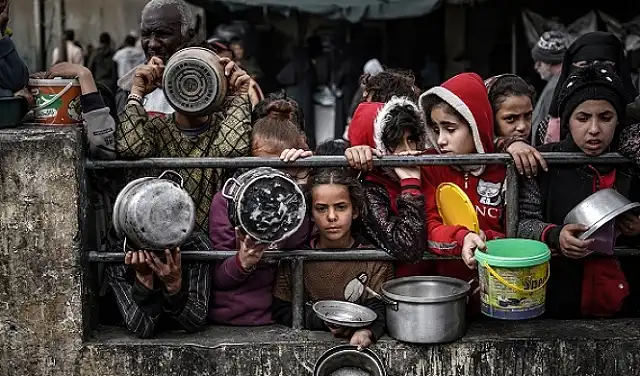

Israeli officials said that “if Hamas does not express a softer position, Israel will not send a delegation to the talks” in Cairo, according to what Channel 13 reported on Friday evening, and explained that the cabinet had taken a decision in this regard.
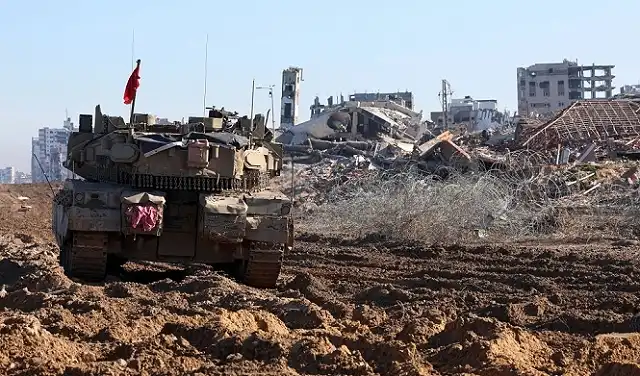
ARAB AND WORLD

Sun 11 Feb 2024 7:45 am - Jerusalem Time

Egyptian sources reveal: Hamas’ response surprised Israeli Government

As soon as the Hamas movement submitted its response to the proposed scenario of concluding a prisoner exchange deal between the occupation government and the resistance in Gaza, to the mediators in Egypt and Qatar concerned with the Gaza discussions, a series of meetings and communications began between the mediators and the parties to the crisis, in an attempt to reach an agreement as quickly as possible. In order to defuse the explosion of the situation in the region and the expansion of the circle of conflict, amid the escalation of military actions on the Lebanon front, and the threats of Israeli prime minister, Benjamin Netanyahu, to launch a large-scale military operation in Rafah.


Gaza talks: fruitful meetings for Hamas in Cairo

In this context, the Hamas delegation, which began a visit to Cairo, held joint marathon meetings with those responsible for the mediation file in Egypt and Qatar, to explain the point of view of the resistance and Hamas regarding the response presented to the prisoner exchange offer.


Egyptian sources familiar with the Gaza talks revealed, in interviews with Al-Araby Al-Jadeed newspaper, that “the meetings held by the movement’s delegation in Cairo were fruitful,” noting that “Egyptian estimates of the response presented by the resistance consider it to be very realistic, in contrast to What the American administration or the Israeli side sees, and that the points that the Egyptian officials find difficult to pass do not exceed two points at the maximum, and that they can be resolved in a quick time, if the political will is available on the Israeli side, and these negotiations are removed from the circle of internal political conflict in Israel."


An informed Egyptian source revealed that “the Israeli government was surprised by the form of the response that Hamas submitted to the mediators,” saying: “There was a perception or expectation among the Israeli War Council that Hamas would provide a brief response of approval or rejection of the framework agreement, followed by an indirect negotiation process.” To formulate the details, but Hamas surprised everyone by responding by formulating very precise details of the stages proposed by the Paris meeting in general, without going into details.


He continued: “Perhaps the form of the response of Hamas and the resistance factions is what caused confusion within the Israeli government, which was preparing to prolong the process of negotiating a ceasefire and releasing the prisoners, in a way that would make it emerge from the impasse it faces in front of the families of the prisoners and the opposition, as well as the American administration.” 


In contrast, the Egyptian source revealed that “the leaks contained in the Israeli media regarding the Israeli government’s refusal to withdraw from Gaza to the separation fence or to allow the return of residents to the northern and central regions are incorrect,” saying that “the occupation government, represented by the head of the Mossad, David Barnea, has expressed its willingness to accept this during the Paris meeting.”


The source explained that “the most prominent Israeli objections are represented in two parts of the movement’s response. One of them is what the occupation government describes as a summary of all the demands of the resistance that are binding on Israel in the first stage, while keeping the marginal points for the rest of the stages, while postponing the release of all prisoners until the last stages to prolong the duration of the agreement, and that so far Israel has refused to make any pledges regarding engaging in serious negotiations for a comprehensive ceasefire after the first phase of the agreement.”


The Egyptian source revealed that “what is being raised about Israel’s refusal to send a representative delegation to Cairo is not accurate,” noting that the next few days “will witness the arrival of an Israeli delegation to determine the position of Hamas and the resistance, following the meetings that Cairo witnessed, in order to develop a paper with complete points that require further negotiation and consultation, before CIA Director William Burns arrives in Cairo.”


Double Duty by William Burns

The source also revealed that Burns "will come to Cairo on a dual mission. In addition to the mission of advancing the Gaza talks and the negotiation process between the occupation government and Hamas and working to resolve the controversial points, he will also work to ease the Egyptian-American atmosphere in the wake of President Joe Biden's statements that caused embarrassment to the Egyptian leadership." During which he indicated that he convinced Egyptian President Abdel Fattah al-Sisi to open the Rafah crossing for aid after Sisi rejected that step.


Biden said in a surprise speech at the White House that Egyptian President Abdel Fattah El-Sisi did not initially want to open the Rafah crossing for aid to enter Gaza, but he spoke to him and convinced him to open it, according to what he said.


The sources said, “With regard to the current course of negotiations, Egyptian officials have ended their meetings with the Hamas delegation that recently visited Cairo to discuss the response to the paper on the Paris proposal, by reaching positive understandings, but the crisis is centered around the hardline position of Benjamin Netanyahu’s government towards reaching an agreement.” The sources suggested that "Netanyahu will not stop firing, at the present time," saying that "it is unlikely that he will submit to the warnings of the United States and the warnings of neighboring countries."


In this context, Professor of Political Science and International Relations, Issam Abdel Shafi, told Al-Arabi Al-Jadeed, “The conditions presented by the Hamas movement are linked to a set of basic files that express what the movement sought to achieve from this process, which is the file of prisoners in the first place, then the reconstruction file, then the file of lifting the siege, as well as the Al-Aqsa Mosque file, in addition to what is also related to restoring the infrastructure in the Gaza Strip, and these are the basic files included in the demands.”

Abdel Shafi stressed that “those demands were not as high as the American President said, when he said that they were somewhat exaggerated, but Netanyahu came out in his press conference to express his reservations about these demands, and I will not say that he rejected them, and that he would continue military operations until what was achieved.” He called it overwhelming victory. In my view, this is a language for local consumption, with which he addresses the interior and does not address external parties, because he knows that as long as he accepts entering into these negotiations, concessions must be made.”


Regarding the visit of the Palestinian delegation headed by the leader of the movement, Khalil Al-Hayya, to Egypt, the political science professor said that it “comes within the framework of completing these negotiations, and from my point of view, things are moving towards signing an interim truce agreement.”


In another context, a leader in the Hamas movement confirmed to Al-Araby Al-Jadeed that the movement is “serious about reaching understandings with the Palestinian Authority regarding the perceptions of the next day in Gaza after the cessation of the aggression.” He explained that the movement “delivered to Cairo a vision that includes its vision for managing the Gaza Strip after the end of the aggression,” saying: “Hamas is serious about not being at the forefront and not adhering to managing the Strip in a Palestinian-Palestinian solution without external interference,” stressing that the movement “does not oppose the formation of a national unity government  responsible for managing the Gaza Strip and the West Bank.”