ARAB AND WORLD

Tue 13 Feb 2024 7:36 pm - Jerusalem Time

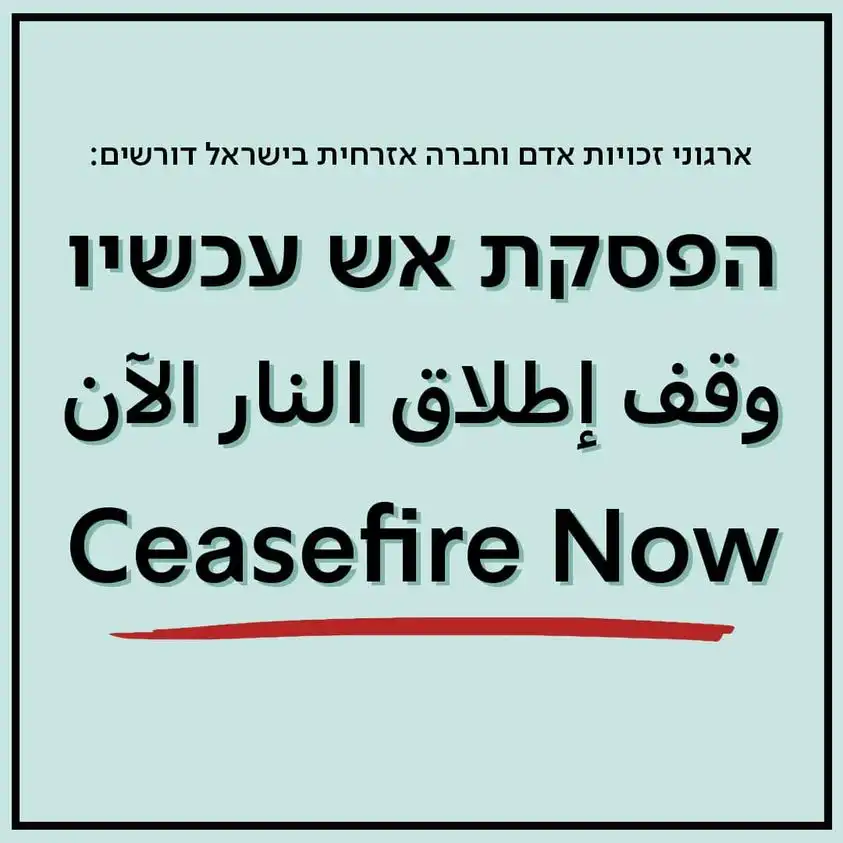
Israeli NGOs DEMAND CEASEFIRE

We, the undersigned Israel-based civil society and human rights organizations, call for an immediate ceasefire in the Gaza Strip and demand the immediate release of hostages held in the Gaza Strip. An immediate ceasefire will prevent further loss of civilian lives and facilitate access to vital aid for Gaza to address the unprecedented humanitarian catastrophe there.


In more than 120 days of war in Gaza, following Hamas’s egregious attack on October 7 which killed some 1,200 Israelis and internationals, we have witnessed Israeli bombardments and siege policy causing unfathomable death and destruction in the Gaza Strip.


According to the Palestinian Ministry of Health, some 27,000 people have been killed, over 66,000 people have been injured, and thousands more are still buried under the rubble. The healthcare system has been almost totally decimated by military assaults, electricity blackouts, the enormous number of medical staff killed or displaced, and shortages of medications and medical equipment. Only 14 out of 36 hospitals are partially operational and are on the verge of collapse due to extreme overload and lack of supplies. Food supply and clean drinking water are lacking throughout Gaza, with the entire population at imminent risk of famine and dehydration.


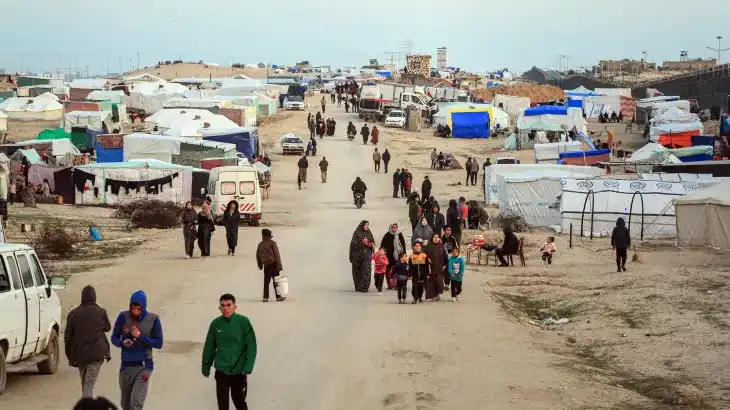
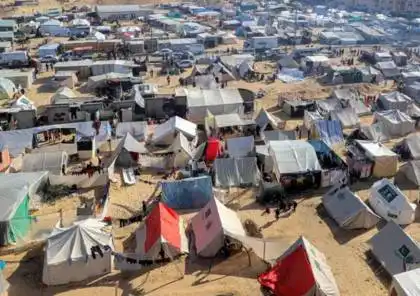
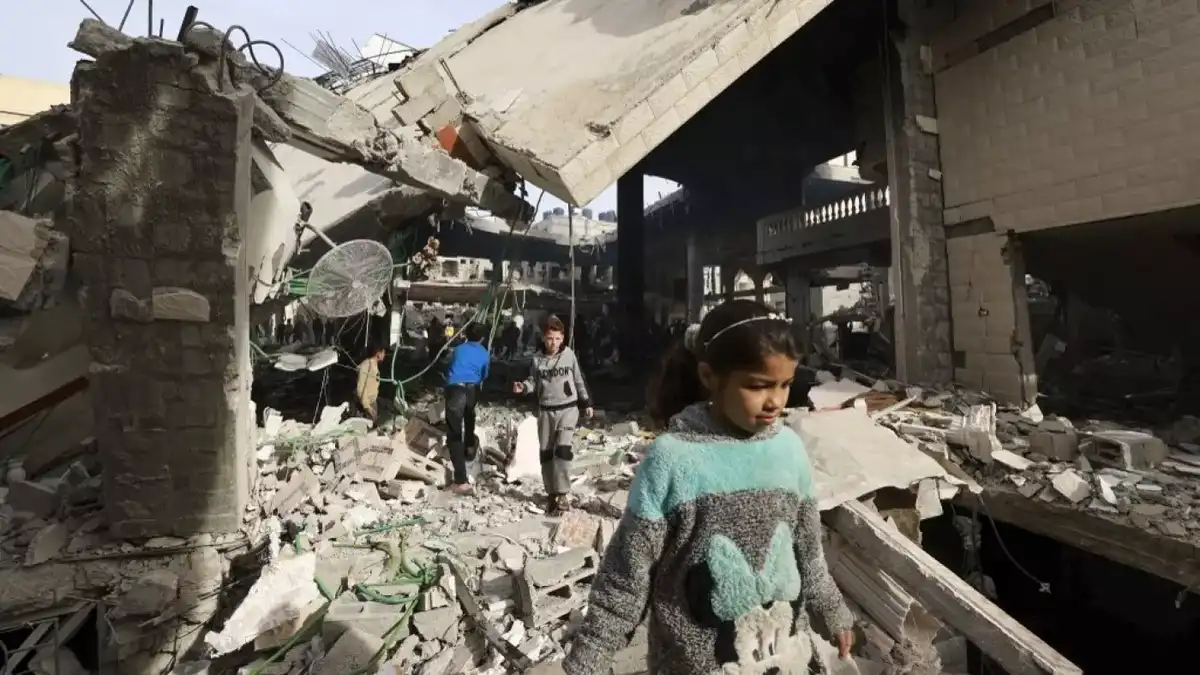
Some 1.7 million people – about 75% of the population – have been displaced. IDP shelters are overcrowded and lack basic conditions, with extreme shortages of food, water, and other necessities. Large areas in the Strip are no longer habitable. Thousands of homes have been heavily damaged or destroyed by Israeli bombardments, while critical civil infrastructure, public buildings, cultural institutions, places of worship, and heritage sites lie in ruins.


The shortage in supplies and the active hostilities prevent an effective humanitarian response. Some necessary humanitarian items and medical equipment are being blocked from entry by Israel. Heavy rains, cold weather, and extreme overcrowding in tent encampments and shelters, have significantly increased the incidence of illness and disease. The distribution of what little aid is entering is significantly hindered by the lack of safe access within the Strip. Nowhere in Gaza is safe for civilians.


We thus call on all parties to reach an immediate ceasefire and we call upon Israel to allow unfettered entry and delivery of humanitarian aid and goods into and throughout Gaza, as directed to do by the International Court of Justice. Hamas must unconditionally release all people taken hostage on October 7. We call on the international community to uphold its legal obligation to restore respect for international humanitarian law and protect civilians. The international community must ensure that all those responsible for grave violations of international humanitarian and human rights law be held accountable. These steps are vital for ensuring human rights and security for Israelis and Palestinians alike.

Signed by:

Akevot Institute for Israeli-Palestinian Conflict Research | Amnesty International Israel | The Association for Civil Rights Israel (ACRI) | Bimkom – Planners for Planning Rights | Breaking the Silence | B’Tselem – The Israeli Information Center for Human Rights in the Occupied Territories | Combatants for Peace | Emek Shaveh | Gisha – Legal Center for Freedom of Movement | Green Olive Collective | HaMoked: Center for the Defence of the Individual | Haqel –  In Defense of Human Rights | Ir Amim | Isha L’isha Haifa Feminist Center | Israeli Palestinain Bereved Families for Peace | Jordan Valley Activists | Looking the Occupation in the Eye | Machsom Watch | Mothers Against Violence Israel | Negev Coexistence Forum for Civil Equality | New Profile – The Movement to Demilitarize Israeli Society | Parents Against Child Detention | Peace Now | Physicians for Human Rights Israel | Policy Working Group | PsychoActive – Mental Health Professionals for Human Rights | Rabbis for Human Rights | The School for Peace| Social Workers for Peace and Welfare | Solidarity of Nations – Achvat Amim | Standing Together | This Is Not An Ulpan | Torat Tzedek | Yesh Din | Yesh Gvul | Your Neighbor As Yourself | Zazim – Community Action


Emek Shaveh thanks the organizations, foundations, states and individuals who support our efforts to create a future where tolerance, equality and democracy prevail. Most of our funding comes from foreign countries, as noted on our website and by the Registrar of Charities. The opinions expressed in the newsletter are the sole responsibility of Emek Shaveh and do not necessarily reflect those of our donors.

PALESTINE

Tue 13 Feb 2024 7:22 pm - Jerusalem Time

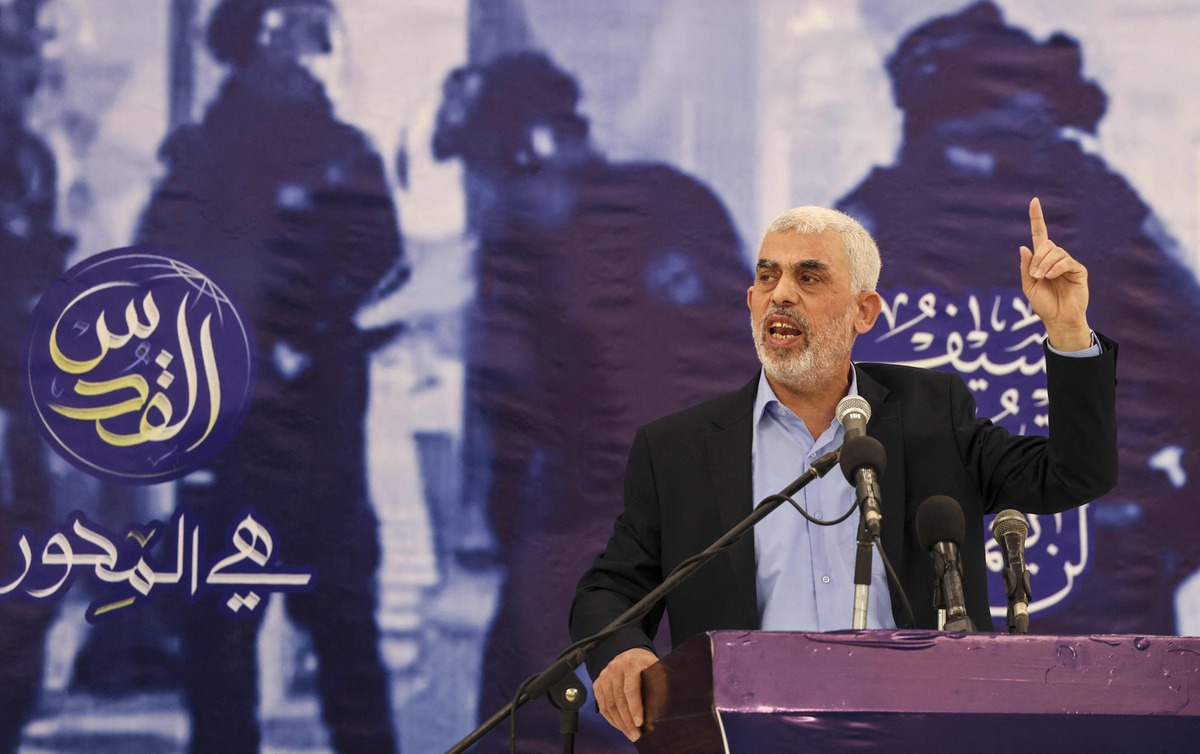
Channel 13: Israel obtains a video of “Al-Sinwar” and his wife in a tunnel

The Israeli Channel 13 said that the army obtained a video recording of the leader of the Hamas movement in Gaza, Yahya Sinwar, with his wife and children inside one of the tunnels in Khan Yunis, before he left after learning that his whereabouts had been revealed.

The channel reported that Sinwar was shown in the footage walking, directing the fighting, and leading the forces from that tunnel.


He left the place after realizing that his whereabouts had been revealed and that Israeli army forces were pursuing him.


The channel explained that according to the video recording, Al-Sinwar was not injured during the ongoing Israeli raids on Khan Yunis. The Israeli army has not published the video or a statement about it until this moment.


How did the video get into the hands of the Israelis?

Channel 13 says that the video reached the Israeli army when its forces examined the strategic tunnel and found a security camera in it - where Al-Sinwar was recorded walking with his wife and children, without them appearing to be injured.


Now, the Israeli army and Shin Bet are conducting an in-depth analysis of videos of the Hamas leader in Gaza in order to extract new information.


Israeli army officials said they did not know when the video was filmed.

PALESTINE

Tue 13 Feb 2024 7:08 pm - Jerusalem Time

War on Gaza: Dozens of Palestinians killed and wounded in Israeli raids on Gaza, Khan Yunis and Rafah

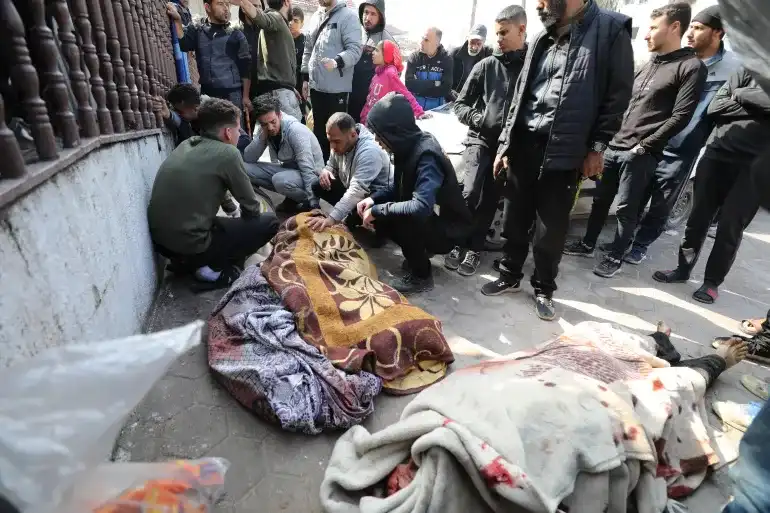
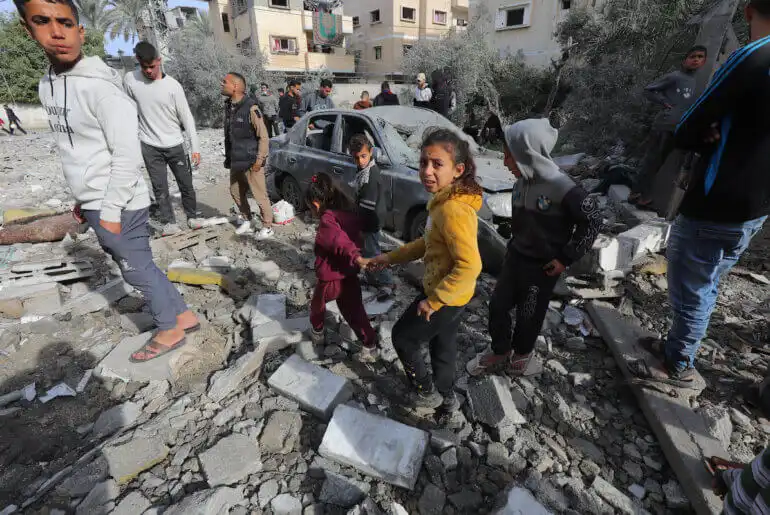
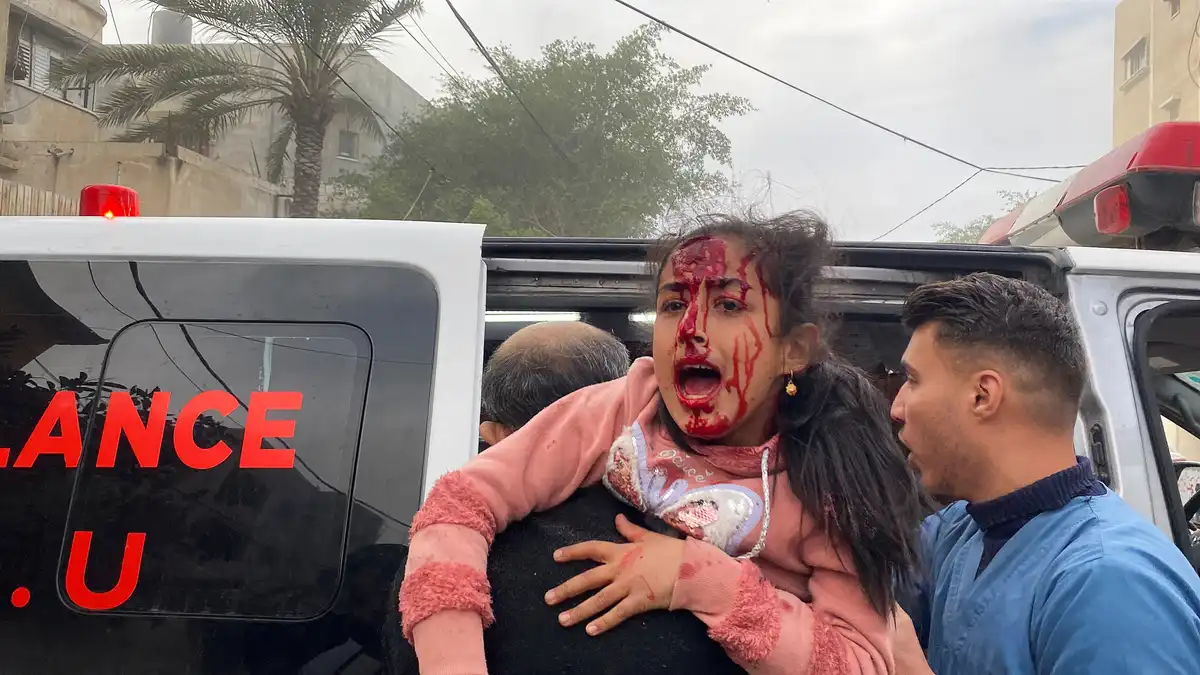
Six citizens, including children and women, were killed this evening, Tuesday, in a raid launched by Israeli aircraft on a civilian vehicle on Al-Jalaa Street, north of Gaza City.


A citizen was also killed and another injured, in a bombing by Israeli drones that targeted the vicinity of the Ali bin Abi Talib Mosque in the Al-Zaytoun neighborhood in Gaza City.


A citizen was killed and two others were injured in an Israeli raid that targeted a gathering of citizens at the Lababidi Junction, west of Gaza City, while a number of citizens were injured in the Israeli aircraft’s bombing of a house in the industrial area.


Earlier, 4 citizens were killed as a result of the Israeli army targeting a civilian vehicle in the Sheikh Radwan neighborhood, north of Gaza City.


Occupation artillery bombed the vicinity of the university college and the Sheikh Ajlin area, southwest of Gaza City. Ambulance crews also recovered a dead body and an injured citizen from the Al-Nada Towers area, north of the city.


In Khan Yunis, south of the Gaza Strip, the Israeli forces continued their siege of the Nasser Medical Complex, and demanded that the displaced people inside it evacuate and keep only the patients and health personnel, while firing bullets at everyone who moved in the place, and also demolished the northern wall of the complex.


The Israeli forces executed a young man after they arrested him and forced him to enter the Nasser Medical Complex while he was handcuffed to inform the displaced citizens of his evacuation. Upon his return, they shot and killed him.


A child who was receiving treatment inside the complex was killed after the generators stopped due to a lack of fuel.

A number of displaced citizens were also killed and injured by occupation sniper bullets as they were leaving the complex.


Ambulance and rescue crews recovered the body of the child Khaled Abu Taima, who was shot dead by Israeli snipers in front of Al Amal School in Khan Yunis, while Israeli artillery bombed the Abasan Al Kabira area east of Khan Yunis.


In Rafah, in the south of the Gaza Strip, a number of citizens were injured in raids launched by Israeli army on the Tallet Zuroub area in the west. The Israeli aircraft also bombed a house in the town of Al-Shouka in the east. A number of citizens were injured after they were targeted by Israeli drones, while the Israeli artillery continued to bomb the eastern areas of the city.


The Israeli aircraft also bombed agricultural land near the town of Al-Zawaida in the central Gaza Strip.


In an infinite toll, the number of killed in the ongoing Israeli aggression on the Gaza Strip since October 7 has risen to 28,473, in addition to 68,164 wounded. A number of victims are still under the rubble and on the roads, as the Israeli army prevents ambulance and rescue crews from reaching them.

PALESTINE

Tue 13 Feb 2024 6:34 pm - Jerusalem Time

Palestinian source: Hamas agrees to form a technocratic government

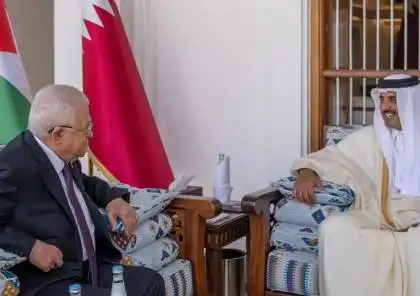
A Palestinian source in Ramallah told Sky News Arabia on Tuesday that Qatar conveyed to President Mahmoud Abbas the approval of the Hamas movement to form a technocratic government, whose mission is to reconstruct Gaza and restore security to it after the war.


According to the source, Hamas does not require any names to head this government or any of its ministers.


Doha also conveyed Hamas's initial acceptance of entry into the Palestine Liberation Organization, on the condition that this is linked to a clear political horizon leading to a Palestinian state on the 1967 borders.

These developments came after the return of Abbas and a number of Palestinian officials from Doha at dawn on Tuesday, after a three-day visit.

The source confirmed the agreement on an Arab principles paper led and followed by Saudi Arabia, which has been delegated by Palestinians and Arabs to do so.


The principles paper includes 3 points:

First: stopping the war in Gaza and establishing a political horizon for a two-state solution.

Second: Post-war reconstruction of Gaza through a technocratic government leading this stage.

Third: Following up on the internal Palestinian situation, completing reconciliation, and Hamas’ entry into the PLO within a single Palestinian-Arab vision.

OPINIONS

Tue 13 Feb 2024 6:25 pm - Jerusalem Time

The Day After Step-by-Step

Gershon Baskin

Gershon Baskin

Opinion Writer

The following are some ideas and proposals on how to deal with the day after the war starting now. There is no time to waste. Much of this should have been thought about and planned already. I am sure that there are many people with different and additional ideas. I have shared some of these ideas with important Israelis and Palestinians. I have also spoken about them with diplomats of several friendly countries. This is meant to be “food for thought” and not a full comprehensive plan.

• The United States and the other OECD countries should immediately recognize the State of Palestine and allow it to become a full member state of the United Nations. The State of Palestine and the State of Israel will no later than two years from now begin to negotiate final borders between them in negotiations that will take place in a regional framework. The recognition of the State of Palestine now is a mandatory step in order to defeat the idea of Hamas and other radical groups – “making Palestine real for Palestinians”. Making Palestine real does not end the Israeli occupation immediately but it gives Palestinians a reason to live for Palestine instead of dying for Palestine. There is no two states solution without the full recognition of the State of Palestine. It is time for the OECD countries led by the United States to stop talking about a two states solution and to begin to make it happen. The issue of Palestinian statehood must be removed from Israel’s veto in negotiations. The Israeli-Palestinian conflict now endangers the security of the region, world trade and possible much wider conflicts. This is a conflict which cannot be wished away or managed. The process of resolving it based on two-states needs to begin now.

• The Palestinian Authority will be recognized as the Government of the State of Palestine. Reforms of the government will take place including the preparation of new constitution laws which will be ratified following elections in Palestine with a newly democratically elected Parliament. Elections will be held after a period of calm has been established for at least six months. The constitution laws will include the legal separation of authorities between the branches of government, the independence of the Judiciary, and the conversion of the Presidency into a ceremonial position. The transfer of power from the Presidency will go to the elected Parliament and government which will have to win a vote of confidence.

• The Palestinian election law will prohibit the participation of political parties which support an armed struggle.

• A Temporary Palestinian Administrative Authority (TPAA) will be established for Gaza under the Palestinian Authority. The temporary administration will have a mandate for no more than two years. The Administration will be headed by someone who has the public support of both the West Bank and Gaza. (It could be someone such as Dr. Nasser el Qidwa who can gain the support of exiled and jailed Palestinian leaders who have strong followings in both the West Bank and Gaza). The Temporary Palestinian Administrative Authority will be constituted with a majority of people from Gaza but will also include Palestinians from the West Bank and East Jerusalem. They will be technocrats and professionals who are not affiliated with any Palestinian faction.

• The war will end in Gaza and Israel will withdraw to the international border.

• The Temporary Palestinian Administrative Authority will invite a multi-national Arab led force including Palestinian Authority troops to come to Gaza for a limited mandate of two years with the task of ensuring calm, as well as decommissioning all weapons which are not in the sole control of the Palestinian security force. The force will also be mandated with the dismantlement of the entire underground network of tunnels and bunkers. Decommissioned weapons will be destroyed by the force. Israel will not re-enter Gaza or launch any military strikes against the entire Gaza Strip. There will be a high-level coordinating mechanism between the multi-national force and the Israeli army for the purpose of providing intelligence information from Israel to the force commanders. The multi-national force will be expected to take immediately action based on Israeli intelligence information regarding threats to Israel. The rules of engagement will be prescribed in the official mandate of the force.

• Hamas leaders – political and military – who have survived with war will be offered the opportunity to exit the Gaza Strip to any country not adjacent to Israel. Egypt will facilitate their movement outside of Gaza. Those deciding to stay in Gaza will not hold any leadership positions in the TPAA and they will not engage in any militant activities.

• UNRWA in the West Bank and Gaza will be dissolved because there are no Palestinian refugees in the State of Palestine. The Government of the State of Palestine will take over all of the responsibilities of UNRWA in the West Bank and Gaza. The rights and claims of Palestinians refugees will be dealt with in the future negotiations between the State of Palestine and the State of Israel in the international-regional framework.

• It is recommended that Israel enter into a serious dialogue with Marwan Barghouthi with the aim of securing his release in order to enable him to participate in Palestinian elections, on the condition that he agrees to abandon the armed struggle.

• The Palestinian Authority with the Temporary Palestinian Administrative Authority in Gaza will work with the international community in drawing up plans for the reconstruction of Gaza, infrastructure, housing, and all facilities. The TPAA will also invite the international community to provide funding for the reconstruction of Gaza which will be allocated to an international fund supervised by a mechanism created by the international community with Palestinian participation but not Palestinian control. It is strongly recommended that the reconstruction of Gaza be led in a joint management body of the United States and China.

• Negotiations between the State of Palestine and the State of Israel will begin in the framework of an international conference led by the regional countries of: Israel, Palestine, Egypt, Jordan, UAE, Bahrain, Morocco, and Saudi Arabia. Other countries will be invited to participate of course including the United States and other OECD countries. Those additional countries will be invited to participate in multi-lateral undertakings dealing with infrastructure, finance, climate change, water, environment, and security. 

As part of the negotiating process, a multi-national peacekeeping force will be established with a mandate of no less than ten years which will include Palestinian and Israeli forces and will be stationed along the Jordan River on the Palestinian and Israeli sides of the border and along the Gaza-Egypt border within Gaza. There is a possibility for the force to also be stationed on both sides of the Israeli-Gaza border. Other than security arrangements, the negotiations in this framework will focus on the borders between the two states, border management, the future of Jerusalem, the issue of rights and claims of refugees, water and natural resources, and the link between the two territories of the State of Palestine – the West Bank and Gaza. The negotiations will be conducted with a reasonable time frame. Assuming that an agreement can be reached, it will be confirmed as a UN Security Council Resolution which will affirm that the State of Palestine is the homeland of the Palestinian people and the State of Israel is the homeland of the Jewish people. Both states will undertake all provisions to ensure the full equality and democracy for all citizens in both states including minorities.


ABOUT THE AUTHOR

The writer is the Middle East Director of ICO - International Communities Organization - a UK based NGO working in Conflict zones with failed peace processes. Baskin is a political and social entrepreneur who has dedicated his life to peace between Israel and her neighbors. He is also a founding member of “Kol Ezraheiha - Kol Muwanteneiha” (All of the Citizens) political party in Israel.

OPINIONS

Tue 13 Feb 2024 6:14 pm - Jerusalem Time

We need an Arab voice in the Jerusalem municipality

 Sundus Alhout

Sundus Alhout

Opinion Writer

This February 27, we have a chance to make history. To make the Jerusalem municipality look east and see that we, the Arab residents of the city, deserve the same service that the Jews deserve.


Jerusalem was and will remain Palestinian. Nothing can change that, not even voting for the municipality. Going to the polls to elect a Palestinian representative to the city council is not a political act, but rather our demand to obtain our full rights. To be part of the decision-making process regarding our lives here in Jerusalem.


For 57 years, we have not received the service we deserve from the municipality - in education, streets, hygiene, playgrounds and parks, in all the discrimination we are subjected to. This happens for many reasons, but the main reason is that we are not represented. We have no voice in the municipality and are therefore less important to the mayor and the municipality as a whole.

The list of "all its residents" wants to change that and create an Arab voice in the municipality. Let there be members of the Palestinian Council who will take care of the Arab neighborhoods, who will work to stop the demolition of homes, who will take care of budgets for our neighborhoods, and the inclusion of Arab residents in the various municipal committees, who will take care of doing what is necessary so that the municipality takes into account our interests.


This is not politics, this is our life!

For 57 years we tried to abstain from voting, but the attempt failed. Now it's time for a new experience - influencing from within! We want Jerusalem to be the capital of Palestine, and I believe that will happen, but until then we have to continue to live in this city. It is enough that we have Ben Gvir and his friends in the government, and we must make sure that the municipality has our voice as well.


A strong voice that will stand up to the racists, to the right-wing Jews who want to deport us and say: “We are here - we will stay here.” The "all residents" members of the municipality will not allow them to continue to ignore us. We will work in every way to make the municipality invest more in the Palestinian population. We will demand, we will scream, and in the end we will receive it too - because we deserve it!


Equality is not asked for, equality is taken, and the way to obtain it is to have courage and determination, to go out on Tuesday, the 27th of the month, to vote for “Daf” “all its residents” led by Sondos Alhout. Don't let anyone tell you that you will drown, this is not a waiver of our national rights, it is just a requirement to receive services from the municipality, just as the Jews receive them. We pay taxes like them, and we have to get services like them.


We need an Arab voice in the municipality. We must go out and vote!

ARAB AND WORLD

Tue 13 Feb 2024 6:10 pm - Jerusalem Time

U.S. Senate votes to send additional $14 billion to Israel as catastrophic ground invasion of Rafah appears imminent

As Palestinians prepare for a catastrophic ground invasion of Rafah, the U.S. Senate votes to send an additional $14 billion to Israel. Amnesty International warns Palestinians in southern Gaza are "facing the real and imminent risk of genocide."

Casualties:

  • 28,473+ killed* and at least 68,146 wounded in the Gaza Strip.
  • 380+ Palestinians killed in the occupied West Bank and East Jerusalem
  • Israel revises its estimated October 7 death toll down from 1,400 to 1,147.
  • 569 Israeli soldiers killed since October 7, and at least 3,221 injured.**

*This figure was confirmed by Gaza’s Ministry of Health on Telegram channel. Some rights groups put the death toll number at more than 35,000 when accounting for those presumed dead.

** This figure is released by the Israeli military, showing the soldiers whose names “were allowed to be published.”

Key Developments: 

  • Palestinian PM: Israel wants to reshape demographic balance by killing Palestinians.
  • Israeli Ministers ban UN special rapporteur on the Palestinian territories from Israel and occupied Palestinian territories. 
  • Gaza Ministry of Health: Israeli forces killed 133 Palestinians and injured 162 in 24 hours. 
  • Hamas: Three more Israeli captives die of wounds from Israeli air raids on Rafah.
  • Countries and international organizations express alarm over anticipated Israeli assault on Rafah, where Israeli forces previously told hundreds of thousands of displaced Palestinians to seek shelter.
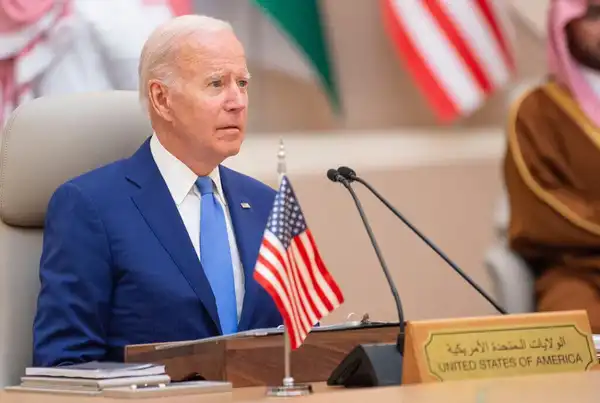
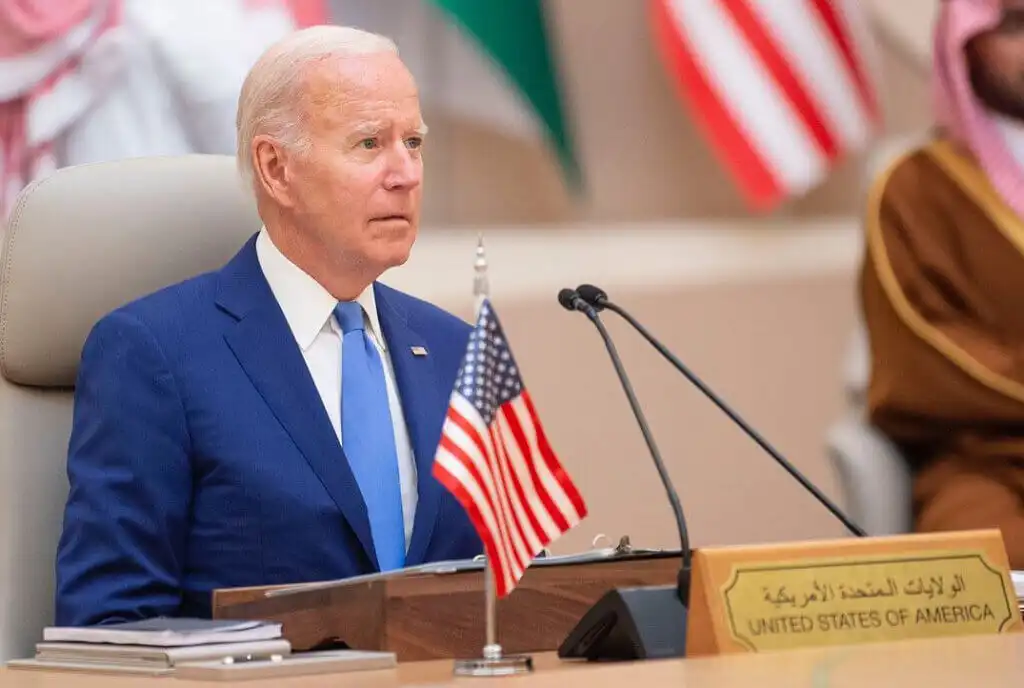
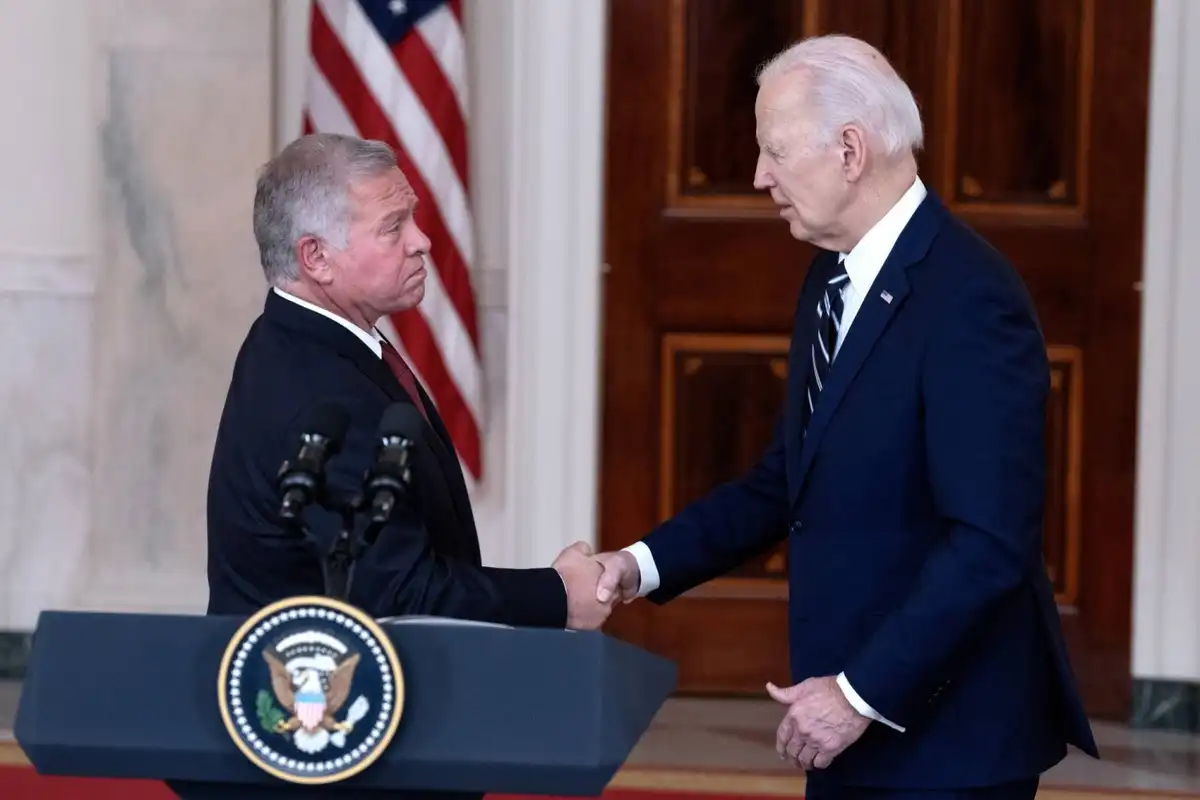
  • After meeting Jordan’s King Abdullah, U.S. President Joe Biden acknowledges Palestinian suffering but says Washington shares Israel’s goal of defeating Hamas.
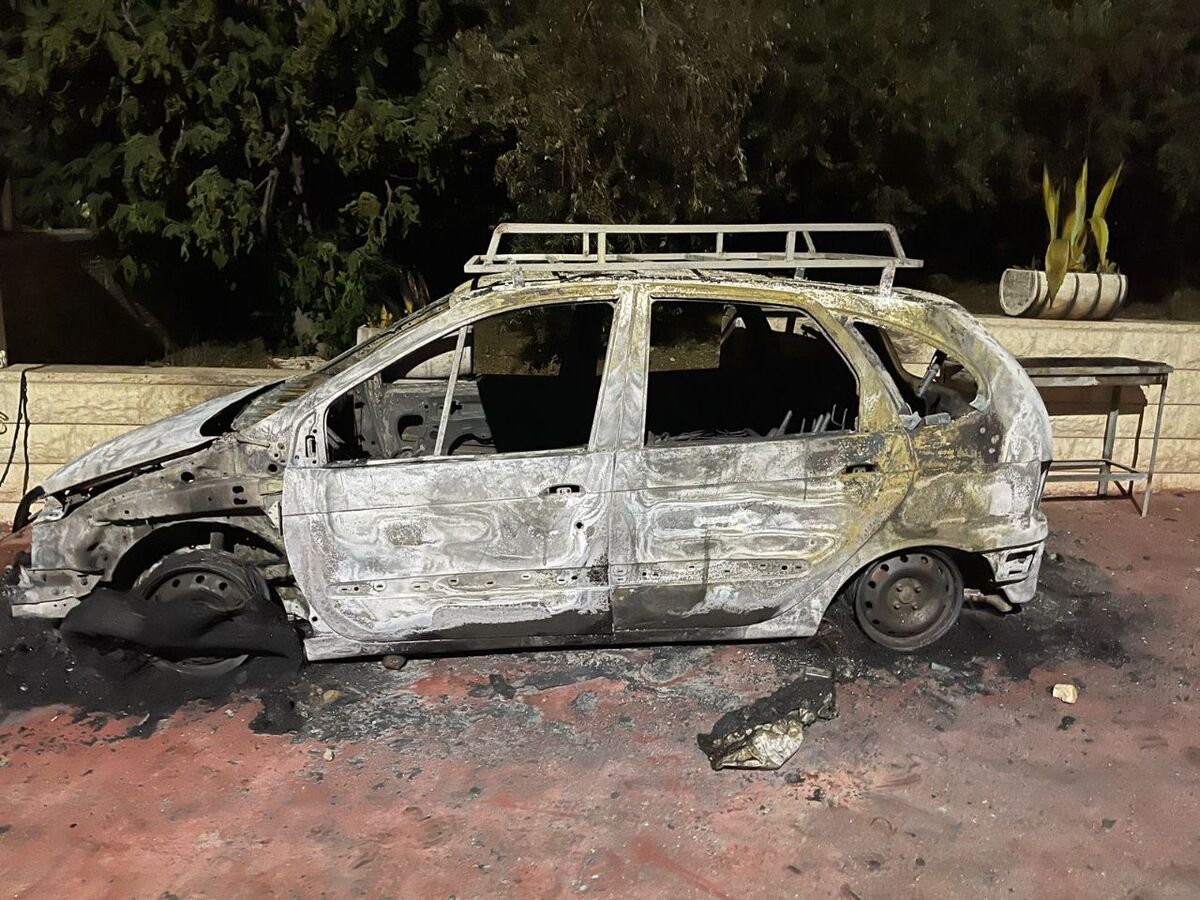
  • Israeli settlers shoot two Palestinians, including child, burn car, and throw Molotov cocktails south of Nablus in the occupied West Bank,
  • Palestinian man killed by Israeli soldiers after being shot in chest, shoulders, and head in the occupied West Bank city of Qalqilya, according to Palestinian Health Ministry.
  • U.S. Senate votes to send additional $14 billion to Israel as America continues bankrolling Israel’s genocidal war despite allegations of Israeli war crimes in Gaza

Panic and apprehension fill Rafah  

Peace is a dream for Gaza’s population, who have been living under the constant threat of Israeli attacks for over four months, leaving over 28,000 dead and almost 70,000 wounded. 


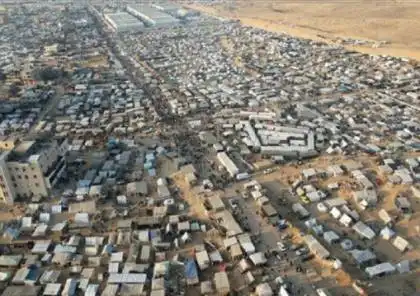
Rafah, bordering Egypt, is the last key city yet to be raided by Israeli troops. Its population, which has swelled to about 1.4 million as Palestinians have sought refuge there from across Gaza, is panicking as Israeli forces prepare a ground assault. 

Amnesty International says Rafah’s population has grown five times the size since October 7, reaffirming the harm Israel’s offensive will cause if they go through with the ground invasion and further escalate the already dire situation. 

“Most people in Rafah have already fled other areas of Gaza after being ordered by Israeli authorities to ‘evacuate,'” Amnesty said on X. “Civilians have nowhere to go to escape the bombardment and are facing the real and imminent risk of genocide.” 

Israeli forces have already begun intensifying their bombing campaign in the city and its surrounding areas in preparation. 

Hani Mahmoud, reporting from Rafah for Al Jazeera, said on Tuesday afternoon that Israeli bombardment has become concentrated in the central area of Gaza, leaving no options for people to flee Rafah in search of safety.

“Hundreds of Palestinians have started to flee Rafah city for the central area. They’re looking for refuge after heavy bombardment in overnight attacks. More residential homes are being attacked and destroyed. People are being squeezed into small parts of the Gaza Strip, turned largely into refugee camps,” Mahmoud continued.

The United Nations Relief and Works Agency for Palestine Refugees (UNRWA) has stressed in a recent situation report that increased air raids in Rafah “have heightened fears which would further hamper overstretched humanitarian operations.”

Describing Sunday’s overnight assault, Al Jazeera contributor Ahmed Abdullah Mohsen said: “The screaming and wailing nearly drowned out the warplanes that covered the sky, dropping barrages in a fiery belt that crushed the bodies of the displaced in their tents. About 20 minutes of explosions lit the night like something from an artificial Hollywood film.”

“The displaced and the injured fled en masse to the Kuwaiti Hospital, the only one open in the Shaboura area,” Mohsen continued.

“A doctor in the hospital helped a child who was taking his last breath to utter the final prayer. “

Philippe Lazzarini, UNRWA’s commissioner-general, said that each time Palestinians in Gaza are moved, “being told it will be a safer place, it has been proven the place was not safe.” 

The Palestinian Authority (PA) foreign ministry has called on all relevant parties to “prevent mass slaughter” in the southern Gaza Strip.

“Israel, the occupying power, and those who provide it with the diplomatic, military, and political cover are complicit in this genocide and are defying their obligations under international law as well as the ruling of the International Court of Justice,” it said in a statement. 

Famine-like conditions being created as a weapon of war 

Meanwhile, those who survive Israel’s ruthless attacks are at the risk of dying from preventable causes such as starvation and a lack of adequate medical care due to Israel’s ongoing military siege on the Gaza Strip. 

According to Beth Bechdol, the deputy director-general of the Food and Agriculture Organization of the United Nations (FAO), with each passing day, people in Gaza are “simply going hungry” and increasingly lacking any access to food, water, and medical services.

“There are unprecedented levels of acute food insecurity, hunger, and near-famine-like conditions in Gaza,” Bechdol said, adding that the FAO is unable to provide any agricultural production support in Gaza, as most of it has been damaged or destroyed. 

“Kids in Gaza are now dying from the deliberate withholding of food. In addition to the horror of that news, one other thing is true: That is a war crime. It is a textbook war crime,” Chris Van Hollen, an influential legislator from Biden’s Democratic Party, said in a Senate speech.

“And that makes those who orchestrate it war criminals.”

Regardless of these sentiments, Van Hollen later voted to send an additional $14 billion in aid to Israel (see more below). 

Dr. Athanasios Gargavanis, a trauma surgeon and emergency officer for the UN agency, added that a ceasefire is needed now so “health workers are able to deliver at the best of their capacities.”

“We are here to support the health system that’s suffering, not only because of the chronic blockade and this actual war, but also from the movement of population that impedes health workers to do their work in the best possible way,” Gargavanis said in a video posted on X.

Forced displacement

The question being echoed across the world is where will Palestinians go if Israel goes through with their ground assault on Rafah, where over half of Gaza’s population is seeking refuge. 

Even with the dire situation at hand, many Palestinians in Gaza refuse to flee their homeland to reach safety; including sixty-five-year-old Aziza al-Harazin who says, “We are not ready to leave our land. I was born here, many of my ancestors were born here, and I am not ready to give it up,” Harazin told Al Jazeera.

Another woman, who asked not to be identified, told Al Jazeera she had been displaced more than eight times since the war began and had to move with three young grandchildren.

“Rafah has been bombed more than 10 times near where we took refuge. Nowhere is safe here. We yearn for a ceasefire – for the peace that has become a dream for us.”

Still, Israel is determined to evacuate Gaza’s population from Rafah. It has even called on UN relief agencies to aid its evacuation efforts before its planned ground sweep of the city.

“We urge UN agencies to cooperate,” government spokesperson Eylon Levy said in a briefing, as cited by Al Jazeera. 

“Don’t say it can’t be done. Work with us to find a way,” Levy stated.  

Palestinian Prime Minister Mohammad Shtayyeh says by “killing, destroying, and trying to displace Palestinian people in the Gaza Strip, Israel wants to reshape the demographic balance to its advantage, after it shifted in favor of Palestine, for the first time since 1948”, reported Wafa.

At the weekly cabinet session held in Ramallah, Shtayyeh said that the past 400 days were the bloodiest in the contemporary history of Palestine.

“We have more than 100,000 Palestinians killed, wounded and missing in the Gaza Strip since October 7, 2023, and more than 640 in the West Bank,” he claimed.

“There are also more than 10,000 detainees, and these are not numbers, but rather they indicate children, women, the elderly, young men and women, and they indicate our families and our people, each of them has a history, status, and name, and had a future that was killed by Israel,” Shtayyeh remarked. 

U.S. and Jordanian leaders meet 

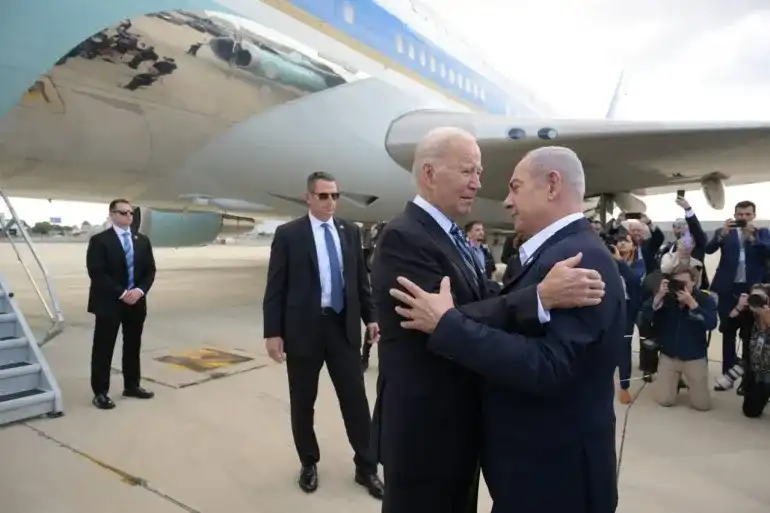
On Monday, U.S. President Joe Biden and King Abdullah II of Jordan discussed strategies to end Israel’s war on Gaza during a meeting in the White House. The two leaders presented alternate views on the current situation in Gaza and its solution. 

Biden acknowledged Palestinian suffering in his remarks despite his “unwavering” support for Israel’s attacks on Gaza. 

“The United States shares the goal of seeing Hamas defeated and ensuring long-term security for Israel and its people,” Biden said, “The Palestinian people have also suffered unimaginable pain and loss. Too many of the over 27,000 Palestinians killed in this conflict have been innocent civilians … including thousands of children.”

“The major military operation in Rafah should not proceed without a credible plan for ensuring the safety and support of more than 1 million people sheltering there.”

His speech was followed by King Abdullah lamenting that his meeting with Biden comes as “one of the most devastating wars in recent history continues to unfold in Gaza.”

King Abdullah stressed that the world “cannot afford an Israeli attack on Rafah” that is “certain to produce another humanitarian catastrophe.” He added that what is needed is a “lasting ceasefire.”

“The separation of the West Bank and Gaza cannot be accepted,” and there can be no peace without a political solution that leads to an “independent, sovereign, and viable Palestinian state with east Jerusalem as its capital,” the King continued.

Analyst Khaled Elgindy of the Middle East Institute think tank told Al Jazeera that the two leaders seem to have differences over Israel’s war on Gaza in both tone and substance.

“The King spoke with great urgency about a ceasefire now. The President talked about a six-week pause, which may or may not happen,” Elgindy said. 

“They’re encouraging the Israelis … to reconsider their opposition. But you don’t have that same sense of urgency, despite the very dire circumstances, particularly in Rafah,” he continued. 

Elgindy said that while King Abdullah was “very clear” in his remarks that there was no military solution to this crisis, there has been a “dissonance” in the Biden administration’s position.

He said the US appears “content to continue with Netanyahu in the driver’s seat, and there’s no real attempt to change Israel’s behavior in any meaningful way.”  

U.S. continues bankrolling genocide.  

U.S. pressure on Israel has come mainly in the form of public comments while the Biden administration continues bankrolling Israel’s genocidal war on Gaza and provides international diplomatic support. 

On Tuesday, the U.S. Senate passed a $95.3 billion foreign aid package that includes $14 billion in military aid for Israel, reported the Associated Press. All Democratic senators voted for the bill except for Jeff Merkley of Oregon and Peter Welch of Vermont. Bernie Sanders, who is an independent and also from Vermont, also voted against the bill.

“I cannot in good conscience support sending billions of additional taxpayer dollars for Prime Minister Netanyahu’s military campaign in Gaza,” Welch said, according to the AP. “It’s a campaign that has killed and wounded a shocking number of civilians. It’s created a massive humanitarian crisis.”

While the vote was passed 70-29, the House of Representatives’ approval, where hardline Republicans oppose the legislation’s $60 billion support for Ukraine, is far from certain. It could be weeks or months before the bill is sent to Biden’s desk.

Recalling that Biden said last week that Israel’s onslaught on Gaza had been “over the top” and U.S. officials had repeatedly said that too many civilians are being killed in the besieged Palestinian enclave, EU foreign policy chief Josep Borrell has suggested the U.S. rethink its military aid to Israel due to the high number of civilian casualties in the war on Gaza.

“Well, if you believe that too many people are being killed, maybe you should provide less arms in order to prevent so many people being killed,” Borrell told reporters after a meeting of EU development ministers in Brussels, according to Al Jazeera.

“If the international community believes that this is a slaughter, that too many people are being killed, maybe we have to think about the provision of arms,” Borrell added. 

Matthew Miller, U.S. Department of State spokesperson, has evaded questions on whether the U.S. would freeze assistance to Israel if it moves forward with an all-out attack on Rafah, reported Al Jazeera.

While the Biden administration has said an Israeli incursion into the packed city near the border with Egypt would be a “disaster,” Miller stated that it is not clear that cutting U.S. military assistance is a “step that would be more impactful than the steps we have already taken.”

International voices weigh in 

While limited material pressure is being put on Israel to halt its plans to expand its ground operation into Rafah, the country has been met with global scrutiny.

The UN’s human rights chief, Volker Turk, said it is “wholly imaginable what would lie ahead” if the planned incursion is not stopped.

“A potential full-fledged military incursion into Rafah, where some 1.5 million Palestinians are packed against the Egyptian border with nowhere further to flee, is terrifying, given the prospect that an extremely high number of civilians, again mostly children and women, will likely be killed and injured,” Turk said in a statement. 

Pakistan’s Ministry of Foreign Affairs has issued a statement “strongly” condemning “Israel’s military aggression against Rafah city in Gaza and the resulting destruction and massacre of the Palestinian people.”

Pakistan’s statement says that an offensive on Rafah would “violate the provisional measures indicated by the International Court of Justice (ICJ) to protect the people of Gaza from genocide.”

Pakistan also said that the planned incursion would “further aggravate the humanitarian disaster witnessed in Gaza” and “jeopardize the ongoing efforts for a potential ceasefire.”

Karim Khan, the prosecutor for the Netherlands-based International Criminal Court (ICC), said on X that he is “deeply concerned” by Israel’s bombardment of Rafah as well as reports of an anticipated Israeli ground offensive there.

“My Office has an ongoing and active investigation into the situation in the State of Palestine. This is being taken forward as a matter of the utmost urgency, with a view to bringing to justice those responsible for Rome Statute crimes,” Khan continued.

“All wars have rules and the laws applicable to armed conflict cannot be interpreted so as to render them hollow or devoid of meaning. This has been my consistent message, including from Ramallah last year. Since that time, I have not seen any discernible change in conduct by Israel.”

The ICC official also reiterated his call for the immediate release of those who continue to be held captive in Gaza. 

Meanwhile, the Netherlands is one of the few Western countries about to begin putting material pressure on Israel to hold its operations. On Monday, it was ordered by a Dutch court to block all exports of F-35 fighter jet parts to Israel over concerns they were being used to violate international law during the war in Gaza.

The Turkish Foreign Ministry said in a statement that they are “extremely concerned by Israel’s escalating attacks on the southern city of Rafah, following the destruction and massacres it has already inflicted on the Gaza Strip,” 

“We consider this operation as part of a plan to expel the people of Gaza from their own land,” it added. “We call on the international community, in particular the UN Security Council, to take the necessary steps to stop Israel,” the statement continued. 

The British foreign secretary, David Cameron, has also expressed apprehension regarding Israel’s current military strategy following its overnight attacks on Rafah.

“We think it is impossible to see how you can fight a war amongst these people. There’s nowhere for them to go,” the British foreign secretary told reporters.

“We are very concerned about the situation, and we want Israel to stop and think very seriously before it takes any further action. But above all, what we want is an immediate pause in the fighting, and we want that pause to lead to a ceasefire,” he said. 

 

OPINIONS

Tue 13 Feb 2024 6:05 pm - Jerusalem Time

The last American war

Mondoweiss

Mondoweiss

Opinion Writer

BY YOAV HAIFAWI  

The U.S. supports Israel unconditionally because it sees the entire Western project in the Middle East at risk today in Gaza. While it may seem these our darkest days, it is also clear that the U.S. and Israel are bound to fail.

These are difficult times. Day after day, a shocking genocide is unfolding before the eyes of the whole world. Israel is nurturing a psychotic seizure as its “functional response” to the trauma of October 7. We have already become accustomed to living in the heart of an apartheid regime, oppression, and wars that have shed rivers of blood, but the death and destruction that Israel is inflicting today upon the residents of the Gaza Strip are much worse than anything we have seen before in the history of “the conflict.”

At the time of this writing, the United States has not only done nothing to stop the massacre of Gaza’s residents but has increased arms shipments to Israel. It has also directly participated in the war and has recruited its allies to do so as well by demonstrating its power against convenient and non-threatening victims such as Yemen, Syria, and Iraq.

This should not come as a surprise. Much has been written about the danger to world peace when a hegemonic power on a downward trajectory confronts a rising power that seeks to secure its place at the heart of the global order. The situation is even more dangerous because the United States still has a significant advantage in arms production and military deployment worldwide, while in other areas, especially in economic development, it has nothing to offer. Attempting to exploit its military advantage for the preservation of its international hegemony, the U.S. tries to sow conflicts and foster militarization of the international system. Gunship diplomacy, par excellence.


Toward this end, “the conflict” in Palestine has never been simply a local matter between Zionist settlers and the native Palestinian population. Britain, followed by the United States and Germany, did not invest their best money in nurturing Zionist settlement and later in building the State of Israel and securing its military supremacy over all countries in the region, with just an aim of suppressing or exploiting a small Arab public in a remote corner that had never threatened their rule or interests. Their goal was, and still is, to use Israel as a spearhead for enforcing imperialist hegemony in the Middle East as a whole – a resource-rich region of central geopolitical importance between Europe, Asia, and Africa. From their perspective, Palestinians have always been “collateral damage,” residents who happened to be on land intended for establishing an imperialist military base; they are an unnecessary disturbance that needs to be eliminated or suppressed to oblivion within the framework of this broader geopolitical grand plan.

And it is that plan that the West sees at risk today in Gaza.

The main reason, or complications, that make the current war appear endless can be first identified in the Second Israeli-Lebanon War in the summer of 2006. In that attack, Israel attempted to restore its regional deterrence, which had been damaged by its withdrawal from Lebanon six years earlier, and to regain its military reputation as a feared servant of its Western masters. The result was a triple failure. In asymmetric warfare between a state military force and a popular resistance movement, all that the resistance movement needs to win is to continue fighting, so Hezbollah’s survival meant Israel’s defeat. Second, Israel did not set achievable political goals for its war, and thus could not accomplish them. But lastly there was a crucial failure for the United States as well. Instead of acting as expected and stopping Israel’s aggression in exchange for political gains, U.S. politics and a lack of constructive strategy turned America into “cheerleaders” for continuing the war. They celebrated the “birth pangs of a new Middle East.” In the absence of a mechanism to stop the war, Israel continued “sinking into Lebanese mud” until the military cost became unbearable for it. In light of this failure, Israel finally declared that simply causing catastrophic harm to civilians and massive destruction of civilian infrastructure were to be considered the major achievements in this war within what came to be known as “the Dahiya Doctrine.” This strategy still failed to defeat the resistance but was intended to send a message.

After failing in Lebanon in 2006, the Israeli/U.S. campaign to project regional power initiated its surprise attack on Gaza on Christmas Eve 2008. They hoped that, against a weaker enemy, they could recover from the trauma caused by their repeated failed adventures in Lebanon. Since then, there have been five rounds of major assaults on Gaza – in 2012, 2014, 2018, 2021, and now again in 2023 – where each one aimed at recovering from the failure of the previous round. The “military” logic behind all is unchanged – maximum impact on the civilian population to “burn consciousness” into those who resist. The latest round is just “more of the same” – only much worse than everything before it.

Might Israel and the U.S. achieve military victory this time? The simple and firm answer is “no.” The declared goal of Israel’s war, as well as that of the United States and European countries supporting it, is the “elimination of Hamas.” However, Hamas was established and became popular in response to the ongoing Israeli occupation in the Gaza Strip and the West Bank. Hamas is a political party, and “Al-Qassam Brigades” are an armed resistance movement associated with it. It goes without saying that Israel is not interested in who opposes the occupation, whether it be Hamas, another faction, or unorganized residents. Therefore, the goal of “eliminating Hamas” should be understood not as eliminating a specific organization but as eliminating all resistance to the occupation. The Israeli-American strategy, then, is to eliminate any attempt to resist the occupation by making it more brutal and terrifying.

I assume that many within the Israeli and American establishments and publics understand that achieving the stated goal of “eliminating Hamas” is impossible. Of course, there are messianic and fascist factions within Israel who believe wholeheartedly that they can kill or expel all Palestinian Arabs, complete the ethnic cleansing in all of Palestine, confiscate Palestinian property, and settle on their land. The less extreme Zionist factions would be happy (or at least agree) to stop this cycle of destruction if they could justify it through an American dictate. As long as the United States and major European countries oppose ending the war, even those in Israel who are aware of the damage and futility of the continuation of mass massacres and war crimes would not dare to stop it.

In previous wars, the United States limited Israeli aggression and demanded a political price from its Arab rivals, but in this war, the United States is primarily concerned about Israel’s inability to win, and it is pushing it to continue fighting. In order not to bear full responsibility for Israel’s aggression, the U.S. might issue toothless calls for Israel to limit harm to civilians, abide by the laws of war, and increase humanitarian aid reaching the residents of Gaza. But these are empty words. In practice, the U.S. continues to arm Israel and does not exert any pressure on it except to go on fighting at any price.

With utmost hypocrisy, the U.S. pretends to be a “mediator,” whether on the issue of prisoner exchanges or even on a grand “solution” to end “the conflict.” But in the end, it is always clear that these U.S.-led processes are a cover for maintaining the Zionist occupation of Palestine and, through it, a Western beachhead in the region. 

In the current prisoner exchange negotiations, the U.S. is trying to get Hamas to agree to release prisoners without clear assurance of stopping the war or Israeli withdrawal from Gaza. They hope that after the prisoners are exchanged, Israel will be able to act even more lethally. The blockade organized by Biden’s administration against UNRWA, which provides most of the humanitarian services for Gaza residents during an unprecedented humanitarian crisis, illustrates how fully involved and complicit the U.S. and its allies are in committing genocide.

For decades, U.S.-led peace negotiations, with endless talk about the prospect of a Palestinian state in most of the territories occupied by Israel in 1967, have been at the forefront of imperialist foreign policy. In practice, nothing has been done to advance such an agreement, and discussions on this topic have served as a convenient cover for continued support for the occupation of all of Palestine by Zionism, for ongoing ethnic cleansing, and for maintaining a racist apartheid regime throughout the territory between the river and the sea.

Every time someone tries to apply even minimal pressure on Israel to reduce its systematic violations of Palestinian human rights, respected Western politicians claim that “it harms the peace process.” Now, this empty talk about the establishment of a Palestinian state alongside the State of Israel has been repurposed to serve as cover for supporting and encouraging genocide against the Palestinians in Gaza. 

Many in the West argue that Hamas is an obstacle to peace agreements that, of course, are just waiting around the corner. Therefore, what needs to be done now, according to this distorted logic, is “to eliminate Hamas for the sake of peace.” After successfully completing the genocide on Gaza’s residents, they promise, of course, to “speak forcefully” with Bibi and Ben-Gvir, and everything will fall into place peacefully.

In the real world, we are trapped in Israel’s Catch-22. When resistance to occupation does not manifest itself violently, it is ignored because “who cares about these Palestinians anyway?” But when resistance erupts again violently, it must be crushed at any cost because “we are against violence and you cannot make peace with terrorists.”

While it may seem we are in our darkest days, and in many ways we are, we can also see that this is the last American war. 

The current war, more than any other war I remember, has united all the peoples of the region, the entire Third World, and all people of conscience in the imperialist countries in a call for an immediate cessation of hostilities and support for the Palestinian people and their aspirations for justice and freedom.

Meanwhile, a united front of imperialist countries is supporting a continuing genocide against Gaza’s residents by refusing to pressure Israel while defending it from international law. By doing so, they expose the “values” and “rules-based international order” they claim to protect in the clearest possible way.

As America’s hypocrisy becomes clearer with each atrocity broadcast live worldwide, they push on continuing the war “until victory.” And as they lose humanity’s sympathy in this conflict, it becomes all the more important for them to burn into our consciousness Western weapons’ destructive power and the unbearable price of fighting for freedom. 

But battleships can no longer dictate the world order.

PALESTINE

Tue 13 Feb 2024 4:31 pm - Jerusalem Time

West Bank: Israeli settlers attack Palestinian vehicles near Bazaria, northwest of Nablus

Today, Tuesday, settlers attacked citizens’ vehicles at the intersection of the village of Bazaria, northwest of Nablus.


Local sources reported that a group of settlers attacked citizens' vehicles with stones at the Bazaria intersection, causing damage to a number of them.


It is noteworthy that settlers attacked citizens' vehicles in the same area more than once during the past week.

ARAB AND WORLD

Tue 13 Feb 2024 4:25 pm - Jerusalem Time

Does Washington have the power to prevent Israel from storming Rafah?

By Muhammad Al-Minshawy

While Israel is preparing to launch a ground attack in the city of Rafah in the southern Gaza Strip, the White House statement regarding President Joe Biden’s call to Israeli Prime Minister Benjamin Netanyahu, yesterday, Sunday, indicated that Biden “reaffirmed his opinion that the military operation in Rafah should not be conducted without a reliable and applicable plan.” "It guarantees the security and support of more than a million people sheltering there."


The statement did not contain any reference to Washington’s refusal to storm Rafah, the last area to which about one and a half million Palestinians have taken refuge since the start of the Israeli aggression on the Gaza Strip on October 7th.


On the other hand, Biden's rebuke of Israel in his speech at the White House on Thursday night did not provide any indication that he would reduce US military and diplomatic support for Israel, if it continues on its current path.


Sarah Harrison, an expert at the RAND Corporation and a former official at the US Department of Defense, expressed her doubts about the effectiveness of US pressure.


She said in a tweet on the “X” website, “What fuels my doubts is the administration’s knee-jerk decision to suspend funding for UNRWA, support a $14 billion arms package for Israel, and refuse to condition military aid at a time when the Israeli army is preparing to begin operations in Rafah. And all of that contradicts the policy objectives claimed in the National Security Memorandum."


Public opinion matters to Israel

This week, Netanyahu began his appearance as a guest on ABC News' main talk show yesterday morning, Sunday, and reiterated that "victory is within reach," adding, "We will eliminate what remains of the Hamas terrorist brigades in Rafah, the last stronghold. We will do so.


Netanyahu promised to provide "safe passage for the civilian population so they can leave," and when asked where the Palestinians were supposed to go, Netanyahu said they were "working on a detailed plan."


With increasing calls from a number of members of Congress for the need to avoid storming Rafah, which coincides with the United Nations and other relief organizations expressing their concern about where civilians will go with the start of the Israeli storming, Netanyahu responded by saying, “Those who say that we should not, under any circumstances, "The circumstances of entering Rafah, they are telling us to lose the war. Keep Hamas there."


Commentators in Washington point to growing frustration in the White House with Netanyahu and the Israeli government's rejection of many American requests. Earlier this week, Biden described the Israeli military operation in Gaza as crossing borders. This was the harshest language Biden has used to criticize the Israeli aggression in Gaza since October 7, 2023, despite fears of the expected incursion.


Interest in the prisoner deal

President Biden sent CIA Director Bill Burns to Egypt to continue talks on a ceasefire agreement that would also secure the release of an estimated 132 Israeli detainees held by Hamas, including 8 who hold American citizenship.


Burns is expected to meet with the Qatari Prime Minister and the heads of Egyptian and Israeli intelligence, to discuss efforts to reach a new exchange deal that could lead to a long cessation of fighting in Gaza, and the introduction of larger amounts of humanitarian aid to the people of the Strip.


With the increasing fears of some American circles about the consequences of the Rafah storming on the fate of the detainees, regional security, and the future of the peace treaty between Egypt and Israel, the Hamas movement confirms that an Israeli ground attack in the city of Rafah will mean the end of the prisoner negotiations.


Regarding what President Biden can do to prevent the aggression against Rafah, Ambassador David Mack, former Assistant Secretary of State for Middle East Affairs and currently an expert at the Atlantic Council, said, “Words, even from Biden himself, will not be enough to stop Israel’s plans to storm Rafah.”


Mack added in an interview with Al Jazeera Net, “Despite Washington’s rejection of the forced displacement of Palestinians, the only thing that will succeed is to set strong conditions for the continued American military, financial, and political support for Israel. It seems that this has begun to happen with the president’s national security memorandum, which was successfully pushed by a number of Leading Democrats in the US Senate, led by Senator Chris Van Hollen.

On the other hand, if Netanyahu goes ahead with the Rafah invasion, this could quickly lead to the loss of American support, because it “jeopardizes the safe release of hostages and prisoners,” according to the former diplomat.


Use support for pressure

In an interview with Al Jazeera Net, the director of the Gulf States Studies Foundation, Giorgio Cafiero, said, “The United States has a very large amount of influence over Israel. Israel was not able to wage its war on Gaza, except because of the high level of support it receives from Washington.”


Kafiro believed that Netanyahu's government "was able to escape punishment for this genocide in Gaza only because of the military, economic, political, and diplomatic support it receives from the American government."


He pointed out, “If the Biden administration were to set conditions on aid to Israel, Tel Aviv would have no choice but to act accordingly and meet Washington’s requirements to continue receiving American support. This may entail telling Israel that aid may be cut or frozen depending on Tel Aviv’s steps.” The following is about what relates to Rafah.


However, due to political factors, “the Biden administration does not condition aid to Israel, or sets any red lines, and ultimately refuses to use Washington’s influence to change what is happening on the ground,” says the American expert.


Ben Rhodes, deputy national security adviser in the administration of former President Barack Obama, also noted, “It is not at all clear whether the change in tone of language from Washington in a phone call will have any impact on Netanyahu’s thinking as long as you support Netanyahu’s military operation in Gaza without... conditions".


Source: Al Jazeera

ARAB AND WORLD

Tue 13 Feb 2024 4:19 pm - Jerusalem Time

Israeli media: Egyptian rejection of the Rafah operation will relax after the evacuation begins

Political correspondents and analysts, in their follow-up of the war on the Gaza Strip through Israeli channels, discussed the phone call that took place between US President Joe Biden and the Prime Minister Benjamin Netanyahu about carrying out a military operation in the city of Rafah, south of the Gaza Strip, in addition to the Egyptian rejection of it.


Political affairs correspondent for the Israeli Kan 11 channel, Amichai Stein, said that the American message that Biden repeated during his call with Netanyahu is that the operation in Rafah may lead to a disaster if it is not properly planned and constructed, pointing out that this call comes at the height of tension between Israel and the United States. .


Channel 13's political affairs correspondent, Moriah Asrif Wolberg, also reported that Biden warned Netanyahu in the call against carrying out the operation, and quoted an Israeli political source that after Biden expressed his fear of the operation, Netanyahu responded that it was necessary and that Israel would carry it out while harming the least amount of civilians.


Channel 11, through its military affairs correspondent, addressed the Egyptian rejection of the operation, which he justified by Cairo’s fear that the displaced people in Rafah would rush to enter Israeli territory, adding that if this issue is resolved and the displacement of Palestinians to areas inside the interior begins, the Egyptian rejection will become more flexible.


Indolence of rejection

Sharon explained that the Egyptian regime needs to show its rejectionist position for internal political purposes in light of the conditions in the Middle East and in front of the Palestinians, but in the end, when the Israeli army determines for the Palestinians where they should go, with the start of the evacuation, the Egyptian rejection will begin to relax.


In another context, the researcher on the subject of intelligence failures, Avner Barnea, quoted a senior military intelligence officer as saying that they were blind and did not know what was happening in the Gaza Strip, despite the reconnaissance balloons and eavesdropping devices, because the resistance had built a system in which information was not transmitted wirelessly, but rather passed through From underground.


He added that at a time when many military battalions were supposed to be deployed along the border with the Gaza Strip in anticipation of any attack, the opposite was happening, adding, “The army yielded to all the whims of the settlers and transferred more forces, and no one stood up to pound on the table and warn them: ‘Be patient.’” You left the Gaza Strip without soldiers."


Source: Al Jazeera

ARAB AND WORLD

Tue 13 Feb 2024 4:15 pm - Jerusalem Time

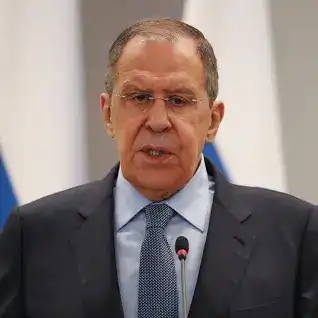
Lavrov: Failure to resolve the Palestinian issue is a major factor for instability in the Middle East

Russian Foreign Minister Sergei Lavrov said on Tuesday that failure to establish a Palestinian state will cause continued instability in the Middle East.


Lavrov said during the 13th Middle East Conference of the Valdai International Forum that Russia has repeatedly warned that the chronic Palestinian problem, which has not been resolved for many decades, is constantly escalating the conflict in the Middle East, so a binding legal basis must be found for a final solution to the conflict.


He announced that Russia does not see any prospects for achieving stability in the Gaza Strip in light of Israel's intention to carry out a military operation in Rafah.


Lavrov revealed that he "presented the solution to the conflict to his Israeli colleagues many times, but they ignored him."


He also rejected "that what happened on October 7th was a reason for implementing collective punishment against the Palestinians," explaining that "the United Nations, the United States, and the European Union tried to impose unrealistic solutions on the Gaza Strip."


Lavrov called for finding a way out of the disastrous situation caused by American policy in the Middle East.


Last January, Lavrov accused the United States of America of obstructing all efforts aimed at a ceasefire in Gaza.


Lavrov referred to his country's proposal to hold a "Palestinian-Palestinian" meeting to overcome internal divisions.


Hamas welcomes a “Palestinian-Palestinian” meeting

In turn, the leader of the Hamas movement, Muhammad Nazzal, on Tuesday welcomed the Russian Foreign Minister’s invitation to hold a meeting between the Palestinian forces to overcome the internal division.


Nazzal said in an interview with the Russian “Sputnik” agency, commenting on Lavrov’s invitation: “We welcome any Palestinian-Palestinian meeting or dialogue, but on the condition that the dialogue be serious and that we set rules for this dialogue because we do not want to repeat the long process of meetings and dialogues in which we have exhausted ourselves.” At times and times without reaching real understandings, or if we reach understandings that are not translated into reality.”


The Hamas leader added: We want to translate words into actions, and I think that this meeting is long overdue because we have now spent more than 4 months in the battle of the “Al-Aqsa Flood” and the comprehensive national dialogue that rises to the great responsibility that the Palestinian people aspire to has not taken place.


ARAB AND WORLD

Tue 13 Feb 2024 4:10 pm - Jerusalem Time

France imposes sanctions on settlers for their involvement in violence against Palestinians

Today, Tuesday, the French Ministry of Foreign Affairs announced the imposition of sanctions on 28 extremist Israeli colonists, for their involvement in attacks and acts of violence against Palestinian citizens in the West Bank.


The ministry said in a statement that the twenty-eight people “have been issued an administrative ban on being on French soil,” stressing that it is working to “approve sanctions at the European level” against colonists who commit acts of violence.


Yesterday, Monday, the British Foreign Office announced the imposition of sanctions on four extremist colonists who “violently” attacked Palestinians in the occupied West Bank.


The British Foreign Office said that these sanctions impose financial and financial restrictions to combat the ongoing violence practiced by the colonialists and threaten the stability of the West Bank.


On the first of this month, the United States of America imposed a similar measure.


During the year 2023, the occupation forces and colonialist militias carried out 12,161 attacks against citizens and their property in the West Bank, including 9,751 attacks carried out by the occupation forces, 2,410 attacks carried out by colonialist militias, and 206 joint attacks, according to the Wall and Settlement Resistance Commission.

ARAB AND WORLD

Tue 13 Feb 2024 3:55 pm - Jerusalem Time

Egyptian official: Our response to “Israel” will not be limited to expelling the ambassador

The head of the Egyptian State Information Service, Diaa Rashwan, confirmed that the Egyptian response to Israel will not be limited to symbolic measures such as withdrawing or expelling ambassadors.


He said during statements to ON E channel that the Egyptian response “will not be limited to symbolic measures, such as withdrawing or expelling ambassadors, if Egyptian national security or Egyptian lands are threatened or the Palestinian cause is liquidated.”


He explained that the Egyptian positions are clear and will not accept compromising Egypt’s national security or liquidating the Palestinian issue, stressing that there is no internal disagreement about the Egyptian position regarding the Israeli aggression on the Gaza Strip, saying: “The Egyptian people will not forgive and neither they nor their government nor their state will allow this matter.” .


He continued: “Egypt has the means to defend its security, and I do not think that symbolic measures of all kinds, such as expelling the ambassador, are excluded, but the actual measures have reached Israel and those who reach it, which could result in any action.”


He explained that Israel was unable, with its army, weapons, billions, and US missiles, to confront a few thousand resistance fighters in the Gaza Strip, expressing his astonishment at the crazy actions of some Israeli government ministers, asking: “How can Israel rub shoulders, provoke, or push the largest country in the Middle East and the most capable of confronting them?” What threat?


He added that Israel seeks in various ways and means to achieve any progress with its three goals, which have all failed to achieve, whether in terms of ending the resistance’s ability or liberating detainees, or making Gaza safe for Israel, including the blood of Palestinians or straining relations with Egypt in order to advance progress in Course of negotiations.


He concluded, "We cannot rule out any possibility of harming the security of Egypt and its land, and we are all confident in the ability of Egypt's political leadership and army."


ARAB AND WORLD

Tue 13 Feb 2024 3:51 pm - Jerusalem Time

The Times: “Israel” is heading towards the trap in Rafah, and the fate of Middle East is linked to this city

The Times newspaper published an article by commentator William Hague, in which he warned against the Israeli attack on the city of Rafah, and said that it would be a fatal mistake.


The writer stated: “After October 7 against Israel, I wrote saying that the Israelis must be careful not to fall into Hamas’ trap.” “After more than four months, this could be the week in which Israel stumbles into the trap.” He explained that “a comprehensive military operation in which more than a million and a half Gazans are concentrated will not bring about the comprehensive victory that Benjamin Netanyahu talks about, but rather it will lead to the erosion of Israeli security in the long run, and you will not be sympathetic to Hamas if you say that the comprehensive attack on Rafah is a mistake. Rather, it may be.” Like me, you agree with Israel's need for military action so far, while recognizing the need for more humanitarian aid. You cannot deal with the demonstrations against Israel or those calling for a ceasefire unilaterally, in a way that leaves Hamas able to attack again,” Al-Kat said.


He added, “No detainees can be released without pressure on the kidnappers.” Like other Western commentators, the British Foreign Secretary and former Conservative Party leader said that it is Hamas that is endangering the lives of civilians in Gaza, and that it is waging a war from under the hospitals and even the UNRWA compounds.


He believes everything he said previously, but he believes that Rafah threatens to be a turning point for Israel, and the moment it crosses the line, it will fall into a trap. For Netanyahu, Rafah is the path to the comprehensive victory that he wants, and “if you think of Hamas as an army, there is logic. Hamas has 24 military battalions, of which Israel claims to have destroyed 18, and four of them are located in Rafah, and if you destroy them, victory is in your hand.”


However, Hamas, which bears some features of the army, bears other features of the insurgency. We know from bitter experience that you can defeat rebel army units, but they will reappear from the rubble after a short period, with many recruits.


The West experienced this in Iraq and Afghanistan, and the Israelis also know it in Lebanon during the invasion in 1982 and their withdrawal in 2000, when they left behind a stronger enemy.


Today, Hezbollah is stronger than ever. “You can achieve comprehensive victory over an army in battle, but not against a rebellion whose strength is based on an idea rooted in the people.” In order for victory to be achieved, resorting to military force must be accompanied by wise politics. Therefore, sending Israeli soldiers to Rafah, as happened in the past months in other areas of Gaza, is a disregard for this policy. The city has a larger population, and most of the residents are on the brink of hunger and have nowhere to escape. On Sunday, Joe Biden appealed to Netanyahu and asked him to be careful not to harm civilians.


For the Israeli war government, the four Hamas battalions are very tempting, and there are other numbers for the Israelis to think about, which are 17,000 orphans, who will one day turn into fighters and take revenge in the future.


It is believed that the Israeli decision regarding Rafah is the most important and critical decision of the decisions taken since the beginning of the war. It represents a fateful choice between two schools, which are that no peace is possible with the Palestinians, only deterrence. The second calls for leaving room for a two-state solution one day, otherwise there will be no peace. Currently, the first school led by Netanyahu, despite the decline in his popularity, is dominant.


The writer believes that it is easy to see that deterrence can prevent wars, from the 38 dividing line between South and North Korea, to the Line of Control between India and Pakistan in Kashmir and the Russian-NATO border in the Baltic region, and it is the only concept that preserves peace.


For this reason, countries build nuclear reactors and weapons. After the end of the war in Ukraine, the only way to deter Russia is to integrate Kiev into NATO.


Perhaps Israel believes that the deterrence that succeeded with others will succeed with it, and that is why it built nuclear reactors to limit the attempts of Arab countries to attack it, but the matter is not that way. Deterrence may succeed with countries, but it does not deter armed groups.


As military expert Sir Lawrence Friedman said, Israel has moved toward trying to completely destroy the threat, and this will not succeed without a political vision for who will rule Gaza after the war, neither Hamas nor Israel. Diplomacy over the past months has shown that a solution to the war in the Middle East is possible. A solution that can be adopted by rational people on both sides of the conflict: the release of detainees, the departure of Hamas leaders from Gaza, the return of the Palestinian Authority, the normalization of relations between Saudi Arabia and Israel, the cessation of settlement in the West Bank, the United States providing security guarantees to Saudi Arabia, the West’s recognition of the Palestinian state and Israel’s acceptance of it.


This is the context in which David Cameron, the British Foreign Secretary, spoke about the possibility of recognizing a Palestinian state. Everyone admits that this is a long-term ambition that requires years, and will not be achieved without removing Netanyahu from the equation and Arab control over the Palestinian leadership. It would be a fatal mistake for Israel to narrow the space for a solution and resort to wars that it cannot deter and in which it cannot achieve victory. The trap is now in front of it, and the future of the Middle East may depend on Rafah.

ARAB AND WORLD

Tue 13 Feb 2024 3:49 pm - Jerusalem Time

Great progress for an exchange deal... Israeli delegation arrive in Cairo

Mossad chief Dedi Barnea and the Israeli delegation arrived in Cairo on Tuesday afternoon to conduct negotiations on a prisoner exchange deal. According to a senior Egyptian official, “relatively significant” progress has been made towards reaching an agreement.


The source added in an interview with the Associated Press that the meeting will focus on drafting a “final draft” of an agreement that includes a ceasefire for a period of six weeks, while promising that during that period the two parties will continue negotiations towards a permanent ceasefire.


A Western diplomat in Cairo confirmed these details, but noted that "work is still required to reach an agreement." He added that today's meeting is "vital to fill the remaining gaps" to get the parties to agree to the terms of the agreement


The road to the deal is still long, Israeli media say. But behind the scenes, efforts are being made to narrow the gaps and Hamas's demands in order to agree on possible broad lines. CIA Director William Burns and officials from Qatar and Egypt will also attend the talks. The Israeli delegation left for Cairo, after Netanyahu gave the "green light" to do so.


The decision came after a conversation Netanyahu had yesterday with US President Joe Biden, in which the latter requested to send an Israeli delegation to hold talks in Cairo - even if Israel “does not see the horizon” for a new deal with Hamas.


Senior officials in Israel explained last night that the gaps in the deal are still large, and there is complete consensus on the Israeli side that the conditions put forward by Hamas are not negotiable.


The head of the Mossad is working with Egypt and the Prime Minister of Qatar to narrow the gaps and so that they can meet for a serious discussion about a peaceful solution.


ARAB AND WORLD

Tue 13 Feb 2024 3:47 pm - Jerusalem Time

South Africa submits an urgent request to ICJ regarding the attack on Rafah

The Presidency of the Republic of South Africa said on Tuesday that it had submitted an urgent request to the International Court of Justice to consider Israel’s decision to expand its military operations in Rafah.


It explained that it asked the court to determine whether it required it to use its authority to prevent further violations of the rights of Palestinians in the Gaza Strip.


PALESTINE

Tue 13 Feb 2024 3:25 pm - Jerusalem Time

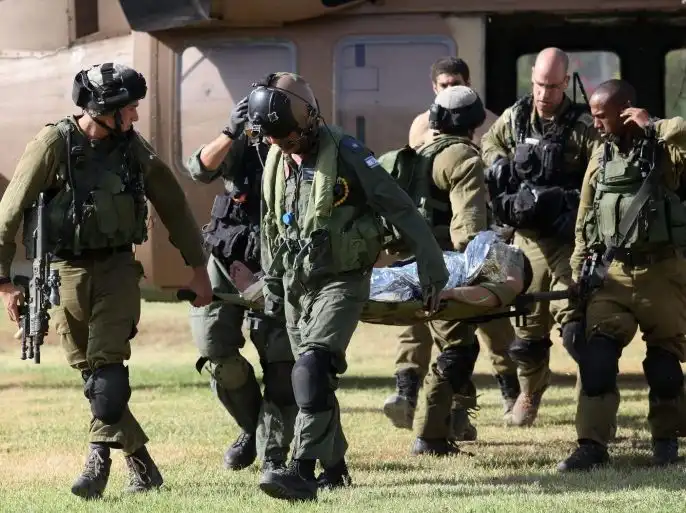
War on Gaza: Israel admits that 19 soldiers were injured in the Gaza battles

The Israeli army announced, on Tuesday, that 19 soldiers had been wounded in the Gaza Strip during the past 24 hours, after it early acknowledged the killing of 3 officers and soldiers.


Based on Army data published on its website; The number of wounded officers and soldiers since the beginning of the war on the Gaza Strip on October 7 has risen to 2,882, up from 2,863 the day before, Monday.


It is noteworthy that hospital statistics indicate that the number of injured occupation soldiers is approaching 10,000.


According to Israeli army’s data, 353 officers and soldiers are still receiving treatment in hospitals, including “29 in serious condition, 239 in moderate condition, and 85 in minor condition.”


The number of officers and soldiers killed since last October 7 rose to 569, from 566 on Monday, including 232 since the beginning of the ground war on the 27th of the same month, according to army data.


Earlier Tuesday, the Israeli army announced that 3 soldiers were killed and two others were injured during battles in the southern Gaza Strip.


PALESTINE

Tue 13 Feb 2024 1:16 pm - Jerusalem Time

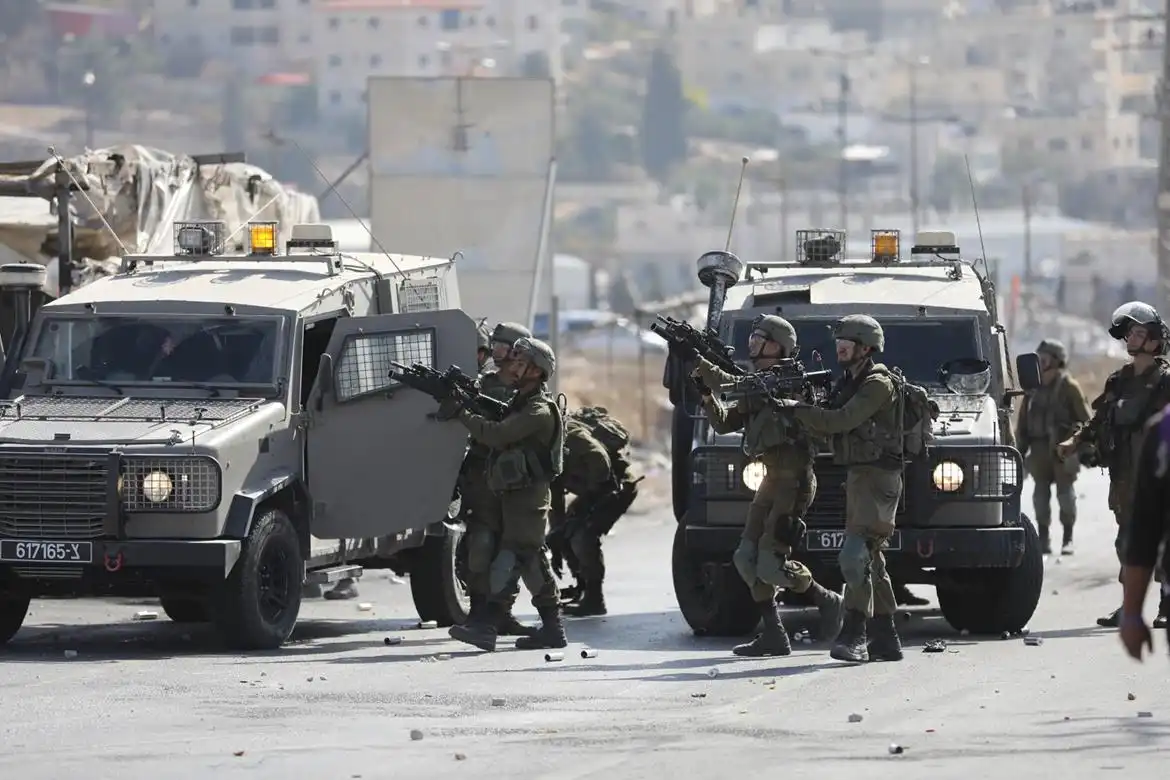
West Bank: Israeli army re-storms Jenin city for the second time within hours

On Tuesday, the Israeli army re-stormed the city of Jenin in the northern occupied West Bank, for the second time within hours.


According to local sources, an army force stormed the city and its camp surroundings, for the second time within hours, from several fronts, besieging several neighborhoods, amid the flight of drones.


The Israeli army also sent military reinforcements to Jenin.


At dawn on Tuesday, the Israeli army carried out a military operation in the city of Jenin and its camp that lasted for about 5 hours, amid the outbreak of armed clashes and confrontations with the Palestinians.


The West Bank is witnessing a wave of tension and field confrontations between Palestinians and the Israeli army, including raids and arrests of Palestinians, coinciding with a devastating war on the Gaza Strip that left tens of thousands of civilian victims, most of them children and women.


The war on the Gaza Strip also caused an unprecedented humanitarian catastrophe and massive destruction of infrastructure, which led to Israel being brought before the International Court of Justice on charges of “genocide.”

PALESTINE

Tue 13 Feb 2024 12:07 pm - Jerusalem Time

More than 7,000 arrests in the West Bank since October 7

Arrest cases increased after the “Al-Aqsa Flood” battle on October 7, 2023, to more than 7,000 arrests in the West Bank, including Jerusalem, and included all segments of Palestinian society, those whom Israel kept detaining them, and those who were later released, while Israel continues to carry out the crime of enforced disappearance against Gaza detainees.


From yesterday evening until Tuesday morning, Israeli forces arrested at least 22 Palestinians from the West Bank, including a child, siblings, and former prisoners.


The arrests were concentrated in the Jenin governorate, while the rest of the arrests were distributed among the governorates of Ramallah, Hebron, Bethlehem, Salfit, and Jerusalem.


ARAB AND WORLD

Tue 13 Feb 2024 11:05 am - Jerusalem Time

US Senate is close to approving aid to Ukraine and Israel

The US Senate voted to move forward with an aid package that includes Ukraine and Israel worth $95.34 billion, in a procedural vote that moves the legislation a step closer to its approval.


66 members approved the legislation yesterday, Monday, while 33 rejected it, exceeding the required 60 votes and passing the last procedural hurdle before the final consideration of the draft law, tomorrow, Wednesday.


The vote represents a step by the Democratic-led Senate towards final approval of the aid package, amid growing doubts about the fate of the legislation in the Republican-controlled House of Representatives.


The legislation must be approved by the Senate and House of Representatives before Democratic President Joe Biden can sign it into law.


The bill may face a long-term dispute in the House of Representatives, as Speaker Mike Johnson said that the Republican majority to which he belongs wants additional measures to address the problem of the record flow of irregular migrants across the border between the United States and Mexico.


“In the absence of any change in border policy from the Senate, the House will have to continue to exercise its will on these important matters,” Johnson said in a statement issued before the start of voting in the Senate.


Package money

The aid package includes about $14 billion for Israel, which continues its aggression against Gaza, while the lion's share ($60 billion) will help Ukraine replace spent ammunition supplies, weapons, and other vital needs as the war between Russia and Ukraine enters its third year.


The package also includes $4.83 billion to support partners in the Indo-Pacific region, such as Taiwan, in addition to humanitarian aid worth $9.15 billion for civilians in Gaza, the West Bank, Ukraine, and other conflict areas around the world.

PALESTINE

Tue 13 Feb 2024 10:35 am - Jerusalem Time

War on Gaza: During the past 24 hours, Israeli army committed 16 massacres against the Palestinian citizens

The Israeli army committed 16 massacres against families in the Gaza Strip, claiming 133 killed and 162 injuries during the past 24 hours.

According to the Ministry of Health, a number of victims are still under rubble and on the roads, and the occupation is preventing ambulance and civil defense crews from reaching them.

The Ministry indicated that the toll of the Israeli aggression rose to 28,473 citizens and 68,146 injuries since the seventh of last October.

ARAB AND WORLD

Tue 13 Feb 2024 9:20 am - Jerusalem Time

War on Gaza: Aid organisations write to UK prime minister on humanitarian situation in Rafah

The letter expresses urgent concern over Israeli attacks on Rafah, where around 1.3 million forcibly displaced Palestinians currently live

Over 20 charities and aid organisations in the UK have written a letter to the British prime minister that calls on him to demand that Israel stop its offensive into Rafah and agrees to a ceasefire. 

The letter, signed on 12 February, says that many of the signatories have staff and partners in Gaza and highlights that over 11,500 children have so far been killed in Israel’s war on the besieged enclave.

“We are writing with urgent concern about the overnight attacks on Rafah following Israel's announcement that it aims to conduct a destructive military campaign on the most densely-populated stretch on Earth,” the letter reads. 

The statement comes following the overnight bombardment of Rafah, where at least 1.3 million Palestinians have been forced to seek shelter, in what was initially designated as a “safe zone".

The letter calls on Prime Minister Rishi Sunak to use “the UK’s full diplomatic pressure to demand Israel halt its military campaign, which has already resulted in the killing of 28,000 people".


It also states that the signatories have already attempted to work with the British government towards halting the atrocities, but have been “profoundly dismayed and alarmed” at the lack of action, particularly after meeting the foreign secretary and describing the situation. 

Organisations that have signed the letter include ActionAid UK, Action for Humanity, Islamic Relief, Christian Aid, Plan International UK, Interpal, the United Nations Association, and Lawyers for Palestinian Human Rights.

Intensified attacks on Rafah

At least 67 Palestinians were killed in Israeli air and sea attacks on Rafah early on Monday, according to the Palestinian Ministry of Health. 

Volker Turk, the UN’s human rights chief, has also raised alarm over the anticipated Israeli ground assault on Rafah, saying it would be “terrifying".

“A potential full-fledged military incursion into Rafah – where some 1.5 million Palestinians are packed against the Egyptian border with nowhere further to flee – is terrifying, given the prospect that an extremely high number of civilians, again mostly children and women, will likely be killed and injured,” he said in a statement.

According to Amnesty International, Israel has previously carried out air strikes on Rafah in December 2023, after a humanitarian pause had ended, and in January 2024, killing at least 95 civilians, including 42 children, at a time when it was supposedly the “safest” area in the strip. 

The organisation added that in their investigations, they could “not find any indication that the residential buildings hit could be considered legitimate military objectives or that people in the buildings were military targets".

Amnesty has since raised concerns that these strikes were therefore direct attacks on civilians and civilian objects and must be investigated as war crimes.


OPINIONS

Tue 13 Feb 2024 9:16 am - Jerusalem Time

Gaza war: Dear white liberals, genocide is not complicated

Middle East Eye

Middle East Eye

Opinion Writer

By Tanushka Marah

Faced with having to recognise UK complicity in Israel's war on Palestinians in Gaza, it is easier to hide behind a smokescreen of complexity

In a retelling of the Slavic folk tale, Baba Yaga, the indomitable hag gives Vasilisa the Brave three tasks to complete successfully or face death. One is to use a sieve to transport water to fill a bathtub. 

This is what it feels like as a British Palestinian retelling the narrative of Palestine in the middle of a genocide.

This is what it feels like for anyone linked to the MENA region, or for many activists, old and new, in what we are witnessing to be the worst case of British-backed mass murder since the Iraq war. This time there is no pretence that civilians are not the target.

You flex every muscle as a storyteller, employing philosophical logic, historical fact, humanity, poetry, metaphor, simile, rhetoric, individuality. Each phrase is followed by a nod, the person I am talking to may have an MA, be well-versed in literature and culture, may read the Guardian. 

At the end of my toil, I hear a big sigh of relief and the words “it’s really complicated” as I see my listener reach for their Sauvignon Blanc and steer the subject to something lighter. Do I lack all social grace? Have I forgotten how to socialise? Am I mad? No. And the tick is to start all over again immediately, carrying this story through a sieve to a mind that does not want to retain knowledge of the hell hole that is Gaza; the responsibility of the blood on our hands as a nation; the burden that our comfortable way of life has always been built on the suffering of those deemed less valuable. It is easier to hide behind a smokescreen of complexity.


The power of theatre

Everyone has become an orator and we applaud and cheer in the agora that is social media. When offline we organise, we demonstrate, we occupy train stations, street corners, shopping malls, factory gates, and we create philosophical platforms to speak to each other, cheering for the truth, the simple truth phrased again and again through different arguments, sound bites, simple, strong bullet points designed to pierce the malaise that is "complexity".

We applaud rhetoric and oratory. We return to ancient ways as we stand a little raised from the crowd on benches or boxes in the cold with an almost Monty Python-style pathos around a self-elected speaker. We create theatre for each other. Crude blocks of performance, to bathe ourselves in solidarity and fact against the well-oiled machine of global gaslighting. 


I am a theatre director and I have never seen the power and importance of theatre in its basic form like this. We gravitate to it in need of its ritual and purpose, and everyone, everyone innately knows how to do it. People move slowly like an established ensemble before lying in the street covered in white bedsheets as poetry is read and the rain starts to fall.

I am in meetings discussing scripts for direct action. We meet people in public libraries, handing out costumes to strangers before performing as lawyers in a shopping mall, reading the words of Irish lawyer Blinne Ní Ghralaigh from the International Court of Justice as a huge Palestinian flag falls down over Zara’s shop face.  

In a train station sit-down protest in Brighton, in November, with about 200 people, with flags, placards and a huge black banner saying "Jews against genocide", I had my first go at grabbing the megaphone when it was offered out and found it surprisingly easy to speak as people were so hungry to listen. 

'Why do we have to stand in train stations convincing people that Palestinians should be allowed to live?'

- Palestinian woman at protest

I saw a young woman wearing a keffiyeh across from me, crying. It has also become normal to weep with strangers; in these basic gatherings there are held spaces amongst coats and flags to grieve. Eventually someone came over to me and said that the woman was Palestinian and would I speak to her.

Jehad was on her way home from work in Crawley when she came through the ticket barrier to see this solidarity in the train station. It moved and assured her but she was fresh in grief from the loss of her cousin and other family members.  She showed me his picture. A white background, professional photograph, sports clothes, barber sharp hairstyle, young, handsome, alive.

“Why do we have to stand in train stations convincing people that Palestinians should be allowed to live?” she said, staring at me through her tears. I felt guilty that the main point of my unprepared speech was to justify Palestinians' right to not be slaughtered by comparing them to myself, to the people in the station, like I should have been justifying something far more complex. No, we are standing on boxes and benches, and re-explaining that children should not be bombed, women should not be bombed, men should not be bombed.

Speaking to the converted, offering it to the deities like a Greek tragedy. We are human and we try to tell the world this in so many ways. She spoke herself and told us all what was happening, how many cousins she had lost and not heard from, she thanked the crowd for their efforts and like everyone in this movement she found the power of oratory even in the midst of her grief on her way home from work.

The affable apologist

Brighton has created a "ceasefire coalition" where many groups can coordinate their actions. We received short notice that Peter Kyle - Labour MP for Hove, treasurer for Labour Friends of Israel, refusing to meet local residents to discuss Palestine - was signing letters at an Amnesty International event.

We took it in turns to wait to speak to him and I ended up with the short straw of catching him just before the event finished. A nice affable man in a hoodie, he made direct eye contact, was charming and very happy to talk, this was disarming. I expected a man who does not want to call for a ceasefire to be hissing and carrying a scythe!

Every time I mentioned the number of children dead, that during our conversation one had died, he replied with "I know"; he said "I know" four times in a row, and then launched into pure waffle, waffle that makes no sense with what he claims to know, waffle that is designed to baffle. 

Israel is in a permanent state of existential terror. Created through fear and needing fear to continue to thrive. Its birth story built on myth, its survival built on narrative and bloodshed. Across the world we are fighting the narrative whilst blood is shed.

I grew up in a time when progressives travelled to Israel to build kibbutzim and no one knew what zaatar was. Now a kid with a milkshake on TikTok or a girl with false eyelashes in her car will argue for Palestine’s existence and rights. The kids are speaking with more articulation than I have ever mustered. Everyone has become a philosopher and the arguments are robust and logical. 

Some of us older ones will spend our Saturday nights listening to Ilan Pappe and Ghada Karmi but my daughter’s friends are getting their information on TikTok and coming to the same conclusions. Because. It is not complex. It is simple. What is happening is morally wrong. It is hell. It is despair. It is what every moral theory, religion, cautionary tale, law and society warns against. This is the worst of humanity. This is the ‘never again’ moment in history and people are turning away and letting it happen. 

When I look at lines of child-sized body bags, when I see the screams because my devices are deliberately turned to mute, when I try to find the humanity in the numbers and long shots of rubble, I see it as profoundly offensive to insinuate nuance and claim complexity or equivalence.

False neutrality

Each day feels like walking through a Willy Wonka factory where something nasty lurks inside every well-presented, tempting wrapper. That nastiness is racism. Those enticing wrappers of liberalism are arts institutions, political parties, movies, good, nice, friendly people who deep down wish the status quo to continue, and if thousands of brown children are slaughtered somewhere else, this is just what happens, this is colonialism.

We are teaching that being allowed to live on the land you grew up on is not complex, it is life. It is our first right of existence

Arts institutions that boast of anti-racism and climate awareness want to remain neutral. Doesn’t neutral sit somewhere in the middle? Where is the middle in a genocide, where is the immune spot, the centre stage of this grotesque horror show where morality is silent? Neutrality has become the acceptable mask of liberal racism.

"We teach life, sir," is a poem by Rafeef Ziadah that has been read at many protests recently. It was written in response to a journalist telling her that things would be better if Palestinians did not teach their children to hate. We teach life, that is what everyone who calls for a ceasefire asks for. We teach life, sir. That is platforming the voices of the children from Gaza. We teach life sir. That is what organisations like Parents 4 Palestine, youth theatre companies like my own and community events with kite-making, cakes and scarf-knitting promote.

We teach life, sir. This is the huge march every Saturday wherever we are, the drums, the chants, the flags, the begging to the clouds for bombs to stop falling. We are teaching that being allowed to live on the land you grew up on is not complex, it is life. It is our first right of existence.

What is complex is admitting to yourself that you see the lives of Palestinians as less equal to you, that the institutions that have benefited you and that you abide by like a religion are part of the system that justifies this haemorrhage of life. That Palestinians are somehow complicit in their fate as we wade through this dark chapter that will never be forgotten.

This is very complex and will take all of your life to articulate. Good luck.


PALESTINE

Tue 13 Feb 2024 9:16 am - Jerusalem Time

Washington sends Burns to Cairo and is optimistic about the negotiations

The United States considered on Monday that it is still possible for the Islamic Resistance Movement (Hamas) and Israel to reach a prisoner exchange deal and establish a truce in Gaza, while CIA Director William Burns is expected to arrive in Cairo on Tuesday, to participate in the ongoing negotiations regarding this file. Through Qatari mediation.


US State Department spokesman Matthew Miller said, "There were a number of untenable provisions in the proposal that came as a response from Hamas, but we believe that reaching an agreement is possible and we will continue our efforts" to achieve it.


Miller added that America believes that there are great benefits in reaching a truce and agreement on prisoners, “not only for the hostages who will be released, but also for the humanitarian efforts in Gaza, and our ability to begin seeking an actual and lasting solution to this conflict.”


The proposal, which was put forward for the first time during talks that took place in Paris, which brought together Burns with senior Israeli, Qatari and Egyptian officials, stipulates a temporary halt to the fighting and an exchange of prisoners between the two sides.


Hamas responded by accepting the proposal in principle, and demanded the liberation of prominent Palestinian prisoners and the withdrawal of Israeli occupation forces from the cities of the Gaza Strip, but Israeli Prime Minister Benjamin Netanyahu rejected Hamas’ response to the proposal and pledged to deal a “deadly blow” to the movement.


Sources familiar with the developments said that Burns is expected to arrive in Cairo on Tuesday, to hold a new round of talks on a Qatari-brokered agreement.


Last night, Israel launched intense air strikes on Rafah, killing more than 100 Palestinians, and said that it was able to free two of its more than 130 prisoners detained in the Gaza Strip, according to its army data.


Additional suffering

Israel insists on carrying out a ground operation in Rafah, southern Gaza, while the states and Western countries warn against launching an attack on more than a million Palestinians congregating in the city, after they fled a devastating war launched by Israel in the northern Gaza Strip, which has so far led to the death of more than 28,000 Palestinians.


Miller said, "Our assessment is that this air strike is not the beginning of a large-scale attack in Rafah." He added that Washington will make clear over the weekend that it does not support launching a large-scale military operation in Rafah "without a credible plan."


An American official said that the Israeli raids on Rafah, south of the Gaza Strip, should not affect negotiations to reach an agreement on a truce and the release of detainees.


He added that any military action in Rafah must be accompanied by a reliable strategy to protect more than a million people, and with guarantees of providing aid to them.


The US Department of Defense (the Pentagon) said that it continues to talk to the Israelis about the importance of taking into account civilians within the framework of their military plans, indicating that it does not want to see any additional humanitarian suffering against the residents of Gaza.


In a related context, Democratic Representative Pamela Jayapal said that it is time for US President Joe Biden and Congress to publicly refuse to provide any military aid to Israel.


In turn, Democratic Senator Chris Van Hollen called on the president not to provide any weapons to Israel unless it allows more aid to Gaza.


He said that children in Gaza are dying due to deliberate deprivation of food, and this constitutes a war crime. He called on the president to demand that Netanyahu immediately allow more food and supplies to Gaza, considering that "Netanyahu has always thanked us for military aid and rejected our requests to protect civilians."

ARAB AND WORLD

Tue 13 Feb 2024 9:12 am - Jerusalem Time

War on Gaza: ICC prosecutor threatens Israel with potential action over military activity in Rafah

Chief prosecutor Karim Khan had previously led a UN probe into crimes by the Islamic State militant group in Iraq

International Criminal Court (ICC) prosecutor Karim Khan said he was “deeply concerned” about reports of the bombardment and potential entry of Israeli troops into Rafah in Gaza, saying that his office may be pushed to take action against Israel.

“All wars have rules and the laws applicable to armed conflict cannot be interpreted so as to render them hollow or devoid of meaning. This has been my consistent message, including from Ramallah last year,” he wrote.

“Since that time, I have not seen any discernible change in conduct by Israel. As I have repeatedly emphasised, those who do not comply with the law should not complain later when my Office takes action pursuant to its mandate.”

Khan posted the statement on the social media platform X on Monday, adding that his office has an ongoing and active investigation “into the situation in the State of Palestine”.

Agnes Callamard, the secretary general at Amnesty International, also took to X to say that there is nowhere safe for Palestinians to go following the air strikes in Rafah.

“The Israeli incursion will have devastating consequences. Mass killings, forced transfers, more war crimes. The carnage must stop,” Callamard said. 

Khan has been a vocal critic of Israel's military assault in Gaza since the war on Gaza started on 7 October after the Hamas-led attacks on southern Israel. In late October, Israel said it would not allow Khan to enter the country, according to reports in the Israeli press. 

Khan, speaking from the Rafah crossing at the time, expressed his desire to enter Gaza and Israel to investigate potential crimes. 

Israel is not a signatory to the Rome Statute, which established the ICC, and is not a member of the Hague-based court. 

However, the ICC can investigate nationals of non-member states in some circumstances, including when alleged crimes are committed in the territories of member states.

The Palestinian Authority is a member of the court. However, Israel refuses to allow members of the ICC to enter the occupied Palestinian territories in the West Bank and Gaza.

In December, Khan called on Israel to respect the international rules of war and said he was accelerating his investigation into violence by Israeli settlers against Palestinians in the occupied West Bank, issuing a statement similar to the one made on Monday.

"I was crystal clear, that this is the time to comply with the law. If Israel doesn't comply now, they shouldn't complain later."

Concerns about looming ground assault

In the early hours of Monday, Israel carried out air strikes on Rafah, resulting in the deaths of numerous Palestinians who were taking refuge in homes and tents. 

The attacks targeted 14 homes and three mosques in Rafah, Palestinian officials said. The Palestinian health ministry said at least 67 people were killed.
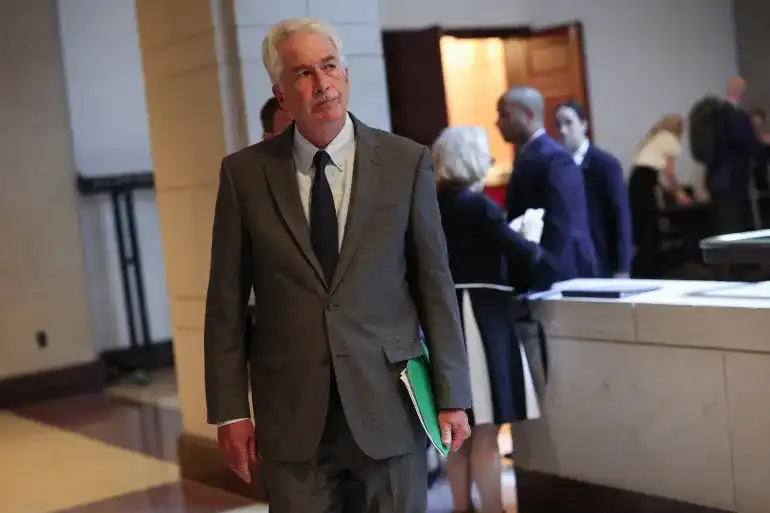
This action has heightened concerns about a looming ground assault on the region, which is heavily populated with displaced individuals who had fled there during the war, in addition to the people who normally live there.

The war on Gaza, which came in response to the 7 October Hamas-led attacks on southern Israel that killed 1,139 people and saw over 200 taken as captives back to Gaza, has resulted in Israel's military killing more than 28,000 Palestinians - the majority being women and children - while at least 65,000 have been wounded. 

Khan, the chief prosecutor, had previously led a UN probe into crimes by the Islamic State militant group in Iraq. He was elected by secret ballot in 2021 after ICC member states failed to come to a consensus on a replacement for his predecessor, Fatou Bensouda.

Since 2021, the ICC has been conducting an investigation into potential war crimes and crimes against humanity in the occupied Palestinian territories.


OPINIONS

Tue 13 Feb 2024 9:02 am - Jerusalem Time

Hind’s Corpse and the Battle for the State

Ghassan Charbel

Ghassan Charbel

Opinion Writer


I tried to run away from the small corpses. We have grown tired of laments. We have spent a lifetime going from one funeral to another. Anger and tears do nothing to heal the wounds. No sooner do we send off a victim than we are confronted with an uglier massacre. It is as though this terrible Middle East is addicted to the blood of the innocent.

I tried to turn away to another scene. I wrote about the latest chapter in the conflict in Iraq. America avenged its three soldiers and is seeking to withdraw from the country it invaded in 2003. It is obvious that Tehran lured Washington into a battle it cannot win and that it washed its hands clean from the practices of its proxies deployed in the maps of the “resistance.”

I was reminded that yesterday was the anniversary of the victory of the Khomeini revolution in Iran on February 11, 1979. One can’t review the past decades in the region without pausing at this date. The scene doesn’t need much explanation. Iran in Iraq is more powerful than the Iraqi state. It is more powerful in Syria than the Syrian state. It is more powerful in Lebanon than the Lebanese state and more powerful than the Houthis in Yemen. It is smarter and power powerful than its allies or proxies. It arranges the feast, but doesn’t leave any of its marks behind.

The tour of Iranian Foreign Minister Hossein Amir-Abdollahian to the capitals of the “resistance” reveals the new features of this part of the region. He spoke innocently, as if he were the foreign minister of Austria. He stressed the need for stability and avoiding slipping into the abyss. He revealed that his country had exchanged message with the United States in recent weeks. He said Washington had asked Tehran to intervene with Hezbollah in Lebanon to prevent the eruption of a widescale war. It is not easy to plan wars in parallel to the one raging in Gaza.

I tried and failed to escape the tale of Hind Rajab. She threw the story of her six years in the face of the modern world and the age of artificial intelligence and Elon Musk’s chips. She threw it in the face of the international jungle and Benjamin Netanyahu. Her story has become attached to the world’s conscience. The great authors never wrote a more harrowing and painful story.

Hind was deluded into believing that there are areas in Gaza that are less dangerous than others. She fled with her relatives from the Tal al-Hawa neighborhood to escape or postpone death. Death has no right to visit her. She is not a “terrorist” and has nothing to do with the tunnels. She did not take part in the Al-Aqsa Flood operation or any other operation.

She was just like any other child who dreamed of a day without planes and artillery. She was content with the meagerest of toys and of sleeping on the best pillow, which was her mother’s arm. She wanted to go to school and play games. She was unaware of the decision taken by the one who sparked the second Nakba. Gaza is no place to live. Gaza is where everything that moves is killed. Gaza is the place where children are killed so they don’t learn about the nation.

Her story has become well known. The passengers of a car are killed in a hail of bullets. Only Hind and another child survive. They begged for someone to come rescue them. The Red Crescent sent two of its paramedics to rescue them, but they were killed on the way. Hind’s relative died while she lived among the corpses for days. No one came and her fate was sealed. When the occupation forces withdrew from the area, her small corpse was retrieved from among the others.

Netanyahu’s war on Gaza has produced thousands of small corpses. The war he launched on October 7 has killed children in their homes, shelters and on the streets. The refugees fled from one death trap to another. Netanyahu speaks of “total victory” and is bent on waging a battle on Rafah as the world holds its breath that it would turn into an endless sea of corpses.

Almost 30,000 people have been killed in Gaza. The number of people killed per day has surpassed that of other conflicts. This war has set itself apart by the number of children it has claimed. Stopping the war has become more pressing than ever. Committing a horrific massacre in Rafah will plant in the region the seeds of future unprecedented conflicts. A political process must be launched. The war on Gaza must be the last one to erupt in the Palestinian-Israeli conflict and it must pave the way for the establishment of an independent Palestinian state.

Ending the war will be difficult with the fighters so deep in it and when it is now bordering on a fight for existence. It will be difficult when many involved find it impossible to live under the same roof or in two adjacent houses. But experience has shown that attempts to eliminate the other are impossible.

Netanyahu did not launch this destructive war so that he would one day surrender to a Palestinian state whose foundations he has spent his life trying to destroy. Yehya al-Sinwar did not fire the first shot to be later asked to abandon Gaza in return for the establishment of a Palestinian state, whose existence would hinge on the recognition of Israel.

The battle for an independent state is the only way to stop the cycle of Palestinian-Israeli wars. The establishment of an independent Palestinian state is necessary for the Palestinians and the region, which has been unstable since the rise of the Jewish state. Joe Biden’s administration must move on from condemning Israel’s excessive response to openly recognizing the Palestinian state and approving a path that would lead to its establishment.

The Arabs must also wage this battle by harnessing energies and addressing the world in a united voice which was sought by the Arab-Islamic summit that was hosted by Riyadh soon after the eruption of the war in Gaza.

Israel must be confronted with the inescapable truth that was put forth by the historic statement issued by Saudi Arabia in which it stressed the need to recognize a Palestinian state above all else before establishing permanent peace that would include the normalization of relations. The Arab and Islamic world must throw its weight in the balance, taking advantage of the several factors in its favor, including Saudi Arabia’s Arab, Islamic and international influence. The Palestinian state would return the Palestinian card to its people and land. The Palestinian state would ease instability in the region.

The best way to honor Hind’s small corpse would be for her to be buried in the soil of an independent Palestinian state. This state alone can stop the flow of corpses and give hope to the children of Gaza, the West Bank and beyond.

From Alsharq Alawsat


OPINIONS

Tue 13 Feb 2024 9:00 am - Jerusalem Time

Fear: A Shared and Taboo Sentiment in Our Region

Hazem Saghieh

Hazem Saghieh

Opinion Writer

Decades of occupation, oppression, and conflict over land and victimhood are the background to the heart-wrenching scenes in Gaza. However, so are other elements that have resulted from occupation, and resistance to it, to the same extent that they have shaped them.

Fear, one of those elements, has played a key role in leading us to this miserable state of affairs and aggravating it, not only in the main stage in Gaza, but also in several other countries and regions of the Middle East. Having said that, the concept of fear has only rarely been integrated into our understanding of what is happening and has thus not been given the same analytical significance that other conflict terms have.

Indeed, this neglect of fear, which is shared by the warring parties, is reinforced by the patriarchal, nationalist, and religious cultures of all parties. The fearful do not show their fear; even when presenting themselves as the sole victims, they must blend that image with one of strength. For instance, while Palestinians fear the Israeli war machine that has killed and continues to kill them, they affirm their strength by underlining their insistence on remaining steadfast and stressing the support of Arabs, Muslims, and allies. As for the righteousness of their cause and struggle, it is sufficient for ensuring victory.

Similarly, while the Israelis - on whom the memory of the Holocaust and pogroms weigh heavily - fear neighbors they consider hostile, they are confident of victory due to their strong army, international alliances, and their claims to righteousness.

Everyone who lives in the Middle East understands the fear common to its communities, and that each of these communities has an almost epic history replete with battles, expulsion, and displacement. Political thought, on the other hand, exposes the lengths that are taken to circumvent fear and replace it with claims to strength.

Both Palestinians and Israelis have a right to be afraid. Palestinians, who have lost the prospect of a state since 1948 - as every country in the area was emerging or gaining independence - are indeed afraid of a vicious and technologically advanced army that has previously defeated several Arab armies that had been thought to be strong; and that was before settlers became an additional armed force instilling fear and encroaching on their territory.

Recalling how readily the security-obsessed Israelis resort to violence in response to the slightest challenge by Palestinians, and how easily their response turns into collective punishment, helps us grasp aspects of this fear. Recent Palestinian history is brimming with reasons to be fearful, including forced expulsion, statelessness, and difficult living and working conditions, especially for those who have ended up in refugee camps and were subsequently left with no choice but to reside in neighboring countries among communities that are plagued, for their part, by demographic fears.

Haunted by their painful history in Europe and apprehensions of its recurrence, the Israelis find themselves in a region in which they are a different and unliked minority. Openly or implicitly, most of them operate under the assumption that peace and normalization are not sufficient guarantees against hatred and rejection. Their peace with Egypt, which dates back to 1978, only established a "cold peace," and the same is true for their peace deal with Jordan, which is now three decades old.

Nothing amplifies this fear like the increasing attachment to identities and the compulsion to dig up historical grievances that come with it. We know that recent decades have turned Muslims more Islamic and Jews more Jewish, making it more difficult to build bridges than ever. Diplomatic reconciliations from above between governments do little to change that.

There is no single template for alleviating the fears of the fearful in the Levant, especially after the collapse of the Lebanese model, which had often been described as an incubator of Muslim-Christian coexistence. Recently, we saw mass revolutions degenerate into sectarian and ethnic conflicts, giving rise to massive waves of refugees, as well as ISIS and the plight of the Yazidis and others who were subjected to its rule. As the long-standing and transnational question of injustice against the Kurds remains unresolved, and Türkiye continues to refuse to apologize to the Armenians, calls for federalism or secession are growing among the Christians of Lebanon.

It is difficult to leap over the major role that the Iranian revolution has played in this regard, laying the most robust groundwork for the transition toward the era of closed identities. Meanwhile, the figures most associated with peace, Anwar Sadat and Yitzhak Rabin, met their ends at the hands of extremists from their own peoples. As for Yasser Arafat, whom the Israelis directly humiliated at several junctures, Hamas took control of Gaza after his death, expelling the Palestinian Authority he had established.

Fear explains the Israeli obsession with security, as well as Israel’s outright rejection of a return of the Palestinians and the establishment of a single state, especially since there is no geographic buffer separating them from the Palestinians like that separating the French and the Algerians or the Portuguese and the Angolans. The Israelis have ultimately shown no appetite for embarking on the adventure of peace, and peace does remain an adventure in some sense.

Similarly, it is not reassuring to Palestinians that the Israelis who sympathize with their rights are too weak to influence the zeitgeist in their country or the policies of their state. After the "peace camp" had once been vigorous and robust, and the principle of withdrawing from occupied territories had held sway, this camp has disintegrated and eroded. The withdrawals from Lebanon and Gaza in 2000 and 2005 afforded those who had been saying that withdrawal would not bring peace with arguments to reinforce their claim, and that was before Hamas, which does not recognize Israel and the Oslo Accords in the first place, took over Gaza.

The frightened tend to instill fear in the other that lives in fear, driven by the illusion that by doing so, he dispels his own fear. This was multiplied a hundred times over by the Al-Aqsa Flood and Israel’s collective punishment.

There seems to be little reason to doubt that fear and the attempt to dispel it by scaring the other will become the norm in our region unless a third party, one that has the strength and capacity to impose a feasible settlement, intervenes to reassure both fearful sides.

From Alsarq Alawsat

ARAB AND WORLD

Tue 13 Feb 2024 8:58 am - Jerusalem Time

Biden, Jordan King Discuss Need for Stability in the Region

Declaring that "every innocent life lost in Gaza is a tragedy,” President Joe Biden welcomed Jordan’s King Abdullah II to the White House Monday for talks on how to end the months-long war and plan for what comes afterward. The meeting with Abdullah comes as Biden and his aides are working to broker another pause in Israel's war against Hamas in order to send humanitarian aid and supplies into the region and get hostages out. 

The White House faces growing criticism from Arab Americans over the administration's continued support for Israel in the face of rising casualties in Gaza since Hamas launched its Oct 7 attack on Israel, The Associated Press said. “The key elements of the deal are on the table,” Biden said alongside the king, though "there are gaps that remain.” He said the US would do “everything possible” to make an agreement happen: a pause to fighting for at least six weeks and the release of the remaining hostages held by Hamas. A senior US administration official said Sunday that after weeks of shuttle diplomacy and phone conversations, a framework was essentially in place for a deal. 

The official said Israeli military pressure on Hamas in Khan Younis over the last several weeks has helped bring the group closer to accepting an agreement. Abdullah said Biden's leadership was “key to addressing this conflict,” as he raised the plight of the tens of thousands of civilians killed and wounded in the fighting. “We need a lasting cease-fire now," the king said. “This war must end.” Jordan and other Arab states have been highly critical of Israel’s actions and have eschewed public support for long-term planning over what happens next, arguing that the fighting must end before such discussions can begin. 


They have been demanding a cease-fire since mid-October as civilian casualties began to skyrocket. Biden's stance marks a subtle but notable break for the president, who has continued to oppose a permanent cease-fire. His administration has insisted that Hamas not retain political or military control over Gaza after the war — a key objective of the Israeli operation to prevent a repeat of the Oct. 7 attack that killed more than 1,200 Israelis and saw about 250 taken hostage. Israel’s offensive has killed more than 28,000 Palestinians in the territory, displaced over 80% of the population and set off a massive humanitarian crisis. Gaza’s Health Ministry, which does not distinguish between combatants and civilians, has said the majority of those killed are women and children. Israel claims to have killed about 10,000 Hamas fighters but has not provided evidence. Biden repeated his warning that Israel must not launch a full-scale attack on Rafah, the last major holdout of Hamas where more than 1.3 million people are sheltering unless it devises plans to safeguard the civilians there from harm's way. 

Earlier Monday, National Security Council spokesman John Kirby acknowledged there were “legitimate military targets” for Israel in Rafah, but said the Israelis must ensure their operations are designed to protect the lives of innocent civilians. Officials have said the US is not sure there is a feasible plan to relocate civilians out of Rafah to allow military operations to take place. Biden, who has held out hope for a two-state solution to the Israeli-Palestinian conflict, added that he and the king discussed the need for the Palestinian Authority, which has some control over parts of the West Bank, to “urgently reform” to be ready to assume some authorities in Gaza if Hamas is removed from power. 

Abdullah insisted that “Separation of the West Bank and Gaza cannot be accepted.” Earlier Monday, Biden, joined by his wife, Jill, welcomed the king, Queen Rania, and crown prince Hussein at the White House before the leaders met. It was the first meeting between the allies since three American troops were killed last month in a drone strike against a US base in Jordan. Biden blamed Iran-backed militias for the deaths, the first for the US after months of strikes by such groups against American forces across the Middle East since the start of the Israel-Hamas war. 

Biden had planned to visit Jordan during his trip to Israel in October shortly after the Oct. 7 attack by Hamas, but the trip was scrapped. On his way home from Israel, Biden announced he'd helped broker the first deal to pause fighting temporarily and to open the crossing in Rafah to humanitarian aid. In the months since, members of his administration have made repeated trips to the region to engage with leaders there.


PALESTINE

Tue 13 Feb 2024 8:56 am - Jerusalem Time

West Bank: Israeli forces bomb a house and launches an arrest campaign

At dawn and early Tuesday morning, the Israeli forces launched a massive arrest campaign in various areas in the West Bank and occupied Jerusalem.


In Jenin, the occupation forces bombed a house after it was besieged in the village of Sir, belonging to a citizen of the Irshid family, and targeted it with “energa” shells, which led to a fire igniting, and demanded that a young man inside it surrender himself.


The brothers: Salah, Hamza, Abdul Qader, Khaled Suleiman Irshid, and the young man Ahmed Shihab Irshid were also arrested from the village, while the two young men, Karim Nasser Amin Marhi, from the town of Kafr Dan, and Ahmed Ibrahim Abu Al-Hassan, from the town of Al-Yamoun, west of Jenin, were arrested after storming the two towns, raiding their families’ homes, and destroying their contents.


In Qalqilya, the Israeli forces arrested the young man, Walid Shuraim, after raiding and searching his house, noting that Israel is still spreading in various neighborhoods of the city, especially “Iskan Street, Nablus Street, and Al-Nafaq Street.”


In Bethlehem, Omar Muhammad Zaoul (31 years old) and Khalil Ahmed (29 years old) were arrested during the storming of the village and raiding a number of homes in the village of Husan.


In occupied Jerusalem, the Israeli forces arrested the young man, Muhammad Akram Al-Khatib, after raiding his house in the village of Beit Iksa, while they arrested a citizen, whose identity was not known, after raiding a house in the town of Anata.


In Hebron, the young man, Jaber Bassam Arziqat, was arrested after his house was raided, searched, and tampered with its contents in the town of Tafuah.


In Salfit, the Israeli forces arrested the citizen, Muhammad Omar Matar, after raiding and searching his house.