PALESTINE

Fri 16 Feb 2024 9:00 am - Jerusalem Time

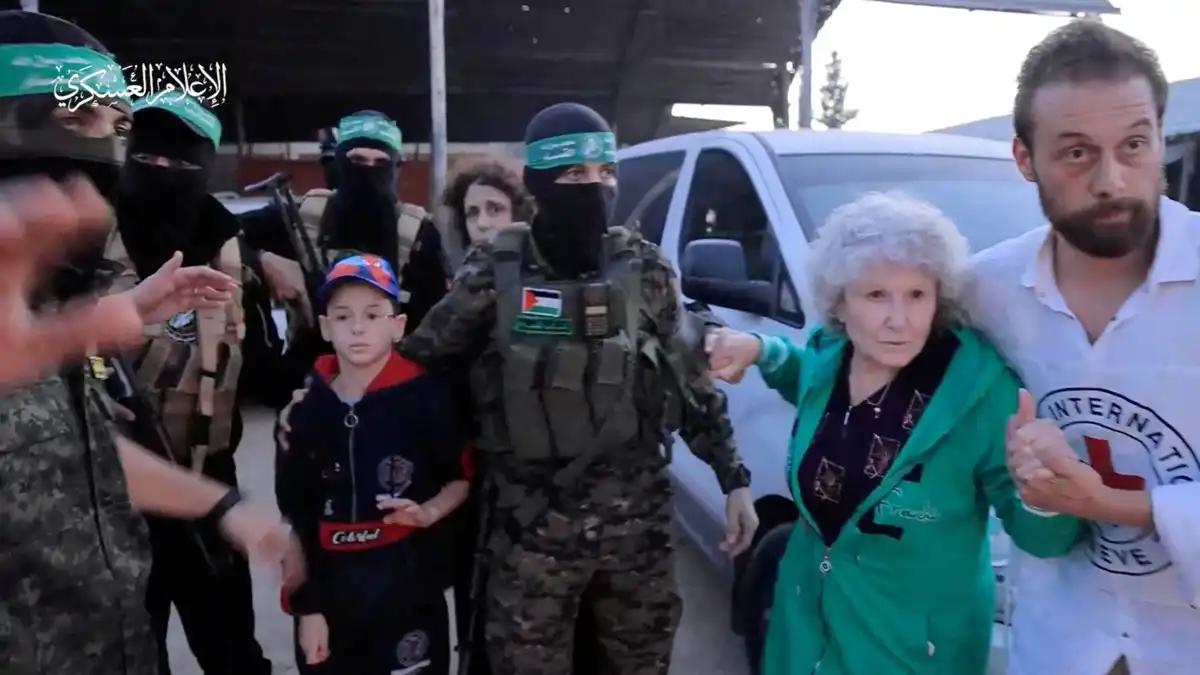
Rapid movements regarding the prisoner exchange deal between Hamas and Israel

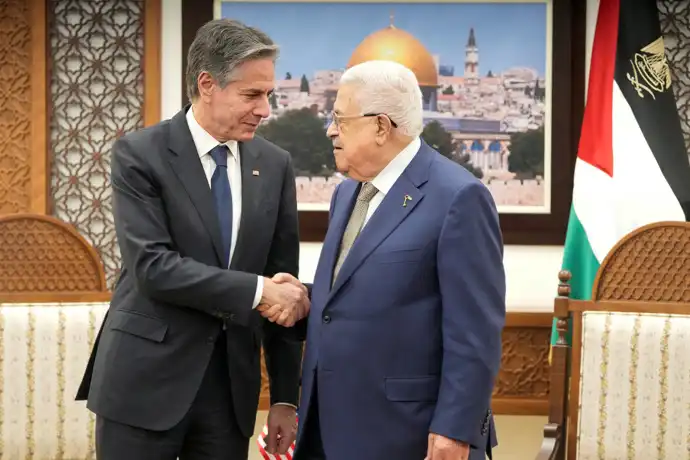
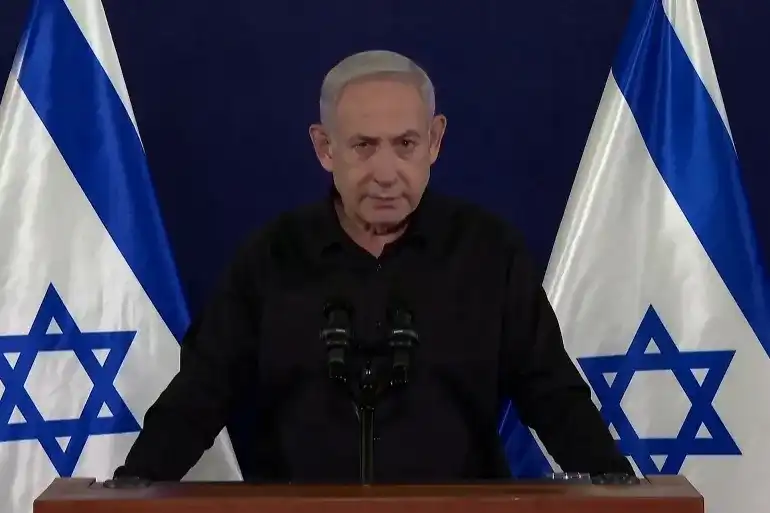
The American website Axios quoted an Israeli official as saying that Israeli Prime Minister Benjamin Netanyahu and US President Joe Biden held a telephone conversation that focused on prisoner negotiations and the possible military operation in Rafah, while US Secretary of State Anthony Blinken said that the response of the Islamic Resistance Movement (Hamas) had been received. There are some very difficult issues to be resolved.


The Israeli Broadcasting Corporation said that Netanyahu left the Israeli Cabinet meeting to hold the phone conversation with Biden, which lasted 40 minutes.


The White House said in a statement that Biden repeated his position during the conversation that Israel launching an operation in the city of Rafah should not be carried out without a reliable and implementable plan that guarantees the security of civilians.


Biden also affirmed his commitment to make every effort to support the release of all hostages as soon as possible.


Israeli media said that the Israeli Cabinet meeting, which considered the prisoner exchange deal proposal, had ended. The proposal was also discussed at a war council meeting.


This comes at a time when Blinken said that work is continuing with Qatar, Egypt and Israel to reach a final agreement on the prisoners, and that this is now possible.


The American minister added that a proposal reached by the United States, Qatar, Egypt, and Israel was presented to Hamas, and we received a response from it a week ago. This response includes proposals that have no chance of success, but at the same time provides the possibility of working toward an agreement.


He stressed that work is underway on this with Egypt, Qatar and Israel with the aim of reaching a final agreement, stressing that this is possible, but there are still very difficult issues that we must solve.


Netanyahu and Burns meeting

For its part, Israeli Channel 13 said that Netanyahu held a narrow meeting with CIA Director William Burns, in which the director of Israeli Intelligence (Mossad) David Barnea participated.


According to Israeli Channel 12, Burns - who arrived in Tel Aviv on a previously unannounced visit - informed Netanyahu that Qatar is requesting the entry of more aid into Gaza to push the prisoner deal forward.


The channel added that Netanyahu refused to discuss the request until Israel obtained proof that the medicines had reached the prisoners.

The Israeli Broadcasting Corporation reported that during his meeting with Burns, Netanyahu demanded to know whether the medicines had reached the prisoners, as part of the agreement guaranteed by Qatar and the United States.


The commission quoted Netanyahu as telling Burns that Hamas should abandon what he described as its unrealistic demands, otherwise it is impossible to move forward, as he put it.


Last Tuesday, Burns participated in the quadrilateral meeting in Cairo, with the participation of the head of the Mossad, the head of Egyptian intelligence, Major General Abbas Kamel, and the Qatari Prime Minister and Foreign Minister Mohammed bin Abdul Rahman Al Thani.


In a related development, the American CNN network quoted an informed source as saying that Qatar is still waiting for Hamas’ response to Israel’s position that it presented earlier this week, after the Cairo meeting regarding the prisoner exchange deal.


The network said that the main point of disagreement regarding the exchange proposal is the withdrawal of Israeli forces from Gaza, and Israel had rejected a proposal submitted by Hamas to release a large number of Palestinian prisoners.


For his part, the head of the Hamas political bureau, Ismail Haniyeh, stressed that any agreement must guarantee a ceasefire, the withdrawal of the Israeli army from Gaza, and the completion of a serious exchange deal.


Israeli resentment

Axios also quoted two Israeli officials as saying that Netanyahu, in his meeting with Blinken last week, expressed his dissatisfaction with Washington’s consideration of the option of recognizing the State of Palestine.


The two Israeli officials told the website that Netanyahu made it clear to Blinken that Washington's step to recognize a Palestinian state would harm any effort by the Biden administration regarding peace and normalization, adding that this step would mean "offering a reward" to those who carried out the attack on October 7th.


Tension within the war council

This comes at a time when the Israeli Broadcasting Corporation reported from sources that tension within the War Council had reached its peak between Netanyahu and Council member Benny Gantz, and that they rarely exchanged words, indicating that Netanyahu had doubts regarding Gantz’s communication with American officials.


War Council member Gadi Eisenkot criticized Netanyahu's decisions regarding the negotiating delegation in the prisoner deal. The Israeli Broadcasting Authority also quoted sources as saying that Eisenkot refuses for Netanyahu to make decisions on his own, and this is considered a violation of the war council agreement.


For its part, Israeli Channel 12 said that Netanyahu raised during the government session the issue of opposition to the establishment of a Palestinian state, at the request of extremist Finance Minister Bezalel Smotrich.


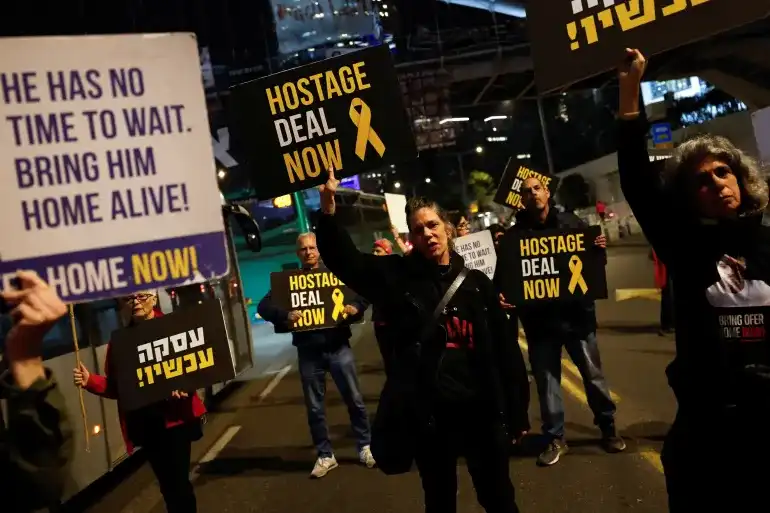
In this context, dozens of Israelis closed the street leading to the Israeli Ministry of Defense in Tel Aviv in protest against Netanyahu's decision to freeze negotiations with Hamas.


The demonstrators demanded an immediate deal to return the Israeli prisoners being held in Gaza alive.


In a press conference, the Association of Families of Israeli Prisoners demanded an immediate meeting with members of the War Council, and that the families of the prisoners be informed of the latest developments regarding the course of the talks.


A truce previously prevailed between Hamas and Israel for a week from November 24, until December 1, during which a ceasefire took place, prisoners were exchanged, and very limited humanitarian aid was brought into Gaza, with Qatari-Egyptian-American mediation.
PALESTINE

Fri 16 Feb 2024 8:40 am - Jerusalem Time

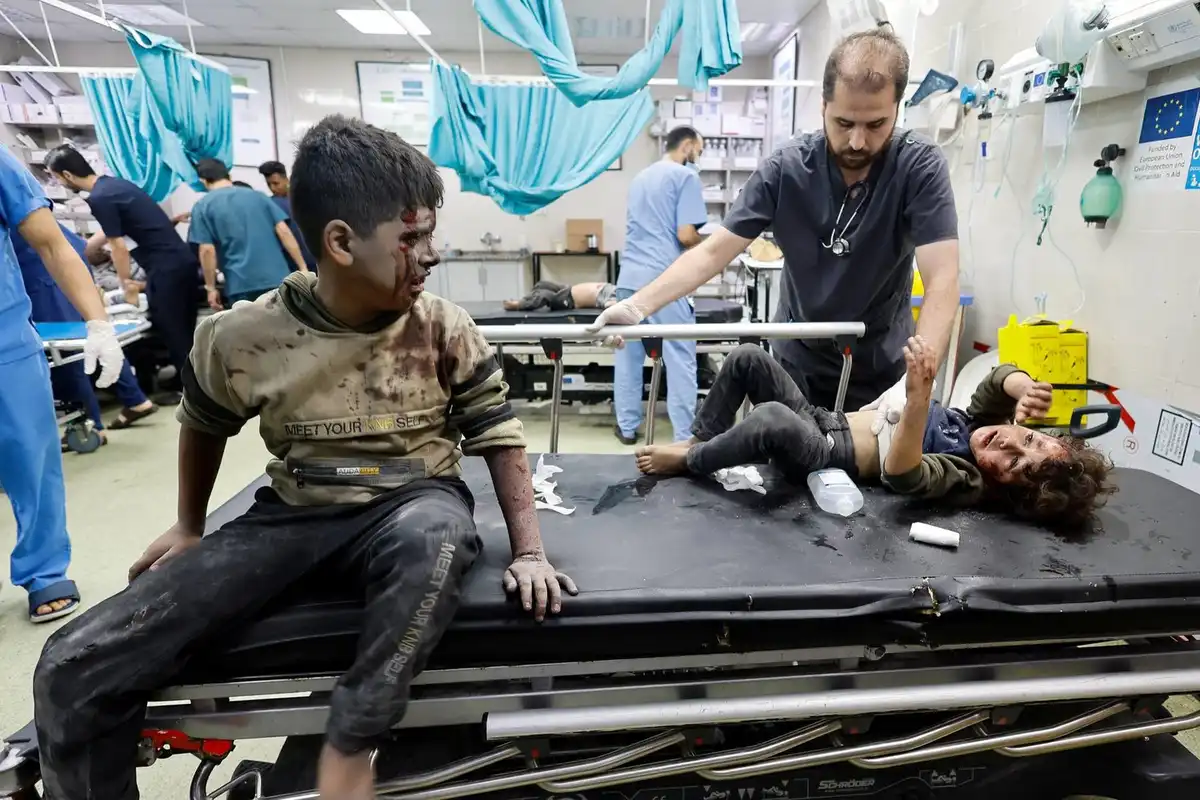
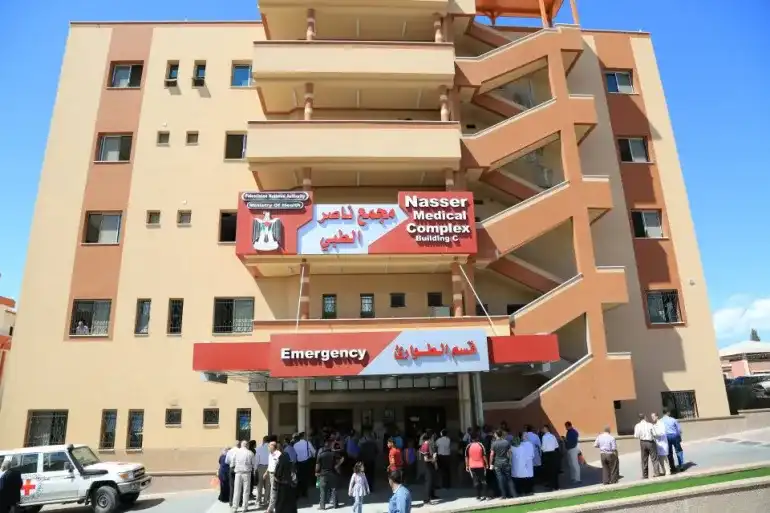
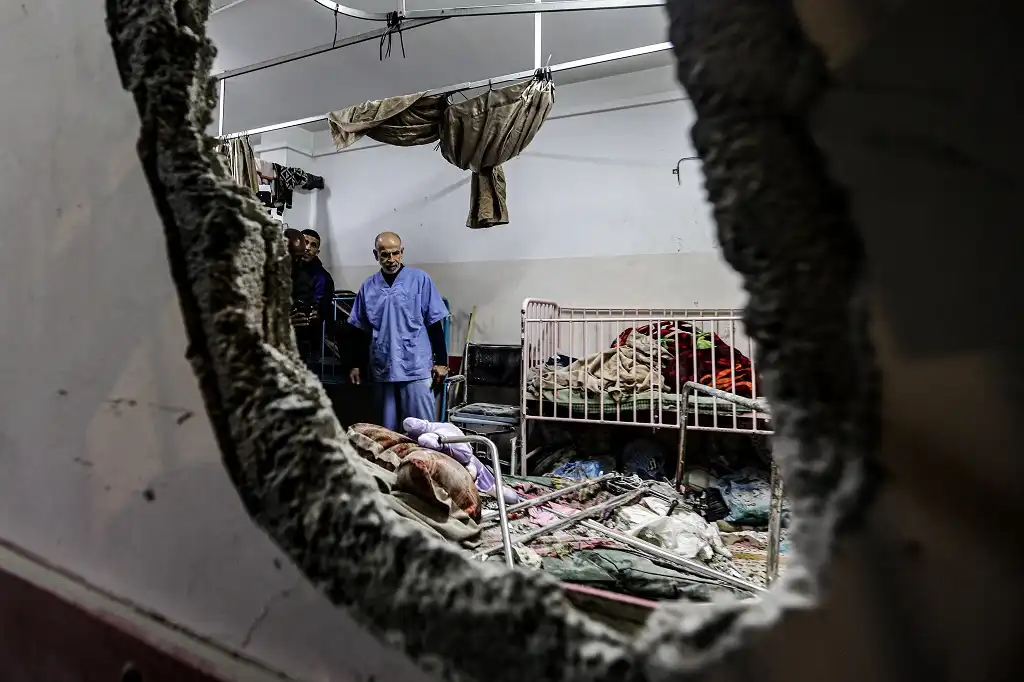
War on Gaza: 3 Palestinian patients died at Nasser Medical Complex in Khan Yunis

Three patients died on Friday morning at the Nasser Medical Complex in Khan Yunis, south of the Gaza Strip.


Medical sources in the complex reported that three patients died in the intensive care room as a result of the cessation of oxygen due to the power outage.


The sources also announced that two women gave birth “in dire and inhumane conditions, without electricity, without water, without food, and without heating, in the Nasser Medical Complex.”


The sources said that the near exhaustion of fuel and the Israeli blockade threaten the lives of patients and premature babies in the complex, holding the Israeli occupation responsible for the lives of patients and medical teams, and calling on all international institutions to quickly intervene to save the patients and medical teams in the complex.


The Israeli forces had forced the administration of the Nasser Medical Complex to place 95 health personnel, 11 of their families, 191 patients, and 165 companions and displaced people in the old Nasser building, in harsh and frightening conditions, without food, without baby formula, and an acute water shortage.

ARAB AND WORLD

Thu 15 Feb 2024 7:12 pm - Jerusalem Time

Blinken: We received Hamas’ response and there are some very difficult issues

US Secretary of State, Anthony Blinken, announced that Washington had received Hamas’ response, noting that there are some very difficult issues that must be resolved.


Blinken said in his statements on Thursday that the United States is working with Qatar, Egypt, and Tel Aviv to reach a final agreement regarding the detainees, considering that this is possible now.


He added that Washington believes that a deal regarding the prisoners is possible, even if it is surrounded by difficulties.


Blinken stressed that the priority is to recover all detainees from Gaza, and we believe that a deal is possible, even if it is difficult.


Earlier, Hebrew media said that the Prime Minister of the occupation government, Benjamin Netanyahu, insists that Tel Aviv will not submit to the imaginary demands of Hamas, according to his claims.


For its part, Maariv newspaper reported that Netanyahu did not authorize an Israeli delegation to go to follow up on the talks, claiming that there was no point in further dialogue until Hamas agreed to change its position on the issue.


Netanyahu indicated that there is no new proposal from Hamas in Cairo regarding the exchange agreement, and that only a change in its position will allow progress to occur.

OPINIONS

Thu 15 Feb 2024 4:35 pm - Jerusalem Time

Israeli News Paper: The return of the kidnapped or all-out war? A horror scenario could come true

Maariv

Maariv

Opinion Writer

By Danny Citrinowicz

There is a direct relationship to the dangerous escalation that has prevailed on the northern border in recent days with Hassan Nasrallah’s speech. The party’s refusal to abandon its equation, which states that as long as the Israeli army is fighting Hamas in Gaza, the party will fight Israel on the northern border, leads to the fact that so far there is no political solution on the horizon that guarantees the return of residents to their homes, and a ceasefire on the part of the party.

Although the conflict between Israel and Hezbollah is taking place on the Lebanese border, the party’s position practically links the future of the war in the north to reaching a possible consensus between Hamas and Israel regarding a ceasefire in the Gaza Strip, and while there are no signs of achieving this ceasefire. On the horizon, it is expected that the clash in the north will continue, and even escalate. No negotiations can begin on any kind of settlement in the north as long as the war in Gaza is raging.

Despite the painful blows that the party has received since October 8, and the heavy price it pays (which exceeds 200 party members killed), to the detriment of it (evidence of this is Nasrallah’s statements in his speech yesterday regarding the need to maintain information security (In order to reduce Israel's capabilities to strike the organization), it seems that it is still committed to standing alongside the axis of resistance, and will continue to work to disperse the Israeli army forces so that they are not able to direct all their war efforts against the Hamas movement in Gaza. This reality leads to the assumption that the party will not stop its war in the north, no matter what Israel does, and that, according to Nasrallah’s statements yesterday, it is fully prepared to expand the scope of the confrontation if Israel so desires.

When ceasefire options are absent from the horizon, in light of the fierce and daily confrontations that Hezbollah is waging against the army, and in parallel with the internal Israeli pressure on the government to ensure the return of the residents of the northern settlements to their homes, the potential for the situation to deteriorate becomes higher, and appears through escalation in the statements of both parties. The fact that Hezbollah operates among the civilian population, and does not hesitate to strike civilian towns in northern Israel, represents a guaranteed recipe for a “slippage” that leads to civilian casualties, and as a result, the turmoil of mutual responses between the two parties escalates.

Thus, in the absence of a political mechanism that can guarantee an end to the fighting, and with both sides literally playing with fire, it seems that deterioration has become almost inevitable, and this is happening specifically now, because the possibilities of reaching an agreement between Israel Hamas has become very low. What appears now, after more than 100 days of confrontation in the north, is that the ability to control the “escalation of the flames” is eroding.

In conclusion, the reality in the north “attracts” the two parties to a confrontation, even though they apparently have no interest in it. It is true that Hezbollah faces strong internal opposition in Lebanon, an opposition that should not be underestimated, and many parties in the state greatly fear that the clash will turn into a very destructive war, into which the party will lead the Lebanese state. However, Hezbollah’s steps indicate that it is disturbed by leaving Hamas is more afraid of entering the war alone in the battle against Israel. Thus, in light of the lack of prospects for reaching a deal that guarantees a ceasefire in Gaza, and in light of the ongoing escalation in military activities in the north during the past days, and despite the desire of both parties to maintain the existing “equations,” it seems that it will be difficult to prevent the next stage of escalation between the two parties.

OPINIONS

Thu 15 Feb 2024 4:30 pm - Jerusalem Time

Israeli News Paper: The international community sets boundaries between Israel and the illegal settlement project

Haaretz

Haaretz

Opinion Writer

The French decision to impose sanctions on 28 settlers involved in incidents of violence against Palestinians in the West Bank is a step in the right direction on the part of the international community. According to the French Ministry of Foreign Affairs, these steps came in response to the increase in settler violence since the outbreak of the war, and it is Israel's duty "to end this situation and prosecute those behind this violence."

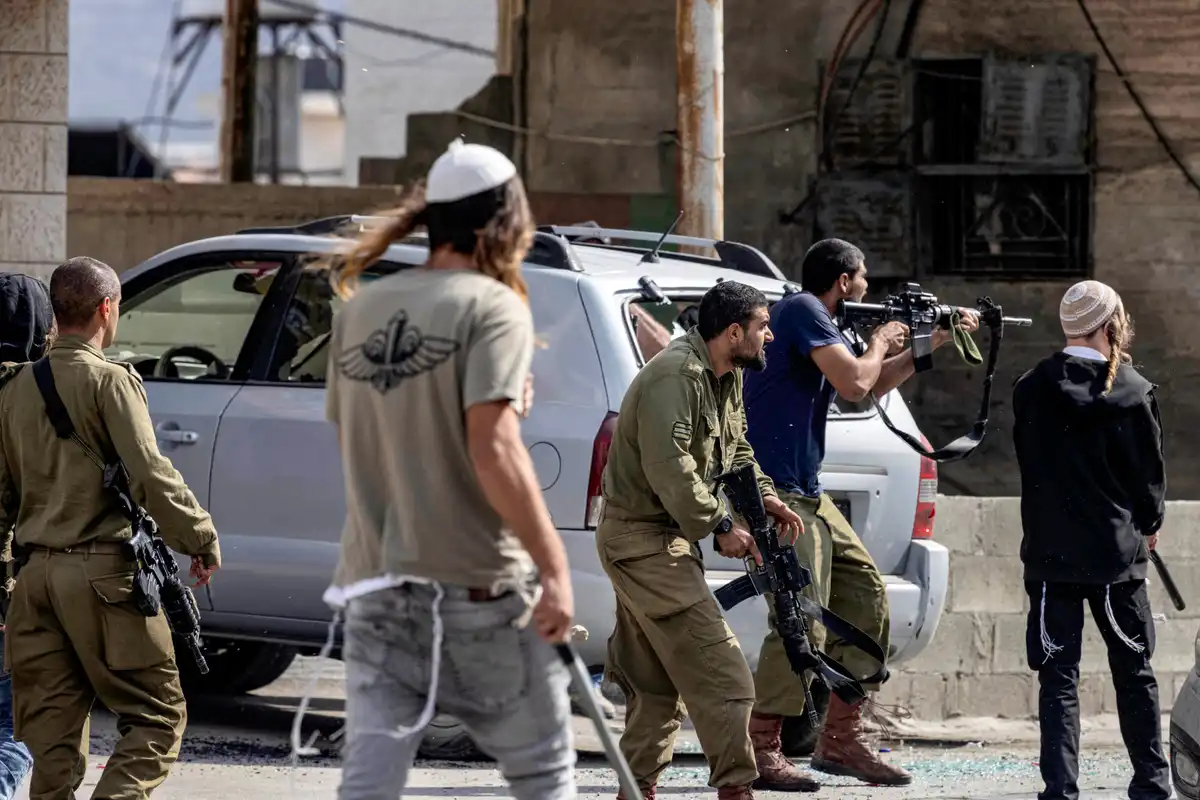
France is not the first country to move in this direction, which also includes preventing the entry of extremist settlers involved in acts of violence against Palestinians into its territory. This month, US President Joe Biden issued an order allowing the imposition of sanctions on settlers involved in violence against Palestinians in the West Bank. In the first stage, sanctions were imposed on 4 settlers, one of whom, according to the US administration, was the one who led the riots in Huwwara.

Britain also announced the imposition of economic sanctions on 4 settlers involved in violence against Palestinians, and prevented them from entering its territory. Foreign Secretary David Cameron said: “We must be clear about what is happening here. Extremist settlers are threatening Palestinians, sometimes with weapons, and expelling them from their land, which is legally theirs.” In his opinion, Israel is not making enough efforts to put an end to the violence.

The wave of sanctions on settlers will not stop with France. The European Union is expected to decide soon whether to impose sanctions on extremist settlers who attacked Palestinians. Of course, this decision requires consensus by the Union’s foreign ministers, and it is not clear whether all countries will support it. The European Union's official in charge of foreign relations, Joseph Borrell, announced at the beginning of December that Brussels would propose to the EU member states to impose sanctions on activists from the Israeli extreme right involved in acts of violence against Palestinians in the West Bank. He said: "It is time to move from words to actions, and start taking steps regarding violence against the Palestinian population in the West Bank."

Canada is also considering taking a similar step; The Canadian Foreign Minister said this month that the Ottawa government intends to impose sanctions on extremist settlers, as well as on Hamas leaders.

The international community made a correct decision when it decided to set clear boundaries between the legitimate State of Israel and the illegal settlement project that undermines Israel's legitimacy. Not distinguishing between sovereign Israel and the occupied territories serves those dreaming of annexing the West Bank and imposing apartheid. For anyone who wants to live in a state that does not control another people, steps like these, along with international recognition of a Palestinian state, will advance the future realization of a two-state solution for two peoples.

ARAB AND WORLD

Thu 15 Feb 2024 1:59 pm - Jerusalem Time

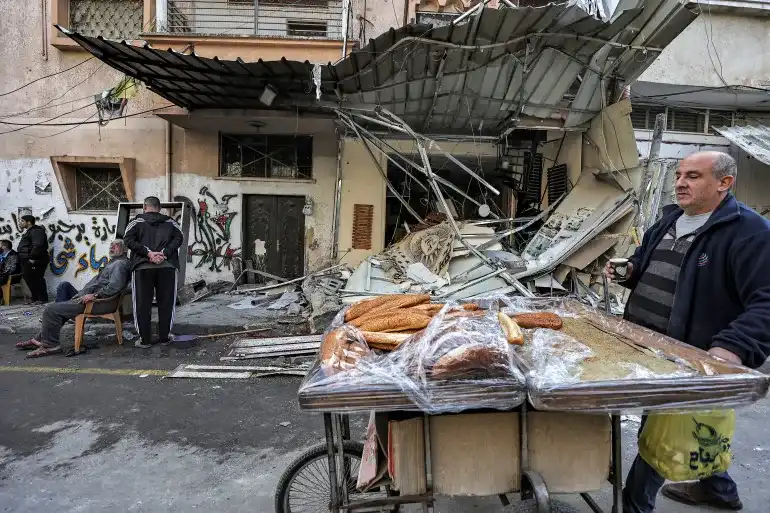
South Lebanon: The death toll from the Israeli raid in Nabatieh, rose to 8 persons from one family

The death toll from the Israeli raid that targeted a residential apartment in the city of Nabatieh in southern Lebanon on Wednesday night rose to eight people from one family, according to Lebanese security and medical sources.


An Israeli drone with two air-to-surface missiles at nine o'clock yesterday evening, local time, targeted an apartment in a four-story building in the center of the city of Nabatieh, as part of a "wide wave" of raids inside Lebanon after a missile bombardment on the city of Safed, northern Israel, that left one dead and seven wounded.


Lebanese security sources told Xinhua News Agency today (Thursday): “The raid led to the complete destruction of the apartment and caused serious damage to the four-storey building, which is now on the verge of collapse due to large cracks in it.”


The sources added, "Nearby residential apartments, a gas station, ten cars, and 12 commercial stores were damaged" as a result of the attack.
Following the raid, several teams equipped with bulldozers and cranes worked throughout the night to remove the rubble of the apartment and neighboring buildings, according to sources in the Lebanese Civil Defense and the Islamic Health Authority.


PALESTINE

Thu 15 Feb 2024 1:24 pm - Jerusalem Time

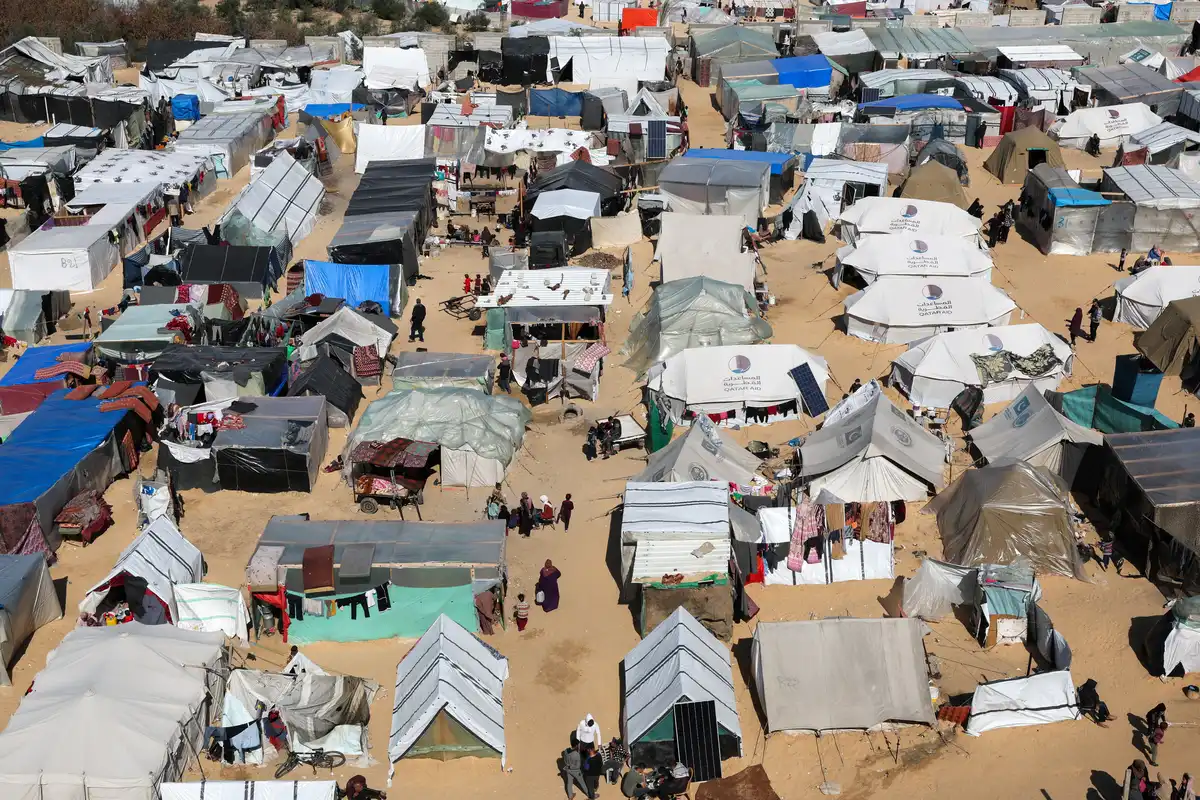
Reverse exodus from Rafah to central Gaza for fear of an Israeli attack

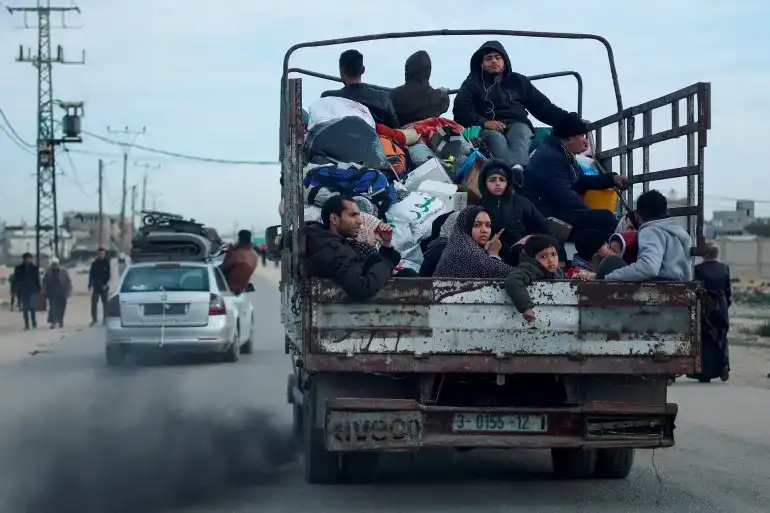
Two days ago, the city of Rafah, in the far south of the Gaza Strip, witnessed a reverse displacement movement towards the center of the Strip, after a series of intense Israeli raids targeted the city, and a continuing threat from Tel Aviv to carry out a massive ground invasion there.


Thousands of residents of the Central Governorate began to return to their homes, fearing an imminent military operation in Rafah, according to what the Anatolia News Agency reported.


They had previously been displaced to Rafah, after being displaced from their residential areas, which were targeted by the Israeli army at the time.


During the past two days, other numbers of displaced people from the northern regions of the Gaza Strip began heading to the Central Governorate, which includes the city of Deir al-Balah and the Bureij, al-Maghazi, and al-Nuseirat camps.


According to eyewitnesses, all of these displaced people leave Rafah in vehicles and carts pulled by animals, heading to the new shelter only via the coastal “Al-Rashid” Street, which connects the sector from north to south.


Omar Zain al-Din (33 years old), a displaced person from Gaza City, says that he decided to go with his family members to Deir al-Balah for fear of the escalation of the situation in Rafah and the transfer of the ground military operation there.


Zain al-Din was living in a tent near the Egyptian border with the Gaza Strip. Before leaving for Deir al-Balah with his wife and five children, he dismantled his tent and gathered all the clothes and firewood he could carry on a horse-drawn cart to take him to the new place of displacement.


He added: "This is the fifth displacement trip since the beginning of the Israeli aggression on the Gaza Strip. At first we left Gaza City to the Al-Zawaida area, then we headed to Deir Al-Balah and from there to the city of Khan Yunis, before moving to the border with Egypt in Rafah, and now we will return to Deir Al-Balah," according to him خب what was reported by “Anatolia”.


Naeem Al-Safadi also decided to leave Rafah, but will return to his home in the Nuseirat camp, from which he was displaced about a month ago to the border city of Rafah.


Al-Safadi says: “My house in Nuseirat is destroyed. I will return there and pitch my tent on its rubble. The Israeli forces will soon arrive in Rafah, and I fear that a massacre will occur here.”


Al-Safadi was lucky on his return trip to Nuseirat. He found a small truck whose owner managed to operate it using cooking oil instead of the diesel lost in the markets. This will make the trip quick but expensive.


The displaced Palestinian says: “I will pay Abu Mazen (the owner of the truck) 1,500 shekels (about 450 dollars) to transport me with my family and my luggage to Nuseirat. This amount is equivalent to 25 times the original price before the war, but there is nothing I can do. My wife is sick and I cannot transport her on a horse-drawn cart.” ".


On board that truck, Al-Safadi carried his dismantled tent, his family’s clothes, bedding, blankets, and modest kitchen utensils that barely met part of their needs.


Al-Safadi expresses his fears about the lack of food and goods in the Nuseirat camp and the rest of the central areas of the Gaza Strip. The aid entering the Gaza Strip is very limited, and only small amounts reach the central region due to the large population concentration in Rafah.


If all the displaced people in Rafah decide to head to the central regions, its small area will not be enough to accommodate these large numbers, especially since most of its area is narrow refugee camps, in addition to the fact that Deir al-Balah, the only city in it, is crowded with displaced people and its residents who were unable to leave it during the last period.


Thus, the reverse displacement movement will impose great pressure on the central region, as it will not be able to provide any services to the huge numbers of displaced people, in addition to its narrow area.


Last Monday, the city of Rafah witnessed a bloody night that resulted in the death and injury of hundreds, most of them women and children, in a series of violent raids launched by the Israeli army on different areas of the city.


The International Committee of the Red Cross warned on Wednesday that "the imminent Israeli military attack on the city of Rafah may have a serious impact," calling for respect for "the basic principle of humanity."


The committee said in a statement, “Israel, as the occupying power, bears the responsibility under international law to ensure that the basic needs of the civilian population are met.”


The organization stressed that "forced displacement" is expressly prohibited under international humanitarian law, as are the use of human shields and indiscriminate attacks that cause the death and injury of disproportionate numbers of civilians.


It pointed out that "evacuations must ensure the safe arrival of civilians, must provide satisfactory conditions in terms of hygiene, health, safety and nutrition, and not separate family members," noting that "they must also be able to return to their homes when hostilities stop." .


It stressed that those responsible for evacuations must "take into account the large numbers of people moving along roads damaged by bombs, through the rubble of destroyed buildings, and through areas contaminated with unexploded weapons."


Rafah turned into a huge camp for displaced people, and it is the only large city in the Strip that the occupation army has not yet invaded by land.


On Sunday, the Israeli Public Broadcasting Authority (“Kan 11”) reported that the Israeli army had approved an operational plan to launch a ground operation in Rafah, which is the last refuge for the displaced in the stricken sector.


The Israeli announcement was met with international warnings and calls not to undertake the operation, as it would have “catastrophic” consequences for about 1,400,000 Palestinians, most of whom were displaced from other areas in the Gaza Strip, for whom Rafah represented their last refuge.


ARAB AND WORLD

Thu 15 Feb 2024 1:19 pm - Jerusalem Time

A UN official warns of the possibility of an influx of Palestinians from Gaza to Egypt

United Nations Aid Coordinator Martin Griffiths warned on Thursday of the possibility of an influx of Palestinians crowded into Rafah into Egypt if Israel launches a military operation on the border city.


Griffiths said in a speech at the United Nations in Geneva that the idea of individuals in Gaza moving to a safe place is a pure “illusion.”

ARAB AND WORLD

Thu 15 Feb 2024 1:17 pm - Jerusalem Time

Irish Foreign Minister: Israel launched a false and misleading campaign against UNRWA

Irish Deputy Prime Minister and Foreign Minister Michael Martin said that Israel launched a false and misleading campaign against the United Nations Relief and Works Agency for Refugees (UNRWA), and criticized the United States and called on it to rethink its decision to suspend support for UNRWA.


Martin spoke in a press conference on Thursday with UNRWA Commissioner-General Philippe Lazzarini about a systematic attack targeting the agency, and stressed that without UNRWA there would be no basic services for the Palestinians in Gaza.


He stressed that "any attack on UNRWA would undermine the two-state solution," noting that "the entity that will administer Gaza after the war will not be able to carry out its tasks without UNRWA."


For his part, Lazzarini welcomed the announcement by Ireland and other European countries to maintain their financial support for the agency, and said that this constitutes a message to other countries.


He renewed his keenness to continue the agency's basic services in the region, and considered that dismantling the agency and suspending its funding "would be a disappointment to the Palestinians from the international community and would affect their lives, and would have serious repercussions and negative effects."


He warned that the absence of new contributions would cause a major shortage in the agency’s funding starting next April.


The Commissioner-General of UNRWA called on the Israeli government to cooperate with the agency in the accusations against its employees and to send all the facts, as he put it.


Since January 26, 18 countries and the European Union have suspended their funding to UNRWA, against the backdrop of Israeli allegations that employees of the agency participated in the attack carried out by the Palestinian resistance on October 7.


UN officials had warned of the catastrophic consequences of the steps taken by these countries towards the UN agency, stressing the impossibility of finding an alternative to the agency.


Source: Al Jazeera

ARAB AND WORLD

Thu 15 Feb 2024 1:14 pm - Jerusalem Time

Israel's responses: Agreeing to a truce for 42 days without complete withdrawal

The latest Israeli response to the prisoner exchange agreement does not include, according to a Hamas source, a commitment to stop fighting and withdraw from all parts of the Gaza Strip.


According to what the Hebrew Channel 12 quoted the source as saying, Israel offered to release three prisoners for every Israeli kidnapped in the first round, in addition to a number of Palestinian prisoners with high sentences.


According to the Israeli response, the first truce will last 42 days, and the second truce will last 30 days. As for the third truce, the Israeli answer is not accurate during the cessation of fighting.


Israel proposed that the IDF withdraw only from densely populated areas, and also allow hospitals to be prepared for operation – but not to rebuild them. Israel also agreed to bring 500 trucks of supplies daily at the request of Hamas, as well as to bring caravans and tents into the Strip.


The Israeli response also says, according to the Hamas source, that it will be possible to evacuate 50 wounded per day from the Strip, as well as those aged 50 and over. The Israeli response stated that for the second phase, negotiations would be held regarding the number of those released - and promised that Israel would reconsider the possibility of allowing the displaced to return to their homes, but without committing to a complete withdrawal.


The channel said that negotiations will continue today in Cairo regarding the exchange deal. Prime Minister Netanyahu did not allow the negotiating teams to travel to Cairo to continue the talks. Those around Netanyahu made it clear that, according to his style, Hamas’ response to the Israeli terms of reference must be accepted, and the extent of their willingness to be flexible must be tested, and only then must they move forward.


The officials present at the talks gave their impressions and explained that there is room for progress. They asked Netanyahu to allow them to “exhaust the step,” but he refused. Sources involved in the process say that they “understand the political difficulty Netanyahu faces, but there is an opportunity that should not be missed.”


PALESTINE

Thu 15 Feb 2024 12:59 pm - Jerusalem Time

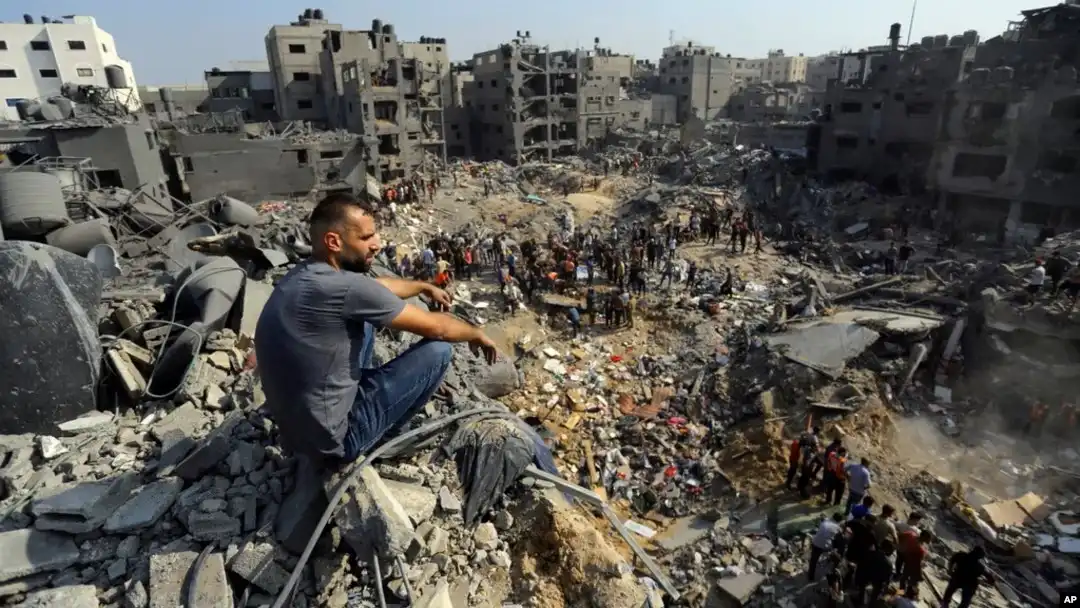
War on Gaza: Israel committed 9 massacres in the Gaza Strip, killing 87 civilians

The Israeli army committed 9 massacres against families in the Gaza Strip, killing 87 civilians and injuring 104 during the past 24 hours.

According to the Ministry of Health, a number of victims are still under rubble and on the roads, noting that the Israeli forces are preventing ambulance and civil defense crews from reaching them.

The Ministry indicated that the toll of the Israeli aggression rose to 28,663 killed and 68,395 injured since the seventh of last October.

PALESTINE

Thu 15 Feb 2024 11:48 am - Jerusalem Time

West Bank: Israeli forces arrests a Palestinian teenager from Jericho

Today, Thursday, the Israeli forces arrested a child from Jericho, after summoning him.


According to local sources, these forces arrested the child Mahdi Muhammad Hussein Abu Zaid (17 years old), a resident of Ain al-Sultan camp in Jericho, after summoning him.


It is noteworthy that the occupation forces raided his family’s home earlier today, and did not arrest him at the time

PALESTINE

Thu 15 Feb 2024 11:33 am - Jerusalem Time

War on Gaza: Dozens of Palestinians killed and wounded in the ongoing Israeli bombing

Today, Thursday, dozens of citizens were killed, and others were injured, in an Israeli missile and artillery bombardment that targeted various areas of the Gaza Strip.


Our correspondent reported that 10 citizens were martyred and others were injured, following a missile attack on a number of citizens’ homes in the Al-Zaytoun and Al-Sabra neighborhoods in Gaza City. They were transferred to Al-Baptist Hospital in the city.


Six citizens were killed in an Israeli air strike and artillery shelling on the Tal al-Zaatar area in Jabalia, north of the Gaza Strip. They were transferred to Kamal Adwan Hospital in Jabalia and the Indonesian Hospital in the neighboring town of Beit Lahia.


The Israeli warplanes also bombed with a number of missiles the Tal al-Hawa neighborhood and the Sheikh Ajlin area southwest of Gaza City, which led to the number of killed and wounded among the citizens, without ambulances being able to reach the targeted places, as a result of the shooting from the Israeli drones on everyone who moved.


The Israeli artillery bombed homes in the Al-Bureij and Al-Maghazi camps in the central Gaza Strip, killing a number of citizens and wounding others, who were transferred to Al-Aqsa Martyrs Hospital in the neighboring city of Deir Al-Balah.


In the city of Khan Yunis, the central and western neighborhoods of the city were subjected to Israeli missile and artillery bombardment, which led to dozens of killed and wounded, the majority of whom were children, women and the elderly. Meanwhile, Israeli drones fired bullets at Nasser Hospital, killing and wounding the sick and displaced inside it.


As for Rafah, Israeli warplanes launched a series of raids on the western area of the city and the border area south of the city, causing injuries among displaced citizens who were transferred to city hospitals.


The Israeli army continues its aggression against Gaza for the fifth month in a row, claiming the lives of civilians and destroying homes, buildings, apartments, property, and infrastructure in the Strip.

ARAB AND WORLD

Thu 15 Feb 2024 11:30 am - Jerusalem Time

An American solution in one package: a Palestinian state within weeks

Washington is crystallizing a plan with the participation of some Arab countries that stipulates a permanent peace between Israel and the Palestinians and the declaration of a Palestinian state within weeks, according to a report published by the American newspaper The Washington Post.


This morning, the Washington Post reported on a plan that the Biden administration is formulating with a small group of Arab countries, which includes “the completion of a detailed and comprehensive plan for long-term peace between Israel and the Palestinians, including a solid timetable for peace and the establishment of a Palestinian state.” The American newspaper reported that according to the plan, the state that will be created is expected to be announced “in the coming weeks.”


Efforts to complete the plan are linked to the proposed truce and the release of the abductees, provided that a six-week ceasefire allows the declaration of the state openly, mobilizing support and taking additional steps to implement this declaration, including the formation of an interim Palestinian government.


An American source said that reaching an agreement to release the hostages is the key to the plan, but while Washington and the Arab countries are working to promote it, there are fears that an Israeli attack in Rafah will abort efforts to release the hostages and future efforts for peace.


The American newspaper also wrote that the obstacle in such a plan is Israel, and the question of whether the government will agree to a large part of the matters it is discussing, which include, among other things, withdrawal from settlements in the West Bank, the establishment of a Palestinian capital in East Jerusalem, and the reconstruction of Gaza and integrated security arrangements for the administration of the West Bank and Gaza Strip.


These countries hope that Israel will also receive in-kind security guarantees and normalization with Saudi Arabia and other Arab countries, which Israel will find difficult to refuse.


After the report was published, Finance Minister Bezalel Smotrich said: “We will not agree in any way to this plan, which in fact says that the Palestinians deserve a reward for the terrible massacre they committed against us: a Palestinian state with Jerusalem as its capital. I will demand today at the Ministerial Council meeting “The security policy has decided to take a clear and unambiguous decision stating that Israel opposes the establishment of a Palestinian state and to impose sanctions on more than half a million settlers.”

PALESTINE

Thu 15 Feb 2024 11:10 am - Jerusalem Time

War on Gaz: Israeli army storms the Nasser Medical Complex in Khan Yunis and turns it into a military barracks

Today, Thursday, Israeli forces stormed the Nasser Medical Complex, turning it into a military barracks, after demolishing the southern wall and entering it amid heavy gunfire.


According to local sources, the Israeli targeted the ambulance headquarters and the tents of the displaced, and bulldozed the mass graves inside the complex, which has been witnessing a strict siege for 25 days.


The Israeli forces forced the remaining displaced persons and families of medical teams to forcibly move from Nasser Medical Complex at dawn today under bombardment and threats.


The Israeli army asked the Nasser Medical Complex administration to transfer all patients, including intensive care and nursery patients, to the old Nasser building, including 6 patients under artificial respiration.

The Israeli army destroyed the oxygen tube, and the oxygen leaked, which led to a decrease in oxygen pressure in the Nasser Medical Complex, especially in the intensive care department, exposing patients to danger, as a result of the Israeli targeting of the complex.


The Ministry of Health warned of an imminent humanitarian catastrophe, as a result of the Israeli authorities forcing citizens to evacuate the Nasser Medical Complex in the city of Khan Yunis, where they had been forcibly displaced.


Doctors Without Borders expressed its concern over the situation in Nasser Hospital, which was besieged by the Israeli army in the city of Khan Yunis, south of the Gaza Strip.


For 15 days, the Israeli army has launched a series of intense air and artillery raids on Khan Yunis, and in the vicinity of the hospitals located there, amid ground advances by its vehicles in the southern and western areas of the city, which prompted thousands of Palestinians to flee.

PALESTINE

Thu 15 Feb 2024 11:08 am - Jerusalem Time

WFP warns about the high rate of hunger in the West Bank

The United Nations World Food Program has warned that escalating Israeli arrests and movement restrictions in the West Bank are increasing the rate of hunger among Palestinians.


According to the United Nations news website, Palestine’s gross domestic product decreased by 22% in the last three months of 2023.


The report attributed this decline to various factors, including closures in the West Bank and the layoff of large numbers of Palestinian workers in Israel. The unemployment rate also rose to 29% in this period, compared to only 13% in the previous three months.


The UN program said that hundreds of thousands of Palestinians have lost their work permits in Israel and are unable to leave the West Bank, while commercial activity within the occupied Palestinian territory is limited, putting the economy and humanitarian situation at risk of further deterioration.


It pointed out that since October 7, the situation in the West Bank has been witnessing a political and economic deterioration, the imposition of Israeli restrictions on movement, and the establishment of additional military checkpoints, which has greatly limited freedom of movement.


According to the World Food Program, a large number of workers have lost their jobs, companies have been forced to close or downsize, while the Palestinian Authority faces a severe funding shortfall, affecting the salaries of civil servants.


Food insecurity

Deputy Country Director of the World Food Program in Palestine, Marika Guderian, said that the needs were already high before this current crisis, and have now worsened significantly, adding that there is an urgent need to obtain more funding to help these needy people who are suffering due to the impact of the Gaza war on the West Bank. Western.


According to preliminary assessments conducted by food security sector partners, food insecurity in the West Bank has risen from 350,000 people - about 10% of the population - to an estimated 600,000 people since the outbreak of the current war.


According to the program, this number is expected to increase in the coming months, as the program reported that the largest number of people facing food insecurity reside in Nablus and Hebron.


The World Food Program explained that increasing Israeli restrictions on movement have led to farmers in towns being unable to sell their products, buyers unable to access markets, and food prices have risen significantly in the West Bank, while unemployment and poverty rates are also rising.


The West Bank is witnessing a wave of tension and field confrontations between Palestinians and the Israeli army, including raids and arrests of Palestinians, coinciding with a devastating war on the Gaza Strip that left tens of thousands of civilian victims, most of them children and women.

ARAB AND WORLD

Thu 15 Feb 2024 11:02 am - Jerusalem Time

Washington is looking forward to a temporary truce and protests in Israel over the freeze in prisoner negotiations

US National Security Advisor Jake Sullivan said that his country is seeking to reach a temporary truce in Gaza as part of a possible prisoner exchange deal, while Israel witnessed protests against Prime Minister Benjamin Netanyahu's decision to freeze talks on detainees.


Sullivan added in statements he made yesterday, Wednesday, that the goal is to begin with a temporary truce and build on it in order to reach a more sustainable situation.


For his part, Strategic Policy Coordinator at the US National Security Council, John Kirby, said that Washington believes that the Cairo negotiations on Gaza were constructive.


He added in an interview with CNN that Washington is still involved and holds out hope that the talks will lead to a positive outcome.


In this context, the US Department of Defense (Pentagon) said that Minister Lloyd Austin discussed yesterday, in contact with his Israeli counterpart Yoav Galant, negotiations to secure the release of what he described as the remaining hostages of the Hamas movement.


In an interview with Al Jazeera, the US ambassador to Qatar, Timmy Davis, said that his country views the ongoing negotiations in Egypt regarding reaching a humanitarian truce and ceasefire in Gaza with cautious optimism.


Davis added that US efforts are currently focused on reaching a peaceful solution to the conflict and developing a plan that could lead to the establishment of a Palestinian state.


Yesterday, Tuesday, Cairo witnessed a new round of negotiations with Israeli and American participation, and reports stated that the talks did not make progress in light of Tel Aviv’s rejection of a number of demands that Hamas had previously presented to the mediators.

Disagreements and demonstrations

Yesterday, Israeli Prime Minister Benjamin Netanyahu said that Hamas must give up its conditions, adding that then negotiations can advance.


Netanyahu added that the key to releasing the rest of the "kidnapped" is to continue military pressure on Hamas, which demands that any agreement lead to an end to the ongoing aggression against Gaza for more than 4 months.


Israeli media said that the Prime Minister ordered the Israeli delegation, which was supposed to travel today, Thursday, to resume prisoner exchange negotiations in Cairo, not to go there.


In this context, the Israeli Broadcasting Corporation reported that Netanyahu made the decision without the knowledge of the two ministers in the war council, Benny Gantz and Gadi Eisenkot, indicating that they will demand full participation in decision-making in the war council today, Thursday.


As for the Israeli Channel 13, it quoted an unnamed Israeli official that a dispute broke out between the political and security elite in Israel regarding the delegation’s participation in the Cairo talks.


According to Tel Aviv estimates, there are still about 130 Israelis detained in Gaza, and 30 of them are likely killed.


Meanwhile, Israeli media reported that the families of the Israeli prisoners demonstrated last night in front of the homes of Netanyahu, Defense Minister Yoav Gallant, and War Council member Benny Gantz after the negotiation delegation’s travel to Cairo was cancelled, demanding the immediate conclusion of an exchange deal.


The families of the Israeli prisoners threatened to stage a sit-in in front of the Ministry of Defense headquarters in Tel Aviv if Netanyahu continued to ignore them.


Also last night, dozens of demonstrators from the "Change Direction" movement stormed the headquarters of the Israeli Likud Party in Tel Aviv to protest the continued war on Gaza.


The protesters demanded a no-confidence vote in Benjamin Netanyahu's government and a date for immediate elections, considering it an extremist government that sacrifices citizens for its political survival.


The movement also called on members of the Likud Party to remove what it described as the extremist movement from the government.


Source: Al Jazeera + agencies

ARAB AND WORLD

Thu 15 Feb 2024 10:57 am - Jerusalem Time

British researcher: The Palestinian state must be based on these three foundations

An article in the British newspaper "The Guardian" warned that what US President Joe Biden is promoting regarding a Palestinian state does not contain any mention of Resolution 242, but rather may be limited to a statelet similar to the Bantustans in South Africa during the apartheid regime, stressing that 3 things must be the basis for the prospective state.


The newspaper - in an article written by H. A. Hellyer, who is an associate fellow at the Royal United Services Institute and the Carnegie Endowment for International Peace - drew attention to British Foreign Secretary David Cameron’s surprise announcement of the possibility of the United Kingdom recognizing a Palestinian state before the end of the peace process with Israel, and the United States also saying that it would It could recognize the Palestinian state after the war in Gaza.

As for the path to progress, it is based on three indispensable pillars, according to Heller, the first of which is that Resolution “242 in 2024” remain the cornerstone, not only for addressing the Palestinian issue, but also for preserving the principle of rejecting force as a means of seizing land, because the international community He watches what the West is doing in Israel and Palestine, and compares it to what Russia and Ukraine are doing, and we cannot allow contradiction to be the prevailing norm today.


The second pillar is to undertake real reform of the Palestinian National Council, the legislative body of the Palestine Liberation Organization, to make it accountable, more democratic and more representative.


Finally, the Israeli extreme right represented in the current government must be rejected, “to ensure that our behavior reflects our values, and therefore the West must work to marginalize and isolate the Israeli political forces that work to undermine the safety of the people of Israel, as well as global interests in the region.”


Source: Guardian+ Aljazeera

ARAB AND WORLD

Thu 15 Feb 2024 10:55 am - Jerusalem Time

The Biden administration is rapidly advancing a plan to establish a Palestinian state

The United States, with a number of Arab partners, has prepared a plan to reach a peace agreement, which includes a fixed timetable for the establishment of a Palestinian state.


The Washington Post, in a report citing American and Arab officials, said that the key to the plan and its announcement will be reaching an initial ceasefire that is expected to last at least six weeks.


The report indicated that the announcement of a Palestinian state may come in the next few weeks.

The proposed plan includes steps that Israel had previously rejected, including evacuating many West Bank settlements, establishing a Palestinian capital in East Jerusalem, and providing security and joint governments for the West Bank and Gaza.


The report pointed out that it is not clear whether Israel would agree to such a step, pointing out that the Americans and Arab partners hope to convince it with security guarantees and normalization with Arab countries such as Saudi Arabia.


Netanyahu had informed the United States that he opposes the establishment of a Palestinian state as part of any post-war scenario.


OPINIONS

Thu 15 Feb 2024 10:48 am - Jerusalem Time

Did Israel blow up the exchange deal?

op-ed Al Quds dot com

op-ed Al Quds dot com

Opinion Writer

The question to which thousands are searching for a clear answer seems to have been ready in the diplomatic corridors: Will the Cairo negotiations produce an exchange deal that will ultimately lead to an end to the Israeli aggression on the Gaza Strip?


To answer this question, we review the Israeli responses to what happened the day before yesterday in Cairo, which contained within them all the "no’s" coupled with an absolute rejection of all attempts to bring viewpoints closer together. Israel wants to release a limited number of Palestinian prisoners, refuses to withdraw the army except from areas densely populated with civilians, refuses to stop the fighting completely, and wants to start with only a temporary truce. It also renewed its rejection of the return of the displaced to the northern and central Gaza Strip. Netanyahu's decision yesterday evening to prevent the Israeli delegation from returning to Cairo confirms the Israeli refusal and the threat of more military pressure in the belief that it will be the key to the release of most of the kidnapped people, according to Netanyahu.


Netanyahu insisted on what he described as Hamas abandoning its imaginary demands, and when these demands fall, he claimed that we can move forward...


These statements and the results of the negotiations up to this moment prove beyond a doubt that Israel is the one seeking to undermine the exchange deal in order to fully achieve the military objectives of Netanyahu’s personal and private agenda, through which he seeks to prolong the war and thus pave the way for large-scale aggression on Rafah.

Israeli confusion

In recent days, the army and Shin Bet have focused on the whereabouts of Hamas leader Yahya Sinwar, and there have been many statements about Israel's ability to reach him and arrest or assassinate him in a message addressed to public opinion in Israel. After publishing a video the day before yesterday showing Sinwar and his family in one of the tunnels last October, Israel bragged a lot that it had the ability to reach him, but the truth of the statements reported by the Hebrew media about the interruption of communications two weeks ago with Sinwar, reflects Israel’s catastrophic intelligence failure. There is an Israeli attempt to influence the course of the war and try to inflict defeat on the high morale of the resistance, in addition to it being a tactical step perhaps to provoke the Hamas leadership to declare that contact with Sinwar has not been cut off.


Israeli failures continue in all fields, and it has no choice but to carry out more killing, destruction and displacement. It has become clear that its next destination will be Rafah in light of the expected failure of the exchange deal, even if temporarily.

OPINIONS

Thu 15 Feb 2024 10:28 am - Jerusalem Time

Relations between Israel and Saudi Arabia tested by Gaza

ORIENT XXI

ORIENT XXI

Opinion Writer

By LAHOUARI ADDI

The October 7 attack and the war on Gaza put an end to attempts at normalization between Israel and Saudi Arabia, much to the chagrin of the United States. But the kingdom has been seeking for several years to follow a more independent course in a context marked by the weakening of the West.


National security advisor to President Joe Biden, Jake Sullivan recently welcomed the stability of the Middle East. He wrote in the September-October 2023 issue of Foreign Affairs: “Although the region faces ongoing challenges, it has not been calmer in years.” These lines were written a few days before the attacks perpetrated by Hamas on October 7, 2023 which shook the region: dozens, even hundreds of deaths in Gaza per day, the West Bank on the verge of explosion, Hezbollah engaged against Israel, Islamist groups targeting US military personnel in Iraq, Syria and Jordan, Yemen's Houthis launching rockets at merchant ships in the Gulf of Aden.


FALSE CALCULATIONS OF THE UNITED STATES

How is it that the United States, with its experts specialized in international relations and its multiple intelligence agencies, has developed such an erroneous perception of the region and has failed to understand the extent of the conflict in the Middle East? ? Before October 7, as Jake Sullivan's article attests, the United States was confident and planned to disengage from the region, supposedly stabilized, to devote itself to "containment" of China and Russia. The Palestinian question was no longer central, being reduced to sporadic clashes in the West Bank and periodic friction in Gaza. The American perception was that Hamas and the Palestinian Authority, permanent rivals, no longer had the capacity to formulate political demands consistent with their nationalist discourses. This dynamic was desired by the Israelis and the Americans, satisfied that the Palestinians, demonetized, were no longer a political adversary to fear.


If there was a fear, it was that of Iran and its armed wing in Lebanon, Hezbollah, which has acquired new offensive weapons. From then on, with the Middle East becoming relatively calm, it was necessary to consolidate the fragile stability in the region, by encouraging Arab countries to establish diplomatic relations with Israel in order to integrate it into local geopolitics. This would dissuade Shiite Iran from attacking Sunni Arabs now allied with Israel, who could come to their aid. It is in this spirit that the Abraham Accords signed in 2020 under the Trump administration were designed and which his Democratic successor, Joe Biden, sought to extend to Saudi Arabia. The hope of the United States — and also of Israel — is that the wealthy Gulf monarchies will invest in the West Bank and Gaza, which would benefit the Palestinians economically and the Israelis politically. Nevertheless, like a natural disaster, the deadly attacks of October 7 perpetrated by Hamas revealed another face of the Middle East.


THE LIMITS OF ABRAHAM’S AGREEMENTS

Given the reactions of Arab countries after the attacks of October 7, it seems obvious that the Abraham Accords were not really useful since none of the signatory countries lined up behind Israel and provided it with diplomatic support. , even if security cooperation between Israel and the Gulf States continues, and even if reports confirmed by Israel indicate a "land bridge" allowing goods to be transported from Abu Dhabi to the port of Haifa, across the Saudi, Jordanian (which Amman has denied) and Egyptian territories, to bypass the passage of the Red Sea.

However, the Gulf states have all expressed solidarity with the people of Gaza and called for an end to Israeli air strikes. Only the United Arab Emirates (UAE) has condemned the Hamas attacks. Their representative to the United Nations (UN) even defended, on February 12, 2024, the maintenance of relations between Abu Dhabi and Tel Aviv, while expressing the concerns of the Gulf countries about the war on Gaza. But the Emirates also defied Israel by presenting a resolution to the UN Security Council calling for a ceasefire, which was rejected due to a US veto.


Furthermore, no Arab country, with the exception of Bahrain which hosts a US naval base, has disapproved of the Houthi attacks on ships crossing the Bab-el-Mandeb Strait, nor agreed to join the military coalition against them. Even Egypt, whose revenues have been affected by the decline in activity in the Suez Canal, has expressed irritation over the bombing of Yemen by the United States and the United Kingdom.


It is clear that the Abraham Accords had no political return and did not provide the diplomatic assistance that Israel expected from its new partners. One wonders if these agreements did not contain something unsaid which limits their scope. Did Israel not expect the signatories to renounce solidarity with the Palestinians? Were the signatory Arab states not hoping to encourage Tel Aviv to recognize, in one form or another, a Palestinian state? But Israelis and Americans persisted in believing that the Abraham Accords had definitively marginalized the Palestinian question, hoping that Saudi Arabia would join in in turn. This hope, however, does not take into account Riyadh's desire to balance its strategic alliances and modify the regional geopolitical game to assert its autonomy.


DESIRE FOR AUTONOMY OF A STRATEGIC ALLY

The United States and Saudi Arabia have had common interests in the region since at least 1945. The Americans needed Saudi oil, and the Saudis needed a powerful ally to defend themselves against hostile neighbors, whether it was Egypt's Gamal Abdel Nasser in the 1950s and 1960s, or Ayatollah Rouhollah Khomeini in the 1980s and 1990s. The informal protection pact worked until two events introduced doubt into Riyadh.


The reaction of the Trump administration was considered disappointing after the attacks on oil wells in the kingdom on September 14, 2019. The Saudis pointed the finger at Iran, which denied it. The other disappointment came from the Biden administration which did not support Crown Prince Mohamed Ben Salman (aka MBS) in the affair of the assassination of journalist Jamal Khashoggi. From there was born the desire of the Saudis to rebalance their geopolitical relations. Since Iran is allied to Russia and China, the game consisted of getting closer to these two powers, without breaking with Washington, their strategic ally. With this in mind, the kingdom reestablished its diplomatic relations with Iran in May 2023, to the great dismay of Israel and the United States who wanted to isolate Tehran.

Riyadh has developed economic relations with China, which has become its first customer, with 66 billion dollars in exports and 40 billion in imports. He is waiting for Beijing to provide him with technologies that he cannot acquire in the West. Against all expectations, in January 2024 the kingdom joined the BRICS, whose members want a change in the international order dominated by the West. But what worries the Americans the most is the rapprochement with Russia in the OPEC+ organization which sets the level of the volume of hydrocarbons on the market. Speaking on CNN on October 10, 2022, Democratic Senator Chris Murphy urged Saudi Arabia not to choose Russia over the United States.

But Crown Prince Mohamed Bin Salman did not follow the advice and intensified relations with Moscow. Displaying a neutral position in the conflict in Ukraine, he did not condemn the Russian invasion, greatly irritating the Americans. At the beginning of December 2023, he received Vladimir Putin in Riyadh to talk about economic and military exchanges, which further displeased Western capitals invested in isolating the Russian president. However, the divergence with the United States mainly concerns the Palestinian question. The day after the attacks of October 7, and following the Israeli bombings on the enclave, the Ministry of Foreign Affairs condemned “the continuation of the occupation, the deprivation of the legitimate rights of the Palestinian people and the repeated provocations against the holy places” (“Hamas attack: the rapprochement between Israel and Saudi Arabia put to the test of war”, Hélène Sallon, Le Monde, October 9, 2023).

And it is no coincidence of timing that the suspension of negotiations on normalization with Israel was announced on October 14, 2023, the same day that American Secretary of State Antony Blinken was in Riyadh. All of these elements indicate that the United States has lost influence over Saudi Arabia. While being flexible in form, Crown Prince MBS is intransigent in substance. What US officials and the Western press fail to see is that as the spiritual center of the Muslim world, the kingdom cannot afford to dissociate itself from the Palestinians and not support their claim to Jerusalem, third holy place of Islam.


DIFFICULT CONDITIONS TO FULFILL

In an interview with the American channel Fox News in September 2023, MBS said that negotiations over diplomatic relations with Israel were on track, but that the importance of the Palestinian issue should not be forgotten. Journalists commented extensively on the first part of the statement while downplaying the second. Examination of the conditions set by Saudi Arabia indicates that the normalization of relations is not for tomorrow, because they are unacceptable for Tel Aviv and for Washington: a sovereign Palestinian state with East Jerusalem as its capital, the acquisition of a civilian nuclear industry and a military defense treaty with the United States. The first two conditions will be refused by the Netanyahu government, which does not want a sovereign Palestinian state, and does not want to displace the more than 700,000 settlers installed in the West Bank.

Furthermore, Israel will oppose the principle of a country in the region having access to nuclear energy, even civil. As for the United States, it does not wish to be bound by a military mutual defense treaty with a country located in a very conflictual region. They fear being drawn into a war against Iran or Yemen's Houthis, should they attack the kingdom. Mohamed Ben Salman knew that at least two of his conditions were unlikely to be met. But by accepting the idea of negotiations, he responded in a polite manner to pressure from the United States, his strategic ally. Saudi Arabia is now aware that its financial power allows it to play a diplomatic role in regional geopolitics without being aligned with one country or another. In the bipolar world of the Cold War, it had no choice in its alliances. In the multipolar world of the post-Cold War, it can modulate its alliances according to its strategic needs.


LAHOUARI ADDI

Professor emeritus at Sciences Po Lyon; he is the author of several works including Algeria and democracy

PALESTINE

Thu 15 Feb 2024 10:10 am - Jerusalem Time

West Bank: Israel issues a decision to seize 18 dunums east of Ramallah

The Wall and Settlement Affairs Authority said that the Israeli authorities issued a decision to seize 18 dunums of land in the village of Deir Dibwan, east of the city of Ramallah.


The authority stated in a statement issued today, Thursday, that Israel issued a decision to “seize” the lands under the pretext of “urgent military purposes,” by forming a buffer zone around the “Mitzpe Danny” colony established on citizens’ lands.


It pointed out that the Israeli seizure of citizens' lands expresses the actual implementation of the idea of buffer zones proposed by Smotrich at the beginning of the aggression on October 7th.


With this decision, there are three successive orders in the same manner (buffer zones around the colonies that prevent citizens from accessing vast areas, in Derastia near the “Rafava” colony, and the western farm around the colonial outpost “Harasha”).

PALESTINE

Thu 15 Feb 2024 9:43 am - Jerusalem Time

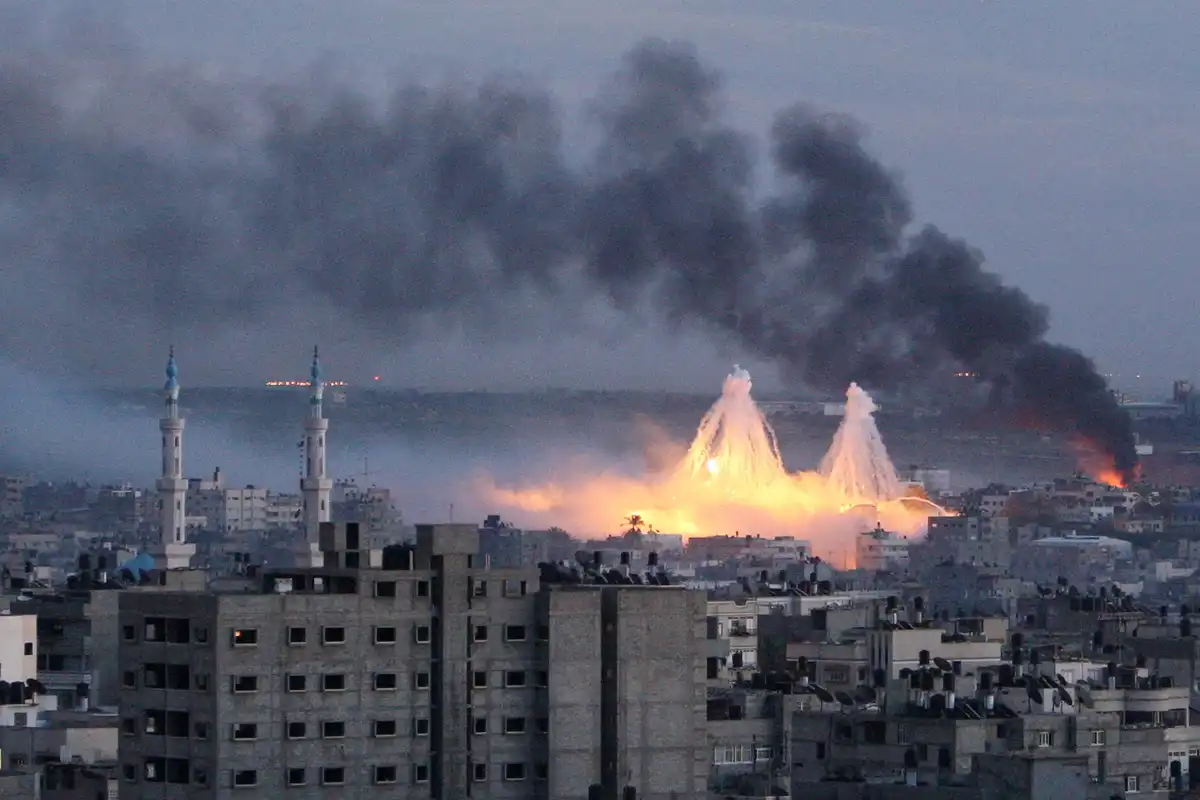
Wall Street: Washington is investigating Israel's use of white phosphorus

The Wall Street Journal said that the US State Department is investigating the use of white phosphorus by the Israeli forces in its raids on the Gaza Strip and Lebanon.

The newspaper explained that the investigation aims to determine whether the weapons provided by the United States to Israel were improperly used to kill civilians.

It added that the US authorities are investigating the air attack on the Jabalia refugee camp in the northern Gaza Strip on October 31, which led to the death of more than 125 citizens.

The American newspaper pointed out that investigators suspect that Israel may have used a bomb weighing about 907 kilograms in that raid.

Amnesty International said that its Crisis Evidence Laboratory verified that the Israeli military units striking Gaza were equipped with white phosphorus artillery shells.

White phosphorus is a substance that burns at very high temperatures when exposed to air and can continue to burn inside flesh, causing horrific pain and serious injury and cannot be extinguished by water.

Phosphorous bombs are internationally prohibited under the Geneva Convention of 1980, which prohibits the use of white phosphorus as an incendiary weapon against humans and the environment.

Since the seventh of last October, the Israeli occupation forces have launched an aggression against the Gaza Strip, resulting in the death of 28,576 citizens and the injury of more than 68,291 others, in addition to thousands of missing people who are still under the rubble.

PALESTINE

Thu 15 Feb 2024 9:37 am - Jerusalem Time

Washington's allies warn Israel against the military operation in Rafah

On Thursday, the leaders of Australia, Canada and New Zealand warned Israel of the potentially "catastrophic" consequences of launching a ground military operation in the city of Rafah in the southern Gaza Strip.


While the three Commonwealth countries, in a rare joint statement of its kind, urged the Israeli government headed by Benjamin Netanyahu “not to take this path,” the leaders of countries allied with Washington expressed their deep concern about the months-long war in Gaza.


The statement said, "A military operation in Rafah would be disastrous. About 1.5 million Palestinians have taken refuge in this area, and civilians simply have nowhere else to go."


In the face of increasing international pressure and a death toll that the Gaza authorities say has now exceeded the threshold of 28,000 martyrs, the Israeli Prime Minister pledged to move forward with the war.

Netanyahu said in a message on his official account on the Telegram application, "We will fight until complete victory, which includes a strong movement in Rafah, after allowing the civilian population to leave the combat areas."


Israel believes that they are holed up in Rafah with a number of hostages who were seized by Hamas during its attack on October 7 of last year, on the “Gaza Envelope” settlements and Israeli towns in the south, and their number is estimated at 130.

OPINIONS

Thu 15 Feb 2024 8:44 am - Jerusalem Time

How Israel’s genocide in Gaza became a showdown between the West and the Global South

Middle East Eye

Middle East Eye

Opinion Writer

By Joseph Massad

The world today is divided between a minority of powerful imperialist white supremacists who support the genocide of the Palestinians and the majority of the people who do not

Late last month, the International Court of Justice (ICJ) ruled that it is "plausible" that Israel was committing genocide against Palestinians in Gaza.  In response to the case brought by South Africa, the court ordered Israel to "prevent the commission of all acts" in violation of the Genocide Convention and to "prevent and punish the direct and public incitement to commit genocide" against Palestinians. The ICJ cited the many genocidal and dehumanising statements made by senior Israeli officials, including Israel's president and prime minister.    The ICJ decision places Israel squarely in the company of genocidal white colonial-settler societies. As a result of the interim ruling, the World Court will deliberate further in the coming months or years on whether Israel is committing "genocide".

It is a belated investigation of the atrocities that Zionism and the Jewish settler colony have been visiting on the Palestinian people since the 1880s, and more horrifically, as South Africa argued in its case, since 1948, and not only since 7 October 2023.

Historical accusations

While Palestinians have accused Israel of ethnic cleansing since 1948 onwards, Israeli politicians and Israeli and Palestinian scholars have also accused Israel of committing ethnocide, politicide, and "sociocide" against the Palestinian people.

As for genocide, the recent South African case was not the first time such an accusation was made. Shortly after the Sabra and Shatila massacres in September 1982, the United Nations General Assembly passed a resolution condemning the massacres as "an act of genocide", with an overwhelming 123 countries supporting the resolution and only 22 abstentions and no opposing votes.

The white settler colonies of the United States and Canada rejected the term "genocide" and abstained. So did the white settler colonies of Australia and New Zealand and western European colonial countries, including Britain, France, Germany, Italy, Belgium and the Netherlands, among others. In contrast, the Soviet Union declared: "The word for what Israel is doing on Lebanese soil is genocide. Its purpose is to destroy the Palestinians as a nation."

Since the beginning of Israel's transformation of Gaza into a concentration camp, accusations of Israel as a genocidal country became ubiquitous

The German Democratic Republic also accused Israel of committing genocide, as did Cuba and Nicaragua. The Nicaraguan delegate marvelled at how "a people that suffered so much from the Nazi policy of extermination in the middle of the twentieth century would use the same fascist, genocidal arguments and methods against other peoples".

An independent international commission composed of international jurists investigating Israel's crimes in Lebanon also recommended in early 1983 that "a competent international body be designed or established to clarify the conception of genocide in relation to Israeli policies and practices toward the Palestinian people".

Ever since the beginning of Israel's transformation of Gaza into a concentration camp in 2005-2006 and the incarceration of more than two million Palestinians inside it, accusations of Israel as a genocidal country became ubiquitous.

Aside from the Palestinians themselves, Venezuela's President Hugo Chavez, for example, labelled Israel's bombing of Gaza in 2008-2009 as "genocide". In the wake of the Israeli murder of more than 2200 Palestinians in its war on Gaza in 2014, Bolivian President Evo Morales accused Israel of genocide, as did dozens of Holocaust survivors and hundreds of descendants of Holocaust survivors.

'In good company'

Since at least 2008, international scholars have also accused Israel of genocide against the Palestinians in scholarly journals for atrocities committed in 1948 and beyond.

Israel and its apologists have always denied these charges vehemently. In doing so, however, they are in good company with white settler colonies who continue to debate whether their colonisation has been genocidal to indigenous peoples.

Indeed, even European and American scholars have actively contributed to concealing the genocidal practices of white settlers. The prominent German-American philosopher Hannah Arendt emphasised in 1951 that the English settlers' colonisation of America and Australia, the two continents "without a culture or history of their own", witnessed "comparatively short periods of cruel liquidation because of the natives' numerical weakness".

She went as far as claiming that none of England's nationalist and colonial statesmen "was ever seriously concerned with discrimination against other peoples as lower races, if only for the reason that the countries they were talking about, Canada and Australia, were almost empty and had no serious population problem".

Genocide often accompanies white European settler colonialism around the world. Justification for annihilating the natives for daring to resist the white colonists' theft of their land fills the archives of European colonial thought. This is particularly the case when white settlers encountered resistance on the "frontier" of their colonies, whether in the Americas or Australia.

Referred to as "reprisals" or, in the case of Israel and its western apologists, "retaliation", the colonists' murderous campaigns against the natives remain the cornerstone of western morality. They view the natives' attack on their colonial oppressors as the start of violence and not as a defensive response to colonial theft and oppression.

Western governments have maintained this position, as attested by their vehement support for Israel's genocidal war. This is in addition to the justifications proffered for the annihilation of the Palestinian people by the mainstream western press and the policing, both literal and figurative, of any opinion, especially scholarly, that condemns Israel's atrocities as part of the racist and annihilationist nature of Zionism. The UN General Assembly itself had adjudged Zionism as such in 1975 when it formally defined it as "a form of racism and racial discrimination".

A 'defining moment'

That the recent resolution at the General Assembly calling for a ceasefire was supported by 153 countries and opposed merely by 10 (including Israel and the US), and that the ICJ decision was supported by 14 of its 15 permanent judges, is hardly an accident. This international consensus has been nothing less than a showdown between the white European countries and their white settler colonies on one side, and the rest of the world on the other.

The ongoing genocide of the Palestinians is a defining moment, with white supremacists supporting the genocide of non-white peoples, and the people of the rest of the world who understand Israel to be a genocidal European settler colony, supported by current and former white colonial countries, opposing them.

Appalled by such a condemnation of Israel by the majority of the world, Germany, which has a most illustrious genocidal history, has been at the forefront of countries defending Israeli genocide and insisted on joining Israel's defence as a third party at the ICJ.

 It was no accident that Namibia, whose people were the first victims of German genocide, was incensed at Germany's unrepentant support of genocide against the non-white Palestinians: Namibia's president Hage Geingob (who recently passed away) lamented "Germany's inability to draw lessons from its horrific history," and declared that Namibia "rejects Germany's support of the genocidal intent of the racist Israeli state".

Given West Germany's unceasing diplomatic, financial, and military support of Israel since the 1950s, including the reunified German state's support of Israel's current genocidal war against them, the Palestinian people would be more than justified were they to consider today's Germany as "The Fourth Reich".

A long white supremacist line

As part of their domination of the indigenous population whose lands they usurped, white settler colonies always adopted a whites-only immigration policy.

The "white Australia" policy on immigration, introduced in 1901, was strictly applied until 1973. New Zealand's whites-only policy for immigration, introduced in 1947, was not abolished until 1987 (though it was modified in 1974). Canada's overtly racist immigration policy persisted till 1962. South Africa's racist immigration policy persisted till the fall of apartheid in 1994.

There are ongoing debates today on the fate of the Palestinians and how best to defeat their struggle while safeguarding Jewish racial supremacy in Palestine

The white supremacist understanding of the US republic became law in 1790 in the first Naturalisation Act, which limited the right to citizenship to any "free white person" resident in the country for two years and their children under the age of 21. This was supplemented by immigration policies culminating in the racist Chinese Exclusion Act of 1882 (partially repealed in 1943), which excluded most Asians (including Indians and Japanese) and was not fully repealed until 1965.

Israel's enactment of the Law of Return in 1950, which allows Jews anywhere in the world to immigrate to Israel and become citizens - a right it denies the indigenous Palestinian people it expelled and whom these Jews are supposed to supplant - is of a similar order.

Both white conservatives and mainstream white liberals, including the white-dominated western liberal press and university administrations, have always supported these white settler-colonial regimes and their policies towards indigenous people. These institutions, like western governments themselves, now include token people of colour who echo the white liberal line on Israel.

Whenever disagreements arose among them, it was mostly on how best to eliminate the threat of the natives and about the level of cruelty to be meted out to them.   There are ongoing debates today on the fate of the Palestinians and how best to defeat their struggle while safeguarding Jewish racial supremacy in the Jewish settler colony. These discussions are characteristically couched as calls for "peace" and "non-violence" and for ending the "humanitarian crisis" in Gaza. Leading them are the white liberal press and white liberal academics and university administrators, along with their non-white subsidiaries, including at my own Columbia University.

What all this demonstrates clearly is that the world today is divided between two opposing camps: a minority of powerful imperialist white supremacists, conservatives and liberals alike, including token non-white liberals, who support the genocide of the Palestinians and the majority of the people of the world who do not.

The supporters of genocide are shameless and unrepentant. That the ICJ came out against Israel and in support of South Africa has caused them little to no embarrassment.

PALESTINE

Thu 15 Feb 2024 8:44 am - Jerusalem Time

West Bank: Israeli forces launch a campaign of arrests and raids in different cities

Today, Thursday, the Israeli forces launched a campaign of arrests and raids in various areas in the West Bank.


PALESTINE

Thu 15 Feb 2024 8:35 am - Jerusalem Time

War on Gaza: Israeli forces kill Palestinian after telling him to warn others to evacuate hospital

A journalist who witnessed the scene at Al-Nasser hospital said the man warned others to leave before he was shot by a sniper

Israeli forces shot dead a Palestinian man on Tuesday after sending him into al-Nasser Hospital in Khan Younis to warn others to evacuate, according to local media.

In footage shared online, the man is shown wearing protective overalls with his hands tied talking to Palestinians inside the hospital.

According to video testimony by Palestinian journalist Mohammed Akram al-Helo, which was shared by local media, the man was detained and arrested in the hospital, before being sent back to tell others that they needed to leave the building.

“He said the Israeli forces harassed him and treated him badly, and that if he did not do as he was told, they would storm the hospital, wound people and kill him,” Helo explained.

“When he finally left the hospital after doing what he was told, the Israeli soldiers shot him, he was shot three times in cold blood, in the vicinity of the hospital," he added.

"His mother tried to convince him to not head back out of the hospital, but he had to because he was severely threatened."

A surgeon at the al-Nasser Hospital confirmed to Middle East Eye that civilians were killed but it is unclear whether they included the man who was sent in to warn others by the Israelis.

Dr Khaled Alserr, who is one of the last remaining surgeons in the hospital, described a "horrible" scene during the attacks on the facility and its vicinity in voice notes sent via an instant messaging service to Middle East Eye.

  "Today, the Israeli army told everyone that they will bomb the hospital and told people to evacuate the hospital within half an hour," said Alserr.  "They [the Israelis] shouted at people using speakers on a drone and sent messages via people they have imprisoned before, by sending them to the hospital administration, telling them that they must leave.”

Alserr’s account confirms that Palestinians were killed at the entrance of the hospital.

“Despite telling people to evacuate the hospital through a 'secure way' - they shot three civilians in front of the hospital gates,” he added. 

Hospital turned into ‘battleground’

The Palestinian Ministry of Health reported on Tuesday that three people were killed by Israeli sniper fire at the hospital, while 10 others were wounded.

The ministry warned that the situation was becoming more dangerous for civilians as Israeli forces increased their activity in the area. 

A medical supply warehouse caught fire in the attack and the ministry stated that it estimates around 80 percent of the items in the store room were completely destroyed. 

On Wednesday, Al Jazeera journalist Hani Mahmoud said that it is becoming “more and more risky” for medical staff and the hundreds of displaced people sheltering there. 

  The northern gate of the hospital has been destroyed and is now blocked with a pile of debris and sand, Mahmoud said, adding that the hospital has turned into a “battle zone”.

“Soldiers are shooting at everything in sight – including a doctor and a nurse. There are bodies in the courtyard,” he explained.

'Soldiers are shooting at everything in sight – including a doctor and a nurse. There are bodies in the courtyard'

- Hani Mahmoud, Al Jazeera

“Those people were killed after being told to evacuate. This situation is extremely overwhelming for people inside the facility right now."

Israel’s attacks on hospitals may violate the Geneva Conventions, which require the protection of medical facilities.

“It is forbidden to turn recognised civilian hospitals into a conflict zone. It is also forbidden to use civilian populations, the sick or the injured as human shields, it is a war crime, as is fighting from inside a hospital,” international law expert Mathilde Philip-Gay told The Guardian.

Article 8 of the Rome Statute, which established the International Criminal Court (ICC) at The Hague, also prohibits: “Intentionally directing attacks against buildings dedicated to religion, education, art, science or charitable purposes, historic monuments, hospitals and places where the sick and wounded are collected.”

PALESTINE

Thu 15 Feb 2024 8:33 am - Jerusalem Time

War on Gaza: One death and injuries in Israeli bombing of the Nasser Medical Complex in Khan Yunis

A citizen died, and others were seriously injured, as a result of the Israeli forces targeting the Nasser Medical Complex in Khan Yunis, south of the Gaza Strip.


Local sources confirmed that a citizen was killed and a number of others were injured, some of them seriously, as a result of the Israeli forces targeting the orthopedic department in the Nasser Medical Complex in Khan Yunis. After that, the Israeli forces stormed the complex’s courtyard and opened fire on its sections.


The Israeli forces also forced a number of displaced people, doctors and nurses, to evacuate the complex and head to Rafah, and arrested dozens of them when they tried to reach Rafah.


The Israeli forces are imposing a strict siege on the complex for the 25th day in a row, with snipers targeting those inside it or in its courtyards, which has led to the inability of medical teams to move between its buildings, in light of the presence of 300 health personnel, 450 sick and wounded, and 10,000 displaced people.


For the 132nd day, the Israeli aggression against the Gaza Strip continues, by land, sea and air, leaving, in an infinite toll, more than 28,473 killed and 68,146 injured, while thousands of victims remain under the rubble and on the roads, as the Israeli army prevents ambulance and rescue crews from reaching them.

ARAB AND WORLD

Thu 15 Feb 2024 8:30 am - Jerusalem Time

War on Gaza: Israel's deadliest weapon is time

By Bahzad al Akhras

The conflict has dragged on for more than four months, as Israel works to normalise its brutality against Palestinians

If you asked me to name the most dangerous weapon that Israel possesses, my answer would not be bombs, shells or even nuclear arms.

Rather, it would be time. After four months of war and the resounding silence of the international community, Palestinians and their supporters around the globe have seen its devastating effects. But how does this work, and how can we resist being targeted by Israel’s weaponisation of time?

The single most effective tactic is awareness of Israel’s methods. For months now, Israeli forces have continued their relentless onslaught against Gaza, despite significant global opposition and calls for a ceasefire. 

This has worked to normalise the brutality of Israel’s war, as news stories begin to fall off the front page and global attention moves elsewhere.

This strategy centres on maintaining a constant level of violence over time, and giving the impression that nothing will steer the war off course. To justify this, Israeli officials have repeated their claims that Palestinians are “human animals”, noting that the war and siege will continue as long as Israel deems it necessary.

The Israeli army has hit hospitals, schools and refugee shelters. Each attack helps to build the foundation for the next one, as statements of outrage lead to no action. Time marches on, and Israel hits another civilian neighbourhood, another camp, another hospital. 

None of these actions are hidden or concealed in any way. Soldiers boast about them on social media. This all reflects the central strategy of occupation, which revolves around keeping up a constant level of violence, while waiting for concessions from the other side.

Occupying the mind

One of the most chilling examples of this strategy is the aforementioned social-media content being posted by Israeli soldiers: the smiles as they target civilians, the jokes as they destroy entire residential blocks. 

This is not just for “fun”. This is a technique of killing, destroying and occupying not just populations or buildings, but also the human mind. 

Over time, people who initially stood up for Palestinians and held protests to end the war, begin to feel helpless and hopeless. Imagine how you might have felt during the first weeks of Israel’s genocidal assault, marching alongside millions of others worldwide to demand an immediate ceasefire. 

After returning home, you see that Israel has bombed another residential tower, and watch as the Palestinian death toll climbs by several hundred more people. You feel angry, and return to the next march. 

Creating this state of hopelessness among Palestine advocates is even more devastating than the killing itself

But as this cycle repeats itself over and over again, while media outlets continue to regurgitate the Israeli narrative that dehumanises Palestinians, you start to feel powerless. This is how Israel weaponises time.

When nothing changes externally, people tend to experience an unconscious shift in their own perspective. Shock and anger give way to hopelessness, which can sometimes even give way to victim-blaming, or a wish that the immediate bloodshed would end in any way possible - even through a return to the prewar misery of siege and occupation.

This is how global demands for a free Palestine can shrivel and change. And that is Israel’s ultimate goal, as it continues to wield time as a weapon. Creating this state of hopelessness among Palestine advocates is even more devastating than the killing itself.

In this context, awareness is a protective shield that can work against the Israeli strategy. It’s okay to sometimes feel hopeless; just remind yourself that there’s no shame in this. And as the war grinds on, there is still a strong impetus to march, to post, to boycott, to speak out, and to share the narrative about Palestine.

ARAB AND WORLD

Thu 15 Feb 2024 8:26 am - Jerusalem Time

Ireland, Spain demand EU review of Israel’s human rights conduct in Gaza

The request comes as international pressure mounts for Israel to hold off on a fully fledged assault on the southern city of Rafah.

The prime ministers of Spain and Ireland have asked the European Commission to urgently review whether Israel is complying with its human rights obligations in Gaza as international pressure grows for Israel to hold off on an assault of the densely packed southern border city of Rafah.

The two leaders said on Wednesday that attacking Rafah poses “a grave and imminent threat that the international community must urgently confront”.

 “We also recall the horror of October 7, and call for the release of all hostages and an immediate ceasefire that can facilitate access for urgently needed humanitarian supplies,” the prime ministers said in a joint letter published on the Spanish government’s website.


At least 1,139 Israelis were killed and about 240 people were taken captive in a raid by Hamas fighters on southern Israel on October 7, prompting Israel to unleash its most brutal offensive yet on the besieged territory.

At least 28,576 Palestinians have since been killed in Israeli attacks, the Ministry of Health in Gaza said on Wednesday, mostly women and children.

Spain and Ireland have been particularly outspoken on the topic of Israel’s assault on Gaza in comparison with other European Union states.

But a Spanish government source told the Reuters news agency that it was confident that European countries are unifying around a firmer position and for the European Commission to take more concrete action over Israel’s actions in Gaza.

The source pointed to a tweet on Tuesday by Alexander De Croo, the prime minister of Belgium, which said any Rafah operation could generate an “unmitigated humanitarian catastrophe”. Belgium at present holds the presidency of the European Council.

German Foreign Minister Annalena Baerbock also said before talks scheduled with Israeli Prime Minister Benjamin Netanyahu that an offensive on Rafah would jeopardise the humanitarian situation there.


‘There must be accountability’

While only Spain and Ireland signed the letter, the source said it expected further backing for a review when ministers meet for the Council of Europe in March.

Their intervention follows South Africa’s referral of Israel to the International Court of Justice over allegations it is committing genocide.

The European Commission confirmed receipt of the letter and said it would “look into it”, spokeswoman Arianna Podesta told reporters.

“We do urge all sides when it comes to Israel to respect international law, and we note that there must be respect, there must be accountability for violations of international law,” the spokesperson said.

Two weeks ago, Irish Prime Minister Leo Varadkar said he was in talks with other EU heads of government to review the EU-Israel Association Agreement on the basis that Israel may be breaching the agreement’s human rights clause

The 23-year-old agreement sets out a framework for free trade in goods, services and capital based on “respect for human rights and democratic principles”.

Varadkar said several EU states were also talking about a possible joint recognition of a Palestinian state.

More than 1.4 million displaced Palestinians are currently trapped in Rafah as Israeli troops prepare for a full-scale ground operation that has triggered international alarm over the potential for mass casualties. Most of those in Rafah fled there after the Israeli army designated it a “safe zone”.

With an influx of desperate people and a lack of clean water, food, medicine and other basic supplies, disease is also flourishing.

Israeli tanks have already shelled parts of Rafah over the past few days, causing waves of panic. Dozens of Palestinians were killed in overnight attacks on Monday, and on Tuesday, two journalists, including an Al Jazeera Arabic correspondent, were seriously wounded.

Thousands have started to flee the area to Deir el-Balah in central Gaza as much of the enclave has been turned into ruins.

SOURCE: AL JAZEERA AND NEWS AGENCIES