PALESTINE

Sat 17 Feb 2024 8:56 am - Jerusalem Time

Premature babies in Rafah hospitals lost contact with their families

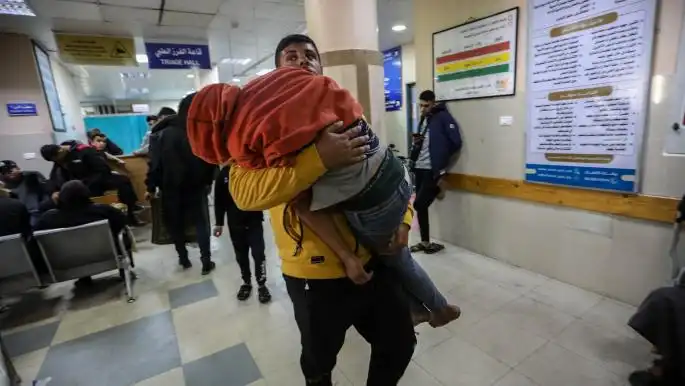
4 children are lying on one bed in the nursery ward of the Emirati Hospital in the city of Rafah. Some of their names are unknown, as there is no contact with their families, and no one is taking care of them except the medical staff, who chose to occupy themselves with providing medical and moral care to them, according to one of the nurses.


The medical staff at the hospital continued to talk about the tragedy of these children, and the necessity of evacuating them from the hospital as soon as possible, so that diseases would not be transmitted to them, whether by taking care of them, as happened with one of them, or by helping to reach their families.


Doctor Diaa Okasha says, “One of the unique and sad cases that we encountered was the story of these four children, as 3 of them were transferred from Kamal Adwan Hospital, and one from Al-Shifa Hospital in Gaza City, due to the siege of hospitals and the depletion of oxygen, and they came to the hospital without their families’ knowledge. Because of the difficulty of communications and the bloody war situation that the Gaza Strip is suffering from.”


Doctors named one of the children “Malak.” She was a 4-month-old girl who was found on a tree trunk in the Al-Sabra neighborhood, southwest of Gaza City. After a night of bloody bombing that targeted the neighborhood, the child arrived without anyone recognizing her at Al-Shifa Hospital. Then, after Al-Shifa was besieged and bombed, she was transferred to the Emirati Hospital in Rafah, south of the Gaza Strip, and she remained there for 3 months, before one of the nurses took care of an “angel” and took her home. To take care of her.


Nurse Malak Badawi also spoke to Al Jazeera Net about the story of the child, Sondos Hamouda, who arrived at the Emirati Hospital. She said, “Sondos arrived to us from Kamal Adwan Hospital in the northern Gaza Strip after the hospital ran out of oxygen, about two months ago, and contact with her family was lost, and we learned that they were killed as a result of the siege and the ongoing brutal Israeli bombing of areas in the northern Gaza Strip."


The nurse adds, "The child's health is good, but if she stays for a longer period in the nursery, her condition will worsen, and she will be exposed to many diseases that she may suffer from in the long term, and she may develop autism, so we are working to have someone adopt her and for her to be discharged outside the hospital."


Dr. Okasha spoke about attempts to contact the children’s families, but to no avail. He commented on the condition of the child Sondos, saying, “Her family were initially in contact with us, and then we lost contact with them and we stopped hearing from them, and we are still searching for them or for someone who brings us closer to them.”


Source: Al Jazeera

ARAB AND WORLD

Sat 17 Feb 2024 8:55 am - Jerusalem Time

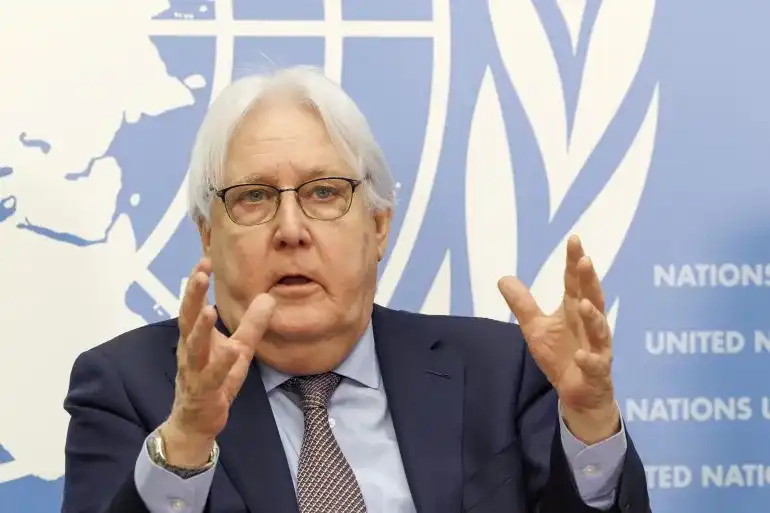
Griffiths: Hamas is not a terrorist organization and the United Nations classifies it as a political movement

UN Relief Coordinator Martin Griffiths said that the Islamic Resistance Movement (Hamas) is not a terrorist organization.


Griffiths added in a television interview broadcast yesterday, Friday, that the United Nations classifies Hamas as a political movement.


The UN official expressed his belief that it is very difficult for Israel to get rid of the armed groups without reaching a negotiated solution that guarantees their aspirations.


In the same interview, Griffiths also expressed his concern about the possibility of Israel launching an attack on the city of Rafah, which includes hundreds of thousands of displaced people from other places in the Gaza Strip.


It is noteworthy that after the Al-Aqsa Flood operation on October 7, Western countries took measures against the Hamas movement, including classifying it as a “terrorist organization” and targeting anyone who sympathizes with it.


Other countries, such as Russia, adopt a different position on Hamas, as they deal with it as a political movement that represents part of the Palestinian people.


Source: Al Jazeera

ARAB AND WORLD

Sat 17 Feb 2024 8:44 am - Jerusalem Time

Macron: Recognizing a Palestinian state is no longer taboo for France

French President Emmanuel Macron said on Friday that recognizing a Palestinian state is no longer taboo for France, indicating that Paris may make the decision if efforts for a two-state solution falter due to opposition from Israel.


However, unilateral French recognition will not do much to change the situation on the ground without real negotiations, but it will have a symbolic and diplomatic impact.


Israeli Prime Minister Benjamin Netanyahu expressed his opposition to Palestinian sovereignty, saying that he would not give up full Israeli security control over the west of the Jordan River, and that this conflicts with the establishment of a Palestinian state.


French lawmakers voted in 2014 to urge their government to recognize Palestine, a symbolic move that had little impact on France's diplomatic stance.


For the first time, a French leader has made such a proposal, and his statements highlight further impatience among Western leaders with the increasing human casualties in Gaza due to the Israeli attack on the Gaza Strip.


While standing side by side with King Abdullah II of Jordan in Paris, Macron said: “Our partners in the region, especially Jordan, are working on this, and we are working with them. We are ready to contribute to it, in Europe and in the Security Council. Recognizing a Palestinian state is not "It's taboo for us."


Macron's comments are likely aimed at increasing pressure on Israel.


The massive Israeli air and ground attack on the small, densely populated Gaza Strip led to the deaths of more than 28,000 Palestinians, the razing of built-up areas, and the leaving of most of the Strip's 2.3 million residents homeless.


While most developing countries recognize Palestine as a state, most Western European countries do not, under the pretext that an independent Palestinian state must emerge from negotiations with Israel.


British Foreign Secretary David Cameron said this month that part of British policy is to say that there will come a time when Britain will look to recognize a Palestinian state, including at the United Nations.


Macron warned that the Israeli attack on Rafah would only lead to an unprecedented humanitarian catastrophe, and would be a turning point in the conflict.


(Reuters, Al-Arabi Al-Jadeed)

PALESTINE

Sat 17 Feb 2024 8:40 am - Jerusalem Time

Israel Bombards Gaza, with Biggest Functioning Hospital Under Siege

Gaza's largest functioning hospital was under siege on Friday in Israel's war with Hamas, leaving patients and doctors helpless in the chaos as warplanes struck Rafah, the last refuge for Palestinians in the enclave, officials said.

Israeli forces remained in Nasser Hospital in the town of Khan Younis after raiding it early Thursday. The Gaza Health Ministry said five intensive care patients died on Friday due to power outages and lack of oxygen supply caused by the attack.

Israel said it moved into the hospital because Hamas militants were hiding there. The Israeli military said on Friday its troops detained more than 20 militants in the hospital who participated in the Oct. 7 attacks on Israel and dozens of others for questioning. Hamas denies there were militants in the hospital, describing the claim as "lies aimed to cover up for destroying hospitals."

The Gaza Health Ministry said the hospital lost power and remained without electricity on Friday, jeopardizing patient care. But the Israeli military said it repaired one generator and provided another, ensuring "all vital systems continued to operate."

Two pregnant women gave birth on Friday “under tough conditions -- no water, no food and no way of warming them up” in cold weather, said ministry spokesman Ashraf Al-Qidra.

The ministry said Israeli forces inside Nasser Hospital forced women and children into the maternity department, which it turned into a military area. Women were not allowed to take any of their belongings.

According to the ministry, Israeli soldiers stopped an aid convoy outside the hospital, which was unable to deliver supplies. The military said it provided aid including baby food and water.

The incursion at the hospital raised alarm about patients, medical workers and displaced Palestinians sheltering there.

"There are still critically injured and sick patients that are inside the hospital," said Tarik Jasarevic, spokesperson for the World Health Organization, which said its staff was trying to reach the hospital after the Israeli raid.

"There is an urgent need to deliver fuel to ensure the continuation of the provision of life-saving services."

About 10,000 people were seeking shelter at the hospital earlier this week, but many left either in anticipation of the Israeli raid or because of Israeli orders to evacuate, the Gaza Health Ministry said.

Israel said its soldiers found ammunition and weapons in the hospital, as well as medication bearing names of some hostages.

At least two released Israeli hostages have said they were held in Nasser, which Hamas has denied.

The war began when Iran-backed Hamas sent fighters into Israel on Oct. 7, killing 1,200 people, mostly civilians, and seizing 253 hostages, according to Israeli tallies.

Israel's air and ground offensive has since devastated much of Gaza, killing 28,775 people, also mostly civilians according to Palestinian health authorities, and forcing nearly all of its more than 2 million inhabitants from their homes.

There is mounting international concern the humanitarian crisis in Gaza could worsen sharply if the Israeli military decides to storm the southern border city of Rafah, where more than half of the densely populated enclave's people are taking shelter in anticipation of a major attack.

An Israeli air strike hit two houses in Rafah in the southern Gaza Strip on Friday, killing 10 people and wounding several others, health officials said.

Rida Sobh, mourning the death of her sister in one of the Rafah strikes, said the house had been totally destroyed in the midnight attack, which also killed all her sister's children, her aunt, husband and cousin.

"Rafah is not safe. Everywhere in the Gaza Strip is a target. Don't say that Rafah is safe. From Beit Hanoun to Rafah, it is all dangerous."


Sat 17 Feb 2024 8:37 am - Jerusalem Time

Vice President Biden: There can be no peace between the Palestinians and the Israelis without the two-state solution

US Vice President Kamala Harris affirmed on Friday at the Munich Security Conference that a two-state solution can be achieved, and this would be the appropriate action for global Israeli and Palestinian peace and security.

Harris also denounced American isolation in her statements to world leaders gathering amid the turmoil in the Middle East and Ukraine, and said: “As President Biden has made clear over the past three years, we are committed to pursuing global engagement to uphold international rules and standards to defend democratic values at home and abroad, and to work with "Our allies and partners in pursuit of common goals."


Vice President Joe Biden was firm in the Biden administration’s position on Israel and its war on Gaza, saying, “The United States is working to end the conflict as soon as possible in a way in which the hostages are released and the humanitarian crisis is resolved, and so that Hamas does not control Gaza, and the Palestinians can enjoy their rights In security, dignity and self-determination.”


In response to a question about whether the two-state solution can be achieved, Harris said: “The short answer is yes... I think it is, but we must put the discussion in context.” Claiming that Hamas committed a “terrorist” act that aimed to slaughter more than 1,200 innocent Israelis, many of whom were young men attending a concert,” claiming that “women were horribly tortured and raped, and were used as a tool of war, and it is important to remember that.” Sources denied Western and Israeli allegations of rape of women during Operation Al-Aqsa Flood, while Israeli investigations indicated that dozens of Israelis were killed by Israeli fire.


She claimed that “the (American) administration was clear that a very large number of innocent people had been killed, and that Israel must do better to protect them,” claiming “the presence of Hamas tunnels under hospitals and what that means in terms of the conflict.”


She added: "We have seen what is happening through the images that we see daily about human suffering and the need for humanitarian aid. The president and I and our administration have been very insistent on the arrival of that humanitarian aid, and we are looking at the circumstances of what is happening."


Harris stressed that "Israel should not reoccupy Gaza after releasing the hostages, and that the Palestinian Authority should be the leader in reforming governance in Gaza." She added: "There cannot, in my opinion, be peace and security for that region, for the people of Israel or for the Palestinians and the people in Gaza, without the two-state solution. And we cannot give up on how we got there. It will be important."


Harris' comments come as Prime Minister Benjamin Netanyahu categorically and publicly rejected the unilateral establishment of a Palestinian state after a 40-minute phone call with Biden early Friday.


Netanyahu wrote in a post on the “X” website: “At the cabinet meeting, I made clear my position regarding the recent talk about imposing a Palestinian state on Israel.”


He added: "These two sentences summarize my position. Israel categorically rejects international dictates related to permanent arrangements with the Palestinians. Such an arrangement will only be reached through direct negotiations between the two parties without preconditions."

PALESTINE

Sat 17 Feb 2024 8:13 am - Jerusalem Time

West Bank: Israeli forces storm several areas in the West Bank and launch an arrest campaign

The Israeli forces stormed several areas in the occupied West Bank at dawn on Saturday and launched an arrest campaign.


Jenin


The Israeli forces arrested, at dawn on Saturday, workers from the Gaza Strip in the isolated town of Barta'a behind the apartheid wall.


The mayor of Barta'a, Ghassan Qabha, said that the Israeli forces arrested about 20 workers from the Gaza Strip after they raided the residential building in which they reside.


The Israeli forces stormed the village of Al-Jalama and the town of Jalboun, northeast of Jenin.


Local sources reported that several Israeli military vehicles stormed Al-Jalama and Jalboun, and roamed several streets and neighborhoods there, but no arrests were reported.


Nablus


At dawn on Saturday, the Israeli forces arrested a woman from the city of Nablus and stormed the town of Burin in the south.


Local sources confirmed that several Israeli military vehicles stormed the city from the direction of Jabal al-Tur, and were stationed in the Al-Taawoun area and on Beit Iba Street in the city, and arrested Mrs. Umm Walid Al-Hazam, after raiding her family’s home, searching it, and tampering with its contents.


The sources indicated that the Israeli forces stormed the town of Burin and Iraq Burin, and drove their vehicles through its streets.


Local sources reported that the Israeli forces stormed the city of Nablus from its western axis, raided several homes in the town of Beit Iba, and arrested citizen Shorouk Hizam.


The Israeli forces stormed the village of Al-Nasariya, east of Nablus.


Local sources reported that the occupation forces stormed the village with several vehicles from the Hamra checkpoint, while the occupation soldiers raided several homes.


Bethlehem


The occupation forces arrested a young man from Al-Azza Camp, north of Bethlehem.


A security source told our correspondent that the occupation forces arrested Ibrahim Raed Al-Azza (20 years old), after they raided and searched his house.


PALESTINE

Sat 17 Feb 2024 8:13 am - Jerusalem Time

War on Gaza: 83 Palestinians killed and 125 injured in the Gaza Strip during the past 24 hours

The Israeli army committed 9 massacres against families in the Gaza Strip, which led to the death of 83 citizens and the wounding of 125 others during the past 24 hours.


Medical sources reported today, Saturday, that a number of victims are still under the rubble and on the roads, as the occupation prevents ambulance crews and civil defense from reaching them.


It confirmed that the death toll from the Israeli aggression on the Gaza Strip since October 7 had risen to 28,858, and the wounded to 68,677.


The aggression continues on the Gaza Strip. Concerns about the status of the Nasser Complex


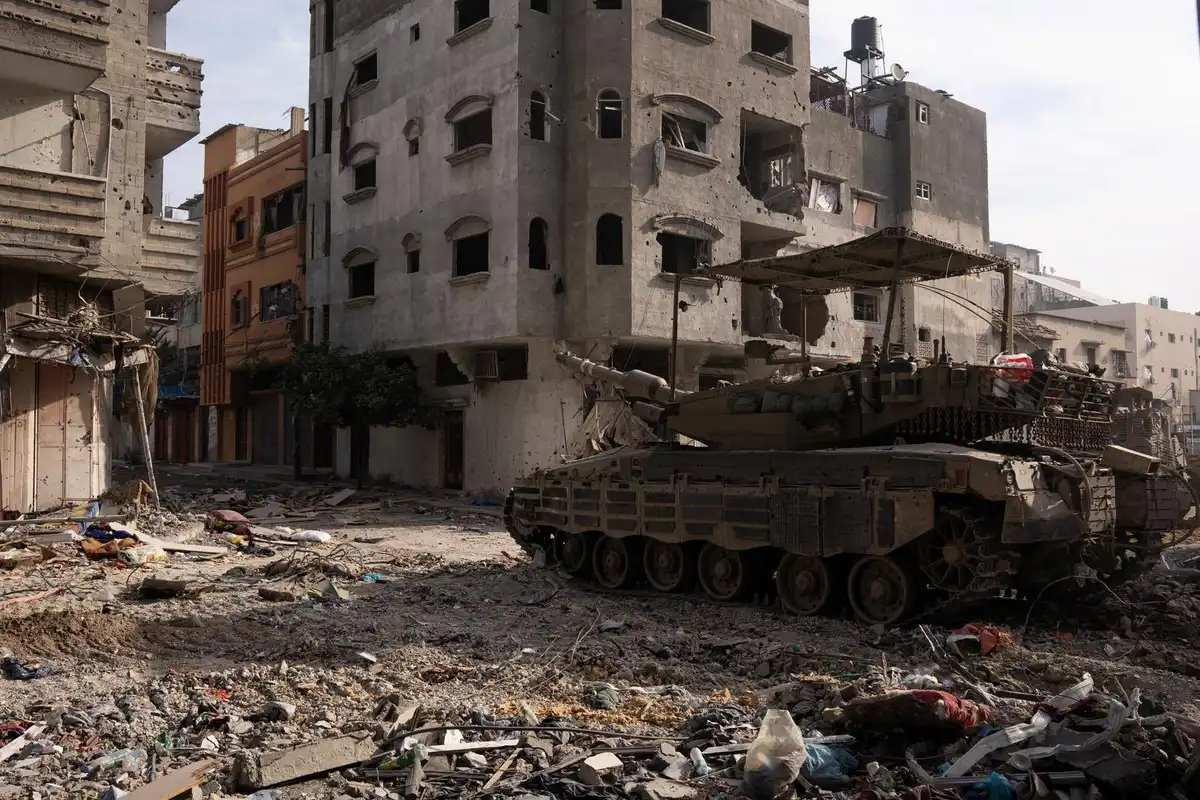
The Israeli aggression on the Gaza Strip has entered its 134th day amid growing concern about the situation of patients trapped in the Nasser Medical Complex in the city of Khan Yunis, which the occupation stormed and turned into a "military barracks."


While the Ministry of Health in the Gaza Strip announced the death of a large number of wounded and sick people due to lack of oxygen, the United Nations High Commissioner for Human Rights considered that the Israeli storming of the Nasser complex appeared to be “part of a pattern of attacks launched by Israeli forces on basic life-saving civilian infrastructure in Gaza especially hospitals."


The Palestinian resistance continues to confront Israeli incursions into various areas of the Gaza Strip, especially in the city of Khan Yunis, where fierce battles are witnessed between the resistance fighters and the occupation forces.


Regarding the possible Israeli operation in the city of Rafah, the Israeli Foreign Minister Yisrael Katz said during the Munich Security Conference that Israel will coordinate with Egypt before the military operation in Rafah.


On Thursday, the Wall Street Journal quoted Egyptian officials and security analysts as saying that Egypt is building a fenced camp in Sinai in anticipation of receiving Palestinian refugees from the Gaza Strip.


The United Nations High Commissioner for Refugees, Filippo Grandi, stressed on Friday that "an additional refugee crisis would be tantamount to a death sentence for a future peace process."


For its part, the United Nations Relief and Works Agency for Palestine Refugees (UNRWA) revealed that 84% of health facilities in the Gaza Strip were affected as a result of the Israeli aggression.


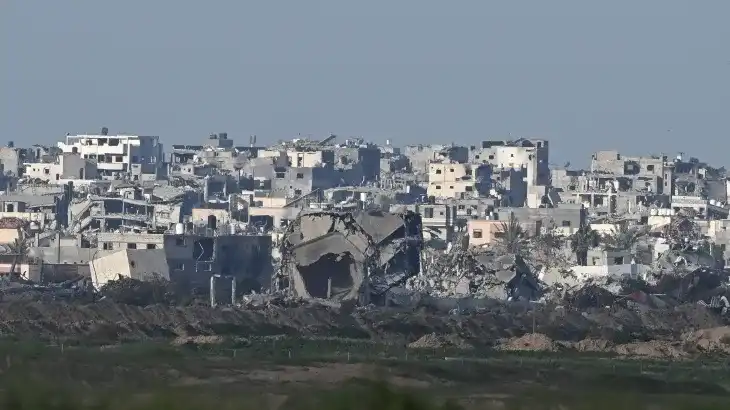
The agency published on the “X” platform footage showing the destruction of civilian infrastructure in the Strip, including some of its health centers, noting that in addition to the damage to health care facilities, more than 70% of all civilian infrastructure had been “destroyed or exposed.” "Severe damage," she stressed, "there is no safe place."


ARAB AND WORLD

Sat 17 Feb 2024 6:24 am - Jerusalem Time

American envoy: Israel killed Palestinian police officers who were guarding Gaza aid

David Satterfield, the United States special envoy for humanitarian issues in the Middle East, said on Friday that earlier this month, Israeli forces killed members of the Palestinian police who were guarding a United Nations aid convoy in the besieged city of Rafah in the southern Gaza Strip.


Satterfield, the senior American diplomat involved in providing humanitarian aid to Gaza, added that the Palestinian police, as a result, refuse to protect the convoys, which hinders the delivery of aid inside Gaza due to threats that he described as from “criminal gangs.”


He went on to say, at an event hosted by the Washington-based Carnegie Endowment for International Peace, “With the departure of the police guard, it has become virtually impossible for the United Nations or any other party, whether Jordan, the Emirates, or any other implementing party, to safely transport aid to Gaza because of the groups.” (..).


Satterfield said that the guard force included members of the Islamic Resistance Movement (Hamas) as well as individuals who had no direct connection to the armed group.


The Israeli army has not yet commented on Satterfield's statements.


Most of Gaza's 2.3 million residents were displaced due to the Israeli war on Gaza.


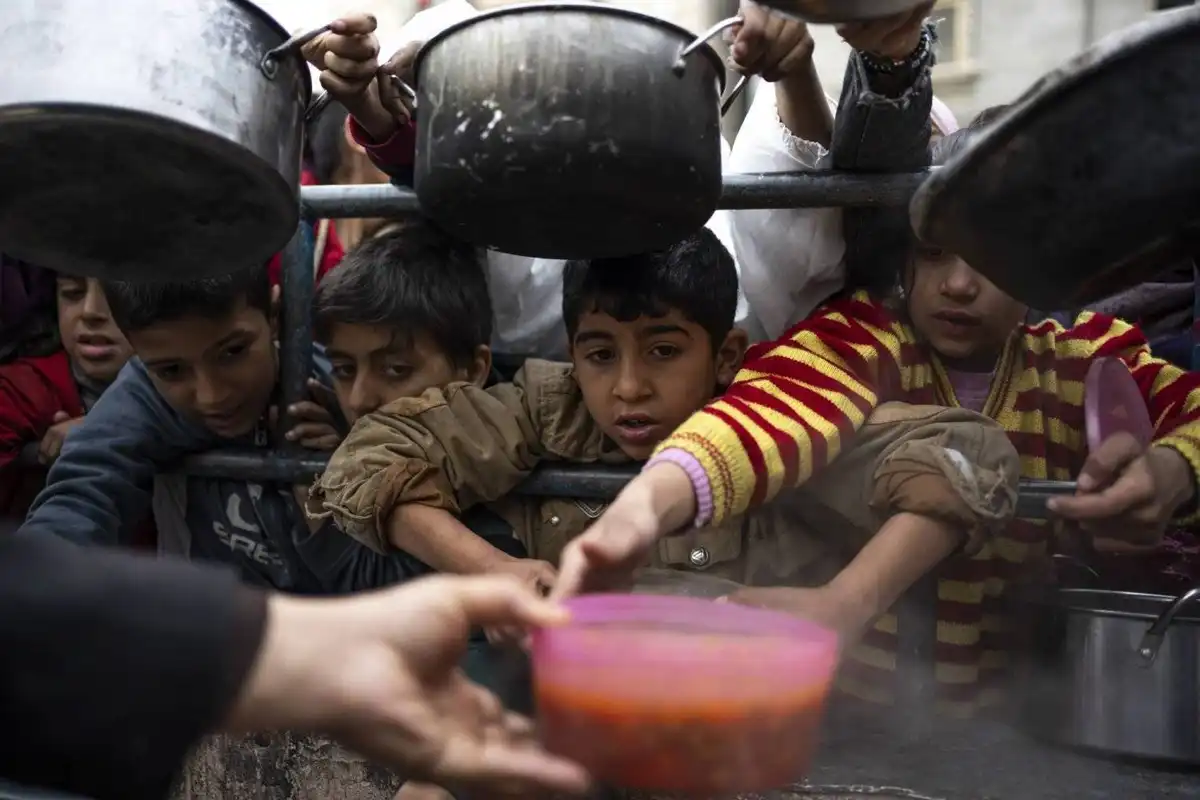
Israeli bombing and fighting destroyed vast areas of the Strip and caused a humanitarian catastrophe that raised fears among relief groups of famine. The United Nations says Israeli forces are obstructing aid.


Satterfield was asked about the veracity of a report that Israeli forces killed “Hamas individuals” protecting a UN aid convoy in Rafah earlier this month.


The American envoy replied, “Ten days or two weeks ago, the Israeli army targeted seven, eight, or nine police officers, including a commander whose units were involved in providing security.”


Satterfield said that such guarding was necessary because of attacks on aid convoys, first by “desperate” Palestinians and also by “criminal groups.”


He added that the police “certainly include members of Hamas.” It also includes individuals who have no direct association with Hamas and are there as part of the remnants of the security presence of the Western-backed Palestinian Authority, which exercises limited rule in the occupied West Bank.


On February 10, Hamas and Gaza medics said that two waves of Israeli air strikes killed five members of the Hamas-run police force in Rafah, including a senior officer. On the same day, the Israeli army said it killed three Hamas militants in Rafah, including two senior members in the area.


It was not clear if Satterfield was referring to the incident that occurred on February 10. Hamas did not say that it had stopped police escorting aid convoys.


Satterfield said that the United States is working with the Israeli army and government to present “solutions that can be found because everyone wants the aid to continue.”


Satterfield stated that in addition to the threat posed by groups (..), the distribution of aid is being hampered by the “increasing value of humanitarian aid” leaking onto the black market.


He denied allegations that Hamas is stealing aid and commercial shipments to Gaza, saying that no official from Israel or the Biden administration has provided “specific evidence of the diversion or theft of aid.”


But he continued, Hamas uses other channels to deliver aid “to determine where and to whom the aid goes.”

ARAB AND WORLD

Fri 16 Feb 2024 10:27 pm - Jerusalem Time

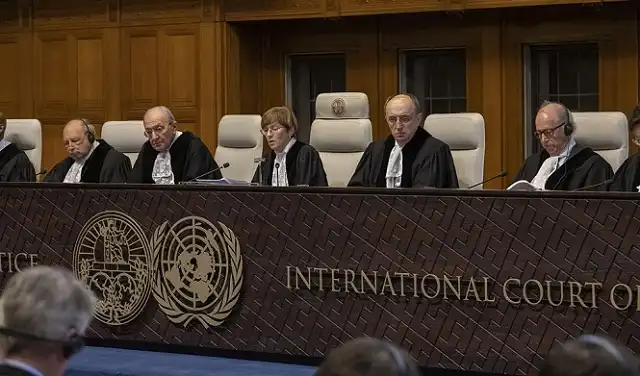
International Justice rejects South Africa's request regarding Rafah and urges Israel to comply with its obligations

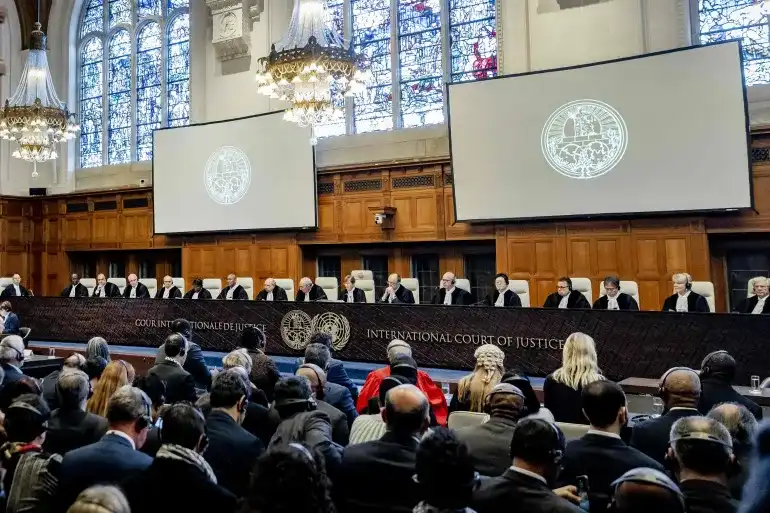
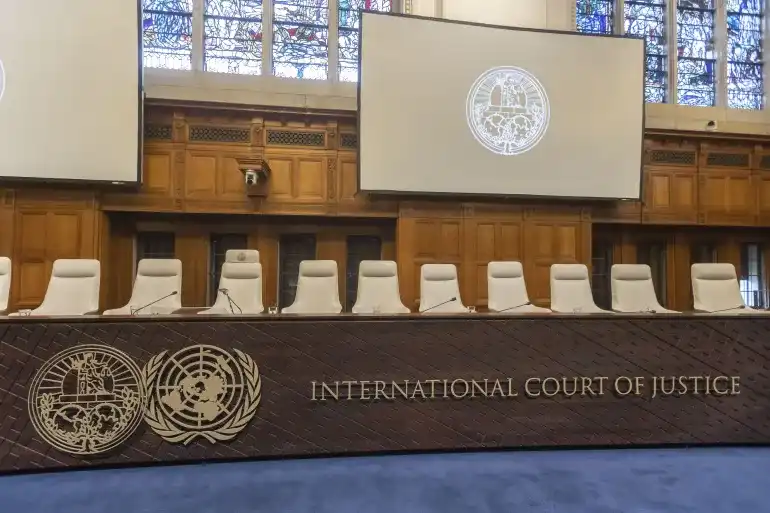
In its decision issued this evening, Friday, the International Court of Justice rejected an urgent request submitted by South Africa to take further measures against Israel, especially in light of the threat of a military operation in Rafah, south of the Gaza Strip.


The international justice’s decision stated, “The developments, especially in Rafah, would greatly increase what is considered a humanitarian nightmare with untold consequences,” noting that “the dangerous situation in Gaza requires immediate implementation of the measures referred to in the order issued on January 26.” .


It added, "Israel remains obligated to comply with the Genocide Convention, including ensuring the safety of Palestinians in Gaza."

PALESTINE

Fri 16 Feb 2024 6:06 pm - Jerusalem Time

War on Gaza: Death toll rose to 28,775 killed, and the continuation of bombing of various areas

The number of killed in the Gaza Strip has risen to 28,775, the majority of whom are women and children, while the number of injured has exceeded 68,552, since the start of the Israeli war on the Gaza Strip on October 7, according to what the Ministry of Health in the Strip confirmed today, Friday.


This comes as the Israeli occupation continues, on the 133rd day of the war on the Gaza Strip, its threats to storm the city of Rafah, hinting that it is planning a major military operation.


In Khan Yunis, the occupation forces forced the administration of the Nasser Medical Complex to place 95 health personnel, 11 of their families, 191 patients, and 165 companions and displaced people in the old Nasser building, in harsh and frightening conditions, without food, without baby formula, and an acute water shortage. The power outage and the cessation of oxygen in Nasser Hospital after the Israeli army stormed it, resulted in the death of 4 patients in the hospital.


In the midst of fierce battles and clashes in the Gaza Strip, occupation warplanes bombed civilian homes in the city of Rafah, south of the Strip, during the night hours, killing 15 people and wounding others.


ARAB AND WORLD

Fri 16 Feb 2024 4:38 pm - Jerusalem Time

Netanyahu challenges the world and insists on storming Rafah and creating an unprecedented humanitarian disaster

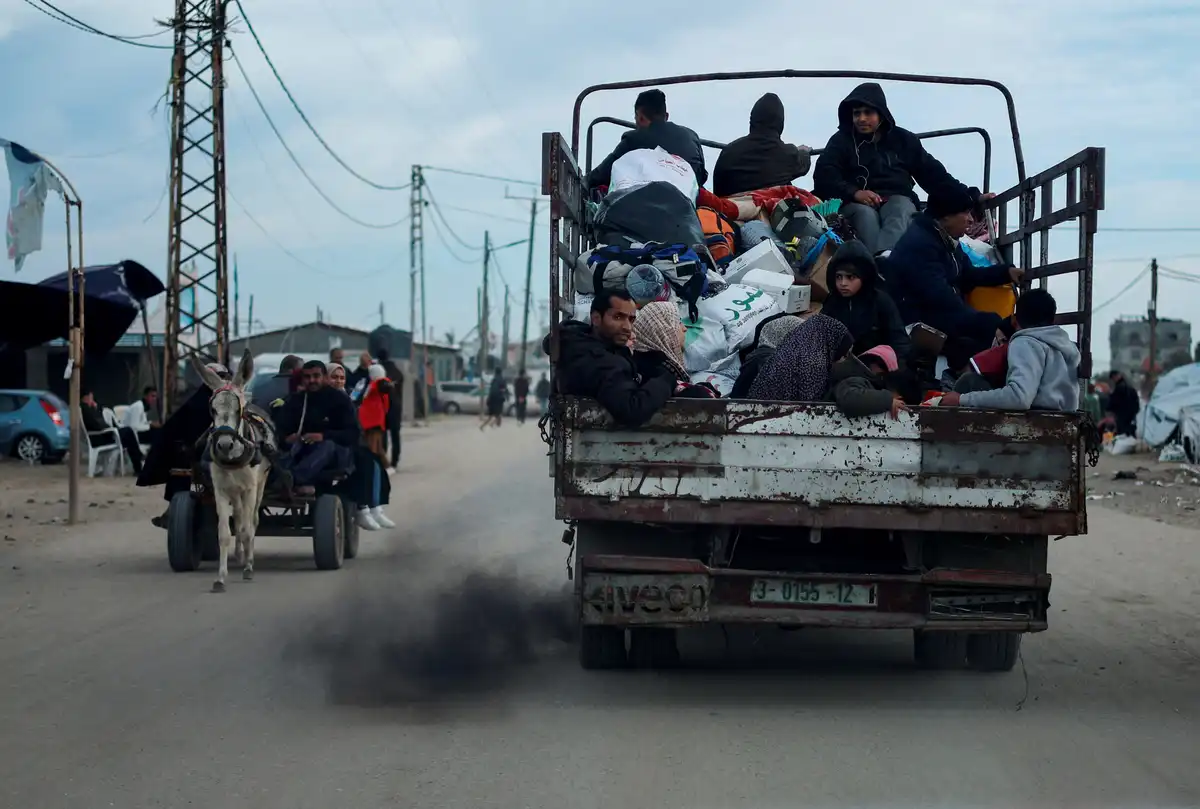
The past few days have witnessed a noticeable increase in warnings from multiple sources about the consequences and danger of the Israeli occupation forces storming the besieged city of Rafah, which is crowded with about 1.4 million Palestinians, most of whom are displaced people who went to the city in response to the instructions of the Israeli occupation authorities themselves after those forces destroyed most of the Gaza Strip, as international organizations, human rights advocates and even a growing number of Western leaders urge Israel to refrain from launching a large-scale ground assault on the crowded city.


The White House said in a statement Thursday that President Joe Biden spoke (Thursday) with Israeli Prime Minister Benjamin Netanyahu, and discussed with him the ongoing negotiations regarding the hostages.


The statement, a copy of which was received by Jerusalem, said: “The President reaffirmed his commitment to work tirelessly to support the release of all hostages as quickly as possible, recognizing their horrific situation after 132 days in Hamas captivity. The President and Prime Minister also discussed the situation in Gaza, and the urgent need to ensure Humanitarian aid reaches Palestinian civilians who are in dire need of it.”


According to the statement, “President (Biden) raised the situation in Rafah and reiterated his view that the military operation should not continue without a credible and implementable plan to ensure the safety and support of civilians in Rafah,” noting that such a concrete plan, at present, does not exist: Talk of “safe zones” along the coast in an area known as Al-Mawasi has proven to be mostly theoretical, with civilians languishing in squalid conditions without reliable access to shelter or food.


In a phone call on Wednesday with Israeli Prime Minister Benjamin Netanyahu, French President Emmanuel Macron said Israel risked a “humanitarian catastrophe of a new magnitude.” A joint statement by the leaders of Australia, Canada and New Zealand said that "the military operation in Rafah would be disastrous" and called on Israel to "listen to its friends." The prime ministers of Spain and Ireland wrote to the authorities in Brussels, suggesting that Israel may be violating the Association Agreement with the European Union and demanding an “urgent review.”


United Nations officials said that the possibility of flagrant violations of international law and possible war crimes is rising in the Israeli war on Gaza, which has so far caused the death of at least 28,000 Palestinian citizens, most of them women and children, and the destruction of a large portion of Gaza’s civilian infrastructure. Alice Wairimu Nderitu, the UN Special Adviser on the Prevention of Genocide, said in a statement that “the risk of atrocity crimes being committed in the event of a full military incursion into Rafah is serious, real and high.”


In turn, Martin Griffiths, the United Nations' chief humanitarian affairs official, said that the possibility of an Israeli ground attack puts the international organization's relief operations at "death's door" and could lead to a massacre of civilians. He added, "The international community warns of the dangerous consequences of any ground invasion in Rafah," and that "the Israeli government cannot continue to ignore these calls, as history will not be kind."


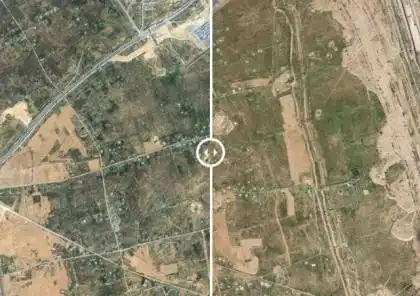
For its part, Egypt has reportedly fortified its border with Gaza and does not want to see a million Palestinian refugees flocking in — because of its security concerns, but also because of long-standing Arab fears that this would facilitate the forced displacement and ethnic cleansing of Palestinians from Gaza at the hands of Israel. (The Washington Post published Thursday that satellite images show that Egypt has cleared and erected a concrete wall around a large plot of land along the border, raising speculation that this may be the site of a possible refugee camp.)


The newspaper quotes a former Egyptian official as saying: “If tens of thousands of Palestinians cross the border as a result of the attacks [in Rafah], do you think the Egyptian army will shoot them? The answer is no.” "Any responsible government has to think: Well, if we have the worst-case scenario, how are we going to deal with that?"


The American, Arab and Israeli interlocutors are still debating over a possible agreement with Hamas that could see at least a temporary cessation of fighting and the release of Israeli hostages still being held by the movement. Netanyahu has dashed the possibility of achieving a diplomatic breakthrough, saying that Hamas’ demands are “fake” and vowing to eliminate the movement.


Netanyahu said on Wednesday: “We will fight until complete victory, and this includes strong action also in Rafah after we allow the civilian population to leave the combat areas.”


Some experts believe there is speculation that "Netanyahu's threats against Rafah are a diplomatic ploy aimed at pressuring Hamas to accept the deal." The departure of the Israeli negotiating team from the talks in Cairo on Tuesday angered the families of the hostages inside Israel. Small protests against Netanyahu and his war government took place throughout the week, according to Israeli media, which also said that Netanyahu frustrated the White House by refusing to enter into serious discussions about the post-war scenario.


It is noteworthy that several American sources spoke this week about the Biden administration’s vision, with implicit support from a number of influential Arab governments, for a major deal that would provide for the reconstruction of Gaza, revive the political path to establish a Palestinian state, and Israel’s deeper integration into the region.


But there are doubts whether Israel will accept such a deal, and whether its government will acquiesce to much of what is being discussed: the dismantling of many, if not all, of the settlements in the occupied West Bank; Establishment of a Palestinian capital in East Jerusalem; and the reconstruction of Gaza; and security and governance arrangements for the West Bank and Gaza combined, knowing that the hope that Israel will also obtain specific security guarantees and normalization with Saudi Arabia and other Arab countries may be difficult to reject.


It is noteworthy that Netanyahu's office responded on Wednesday, rejecting any talk about such an agreement, as Netanyahu has always opposed the establishment of a sovereign Palestinian state alongside Israel.


Serious analysts, including a member of Netanyahu's war cabinet, believe that Israel will never be able to completely eliminate Hamas. But it is causing untold harm to civilians and sparking a humanitarian crisis unprecedented in scope and speed. Critics also blame the Biden administration, which is unwilling to use its influence to rein in Netanyahu.

ARAB AND WORLD

Fri 16 Feb 2024 4:26 pm - Jerusalem Time

The Wall Street Journal: Biden shouted at Netanyahu and hung up.. America is considering imposing sanctions against Ben Gvir and Smotrich

The Wall Street Journal revealed an unusual conversation that prompted US President Joe Biden to hang up the phone in the face of Israeli Prime Minister Benjamin Netanyahu.


It was reported that the Americans are considering legislation for a “package” that would send a strong message to Netanyahu - but so far - they have not implemented it.


According to the American newspaper, last January, the Biden administration considered activating a “package” aimed at sending a strong message to Israel. The package, according to US officials familiar with the details, included a change in two policies, one allowing Israeli products from the settlements to be identified as made in Israel, and that the settlements constitute a violation of international law.


In addition, the US government is also considering imposing sanctions on Ministers Bezalel Smotrich and Itamar Ben Gvir. In the end, it was decided to impose sanctions on only four settlers, which also led to Israeli anger.


Netanyahu and Biden have spoken 18 times since the outbreak of the war, and according to American and Israeli officials, the relationship reached a boiling point about a month and a half ago, when Biden unexpectedly broke off the conversation with the prime minister after a disagreement and heated discussion about the civilians killed in Gaza, and about Washington’s position on the necessity of passing the peace agreement. Israel is in a phase of war and the focus is on surgical operations.


According to the report, Biden was so angry that he nearly screamed during a call on December 28, declaring the call over and hanging up on Netanyahu.


Washington made it clear that the United States would not support any plan for a large-scale invasion of Rafah, which angered many countries around the world, and that it preferred to carry out specific operations.


According to the sources, the US administration asked the Israeli army to prepare “a plan if it decided to ignore Washington’s advice and enter a city where there are more than a million refugees.”


Tensions between Biden and Netanyahu have been rising for months. In mid-December, Biden angered Netanyahu when he told his campaign fundraisers that Israel was starting to lose support around the world because of its “indiscriminate bombing” of Gaza. At the same event, Biden recalled something he once said to Netanyahu, whom he has known for nearly 50 years: “I told him: Bibi, I love you, but I don’t agree with anything you have to say.”

Source: Maan News

ARAB AND WORLD

Fri 16 Feb 2024 4:20 pm - Jerusalem Time

Israel calls on international justice to reject South Africa's request regarding Rafah

Israel asked the International Court of Justice to reject a request submitted by the South African government two days ago to use its full authority to stop the military operation that Israel plans to launch in the city of Rafah in the southern Gaza Strip.


In documents published by the International Court of Justice on Thursday, Israel said that the emergency measures issued three weeks ago already cover “the situation of hostilities in Gaza as a whole,” and the court must reject South Africa’s request.


The Israeli army intends to expand the scope of its ground invasion of the Gaza Strip to include the city of Rafah, where more than a million Palestinians have taken refuge to escape the Israeli aggression on the north and center of the Strip.


Last month, the International Court of Justice ordered Israel to take all measures in its power to prevent its forces from committing genocide against the Palestinians in the Gaza Strip, as part of a lawsuit filed by South Africa.


Israel denied all accusations of genocide in its war on the Gaza Strip. It is not yet clear when the judges will make a decision on the new request submitted by South Africa, or whether they will call for additional hearings to consider it.


Israel launched an aggression against the Gaza Strip, which left tens of thousands of martyrs and wounded, most of them children and women, in addition to an unprecedented humanitarian catastrophe and massive destruction of infrastructure, which led to Tel Aviv appearing before the International Court of Justice to be tried on charges of “genocide” for the first time in its history.


Determining whether Israel is indeed violating the Genocide Convention with its military campaign will likely take months, if not years.


Source: Reuters

OPINIONS

Fri 16 Feb 2024 4:15 pm - Jerusalem Time

While Israel Continues the War in Gaza, Another War Looms

Newsweek

Newsweek

Opinion Writer

By Daniel R. DePetris

This week, U.S., Israeli, Egyptian, and Qatari officials met in Cairo to continue discussions on how to hammer out a truce in Gaza. As one might expect, getting Israel and Hamas onboard a plan they can both accept is turning out to be the diplomatic equivalent of the world's most painful root-canal. President Joe Biden has told Americans that he's working around the clock to cement a deal that stops the fighting, frees the rest of the hostages in Hamas' custody, and increases humanitarian aid shipments into the coastal enclave.

The wrench in the gears is that everybody at the table has a different interpretation of a good deal. Israeli Prime Minister Benjamin Netanyahu's government has offered Hamas a six-week cessation of hostilities and more Palestinian prisoner releases in exchange for the remaining hostages, numbered at 136. Hamas is willing to release the hostages, but only on its terms. The Islamist group came back with a draft proposal of its own, a three-stage plan that would be implemented over a period of four and a half months and result in Israel releasing hundreds of Palestinian prisoners (including senior militants), withdrawing from Gaza and ending the war permanently. Netanyahu strongly opposed Hamas' framework, calling it "delusional."

It's not a surprise that the talks in Egypt adjourned without significant movement. That's the bad news. The good news is that despite what looks like an imminent Israeli military offensive into the southern Gaza city of Rafah, where more than half of the entire territory's population now resides, talks haven't broken down yet.

For the sake of Gaza's people, one can only hope the negotiations succeed. Success could also have a positive effect on another conflict more than 100 miles to the north, where the Israel Defense Forces (IDF) and Hezbollah have been shooting at each other nearly every day for more than four months. On Feb. 14, Hezbollah fired rockets near the Israeli city of Safed, killing one. The Israelis responded immediately, launching airstrikes on multiple Hezbollah positions in southern Lebanon. Hezbollah's attack came days after Israel attempted to assassinate a Hezbollah commander as he was driving in his car.

Israeli politicians and military officers are increasingly impatient with the way things stand and have warned Hezbollah that Israel's northern border will be secured one way or another. "The dozens of aircraft currently operating in the skies of Lebanon are only part of our capabilities," Israeli Air Force Major General Tomer Bar said on Feb. 8, before the latest Israeli fatality. "Once the order is given, my intention is for these dozens to become hundreds of aircraft capable of executing all missions within minutes, from launching operations over the skies of Lebanon."

The subtext is clear: If Hezbollah won't move out of the border region on its own, then Israel will do it for them. The Biden administration would be making a mistake if they thought this was bluster. Having tens of thousands of Israeli civilians unable to return to their homes in the north is a politically unsustainable for Netanyahu, who continues to get slammed by his more right-wing ministers to stop dithering like a scared schoolboy. If it wasn't for President Biden, it's possible Netanyahu would have approved a large-scale offensive against Hezbollah already.

Such an operation would be disastrous for all involved. The U.S. intelligence community assesses that Israel couldn't successfully manage a second war when most of the Israeli military establishment is tied up in Gaza. While there's no doubt Hezbollah would have be dealt a blow, there's also no doubt that millions of Israeli civilians would be forced into bomb shelters. At 150,000 missiles, Hezbollah's arsenal is far more sophisticated and of longer range than what the various Palestinian militant groups have at their disposal. Casualties in Israel would be high and the number of Lebanese killed in any full-scale war would likely be far worse.

It's not like Israel hasn't gone into Lebanon before. The list of Israeli military operations in this small Arab-majority country is long. In 1978, the Israeli army swept into southern Lebanon to clear the area of Palestinian militants. In 1982, Israel conducted a full-scale invasion of Lebanon, which took Israeli troops all the way to Beirut, pushed Palestine Liberation Organization leader Yasser Arafat into exile, and ended with the establishment of a buffer zone in the south the IDF would go on to occupy for the next 18 years. Israel and Hezbollah have fought three wars since the early 1990s, with one of them, in 2006, ending in a draw.

The so-called Second Lebanon War is commonly thought of as an Israeli military failure. But it managed to establish an unwritten understanding between Israel and Hezbollah that persisted for the last 17 years. Deterrence has largely held, in large part because Israel and Hezbollah had no wish to re-live the experience.

The Oct. 7 Hamas attack in Israel changed the calculus somewhat. Hezbollah has tried to balance its desire to support Hamas with the need to avoid another war with Israel. But this is a fine balance to tread, and it's based in large part on a party, Israel, that is undergoing a tremendous stress of its own.

PALESTINE

Fri 16 Feb 2024 4:08 pm - Jerusalem Time

Israel’s war on Gaza: List of key events, day 133

Israeli forces storm Nasser Hospital in southern Gaza, with hundreds of staff, patients trapped under heavy fire.


Here’s how things stand on Friday, February 16, 2024:


Humanitarian crisis in Gaza

  • Israeli forces stormed Nasser Hospital’s main building in southern Gaza, hours after Israeli fire killed a patient and wounded six others inside the complex.
  • This is the latest Israeli assault on hospitals, where Israeli forces claim Hamas fighters are basing themselves, throughout the Gaza Strip.
  • The raid on Nasser Hospital came after troops had besieged the facility for nearly a week. Hundreds of staff, patients and refugees remain trapped inside, struggling under heavy fire and dwindling supplies, including food and water.
  • Daniel Hagari, spokesman for the Israeli military, said the raid on Nasser Hospital has led to the arrest of dozens of “terrorists”.
  • In the hospital, he said, they found weapons including mortars and grenades in the possession of the people they arrested. Hagari said some of those detained, including an ambulance driver, were involved in the October 7 attack inside Israel.
  • The United Nations agency for Palestinian refugees (UNRWA) has shared footage showing the destruction in Gaza City caused by Israel’s war against Hamas, and said that 70 percent of civilian infrastructure has been destroyed or severely damaged.

Regional tensions and diplomacy

  • US President Joe Biden has reiterated his warning to Israel not to go ahead with its planned assault on Rafah without a credible plan to ensure the safety of more than a million Palestinians sheltering in the city, according to the White House.
  • Separately, in Lebanon, armed group Hezbollah said it had fired dozens of rockets at a town in northern Israel in response to air raids that killed at least 10 civilians and three Hezbollah fighters in southern Lebanon.
  • France has delivered a written proposal to Beirut aimed at ending hostilities with Israel and settling the disputed Lebanon-Israel frontier, according to a document seen by Reuters.
  • In Egypt, satellite images from February 15 show the construction of a wall along the Egypt-Gaza border. Egypt has vehemently rejected the forced displacement of Palestinians into its territory, and has denied that it is preparing for an influx of Palestinians being pushed into the Sinai peninsula.
  • Meanwhile, Qatar’s Ministry of Foreign Affairs has also said that an aircraft carrying humanitarian aid for Palestinians in Gaza has arrived at the El Arish airfield in the north of the Sinai desert in Egypt.

Occupied West Bank

  • The Israeli military carried out an “arrest campaign” in the town of Silat ad-Dhahr, south of Jenin in the occupied West Bank, the Wafa news agency reported.
  • Israeli forces raided more than 15 homes and “arrested dozens of young men” in the town, Wafa said.
  • Elsewhere in the occupied West Bank, Israeli forces have arrested a man from the town of Anabta, east of Tulkarem, while a man has also been arrested in the city of Qalqilya.


SOURCE: AL JAZEERA AND NEWS AGENCIES

PALESTINE

Fri 16 Feb 2024 4:07 pm - Jerusalem Time

West Bank: A Palestinian sheep shepherd was injured after Israeli settlers attacked him north of Al-Bireh

A citizen was injured today, Friday, as a result of settlers attacking him while he was grazing his sheep in the city of Al-Bireh.


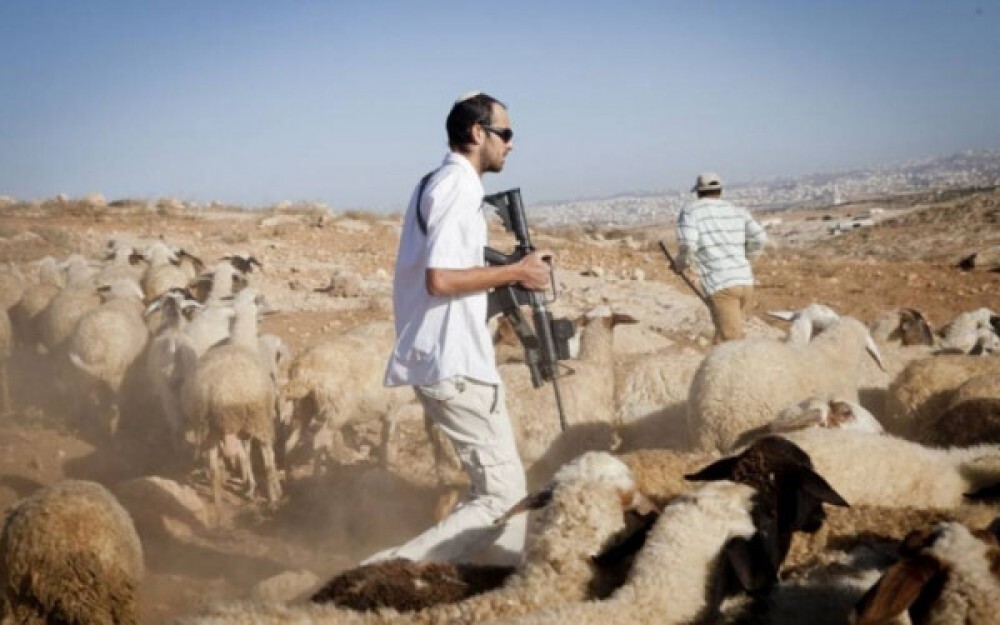
Local sources reported that a number of settlers assaulted a citizen by beating him, while he was grazing his sheep, near the “Sidi Shiban Shrine” northeast of the city, which led to him sustaining bruises and wounds.

-

PALESTINE

Fri 16 Feb 2024 4:03 pm - Jerusalem Time

War on Gaza: Five patients died due to running out of oxygen in Nasser Hospital

Today, Friday, the Ministry of Health in the Hamas government announced the death of five Palestinians due to a lack of oxygen due to the stoppage of electrical generators, the day after the Israeli occupation forces stormed Nasser Hospital in Khan Yunis in the Gaza Strip.


It said in a statement: “We fear that six more patients in intensive care and three in the children’s nursery will die at any moment, and we hold the Israel responsible for the lives of patients and staff, given that the complex is under its complete control.”


For its part, the World Health Organization announced that it is trying to deliver fuel to Nasser Hospital, after the Israeli operation, to ensure the continued provision of life-saving services, and its spokesman, Tarik Jašarević said: “There are still patients and seriously injured people inside the hospital.”


The Israeli army surrounded the hospital for about a week, causing the quantities of food, water and supplies to dwindle inside, while the fire killed many people, according to health officials in Gaza.


Yesterday, Thursday, the army stormed the hospital in an operation that killed a patient and injured six inside, and searched its medical facilities. The Ministry of Health in Gaza stated that "during the inspection, Israeli forces ordered more than 460 employees, patients and their relatives to move to an old building in the complex that was not equipped to treat patients, knowing that they were facing harsh conditions due to an acute shortage of food, water, and infant formula." The Ministry of Health appealed to UN institutions to intervene quickly to save them.

ARAB AND WORLD

Fri 16 Feb 2024 3:55 pm - Jerusalem Time

Russia invites Hamas, other Palestinian factions for talks

Russia has invited Hamas and other Palestinian factions including Fatah to Moscow for talks on the Israel-Hamas war and other issues in the Middle East, an official said Friday.


Moscow, which for years tried to court good relations with all major players in the region, has grown increasingly critical of Israel and its Western backers amid the ongoing war in Gaza.


Russia has invited around a dozen Palestinian groups to Moscow for “inter-Palestinian” talks from February 29, the state-run TASS news agency reported, citing Deputy Foreign Minister Mikhail Bogdanov. “We invited all Palestinian representatives - all political forces that have their positions in different countries, including Syria, Lebanon and other countries in the region,” said Bogdanov, who is President Vladimir Putin’s special envoy for the Middle East.


They include Hamas and the Palestinian Islamic Jihad, alongside representatives of Fatah and the broader Palestine Liberation Organization (PLO).The war in Gaza was triggered by Hamas’s October 7 attack on Israel that resulted in the deaths of about 1,160 people, mostly civilians, according to an AFP tally based on official Israeli figures.

At least 28,775 people, mostly women and children, have been killed in Israel’s retaliatory military offensive on Gaza, according to the health ministry in the Hamas-run territory.


Putin has called for a ceasefire and Moscow has repeatedly criticized Israel’s conduct in the Gaza Strip since the October 7 attack.


The public statements, combined with Russia’s partnerships with Iran and Hamas, have soured Russian-Israeli relations since the conflict broke out.

Source: Reuters+ Alarabya

ARAB AND WORLD

Fri 16 Feb 2024 3:45 pm - Jerusalem Time

Israel faces a new case before the International Court of Justice

Human Rights Watch said that an unprecedented number of countries and international organizations are expected to participate in the oral hearings to be held by the International Court of Justice regarding the 57-year-old Israeli occupation of the Palestinian territories.


As of February 19, 52 countries and 3 international organizations are participating in the oral hearings, a greater number than any other case since the highest court in the world began its work in 1946.


Human Rights Watch considered that the broad participation “reflects the growing global momentum to address the decades-long failure to ensure respect for international law in the occupied Palestinian territory.”


Clive Baldwin, senior legal advisor at Human Rights Watch, said that the Court of Justice “will, for the first time, consider on a large scale the legal consequences of the nearly six-decade Israeli occupation and mistreatment of the Palestinian people. Governments presenting their arguments to the Court must seize these historic hearings to highlight the grave violations committed by the Israeli authorities against the Palestinians, including crimes against humanity represented by apartheid and persecution.


Advisory opinion

The organization explained that the upcoming sessions come in response to a request submitted by the United Nations General Assembly in December 2022 to obtain an advisory opinion from the court regarding the legal consequences of Israel’s policies and practices in the occupied Palestinian territory.


It indicated that the sessions will constitute an opportunity to consider Israel's practices and policies that violate the international legal prohibition against racial discrimination, including crimes against humanity represented by apartheid and persecution, and to evaluate the legal responsibilities of other countries and the United Nations to address those violations.


Human Rights Watch said that although the opinions of the International Court of Justice are non-binding, they can carry great moral and legal authority, and could eventually become part of customary international law, which is legally binding on states, and it expected that the International Court of Justice would issue its legal opinion before the end of this year.


It explained that the sessions - which will last 6 days - differ from the case that South Africa brought to the same court regarding Israel’s violation of the Genocide Convention.


It is noteworthy that the United Nations General Assembly had previously requested, for the first time in December 2003, the International Court of Justice to issue an advisory opinion regarding the occupied Palestinian territory.


In July 2004, the Court's advisory opinion concluded that the route of the Israeli separation wall violated international law and that it should be dismantled.


Source: Human Rights Watch

OPINIONS

Fri 16 Feb 2024 3:40 pm - Jerusalem Time

Hebrew News Paper: Biden is ready to sacrifice us on the altar of utopian peace

Maariv

Maariv

Opinion Writer

By Yitzhak Kreuzer

If we were naive, we would ask ourselves: “How is it possible, after only 4 months of the largest ‘massacre’ that the State of Israel has witnessed since the Holocaust, in which more than 1,200 residents of the cover towns were brutally killed, and beautiful areas turned into areas of terror, that the Biden administration Are you willing to expose us to real existential danger?

We, the people of Israel, most of us are not prepared to embrace messianic ideas that are completely divorced from the “savage” reality with which we deal, nor are we prepared to sacrifice our sons and daughters on the altar of utopian peace. Throughout history, Israeli governments have been forced to deal many times with the indifference of the world and the brutality of the leaders of the great powers of the Western world. They knew well the danger inherent in a return to the borders of Auschwitz, and despite this, they pushed it with full force.

The vast majority of Palestinians in the West Bank and Gaza, and large segments of the population of Arab towns, and in mixed cities inside Israel, are not ready to hear about the two-state solution plan and a return to the 1967 borders. The most moderate among them is ready to talk about the 1948 borders, and demands to return to their homes in Beit Dajan, Beersheba and Jaffa.

Despite this, there are still large parties on the Israeli left and center who are convinced that if we give Biden and the Europeans a piece of the West Bank, we will get full security support, despite the historical experience we have gained over time, which is that the opposite is true. Israel's willingness to give up lands from the homeland is what makes its standing decline in the eyes of the world, and makes it reach bad places, where it seems that our greatest friend is ready to sacrifice the future of our country and place it in the hands of enemies who openly demand that Israel be wiped off the map of the Middle East.

In order to get out of this dilemma in the known way, we must return as quickly as possible to the clear way. It is the continuation of control and settlement throughout our country. It is the only way to restore the State of Israel to its status and security.

ARAB AND WORLD

Fri 16 Feb 2024 3:34 pm - Jerusalem Time

Israeli poll: If elections were held now, Netanyahu opposition would win 66 seats, compared to 44 for his camp

An Israeli public opinion poll, conducted by the Maariv newspaper yesterday (Thursday), showed that if the Israeli general elections were held now, the lists of the party camp supporting Prime Minister Benjamin Netanyahu would obtain 44 seats (four seats less than the number of seats they obtained). In last week's poll), while the lists of the parties camp opposing him will obtain 66 seats (4 seats more than the seats they obtained in last week's poll). The coalition list between Hadash [the Democratic Front for Peace and Equality] and Ta'al [the Arab Movement for Change], and the Ra'am list [the United Arab List] will each get 5 seats, and the Balad list [the National Democratic Rally] will not be able to exceed the electoral threshold (3.25%).


According to the poll, the Likud Party list, headed by Prime Minister Benjamin Netanyahu, will obtain 18 seats, the “Official Camp” coalition list, headed by the Minister in the “War Cabinet,” Benny Gantz, will obtain 40 seats, and the “There is a Future” list headed by Knesset member, Yair Lapid. , 12 seats.


The “Religious Zionism” party list headed by Minister Bezalel Smotrich will not be able to pass the electoral threshold, while the Otzma Yehudit list headed by Minister Itamar Ben Gvir will get 10 seats, and the Shas party list of Haredi Jews will get 10 seats. Religiously] the Mizrahim won 9 seats, the ultra-Orthodox United Torah Judaism party list won 7 seats, the “Israel Our Home” party list headed by Knesset member, Avigdor Lieberman, won 10 seats, and the Meretz party list won 4 seats, while the Labor Party list will not be able to exceed the electoral threshold. .


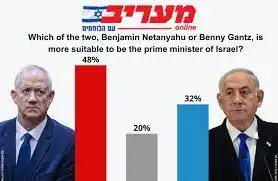
47% of respondents said that the head of the “Official Camp” coalition, Benny Gantz, is the most suitable to assume the position of Prime Minister of Israel, while 32% of them said that Prime Minister Benjamin Netanyahu is the most suitable.


The survey included a sample of 515 people representing all categories of the adult population in Israel, with a maximum error rate of 4.3%.

PALESTINE

Fri 16 Feb 2024 3:04 pm - Jerusalem Time

Israeli Haaretz: It is likely that an exchange deal will be concluded before the month of Ramadan

Israeli Haaretz suggested reaching a deal with the Islamic Resistance Movement (Hamas) for a deal that includes a prisoner exchange and a six-week ceasefire, before the next month of Ramadan.


The newspaper said that Israel and Hamas are working to complete the terms of the exchange deal before the next month of Ramadan, according to foreign diplomatic sources participating in the negotiations, without providing further details.


One of the sources - according to the Israeli newspaper - considered that the ideal time to implement the agreement would be during the month of Ramadan 1445 AH, which begins next March 10.


According to the draft proposal presented, the first phase of the ceasefire will last 6 weeks, according to Israeli media.


The sources explained that Israel prefers to take its time to reach an agreement, so that it can complete the military operations in Khan Yunis, and perhaps expand them to Rafah, provided that any exchange deal includes a long-term ceasefire, according to Haaretz.


Disagreement on key issues

On the other hand, Haaretz quoted Israeli sources as saying that the two sides are still far from consensus on the main issues in the negotiations, primarily regarding the duration of the ceasefire.


At the same time, Israel is putting pressure on Hamas to reduce the number of Palestinian security prisoners who would be released in any deal.

The newspaper also explained that foreign sources expressed cautious optimism about the possibility of reaching an agreement within this time frame, and claimed that both Israel and Hamas have shown - at the present time - a commitment to quietly conducting negotiations to resolve the outstanding issues.


Another source - quoted by Haaretz and not named - indicated that not every public announcement by Israel or Hamas reflects the discussions taking place behind closed doors, indicating that “we can expect a lot of manipulation in the coming weeks by both sides, in order to prepare public opinion and the internal political arena for what is coming.”


Haaretz reported that any progress made by the army may affect Hamas' readiness to implement the agreement. At the same time, the international community has difficulty predicting whether Netanyahu will back away from the understandings reached at the last minute due to security, internal political, or personal considerations.


A truce previously prevailed between the Palestinian resistance and Israel for a week from November 24 until the beginning of December 2023, during which a ceasefire took place, prisoners were exchanged, and humanitarian aid was brought into Gaza, with mediation by Qatar, Egypt, and the United States.


Tel Aviv estimates that there are about 134 Israeli detainees in Gaza, while it holds at least 8,800 Palestinians in its prisons, according to official sources from both parties.


Israeli Cabinet meeting

The expanded Cabinet in Israel held a meeting to discuss proposals for an exchange deal, and Council Speaker Benjamin Netanyahu interrupted the meeting to make a phone call with US President Joe Biden.


The Israeli Broadcasting Authority reported that Netanyahu left the meeting to make the call, which lasted about 40 minutes, during which - according to Israeli media - the issue of prisoners detained in Gaza and the results of the Cairo meeting were discussed, as well as the army’s operations in Rafah and the issue of bringing humanitarian aid into the Gaza Strip.


Protests of detainees' families

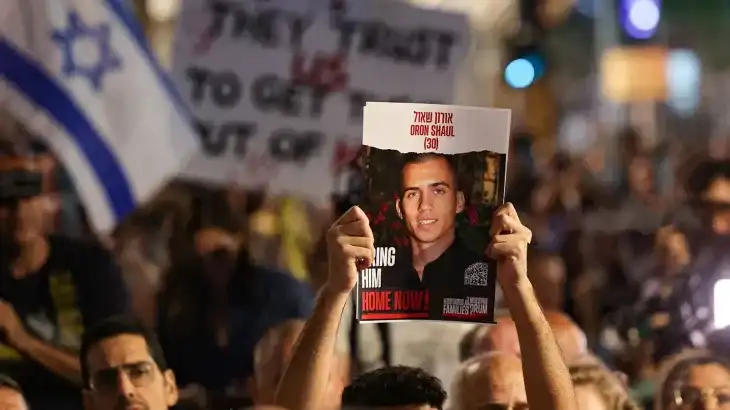
In parallel, dozens of Israelis closed the street leading to the Ministry of Defense in Tel Aviv in protest against Netanyahu's decision to freeze negotiations with Hamas.


The demonstrators demanded an immediate deal to return the prisoners detained in Gaza while they were alive.


While the Prisoners' Families Association demanded - in a press conference - to meet with the War Council immediately and inform it of the latest developments regarding the course of the talks. US Secretary of State Anthony Blinken said that Hamas' response had been received, and that there were some "very difficult" issues that needed to be resolved.


He added that work is continuing with Qatar, Egypt and Israel to reach a final agreement on the "hostages" and that this is now possible. Netanyahu rejects a request to increase aid. On the other hand, Channel 12 said that the Prime Minister refused to discuss a Qatari request to increase humanitarian aid to the Gaza Strip.


The Israeli channel added that the Qatari request was conveyed by CIA Director William Burns during his meeting with Netanyahu yesterday, and was aimed at pushing forward a possible prisoner exchange deal. It claimed that Netanyahu refused to discuss the issue until obtaining proof that the prisoners detained in Gaza had obtained medicines. that was sent to them.


Since October 7, 2023, Israel has been waging a devastating war on the Gaza Strip, leaving tens of thousands of civilian victims, most of them children and women, including more than 28,000 killed, in addition to an unprecedented humanitarian catastrophe and massive destruction of infrastructure, which led to Israel being brought before International Justice on charges of genocide.

PALESTINE

Fri 16 Feb 2024 2:16 pm - Jerusalem Time

War on Gaza: 84% of health facilities in Gaza were damaged by the Israeli aggression

The United Nations Relief and Works Agency for Palestine Refugees (UNRWA) said that 84% of health facilities in the Gaza Strip were affected as a result of the Israeli aggression on the Strip.


In a post on the “X” platform today, Friday, UNRWA published footage showing the destruction of civilian infrastructure in the Strip, including some of its health centers.


UNRWA noted that in addition to the damage to health care facilities, more than 70% of all civilian infrastructure had been “destroyed or severely damaged,” and stressed that “no place is safe.”

PALESTINE

Fri 16 Feb 2024 2:12 pm - Jerusalem Time

Israeli Report: Israel has “lost control” of settler terrorism in the West Bank

Random settlement outposts spread and expanded in the West Bank during the war on Gaza, and attacks on Bedouin communities and residents of neighboring villages escalated, and “Palestinian residents were removed from areas controlled by settlers,” according to a report published by the Haaretz newspaper today, Friday.


The newspaper reported that the settlers' attacks were accompanied by the use of "excessive military force" by reserve units in the Israeli army, whose soldiers were called for military service following the outbreak of the war on Gaza.


The newspaper described these attacks and the settlers’ seizure of large lands as the state’s “loss of control” over these crimes.


The newspaper added, "The influence of Ministers Itamar Ben Gvir and Bezalel Smotrich empties any step taken by the police, as well as the Shin Bet to a certain extent, in confronting the violence of far-right activists."


The newspaper indicated that the security situation in the West Bank, and in occupied Jerusalem in particular, may escalate if Ben Gvir storms Al-Aqsa Mosque during the month of Ramadan, as happened in May 2021, which prompted Hamas to fire rockets towards Jerusalem, followed by an aggression against... Gaza lasted ten days.


More than 360 Palestinians in the West Bank have been killed since the beginning of the war on Gaza, by Israeli army fire, and some cases by settler fire.


The newspaper considered that this number of killed "does not reflect the loss of security control in the West Bank."


It added that Israeli pressure on the Palestinians in the West Bank, “along with a continuing, undeclared effort by the Palestinian Authority against Hamas, has so far prevented the outbreak of a third widespread intifada. But the head of the Shin Bet, Ronen Bar, and the army chief of staff, Herzi Halevy, warn during any security deliberations From a nearby explosion in the West Bank.”


The newspaper added that the reasons for a possible explosion in the West Bank are related to cutting off the livelihood of Palestinian workers after the Israeli government’s decision to prevent their entry to work in Israel, reducing the salaries of the Authority’s employees and members of its security services, and the prevailing anger due to the terrible number of martyrs in the Gaza Strip, and the expectation that this anger will escalate during the month of Ramadan.


According to the newspaper, for the far-right parties in the Israeli government, the escalation of fires in the West Bank fulfills an old dream of the collapse of the Palestinian Authority’s rule in the West Bank, in addition to the frustration that a political step in the Gaza Strip would return the Authority to the situation there.

ARAB AND WORLD

Fri 16 Feb 2024 1:30 pm - Jerusalem Time

Report: Israeli plan to establish loyal “population enclaves” in the Gaza Strip, protected by the Israeli army

Report: The Israeli plan, funded by Gulf states, calls for housing Gazans who do not support Hamas, in neighborhoods initially and then implementing the plan in cities, but its fate will be similar to the American invasion of Iraq, the emergence of Al-Qaeda and then ISIS, after which the influence of Iran increases.


A plan is being prepared at the headquarters of the security services in Tel Aviv in order to be implemented after the end of the war on Gaza, and it stipulates the establishment of “population enclaves” in the Gaza Strip, in the form of neighborhoods to be populated by a limited number of residents of the Strip who are “non-supportive of Hamas,” according to what the newspaper Maariv reported today, Friday.


According to the plan, a Palestinian executive committee will supervise internal affairs in these “enclaves,” and the Israeli army will be responsible for security. In Israel, they hope that the Gulf countries will finance this scheme.


The newspaper added that in Israel they are planning an initial experiment, and if it succeeds in one “pocket,” the plan will be applied in other “pockets,” and after that this plan will be applied in “entire cities.”


The plan is based on "cooperation" between Israel and local representatives, with the aim of excluding Hamas and the Palestinian Authority. “A search is currently underway for Gazans who agree to cooperate” in the first experiment.


The newspaper noted that this plan "seems promising." But she warned that the reality is different. "From the beginning, Hamas will declare these enclaves to be hostile areas, and those local leaders will be labeled as collaborators. Their blood will be wasted, and their lives will be at risk. Their residents will also be exposed to danger and pressure."


This Israeli plan does not address the rest of the population of the Gaza Strip, who constitute the overwhelming majority. It is not clear how they will live and who will care for them. “A poor or dissatisfied population is an automatic enemy. Violent and powerful protests will grow within it.”


The newspaper pointed out that the financing issue is also not guaranteed, “because Gulf countries will demand to pay money for the pilot project and will demand a guarantee regarding its stability.”


The newspaper asked: “How will the citizens who will be included in the experiment be selected? Will they undergo admission tests? And if there are Hamas loyalists in one family, will some of them get the privilege, and their relatives will be rejected? And what will Israel do with tens of thousands of government employees in the Gaza Strip, all of them worked in the Hamas government. Will you leave them to their fate?


It added, "Even if the military arm of Hamas is eliminated, a sufficient number of them, who have military experience, will remain in the Gaza Strip, and they will challenge all those who represent the new government. If orders are issued to the Israeli army to defend these enclaves, its soldiers will be a target. Those who are disappointed will be (The Palestinians) will gather into armed militias. One militia and perhaps more in each city. And Israel’s enemies, most notably Iran, or perhaps Islamic capital or jihadist organizations in Sinai, will support it from a distance with funding, weapons, and training.”


The newspaper added that then, “there will be no party that can be pressured or talked to, because there will be no central government in the Gaza Strip. The Israeli army may be lured into a daily, non-stop pursuit of these cells. This is what almost happened in Iraq, when the American army invaded.” Baghdad and overthrew Saddam Hussein, dismantled his army and threw his officers and soldiers into hell. In the wake of that, Al-Qaeda in Iraq emerged, which was formed from officers and soldiers in Saddam’s army, who took revenge on the Americans.”


The Americans established a temporary administration in Iraq and appointed an American governor. “But the great collapse opened the doors to everyone. Thus, the Iranians entered Baghdad and have not left since. After the Obama administration withdrew American forces in order to stop the bloodshed of its soldiers, ISIS occupied the vacuum. Within three or four years, it developed among millions of Iraqis, and among the Americans also miss Al-Qaeda, because of which they missed Saddam before that.”


The newspaper concluded, alluding to the fate of the “population enclaves” plan in the Gaza Strip, that “the American experience in Iraq was and remains a glorious failure. An American administration recklessly encouraged the establishment of Al-Qaeda, and another administration, by fleeing, invited ISIS to the salon. And they had good intentions.” “As any American who was there would say, they wanted to build a normal entity in Iraq, enjoying peace and security.”

PALESTINE

Fri 16 Feb 2024 1:29 pm - Jerusalem Time

Israeli media: Hamas is demanding high prices for the release of our prisoners

The Israeli media covered the scenes of the Cairo negotiations regarding a proposed truce in the Gaza Strip, which includes a prisoner exchange between the Islamic Resistance Movement (Hamas) and Israel, in addition to the repercussions of the escalation on the northern front between Tel Aviv and the Lebanese Hezbollah.


Channel 12 revealed that the gaps are very large between the two parties, especially the difference over the ratio between the number of Palestinian prisoners who will be released compared to every prisoner held by Israel in Gaza, after it was (3 to 1) in the humanitarian truce late last November.


It pointed out that Hamas is demanding high prices and insists that the proposal to release the Israeli prisoners leads to an end to the war and the withdrawal of the Israeli army forces out of the Gaza Strip, but Israel - according to the channel - is talking about a “humanitarian cessation” of fighting that may be long and will reserve the right to resume the war.


In turn, Channel 13 said that Prime Minister Benjamin Netanyahu refused to send more negotiators to Cairo despite the recommendation of the head of the Shin Bet Security Service, Ronen Bar, who believes that it will contribute to softening Hamas’ positions regarding the number of Palestinian prisoners.


It pointed out that "Netanyahu's decision comes in contradiction to the position of part of the security services and even without consulting members of the war council, Benny Gantz, Gadi Eisenkot, and Yoav Gallant."


In this context, Channel 12 political analyst Dana Weiss said that since the days of the duo, Netanyahu has practically isolated Gantz and Eisenkot from the political process, and prevents any possibility of progressing in the Cairo negotiations.


On the Lebanese front, the military affairs analyst for “Kan 11” channel, Roi Sharon, asked, “Is Israel ready to raise the level, scope, and objectives of the attacks and move from attacking Hezbollah’s targets to attacking targets of the Lebanese state in the wake of the rocket firing operation at Safed?” to which he replied, denying that the party chose military targets. It is not civil.


In turn, former head of the Israeli Security Council, Giora Eiland, told Channel 12, “If we remain committed to achieving absolute victory, which means continuing the war for many months and perhaps a year, it seems as if we have decided that we have no choice but to wage war in the north.”


Eiland added, "Unfortunately, I really see a very extremist spirit in us, and in the Prime Minister, the Minister of Defense, and senior officials," before concluding, "All international parties do not want a war in the north, but if we continue it in Gaza, we will reach war there."

OPINIONS

Fri 16 Feb 2024 1:16 pm - Jerusalem Time

Unless Israel changes course, it could be legally culpable for mass starvation

The Guardian

The Guardian

Opinion Writer

By Alex de Waal

Gaza is on the brink of famine. If the US and UK fail to use every possible lever to stop the catastrophe, they will be complicit

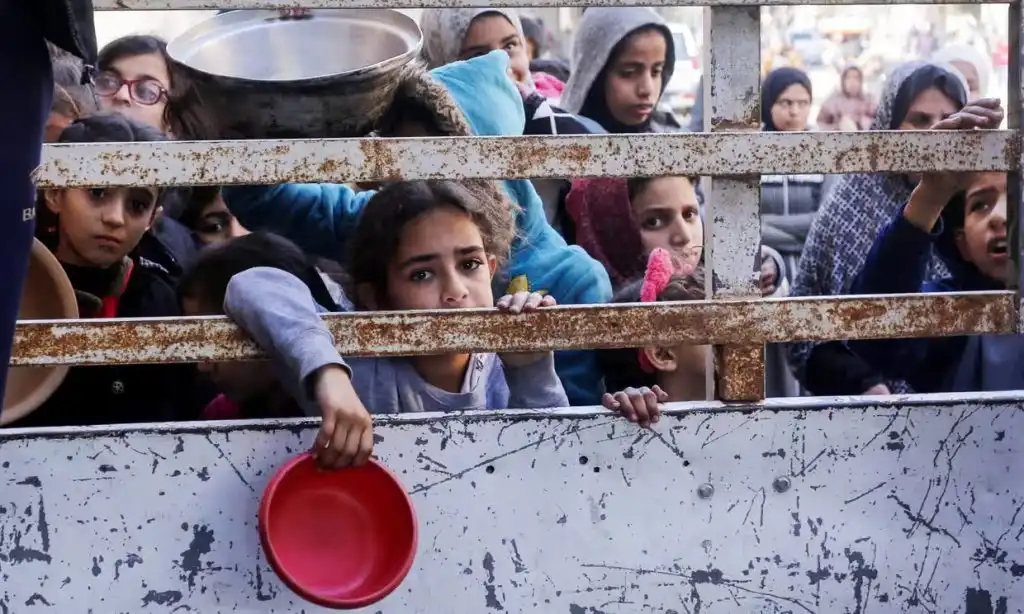
Gaza is experiencing mass starvation like no other in recent history. Before the outbreak of fighting in October, food security in Gaza was precarious, but very few children – less than 1% – suffered severe acute malnutrition, the most dangerous kind. Today, almost all Gazans, of any age, anywhere in the territory, are at risk.

There is no instance since the second world war in which an entire population has been reduced to extreme hunger and destitution with such speed. And there’s no case in which the international obligation to stop it has been so clear.

These facts underpinned South Africa’s recent case against Israel at the international court of justice. The international genocide convention, article 2c, prohibits “deliberately inflicting [on a group] conditions of life calculated to bring about its physical destruction in whole or in part”.

In ordering provisional measures to prevent potential genocide last Friday, the ICJ didn’t rule on whether Israel is actually committing genocide – that will take years of deliberation – but the judges made it clear that the people of Gaza face “conditions of life” in which their survival is in question. Even Justice Aharon Barak, appointed by Israel to sit on the panel, voted in favour of immediate humanitarian relief.

But a humanitarian disaster such as Gaza’s today is like a speeding freight train. Even if the driver puts on the brakes, its momentum will take it many miles before it stops. Palestinian children in Gaza will die, in the thousands, even if the barriers to aid are lifted today.

Starvation is a process. Famine can be its ultimate outcome, unless stopped in time. The methodology used to categorize food emergencies is called the integrated food security phase classification system, or IPC. It’s a five-point scale, running from normal (phase 1), stressed, crisis, and emergency, to catastrophe/famine (phase 5).

In categorizing food emergencies, the IPC draws on three measurements: families’ access to food; child malnutrition; and the numbers of people dying over and above normal rates. “Emergency” (phase 4) already sees children dying. For a famine declaration, all three measures need to pass a certain threshold; if only one is in that zone, it’s “catastrophe”.

The IPC’s famine review committee is an independent group of experts who assess evidence for the most extreme food crises, akin to a high court of the world humanitarian system. The committee has already assessed that the entirety of Gaza is under conditions of “emergency”. Many areas in the territory are already in “catastrophe”, it said, and might reach “famine” by early February.

Yet whether or not conditions are bad enough for an official declaration of “famine” is less important than the situation today, which is already killing children. Bear in mind that malnutrition makes humans’ immune systems more vulnerable to diseases sparked by lack of clean water and sanitation, and that those diseases are accelerated by overcrowding in unhealthy camps.

Since the IPC was adopted 20 years ago, there have been major food emergencies in Afghanistan, the Democratic Republic of the Congo, Ethiopia’s Tigray region, north-east Nigeria, Somalia, South Sudan, Sudan and Yemen. Compared to Gaza, these have unfolded slowly, over periods of a year or more. They have stricken larger populations spread over wider areas. Hundreds of thousands died, most of them in emergencies that didn’t cross the bar of famine.

And in the most notorious famines of the late 20th century – in China, Cambodia, Nigeria’s Biafra and Ethiopia – the numbers who died were far higher, but the starvation was also slower and more dispersed.

Never before Gaza have today’s humanitarian professionals seen such a high proportion of the population descend so rapidly towards catastrophe.

All modern famines are directly or indirectly man-made – sometimes by indifference to suffering or dysfunction, other times by war crimes, and in a few cases by genocide.

The Rome statute of the international criminal court, article 8(2)(b)(xxv), defines the war crime of starvation as “intentionally using starvation of civilians as a method of warfare by depriving them of objects indispensable to their survival, including wilfully impeding relief supplies as provided for under the Geneva conventions”.

The main element of the crime is destruction and deprivation, not just of food but of anything needed to sustain life, such as medicine, clean water and shelter. Legally speaking, starvation can constitute genocide or war crimes even if it doesn’t include outright famine. People don’t have to die of hunger; the act of deprivation is enough.

Many wars are starvation crime scenes. In Sudan and South Sudan, it’s widespread looting by marauding militia. In Ethiopia’s Tigray, farms, factories, schools and hospitals were vandalized and burned, far in excess of any military logic. In Yemen, most of the country was put under starvation blockade. In Syria, the regime besieged cities, demanding they “surrender or starve”.

The level of destruction of hospitals, water systems and housing in Gaza, as well as restrictions of trade, employment and aid, surpasses any of these cases.

It may be true, as Israel claims, that Hamas is using hospitals and residential neighbourhoods for its own war effort. But that doesn’t exonerate Israel. Much of Israel’s destruction of Gazan infrastructure appears to be away from zones of active combat and in excess of what is proportionate to military necessity.

The most extreme historical cases – such as Stalin’s Holodomor in Ukraine in the 1930s and the Nazi “hunger plan” on the eastern front during the second world war – were genocidal famines at immense scale. Gaza doesn’t approach these, but Israel will need to act decisively if it is to escape the charge of having used hunger to exterminate the Palestinians. Starvation is a massacre in slow motion. And unlike shooting or bombing, the dying continues for weeks even if killing is halted.

This is the challenge facing the UN security council when it will soon debate the ICJ’s provisional orders to Israel. Just allowing in aid and putting some restraints on Israel’s military action are not going to stop this thundering train of catastrophe quickly enough.

More than a month ago, the famine review committee wrote: “The cessation of hostilities and the restoration of humanitarian space to deliver this multi-sectoral assistance and restore services are essential first steps in eliminating any risk of famine.” In other words, an immediate end to fighting is essential to prevent a calamitous toll that may far exceed the numbers killed by violence.

That’s the operative line. For the survival of the people of Gaza today, it doesn’t matter whether Israel intends genocide or not. Unless Israel follows the famine relief committee recommendations, it will knowingly cause mass death by hunger and disease. That’s a starvation crime.

And if the US and UK fail to use every possible lever to stop the catastrophe, they will be complicit.


OPINIONS

Fri 16 Feb 2024 1:08 pm - Jerusalem Time

Killing children like Ruqaya is not enough for Israel. They took her body too

Middle East Eye

Middle East Eye

Opinion Writer

By Miranda Cleland

Routinely withholding the bodies of Palestinian children shot and killed by Israeli soldiers is just one more injustice on the long list of cruelties enacted by Israel

On 16 January, Israeli forces handed over four-year-old Ruqaya Jahalin’s body to her family to be buried.

Israeli soldiers shot and killed Ruqaya while she was in a van with her mother at an Israeli checkpoint near the Palestinian village of Beit Iksa in the central occupied West Bank on 7 January, then confiscated her body. For nine excruciating days, Israeli forces withheld her body from her family.

In many ways, Ruqaya was an exception.


Israeli forces have withheld the bodies of at least 31 Palestinian children since June 2016, according to documentation collected by Defense for Children International - Palestine (DCIP). Four of the children’s bodies have since been released to their families, while 27 Palestinian children’s bodies remain withheld by Israeli authorities.

The rest remain in Israeli authorities’ custody, some for years, so their families are unable to lay their children to rest. That’s because depraved indifference to Palestinian life, even in death, is Israeli state policy.


Among the Israeli government’s uniquely cruel policies targeting Palestinian families is a policy of confiscating human remains.

In September 2019, the Israeli Supreme Court approved the practice of seizing Palestinian human remains after several legal challenges.

Just two months later, on 27 November 2019, Israeli Defence Minister Naftali Bennett ordered all bodies of Palestinians alleged to have attacked Israeli citizens or soldiers to be withheld and not returned to their families.

Last year, Israeli forces conducted near-daily incursions into Palestinian communities across the occupied West Bank - which only intensified after 7 October, when the Israeli military launched a massive military offensive on the Gaza Strip where they continue to carry out genocidal attacks.

No accountability

The Israeli military killed 12 Palestinian boys last year and withheld their bodies from their families. Only one child’s body was released.

This year promises more of the same. Of the 11 Palestinian children killed by Israeli forces so far this year in the occupied West Bank, four of their bodies have been confiscated, including Ruqaya's.

Israeli soldiers opened fire indiscriminately toward two Palestinian vehicles, including the minivan carrying Ruqaya, her mother, and other Palestinians through an Israeli military checkpoint.

In order to act so brazenly, Israeli forces must know that they will not be held responsible for their actions, even if they kill a Palestinian preschooler.

No Israeli soldier or government official has lost their job, much less been held accountable in court, for killing Ruqaya, who would have turned five in February.

The other Palestinian children whose bodies Israeli authorities have confiscated are teenage boys, most of whom are accused of attacking Israeli soldiers.

Seizing a child’s body after they allegedly attempted to carry out an attack prevents an independent autopsy and any other evidence collection that could be used to determine if Israeli forces’ lethal force was justified or unlawful.

In Ruqaya’s case, Israeli forces claimed to withhold her body to conduct an autopsy, against her parents’ wishes. Killing a Palestinian child and then taking their body exemplifies Israeli forces’ efforts to exert total control over every aspect of Palestinian life and death. 

Violating international law

Israeli authorities’ policy and practice of confiscating and withholding Palestinian bodies is a violation of international humanitarian law and international human rights law, which include absolute prohibitions on cruel, inhuman, or degrading treatment, as well as stipulate that parties of an armed conflict must allow burial of the deceased in an honourable way.

For Palestinian families, the practice amounts to collective punishment in violation of international humanitarian law.

These families, about two dozen of them, continue to wait in agony to bury their children.

The Abu Juhaisha family is waiting to bury cousins Odai, 15, and Mohammad, 17.

The Abu Hussein family is waiting to bury 16-year-old Ammar.

The Hmaidat family is waiting to bury Khaled, 16, who Israeli forces shot in the chest and then prevented ambulance crews from reaching his bleeding body.

For Israeli forces, apparently, it isn’t brutal enough to shoot and kill Palestinian children: they must continue torturing their families by depriving them of cultural and religious practices that allow them to grieve.

There is no shortage of Israeli state violence against Palestinians on full display to the world as the genocide of Palestinians in Gaza is broadcast live on social media, and South Africa has detailed Israel’s crimes in the International Court of Justice.

Confiscating and withholding the bodies of Palestinian children shot and killed by Israeli soldiers is one more injustice on the long list of cruelties enacted by the Israeli government onto Palestinian families.

OPINIONS

Fri 16 Feb 2024 1:01 pm - Jerusalem Time

In Rafah, the final – and most deadly – stage of this genocide is upon us

Ghada Ageel

Ghada Ageel

Opinion Writer

I fear what an Israeli invasion would mean for more than a million displaced, hungry, desperate Palestinians sheltering in the city.

For many years, every time I travelled to Gaza to visit my family, I passed through the Rafah crossing, the border between the besieged Gaza Strip and Egypt. And every time I took a breath in the border city of Rafah, I was reminded of my sister Taghreed’s words:  “I am inhaling the scent of the history of my land.” Her eyes would glow with pride every time she talked of Rafah, and I share the sentiment.

The history of this corridor spans thousands of years, a testament to the rich history of Palestine and its people. For millennia, Rafah has been a resting place and a trade hub for caravans from across Palestine travelling towards the Sinai Peninsula and onwards to Egypt and Africa.

Today, a genocide is unfolding in this ancient, precious city. As I witness this genocide from afar and fear what the threatened Israeli invasion would mean for the hundreds of thousands of displaced Palestinians forced to take shelter there, I feel like I am one of those powerless souls who recognised what was happening in Srebrenia or the Warsaw Ghetto, tried to raise the alarm but couldn’t do anything to avert the tragedy as the world had already decided to turn a blind eye to the impending massacre of innocents.

Since the beginning of this latest war on Gaza, every new phase in the Israeli onslaught has inflicted more suffering, pain and death on the civilian population. Displaced many times over, those who are now in Rafah have nowhere else to go. The invasion of Rafah would thus be the last, and the most deadly phase of this genocide – the first genocide in human history that has been broadcast live to the world.

Sadly, this is not the first time beautiful Rafah has become the background to crimes against humanity. The border city’s recent history is a wound kept open by constant violence. The majority of Rafah’s residents, like most cities in Gaza, are the descendants of those displaced during the 1948 Nakba while others are the survivors of a 1956 massacre and the many other Israeli aggressions that came after.

My 89-year-old aunt Rayya, a refugee from Barqa village, which was destroyed by Israel in 1948, has been witness to decades of massacres, violence and oppression in this city.

In 1956, during the tripartite aggression involving Britain, France and Israel, also known as the Suez Crisis, Israel occupied the Gaza Strip for about four months, perpetrating horrifying massacres in both Khan Younis and Rafah.

On November 2, when the Israeli military occupied Khan Younis and ordered males aged 16 and older to come out and present themselves at points across the city, my aunt was there visiting family. Then a 22-year-old newlywed, she witnessed the Israeli military line those men and boys up against walls and massacre them over the course of two days.

My aunt eventually decided to leave the family home with her sister’s family in search of safety. They walked to the beach in Khan Younis and sought refuge under the trees. They ate anything they could find and dug holes in the ground to sleep, find clean water and use as a toilet. Despite the surrounding danger and the continuous sound of bombardment, Rayya, fearing for the safety of her husband, made the difficult decision to continue her journey on to Rafah.

Upon her arrival, Rayya realised that there had been yet more executions across Rafah. She could not find her husband anywhere. For days, she grappled with the harrowing uncertainty of his fate. Fortunately, her husband had survived that particular wave of violence. He later died during the occupation of Gaza in 1967, killed by the Israeli army while travelling along the beach from Khan Younis to Rafah.

After her husband’s murder, Rayya found herself alone, a single mother, tasked with raising five children in the hardship and destitution of the Rafah refugee camp.

In the 1970s, she was forced to seek employment in Israel’s agriculture sector, labouring in the fields collecting tomatoes to provide for her family.

During the first Intifada in 1987, Rayya lost an eye while trying to rescue her youngest son from the hands of Israeli soldiers. She was struck in the eye by the butt of a rifle while trying to prevent soldiers from taking her child.

At the beginning of the second Intifada in 2000, one of her grandchildren, 13-year-old Karam, was shot in the back of the head as he was running away from an Israeli army post after throwing stones at soldiers. The unconscious child was rushed to al-Shifa Hospital in Gaza City, but doctors said he had no possibility of survival beyond a few hours.

Rayya and her daughter in law, Karam’s mother, were presented with an agonising choice: Stay at the hospital and accompany Karam in his final hours of life, or return to Rafah before checkpoints were closed to mourn his death at home with their loved ones. Uncertain whether they would be allowed to move between cities in the coming days, they eventually decided to go home without Karam’s body.

In 2004, Rafah was subjected to what Israel called Operation Rainbow, a cruelly ironic title for what was considered – at the time – the worst episode of violence the city had witnessed. The operation resulted in the destruction of hundreds of homes throughout Rafah. Rayya’s home was also partially demolished during this spate of violence. Then, during the 2014 war on Gaza, Rayya lost another grandson – a bright engineering student, recently engaged.

Today, 10 years later, Rayya is once again trying to survive military aggression in Rafah. I have not been able to contact her recently, but I fear she is once again displaced, hungry, cold and terrified, digging holes in the ground to find water or go to the toilet at the age of 89.

The story of my aunt Rayya – a story of suffering and perseverance – is the story of Rafah. Her story echoes the tragic stories of more than a million displaced Palestinians who have been forced to seek safety in the border city. But Rafah’s story is also one of international solidarity. Rachel Corrie, Tom Hurndall and James Miller all lost their lives at the hands of the Israeli military in Rafah while bravely taking a stand against Israel’s brutal occupation.

Rafah is now the last refuge for Palestinians in Gaza amid a still unfolding genocide, and it is the place where the international community could and should take action to prevent another Warsaw or Srebrenica.

This is the moment for every member of the global civil society, everyone who believes in human rights, justice and freedom for all, to speak up against the deafening silence of their political leaders and take a stance for the long suffering Palestinian people.

As the threat of a catastrophic Israeli invasion looms on the horizon in Rafah, we cannot continue to ignore the plight of Palestinian refugees, displaced many times over, sick, hungry and forced to resist a blatant ethnic cleansing campaign with nothing but their fragile bodies.

No one can claim ignorance about what’s happening today in Rafah, in Gaza, across Palestine. The truth is evident in the testimonies of the children living through the genocide, in the work of brave journalists on the ground documenting their own slaughter, in the carefully researched and sourced reports of experts, academics, human rights defenders and international institutions. Rafah is the final opportunity for the international community to come together for peace and dignity in Palestine. It’s time for Rafah to finally be truly safe and prosper. It is time for lifelong refugees like my aunt Rayya to find permanent safety and security. It is time for a ceasefire, and a free Palestine.

Aljazeera

ARAB AND WORLD

Fri 16 Feb 2024 12:56 pm - Jerusalem Time

The Governor of Sinai denies... Reuters: Egypt is preparing a safe area on the Gaza border to house refugees from Rafah.

Four sources said that Egypt has begun paving the way for an area on the border with the Gaza Strip that could be used to house Palestinian refugees if an Israeli attack on the city of Rafah in the south of the Strip leads to a mass exodus across the border. 

The sources described this measure as an emergency move by Cairo. Egypt, which denied making any such preparations, has repeatedly sounded the alarm about the possibility that the devastating Israeli attack on Gaza could lead to the exodus of Palestinians to Sinai, something Cairo says is completely unacceptable, repeating warnings issued by Arab countries such as Jordan. 

The United States has also repeatedly said that it will oppose any displacement of Palestinians from Gaza. One of the sources said that Egypt is optimistic that talks aimed at reaching a ceasefire could lead to avoiding such a scenario, but it is working to establish the zone on the border as a temporary and precautionary measure. 

Three security sources said that Egypt has begun paving a desert area and establishing some simple facilities that may be used to house Palestinian refugees, stressing that this is an emergency step.


The sources that Reuters spoke to for this report refused to reveal their identities due to the sensitivity of the matter.


Western press reports revealed that Egypt is building a buffer zone on an area of 20 square kilometers, near its border with the Gaza Strip.


Images taken by Maxar Technologies in the past five days show that a large portion of Egyptian land between the road and the Gaza border has been bulldozed.


If the buffer zone - which extends from the end of the Gaza border to the Mediterranean Sea - is completed, it will completely swallow the Rafah border crossing complex between Egypt and Rafah.


Egyptian officials said that the area being built can accommodate more than 100,000 people and is surrounded by concrete walls, according to the American Wall Street Journal.


The officials added that the construction of this area comes amid fears that the Israeli military incursion into Rafah will lead to an influx of refugees from Gaza.


Additional satellite images show that bulldozers arrived at the site on February 3, and initial excavations in the buffer zone began on February 6. There has been a significant increase in excavations in the past five days.


CNN contacted the Egyptian government to comment on the buffer zone and the construction of the wall.


Sinai Governor explains

North Sinai Governor Muhammad Abdel Fadil Shusha said in statements to reporters on Thursday, “The Egyptian position is clear and frank and was announced by the political leadership immediately after the Israeli war on Gaza, which is not to allow the forced displacement of the residents of Gaza to Egypt permanently.”


He also stressed that his country is prepared for all scenarios in the event that Israel carries out military operations in the Palestinian border governorate.


The governor denied what some media reported about the Egyptian authorities building a security buffer zone surrounded by walls in the Egyptian city of Rafah to receive Palestinians from Gaza, in anticipation of their displacement.


He explained, "What is happening in the regions of East Sinai, specifically in Rafah, is that committees from the governorate inventory the homes that were demolished during the war on terrorism, with the aim of providing appropriate compensation to the owners of these homes."

He also stressed that this operation is not aimed at establishing camps to receive displaced Palestinians, and has nothing to do with what is happening in the Gaza Strip.