PALESTINE

Fri 08 Mar 2024 7:29 am - Jerusalem Time

Biden: We will build a temporary naval pier to transport aid to Gaza

US President Joe Biden said on Friday that the United States is leading international efforts to deliver more humanitarian aid to Gaza.


Biden indicated in his speech that a 6-week ceasefire would return the hostages and alleviate the unbearable humanitarian crisis, noting that his country's administration is working non-stop to reach an immediate ceasefire.


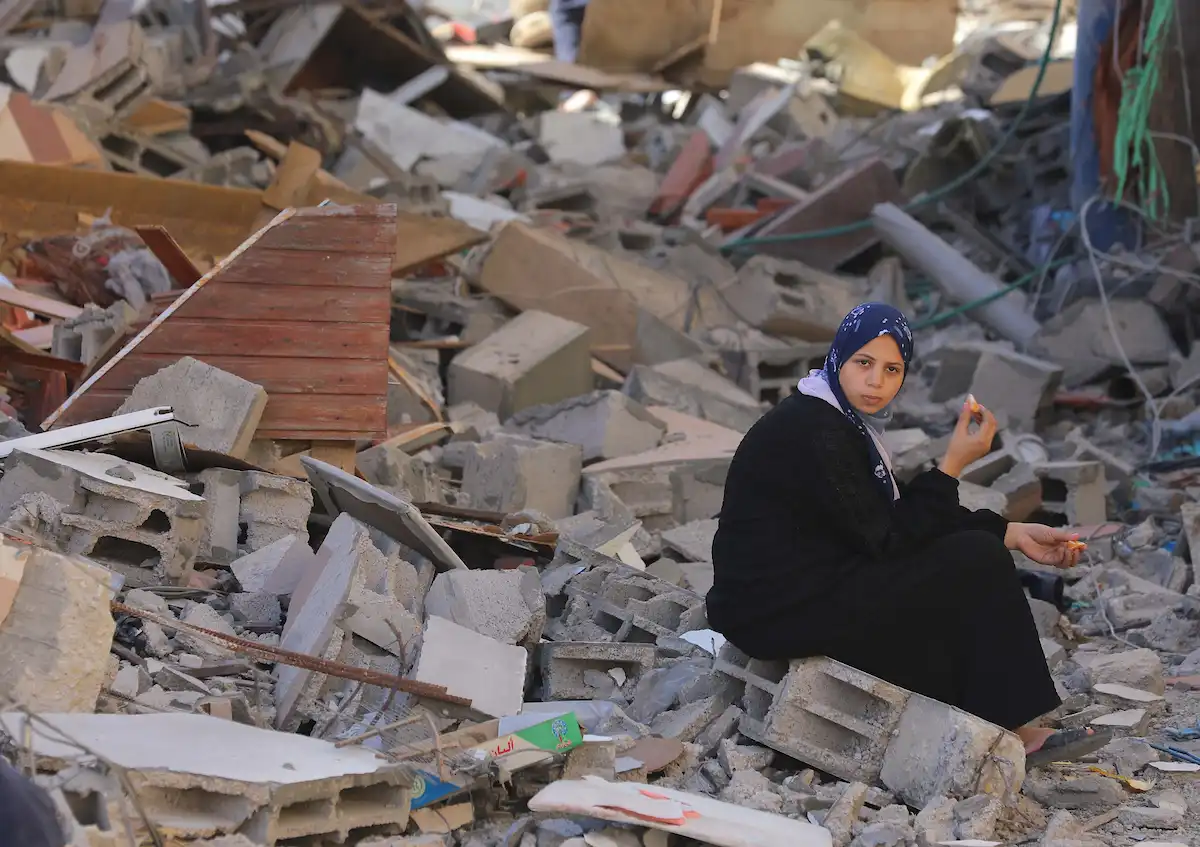
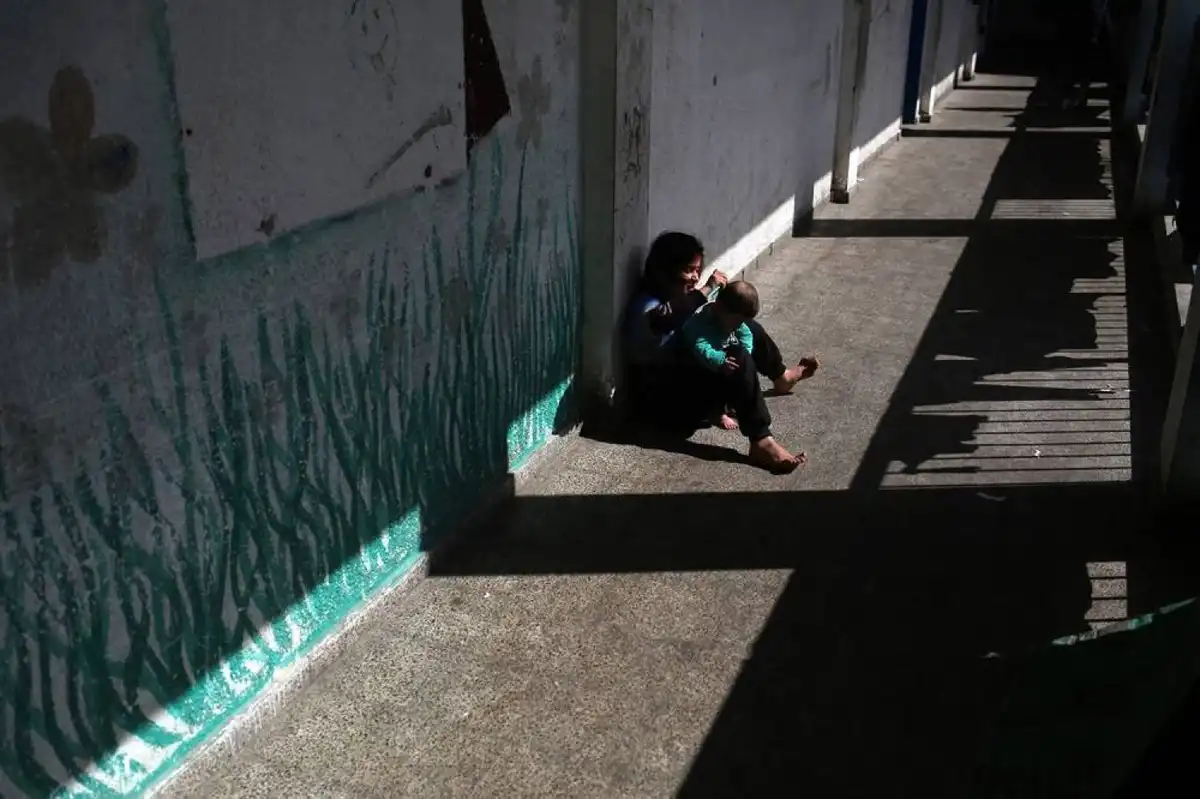
He added: There are homes, neighborhoods and cities in Gaza that have been destroyed and families without food, water and medicine, and this is a heartbreaking matter. Girls and boys have become orphans due to the war, and about two million Palestinians are under bombardment or have become displaced.


He continued: Israel must allow more aid to enter Gaza and ensure that humanitarian workers are not caught in the crossfire.


He pointed out that he would direct the US military to lead an emergency mission to establish a temporary naval pier in the Mediterranean Sea on the coast of Gaza, stressing that there would be no American forces on the ground and that the naval pier would allow a huge increase in the amount of aid to Gaza.


The US President said: The temporary pier on the Gaza coast will be able to receive large ships carrying food, water, medicine, and temporary shelters.


Biden added: I tell Israel's leaders that humanitarian assistance cannot be a secondary matter or a bargaining chip.


He continued: I tell Israel's leaders that protecting and saving innocent lives must be a priority.


He continued: The only real solution as we look toward the future is the two-state solution, and I say that as a supporter of Israel for life.

PALESTINE

Thu 07 Mar 2024 10:34 pm - Jerusalem Time

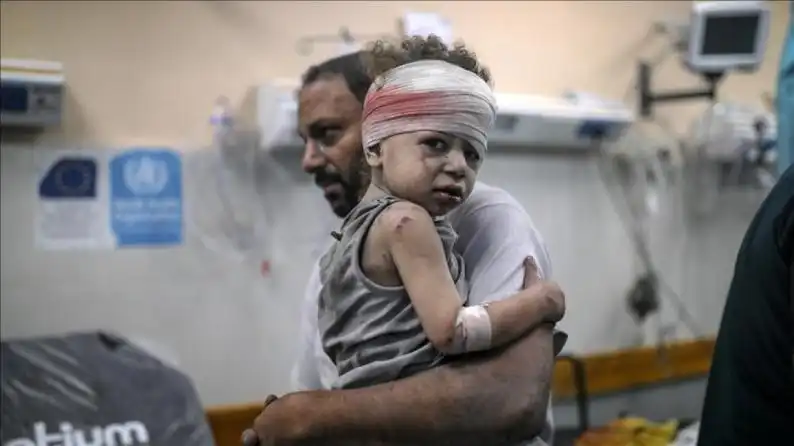
UNICEF: Palestinian Children most affected by the war in Gaza

The United Nations Children's Fund (UNICEF) said on Thursday that children in Gaza are the most affected by the war, stressing the need to protect them.


UNICEF Executive Director Catherine Russell said that the situation in the Gaza Strip is "frightening" and that war always has very bad consequences for children.


Speaking to CNN, Russell stressed that it is not possible to accept the death of children from starvation after they were displaced and lost their parents.


She added that the two main issues that make the distribution of humanitarian aid difficult are the lack of security and lack of access to those in need.

PALESTINE

Thu 07 Mar 2024 10:15 pm - Jerusalem Time

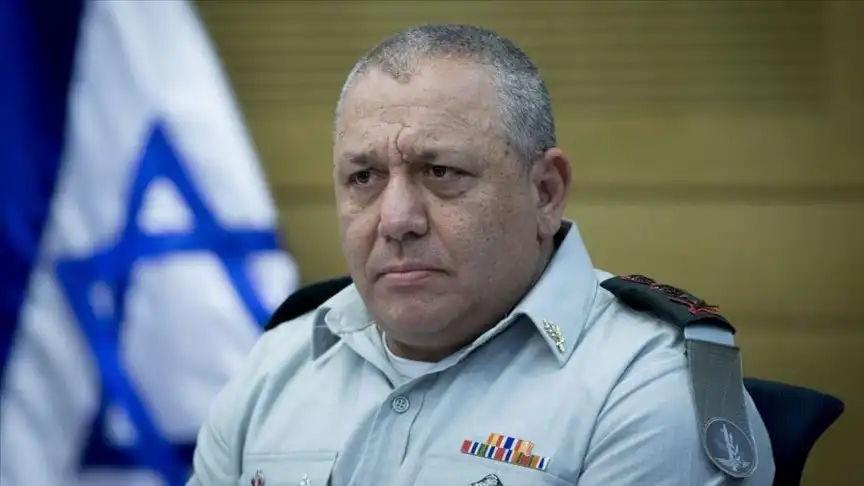
Gadi Eisenkot: The return of detainees is better than the destruction of Hamas

Minister of the Israeli government's war council, Eisenkot, said that the return of the detainees is better than the destruction of the Islamic Resistance Movement (Hamas), and without it there is no victory, but rather permanent damage to national power.


Last month, a letter sent by Eisenkot to the same council was revealed, in which he warned of the increasing difficulty in achieving the goals of the war in Gaza.


It is noteworthy that Eisenkot served as Chief of Staff of the Israeli Army from 2015 to 2019, and his son and nephew were killed in December 2023 in battles in the Gaza Strip.

ARAB AND WORLD

Thu 07 Mar 2024 10:10 pm - Jerusalem Time

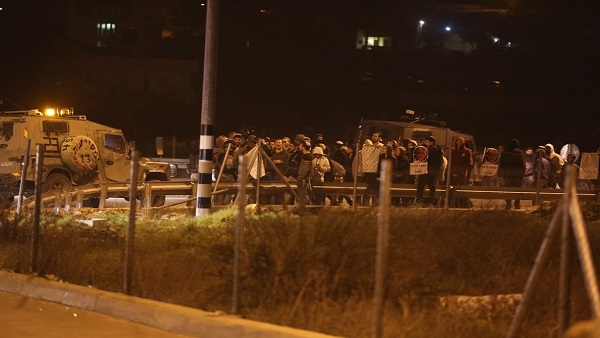
Families of Israeli prisoners in Gaza block a street near the Ministry of Defense

On Thursday evening, families of Israeli prisoners in the Gaza Strip closed a main street near the Ministry of Defense in Tel Aviv to demand an immediate deal to release their relatives, according to Hebrew media.


The private Channel 12 said that the families of the prisoners closed a street leading to the Kirya area in central Tel Aviv, where the Ministry of Defense is located, as 153 days have passed since their families were captured in Gaza.


The demonstrators raised pictures of prisoners and banners with phrases such as: “It is time” and “Deal now.”


Prime Minister Benjamin Netanyahu is facing criticism from the Israeli street and a number of politicians, even those affiliated with the War Council, against the backdrop of the prisoner crisis in Gaza and the failure to find a path to guarantee their return alive, and some accuse him of obstructing the deal to release them due to his “political calculations.”


Earlier Thursday, Israeli War Council Minister Gadi Eisenkot said that without the return of the prisoners, there will be no victory in the war.


In his speech at the annual conference of the Israeli National Security Research Institute, Eisenkot said: “Without the return of the kidnapped (prisoners), there will be no victory, but rather long and continuing damage to the national steadfastness of the State of Israel,” according to what the Hebrew newspaper “Israel Hayom” reported.


This comes as the private Cairo News Channel, which is close to the Egyptian authorities, quoted a senior source on Thursday, saying, “Consultations are continuing between all parties to reach a truce (which comes within a prisoner exchange deal between Israel and Hamas) before the advent of the blessed month of Ramadan, which is expected on Monday.”


According to the same source, “The Hamas delegation left Cairo to consult on the truce, and negotiations will resume next week.”


Since Sunday, negotiations have been taking place in Cairo with the participation of Egypt, the United States, Qatar and Hamas for a ceasefire between the Gaza Strip and Israel, according to what the private Cairo News channel reported on Wednesday.


Tel Aviv estimates that there are more than 125 Israeli prisoners in Gaza, while it holds at least 8,800 Palestinians in its prisons, according to official sources from both parties.


A truce previously prevailed between Hamas and Israel for a week from November 24 until December 1, 2023, during which a ceasefire took place, a prisoner exchange took place, and very limited humanitarian aid was brought into Gaza, with Qatari-Egyptian-American mediation.

PALESTINE

Thu 07 Mar 2024 8:30 pm - Jerusalem Time

West Bank: Israeli settlers attack foreign activists south of Hebron

Settlers attacked foreign activists and destroyed agricultural crops, today, Thursday, in Masafer Yatta, south of Hebron.


According to local sources, settlers blocked the path of a group of foreign activists in the “Aqawawis” area of Musafer Yatta, and assaulted them in an attempt to prevent them from documenting the attacks on people and their property in that area.


In the village of Tuba, armed settlers, protected by the occupation army, raided and searched a number of citizens’ homes, while other settlers destroyed agricultural crops for a number of citizens near Wadi Al-Jawaya, and released their herds of livestock into the citizens’ fields, after preventing them from accessing them.


In the same context, the Israeli  forces detained for several hours the citizens Musa Al-Shawaheen and Rasim Al-Nawaja’a in the Ikhal Al-Adra area, after destroying large areas of agricultural crops belonging to Al-Nawaja’a.

PALESTINE

Thu 07 Mar 2024 7:39 pm - Jerusalem Time

Israel plans to pirate a billion dollars of Palestinian funds

The specialized Israeli economic newspaper The Marker reported that Israeli Finance Minister Bezalel Smotrich plans to pirate about 3 billion shekels ($835 million) of Palestinian Authority funds held by Israel.


The Marker (the economic supplement of Haaretz newspaper) explained that Smotrich seeks to increase public revenues by about $5.6 billion to support the draft general budget for the current year, which will be presented to the Knesset (Parliament) soon.


These revenues include funds held by the Israeli government that should have been transferred to the Palestinian Authority, but Smotrich wants to transfer them to serve the budget and fill the deficit.


The total amount of money that Israel has withheld from tax revenues owed to the Authority amounts to approximately $835 million, and is distributed as follows:


The Israeli governments seized and withheld this money over these years under the pretext that it was money paid by the authority to the families of prisoners and the families of martyrs in the West Bank, Jerusalem and the Gaza Strip.


It is noteworthy that Israel collects taxes on behalf of the Palestinian Authority in exchange for Palestinian imports of imported goods, and in return Israel deducts a 3% commission. It is assumed that funds are transferred to the Authority on a monthly basis at an average of $190 million, of which, in normal circumstances, about $75 million is transferred to the Gaza Strip.


The Palestinian Authority relies on clearing funds to pay the salaries of its employees, and without them it will not be able to fulfill its obligations towards the wage bill and expenses of government institutions.


In the middle of last month, Palestinian Finance Minister Shukri Bishara said that Israel had not received clearance funds since last October (the start of the war on Gaza).


Last January, Israel agreed to transfer the clearance funds to the Palestinian side in exchange for deducting what the Gaza Strip was receiving from it to the State of Norway.


Since October 7, 2023, Israel has been waging a devastating war on the Gaza Strip, leaving about 31,000 Palestinian killed and more than 72,000 injured, most of them children and women, in addition to an unprecedented humanitarian catastrophe and massive destruction of infrastructure.

PALESTINE

Thu 07 Mar 2024 7:22 pm - Jerusalem Time

UN: Israeli forces kill 37 Palestinian mothers every day in the Gaza Strip

A report issued by the United Nations, on the occasion of International Women’s Day, stated that more than 9,000 women from the Gaza Strip have been killed since October 7, at the hands of the Israeli forces.


UN Women said that women in the Gaza Strip continue to suffer from the effects of the disastrous war waged by the Israeli forces since October 7, which does not spare anyone.


It noted that “the war in the Gaza Strip caused the killing and injury of women in unprecedented ways.” Stating: “It is reported that many women have died and are still under the rubble.”


The UN report explained: “Every day that the war on Gaza continues at its current rate, the occupation forces will kill an average of 63 women per day, and the Israeli forces will kill approximately 37 mothers on a daily basis, leaving behind devastated families and children without protection.”


It indicated that more than 4 out of every 5 women (84%) whose families eat half or less of the amount of food they were accustomed to before the war began.


It stated that about 4 out of every 5 women (84%) in Gaza reported that at least one of their family members had missed meals during the past week, and in 95% of cases, mothers are the ones who do not eat, and miss at least one meal to feed their children. .


It pointed out that all of Gaza's 2.3 million residents will face severe levels of food insecurity within weeks, which is the highest level ever recorded while Gaza is on the brink of famine.


It continued: “While 10 out of 12 women’s organizations included in the survey in Gaza reported that they are working partially and providing the basic emergency response.”


It added: “Despite the extraordinary efforts made by these organizations, less than 1% of the funding raised through the 2023 Flash Appeal has been directed to national or local women’s rights organizations.”


“Directing funding to these organizations is critical to meeting the enormous needs of women, their families and communities, and to ensure that the voices of women in Gaza are not overlooked,” the UN report stressed.


The United Nations stressed that unless there is an immediate humanitarian ceasefire, more people will die in Gaza in the coming days and weeks, stressing the need for the killing, bombing, and destruction of basic infrastructure to stop and for humanitarian aid to enter Gaza and all its parts immediately.


The Palestinian Ministry of Health in Gaza announced that the Israeli army “committed nine massacres against families in the Gaza Strip, claiming 83 killed and 142 injured during the past 24 hours.”


The Ministry confirmed in a press statement received by Quds Press today, Thursday, that “the death toll of the Israeli aggression has risen to 30,800 people and 72,298 injured since the seventh of last October.”


It pointed out that there are still a number of victims under the rubble and on the roads, and the Israeli army is preventing ambulance and civil defense crews from reaching them.


For the 153rd day in a row, the Israeli army continues its aggression against the Gaza Strip, with American and European support, since the seventh of last October, as its planes bomb the vicinity of hospitals, buildings, towers, and homes of Palestinian civilians, destroying them above the heads of their residents, and preventing the entry of water, food, medicine, and fuel.


ARAB AND WORLD

Thu 07 Mar 2024 7:11 pm - Jerusalem Time

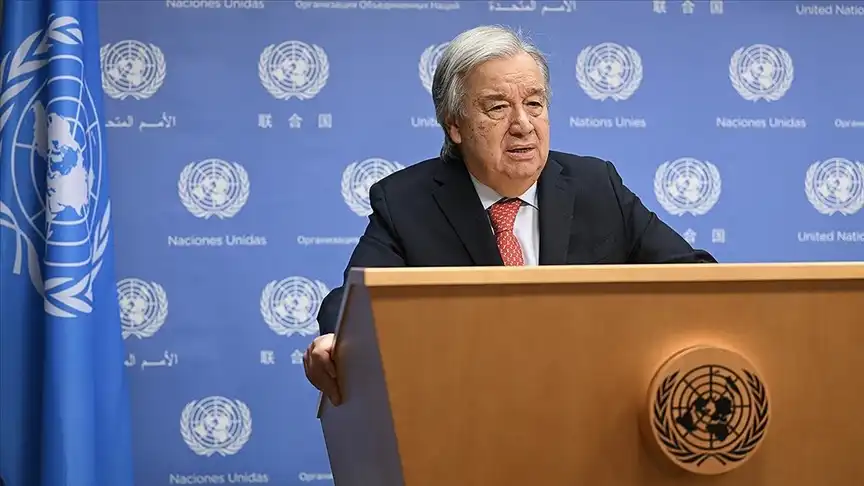
Guterres calls for a ceasefire during Ramadan in Sudan

On Thursday, United Nations Secretary-General António Guterres called on both sides of the conflict in Sudan to cease fire during the month of Ramadan, and to raise the voice for peace.


During a meeting of the UN Security Council, Guterres said: “I call on all parties in Sudan to respect the values of Ramadan by ceasing hostilities.”


He added, "This cessation of hostilities must lead to a final cessation of fighting throughout the country, and chart a specific path towards lasting peace for the Sudanese people."


Guterres warned, "A conflict that leads to regional instability is very dangerous."


He added, "The weapons must be silenced, and the voice for peace must be raised in Sudan."


He pointed out that 25 million people in Sudan need essential aid, and that 14,000 people have been killed since the beginning of the conflict.


He also indicated the displacement of approximately 6.3 million people, while 1.7 million people fled to neighboring countries.


Since April 15, 2023, a war has been continuing in Sudan between the army and the paramilitary Rapid Support Forces. It left about 13,900 people dead and more than 8 million displaced and refugees, according to the United Nations.


With the presence of the Rapid Support Forces in the capital, Khartoum, the coastal city of Port Sudan (east) on the Red Sea was transformed into a temporary headquarters for the state leadership, and there is a port and an international airport.

ARAB AND WORLD

Thu 07 Mar 2024 6:52 pm - Jerusalem Time

Israeli army announces that 18 soldiers were injured in Gaza

18 Israeli soldiers were injured during the fighting in the Gaza Strip yesterday, six of them in serious condition.


According to Israeli army data, it was announced that 12 soldiers were injured yesterday in the battle that took place in the southern Gaza Strip, which resulted in the death of a soldier, five of whom were seriously injured.


Another soldier was seriously injured in another battle in the same area. Data also indicates that among the injuries of the last day, two were moderately injured and ten were lightly injured.

ARAB AND WORLD

Thu 07 Mar 2024 6:41 pm - Jerusalem Time

Israel sets a deadline: an agreement by March 15 or war with Lebanon

Israel has set a deadline of March 15 to reach a political settlement with Lebanon, otherwise it is prepared to escalate military operations into a full-scale war.


The Lebanese Al-Akhbar newspaper added that Israel informed Western countries that it had issued a warning stating that if a political agreement is not reached with Lebanon by March 15, Israel will prepare for escalation in Lebanon with increased military force.


Western diplomatic sources said, “The political track is not sufficient for reassurance, despite the American side’s insistence on drafting the initials of the agreement between Beirut and Tel Aviv, which revolves around consolidating the ceasefire, resolving the dispute over the disputed points, finding a formula for the Shebaa Farms and Kfar Shuba, and formulating a sustainable solution that prevents a collision.” Great.


This has increased the concern of Western countries, which believe that “every effort should be made to support the continuing efforts of the United States and France to implement Resolution 1701 and initiate a border settlement that provides long-term security and guarantees the return of the displaced on both sides of the border.”


The sources said, “Hochstein has become convinced of the difficulty of stopping the fighting in Lebanon before it stops in Gaza, and he is also convinced that Hezbollah does not want escalation,” noting that “the American envoy considers that the truce in Gaza will be like zero hour from which parallel paths will start.” The first is to work to settle the dispute over the border points with Lebanon, without the solution including the Shebaa Farms, in parallel with the deployment of Lebanese army forces in the south with the approval of the parties concerned.


The sources continued, “There is also a conviction that the 45-day period for the truce will be an opportunity to collect aid for the army, mobilize resources, secure the required logistical equipment, and secure the necessary funds.”


As for the French efforts, the sources say that “the Europeans, specifically the British, believe that France must coordinate with the Americans regarding the political arrangements, because the American side intends to launch the route at the time the truce takes effect in Gaza,” noting that “the process of deploying the observation towers that the British proposed to build on the southern border will be among the measures taken and will be coordinated with the Lebanese army and the American side.”

OPINIONS

Thu 07 Mar 2024 6:30 pm - Jerusalem Time

Hebrew Newspaper: Has Israel become stronger or more secure? What have we gained from this war?

Gideon Levy

Gideon Levy

Opinion Writer

After 150 days of war, it is the duty of every Israeli to answer honestly the following question: Is the situation of his country better now than it was on October 6, 2023? Has his country become stronger? Safer? More established? Is it becoming more popular? Have I become more capable of deterrence? Is he more proud of himself? Has he become more autistic? anything?? The surprising fact is that the only logical answer to all the questions posed above is no. Clear and definitive denial.

150 cruel and brutal days did not benefit Israel at all, and will not benefit it in the future. Not in the immediate term, nor in the near future. No goal has been achieved, nothing good for Israel has grown in the soil of this war, and it will not grow. As for Hamas, it has become stronger. It is true that thousands of its fighters fell, but its status as the heroine of the Arab nation rose sharply. Despite this, the Israelis would like an additional 150 days, at the very least. There is zero public opposition to the war, even after 5 months of killing and destruction of insane proportions, global ostracism and hatred of Israel, bloodshed, and economic harm to Israel.

One cannot put his finger on a single place in which the country improved during the aforementioned months, the darkest in its history. Today, Israel has become less secure than it was before the war, in light of the risk of a regional war, and under the sword of global sanctions and the loss of American support. Israel has become a much less democratic state: the damage inflicted by the war on Israel's regime was more serious than any judicial coup one can think of, and the cumulative damage from this war will remain in place even after the army withdraws from the Gaza Strip.

As for Israel's international standing, there is nothing wrong with it, as Israel has never been treated, throughout its history, as a leper afflicted with leprosy and should be isolated, as it is today. Indeed, its normal relations with the United States have deteriorated to a level that we have never witnessed before, not to mention the daily bleeding of dead soldiers, the failure to release the majority of the kidnapped, the thousands of Israelis who are still displaced from their homes, and half of the country that has become a dangerous place that cannot be Walk around in it. As for the West Bank, it is on the verge of an uprising, and as for the deep hatred that we have sown today in Gaza, the West Bank, the Arab world, and in the entire world, there is nothing that will help us uproot it.

All this, and there are no expectations on the foreseeable horizon regarding an improvement in the situation, while Israel stubbornly rejects any proposal to change reality from its foundations. Despite all this, the Israelis are still demanding more, just like the gambler who lost all his wealth in the gambling halls, and is still convinced that what remains for him is another small additional round, to achieve his crushing blow.

In a situation in which 100 Palestinians are killed every day, the Israelis are convinced that an additional 30,000 deaths in Gaza will make Israel a paradise, or at least a safe place. It is difficult for one to remember that such blindness has struck any country in the world, even in Israel. It is also difficult for one to recall a similar case of loss of moral compass. “Let the Gazans hunger, let them thirst, let them suffocate, let them die,” this rhetoric is embraced by even the Israeli left, even the Israeli media. We are being led with our eyes blindfolded, and none of us dares to ask the question: Where to? And How long?? What is important now is to continue fighting the war. Why? Because Hamas wants to stop the war, and we are here to raise it.

We need to ask the question: “What did Israel gain from this war?” We also need to answer this question with courage: Was it right to go to war? We must put aside the (honest) slogans that say that no country would have acted indifferently in the face of such a “brutal” attack on its population, and that any country has the right to defend itself, and respond with a question: What do you want us to do in the face of the attack that occurred? We fell victim to it? Let's look at the outcome of the war and measure our answers based on the outcome: Was our decision correct? After 150 days of finding nothing positive other than continuing to bear the heavy costs, can we begin to question the wisdom of Israel's decision to go to war?

All of this, without even mentioning a single word about the heavy price that Gaza paid, and which was also paid, to some extent, by the residents of the West Bank, whom Israel is now abusing under the dust of war, as it has never been aggrieved in its lifetime.

The majority of Israelis who do not care about the catastrophe that befell the Palestinians, or even make them happy, these many Israelis, must answer the question: Aside from your joy in the catastrophe that befell Gaza, what did you gain from the war? Judge according to the results. Starting now, things will get worse. Do you really want this to happen?

Haaretz

OPINIONS

Thu 07 Mar 2024 6:16 pm - Jerusalem Time

Hebrew Newspaper: Area C will never be Israeli

Shaul Arieli, Gilad Hirschberger, Sion Hirsch-Heibler

Shaul Arieli, Gilad Hirschberger, Sion Hirsch-Heibler

Opinion Writer

Since 2009, both Israel and the Palestinian Authority have been waging a struggle to impose field facts in Area C, even though the Oslo Accords defined its status: Area C is the areas in the West Bank outside Areas A and B. “With the exception of issues that will be discussed during the final negotiations, they will be transferred to the Palestinian Authority gradually, based on this agreement.” Israel is preparing with all its might for the conflict over these areas through several tools, the most important of which is the recent transfer of the “Civil Administration” to the control of Bezalel Smotrich as minister in the Ministry of Defense. 

In 2009, the Palestinians put forward the “Fayyad Plan” in order to establish Palestinian infrastructure and institutions, in preparation for the establishment of a de facto Palestinian state in all areas of the West Bank, with political and financial support estimated at more than half a billion euros, provided by the countries of the European Union.

Our research addresses the issue of Israeli versus Palestinian control in Area C in 4 areas - demographic, geographic, economic and social (mass support). On the demographic level, according to the Central Bureau of Statistics, the number of Israelis living in the West Bank rose from 311,300 in 2010, to 491,548 in 2023 - an increase of 58%. 


Despite the presence of a “full right” government, the increase in 2023 was 13,345 people, 4% less than the annual average in this period. The number of Palestinians in Area C rose from 77,220 in 2010 to 354,000 this year - a 504% increase. This factor explains the dramatic decline in the number of Israelis living in Area C. It also became clear that in 2010, the percentage of Jews in Area C was 81.6%, and it declined in 2023 to 58.1%.

This reality is the result of several factors: The continuing decline in the population growth of Israelis living beyond the Green Line - from 5% at the beginning of the period to 2.7% at its end. As for the immigration balance, which includes immigration to Area C, there is a decline from 4,160 Jews in 2010 to a few hundred in the last four years. Even in 2020, there was negative migration (that is, more Israelis left the area than moved to live in it) and the opposite Palestinian process was observed: a significant migration from Areas A and B to Areas C.

On the geographical level, after the “legalization” of 34 illegal settlement outposts during this period - a small number of which were defined as towns or independent institutions, and most of them as neighborhoods in existing settlements - the number of settlements reached 127 settlements, and the number of illegal outposts reached 121. epicenter. 

In contrast, the number of homes belonging to Palestinians increased (from one house to dozens). The number was 12,522 in 2010, and doubled to reach approximately 28,000 in 2023. This is despite the fact that Israel demolished 8,000 homes in the same period. The total Israeli built-up area, which includes settlements, outposts, industrial areas, military bases, and crossings, reached 80 thousand dunums this year (only 2.4% of Area C), while the Palestinian built-up area in Area C reached 148 thousand dunums (4.44%). 

On the economic level, two opposite trends can be noted. Due to the continuous increase in the proportion of the Haredi population among the settlers (39% today), the number of Israelis allocated to “Eshkol 1” - the lowest on the social index scale - is rising, and has reached approximately half of the community. At the same time, the socio-economic rate of all towns in the West Bank has risen in recent years, as a result of unprecedented government aid in the form of various grants, and today it has reached 4.3 on the socio-economic scale. 

The annual increase in the number of Israeli residents in the West Bank - which in recent years has been based, for the most part, on natural growth, of which the Haredi community contributed 43% - indicates that this trend of weakness and increasing polarization between the Haredim and the national religious and secularists will remain prevalent and distinguish settlers, and will require increased investment in state support.

It is true that the Palestinian community is weaker than the settlers on the economic level, but the Palestinian geographical spread within Area C occurs, essentially, thanks to the private ownership of the Palestinians in the majority of the areas, and also due to external support from Arab countries and European Union countries.

The Israeli policy regarding Area C failed, and not only on the practical level: the attempt to “settle in the hearts” within Israeli society in order to normalize life in the West Bank as an integral part of the State of Israel - failed. Despite the development of more than 100 cultural, tourist and religious resorts in the West Bank, and despite the transformation of the college located in the heart of the West Bank into Ariel University, and despite the obliteration of the green line in official maps and educational textbooks in schools, and despite the overwhelming support from the political elite for the settlement project, Israeli society, for the most part, still has reservations about the policy of supporting settlements.

First, even after the October 7 attack, the Jewish community, in its majority, prefers separation from the Palestinians (55%) over annexation, or the continuation of the existing policy. 


Secondly, Israeli society is cautious about the privileges that settlements receive in exchange for towns inside Israel. When we presented the per capita budget of the local authorities in the West Bank in the year 2023, it turned out to be 3,200 shekels, compared to 2,400 inside Israel, and only a quarter of the Jewish public supports the preference of the local authorities in the West Bank. When we compared, we noticed that for development towns, settlement budgets are higher, with a gap that has been growing over the years - support for this policy is declining, and now includes less than a quarter of the Jewish community in Israel.

From here, it can be concluded that the recent Israeli governments have tried to carry out a camouflage operation, not only against the Palestinians, but also against Israeli society, which, in its majority, opposes the policy of favoring settlements and the violent attempt to control lands in the West Bank.

The shock that occurred on October 7 was an opportunity to reexamine Israeli policy towards the Palestinians and learn from the mistakes of the past. Instead of waging a messianic and losing war over a vast area inhabited by Palestinians who will never be part of the Jewish and democratic State of Israel, and instead of continuing to waste state resources on historically very failed housing projects - the current crisis should be used to change direction. 


If Israel will return to the commitments it signed in the interim agreement; If you treat Area C as a temporary land reserve, it will form part of the Palestinian state in the future. If it adopts broad security thinking, this means ensuring the state’s existence as a safe, democratic state with a Jewish majority; If it wants to return to developing the Negev in general, and the Western Negev in particular, such as the Galilee - it can manage a conflict through a joint effort with all of society in Israel, and stop being captive to a goal that cannot be achieved in the first place.

Source: Haaretz

PALESTINE

Thu 07 Mar 2024 5:36 pm - Jerusalem Time

West Bank: Israel threatens Palestinians with warning leaflets

Today, Thursday, the Israeli forces distributed threatening leaflets warning Palestinians in the West Bank against undertaking any activities during the holy month of Ramadan.


The leaflets distributed to the Palestinians said: “We will strike with an iron hand anyone who tries to harm our security.


We declare it clearly that we will not have mercy on anyone who tries, thinks, incites, or writes against Israel, a march, or an event, and whoever thinks that we will be lenient has made a mistake. This is a clear and frank warning: stay away from Hamas and Islamic Jihad, do not provide them with any support, do not write about them, do not pray for them in the mosques.”


Israel also threatened to withdraw permits from Palestinian family members.

ARAB AND WORLD

Thu 07 Mar 2024 4:39 pm - Jerusalem Time

Netanyahu: We will continue operations against all Hamas sites, including Rafah

Israeli Prime Minister Benjamin Netanyahu said that the army will continue its operations against all sites of the Islamic Resistance Movement (Hamas) in the Gaza Strip, including Rafah, which he described as the movement’s last stronghold.


Netanyahu added that the efforts of the army forces will continue until victory is achieved, and continued: “We are fighting this war in order to ensure our survival.”


He pointed out that there is increasing international pressure on his government and the Israeli army, and that this "is pushing them to unify ranks."


For his part, Defense Minister of the Israeli government, Yoav Galant, said that the forces "achieve the goals of the war by eliminating Hamas as a military entity and one with authority."


Gallant continued: "It is our duty to defeat Hamas in Gaza and recover the detainees. We are developing the army during this war, and we are focusing on the efficiency of its members."


For his part, Israeli Chief of Staff Herzi Halevy said that there are great challenges in the war on the Gaza Strip.


Halevy added that the fighting spirit of army soldiers is strong in Gaza, noting that "there is no substitute for joint action between the forces and responding forcefully to every strike with the same."

PALESTINE

Thu 07 Mar 2024 3:42 pm - Jerusalem Time

27 Gazan detainees died under torture in Israeli military bases

27 Gazan detainees who were held in Israeli military bases died since the beginning of the war on Gaza.


The website of the newspaper "Haaretz" reported on Thursday that the detainees died while being held at the "Sde Teman" base near Beersheba or the "Anatot" base in Jerusalem or during interrogations in other security facilities inside Israel.


The Israeli army claimed, according to the newspaper, that some of the detainees were injured during the fighting and another section suffered from a complex health condition before their arrest.


The Israeli army has arrested hundreds of Gazans since the beginning of the war based on the “unlawful combatants” law, which allows arbitrary arrests without trial. These detainees are not considered prisoners of war. This law allows Palestinians to be detained for 75 days without being brought to court.


Most of the Gazan detainees are detained immediately after their arrest in facilities inside the “Sde Teman” base, which lack the basic necessities of living, and are interrogated by members of Unit 504 of the Israeli Military Intelligence. In many cases, it turns out that these arrests are carried out arbitrarily, as many of them are released after investigations because they are not involved in the fighting, while others are transferred to prisons.


According to data provided by the Israeli Prison Service to the human rights organization “The Center for the Defense of the Individual,” the number of Gazan detainees in prisons under the “Unlawful Combatants Law" is 793 detainees, in addition to hundreds of detainees under “criminal procedures” and an unknown number of Gazan detainees in facilities affiliated with For the Israeli army.


In previous reports, the newspaper quoted Gazan detainees as confirming that Israeli soldiers used violence against them during interrogation. Detainees who have been released clearly show signs of torture. The newspaper also quoted an Israeli source familiar with what is happening in Sde Teman, saying that the soldiers are punishing the detainees and beating them.


A report on an investigation conducted by UNRWA confirmed that Israeli forces used brutal means of torture and abuse against hundreds of detainees from the Gaza Strip, who had been captured since the beginning of the war on Gaza. The report included testimonies from detainees from men and women who said that they were beaten, stripped of their clothes, and robbed. They were blindfolded, sexually assaulted, and denied access to lawyers and doctors, often for more than a month.


Among the detainees who died were two workers from the Gaza Strip who held a work permit. They were arrested immediately after the outbreak of war, claiming that Israel had canceled all work permits for Palestinians following the “Al-Aqsa Flood” attack on October 7 last year.

PALESTINE

Thu 07 Mar 2024 3:15 pm - Jerusalem Time

West Bank: Israel threatens to seize 29 dunums of Sinjil and Turmus Ayya lands

Today, Thursday, the Israeli authorities were notified of the seizure of 29 dunums of land in the towns of Sinjil and Turmus Ayya, north of Ramallah.


According to local sources, the Israeli authorities handed over a military order, requiring them to seize control of these lands until the end of 2026 under security pretexts, in order to erect a fence, preventing citizens from the two villages from reaching the main street.


The sources explained that the order closes the lands overlooking the main street from the Turmus Aya side, as well as the lands overlooking the street from the Sinjil side.

ARAB AND WORLD

Thu 07 Mar 2024 12:36 pm - Jerusalem Time

South Africa: UN is unable to impose peace and save the Palestinians

South African Foreign Minister Naledi Pandor said that the United Nations does not have the ability to impose peace, stressing that if it had, Palestinian lives would have been saved.


The minister's words came in a speech yesterday, Wednesday, during a solidarity event with Palestine organized by the ruling African National Congress party in South Africa, in which she called for urgent reform of the United Nations, "which is no longer effective enough to guarantee security and stability in the world, especially Palestine."


Pandor pointed out that the United Nations must go beyond monitoring peace and have the ability to impose peace. She added, "If it had that, the ability to impose peace would exist on the ground today and lives would have been saved in Palestine."


The Minister reiterated her emphasis on the need for powerful countries, with large armies that supply Israel with weapons, to send their soldiers to the Rafah border to ensure the transportation of aid loaded on 700 trucks to Gaza.


Yesterday, Wednesday, South Africa called on the International Court of Justice to take additional emergency measures against the Israeli army in light of its ongoing war on the Gaza Strip, which has entered its sixth month.


South Africa urged the International Court of Justice to order new measures without holding a hearing “in light of the extremely urgent situation,” adding that there was “a need for further measures to ensure the safety and security of 2.3 million Palestinians in Gaza.”


South Africa had submitted a request to the International Court of Justice to file a lawsuit against Israel against the backdrop of its violations in its war on the Gaza Strip, accusing it of “genocide of a people and violating the United Nations Charter against genocide" according to what the court announced on December 29 of last year.


Last week, South Africa's ambassador to the Netherlands, Vusimuzi Madonsela, appealed to all countries to testify in the case his country filed before the International Court of Justice in order to punish Israel for the crime of genocide in Gaza.


On February 19, hearings began at the International Court of Justice that continued until the 26th of the same month, with the participation of more than 50 countries, during which arguments were presented regarding Israeli practices in the occupied Palestinian territories.


(Anatolia, Al-Arabi Al-Jadeed)


PALESTINE

Thu 07 Mar 2024 12:17 pm - Jerusalem Time

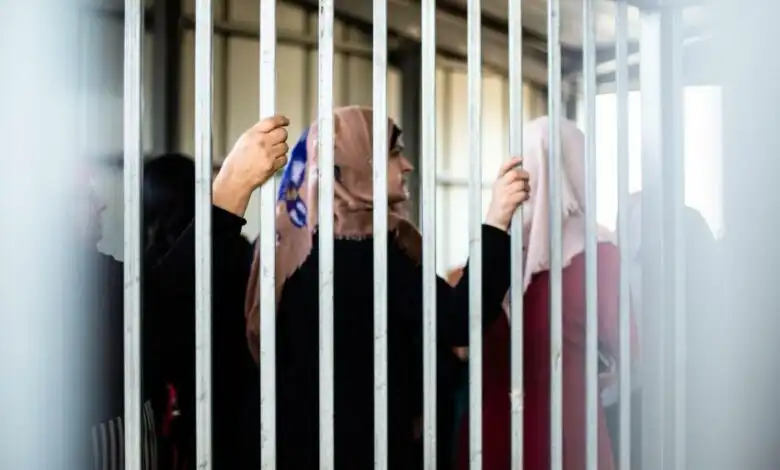
West Bank: 240 women have been arrested by Israel since October 7

Prisoners' institutions said on Thursday, "The number of arrests among women after October 7 reached about 240 in the West Bank, the occupied interior, and occupied Jerusalem."


The prisoner institutions confirmed in a statement that there is no clear estimate of the number of women who were arrested from Gaza, as a number of them were later released, but it is certain that there are still women detained in the Israeli camps, and they are subject to enforced disappearance.


The institutions indicated that the number of female prisoners sitting in the Israeli prisons, the majority of whom are detained in (Damoun) prison, reached (60) female prisoners, including two female prisoners from Gaza who are detained in (Damoun) prison. Among the female prisoners are two minors, (24) mothers, and (12) female prisoners. Administrative detainees include a lawyer, a journalist, and 12 female student prisoners.


The institutions confirmed that (11) female prisoners are facing diseases and health problems, including two wounded female prisoners, in addition to female prisoners who are wives of prisoners, mothers of prisoners, and sisters of martyrs, in addition to the presence of the mother of a martyr among the female prisoners.


It is noteworthy that three female prisoners remain detained since before October 7, and the Israeli authorities refuse to include them in the exchange deals concluded between the Israel and the Palestinian resistance in November of last year.


ARAB AND WORLD

Thu 07 Mar 2024 11:24 am - Jerusalem Time

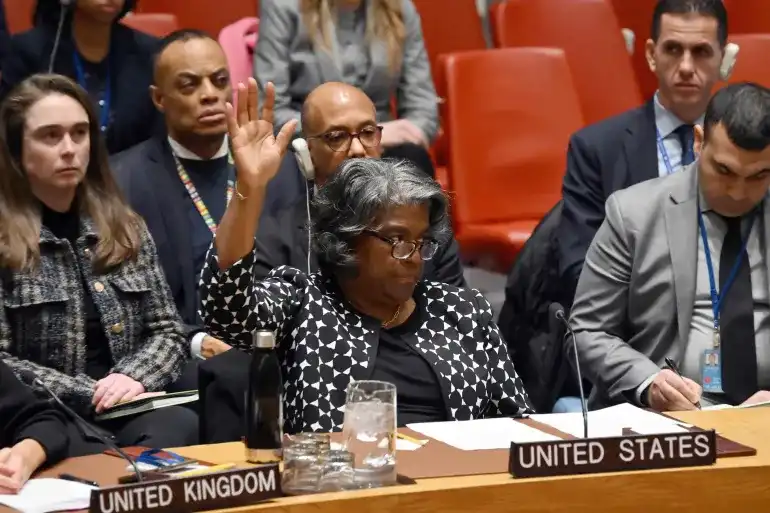
UN criticized Washington for opposing the ceasefire in Gaza

In April 2022, the United Nations Assembly adopted a resolution that became known as the “Veto Initiative,” according to which the General Assembly committed to discussing the rationale for using the veto in the Security Council.


The US administration had resorted to using its veto on February 20, when the UN Security Council met to review the draft resolution submitted by Algeria, which calls for an immediate cessation of fighting in Gaza, ensuring the access of humanitarian aid to the residents of the Strip, and rejecting the forced displacement of Palestinians. Immediately release all hostages.


The vote resulted in 13 members supporting it, with the United Kingdom abstaining from voting, while the United States voted against it.


The use of the veto often leaves the Security Council deadlocked, as is the case with the three previous resolutions to provide aid and demand a ceasefire in Gaza, all of which were rejected by Washington.


Criticism of Washington

General Assembly President Dennis Francis (from the Republic of Trinidad and Tobago) acknowledged the value of the veto initiative, and expressed his regret at the necessity of resorting to it in this case and discussing the rationale for Washington’s use of this right, noting that the situation in Gaza has become “disastrous, unreasonable and shameful.”


Relief organizations around the world stress their concern about the situation in Gaza, and stress that the ceasefire will allow supplies, food and medical care to be safely transported to the area.


However, the United States still refuses to vote in favor of implementing the ceasefire resolution, and instead is acting within the framework of its own negotiations.


Speakers before the General Assembly warned that the United States’ use of its veto power only encourages Israel to continue its crimes against the Palestinian people, stressing that the humanitarian situation in the Gaza Strip is catastrophic and is getting worse as a result.


Qatar's representative to the United Nations, Sheikha Alia Ahmed bin Saif Al Thani, speaking on behalf of the Gulf Cooperation Council, said that the use of the veto cost the Council an opportunity to promote international peace and security, and instead, it sent messages of double standards in international relations. She also expressed her concern about " "The worst humanitarian disaster in modern human history."


It strongly condemned Israeli threats to launch a ground military operation in Rafah, as well as measures for the forced displacement of civilians. She also highlighted the efforts made by her country, Egypt and the United States to achieve a ceasefire, as well as the release of detainees and prisoners.


While Algeria's Permanent Representative to the Security Council, Ammar Benjama, highlighted the importance of the draft resolution presented by his delegation in the Council. He explained that the text presented a clear demand, in line with the call of millions of people around the world, for an immediate ceasefire in Gaza.


Consequences of the American decision

During the US veto discussion session, Washington announced that it would propose to the Security Council its own resolution calling for a temporary ceasefire on the condition that the Israeli hostages are released.


The US veto resulted in slowing down the access of humanitarian aid to civilians as the situation in Gaza worsened. Observers considered that the American position increases Washington's diplomatic isolation and further distances it from the rest of its allies.


In a speech before Dartmouth University, Andor Miller, an official at the US State Department, indicated that his country cannot accept a Security Council resolution that “returns the situation to what it was before last October 7th.”


The representative of the United States, Ambassador Robert Wood, Deputy Head of the American Mission to the United Nations, also indicated that his delegation clearly said last month that the resolution presented to the Security Council will not achieve the goal of sustainable peace, and may in fact conflict with it. He added that the decision in itself would not have resulted in a ceasefire.


Source: Al Jazeera


PALESTINE

Thu 07 Mar 2024 10:57 am - Jerusalem Time

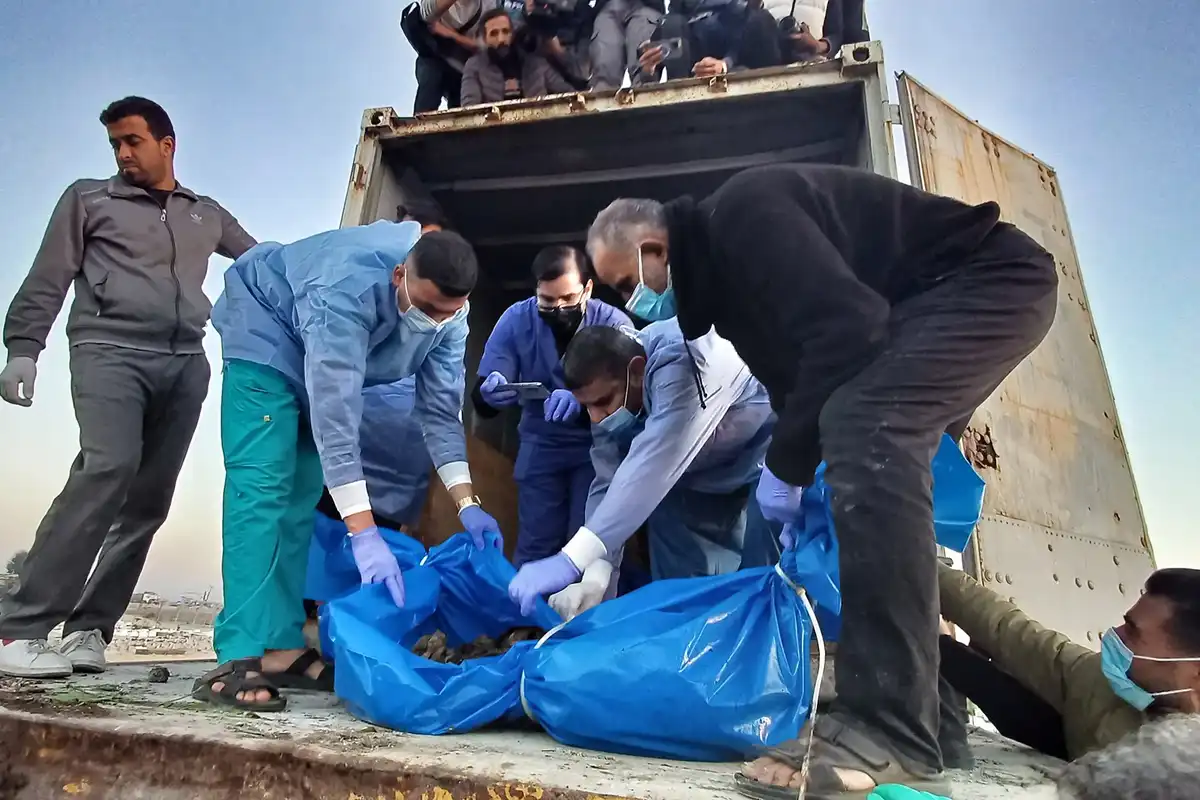
Israel hands over the bodies of 47 dead Palestinians stolen from the Gaza Strip

Today, Thursday, the Israeli forces handed over the bodies of 47 dead bodies that the Israeli army had stolen from various areas of the Gaza Strip, via the Kerem Shalom crossing.


Medical sources reported that the bodies of the dead that were delivered were transferred to Abu Youssef Al-Najjar Hospital in the city of Rafah, south of the Gaza Strip.


On January 30, the bodies of 100 citizens who were killed during the ongoing Israeli aggression since October 7 were buried in a mass grave in the city of Rafah, which the Israeli army had stolen from various areas of the Gaza Strip.


The bodies, some of which were decomposed, of unidentified people were buried. They were stolen by Israeli soldiers from hospitals and cemeteries during their raids into various areas of the Gaza Strip, and were delivered this morning, via the Kerem Shalom crossing.


Medical sources said at the time that inspection of some of the bodies showed that the Israeli army had stolen organs from some of them.


On December 26, the Israeli army returned 80 bodies of dead bodies that it had stolen from Gaza. Their bodies were buried in a mass grave in Tal al-Sultan, west of Rafah.


The kidnapping of the bodies of dead from the Gaza Strip renews suspicions that the Israeli army is stealing organs from the bodies of Palestinian dead.


In 2009, Israeli media revealed that the occupying state owns the largest human skin bank in the world, and years later, the director of the Israeli Skin Bank told Israeli Channel 10, in March 2014, that the bank’s skin reserve amounts to about 170 square meters.


These numbers are considered illogical in Israel. Because it ranks third in the world, its population refuses to donate organs, for reasons and religious beliefs, which has raised doubts about the source of these organs.


Yehuda Hess, who was director of the Israeli Forensic Medicine Institute, admitted in a 2009 documentary about the Palestinian issue to his participation in stealing organs from the bodies of Palestinian martyrs.

PALESTINE

Thu 07 Mar 2024 10:44 am - Jerusalem Time

ActionAid: Gaza women give birth to stillborn fetuses due to increasing risk of starvation

ActionAid International said, “Women in the Gaza Strip are giving birth to stillborn fetuses, due to the increasing risk of famine and the collapse of humanitarian operations.”


The organization explained, in a statement issued today, Thursday, that the sharp increase in malnutrition has led to an increase in deaths among children and stillbirths, and many cases have been recorded in government hospitals of children who died due to malnutrition, and that more than 95% of the women who arrive at the hospital undergo the necessary medical examinations and suffer from anemia.”


It warned of the complete collapse of humanitarian operations in the Gaza Strip, given that a quarter of the Strip’s population is one step away from famine.


It explained that a quarter of the population faces severe levels of food insecurity, and that one in every six children under the age of two in the north suffers from acute malnutrition.


It pointed out that airdrops of humanitarian aid are not sufficient, and there is a need for land transportation of aid, as there is an urgent need for 4,000 truckloads every day to cover basic needs.

PALESTINE

Thu 07 Mar 2024 10:37 am - Jerusalem Time

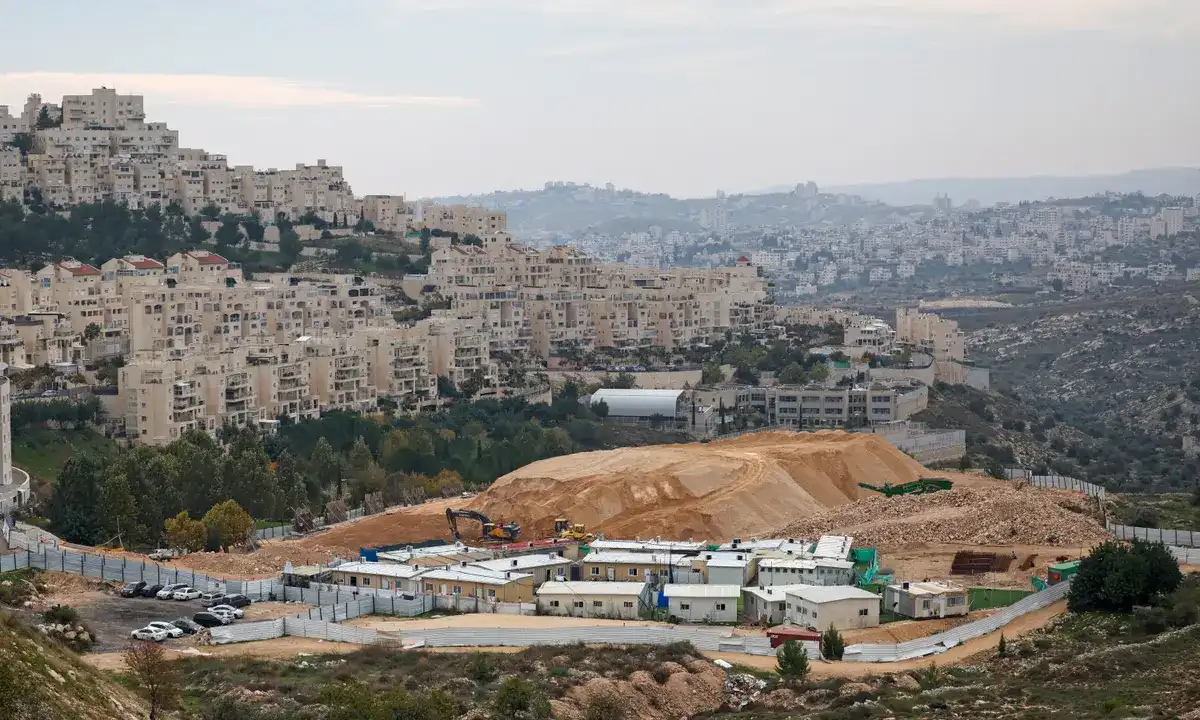
EU condemns the construction of colonial units in the West Bank: it increases tension and threatens peace

On Thursday, the European Union condemned the Israeli government's decision to approve the construction of about 3,500 new colonial units in the West Bank, and urged it to retract it.


The union said in a statement that it condemns "yesterday's approval by the Israeli Supreme Planning Committee of plans to build more than 3,426 housing units, which further expands illegal settlements throughout the occupied West Bank."


The statement added: “The European Union urges Israel to reverse these decisions, and reaffirms that the settlements are illegal, under international law, and constitute an obstacle to peace, because they threaten the two-state solution.”


It continued: "Moreover, the expansion of settlements is completely inconsistent with ongoing efforts to reduce tension, which is increasingly important with the approach of religious occasions such as Ramadan, Easter and Resurrection."


The statement affirmed the European Union's position, stating that it "will not recognize any changes to the pre-1967 borders, including those related to Jerusalem, except for those agreed upon by the two parties."

OPINIONS

Thu 07 Mar 2024 10:19 am - Jerusalem Time

Gaza is paying the ultimate price for decades of media pandering to Zionist bigotry

Jonathan Cook

Jonathan Cook

Opinion Writer

The Guardian and other media continue to prioritise the 'sensitivities' of an ideological minority over the public's right to protest against a genocide in which our elites are complicit

We all understand that, shamefully, a number of Zionist Jews and non-Jews identify so completely with Israel that they are not only willing to excuse the mass slaughter and starvation of civilians in Gaza but think others should not even be allowed to express disquiet at the slaughter.

Hardline Zionists tell us they find concern for the welfare of Palestinians "offensive", and that they feel "unsafe" when others raise such concerns or call for a ceasefire to end the bloodshed.

The question for the rest of us is: How do we deal with those "sensitivities", and how much do we prioritise the “offence” taken by hardline Zionists?

Not unreasonably, most ordinary people place very little weight on the “sensitivities” of those who believe mass slaughter and the starvation of children should be allowed to proceed, at least when weighed against the sensitivities of those opposed to mass death.

What's so weird is the way, as far as official bodies and the western media are concerned, those priorities have been turned upside down.

Here, in typical fashion, the Guardian falls over backwards to indulge the "feelings" of a few Jewish Arsenal fans because they "felt unsafe" and "betrayed" by their club for not more aggressively stopping protests last weekend at a Women’s Super League game by other fans over the complicity of the UK government in Gaza's genocide.

No evidence is produced by either the fans or the Guardian that any Jewish fan was in any danger whatsoever. Just that a few Palestinian flags were smuggled into the stadium, that leaflets and stickers were handed out, and that some protesters tried to “engage” with fans as they arrived at the stadium – presumably in that dangerous tradition of trying to persuade others of the validity of one’s position.

But the Guardian sympathetically dedicates a great deal of space to relaying the concerns of the handful of Jewish fans who "believe their safety was compromised by security staff not curtailing the protest" – that is, those who wanted to prevent an entirely peaceful demonstration taking place in a public space outside the ground.

The story is risible. It is news as therapy for Zionists and gaslighting for the rest of us.

But it is decades of nonsense journalism about Israel and its apologists of precisely this kind that has led us to the dismal place we are today.

The constant indulgence by the political and media class, the constant elevation of these kinds of ugly, ignoble "feelings" – feelings that dehumanise and vilify Palestinians, as well as anyone acting in solidarity with their suffering – the constant treatment of Zionist bigotry as warranted, as justified, as normal, that has gotten us to a position where Israel can commit genocide and its western allies and parts of their Jewish populations can treat it as “offensive” to raise the matter.

If we had not got so entirely used to it, we would immediately understand how completely nuts – and catastrophically inhumane – the coverage is.

PALESTINE

Thu 07 Mar 2024 10:18 am - Jerusalem Time

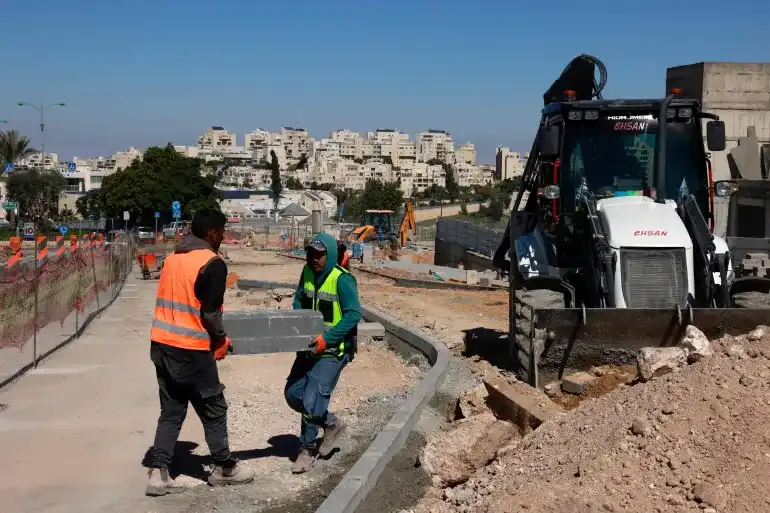
Plans to build 18,000 housing units in settlements in one year

"Israel Today" newspaper said that plans have been approved to build 18,515 housing units in West Bank settlements during the current year, noting that it is the largest number of housing units approved in one year.


The newspaper pointed out that the Supreme Planning Council approved - yesterday, Wednesday - the construction of 3,500 additional housing units in the “Maale Adumim”, “Efrat” and “Kedar” settlements.


It explained that the council meeting came at a symbolic time, as it was held a year after the transfer from the civil authorities in the West Bank to the Israeli Minister of Finance, Bezalel Smotrich, after he assumed a new position in the Ministry of Defense, in addition to the finance portfolio.


"Israel Today" quoted Smotrich as saying that settlement will continue to expand, and that settlement in the West Bank is "Israel's security belt," as he put it.


The Israeli minister added that in parallel with the approval to build housing units, new settlement projects are being promoted - on an unprecedented scale - including the construction of roads in the West Bank.


The Israeli newspaper reported statements by a number of settler leaders in the West Bank in which they praised the acceleration of the pace of settlement in the West Bank in light of the war on the Gaza Strip, and they thanked Prime Minister Benjamin Netanyahu, Smotrich, and Defense Minister Yoav Galant.

PALESTINE

Thu 07 Mar 2024 9:56 am - Jerusalem Time

Wall Street Journal: The return of the residents of northern Gaza is a sticking point in the negotiations

The American Wall Street Journal quoted Israeli sources as saying that Israel has so far rejected in the ceasefire negotiations the demand of the Islamic Resistance Movement (Hamas) for the displaced to return to their homes in the northern Gaza Strip for fear that Hamas will reorganize its ranks there.


The newspaper stressed that the point of the return of the displaced to the northern Gaza Strip has become thorny and sensitive in the ongoing ceasefire negotiations in Cairo since the beginning of this week, as Israel believes that the return of the population to the north will be tantamount to a political victory for Hamas, according to the newspaper.


The newspaper reported that the Arab and American mediators proposed a short truce for fighting in the Gaza Strip that might last a few days, to buy time for a longer ceasefire between Hamas and Israel, to reach an agreement before the month of Ramadan, which is expected to begin on March 10 or 11.


Rafah attack

In a related context, an Israeli official told the newspaper that War Council Minister Benny Gantz was surprised during his visit - last Monday - to Washington by the extent of the distance between Israel and the White House regarding whether the ground military operation in Rafah, which is crowded with displaced people in the far south of Gaza, is feasible.


While Washington believes that the Rafah operation is not implementable, Israel fears that a ceasefire and ending the war will allow Hamas to re-arm if the Israeli army does not launch an operation against it in Rafah, according to what the Israeli official told the newspaper.


The official confirmed that criticism and distrust of Israeli Prime Minister Benjamin Netanyahu dominate the US administration as a result of Netanyahu’s failure to adhere to the guarantees he provided to the administration of US President Joe Biden, especially with regard to the humanitarian aspect and the introduction of aid to the residents of Gaza.


Israel had threatened to begin its ground attack on Rafah on March 10 - that is, the beginning of Ramadan - if Hamas did not release the Israeli detainees, according to the newspaper.


The Qatari, Egyptian and American mediators in Cairo are trying to reach a truce between Hamas and Israel before the month of Ramadan, which usually witnesses tensions in occupied Jerusalem and the West Bank, especially with the occupation imposing security restrictions that limit the access of worshipers to Al-Aqsa Mosque.


US President Joe Biden stressed the importance of reaching a ceasefire agreement in Gaza before Ramadan, fearing the security conditions that Israel might witness during Ramadan.


Although Israel did not send its negotiating delegation to Cairo, the delegations of the mediators and Hamas have been engaged in talks since last Sunday to reach a ceasefire agreement, while the mediators expect that the ongoing talks will lead to a ceasefire in the coming days.


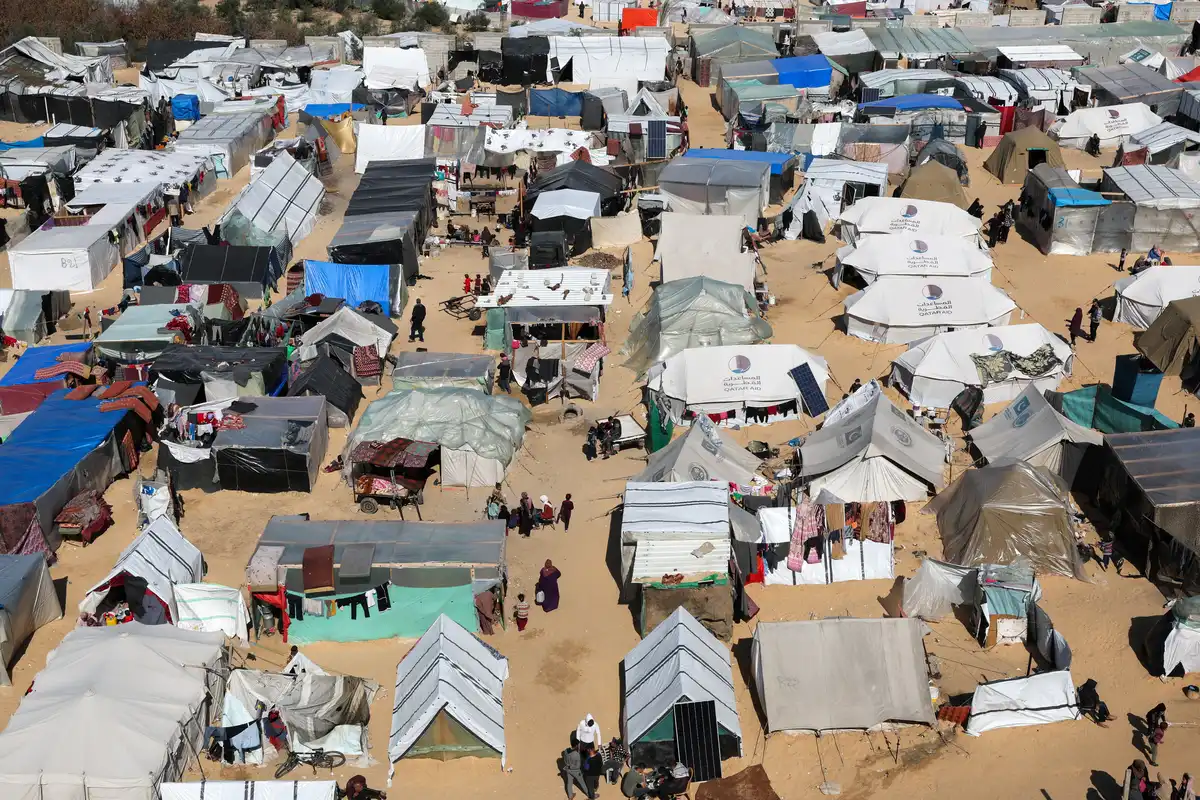
It is noteworthy that Hamas is demanding the withdrawal of Israeli forces from the Gaza Strip, the entry of 500 aid trucks daily, and the release of dozens of Palestinian prisoners in exchange for the release of detainees, as well as the return of the displaced to the northern Gaza Strip and reconstruction.


OPINIONS

Thu 07 Mar 2024 8:05 am - Jerusalem Time

War through our eyes and theirs

Avi Meyerstein and Avraham Spraragen

Avi Meyerstein and Avraham Spraragen

Opinion Writer

Staggering death and destruction have overturned millions of Israeli and Palestinian lives in the flesh, touching nearly every family. To make matters even worse, trauma-by-media is extending the fear and dehumanization of the war to millions more, and most of us are binging on only part of the story. We’re seeing two entirely different wars.  


When our Israeli friends turn on the TV or social media, fallen soldiers lead the news. Poignant obituaries describe loved ones and dreams left behind. Red alerts of incoming rockets interrupt programs. Attacks in the north warn ominously of escalation.  

October 7th footage continues to play on an endless loop. New, even more horrific details continue to emerge. Survivors and hostage families tell their stories while standing in the rubble of their burned-down homes. 

Talking heads ask: How could the worst scenes in Jewish history replay here? For a week, suspense-filled hostage handovers were a nightly TV drama in Israel. Viewers watched in tears as families reunited. Mothers and children ran into each other’s arms, crying and hugging, as kids stepped off the bus from weeks in captivity.  Israeli reports from Gaza share the soldier’s perspective. 

Reports emphasize Hamas’ vast tunnels and arms, that it hides in hospitals and steals aid. A reporter will describe careful, methodical military progress in general terms and share scenes of a soldier treating an injured child or helping an elderly woman. All of these things are true.  And yet, our Palestinian friends see a different war entirely. 

The devastation in Gaza bleeds from their screens. Mothers and fathers carry tiny bodies out of the rubble in small white shrouds with red stains. A six year-old kneels down to kiss his dead sister goodbye. Posts memorialize a young woman who was about to start her career with so much promise. Palestinians watch tragedy strike a familiar face as Al-Jazeera’s Gaza bureau chief learns on TV that his wife, daughter, son, and grandchild have been killed in an airstrike. Cameras follow him to the hospital, where he weeps over their bodies. Within weeks, two more strikes kill his cameraman and then yet another son. 

For Palestinians, the scenes of displacement are also their worst family histories brought back to life. Teeming lines of refugees pass tanks and soldiers, marching to the unknown. People line up for hours for a jug of clean water. Hungry, displaced children dart in and out of makeshift plastic tents as muddy winter rains wash through.  Just as Israelis keep one eye on the north, Palestinians stay tuned to a violent and combustible West Bank. They watch long army caravans snake through Palestinian neighborhoods. They see videos of settler vigilantes chasing families from their homes and soldiers kicking or humiliating detainees.  All of these things are true, as well. Each side sees very little of the other’s suffering. They often don’t see the most troubling images from Gaza and October 7th, respectively. 

Much of the media on each side tracks the injured, killed, and attacks -- but almost exclusively on their side alone. Some even question whether the little news that makes it across the line is true or fake.  Of course, some voices -- the most extreme ones -- do break through. Palestinians hear Israeli far-right ministers call for a new Nakba. Israelis hear Hamas promise to repeat October 7th again and again. From the other side, every Israeli is Ben-Gvir and every Palestinian is Hamas. “They,” it seems, are all a threat. Our bubbles -- in real life and in the media -- dramatically affect how we see the war, ourselves, and each other. 

Without seeing the full October 7th picture, Palestinians were stunned by how much global support Israel received at the start. And without fully seeing the human devastation in Gaza, Israelis can’t understand how so many now criticize the impact of the Israeli response.  Both sides expect the other to recognize its substantial pain and trauma. Many have asked: Does the other side condemn what was done in their names? Our bubbles conspire against us as they push us even farther apart. 

The suffering we don’t see is empathy we can’t feel.  While it’s understandable how we got here, it’s critical that we self-reflect. Knowledge is power. What we don’t see can definitely hurt us. Half-realities and dehumanization fog our decision making -- in battle and beyond. 

They pull us into dangerous blind spots, where we can lose sight of our values, our intentions, and ourselves. They can shrink the space for diplomacy. They can rob our leaders of both the permission and the pressure to find an exit toward a more secure and stable future. Regardless of whether you consider the millions of people on the “other side” to be adversaries or potential partners, it’s important to know what they see. It affects what they think and how they act. How can we hope to navigate such a complex situation -- from war to what follows -- without the full picture?  We can and must correct this. Neither politicians nor the media will save us from this information swamp. But as individuals we can do our part. With the swipe of a finger, we can choose to see “them” and they can choose to see “us.” It's not easy to watch. 

But the power, and responsibility, is literally in our hands. So is the chance to shape the conversation itself. Every click, like, and repost either builds the walls higher or helps to chip them away. The other side has equally moving, tragic, heroic, and inspiring stories if only we see them. There are voices of reason, nuance, and moderation if only we amplify them. There are partners if only we seek them. Fateful decisions lie in the days ahead. Getting them right will take herculean efforts to rise above so much of human nature and also the forces that have deepened this conflict at every turn. It's not too late to climb out of the echo chambers, struggle to open our eyes and our hearts even a little, and search for the paths and partners we’ll need to avoid landing in this awful place again.

-----------------------------------------------------------------------

Avi Meyerstein is the founder and president of the Alliance for Middle East Peace (ALLMEP), a coalition of 160+ Israeli-Palestinian peacebuilding organizations. Avraham Spraragen is an ALLMEP research assistant.

OPINIONS

Thu 07 Mar 2024 8:03 am - Jerusalem Time

The White House tries to steer Israel back onto a two-way street

The Washington Post

The Washington Post

Opinion Writer

By David Ignatius

The Biden administration, worried about a new humanitarian catastrophe, appears to be considering ways to prevent Israel from using U.S. weapons if it attacks the densely populated area around the city of Rafah.

President Biden and senior advisers haven’t made any decision about imposing “conditionality” on U.S. weapons. But the very fact that officials seem to be debating this extreme step shows the administration’s growing concern about the crisis in Gaza — and its sharp disagreement with Israeli leaders over a Rafah assault.

“Israel should understand that the Biden administration’s level of frustration about mishandling of the humanitarian situation in Gaza has reached the limit,” said Martin Indyk, a two-time U.S. ambassador to Israel. “If Israel launches an offensive in Rafah without adequately protecting the displaced civilian population, it may precipitate an unprecedented crisis in U.S.-Israel relations, even involving arms supplies.”

Vice President Harris and national security adviser Jake Sullivan sharply questioned the Rafah attack plan in separate meetings Monday with Benny Gantz, a member of the Israeli war cabinet who was visiting Washington, according to an Axios report. Although Gantz is seen as the chief political rival to Prime Minister Benjamin Netanyahu, the two leaders are said to agree on assaulting Rafah to destroy four Hamas battalions there.

 

The Biden administration fears that the Rafah plan is half-baked — and will worsen the disastrous situation in Gaza without ending the war. Administration officials say they’ve seen no clear plan for how to protect the more than 1 million Palestinians who have been driven toward the Rafah area along the Egyptian border by the fighting farther north.

Biden said in a February call with Netanyahu that the Rafah attack “should not proceed without a credible and executable plan for ensuring the safety of and support for the more than one million people sheltering there,” according to a White House readout. Events since have only deepened the administration’s worries that Israel doesn’t have such a plan for safely moving all these refugees and isn’t dealing adequately with the plight of Palestinian civilians overall.

Any limit on U.S. arms supplies to Israel would mark a sharp break in the relationship — and cause a political furor. A somewhat comparable situation was the 1975 move by President Gerald Ford and Secretary of State Henry Kissinger to “reassess” the U.S.-Israeli relationship and propose a cut in military aid to pressure Israel to agree to a troop-withdrawal deal in Sinai after the 1973 Arab-Israeli War. Ford and Kissinger persisted in the face of intense criticism from Israel supporters; Israel eventually made concessions, and the dispute was resolved after several months.

In banning use of U.S. military aid for a Rafah assault, the administration could argue that it was taking a step similar to its understanding with Ukraine that long-range U.S. missiles can’t be used to target Russian territory.

The administration’s concern that Israel hasn’t planned adequately for Palestinian civilians in Gaza sharpened after more than 100 died and 700 were wounded last week in a pre-dawn rush of an aid convoy in northern Gaza. Some of the Palestinians were killed in a stampede for food; others were crushed by aid trucks; some were shot by Israeli soldiers. Israel had commissioned the convoy of Palestinian trucks but hadn’t provided the security necessary to prevent the disaster, U.S. officials said.

The Biden administration, after hoping for months for better outcomes in Gaza, is beginning to plan for the worst, or at least the most likely. The attempt to head off a Rafah catastrophe is one example of that, but there are others.

The administration has centered its hopes for de-escalation on a hostage release plan before Ramadan, expected to begin around March 10, that would bring a pause in fighting of at least six weeks and an easier path for humanitarian assistance. But Hamas has so far refused to accept the cease-fire that’s on the table, so the administration is weighing what to do if there’s no pact as Ramadan begins.


Among the options: The administration might try to further pressure Hamas through its interlocutors, Egypt and Qatar, perhaps squeezing Qatar to expel Hamas representatives from Doha if they can’t persuade their Gaza colleagues to release hostages.

The administration is also planning a unilateral move to flood Gaza with humanitarian assistance, by airdrops, land convoys and a new floating sea terminal to unload cargo ships offshore. Another sign of realism is the administration’s recognition that its complex “day after” plans — for Saudi normalization with Israel, accompanied by a pathway toward a Palestinian state in Gaza and the West Bank — might not be achievable this year, even if the war ended tomorrow.

Behind the growing tension with Netanyahu is Biden’s feeling that Israel hasn’t been listening to U.S. warnings and advice, and that the U.S.-Israeli relationship has been a one-way street. The administration feels it supports Israeli interests, at considerable political cost at home and abroad, while Netanyahu isn’t responsive to American requests. Israel argues that any space between U.S. and Israeli policy only benefits Hamas. But Israel doesn’t make compromises to narrow that gap.

Simply put: Biden wants Israel to be a good ally and protect American interests — and the lives of Palestinian civilians — as it seeks an endgame in the terrible war that began with Hamas’s brutal Oct. 7 attack. A break in the arms-supply relationship would once have been unthinkable. But as U.S. patience ebbs, it’s something that administration officials seem to have begun considering.

ARAB AND WORLD

Thu 07 Mar 2024 7:59 am - Jerusalem Time

Chinese Foreign Minister: No reason can be used to kill civilians in Gaza

Chinese Foreign Minister Wang Yi on Thursday described the Israeli war in the Gaza Strip as a "disgrace to civilization," reiterating Beijing's calls for an "immediate ceasefire."


"It is a tragedy for humanity and a disgrace to civilization, as today, in the 21st century, this humanitarian catastrophe is unstoppable. No reason can be used to kill civilians in Gaza," Wang told reporters during a press conference in Beijing.


Beijing has been calling for an immediate ceasefire in Gaza since the start of the Israeli war on the Gaza Strip in October last year.


The Chinese Foreign Minister stressed that his country will be a global force for peace and stability. "In the face of complex turmoil in the international environment, China will continue to be a force for peace, a force for stability and also a force for progress in the world," Wang told reporters.


China has historically been sympathetic to the Palestinian issue and supportive of the two-state solution in the Israeli-Palestinian conflict.


President Xi Jinping has called for an "international peace conference" to resolve the conflict.


"There is no reason that can justify the continuation of the conflict," Wang said, adding, "The international community must act urgently and make reaching an immediate ceasefire and cessation of hostilities a top priority."


He added, "Ensuring humanitarian relief is an urgent moral responsibility."


Wang stressed, "We support Palestine becoming an official member of the United Nations."


He said, "The catastrophe in Gaza once again reminded the world of the fact that it is no longer possible to ignore that the Palestinian territories have been occupied for a long time."


He added, "The long-awaited desire of the Palestinian people to establish an independent state can no longer be avoided, and the historical injustice suffered by the Palestinian people cannot continue for generations without being corrected."

PALESTINE

Thu 07 Mar 2024 7:56 am - Jerusalem Time

UNRWA Donors Likely to Resume Funding Soon, Norway Says

Many countries that paused funding to the UN Palestinian refugee agency are likely having second thoughts and payments could resume soon, Norwegian Foreign Minister Espen Barth Eide said on Wednesday.

Several countries, including the United States and Britain, paused their funding to UNRWA after accusations by Israel that a dozen of its 13,000 staff in Gaza took part in the Oct. 7 Hamas attack on Israel.

Norway, a top donor to UNRWA, has maintained its funding and transferred 275 million crowns ($26 million) in February, its regular annual contribution, and said more could come. It is also lobbying countries that have paused funding to resume.

"I think that a large number of those countries who suspended are (having) second thoughts," Barth Eide told Reuters in an interview, citing the recognition from these nations that "they cannot punish the whole Palestinian society".

Advertisement

"This is increasingly recognized and agreed by many," he said, after meeting Norwegian aid organizations to take stock of the humanitarian situation in Gaza.

"But then, of course, they need an honorable way out, which means they are hoping, I think - without speaking for individual countries - that they will get something from these investigations that suggest that they can say: "Well, we needed to suspend, but now we're back'."

The UN is conducting an internal probe, while former French Foreign Minister Catherine Colonna is leading an independent review.

UNRWA sacked the staff accused by Israel of involvement in the Oct. 7 attacks, saying at the time that the Israeli allegations - if true - were a betrayal of UN values and of the people UNRWA serves.

Juliette Touma, UNRWA director of communications, said none of the 16 donors which had frozen their funding had resumed yet, and urged them to reconsider their decisions.

"We are operating from hand-to-mouth. That's how we got through February. That's how we will get through March," she told Reuters. "Every penny counts."

The head of the UNRWA, Philippe Lazzarini, warned on Monday of "a deliberate and concerted campaign" aimed at ending its operations as Israel accused the organization of employing over 450 "military operatives" from Hamas and other armed groups.

The war in Gaza began when Hamas fighters attacked Israel on Oct. 7, killing around 1,200 people and seizing 253 hostages, according to Israeli tallies. Israel's air and ground campaign in Gaza has since killed more than 30,000 Palestinians, health authorities in the Hamas-run enclave say.

‘Irreplaceable’

It was difficult for the US to "come back" to UNRWA, the Norwegian minister said, but there could be solutions, he said, with an "understanding between the US and Europe" on sharing the work.

"The US could do more of something else and Europeans (could) concentrate more on UNRWA," he said, adding that "the combination of Europeans stepping up and Arab states (as well) is probably necessary".

Qatar said on Wednesday it would give an extra $25 million to the UN agency.

There had been suggestions early on by some donors to replace UNRWA with another humanitarian organization, Barth Eide said, but that idea was now "off the table".

"They were told by the rest of the international humanitarian community, UN agencies and NGOs that there is no way to do that in time," he said.

On Friday the European Commission said it would pay 50 million euros ($54 million) to UNRWA but hold back 32 million euros while it investigates with the Israeli allegations.

EU foreign policy chief Josep Borrell said the continued funding showed that the EU acknowledged UNRWA "as an irreplaceable actor".


PALESTINE

Thu 07 Mar 2024 7:29 am - Jerusalem Time

Among them is a journalist...a campaign of raids and arrests in the West Bank

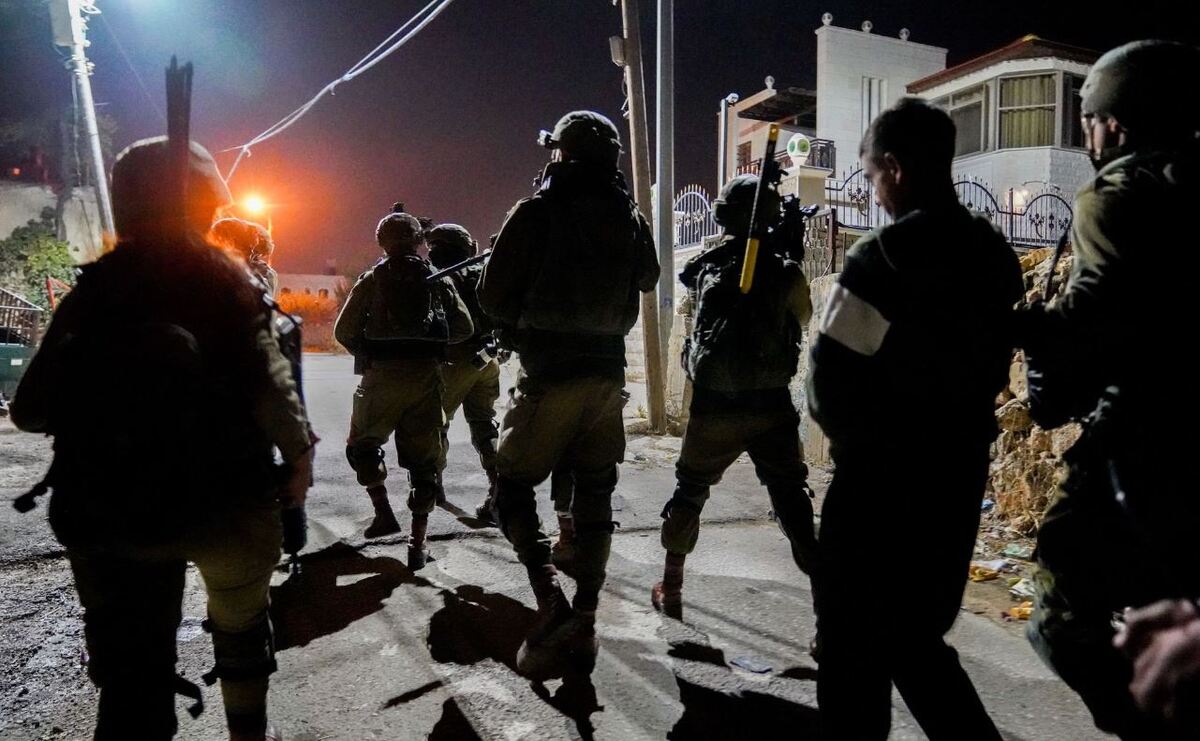
At dawn on Thursday, the Israeli forces launched a campaign of raids and arrests in several separate areas in the West Bank.


According to local sources, these forces stormed several villages and towns in Ramallah, Nablus, Tubas, Hebron, Qalqilya and other cities in the West Bank.


An Israeli force arrested journalist Bushra Al-Taweel after raiding her family’s home in the city of Al-Bireh.


Meanwhile, Raeda Ghanem Al-Barghouthi and Hind Rashad Al-Barghouthi were arrested after storming several family homes in the village of Aboud, west of Ramallah.


Samoud Mutair, the sister of the martyr Ahed Mutair, was arrested from her home in Ramallah.


The young man, Muhammad Nakhleh, the son of prisoner Jalal Nakhleh, was arrested after a raid on his family home in the Jalazoun camp near Ramallah.


In Nablus, the Israeli forces arrested Ayman Al-Masry, a member of the General Secretariat of the Chamber of Commerce in the governorate, after raiding his home.


Meanwhile, the freed prisoner Baraa Shaltaf was arrested after the Israeli forces stormed citizens’ homes on Amman Street in Nablus.


An Israeli force raided the house of the martyr Abdel Fattah Kharousha in the Askar camp and wreaked havoc on it.


Three citizens were also injured as a result of being beaten during their storming of Tubas, amid clashes with resistance fighters.


The Israeli forces detained the Red Crescent crew for a period of time before allowing them to transport the injured for treatment.


In Hebron, the young man Khalil Iyad Bassam Zaqeq was arrested after a raid in Beit Ummar in the north of the governorate.