ARAB AND WORLD

Tue 12 Mar 2024 9:20 pm - Jerusalem Time

The opening of the Holocaust Museum in the Netherlands turns into a “humiliation party” for Herzog (photos)

Activists said that the Netherlands' celebration of the opening of the National Holocaust Museum turned into a "humiliation party" for the head of Israel, Isaac Herzog, and his accompanying delegation, after the place was crowded with pro-Palestine activists.


They pointed out that the Dutch lined the route of Herzog's convoy with traffic signs pointing to the International Court of Justice, deeming the occupation president and his delegation criminals and murderers of the Palestinians.


They pointed out that the opening process took place to the sounds of chants of “Free Palestine,” chants and banners against the occupation and Zionism, and the flags of Palestine were raised, and the sounds of the chants raised for Palestine cannot be erased from the opening moments.


Bahraini activist, Ranwa Al-Amasi, said that on an occasion like this, and the opening of a Holocaust museum, which is considered the most sacred for Jews in modern history, no one expected such an event to happen.


She continued, the large demonstrations witnessed the participation of many Jews opposing the genocide in Gaza and the occupation, and created an unprecedented scene.


She added: "Even Dutch television did not do well in capturing a television scene with clear sound. It was historically recorded that the opening of the Holocaust Museum in Amsterdam occurred to the sound of chants of 'Free Palestine', and it cannot be deleted from the recording."


She said that the largest Dutch newspaper, NRC, opened its issue with a large picture, on half of its front page, with a picture of protesters in front of the museum, instead of the opening event itself.


She saw that "a huge transformation is taking place, no matter how much the Western ruling elites, especially the right-wing ones, try to deny it, noting that the changes are rapid in Europe, and what is strange is that the Arab leaders continue to bet on a losing horse."

ARAB AND WORLD

Tue 12 Mar 2024 9:16 pm - Jerusalem Time

Netanyahu to Biden: The overwhelming majority of Americans stand with “Israel”

Today, Tuesday, Israeli Prime Minister Benjamin Netanyahu told delegates of the Israeli-American lobby AIPAC meeting in Washington that he greatly appreciates the support he receives from US President Joe Biden and his administration, expressing his hope that it will continue.


Netanyahu continued in his speech: “But let me be clear, Israel will win this war no matter what happens.”


He explained, "In order to achieve this, the Israeli army must carry out its military operation in Rafah, otherwise the Palestinian Hamas movement will regroup, re-arm itself, and reclaim the Gaza Strip," according to the Times of Israel newspaper.


Netanyahu continued: “This is an intolerable threat to our future, and we will not accept it. We will destroy Hamas, release our hostages, and ensure that Gaza will never pose a threat to Israel again.”


Netanyahu promises that Israel "will finish the mission in Rafah, while enabling the civilian population to get out of harm's way."


In his criticism of Israel's allies, Netanyahu told them: "You cannot say that you support Israel's right to defend itself, and then oppose Israel when it exercises this right."

He continued: "You cannot say that you support Israel's goal of destroying Hamas, and then oppose Israel when it takes the necessary measures to achieve this goal."


Netanyahu insists, "You cannot say that you oppose Hamas' strategy of using civilians as human shields, and then blame Israel for civilian casualties as a result of this Hamas strategy."


In an indirect message to US President Joe Biden, Israeli Prime Minister Benjamin Netanyahu said, “The overwhelming majority of the American people stand with us, and I know that the overwhelming majority of members of Congress support us.”


Netanyahu's statements to AIPAC delegates in Washington, today, Tuesday, come amid increasing tensions with the White House, due to the ongoing war in Gaza, and the crisis in humanitarian aid reaching the Strip.


The relationship of US President Joe Biden with Israeli Prime Minister Benjamin Netanyahu has been volatile for decades, but these relations have been subject to particular tension in recent months, with Washington’s dissatisfaction with Israel’s continued war in Gaza, amid a growing feeling that Netanyahu is not doing enough to address the issue. the problem.

ARAB AND WORLD

Tue 12 Mar 2024 9:13 pm - Jerusalem Time

The Israeli army representative in the negotiating team resigned because of Netanyahu

The Hebrew Channel 13 said on Tuesday evening that the Israeli army representative in the negotiating team, Major General Reserve Nitzan Alon, resigned from his position.


The Hebrew Channel reported, citing sources, that Major General Allon resigned against the backdrop of Netanyahu’s insistence on preventing the expansion of the powers of the negotiating delegation.


In the first week of March, the Israeli Channel 14 revealed a large series of resignations that had recently taken place in the ranks of the Israeli army against the backdrop of the ongoing war in the Gaza Strip.


Channel 14 said that a number of senior officials in the information system in the Israeli army submitted their resignations.


It reported that "Colonel Shlomit Miller Botbol, who is considered the second-in-command in the Israeli army spokesman's department after Daniel Hagari, also submitted his resignation, in addition to a large number of responsible officers in the army's information department."


The Israeli channel added that "Moran Katz, head of the communications department in the Israeli army spokesman's unit, will leave her job, in addition to the Israeli army spokesman for foreign media affairs, General Richard Hecht."


The channel attributed these mass resignations to the officers' protest against the conduct of operational and personal matters, and explained that the resignations "reflect the state of turmoil" in the information unit managed by Hagari.


Israeli reports in recent months indicate deep disagreements between the government and the Israeli army due to the government's management of the war.


The Israeli War Council (cabinet) has also witnessed widespread disagreements since October 7 with Prime Minister Benjamin Netanyahu over the management of the war and the details of the truce deal, ceasefire, and prisoner exchange with the Hamas movement.


Two Egyptian security sources announced that Cairo had made contact with a number of senior figures in Hamas and Israel, and other mediators, on Sunday, in an attempt to resume negotiations on a truce in the Gaza Strip during the month of Ramadan.


The two sources added, according to Reuters, that Egyptian contacts with Hamas and the Israeli intelligence service Mossad took place on Sunday with authorization from the Egyptian presidency in an attempt to bring together the differing positions of the two sides, without providing further details.

ARAB AND WORLD

Tue 12 Mar 2024 9:06 pm - Jerusalem Time

Axios: Biden and Netanyahu are heading towards a clash because of their red lines regarding the invasion of Rafah

The threat of Israel to invade the city of Rafah, which is crowded with Palestinian refugees, south of the Gaza Strip, has become a major point of disagreement between US President Joe Biden and Israeli Prime Minister Benjamin Netanyahu, after each of them set his red line regarding Rafah, and the dispute reached the point where the US President began thinking about subjugating the military support it provides to Israel under some conditions.


The American news site Axios reported, citing three officials from Washington, that both Biden and Netanyahu have set two contradictory red lines regarding the outcome of the war on Gaza in recent days, which may lead them to a state of collision if Israel decides to invade Rafah in the few weeks. Coming.


Biden's recent positions, which coincide with the presidential race, indicate that he is fed up with the Israeli Prime Minister with the escalation of the humanitarian crisis in the Gaza Strip and criticism of his administration even within the United States, which leads to believe that Washington may increasingly take unilateral steps regarding the war. While ruling out any radical change in its support for Israel.


The United States warned that any Israeli military operation in Rafah, where more than a million people have taken refuge, without planning or with little thought, would be a “disaster,” while the Axios report stated that Israeli invasion of Rafah would push the United States to reconsider its policies, including stopping defending Israel within the corridors of the United Nations, and imposing conditions on how the Israeli army uses American weapons in the war on Gaza.


For its part, the Politico website quoted four American officials familiar with the way the Biden administration thinks that the latter will consider setting conditions on the military aid that his country provides to Israel if it decides to launch a ground invasion of Rafah.


Politico also explained that the possibility of Biden resorting to this step shows the extent of the crisis in the relationship with Netanyahu, who refused to respond to the hidden efforts made by the Biden administration to control his decisions regarding the war on Gaza.


The American news site's report stated that while Biden has not yet taken any decision that sets conditions for supplying Israel with weapons in the future, officials say that he may actually do so if Israel begins a new military operation that increases the tragedy of the Palestinians.


In response to a journalist’s question regarding the invasion of Rafah, Biden said that this would be a “red line” for Netanyahu, but he quickly retracted that by saying: “It is a red line, but I will never abandon Israel. The defense of Israel is still paramount, so there is no red line where I would cut off all weapons so they don't have Iron Dome to protect them."


Later, Netanyahu announced that he intends to start the ground operation in Rafah after the occupation hinted that if an agreement that includes a temporary ceasefire and a prisoner exchange deal was not reached by the month of Ramadan, he would launch the next phase of his war on Gaza with a ground incursion into Rafah.


Netanyahu added: "We will go there (...) We will not leave Gaza. As you know, I have a red line. You know what the red line is, that October 7 will not happen again."


The United States is the main political and military supporter of Israel since the outbreak of the war on Gaza. Washington provides weapons and ammunition, and has used its veto more than once in the UN Security Council to prevent the issuance of a resolution calling for a ceasefire.

PALESTINE

Tue 12 Mar 2024 7:09 pm - Jerusalem Time

West Bank: Israeli settlers attack the town of Burin and burn a vehicle

This Tuesday evening, settlers attacked the village of Burin, south of Nablus.


Local sources reported that settlers from the "Givat Ronen" settlement attacked the eastern area of the village of Burin, and burned a vehicle belonging to the citizen Adel Eid.

OPINIONS

Tue 12 Mar 2024 5:36 pm - Jerusalem Time

Hebrew Newspaper: If we do not come to our senses quickly, we will find ourselves without US support

Haaretz

Haaretz

Opinion Writer

By Yossi Melman

The word that dominated the lecture hall was genocide. Alongside it are complementary descriptions, such as “random killing of children.” The atmosphere was tense, and what should have been a short intervention with questions and answers turned into a conversation of deafness, ending with a third of the attendees leaving in a provocative manner.

Several days ago, I was invited to lecture on Israel's war in Gaza at Oglethorpe University in Atlanta, Georgia. The sponsor was the Jewish student organization “Hillel.” The lecture was open to the audience, which numbered more than 50 students and teachers, a third of whom were members of radical student organizations.

From the beginning, I made it clear that I am a journalist and writer, and I am not a spokesman for anyone, and that I do not support the Israeli government or the war in Gaza, and that since the beginning of the war I have written articles in which I criticized the government and the army’s behavior in Gaza. I asked the audience, as an educated audience that aspires to enrich its information, to show openness and not be carried away by false news and theories.

I described what happened on October 7 as best I could: the “brutal” attack by more than 3,000 Hamas militants on civilian settlements close to the Green Line recognized by international law, and not on settlements built on occupied Palestinian land. It recounted how more than 800 civilians, men, women and children, Israelis and foreigners, Jews, Muslims and Christians, were killed “in cold blood”, more than 230 male and female soldiers fell in battle, and 259 people were kidnapped to Gaza, including bodies...

But I also did not hide that 30,000 Gazans, including 12,000 children, were killed as a result of the Israeli army’s bombing, and that about 70% of the homes were damaged, and more than a million people were displaced from their homes and turned into displaced persons living in tent cities, the majority of whom are on the brink of hunger. They suffer from shortages of food, water and electricity.

I tried to explain that there is a difference between the Palestinians’ right to self-determination, and that I am a supporter of the idea of two states, and “Hamas,” the movement that does not recognize the State of Israel and its right to exist, and the right of the Jews to self-determination, and seeks to establish a “Sharia state” on the entire land of Palestine. “It is run by clerics in accordance with Sharia laws.” Then, a student identified himself as a gay Jew and said that Israel was committing a mass crime against the people of Gaza. When I told him that if he had been in the Hamas state, he “would have been sentenced to death because of his sexual orientation,” he got up and left the hall angrily.

A student who said that her family were survivors of the mass crime in Rwanda 30 years ago, read to me the definition of genocide: “the premeditated killing of a large group of people from a specific people, or from a specific race, with the aim of destroying this people, or this group.” I replied that her definition was accurate, and I drew her attention to the phrase “pre-design,” and I told her that pre-design is what distinguishes mass crime against innocent people, and genocide. She continued that the Turks committed genocide during World War I, and the Nazis did this to the Jews in World War II, and this is what happened in the ethnic war in Rwanda. I added that Israel does not kill Palestinians with premeditated design, despite the presence of voices on the extreme right, and even in the government, calling for such random killing. It seemed that I said too much, so a third of those present left the hall angrily.

Oglethorpe University is a small university known for its good reputation and as one of the most prestigious liberal universities in this state that decades ago was mired in racism and discrimination. What happened in the lecture is just a simple glimpse of the hostility and hatred towards Israel on university campuses and among the younger generation, the future generation.

30 years ago, I wrote with American journalist Dan Raviv the book “Partners in Business,” in which we tried to explain the unintuitive partnership between the United States and Israel. At that time, there were those who said that the further we moved away from the memory of the Holocaust, and because of demographic changes in the United States, the weaker Israel’s position would be. The white population of European descent, who in 2000 constituted about 71% of the total population, decreased to 57%. Israeli leaders should have taken notice of these changes since then, but they have been resting on the laurels of close relations, especially the strategic, military, and political partnership between the United States and Israel.

Hatred against Israel because of its war on Gaza is only the tip of the iceberg that Israel is approaching, which refuses to be convinced that the world, and even the United States, is changing. If we do not come to our senses quickly, Israel will find itself an isolated state, infected with leprosy, and will lose the support of its most important supporting state, without which, the essence of its existence cannot be guaranteed.

ARAB AND WORLD

Tue 12 Mar 2024 5:30 pm - Jerusalem Time

French magazine: Could the Gaza war bring down Biden in the presidential elections?

Under the title: “The American presidential elections... Can the war in Gaza bring down Joe Biden?”, the French magazine “Le Point” said that the American president realizes that the war launched by Israel against “Hamas” puts him in a position of conflict between two crucial necessities for his re-election.


The magazine added that the American president’s dilemma is summarized by Laila al-Abd, a Democratic activist from Michigan, in one sentence: “Joe Biden is financing the bombs that fall on relatives of the families who live here.”


The weight of history, the traditions of supporting Israel, and the importance of the Jewish community in his country force the American president to support the Hebrew state in its revenge war against “Hamas” after the October 7 massacres, but the humanitarian duty is on every individual in the face of the loss of many innocent lives, and even more than, when it comes to an American official who claims to belong to a democratic party in which human rights are one of its basic values, he must do everything in his power to stop the massacre of civilians as a result of the war in Gaza, Le Point says, noting that Biden expressed his hope to stop the massacre of civilians. He opened fire during the month of Ramadan, to no avail, as he had not succeeded, so far, and he even admitted, regrettably, that contrary to the commitments he had made to himself, there would be no ceasefire at the beginning of the month of Ramadan.


The magazine found that even if he now publicly condemns Prime Minister Netanyahu's policies, “which do more harm to Israel than good,” Joe Biden knows that he will be judged on his ability to stop the conflict.


Raids and ground attacks undoubtedly caused the deaths of more than 30,000 people in Gaza, if we refer to the figures issued by the Palestinian Red Crescent, which were also certified by the President of the United States.


A very extensive operation

That's why he launched the bold plan last Thursday during his State of the Union address: Since Gaza has no deep-water port, he decided to create a floating port connected to the coast one kilometer offshore by sea. It will be used by light trucks to transport up to two million meals a day to Gazans. The Pentagon notes that the United States has a specific practice of using these temporary ports to provide emergency assistance to civilian populations. Such operations have been carried out in the past in Haiti, Liberia and Indonesia. But each time, it was about helping refugees after a natural disaster.


In Gaza, it is about helping the victims of the ongoing war. This will require military protection measures, whether to establish the floating port or then protect it. Even if it was unthinkable for American soldiers to set foot on the coast. The operation is supposed to take two months, and a thousand American soldiers will be mobilized.


Le Point says that the experience of dropping food parcels from the air showed its limits and dangers, as one operation resulted in the deaths of 5 people and dozens of injuries. But even this bold plan raises doubts among humanitarian workers on the ground. Sigrid Kadd, the United Nations coordinator responsible for aid to civilians in Gaza, announced that nothing can replace the delivery of food aid by trucks. This is something that Israel does not accept except in moderation.


Is the Arab vote in Michigan essential?

Le Point went on to say that Joe Biden knows that he is playing his re-election card on his ability not to abandon Israel by continuing to supply it with weapons, while protecting Palestinian civilians as much as possible from these same weapons, and above all, by allowing them to survive. life.


Le Point pointed to about six million Arabs living in the United States of America, especially in California, New Jersey, New York, and especially in Michigan, which is one of the states that could fall into one camp or another. During the primaries, which took place on February 29, the slogan of the Arab community was to punish Biden for his lack of firmness in confronting the Gaza disaster through a blank vote. Activists for this cause expected to collect 10,000 votes, but there were 50,000 votes.


In 2020, 64% of American Muslims voted for Biden. Just like the majority of students on campus who have been demonstrating alongside the Palestinians since the beginning of the war in Gaza and who, without voting for Trump, can join the “non-committal” (neutrality) movement come November 5th.


It is time for Biden to convince the Israelis, one way or another, that the destruction of Gaza must end without delay, Le Point says.

ARAB AND WORLD

Tue 12 Mar 2024 5:23 pm - Jerusalem Time

650 Chilean lawyers file a complaint before the ICC against Netanyahu and his government

More than 650 Chilean lawyers filed a legal complaint with the International Criminal Court against the Israeli government and its president, Benjamin Netanyahu, regarding crimes against humanity, genocide, and war crimes against the Palestinian people in the Gaza Strip and the West Bank, including East Jerusalem.


The complaint was submitted by a delegation representing lawyers, headed by Nelson Haddad, the former Chilean ambassador to Egypt, Iraq and Jordan, and the membership of: Senator, Chairman of the Human Rights and International Relations Committee Francisco Shahwan, and researcher-lawyer Rodolgo Marconi.


Haddad said that other lawyers from various Latin American countries are likely to join in supporting the complaint.


ARAB AND WORLD

Tue 12 Mar 2024 2:24 pm - Jerusalem Time

Qatar: We are not close to a ceasefire agreement in Gaza

Qatar confirmed on Tuesday that Israel and Hamas are “not close to an agreement” regarding a truce in the war that has been raging between them since October 7 in the besieged Gaza Strip.


Qatari Foreign Ministry spokesman Majid Al-Ansari said during a press conference in Doha, “We are not close to reaching an agreement, and this means that we do not see the two sides agreeing on a language that can resolve the current dispute over implementing an agreement.”


After weeks of negotiations between the two parties to the conflict, mediated by Qatar, Egypt and the United States, regarding a truce and prisoner exchange, the month of Ramadan began on Monday, amid continued artillery shelling and air strikes amid a worsening humanitarian crisis in the besieged Gaza Strip.


Al-Ansari stressed, "We are continuing to work on negotiations to reach an agreement, hopefully during the month of Ramadan." But he explained that he could not "provide any timetable" for reaching an agreement, noting that "the situation is very complex on the ground."

OPINIONS

Tue 12 Mar 2024 2:19 pm - Jerusalem Time

Is War Between Lebanon and Israel Inevitable?

Nadim Qutaish

Nadim Qutaish

Opinion Writer

The chasm separating Israel and Hezbollah’s assessments regarding the future of warfare in the region is widening in an alarming manner. Hezbollah has tied the cessation of hostilities in South Lebanon to a ceasefire in Gaza, reflecting the "unity of arenas" approach that the axis of Iran and its militias have adopted. Israel’s position has shifted in the opposite direction. It has decoupled its approaches to the arenas in Lebanon and Gaza, announcing that calm in Gaza would not immediately translate into calm in Lebanon.

This divergence highlights the broader, difficult test that the "unity of arenas" theory has been put to since the conflict in Gaza erupted following Hamas' attack on the morning of October 7, 2023. Despite the theory’s spectacular populist pretensions, it is facing immense obstacles in practice. For one thing, Iran's priority is realizing the regime's geopolitical ambitions; Palestine is not an objective in and of itself. Another problem is the complexity of the national interests of the people in these “arenas,” who bear the brunt of the destruction and chaos; a third is the flagrant disparity between the belligerents’ capabilities.

In contrast to the Iranian schema, Israel’s calculus in each of these arenas is independent of developments in the others. It deals with each arena on a case-by-case basis, based on its assessment of the risks that each of these arenas poses and its implications for Israeli security. Accordingly, Israel is using developments on the ground to undercut the theory of "unity of arenas" by exposing the practical challenges to implementing this strategy faced by Iran. Moreover, Israel seeks to portray Tehran as being self-interested and exploitative in its dealings with Hamas and the Palestinians, highlighting the gap separating its rhetoric in support of Palestinians and the feeble actions it takes to support their cause in decisive junctures, like this war.

Israel is mindful of Iran's strategic calculations in its confrontation with Hezbollah, which Iran sees as a strategic shield and the "golden bullet" it can fire at Israel should the latter decide to attack Iranian nuclear facilities. Israel understands that for Iran, safeguarding Hezbollah, its first line of defense, is non-negotiable, but Israel wants everyone else to recognize that as well.

We now know, for example - based on documents obtained by Israelis - that the military leader of Hamas in Gaza, Yahya Sinwar, had been certain that Iran and its militias would rush to support Gaza and turn the fronts they control into a single, unified front. However, that never actually materialized. As for the speeches of Hezbollah leader Hassan Nasrallah about the imminent battles for Jerusalem and Al-Aqsa, they are now held against him. Nasrallah has recently shied away from the podium, only making rare appearances after having given almost weekly speeches at one point.

It will be difficult to prevent this state of affairs from creating tensions among the members of the Iranian axis, especially as it becomes clear that the "unity of arenas" is little more than a slogan adopted to obscure the fact that Iran’s strategy prioritizes Iranian objectives, even if achieving them comes at the expense of Palestinians and Lebanese. If Gaza has all but been left to its fate, then Lebanon must come to terms with the fact that the strikes, attacks, assassinations, and bombings it is witnessing today have become the new normal. They will continue to be a feature of life in Lebanon, regardless of how the situation in Gaza develops.

Recognizing the significance of Hezbollah for Iran's broader strategy, Israel seeks to preemptively remove the party from the equation, in anticipation of a potential conflict with Iran in the future. Israel would feel compelled to confront Iran directly if the latter were to develop nuclear weapons or edge ever closer to developing them, as that would radically change the regional security landscape.

From its perspective, neutralizing Hezbollah weakens Iran's capacity to retaliate and shifts the strategic balance in Israel’s favor. Thus, the dynamics unfolding in Lebanon are not just fleeting skirmishes, but a reflection of Israel’s new rules of engagement. Israel is now focused on targeting and destroying Hezbollah's operational infrastructure and systematically weakening its military capabilities, thereby undermining its ability to mount an effective response to escalation. Indeed, the theoretical appeal of a deal between Hezbollah and Israel was swiftly dispelled by the realities on the ground. Political science does not offer a solution that resolves the fundamental irreconcilability between Hezbollah's ideological commitment to destroying Israel and any form of peaceful coexistence with it.

Here, it is important to note that Iran's exploitative approach to the Palestinian issue is not at odds with its genuine devotion to the destruction of Israel. Rather, they are complementary elements of its broader geopolitical ambitions in the Middle East. Iran’s claims to defending Palestinian rights and supporting factions opposed to Israel have allowed Iran to position itself as a key player in the Islamic world. As for Iran's position on the destruction of Israel, it serves ideological ends tied to the stability and continuity of the revolutionary regime.

This dual approach allows Iran to project strength, pursue its geopolitical interests, and enhance its legitimacy both domestically and among its regional allies. The fact is that to Iran and Hezbollah, reaching an agreement, as things stand, is not a step toward a durable peace but a tactical recalibration. The convergence between Hezbollah's firm ideology which is backed by Iran, and the existential fears that have taken hold of Israel since October 7, sets the stage for seemingly inevitable wars.

Asharq Alawsat

ARAB AND WORLD

Tue 12 Mar 2024 1:41 pm - Jerusalem Time

US intelligence “threat assessment” says Hamas will not disappear

The so-called annual “threat assessment” prepared by US intelligence agencies was released Monday in Washington, and the report said that Israel will likely face resistance from Hamas for years to come, another sign that Israeli Prime Minister Benjamin Netanyahu’s stated goal of “eliminating” the Palestinian group is not true.


“Israel will likely face long-term armed resistance from Hamas for years to come, and the IDF will struggle to neutralize Hamas’ underground infrastructure, which allows fighters to hide, regain strength, and surprise Israeli forces,” the assessment read.


This assessment is consistent with an Israeli military intelligence document distributed last month, which said that even if Israel succeeds in dismantling Hamas as an organized military force, the group will continue to exist as a “terrorist and guerrilla group.”


Other reports said that Israel is actively seeking to destroy the vast network of tunnels under Gaza that are essential to Hamas' survival, and are far more extensive than Israel initially thought.


Chairman of the Joint Chiefs of Staff Charles Brown, the highest-ranking American military officer, had previously said that the mass killing of civilians by Israel in Gaza “would be a recruiting boon for Hamas.”


“The faster you can get to a point where hostilities have ceased, the less conflict there will be for a civilian population that turns into someone who now wants to be the next member of Hamas,” Brown said in November.


Despite the belief that Netanyahu's goal is unrealistic, the United States continues to provide unconditional military support for Israel's genocidal war, which has claimed the lives of at least 31,000 Palestinians, most of them women and children.


The Biden administration is trying to distance itself from Netanyahu by criticizing his government, but the rhetoric has fallen short of a policy change. The US threat assessment said that while Hamas will not disappear, Netanyahu may lose his grip on power.


“Netanyahu’s ability to remain a leader as well as his ruling coalition of far-right and ultra-Orthodox parties that have pursued hard-line policies on Palestinian and security issues may be at risk. The public’s distrust of Netanyahu’s ability to govern has deepened and widened compared to its already high levels before the war, we expect large protests demanding his resignation and new elections, and the report says that the formation of a different, more moderate government is possible.


The assessment also stated that Iran had no role in the Hamas attack on October 7, and acknowledged that Tehran is not seeking a nuclear weapon. “Iran is not currently undertaking the major nuclear weapons development activities necessary to produce a testable nuclear device,” the report stated.


The report acknowledges that Iran's increases in uranium enrichment since the United States tore up the nuclear agreement in 2018 were aimed at gaining leverage in negotiations, not seeking a bomb. “Iran is using its nuclear program to build its negotiating leverage and respond to perceived international pressure,” the assessment says.

ECONOMY

Tue 12 Mar 2024 10:24 am - Jerusalem Time

Siniora Food Industries Company Issues USD 80 Million Bond

On March 10, 2024, Siniora Food Industries Company issued a five-year bond of a total nominal value of USD 80 million.  The bond, which is not convertible into shares, was issued at an annual interest rate (coupon) of 7.75%. The issuance attracted a diverse group of investors, including local and regional banks, insurance companies, and high net worth individuals, and was issued in collaboration with Capital Investments as the issuance manager and Founders & Company as the financial advisor.


In his statement, Siniora Chairman of the Board Tarek Aggad highlighted the advantages of the bond’s issuance, particularly in optimizing the company's capital structure, saying, "This bond will strengthen the company’s capital structure and provide it with the necessary liquidity to enable it to make the necessary capital investments to execute its expansion strategy and increase its market share in promising regional markets in line with its strategic objectives.”


Aggad extended his deepest appreciation to the investors who subscribed to the Siniora Bond, adding that it is an important vote of confidence in the company. Aggad noted that there has always been remarkable interest in the subscription process for Siniora bonds, which is particularly noteworthy given the extremely difficult regional conditions. Aggad went on to add that issuing an USD 80 million bond in Jordan at a 7.75% interest rate - at par with the Jordanian government bond - is a testament to the company’s respected market standing and strong financial performance. 


Aggad expressed his gratitude to Capital Investments, represented by Chairman of the Board Bassem Khalil Al Salem, and Founders & Company, represented by CEO Ala Qumsieh, for their efforts alongside the APIC and Siniora teams in successfully completing the bond issuance.


Siniora Food Industries is a publicly listed company on the Jordanian financial market, and owner of the Siniora, Unium, Polonez, and Al-Masa brands, and is a subsidiary of the Arab Palestinian Investment Company – APIC.


PALESTINE

Tue 12 Mar 2024 10:18 am - Jerusalem Time

‘Not Our Policy’ – Netanyahu Denies Palestinians are Starving in Gaza

Amidst accusations of an “intentional campaign of starvation” in the besieged Gaza Strip, Israeli Prime Minister Benjamin Netanyahu has denied that Palestinians are starving.

Israeli Prime Minister Benjamin Netanyahu has reportedly denied that Palestinians are starving in the besieged Gaza Strip and accused Hamas of “stealing the food.”

Aid organizations and world leaders have criticized Israel for not allowing enough humanitarian aid into the Strip. Amongst them, the UN expert on the right to food, Michael Fakhri, said what is unfolding is an “intentional campaign of starvation” by Israel as 25 Palestinians, according to Gaza’s Health Ministry, have already died due to starvation.

“We don’t have that kind of information. That’s not the information we have. And we monitor it closely,” Netanyahu said in response to the situation, in an interview with Axel Springer, the parent company of the Politico news website.

 He denied that starving the population was his government’s policy.

Netanyahu stated “When we started out putting in the humanitarian convoys, we said there will be one problem. And that is what if Hamas tries to steal the food and the drugs that we’re bringing for the civilian population, for its own terrorist forces?”

He added, “I think the White House said on October 19, if that happens then the international community will have to stop the aid. It’s happened. In bundles. But nobody has asked to stop the aid, and we haven’t stopped it.”

UNRWA says February registered a 50 percent reduction of humanitarian aid entering the besieged enclave compared to January. The agency blamed the “lack of political will, regular closing of the crossing points and lack of security” among the reasons for the decline.

  ‘Hamas is Stealing the Food’

Asked why more aid is not reaching Gaza by land, Netanyahu reportedly said: “Hamas is coming at gunpoint and stealing the food,” adding that “Humanitarian deaths and starvation is, for us, it’s a tragedy. For them, it’s a strategy.”

He continued: “They think that this will help them place more pressure on Israel to stop the war, leave them in place so they can repeat the October 7 massacre.”

 The US and other countries have resorted to dropping aid directly to Palestinians by air.

Special Rapporteur Fakhri has criticized this saying “This is like putting a band-aid on someone who is almost dying. It has very little immediate and long-term impact.”

He said efforts should be focused “on ensuring an immediate ceasefire by pressuring Israel to allow humanitarian aid to enter unfettered and to ensure a permanent ceasefire.”

An airdrop mission on Friday killed five and injured several others when one or more parachutes failed to properly deploy in the Al Shati refugee camp, near Gaza City, according to reports.

 Israeli forces killed and wounded nearly 1,000 Palestinians when they opened fire on Gazans awaiting humanitarian aid in northern Gaza, at the end of February. The “Flour Massacre” was repeated when scores were killed and injured by Israeli shelling a few days later at the Kuwait roundabout, south of Gaza City.

Netanyahu also reportedly dismissed the idea of a ceasefire for Ramadan saying he would “like to see another hostage release.”

He said he does not see “any breakthrough in the negotiations,” because “Without a release, there’s not going to be a pause in the fighting.”

  Over 31,000 Killed

Currently on trial before the International Court of Justice for genocide against Palestinians, Israel has been waging a devastating war on Gaza since October 7.

According to Gaza’s Ministry of Health, 31,112 Palestinians have been killed, and 72,760 wounded in Israel’s ongoing genocide in Gaza starting on October 7.

Moreover, at least 7,000 people are unaccounted for, presumed dead under the rubble of their homes throughout the Strip.

 Palestinian and international organizations say that the majority of those killed and wounded are women and children.

The Israeli aggression has also resulted in the forceful displacement of nearly two million people from all over the Gaza Strip, with the vast majority of the displaced forced into the densely crowded southern city of Rafah near the border with Egypt – in what has become Palestine’s largest mass exodus since the 1948 Nakba.

Israel says that 1,200 soldiers and civilians were killed during the Al-Aqsa Flood Operation on October 7. Israeli media published reports suggesting that many Israelis were killed on that day by ‘friendly fire.’

(The Palestine Chronicle)

OPINIONS

Tue 12 Mar 2024 10:05 am - Jerusalem Time

Biden and Netanyahu's growing rift: Are US-Israel ties at breaking point?

The New Arab- "Al-Quds" dot com

The New Arab- "Al-Quds" dot com

Opinion Writer

By Dario Sabaghi

Analysis: Benny Gantz's recent visit to Washington was a direct message to Netanyahu, but are there cracks in the wider US-Israel relationship?


Last week's visit by Israeli war cabinet minister Benny Gantz to Washington hit a nerve in the relationship between the US administration and Israel’s government, underscoring a personal dimension of the diplomatic tensions between the two countries amid the Gaza war.

Gantz, former chief of General Staff of the Israeli Defence Forces (IDF) and defence minister, and now part of the war cabinet after Hamas's October attack, travelled to Washington for a meeting with several US officials, including Vice President Kamala Harris and Secretary of State Antony Blinken, before heading to the United Kingdom.

His visit to the United States was reportedly aimed at strengthening ties with Washington, ensuring the continuation of US military aid, and discussing various diplomatic initiatives, including a proposed hostage deal with Hamas.

However, Netanyahu wasn't happy about his main political rival's initiative. Israeli media reported that the Israeli PM, apparently unaware of the trip until Gantz contacted him before heading to Washington, told Gantz that "the State of Israel only has one prime minister".

"Gantz's visit to Washington comes amid a moment in the Gaza war in which Netanyahu's ultranationalist cabinet is not complying with US requests"

Furthermore, the Israeli embassy in Washington, DC allegedly received orders not to assist the 'unauthorised' trip.

Gantz's visit to Washington comes amid a moment in the Gaza war in which Netanyahu's ultranationalist cabinet is not complying with US requests.

While US President Joe Biden still backs Israel's public goal of dismantling Hamas's presence in Gaza and continues to support Israel amid the international community's efforts to stop the war, he has been progressively critical of Israel's conduct.

Frustration has been mounting over civilian casualties and Netanyahu's refusal to open more aid routes to Gaza, leading to airdrops. Biden's strained relationship with Netanyahu, which dates back before 7 October's Hamas attack, has worsened with increased Israeli military actions and international criticism, publicly exposing the rift and suggesting that US-Israel ties may be at a breaking point.

Khalil Jahshan, a Palestinian-American political analyst and executive director of the think-tank Arab Center Washington DC, told The New Arab that the US meeting with Gantz is a direct message to Netanyahu.

"This reflects the relationship between Biden and Netanyahu at an individual level. The US believes Gantz is their man in Israel as he is the leading candidate in recent public opinion polls. However, while putting a bit more pressure on Netanyahu, the US hasn't changed its policy toward Israel and the war in Gaza. The US remains obsessed with only asking for a temporary humanitarian ceasefire, not to end the conflict with a permanent, enforceable ceasefire applicable to all parties," he said.

Mairav Zonszein, a senior Israel analyst for the International Crisis Group, told TNA that Gantz visiting Washington without following the ordinary diplomatic protocol has sent a clear message of distrust in Netanyahu's leadership, reflecting a significant sentiment within Israeli society.

"Gantz wanted to show that he could be the next prime minister and a statesman and represent Israel in the US and Britain. But at the same time, the reports from his meeting in the US suggested that the Biden administration sent a message to Gantz that Israel was not aligning with US priorities and used Gantz to put some pressure on Netanyahu without addressing the Israeli prime minister directly," she said.


While supporting the Israeli military initiative in Gaza aimed at dismantling Hamas and securing the release of hostages, the US urged Israel to protect civilians, conduct low-intensity warfare, and allow aid into the area. However, Zonszein argued that there is a significant gap between the US requests and what Israel is implementing. 

Jahshan explained that Israel has unprecedently challenged some core issues of its relations with the US.

"The US has never faced a direct challenge from an Israeli prime minister like at this time. It had conflicts with other Israeli prime ministers, such as Yitzhak Shamir and Ariel Sharon, but they never put the core issues of the Israeli link to Washington at stake like Netanyahu,” he said.

“Furthermore, among the accusations that Netanyahu is facing domestically, he has been blamed for ruining Israeli relations with the US. That has always been a sacred cow. Untouchable. And now it has been touched."

However, Zonszein argued that despite Biden and Netanyahu's disagreement, relations between the two countries haven't changed significantly. 

"The US has never faced a direct challenge from an Israeli prime minister like at this time. It had conflicts with other Israeli prime ministers [...] but they never put the core issues of the Israeli link to Washington at stake like Netanyahu"

"While many criticise Netanyahu for endangering Israeli relations with the US, I don't think that there's actually a shift in the US-Israel relations," she said.

Nonetheless, US support for Israel poses a problem for Biden, potentially affecting his chances of re-election. Biden faces significant criticism, and the US appears embarrassed when the international community urges Israel to halt the war yet the US permits Israel to continue.

Diplomatically, the Biden administration has attempted to initiate discussions with Israel's Arab neighbours regarding the future of Gaza through multiple visits by Blinken to the region, with the aims of involving the Palestinian Authority and seeking the foundations for a two-state solution, a scenario that Netanyahu has firmly rejected.

However, Jahshan argued that although the Biden administration expresses support for a two-state solution, it has not taken concrete action to pursue it. Moreover, its efforts have not been convincing to Arab observers, who doubt the US sincerity and perceive American actions as mere attempts to defuse tensions without genuine commitment to Palestinian statehood.

"The US is using the support for a two-state solution as a fig leaf to cover their failure in this war. Maybe Biden is committed to a two-state solution, but I have doubts. Establishing a two-state solution requires significant preparation and visible changes within the State Department and the White House. Typically, there would be specialised teams dedicated to negotiations. However, we haven't seen such preparations," he said.

Zonszein explained that Israeli leadership, with or without Netanyahu, has consistently supported settlements and occupation and opposed any prospect of a Palestinian state or political process necessitating Israeli concessions.

This highlights a conflict between this stance and longstanding US policy, which supports a restructured PA. While there's agreement for both the US and Israel on the need to remove Hamas from Gaza, Israeli far-right ministers oppose any Palestinian state.

"Netanyahu's government has been mostly monopolised by far-right ministers who are against any kind of Palestinian entity. As Netanyahu's political survival depends on them, any return of the PA to Gaza has been rejected, although he has left a window open by saying that maybe it could be some revitalised PA,” she said.


“But even doing that, both the US and Israel know well that it would still be hard to make that work, and Israel is not actively promoting a symbolic and meaningful political process in that sense.”

While Zonszein believes that the current US Administration would love a new Israeli leadership as much as most of the Israeli public, Biden doesn't want to be seen meddling in Israeli internal politics. 

"The US administration has been looking to Gantz as the person who could replace Netanyahu. However, Biden may be concerned that Gantz won't be able to win or how a new election would look like," she said.

In practical terms, Biden could put more pressure on Israel concerning settlements, the hostage deal, and the presence of Israeli forces in Gaza. However, he didn't do so because this scenario would force the Israeli far-right ministers to reach a moment of decision in which they would threaten to leave the coalition, destabilising the government.

"The US is using the support for a two-state solution as a fig leaf to cover their failure in this war"

However, Jahshan explained that the relationship between Israel and the US, particularly traditional ties between Israel and Biden, who openly declares himself a Zionist, is under scrutiny.

Despite Biden's efforts, including his visit to Israel after 7 October and the deployment of American fleets to the region, Netanyahu's government has not reciprocated or respected the US requests.

"I'm one of the people who keep saying that if anything in the region needs normalisation, it is US-Israeli relations. Biden's tolerance of Israeli actions in Gaza is unprecedented and unacceptable and surpasses even American standards. Such behaviour is abnormal, as the US does not treat any other ally, whether Japan, France, or the UK, in this manner," Jahshan said.

ARAB AND WORLD

Tue 12 Mar 2024 10:00 am - Jerusalem Time

American officials: Biden has lost confidence in Netanyahu

The Israeli Kan channel quoted American officials as saying that US President Joe Biden has almost lost confidence in Israeli Prime Minister Benjamin Netanyahu, and he also confirmed that there is no specific date yet to meet Netanyahu.


The channel added that officials confirmed that Netanyahu's procrastination regarding the relief file for Gaza residents harmed Israel.


For its part, American media quoted Biden as saying that there is no specific date yet for the meeting with Netanyahu, and that Biden currently has no plans to deliver a speech before the Israeli parliament (the Knesset).


The American Politico website also quoted officials as saying that Biden may decide to limit the transfer of weapons to Israel if it launches an operation that exposes more Palestinians to danger.


This comes at a time when Netanyahu escalated his statements regarding moving forward with his plans to invade Rafah (south of the Gaza Strip), where more than two million displaced Palestinians are trapped between starvation and bombing.


This came in defiance of the US President, who had previously warned that such an attack would be a “red line,” in addition to several international warnings against invading the city.


On the other hand, Netanyahu responded by saying that the “red line” for him was “not to repeat the attack of last October 7,” that is, the “Al-Aqsa Flood” operation launched by the Palestinian resistance.


Earlier on Monday, the White House said that the president had made clear that there would be no military operation “unless there is a plan for the security of civilians” there.


This comes in light of the ongoing Israeli aggression against Gaza, which has left tens of thousands of dead, wounded, and missing people - most of them children and women - and massive destruction to residential buildings and vital facilities, amid famine prevailing in the besieged Strip with the scarcity of aid entering.


Source: Al Jazeera + agencies

ARAB AND WORLD

Tue 12 Mar 2024 9:48 am - Jerusalem Time

American report: Netanyahu’s situation is in danger and we expect demonstrations against him

The US intelligence services' global daily assessment report for 2024 stated that "Benjamin Netanyahu's standing as prime minister of Israel is in jeopardy," and that a tough policy toward Palestinian and security issues may be in jeopardy.


The report added, “Distrust in Netanyahu’s ability to rule has deepened and expanded among the public from the high levels it was before the war. We expect large demonstrations demanding his resignation and holding new elections, when there is the possibility of a different, more moderate government.”


ARAB AND WORLD

Tue 12 Mar 2024 9:41 am - Jerusalem Time

US Senate Intelligence: Hamas may resist Israel for years

The Chairman of the US Senate Intelligence Committee, Mark Warner, confirmed in a hearing for the heads of the US intelligence agencies, on Monday, that Israel’s incursion into the Gaza Strip had claimed the lives of an estimated 30,000 Palestinians.


Warner believed that "Israel's war against Hamas demonstrated the difficulty of using military force alone to eliminate a non-governmental entity rooted in the civilian population, especially since it is very adept at using underground tunnels," stressing that "Hamas may resist for years."


Warner expressed concern that Israeli Prime Minister Benjamin Netanyahu's "behavior" in the war threatens to undermine support for Israel in the long term, including in the United States.


He explained, "This international support was essential for Israel's security, and this raises great concern for me, even regarding support for Israel in the United States."


It is worth noting that the session was interrupted while the US Director of National Intelligence, Avril Haines, was beginning to speak by a protester demanding a ceasefire in Gaza.


This session comes at a time when the Israeli army continues its aggression and tightening its siege on the Gaza Strip, on the 157th day of its aggression, with the support of the American administration, which supplies it with military aid and ammunition, while carrying out airdrops of aid to cover up its crimes.

PALESTINE

Tue 12 Mar 2024 9:30 am - Jerusalem Time

West Bank: A campaign of raids and arrests in various cities

At dawn and Tuesday morning, the Israeli forces launched a campaign of raids and arrests in various areas in the West Bank.


In Nablus, the Israeli forces arrested 8 citizens from the town of Urif, namely: Ali Najeh Al-Safadi, Issam Najeh Al-Safadi, Kamal Farhan Shehadeh, Nidal Yousef Shehadeh, Jihad Asaad Al-Safadi, Najeh Asaad Al-Safadi, Fares Ali Al-Safadi, and Ziad Tariq Zidan Sabah.


The Israeli forces also raided a number of homes, searched them, tampered with their contents, wreaked havoc and destroyed some of their contents, while they seized a vehicle belonging to the citizen Issam Al-Safadi.


In Jenin, the young man, Ahmed Muwafaq Qabaha, from the town of Ya’bad, was arrested while he was passing through a military checkpoint near the village of Zabada in the Ya’bad area.


While Al-Quds' correspondent in Jenin reported that Israeli special forces stormed the Jenin camp, and military reinforcements were sent in amid armed clashes with the resistance.


PALESTINE

Tue 12 Mar 2024 9:22 am - Jerusalem Time

Occupied Jerusalem: Hundreds of settlers storm Al-Aqsa Mosque

Today, Tuesday, hundreds of settlers stormed the blessed Al-Aqsa Mosque, amid heavy protection from the occupation police.


The settlers made provocative tours inside the courtyards of Al-Aqsa Mosque, and performed Talmudic rituals.


Groups of settlers storm Al-Aqsa on a daily basis except Friday and Saturday.


The extremist Minister of National Security in Israeli government, Itamar Ben Gvir, intends to make a provocative visit to the Israeli police headquarters near the Buraq Wall in the Old City of occupied Jerusalem, next Friday.

ARAB AND WORLD

Tue 12 Mar 2024 9:17 am - Jerusalem Time

Washington: We are considering delivering aid to Gaza by sea due to insufficient options

The US State Department announced that Washington has begun studying the option of delivering aid to Gaza by sea because other options are not sufficient.


Ministry spokesman Matthew Miller said, during a press conference on Monday evening, that the United States carried out air aid landings during the past week to meet urgent needs in Gaza.


Miller explained that his country is also studying the option of the sea route to provide additional aid.


He continued: "We mentioned before that the sea route will not be a substitute for land aid, but rather will contribute to it. Therefore, we will continue to exert pressure for land aid."


He claimed that there is a slight improvement in the delivery of humanitarian aid to Gaza, and that Washington is making efforts in this regard.


On Sunday, the US Central Command (Centcom) announced, via the X platform, the dispatch of the US Navy support ship General Frank S. Beeson to the coast of Gaza, carrying the necessary materials to build a temporary port.


It indicated that the ship left the Langley-Eustis Joint Base in Virginia (east) heading to the eastern Mediterranean on March 9, less than 36 hours after US President Joe Biden announced his country’s intention to provide humanitarian aid to Gaza through a sea corridor.


US Department of Defense spokesman Patrick Ryder announced on Saturday that the construction of the temporary port that the United States is planning to establish may take 60 days.


Ryder explained that the establishment of the temporary port in Gaza will take place with allies and partners in the region, noting that soldiers from 7 transportation brigades in Virginia have been allocated for this purpose.


In his State of the Union address on Friday, President Joe Biden announced that he had instructed the army to establish a temporary port near the coast of Gaza, indicating that more humanitarian aid would enter Gaza by sea through the port without American soldiers setting foot on Gaza soil.

He added: “This temporary port will enable large amounts of humanitarian aid to enter Gaza every day, but Israel must also do its part, and must allow more humanitarian aid to enter Gaza, and ensure that humanitarian workers are not exposed to fire, and   “I told the Israeli leaders that humanitarian aid cannot be a bargaining chip or a secondary issue.”

PALESTINE

Tue 12 Mar 2024 9:15 am - Jerusalem Time

UNICEF: The atrocities to which the children of Gaza are exposed are indescribable

Ricardo Perez, spokesman for the United Nations Children's Fund (UNICEF), said that he cannot find appropriate words to describe the horrors that Gaza's children are exposed to due to famine.


Peres called for an end to the war to end the nightmare that residents are experiencing, stressing the necessity of an immediate ceasefire in the Strip.


He added that children are the group most affected by the disaster of famine and malnutrition in the Gaza Strip.


UNICEF had said in a previous statement: “Gaza has become a graveyard for thousands of children. It is a living hell for everyone.”


It added that "more than 80% of children in Gaza suffer from severe food poverty."

PALESTINE

Tue 12 Mar 2024 9:10 am - Jerusalem Time

UNRWA Commissioner: Israel prohibits the entry of life-saving supplies into Gaza

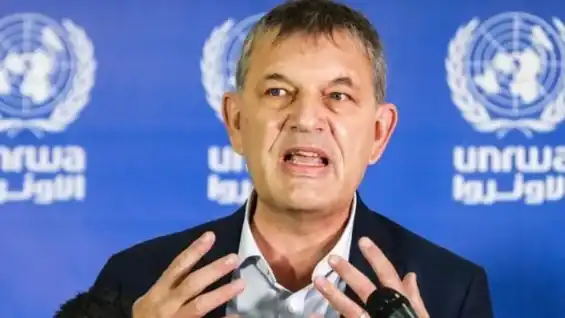
The Commissioner-General of the United Nations Relief and Works Agency for Palestine Refugees (UNRWA), Philippe Lazzarini, said that Israel banned the entry of critical aid - including ventilators and cancer drugs - into Gaza, and returned an aid truck because of medical scissors.


Lazzarini stated in a post on his account on the “X” platform that all residents of Gaza depend on humanitarian aid to survive, and added, “Very little is coming and restrictions are increasing.”


He explained, "A truck loaded with aid was returned because it contained scissors used in medical kits for children."


He stressed that the list includes basic and life-saving materials, including anesthesia medications, solar lights, oxygen cylinders, ventilators, water purification tablets, cancer medications, and maternity supplies.

PALESTINE

Tue 12 Mar 2024 8:57 am - Jerusalem Time

War on Gaza: Israel commits 8 new massacres in Gaza, killing 72 people

The Ministry of Health in the Gaza Strip announced today, Tuesday, that the Israeli army committed 8 massacres against families in the Gaza Strip, killing 72 citizens and injuring 129 during the past 24 hours, which raises the death toll of the aggression to 31,184 people and the number of injured to 72,889 since last October 7.


The Ministry indicated that there are still a number of victims under the rubble and on the roads, and the Israeli army prevents ambulance and civil defense crews from reaching them.


Dozens of citizens were killed and injured as a result of the intense bombardment by Israeli warplanes and artillery shelling on various areas in the Gaza Strip, on the 158th day of the Israeli aggression on the Gaza Strip.


Medical sources reported that seven citizens, including five children, were killed, and six others were injured, when the Israeli army bombed a house for the Al-Saqqa family in the Al-Zaytoun neighborhood.


Health sources in the Gaza Strip said that 7 dead and more than 20 wounded were transferred to Al-Shifa Medical Complex after the Israeli army targeted the people at the Kuwait Junction in Gaza City, while they were waiting for aid to arrive.


A number of citizens were also injured in an Israeli bombing that targeted a house in the Saudi neighborhood, west of the city of Rafah.


Artillery shelling will target the eastern areas of Abasan Al-Kabira and Khuza’a in Khan Yunis, resulting in the death and injury of a number of citizens.


The Israeli army committed 7 massacres against families in the Gaza Strip, claiming 67 killed and 106 injured during the past 24 hours. Thus, the toll of the Israeli aggression, which is not final, rose to 31,112 killed and 72,760 injured since last October 7, according to what the Ministry of Health reported yesterday. Monday.

ARAB AND WORLD

Mon 11 Mar 2024 10:00 pm - Jerusalem Time

Biden: There will be no military operation in Rafah without a plan for civilian security

The White House said on Monday that President Joe Biden had made clear that there would be no military operation in Rafah (south of the Gaza Strip) “unless there is a plan for the security of civilians” there, in light of continued Israeli threats to invade it.


He explained in a statement, "We have not yet seen implementable plans regarding the security and safety of more than a million civilians in Rafah," noting the President's administration's efforts to achieve a temporary ceasefire in Gaza, "which provides the basis for sustainable peace, alleviates suffering, and returns detainees in the Strip."


For its part, the US State Department said today that "Israel has not yet provided us with its plan" to protect civilians before launching a military operation in Rafah.


This coincides with Israeli Prime Minister Benjamin Netanyahu yesterday renewing his intention to move forward with his plans to invade Rafah, in defiance of the American president who previously warned that such an attack would be a “red line,” in addition to several international warnings against invading the city.


Netanyahu added to the American news site Politico that the “red line” for him is “not to repeat the attack of last October 7,” that is, the “Al-Aqsa Flood” operation launched by the Palestinian resistance in response to the occupation’s attacks against the Palestinians and Al-Aqsa Mosque.


On the other hand, the US Central Command said that it carried out an airdrop of aid to northern Gaza to provide what it called “basic relief for civilians,” while the US State Department confirmed that the decision to establish a sea corridor to bring aid into Gaza is not an alternative to bringing it in by land.


The US State Department indicated that it will wait until the United Nations investigation into the United Nations Relief and Works Agency for Palestine Refugees (UNRWA) is completed before making the decision to resume its funding.


This comes in light of the ongoing Israeli aggression against Gaza since October 7, 2023, which has left tens of thousands of victims martyred, wounded and missing, most of them children and women, and massive destruction to residential buildings and vital facilities, amid famine looming over the besieged Strip with the scarcity of aid entering.

PALESTINE

Mon 11 Mar 2024 9:45 pm - Jerusalem Time

World Food: More than half a million people in Gaza suffer from hunger

The World Food Program warned on Monday that the holy month of Ramadan begins in the Middle East while the region faces an unprecedented hunger crisis against the backdrop of conflicts, economic challenges and climate change.


The World Food Program’s Regional Director for the Middle East, North Africa and Eastern Europe, Corinne Fleischer, said in a statement: “We enter the month of Ramadan while the region is experiencing the worst food crisis in its modern history in the Gaza Strip.”


At the same time, in other countries in the region, prolonged conflicts and economic crises have turned the basic ritual of fasting in the holy month of Ramadan into a harsh daily reality for millions of people, according to the same statement.


The UN official noted that “more than 40 million people across the region suffer from severe levels of food insecurity.”


Fleischer explained: “Six months into the Gaza crisis, the entire population of the besieged Strip is now in dire need of food aid, with more than half a million people facing catastrophic levels of hunger (IPC Phase 5) while the risk of famine is increasing day after day".


As a result of the war and Israeli restrictions, the residents of Gaza, especially the Gaza and northern governorates, are on the verge of famine, in light of a severe scarcity of food, water, medicine and fuel supplies, with the displacement of about two million Palestinians from the Strip, which has been besieged by Israel for 17 years.


PALESTINE

Mon 11 Mar 2024 9:00 pm - Jerusalem Time

Hebrew media: Israel transferred 70 orphans from Gaza to Bethlehem

Israel announced on Monday evening that it had allowed the transfer of more than 70 orphans from the Gaza Strip to the West Bank.


The Hebrew Channel 12 said that the orphans belonging to the SOS Children's Villages in Gaza were transferred to the Children's Village in Bethlehem, and among them were adults who had left these villages and came to accompany the children.


Channel 12 described that the transfer of the children took place in coordination between the Israeli army and the so-called Civil Administration, in an “exceptional” operation, during which large forces were mobilized for the purpose of the transfer operation along the traffic axis from the Taba crossing to the tunnel road south of Jerusalem, to allow buses of orphans and their companions to pass. To pass safely into the territories of the Palestinian Authority.


It explained that the political and security cabinet did not receive any update regarding this step, and did not issue a decision approving it.


It added, "This extraordinary humanitarian gesture came at the request of the German embassy, and was done despite the fact that Hamas, which controls the Gaza Strip, is not prepared to even name the names or numbers of the living kidnapped."


A senior Cabinet official said, "This is a scandal and immoral behavior towards the kidnapped people in Gaza and their families."


PALESTINE

Mon 11 Mar 2024 8:04 pm - Jerusalem Time

Israeli special forces opened fire on a group of workers north of Tulkarm

On Monday evening, an Israeli special force opened fire on a group of workers as they passed through the apartheid separation and expansion wall west of the town of Attil, north of Tulkarm.


According to local sources, members of the Israeli Special Force were riding in a civilian vehicle, and they opened fire directly on a number of workers as they were returning from work inside the 1948 territories and passing through the openings of the wall.


The sources added that it has not yet become clear whether there are injuries among the workers, as the Israeli forces prevented the ambulance from reaching them.

PALESTINE

Mon 11 Mar 2024 7:45 pm - Jerusalem Time

Israeli doctors: The spread of epidemics in Gaza poses a health threat to Israel

Israeli doctors said that epidemics are spreading in the Gaza Strip, as a result of the destruction of the energy and water infrastructure, expressing their fear that these epidemics will spread to Israel.


On Monday, the Israeli Broadcasting Authority quoted a report prepared by senior doctors that epidemics are spreading in the Gaza Strip as a result of the destruction of the energy and water infrastructure there.


It explained that the disturbing report was signed by the Association of Public Health Physicians, and medical specialists from hospitals and universities in Israel.


According to data collected by international organizations that were able to enter Gaza and monitor the diseases spreading there, at least 312,000 people suffer from acute respiratory infections, according to the report.


In addition to at least 220,000 patients suffering from acute diarrhea, more than half of whom are children under the age of five, according to the same source.


It was also found that there were at least 6,600 cases of chickenpox in the Gaza Strip, in addition to a large outbreak of hepatitis A, according to the report.


Sewage

The broadcaster quoted Professor Nadav Davidovich, from the Public Health Doctors Syndicate, as saying in the report that the sewage flowing into the sea in Gaza will also move to Israel, and there is a danger that it will pollute its beaches. He added that epidemics know no geographical borders.


Davidovich warned of the possibility that animals could transmit diseases to Israel, and among other things, mosquitoes whose season will begin soon could carry and transmit diseases between people, thus causing infection.


In this context, the Israeli authority said that the researchers sent the report to the government and Prime Minister Benjamin Netanyahu, considering this a medical and strategic threat.


At the beginning of this March, the Palestinian Ministry of Health in Gaza announced that about one million cases of infectious diseases had been detected in the Strip, which has a population of about 2.3 million, warning of the repercussions in the absence of the necessary medical capabilities, and calling on the United Nations to provide means of survival for the residents of the Strip.


As a result of the war and Israeli restrictions, the residents of the Gaza Strip, especially in the Gaza and northern governorates, are in the grips of famine, in light of a severe scarcity of food, water, medicine and fuel supplies, with the displacement of about two million residents of the Gaza Strip, which has been besieged by Israel for 17 years.


Since last October 7, Israel has been waging a devastating war on the Gaza Strip, leaving tens of thousands of civilian casualties, most of them children and women, in addition to an unprecedented humanitarian catastrophe, massive destruction of infrastructure, and a famine that is now ravaging a number of areas.

ARAB AND WORLD

Mon 11 Mar 2024 5:40 pm - Jerusalem Time

South Africa: Israel does not implement “ICJ resolutions to prevent genocide in Gaza

The State of South Africa said that Israel does not implement the decisions of precautionary measures issued by the International Court of Justice, in the context of the genocide case in Gaza.

South African President Cyril Ramaphosa confirmed on Sunday that Israel does not implement the decisions issued by the court.


Ramaphosa said in press statements: “Israel has not complied with the order issued by the International Court of Justice, and therefore, we found it appropriate to submit an urgent request to the court to resolve the problems in the Rafah area, in which more than 100 people were killed.”


He indicated that they want the International Court of Justice to take another decision on how to deal with this issue, and ways to prevent new incidents.


He added, "Another worrying issue is that people in Gaza are dying of hunger, as many organizations have warned."


In this context, 12 Israeli human rights organizations said that Tel Aviv did not comply with the decision of the International Court of Justice regarding facilitating the entry of aid into the Gaza Strip.


The organizations explained that the court order “is a legal obligation to end the humanitarian catastrophe in Gaza and must be implemented.”


Urgent request

The International Court of Justice announced last Wednesday that South Africa had submitted an urgent request to specify additional precautionary measures, and to amend the court’s order issued on January 26, 2024, and its subsequent decision issued on February 16, in the case filed against “Israel”, related to By implementing the Convention on the Prevention and Punishment of the Crime of Genocide in the Gaza Strip.


The Court of Justice explained that South Africa stated in its new request that it was forced to return to the court in light of the new facts and changes in the situation on the ground in Gaza, especially the widespread famine.


This is the third request submitted by South Africa against Israel to the court, which is the highest judicial body in the United Nations, since Tel Aviv began its devastating war on the Gaza Strip 5 months ago.


In response to the case filed by South Africa on December 29, 2023, the International Court of Justice, on January 26, 2024, ordered Tel Aviv to take “measures to prevent acts of genocide against Palestinians and improve the humanitarian situation in the Gaza Strip,” which is besieged by Israel for 17 years. The court also ordered “Israel” to submit a report within a month of the issuance of the decision regarding the extent to which it has implemented these measures.


OPINIONS

Mon 11 Mar 2024 5:33 pm - Jerusalem Time

Why Middle East space geopolitics are back in the spotlight

The New Arab- "Al-Quds" dot com

The New Arab- "Al-Quds" dot com

Opinion Writer

By Paul Iddon

Analysis: With more countries developing space programs and launching satellites, is a Middle East space race inevitable?

Iran has had growing success in recent years in placing satellites into orbit, with the most recent launch in February underlining increasing cooperation with Russia.

The United States, in particular, has criticised these launches, charging that they have an ulterior military purpose.

However, Iran is not the only country in the wider region with a space program or sophisticated satellites.

“Israel, Turkey, Saudi Arabia, the United Arab Emirates, and Iran all have varying degrees of advanced satellites,” Ryan Bohl, a senior Middle East and North Africa analyst at the risk intelligence company RANE, told The New Arab.

“Pro-Western countries generally don’t need satellites for commercial capabilities on their own; they can often utilise US ones for that,” Bohl said. “But for spy satellites and military communications, satellites are a key means for a country to develop independent communication lines and the ability to survey rivals from space,” he added.

“Iran is still relatively far behind on this front, but that’s part of why they’re launching more rockets into space to catch up with a more advanced satellite nation like Israel.”

"Israel, Turkey, Saudi Arabia, the United Arab Emirates, and Iran all have varying degrees of advanced satellites"

External assistance

Russia launched the Iranian Pars 1 imaging satellite into orbit from its Vostochny Cosmodrome in the Russian Far East on 29 February using a Soyuz rocket. The satellite has three cameras and is intended to scan Iran’s topography.

Russia previously launched Iran’s high-resolution imaging Khayyam satellite from the Baikonur Cosmodrome in Kazakhstan in August 2022. While Iran stated the satellite wasn’t for military purposes, Western intelligence officials alleged Russia planned on using it to assist its war effort in Ukraine, a charge Iran denied.

“There has long been a growing military collaboration between Iran and Russia, which has reached a qualitatively higher level in recent years,” Arash Azizi, senior lecturer in history and political science at Clemson University and author of The Shadow Commander: Soleimani, the US, and Iran’s Global Ambitions, told TNA.

“There are now significant sections of Iran’s military and political establishment devoted to working closely with Russia.”

Nevertheless, Azizi noted that the satellite launches are not unprecedented, pointing out that the Khayyam launch came shortly after Russian President Vladimir Putin visited Tehran, his first trip abroad since launching his full-scale invasion of Ukraine in February 2022.

“We should also remember that Russia is a major space power on a global scale, which means lots of countries collaborate with it in this regard,” he said.

Furthermore, Russia isn’t the only external power assisting Middle Eastern countries with space programs.

“Certainly, the US and Israel have a long history of space cooperation and intelligence sharing through satellites, and the US has put astronauts from countries like the UAE into orbit as part of budding space cooperation work,” Bohl said.

“China is also deepening its ties with the region through investment in space-related infrastructure through its Belt and Road Initiative.”


A Middle Eastern space race?

With more Middle Eastern countries developing space programs and launching satellites, a regional space race may seem inevitable, especially between rival regional powers.

“There is to an extent a ‘space race’ that is more about prestige than anything else, particularly for countries like the United Arab Emirates, which sees its space program as a way to develop high tech industries as part of its overall economic diversification program,” Bohl said.

“For that to work, it needs to be a credible, successful, and cutting-edge program. But the UAE isn’t going alone in this way: it’s working with the Israelis to land a craft on the moon later this year,” he added.

“I wouldn’t call it a space race in the way it was between the Soviets and Americans, but rather a race to develop technologies and unique capabilities that improve their economic outcomes and lean into their defence diversification programs.”

Despite Israel and Iran having satellites in orbit, Bohl highly doubts either of these adversaries will do anything to disrupt or interfere with each other’s space operations anytime soon.

"There is a race to develop technologies and unique capabilities that improve economic outcomes and lean into defence diversification programs"

“This seems very unlikely at the moment for the same reason we aren’t seeing US-Russian tensions manifest into the same behaviour,” the analyst said. “That is, to do so invites retaliation that is hard to stop and may end up causing major problems in space should it result in satellites being damaged or destroyed and causing debris fields.”

Iran successfully launched a monkey into space in 2013, saying the launch brought it “closer to sending a man into space”.

More recently, Turkey’s first astronaut, Alper Gezeravci, returned home from a three-week private mission to the International Space Station in February, where he received a hero’s welcome. Ankara also has plans to send a spacecraft to the moon as soon as 2026.

Bohl does not think Turkey’s space program aims to compete against its Iranian counterpart directly nor perceives it as a threat. 

“I tend to think that’s less the driver than Turkey’s desire for a space program to help serve its economic interests,” he said. “Iran and Turkey aren’t in a moment of rivalry that might see them deploy nuclear or long-range missile systems against one another, undercutting the idea that Turkey sees Iran’s space program as a strategic threat and vice versa.”


Weaponisation fears

The United States has repeatedly accused Iran of using its space programs and satellite launches for military purposes.

Dr Benjamin L. Schmitt, a senior fellow at the University of Pennsylvania’s Kleinman Center for Energy Policy and the Center for European Policy Analysis, pointed to growing concerns around Russia’s “intention to weaponise the space domain”.

These include Moscow’s “prominent launch of a destructive direct ascent anti-satellite weapons test” in November 2021 and “recent headlines about the Kremlin’s potential work underway to develop an orbital nuclear EMP (electromagnetic pulse) device aimed at anti-satellite warfare,” Schmitt told TNA.

Russia’s February launch of the Pars 1 “only adds to the long list of malign activities that the Kremlin has been engaged in of late when it comes to the space sector,” Schmitt said.

Iran recently demonstrated its ability to place satellites into orbit independently, following a series of failed launches in recent years. In January, Tehran said it launched three satellites - two nanosatellites for global position and communication and a research satellite - into space using its locally produced Simorgh rocket.


US intelligence has warned that such a rocket has a dual-use purpose since it has technology similar to intercontinental ballistic missiles.

The January launches were from the Imam Khomeini Spaceport in Iran’s northern Semnan province and overseen by Iran’s governmental space program, which was cancelled in 2015 but relaunched in 2021.

Iran’s powerful Islamic Revolutionary Guard Corps paramilitary, which unveiled its hitherto secretive space program in 2020, put a Noor-3 imaging satellite into orbit using a three-stage Qased rocket in September. The IRGC has expressed its interest in using such satellites to control drones, giving them clear military use.

“Iran has long had a goal of building up a native arms industry, and its space program certainly is linked to that goal too,” Azizi said. “It would be naive for it not to attempt to use its space advances for ultimate military goals.”

The US charge that Iran’s satellite launch vehicles are an indirect pathway to developing intercontinental ballistic missiles echoes the one Washington has levelled against North Korea, which launched a spy satellite into orbit in November following two failed launches. South Korea believes Russia’s support made Pyongyang’s successful launch possible.

"Ultimately, the Moscow-Tehran joint [satellite] mission only heightens the realisation that these two Western-sanctioned actors are working to deepen their strategic and military-technical cooperation"

North Korea has claimed its satellite sent back “detailed” images of the Pentagon, the White House, and US aircraft carriers shortly after its launch.

“Iran’s satellite program is still not as advanced as North Korea’s, although it is interested in working with Pyongyang in this regard,” Azizi said.

Incidentally, Israel released images of Syrian President Bashar al-Assad’s palace, a Syrian military base, and Damascus airport, taken by its Ofek 11 spy satellite in September 2018.

Aside from potentially aiding and abetting the development of intercontinental ballistic missiles, the Iranian satellite program could enable Tehran to monitor its rivals in the region and far beyond. They could also assess damages afflicted by Iranian ballistic missile strikes. In January alone, Iranian missiles struck targets in Iraqi Kurdistan, Syria, and Pakistan.

Iran likely sees the value in such capabilities. In the final year of the Iran-Iraq War, US-supplied satellite imagery helped Saddam Hussein’s Iraq launch devastating counteroffensives against Iranian troops, tilting that bloody and depleting war decisively in Baghdad’s favour.

While the official purpose of the Pars 1 is to scan Iranian topography, the United States and other Western powers “likely have concerns that the polar-orbiting satellite could be used for intelligence purposes well beyond Iranian borders,” Schmitt said.

And while the Pars 1 was deployed from a Russian Soyuz rocket, the launch will likely increase “earlier concerns” that Iranian-developed orbital launch vehicles “could help Iranian physicists and engineers better hone their abilities to develop longer-range ballistic missile technologies as the spectre of Tehran’s nuclear weapons programs continues to lurk in the background,” Schmitt said.

“Ultimately, the Moscow-Tehran joint mission only heightens the realisation that these two Western-sanctioned actors are working to deepen their strategic and military-technical cooperation,” he added.

This realisation has been “bolstered by simultaneous headlines” that Iran has supplied Russia with hundreds of short-range ballistic missiles for its war against Ukraine.

Consequently, Schmitt believes the US and its allies “across the democratic community” need to increase “the scope and enforcement of sanctions and technology controls regimes aimed at throttling Russian and Iranian capabilities to carry out destabilising activities.”

Schmitt warned that these activities “impact and threaten global stability not only on the ground but in low-Earth orbit and beyond”.