ARAB AND WORLD

Fri 15 Mar 2024 11:15 pm - Jerusalem Time

Israeli Army Minister Gallant warns of military rule in Gaza

Israeli Defense Minister Yoav Galant warned on Friday against any Israeli military rule in the Gaza Strip.

Galant confirmed during an Israeli cabinet meeting that the war launched by Israel on Gaza will be followed by “Israeli military rule that will cost us the lives of soldiers and seize military resources in the face of preparedness for the north and Judea and Samaria (the West Bank). After that, chaos, which will lead to the investment of significant resources in confronting The international community and its unnecessary preoccupation with Gaza.”


According to Gallant, the option “less bad than Hamas rule” is “rule by another local body.” In this context, the Israeli Defense Minister said: “This means that it will look from time to time at what it says in Ramallah,” referring to the Palestinian Authority.


Gallant continued: “If we do not create an alternative to the government, we will not succeed in overthrowing Hamas,” adding: “The priorities are clear. We are talking about bad alternatives here... Hamas is the worst alternative, and the local elements are the least bad alternative. In the end, the person will look to Ramallah.” "From time to time, but there will be a local element (to governance in Gaza). The main thing is that we do not see Hamas."


Israeli Channel 13 reported that a number of ministers responded angrily to Gallant's speech and said: "He is promoting the Palestinian Authority."


Gallant responded to the ministers' criticism, saying, "Those who are paying the price today for not taking a decision are Israel's soldiers."


He continued, "Senior officers say in discussions with the political level that the forces (the Israeli army) raid a specific neighborhood (in the Gaza Strip) and leave. At this time, instead of bringing in a local element (to rule in Gaza), Hamas is asserting itself again." A sign of the return of Hamas control over some areas in the northern Gaza Strip.


Gallant stressed: “This way we will not eliminate Hamas.”


On Friday, Israeli Prime Minister Benjamin Netanyahu approved a military plan to invade Rafah in the southern Gaza Strip.


It is noteworthy that the Israeli army has lost 591 of its soldiers since October 7, 2023.

ARAB AND WORLD

Fri 15 Mar 2024 11:12 pm - Jerusalem Time

Biden: A large number of Americans share Schumer's concerns about "Israel"

US President Joe Biden said on Friday that Democratic Senate Majority Leader Chuck Schumer gave a “good speech” yesterday, Thursday, in which he called for new elections in Israel and strongly criticized Prime Minister Benjamin Netanyahu, describing him as an obstacle to peace.


“He gave a good speech,” Biden told reporters at the White House when asked about Schumer’s statements on the Senate floor yesterday.


Biden added, “He (Schumer) expressed serious concerns...which are shared by a large number of Americans,” noting that Schumer informed presidential staff about the speech earlier than he delivered it.

PALESTINE

Fri 15 Mar 2024 11:02 pm - Jerusalem Time

Fatah Movement: Whoever caused Israel's reoccupation of the Gaza Strip does not have the right to determine the people's priorities

The Palestinian National Liberation Movement "Fatah" affirmed that whoever caused Israel's reoccupation of the Gaza Strip, and caused the Nakba that the Palestinian people are experiencing, especially in the Gaza Strip, does not have the right to dictate national priorities, stressing that the real disconnect from reality and the Palestinian people is the leadership of the movement. Hamas, which until this moment has not felt the magnitude of the catastrophe that our oppressed people are experiencing in the Gaza Strip and in the rest of the Palestinian territories.


Fatah expressed its astonishment and disapproval at Hamas’ talk of exclusivity and division, and wondered whether Hamas consulted the Palestinian leadership or any Palestinian national party when it made its decision to undertake the adventure of last October 7, which led to a catastrophe more horrific and cruel than the catastrophe of 1948? Did Hamas consult the Palestinian leadership, while it is now negotiating with Israel and offering it concessions after concessions, and that it has no goal other than for its leadership to receive guarantees for its personal security, and to try to reach an agreement with Netanyahu again to maintain its divisive role in Gaza and the Palestinian arena? The question is whether Hamas consulted anyone when it carried out its black coup on Palestinian national legitimacy in 2007, it rejected all initiatives to end the division.


Fatah affirmed that President Mahmoud Abbas has the right, in accordance with the Basic Law, to do everything that is in the interest of the Palestinian people, stressing that the President’s assignment to Dr. Muhammad Mustafa falls at the heart of the President’s political and legal responsibilities, and that the priorities set in the assignment book are the priorities of the Palestinian people, and every rational person is not Separated from his people and from the reality of the terrible tragedy experienced by our people who are exposed to great injustice in the Gaza Strip, they realize this, stressing that the priority of all Palestinians today is to stop the war immediately, prevent displacement, provide relief to our afflicted people, rebuild the Gaza Strip, end the division, and reunify the Palestinian homeland, and it is as it demonstrates. Hamas said in its statement today that it is not its priority.


Fatah confirmed that the Prime Minister-designate, Dr. Muhammad Mustafa, is armed with the national agenda and not with false agendas that have brought nothing but woes to the Palestinian people and have not achieved a single achievement for them. Fatah asked: Does Hamas want us to appoint a prime minister from Iran or for Tehran to appoint him for us?


Fatah criticized the actions and practices of the Hamas leadership and its behavior towards the genocidal war, noting that it seems that the comfortable life that this leadership lives in seven-star hotels has blinded it from what is right, wondering why most of Hamas’ leaders live abroad, and why they and their families fled and left the Palestinian people to face... A brutal war of extermination without any protection.


Fatah called on the leadership of the Hamas movement to stop its policy of being dependent on foreign agendas, and to return to the national side in order to stop the war and save our people and our cause from liquidation, and in order to provide relief to our people and rebuild Gaza, leading to complete withdrawal from the land of the State of Palestine, with Jerusalem as its capital.

PALESTINE

Fri 15 Mar 2024 10:25 pm - Jerusalem Time

The most prominent provisions of Hamas’ proposal for a ceasefire in Gaza in two stages

On Friday, Agence France-Presse revealed the most prominent provisions of the Islamic Resistance Movement (Hamas) proposal for a ceasefire in Gaza in two stages.


Hamas announced, late Thursday evening, that it had presented to the mediators a comprehensive vision based on the principles it described as necessary to agree on a ceasefire in the Gaza Strip.


Agence France-Presse quoted an official in the movement as saying that the proposal presented by Hamas stipulates that the deal will begin in a first phase that includes a six-week truce and the release of 42 Israeli detainees, including women, children, the elderly and the sick.


In exchange, Israel releases 20 to 30 Palestinian prisoners for every Israeli detainee, including prisoners with high sentences. The movement demands the release of 30 to 50 Palestinian prisoners in exchange for the release of every soldier detained in the Gaza Strip.


The same official explained that among the detainees whom the movement proposes to release in the first stage are female soldiers.


According to Hamas's proposal, the occupation army must withdraw from all cities and populated areas in the Gaza Strip, the displaced must return without restrictions, and aid must flow at least 500 trucks per day.

In the second stage, Hamas releases all its detainees in exchange for "an agreed-upon number of Palestinian prisoners."


Hamas also demands, at the end of the second phase, “a complete Israeli military withdrawal from the Gaza Strip, reconstruction, an end to the siege, and the opening of the crossings,” provided that “Egypt and Qatar, along with the United States, follow up and guarantee the agreement” and its implementation, according to the same official.


Hamdan: Hamas provided high flexibility and our negotiating card is realistic

In turn, the leader of the Hamas movement, Osama Hamdan, commented this Friday evening on the movement’s proposal for a ceasefire in Gaza, saying, “Our negotiating card is realistic and has provided high flexibility, and our position is to be aligned with the interests of the Palestinian people.”


He added, "Our ceasefire proposal confirms the end of the aggression, the enemy's withdrawal, and the start of relief operations," noting that the Israeli occupation "is trying to go to the issue of prisoners to circumvent the issue of ending the aggression."


He continued, "The day after the battle of Gaza is distinctly Palestinian and is not allowed to be tampered with by the occupation or its sponsors," considering that "whoever accepts to be an agent of the occupation in the issue of the next day in Gaza must bear the consequences of his choice."


The Israeli War Council is expected to meet this evening to discuss this proposal.


Hamas had stressed in its statement yesterday that “in the context of the Hamas movement’s follow-up to negotiations through the mediating brothers in Egypt and Qatar, to stop the aggression against our people in Gaza and provide relief and aid to them, the return of the displaced to their places of residence, and the withdrawal of Israeli forces from the Gaza Strip.”


Israeli media reported, late Thursday night - Friday, that Mossad chief David Barnea received from the Prime Minister and Qatari Foreign Minister Sheikh Mohammed bin Abdul Rahman Al Thani the Hamas movement’s official response regarding the expected deal with the Israeli occupation, indicating that The War Cabinet will hold an urgent session on Friday evening to discuss the response.


The Hebrew website "Ynet" reported, quoting an Israeli official, that "it can be said that there are positive indicators about a certain progress in communications towards a new deal, but it is too early to say whether this will lead to moving the negotiations."


He revealed that "Israeli officials are currently studying Hamas' response, which includes a series of demands and conditions."


PALESTINE

Fri 15 Mar 2024 10:22 pm - Jerusalem Time

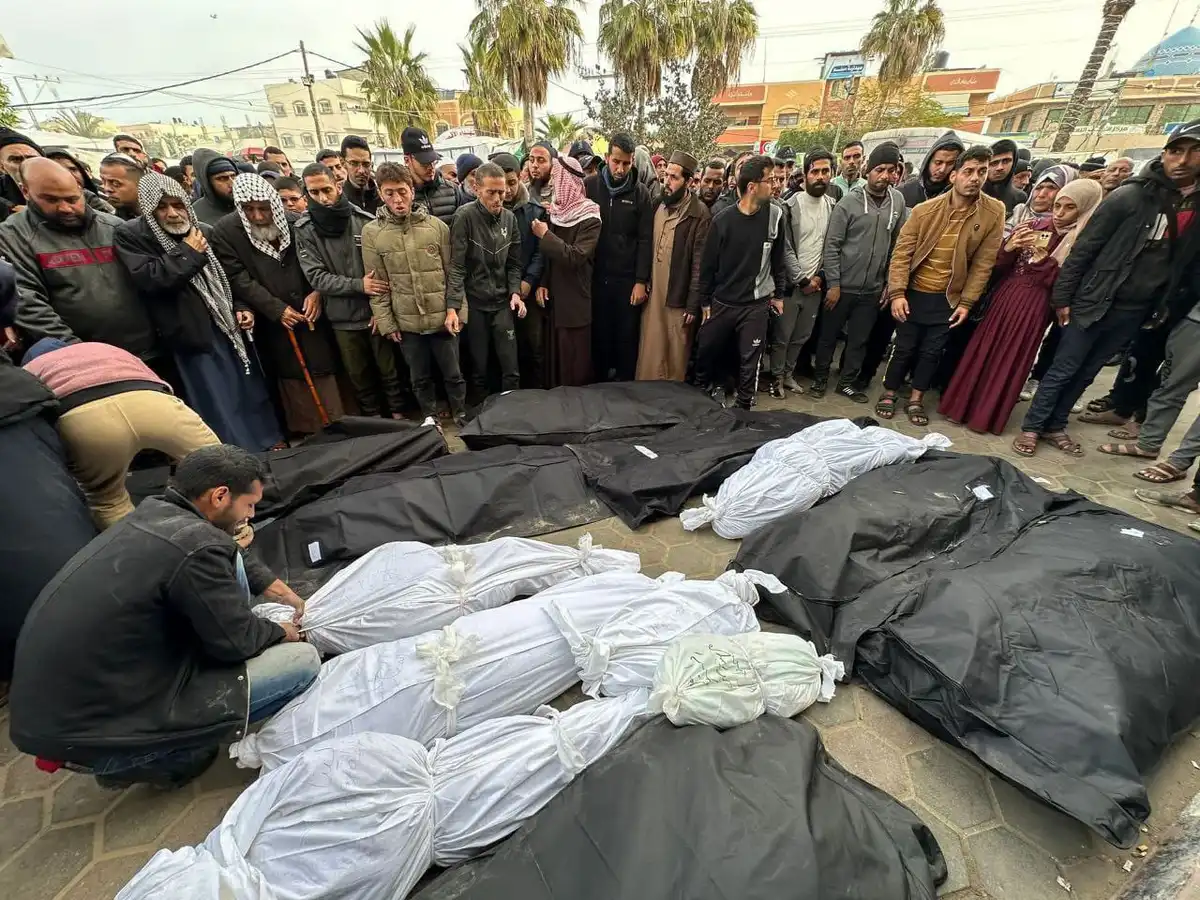
War on Gaza: The death toll rose to 31,490 citizens

The death toll from the Israeli war on Gaza has risen to 31,490 citizens and 73,439 injured since October 7, according to what the Ministry of Health in the Gaza Strip reported on Friday.


The government media office in Gaza confirmed today that “the Israeli army committed 5 massacres against aid centers in two days, leaving 56 killed and 300 wounded.”


On the fifth day of Ramadan, the war on Gaza entered its 161st day today, Friday, as Israeli aircraft continued their raids on various areas of the Gaza Strip, causing dozens of killed and hundreds of injuries during the past 24 hours.


Yesterday evening, the Ministry of Health in the Gaza Strip announced the death and injury of dozens of unarmed civilians who were waiting for humanitarian aid in Gaza City, as a result of Israeli bombing and gunfire from warplanes and drones, stressing that the wounded are lying on the ground in the Shifa Medical Complex and the medical teams are unable to deal with the size and type of injuries. .


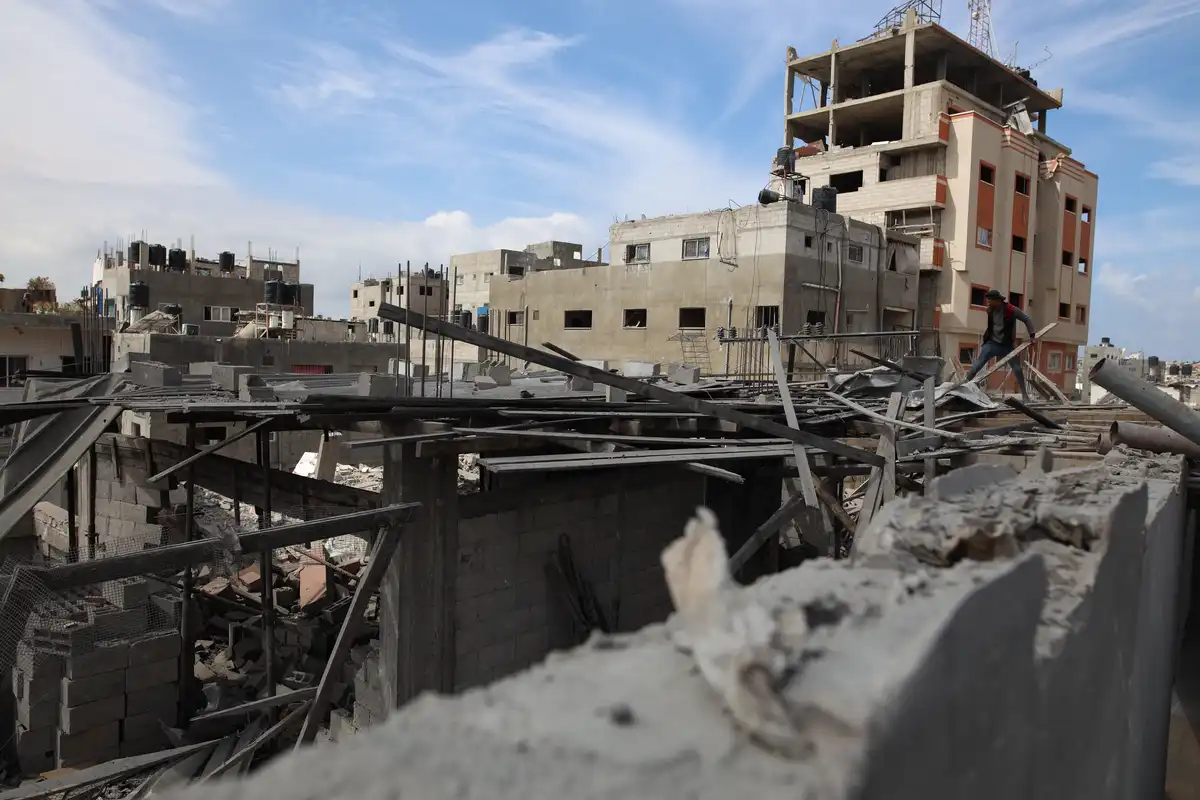
Israeli fighters are focusing their raids on the city of Khan Yunis in the south of the Gaza Strip, and the city of Deir al-Balah, the Nuseirat camp, and the Bureij camp in its centre. Israeli artillery also renewed its bombardment of residential squares and neighborhoods, and the destruction of infrastructure.

ARAB AND WORLD

Fri 15 Mar 2024 10:17 pm - Jerusalem Time

The White House: The ceasefire talks in Gaza are moving in the right direction

The White House said on Friday that the proposal put forward by Hamas regarding a ceasefire agreement in Gaza in order to release prisoners is certainly within the limits of what is possible, expressing cautious optimism.


John Kirby, spokesman for the White House National Security Council, said that the proposal “certainly falls within the broad outlines of the agreement that we have been working on now for several months.”


"We're cautiously optimistic that things are moving in the right direction, but that doesn't mean it's done," Kirby told reporters.

ARAB AND WORLD

Fri 15 Mar 2024 10:15 pm - Jerusalem Time

UN: The Israeli operation on Rafah will have serious consequences

The United Nations warned on Friday that the ground operation that Israel is planning to launch on the city of Rafah will have dire consequences for the residents of the Gaza Strip and for the delivery of humanitarian aid.


This came in a statement by United Nations spokesman Stephane Dujarric to reporters, commenting on news about Israeli Prime Minister Benjamin Netanyahu’s approval of plans for a possible military operation in Rafah, south of the Gaza Strip, despite international warnings.


Dujarric indicated that he had seen the news regarding Netanyahu’s approval of the operation, and said that this was “very disturbing.”


He added, "The ground operation on Rafah will have serious consequences for the residents of Gaza and for humanitarian aid operations," expressing his hope that it will be prevented from happening.

PALESTINE

Fri 15 Mar 2024 8:57 pm - Jerusalem Time

13 Palestinian citizens were killed in several raids on the Gaza Strip

Thirteen citizens were killed this Friday evening when the Israeli aircraft bombed a house in the Nuseirat camp and the Al-Tuffah neighborhood in the Gaza Strip.


Local sources said that 7 people were killed in a bombing carried out by occupation aircraft that targeted several homes in the Nuseirat camp in the central Gaza Strip, while dozens of citizens were injured as a result of the bombing.


Five citizens were killed and dozens of citizens, most of them children, were injured in a raid that targeted a house in the Al-Tuffah neighborhood, northeast of Gaza City.


A citizen was also killed and a number of citizens were injured when the Israeli army bombed a house for the Abu Dawaba family in the village of Al-Masdar in the central Gaza Strip.

ARAB AND WORLD

Fri 15 Mar 2024 8:07 pm - Jerusalem Time

Blinken: We are working with Israel, Qatar, and Egypt to reach an agreement

US Secretary of State, Anthony Blinken, said on Friday that the mediators are working "tirelessly to fill the remaining gaps" in an effort to reach an agreement on the hostages and a ceasefire in the Gaza Strip.


Blinken said during a press conference in Vienna, “Yes, there is a counter-proposal presented by Hamas. It is clear that I cannot go into the details of what it includes, but what I can say is that we are working tirelessly with Israel, Qatar and Egypt to fill the remaining gaps and try to reach an agreement.”


He explained that Israel "resented negotiators to follow up on the process," adding, "I think this reflects a feeling that an agreement can be reached, a ceasefire, the hostages released, and more humanitarian aid delivered."


Earlier, the office of Israeli Prime Minister Benjamin Netanyahu announced in a statement that Israel "will send a delegation to Doha in Qatar as part of negotiations on exchanging hostages held in Gaza for Palestinian prisoners."


Israel did not send representatives last week to Cairo, where mediators met with a delegation from Hamas.


Hamas, which is still demanding a final ceasefire in Gaza before any agreement regarding its prisoners and detainees, expressed its readiness to commit to a six-week truce during which 42 prisoners and detainees, including women, children, the elderly and the sick, will be released in exchange for the release of 20 to 50 Palestinian prisoners, according to what was reported. One of its officials reported.


Blinken was asked about a possible Israeli attack on Rafah in the far south of the Strip, and he said that he “has not yet seen the plan” prepared by the Israelis, while reminding him that the United States demands “a clear plan that can be implemented.”

PALESTINE

Fri 15 Mar 2024 3:12 pm - Jerusalem Time

Netanyahu approves the plan to invade Rafah, and an Israeli delegation will discuss the exchange deal

Today, Friday, Israeli Prime Minister Benjamin Netanyahu approved a military plan to invade Rafah.


A statement issued by his office stated that in addition to this, the Israeli army is preparing to evacuate residents and displaced people from Rafah.


Meanwhile, the Israeli war cabinet meeting, which discussed the proposal presented by Hamas, ended yesterday regarding the exchange of prisoners and hostages.


Netanyahu described Hamas's demands as "unrealistic."


The statement added that an Israeli delegation will go to Qatar to conduct negotiations on a prisoner exchange deal and a ceasefire, and that the delegation will present Israel’s position.


After the end of the war cabinet meeting, a meeting will be held for the mini-ministerial council for political and security affairs (the expanded cabinet), which will discuss the Israeli position that the Israeli delegation will bring to the negotiations in Qatar.


Hamas's proposal includes a first phase for the release of Israeli hostages, including women, children, the elderly and the sick, in exchange for the release of between 700 and 1,000 Palestinian prisoners, Reuters reported today.


The proposal includes the release of 100 Palestinian prisoners serving life sentences in Israeli prisons, and the release of Israeli female soldiers.


Hamas said it would agree to a date for a permanent ceasefire after the initial exchange of hostages and prisoners, according to the proposal, and that a final date would be agreed upon for the Israeli withdrawal from Gaza after the first phase.


Hamas said that all detainees on both sides will be released in a second phase of the plan.


Agence France-Presse quoted a Hamas official as saying, “We propose a 6-week truce in Gaza and the exchange of hostages and detainees in stages.”


PALESTINE

Fri 15 Mar 2024 11:51 am - Jerusalem Time

Updated:: Israeli forces commits 13 new massacres in Gaza, claiming 149 killed

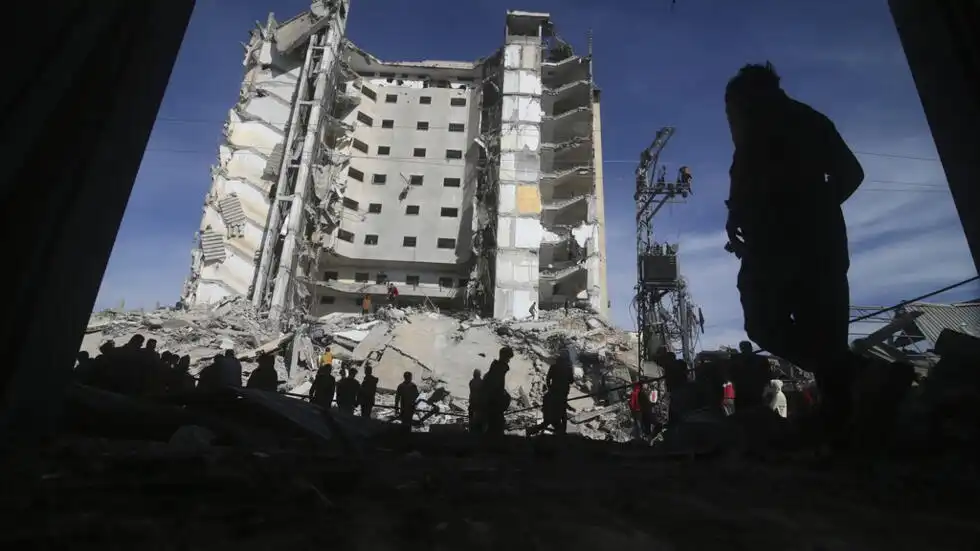
The Israeli army committed 13 massacres against families in the Gaza Strip, claiming 149 killed and 300 injuries during the past 24 hours, which raises the toll of the aggression to 31,490 killed and 73,439 injuries since the 7th of last October.


The Ministry of Health in the Gaza Strip confirmed that there are still a number of victims under the rubble and on the roads, and Israeli army prevents ambulance and civil defense crews from reaching them.


In the latest developments: A number of citizens were killed as a result of Israeli targeting the Intelligence Towers area, northwest of Gaza City.


3 citizens were killed and 3 others were injured as a result of being targeted by Israeli drones while they were waiting for aid west of Gaza City.


Five dead were also recovered from Hamad Town in Khan Yunis, south of the Gaza Strip.


The Israeli aircraft launched raids on various areas in the Gaza Strip.


The Israeli forces committed a new massacre yesterday, Thursday, as they targeted a gathering of citizens at the Kuwait Roundabout in Gaza City, while they were waiting for relief aid to arrive, which led to the death and injury of dozens.


The Israeli army continues its aggression against the Gaza Strip for the 161st day, by land, sea and air, which led to the death of more than 31,341 citizens and the injury of more than 73,134 others, an infinite toll, as thousands of victims are still under the rubble.

PALESTINE

Fri 15 Mar 2024 10:05 am - Jerusalem Time

Australia announces the resumption of funding for UNRWA

Australian Foreign Minister Penny Wong said on Friday that her country will resume funding for the United Nations Relief and Works Agency for Palestine Refugees (UNRWA), nearly two months after funding was suspended.


Wong explained that Australia had consulted with UNRWA and other donor countries, and was satisfied with the additional guarantees that had been put in place, adding that about six million Australian dollars ($3.9 million) in funding would be provided immediately.


Wong said, in a press conference, “There are children and families who are starving and we have the ability, along with the international community, to help them. We know that UNRWA is central and essential in providing this aid.”


Australia and several countries suspended funding to the United Nations agency last January, in response to Israeli allegations against 12 employees working for UNRWA.


Sweden, Canada and the European Union have resumed funding to some extent.


Last week, the agency's commissioner general, Philippe Lazzarini, expressed "cautious optimism" about the decision of "a number of donors" to resume funding the agency "in the next few weeks."

PALESTINE

Fri 15 Mar 2024 9:45 am - Jerusalem Time

On the first Friday of Ramadan, Israel prevents thousands of worshipers from reaching Al-Aqsa Mosque

For hours this morning, the Israeli forces prevented thousands of worshipers from arriving at the blessed Al-Aqsa Mosque to perform the first Friday prayer of the month of Ramadan.


Eyewitnesses reported that the Israeli forces deployed widely around the Qalandiya checkpoints north of Jerusalem, Zaytouna to the east, and Bethlehem to the south, and returned thousands of worshipers and did not allow them to reach Al-Aqsa Mosque, under the pretext of not obtaining the necessary permits.


Israeli forces also deployed thousands of police officers in the alleys of the Old City of Jerusalem, in the vicinity of Al-Aqsa Mosque, and at its gates.


Yesterday, the Israeli authorities installed iron barriers at the gates of the Blessed Al-Aqsa Mosque, specifically at the gates of King Faisal, Al-Ghawanmeh, and Al-Hadid, in an effort to impose more control on the entry of worshipers, control the roads, and prevent freedom of worship normally in Al-Aqsa Mosque.


It is noteworthy that the Israeli forces have imposed a strict siege on the Old City of Jerusalem and Al-Aqsa Mosque for six months, preventing entry to them. They have issued dozens of deportation orders against Jerusalemites, in order to prevent them from praying during the month of Ramadan.

PALESTINE

Fri 15 Mar 2024 8:42 am - Jerusalem Time

War on Gaza: Israel commitss new massacre targeting queues waiting for aid near the Kuwait roundabout in Gaza

The Israeli army committed a new massacre, on Thursday evening, against Palestinians who were waiting for aid in front of the Kuwait Roundabout in Gaza City, bombing them with artillery and shooting them from its warplanes and drones.


The Israeli war on the Gaza Strip continues for the 161st day in a row, despite the beginning of the month of Ramadan, amid violent bombardment that leaves hundreds of killed and wounded daily, while the starvation policy pursued by Israel against the Palestinians has reached its extreme levels in recent days.


The Israeli war on Gaza left tens of thousands of civilian victims, most of them children and women, an unprecedented humanitarian catastrophe and massive destruction of infrastructure, which led to Tel Aviv being brought before the International Court of Justice on charges of “genocide.”


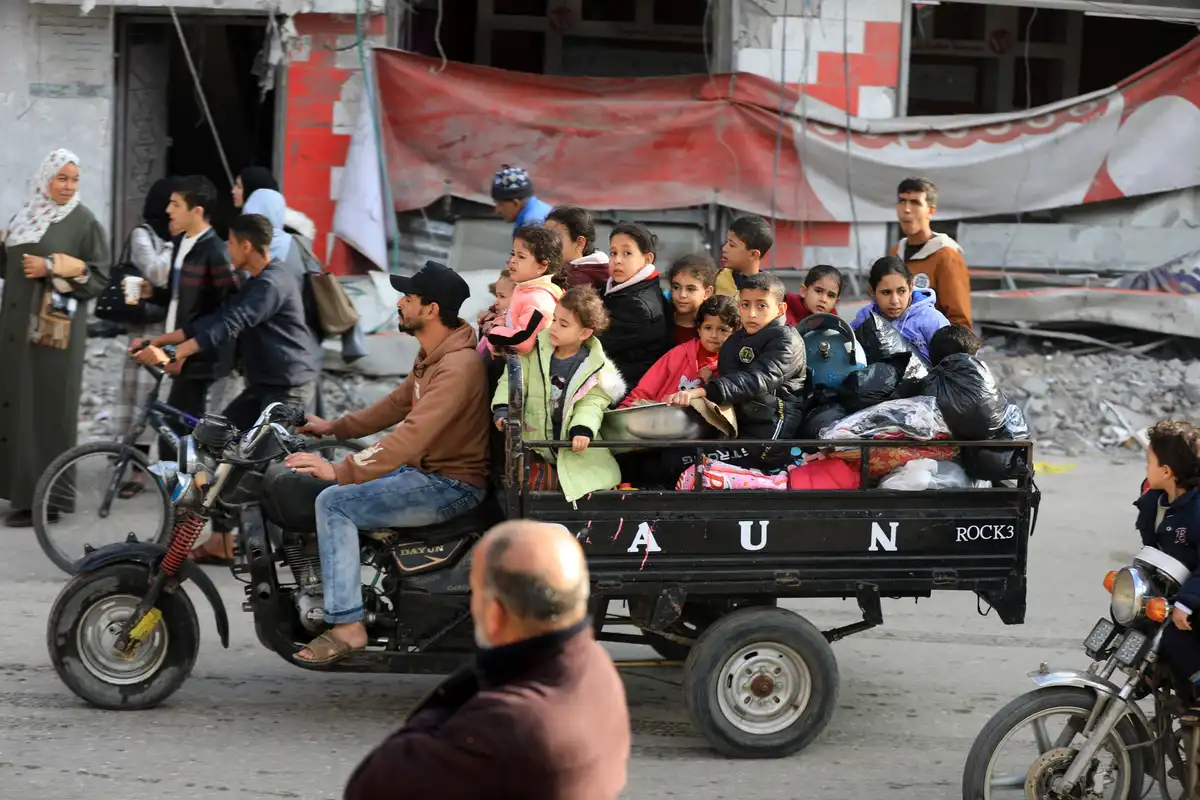
As a result of the war and Israeli restrictions, the people are on the brink of starvation, in light of the severe scarcity of food, water, medicine and fuel supplies, with the displacement of about two million Palestinians from the Gaza Strip, which has been besieged by Israel for 17 years.


ARAB AND WORLD

Fri 15 Mar 2024 8:35 am - Jerusalem Time

Washington is preparing to submit a draft resolution to the Security Council for a ceasefire in Gaza

The United States has put the final touches on a draft resolution it intends to submit to the UN Security Council regarding the Israeli war on the Gaza Strip, traditionally representing the last step before requesting a vote on text that “will support international efforts to broker an immediate ceasefire as part of a hostage release deal.”


The final draft, which Reuters said it had seen, "unequivocally supports international diplomatic efforts to reach an immediate and sustainable ceasefire within the framework of an agreement that releases the hostages and provides the basis for a more sustainable peace to alleviate human suffering."


It was not immediately clear when or if the United States would ask the 15-member council to vote on the text that was negotiated over the past month. Passing the resolution requires at least nine votes and no veto by the United States, France, Britain, Russia or China.


It is noteworthy that the United States wanted any Security Council support for the ceasefire to be linked to the release of hostages held by Hamas in Gaza.


The US-drafted Council resolution condemns the October 7 Hamas attacks and underscores concern that the Israeli ground attack on Rafah in southern Gaza “will lead to further harm and greater displacement of civilians, including the possibility of their displacement to neighboring countries.”


Washington was opposed to the word ceasefire.


It is noteworthy that since Israel launched its war on the besieged Gaza Strip, on October 7, which claimed the lives of 31,000 Palestinians, most of them women and children, and destroyed 80% of the Strip and most of the infrastructure, the United States has used its veto three times to prevent a ceasefire. More recently, the United States justified its veto by saying that such action in the Council could jeopardize efforts by the United States, Egypt, and Qatar to mediate an end to the war and the release of the hostages.

ARAB AND WORLD

Fri 15 Mar 2024 8:34 am - Jerusalem Time

A prominent Democrat says Biden's "embrace" of Netanyahu was a strategic mistake

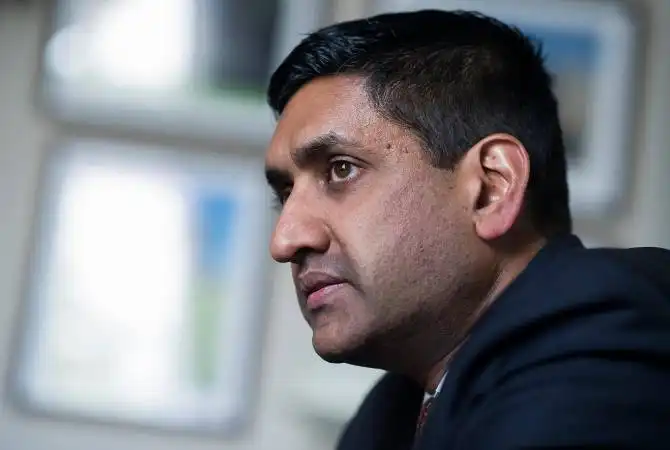
Ro Khanna, a prominent progressive Democratic member of the US Congress, and one of the leaders of Biden's campaign to win a second presidential term, said that President Joe Biden made a "strategic mistake" by "embracing" Israeli Prime Minister Benjamin Netanyahu while continuing the fierce war on Gaza.


Speaking to One Decision, a podcast co-hosted by Richard Dearlove, the former British intelligence chief, Rep. Khanna (D-Calif.) also described Netanyahu as “intolerably arrogant,” because he acts as if he is “an equal” “In a way” for Biden.


According to the Guardian newspaper, Liz Landers, one of the guests on the One Decision program, asked Khanna about his recent visit to the state of Michigan to meet with leaders of the large Arab-American community in the state, “What did they tell you about the Biden administration’s policy toward Israel?” “They opposed it,” Khanna replied, adding: “I have been a long-time supporter of the US-Israel relationship. I have been in Congress for eight years and my record reflects that I unequivocally condemn Hamas’ brutal attack [on Israel] on October 7, and the rapes and the killings. I have described Hamas as a terrorist organization, and it clearly is."


Khanna explained: “I did not support the ceasefire in the first six weeks. I thought [Israel] would go and capture or kill those responsible [for the October 7 attacks]. But they [the Israelis] started bombing refugee camps and hospitals, defying the United States, and not allowing aid in.” 

Khanna said Biden needs to set "clear consequences for Netanyahu" if Israel does not change course. “He has to say: ‘I’m with Israel, but I’m not with this far-right government.’ That means that if [Netanyahu] defies the United States, or blocks aid, or goes to (invade) Rafah — which Biden said what he said should not happen but Netanyahu said it would happen – “[then] no more arms transfers…unconditionally.”


“This means not protecting [Netanyahu] from the entire international community at the United Nations, but rather recognizing a Palestinian state. These are the things that I think some members of the Arab-American community want.”


In response to a question about the impending clash over Rafah, Khanna highlighted Netanyahu's behavior, refusing to heed Biden's warning that the attack would represent a "red line."


“What I disagree with and what I disagree with in the media narrative on this matter is that Netanyahu and Biden are equal in some way,” Khanna said.


“They are not. We are the greatest superpower in the world. We give Netanyahu weapons. He has to respect the American president whoever he is. I find it unbearably arrogant for him to act as if he is somehow equal to the American president. This will rub people the wrong way.” 


He added: “So if the US Secretary of Defense, and the US President, challenge us, we have to stop arms shipments now. We can stop offensive weapons shipments... I voted for defense funding and we need to continue to protect Israel from a (possible) Hezbollah invasion or from Iran. But we certainly shouldn't be giving Netanyahu the offensive weapons needed to kill more people in Gaza when he acts in defiance of the president of the United States."


"You can act on an equal footing if you are not begging for weapons at the same time," he said.


On Thursday morning, Khanna commented further, and the congressman who is considered a rising star in the Democratic Party said on social media: “I respect the people and state of Israel and the Palestinian people and I believe that all countries are equal in self-determination.”


“But Bill Clinton said 28 years ago that Netanyahu failed to respect America’s leadership and power and ignored our views despite our strong support.”


It is noteworthy that Biden's policy towards Israel also had an impact on domestic politics, as the protest votes in the Democratic Party primaries seemed to be a warning of the upcoming presidential elections. Congressman Landers asked Khanna whether Biden might lose his re-election battle against Donald Trump because of such protests as we saw in Michigan, where about 100,000 “disengaged” people voted, and Khanna responded: “I think the president is going to win. I mean he won the state.” Michigan by about 150,000 votes.”


But he said anger at Biden is spreading “perhaps outside the Muslim or Arab American community. It's more young people, voters of color, and the broader Democratic coalition.”


“And I think if this war continues, especially if it continues as we head to the Democratic convention in Chicago, it will create a problem for us with the coalition that Barack Obama built, which included young people and progressives and voters of color, which has really turned out great.”


Khanna said there was a possibility that the convention, to be held in mid-August, would generate unwelcome echoes of the chaos at the 1968 Chicago convention, the year Republican Richard Nixon won election amid protests against the Vietnam War.


“I still believe the president will win, but this should be a warning sign that there are large parts of our base that are unhappy,” Khanna said.


“I hope that the president, I think, has changed his tone and changed his course,” he said. “And now he is using the word ‘ceasefire.’ He is saying that the weapons will not be transferred indefinitely to Netanyahu. So I hope that this pressure will succeed in reaching a solution.” A ceasefire and the release of hostages held by Hamas


PALESTINE

Fri 15 Mar 2024 8:17 am - Jerusalem Time

Israel receives Hamas' response to the truce negotiations and prisoner exchange

The Qatari mediator delivered to the Israeli side an official written response from the Hamas movement to the truce and fire negotiations in the Gaza Strip, which included a list of “reasonable demands,” according to what the Israeli Broadcasting Corporation (“Kan 11”) reported, yesterday evening, Thursday.


The report quoted a source familiar with the content of the movement’s response as saying that Hamas’s response includes “a list of reasonable demands,” and considered that this indicates “positive progress” within the framework of the negotiations, stressing that “it is possible to reach an agreement.”


In a statement issued by it, the Hamas movement said that it had presented to the mediators “a comprehensive vision based on these foundations that the movement considers necessary for the agreement. The vision also includes Hamas’ vision regarding the prisoner exchange issue.”


It stressed that the presented vision comes “in the context of following up on negotiations through mediators in Egypt and Qatar to stop the aggression against our people in Gaza and provide relief and aid to them, the return of the displaced to their places of residence, and the withdrawal of the Israeli forces from the Gaza Strip.”


In turn, Channel 12 reported that the competent and concerned authorities in Israel are studying Hamas’ response, which the mediators delivered to the head of the Mossad, David Barnea, after the war cabinet meeting that was held tonight. The war cabinet is scheduled to meet again on Friday to discuss Hamas’ response.


Reuters said that the first phase of the Islamic Resistance Movement (Hamas) ceasefire proposal includes the release of women, children, the elderly and sick Israelis in exchange for the release of a number ranging between 700 and a thousand Palestinians.


The agency added that the Hamas ceasefire proposal - which it reviewed - includes Israeli female soldiers, noting that the final date for a permanent ceasefire will be agreed upon after the end of the first phase.


According to the same proposal, all detainees from both sides will be released in the second phase.


OPINIONS

Thu 14 Mar 2024 8:43 pm - Jerusalem Time

Criticism of Israel’s war and occupation is not anti-Semitism

Aljazeera

Aljazeera

Opinion Writer

And claiming that it is harms the fight against the very real and growing threat posed by anti-Semitism.

By Maximilian Hess

Anti-Semitism is a plague. And one that is, as I have realised in the aftermath of Hamas’s horrific terror attack in Israel on October 7, far more endemic than I was willing to accept before, despite having been questioning and confronting this hate all my life as the child of an American Jewish and Catholic German couple.

Anti-Semitism, its prevalent nature, and the shame and guilt for the Holocaust that sit at the heart of Germany’s memory culture have indelibly shaped my life.

My late grandmother never acknowledged being aware of Germany’s crimes towards Europe’s Jews. I did not believe her, but it did not matter. Whenever we came to visit, she always insisted that my siblings and I tour the Jewish cemetery, Europe’s oldest, in the city of Worms, where she spent her final years.

My parents separated when I was young, but my mother often told us the story of how my elder brother and I were baptised in the same Catholic Church where my father had gone to school because my atheist father wanted to please his devout mother. It was only as an adult that I learned from my father that it was in fact my Jewish mother who insisted on it. Less than 50 years prior European Jews spent fortunes acquiring fake baptismal certificates in an attempt to escape the Nazis. My mother, like countless others, clearly knew the revival of this ancient hatred always loomed as a threat.

Today, however, it appears the world has turned upside down. The fight against the scourge of anti-Semitism is under threat from those who refuse to criticise Israel’s actions in the Gaza Strip because they conflate such action with anti-Semitism.

Nowhere is this more clear than the reactions to a now infamous March 3 tweet by Congressman Mike Collins. On that day, an openly anti-Semitic far-right account posted a tweet implying the author of a Washington Post article that included a tongue-in-cheek reference to the US being built on “stolen land” is Jewish. Collins responded by tweeting “Never was a second thought”. To this day, Collins refuses to apologise – he even accused his many critics of “gripping at straws”.

The saga made Collins the second member of Georgia’s nine-strong Republican congressional delegation to have engaged in blatant anti-Semitism and to refuse to apologise for it.

Another member of the delegation, Marjorie Taylor Greene, had risen to infamy for a Facebook post she made in 2018, before she was elected, where she implied “Jewish space lasers” (though she never used that precise term) were behind the 2018 wildfires in California.

Republican Party leaders have refused to criticise Collins, and long ago moved from shunning Greene to accepting her as one of the party’s leading lights. Even Elise Stefanik, the third most senior House Republican, has refused to rebuke either Collins or Greene, though it was her questioning of the presidents of the University of Pennsylvania (UPenn) and Harvard over their response to protests critical of Israel’s actions in the Gaza Strip that ultimately led to their resignations.

Stefanik’s silence may have something to do with the fact that she herself has dabbled in the “Great Replacement” conspiracy theory, as has Greene – though the latter’s flavour included the inanely insane, and deeply anti-Semitic, claim that “Zionist supremacists” were behind an imagined plot to flood the West with migrants. And yet today Greene casts herself as “pro-Israel”.

Far too many who should know better have gone along with these arguments. The will-they-or-won’t-they around the fates of UPenn and Harvard’s presidents received far more media attention than Collins’s comments or Greene’s volte-faces have. One of the latter’s board members, hedge fund investor Bill Ackman, publicly recast himself in the effort to take down Harvard’s president, and warned that his alma mater was becoming anti-Semitic. He has remained shtum with regards to Collins and Greene’s anti-Semitism, however.

This is not just an issue in political life but across society. Yes, Kanye West lost his billion-dollar Adidas contract in October 2022 after engaging in a flurry of anti-Semitic statements, but it has since been revealed the firm was aware of equally troubling, if less public, comments for nearly a decade prior. And he remains a best-selling world-touring headliner.

Elon Musk also only briefly had to deal with the fallout from publicly endorsing a claim that “Jewish communities” were pushing “dialectical hatred against whites” last November. Musk’s response that his tweet was “foolish” stopped some way short of an apology, and yet 12 days later he was feted on a visit to Israel by none other than Prime Minister Benjamin Netanyahu.

These days, many of those who say they are fighting anti-Semitism seem only interested in fighting against anti-Zionism and silencing all criticism of Israel.

For many of Israel’s most ardent supporters, there is no space in the debate for those who criticise Israel’s actions, even those who root their criticism in their own Jewish identity. Nowhere is this more clear than in Germany, where German Jews, many of them Israelis, make up a disproportionate percentage of those detained for protesting against Tel Aviv’s warpath.

Yes, some have allowed Israel’s wanton response to October 7 and its decades-long occupation of the West Bank to cloud their judgement and crossed the line into anti-Semitism in their criticism of Zionism. And numerous genuine anti-Semites have jumped on the bandwagon of defending Palestine to further their own agenda.

But all criticism of Israel, and especially criticism of the way Israel conducts its war against Hamas in Gaza, is not anti-Semitism and treating it as such harms the urgent, crucial fight against the growing threat posed by this ancient scourge.

Israel’s bombing campaign and the ethnic cleansing of Gaza could ultimately result in the death of all of Hamas’s military leaders. Hamas may cease to exist as an organisation. But none of this will solve the problem. Hamas was formed in the 1980s and ruled Gaza only since 2007. Violence between Israelis and Palestinians long predates the group’s formation.

Terror attacks that kill many civilians, attacks that traumatise entire societies naturally beget a desire for revenge – as a New Yorker who came of age in the aftermath of 9/11, it is a feeling I know all too well. And yet, I am also well aware of the destructive, devastating consequences of that desire for revenge. Saddam Hussein was a tyrant who had inflicted immense suffering on his people and the people across the region, but he was not involved in any way in the attacks on the United States on 9/11. Still, George W Bush used the American people’s trauma and desire for revenge in the aftermath of those attacks to march the country into invading Iraq. That invasion, and consequent occupation, cost hundreds of thousands of innocent lives, devastated the region for generations, and birthed ISIL (ISIS).

Violence begets violence.

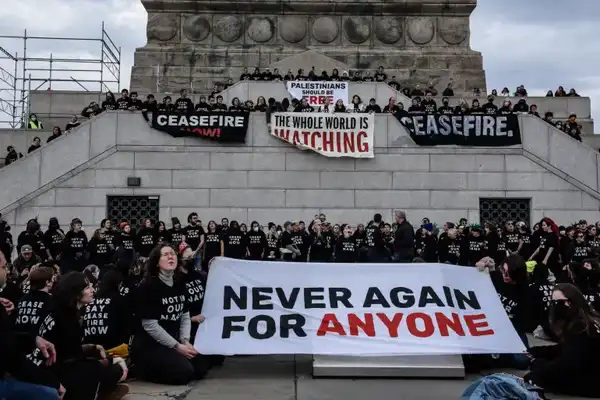
“Never again” must mean never again by anyone, against anyone. If this call is not applied to Palestinians, there can never realistically be any hope that others will apply it to Jews – especially in an era in which so much anti-Semitism goes ignored because it does not fit into the pro-Israel/pro-Palestine dichotomy. Hatred must be fought everywhere and in all its guises, including among those whose fight against anti-Semitism is dependent upon how it relates to Israel.


 

ARAB AND WORLD

Thu 14 Mar 2024 8:34 pm - Jerusalem Time

War in Gaza: European Parliament calls for immediate ceasefire for the first time

The European Parliament voted this Thursday March 14 in favor of a resolution on the situation in Gaza and the fact that there is an immediate risk of widespread famine. The Parliament, considering that Israel has strengthened the blockade of Gaza and is preventing the smooth running of humanitarian operations, while continuing colonization, is therefore calling for the first time for an immediate ceasefire.

It is certainly not this resolution that will change the situation on the ground, but it is the first time since the start of the conflict that the European Parliament has voted on this type of text. It must be said that the subject divides and that it is complicated to find a compromise. The resolution adopted today condemns the obstruction of humanitarian aid and attacks on humanitarian convoys and calls on Israel to immediately authorize and facilitate the delivery of aid through all crossing points throughout Gaza. existing.


The European Parliament also condemns the repeated attacks against civilians and against humanitarian structures and deplores the catastrophic consequences of the latter, in particular for children. MEPs demand the opening of an independent international investigation and renew their call for an immediate and permanent ceasefire. The European Chamber declares itself deeply concerned by the disastrous humanitarian situation in Gaza, in particular by the risk of imminent famine.


The parliamentarians call on Israel to respect the provisions of international humanitarian law and to comply with United Nations Security Council resolutions. Finally, Parliament reaffirms that everything must be done to avoid further innocent civilian victims and instructs its President, Roberta Metsola, to transmit this text to the Council, the Commission, the United Nations, the Government of Israel and the Palestinian Authority.

OPINIONS

Thu 14 Mar 2024 8:24 pm - Jerusalem Time

How Biden Can Get Tough on Netanyahu

Foreign Affairs

Foreign Affairs

Opinion Writer

By Jonah Blank

Throughout most of U.S. President Joe Biden’s political lifetime, conventional wisdom has held that there is no benefit—and enormous risk—to getting tough on Israel. But it is no longer that simple. After more than five months of devastating war in the Gaza Strip, there is also great risk in not getting tough. Americans overwhelmingly saw Hamas’s October 7 terrorist attack as horrific, but many now see Israel’s military response as—to use Biden’s words—“over the top.” In late January, half of Americans thought Israel’s military campaign had “gone too far,” according to polling from the Associated Press–NORC Center for Public Affairs Research. The president’s support for Israel’s invasion of Gaza has alienated much of his electoral base, including young people, progressives, Arab Americans, Muslims, and those who care deeply about human rights.

Biden has not yet proved willing to challenge Israel in a meaningful way, but there are signs that he is becoming increasingly frustrated with Israeli Prime Minister Benjamin Netanyahu. In February, the president’s close associates told NBC News that Netanyahu is “giving him hell.” On March 10, Biden said Netanyahu’s military strategy was “hurting Israel more than helping Israel.” Netanyahu has chafed at Biden’s increasingly public calls for restraint, refusing the president’s repeated requests for an open flow of humanitarian aid, and has flatly rejected calls to support even a vague pathway toward an eventual two-state solution.

Biden has both personal and political reasons for continuing to accept these rebuffs. On a personal level, Biden’s strong support for Israel can be traced to the early decades of the country’s statehood and his acquaintance with Israeli leaders going back to Prime Minister Golda Meir. On a political level, Biden has seen U.S. elected officials including Democratic Representatives Donna Edwards and Ilhan Omar suffer painful payback for taking on the Israeli government, inflicted by groups including the American Israel Public Affairs Committee, a lobbying organization. But if the president wants to get tough with Netanyahu, he has an array of options, from withholding military aid to recognizing a Palestinian state. Such moves may not be easy politically, but they could become more feasible as the war’s death toll rises and starvation spreads in Gaza.

NAME AND SHAME

Since February, Biden has been increasingly blunt in his criticism of Netanyahu’s campaign in Gaza, calling for Israel to increase humanitarian assistance, limit the scale of its military operations, and take more steps to reduce civilian casualties. But to give these demands more heft, Biden could call it quits with Netanyahu from the Oval Office in a prime-time televised address. If he does so, he should make it clear that his rebuke is aimed at Israel’s extreme right-wing government, not at its people. This might increase pressure on Netanyahu within Israel to moderate his positions. More important, such a speech would lay a foundation for Americans to understand Biden’s next moves. Getting tough with Israel might be politically toxic, but getting tough with Netanyahu is not.

Another step would be for Biden to dial back U.S. diplomatic support for Israel at the United Nations. The United States has used its diplomatic heft—particularly its veto power on the UN Security Council—to block nearly any meaningful international criticism of Israel, for any reason. In February, for example, a Security Council resolution demanding a cease-fire in Gaza gained the votes of nearly all members, including U.S. allies such as France, Japan, and South Korea, but it was defeated by the United States’ veto. Biden could change this practice without a specific policy commitment. He would just need to apply the same standards to Israel that the United States applies to other partners. Washington does not automatically and unconditionally veto resolutions criticizing any other ally. It need not do so across the board for Israel. To mark such a pivot, Biden could support a Security Council resolution calling for a cease-fire in Gaza and for Israel to allow the free flow of humanitarian aid through the Rafah border crossing. Such a move would prevent thousands more Gazans from falling victim to both bombs and the lack of food, water, and medicine.

Washington could also stop offering incentives to entice a normalization deal between Israel and Saudi Arabia. Biden has sought, both before the October 7 attacks and after, to extend the Abraham Accords to include Saudi Arabia. These accords were a series of bilateral deals signed under the Trump administration that normalized relations between Israel and Bahrain, Morocco, Sudan, and the United Arab Emirates without meaningful concessions to further Palestinian sovereignty. The United States enticed Arab countries into these deals with lavish rewards—Washington sold the UAE state-of-the-art F-35 fighter jets and recognized Moroccan sovereignty over 100,000 square miles of disputed territory in the Western Sahara. But this initiative never made sense. If these countries truly share common interests, they shouldn’t need to be bribed into mutual recognition. More important, cutting the Palestinians out of the equation guaranteed disaster: in the past, the prospect of eventual normalization with Arab and Muslim countries had always given Israel a potent incentive to move away from de facto annexation of the Palestinian territories. The Abraham Accords gave that bargaining chip away by allowing Israel to establish normal relations with some Arab governments without changing the reality of the Israeli occupation.

Given the war in Gaza, a similar U.S.-brokered deal between Israel and Saudi Arabia would be a tough sell to the American electorate. According to The New York Times, the United States has proposed a mutual defense pact in exchange for Saudi recognition of Israel. Such an arrangement would potentially put U.S. troops at risk to defend one of the world’s cruelest autocracies. As Biden’s deputy national security adviser admitted, “We will have to do things for Saudi Arabia that will be very unpopular in this country and in our Congress.”

CINCHING THE PURSE STRINGS

Biden has the ability, unfettered by any law, to effectively deny supplemental aid to Israel. On February 13, the Senate approved a massive sweetheart deal for Israel: $14.1 billion in supplemental military aid—in addition to and nearly quadruple the size of the annual sum approved before the October 7 attack. The House of Representatives has not put the measure up for a vote because the Republican Party is deeply divided over the far larger package of Ukraine aid that is tied to the money for Israel. Once the issue of Ukraine funding is resolved, Biden could threaten to veto any further supplemental aid to Israel unless Netanyahu signs on to his administration’s full agenda, including, as described by U.S. Secretary of State Antony Blinken in February, “a practical, timebound, irreversible path to a Palestinian state living side-by-side in peace with Israel.” In the absence of Israeli support for such a plan, Biden might specifically threaten to veto any funds for post conflict reconstruction and security in Gaza—a project far beyond the means of Israel alone.

The most persistent demand that U.S. critics of the war in Gaza have made of Biden—that he halt military aid already allocated by Congress—is more complicated. The United States has historically supplied far more military aid to Israel than it has to any other country, and Washington is slated to provide $3.8 billion more each year through 2028. A president can’t simply turn off the spigot of congressionally appropriated funds at will. But a president does have considerable leeway to delay, accelerate, or even deny specific military transfers. So far, Biden has used such wiggle room to accommodate Netanyahu’s war, but he doesn’t have to.

A good case could be made that Biden is legally required to stop funding Israel’s war.

Indeed, under several laws, a good case could be made that Biden is legally required to stop funding Israel’s war. In March, seven U.S. senators urged Biden to apply the provisions of the Humanitarian Aid Corridor Act, which forbids the United States from sending aid to any country that “prohibits or restricts the transport or delivery of U.S. humanitarian assistance.” Moreover, the Conventional Arms Transfer Policy precludes the transfer of U.S. arms if the weapons are likely to be used to commit “serious violations of international humanitarian law.” And there is the Leahy amendment to the Foreign Assistance Act, which bars the president from sending aid to any military unit that has “committed a gross violation of human rights.” More children are estimated to have been killed in Gaza during the first three weeks of combat alone than were killed in any of the previous three years in all other global conflicts combined.

Another tack Biden could take would be to recognize Palestinian statehood. On January 29, David Cameron, the British foreign secretary, suggested that the United Kingdom might unilaterally recognize Palestinian statehood. Two weeks later, French President Emmanuel Macron similarly said, “Recognizing a Palestinian state is not a taboo for France.” Biden has the power to recognize a sovereign Palestinian state through executive action. Indeed, U.S. President Harry Truman exercised that power when he unilaterally recognized Israel’s own statehood in 1948. Support for a two-state solution has been the official position of the U.S. government, under Democrats and Republicans alike, for decades. Recognizing a Palestinian state would just formalize what has been a bipartisan aspiration.

Each of Biden’s options comes with risks. Even the easiest for him to pull off politically—withdrawing offers of a mutual defense pact to Saudi Arabia in exchange for recognition of Israel—would require Biden to give up his hopes of a regional diplomatic breakthrough on a par with Camp David or the Oslo accords. The others would provoke a backlash from Israel’s American supporters. Getting tough with Israel, if it ever were to happen, would be far outside Biden’s comfort zone. But aiding Israel in a war that kills so many Palestinian civilians is increasingly unsustainable, too.


ARAB AND WORLD

Thu 14 Mar 2024 8:19 pm - Jerusalem Time

Lapid: Netanyahu intentionally loses major supporters of Israel

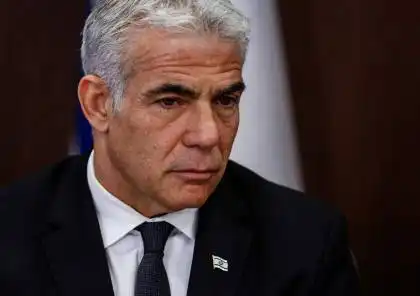
Opposition leader in Israel Yair Lapid said that Senator Chuck Schumer's speech indicates that Netanyahu is intentionally losing Israel's top supporters in the United States.


Earlier, Democratic Majority Leader in the US Senate, Chuck Schumer, criticized Israel and said that it must correct course in order to achieve lasting peace.


Schumer added that Netanyahu is "a major obstacle to peace and has often submitted to the demands of extremists," as he put it. He stressed that Israel's move towards a one-state solution would further tear apart its relations with the world, including the United States.

ARAB AND WORLD

Thu 14 Mar 2024 7:36 pm - Jerusalem Time

Schumer, Chairman of the Democratic Senate Majority: Netanyahu has “lost his way”

US Senate Majority Leader Chuck Schumer on Thursday called on Israel to hold new elections, saying he believes Israeli Prime Minister Benjamin Netanyahu has "lost his way" and poses an obstacle to peace in the region amid a growing humanitarian crisis in Gaza.


Schumer, the most prominent American Jewish politician and the highest-ranking Jewish official in the United States, strongly criticized Netanyahu in a lengthy speech he delivered on the Senate floor, in which he denounced Netanyahu and his far-right allies.


Schumer said the prime minister (Netanyahu) placed himself in a coalition of right-wing extremists, "and as a result, he was all too willing to tolerate civilian casualties in Gaza, which is pushing support for Israel around the world to historic lows."


“Israel cannot survive if it becomes a pariah,” Schumer said.


The high-level warning comes as a growing number of Democrats oppose Israel, and as US President Joe Biden intensifies public pressure on Netanyahu's government, warning that he needs to pay more attention to the civilian death toll in Gaza.


This month, the United States began airdrops of much-needed humanitarian aid and announced it would establish a temporary dock to deliver more aid to Gaza by sea.


Schumer said Netanyahu, who has long opposed the establishment of a Palestinian state, was one of many obstacles to the two-state solution backed by the United States. He also blamed right-wing Israelis, Hamas and Palestinian Authority President Mahmoud Abbas.


Schumer has so far presented himself as a staunch ally of the Israeli government, visiting it just days after the October 7 attack and giving a lengthy speech on the Senate floor in December denouncing “brazen and widespread anti-Semitism the likes of which we have never seen before.”

PALESTINE

Thu 14 Mar 2024 6:59 pm - Jerusalem Time

The White House: We have not yet seen any plan from Tel Aviv regarding the protection of civilians in Rafah

The White House said on Thursday that Washington has not yet seen any plan from the Israeli occupation regarding the protection of civilians before any major military operation in Rafah in the southern Gaza Strip.


The White House added that Tel Aviv has the right to defend itself and pursue Hamas leaders, but it must protect aid workers and civilians.


Israeli occupation Prime Minister Benjamin Netanyahu earlier confirmed his rejection of international pressure to prevent movement in Rafah, south of the Gaza Strip.


Netanyahu said on Thursday: “I will continue to resist pressure and we will enter Rafah to eliminate Hamas.”


Meanwhile, the Washington Post reported on a senior American official saying that what is happening in Gaza is chaos created by the Israeli occupation, which bears responsibility for the mass starvation.

ARAB AND WORLD

Thu 14 Mar 2024 5:44 pm - Jerusalem Time

Amnesty criticizes the international community for ignoring "orchestrated starvation" in Gaza

On Thursday, Amnesty International Secretary General Agnes Callamard criticized the international community for ignoring the "orchestrated starvation" in the Palestinian Gaza Strip by Israel.
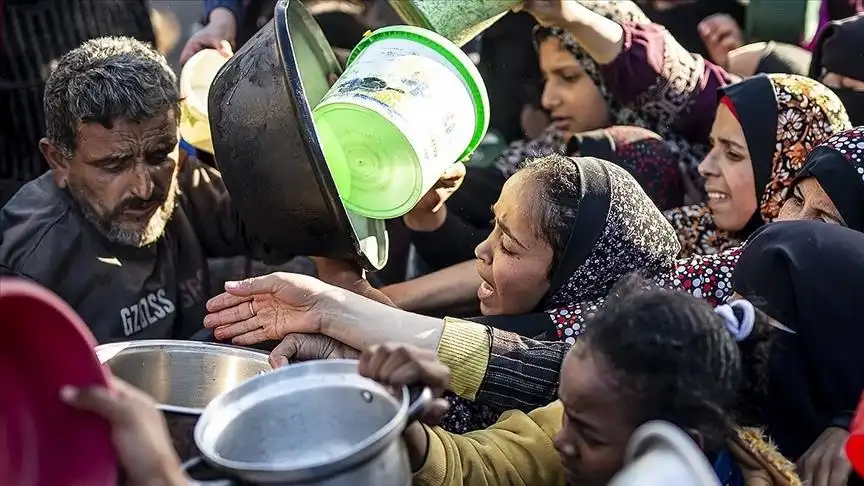

She said, "The international community ignores the starvation orchestrated by Israel in the Gaza Strip, and is busy portraying the situation in the region as a humanitarian crisis."


Callamard explained, in a post on the X platform, that Israel continues to violate international law without facing any criminal penalties.


She pointed out that airdrops of humanitarian aid, and Washington's intention to build a temporary port on the coast of Gaza, will not be of any benefit in the face of Israel's violations of international law.


In his State of the Union address on March 8, US President Joe Biden announced that he had instructed the army to establish a temporary port near the coast of Gaza, indicating that more humanitarian aid would enter the Strip by sea through the port.


On the same day, the President of Greek Cyprus, Nikos Christodoulides, announced, during a joint press conference with the President of the European Commission, Ursula von der Leyen, the imminent opening of a sea corridor to transport humanitarian aid to Gaza.


Yesterday, Wednesday, the US Army announced that a number of its ships were heading to Gaza to establish a “temporary” port that would allow the delivery of humanitarian aid to the Strip, which is besieged by Israel.


As a result of the war and Israeli restrictions, the residents of Gaza, especially the Gaza and northern governorates, are on the verge of famine, amid a severe scarcity of food, water, medicine and fuel supplies, with the displacement of about two million Palestinians from the Strip, which has been besieged by Israel for 17 years.


In an attempt to remedy the crisis, Arab and foreign countries continue their cooperation to airdrop aid into the northern areas of the Gaza Strip, but it remains insufficient and does not meet the urgent needs of the Palestinians.

PALESTINE

Thu 14 Mar 2024 4:25 pm - Jerusalem Time

Netanyahu: International pressure will not stop me from taking action in Rafah

Israeli Prime Minister Benjamin Netanyahu confirmed on Thursday his rejection of international pressure to prevent movement in Rafah in the southern Gaza Strip.


Netanyahu said on Thursday: “I will continue to resist pressure and we will enter Rafah to eliminate Hamas.”


A large number of Arab and Western countries - including the United States, Tel Aviv's ally - have expressed during the past weeks their rejection of the Israel's attempt to invade Rafah, which contains more than a million displaced people who fled the areas of the Gaza Strip as a result of the outbreak.

ARAB AND WORLD

Thu 14 Mar 2024 2:55 pm - Jerusalem Time

EU Parliament approves a resolution condemning Israel's obstruction of aid delivery to Gaza

Today, Thursday, the European Parliament approved a resolution strongly condemning Israel’s obstruction of humanitarian aid access to the Gaza Strip, which has been subjected to a devastating war for more than six months.


The European Parliament condemned Israel's attack on relief convoys and called for an immediate and permanent ceasefire.


In a related context, European Commission President Ursula von der Leyen said today that there is a need for at least 500 trucks or their equivalent of aid to enter Gaza daily.


Von der Leyen hinted, in a post on the “X” platform, that the initiative to send humanitarian aid from Cyprus to Gaza “is not an alternative to humanitarian access via land routes.”


She stressed the need for “the sea corridor to transport humanitarian aid to Gaza to be part of a continuing effort to increase the flow of aid to Gaza through all routes, including expanded land routes.”


In his State of the Union address on March 8, US President Joe Biden announced that he had instructed the army to establish a temporary port near the coast of Gaza, indicating that more humanitarian aid would enter Gaza by sea through the port.


On the same day, the President of Greek Cyprus, Nikos Christodoulides, announced, during a joint press conference with the President of the European Commission, Ursula von der Leyen, the approaching opening of a sea corridor to transport humanitarian aid to Gaza.


On Wednesday, the US Army announced that a number of its ships were heading to Gaza to establish a “temporary” port that would allow the delivery of humanitarian aid to the Strip, which is besieged by Israel.
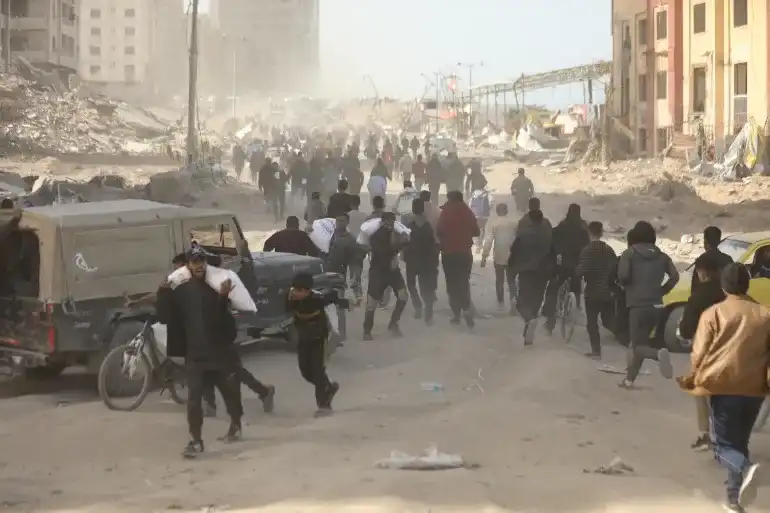

As a result of the war and Israeli restrictions, the residents of Gaza, especially the Gaza and northern governorates, are on the verge of famine, in light of a severe scarcity of food, water, medicine and fuel supplies, with the displacement of about two million Palestinians from the Strip, which has been besieged by Israel for 17 years.

PALESTINE

Thu 14 Mar 2024 2:36 pm - Jerusalem Time

Updated:: The perpetrator was killed.. Two Israelis were injured in a stabbing attack in the Negev

Today, Thursday, two Israelis were injured in a stabbing attack in the city of Rahat in the Negev in the 48 territories.


According to Israeli media, the injury of the two Israelis was described as very critical and the other with minor injuries.


According to Channel 12, the perpetrator was a resident of Rahat (22 years old) and was originally from the Gaza Strip. He arrived at the place using a “korkinet,” and that the critically injured person was shot, which led to his death.


Israeli Army Radio reported that the martyr is Fadi, or Al-Tayef, and has lived in Rahat since 2019, and that his mother is from Rahat and his father is from the Gaza Strip.


OPINIONS

Thu 14 Mar 2024 1:07 pm - Jerusalem Time

Stop the war now

Gershon Baskin

Gershon Baskin

Opinion Writer

No one really knows what Yahya Sinwar wants or plans. Will he escape Gaza through tunnels to Egypt? Will he agree to negotiate a ceasefire? Will he agree to transfer power in Gaza to a revised-revamped Palestinian Authority? Will he release Israeli hostages or will he execute them? Will he surrender or will he fight to the death? No one knows and yet so many of the so-called experts tell us exactly what he wants and what he will do. That is my preface before telling you what I think he might do. I don’t know Sinwar. I have never met him and never talked directly with him. From 2014 until 2023 I was negotiating with him indirectly, through Ghazi Hamad, for the release of the bodies of two Israeli soldiers – Hadar Goldin and Oron Shaul and the living Israeli civilians Avera Mengisto and Hisham A-Sayed. Ghazi would speak with me each time after he met with Sinwar about the negotiations. Often, he would share my proposals with Sinwar and return to me with his responses. Many times, I asked to speak with Sinwar directly and he never agreed. From those talks I learned a bit about the man and what is most important to him. I learned that he was (at that time) uncompromising. Initially he was offered bodies for bodies – that was immediately rejected. He was then offered money, electricity, water, economic development, jobs in Israel and more for the people of Gaza. All of that was rejected. He was singularly focused of the release of Palestinian prisoners serving life sentences in Israel for murdering Israelis. He was offered hundreds of other prisoners who did not have “blood on their hands,” but he refused to make a deal that did not include a large number of murderers of Israelis and thus there was no deal. That was a red line for Israel and a red line for Sinwar.

I don’t believe that Sinwar will surrender or escape to Egypt. He might, but my assessment of the man is that it is not very likely. Sinwar will instead fight to the death and take along as many Israelis as possible. He is most likely surrounded by Israeli hostages – although we don’t know that for sure. He may be in a bunker which is already prepared to be blown up should Israeli soldiers back him into a corner. Recognizing the detailed planning that went into the attack on October 7, it should be assumed that the entire tunnel leading to his bunker will be wired with explosives in order to kill as many soldiers as possible. Does Sinwar want a ceasefire now – even if only for 45 days? I have been told by some leaders in Hamas that he does want the ceasefire. I was told even yesterday, “We are ready and serious to reach a ceasefire agreement and release the hostages. We have agreed to an Egyptian-Qatari proposal, but Israel has not yet provided any positive signal. 

The ball is on Israeli side.” This is a direct quote that I received from a Hamas leader who is from Gaza and is now in Cairo. I believe that this person is in contact with Sinwar. I have received messages from Hamas leaders in Doha that the consultive process of decision making in Hamas remains throughout the war, as they told me – but Sinwar has the final word. That does not mean that Sinwar makes decisions by himself – certainly not on the future of Gaza. But it is clear that his word carries more weight than anyone else.

It seems to me that Israel will not end this war with Sinwar, Deif and perhaps a few others alive and still in Gaza. Everyone has a replacement but sometimes a blow to the top command can lead to a breakdown in the chain of command and the power of the organization can dissolve. Sinwar and Deif are the kind of commanders who are not easily replaceable. They are also the kind of leaders who can determine if Israeli hostages will be released or not. With the enormous physical damage done to 80% of Gaza and the vacuum of governance that has been created across most of the Strip, we should probably begin to get used to the idea that all of the hostages may never be returned. It is very likely that some hostages are buried underneath the rubble of bombed out buildings. 

It is also possible that some hostages are being held by others – either individuals or other organizations and while Hamas was fully in control, they had command over those others. In a situation of breakdown of command and control, Hamas may not have control over all of the hostages. It is also very likely that with the large number of hostages who are not alive, that their bodies may never be found and returned to their families for burial in Israel.

This war must end. Everything should be done to avoid the Israeli invasion of the area between Khan Yunis and Rafah. We need a time out, we all do. A 45-day ceasefire would serve the interests of everyone. It would release Israeli hostages and Palestinian prisoners, that is a price that must be paid to save the lives of the hostages still alive. Israel would have to redeploy outside of population centers and Palestinians would have to be allowed to return to their homes – or what is left of them. 

The 45 days must be used by the international community and the mediators to find a diplomatic end to the war. The Qataris who have already spoken about the possibility of expelling the Hamas leadership from Doha must apply extreme pressure on them, if a ceasefire is reached now, to convince the Hamas leadership in Gaza to leave Gaza for Doha. Israel must be pressured to grant them free-passage without killing them, even if they deserve to be killed. Egypt must apply pressure on the Gaza leadership and provide the guarantees that they will be granted free passage from Egypt to Qatar.

Mahmoud Abbas must be pressured by the leaders in the region and by the US and the UK to appoint a prime minister who would be acceptable to the West Bank and Gaza, and not from amongst his cronies or loyalists in Ramallah who have very little control over the West Bank. It must be someone who is seen as clean, has a solid record of working for the benefit of the Palestinian people, someone who accepts the two-states solution, who is acceptable to the US and who can work with Israel. There are a handful of names of people that I can think of who fit these criteria. Abbas must then step aside and hold on to only ceremonial responsibilities while the new prime minister forms a government of professionals and politicians who can work together. 

The US must pressure Israel to prepare itself to exit Gaza as soon as possible because the new Palestinian government will invite a multi-national Arab led force to come to Gaza to create stability and security when Israel is prepared to leave. If Israel decides to stay in Gaza, one thing can be guaranteed – more soldiers will come back to Israel in body bags and Hamas will not be defeated. The multi-national Arab led force will have the backing of the Arab League granting it legitimacy. Its mandate will include decommissioning weapons and destroying the underground network of attack tunnels and arms production. Palestinian forces will be integrated into the force and the force will be under the responsibility of the Palestinian government. Eventually Palestinian elections will be held when stability can be assured and an elected Palestinian government will replace the temporary government of the prime minister appointed by Abbas.

Israel will protect its people from the border between Gaza and Israel on the Israeli side of the border. No rocket fire from Gaza will be tolerated. 

The multi-national Arab-led force will have 48 hours to respond to any rocket fire before Israel has the liberty to respond on its own. The Gaza-Egypt border must be secured from the Egyptian side. The US should provide technology, know-how and finance for Egypt to dig tens of meters deep along the 13-kilometer border in order to seal off any tunnels used for smuggling weapons and contraband into Gaza. The Rafah border crossing must also be secured and Egypt has the responsibility, to be monitored by the US military, to prevent bribery and smuggling into Gaza.

The new Palestinian government should immediately declare its support for the two-states solution on the basis of the June 4th, 1967 borders. 

The government should call for a regional conference to advance the two-states solution with the participation of Palestine, Israel, Egypt, Jordan, the UAE, Bahrain, Morocco and Saudi Arabia, in addition to any other regional country interested in joining in. The Palestinian government should take these steps even if there remains a rejectionist government in Israel. The regional meeting should be convened even if Israel refuses to participate. If the State of Palestine has not yet been recognized by the majority of OECD nations by the time of convening of the regional conference, the conference should call on all nations of the world to recognize the State of Palestine (139 countries now recognize Palestine). They should also call on all nations of the world to recognize the State of Israel (165 countries now recognize Israel). All 193 member states of the United Nations (194 with the State of Palestine) should recognize both Palestine and Israel and should support the two-states solution.

In my next article I will write about the steps that Israel and Palestine should take in a post war period to consolidate a genuine peace process and enhance the chances of real peace developing.


ABOUT THE AUTHOR

The writer is the Middle East Director of ICO - International Communities Organization - a UK based NGO working in Conflict zones with failed peace processes. Baskin is a political and social entrepreneur who has dedicated his life to peace between Israel and her neighbors. He is also a founding member of “Kol Ezraheiha - Kol Muwanteneiha” (All of the Citizens) political party in Israel.


PALESTINE

Thu 14 Mar 2024 12:41 pm - Jerusalem Time

West Bank: Continuing Israeli attacks on citizens’ property in Jenin and Nablus

Today, Thursday, the Israeli forces demolished two agricultural rooms and a water well, while settlers attacked citizens’ property in Nablus and Jenin.


In Nablus, the Israeli forces, accompanied by a military bulldozer, stormed the town of Qablan, and demolished two agricultural rooms and a water well, belonging to the citizens Theeb Suleiman Najm and Khairy Issa Al Amla.


In Nablus, a group of settlers attacked a park in the town of Huwwara, fired bullets at its gate, and threatened in loud voices to fire bullets at anyone who tried to approach the place.


In Jenin, settlers fired live bullets at citizens' homes and the basic school while students were in school, which sparked a state of terror.

PALESTINE

Thu 14 Mar 2024 11:24 am - Jerusalem Time

North Gaza: sewage overflow complements the tragedies of war and famine

The health conditions in the town of Jabalia in the northern Gaza Strip have worsened due to overflow of sewage and contamination of drinking and usage water, which has led to the spread of diseases during the ongoing Israeli war since the 7th of last October.


In the alleys of Jabalia, sewage water appears leaking into citizens’ homes and shelter centers, with the work of the Jabalia municipality completely halted due to Israel’s destruction of its equipment during the bombing.


Residents in the city of Jabalia are suffering from the spread of diseases as a result of these difficult health conditions, as the Israeli siege continues.


Palestinian Mohsen Abu Faraj (34 years old) describes the situation in the city of Jabalia, north of the Gaza Strip, as “catastrophic.”


He told Anadolu: “Sewage mixes with the potable water that we drink and use for food, which leads to the spread of diseases.”


He added: "Children in Jabalia suffer from various diseases due to sewage leaking into homes."


He stressed that the streets and homes are filled with unpleasant odors as a result of overflowing sewage.


He pointed out that the residents of Gaza, "if they do not die as a result of the war, will face death due to water pollution."


Meanwhile, Palestinian Nimr Abdel Wahed (46 years old) said: “The epidemic spread in Jabalia due to the leakage of sewage.”


He added to Anadolu: "My child is sick, and many of the city's children also suffer from diseases caused by water pollution and sewage leakage."


Last January, the Palestinian Environmental Quality Authority revealed that 66 percent of the population of the Gaza Strip suffers from the spread of diseases transmitted by polluted water, including cholera, chronic diarrhea, and intestinal diseases.


In turn, the mayor of the town of Jabalia, Mazen Al-Najjar, announced that Israel has destroyed more than 70 percent of the water wells suitable for drinking and use since the beginning of the war on the seventh of last October.


Al-Najjar said in an interview with Anadolu Agency, “Municipality crews stopped providing services to citizens in the Gaza Strip after Israel destroyed 23 of their vehicles during the past week, which led to them burning.”


He added: "The water that is extracted by residents using primitive methods is polluted, and this has led to an increase in cases of complex and difficult diseases in Palestinian society, which we have not seen before."


Al-Najjar added: "The people in the Gaza Strip are suffering from real famine, in light of the shortage of food and nutrients as a result of the imposed siege and war on Gaza."


He pointed out that "the destruction of vehicles and the targeting of infrastructure, in addition to the continued bombing and war on Gaza, led to a major deficit in providing necessary services to citizens in the town of Jabalia, which includes thousands of displaced people."


He added: "Since the beginning of the war, we have not been able to obtain diesel supplies to the municipality, which has increased the complexity of providing services in light of the power outage."


He explained that the power outage led to an increase in cases of overflow of sewage collection ponds in the northern Gaza Strip.


He pointed out that the municipality has communicated with international institutions, led by the Red Cross, to provide the fuel necessary to operate water collection stations and pump drinking water to citizens.


Al-Najjar confirmed that the town of Jabalia includes 40 gatherings of displaced people as a result of the massive destruction caused by Israel in the towns of Beit Lahia and Beit Hanoun in the northern Gaza Strip.


He pointed out that residents and displaced people suffer from a lack of basic resources such as food, drink and fuel, which makes their suffering exacerbated by the war.


The mayor appealed to international and human rights institutions to provide the necessities of life for the residents of the northern Gaza Strip who suffer from hunger and in urgent need of humanitarian assistance.


As a result of the war and Israeli restrictions, the residents of Gaza, especially the Gaza and North governorates, are on the verge of famine, in light of a severe scarcity of food, water, medicine and fuel supplies, with the displacement of about two million Palestinians from the Strip, which has been besieged by Israel for 17 years.


Since October 7, 2023, Israel has been waging a devastating war on the Gaza Strip that has left tens of thousands of civilian victims, most of them children and women, in addition to an unprecedented humanitarian catastrophe and massive destruction of infrastructure, which led to Tel Aviv being brought before the International Court of Justice on charges of “genocide.” Collective.”